
- Home
- »
- Renewable Chemicals
- »
-
Herbal Extract Market Size And Share Report, 2026-2033GVR Report cover

Herbal Extract Market (2026 - 2033)
Size, Share & Trends Analysis Report By Product (Cherry, Aloe, Cranberry, Garlic, Turmeric, Ginseng), By Application (Personal Care & Cosmetics, Food & Beverages, Animal Feed), By Region, And Segment Forecasts
Market Size, 2025
$34.6BMarket Estimate, 2026
$37.5BMarket Forecast, 2033
$66.8BCAGR, 2026–2033
8.6%Herbal Extract Market Summary
The global herbal extract market size was valued at USD 34.6 billion in 2025 and is projected to grow from USD 37.5 billion in 2026 to USD 66.8 billion by 2033, at a CAGR of 8.6% from 2026 to 2033. The market in Asia Pacific dominated with a revenue share of 45.2% in 2025. The market is expected to advance due to an increased demand for preservative-free, gluten-free, non-artificial flavored, and color-free foods and beverage items.
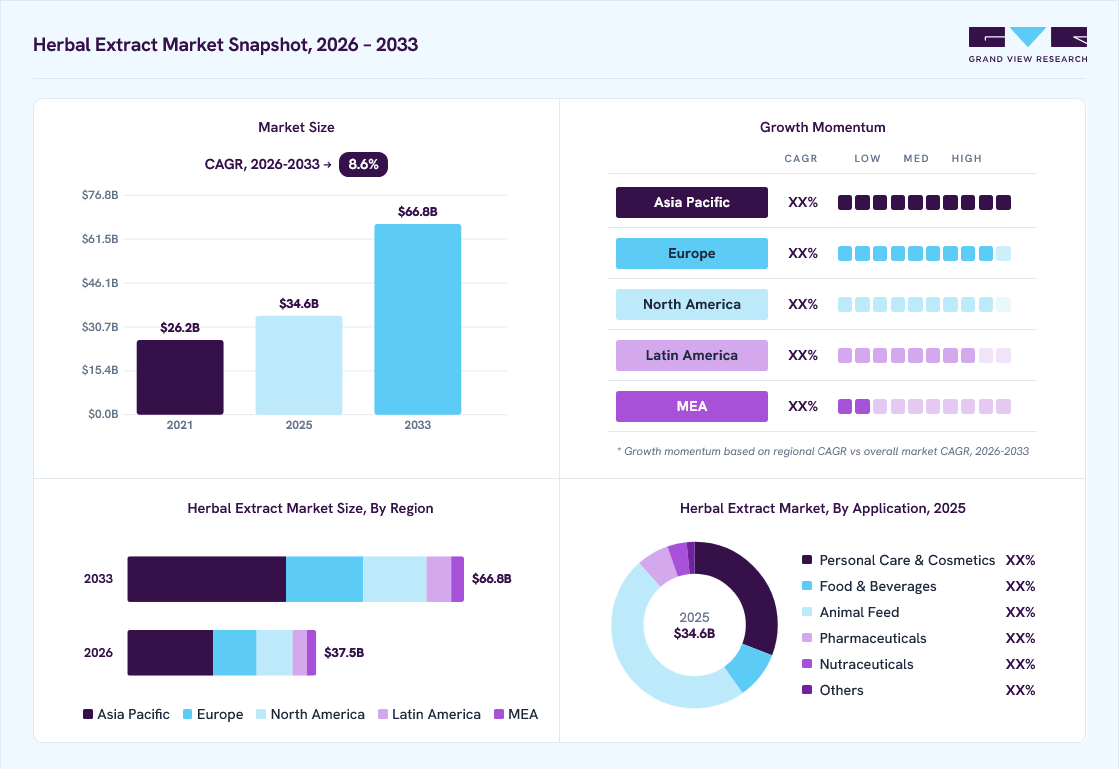 Source: Grand View Research, IR Documents, Primary Interviews, Paid DatabasesTo learn more about this report,
 Download Free Sample Report
Key Market Trends & Insights
- By product: Cherry segment held the largest market share of 10.8% in 2025.
- By application: Animal feed segment held the largest market share of 48.1% in 2025.
Regional Highlights
- Largest regional market: Asia Pacific (45.2% revenue share, 2025)
- By country: China held the largest market share in 2025
Market Size & Forecast
- Market size in 2025: USD 34.6 Billion
- Estimated market size in 2026: USD 37.5 Billion
- Projected market size by 2033: USD 66.8 Billion
- CAGR (2026-2033): 8.6%
GVR research-powered AIAsk Prism AI about the herbal extract marketGet cited answers from GVR research on market growth, segments, regulations and forecasts.Start with✓ Source-linked answers ✓ Market-specific context ✓ Traceable figuresExplore Prism AI ↗A rising awareness about the therapeutic properties of herbs, along with a shift in demand toward skincare products with herbal ingredients, is expected to further complement the demand for herbal extracts over the forecast period.
The market is established with major applications in pharmaceutical, food & beverages, cosmetics, and personal care sectors. Asia Pacific and Europe among other regions are dominant markets. However, a lack of raw material availability along with an absence of standardization in manufacturing or production processes are poised to act as regional growth challenges. The market expansion is dependent upon several factors, including raw material availability, the type of production method adopted, cost of production, and technological developments. Commercialization of herbal extract is one of the vital parameters that is projected to influence the overall market growth.
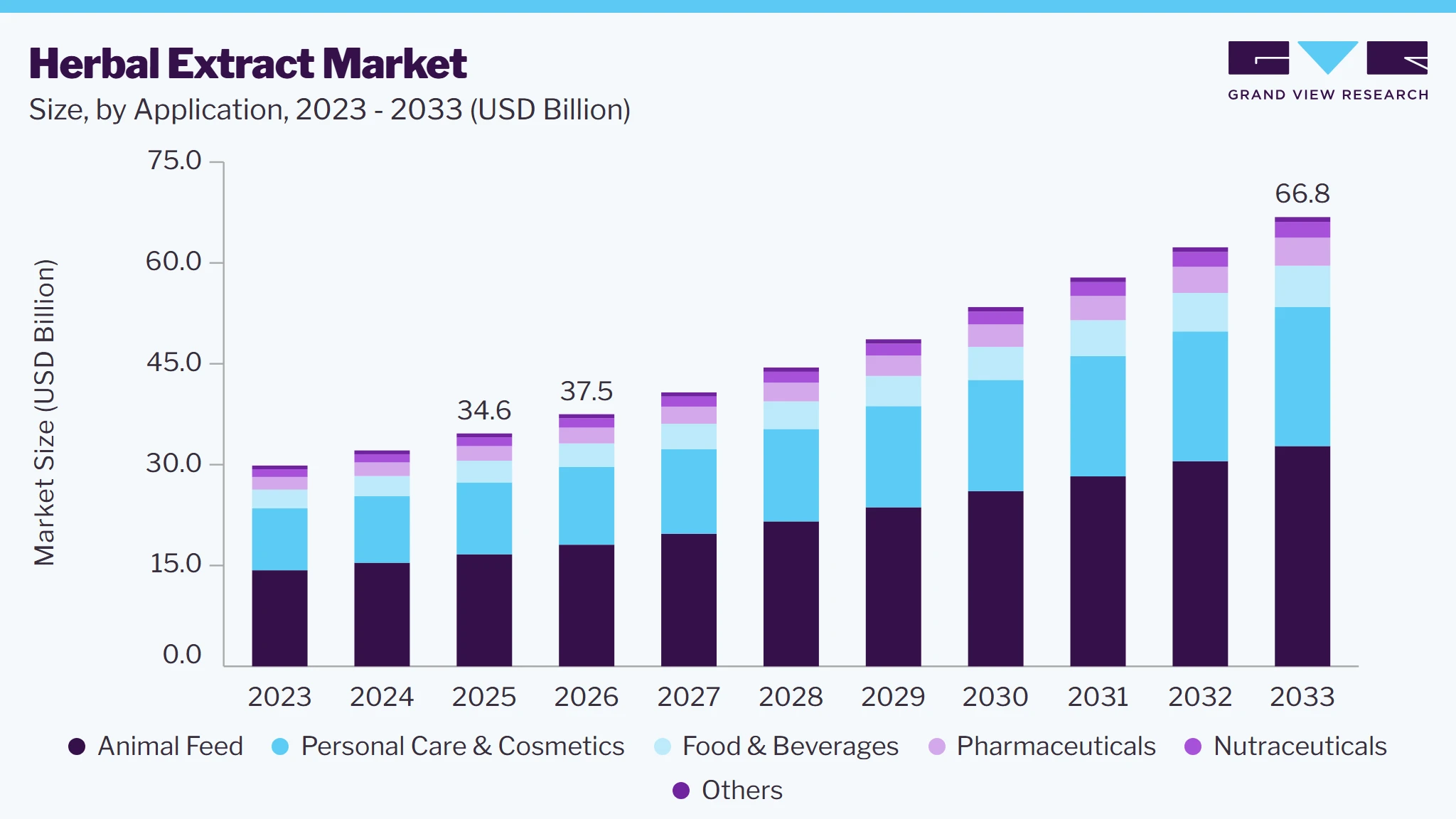 To learn more about this report, Download Free Sample Report
The global personal care & cosmetics sector is home to a variety of bio-based/plant-based products that consumers can buy, on account of a rise in demand for these products, particularly in developed nations such as the U.K. and the U.S. This has resulted in lucrative growth avenues for companies specializing in organic herb cultivation and extraction in emerging economies such as India and China to carry out exports to Europe and North America. Personal care & cosmetics, food & beverages, and nutraceuticals industries prefer natural, eco-friendly, and organic ingredients. This, in turn, fuels the demand, thereby driving the growth of the market for them over the forecast period.
Ongoing urbanization and the prevailing hectic lifestyle of the masses have resulted in a high demand for nutraceuticals that cater to the nutritional requirements of consumers. This increase in demand for nutraceuticals is in turn anticipated to raise the demand for herbal extracts as they provide all nutritional values required. Surging awareness among consumers about the health benefits associated with herbal extracts will help in propelling market demand.
Various government initiatives and regulatory supports are likely to encourage the production of herbal extracts. In India, for example, the Ministry of Finance announced a package of Rs. 4000 crores under Atma Nirbhar Bharat for promoting herbal cultivation. The Ministry has developed a draught scheme for medicinal plant cultivation and marketing.
Market Dynamics
The global herbal extract market is being driven by increasing consumer preference for natural, plant-based ingredients across food & beverages, pharmaceuticals, nutraceuticals, cosmetics, and personal care applications. Growing awareness regarding preventive healthcare, clean-label formulations, and botanical-based wellness products continues to support market expansion. However, fluctuations in raw material availability, inconsistent quality of botanical sources, and stringent regulatory requirements for product standardization and safety present key challenges. Advancements in extraction technologies, increasing investment in sustainable sourcing, and expanding demand in emerging economies are expected to create significant growth opportunities over the forecast period.
The growing shift toward preventive healthcare and clean-label consumption is a key factor driving the global herbal extract market. Consumers are increasingly seeking products formulated with naturally derived botanical ingredients as alternatives to synthetic additives across dietary supplements, functional foods, beverages, pharmaceuticals, and personal care products. This transition is supported by increasing health awareness, rising disposable incomes, and greater emphasis on holistic wellness, encouraging manufacturers to expand their portfolios with standardized herbal extract formulations.
Leading food, nutraceutical, and cosmetic companies are investing in product innovation by incorporating herbal extracts such as turmeric, ginseng, green tea, ginger, ashwagandha, and chamomile to meet evolving consumer preferences. Growing demand for organic, sustainably sourced, and scientifically validated botanical ingredients, coupled with advancements in extraction technologies that improve product quality and efficacy, is strengthening the commercial adoption of herbal extracts across developed and emerging markets, thereby supporting long-term market growth.
The global herbal extract market faces significant challenges due to the dependence on agricultural production and the availability of medicinal plants, which are highly influenced by seasonal variations, climate change, environmental conditions, and harvesting practices. Variations in the quality, potency, and phytochemical composition of botanical raw materials can lead to inconsistencies in extract performance, affecting product reliability and manufacturing efficiency. In addition, increasing pressure on wild plant resources and supply chain disruptions can result in higher raw material costs and procurement uncertainties.
The absence of globally harmonized quality standards for many herbal ingredients creates complexities for manufacturers operating across multiple regions. Companies are required to invest substantially in raw material testing, traceability, authentication, and quality assurance to comply with diverse regulatory frameworks and ensure product consistency. These additional operational and compliance costs can limit market expansion, particularly for small and medium-sized manufacturers, while posing challenges to the large-scale commercialization of herbal extract products.
The increasing incorporation of herbal extracts into value added consumer products presents a significant growth opportunity for the global herbal extract market. Rising demand for functional foods, fortified beverages, dietary supplements, and botanical based personal care products is encouraging manufacturers to develop innovative formulations that offer both nutritional and therapeutic benefits. Consumers are increasingly seeking products containing ingredients such as adaptogens, antioxidants, and plant bioactive, creating new avenues for the commercialization of standardized herbal extracts across multiple end-use industries.
Continuous advancements in extraction technologies and ingredient standardization are improving the stability, purity, and bioavailability of herbal extracts, enabling their adoption in premium product categories. Emerging markets in Asia Pacific, Latin America, and the Middle East are also witnessing increasing consumer awareness of natural wellness solutions, supported by rising disposable incomes and expanding retail and e-commerce channels. These factors are expected to create substantial opportunities for manufacturers to diversify product portfolios, strengthen global distribution networks, and capture long-term market growth.
Analyst Perspective
The global herbal extract market is expected to witness sustained growth, driven by increasing consumer preference for natural, clean-label, and plant-based ingredients across nutraceuticals, pharmaceuticals, food & beverages, and personal care applications. Technological advancements in extraction and standardization, coupled with rising investments in sustainable sourcing and botanical ingredient innovation, are strengthening product quality and expanding commercial opportunities.
Product Insights
By product, cherry held a dominant position, contributing 10.8% of total revenue in 2025. This is aided by its rising usage in skin care products since it helps control skin aging. Additionally, it has extensive applications in the pharmaceutical sector due to its anti-inflammatory properties. Curcumin is a component of spice turmeric, which is a form of ginger. It is insoluble in water; however, it is soluble in ethanol. It has excellent antioxidant and anti-inflammatory properties.
Curcumin is derived from turmeric and has anti-inflammatory & antioxidant characteristics, making it very popular in cosmetics, pharmaceuticals, and food sectors. Curcumin, otherwise known as turmeric, is widely used in cosmetic formulation. Turmeric is a notable element in various Indian Ayurvedic treatments. It is used in the treatment of eczema and acne, as well as in slowing down the aging process and preventing & repairing dry skin.
Recent progress in curcumin's nano and micro-formulations for better absorption in the gastrointestinal tract has created several opportunities for the product in applications such as tissue protection and pain management. Duly certified USDA organic 95% curcumin extracts are preferred by health-conscious consumers, particularly in developed economies.
Meanwhile, fenugreek seed extract demand is being driven by changing consumer dietary trends along with a strong demand for health supplements from athletes. The rising prevalence of diabetes, especially type 2 diabetes, on account of obesity and the hectic lifestyle practices of consumers, coupled with a rise in consumption of nutrient-dense and energy-rich food products, is poised to drive steady demand for fenugreek seeds. Also, a growth in demand for natural ingredient-based medicines is fueling R&D initiatives by various firms and researchers. Rising usage of fenugreek seed extract in Ayurvedic medicinal formulations is anticipated to propel its demand over the forecast period.
Anise seed extract is used in baked goods and as a flavoring in beverages. Owing to increasing awareness regarding health benefits associated with herbs and spices, demand for anise seed-based culinary products is likely to rise over the forecast period. In the Asia Pacific region, anise seeds are consumed after meals to aid digestion. Additionally, demand for anise seed extracts is rising owing to the surging demand for spices and herbs for use in herbal teas, sauces, non-alcoholic beverages, and dressings, as well as bread and confectionery items.
Application Insights
The animal feed segment accounted for the largest revenue share of 48.1% in 2025, driven by the increasing incorporation of herbal extracts into livestock and poultry feed to support animal health, improve digestive efficiency, and enhance productivity. Growing demand for natural feed additives is encouraging producers to adopt plant-derived bioactive compounds as alternatives to conventional synthetic additives, particularly for supporting immunity, gut health, and stress management. This trend is strengthening the use of herbal extracts in commercial animal nutrition formulations and supporting revenue growth in the herbal extract market.
The personal care and cosmetics application segment held a significant revenue share of over 30.9% in 2025 owing to the anti-inflammatory, anti-bacterial, and other properties of herbal extracts. These properties have fueled demand for herbal extracts in the formulation of personal care & cosmetic items.
The ongoing development of new products and the increasing usage of natural ingredients such as essential oils in personal care products and cosmetics are expected to fuel the demand for natural herbal extracts used in them. These ingredients are also used for cleaning teeth. They are also incorporated into baby products, soaps, and shampoos. General hygiene is a major application of essential oils in the personal care & cosmetics segment of the market. In addition, essential oils are widely used in perfumes, body sprays, and air fresheners.
Major brands such as JĀSÖN, Melvita, Annemarie Borlind, and Avalon Organics are continuously making efforts to increase consumer awareness by organizing educational and promotional campaigns focused on communicating the benefits of using organic personal care & cosmetics products. Such trends signify the strong growth of the personal care & cosmetics segment of the market in the coming years. This is due to the rising consumer awareness about ensuring their health and beauty, coupled with the surging disposable income of consumers in emerging economies such as India and Mexico, among others, enabling consumers to spend increasingly on innovative products.
Increasing global demand for natural, safe, and minimally processed food products & beverages has emerged as a major factor driving the growth of the food & beverages segment during the forecast period. The antimicrobial properties of herbal extracts help preserve food products and beverages for a long duration. This is expected to contribute to increased usage of herbal extracts in food products and beverages to increase their shelf life without compromising on their quality.
Regional Insights
Asia Pacific dominated the herbal extract market with the highest revenue share of 45.2% in 2025. Factors such as the wide availability of herbal plants, an age-old tradition of people using natural herbs, the therapeutic effect of herbal products, the adoption of a healthy lifestyle after the COVID-19 pandemic, awareness regarding harmful effects of synthetic ingredients, use of herbal cosmetics products, government policies, and business sustainability programs are expected to influence demand for herbal extracts in the region.
In Asia Pacific, countries such as India and China are projected to lead the market and have emerged as the largest exporters of some of the most precious extracts in the world such as curcumin, ashwagandha, kale, and others. China and Japan are among the largest markets of nutraceuticals in the entire region. The market has witnessed healthy growth with increased use of pharmaceutical products and nutraceutical supplements in Japan, China, and other countries.
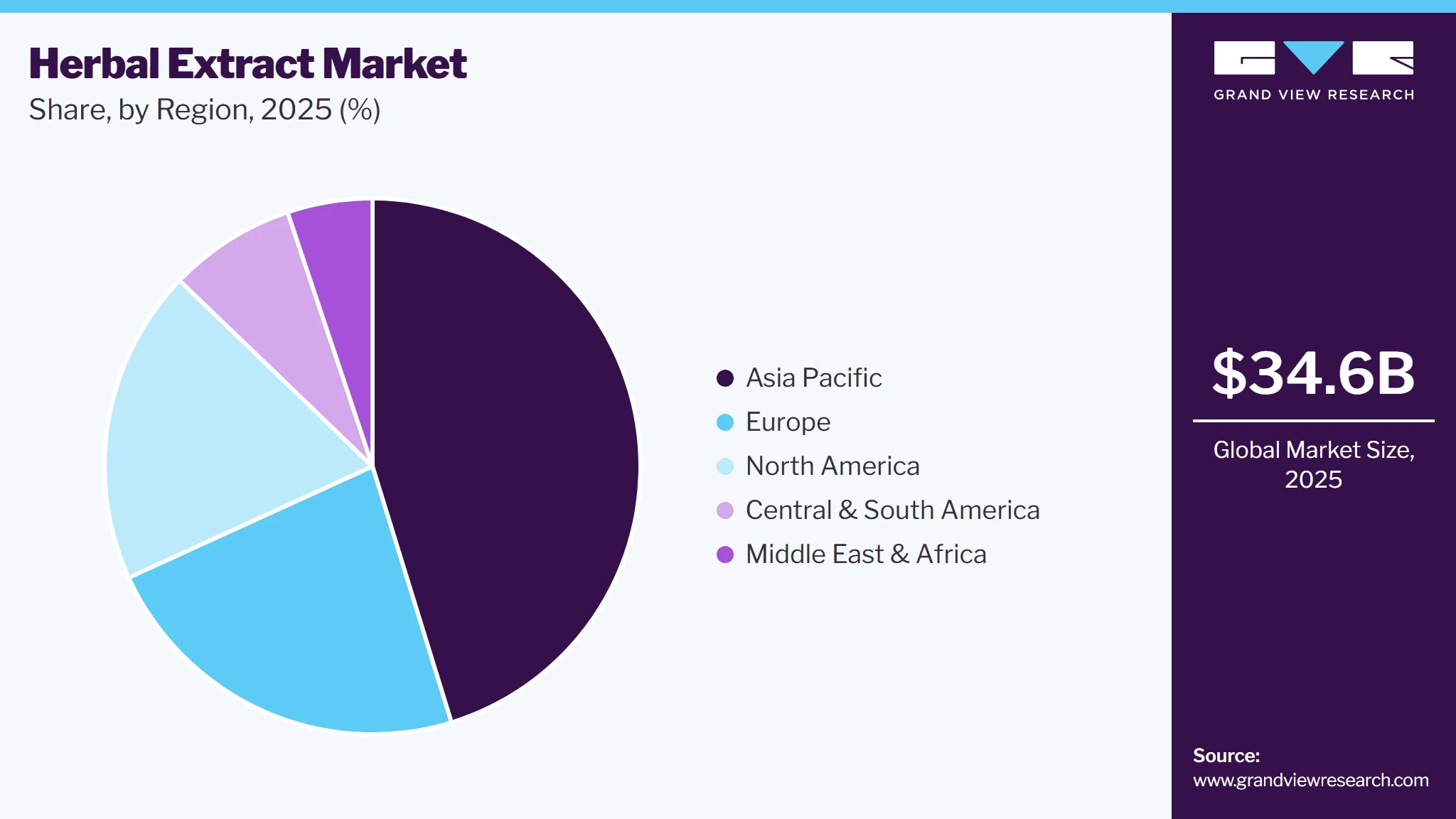 To learn more about this report, Download Free Sample Report
China dominated the Asia Pacific herbal extract market in 2025. China is the world’s largest consumer market for food & beverage items, making it highly appealing for foreign brands and players in the food & beverages industry. The expanding food & beverage segment is expected to significantly impact the herbal extracts industry in China during the forecast period.
India is considered the largest market for herbal extracts; it is one of the key producers of herbs worldwide and holds a dominant position in the global market. India is a key exporter of herbal extracts to the European and American markets. In addition, products manufactured in this country are highly preferred over those produced in China owing to a high degree of stability under variable light and heat conditions.
Key Companies & Market Share Insights
The market is fragmented with the presence of numerous global and regional players and is very competitive in Asia Pacific countries like India and China. It has a limited number of players in Europe, North America, and the Middle East & Africa. Most of the players are clustered in India and China as these countries offer easy access to raw materials. Companies engage in expansion activities such as mergers & acquisitions and develop their product portfolios to expand their footprint globally.
In May 2023, GNT introduced Shade Vivid Orange - OS, the inaugural 100% oil-soluble, plant-derived color developed by the company's EXBERRY brand, produced from non-GMO paprika. This innovative product offers a versatile and dynamic orange hue, capable of substituting paprika oleoresin and synthetic colors in various applications, particularly in fat-based sweet and savory products.
Key Herbal Extract Companies:
The following key companies have been profiled for this study on the herbal extract market.
- Botanic Healthcare
- VIDYA HERBS Pvt. Ltd
- Allicin Pharm
- HerbalHills
- Acara Bioherb Pvt. Ltd.
- Pioneer Enterprises (I) Private Limited
- Sydler India Pvt. Ltd
- Herbal Creations
- Alpspure Lifesciences Private Limited
- IDOBIO CO., LTD.
- Döhler GMB
- MartinBauer
Competitive Benchmarking
Category
Operating Strategies
Competitive Edge
Weakness
Established Players (MartinBauer, Döhler GmbH, IDOBIO CO., LTD.)
- Focus on vertically integrated sourcing, advanced extraction technologies, standardized botanical ingredients, global distribution networks, regulatory compliance, and long-term partnerships with multinational food, nutraceutical, pharmaceutical, and personal care companies.
- Strong global brand recognition, diversified product portfolios, extensive R&D capabilities, certified manufacturing facilities, sustainable sourcing programs, robust quality assurance systems, and established relationships with global customers.
- Higher operating and compliance costs, lengthy product qualification cycles, and relatively slower adaptation to niche or highly customized product requirements due to larger organizational structures.
Emerging Players (Botanic Healthcare, VIDYA HERBS Pvt. Ltd., Allicin Pharm, HerbalHills, Acara Bioherb Pvt. Ltd., Pioneer Enterprises (I) Private Limited, Sydler India Pvt. Ltd., Herbal Creations, Alpspure Lifesciences Private Limited.)
- Focus on expanding manufacturing capacity, developing customized herbal extract formulations, strengthening domestic and regional distribution, contract manufacturing, and targeting high-growth nutraceutical and wellness segments.
- Greater operational flexibility, competitive pricing, faster product customization, strong expertise in regional medicinal plants, and the ability to serve niche customer requirements with shorter lead times.
- Limited international presence, comparatively lower investment in R&D and advanced extraction technologies, dependence on regional raw material availability, and lower brand recognition in global markets.
Herbal Extract Market Report Scope
Report Attribute
Details
Market size in 2025
USD 34.6 billion
Estimated market size in 2026
USD 37.5 billion
Projected market size by 2033
USD 66.8 billion
Growth rate
CAGR of 8.6% from 2026 to 2033
Base year for estimation
2025
Historical data
2021 - 2024
Forecast period
2026 - 2033
Quantitative units
Volume in tons, Revenue in USD billion and CAGR from 2026 to 2033
Report coverage
Volume forecast, Revenue forecast, company ranking, competitive landscape, growth factors, and trends
Segments covered
Product, application, region
Regional scope
North America; Europe; Asia Pacific; Latin America; MEA
Country scope
U.S.; Canada; Mexico; Germany; UK; France; Italy; Spain; China; India; Japan; Vietnam; Malaysia; Brazil; Argentina; South Africa; Saudi Arabia
Key companies profiled
Botanic Healthcare; VIDYA HERBS Pvt. Ltd; Allicin Pharm; HerbalHills; Acara bioherb PVt. LTD.; Pioneer Enterprises (I) Private Limited; Sydler India Pvt. Ltd; Herbal Creations; Alpspure Lifesciences Private Limited; IDOBIO CO., LTD.; Döhler GMB; MartinBauer
Customization scope
Free report customization (equivalent up to 8 analysts' working days) with purchase. Addition or alteration to country, regional & segment scope.
Pricing and purchase options
Avail customized purchase options to meet your exact research needs. Explore purchase options
Global Herbal Extract Market Report Segmentation
This report forecasts volume and revenue growth at the global, regional, and country levels and provides an analysis of the latest industry trends in each of the sub-segments from 2021 to 2033. For this study, Grand View Research has segmented the global herbal extract market report based on type, application, and region:
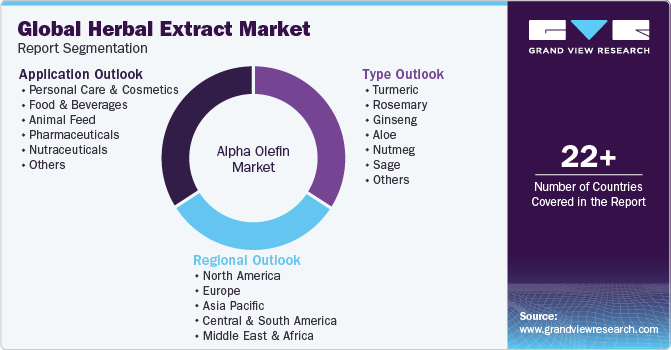 To learn more about this report, Download Free Sample Report
-
Type Outlook (Volume, Tons; Revenue, USD Thousand, 2021 - 2033)
-
Turmeric
-
Rosemary
-
Ginseng
-
Aloe
-
Nutmeg
-
Sage
-
Garlic
-
Cranberry
-
Saw Palmetto
-
Cumin
-
Lecithin
-
Valerian
-
Cherry
-
Pygeum Africanum
-
Beet Root
-
Olive Leaf
-
Holy Basil
-
Elder Berry
-
Horehound
-
Lycium
-
Ginger
-
Orange
-
Cinnamon
-
Green Tea
-
Flax
-
Curcumin
-
Fenugreek Seed
-
Capsaicin
-
Anise
-
Ashwagandha
-
Kale
-
Others
-
-
Application Outlook (Volume, Tons; Revenue, USD Thousand, 2021 - 2033)
-
Personal Care & Cosmetics
-
Food & Beverages
-
Animal Feed
-
Pharmaceuticals
-
Nutraceuticals
-
Others
-
-
Regional Outlook (Volume, Tons; Revenue, USD Thousand, 2021 - 2033)
-
North America
-
U.S.
-
Canada
-
Mexico
-
-
Europe
-
Germany
-
UK
-
France
-
Italy
-
Spain
-
-
Asia Pacific
-
China
-
India
-
Japan
-
Malaysia
-
Vietnam
-
-
Central & South America
-
Brazil
-
Argentina
-
-
Middle East & Africa
-
South Africa
-
Saudi Arabia
-
-
Research Methodology
The herbal extract Market figures in this report are based on a proven research process that combines executive interviews with secondary research from proprietary databases, company filings, and recognized regulatory and institutional sources. Market size is built through value-chain sizing - reconciling supply-side and demand-side estimates - and triangulated with bottom-up and top-down approaches. Every estimate passes multiple levels of expert validation before publication, with each herbal extract segment quantified using the revenue-capture definitions in the table below.
Segment Definition
Product
Revenue capture definition
Turmeric
Revenue generated from the sale of turmeric extracts used in nutraceuticals, pharmaceuticals, functional foods, beverages, cosmetics, and dietary supplements for their antioxidant and anti-inflammatory properties.
Rosemary
Revenue derived from rosemary extracts utilized as natural antioxidants, preservatives, flavoring agents, and active ingredients in food & beverages, cosmetics, personal care, and pharmaceutical formulations.
Ginseng
Revenue generated from ginseng extracts incorporated into dietary supplements, functional beverages, pharmaceuticals, and wellness products to support energy, cognitive health, and immune function.
Aloe
Revenue generated from aloe extracts used in skincare, cosmetics, pharmaceuticals, functional beverages, and nutraceutical products due to their moisturizing, soothing, and digestive health benefits.
Nutmeg
Revenue derived from nutmeg extracts utilized in food & beverage flavoring, pharmaceuticals, nutraceuticals, and personal care products for their aromatic and functional properties.
Sage
Revenue generated from sage extracts used in food preservation, herbal supplements, pharmaceuticals, oral care products, and cosmetics owing to their antimicrobial and antioxidant characteristics.
Garlic
Revenue generated from garlic extracts used in cardiovascular health supplements, pharmaceuticals, functional foods, animal nutrition, and food processing applications.
Cranberry
Revenue derived from cranberry extracts incorporated into dietary supplements, functional beverages, pharmaceuticals, and personal care products, particularly for urinary tract and antioxidant health applications.
Other Types
Revenue generated from herbal extracts including chamomile, ginger, peppermint, licorice, ashwagandha, echinacea, hibiscus, cinnamon, and other botanical extracts used across multiple end-use industries.
Application
Revenue capture definition
Personal Care & Cosmetics
Revenue generated from herbal extracts used as active ingredients in skincare, haircare, oral care, fragrances, and cosmetic formulations for functional and natural product benefits.
Food & Beverages
Revenue derived from herbal extracts used as natural flavoring agents, colorants, preservatives, antioxidants, and functional ingredients in processed foods, beverages, and health drinks.
Animal Feed
Revenue generated from herbal extracts incorporated into livestock, poultry, aquaculture, and pet feed formulations to enhance animal health, immunity, digestion, and feed efficiency.
Pharmaceuticals
Revenue generated from herbal extracts used in prescription medicines, over-the-counter products, traditional medicines, and botanical drug formulations for therapeutic applications.
Nutraceuticals
Revenue derived from herbal extracts used in dietary supplements, functional nutrition products, capsules, tablets, powders, gummies, and wellness formulations promoting preventive healthcare.
Others
Revenue generated from herbal extracts used in applications such as agriculture, aromatherapy, household products, industrial formulations, biotechnology, and research & development activities.
Estimation Model
Layer Name
Key Question
Description
Raw Material Assessment
Which botanical sources contribute to the herbal extract market?
Evaluates the availability, cultivation, production, and commercial utilization of herbs such as turmeric, rosemary, ginseng, aloe, garlic, sage, cranberry, nutmeg, and other medicinal plants used for extraction.
Processing & Extraction Analysis
How are herbal extracts commercially produced?
Assesses extraction technologies, processing capacities, ingredient standardization, product quality, and manufacturing value addition across the supply chain.
Type-Level Market Estimation
Which herbal extract types generate the highest revenue?
Segments the market by extract type, including turmeric, rosemary, ginseng, aloe, nutmeg, sage, garlic, cranberry, and other herbal extracts, based on revenue contribution and demand.
Application-Level Market Estimation
Which industries consume herbal extracts?
Measures demand across food & beverages, pharmaceuticals, nutraceuticals, personal care & cosmetics, animal feed, and other industrial applications.
Customization Table
Client Request
Customization Delivered
Value Adds
Competitive Benchmarking
Leading herbal extract manufacturers were benchmarked based on product portfolio diversity, botanical sourcing capabilities, extraction technologies, manufacturing capacity, quality certifications, sustainability initiatives, geographic presence, and strategic developments. The assessment also evaluated competitive positioning across food, nutraceutical, pharmaceutical, and cosmetic industries.
Helps identify competitive strengths, product differentiation opportunities, and operational advantages. Facilitates partnership evaluation, competitive strategy development, and long-term market positioning.
Cross-Segmentation Analysis
The relationship between herbal extract types and end-use applications was assessed to evaluate product adoption across nutraceuticals, pharmaceuticals, food & beverages, cosmetics, and animal feed. The analysis examined application suitability for key extracts such as turmeric, green tea, rosemary, ginger, aloe, and ashwagandha while identifying emerging product-application combinations.
Enables identification of high-value product and application combinations. Supports portfolio optimization, product development, and commercialization strategies aligned with evolving consumer and industry demand.
Opportunity Assessment
Emerging growth opportunities were assessed across clean-label food ingredients, botanical nutraceuticals, plant-based cosmetics, herbal pharmaceuticals, and natural animal nutrition products. The analysis also examined increasing demand for clinically supported botanical ingredients, sustainable sourcing practices, and standardized herbal extracts.
Enables identification of high-growth application segments and future investment opportunities. Supports innovation planning, portfolio diversification, and long-term business expansion strategies.
Frequently Asked Questions About This Report
Some key players operating in the herbal extract market include Botanic Healthcare, VIDYA HERBS Pvt. Ltd, Allicin Pharm, HerbalHills, Acara bioherb PVt. LTD., Pioneer Enterprises (I) Private Limited, Sydler India Pvt. Ltd, Herbal Creations, Alpspure Lifesciences Private Limited, IDOBIO CO., LTD., Döhler GMB and MartinBauer.
Key factors that are driving the market growth include increasing awareness about the therapeutic properties of herbs along with shifting demand toward skincare products with herbal ingredients.
Animal feed segment accounted for the largest revenue of 48.1% in 2025, driven by the increasing adoption of plant-based feed additives to improve livestock health, immunity, digestion, and feed efficiency, along with growing regulatory restrictions on antibiotic growth promoters and rising demand for sustainable animal nutrition solutions.
The primary restraints include inconsistent availability and quality of botanical raw materials, supply chain disruptions, and stringent regulatory requirements for product safety, efficacy, and standardization. In addition, seasonal dependence of medicinal plants, fluctuations in raw material prices, and the need for extensive quality testing and traceability increase production costs and create challenges for manufacturers operating in global markets.
The market offers significant growth opportunities through the expanding use of herbal extracts in functional foods, nutraceuticals, pharmaceuticals, and natural personal care products. Rising consumer demand for clean-label, plant-based ingredients, coupled with advancements in extraction technologies, ingredient standardization, and sustainable sourcing practices, is enabling manufacturers to develop high-value botanical formulations.
The global herbal extract market size was valued at USD 34.6 billion in 2025 and is estimated at USD 37.5 billion for 2026.
The global herbal extract market is expected to grow at a CAGR of 8.6% from 2026 to 2033, reaching USD 66.8 billion by 2033.
By product, cherry held a dominant position, contributing 10.8% of total revenue in 2025, driven by its increasing utilization in nutraceuticals, functional beverages, and dietary supplements owing to its high antioxidant content, growing consumer preference for natural wellness ingredients, and expanding application in clean-label food and personal care formulations.
Asia Pacific dominated the herbal extract market with the highest revenue share of 45.2% in 2025. This is attributable to availability of wide variety of herbal plants and age-old tradition of people using natural herbs.
About the Author(s)
Renewable Chemicals Research Team
Specialty & Chemicals · Renewable ChemicalsThis report was authored by the renewable chemicals research team at Grand View Research - comprising two research analysts, one senior research analyst, and one industry expert - with specialized expertise in the renewable chemicals segment of the specialty & chemicals industry. All findings are based on proprietary specialty & chemicals databases, executive interviews, and regulatory analysis, subject to internal peer review prior to publication.
Last Updated:
Speak to Analyst

Customize this report to your needs - add regions, segments, or data points, with 20% free customization.
Or view our licence options:


ISO 9001:2015 & 27001:2022 Certified
We are GDPR and CCPA compliant! Your transaction & personal information is safe and secure. For more details, please read our privacy policy.


