
- Home
- »
- Healthcare IT
- »
-
Hospital Bed Management Systems Market Report 2023-2030GVR Report cover

Hospital Bed Management Systems Market (2023 - 2030)
Size, Share & Trends Analysis Report By Type (Acute Care Bed, Critical Care Bed, Long-term Care Bed), By Deployment (Cloud & Web Based, On-premise), By Region, And Segment Forecast
Market Size, 2022
$1.8BMarket Estimate, 2026
$2.6BMarket Forecast, 2030
$3.8BCAGR, 2023–2030
10.3%Report Overview
The global hospital bed management systems market size was valued at USD 1.8 billion in 2022 and is projected to grow from USD 2.6 billion in 2026 to USD 3.8 billion by 2030, at a CAGR of 10.3% from 2023 to 2030. North America dominated the market, accounting for a revenue share of 40.9% in 2022. The market’s growth is attributed to factors including rising awareness and adoption of automation technologies in hospitals, growing collaborations of key players and hospitals for software installation, and increasing launch of novel software and solutions for hospital management industry. In addition, the increasing prevalence of life-threatening diseases and rising patient admissions are the key factors driving the market.Furthermore, the hospital bed management system offers real-time information on bed availability with assigned color codes and supports hospital staff to manage the increasing number of patient admissions.
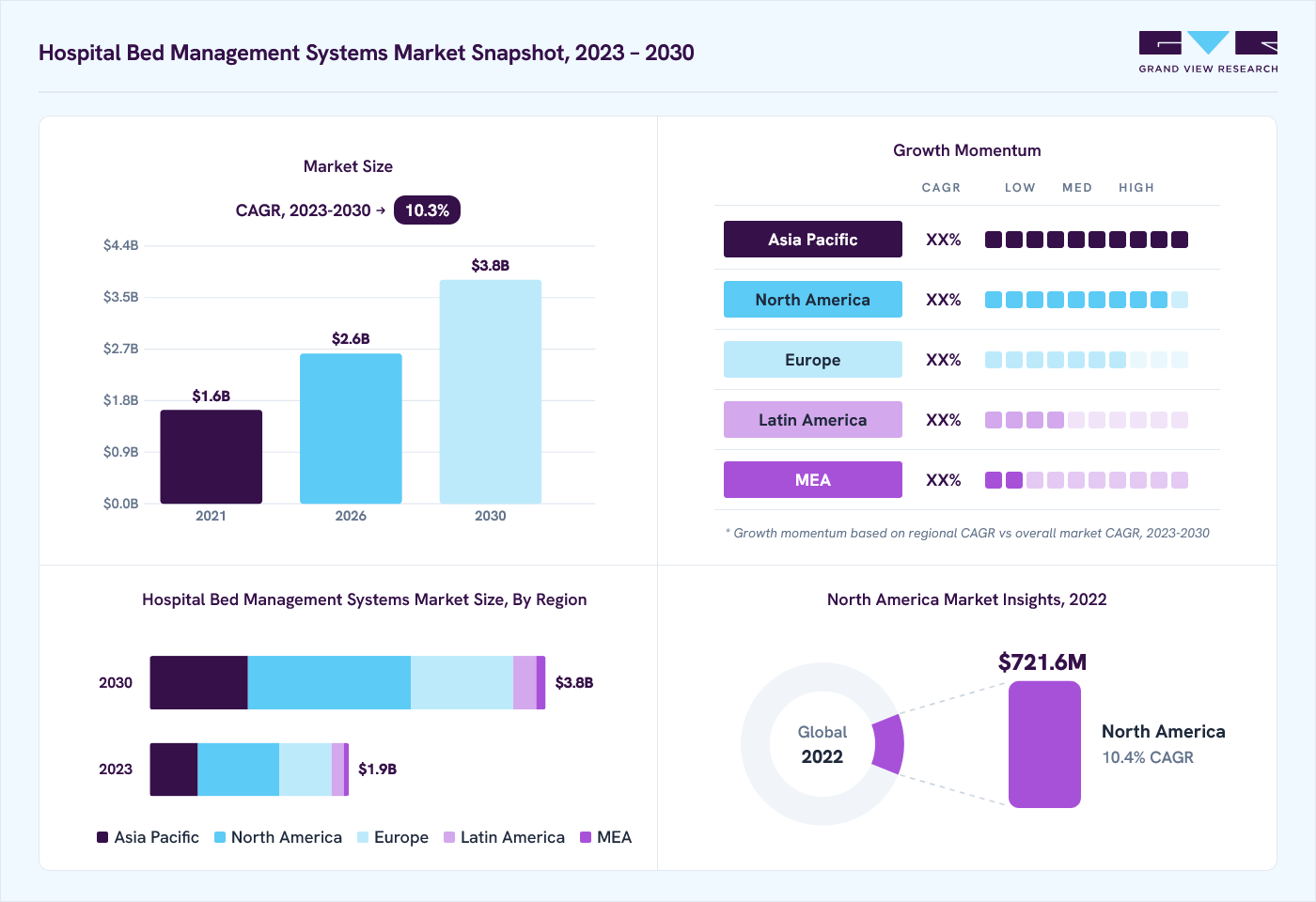 Source: Grand View Research, IR Documents, Primary Interviews, Paid DatabasesTo learn more about this report,
 Download Free Sample Report
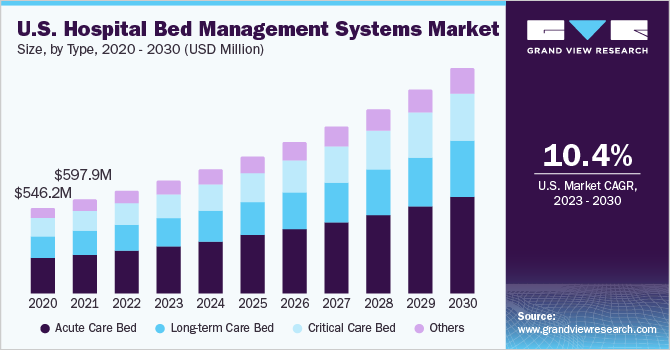
 For instance, according to the American Hospital Association Statistics 2023, approximately 34 million hospital admissions were recorded in the U.S. As a result, installation of hospital bed management system helps in the constant monitoring and tracking of patient flow, discharges, and admissions. It also helps in the identification of bed availability across every ward, particularly during periods of high demand.
 To learn more about this report, Download Free Sample Report
 Key companies are collaborating with emerging players to drive hospital automation. For instance, in October 2021, GE Healthcare and Apprise Health Insights partnered to introduce an automated statewide hospital bed management system in the U.S. This innovative step aimed to efficiently handle hospital data and provide real-time updates on occupancy, enabling medical facilities to use their resources optimally.
In addition, in August 2022, Dozee collaborated with Midmark India to launch smart connected beds equipped with sensor-based AI technology for monitoring vital signs. These advanced beds rely on hospital bed management systems to digitize and automate patient monitoring processes effectively. With such strategic partnerships promoting innovation, the hospital management system market is expected to experience significant growth, benefiting both healthcare providers and patients.
In 2020, the COVID-19 pandemic had a positive impact on the market owing to the exponential number of hospital admissions for COVID-19. According to the UK Health Security Agency, the rate of COVID-19 admissions was 10.62 per 100,000 people. Hence, the government took several initiatives to utilize their hospital beds best to serve the COVID-19 patients. In June 2021, the Bruhat Bengaluru Mahanagara Palike, launched a new bed allotment software for patients walking into COVID-19 C are Centers (CCC) and Physical Triaging Centres (PTC) in Bengaluru. Hence, this initiative supplemented the hospital bed management systems market during the COVID-19 pandemic.
Type Insights
Based on the type, the market is segmented into acute care bed, critical care bed and long-term care bed. The acute care bed segment dominated the market in 2022 and expected to grow at fastest CAGR of 10.68% during the forecast period. The growth is attributed to increasing acute care admission of patients for one to three days at healthcare facilities.
Acute care beds are used to diagnose, treat, and care for a wide range of symptoms, injuries, and conditions. The demand for acute care beds is expected to increase owing to the presence of a large number of acute care hospitals and a rising geriatric population. For instance, according to the Centers of Medicaid and Medicare Services, there were about 4,749 acute care hospitals in the U.S. In addition, key players in the market are offering acute care beds with smart technology to enhance patient comfort, safety and support active mobilization and patient outcomes. For instance, LINET offers the Eleganza 2 automatic hospital bed with a modern design for quality care at a higher level. Such offerings are expected to fuel the segment’s growth.
The long-term care bed segment is expected to have substantial growth during the forecast period. The increasing prevalence of chronic diseases such as cancer, diabetes, heart disease, chronic kidney diseases, and Alzheimer's disease are expected to propel the long-term care bed segment over the forecast period. For instance, according to the NIH, as of January 2022, it was estimated that 18.1 million population in the U.S. were cancer survivors. This represents about 5.4% of the population. In addition, the number of cancer survivors is anticipated to increase by 24% to 22.5 million by 2032. These factors contribute to the adoption and demand for long-term care beds in the healthcare industry.
Deployment Insights
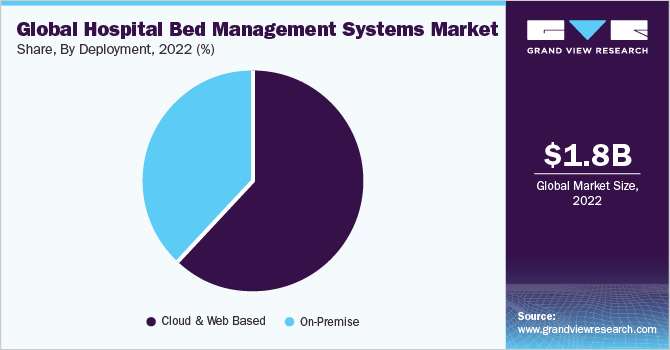
Based on the deployment mode, the market is segmented into cloud & web based and on-premises. The cloud & web-based segment is anticipated to dominate the global market in 2022 and expected to grow at fastest CAGR during the forecast period. The growth is attributed to increasing adoption of cloud solutions in clinics to improve efficacy and reduce cost.
 To learn more about this report, Download Free Sample Report
 Cloud solutions provide scalability, enabling healthcare organizations to easily adjust or expand their software usage based on their needs. This flexibility allows them to efficiently manage a increasing need of hospitals best and to accommodate a large patient pool without significant infrastructure investments. Furthermore, cloud offers real-time data sharing, data manipulation, security, storage flexibility, and reliability. These factors collectively contribute to the growing adoption and demand for cloud-based hospital management systems, empowering healthcare organizations to streamline their operations, enhance patient care, and optimize resource utilization.
The on-premises segment is expected to have substantial growth during the forecast period. The availability of new on-premises software offers healthcare organizations increased offline accessibility, compliance adherence, customization options, and data control. It allows organizations to have greater control over system upgrades and long-term cost considerations and offers flexibility to integrate with existing systems. These factors contribute to the demand for and adoption of on-premises software in the healthcare industry.
Regional Insights
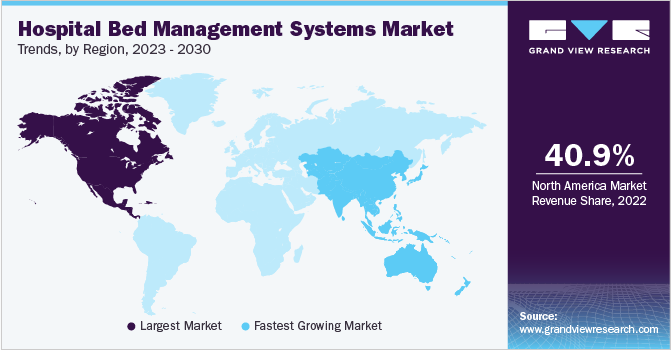
North America dominated the market with a revenue share of 40.9% in 2022. This can be attributed to the rapid adoption of technologically developed products. The regional growth is driven by factors such as the well-established infrastructure, the wide adoption of hospital bed management systems, and the presence of major market players in the region.
Furthermore, the growth of market in region is being driven by the emergence of advanced technologies such as cloud computing, artificial intelligence (AI), analytics, edge computing, and Internet of Things (IoT). These technologies are playing a vital role in transforming the maintenance management landscape. The adoption of hospital bed management systems enables healthcare facilities to track bed availability in real-time, automate bed allocation procedures and optimize patient flow.
 To learn more about this report, Download Free Sample Report
 The Asia Pacific region is predicted to experience significant growth in the forecast period. The growing awareness of computerized maintenance management systems (CMMS) among end-users will generate new opportunities for the market. In addition, governments of many countries are investing greatly in cloud and associated healthcare technologies to facilitate digital transformation, which has the potential to boost the market in Asia Pacific. For instance, in August 2021, the government of Delhi announced USD 19 million project to set up cloud-based hospital information management system. This initiative was expected to supplement the market in Asia Pacific.
Key Companies & Market Share Insights
The market is competitive owing to the presence of systems providers. The market players are adopting various strategies, such as partnerships & collaborations, new product launches, and regional expansion to gain higher market shares. For instance, in June 2023, Medway NHS Foundation Trust, entered into partnership with TeleTracking Technologies to supply the Trust’s new Care Co-ordination Centre, a centralized, holistic approach for patient flow and bed management. This initiative was expected to boost the company’s hospital bed management systems. Some of the prominent players in the global hospital bed management systems market include:
-
Oracle
-
Epic Systems Corporation
-
GE Healthcare
-
Veradigm LLC
-
CentralSquare Technologies
-
Advanced Data Systems
-
Terawe Corp
-
Lyngsoe Systems A/S
-
The Access Group
-
EMIS Health
-
TeleTracking Technologies, Inc.
-
SAP
Hospital Bed Management Systems Market Report Scope
Report Attribute
Details
Market size in 2022
USD 1.8 billion
Estimated market size in 2026
USD 2.6 billion
Projected market size by 2030
USD 3.8 billion
Growth rate
CAGR of 10.3% from 2023 to 2030
The base year for estimation
2022
Historical data
2018 - 2021
Forecast period
2023 - 2030
Quantitative units
Revenue in USD million and CAGR from 2023 to 2030
Report coverage
Revenue forecast, company ranking, competitive landscape, growth factors, and trends
Segments covered
Type, deployment, region
Regional scope
North America; Europe; Asia Pacific; Latin America; Middle East & Africa
Country scope
U.S.; Canada; U.K.; Germany; France; Italy; Spain; Sweden; Norway; Denmark; China; Japan; India; Australia; South Korea; Thailand; Brazil; Mexico; Argentina; South Africa; Saudi Arabia; UAE; Kuwait
Key companies profiled
Oracle; Epic Systems Corporation; GE Healthcare; Veradigm LLC;CentralSquare Technologies; Advanced Data Systems; Terawe Corp; Lyngsoe Systems A/S; The Access Group; EMIS Health; TeleTracking Technologies, Inc.; SAP
Customization scope
Free report customization (equivalent to up to 8 analyst’s working days) with purchase. Addition or alteration to country, regional, and segment scope.
Pricing and purchase options
Avail of customized purchase options to meet your exact research needs. Explore purchase options
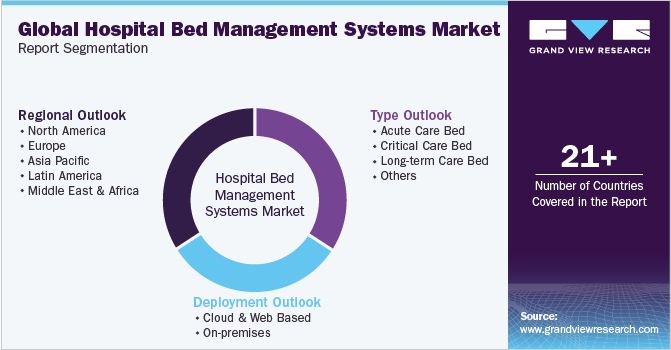
Global Hospital Bed Management Systems Market Report Segmentation
This report forecasts revenue growth at regional and country levels and provides an analysis of the latest industry trends in each of the sub-segments from 2018 to 2030. For the purpose of this study, Grand View Research has segmented the global hospital bed management systems market based on type, deployment, and region:
 To learn more about this report, Download Free Sample Report
 -
Hospital Bed Management Systems Type Outlook (Revenue, USD Million, 2018 - 2030)
-
Acute Care Bed
-
Critical Care Bed
-
Long-term Care Bed
-
Others
-
-
Hospital Bed Management Systems Deployment Outlook (Revenue, USD Million, 2018 - 2030)
-
Cloud & Web Based
-
On-premises
-
-
Hospital Bed Management Systems Regional Outlook (Revenue, USD Million, 2018 - 2030)
-
North America
-
U.S.
-
Canada
-
-
Europe
-
UK
-
Germany
-
France
-
Italy
-
Spain
-
Sweden
-
Norway
-
Denmark
-
-
Asia Pacific
-
Japan
-
China
-
India
-
Australia
-
Thailand
-
South Korea
-
-
Latin America
-
Brazil
-
Mexico
-
Argentina
-
-
Middle East & Africa
-
South Africa
-
Saudi Arabia
-
UAE
-
Kuwait
-
-
Frequently Asked Questions About This Report
The global hospital bed management systems market size was valued at USD 1.8 billion in 2022 and is estimated at USD 2.6 billion for 2026.
The global hospital bed management systems market is expected to grow at a CAGR of 10.3% from 2023 to 2030, reaching USD 3.8 billion by 2030.
Some key players operating in the hospital bed management systems market include Oracle, Epic Systems Corporation, GE Healthcare, Veradigm LLC, CentralSquare Technologies, Advanced Data Systems, Terawe Corp, Lyngsoe Systems A/S, The Access Group, EMIS Health, TeleTracking Technologies, Inc., SAP.
Key factors that are driving the hospital bed management systems market growth include increasing demand for efficient and effective hospital bed management system, and growing adoption of automation technologies in hospitals.
The acute care bed segment led with a 42.1% revenue share in 2025, and is the fastest-growing segment.
Asia Pacific is the fastest-growing region over the forecast period.
North America dominated with a revenue share of 40.9% in 2022.
The web/cloud based segment led with a 62.3% revenue share in 2025, and is the fastest-growing segment.
About the Author(s)
Healthcare IT Research Team
Healthcare · Healthcare ITThis report was authored by the healthcare it research team at Grand View Research - comprising two research analysts, one senior research analyst, and one industry expert - with specialized expertise in the healthcare it segment of the healthcare industry. All findings are based on proprietary healthcare databases, executive interviews, and regulatory analysis, subject to internal peer review prior to publication.
Last Updated:
Speak to Analyst -

Customize this report to your needs - add regions, segments, or data points, with 20% free customization.
Or view our licence options:


ISO 9001:2015 & 27001:2022 Certified
We are GDPR and CCPA compliant! Your transaction & personal information is safe and secure. For more details, please read our privacy policy.


