
- Home
- »
- Pharmaceuticals
- »
-
Human Growth Hormone Market Size Report, 2026-2040GVR Report cover

Human Growth Hormone Market (2026 - 2040)
Size, Share & Trends Analysis Report By Product Type (Branded Products, Biosimilars), By Application, By Dosing Frequency, By Distribution Channel, By Region, And Segment Forecasts
Market Size, 2025
$7.5BMarket Estimate, 2026
$9.0BMarket Forecast, 2040
$28.4BCAGR, 2026–2040
8.5%Human Growth Hormone Market Summary
The global human growth hormone market size was valued at USD 7.5 billion in 2025 and is projected to grow from USD 9.0 billion in 2026 to USD 28.4 billion by 2040, at a CAGR of 8.5% from 2026 to 2040. The market in North America held the highest market share in 2025. The main reason for the high demand of human growth hormone is adult hormone deficiency, especially Growth Hormone Deficiency (GHD). The estimated prevalence of GHD is approximately 2-3:10,000 population.
Key Market Trends & Insights
- By product type: Branded products segment held the largest market share of 64.1% in 2025.
- By application: Growth hormone deficiency segment held the largest market share in 2025.
- By dosing frequency: Daily hGH injection segment held the largest market share in 2025.
Regional Highlights
- Largest regional market: North America
- Fastest-growing regional market: Asia Pacific (highest CAGR, 2026-2040)
- By country: The U.S. held the largest market share in 2025
Market Size & Forecast
- Market size in 2025: USD 7.5 Billion
- Estimated market size in 2026: USD 9.0 Billion
- Projected market size by 2040: USD 28.4 Billion
- CAGR (2026-2040): 8.5%
Three ways to get this report
Buy it, customize it, or ask a question.Ask an Analyst
Analyst response in 1 business day
- AccessReport author, directly
- Reply timeWithin 1 working day
- No sales callDirect answer only
- FormatEmail reply
- CostFree, no cost
Get the Full Report
What the study covers
- FormatsPDF · Excel · Dashboard
- Timeline2026–2040 annual, 2025 base
- Coverage20+ countries, 5 regions
- Companies10+ key players profiled
Customize the Report
20% free customization
- IncludeCountries, segments, points
- TailorTo your product definition
- ExtendDeeper competitor detail
- OrA fully bespoke study
- Turnaround5–10 working days
In adults, GHD may be caused by pituitary tumors, traumas to the brain, or natural aging processes, which in turn, produce a series of symptoms such as the loss of muscle mass, the distribution of fat towards the abdomen, decreased bone density, lethargy, and metabolic disturbances. The non-specific nature of these symptoms often delays diagnosis, creating a significant unmet medical need. This unmet need drives the adoption of HGH therapy, as patients seek treatment to improve quality of life, manage metabolic complications, and restore hormonal balance. Growth disorders in children, such as short stature due to GHD, remain a foundational driver of the human growth hormone market.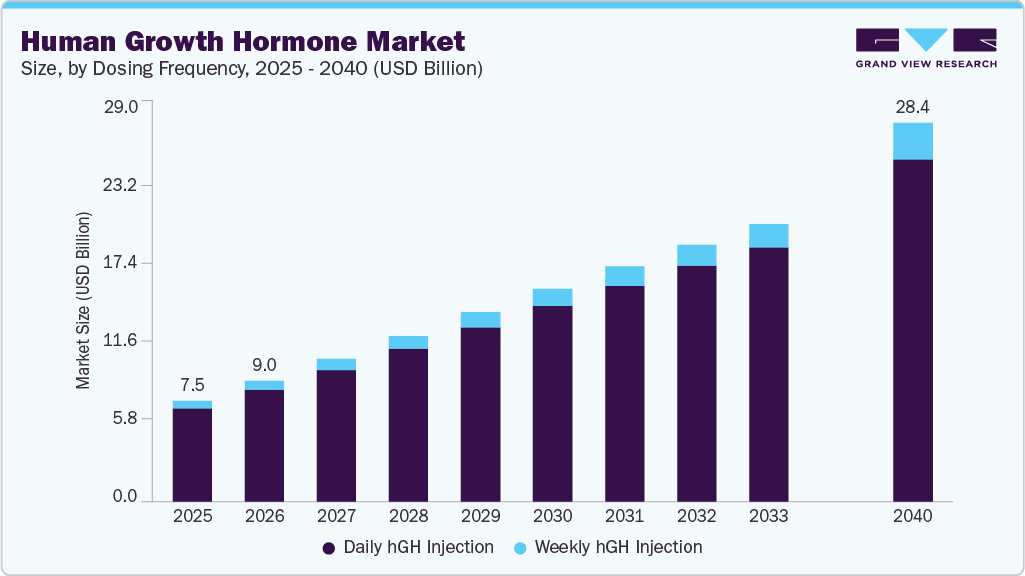 Source: Grand View Research, IR Documents, Primary Interviews, Paid DatabasesTo learn more about this report,
 Download Free Sample Report
 Technological innovations in human growth hormone delivery and formulation have significantly boosted market demand. The development of recombinant human growth hormone (rhGH) has replaced older extraction-based therapies, offering higher purity, improved safety, and consistent efficacy. These advances have expanded the therapeutic application of HGH in both pediatric growth disorders and adult hormone deficiencies, creating a larger patient base and increasing overall treatment adoption. Recent innovations such as long-acting HGH formulations and sustained-release injections have improved patient convenience by reducing the frequency of administration. The situation is improved for the patients, especially for the adults who need continuous treatment. Thus, the acceptance of HGH therapies is growing to a larger extent. Moreover, the auto-injectors and pre-filled pens have contributed to making the process of injections less painful and friendly, which in turn has positively affected the patients' acceptance and satisfaction.
The technological innovation regarding the formulation and delivery systems has been a significant growth driver in the Human Growth Hormone market. Patent activity clearly indicates a transformation towards temperature-stable formulations, sustained-release systems, and painless or non-invasive delivery methods. All these developments are intended to decrease the burden of treatment, boost patient adherence, and eliminate the daily injection-related difficulties, which in turn will lead to better clinical results and higher market acceptance.
The general trend reflected in the patents is that there is an increasing amount of R&D aimed at the transition of HGH therapy from daily injections to long-lasting, user-friendly, and technologically superior formats. The commercialization of these innovations will likely result in deeper market penetration through adherence enhancement, treatment burden reduction, and premium pricing support. The market of human growth hormones will continue to be driven by technology as the major competitive factor due to the ongoing developments in needle-free delivery, sustained-release systems, microneedle platforms, and high-stability formulations. The introduction of innovative delivery systems, such as the Easypod, an automated electronic injection device for growth hormone administration, has significantly contributed to the growth of the Human Growth Hormone market. These devices simplify the injection process, save patients’ time, and reduce the risk of dosing errors, as the correct dose is programmed and verified by a healthcare professional. Such technological advancements enhance patient adherence and convenience, making HGH therapy more accessible and effective, thereby supporting market expansion.
Market Concentration & Characteristics
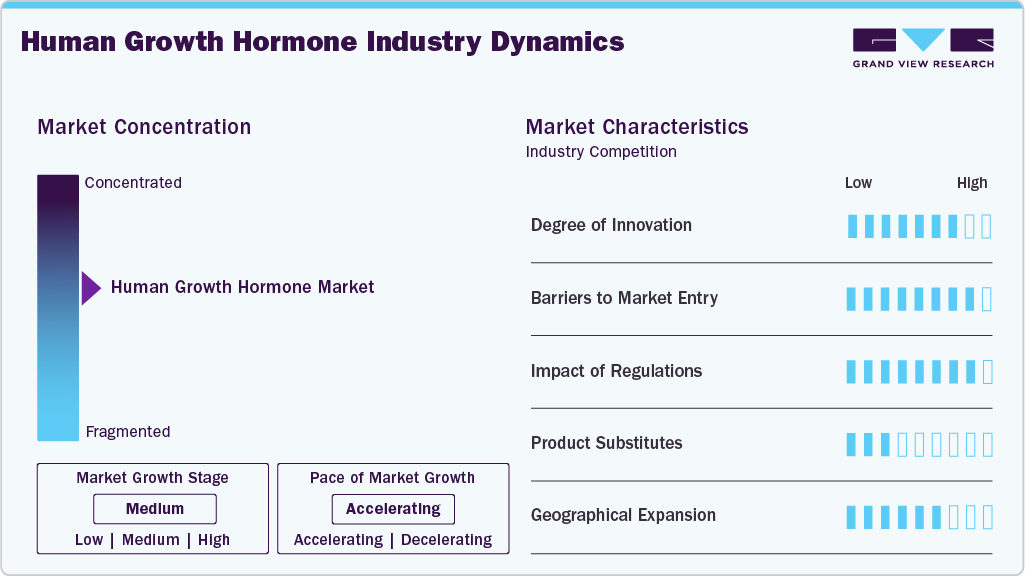
The human growth hormone market shows a strong focus on innovation driven by heavy research investment from major pharmaceutical companies to improve treatment outcomes and patient experience. New long-acting formulations that reduce injection frequency, advanced delivery devices such as auto-injectors and sustained-release technologies are gaining traction, enhancing adherence and broadening treatment utility compared to traditional daily injections. These developments reflect a shift toward more patient-centric therapies that can improve quality of life for individuals with growth hormone deficiency. Recombinant DNA-based products and enhancements such as weekly somatrogon have set new standards in therapy performance and convenience. This innovation cycle continues to elevate the clinical value of human growth hormones and stimulate competitive differentiation.
Barriers to entry into the human growth hormone market are substantial, owing to the capital-intensive nature of biologics development and the complex technical requirements for producing safe, effective hormone therapies. New entrants must navigate advanced molecular biology processes, biological fermentation lines and stringent manufacturing standards to compete with established producers. Clinical development for growth hormone treatments demands extensive long-term studies and robust evidence for safety and efficacy, which raise both cost and time before commercialization. Established brand loyalty and integrated supply chains of major players further challenge smaller firms attempting to gain traction in key therapeutic segments. These factors maintain a high threshold for fresh competition in the market.
 To learn more about this report, Download Free Sample Report
 Regulatory oversight heavily influences the human growth hormone market because these biologic therapies require rigorous approval processes and ongoing surveillance to ensure patient safety. Agencies such as the U.S. Food and Drug Administration and the European Medicines Agency mandate comprehensive clinical data, quality controls, and long-term monitoring, prolonging development timelines and elevating compliance costs for manufacturers. Strict prescription controls are also enforced in many jurisdictions to prevent misuse, adding another layer of regulatory complexity. These regulatory frameworks protect patients but can slow the introduction of new treatments and limit flexibility in expanding indications.
Substitutes in the therapeutic landscape for human growth hormones include biosimilar growth hormone products that offer cost-competitive alternatives to branded formulations while maintaining clinical equivalence. In addition, certain growth hormone-releasing hormone analogs or adjunct hormonal therapies may be used in clinical practice, shaping treatment preferences in specific patient subgroups. While these alternatives do not replace human growth hormones in all indications, they exert pricing pressure and provide clinicians with broader options for individualized care. Emerging non-injectable modalities under investigation could also influence future substitution trends, although human growth hormones remain the standard for approved growth hormone deficiency therapy.
Geographical expansion is a key growth strategy for human growth hormone manufacturers, with developed markets like North America and Europe currently holding significant shares due to advanced healthcare systems and reimbursement frameworks. Rapidly developing regions in Asia-Pacific, Latin America and the Middle East are attracting investment as improved diagnosis rates and healthcare access create new patient pools. Tailored regulatory strategies and partnerships with local distributors help companies enter these underpenetrated markets, while harmonized regulatory standards in economic zones like the European Union support cross-border commercialization. This expansion aligns with rising awareness of growth hormone deficiency and increasing demand for effective therapies globally
Product Type Insights
The branded products segment dominated the market with the largest revenue share of 64.1% in 2025, driven by strong clinical evidence, established product reliability, and expanding therapeutic indications. The drivers affecting market growth include rising pediatric and adult GHD diagnoses, broader adoption of long-acting formulations, increasing use of hGH in rare disorders, improved patient-support programs, and new research demonstrating benefits in emerging conditions such as long COVID. Supply chain stabilization efforts and brand loyalty also reinforce segment strength. Some of the branded hGH products such as GENOTROPIN, NGENLA, and MiniQuick remain central to treatment pathways even as market dynamics shift. For instance, in December 2024, Pfizer announced intermittent GENOTROPIN supply constraints expected through April 2025, a result of high and unpredictable demand and market disruptions. Despite scaling up production 3.5-fold in 2023, shortages persisted, prompting Pfizer to guide providers toward available options such as once-weekly NGENLA and select MiniQuick doses. The company emphasized continued commitment to the GHD community and expanded its Pfizer Bridge Program to support access continuity.
The biosimilars segment is projected to grow at a fastest CAGR of 10.2% over the forecast period driven by patent expiries of leading biologics, rising healthcare cost-containment efforts, improved regulatory pathways, and expanding access initiatives that support affordable, high-quality alternatives for pediatric and adult GHD patients. Biosimilar human growth hormone products are playing an increasingly influential role in transforming global hGH therapy landscape. As blockbuster brands such as Norditropin and Genotropin face patent expirations, manufacturers are accelerating investments in biosimilar versions to capitalize on reduced development risk and established clinical pathways. Biosimilar hGH therapies offer comparable efficacy, safety, and immunogenicity to innovator biologics, while significantly lowering treatment costs an important consideration in regions with growing GHD diagnoses and constrained healthcare budgets. Their emergence is particularly impactful in markets where daily human growth hormones remain the standard of care, providing cost-effective alternatives without compromising therapeutic outcomes.
Application Insights
The Growth Hormone Deficiency (GHD) segment dominated the market with the largest revenue share of 43.0% in 2025, driven by its high prevalence in both pediatric and adult populations and its position as the most widely approved indication for human growth hormone therapy. Strong clinical evidence supporting treatment efficacy, along with early diagnosis and structured screening programs in developed regions, has significantly contributed to its dominance. In addition, favorable reimbursement frameworks across major markets such as North America and Europe have improved patient access to therapy. The chronic nature of GHD often requires long-term or lifelong treatment, resulting in sustained drug utilization and repeat prescriptions. High physician awareness established treatment guidelines, and the availability of multiple recombinant growth hormone products further support consistent demand, reinforcing the leading revenue contribution of the GHD segment within the overall human growth hormone market.
The idiopathic short stature segment is projected to grow at a fastest CAGR of 7.40% over the forecast period, fueled by increasing awareness regarding growth-related disorders and a growing willingness among parents to pursue treatment options for non-life-threatening conditions. Advances in diagnostic technologies and improved growth assessment tools are enabling earlier identification of short stature cases, which is expanding the eligible patient pool. In addition, gradual broadening of clinical guidelines and regulatory acceptance in several regions is supporting wider adoption of growth hormone therapy for this indication. Rising disposable incomes, improving healthcare infrastructure in emerging economies, and increasing investments in pediatric endocrinology are further accelerating growth. The shift toward personalized treatment approaches and expanding access through specialty and online pharmacies also contribute to the rapid expansion of the Idiopathic Short Stature segment.
Dosing Frequency Insights
The Daily hGH Injection segment dominated the market with the largest revenue share of 92.1% in 2025, driven by rising growth hormone deficiency (GHD) diagnosis rates, clinical emphasis on early treatment initiation, and expanding recombinant hGH availability. In addition, evidence of poor long-term compliance, along with studies showing performance misuse risks among athletes, has accelerated investment in smart injectors and connected monitoring systems to ensure safer, more effective hGH therapy. According to a study published by PubMed in 2024, the mean incidence ranged from 1 in 28,800 to 1 in 46,700 cases per year. Another study reported incidence (20 year cumulative) of 93 per 100,000 for girls and 127 per 100,000 for boys. These studies are based on the registry of growth hormone users in Italy. Daily Human Growth Hormones remain the standard therapy for children and adults with growth hormone deficiency (GHD), requiring strict long-term adherence to achieve optimal height outcomes, metabolic benefits, and quality-of-life improvements. However, adherence is a major challenge. According to a study of December 2023, about 50% of children fail to administer more than one injection per week and declining the compliance from 85% in year one to 74% by year three, especially among males, younger patients, and those with childhood-onset GHD. In addition, adults depicted similar patterns with 34% of patients in a survey were highly compliant, highlighting a persistent unmet need for tools that simplify dosing routines and support behavioral adherence.
The weekly hGH Injection segment is projected to grow at a fastest CAGR of 10.35% over the forecast period, fueled by reducing treatment burden, improving adherence, and offering clinical outcomes comparable to daily regimens. Some of the key drivers include poor adherence to daily injections, advances in long-acting protein engineering, increasing diagnosis of pediatric GHD, patient preference for reduced injection frequency, and regulatory approvals of novel long-acting formulations that support broader adoption in both developed and emerging markets. In addition, innovations are driving the market growth. Some of the weekly hGH formulations such as Somapacitan, NGENLA (somatrogon), and TransCon hGH, have significantly shifted the therapeutic landscape. According to a study published in February 2024, in a Phase I study, a once-weekly dose of Somapacitan was predicted to elevate IGF-I levels compared with daily injections, demonstrating controlled pharmacodynamics with reduced dosing frequency. This reinforced the clinical potential of weekly administration without compromising safety.
Distribution Channel Insights
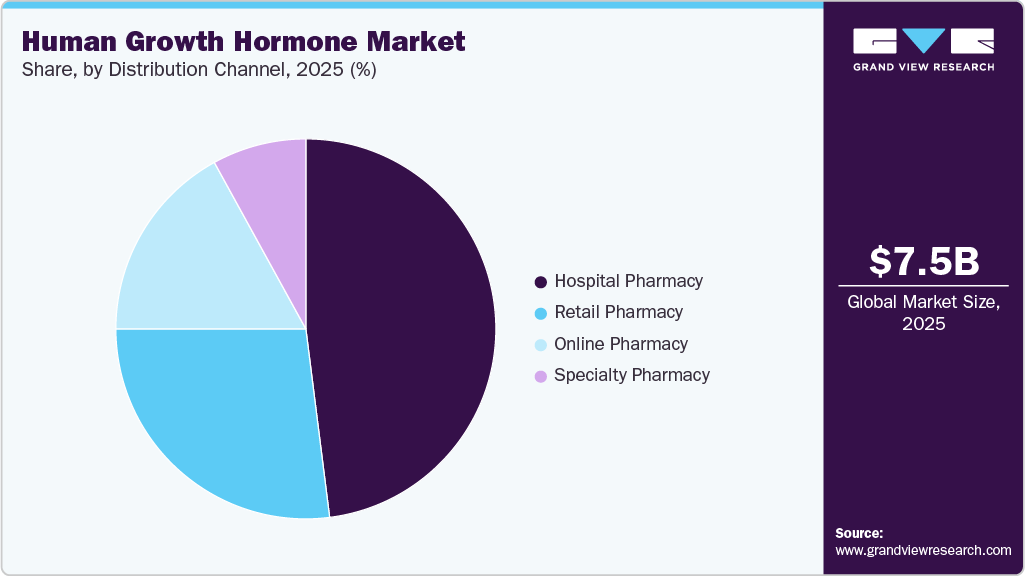
The hospital pharmacy segment dominated the market with the largest revenue share of 48.0% in 2025 driven by the high reliance on hospital settings for the diagnosis, initiation, and monitoring of human growth hormone therapy. Growth hormone treatment often requires specialist supervision, particularly for pediatric and complex adult cases, which reinforces hospital pharmacies as the primary point of dispensing. These pharmacies are well equipped to manage biologics, including maintaining strict cold-chain storage and handling requirements, ensuring drug safety and efficacy. In addition, hospital pharmacies benefit from strong integration with endocrinology departments, enabling coordinated treatment planning and follow-up. Favorable reimbursement policies, direct procurement agreements with manufacturers, and higher patient trust in hospital-based distribution further support the segment’s dominance, especially in developed healthcare systems where hospital-led care remains central to chronic disease management.
 To learn more about this report, Download Free Sample Report
 The online pharmacy segment is projected to grow at a fastest CAGR of 11.20% over the forecast period driven by increasing adoption of digital healthcare platforms and rising demand for convenient access to long-term therapies. Patients requiring ongoing growth hormone treatment are increasingly turning to online pharmacies for prescription refills, home delivery, and competitive pricing. The expansion of telemedicine services and e-prescription systems has further facilitated the growth of this channel by reducing the need for frequent hospital visits. In addition, improved cold-chain logistics, secure payment systems, and regulatory support for licensed e-pharmacies have enhanced consumer confidence. Growth is particularly strong in urban areas and emerging markets, where internet penetration is rising and healthcare access gaps are being addressed through digital distribution models.
Regional Insights
North America Human Growth Hormone Market Trends
North America held the largest human growth hormone market in 2025 driven by advanced healthcare systems, widespread diagnostic usage, and high treatment adoption for growth hormone deficiency and related conditions. The region benefits from strong presence of major pharmaceutical players that supply a broad range of hGH therapies and delivery options. Patients and clinicians in this market show high preference for innovative injection formats that improve compliance and dosing schedules. Robust clinical awareness of growth disorders and established endocrinology networks sustain consistent prescription volumes across age groups. Extensive treatment penetration and significant per capita healthcare spending further reinforce the region’s dominance.
U.S. Human Growth Hormone Market Trends
The U.S. human growth hormone market represents the majority of North America’s revenue, fueled by extensive clinical research and high prevalence of recognized growth hormone deficiency cases. Physicians in the U.S. adopt new treatment approaches and long-acting formulations that enhance patient adherence and therapy outcomes. Large patient population for both pediatric and adult hormone therapy supports volume growth and broad clinical utilization. Strong infrastructure for specialty biologics and extensive endocrinology care channels ensure ready access to human growth hormones for eligible patients. Higher healthcare expenditure per capita underpins sustained market expansion and treatment availability.
Europe Human Growth Hormone Market Trends
Europe human growth hormone market holds a substantial share, propelled by wide clinical uptake across major national healthcare systems and strong diagnostic networks for growth disorders. Endocrinology specialists in Germany, France, and the UK contribute to robust treatment demand with emphasis on biosimilar and advanced hGH therapies. Healthcare infrastructure supports structured patient management and therapy continuity for conditions such as Turner syndrome and adult growth hormone deficiency. Collaborative research and cross-border clinical protocols help streamline therapy standards across European markets. Growing clinical awareness and health service reach enhance regional market stability and incremental expansion.
The UK human growth hormone market shows steady growth supported by a well-organized endocrinology care system and substantial clinician engagement in hormone deficiency treatment. High diagnostic rates for pediatric and adult growth conditions contribute to a consistent patient base requiring injectable therapy. Uptake of long-acting hGH formulations and wider distribution through specialist clinics optimize treatment adherence. Health providers emphasize therapeutic quality and patient monitoring, strengthening clinical outcomes. Increasing awareness among caretakers and healthcare professionals drives overall treatment demand and market resilience.
Germany human growth hormone market is a leading European segment with strong engagement in recombinant hormone therapies and biosimilars for growth hormone deficiency. Well-developed biotechnology manufacturing capabilities attract both domestic and international product offerings. Specialist pediatric and adult endocrinologists contribute to early diagnosis and timely initiation of injection treatment. Large patient pools with recognized growth disorders support sustained therapy volumes. Rising acceptance of innovative delivery technologies enhances patient convenience and market depth.
France human growth hormone market maintains robust demand driven by comprehensive clinical care systems and widespread recognition of growth hormone deficiency conditions. Healthcare institutions emphasize therapy adherence and outcome tracking, encouraging clinicians to adopt proven injectable regimens. Patient access to qualified endocrinology care extends into adult hormone therapy segments, expanding treatment volume. The market benefits from participation in clinical research and integration of newer treatment options. Growth in patient populations requiring hormone support underpins steady regional expansion.
Asia Pacific Human Growth Hormone Market Trends
Asia Pacific human growth hormone market is expected to register the fastest CAGR over the forecast period, supported by expanding healthcare access, rising clinical awareness, and increasing diagnosis of growth hormone deficiency. China, Japan, and India lead demand with large populations and improving medical infrastructure that enables broader therapy availability. Healthcare improvements in diagnostics and endocrinology care fuel patient admissions into hGH treatment protocols. Pharmaceutical investment in the region enhances product availability, including biosimilars that expand affordability. Rapid urbanization and growing middle-class healthcare demand further accelerate market expansion.
Japan human growth hormone market exhibits strong clinical uptake anchored by advanced healthcare services and high physician engagement in endocrine disorders. Growing focus on early detection and long-term management of growth hormone deficiency supports consistent therapy adoption. Established healthcare delivery channels and specialist care networks ensure patient access to human growth hormones across age groups. Innovation in injection devices and dosing schedules improves patient adherence. Stable economic conditions and expanding treatment protocols contribute to market resilience and incremental growth.
China human growth hormone market is a key Asia Pacific growth driver with rapidly increasing diagnosis and treatment initiation for growth hormone deficiency. Expanding endocrinology clinics and improving healthcare access in urban and peri-urban areas enhance patient reach. Large pediatric population segments present significant demand for hormone therapy. Local manufacturing efforts and rising acceptance of biosimilar products improve supply and cost dynamics. Heightened clinical awareness among physicians supports therapy uptake across diverse patient groups.
Latin America Human Growth Hormone Market Trends
Latin America human growth hormone market shows steady expansion supported by growing healthcare access and improving clinical capabilities in major countries such as Brazil. Adoption of specialty hormone therapies increases as endocrinology services strengthen in urban centers. Rising awareness of growth disorders contributes to higher treatment rates in pediatric and adult segments. Healthcare spending growth enables broader inclusion of human growth hormones in treatment offerings. Collaborative research and regional medical networks improve clinical protocols and therapy outcomes.
Brazil human growth hormone market demonstrates consistent demand driven by its large population and expanding endocrinology care infrastructure. Increased treatment penetration for recognized growth hormone deficiency supports market traction. Clinicians adopt varied injection options that enhance patient adherence and outcomes. Healthcare facilities in metropolitan areas lead treatment delivery and patient monitoring. Awareness campaigns and expanding medical services contribute to incremental market growth.
Middle East & Africa Human Growth Hormone Market Trends
Middle East & Africa human growth hormone market is emerging with gradual expansion as clinical infrastructure and endocrinology care strengthen in key countries such as Saudi Arabia. Incremental increases in diagnostic rates and specialist treatment availability support market growth. Adoption of injectable growth hormone therapy rises alongside improved healthcare access in urban regions. Patient awareness and treatment options expand as endocrinology practice grows. Partnerships with global pharmaceutical suppliers enhance local product availability, contributing to market development.
Saudi Arabia human growth hormone market is a prominent segment within the Middle East and Africa region, with demand driven by increasing recognition of growth hormone deficiency in clinical practice. Growth hormone treatment adoption rises with enhanced specialist endocrinology care and diagnostic capabilities. Well-equipped healthcare centers in major cities provide access to injectable therapies. Patient education and referral networks support treatment initiation and follow-up care. Continuous improvements in clinical service delivery expand market reach and availability of therapy.
Key Human Growth Hormone Company Insights
Novo Nordisk A/S and Pfizer Inc. are expanding their recombinant human growth hormone portfolios and enhancing patient-centric delivery devices to support long-term therapy adherence. Ascendis Pharma A/S focuses on long-acting growth hormone formulations that reduce injection frequency and improve compliance across pediatric and adult populations. Sandoz International GmbH (Novartis) and Merck KGaA, through EMD Serono, emphasize established recombinant products and biosimilar development to improve treatment accessibility while maintaining clinical efficacy. Eli Lilly and Company and Ferring Pharmaceuticals invest in formulation innovation and lifecycle management. GeneScience Pharmaceuticals, Anhui Anke Biotechnology, and LG Chem strengthen market presence through domestic manufacturing capabilities, targeted clinical development, and regional expansion strategies, particularly in Asia Pacific markets.
Key Human Growth Hormone Companies:
The following key companies have been profiled for this study on the human growth hormone market.
- Novo Nordisk A/S
- Pfizer Inc.
- Ascendis Pharma A/S
- Sandoz International GmbH (Novartis)
- Merck KGaA / EMD Serono
- Eli Lilly and Company
- Ferring Pharmaceuticals
- GeneScience Pharmaceuticals
- Anhui Anke Biotechnology
- LG Chem
Recent Developments
-
In May 2025, Sandoz introduced a new 15 mg/1.5 mL concentration of its biosimilar GH (Omnitrope) for Egypt, improving access and dosage flexibility for children with short stature.
-
In August 2024, GeneScience Pharmaceuticals announced NMPA approval of a new Jintrolong dosage form (27 IU/4.5 mg/0.5 mL vial), enabling improved dosing options for weekly PEG-rhGH in China.
-
In November 2023, Merck Healthcare ANZ announces Saizen once-daily somatropin is now reimbursed on Australia’s PBS for adults with severe growth hormone deficiency, improving continuity of care for patients previously treated since childhood.
Human Growth Hormone Market Report Scope
Report Attribute
Details
Market size in 2025
USD 7.5 billion
Estimated market size in 2026
USD 9.0 billion
Projected market size by 2040
USD 28.4 billion
Growth rate
CAGR of 8.5% from 2026 to 2040
Base year for estimation
2025
Historical data
2021 - 2024
Forecast period
2026 - 2040
Quantitative units
Revenue in USD million/billion and CAGR from 2026 to 2040
Report coverage
Revenue forecast, company ranking, competitive landscape, growth factors, trends
Segments covered
Product type, application, dosing frequency, distribution channel, region
Regional scope
North America; Europe; Asia Pacific; Latin America; Middle East & Africa
Country scope
U.S.; Canada; Mexico; UK; Germany; France; Italy; Spain; Denmark; Sweden; Norway; China; Japan; India; Australia; South Korea; Thailand; Brazil; Argentina; South Africa; Saudi Arabia; UAE; Kuwait
Key company profiled
Novo Nordisk A/S; Pfizer Inc.; Ascendis Pharma A/S; Sandoz International GmbH (Novartis); Merck KGaA / EMD Serono; Eli Lilly and Company; Ferring Pharmaceuticals; GeneScience Pharmaceuticals; Anhui Anke Biotechnology; LG Chem
Customization scope
Free report customization (equivalent up to 8 analysts working days) with purchase. Addition or alteration to country, regional & segment scope.
Pricing and purchase options
Avail customized purchase options to meet your exact research needs. Explore purchase options
Global Human Growth Hormone Market Report Segmentation
This report forecasts revenue growth at global, regional, and country levels and provides an analysis of the latest industry trends in each of the sub-segments from 2021 to 2040. For this study, Grand View Research has segmented the global human growth hormone market report based on product type, application, dosing frequency, distribution channel, and region:
-
Product Type Outlook (Revenue, USD Million, 2021 - 2040)
-
Branded Products
-
Norditropin
-
Sogroya
-
Skytrofa
-
Ngenla
-
Other
-
-
Biosimilars
-
-
Application Outlook (Revenue, USD Million, 2021 - 2040)
-
Growth Hormone Deficiency (GHD)
-
Adult Growth Hormone Deficiency
-
Pediatric Growth Hormone Deficiency
-
-
Turner Syndrome
-
Idiopathic Short Stature
-
Prader-Willi Syndrome
-
Small for Gestational Age (SGA)
-
Other Indications
-
-
Dosing Frequency Outlook (Revenue, USD Million, 2021 - 2040)
-
Daily hGH Injection
-
Weekly hGH Injection
-
-
Distribution Channel Outlook (Revenue, USD Million, 2021 - 2040)
-
Hospital Pharmacy
-
Retail Pharmacy
-
Online Pharmacy
-
Specialty Pharmacy
-
-
Regional Outlook (Revenue, USD Million, 2021 - 2040)
-
North America
-
U.S.
-
Canada
-
Mexico
-
-
Europe
-
UK
-
Germany
-
France
-
Italy
-
Spain
-
Denmark
-
Sweden
-
Norway
-
-
Asia Pacific
-
Japan
-
China
-
India
-
Australia
-
South Korea
-
Thailand
-
-
Latin America
-
Brazil
-
Argentina
-
-
Middle East & Africa
-
South Africa
-
Saudi Arabia
-
UAE
-
Kuwait
-
-
Frequently Asked Questions About This Report
The global human growth hormone market size was valued at USD 7.5 billion in 2025 and is estimated at USD 9.0 billion in 2026.
Key factors that are driving the human growth hormone market growth include increasing R&D activities, a robust product pipeline, and initiatives taken by various government and private organizations to spread awareness about GH deficiencies and its treatment.
Asia Pacific is the fastest-growing region over the forecast period.
Branded products segment led with a 64.1% revenue share in 2025, while biosimilars is the fastest-growing segment.
Growth hormone deficiency segment held the largest revenue share in 2025, while idiopathic short stature is the fastest-growing area.
Daily hGH injection segment held the largest revenue share in 2025 and weekly hGH Injection is the fastest-growing.
The global human growth hormone market is expected to grow at a CAGR of 8.5% from 2026 to 2040, reaching USD 28.4 billion by 2040.
North America dominated the global human growth hormone market with a share of 35.89% in 2025.
Key players include Novo Nordisk A/S, Pfizer Inc., Ascendis Pharma A/S, Sandoz International GmbH (Novartis), Merck KGaA / EMD Serono, Eli Lilly and Company, Ferring Pharmaceuticals, GeneScience Pharmaceuticals, Anhui Anke Biotechnology and LG Chem
About the Author(s)
Pharmaceuticals Research Team
Healthcare · PharmaceuticalsThis report was authored by the pharmaceuticals research team at Grand View Research - comprising two research analysts, one senior research analyst, and one industry expert - with specialized expertise in the pharmaceuticals segment of the healthcare industry. All findings are based on proprietary healthcare databases, executive interviews, and regulatory analysis, subject to internal peer review prior to publication.
Last Updated:
Speak to Analyst

Customize this report to your needs - add regions, segments, or data points, with 20% free customization.
Or view our licence options:


ISO 9001:2015 & 27001:2022 Certified
We are GDPR and CCPA compliant! Your transaction & personal information is safe and secure. For more details, please read our privacy policy.


