
- Home
- »
- Organic Chemicals
- »
-
Hydroxyapatite Market Size And Share Report, 2026-2033GVR Report cover

Hydroxyapatite Market (2026 - 2033)
Size, Share & Trends Analysis Report By Product (Nano Sized, Micro Sized), By End-use (Dental Care, Plastic Surgery, Orthopedics), By Region, And Segment Forecasts
Market Size, 2025
$2.7BMarket Estimate, 2026
$2.9BMarket Forecast, 2033
$4.8BCAGR, 2026–2033
7.5%Hydroxyapatite Market Summary
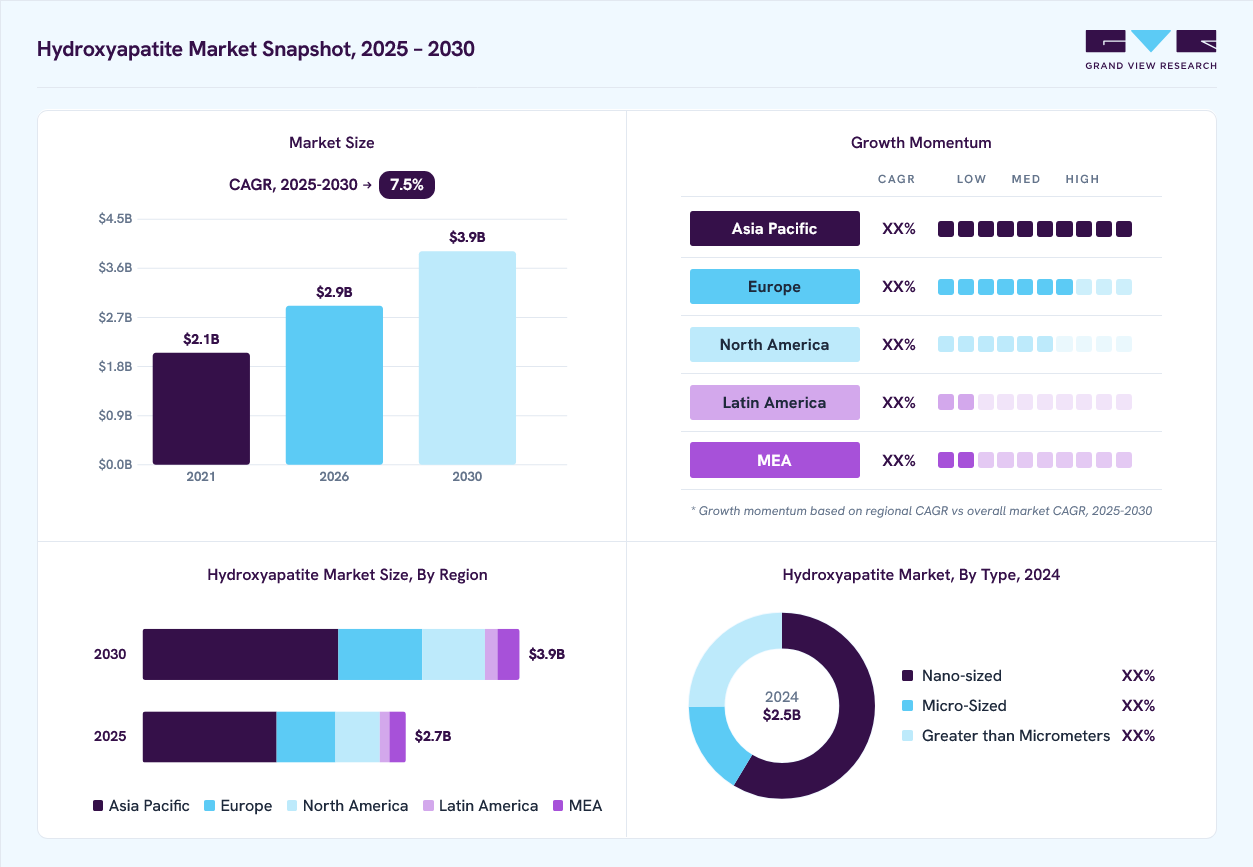
The global hydroxyapatite market size was valued at USD 2.7 billion in 2025 and is projected to grow from USD 2.9 billion in 2026 to USD 4.8 billion by 2033, at a CAGR of 7.5% from 2026 to 2033. Asia Pacific dominated the market, accounting with the highest revenue share of 50.9% in 2025. The hydroxyapatite market is expected to experience significant growth due the increasing demand for biocompatible materials in medical and dental applications primarily drives this trend.
 Source: Grand View Research, IR Documents, Primary Interviews, Paid DatabasesTo learn more about this report,
 Download Free Sample Report
Key Market Trends & Insights
- By product: Micro hydroxyapatite held a dominant position, contributing 56.4% of total revenue in 2025.
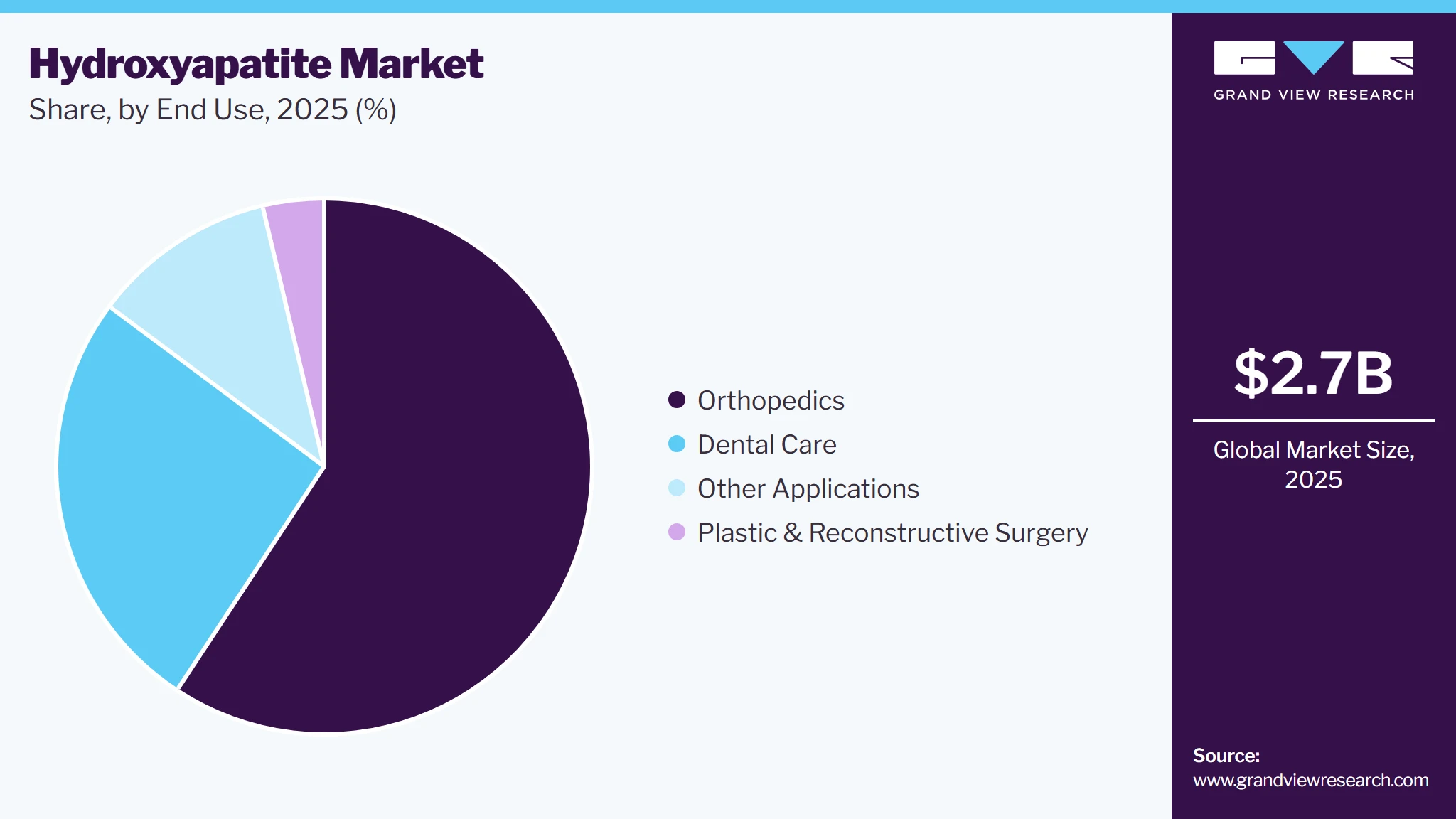
- By end use: Orthopedics held a dominant position, contributing 57.0% of total revenue in 2025.
Regional Highlights
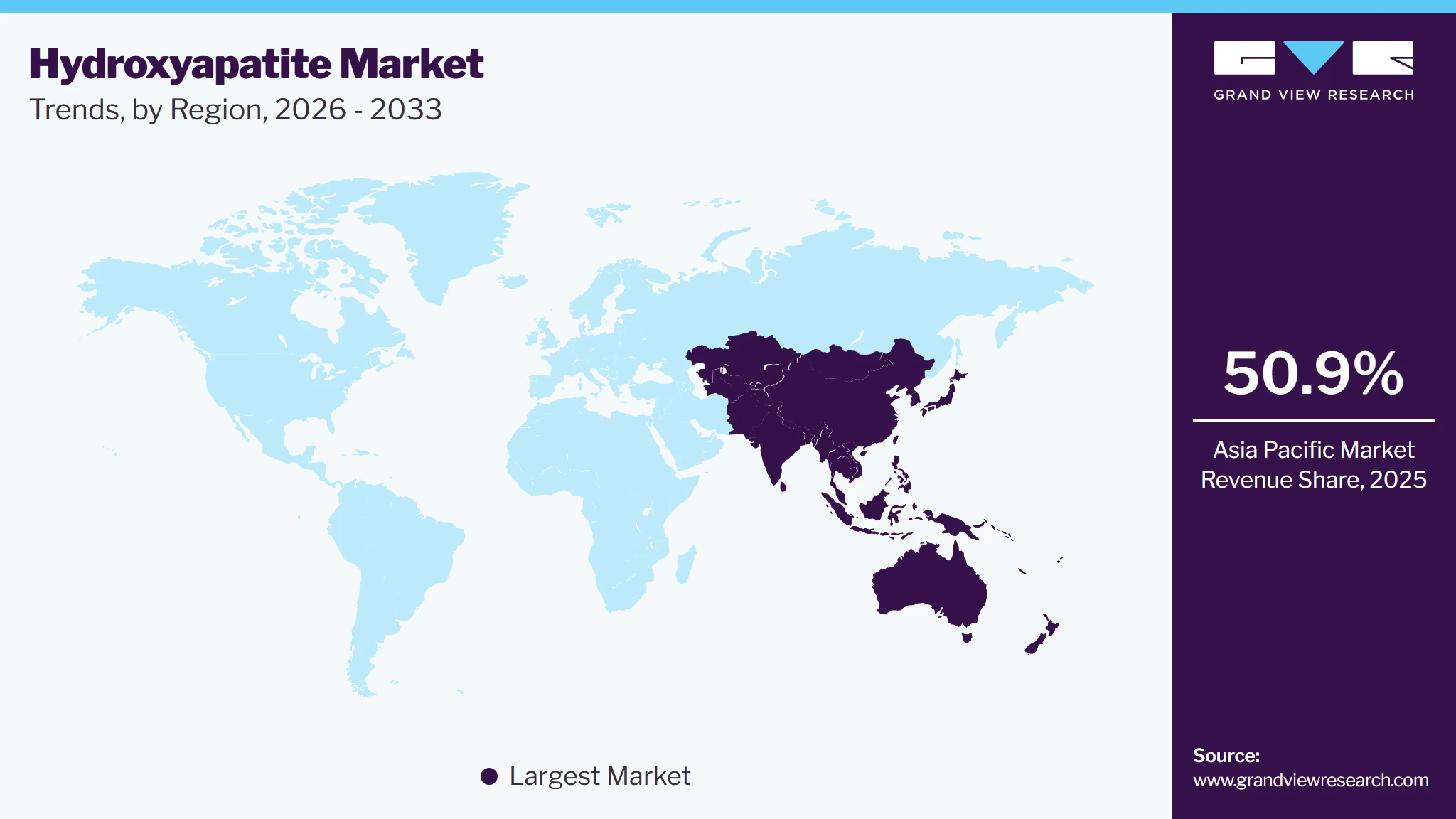
- Largest regional market: Asia Pacific (50.9% revenue share, 2025)
- By country: China held the largest market share in 2025
Market Size & Forecast
- Market size in 2025: USD 2.7 Billion
- Estimated market size in 2026: USD 2.9 Billion
- Projected market size by 2033: USD 4.8 Billion
- CAGR (2026-2033): 7.5%
Prism AI by Grand View Research Free to tryAsk a question about the hydroxyapatite marketTry asking✓Every figure cited from GVR research Prefer the report? Download free sample →
As healthcare professionals adopt advanced regenerative medicine techniques, the need for hydroxyapatite in implants, coatings, and fillers has significantly grown. The growing incidence of orthopedic disorders, including osteoporosis and bone fractures particularly among the elderly has increased demand for hydroxyapatite-based products used in bone grafting and implant coatings, supporting market growth. Moreover, as awareness of oral health increases and dental treatments advance, the importance of hydroxyapatite in dental restorations and its role as a bioactive component in toothpaste and other dental care products continues to rise, further contributing to market expansion.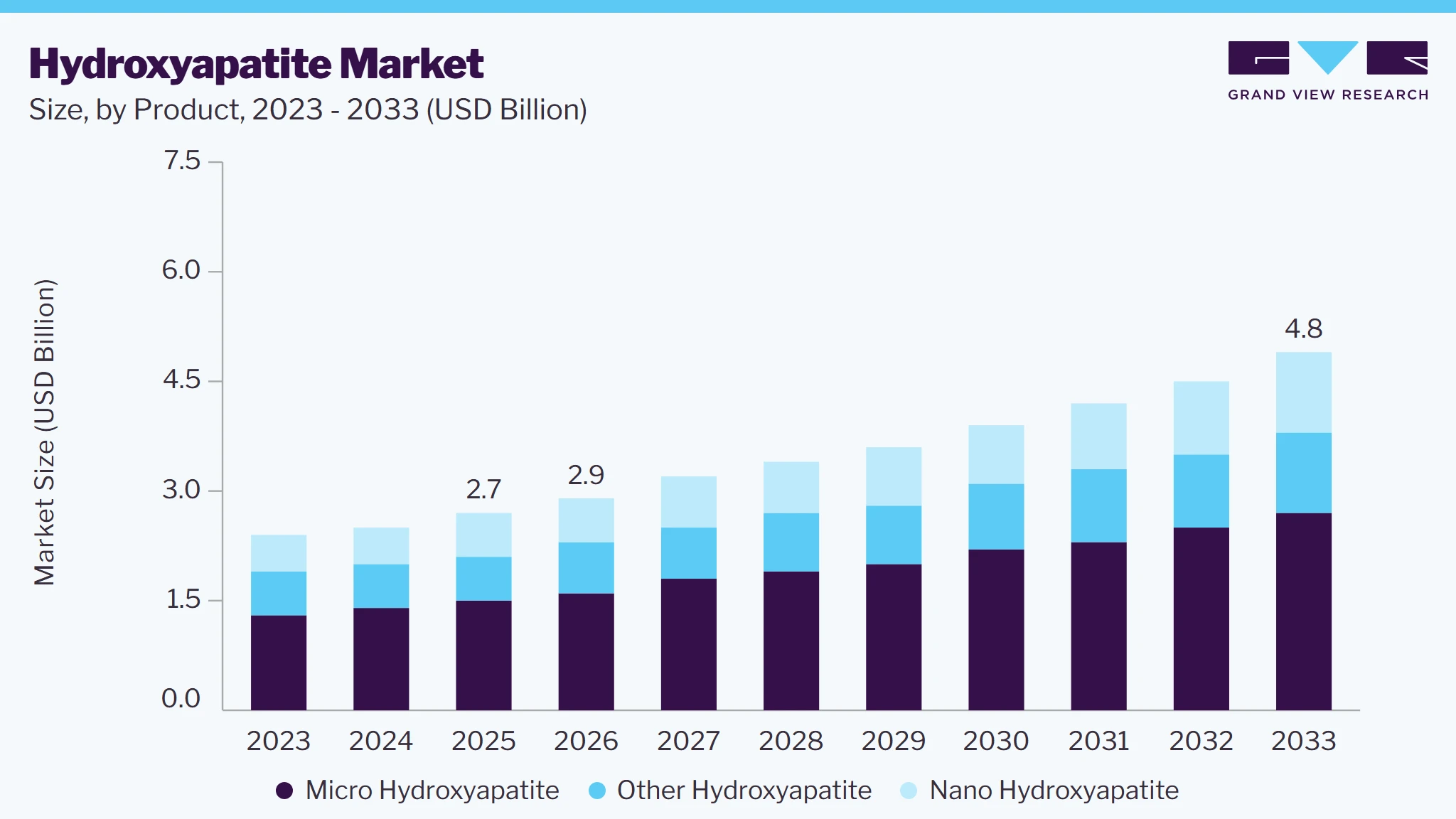 To learn more about this report, Download Free Sample Report
Hydroxyapatite (HA) is a naturally occurring mineral form of calcium apatite, primarily composed of calcium and phosphorus. It is the main inorganic component of human bones and teeth, providing rigidity and structural strength. Due to its biocompatibility, osteoconductive properties, and chemical similarity to natural bone, HA is widely used in biomedical applications, particularly in bone grafts, dental implants, and coatings for orthopedic devices. Its porous structure encourages bone ingrowth, making it an excellent choice for medical implants. In addition, hydroxyapatite is utilized in cosmetics and dental care products to help repair and strengthen enamel.
Market Dynamics
The hydroxyapatite market is supported by increasing adoption of bioactive materials across orthopedic, dental, and reconstructive medical procedures. Rising demand for synthetic bone graft substitutes, driven by the growing prevalence of musculoskeletal disorders, dental implants, and trauma-related surgeries, is strengthening product utilization in clinical applications. Continuous advancements in biomaterial engineering have enhanced hydroxyapatite's biocompatibility, osteo-conductivity, and integration with natural bone tissue, broadening its application scope in regenerative medicine. At the same time, manufacturers are investing in nano-sized hydroxyapatite technologies to improve mechanical performance, bioactivity, and controlled drug delivery capabilities. However, stringent regulatory approval requirements and the high cost associated with advanced biomaterial production remain challenges for new product commercialization. Strategic collaborations between biomaterial developers, medical device manufacturers, and research institutions are further accelerating commercialization and market penetration worldwide.
The increasing volume of orthopedic reconstructions, spinal fusion procedures, dental implant placements, and trauma surgeries is a major factor driving demand for hydroxyapatite-based biomaterials. Hydroxyapatite closely resembles the mineral composition of human bone, enabling superior osteo-conductivity and excellent biocompatibility compared to many conventional implant materials. As healthcare providers increasingly prioritize faster bone healing, improved implant stability, and long-term clinical outcomes, hydroxyapatite is being widely incorporated into bone graft substitutes, implant coatings, and tissue engineering scaffolds. The growing incidence of osteoporosis, osteoarthritis, fractures, and tooth loss among aging populations further supports sustained demand for hydroxyapatite products across hospitals, dental clinics, and specialty care centers.
Manufacturers are also expanding their research and commercialization efforts to develop nano-sized and high-purity hydroxyapatite materials with enhanced biological performance. Innovations in additive manufacturing, biomimetic coatings, and regenerative medicine have increased the use of hydroxyapatite in customized implants and next-generation orthopedic devices.
The hydroxyapatite market faces a restraint in the form of stringent regulatory approval frameworks and extensive product validation requirements for medical-grade biomaterials. Since hydroxyapatite is primarily used in implantable medical devices, bone graft substitutes, and regenerative medicine products, manufacturers must demonstrate comprehensive evidence regarding biocompatibility, mechanical strength, sterility, manufacturing consistency, and long-term clinical safety before commercialization. Compliance with international quality standards, clinical evaluation protocols, and post-market surveillance requirements significantly extends product development timelines while increasing regulatory costs. Small and medium-sized manufacturers often face resource constraints in conducting extensive clinical studies and maintaining regulatory documentation, delaying product launches and limiting market entry. The differences in approval pathways across major healthcare markets require companies to undertake separate validation processes for different regions, adding operational complexity and increasing commercialization risks. These regulatory challenges can slow innovation, postpone revenue generation, and reduce the pace at which advanced hydroxyapatite technologies reach healthcare providers.
The growing focus on regenerative medicine and precision healthcare presents a significant opportunity for the hydroxyapatite market, particularly through the adoption of nano-sized hydroxyapatite. Due to its high surface area, improved bioactivity, and closer resemblance to natural bone mineral, nano-sized hydroxyapatite is increasingly being utilized in advanced tissue engineering, stem cell therapies, bioactive coatings, and controlled drug delivery systems. Research institutions and medical device manufacturers are actively exploring its potential in next-generation scaffolds and personalized implants designed to accelerate tissue regeneration and improve patient outcomes. These developments are expanding hydroxyapatite's application beyond conventional orthopedic and dental uses into broader biomedical fields.
Advancements in three-dimensional printing, nanotechnology, and bio-fabrication are enabling manufacturers to develop customized implants with improved structural and biological performance. Growing investments in regenerative medicine research by public institutions, universities, and private healthcare companies are accelerating commercialization opportunities for innovative hydroxyapatite formulations.
Analyst Perspective
The hydroxyapatite market is well positioned for sustained growth as healthcare systems increasingly prioritize regenerative therapies and advanced biomaterials that improve patient outcomes. Demand is expected to remain strongest in orthopedic and dental applications, supported by rising procedure volumes and an aging global population. Nano-sized hydroxyapatite is likely to gain significant traction due to its enhanced bioactivity and expanding role in tissue engineering and drug delivery. While stringent regulatory requirements and lengthy product validation processes may slow commercialization, they also reinforce product quality and clinical confidence. Companies that invest in innovation, strategic partnerships, and scalable manufacturing capabilities will be better positioned to capture emerging opportunities in this evolving market.
Product Insights
Based on product, micro hydroxyapatite held a dominant position, contributing 56.4% of total revenue in 2025 and is expected to continue to dominate the industry over the forecast period. The hydroxyapatite particles engineered at a nanometer scale, enhancing their properties for various applications. These nanoparticles exhibit increased surface area and reactivity, making them ideal for use in biomedical fields, such as drug delivery and bone tissue engineering. Their small size allows for improved integration with biological systems, promoting better biocompatibility and functionality in medical applications.
The micro-sized segment consists of hydroxyapatite particles with a size range typically between 1 to 100 micrometers. These micro-sized particles are commonly used in applications such as bone grafting and dental implants, providing structural support and facilitating bone regeneration. Their larger size compared to nano-sized particles can enhance mechanical stability while promoting biocompatibility in medical and dental applications.
End-use Insights
By end use, orthopedics held a dominant position, contributing 57.0% of total revenue in 2025. In orthopedics hydroxyapatite is utilized in bone grafts, joint replacements, and fracture healing. Its biocompatibility and ability to promote bone growth make it ideal for enhancing the integration of implants and supporting bone regeneration in orthopedic procedures.
 To learn more about this report, Download Free Sample Report
Plastic surgery increasingly utilizes hydroxyapatite due to its biocompatibility and ability to promote bone regeneration. This innovative material is often used in facial reconstructive procedures and implants, enhancing surgery's aesthetic and functional outcomes. Its integration into the plastic surgery sector highlights the growing demand for advanced biomaterials in medical applications.
Regional Insights
Asia Pacific dominated the hydroxyapatite market with the highest revenue share of 50.9% in 2025. The rapidly aging population in the Asia-Pacific region is leading to a rise in bone and dental issues, which is increasing the demand for hydroxyapatite-based medical and dental products. Additionally, countries in this region are experiencing significant growth in healthcare spending, supported by improving economic conditions and government efforts to enhance healthcare infrastructure. This trend enhances access to innovative medical therapies, including hydroxyapatite, further driving market growth.
 To learn more about this report, Download Free Sample Report
China Hydroxyapatite Market Trends
China dominated the Asia Pacific hydroxyapatite market in 2025. In China, the market is rising due to increasing demand in biomedical applications, including dental implants, bone grafts, and orthopedic coatings. The expanding healthcare and biotechnology sectors, along with advancements in regenerative medicine, are driving market growth. In addition, rising investments in research and development, coupled with government support for medical innovations, are strengthening China's position as a key producer and consumer of hydroxyapatite.
North America Hydroxyapatite Market Trends
The North American market is driven by increasing demand in medical applications, including orthopedic implants, dental care, and bone regeneration treatments. Strong healthcare infrastructure, advanced research in bioceramics, and rising cosmetic dentistry trends support market growth. Additionally, the expanding use of hydroxyapatite in personal care and dietary supplements contributes to its demand.
The U.S. is expanding due to its growing applications in orthopedics, dental implants, and bone grafting procedures. The country's advanced healthcare infrastructure, rising geriatric population, and increasing focus on biocompatible materials drive demand.
Europe Hydroxyapatite Market Trends
The European market is driven by increasing demand in biomedical applications, particularly in orthopedics, dental implants, and bone grafting. Strong healthcare infrastructure, technological advancements, and growing investments in bioceramics contribute to market expansion. In addition, the rising focus on cosmetic dentistry and personal care applications boosts demand.
Latin America Hydroxyapatite Market Trends
Latin America market is growing due to increasing demand in dental care, orthopedics, and biomedical applications. Rising healthcare investments, expanding medical tourism, and greater awareness of advanced implant materials are key drivers. In addition, the region’s developing pharmaceutical and cosmetic industries contribute to market expansion.
Middle East & Africa Hydroxyapatite Market Trends
The Middle East and Africa region is experiencing growth due to rising demand for orthopedic and dental implants, driven by increasing healthcare investments and an aging population. Expanding medical infrastructure, particularly in Gulf countries, supports market expansion. In addition, growing interest in cosmetic dentistry and biomedical research contributes to demand.
Key Hydroxyapatite Company Insights
Some of the key players operating in the market include APS Materials Inc. and Linde Plc
-
APS Materials Inc. is a U.S.-based company specializing in advanced thermal spray coatings for various industries, including biomedical, aerospace, energy, and industrial applications. APS Materials is recognized for its expertise in plasma spray technology, particularly in hydroxyapatite coatings used for orthopedic and dental implants to enhance biocompatibility and osseointegration. The company offers customized coating solutions tailored to improve wear resistance, corrosion protection, and thermal insulation. Its services cater to a global clientele, including medical device manufacturers, aviation companies, and industrial equipment producers.
-
Berkeley Advanced Biomaterials (BAB), a subsidiary of GNI Group Ltd., is a significant developer and manufacturer of biomaterials for orthopedic, dental, and spinal applications. the company specializes in calcium phosphate-based biomaterials, including hydroxyapatite and bone graft substitutes, widely used in bone regeneration and repair. BAB focuses on supplying high-quality medical-grade materials to global healthcare markets, working closely with medical device manufacturers and research institutions. Since its acquisition by GNI Group Ltd., a Japan-based biopharmaceutical company, BAB has expanded its global footprint, leveraging synergies in biomaterial innovation and regenerative medicine.
Key Hydroxyapatite Companies:
The following key companies have been profiled for this study on the hydroxyapatite market.
-
APS Materials Inc.
-
Berkeley Advanced Biomaterials (GNI Group Ltd)
-
Bio-Rad Laboratories Inc.
-
CGbio
-
Fluidinova
-
The Lubrizol Corporation
-
Granulab Sdn. Bhd.
-
SigmaGraft Biomaterials
-
Taihei Chemica Industrial Co. Ltd.
-
Zimmer Biomet
Competitive Benchmarking
Category
Operating Strategies
Competitive Edge
Weakness
Established Players (APS Materials Inc., Zimmer Biomet, Bio-Rad Laboratories, Inc., The Lubrizol Corporation, Berkeley Advanced Biomaterials (GNI Group Ltd), Taihei Chemica Industrial Co. Ltd.)
- Focus on expanding diversified biomaterial portfolios through continuous investment in research, product innovation, and clinical validation.
- Strengthen market presence through strategic acquisitions, distribution partnerships, and collaborations with hospitals and medical device manufacturers.
- Operate large-scale manufacturing facilities with stringent quality management systems to ensure regulatory compliance and consistent product performance.
- Allocate significant resources toward global regulatory approvals, post-market surveillance, and physician education programs to support long-term commercialization.
- Strong brand recognition and established relationships with orthopedic, dental, and healthcare providers worldwide.
- Extensive financial resources enable sustained investment in advanced biomaterials, manufacturing technologies, and product development.
- Broad geographic footprint supported by well-developed distribution networks and customer service infrastructure.
- Comprehensive product portfolios addressing multiple clinical applications, allowing cross-selling opportunities and stronger customer retention.
- Higher operational and compliance costs resulting from complex manufacturing and global regulatory obligations.
- Longer product development and commercialization timelines due to extensive clinical validation requirements.
- Organizational complexity may reduce flexibility in responding quickly to niche market opportunities and technological shifts.
- Dependence on mature healthcare markets can limit growth rates compared to rapidly expanding emerging economies.
Emerging Players (CGbio, Fluidinova, Granulab Sdn. Bhd., SigmaGraft Biomaterials)
- Concentrate on specialized hydroxyapatite technologies such as nano-sized materials, customized formulations, and regenerative medicine applications.
- Collaborate with universities, research institutes, and biotechnology companies to accelerate innovation and product development.
- Target high-growth regional markets and niche clinical applications through focused commercialization strategies.
- Utilize agile manufacturing and flexible production capabilities to rapidly respond to evolving customer requirements.
- Ability to introduce innovative biomaterials and advanced formulations with shorter development cycles.
- Greater operational flexibility to customize products for specific medical applications and customer specifications.
- Strong emphasis on emerging technologies including tissue engineering, 3D printing, and nanotechnology-enabled biomaterials.
- Lean organizational structures facilitate faster strategic decision-making and quicker adaptation to changing market trends.
- Limited financial capacity may restrict large-scale research programs, international expansion, and production scaling.
- Lower brand visibility compared to established multinational biomaterial and medical device companies.
- Greater dependence on third-party distributors and strategic alliances to access global healthcare markets.
- Limited clinical evidence and regulatory approvals in certain regions can slow adoption among healthcare providers and large medical institutions.
Recent Developments
-
In February 2024, Sangi Co., Ltd.'s remineralizing toothpaste was introduced into the market. The U.S. Space Technology Hall of Fame. Inspired by NASA technology, this toothpaste contains Medical Hydroxyapatite, an ingredient recognized for its ability to prevent tooth decay.
-
In May 2023, HAPPE Spine, an orthopedic implants manufacturer, and medical device company, announced that one of its products, INTEGRATE-C Interbody Fusion System, got 510(k) clearance from the FDA. This system is the first interbody fusion cage fully integrated with hydroxyapatite and designed with porosity, promoting bone ingrowth and enhancing cell signaling. It is intended to be radiolucent and radiovisible, enhancing imaging during and after surgery. The significance of this advancement is that the system offers various sizes and angles to suit different patient anatomies.
Hydroxyapatite Report Scope
Report Attribute
Details
Market size in 2025
USD 2.7 billion
Estimated market size in 2026
USD 2.9 billion
Projected market size by 2033
USD 4.8 billion
Growth rate
CAGR of 7.5% from 2026 to 2033
Base year for estimation
2025
Historical data
2021 - 2024
Forecast period
2026 - 2033
Quantitative units
Revenue in USD billion/million, and CAGR from 2026 to 2033
Report coverage
Revenue forecast, company ranking, competitive landscape, growth factors, and trends
Segments covered
Product, end-use, region
Regional scope
North America; Europe; Asia Pacific; Latin America; Middle East & Africa
Country scope
U.S.; Canada; Mexico; Germany; UK; France; Italy; Spain; China; India; Japan; South Korea; Brazil; Argentina; Saudi Arabia; South Africa
Key companies profiled
APS Materials Inc., Zimmer Biomet, Bio-Rad Laboratories Inc., CGbio, Fluidinova, The Lubrizol Corporation, Granulab Sdn. Bhd., SigmaGraft Biomaterials, Berkeley Advanced Biomaterials (GNI Group Ltd), and Taihei Chemica Industrial Co. Ltd.
Customization scope
Free report customization (equivalent up to 8 analysts' working days) with purchase. Addition or alteration to country, regional & segment scope.
Pricing and purchase options
Avail customized purchase options to meet your exact research needs. Explore purchase options
Global Hydroxyapatite Market Report Segmentation
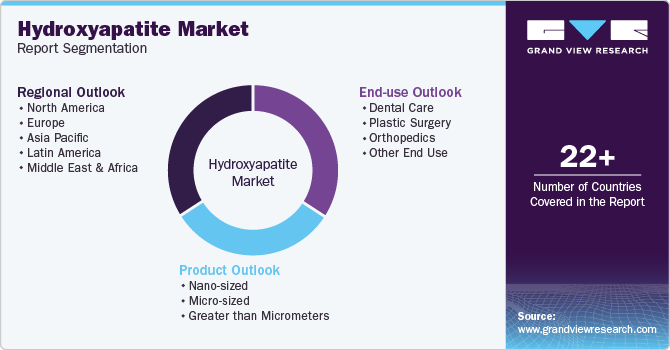
This report forecasts revenue and volume growth at global, regional, and country levels and provides an analysis of the latest industry trends in each of the sub-segments from 2021 to 2033. For the purpose of this study, Grand View Research has segmented the global hydroxyapatite market report on the basis of product, end-use and region.
 To learn more about this report, Download Free Sample Report
-
Product Outlook (Volume, Tons; Revenue, USD Billion, 2021 - 2033)
-
Nano-sized
-
Micro-sized
-
Greater than Micrometers
-
-
End-use Outlook (Volume, Tons; Revenue, USD Billion, 2021 - 2033)
-
Dental Care
-
Plastic Surgery
-
Orthopedics
-
Other End Use
-
-
Regional Outlook (Volume, Tons; Revenue, USD Billion, 2021 - 2033)
-
North America
-
U.S.
-
Canada
-
Mexico
-
-
Europe
-
Germany
-
UK
-
France
-
Italy
-
Spain
-
-
Asia Pacific
-
China
-
India
-
Japan
-
South Korea
-
-
Latin America
-
Brazil
-
Argentina
-
-
Middle East & Africa
-
Saudi Arabia
-
South Africa
-
-
Research Methodology
The hydroxyapatite market figures in this report are based on a proven research process that combines executive interviews with secondary research from proprietary databases, company filings, and recognized regulatory and institutional sources. Market size is built through value-chain sizing - reconciling supply-side and demand-side estimates - and triangulated with bottom-up and top-down approaches. Every estimate passes multiple levels of expert validation before publication, with each hydroxyapatite segment quantified using the revenue-capture definitions in the table below.
Segment Definition
Segment - Product
Revenue capture definition
Nano-sized
Revenue growth is supported by increasing adoption in regenerative medicine, implant coatings, and tissue engineering, where enhanced bioactivity and superior osteoconductive properties improve clinical performance and command premium pricing.
Micro-sized
Commercial expansion is driven by extensive utilization in bone graft substitutes, dental fillers, and composite biomaterials, offering an optimal balance between mechanical strength, handling characteristics, and biological integration.
Greater than Micrometers
Value realization is generated through demand for bulk hydroxyapatite granules and porous structures used in orthopedic defect filling, scaffold fabrication, and load-bearing applications requiring long-term structural support.
Segment - End Use
Revenue capture definition
Dental Care
Revenue generation is strengthened by growing demand for dental implants, bone augmentation procedures, periodontal regeneration, and remineralization products that utilize hydroxyapatite for enhanced osseointegration and enamel restoration.
Plastic Surgery
Market earnings are supported by increasing incorporation in craniofacial reconstruction, facial contour correction, and maxillofacial procedures, where biocompatible graft materials improve aesthetic and functional outcomes.
Orthopedics
Income expansion is fueled by rising use in bone void fillers, spinal fusion devices, trauma reconstruction, and joint replacement procedures, supported by the increasing prevalence of musculoskeletal disorders and age-related bone degeneration.
Other End Uses
Business growth is derived from expanding applications in drug delivery systems, biomedical research, veterinary medicine, and tissue engineering platforms, creating new commercialization opportunities across emerging healthcare technologies.
Estimation Model
Layer Name
Key Question
Description
Raw Material & Production Layer
What forms the supply base?
Evaluate the production of hydroxyapatite using naturally derived and synthetic calcium phosphate sources, including calcium carbonate, calcium hydroxide, phosphoric acid, and biogenic materials. Assess synthesis technologies such as wet chemical precipitation, hydrothermal processing, sol-gel methods, solid-state reactions, and biomimetic techniques. The analysis also covers raw material sourcing, quality control, particle size engineering, manufacturing capacity, purification processes, regulatory compliance, and regional production clusters shaping global supply.
Application Adoption Layer
Where is hydroxyapatite consumed?
Examine hydroxyapatite adoption across dental care, orthopedics, plastic surgery, tissue engineering, drug delivery, and biomedical research. Market penetration is supported by increasing demand for bone graft substitutes, implant coatings, dental restoratives, regenerative medicine products, and bioactive scaffolds designed to improve bone regeneration, implant integration, and long-term clinical performance.
Consumption Intensity Layer
How much hydroxyapatite is utilized?
Analyze consumption patterns by evaluating procedure volumes, implant production, bone graft utilization, healthcare expenditure, manufacturing output, and research activities across key end-use sectors. The assessment considers demand from hospitals, dental clinics, medical device manufacturers, research institutions, and biotechnology companies to determine regional and global consumption intensity.
Revenue Layer
How is market revenue generated?
Market revenue is generated through the commercial sale of nano-sized, micro-sized, and larger hydroxyapatite products supplied to medical device manufacturers, dental material producers, hospitals, research organizations, and healthcare providers. Business growth is supported by expanding orthopedic and dental procedures, continuous innovation in regenerative medicine, increasing investment in advanced biomaterials, strategic partnerships, and the growing adoption of customized implant and tissue engineering solutions across global healthcare markets.
Delivered Customizations
This report has been delivered with the following In-depth customizations
Client Request
Customization Delivered
Value Adds
Regional Segmentation
The study delivers detailed country-level analysis across major hydroxyapatite production and consumption markets. It evaluates raw material availability, manufacturing technologies, production capacity, supply chain dynamics, import-export trends, pricing outlook, regulatory frameworks, healthcare infrastructure, and downstream demand from orthopedic, dental, plastic surgery, and biomedical research applications.
Enables stakeholders to identify high-growth regional markets, evaluate manufacturing capabilities, optimize procurement strategies, understand regulatory landscapes, and prioritize investments based on healthcare demand, production potential, and supply chain resilience.
Competitive Benchmarking
The report provides a comprehensive benchmarking assessment of leading hydroxyapatite manufacturers, covering product portfolios, particle size specialization, manufacturing technologies, production capabilities, geographic footprint, distribution networks, research and development initiatives, quality certifications, operational efficiency, and recent strategic developments.
Supports organizations in assessing competitive positioning, identifying technological strengths, benchmarking innovation capabilities, establishing strategic collaborations, and strengthening market differentiation through advanced biomaterial development and commercialization.
Opportunity Assessment
The study evaluates emerging growth opportunities across nano-sized hydroxyapatite, regenerative medicine, tissue engineering, implant coatings, drug delivery systems, 3D-printed biomaterials, and personalized orthopedic and dental solutions. It also examines opportunities created by increasing investments in advanced healthcare technologies, biomaterial innovation, and next-generation medical devices.
Assists companies in identifying high-potential investment opportunities, aligning product development with evolving clinical requirements, accelerating innovation strategies, expanding application portfolios, and strengthening long-term competitive advantage through technology-driven healthcare solutions.
Frequently Asked Questions About This Report
Based on product, micro hydroxyapatite held a dominant position, contributing 56.4% of total revenue in 2025. Its widespread adoption in bone graft substitutes, dental materials, and orthopedic implants, supported by an optimal balance of mechanical strength, biocompatibility, and handling characteristics, continues to reinforce its leading market position.
By end use, orthopedics held a dominant position, contributing 57.0% of total revenue in 2025. Increasing incidences of fractures, osteoporosis, joint degeneration, and spinal disorders, coupled with rising adoption of bone graft substitutes and implant procedures.
Asia Pacific is the fastest growing region with a CAGR of 7.9% in the forecast period, supported by expanding healthcare infrastructure, rising volumes of orthopedic and dental procedures, increasing investments in biomaterials research, and the growing presence of regional medical device manufacturing across China, Japan, South Korea, and India.
Nano hydroxyapatite is the fastest growing end use segment with a CAGR of 8.4% in the forecast period. An increasing focus on regenerative medicine, nanotechnology-enabled biomaterials, and patient-specific implant solutions is further accelerating the adoption of nano hydroxyapatite across advanced orthopedic, dental, and tissue engineering applications.
The global hydroxyapatite market is expected to grow at a compound annual growth rate of 7.5% from 2026 to 2033 to reach USD 4.8 billion by 2033.
Asia Pacific dominated the hydroxyapatite market with the highest revenue share of 50.9% in 2025. The region is supported by expanding medical device manufacturing, increasing orthopedic and dental procedure volumes, growing healthcare expenditure, and strong investments in biomaterials research across countries such as China, Japan, South Korea, and India.
Some key players operating in the hydroxyapatite market include APS Materials Inc., Zimmer Biomet, Bio-Rad Laboratories Inc., CGbio, Fluidinova, The Lubrizol Corporation, Granulab Sdn. Bhd. and others.
The global hydroxyapatite market size was valued at USD 2.7 billion in 2025 and is estimated at USD 2.9 billion in 2026.
The hydroxyapatite market is primarily driven by the rising demand for bone grafts, dental implants, and orthopedic procedures, fueled by an aging population and the increasing prevalence of musculoskeletal and dental disorders. Additionally, advancements in biomaterials, regenerative medicine, and nano-sized hydroxyapatite technologies are expanding its adoption in tissue engineering, implant coatings, and drug delivery applications.
About the Author(s)
Organic Chemicals Research Team
Bulk Chemicals · Organic ChemicalsThis report was authored by the organic chemicals research team at Grand View Research - comprising two research analysts, one senior research analyst, and one industry expert - with specialized expertise in the organic chemicals segment of the bulk chemicals industry. All findings are based on proprietary bulk chemicals databases, executive interviews, and regulatory analysis, subject to internal peer review prior to publication.
Last Updated:
Speak to Analyst

Customize this report to your needs - add regions, segments, or data points, with 20% free customization.
Or view our licence options:


ISO 9001:2015 & 27001:2022 Certified
We are GDPR and CCPA compliant! Your transaction & personal information is safe and secure. For more details, please read our privacy policy.


