
- Home
- »
- Pharmaceuticals
- »
-
Hyperkalemia Drugs Market Size, Industry Report, 2033GVR Report cover
![Hyperkalemia Drugs Market Size, Share & Trends Report]()
Hyperkalemia Drugs Market (2025 - 2033) Size, Share & Trends Analysis Report By Drug Class (Novel Oral Potassium Binders), By Distribution Channel (Hospital Pharmacies, Retail Pharmacies), By Region, And Segment Forecasts
- Report ID: GVR-4-68040-784-2
- Number of Report Pages: 100
- Format: PDF
- Historical Range: 2021 - 2023
- Forecast Period: 2025 - 2033
- Industry: Healthcare
- Report Summary
- Table of Contents
- Segmentation
- Methodology
- Download FREE Sample
-
 Download Sample Report
Hyperkalemia Drugs Market Summary
The global hyperkalemia drugs market size was estimated at USD 1.23 billion in 2024 and is projected to reach USD 3.87 billion by 2033, growing at a CAGR of 13.8% from 2025 to 2033. The market growth is primarily driven by an aging population, increasing prevalence of chronic diseases like chronic kidney disease (CKD) and heart failure, and comorbidities such as diabetes.
Key Market Trends & Insights
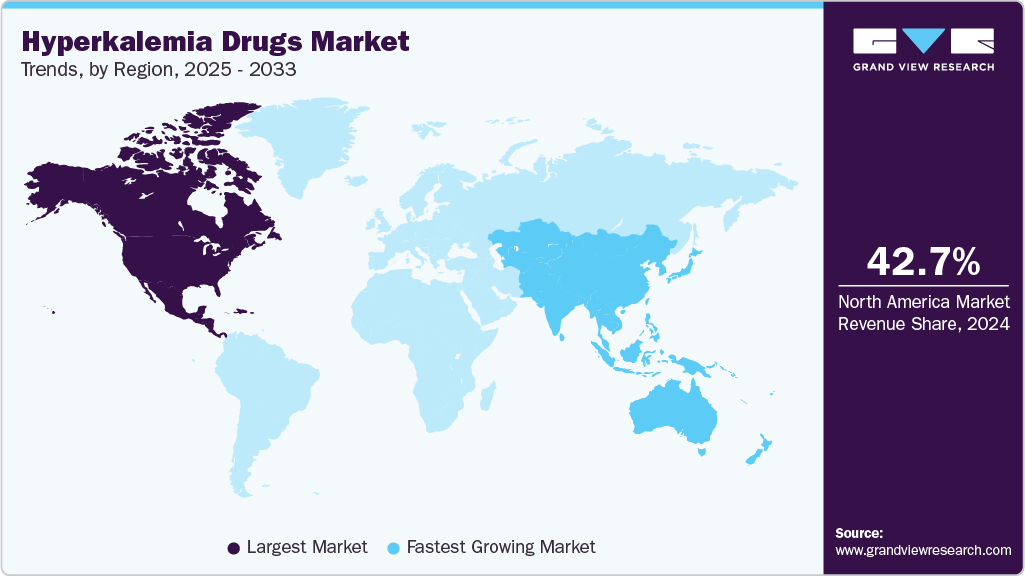
- The North America hyperkalemia drugs market held the largest global revenue share of 42.7% of the global market in 2024.
- The U.S. hyperkalemia drugs industry accounted for the largest share in North America in 2024.
- By drug class, the novel oral potassium binders segment held the largest market share of 52.1% in 2024.
- By distribution channel, the retail pharmacies segment held the largest market share of 58.7% in 2024.
Market Size & Forecast
- 2024 Market Size: USD 1.23 Billion
- 2033 Projected Market Size: USD 3.87 Billion
- CAGR (2025-2033): 13.8%
- North America: Largest market in 2024
- Asia Pacific: Fastest growing market
The increasing prevalence of chronic kidney disease (CKD), heart failure, diabetes, and other medical conditions that contribute to elevated potassium levels in the blood is driving demand for effective hyperkalemia treatments. For instance, approximately 589 million adults aged 20-79 were reported to have diabetes globally. Projections indicated this figure would rise to 853 million by 2050. Notably, over 81% of affected adults resided in low and middle-income countries. Pharmaceutical companies focus on developing and delivering innovative therapeutic solutions to address this condition. In September 2025, AstraZeneca Pharma India received approval from the Subject Expert Committee(SEC), operating under the Central Drug Standard Control Organisation (CDSCO), to conduct a Phase-IV clinical trial of Sodium Zirconium Cyclosilicate (Lokelma) powder for oral suspension used to treat hyperkalemia in India. This trial will evaluate safety and efficacy for managing elevated potassium levels in adult patients, addressing critical cardiovascular and renal health needs in the region.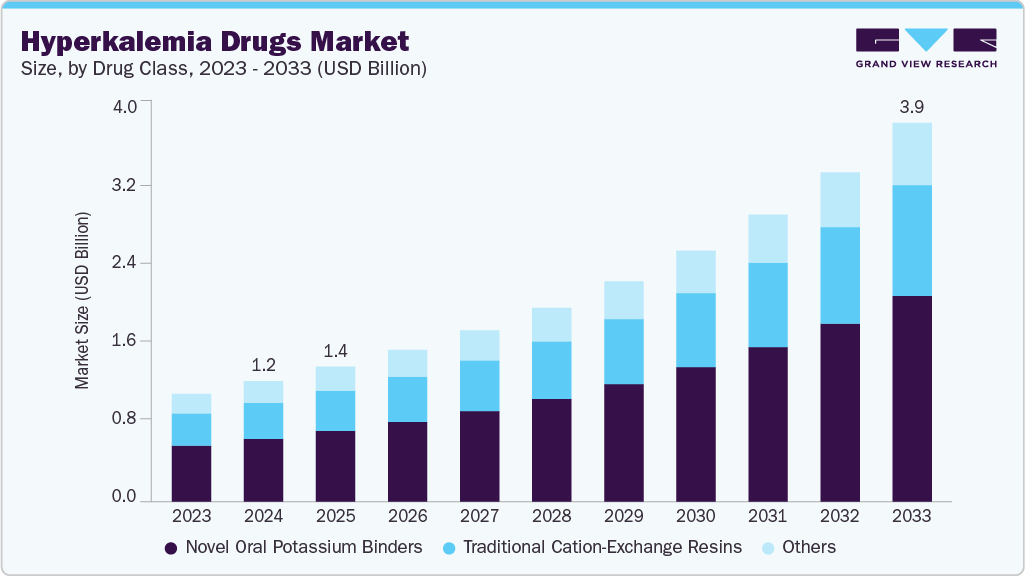
Aging global population, marked by a growing elderly segment, faces increased vulnerability to chronic conditions such as cardiovascular disease, chronic kidney disease, and diabetes, which elevate hyperkalemia risk. This is expected to drive the demand for hyperkalemia drugs, fostering pharmaceutical innovation and expanded treatment options. Advances in oral potassium binders and improved diagnostic capabilities support better management, while strategic collaborations and market expansion enhance drug accessibility worldwide.
Drug Class Insights
The novel oral potassium binders segment dominated the market with the largest revenue share of 52.1% in 2024 and is expected to grow at the fastest CAGR over the forecast period. Novel oral potassium binders are advanced pharmaceutical agents formulated to treat hyperkalemia by selectively binding potassium ions within the gastrointestinal tract, thereby inhibiting their absorption and promoting their elimination via fecal excretion. Some approved potassium binders for treating hyperkalemia are patiromer, sodium zirconium cyclosilicate, and sodium polystyrene sulfonate. Furthermore, patients suffering from hyperkalemia have an increased risk of cardiac events and longer hospital stays. This has further led to an increase in clinical trials to evaluate oral potassium binders for the treatment of cardiac disorders such as acute hyperkalemia, arrhythmias, and paralysis. For instance, AstraZeneca provides Lokelma (sodium zirconium cyclosilicate) for treating hyperkalemia. Lokelma demonstrated rapid potassium reduction within 48 hours and maintained normal levels in chronic kidney disease and heart failure patients.
The traditional cation-exchange resins segment is projected to grow at a significant CAGR of 13.5% over the forecast period. Traditional cation-exchange resins, synthetic polyanionic compounds, serve as potassium binders for the management of hyperkalemia. These resins function by exchanging their pre-bound cations, commonly sodium or calcium, with potassium ions within the gastrointestinal tract, primarily targeting the distal large intestine. The rising incidence of chronic kidney disease (CKD), heart failure, and diabetes, conditions that increase the risk of hyperkalemia, is contributing to heightened demand for potassium-lowering therapies such as sodium polystyrene sulfonate (SPS).
Distribution Channel Insights
The retail pharmacies segment held the largest revenue share of the hyperkalemia drugs industry in 2024, reflecting its strong presence and accessibility. Factors such as convenient access, cost-effectiveness, and the broad product offerings by leading industry participants primarily drive the growth in this segment. Furthermore, retail pharmacies offer an extensive range of medications, positioning them as a convenient and preferred option for patients.
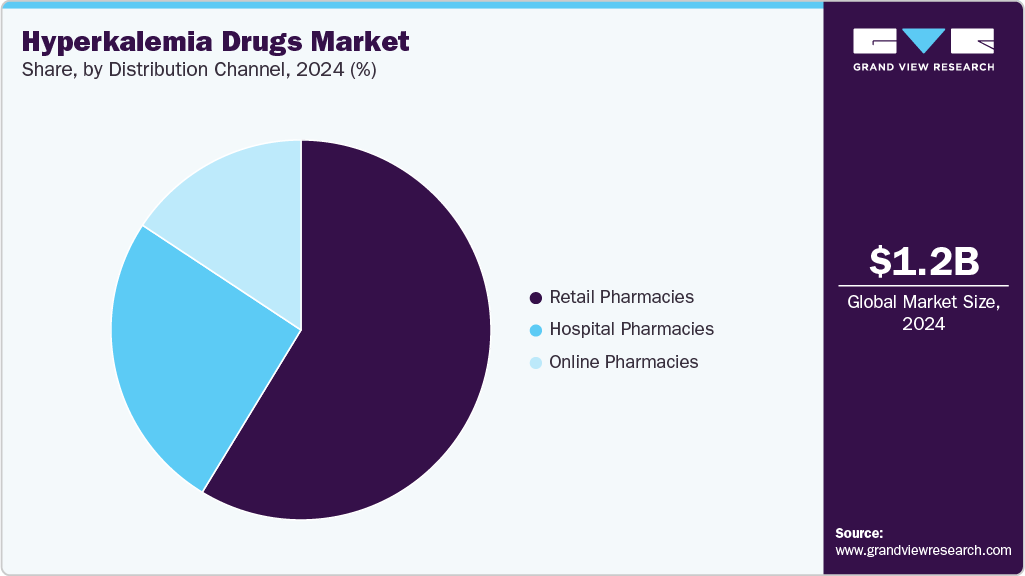
The online pharmacies segment is expected to record the fastest CAGR over the forecast period, due to its convenience and accessibility. Patients can easily order medications from home, especially those requiring regular treatment. Online platforms typically offer a broader selection of products, including branded, generic, and specialty drugs, frequently at more competitive prices.
Regional Insights
The North America hyperkalemia drugs market held the largest revenue share of 42.7% in 2024. The market is driven by the increasing prevalence of chronic kidney disease, which raises potassium levels and necessitates effective treatment. Developed healthcare infrastructure enables widespread access to advanced therapeutics, supported by favorable reimbursement policies. Growing awareness among healthcare professionals and patients, and early diagnosis and management, have further fueled market expansion.
U.S. Hyperkalemia Drugs Market Trends
The U.S. hyperkalemia drugs industry accounted for the largest share in North America in 2024. The growth of the U.S. market is propelled by increasing healthcare expenditure and expanded reimbursement coverage, which improve drug accessibility and support the demand for effective treatment. The rising elderly population and increasing comorbidities contribute to the growing number of hyperkalemia cases. Furthermore, the integration of hyperkalemia management into chronic disease care programs, combined with the adoption of real-time potassium monitoring devices, facilitates proactive management and timely interventions.
Europe Hyperkalemia Drugs Market Trends
The hyperkalemia drugs industry in Europe is expected to grow, driven by the increasing aging population and high prevalence of chronic kidney disease, rising cases of heart failure, and other conditions that increase the risk of elevated potassium levels. As of January 1, 2024, the population aged 65 years and over comprised 21.6% of the total European population, highlighting a substantial demographic shift. Innovative, safer, and convenient treatment options, such as oral potassium-binding medications, are gaining traction, enabling patients to manage their condition outside hospital settings.
The UK hyperkalemia drugs market is expanding due to the growing patient base with chronic conditions, particularly cardiovascular disease and kidney-related disorders. As the healthcare system evolves, the NHS has increasingly adopted novel therapies such as potassium binders, which are becoming integral to the management of hyperkalemia in patients with comorbidities. These treatments are being integrated into standard protocols for managing patients with advanced kidney disease and heart failure. The availability of these therapies is further supported by the strong healthcare infrastructure and established reimbursement systems.
Moreover, clinical research in the UK continues to drive innovation in hyperkalemia treatments, particularly focusing on long-term efficacy in diverse patient populations. The aging population, particularly those with multiple chronic conditions, is a significant factor in the rising demand for effective hyperkalemia therapies. This demographic shift is expected to fuel continued market growth, with an emphasis on improving the quality of life for these patients through timely and effective treatment options.
Germany’s hyperkalemia drugs market is influenced by the growing prevalence of cardiovascular conditions and kidney dysfunction. As more patients are diagnosed with diseases that contribute to elevated potassium levels, the healthcare system is increasingly turning to novel treatments like oral potassium binders to address these issues. The integration of these therapies into the treatment protocols for patients with chronic conditions ensures effective management of hyperkalemia and reduces complications associated with electrolyte imbalances.
Germany’s well-established pharmaceutical infrastructure, combined with favorable reimbursement policies, facilitates broad access to these advanced therapies. The market is also seeing a rise in the number of clinical studies aimed at evaluating the effectiveness of potassium binders in reducing the risks associated with hyperkalemia in patients with comorbidities such as diabetes and hypertension. As research progresses, Germany is expected to remain a leader in the European hyperkalemia drugs market.
The hyperkalemia drugs market in Germany is expanding as the healthcare system adapts to the needs of an aging population and a rise in comorbid conditions such as diabetes and heart disease. The French healthcare system is focusing on incorporating novel potassium binders into the management of patients with elevated potassium levels, particularly in outpatient settings. These treatments are gaining traction as effective tools for controlling hyperkalemia, especially among patients with chronic diseases.
Additionally, healthcare providers in France are increasingly utilizing diagnostic tools to better monitor potassium levels and tailor treatment plans for patients. The move towards personalized treatment strategies is expected to drive demand for these therapies, as the healthcare system looks to improve outcomes for patients with complex health conditions. The growing interest in clinical trials will also play a key role in refining treatment protocols and expanding the availability of new therapies in France.
Asia Pacific Hyperkalemia Drugs Market Trends
The Asia Pacific hyperkalemia drugs industry is anticipated to record the fastest CAGR over the coming years. Rapid economic growth in major countries such as China, India, Japan, and South Korea has increased healthcare spending. Rising incomes and an expanding middle-class population boost demand for medical treatments. Furthermore, government initiatives to improve healthcare infrastructure, promote health awareness, and enhance access to quality care are playing a crucial role.
In 2024, India had an adult population of approximately 947 million, with a diabetes prevalence rate of 10.5% among adults. This translated into nearly 89.8 million cases of diabetes in adults, reflecting a significant burden of the disease in the country within the South-East Asia region. Improved patient education, targeted screening, and early diagnosis initiatives have contributed to increased awareness about the risks associated with hyperkalemia and its treatment options, thereby boosting market growth.
The hyperkalemia drugs market in China is witnessing strong growth, fueled by a large and aging population in the country. The rising prevalence of lifestyle-related diseases, such as hypertension and heart disease, is expected to drive product demand significantly. Government initiatives, including policy support and insurance coverage for high-cost therapies, aimed at improving rare disease management, enhance patient access to treatments. Increased investment in local pharmaceutical manufacturing, clinical trials, and research infrastructure is enhancing the availability of innovative therapies.
Japan’s hyperkalemia drugs market is growing due to the country’s aging population and the increasing number of patients with chronic conditions such as cardiovascular disease and kidney dysfunction. The Japanese healthcare system is particularly proactive in integrating novel therapies for hyperkalemia management, with a strong focus on improving patient outcomes for individuals with multiple comorbidities. Potassium binders are increasingly prescribed as part of comprehensive care for patients with CKD and heart failure.
The market benefits from Japan’s advanced healthcare infrastructure, which ensures that patients have access to the latest treatments. The government’s support for the widespread use of these drugs through reimbursement policies further facilitates their adoption. Additionally, Japan remains a leader in clinical research focused on improving hyperkalemia management, with ongoing studies exploring the effectiveness of these treatments in the local population, which has unique healthcare needs.
Latin America Hyperkalemia Drugs Market Trends
The Latin America hyperkalemia drugs industry is experiencing steady growth, driven by the increasing prevalence of chronic kidney disease (CKD), diabetes, and cardiovascular diseases. As these conditions become more widespread, the demand for effective treatments to manage hyperkalemia is rising across the region. Healthcare systems in countries like Mexico, Argentina, and Chile are gradually adopting novel potassium binders, although access remains more widespread in urban areas compared to rural locations.
Government initiatives to improve healthcare infrastructure and expand access to essential medications are playing a crucial role in market development. In particular, there is an increasing emphasis on improving healthcare delivery in underserved regions, which could lead to higher adoption of advanced therapies. Brazil and Mexico are leading the regional market, with both countries benefiting from stronger healthcare systems and more widespread access to modern treatments. As public health awareness improves, early diagnosis and management of hyperkalemia are expected to increase, further driving market growth in the region.
The hyperkalemia drugs market in Brazil is seeing growth driven by the increasing rates of chronic kidney disease (CKD) and related conditions such as diabetes and cardiovascular disease. The Brazilian healthcare system is gradually adopting novel potassium binders to treat hyperkalemia, particularly in major urban centers where healthcare infrastructure is more developed. However, challenges remain in ensuring equitable access to these treatments in rural regions.
Public health initiatives are focusing on increasing awareness of chronic disease management, which is expected to help improve early diagnosis and treatment outcomes for hyperkalemia. Additionally, ongoing efforts to improve the affordability and accessibility of treatments are expected to support further growth in the Brazilian market. As the country works to expand healthcare coverage, the adoption of potassium binders is anticipated to increase.
Middle East & Africa Hyperkalemia Drugs Market Trends
The Middle East and Africa (MEA) hyperkalemia drugs industry is seeing gradual growth, influenced by the rising incidence of chronic diseases such as chronic kidney disease (CKD), heart failure, and diabetes. In countries like the United Arab Emirates (UAE), Saudi Arabia, and South Africa, the healthcare systems are increasingly incorporating novel potassium binders into clinical practices to better manage hyperkalemia, particularly in patients with comorbidities. The market in this region is driven by improvements in healthcare access, supported by government-funded health programs and private sector involvement.
The market growth in MEA is supported by increased healthcare expenditure, which has allowed for the introduction of advanced treatments. However, challenges remain in ensuring equitable distribution, particularly in sub-Saharan Africa, where access to specialized therapies is limited. Efforts are underway to enhance healthcare infrastructure, which will likely facilitate broader access to hyperkalemia drugs. With a focus on improving disease management protocols and the growing emphasis on non-communicable diseases, the demand for novel potassium binders in the region is expected to increase in the coming years.
Saudi Arabia’s hyperkalemia drugs market is expanding due to the rising incidence of chronic kidney disease (CKD) and related comorbidities such as diabetes and heart disease. The country’s healthcare system is increasingly adopting novel potassium binders to manage hyperkalemia in patients with chronic conditions. Government reforms aimed at improving access to healthcare services and medications are helping to ensure that these treatments are more widely available.
The Saudi market is also benefiting from the growing focus on healthcare quality, with an emphasis on providing advanced treatments to patients with complex health conditions. With the aging population and increasing healthcare expenditure, demand for effective hyperkalemia treatments is expected to rise in Saudi Arabia. The government’s support for advanced therapies, along with the increasing availability of novel potassium binders, will drive further market growth.
Key Hyperkalemia Drugs Company Insights
The hyperkalemia drugs market is dominated by major industry players such as AstraZeneca, CSL Vifor (a division of Vifor Pharma AG), and Sanofi. These leading companies significantly influence market trends and hold substantial market shares. As demand for hyperkalemia treatments increases due to the rising prevalence of the condition, these companies are poised to shape the future of the market. Their continued investment in research and development, along with the introduction of novel treatments, is expected to drive further market growth, making them key players in the competitive landscape.
Key Hyperkalemia Drugs Companies:
The following are the leading companies in the hyperkalemia drugs market. These companies collectively hold the largest market share and dictate industry trends.
- AstraZeneca plc
- CSL Vifor (Vifor Pharma AG)
- Sanofi
- Kowa Company, Ltd.
- KVK-Tech, Inc.
- Fresenius Kabi AG
- Novo Nordisk A/S
Recent Developments
-
In May 2024, ANI Pharmaceuticals launched Kionex Suspension in the U.S. This orally or rectally administered sodium polystyrene sulfonate suspension was introduced as a therapeutically equivalent alternative to the reference listed drug SPS Suspension for oral or rectal use.
-
In March 2025, AstraZeneca Pharma India Ltd received approval from the Central Drugs Standard Control Organisation (CDSCO) to import and sell sodium zirconium cyclosilicate (Lokelma) for treating hyperkalemia in adults. This approval allows the company to distribute the drug in 5g and 10g oral suspension formulations, pending any additional statutory requirements.
-
In September 2025, AstraZeneca presented the Phase IV clinical trial protocol for sodium zirconium cyclosilicate to the CDSCO's Subject Expert Committee (SEC). The committee reviewed the study's design, safety measures, and statistical methodologies before granting approval to proceed with the trial. Medical Dialogues
-
In October 2025, AstraZeneca announced the initiation of the Phase IV clinical trial for sodium zirconium cyclosilicate in India. The trial aims to evaluate the long-term safety and efficacy of the drug in managing hyperkalemia among patients with chronic kidney disease and heart failure. Medical Dialogues
Hyperkalemia DrugsMarket Report Scope
Report Attribute
Details
Market size value in 2025
USD 1.38 billion
Revenue forecast in 2033
USD 3.87 billion
Growth rate
CAGR of 13.8% from 2025 to 2033
Base year for estimation
2024
Historical data
2021 - 2023
Forecast period
2025 - 2033
Quantitative units
Revenue in USD million/billion and CAGR from 2025 to 2033
Report coverage
Revenue forecast, company ranking, competitive landscape, growth factors, trends
Segments covered
Drug class, distribution channel, region
Regional scope
North America; Europe; Asia Pacific; Latin America; Middle East & Africa
Country scope
U.S.; Canada; Mexico; UK; Germany; Italy; France; Spain; Sweden; Denmark; Norway; Japan; China; India; Australia; South Korea; Thailand; Brazil; Argentina; South Africa; Saudi Arabia; UAE; Kuwait
Key company profiled
AstraZeneca plc; CSL Vifor (Vifor Pharma AG); Sanofi; Kowa Company, Ltd.; KVK-Tech, Inc.; Fresenius Kabi AG; Novo Nordisk A/S
Customization scope
Free report customization (equivalent up to 8 analysts working days) with purchase. Addition or alteration to country, regional & segment scope.
Pricing and purchase options
Avail customized purchase options to meet your exact research needs. Explore purchase options
Global Hyperkalemia Drugs Market Report Segmentation
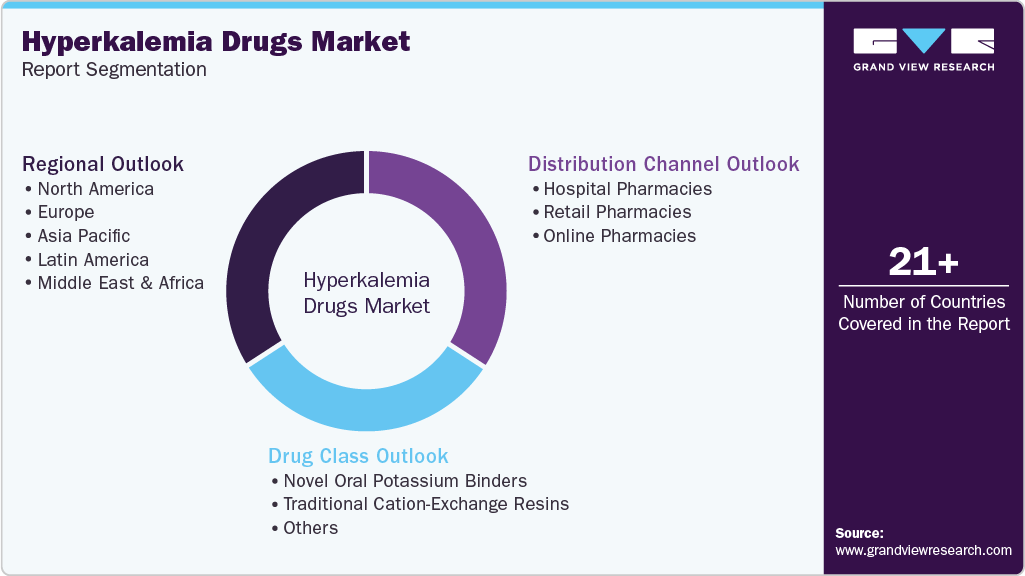
This report forecasts revenue growth at global, regional, and country levels and provides an analysis of the latest industry trends in each of the sub-segments from 2021 to 2033. For this study, Grand View Research has segmented the global hyperkalemia drugs market report based on drug class, distribution channel, and region:
-
Drug Class Outlook (Revenue, USD Million, 2021 - 2033)
-
Novel Oral Potassium Binders
-
Traditional Cation-Exchange Resins
-
Others
-
-
Distribution Channel Outlook (Revenue, USD Million, 2021 - 2033)
-
Hospital Pharmacies
-
Retail Pharmacies
-
Online Pharmacies
-
-
Regional Outlook (Revenue, USD Million, 2021 - 2033)
-
North America
-
U.S.
-
Canada
-
Mexico
-
-
Europe
-
Germany
-
UK
-
France
-
Italy
-
Spain
-
Sweden
-
Denmark
-
Norway
-
-
Asia Pacific
-
China
-
India
-
Japan
-
Australia
-
South Korea
-
Thailand
-
-
Latin America
-
Brazil
-
Argentina
-
-
Middle East & Africa
-
South Africa
-
Saudi Arabia
-
UAE
-
Kuwait
-
-


Share this report with your colleague or friend.
Need a Tailored Report?
Customize this report to your needs — add regions, segments, or data points, with 20% free customization.


ISO 9001:2015 & 27001:2022 Certified
We are GDPR and CCPA compliant! Your transaction & personal information is safe and secure. For more details, please read our privacy policy.
Trusted market insights - try a free sample
See how our reports are structured and why industry leaders rely on Grand View Research. Get a free sample or ask us to tailor this report to your needs.













