
- Home
- »
- Clinical Diagnostics
- »
-
Immunodiagnostics Market Size & Share Report, 2026-2033GVR Report cover

Immunodiagnostics Market (2026 - 2033)
Size, Share & Trends Analysis Report By Product (Reagents & Consumables, Instruments, Software & Services), By Technology (Chemiluminescence Immunoassay, Immunoblot Assay), By Application, By End-use, By Region, And Segment Forecasts
Market Size, 2025
$30.9BMarket Estimate, 2026
$32.5BMarket Forecast, 2033
$48.1BCAGR, 2026–2033
5.8%Immunodiagnostics Market Summary
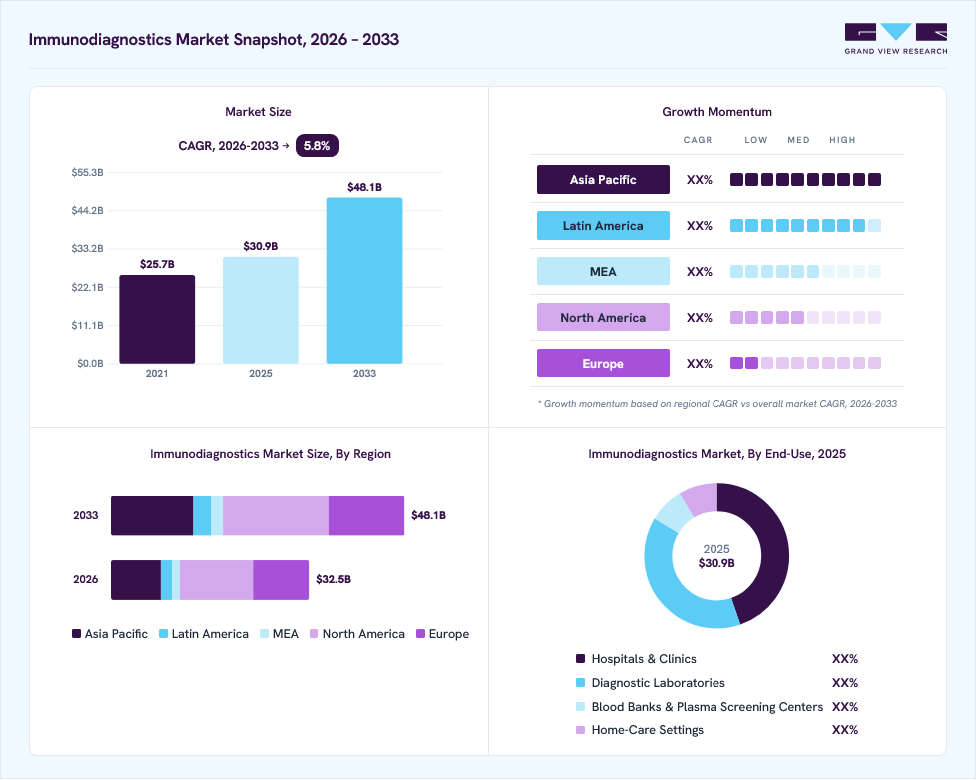
The global immunodiagnostics market size was valued at USD 30.9 billion in 2025 and is projected to grow from USD 32.5 billion in 2026 to USD 48.1 billion by 2033, at a CAGR of 5.8% from 2026 to 2033. North America dominated the market with the largest revenue share of 37.1% in 2025. Immunodiagnostics represents a major segment of the clinical diagnostics industry and encompasses diagnostic tests that use antigen-antibody reactions to detect or quantify disease-associated biomarkers in patient samples.
 Source: Grand View Research, IR Documents, Primary Interviews, Paid DatabasesTo learn more about this report,
 Download Free Sample Report
 Key Market Trends & Insights
- By product: Reagents & consumables segment led the market with the largest revenue share of 78.3% in 2025.
- By technology: Chemiluminescence immunoassay segment led the market with the largest revenue share of 48.8% in 2025.
- By application: Infectious disease testing segment led the market with the largest revenue share of 24.6% in 2025.
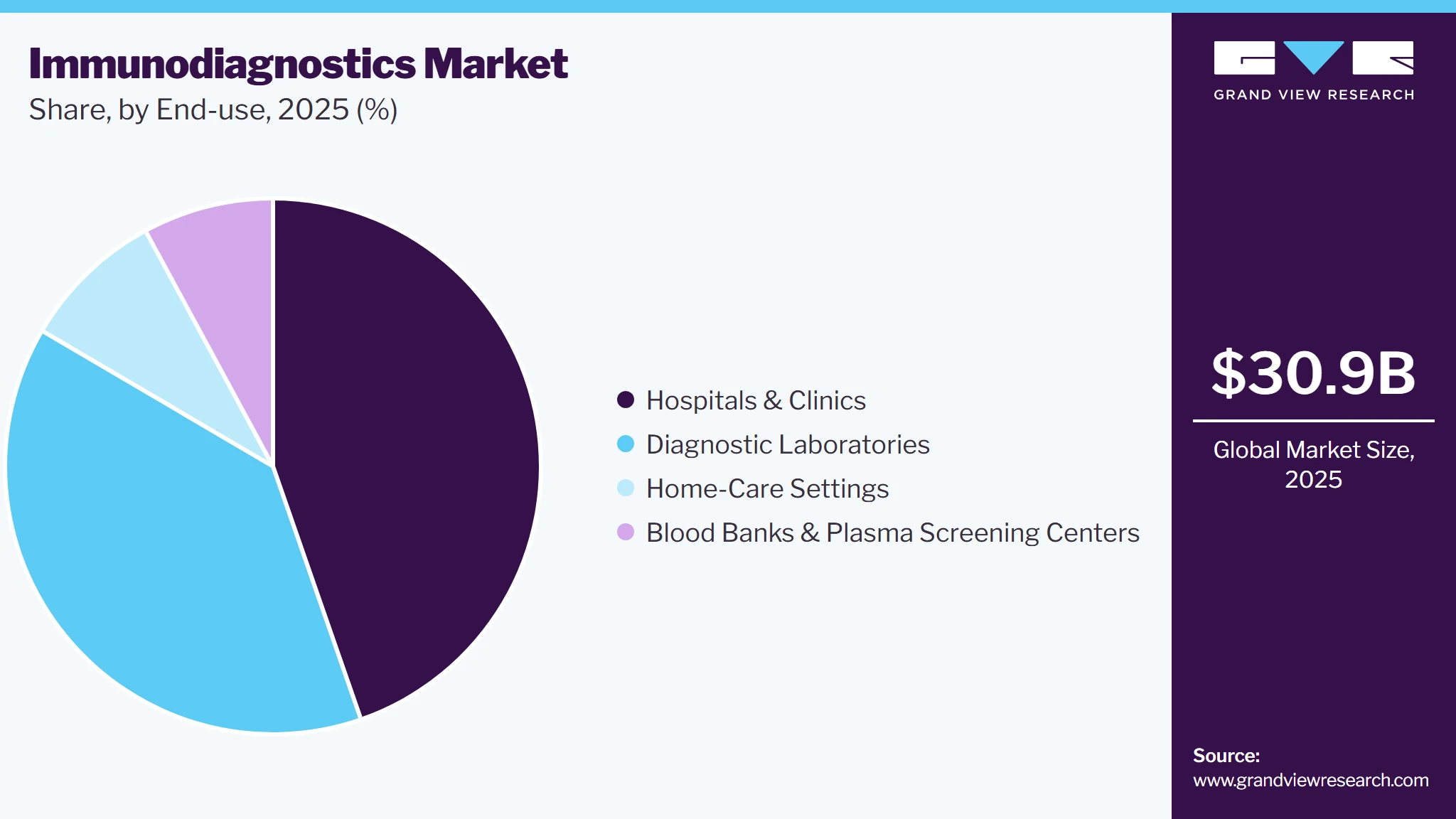
- By end use: Hospitals & clinics segment led the market with the largest revenue share of 44.7% in 2025.
Regional Highlights
- Largest regional market: North America (37.1% revenue share, 2025)
- Fastest-growing regional market: Asia Pacific (highest CAGR, 2026-2033)
- By country: The U.S. held the largest market share in 2025.
Market Size & Forecast
- Market size in 2025: USD 30.9 Billion
- Estimated market size in 2026: USD 32.5 Billion
- Projected market size by 2033: USD 48.1 Billion
- CAGR (2026-2033): 5.8%
Three ways to get this report
Buy it, customize it, or ask a question.Ask an Analyst
Analyst response in 1 business day
- AccessReport author, directly
- Reply timeWithin 1 working day
- No sales callDirect answer only
- FormatEmail reply
- CostFree, no cost
Get the Full Report
What the study covers
- FormatsPDF · Excel · Dashboard
- Timeline2026–2033 annual, 2025 base
- Coverage20+ countries, 5 regions
- Companies10+ key players profiled
Customize the Report
20% free customization
- IncludeCountries, segments, points
- TailorTo your product definition
- ExtendDeeper competitor detail
- OrA fully bespoke study
- Turnaround5–10 working days
Market growth is primarily driven by the rising burden of chronic diseases and the growing adoption of high-sensitivity biomarker-based immunodiagnostic testing. Increasing incidences of cardiovascular diseases, cancer, diabetes, autoimmune disorders, neurological diseases, and other chronic conditions are creating sustained demand for sensitive, specific, and scalable diagnostic assays capable of supporting early disease detection, differential diagnosis, disease monitoring, and treatment selection.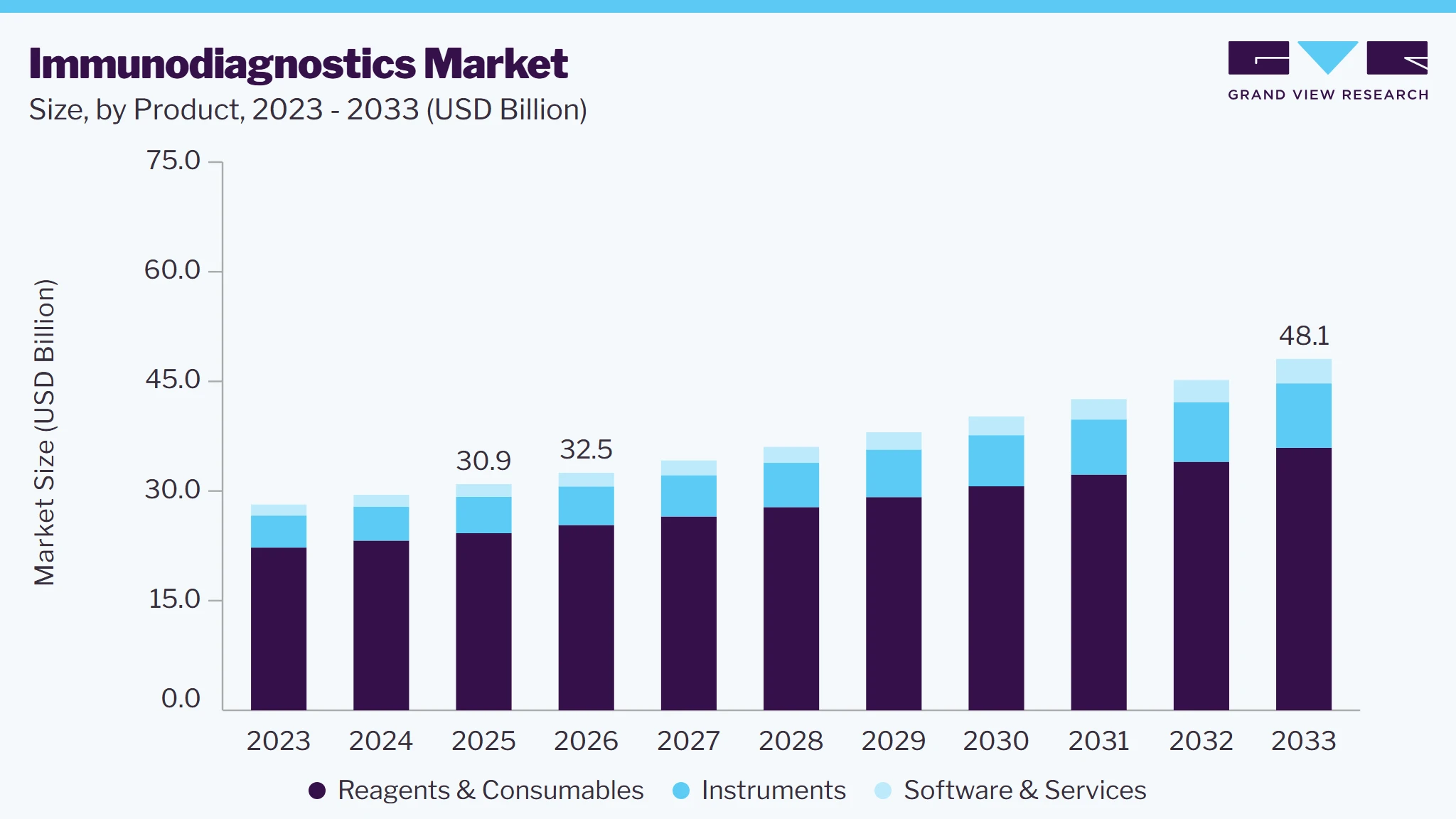 To learn more about this report, Download Free Sample Report
 Market Dynamics
The increasing prevalence of chronic diseases, infectious conditions, and age-related disorders is strengthening the demand for immunodiagnostic testing across healthcare systems worldwide. Immunoassays have become an integral part of clinical decision-making because they enable early disease detection, support treatment selection, and facilitate routine patient monitoring through high sensitivity and specificity. Healthcare providers are increasingly incorporating automated immunodiagnostic platforms into laboratory workflows to manage rising testing volumes while maintaining accuracy and turnaround time. The growing clinical emphasis on early intervention for conditions such as cardiovascular diseases, neurological disorders, autoimmune diseases, and infectious diseases is further expanding the use of immunodiagnostic assays across hospitals, diagnostic laboratories, and specialty care settings. As healthcare systems continue shifting toward preventive care and precision medicine, the demand for reliable biomarker-based testing is expected to increase steadily.
The market is also benefiting from continuous innovation in immunoassay technologies that improve analytical performance while expanding the range of clinically validated biomarkers. Manufacturers are increasingly introducing automated chemiluminescence-based assays that deliver standardized, reproducible results for complex disease conditions. For instance, in May 2025, Fujirebio Diagnostics received U.S. Food and Drug Administration 510(k) clearance for the Lumipulse G pTau217 Beta Amyloid 1 to 42 Plasma Ratio test, becoming the first FDA-cleared blood-based in vitro diagnostic test designed to identify amyloid pathology associated with Alzheimer's disease. The assay demonstrated more than 91 percent concordance with positron emission tomography and cerebrospinal fluid findings in a clinical study involving 499 patients, highlighting the growing clinical acceptance of blood-based biomarker testing for neurodegenerative diseases.
The expanding disease burden continues to reinforce the long-term growth potential of immunodiagnostics across both developed and emerging healthcare markets. According to the U.S. Food and Drug Administration, Alzheimer's disease currently affects approximately 7.2 million Americans, and the patient population is projected to approach 14 million by 2060 because of demographic aging. This trend is increasing the need for accessible and scalable diagnostic solutions that enable earlier identification of disease progression before advanced clinical symptoms emerge. Similar demand patterns are observed across autoimmune, infectious, and endocrine disorders, with clinicians increasingly relying on immunodiagnostic assays for routine screening and disease management. These factors are encouraging manufacturers to broaden assay portfolios and invest in next-generation biomarker development, thereby supporting sustained expansion of the global market.
The commercialization of advanced immunodiagnostic assays is increasingly influenced by stringent regulatory requirements and comprehensive clinical validation processes. While innovations in biomarker discovery continue to expand the diagnostic potential of immunoassays, manufacturers must generate extensive analytical and clinical evidence before their products receive regulatory authorization. Demonstrating assay accuracy, reproducibility, clinical performance across diverse patient populations, and long-term reliability significantly extends development timelines and increases research, validation, and compliance costs. These requirements are particularly demanding for first-of-their-kind biomarkers, where regulatory precedents are limited, making market entry more resource-intensive for both established companies and emerging developers. Consequently, longer approval cycles can delay commercialization and postpone revenue generation despite strong clinical demand.
The evolving regulatory environment has also become more rigorous as authorities seek to ensure higher standards of diagnostic quality and patient safety. This is particularly evident in disease areas where immunodiagnostic results directly influence treatment decisions. For instance, in May 2026, Roche received CE Mark approval for its Elecsys pTau217 immunoassay, developed in collaboration with Eli Lilly, to identify Alzheimer's disease-related amyloid pathology through a blood sample. Although the assay secured commercialization across CE-marked markets, the company indicated that regulatory submission in the U.S. remained under review, illustrating how approval pathways continue to differ across major jurisdictions despite strong clinical evidence and regulatory recognition through the FDA Breakthrough Device program.
These regulatory complexities require manufacturers to maintain continuous investments in clinical studies, quality management systems, post-market surveillance, and regulatory affairs capabilities throughout the product lifecycle. The challenge becomes even greater as healthcare providers increasingly expect evidence demonstrating not only analytical performance but also clinical utility and economic value before adopting new diagnostic tests. Differences in approval frameworks across countries further complicate global commercialization strategies, often requiring region-specific submissions and additional validation studies. Although these regulatory measures strengthen confidence in immunodiagnostic testing and improve patient safety over the long term, they continue to moderate the pace at which innovative assays enter international markets, thereby constraining overall market expansion.
The increasing shift toward decentralized healthcare delivery is creating significant market growth opportunities. Healthcare systems are placing greater emphasis on diagnostic solutions that deliver accurate results closer to the patient while reducing dependence on centralized laboratories. Point-of-care immunodiagnostic platforms are gaining wider acceptance across emergency departments, outpatient clinics, physician offices, and community healthcare settings because they support faster clinical decision-making and improve patient management. At the same time, advances in biomarker research are expanding the range of diseases that can be diagnosed through minimally invasive blood-based immunoassays, enabling manufacturers to address unmet clinical needs across cardiovascular, neurological, oncology, and infectious disease applications. This transition is encouraging companies to develop compact, automated, and highly sensitive immunodiagnostic platforms capable of delivering laboratory-quality performance outside conventional laboratory environments.
Industry participants are increasingly pursuing strategic acquisitions and technology partnerships to strengthen their presence in decentralized diagnostics and accelerate the commercialization of next-generation immunoassay platforms. For instance, in January 2025, bioMérieux signed an agreement to acquire SpinChip Diagnostics ASA for an enterprise value of approximately USD 144 million, following its acquisition of a minority stake in the company. SpinChip has developed a point-of-care immunoassay platform capable of producing laboratory-grade whole-blood results for critical cardiac biomarkers in nearly 10 minutes, including high-sensitivity Troponin I, NT-proBNP, and D-dimer. The acquisition reflects the industry's growing focus on expanding rapid immunodiagnostic capabilities that combine high analytical performance with near-patient testing.
The continued convergence of precision medicine, digital healthcare, and decentralized diagnostic services is expected to create sustained opportunities for immunodiagnostic manufacturers over the coming years. Healthcare providers are increasingly seeking testing platforms that improve operational efficiency while supporting earlier diagnosis and timely therapeutic intervention across multiple care settings. This is driving investments in assay menu expansion, workflow automation, and portable immunodiagnostic technologies that can address evolving clinical requirements without compromising analytical quality. Companies that successfully integrate high-sensitivity biomarkers with scalable, user-friendly testing platforms are expected to strengthen their competitive position as healthcare systems increasingly prioritize accessible, efficient, and patient-centered diagnostic solutions.
Market Concentration & Characteristics
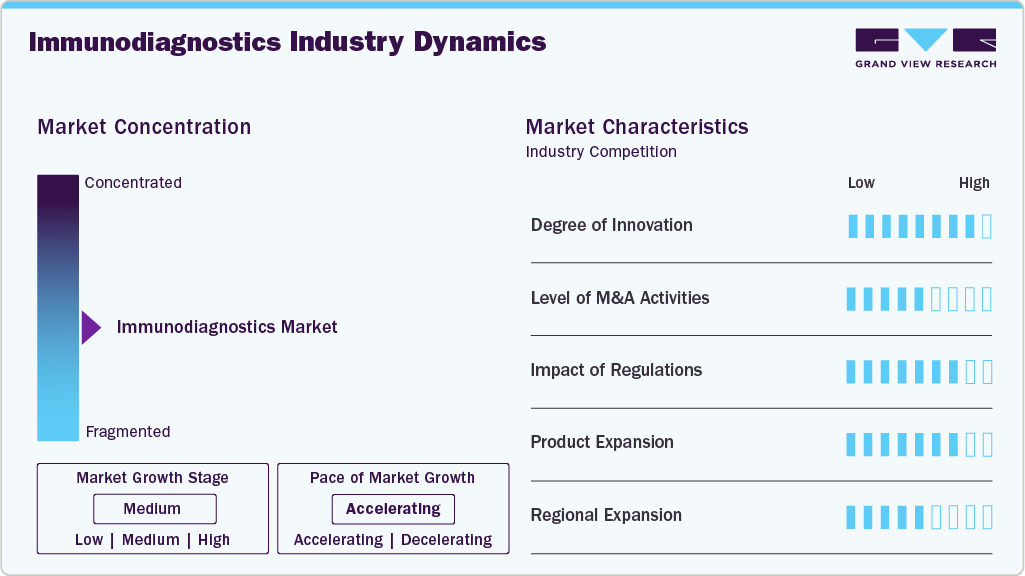
The immunodiagnostics industry demonstrates a high degree of innovation, supported by continuous advancements in assay sensitivity, automation, and the development of disease-specific biomarkers. Manufacturers are increasingly introducing integrated platforms that expand test menus and improve laboratory efficiency. For instance, in June 2025, Revvity launched the IDS i20, a fully automated chemiluminescence immunoassay platform that supports 20 analytes across multiple clinical specialties on a single random-access system.
M&A activity remains steady as companies strengthen diagnostic capabilities, broaden technology portfolios, and expand access to advanced biomarker platforms. Strategic transactions are increasingly focused on enhancing life sciences and immunoassay capabilities. For instance, in June 2026, Merck KGaA announced the acquisition of Bio-Techne for approximately USD 11.3 billion, significantly expanding its portfolio of antibodies, immunoassay kits, and protein analysis technologies.
 To learn more about this report, Download Free Sample Report
 The market is significantly influenced by evolving regulatory standards that emphasize clinical validation, analytical performance, and patient safety before commercialization. While these frameworks strengthen confidence in diagnostic products, they also increase development timelines. Abbott’s next-generation Alinity ci-series integrated clinical chemistry and immunoassay analyzers support broader adoption across regulated healthcare markets.
Product expansion remains a defining characteristic of the immunodiagnostics industry as manufacturers continue broadening assay portfolios to address evolving clinical requirements. Companies are increasingly introducing specialized biomarkers to strengthen testing capabilities across disease areas. For instance, in May 2026, Revvity received FDA clearance for its automated Total Testosterone chemiluminescence immunoassay, completing a comprehensive testosterone testing panel on a single platform.
Leading manufacturers continue investing in regional manufacturing and research infrastructure to strengthen supply resilience and support growing diagnostic demand. These investments also improve product availability and operational efficiency across major healthcare markets. For instance, in 2025, Roche announced plans to invest up to USD 550 million in its Indianapolis diagnostics manufacturing and research facility through 2030, expanding its long-term production capabilities in the U.S.
Analyst Perspective
The market is expected to maintain steady growth, supported by the increasing adoption of biomarker-based diagnostics, laboratory automation, and precision medicine across diverse clinical applications. While infectious disease testing continues to generate significant testing volumes, the market is increasingly shifting toward high-value applications such as neurology, oncology, autoimmune disorders, and cardiovascular disease management, where highly sensitive immunoassays improve diagnostic accuracy and enable earlier clinical intervention. At the same time, manufacturers are strengthening competitive positioning through automated chemiluminescence platforms, expanded assay menus, and strategic investments in decentralized testing solutions that improve accessibility and laboratory efficiency. Regulatory advancements and the growing emphasis on evidence-based diagnostics are further accelerating the commercialization of innovative assays.
Product Insights
The reagents and consumables segment dominated the global market by contributing 78.3% in 2025. The growth is due to their recurring use in routine clinical testing, disease screening, and patient monitoring applications. Every immunodiagnostic assay requires dedicated reagents, calibrators, controls, and consumables, creating a stable revenue stream independent of instrument replacement cycles. The increasing volume of tests performed for infectious diseases, endocrine disorders, oncology, autoimmune conditions, and cardiovascular diseases continues to strengthen demand for high-quality assay consumables. In addition, laboratories increasingly prefer standardized reagent systems that ensure analytical consistency and regulatory compliance. In April 2025, Grifols announced a strategic collaboration with IBL International GmbH, a Tecan Group company, to co-develop advanced high-sensitivity multiplex immunoassay biomarker panels using Grifols' Single Molecule Counting platform. Such collaborations are expected to broaden reagent portfolios and support sustained demand for specialized immunodiagnostic consumables.
The software and services segment is expected to register the fastest growth of 8.6% during the forecast period 2026-2033, as clinical laboratories increasingly adopt digital workflow management, data integration, and advanced analytical solutions to improve diagnostic efficiency. Modern immunodiagnostic laboratories require software platforms capable of managing high testing volumes, ensuring quality control, integrating laboratory information systems, and supporting clinical interpretation of increasingly complex biomarker data. The growing application of artificial intelligence and data-driven diagnostics is further accelerating demand for specialized software and post-installation support services. In June 2025, bioMérieux announced an agreement to acquire the assets of Day Zero Diagnostics, a U.S.-based company specializing in genome sequencing and machine-learning-driven infectious-disease diagnostics. Although the acquisition strengthens broader diagnostic capabilities, it reflects the industry's growing investment in advanced data analytics and intelligent diagnostic platforms expected to enhance future immunodiagnostic workflows and service offerings.
Technology Insights
The chemiluminescence immunoassay segment accounted for the largest share, at 48.8%, due to its high analytical sensitivity, broad test menu, and compatibility with fully automated laboratory platforms. The technology is widely adopted in hospitals and diagnostic laboratories for endocrine, cardiac, infectious disease, oncology, and autoimmune testing because it delivers accurate quantitative results at high throughput with reduced turnaround time. Continuous improvements in assay design and automation have further strengthened its position as the preferred technology for routine clinical diagnostics. In January 2025, Abbott received FDA clearance for the Alere NT proBNP assay on its Alinity i platform, expanding the company's cardiac immunoassay portfolio. Such product enhancements continue to reinforce the adoption of chemiluminescence immunoassays across modern clinical laboratories.
The rapid immunochromatographic assay segment is expected to grow at the fastest rate, at 6.6%, during the forecast period, owing to increasing demand for decentralized diagnostics and near-patient testing. These assays provide simple operation, rapid turnaround times, and minimal infrastructure requirements, making them well-suited for emergency care, physician offices, community health centers, and resource-limited settings. The growing emphasis on early diagnosis and immediate clinical decision-making is encouraging healthcare providers to expand the use of rapid immunodiagnostic solutions across multiple disease areas. In January 2025, bioMérieux signed an agreement to acquire SpinChip Diagnostics ASA, a Norwegian company developing a point-of-care immunoassay platform that delivers laboratory-grade whole-blood results for cardiac biomarkers in approximately 10 minutes. The acquisition highlights growing industry investment in rapid immunodiagnostic technologies that combine laboratory-quality performance with decentralized testing.
Application Insights
The infectious disease testing segment accounted for the largest share at 24.6% due to sustained global demand for rapid, accurate detection of viral, bacterial, and parasitic infections. Immunodiagnostic assays are extensively used for disease screening, diagnosis, surveillance, blood safety, and treatment monitoring across hospitals, diagnostic laboratories, and public health programs. The continued burden of infectious diseases, coupled with expanding screening initiatives and routine diagnostic testing, has supported consistent testing volumes worldwide. According to the UNAIDS 2025 Global AIDS Update, approximately 40.8 million people were living with HIV globally in 2024, while nearly 1.3 million new infections were reported during the year. Such disease prevalence continues to reinforce the long-term demand for reliable immunodiagnostic assays used in infectious disease detection and patient management.
The neurological testing segment is expected to witness the fastest growth of 7.3% during the forecast period as healthcare systems increasingly prioritize early diagnosis of neurodegenerative disorders through minimally invasive biomarker testing. Advances in blood-based immunoassays are improving the ability to detect neurological diseases associated with biomarkers at earlier stages, supporting timely clinical intervention and patient management. Growing research investment and expanding regulatory approvals are further accelerating the commercialization of neurological immunodiagnostic assays. In July 2026, Beckman Colter Diagnostics received CE Mark under the In Vitro Diagnostic Regulation for its Access pTau217 blood test, developed using AlzPath's antibody technology, for use on the DxI 9000 Immunoassay Analyzer. Such innovations are expected to significantly expand the clinical adoption of immunodiagnostic testing in neurology.
End Use Insights
The hospitals and clinics segment accounted for the largest share of 44.7%, owing to the high volume of routine and specialized diagnostic testing performed across these healthcare settings. Hospitals remain the primary point of care for managing acute and chronic diseases, driving sustained demand for automated immunodiagnostic systems that deliver rapid, accurate results. The growing integration of high-throughput analyzers into centralized hospital laboratories has further strengthened testing efficiency and clinical decision-making. In March 2025, Beckman Colter received FDA clearance for its DxC 500i Clinical Analyzer, an integrated clinical chemistry and immunoassay platform designed to streamline laboratory workflows. Such integrated diagnostic systems continue to support the widespread adoption of immunodiagnostic testing across hospital laboratories.
 To learn more about this report, Download Free Sample Report
 The home care segment is expected to experience the fastest growth at 6.4% during the forecast period, driven by increasing preference for decentralized healthcare, remote patient monitoring, and convenient diagnostic solutions. Growing awareness of preventive healthcare and the rising prevalence of chronic diseases are encouraging greater adoption of testing approaches that reduce dependence on hospital visits while improving patient accessibility. Manufacturers are also expanding automated and user-friendly assay portfolios to support broader testing applications beyond traditional laboratory settings. In January 2025, Revvity, through EUROIMMUN, received FDA 510(k) clearance for the first automated chemiluminescence immunoassay for direct quantitative measurement of free testosterone on its iSYS and i10 platforms. Continuous innovation in automated immunodiagnostic technologies is expected to facilitate wider accessibility and support the long-term expansion of decentralized testing environments.
Regional Insights
North America immunodiagnostics market dominated the overall global market and accounted for the 37.1% share in 2025, owing to its advanced healthcare infrastructure, widespread adoption of automated laboratory technologies, favorable reimbursement environment, and strong presence of leading diagnostic manufacturers. The region continues to witness high utilization of immunodiagnostic assays across infectious diseases, oncology, cardiology, endocrinology, and neurology. Continuous regulatory approvals further support the commercialization of innovative diagnostic products. For instance, in October 2025, Grifols inaugurated a new 74,000-square-foot diagnostics manufacturing facility in San Diego, California, expanding production of DG Gel cards and reagent red blood cells for immunohematology. Such investments strengthen regional manufacturing capacity while supporting the growing demand for advanced diagnostic testing.
 To learn more about this report, Download Free Sample Report
 U.S. Immunodiagnostics Market Trends
The immunodiagnostics market in the U.S. is the largest in North America, accounting for 88.4% of the regional market in 2025, supported by its extensive clinical laboratory network, high healthcare expenditure, and early adoption of innovative diagnostic technologies. Demand is further strengthened by the increasing prevalence of chronic and autoimmune diseases requiring routine biomarker and immunodiagnostic testing. According to a study published in the Journal of Clinical Investigation in December 2024, nearly 15 million Americans were diagnosed with at least one autoimmune disease, highlighting the sustained need for immunodiagnostic assays across multiple clinical specialties.
Europe Immunodiagnostics Market Trends
The immunodiagnostics market in Europe is mature, supported by universal healthcare systems, well-established laboratory infrastructure, and a strong emphasis on diagnostic quality standards. The implementation of the In Vitro Diagnostic Regulation has encouraged manufacturers to strengthen clinical evidence and product quality while supporting greater confidence in diagnostic testing. The region also benefits from continuous investments in precision medicine, laboratory automation, and biomarker research, driving steady adoption of advanced immunodiagnostic assays across hospitals, academic institutions, and specialized diagnostic laboratories.
The UK immunodiagnostics market continues to demonstrate steady demand for immunodiagnostic testing through its National Health Service and expanding focus on early disease detection. Ongoing investments in laboratory modernization, digital pathology, and community-based diagnostic services are improving patient access while supporting greater utilization of automated immunoassay technologies across hospitals and regional diagnostic centers.
The immunodiagnostics market in Germany remains one of Europe's markets due to its advanced healthcare infrastructure and extensive clinical laboratory network. The growing burden of autoimmune diseases continues to support demand for immunoassay-based diagnostics. A nationwide claims data study published in 2025 reported an autoimmune disease prevalence of approximately 8.61 percent among nearly 73.2 million insured individuals, reinforcing the country's need for routine immunodiagnostic testing.
France immunodiagnostics market maintains a stable position in the European market, supported by comprehensive public healthcare coverage and strong clinical laboratory infrastructure. The increasing emphasis on preventive healthcare, chronic disease management, and early diagnosis continues to drive the adoption of automated immunodiagnostic platforms across hospital laboratories and private diagnostic networks.
Asia Pacific Immunodiagnostics Market Trends
The immunodiagnostics market in the Asia Pacific is expected to register the fastest growth during the forecast period, expanding at a CAGR of 7.4%, driven by expanding healthcare infrastructure, increasing healthcare expenditure, rising awareness of early disease diagnosis, and improving access to advanced laboratory services. Rapid urbanization, population aging, and the growing burden of infectious and chronic diseases are accelerating demand for immunodiagnostic testing across the region. Governments are also investing in healthcare modernization and domestic diagnostic manufacturing capabilities to improve self-reliance and expand access to quality diagnostics. These factors are expected to support sustained market expansion across both developed and emerging economies in the region.
China immunodiagnostics market is witnessing rapid growth due to continued investments in healthcare infrastructure, expansion of domestic IVD manufacturing, and increasing adoption of automated diagnostic platforms. Government initiatives supporting healthcare modernization and greater accessibility to diagnostic services are encouraging hospitals and laboratories to expand the use of advanced immunodiagnostic technologies across multiple disease areas.
The immunodiagnostics market in Japan is significant, supported by one of the world's oldest populations and a high prevalence of chronic and age-related diseases. The growing clinical focus on early diagnosis of neurological, cardiovascular, and endocrine disorders continues to increase demand for highly sensitive immunoassays in hospitals and specialized diagnostic laboratories.
India immunodiagnostics market is emerging as a high-growth segment, driven by expanding healthcare infrastructure, increasing diagnostic awareness, and wider access to laboratory services through both public and private healthcare providers. Government initiatives aimed at strengthening healthcare delivery, combined with rising investments in diagnostic laboratories and preventive screening programs, continue to support the adoption of immunodiagnostic testing across urban and semi-urban regions.
Latin America Immunodiagnostics Market Trends
The immunodiagnostics market in Latin America is experiencing steady growth, supported by improving healthcare infrastructure, expanding private diagnostic laboratory networks, and increasing awareness of early disease diagnosis. Countries, including Brazil and Argentina, continue to invest in strengthening laboratory capabilities for infectious diseases and chronic disease management. Growing healthcare access and increasing utilization of automated immunodiagnostic systems are expected to support stable market expansion across the region over the forecast period.
Middle East and Africa Immunodiagnostics Market Trends
The immunodiagnostics market in MEA is gradually expanding due to continued investments in healthcare infrastructure, increasing infectious disease surveillance, and improving diagnostic accessibility. Governments across the Gulf countries are strengthening laboratory capabilities through healthcare modernization programs, while several African countries continue to enhance disease screening initiatives supported by international public health organizations. These developments are expected to increase the adoption of immunodiagnostic testing across the region.
Key Immunodiagnostics Company Insights
The market is moderately consolidated, with leading companies competing through continuous assay innovation, expansion of automated immunoassay platforms, strategic acquisitions, regulatory approvals, and biomarker portfolio development. Market participants are increasingly investing in high-sensitivity chemiluminescence immunoassays, rapid point-of-care testing, multiplex immunoassays, and next-generation biomarker assays to address growing demand across infectious diseases, oncology, autoimmune disorders, cardiology, endocrinology, and neurology. Companies are also strengthening their competitive position by integrating laboratory automation, digital workflow solutions, and data-driven diagnostic capabilities to improve testing efficiency, reduce turnaround time, and support precision medicine initiatives. Geographic expansion of manufacturing facilities, strategic collaborations with biotechnology companies, and continued investment in research and development further intensify competition within the global market.
Key Immunodiagnostics Companies
The following key companies have been profiled for this study on the immunodiagnostics market.
-
F. Hoffmann-La Roche Ltd.
-
Abbott
-
Siemens Healthineers
-
Beckman Colter, Inc.
-
BIOMÉRIEUX
-
DiaSorin S.p.A.
-
QuidelOrtho Corporation
-
Thermo Fisher Scientific Inc.
-
Bio-Rad Laboratories, Inc.
-
Shenzhen Mindray Bio-Medical Electronics Co., Ltd.
Competitive Benchmarking
Operating Strategies
Competitive Edge
Weaknesses
Mature Players: F. Hoffmann-La Roche Ltd.; Abbott; Siemens Healthineers; Beckman Coulter, Inc.; BIOMÉRIEUX
- Portfolio Expansion: Continuously introduce new immunoassays across disease areas.
- Strategic Collaborations: Pursue acquisitions and partnerships to strengthen capabilities.
- Global Expansion: Expand manufacturing and distribution across key markets.
- Broad Product Portfolio: Comprehensive assay menus with automated platforms.
- Strong Market Presence: Established customer base and global distribution.
- Regulatory Expertise: Proven ability to secure approvals across major markets.
- Long Development Cycles: Extensive clinical validation delays product launches.
- High Compliance Costs: Significant investment required for regulatory adherence.
- Complex Operations: Large global supply chains increase operational complexity.
Emerging Players: DiaSorin S.p.A., QuidelOrtho Corporation, Shenzhen Mindray Bio-Medical Electronics Co., Ltd.
- Niche Product Development: Focus on specialized biomarker and point of care assays.
- Technology Partnerships: Collaborate with larger firms for commercialization.
- Innovation Focus: Develop differentiated technologies for unmet clinical needs.
- Rapid Innovation: Faster product development and commercialization.
- Specialized Expertise: Strong focus on emerging biomarkers and novel assays.
- Operational Agility: Quick response to evolving market opportunities.
- Limited Commercial Reach: Smaller sales and distribution networks.
- Resource Constraints: Lower financial and manufacturing capabilities.
- Partnership Dependence: Rely on collaborations for scaling and market access.
Recent Developments
-
In March 2026, F. Hoffmann-La Roche Ltd. received CE Mark approval for the Elecsys ApoE4 assay, the first in vitro diagnostic immunoassay designed to identify ApoE4 carriers through a blood-based test, supporting earlier Alzheimer's disease risk assessment.
-
In March 2026, Siemens Healthineers launched the Atellica IM Phosphorylated Tau217 and Atellica IM Brain-Derived Tau immunoassays for Alzheimer's disease research on the Atellica Solution platform, thereby strengthening its neurological biomarker portfolio.
-
In December 2025, F. Hoffmann-La Roche Ltd. launched the next-generation cobas 6800 and cobas 8800 Systems v2.0 in the United States following FDA 510(k) clearance, enabling simultaneous processing of laboratory-developed tests and IVD assays with enhanced laboratory workflow efficiency.
-
In October 2025, Grifols received FDA approvals to begin manufacturing DG Gel cards and reagent red blood cells at its new San Diego diagnostics facility, expanding its immunohematology production capacity in the U.S.
-
In February 2025, bioMérieux received FDA clearance for the BIOFIRE FILMARRAY Gastrointestinal Panel Mid, a multiplex diagnostic panel capable of detecting 11 gastrointestinal pathogens from a single sample in approximately one hour, expanding its infectious disease diagnostics portfolio.
Immunodiagnostics Market Report Scope
Report Attribute
Details
Market size in 2025
USD 30.9 billion
Estimated market size in 2026
USD 32.5 billion
Projected market size by 2033
USD 48.1 billion
Growth rate
CAGR of 5.8% from 2026 to 2033
Actual data
2021 - 2025
Forecast period
2026 - 2033
Quantitative units
Revenue in USD billion and CAGR from 2026 to 2033
Report coverage
Revenue forecast, company ranking, competitive landscape, growth factors, and trends
Segments covered
Product, technology, application, end use, region
Regional scope
North America; Europe; Asia Pacific; Latin America; MEA
Country scope
U.S.; Canada; Mexico; Germany; UK; France; Italy; Spain; Norway; Sweden; Denmark; Japan; China; India; Australia; South Korea; Thailand; Brazil; Argentina; South Africa; Saudi Arabia; UAE; Kuwait
Key companies profiled
F. Hoffmann-La Roche Ltd.; Abbott; Siemens Healthineers; Beckman Colter, Inc.; BIOMÉRIEUX; DiaSorin S.p.A.; QuidelOrtho Corporation; Thermo Fisher Scientific Inc.; Bio-Rad Laboratories, Inc.; Shenzhen Mindray Bio-Medical Electronics Co., Ltd.
Customization scope
Free report customization (equivalent up to 8 analyst working days) with purchase. Addition or alteration to country, regional & segment scope.
Pricing and purchase options
Avail customized purchase options to meet your exact research needs. Explore purchase options
Global Immunodiagnostics Market Report Segmentation
This report forecasts revenue growth at country levels and provides an analysis of the latest industry trends and opportunities in each of the sub-segments from 2021 to 2033. For this study, Grand View Research has segmented the global immunodiagnostics market report based on product, technology, application, end use, and region:
-
Product Outlook (Revenue, USD Billion, 2021 - 2033)
-
Reagents & Consumables
-
Instruments
-
Software & Services
-
-
Technology Outlook (Revenue, USD Billion, 2021 - 2033)
-
Chemiluminescence Immunoassay
-
Enzyme-Linked Immunosorbent Assay
-
Fluorescence Immunoassay
-
Rapid Immunochromatographic Assay
-
Radioimmunoassay
-
Immunoturbidimetry & Nephelometry
-
Immunoblot Assay
-
Other Technologies
-
-
Application Outlook (Revenue, USD Billion, 2021 - 2033)
-
Infectious Disease Testing
-
Oncology Testing
-
Cardiac Testing
-
Endocrinology Testing
-
Autoimmune Disease Testing
-
Allergy Testing
-
Women’s Health & Reproductive Testing
-
Bone, Anemia & Nutritional Testing
-
Therapeutic Drug Monitoring & Toxicology
-
Neurological Testing
-
Other Applications
-
-
End Use Outlook (Revenue, USD Billion, 2021 - 2033)
-
Hospitals
-
Laboratories
-
Others
-
-
Regional Outlook (Revenue, USD Billion; 2021 - 2033)
-
North America
-
U.S.
-
Canada
-
Mexico
-
-
Europe
-
UK
-
Germany
-
France
-
Italy
-
Spain
-
Norway
-
Denmark
-
Sweden
-
-
Asia Pacific
-
Japan
-
China
-
India
-
Australia
-
South Korea
-
Thailand
-
-
Latin America
-
Brazil
-
Argentina
-
-
Middle East & Africa
-
South Africa
-
Saudi Arabia
-
UAE
-
Kuwait
-
-
Research Methodology
The immunodiagnostics market figures in this report are based on a proven research process that combines executive interviews with secondary research from proprietary databases, company filings, and recognized regulatory and institutional sources. Market size is built through value-chain sizing-reconciling supply-side and demand-side estimates-and triangulated with bottom-up and top-down approaches. Every estimate passes multiple levels of expert validation before publication, with each immunodiagnostics segment quantified using the revenue-capture definitions in the table below.
Segment Definition
Product Segment
Market Definition
Reagents & Consumables
Revenue primarily originates from sales of antibodies, antigens, assay kits, calibrators, controls, buffers, substrates, sample preparation materials, and single-use consumables specifically designed for immunodiagnostic testing across all applications.
Instruments
Revenue is derived from sales of automated and semi-automated immunodiagnostic analyzers, readers, processors, and integrated testing platforms used to perform, detect, and interpret immunoassays in clinical laboratories.
Software & Services
Revenue flows from laboratory software, assay management platforms, instrument maintenance, calibration, installation, validation, technical support, workflow integration, training, and service contracts associated with immunodiagnostic systems.
Technology Segment
Market Definition
Chemiluminescence Immunoassay
Revenue is generated from immunodiagnostic tests performed using chemiluminescent labels for qualitative and quantitative biomarker detection on automated analyzers across clinical diagnostic applications.
Enzyme-Linked Immunosorbent Assay (ELISA)
Market value is captured through ELISA-based assay kits, reagents, and testing systems utilizing enzyme-mediated colorimetric detection for identifying disease-specific antigens or antibodies.
Fluorescence Immunoassay
Revenue is attributed to fluorescence-labeled immunoassays, dedicated reagents, and analyzer-compatible test kits used for rapid and sensitive biomarker detection in clinical diagnostics.
Rapid Immunochromatographic Assay
Revenue primarily comes from lateral flow and rapid immunochromatographic test devices designed for point-of-care or near-patient qualitative detection of disease biomarkers.
Radioimmunoassay
Revenue is obtained from radioisotope-based immunoassay kits, specialized reagents, and associated testing systems used for highly sensitive quantitative biomarker measurement in selected laboratories.
Immunoturbidimetry & Nephelometry
Revenue is generated through immunoturbidimetric and nephelometric assays, reagents, calibrators, and analyzer-compatible tests measuring antigen-antibody complex formation in clinical samples.
Immunoblot Assay
Revenue is captured from immunoblot test kits, membranes, reagents, and detection systems used for confirmatory identification of disease-specific proteins or antibodies.
Other Technologies
Revenue includes immunodiagnostic technologies not classified elsewhere, including multiplex immunoassays, microarray immunoassays, electrochemiluminescence immunoassays, and other emerging immunodetection platforms.
Application Segment
Market Definition
Infectious Disease Testing
Revenue is derived from immunodiagnostic assays detecting bacterial, viral, fungal, and parasitic infections through antigen, antibody, or biomarker-based testing for diagnosis and disease monitoring.
Oncology Testing
Revenue originates from immunodiagnostic tests measuring cancer-associated biomarkers, tumor markers, and immune-related proteins supporting cancer detection, prognosis, treatment selection, and monitoring.
Cardiac Testing
Revenue flows from immunoassays detecting cardiac biomarkers, including troponins, BNP, NT proBNP, CK MB, and related markers for cardiovascular disease diagnosis and patient management.
Endocrinology Testing
Revenue is generated through immunodiagnostic assays measuring hormones, endocrine biomarkers, and metabolic regulators for diagnosing endocrine disorders and monitoring therapeutic response.
Autoimmune Disease Testing
Revenue is captured from immunoassays detecting autoantibodies and immune biomarkers used to diagnose, classify, and monitor autoimmune and inflammatory disorders.
Allergy Testing
Revenue is attributed to immunodiagnostic assays measuring allergen-specific IgE, total IgE, and related immune biomarkers supporting allergy diagnosis and sensitivity assessment.
Women’s Health & Reproductive Testing
Revenue originates from immunodiagnostic assays measuring fertility hormones, pregnancy biomarkers, reproductive hormones, and gynecological disease-related biomarkers for clinical evaluation.
Bone, Anemia & Nutritional Testing
Revenue is generated from immunodiagnostic tests measuring vitamin levels, ferritin, bone turnover markers, and nutritional biomarkers supporting deficiency assessment and metabolic health evaluation.
Therapeutic Drug Monitoring & Toxicology
Revenue flows from immunoassays quantifying therapeutic drug concentrations, drugs of abuse, toxic compounds, and related biomarkers for treatment optimization and toxicology screening.
Neurological Testing
Revenue is captured through immunodiagnostic assays detecting neurological biomarkers associated with neurodegenerative diseases, brain injury, and other neurological disorders for diagnosis and monitoring.
Other Applications
Revenue includes immunodiagnostic testing across transplant medicine, veterinary diagnostics, occupational health, and other specialized clinical applications not classified under defined categories.
End Use Segment
Market Definition
Hospitals & Clinics
Revenue is generated from immunodiagnostic products and testing solutions procured by hospitals, multispecialty clinics, and healthcare facilities for routine patient diagnosis and disease management.
Diagnostic Laboratories
Revenue is derived from immunodiagnostic assays, analyzers, reagents, and supporting services supplied to independent, reference, and specialty diagnostic laboratories performing high-volume testing.
Blood Banks & Plasma Screening Centers
Revenue is captured through immunodiagnostic assays, screening reagents, and testing platforms used for donor screening, blood safety, plasma qualification, and transfusion-related diagnostics.
Home-Care Settings
Revenue originates from self-testing kits, portable immunodiagnostic devices, home monitoring assays, and associated consumables designed for patient-operated or remote diagnostic applications.
Estimation Model
 To learn more about this report, Download Free Sample Report
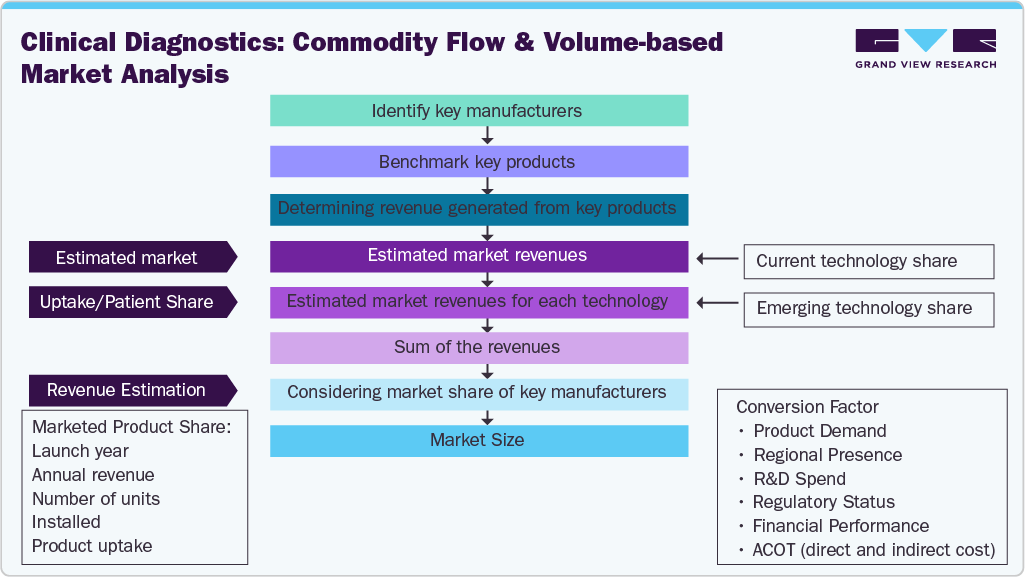
 The immunodiagnostics market was estimated using a bottom-up approach by identifying leading manufacturers of immunodiagnostic reagents, consumables, analyzers, and software solutions, followed by benchmarking their immunodiagnostic product portfolios and estimating revenue attributable to immunoassay-based diagnostic products. Market estimates were further refined by analyzing technology-wise adoption, application-specific testing volumes, disease prevalence, installed base of immunodiagnostic platforms, average selling prices, and the market shares of key participants. The findings were validated through demand-side assessment across hospitals, diagnostic laboratories, blood banks, and home care settings, with the aggregated analysis used to determine the overall market size.
Delivered Customizations
This report has been delivered with the following In-depth customizations
Client Request
Customization Delivered
Value Adds
Immunodiagnostics Competitive Landscape & Technology Assessment
Assessed the global immunodiagnostics market across immunoassay technologies including chemiluminescence immunoassays, enzyme linked immunosorbent assays, fluorescence immunoassays, rapid immunochromatographic assays, and multiplex immunoassays. Analyzed leading manufacturers, competitive positioning, product portfolios, assay menu expansion, regulatory approvals, automation trends, and regional commercialization strategies across hospitals, diagnostic laboratories, blood banks, and research institutions.
Enabled the client to identify high growth immunodiagnostic technologies, benchmark key competitors, evaluate product differentiation, prioritize investments in advanced immunoassay platforms, and understand technology adoption trends influencing the global immunodiagnostics market.
Immunodiagnostics Product Benchmarking Study
Delivered a comprehensive benchmarking assessment of immunodiagnostic platforms based on analytical sensitivity, specificity, turnaround time, automation capabilities, throughput, assay menu breadth, workflow efficiency, regulatory status, and product differentiation across leading immunodiagnostic companies.
Helped the client evaluate product competitiveness, identify innovation opportunities, benchmark automated immunoassay systems, assess technology strengths and limitations, and prioritize investments in next generation immunodiagnostic solutions.
Immunodiagnostics Commercialization & Market Entry Assessment
Assessed commercialization strategies, regulatory pathways, reimbursement landscape, distribution networks, laboratory adoption trends, strategic collaborations, and market readiness across hospitals, diagnostic laboratories, physician office laboratories, and reference laboratories. Evaluated competitive intensity, procurement practices, and adoption barriers for advanced immunodiagnostic technologies across key regional markets.
Supported commercialization planning by identifying high potential market opportunities, evaluating partnership and distribution strategies, assessing regulatory and reimbursement requirements, mitigating commercialization risks, and strengthening long term growth strategies within the global immunodiagnostics market.
Frequently Asked Questions About This Report
Key factors driving the growth of immunodiagnostics market includes rising burden of chronic diseases and growing adoption of high-sensitivity biomarker-based immunodiagnostic testing.
F. Hoffmann-La Roche Ltd., Abbott, Siemens Healthineers, Beckman Coulter, Inc., BIOMÉRIEUX, DiaSorin S.p.A., QuidelOrtho Corporation, Thermo Fisher Scientific Inc., Bio-Rad Laboratories, Inc., and Shenzhen Mindray Bio-Medical Electronics Co., Ltd.
Asia Pacific is the fastest growing region over the forecast period
Chemiluminescence immunoassay held the largest revenue share in 2025, while rapid immunochromatographic assay is the fastest-growing area.
Infectious disease testing held the largest share (24.6%) in 2025, while neurological testing is the fastest-growing area. neurological testing
The global immunodiagnostics market size was valued at USD 30.9 billion in 2025 and is estimated at USD 32.5 billion in 2026.
The global immunodiagnostics market is expected to grow at a CAGR of 5.8% from 2026 to 2033, reaching USD 48.1 billion by 2033.
The reagents & consumables segment led with a 78.3% revenue share in 2025, while software and services is the fastest-growing segment.
North America dominated with a 37.1% revenue share in 2025.
About the Author(s)
Clinical Diagnostics Research Team
Healthcare · Clinical DiagnosticsThis report was authored by the clinical diagnostics research team at Grand View Research - comprising two research analysts, one senior research analyst, and one industry expert - with specialized expertise in the clinical diagnostics segment of the healthcare industry. All findings are based on proprietary healthcare databases, executive interviews, and regulatory analysis, subject to internal peer review prior to publication.
Last Updated:
Speak to Analyst

Customize this report to your needs - add regions, segments, or data points, with 20% free customization.
Or view our licence options:


ISO 9001:2015 & 27001:2022 Certified
We are GDPR and CCPA compliant! Your transaction & personal information is safe and secure. For more details, please read our privacy policy.


