
- Home
- »
- Pharmaceuticals
- »
-
Intraoperative Radiation Therapy Market Size Report, 2033GVR Report cover
![Intraoperative Radiation Therapy Market Size, Share & Trends Report]()
Intraoperative Radiation Therapy Market (2025 - 2033) Size, Share & Trends Analysis Report By Technology, (Electron IORT (E-IORT), X-ray / Low-Energy IORT), By Application (Breast Cancer, Brain Tumors, Head & Neck Cancer), By End-use, By Region, And Segment Forecasts
- Report ID: GVR-4-68040-752-3
- Number of Report Pages: 150
- Format: PDF
- Historical Range: 2021 - 2023
- Forecast Period: 2025 - 2033
- Industry: Healthcare
- Report Summary
- Table of Contents
- Interactive Charts
- Methodology
- Download FREE Sample
-
 Download Sample Report
Intraoperative Radiation Therapy Market Summary
The global intraoperative radiation therapy market size was estimated at USD 121.74 million in 2024 and is projected to reach USD 247.14 million by 2033, growing at a CAGR of 8.2% from 2025 to 2033. The intraoperative radiation therapy (IORT) market is expanding in response to the rising cancer burden.
Key Market Trends & Insights
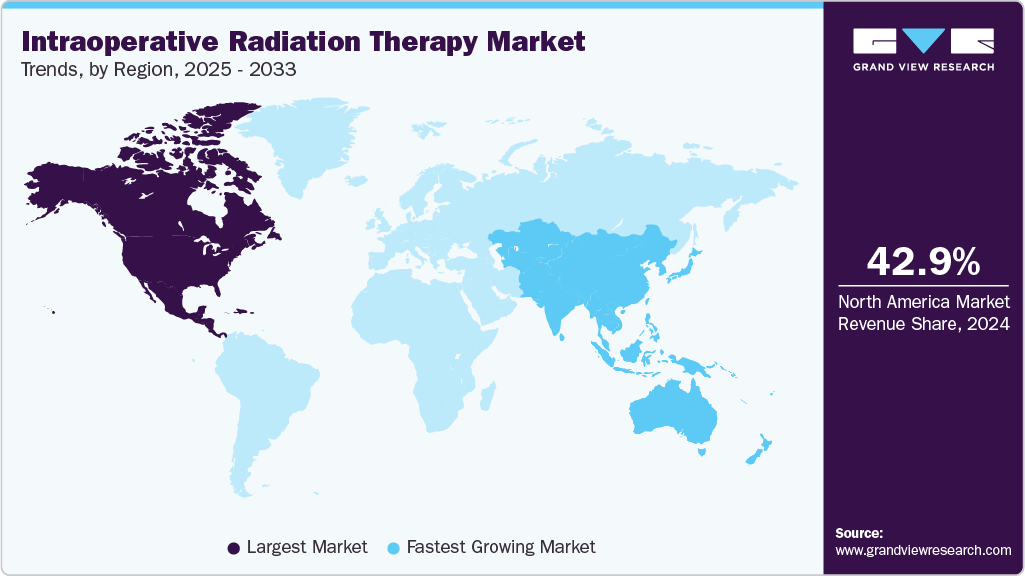
- North America intraoperative radiation therapy market held the largest share of 42.98% of the global market in 2024.
- The intraoperative radiation therapy industry in the U.S. is expected to grow significantly over the forecast period.
- By technology, the Electron IORT (E-IORT) segment held the largest market share of 52.21% in 2024.
- By application, the breast cancer segment held the largest market share in 2024.
- By end use, the hospitals and clinics segment held the highest market share in 2024.
Market Size & Forecast
- 2024 Market Size: USD 121.74 Million
- 2033 Projected Market Size: USD 247.14 Million
- CAGR (2025-2033): 8.2%
- North America: Largest market in 2024
- Asia Pacific: Fastest growing market
According to the World Health Organization’s report published in February 2024, there were 20 million new cases and 9.7 million deaths reported in 2022. IORT devices, including mobile linear accelerators, compact X-ray platforms, and brachytherapy systems, enable precise delivery of radiation directly to the tumor bed during surgery. This targeted approach reduces exposure to surrounding healthy tissues and minimizes local recurrence risks. With 53.5 million patients living within five years of a cancer diagnosis, hospitals, and specialty centers are increasingly adopting these devices to improve long-term outcomes. The lifetime cancer risk of 1 in 5 people further highlights the need for patient-centric devices that streamline treatment and improve adherence.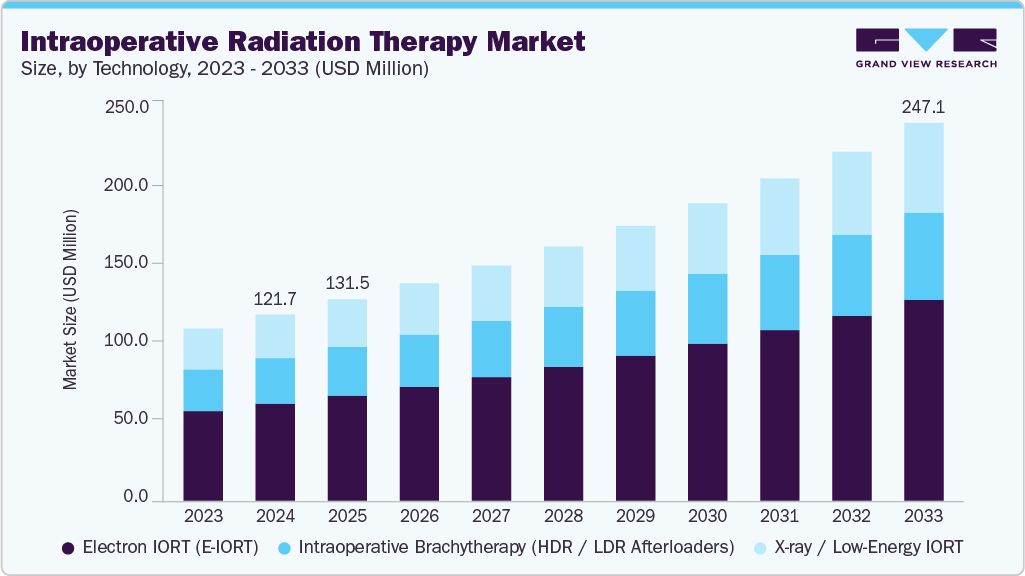
Breast and colorectal cancers are key drivers for IORT device adoption due to their high incidence rates. In 2022, breast cancer accounted for 2.3 million new cases (11.6%), while colorectal cancer contributed 1.9 million new cases (9.6%). Hospitals are deploying electron-based IORT systems, low-energy X-ray devices, and applicator-guided brachytherapy tools to deliver high-dose intraoperative radiation in a single session. This reduces the need for extended postoperative radiotherapy. These devices improve local tumor control, shorten treatment timelines, and reduce hospitalization costs. Patient convenience and workflow efficiency are critical advantages, encouraging wider integration of IORT systems in surgical oncology suites globally across hospitals and specialty centers.
The IORT device market is expected to grow as the global cancer burden rises, with over 35 million new cases predicted by 2050, representing a 77% increase from 2022. Population growth, aging, and lifestyle risk factors such as tobacco, alcohol, obesity, and environmental exposures drive this surge. High HDI countries are projected to see the most significant absolute increase, with 4.8 million additional cases, while low HDI countries could experience a 142% proportional increase and medium HDI countries 99%. The projected doubling of cancer mortality in these regions underscores the need for advanced devices capable of delivering precise, efficient treatment. The growing adoption of electron accelerators, X-ray IORT systems, and brachytherapy devices will be central to addressing rising clinical demand worldwide.
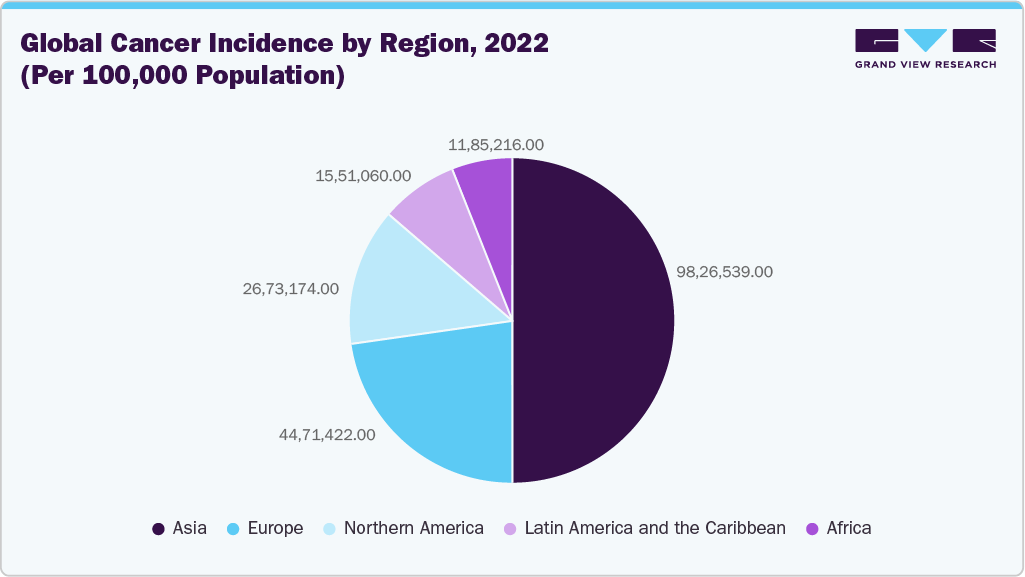
The 2022 global cancer incidence data reveals significant regional disparities, with Asia reporting the highest cases (≈9.8 million), followed by Europe (4.47M), North America (2.67M), Africa (1.55M), and Latin America/Caribbean (1.18M). This highlights the urgent need for region-specific cancer management and advanced therapies. Intraoperative Radiation Therapy (IORT), delivering targeted radiation during surgery, offers precise treatment while minimizing healthy tissue exposure, particularly valuable in high-incidence regions such as Asia and Europe. Rising cancer rates in North America and Africa also boost demand for advanced modalities. Adoption of IORT can shorten treatment duration, reduce hospitalization costs, and enhance patient outcomes. Expanding healthcare infrastructure, favorable reimbursement policies, and innovations in compact IORT systems are expected to drive global market growth.
Market Concentration & Characteristics
The intraoperative radiation therapy market demonstrates moderate to high innovation, driven by advancements in compact X-ray systems, mobile linear accelerators, and precision applicators. Companies such as Carl Zeiss Meditec AG and IntraOp Medical are investing in improved portability and adaptability of devices. Integration of imaging with radiation delivery enhances treatment accuracy and clinical outcomes. Innovation is also focused on user-friendly interfaces to support surgeons in real-time procedures. Continuous R&D is strengthening device competitiveness and broadening clinical adoption.
Entry into the IORT market requires significant capital investment in device development and clinical validation. Complex manufacturing processes and the need for precision engineering increase entry challenges. Established players benefit from brand recognition and long-standing clinical partnerships with hospitals. New entrants face difficulty in competing without proven clinical evidence and distribution networks. These barriers make the industry moderately concentrated with strong dominance of established device makers.
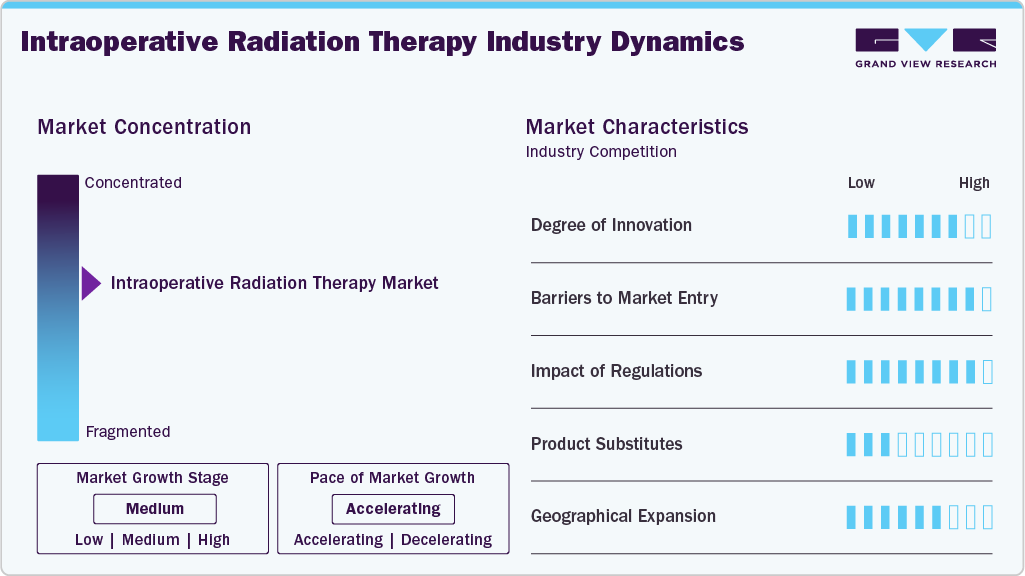
The IORT market operates under strict regulatory oversight to ensure patient safety and treatment efficacy. Medical device approvals require extensive clinical testing and compliance with radiation safety standards. Companies such as Elekta and Varian leverage established regulatory expertise to maintain global reach. Regulatory complexity extends product development timelines and adds to overall costs. Despite the challenges, regulatory compliance strengthens trust among clinicians and accelerates device adoption once approvals are secured.
External beam radiotherapy (EBRT) and brachytherapy serve as substitutes for IORT, especially in regions with limited access to advanced devices. EBRT offers broad applicability but requires multiple sessions, reducing patient convenience. Brachytherapy remains competitive in treating localized tumors but lacks intraoperative precision. The unique advantage of IORT lies in immediate high-dose delivery during surgery. This clinical differentiation limits substitution risk in specialized oncology applications.
North America and Europe dominate the IORT market due to advanced healthcare infrastructure and early adoption of innovative devices. Emerging regions such as Asia Pacific and Latin America are showing increasing demand driven by rising cancer prevalence and improving hospital capabilities. Key players are expanding distribution channels to capture untapped markets. Local partnerships and training programs are critical for successful penetration. Geographical expansion strategies are shaping competitive dynamics and enhancing long-term growth potential.
Technology Insights
The Electron IORT (E-IORT) segment dominated the market with the largest revenue share of 52.21% in 2024, driven by its ability to deliver high-dose radiation precisely to the tumor bed during surgery. Hospitals prefer electron-based systems for breast, colorectal, and pancreatic cancers due to their effectiveness and adaptability. Mobile linear accelerators allow use in operating rooms without permanent installations, and clinicians value their precision in sparing healthy tissues while ensuring strong local tumor control. For instance, in September 2025, Springer Nature published a review in the Journal of Cancer Research and Clinical Oncology highlighting 12-year results from the TARGIT-A trial, showing IORT during lumpectomy achieved outcomes comparable to whole breast radiotherapy with lower toxicity, improved patient compliance, fewer hospital visits, and favorable cost and cosmetic results. Clinical evidence continues to support growing adoption in cancer centers.
The X-ray / Low-Energy IORT segment is projected to grow at a CAGR of 8.4% over the forecast period, driven by increasing demand for compact, cost-efficient devices. These systems require minimal shielding and infrastructure, making them suitable for hospitals with space limitations, while their portability allows seamless integration into surgical workflows, particularly in breast-conserving surgeries. Oncologists adopt X-ray IORT for its ability to reduce treatment time while maintaining clinical effectiveness. For instance, in January 2025, Cancer Biology & Medicine published a Phase II study evaluating 50 kV X-ray IORT for resectable pancreatic cancer in 35 patients. The study reported a median time to treatment failure of 11.67 months, a median overall survival of 22.2 months, a 20% local recurrence rate, and manageable postoperative complications, demonstrating feasibility and tolerability. The simplicity of setup supports wider adoption across mid-sized hospitals and ambulatory centers.
Application Insights
The breast cancer segment dominated the market with the largest revenue share of 42.23% in 2024 due to increasing adoption of IORT in breast-conserving surgeries. Single-dose intraoperative radiation is highly valued for reducing recurrence risk and eliminating multiple external beam sessions. For instance, in December 2023, Elsevier published a study in Advances in Radiation Oncology reporting long-term results of IORT using a non-dedicated linear accelerator in 209 patients aged ≥40 years with tumor size ≤3 CM and N0M0 status, treated from 2004 to 2019. The median age was 60.3 years, mean tumor size 1.3 cm, 90.5% pN0, 97% margin-free, 10.6% lymphovascular invasion, 12 hormone receptor negative, 28 HER2 positive. Five-, 10-, and 15-year overall survival were 98%, 94.7%, and 88%, with a 15-year local recurrence-free rate of 76%. Clinical evidence and patient convenience drive adoption, supporting hospitals in streamlined surgical oncology protocols.
The head & neck cancer segment is projected to grow at a significant CAGR of 9.2% over the forecast period, owing to the complexity of achieving local tumor control. Surgeons increasingly use IORT to deliver targeted doses in areas that are difficult to treat with conventional radiotherapy, reducing damage to surrounding critical structures. For instance, in June 2025, MDPI published a systematic review in Cancers analyzing 47 studies with 2,330 patients. IORT was primarily used for stage III/IV or recurrent tumors, with an average dose of 14.7 Gy (range: 1-40 Gy). Five-year local control rates ranged from 47% to 82%. Complications included wound necrosis (22.3%), fistulas (17.8%), and carotid blow-out (14.5%). Logistical constraints and heterogeneous data limited widespread adoption. Advancements in applicator design, imaging integration, and growing clinical research are strengthening demand for IORT in high-risk head and neck surgeries.
End-use Insights
The hospitals and clinics segment dominated the market with the largest revenue share of 63.34% in 2024, due to their central role in providing multidisciplinary cancer treatments. Large hospitals often have the infrastructure and surgical expertise required to adopt IORT devices. Integration of IORT into surgical oncology programs is enhancing treatment efficiency and patient outcomes. Hospitals also serve as primary hubs for clinical validation and physician training, which accelerates device adoption. The ability to treat high patient volumes with advanced systems consolidates their position. As hospitals expand oncology services, IORT remains a preferred technology within surgical suites.
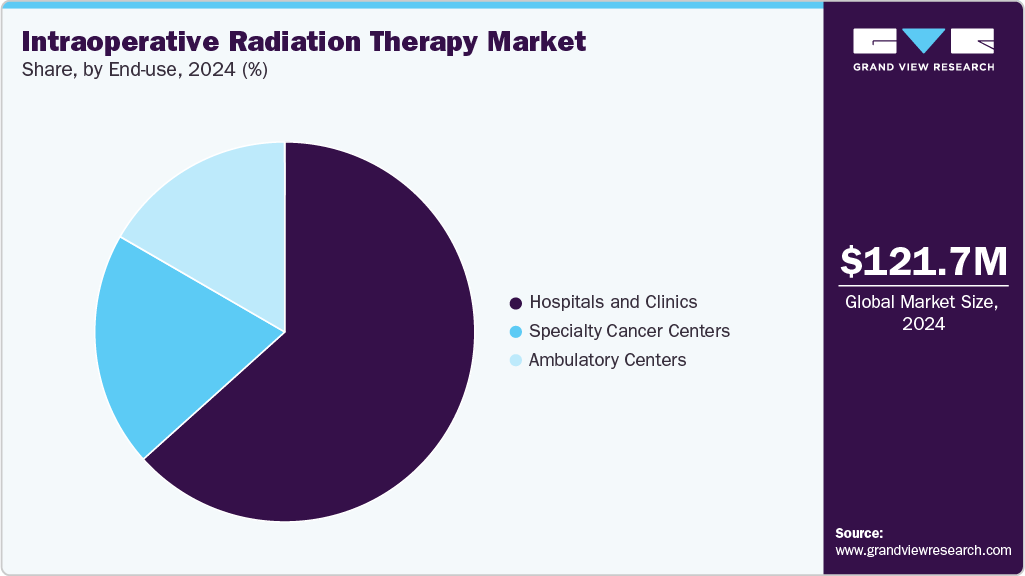
The specialty cancer centers segment is projected to grow at a significant CAGR of 8.8% over the forecast period due to their targeted focus on advanced oncology care. These centers emphasize precision treatment approaches and adopt new technologies to improve surgical outcomes. IORT is gaining strong traction in centers managing breast, gastrointestinal, and gynecological cancers. The adaptability of compact X-ray and electron systems makes them attractive for focused oncology facilities. Collaboration with device manufacturers helps these centers refine treatment protocols and expand clinical applications. The specialized nature of cancer centers positions them as a key driver of the IORT market expansion.
Regional Insights
North America intraoperative radiation therapy market held the largest share of 42.98% in 2024, driven by the strong adoption of advanced oncology devices. The region leads globally as hospitals and cancer centers prioritize precision treatment solutions for breast and gastrointestinal cancers. Clinical acceptance of IORT is expanding, with mobile linear accelerators and compact X-ray systems being widely integrated into operating rooms. Established players such as IntraOp Medical and Varian strengthen regional dominance through strong distribution and training networks. Patient demand for single-dose intraoperative treatments is rising as part of breast-conserving surgeries. The combination of advanced infrastructure and early technology adoption secures North America’s leading market share.
U.S. Intraoperative Radiation Therapy Market Trends
The U.S. intraoperative radiation therapy (IORT) market dominates North America due to expanding clinical applications across oncology specialties. The country accounts for the largest share of North America, supported by the widespread use of IORT in breast-conserving surgeries. Leading cancer centers are actively using mobile electron IORT systems and X-ray platforms in surgical oncology. The U.S. market benefits from strong collaborations between device manufacturers and healthcare providers to refine treatment protocols. Growing preference for immediate localized treatment in colorectal and pancreatic cancers further accelerates adoption. The continuous introduction of upgraded devices enhances the clinical value of IORT across American hospitals.
Europe Intraoperative Radiation Therapy Market Trends
Europe intraoperative radiation therapy (IORT) market is driven by increasing cancer incidence and the adoption of precision treatment approaches. Breast cancer remains the largest application segment, and IORT devices are frequently used during surgery. The region shows strong uptake of electron IORT systems and intraoperative brachytherapy afterloaders. Leading European medical device companies, including Carl Zeiss Meditec and S.I.T. Sordina, anchor growth with continuous technological refinement. Oncologists in specialized centers increasingly integrate IORT as part of multidisciplinary cancer treatment strategies. Europe holds a significant global share due to its robust healthcare networks and early acceptance of advanced techniques.
The UK intraoperative radiation therapy market is expanding due to rising breast-conserving surgeries and focus on reducing recurrence risks. Hospitals are expanding use of IORT in early-stage breast cancer to reduce long-term radiation requirements. Compact X-ray IORT devices are gaining traction in surgical suites where space is limited. Clinical trials conducted within the country continue to support adoption by validating safety and effectiveness. The growing need to shorten treatment times and improve patient convenience is fueling hospital investments. Strong collaboration between healthcare institutions and device manufacturers sustains the UK’s steady market growth.
Intraoperative radiation therapy market in Germany is driven by strong integration of innovative radiotherapy technologies in hospitals. The country demonstrates high penetration of electron IORT devices, particularly in large oncology centers. Precision-focused clinical practices and demand for advanced surgical oncology solutions create favorable conditions for IORT adoption. German manufacturers and research institutions contribute significantly to device advancements, including refined applicator technologies. The market is further strengthened by the country’s preference for minimally invasive oncology care. Germany remains one of the most advanced European markets for IORT devices.
France intraoperative radiation therapy market is driven by the growing role of IORT in multidisciplinary cancer treatment programs. Hospitals in France are increasingly adopting IORT during breast and rectal cancer surgeries. X-ray and electron-based devices are both gaining ground due to their ability to target tumor beds directly during procedures. The demand for shorter treatment pathways aligns well with the benefits offered by IORT. Oncology specialists are recognizing the role of IORT in reducing overall treatment duration and improving quality of life. France continues to expand its IORT footprint as part of its evolving oncology care standards.
Asia Pacific Intraoperative Radiation Therapy Market Trends
Asia Pacific intraoperative radiation therapy (IORT) market is expected to register the fastest CAGR of 8.99% over the forecast period driven by rising cancer prevalence and rapid adoption of innovative oncology devices. The region is projected to grow at the fastest CAGR, supported by a large patient pool and increasing preference for advanced surgical options. Breast and gastrointestinal cancers dominate demand for IORT systems across hospitals and specialty centers. Compact and cost-effective X-ray IORT devices are particularly appealing for hospitals with infrastructural constraints. Growing availability of training programs for oncologists is accelerating clinical acceptance. Asia Pacific stands out as the most dynamic region in the global IORT landscape.
Intraoperative radiation therapy market in Japan is driven by a strong focus on integrating precision oncology treatments into surgical practice. The country shows consistent adoption of IORT in breast-conserving and gastrointestinal cancer surgeries. Japanese hospitals are leveraging compact X-ray platforms for intraoperative treatments due to their adaptability in operating suites. Continuous collaboration between domestic medical institutions and international device makers sustains technology refinement. Patient preference for reduced hospital visits is fueling the demand for single-dose intraoperative approaches. Japan remains a major contributor to Asia Pacific’s overall market growth.
China intraoperative radiation therapy market is driven by expanding oncology infrastructure and demand for cost-effective radiotherapy alternatives. Hospitals are investing in IORT systems to address the rising incidence of breast and gastrointestinal cancers. Compact IORT devices are particularly attractive for facilities aiming to expand surgical oncology offerings with minimal infrastructural upgrades. Clinical validation of IORT outcomes in Chinese centers is further supporting adoption. Device manufacturers are increasingly targeting partnerships and distribution agreements within the country. China represents one of the fastest-growing national markets in the Asia Pacific region.
Latin America Intraoperative Radiation Therapy Market Trends
Latin America intraoperative radiation therapy (IORT) market is driven by the rising demand for advanced cancer treatments in urban centers. Adoption is increasing in breast and gastrointestinal cancers, where single-dose intraoperative treatments improve efficiency. Hospitals in major economies are integrating IORT devices as part of oncology service upgrades. Compact X-ray IORT platforms are preferred due to their adaptability and lower infrastructural demands. Local distributors are playing a crucial role in expanding device availability across the region. Latin America presents steady growth potential within the global IORT market.
Brazil intraoperative radiation therapy market is driven by the rising number of cancer surgeries and the adoption of innovative radiotherapy devices. Hospitals in large metropolitan areas are increasingly using IORT in breast-conserving surgeries. Demand for electron IORT systems is growing as oncology centers aim to improve surgical outcomes. Partnerships with international device manufacturers are strengthening the availability of advanced equipment. The need to reduce treatment duration for patients supports the integration of intraoperative solutions. Brazil holds a leading share of the Latin American IORT market.
Middle East & Africa Intraoperative Radiation Therapy Market Trends
The MEA intraoperative radiation therapy market is driven by increasing focus on oncology infrastructure development across key economies. Hospitals in the region are gradually adopting IORT for breast and gastrointestinal cancers. Adoption is concentrated in advanced cancer centers equipped to handle complex surgical oncology procedures. Compact X-ray devices are gaining attention due to their lower space requirements in operating rooms. International players are exploring partnerships with local providers to strengthen presence. MEA represents a developing but promising market for intraoperative radiation therapy devices.
Saudi Arabia intraoperative radiation therapy market is driven by rising adoption of advanced cancer treatment technologies in leading hospitals. Demand is concentrated in specialized oncology centers where breast and colorectal cancer treatments are being modernized. Hospitals are beginning to incorporate compact X-ray IORT systems into surgical oncology workflows. The emphasis on improving patient outcomes is aligning with the benefits of single-dose intraoperative treatment. Collaborations with global device manufacturers are enhancing technology availability in the country. Saudi Arabia is emerging as a key Middle Eastern hub for IORT adoption.
Key Intraoperative Radiation Therapy Company Insights
IntraOp Medical, Inc. and Carl Zeiss Meditec AG advance mobile linear accelerators and compact X-ray platforms for breast and gastrointestinal cancers. Elekta and Varian emphasize integrating IORT with imaging and planning systems to support surgical precision. S.I.T. Sordina IORT Technologies S.p.A. and IBA Worldwide develop applicator-based solutions for gynecological and head and neck cancers. Eckert & Ziegler and IsoRay, Inc. focus on isotope-driven intraoperative approaches. PTW-Freiburg GmbH and CIVCO Radiotherapy contribute dosimetry and accessories for safety and accuracy. Radcore Systems delivers adaptable device platforms. The market is shaped by technological differentiation, expanded cancer applications, and growing clinical collaborations.
Key Intraoperative Radiation Therapy Companies:
The following are the leading companies in the intraoperative radiation therapy(IORT) market. These companies collectively hold the largest market share and dictate industry trends.
- IntraOp Medical, Inc.
- Elekta
- S.I.T. Sordina IORT Technologies S.p.A.
- IBA Worldwide
- Carl Zeiss Meditec AG
- Eckert & Ziegler
- IsoRay, Inc.
- PTW‑Freiburg GmbH
- CIVCO Radiotherapy
- Radcore Systems
- Varian
Recent Developments
-
In April 2025, ZEISS Medical Technology received FDA 510(k) clearance for its INTRABEAM 700 platform, a robotic-assisted system designed to support intraoperative radiation therapy (IORT) in neuro-oncology and breast cancer surgeries. The INTRABEAM 700 integrates advanced features such as the SMART Stand for precise applicator positioning, RFID-enabled sterile applicators, and the Radiance treatment planning software. These innovations enhance workflow efficiency, improve clinical precision, and streamline surgical oncology protocols. This clearance signifies a significant advancement in the automation and digital integration of IORT procedures.
-
In October 2024, Aster Whitefield Hospital in Bengaluru introduced India's first Intra-Operative Electron Radiation Therapy (IOeRT) machine, marking a significant advancement in cancer treatment. This cutting-edge technology delivers high-dose electron radiation directly to the tumor bed during surgery, minimizing exposure to surrounding healthy tissues and reducing the need for multiple postoperative radiation sessions. The introduction of IOeRT at the Aster International Institute of Oncology (AIIO) underscores the hospital's commitment to adopting state-of-the-art technologies and setting new standards for cancer care in India.
-
In February 2023, IsoRay, Inc. and Viewpoint Molecular Targeting, Inc. completed a merger, rebranding as Perspective Therapeutics, Inc. The newly formed company focuses on developing cancer treatments using Intraoperative Radiation Therapy devices, radiopharmaceuticals, and imaging technologies.
Intraoperative Radiation Therapy Market Report Scope
Report Attribute
Details
Market size value in 2025
USD 131.51 million
Revenue forecast in 2033
USD 247.14 million
Growth rate
CAGR of 8.2% from 2025 to 2033
Base year for estimation
2024
Historical data
2021 - 2023
Forecast period
2025 - 2033
Quantitative units
Revenue in USD million/billion, and CAGR from 2025 to 2033
Report coverage
Revenue forecast, company ranking, competitive landscape, growth factors, trends
Segments covered
Technology, application, end-use, region
Regional scope
North America; Europe; Asia Pacific; Latin America; Middle East & Africa
Country scope
U.S.; Canada; Mexico; UK; Germany; France; Italy; Spain; Denmark; Sweden; Norway; China; Japan; India; Australia; South Korea; Thailand; Brazil; Argentina; South Africa; Saudi Arabia; UAE; Kuwait
Key company profiled
IntraOp Medical, Inc.; Elekta;S.I.T. Sordina IORT Technologies S.p.A.; IBA Worldwide; Carl Zeiss Meditec AG; Eckert & Ziegler; IsoRay, Inc.; PTW‑Freiburg GmbH; CIVCO Radiotherapy; Radcore Systems; Varian.
Customization scope
Free report customization (equivalent up to 8 analysts working days) with purchase. Addition or alteration to country, regional & segment scope.
Pricing and purchase options
Avail customized purchase options to meet your exact research needs. Explore purchase options
Global Intraoperative Radiation Therapy Market Report Segmentation
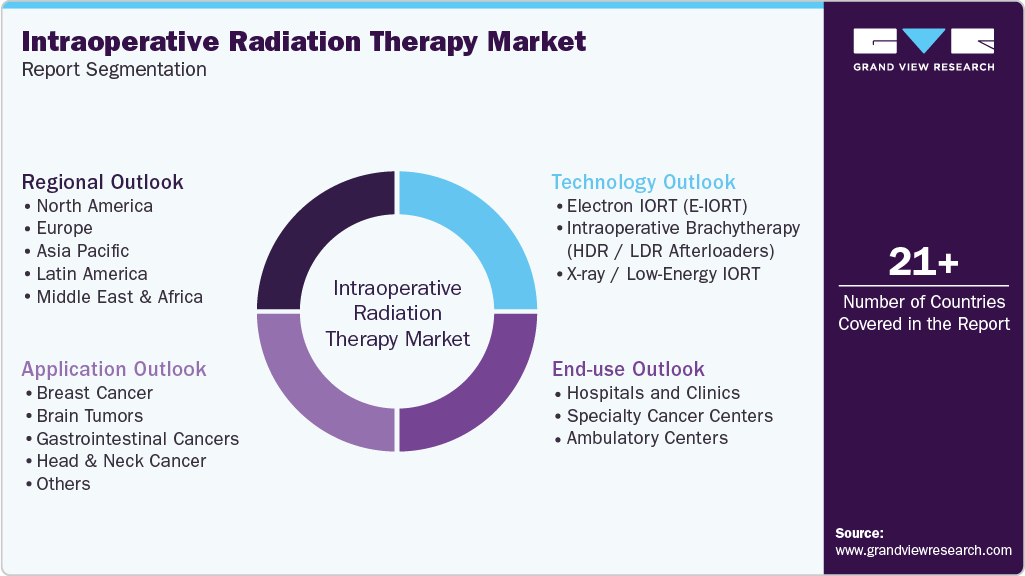
This report forecasts revenue growth at global, regional, and country levels and provides an analysis of the latest industry trends in each of the sub-segments from 2021 to 2033. For this study, Grand View Research has segmented the global intraoperative radiation therapy market report based on technology, application, end-use, and region:
-
Technology Outlook (Revenue, USD Million, 2021 - 2033)
-
Electron IORT (E-IORT)
-
Intraoperative Brachytherapy (HDR / LDR Afterloaders)
-
X-ray / Low-Energy IORT
-
-
Application Outlook (Revenue, USD Million, 2021 - 2033)
-
Breast Cancer
-
Brain Tumors
-
Gastrointestinal Cancers
-
Head & Neck Cancer
-
Others
-
-
End-use Outlook (Revenue, USD Million, 2021 - 2033)
-
Hospitals and Clinics
-
Specialty Cancer Centers
-
Ambulatory Centers
-
-
Regional Outlook (Revenue, USD Million, 2021 - 2033)
-
North America
-
U.S.
-
Canada
-
Mexico
-
-
Europe
-
UK
-
Germany
-
France
-
Italy
-
Spain
-
Denmark
-
Sweden
-
Norway
-
-
Asia Pacific
-
Japan
-
China
-
India
-
Australia
-
South Korea
-
Thailand
-
-
Latin America
-
Brazil
-
Argentina
-
-
Middle East & Africa
-
South Africa
-
Saudi Arabia
-
UAE
-
Kuwait
-
-
Frequently Asked Questions About This Report
b. The global intraoperative radiation therapy market size was estimated at USD 121.74 million in 2024 and is expected to reach USD 131.51 million in 2025.
b. The global intraoperative radiation therapy market is projected to grow at a CAGR of 8.21% from 2025 to 2033 to reach USD 247.14 million by 2033.
b. Based on technology, Electron IORT (E-IORT) segment dominated the market with the largest revenue share of 52.21% in 2024, driven by its ability to deliver high-dose radiation precisely to the tumor bed during surgery.
b. Key players in the intraoperative radiation therapy market are IntraOp Medical, Inc., Elekta, S.I.T. Sordina IORT Technologies S.p.A., IBA Worldwide, Carl Zeiss Meditec AG and Eckert & Ziegler
b. Key factors driving market growth include technological advancements, increasing cancer prevalence, growing demand for precision treatments, improved surgical outcomes, and rising healthcare investments in oncology.


Share this report with your colleague or friend.
Need a Tailored Report?
Customize this report to your needs — add regions, segments, or data points, with 20% free customization.


ISO 9001:2015 & 27001:2022 Certified
We are GDPR and CCPA compliant! Your transaction & personal information is safe and secure. For more details, please read our privacy policy.
Trusted market insights - try a free sample
See how our reports are structured and why industry leaders rely on Grand View Research. Get a free sample or ask us to tailor this report to your needs.













