
- Home
- »
- Healthcare IT
- »
-
Japan AI-enabled Medical Devices Market Size Report, 2033GVR Report cover

Japan AI-Enabled Medical Devices Market (2026 - 2033)
Size, Share & Trends Analysis Report By Application (AI Medical Imaging, AI-Enabled Endoscopy, AI Cardiology & Cardiac Diagnostics), By Disease Area (Oncology, Cardiovascular Diseases), By Region, And Segment Forecasts
Market Size, 2025
$68.8MMarket Estimate, 2026
$85.0MMarket Forecast, 2033
$393.0MCAGR, 2026–2033
24.4%Japan AI-enabled Medical Devices Market Summary
The Japan AI-enabled medical devices market size was valued at USD 68.8 million in 2025 and is projected to grow USD 85.0 million in 2026 to USD 393.0 million by 2033, at a CAGR of 24.4% from 2026 to 2033. Market growth is driven by the increasing integration of AI into medical imaging equipment, rising adoption of AI-assisted diagnostic software, and growing demand for efficient clinical workflows. The expanding use of AI in patient monitoring, cardiac diagnostics, endoscopy and neurological assessment further supports market development.
Key Market Trends & Insights
- By application: AI medical imaging segment held the majority share of 70.6% in 2025.
- By disease area: Oncology segment held a dominant market share in 2025.
Market Size & Forecast
- Market size in 2025: USD 68.8 Million
- Estimated market size by 2026: USD 85.0 Million
- Projected market size by 2033: USD 393.0 Million
- CAGR (2026-2033): 24.4%
Prism AI by Grand View Research Free to tryAsk a question about the japan AI-Enabled medical devices marketTry asking✓Every figure cited from GVR research Prefer the report? Download free sample →
In addition, Japan's initiatives to accelerate the commercialization of Software as a Medical Device (SaMD), advances in medical imaging and data analytics, and the integration of AI into hospital information systems are strengthening the adoption of AI-enabled medical technologies across the healthcare sector.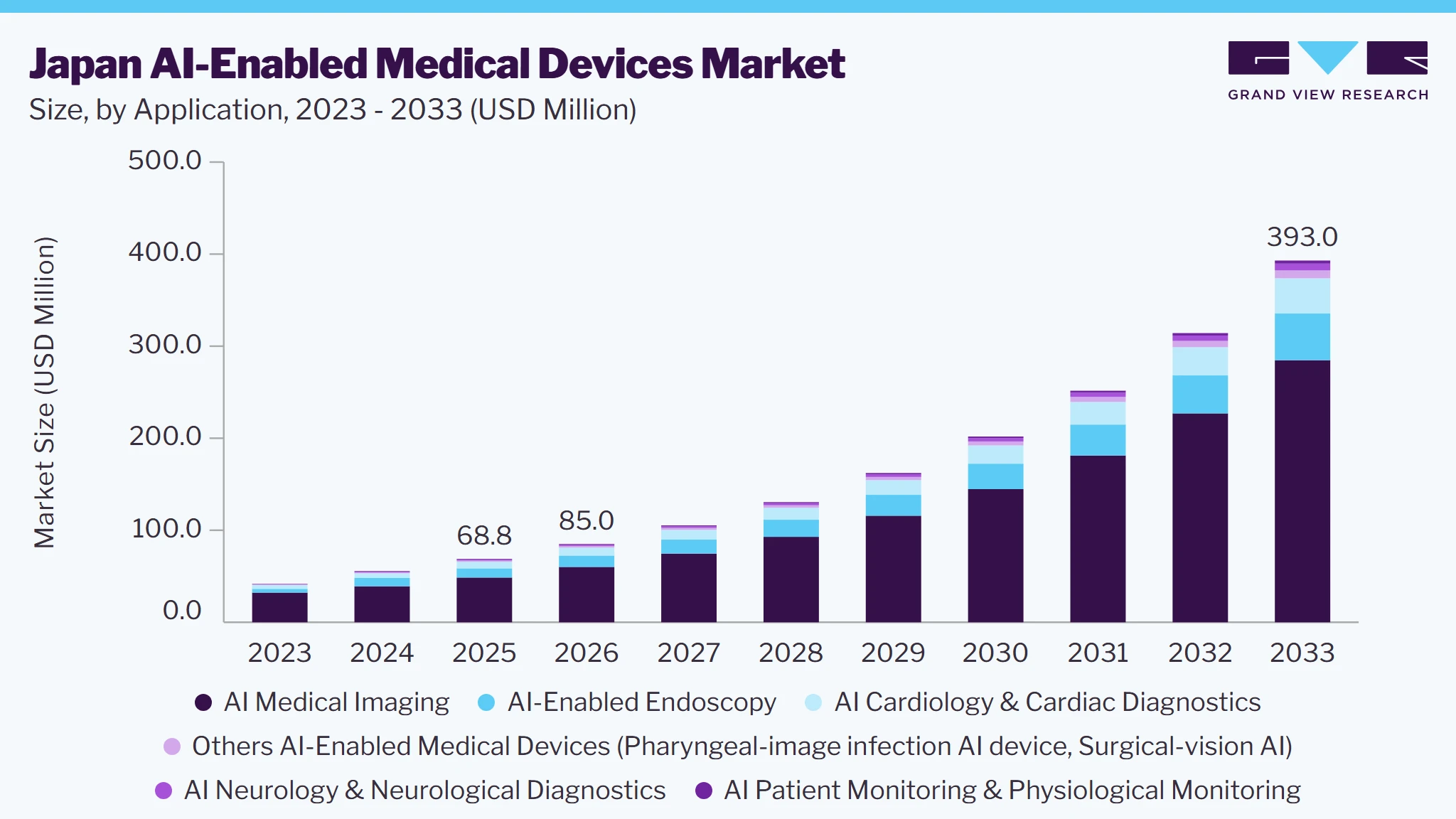 Source: Grand View Research, IR Documents, Primary Interviews, Paid DatabasesTo learn more about this report,
 Download Free Sample Report
Market Dynamic
Japan’s AI-enabled medical devices market is driven by rising chronic disease prevalence, growing demand for diagnostic efficiency, and government support for healthcare digitalization. Advancements in AI-based medical imaging, endoscopy, cardiology, and patient monitoring are expanding clinical applications. However, limited reimbursement, stringent regulatory requirements, cybersecurity concerns, and high implementation costs remain key restraints. Continued regulatory support, technological innovation, and strategic partnerships are expected to strengthen market adoption.
The increasing prevalence of diseases in Japan is driving demand for AI-enabled medical devices that help healthcare providers manage larger patient volumes and more complex clinical needs. Conditions such as cardiovascular diseases, musculoskeletal disorders, neurological disorders, and others require repeated diagnosis, assessment, and disease monitoring, increasing the volume of clinical data generated across healthcare settings. AI-enabled medical devices support healthcare providers by automating the analysis of medical images and clinical data, assisting with disease assessment, and improving the efficiency of diagnostic and monitoring workflows.
Cause
Prevalence in 2023 (in value)
Prevalence in 2024* (in value)
Prevalence in 2025* (in value)
Cardiovascular diseases
18,179,466.28
18,374,984.56
19,234,124.82
Chronic respiratory diseases
11,384,044.51
11,444,245.28
11,537,603.19
Neurological disorders
51,389,385.01
51,239,674.81
51,415,152.43
Mental disorders
15,611,874.10
15,662,415.66
15,609,193.29
Musculoskeletal disorders
51,359,614.06
51,730,063.08
51,841,353.96
Diabetes and kidney diseases
34,613,819.39
35,268,595.57
35,875,320.18
Total cancers
4,844,354.87
4,980,554.33
5,410,719.04
Source: Global Burden of Diseases, Grand View Research Analysis (Note: * represent the estimated prevalence)
The high prevalence of cardiovascular diseases, neurological disorders, musculoskeletal conditions, and cancers increases the workload associated with medical imaging and clinical examinations. AI-enabled devices address these requirements by analyzing diagnostic images, identifying disease-associated abnormalities, and prioritizing suspicious findings for clinical review. For instance, in February 2026, Fujifilm Medical announced the launch of CXR-AID Ver3.0, following partial regulatory approval in Japan, expanding the number of supported findings from three to ten, including atelectasis, pleural effusion, cardiomegaly, and mediastinal enlargement. This expansion strengthens the software's role in supporting image interpretation across multiple clinical conditions.
Supportive and Structured Regulatory Framework
Japan’s structured regulatory framework supports the development and commercialization of AI-enabled medical devices through dedicated policies addressing regulatory review, clinical validation, post-approval software updates, and reimbursement. Between 2017 and 2021, initiatives led by MHLW, PMDA, and the Cabinet established clearer regulatory pathways, addressed AI development barriers, and accelerated Software as a Medical Device (SaMD) commercialization. Measures such as IDATEN and DASH for SaMD strengthened post-approval change management and regulatory coordination. These initiatives, alongside approvals across medical imaging, endoscopy, and infectious disease diagnostics, demonstrate Japan’s progress toward integrating AI-enabled medical devices into clinical practice.
Selected AI-enabled products available/approved in Japan:
Product
MAH / Developer
Approval / Certification Date
Application
CoronaryDoc
Clairvo Technologies
October 2024
AI Cardiology & Cardiac Diagnostics
Zio ECG Recording & Analysis System
iRhythm Technologies
September 9, 2024
AI Cardiology & Cardiac Diagnostics
Cardimax FCP-9800Ai
Fukuda Denshi
August 26, 2024
AI Cardiology & Cardiac Diagnostics
SurVis-Hys
Jmees
August 2, 2024
Other AI-Enabled Medical Devices
HOPE LifeMark Fetal-Heart Ultrasound Screening
Fujitsu Japan
July 29, 2024
AI Cardiology & Cardiac Diagnostics
Cardimax FCP-9900Ai
Fukuda Denshi
June 19, 2024
AI Cardiology & Cardiac Diagnostics
PanoSCOPE
Media Co.
May 21, 2024
AI Medical Imaging
Smart Opinion METIS Eye
Smart Opinion
May 8, 2024
AI Medical Imaging
EUREKA α
Anaut
April 12, 2024
Other AI-Enabled Medical Devices
BMAX
Cosmotec
November 20, 2023
AI Medical Imaging
EndoBRAIN-X
Cybernet System
January 17, 2023
AI-Enabled Endoscopy
EIRL Chest XR
LPIXEL
December 16, 2022
AI Medical Imaging
EIRL Colon Polyp
LPIXEL
November 14, 2022
AI-Enabled Endoscopy
CAD EYE EW10-EG01
FUJIFILM
September 20, 2022
AI-Enabled Endoscopy
nodoca
Aillis
April 26, 2022
Other AI-Enabled Medical Devices
DoctorNet JLK-CRP
DoctorNet (JLK algorithm)
December 9, 2021
AI Medical Imaging
CXR Finding-i (KDSS-CXR-AI-101)
Konica Minolta
October 11, 2021
AI Medical Imaging
Source: Pharmaceuticals and Medical Devices Agency (PMDA); Grand View Research Analysis.
Dependence on local partners for commercialization, distribution, and access to established healthcare networks represents a market-entry constraint for overseas AI medical-device manufacturers. For instance, Fujifilm and Lunit entered into a partnership in 2018 to bring Lunit’s AI technology to the Japan market through Fujifilm’s established medical-device infrastructure. Lunit’s AI technology was incorporated into CXR-AID, while Fujifilm provided its existing medical-device platform, PACS integration capabilities, and domestic sales network. This reliance on local partnerships increases overseas manufacturers’ dependence on local companies for market access and limits independent market expansion.
Similarly, in July 2024, M3 AI, Juntendo University, and Singapore-based Us2.ai began a collaboration to introduce Us2.ai’s AI-powered automated echocardiography analysis software in Japan. Under the collaboration, M3 AI is responsible for deployment across Japan medical institutions, while Juntendo University provides cardiovascular expertise and oversees product optimization. A further barrier is the need for local clinical adaptation and validation. In the Us2.ai collaboration, Juntendo University was specifically involved in optimizing the product for the Japan market, while M3 AI handled deployment across medical institutions. This indicates that overseas AI solutions require a distribution partner as well as local clinical expertise and product adaptation to support adoption within healthcare settings.
AI-enabled neurology and neurological diagnostics present growth opportunities in Japan, particularly in cognitive assessment, dementia screening, and digital neurological testing. Compared with established AI applications in medical imaging and endoscopy, neurological SaMD commercialization remains relatively limited, creating opportunities for developers to introduce specialized diagnostic and assessment technologies.
For instance, Otsuka Pharmaceutical and Ai-BrainScience developed MIREVO, a neuropsychological testing program for dementia clinical support that uses eye-tracking technology to assess cognitive function. In January 2025, MIREVO became the first SaMD in Japan to receive health-insurance coverage in the dementia field. This milestone established a reimbursed commercial pathway for digital cognitive assessment and strengthened opportunities for further development of dementia-related diagnostic technologies.
Regulatory developments further support this opportunity. In July 2026, PMDA published draft review points for SaMD intended to test cognitive function, with public consultation scheduled through December 2026. Dedicated review considerations support greater regulatory clarity for developers targeting cognitive impairment and neurological assessment. Together, reimbursement progress and specialized regulatory guidance create opportunities for expanding AI-enabled neurological diagnostics in Japan.
Market Concentration & Characteristics
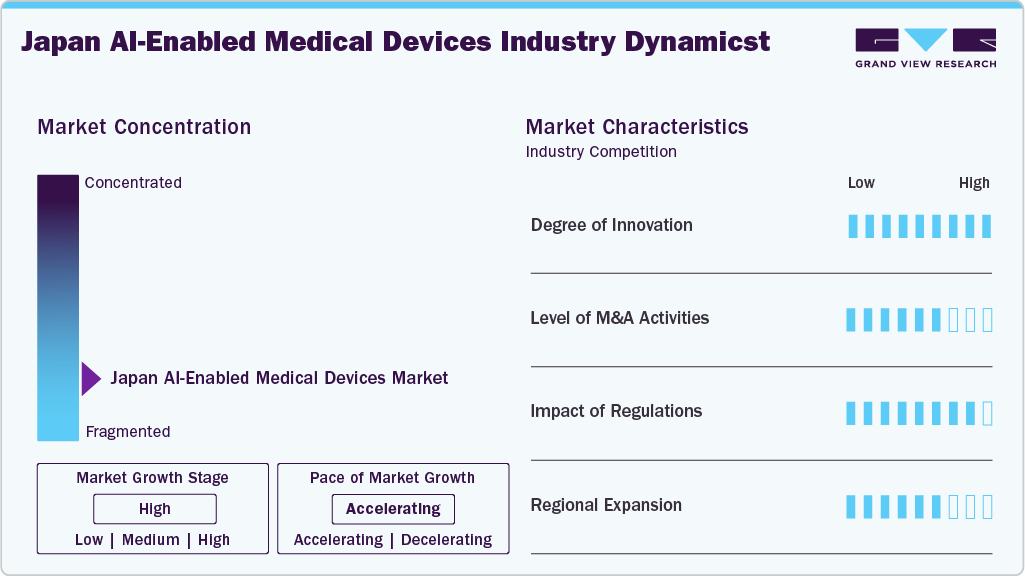
The Japan AI-enabled medical devices market is highly innovative. Technological innovation is advancing through the integration of deep learning, automated image analysis, real-time AI assistance, and AI-enabled clinical decision support. For instance, in July 2026, Fujifilm Corporation developed AI-based software for detecting cerebral aneurysms from magnetic resonance angiography (MRA) images, which received Japan's first regulatory approval for a concurrent-read AI-enabled medical device. The software uses deep learning to identify suspected cerebral aneurysms with a maximum diameter of 2 mm or more and highlights the suspected lesions on MRA and 3D images.
Market consolidation through mergers and acquisitions (M&A) is strengthening capabilities in AI-enabled medical devices by expanding technology portfolios and integrating AI algorithms with wearable biosensors and remote patient monitoring solutions. For instance, in August 2026, iRhythm announced an agreement to acquire VitalConnect for approximately USD 287.5 million, expanding its capabilities in wearable biosensors, ambulatory cardiac monitoring, multi-vital monitoring, and AI-enabled algorithms, complementing its commercially available Zio ECG system in Japan.
 To learn more about this report, Download Free Sample Report
Japan’s evolving regulatory framework, including PMDA review guidance for AI-enabled medical devices, post-approval change management under IDATEN, and dedicated initiatives for Software as a Medical Device (SaMD), is improving regulatory clarity and supporting product commercialization. These measures facilitate the evaluation, approval, and updating of AI-enabled technologies while maintaining safety and efficacy requirements. However, compliance with clinical validation, regulatory review, and reimbursement requirements continues to influence product development timelines and market entry.
AI medical-device companies are expanding into international markets to broaden their commercial reach and increase the adoption of AI-assisted diagnostic technologies. For instance, in April 2026, LPIXEL Inc. announced regulatory approvals for its EIRL medical imaging AI series in six ASEAN markets - Vietnam, the Philippines, Thailand, Indonesia, Malaysia, and Singapore. The approvals cover AI-assisted chest X-ray analysis, including suspected lung abnormality detection and tuberculosis probability classification, supporting the company’s regional commercialization strategy.
Analyst Perspective
Japan’s AI-enabled medical devices market is progressing from established applications in medical imaging and endoscopy toward broader adoption across neurological diagnostics, cardiovascular monitoring, and intraoperative surgical guidance. A structured regulatory framework, increasing product approvals, and dedicated SaMD initiatives support commercialization, while reimbursement pathways influence clinical adoption and market access. Opportunities are particularly relevant in cognitive assessment, real-time surgical assistance, and AI-enabled patient monitoring, where specialized technologies address evolving clinical needs. International expansion, strategic partnerships, and acquisitions are further strengthening technology portfolios and commercial reach.
By Application
The AI medical imaging segment held the largest market share of 70.6% in 2025. The segment growth is supported by the country’s high density of diagnostic imaging equipment and a growing number of PMDA-approved AI-based software medical devices. For instance, according to the study published by NCBI in June 2026, as of September 2025, Japan had 51 PMDA-approved AI-utilizing SaMD products, of which 24 were classified under medical imaging, making imaging the largest AI medical device application category in the country. These products span chest CT and X-ray, brain MRI, breast ultrasound, and musculoskeletal imaging, with applications including pulmonary nodule detection, quantification of interstitial lung disease, pneumonia identification, intracranial aneurysm detection, breast lesion characterization, and fracture detection.
The AI neurology & neurological diagnostics is expected to grow at the fastest CAGR during the forecast period. The increasing adoption of AI-based cognitive assessment technologies is expanding the application of artificial intelligence in neurological diagnostics, particularly for the early identification and assessment of cognitive decline and dementia. AI-enabled systems analyze patient-generated clinical information and support standardized cognitive-function assessment. For instance, FRONTEO Inc. and Shionogi & Co., Ltd. are jointly developing SDS-881, a conversational AI program medical device for cognitive-function testing. The system uses FRONTEO's proprietary KIBIT AI to analyze 10 minutes or more of free-flowing conversation between patients and healthcare professionals to determine the presence or absence of cognitive decline.
By Disease Area
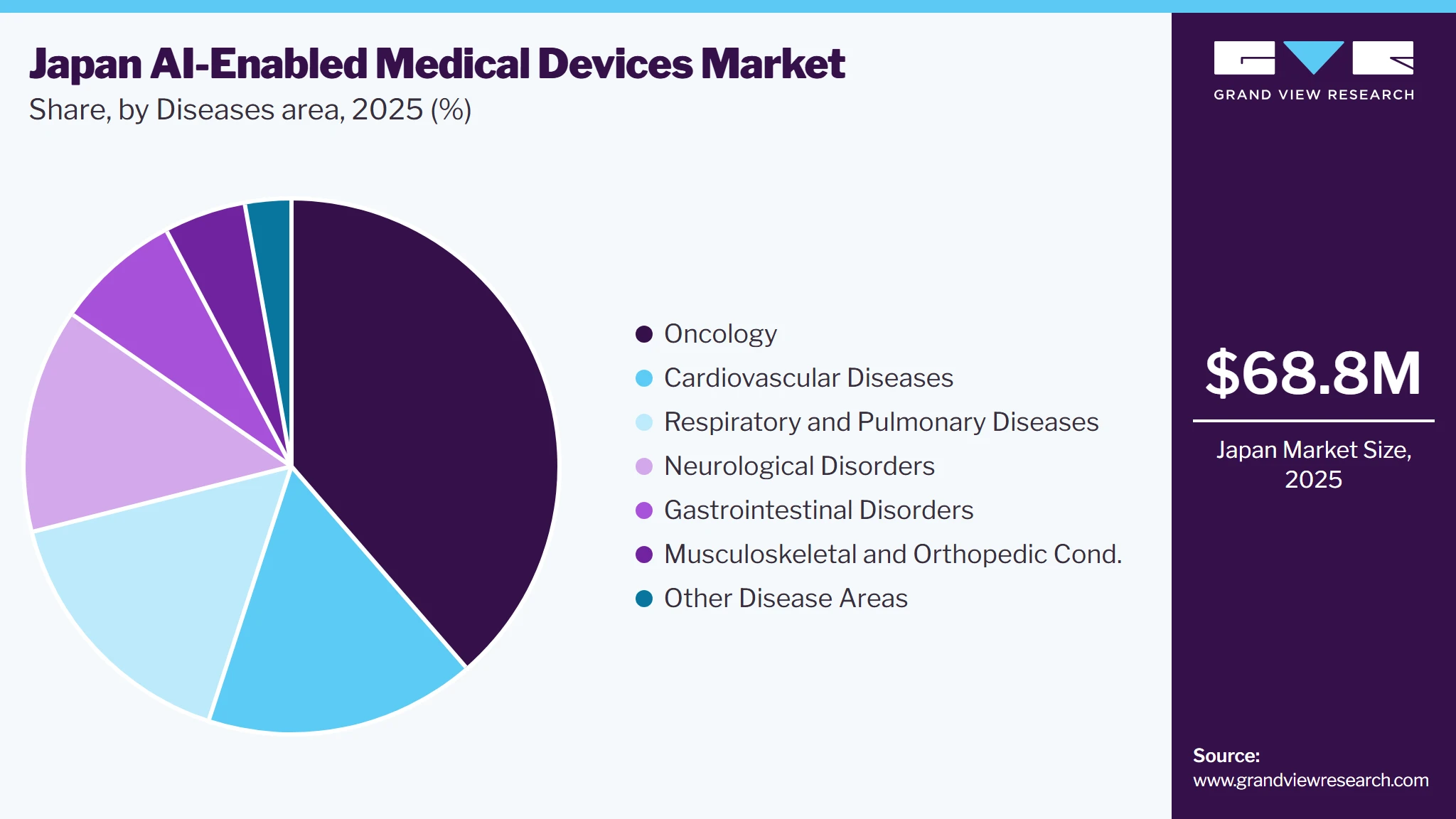
The oncology diagnostics segment held the largest market share of 38.6% in 2025. The segment growth is supported by the country's high cancer burden and the growing use of AI across cancer detection, diagnosis, screening, and pathology. The oncology AI landscape has historically been concentrated in medical image analysis, particularly endoscopic and radiological applications. For instance, the 2025 Cancer Science review identified 18 AI-SaMD products approved in Japan for tumor-related applications as of May 2024, of which 9 (50%) supported endoscopic diagnosis. The review also highlighted active research in radiological image analysis, while research activity is expanding into omics analysis, natural-language processing, and large language models. This indicates that oncology is progressing from image-based AI to broader applications that involve clinical and molecular information.
 To learn more about this report, Download Free Sample Report
The respiratory and pulmonary diseases segment is expected to grow at the fastest CAGR during the forecast period. The application of AI in respiratory healthcare is expanding across pulmonary imaging, lung cancer screening, and the assessment of respiratory abnormalities, with AI increasingly supporting the interpretation of complex chest imaging data. Lung cancer remains one of the major respiratory health burdens in Japan, while conditions such as chronic obstructive pulmonary disease (COPD), interstitial lung disease (ILD), and other pulmonary disorders require repeated imaging, physiological measurements, and longitudinal assessment. For instance, a 2025 review from Osaka University highlighted the increasing use of AI in respiratory diagnosis, particularly for early detection of abnormalities and lung cancer using medical imaging.
Key Japan AI-enabled Medical Devices Company Insights
Key companies in Japan’s AI-enabled medical devices market are focusing on AI-assisted medical imaging, automated image interpretation, computer-aided detection and diagnosis, AI-enabled endoscopy, cardiovascular diagnostics, and patient monitoring to improve diagnostic accuracy and clinical workflow efficiency. Manufacturers are integrating deep-learning algorithms, image reconstruction technologies, real-time lesion detection, and clinical decision-support software into medical devices to support the early detection and assessment of diseases.
Key Japan AI-enabled Medical Devices Companies
-
Cybernet Systems Corporation
-
NEC Corporation
-
Fujifilm Corporation
-
LPIXEL Inc.
-
AI Medical Service Inc.
-
Canon Medical Systems Corporation
-
Konica Minolta, Inc.
-
DoctorNet Co., Ltd.
-
Cardio Intelligence Inc.
-
Aillis Inc.
-
Fujitsu Limited
Competitive Benchmarking
Category
Operating Strategies
Competitive Edge
Weakness
Established Players (e.g., Fujifilm Corporation, Canon Medical Systems Corporation, NEC Corporation, Konica Minolta, Inc., and Fujitsu Limited.)
- Integrate AI into existing medical imaging systems and expand AI-enabled product portfolios through continuous R&D and product innovation.
- Strengthen hospital partnerships, distribution networks, and clinical collaborations to accelerate commercialization and improve workflow integration.
- Benefit from established brand recognition, extensive hospital networks, regulatory experience, and strong financial resources.
- Leverage broad medical-device portfolios, clinical expertise, and established distribution channels to support product adoption and customer retention.
- Face high R&D expenditure, complex system integration requirements, and ongoing costs associated with regulatory compliance and product maintenance.
- Encounter competition from specialized AI developers and challenges in adapting established product portfolios to rapidly evolving AI technologies.
Emerging / Specialized Players (e.g., I Medical Service Inc., Cardio Intelligence Inc., and Aillis Inc.)
- Focus on developing specialized AI-enabled diagnostic solutions targeting specific clinical applications and unmet healthcare needs.
- Pursuing regulatory approvals, clinical validation, and strategic partnerships with hospitals, research institutions, and established medical-device manufacturers.
- Offer specialized AI capabilities, focused product development, and greater flexibility in addressing niche diagnostic requirements.
- Differentiate through innovative algorithms, application-specific datasets, and targeted solutions for emerging clinical needs.
- Face limited financial resources, smaller distribution networks, and difficulties scaling product commercialization across healthcare institutions.
- Depending on clinical validation, regulatory approvals, external partnerships, and reimbursement pathways to achieve broader market adoption.
Recent Developments
-
In May 2026, AI Medical Service received Japanese manufacturing and marketing approval for gastroAI model-G3, an AI-based endoscopic image diagnosis support software designed for gastric endoscopy. The product represents the company’s third-generation gastric endoscopy AI platform and supports endoscopic diagnosis.
-
In March 2026, Cardio Intelligence launched the SmartRobin AI Series B, a long-term ECG analysis software that uses AI to automatically detect atrial fibrillation. The product supports ECG review for patients undergoing follow-up after AF treatment, patients with suspected AF, and patients receiving irregular-heartbeat alerts.
-
In October 2025, Aillis began providing nodoca 3, an updated AI medical device incorporating a COVID-19 determination function. The system uses images of the pharynx together with patient information to support diagnosis of COVID-19, expanding the application of the nodoca platform beyond influenza.
Japan AI-enabled Medical Devices Market Report Scope
Report Attribute
Details
Market size in 2025
USD 68.8 million
Estimated market size in 2026
USD 85.0 million
Projected market size by 2033
USD 393.0 million
Growth Rate
CAGR of 24.4% from 2026 to 2033
Actual data
2021 - 2025
Forecast period
2026 - 2033
Quantitative units
Revenue in USD million and CAGR from 2026 to 2033
Report coverage
Revenue forecast, company ranking, competitive landscape, growth factors, and trends
Segments covered
Application and disease area
Key companies profiled
Cybernet Systems Corporation, NEC Corporation, Fujifilm Corporation, LPIXEL Inc., AI Medical Service Inc., Canon Medical Systems Corporation, Konica Minolta, Inc., DoctorNet Co., Ltd., Cardio Intelligence Inc., Aillis Inc., Fujitsu Limited.
Customization scope
Free report customization (equivalent to 8 analysts working days) with purchase. Addition or alteration to country, regional & segment scope.
Pricing and purchase options
Avail customized purchase options to meet your exact research needs. Explore purchase options
Japan AI-Enabled Medical Devices Market Report Segmentation
This report forecasts revenue growth at the country level and provides an analysis of industry trends in each sub segment from 2021 to 2033. For the purpose of this study, Grand View Research has segmented the Japan AI-enabled medical devices market on the basis of application and disease area:
-
Application Outlook (Revenue, USD Million, 2021 - 2033)
-
AI Medical Imaging
-
Radiology AI
-
AI-Assisted Image Interpretation
-
Computer-Aided Detection/Diagnosis
-
Other Imaging AI
-
-
AI-Enabled Endoscopy
-
AI Cardiology & Cardiac Diagnostics
-
ECG Analysis
-
Arrhythmia Detection
-
Other AI-Enabled Cardiac Diagnostics
-
-
AI Neurology & Neurological Diagnostics
-
EEG Analysis
-
Neurological Monitoring
-
Other AI-Enabled Neurological Devices
-
-
AI Patient Monitoring & Physiological Monitoring
-
Other AI-Enabled Medical Devices
-
-
Disease Area Outlook (Revenue, USD Million, 2021 - 2033)
-
Oncology
-
Cardiovascular Diseases
-
Neurological Disorders
-
Gastrointestinal Disorders
-
Respiratory and Pulmonary Diseases
-
Musculoskeletal and Orthopedic Conditions
-
Other Disease Areas
-
Research Methodology
The Japan AI-enabled medical devices market figures in this report are based on a proven research process that combines executive interviews with secondary research from proprietary databases, company filings, and recognized regulatory and institutional sources. Market size is built through value-chain sizing-reconciling supply-side and demand-side estimates-and triangulated with bottom-up and top-down approaches. Every estimate passes multiple levels of expert validation before publication, with each Japan AI-enabled medical devices segment quantified using the revenue-capture definitions in the table below.
Segment Definition
Segment
Segment Definition
By Application:
AI Medical Imaging
AI Medical Imaging covers AI embedded in or applied to diagnostic imaging, including image reconstruction on CT and MRI, image interpretation and quantification, lesion detection and diagnosis, and AI for mammography, ultrasound, dental and fundus imaging. Cardiac imaging AI sits under cardiology.
Radiology AI
Radiology AI refers to AI embedded in image acquisition and reconstruction on CT and MRI systems, such as deep-learning reconstruction for noise reduction and lower radiation dose. Only the AI-attributable value of new scanners and AI reconstruction upgrades to installed scanners is counted.
AI-Assisted Image Interpretation
AI-Assisted Image Interpretation comprises AI software that supports radiologists in reading CT and MRI images through organ segmentation, measurement, quantification, 3D analysis and similar-case search, without a lesion-detection claim. Examples include FUJIFILM SYNAPSE SAI viewer and M3 AI platform applications.
Computer-Aided Detection/Diagnosis
Computer-Aided Detection/Diagnosis covers AI software that detects, characterises or triages lesion candidates on chest X-ray, CT and MRI images, such as lung nodules, pneumonia, aneurysms and fractures. Key products include FUJIFILM CXR-AID, Konica Minolta CXR Finding-i and LPIXEL EIRL.
Other Imaging AI
Other Imaging AI covers AI applied to imaging modalities outside CT, MRI and chest X-ray, including breast and other ultrasound, mammography, dental panoramic radiography and fundus imaging, together with AI that detects retained surgical gauze on X-ray images.
AI-Enabled Endoscopy
AI-Enabled Endoscopy covers AI used during gastrointestinal endoscopy for real-time detection and characterisation of colorectal, gastric and oesophageal lesions, delivered as software licences with AI expansion hardware and service. Products include Olympus/Cybernet EndoBRAIN, FUJIFILM CAD EYE, NEC WISE VISION and AI Medical Service gastroAI.
AI Cardiology & Cardiac Diagnostics
AI Cardiology & Cardiac Diagnostics covers AI that interprets cardiac signals and images, spanning resting 12-lead ECG analysis, ambulatory rhythm analysis from Holter and multi-day patch recordings, and cardiac imaging AI such as CT-derived fractional flow reserve, coronary CT and echocardiography analysis.
ECG Analysis
ECG Analysis refers to AI that interprets resting or 12-lead electrocardiograms or estimates cardiac risk from them, such as identifying hidden atrial fibrillation risk from sinus-rhythm ECGs (Fukuda Denshi FCP-9900Ai). Rule-based automatic ECG measurement software is excluded.
Arrhythmia Detection
Arrhythmia Detection covers AI that classifies heart rhythms in ambulatory recordings, including Holter ECG and multi-day continuous patch monitoring, to identify atrial fibrillation and other arrhythmias. Products include Cardio Intelligence SmartRobin AI and the iRhythm Zio long-term continuous monitoring service.
Other AI-Enabled Cardiac Diagnostics
Other AI-Enabled Cardiac Diagnostics comprises AI applied to cardiac imaging, including CT-derived fractional flow reserve (HeartFlow FFRct), coronary CT angiography analysis (Clairvo CoronaryDoc) and automated echocardiography measurement (Us2.ai via M3 AI). Cardiac imaging AI is classified here rather than under AI Medical Imaging.
AI Neurology & Neurological Diagnostics
AI Neurology & Neurological Diagnostics covers AI for diagnosing and monitoring neurological conditions, including EEG interpretation, continuous neurological monitoring, brain-imaging quantification for dementia and stroke triage on head CT sold into neurology, stroke and brain-dock pathways.
EEG Analysis
EEG Analysis refers to AI that interprets electroencephalography recordings, such as automated detection of epileptiform discharges and seizures. No AI EEG-analysis device is approved or sold in Japan as of October 2026; the segment therefore stays at zero in the base forecast.
Neurological Monitoring
Neurological Monitoring covers AI that continuously or longitudinally monitors neurological status, such as seizure-warning systems and patient-use neurological SaMD. No such AI device were identified as of October 2026; the segment therefore stays at zero in the base forecast.
Other AI-Enabled Neurological Devices
Other AI-Enabled Neurological Devices comprise brain-imaging AI for dementia assessment, such as Splink Brain Life Imaging (hippocampal volume on brain-dock MRI) and BRAINEER, and stroke head-CT triage AI, such as Heuron CTS offered on a pay-per-use basis through DoctorNET AI-RAD.
AI Patient Monitoring & Physiological Monitoring
AI Patient Monitoring & Physiological Monitoring covers AI that predicts or detects physiological deterioration from bedside or peri-operative monitoring data, such as Edwards Lifesciences Acumen Hypotension Prediction Index. Only the AI-attributable value of monitoring software and sensors is counted; consumer wearables are excluded.
Other AI-Enabled Medical Devices
Other AI-Enabled Medical Devices covers AI devices outside the five clinical applications: Aillis nodoca, an AI pharyngeal camera that estimates influenza and COVID-19 infection, and surgical-vision AI for laparoscopic surgery (Anaut EUREKA α, Jmees SurVis-Hys) that highlights anatomy in real time.
By Disease Area:
Oncology
AI-enabled medical devices support the detection, characterization, and monitoring of cancer across different stages of the disease. These technologies analyze medical images, pathology slides, and patient data to identify suspicious lesions, assess tumor characteristics, and support treatment planning. Their applications include cancer screening, tumor segmentation, and response assessment.
Cardiovascular Diseases
This segment covers AI-powered medical devices designed to identify, evaluate, and monitor cardiovascular conditions, including coronary artery disease, arrhythmias, and heart failure. Algorithms process electrocardiograms (ECGs), echocardiograms, cardiac imaging, and physiological signals to detect abnormalities and assess cardiac function. These solutions support early diagnosis, risk stratification, and continuous cardiac monitoring.
Neurological Disorders
Facilitate the diagnosis and management of neurological conditions such as stroke, epilepsy, Parkinson’s disease, and dementia. They interpret brain imaging, electroencephalography (EEG) signals, and other neurological data to detect abnormalities and evaluate disease progression. Clinical applications include stroke assessment, seizure detection, and the analysis of structural or functional changes in the brain.
Gastrointestinal Disorders
Assist in examining the digestive tract and identifying abnormalities associated with conditions such as colorectal cancer, gastric disorders, inflammatory bowel disease, and gastrointestinal bleeding. These systems analyze endoscopic videos, CT scans, and other diagnostic images to detect lesions, classify tissue abnormalities, and support clinical decision-making.
Respiratory and Pulmonary Diseases
Includes AI-integrated devices used to assess diseases affecting the lungs and respiratory system, including lung cancer, pneumonia, chronic obstructive pulmonary disease (COPD), and interstitial lung disease. Image-analysis algorithms evaluate chest X-rays and CT scans to identify pulmonary abnormalities, quantify disease-related changes, and prioritize suspicious findings.
Musculoskeletal and Orthopedic Conditions
Address conditions involving bones, joints, muscles, and the spine, including fractures, osteoarthritis, osteoporosis, and spinal disorders. These technologies interpret X-rays, CT scans, and MRI images to identify structural abnormalities, measure anatomical changes, and support orthopedic assessment. Their applications extend to fracture detection, joint degeneration evaluation, preoperative planning, and AI-assisted surgical navigation.
Other Disease Areas
This category encompasses AI-enabled medical devices applied to diseases and clinical conditions outside the six specifically identified segments. It includes applications in ophthalmology, dermatology, infectious diseases, metabolic disorders, and other diagnostic or monitoring areas. These devices analyze medical images, laboratory results, physiological signals, and patient data to support disease screening, diagnostic interpretation, risk assessment, and clinical management.
Estimation Model
The Japan AI-enabled medical devices market was estimated using supply-side and demand-side models. Public data, product evidence, existing primary research, and internal databases were used to validate the key assumptions. The model covers 2021 to 2033. Values for 2021 to 2024 are modeled historical estimates, 2025 is the base year, and 2026 to 2033 are forecasts. All annual estimates were built from the underlying drivers rather than applying one common growth rate to every segment.
The methodology included:
Model 1: Commodity Flow Analysis
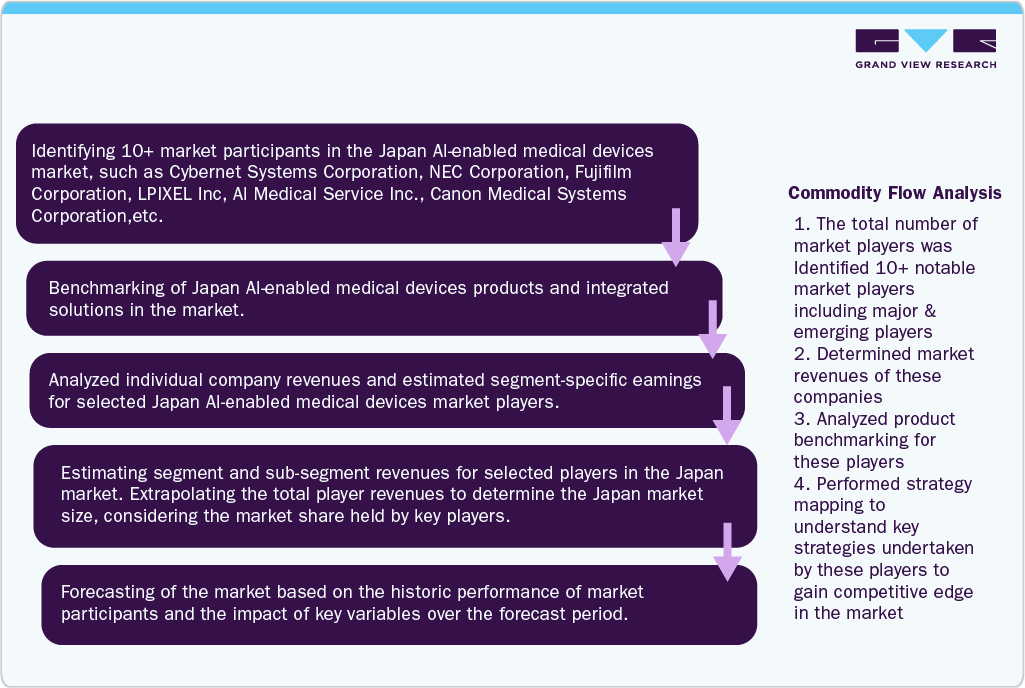
Commodity flow analysis is the supply-side methodology used to derive and cross-check the Japan AI-enabled medical devices market size. The approach reconstructs the market revenue pool from company-level financial information, government shipment statistics, and product-level revenue estimates.
 To learn more about this report, Download Free Sample Report
Model 2: Demand Based Market Sizing Framework
The demand model starts with Japanese healthcare facilities and follows demand through equipment ownership or procedure performance, digital readiness, product availability, paying sites, AI licences, units, or tests per site, realized Japan price, and revenue.
-
Step 1: Healthcare Facility Base - Identify relevant hospitals and clinics based on facility type, bed capacity, and availability of relevant clinical services.
-
Step 2: Equipment Ownership and Procedure Base - Assess medical equipment availability and the volume of clinical procedures relevant to each AI-enabled medical device application.
-
Step 3: Digital Readiness - Evaluate electronic health record adoption and the digital infrastructure required to support AI implementation.
-
Step 4: Product Availability and Adoption - Assess regulatory approval, commercial availability, clinical adoption, and evidence of paid implementation.
-
Step 5: Application-Specific Demand - Estimate demand using relevant drivers, including software licenses, equipment installations, diagnostic tests, and patient monitoring volumes.
-
Step 6: Pricing and Revenue Estimation - Evaluate product pricing, subscription fees, service charges, reimbursement mechanisms, and the attributable value of AI technology.
-
Step 7: Segment and Care-Setting Allocation - Allocate estimated demand across AI application segments and healthcare settings, ensuring consistent classification and avoiding double counting.
-
Step 8: Model Validation and Reconciliation - Validate estimates against government statistics, manufacturer disclosures, equipment shipment data, and consistency checks across market segments.
Overall approach: The framework combines healthcare infrastructure, digital readiness, AI adoption, application-specific demand, and pricing evidence to estimate the market systematically. Each application follows its relevant demand drivers, with validation checks ensuring consistency across segments and healthcare settings.
Delivered Customizations
This report has been delivered with the following In-depth customizations
Client Request
Customization Delivered
Value Adds
Market Opportunity and Gap Assessment
Assessed Japan's AI-enabled medical devices market by clinical application, technology area, regulatory approvals, commercialization status, and emerging opportunities. Identified relatively underdeveloped areas, including AI-enabled neurological diagnostics and cognitive assessment.
Identifies market gaps, underserved clinical applications, and potential growth areas to support strategic planning and investment decisions.
Potential Entry Routes into Japan
Evaluated potential market-entry approaches, including partnerships with Japanese medical-device companies, collaborations with hospitals and research institutions, licensing arrangements, and direct entry through local subsidiaries or distributors.
Helps international companies identify suitable market-entry strategies, potential collaboration opportunities, and routes to commercial deployment in Japan.
Regulatory Consideration
Analyzed Japan's regulatory framework for AI-enabled medical devices, including PMDA review requirements, MHLW policies, SaMD approval pathways, post-approval software changes under IDATEN, and reimbursement considerations.
Clarifies regulatory requirements, identifies potential compliance challenges, and supports product-development planning, approval strategies, and commercialization readiness.
About the Author(s)
Healthcare IT Research Team
Healthcare · Healthcare ITThis report was authored by the healthcare it research team at Grand View Research - comprising two research analysts, one senior research analyst, and one industry expert - with specialized expertise in the healthcare it segment of the healthcare industry. All findings are based on proprietary healthcare databases, executive interviews, and regulatory analysis, subject to internal peer review prior to publication.
Last Updated:
Speak to Analyst

Customize this report to your needs - add regions, segments, or data points, with 20% free customization.
Or view our licence options:


ISO 9001:2015 & 27001:2022 Certified
We are GDPR and CCPA compliant! Your transaction & personal information is safe and secure. For more details, please read our privacy policy.


