
- Home
- »
- Homecare & Decor
- »
-
Japan Pest Control Products Market, Industry Report, 2033GVR Report cover

Japan Pest Control Products Market (2025 - 2033) Size, Share & Trends Analysis Report By Product (Sprays/Aerosols, Microbials/Biopesticides, Repellents), By Pest Type, By Control Mechanism (Chemical), By End-use (B2B, B2C), And Segment Forecasts
Japan Pest Control Products Market Trends
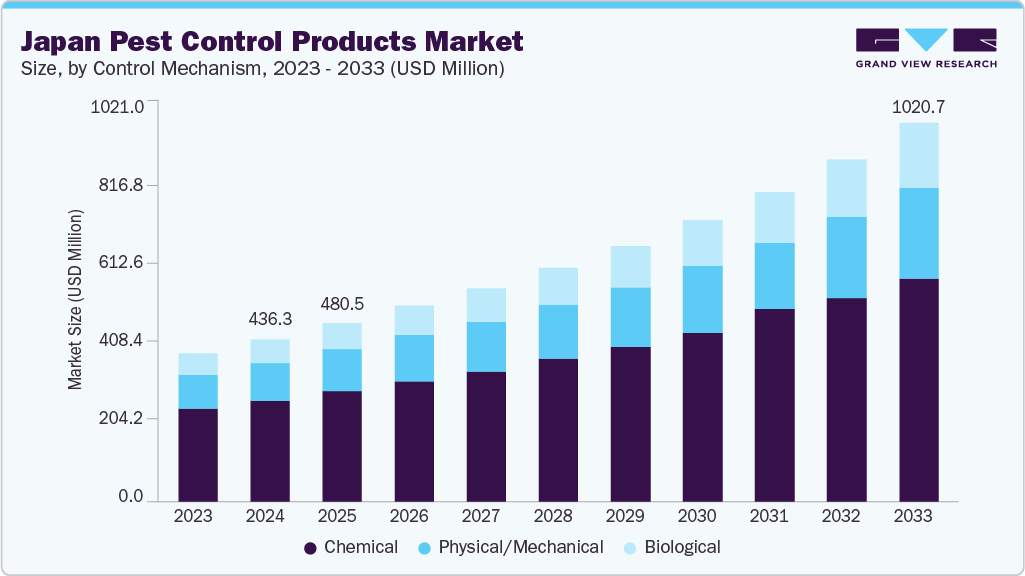
The Japan pest control products market size was estimated at USD 436.3 million in 2024 and is projected to reach USD 1,020.7 million by 2033, growing at at a CAGR of 9.9% from 2025 to 2033. The market has experienced steady growth, driven by a combination of urbanization, climate variability, and heightened public awareness of hygiene and safety standards. Both household and commercial sectors are increasingly investing in effective pest management solutions, reflecting a shift from basic reactive measures toward more proactive, technology-enabled approaches. Rising concerns around food safety, urban pest prevalence, and general environmental health have elevated demand for integrated and sustainable pest control solutions across residential, commercial, and agricultural segments.
 Source: Grand View Research, IR Documents, Primary Interviews, Paid DatabasesTo learn more about this report,
 Download Free Sample Report
 A key trend shaping the Japan pest control products industry is the increasing focus on sustainable and environmentally friendly pest control. Regulatory frameworks and public policies encourage the reduction of conventional chemical pesticide usage and promote the adoption of integrated pest management practices, biological controls, and biopesticides. This regulatory emphasis has spurred innovation, leading to the introduction of safer and more efficient pest control formulations.
Concurrently, advancements in technology, such as AI-based monitoring, IoT-connected traps, and precision delivery systems, have transformed the industry from a predominantly reactive, chemical-based model to a more data-driven, preventative paradigm, enhancing both effectiveness and operational efficiency.
Leading industry players have actively embraced these trends through product innovation and strategic initiatives. For example, KINCHO, a household name in Japan for mosquito coils and aerosols, has launched battery-operated insect traps and natural-pyrethrum-based repellents, aligning traditional brand strengths with contemporary demand for safer, eco-conscious products. Similarly, companies like Sumitomo Chemical have expanded their portfolios to include environmentally friendly crop protection solutions, emphasizing biological and microbial pest management. These efforts illustrate a broader industry shift toward harmonizing efficacy with environmental responsibility and consumer safety.
The B2B segment has also undergone a significant transformation, with professional service providers and technology integrators introducing smart monitoring systems, automated reporting, and digital compliance solutions for commercial facilities. Partnerships between international pest management firms and local businesses have facilitated the deployment of AI-driven pest monitoring platforms and IoT-enabled traps in hotels, logistics centers, and industrial sites. These developments not only enhance operational efficiency and regulatory compliance but also create recurring revenue streams and reinforce service differentiation.
Buyers’ Behavioral Analysis
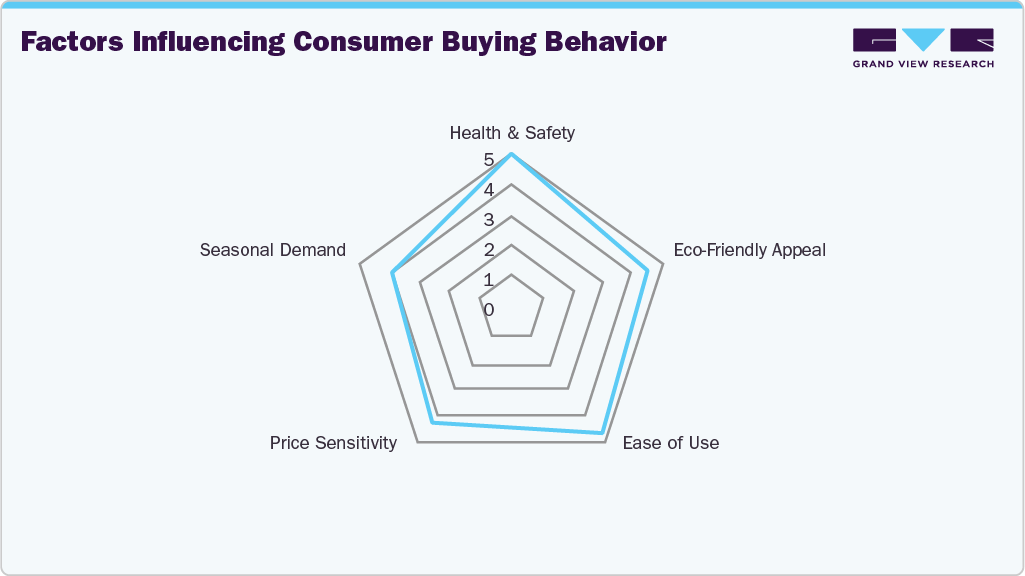
Japanese consumers are increasingly prioritizing environmental sustainability and personal health in their purchasing decisions, driving demand for low-toxicity, biopesticide, and natural pest control solutions. Products that leverage botanical ingredients, microbial agents, or natural predators are gaining traction over traditional chemical formulations, particularly in the household segment. This trend reflects a broader societal emphasis on wellness, safety, and environmental responsibility. Brands that emphasize “green” credentials, transparent labeling, and adherence to regulatory standards are often favored, as consumers are willing to pay a premium for solutions that minimize chemical exposure while maintaining efficacy.
The modern Japanese consumer values convenience and ease of use, which strongly influences product selection. Ready-to-use sprays, battery-operated devices, auto-dispensing systems, and pre-baited traps are increasingly preferred over bulk powders or manual application methods. Products that integrate technology for autonomous operation, such as IoT-enabled insect traps or app-controlled devices, are particularly appealing in urban households and high-density residential complexes. This behavioral pattern reflects the time-constrained lifestyle of consumers, where efficiency, low maintenance, and quick results are key decision-making criteria.
 To learn more about this report, Download Free Sample Report
 Japanese consumers place high importance on brand reputation, efficacy, and compliance with safety standards. Established brands such as KINCHO or Sumitomo Chemical carry significant weight due to long-standing consumer trust, proven performance, and consistent product quality. In addition to brand familiarity, peer recommendations, online reviews, and endorsements from health or environmental authorities can heavily influence purchasing decisions. This trend underscores the importance of credibility, certification, and demonstrable results in shaping buying behavior, especially for higher-priced or technologically advanced products.
The proliferation of e-commerce platforms, combined with traditional retail channels such as supermarkets, drugstores, and home improvement stores, has transformed buying behavior in the pest control market. Consumers often research products online, compare features and reviews, and then make purchases either digitally or in-store based on convenience and availability. Additionally, marketing campaigns, influencer endorsements, and educational content about proper pest management influence product choice. For the B2B segment, decision-making is further influenced by regulatory compliance requirements, cost-efficiency, service support, and the availability of integrated monitoring or reporting solutions.
Product Insights
Sprays/aerosol products led the Japan pest control products market with a revenue share of 33.14% in 2024. The pest control industry in Japan has witnessed a notable shift towards sprays and aerosol-based solutions, driven by evolving consumer preferences and technological advancements. These products offer convenience, effectiveness, and versatility, aligning with the fast-paced lifestyles of urban consumers. Modern consumers prioritize products that are easy to use and time-efficient. Sprays and aerosols meet these demands by providing quick application methods that require minimal preparation. For instance, KINCHO's mosquito repellent spray offers 24-hour protection with a single application, covering areas up to 13.24 square meters, making it ideal for both home and office environments.
Aerosol products are formulated to deliver rapid knockdown and long-lasting effects. The "Mukade Korori" aerosol by Earth Chemical, for example, utilizes a freezing jet mechanism to immobilize pests instantly, providing immediate relief from centipedes and millipedes. Such targeted actions enhance the efficacy of pest control efforts, reducing the need for multiple applications.
The demand for microbials/biopesticides is expected to grow at a CAGR of 12.5% from 2025 to 2033. Biotechnology advancements have led to the development of more effective and targeted microbial biopesticides. For example, the overproduction of mycosubtilin by Bacillus subtilis strain BBG100 has enhanced its antagonistic and biocontrol activities, offering improved protection against fungal pathogens in crops. Such innovations contribute to the efficacy and appeal of microbial biopesticides in the Japanese market. Japanese consumers are increasingly seeking organic and sustainably produced food, driving demand for biopesticides that align with these values.
The use of microbial biopesticides supports organic farming practices by providing effective pest control solutions without the use of synthetic chemicals. This shift in consumer preferences is influencing farmers to adopt biopesticides to meet market demand. The Japanese government has implemented policies to encourage the use of biopesticides as part of its "Green Food System Strategy." These policies aim to promote sustainable agriculture and reduce reliance on chemical pesticides. As a result, there has been an increase in the registration and commercialization of microbial biopesticides in Japan.
Pest Type Insights
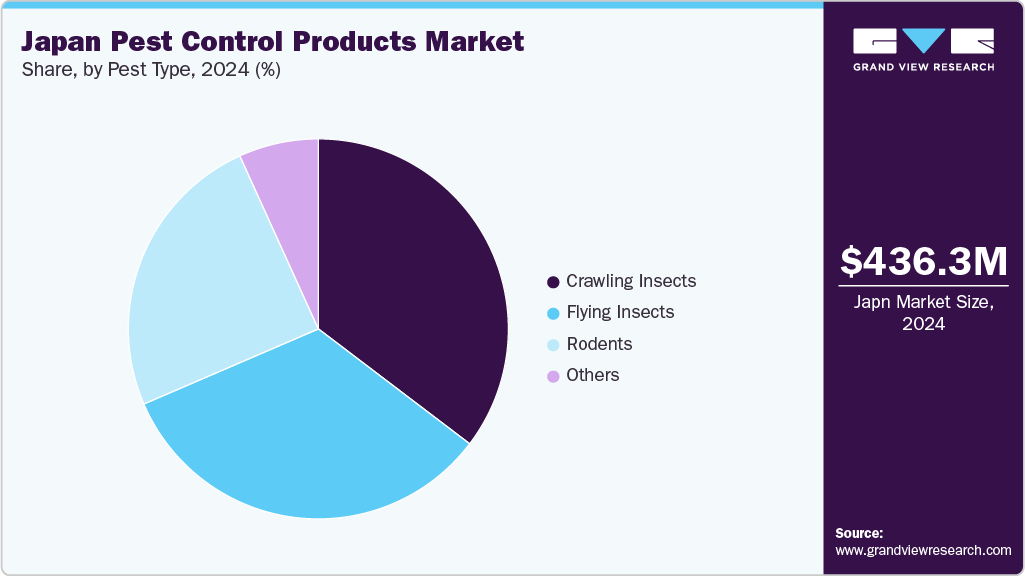
The flying insects segment accounted for a 33.20% revenue share of the Japan pest control products industry in 2024. Flying insects, such as mosquitoes and flies, are vectors for various diseases, including dengue fever and Zika virus. The resurgence of these diseases in certain regions has heightened public concern and, consequently, the demand for effective pest control solutions. This has led to increased adoption of sprays, aerosols, and electronic devices designed to mitigate the presence of these pests. Japan's rapid urbanization has resulted in densely populated areas where flying insects thrive. The expansion of residential complexes, coupled with warmer climates, has created conducive environments for these pests.
Residents and businesses are increasingly seeking efficient pest control products to maintain a comfortable living and working environment. Japanese consumers exhibit a preference for products that are both effective and environmentally friendly. This has led to the development and adoption of biopesticides and eco-friendly repellents. Companies are innovating to meet these demands, offering products that are safe for children and pets while effectively controlling flying insect populations.
 To learn more about this report, Download Free Sample Report
 The demand for pest control products targeting crawling insects in Japan is projected to grow at a CAGR of 10.5% from 2025 to 2033. Crawling insects, including ants, cockroaches, and termites, are prevalent in both residential and commercial settings, where they pose significant health and hygiene risks by contaminating food, damaging infrastructure, and triggering allergic reactions. The persistent presence of these pests has generated sustained demand for highly effective control solutions. Concurrently, heightened consumer awareness regarding the health implications of infestations has driven a preference for pest control products that combine efficacy with safety, ensuring suitability for use in homes, food preparation areas, and other sensitive environments.
Control Mechanism Insights
Products utilizing chemical control mechanisms accounted for a 62.2% share of the Japan pest control products market in 2024, reflecting their continued dominance across both residential and commercial segments. The sustained preference for chemical solutions is driven by their proven efficacy, rapid action, and versatility in targeting a wide range of pests, including crawling insects, flying insects, and rodents. Growth in this segment is further supported by ongoing product innovations, such as low-toxicity formulations, odorless sprays, and advanced delivery systems, which enhance user safety and convenience. Additionally, heightened consumer awareness of hygiene standards, coupled with increasing urbanization and the expansion of commercial facilities, continues to bolster demand for chemical-based pest control solutions in Japan.
Biological control mechanism products are projected to register a CAGR of 12.0% from 2025 to 2033, reflecting the increasing adoption of sustainable and environmentally friendly pest management solutions in Japan. This growth is driven by rising consumer and regulatory demand for low-toxicity alternatives to traditional chemical pesticides, as well as expanding awareness of integrated pest management practices in both residential and commercial sectors. Advances in microbial and biopesticide technologies, alongside the introduction of predator- and parasite-based solutions, are further enhancing efficacy and reliability, making biological control mechanisms an increasingly preferred choice among environmentally conscious consumers and businesses alike.
End-use Insights
The B2B segment accounted for an 81.96% revenue share of the Japan pest control products market in 2024, underscoring the predominance of commercial and institutional demand in the market. This strong performance is driven by the growing adoption of pest control solutions across sectors such as hospitality, food processing, logistics, healthcare, and government facilities, where stringent hygiene and safety standards are mandated. The segment’s growth is further supported by the increasing implementation of integrated pest management programs, advanced monitoring technologies, and digital reporting systems, which enhance operational efficiency, regulatory compliance, and long-term pest prevention for commercial enterprises.
The B2C segment is projected to grow at a robust CAGR of 12.2% from 2025 to 2033, reflecting the increasing adoption of pest management solutions by households. Growth in this segment is driven by heightened consumer awareness of hygiene and health, rising concerns over the presence of crawling and flying insects, and the preference for safe and easy-to-use products. The expansion of modern retail channels-including supermarkets, drugstores, home improvement stores, and e-commerce platforms-combined with innovations in product convenience, efficacy, and eco-friendliness, is further bolstering demand in the residential market.
Key Japan Pest Control Products Company Insights
A mix of multinational corporations, regional agrochemical firms, and specialized domestic manufacturers characterizes the competitive landscape of the Japan pest control products market. Competition is defined by innovation in formulation technologies, regulatory compliance with Japan’s stringent safety standards, and the ability to address growing consumer demand for eco-friendly, low-toxicity, and convenient pest management solutions. While global players bring established brands and R&D scale, local companies leverage strong market knowledge, trusted distribution partnerships, and product customization tailored to Japanese households and commercial sectors. The market is also witnessing increasing investments in biological and mechanical control products, reflecting the influence of sustainability policies and shifting consumer preferences. Strategic collaborations, product diversification, and omni-channel distribution remain central to maintaining competitiveness in this dynamic industry.
-
Sumitomo Chemical Co., Ltd. is one of Japan’s most prominent agrochemical and life science companies, with a well-established presence in the pest control products market. The company offers a broad portfolio spanning insecticides, rodenticides, and household pest control products, catering to both consumer and professional markets. Known for its scientific expertise and innovation capabilities, Sumitomo Chemical invests heavily in R&D to develop advanced formulations that combine efficacy with safety, including low-odor and low-toxicity solutions aligned with Japan’s environmental regulations. Its distribution network extends across retail, agricultural, and institutional channels, ensuring widespread market penetration. By leveraging decades of experience, regulatory credibility, and a commitment to sustainability, Sumitomo Chemical remains a key force shaping the competitive landscape of pest control solutions in Japan.
-
Earth Corporation, headquartered in Osaka, is a leading domestic player specializing in household pest control products. The company commands strong brand recognition through its extensive range of insecticides, repellents, traps, and aerosols, tailored to meet the specific needs of Japanese households. Iconic products such as “Akaebi” cockroach sprays and “Kinchō” mosquito repellents are widely used across the country, reflecting its deep cultural and consumer alignment. Earth Corporation differentiates itself by emphasizing product safety, usability, and continuous innovation, including the development of eco-friendly formulations and freeze-type insecticides that minimize chemical exposure. With robust retail partnerships, aggressive marketing strategies, and a reputation for reliability, Earth Corporation holds a dominant position in the B2C pest control segment and continues to expand its portfolio to align with evolving consumer expectations for convenience and environmental responsibility.
Key Japan Pest Control Products Companies:
- Sumitomo Chemical Co., Ltd.
- Syngenta Crop Protection AG (Syngenta Group)
- Bayer AG
- Mitsui Chemicals Agro, Inc. (Mitsui Chemicals, Inc.)
- BASF SE
- FMC Corporation
- Nissan Chemical Corporation
- Nihon Nohyaku Co., Ltd. (ADEKA Corporation)
- Kumiai Chemical Industry Co., Ltd.
- UPL Limited
- OAT Agrio Co., Ltd.
- Corteva Agriscience
- Hokko Chemical Industry Co., Ltd.
- Nippon Soda Co., Ltd.
- Ishihara Sangyo Kaisha, Ltd.
Three ways to get this report
Buy it, customize it, or ask a question.Ask an Analyst
Analyst response in 1 business day
- AccessReport author, directly
- Reply timeWithin 1 working day
- No sales callDirect answer only
- FormatEmail reply
- CostFree, no cost
Get the Full Report
What the study covers
- FormatsPDF · Excel · Dashboard
- Timeline2025–2033 annual, 2024 base
- Coverage20+ countries, 5 regions
- Companies10+ key players profiled
Customize the Report
20% free customization
- IncludeCountries, segments, points
- TailorTo your product definition
- ExtendDeeper competitor detail
- OrA fully bespoke study
- Turnaround5–10 working days
Recent Developments
-
In February 2025, Earth Corporation introduced Hadamamomo Mist, a mist-type insect repellent formulated for gentle, skin-safe application and designed for family use. This product was launched in two compact formats-a 60 mL version ideal for portable carrying and a 200 mL version for extended home use-highlighting Earth’s focus on combining personal protection with convenience. The introduction of Hadamamomo Mist demonstrated the company’s strategic intent to deliver effective mosquito deterrence while prioritizing user comfort and ease of use.
-
In May 2023, Sumitomo Chemical launched Muketsu DX, a novel fungicide based on the breakthrough active ingredient metyltetraprole. Despite belonging to the QoI class of fungicides, Muketsu DX demonstrated robust control of pathogenic fungi, including strains resistant to conventional QoI compounds. The technical innovation offered by this product addressed critical resistance-management challenges and marked an important step in Sumitomo Chemical’s commitment to sustainable and resilient crop protection solutions.
Japan Pest Control Products Market Report Scope
Report Attribute
Details
Market size value in 2025
USD 480.5 million
Revenue forecast in 2033
USD 1,020.7 million
Growth rate
CAGR of 9.9% from 2025 to 2033
Actuals
2021 - 2024
Forecast period
2025 - 2033
Quantitative units
Revenue in USD million and CAGR from 2025 to 2033
Report coverage
Revenue forecast, company ranking, competitive landscape, growth factors, and trends
Segments covered
Product, pest type, control mechanism, end-use
Country scope
Japan
Key companies profiled
Sumitomo Chemical Co., Ltd.; Syngenta Crop Protection AG (Syngenta Group); Bayer AG; Mitsui Chemicals Agro, Inc. (Mitsui Chemicals, Inc.); BASF SE; FMC Corporation; Nissan Chemical Corporation; Nihon Nohyaku Co., Ltd.; Kumiai Chemical Industry Co., Ltd.; UPL Limited; OAT Agrio Co., Ltd.; Corteva Agriscience; Hokko Chemical Industry Co., Ltd.; Nippon Soda Co., Ltd.; Ishihara Sangyo Kaisha, Ltd.
Customization
Free report customization (equivalent up to 8 analysts working days) with purchase. Addition or alteration to country, regional & segment scope.
Pricing and purchase options
Avail customized purchase options to meet your exact research needs. Explore purchase options Japan Pest Control Products Market Report Segmentation
This report forecasts revenue growth at the country level and provides an analysis of the latest industry trends and opportunities in each of the sub-segments from 2021 to 2033. For this study, Grand View Research has segmented the Japan pest control products market report based on product, pest type, control mechanism, and end-use:
-
Product Outlook (Revenue, USD Million, 2021 - 2033)
-
Sprays/Aerosols
-
Baits/Gels
-
Repellents
-
Predators/Parasites
-
Microbials/Biopesticides
-
Barriers/Exclusion
-
Mechanical Traps
-
Electronic Devices
-
-
Pest Type Outlook (Revenue, USD Million, 2021 - 2033)
-
Flying Insects
-
Crawling Insects
-
Rodents
-
Others
-
-
Control Mechanism Outlook (Revenue, USD Million, 2021 - 2033)
-
Chemical
-
Physical/Mechanical
-
Biological
-
-
End-use Outlook (Revenue, USD Million, 2021 - 2033)
-
B2B
-
Direct Sales
-
Distributors & Wholesalers
-
Agricultural Supply Stores & Co-operatives
-
Commercial & Institutional E-procurement Platforms
-
Others (Government Procurement Programs, etc.)
-
-
B2C
-
Supermarkets and Hypermarkets
-
Pharmacies & Drugstores
-
Home Improvement & Hardware Stores
-
E-commerce/Online
-
Others (Grocery Stores, Department Stores, etc.)
-
-
Frequently Asked Questions About This Report
The Japan pest control products market was estimated at USD 436.3 million in 2024 and is expected to reach USD 480.5 million in 2025.
The Japan pest control products market is expected to grow at a compound annual growth rate of 9.9% from 2025 to 2033, reaching USD 1,020.7 million by 2033.
In 2024, flying insects, such as mosquitoes and flies, accounted for a revenue share of 36.49% of the Japanese pest control products industry. These insects are vectors for various diseases, including dengue fever and Zika virus. The resurgence of these diseases in certain regions has heightened public concern and, consequently, the demand for effective pest control solutions.
Some of the key players in the Japan pest control products market are Sumitomo Chemical Co., Ltd., Syngenta Crop Protection AG (Syngenta Group), Bayer AG, Mitsui Chemicals Agro, Inc. (Mitsui Chemicals, Inc.), BASF SE, FMC Corporation, Nissan Chemical Corporation, Nihon Nohyaku Co., Ltd., Kumiai Chemical Industry Co., Ltd., UPL Limited, OAT Agrio Co., Ltd., Corteva Agriscience, Hokko Chemical Industry Co., Ltd., Nippon Soda Co., Ltd., and Ishihara Sangyo Kaisha, Ltd.
The Japanese pest control products market has experienced steady growth, driven by urbanization, climate variability, and heightened public awareness of hygiene and safety standards. Both the household and commercial sectors are increasingly investing in effective pest management solutions, reflecting a shift from basic reactive measures toward more proactive, technology-enabled approaches.
About the Author(s)
Homecare & Decor Research Team
Consumer Goods · Homecare & DecorThis report was authored by the homecare & decor research team at Grand View Research - comprising two research analysts, one senior research analyst, and one industry expert - with specialized expertise in the homecare & decor segment of the consumer goods industry. All findings are based on proprietary consumer goods databases, executive interviews, and regulatory analysis, subject to internal peer review prior to publication.
Last Updated:
Speak to Analyst -

Customize this report to your needs - add regions, segments, or data points, with 20% free customization.
Or view our licence options:


ISO 9001:2015 & 27001:2022 Certified
We are GDPR and CCPA compliant! Your transaction & personal information is safe and secure. For more details, please read our privacy policy.


