
- Home
- »
- Consumer F&B
- »
-
Jerky Snacks Market Size, Share, Growth Report, 2026-2033GVR Report cover

Jerky Snacks Market (2026 - 2033)
Size, Share & Trends Analysis Report By Product (Beef, Pork, Poultry), By Distribution Channel (Offline, Online), By Region (North America, Europe, APAC, Latin America, MEA), And Segment Forecasts
Market Size, 2025
$5.7BMarket Estimate, 2026
$6.0BMarket Forecast, 2033
$9.5BCAGR, 2026–2033
6.7%Jerky Snacks Market Summary
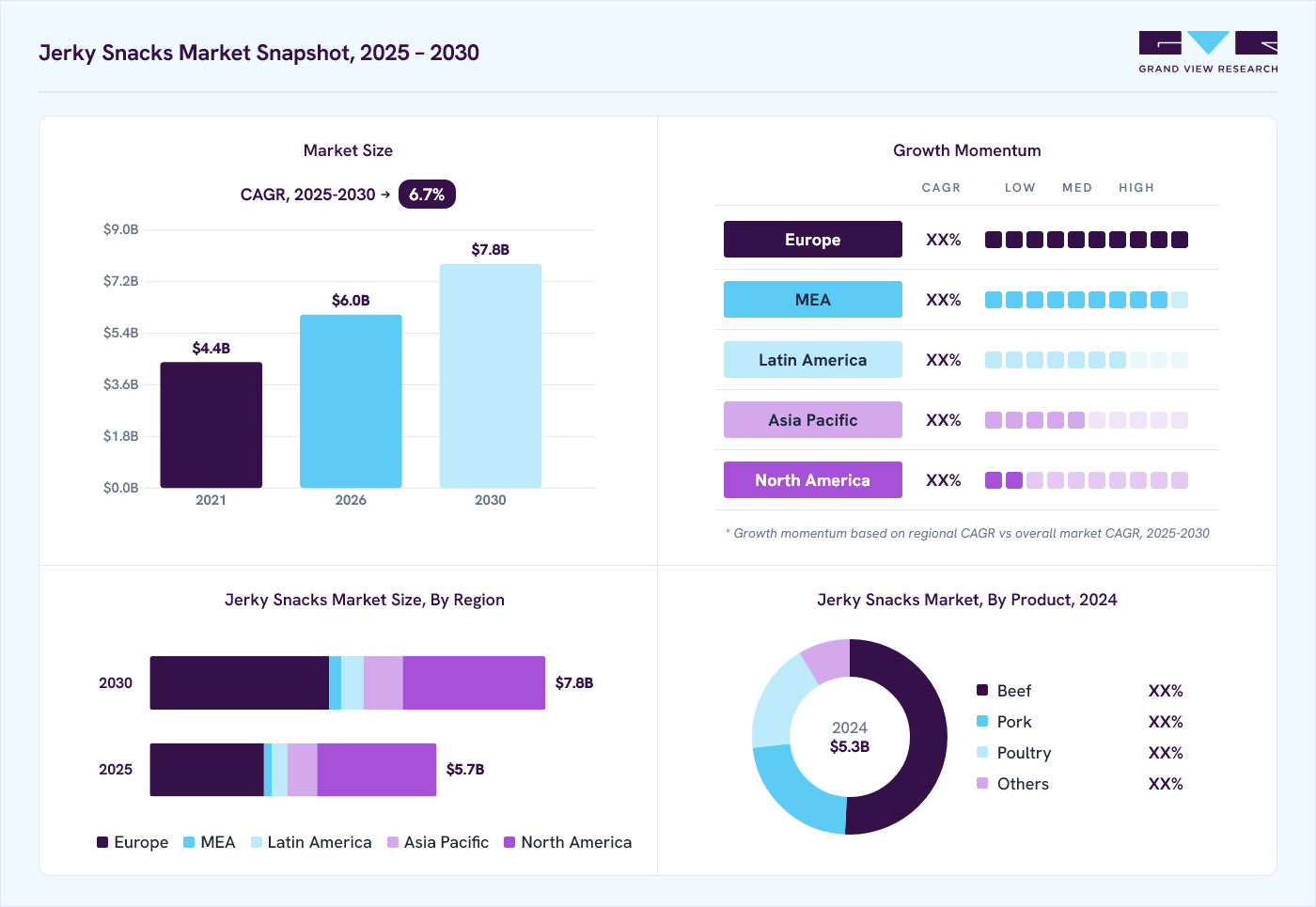
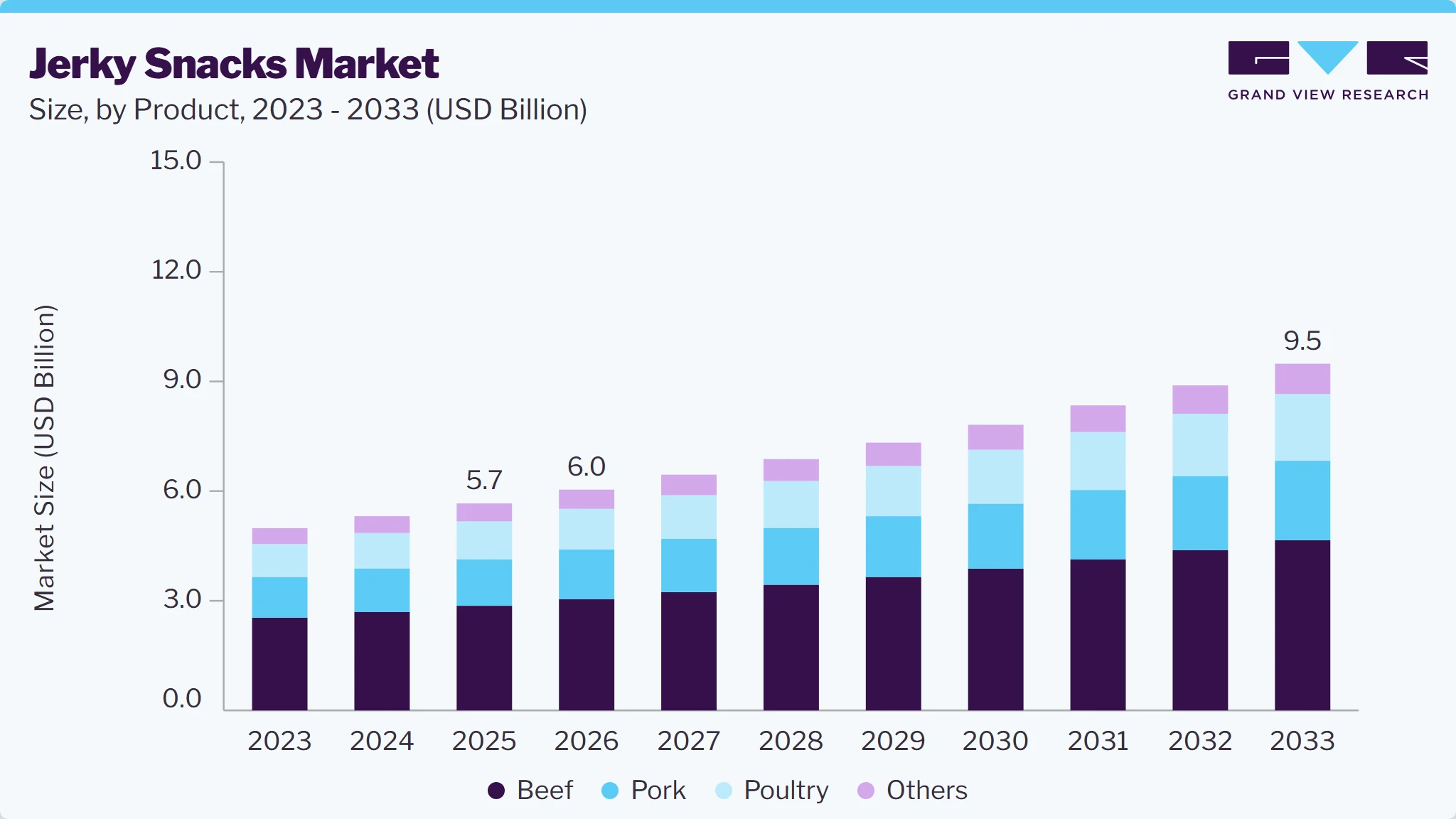
The global jerky snacks market size was valued at USD 5.7 billion in 2025 and is projected to grow from USD 6.0 billion in 2026 to USD 9.5 billion by 2033, at a CAGR of 6.7% from 2026 to 2033. The market in North America dominated with a revenue share of 41.7% in 2025. Increasing consumer demand for protein-rich and low-fat snacks is a significant driver.
 Source: Grand View Research, IR Documents, Primary Interviews, Paid DatabasesTo learn more about this report,
 Download Free Sample Report
 Key Market Trends & Insights
- By product: Beef segment held the largest market share of 50.6% in 2025.
- By distribution channel: Offline segment held the largest market share of 79.1% in 2025.
Regional Highlights
- Largest regional market: North America (41.7% revenue share, 2025)
- Fastest-growing regional market: Europe (highest CAGR, 2026-2033)
- By country: U.S. held the largest market share in 2025
Market Size & Forecast
- Market size in 2025: USD 5.7 Billion
- Estimated market size in 2026: USD 6.0 Billion
- Projected market size by 2033: USD 9.5 Billion
- CAGR (2026-2033): 6.7%
Three ways to get this report
Buy it, customize it, or ask a question.Ask an Analyst
Analyst response in 1 business day
- AccessReport author, directly
- Reply timeWithin 1 working day
- No sales callDirect answer only
- FormatEmail reply
- CostFree, no cost
Get the Full Report
What the study covers
- FormatsPDF · Excel · Dashboard
- Timeline2026–2033 annual, 2025 base
- Coverage20+ countries, 5 regions
- Companies10+ key players profiled
Customize the Report
20% free customization
- IncludeCountries, segments, points
- TailorTo your product definition
- ExtendDeeper competitor detail
- OrA fully bespoke study
- Turnaround5–10 working days
As health and fitness awareness rises, more individuals seek convenient, nutritious snack options, and jerky fits perfectly. Additionally, expanding retail channels, including supermarkets, hypermarkets, and online platforms, has made jerky snacks more accessible to a broader audience.
 To learn more about this report, Download Free Sample Report
 Jerky snacks are gaining popularity due to their high protein content. North America and Europe consumers are shifting from carbohydrate-heavy snacks to more nutritious options. There has been a notable change in consumer preferences towards healthy snacks in recent years, with a growing demand for complete ingredient transparency on packaging. Shoppers increasingly prefer products that feature clean labels, highlighting qualities such as non-GMO, gluten-free, low sodium, no artificial ingredients, minimal processing, and no antibiotics. These trends are significantly shaping the industry.
The market is also benefiting from the growing popularity of different flavors and innovative product offerings, which attract a variety of consumers. Moreover, advancements in packaging technologies that enhance the shelf life and quality of jerky snacks are contributing to the market's growth. Lastly, the rise in disposable incomes and changes in lifestyle and eating habits, particularly in developing regions, are further propelling the market expansion.
Market Dynamics
Jerky snacks are becoming an established category within the broader packaged snack industry as consumers increasingly seek foods that combine convenience, portability, and nutritional value. The market has evolved beyond traditional meat-based offerings, with manufacturers introducing products made from beef, poultry, pork, seafood, and plant-based ingredients to address a wider range of dietary preferences. Product innovation in flavor profiles, ingredient formulations, packaging formats, and preservation technologies continues to reshape category development. Growing interest in protein-focused diets, coupled with changing snacking habits and expanding retail availability, is expected to support ongoing demand for jerky snacks across multiple consumer groups.
Growing awareness of the role of protein in daily nutrition has influenced purchasing patterns across the snack food industry. Consumers are increasingly seeking snack options that provide satiety, nutritional value, and convenience within busy lifestyles. Jerky snacks are widely consumed as a portable source of protein and are often incorporated into eating routines associated with work, travel, fitness activities, and outdoor recreation. The category has also benefited from changing meal habits, with many consumers choosing smaller eating occasions throughout the day rather than traditional meal structures.
Participation in fitness programs, weight management initiatives, and active lifestyle activities has further supported demand for protein-focused snack products. Manufacturers continue to introduce jerky products with varied protein sources, ingredient formulations, and flavor profiles to address evolving consumer preferences. Expansion across supermarkets, convenience stores, specialty retailers, and e-commerce platforms has improved product availability and consumer access. As interest in protein consumption and balanced snacking habits continues across multiple demographic groups, demand for jerky snacks remains supported in both developed and developing markets.
Concerns regarding nutritional composition remain a challenge for portions of the jerky snacks market. Many conventional jerky products contain elevated sodium levels, curing agents, and preservatives that are used to maintain shelf stability, food safety, and product quality. As nutritional awareness increases, consumers are paying closer attention to ingredient labels and may limit purchases of products perceived as highly processed. Public health organizations and nutrition experts frequently encourage moderation in sodium intake, which can influence purchasing decisions among health-conscious consumers. In addition, growing discussion surrounding processed meat consumption and dietary health considerations has affected consumer perceptions in certain markets. Regulatory requirements governing food labeling, ingredient disclosures, and nutritional claims continue to evolve, creating additional compliance requirements for manufacturers. Product reformulation efforts aimed at reducing sodium and artificial additives can also increase production complexity and costs. These factors may affect category penetration among consumers seeking minimally processed foods and may limit adoption in segments focused on natural and clean-label nutrition.
Product diversification is creating new opportunities within the jerky snacks market as manufacturers expand beyond traditional formulations. Consumers are increasingly exploring products that align with specific dietary preferences, including high-protein, low-sugar, clean-label, organic, and plant-based options. This shift has encouraged companies to develop jerky products using alternative protein sources such as poultry, seafood, mushrooms, soy, and pea protein. Premiumization trends are also influencing product development, with manufacturers introducing differentiated flavor combinations, regionally inspired seasonings, and ingredient-focused formulations. Advances in food processing and preservation technologies are enabling improvements in texture, consistency, shelf life, and product quality while supporting broader ingredient innovation. E-commerce channels and direct-to-consumer sales platforms are further increasing product visibility and allowing brands to reach specialized consumer segments more efficiently. In addition, growing interest in functional nutrition has created opportunities for products incorporating enhanced protein content and targeted nutritional attributes. These developments are expected to broaden category appeal and create additional avenues for market expansion over the forecast period.
Analyst Perspective
The jerky snacks market occupies a distinctive position within the broader packaged snacks industry, supported by changing dietary preferences, demand for protein-focused foods, and the continued replacement of traditional snack categories with products offering higher nutritional value. Consumer purchasing decisions are increasingly influenced by ingredient quality, protein content, convenience, and flavor variety, prompting manufacturers to expand beyond conventional meat jerky into premium, organic, and alternative-protein offerings. The defining competitive advantage, however, is likely to belong to companies that can balance product innovation with scalable distribution while maintaining ingredient transparency and consistent product quality. As the category becomes more diversified, long-term market share gains will depend on portfolio breadth, brand differentiation, and the ability to address evolving consumer expectations across both mainstream and specialty snack segments.
Product Insights
Based on product, the beef segment led the market with the largest revenue share of 50.6% in 2025. This prominence is largely due to consumers' preference for beef as a protein source. Beef jerky is rich in protein and offers a robust flavor, making it a favorite among snack enthusiasts. The market's growth in this segment is also fueled by the availability of various flavors and product innovations, catering to diverse taste preferences. The strong consumer demand for convenient, high-protein snacks has solidified beef jerky's leading position in the market.
Poultry is expected to grow at the fastest CAGR of 7.3% over the forecast period. Poultry jerky is perceived as a healthier alternative to traditional red meat jerky, appealing to health-conscious consumers. It is often seen as a leaner protein option with lower fat content. Secondly, the growing interest in diverse and exotic flavors has led to increased experimentation with poultry jerky, attracting a broader consumer base. The demand for organic and free-range poultry products also boosts this segment's appeal. Additionally, manufacturers' innovative product offerings and marketing strategies play a significant role in driving the growth of poultry jerky in the market.
Distribution Channel Insights
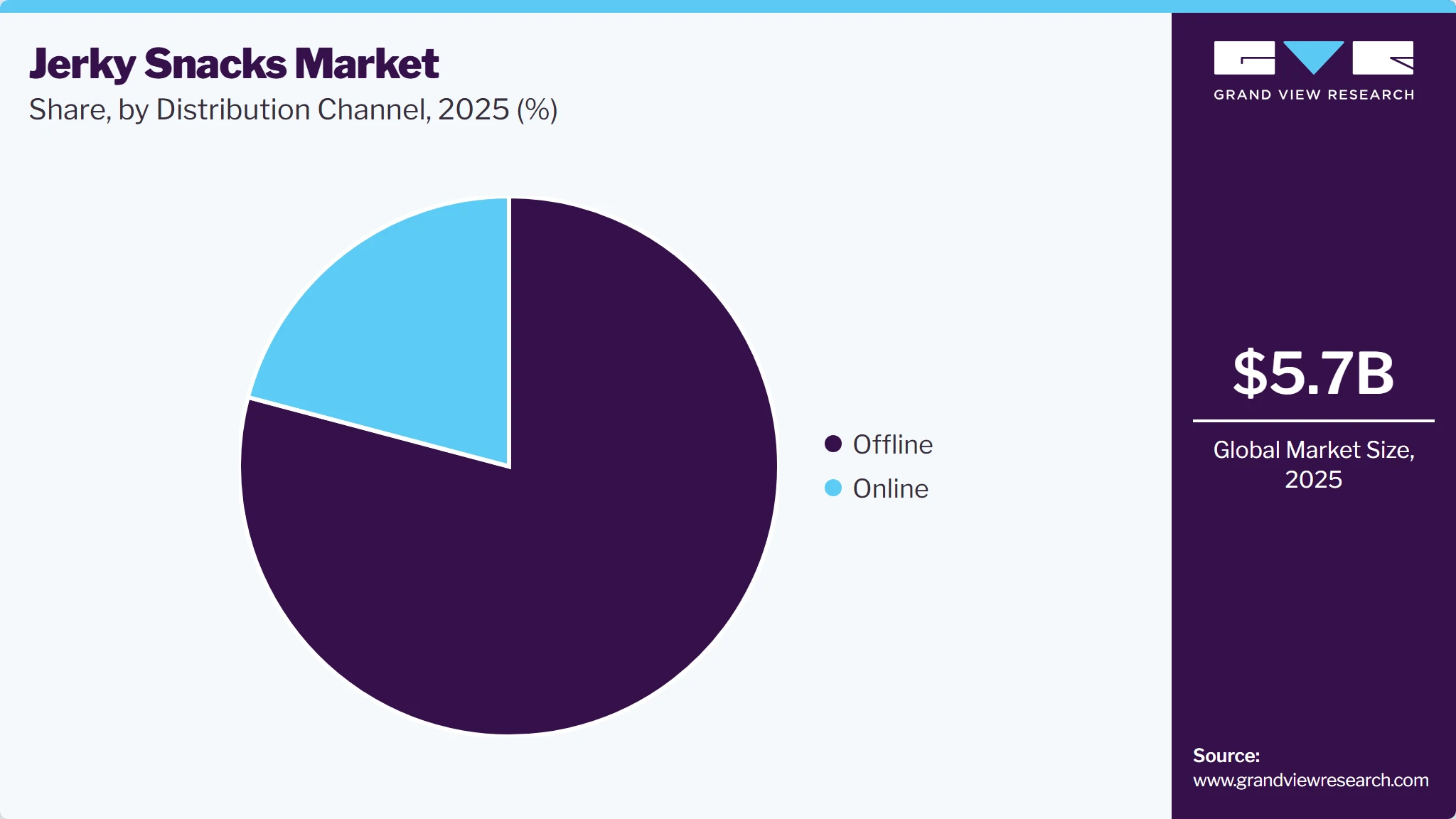
Based on distribution channel, the offline segment led the market with the largest revenue share of 79.1% in 2025. This dominance is attributed to the established presence and reach of physical retail stores such as supermarkets, hypermarkets, and convenience stores. These outlets provide a tactile shopping experience, allowing consumers to see, feel, and choose their jerky snacks, which enhances purchasing confidence and satisfaction. Additionally, offline channels often offer various products and brands, catering to diverse consumer preferences. The trust and convenience associated with brick-and-mortar stores, promotional activities, and in-store marketing have significantly contributed to the robust performance of the offline channel in the jerky snacks market.
 To learn more about this report, Download Free Sample Report
 The online channel is expected to grow at the fastest CAGR over the forecast period. The increasing penetration of smartphones and internet connectivity has made online shopping more accessible and convenient for consumers. Consumers appreciate the ease of browsing and purchasing from the comfort of their homes. Furthermore, e-commerce platforms often offer a wider variety of products and brands, along with customer reviews and ratings, which help buyers make informed decisions. Additionally, online retailers' attractive discounts, promotions, and subscription services further drive consumer preference for online shopping. The growing trend of manufacturers' direct-to-consumer sales also boosts the growth of online channels.
Regional Insights
North America dominated the jerky snacks market with the largest revenue share of 41.7% in 2025. The region's strong demand for high-protein, low-fat snacks aligns perfectly with the benefits offered by jerky products. Additionally, North America has a well-established market for convenience foods, with consumers willing to pay a premium for high-quality, flavorful snacks. The presence of leading jerky manufacturers and brands in the region also significantly drives market growth. Moreover, the popularity of different flavors and innovative product offerings continues to attract a wide range of consumers.
 To learn more about this report, Download Free Sample Report
 U.S. Jerky Snacks Market Trends
The jerky snacks market in the U.S. held the largest share in the North America region in 2025. A strong culture of outdoor activities and on-the-go lifestyles drives the country's growth. Americans value convenient, protein-packed snacks that cater to their busy schedules and fitness-oriented routines. The extensive availability of various jerky flavors and formats in supermarkets, convenience stores, and specialty shops further boosts market growth. Additionally, the rise of health-conscious consumers seeking low-fat, high-protein alternatives to traditional snacks has amplified the demand for jerky products. The presence of numerous local and established brands innovating in product offerings and marketing strategies also plays a critical role in driving market expansion in the U.S.
Asia Pacific Jerky Snacks Market Trends
The Asia Pacific's jerky snacks market held a considerable share in 2025. Increasing disposable incomes and urbanization are leading to shifts in dietary habits, with a growing preference for convenient and nutritious snack options. The expanding middle class in countries such as China and India drives demand for premium and imported food products, including jerky snacks. Additionally, the influence of Western eating habits and the rising trend of health and fitness are propelling the popularity of high-protein snacks like jerky. The region's diverse culinary preferences also encourage manufacturers to introduce innovative flavors tailored to local tastes, further fueling market growth.
Europe Jerky Snacks Market Trends
Europe's jerky snacks market is expected to grow at the fastest CAGR of 9.3% over the forecast period. The increasing awareness and demand for high-protein, low-fat snacks among health-conscious European consumers drive the market. Jerky snacks perfectly align with the rising trend of fitness and wellness, offering a convenient source of protein. Secondly, the expansion of retail networks and the presence of specialized health food stores have made jerky snacks more accessible to a broader audience. Additionally, introducing innovative flavors and product variations tailored to European tastes is attracting new consumers. The growing popularity of organic and clean-label jerky products also contributes to the market's robust growth.
Key Jerky Snacks Company Insights
Some key companies in the jerky snacks market include LINK SNACKS, INC., Old Trapper Smoked Products, Oberto Snacks Inc., The Hershey Company, General Mills Inc., and others.
-
Link Snacks, Inc., headquartered in Minong, Wisconsin, is a leading player in the meat snack industry. The company is renowned for its popular brands, such as Jack Link's, Peperami, and Bifi, which offer a wide range of beef jerky, pork salamis, and chorizo sticks.
-
Old Trapper Smoked Products, based in Forest Grove, Oregon, specializes in smoked meat snacks. Since its inception in 1969, Old Trapper has become a household name, known for its authentic handmade beef jerky and beef sticks.
Key Jerky Snacks Companies
The following key companies have been profiled for this study on the jerky snacks market.
-
LINK SNACKS, INC.
-
Old Trapper Smoked Products
-
Oberto Snacks Inc.
-
The Hershey Company
-
General Mills Inc.
-
Chef’s Cut Real Jerky Co
-
Frito-Lay North America, Inc.
-
Tillamook Country Smoker
-
Conagra Brands
Competitive Benchmarking
Operating Strategies
Competitive Edge
Weaknesses
Established Players (Link Snacks, Inc. (Jack Link's), General Mills, Inc., Conagra Brands, Inc., Marfrig Global Foods)
- Expand product portfolios across multiple jerky formats and protein sources while strengthening retail distribution and geographic presence.
- Focus on manufacturing efficiency, brand portfolio expansion, product innovation, and partnerships with large retail chains to maintain market visibility.
- Broad distribution coverage, established brand recognition, extensive production capabilities, and strong relationships with retailers and suppliers.
- Ability to support large-scale marketing initiatives and launch products across multiple markets.
- Exposure to raw material price fluctuations, complex supply chain requirements, and higher operating costs.
- Large organizational structures may reduce flexibility in responding to niche consumer preferences and emerging product trends.
Emerging Players (Old Trapper Smoked Products, Oberto Snacks Inc., Country Archer Provisions, Tillamook Country Smoker, Bridgford Foods Corporation, Fusion Jerky)
- Focus on premium products, clean-label ingredients, unique flavor profiles, and specialty protein offerings.
- Utilize targeted marketing, e-commerce channels, and specialty retail partnerships to strengthen consumer engagement and brand differentiation.
- Greater flexibility in product development, ability to address specific consumer preferences, and faster adaptation to evolving dietary and snacking trends.
- Strong positioning within premium and specialty jerky categories.
- Limited geographic reach, lower marketing resources, and dependence on selected distribution channels.
- Challenges related to production scale, shelf-space competition, and maintaining price competitiveness against larger manufacturers.
Recent Developments
-
In September 2024, Jack Link’s launched a limited-edition beef jerky flavor, Red Light Green Light, inspired by the Netflix series Squid Game. This unique snack combines sweet and spicy Korean Ssamjang flavors with Jack Link’s signature beef jerky, aiming to enhance the viewing experience as the series returns.
Jerky Snacks Market Report Scope
Report Attribute
Details
Market size in 2025
USD 5.7 billion
Estimated market size in 2026
USD 6.0 billion
Projected market size by 2033
USD 9.5 billion
Growth rate
CAGR of 6.7% from 2026 to 2033
Base year for estimation
2025
Historical data
26002601 - 26002604
Forecast period
2026 - 2033
Quantitative units
Revenue in USD million/billion and CAGR from 2026 to 2033
Report coverage
Revenue forecast, company ranking, competitive landscape, growth factors, and trends
Segments covered
Product, distribution channel region
Regional scope
North America; Europe; Asia Pacific; Latin America; MEA
Country scope
U.S.; Canada; Mexico; Germany; UK; France; Italy; Spain; Norway; Denmark; Sweden; Russia; Iceland; Finland; China; Japan; India; South Korea; Australia; Thailand; Singapore; Brazil; Argentina; Saudi Arabia; South Africa; UAE; Kuwait; Israel
Key companies profiled
Link Snacks, Inc. (Jack Link's); Old Trapper Smoked Products; Oberto Snacks Inc.; General Mills, Inc.; Conagra Brands, Inc.; Country Archer Provisions; Tillamook Country Smoker; Bridgford Foods Corporation; Marfrig Global Foods and Fusion Jerky.
Customization scope
Free report customization (equivalent up to 8 analysts' working days) with purchase. Addition or alteration to country, regional & segment scope.
Pricing and purchase options
Avail customized purchase options to meet your exact research needs. Explore purchase options
Global Jerky Snacks Market Report Segmentation
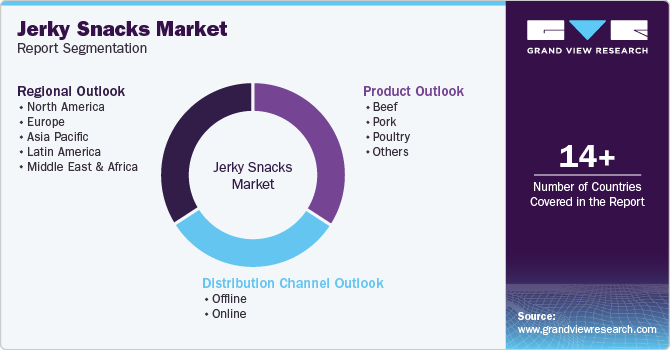
This report forecasts revenue growth at global, regional, and country levels and provides an analysis of the latest industry trends in each of the sub-segments from 2021 to 2033. For this study, Grand View Research has segmented the global jerky snacks market report based on product, distribution channel, and region:
 To learn more about this report, Download Free Sample Report
 -
Product Outlook (Revenue, USD Million, 2021 - 2033)
-
Beef
-
Pork
-
Poultry
-
Others
-
-
Distribution Channel Outlook (Revenue, USD Million, 2021 - 2033)
-
Offline
-
Online
-
-
Regional Outlook (Revenue, USD Million, 2021 - 2033)
-
North America
-
U.S.
-
Canada
-
Mexico
-
-
Europe
-
UK
-
Germany
-
France
-
Italy
-
Spain
-
-
Asia Pacific
-
Japan
-
China
-
India
-
Australia & New Zealand
-
South Korea
-
-
Latin America
-
Brazil
-
-
Middle East and Africa (MEA)
-
South Africa
-
-
Research Methodology
The jerky snacks market figures in this report are based on a proven research process that combines executive interviews with secondary research from proprietary databases, company filings, and recognized regulatory and institutional sources. Market size is built through value-chain sizing - reconciling supply-side and demand-side estimates - and triangulated with bottom-up and top-down approaches. Every estimate passes multiple levels of expert validation before publication, with each jerky snacks segment quantified using the revenue-capture definitions in the table below.
Segment Definition
Segment - Product
Revenue capture definition
Beef
This segment includes the sales of jerky snacks produced from beef and offered in various cuts, textures, flavors, and seasoning profiles. Products in this segment are commonly consumed as protein-rich snacks and are available in conventional, premium, organic, and clean-label formats.
Pork
This segment includes the sales of jerky snacks manufactured from pork and processed through drying, curing, and seasoning methods. The segment covers flavored products designed to cater to regional preferences and diverse consumer snacking habits.
Poultry
This segment includes the sales of jerky snacks derived from poultry sources such as chicken and turkey. These products are often positioned as lean-protein snack alternatives and are available in multiple flavor variants, packaging formats, and formulations.
Others
This segment includes the sales of jerky snacks produced from seafood, exotic meats, and plant-based protein ingredients. It also covers specialty products developed for consumers seeking alternative protein sources or specific dietary preferences.
Segment – Distribution Channel
Revenue capture definition
Offline
This segment includes the sales of jerky snacks through supermarkets, hypermarkets, convenience stores, warehouse clubs, specialty food stores, and other retail outlets. It covers products purchased directly by consumers through traditional brick-and-mortar channels.
Online
This segment includes the sales of jerky snacks through e-commerce platforms, company websites, online grocery retailers, and digital marketplaces. It covers products purchased through internet-based channels and delivered directly to consumers.
Estimation Model
Layer Name
Description
Consumer Base Layer
Identify the population regularly purchasing packaged snack products across key regions to establish the potential consumer base for jerky snacks.
Product Awareness Layer
Apply category awareness and product availability across retail and online channels to determine the addressable consumer population.
Purchase Behavior Layer
Apply purchase frequency, protein-snacking preferences, and repeat-buying patterns to convert aware consumers into active jerky snack buyers.
Monetization Layer
Multiply active buyers by average annual consumption volume and average selling prices across product categories and distribution channels to estimate market revenue.
Delivered Customizations
This report has been delivered with the following In-depth customizations
Client Request
Customization Delivered
Value Adds
Protein Snacking & Consumer Preference Trends
Conducted a focused analysis of jerky snack consumption patterns across beef, pork, poultry, and alternative protein categories, including flavor preferences, clean-label demand, and protein-focused dietary trends.
Helps stakeholders identify key consumption patterns, evaluate category preferences, and assess opportunities across protein-based snacking segments.
Retail Distribution & Purchasing Behavior Assessment
Evaluated purchasing trends across supermarkets, convenience stores, specialty retailers, and e-commerce platforms, including product availability, packaging preferences, and channel-specific purchasing behavior.
Provides insights into distribution effectiveness, consumer buying habits, and channel-level opportunities for product expansion and positioning.
Product Innovation & Alternative Protein Opportunity Analysis
Assessed developments in premium formulations, low-sugar products, organic ingredients, alternative protein jerky, and emerging flavor innovations across regional markets.
Supports product development and expansion strategies by identifying innovation areas, evolving consumer preferences, and untapped market opportunities.
Frequently Asked Questions About This Report
North America dominated with a 41.7% revenue share in 2025.
Europe is the fastest-growing region over the forecast period.
The offline segment led with a 79.1% revenue share in 2025, while the online segment is the fastest-growing channel.
The global jerky snacks market size was valued at USD 5.7 billion in 2025 and is estimated at USD 6.0 billion for 2026.
The global jerky snacks market is expected to grow at a CAGR of 6.7% from 2026 to 2033, reaching USD 9.5 billion by 2033.
The beef segment led with a 50.6% revenue share in 2025, while the poultry segment is the fastest-growing.
Key players include Link Snacks, Inc. (Jack Link's), Old Trapper Smoked Products, Oberto Snacks, Inc., General Mills, Inc., Conagra Brands, Inc., Country Archer Provisions, Tillamook Country Smoker, Bridgford Foods Corporation, Marfrig Global Foods, and Fusion Jerky.
Key factors include rising demand for protein-rich convenient snacks, expanding preference for on-the-go food consumption, growing interest in clean-label and natural ingredients, and continuous flavor innovation across meat and plant-based jerky products.
About the Author(s)
Consumer F&B Research Team
Consumer Goods · Consumer F&BThis report was authored by the consumer f&b research team at Grand View Research - comprising two research analysts, one senior research analyst, and one industry expert - with specialized expertise in the consumer f&b segment of the consumer goods industry. All findings are based on proprietary consumer goods databases, executive interviews, and regulatory analysis, subject to internal peer review prior to publication.
Last Updated:
Speak to Analyst

Customize this report to your needs - add regions, segments, or data points, with 20% free customization.
Or view our licence options:


ISO 9001:2015 & 27001:2022 Certified
We are GDPR and CCPA compliant! Your transaction & personal information is safe and secure. For more details, please read our privacy policy.


