
- Home
- »
- Animal Health
- »
-
Large Animal Endoscopes And Endoscopic Instruments Market Report 2033GVR Report cover

Large Animal Endoscopes And Endoscopic Instruments Market (2026 - 2033)
Size, Share & Trends Analysis Report By Product (Equipment, Instruments & Accessories), By Type (Disposable, Reusable), By Animal, By Procedure, By Application, By End-use, By Region, And Segment Forecasts
Market Size, 2025
$228.3MMarket Estimate, 2026
$239.6MMarket Forecast, 2033
$353.5MCAGR, 2026–2033
5.7%Large Animal Endoscopes And Endoscopic Instruments Market Summary
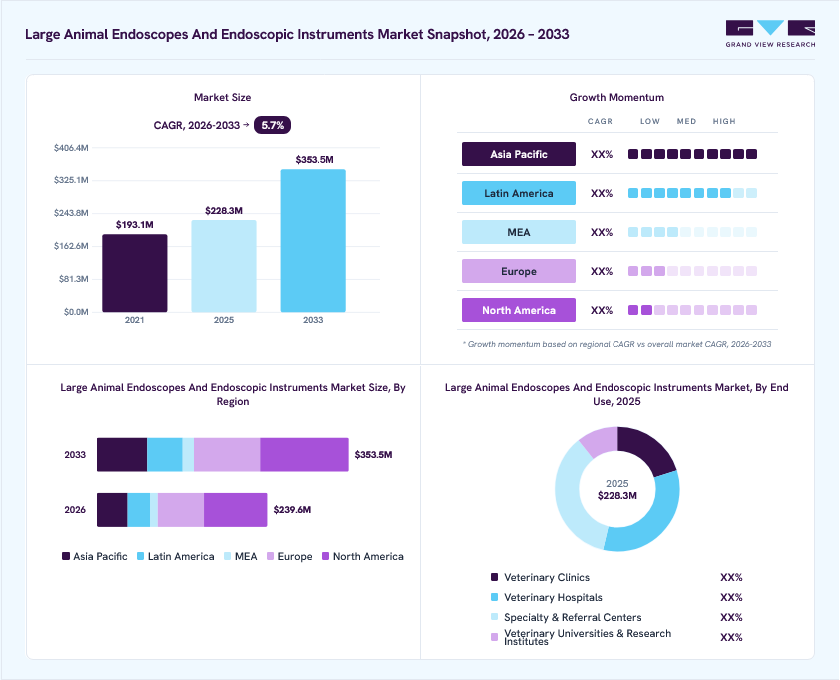
The global large animal endoscopes and endoscopic instruments market size was valued at USD 228.3 million in 2025 and is projected to grow from USD 239.6 million in 2026 to USD 353.5 million by 2033, at a CAGR of 5.7% from 2026 to 2033. North America dominated the market, accounting for a share of 37.4% in 2025. The market growth is driven by increasing adoption of minimally invasive diagnostic and therapeutic procedures across equine, bovine, and other large-animal populations, along with greater demand for gastrointestinal, respiratory, reproductive, and joint examinations.
 Source: Grand View Research, IR Documents, Primary Interviews, Paid DatabasesTo learn more about this report,
 Download Free Sample Report
Key Market Trends & Insights
- By product: Instruments & accessories held the largest market share of 47.8% in 2025.
- By type: Reusable segment dominated the market with a share of 65.5% in 2025.
- By animal: Horses segment held the largest revenue share of 69.3% in 2025.
- By procedure: Gastrointestinal procedures held the largest share of 52.9% in 2025.
- By application: Diagnostic segment held the highest market share of 61.2% in 2025.
Regional Highlights
- Largest regional market: North America (37.4% revenue share, 2025)
- Fastest-growing regional market: Asia Pacific (highest CAGR, 2026-2033)
- By country: The U.S. held the largest market share in 2025.
Market Size & Forecast
- Market size in 2025: USD 228.3 Million
- Estimated market size in 2026: USD 239.6 Million
- Projected market size by 2033: USD 353.5 Million
Prism AI by Grand View Research Free to tryAsk a question about the large animal endoscopes and endoscopic instruments marketTry asking✓Every figure cited from GVR research Prefer the report? Download free sample →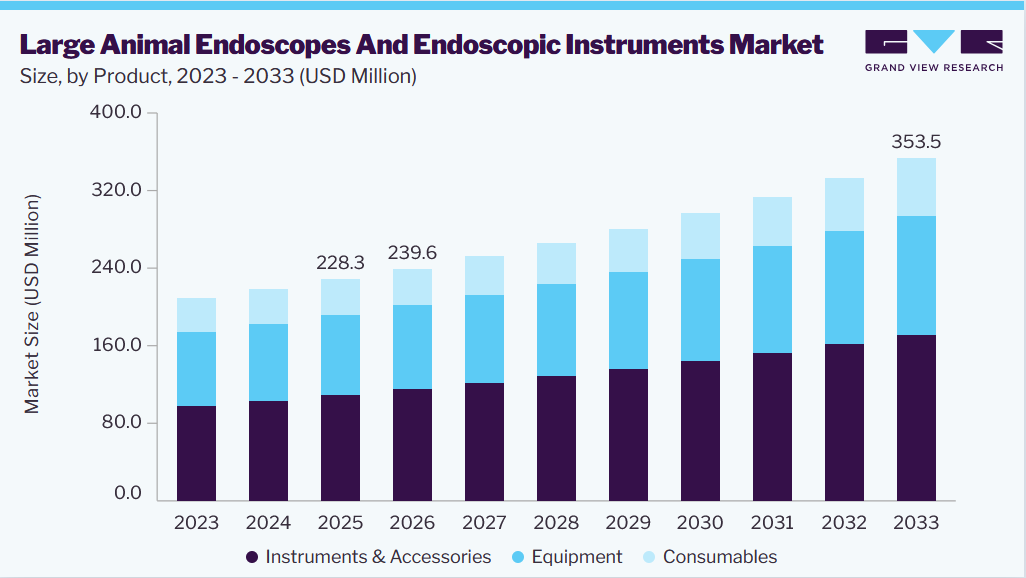 To learn more about this report, Download Free Sample Report
Furthermore, the expansion of veterinary specialty services and growing availability of portable endoscopic systems are improving access to advanced diagnostic procedures in field and clinical settings. Technological advancements in high-definition imaging, flexible insertion systems, portable endoscopy platforms, illumination, and procedure-specific instruments are improving visualization, maneuverability, and procedural efficiency.
Market Dynamics
The large animal endoscopes & endoscopic instruments industry has witnessed continued growth, supported by the increasing adoption of minimally invasive diagnostic and therapeutic procedures in large-animal healthcare. Growing use across equine, bovine, and other large-animal procedures is driving demand for specialized visualization systems and instruments, including flexible and rigid scopes, high-resolution imaging, illumination systems, biopsy instruments, graspers, and other procedure-specific accessories. Veterinary hospitals, specialty clinics, equine practices, and other large-animal healthcare providers are increasingly adopting advanced endoscopic systems due to the clinical benefits of minimally invasive examination and treatment. Increasing use of endoscopy for respiratory, gastrointestinal, urinary, reproductive, and musculoskeletal conditions is expected to further drive demand for large-animal endoscopy systems and instruments.
One of the major drivers of the large animal endoscopes & endoscopic instruments market is the increasing use of minimally invasive diagnostic and therapeutic procedures in equine, bovine, and other large-animal healthcare. Endoscopy enables direct visualization of anatomical structures and supports procedures across respiratory, gastrointestinal, urinary, reproductive, and musculoskeletal applications. Growing demand for specialized diagnostic procedures is increasing the need for flexible and rigid endoscopes, video systems, light sources, biopsy instruments, graspers, and other procedure-specific instruments. Moreover, veterinary hospitals, specialty clinics, and equine practices are expanding their diagnostic capabilities to support earlier identification and management of conditions requiring detailed internal visualization. Increasing procedure volumes are expected to support demand for large-animal endoscopy systems and instruments.
A key restraint in the large animal endoscopes & endoscopic instruments market is the high cost and technical complexity associated with advanced endoscopy systems. High-definition imaging systems, flexible endoscopes, specialized light sources, video processors, and procedure-specific instruments require substantial capital expenditure, particularly for veterinary practices with limited equipment budgets. In addition, endoscopic procedures require trained veterinary professionals with appropriate technical expertise to operate equipment and interpret findings accurately. Flexible endoscopes and associated components also require careful cleaning, disinfection, inspection, and maintenance to preserve image quality and prevent equipment damage. Repair and replacement costs can further increase the total cost of ownership. These factors may limit adoption among smaller veterinary practices and facilities serving large-animal populations in cost-sensitive markets.
The large animal endoscopes and endoscopic instruments market is expected to benefit from the increasing adoption of portable endoscopy systems alongside continuous improvements in imaging technologies. Portable and lightweight systems enable veterinarians to perform diagnostic and therapeutic procedures more conveniently across farms, veterinary hospitals, and remote field locations, reducing the need to transport large animals. At the same time, advancements such as high-definition imaging, improved illumination, enhanced visualization, and digital image capture are increasing diagnostic accuracy and procedural efficiency. The combination of portability and superior imaging capabilities is expanding the practical applications of endoscopy in large animal care, creating significant opportunities for manufacturers to develop advanced, user-friendly, and cost-effective solutions.
Market Concentration & Characteristics
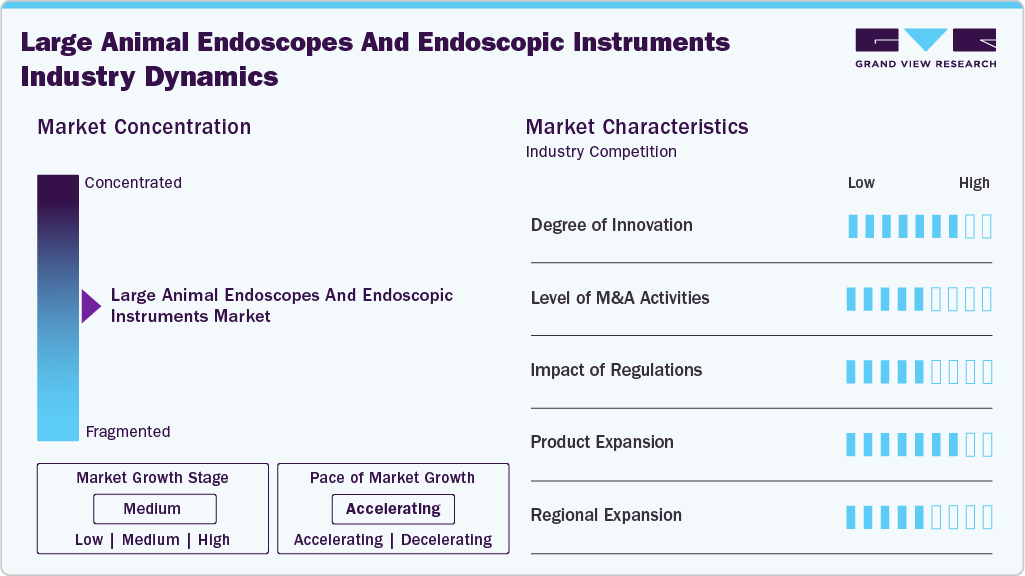
The large animal endoscopes & endoscopic instruments market is at a medium growth stage, while the pace of market growth is accelerating. The market is characterized by increasing adoption of minimally invasive veterinary procedures, technological advancements in endoscopic imaging, product portfolio expansion, regulatory requirements, strategic collaborations, and regional expansion of veterinary specialty services.
The market is witnessing continuous innovation through advances in high-definition imaging, flexible endoscopes, digital video systems, illumination, image processing, and procedure-specific instruments. Portable endoscopy platforms, improved camera systems, enhanced visualization technologies, and ergonomic instrument designs are improving diagnostic capabilities and procedural efficiency. Developments in compact and lightweight systems are also supporting use across veterinary hospitals, equine practices, and field-based settings.
 To learn more about this report, Download Free Sample Report
Regulatory requirements established by agencies such as the FDA and other national authorities influence the development, manufacturing, quality, and distribution of veterinary endoscopy equipment and instruments. Requirements related to product safety, electrical performance, materials, sterilization, cleaning, and quality management can affect product development and market entry. Furthermore, compliance requirements increase the need for manufacturers to maintain appropriate quality systems and documentation.
Mergers and acquisitions contribute to market development by enabling manufacturers to expand product portfolios, technological capabilities, geographic presence, and distribution networks. Strategic acquisitions within the broader medical device and veterinary equipment sectors can provide access to imaging technologies, endoscopic systems, specialized instruments, and established customer networks. M&A activity is expected to remain relevant as manufacturers seek to expand their presence across veterinary diagnostic equipment markets.
Increasing demand for minimally invasive diagnostic and therapeutic procedures is encouraging manufacturers to expand their product portfolios across large-animal endoscopy applications. Products include flexible and rigid endoscopes, video systems, light sources, monitors, biopsy forceps, graspers, retrieval devices, and other procedure-specific instruments. Moreover, manufacturers are developing integrated systems that combine visualization, illumination, recording, and specialized instruments for veterinary hospitals and large-animal practices.
The market is experiencing regional expansion across North America, Europe, and Asia Pacific. North America maintains a strong position due to its established veterinary healthcare infrastructure, large equine population, specialty veterinary hospitals, and adoption of advanced diagnostic equipment. Europe also has a developed veterinary healthcare ecosystem supported by established equine medicine and veterinary specialty services. Furthermore, Asia Pacific is expanding its veterinary diagnostic capabilities due to increasing animal healthcare expenditure, improving veterinary infrastructure, and growing adoption of advanced diagnostic technologies.
Analyst Perspective
The large animal endoscopes and instruments market is expanding as veterinary facilities adopt minimally invasive procedures. Demand favors integrated systems with high-resolution imaging, flexible scopes, illumination, video processing, and specialized instruments. Veterinary professionals seek advanced tools for better visualization, precision, durability, and workflow. Growth is driven by increased use in gastrointestinal and respiratory procedures, expanding veterinary fields, and advances in portable and digital systems. There’s rising demand for versatile platforms for large-animal procedures, especially in equine healthcare and referral centers. Manufacturers must balance cost, complexity, maintenance, portability, image quality, and instrument compatibility. Differentiation will depend on imaging performance, durability, portability, support, and clinical applications.
Impact of U.S. Tariffs on the Large Animal Endoscopes & Endoscopic Instruments Market
U.S. tariffs can affect the large animal endoscopes & endoscopic instruments market by increasing procurement costs for imported endoscopy systems, optical components, electronic components, medical-grade materials, and specialized instruments. Manufacturers and distributors with international supply chains may experience higher landed costs when products or components are subject to additional import duties. These cost increases can affect equipment pricing, distributor margins, inventory planning, and procurement decisions across the U.S. veterinary healthcare market.
Tariff-related cost increases may also influence sourcing and manufacturing strategies among endoscopy equipment manufacturers. Companies seeking to reduce exposure to import duties may increase sourcing from domestic suppliers, qualify alternative international suppliers, or adjust manufacturing and assembly locations. Furthermore, distributors and veterinary facilities may modify purchasing schedules or prioritize equipment with longer service lives when acquisition costs increase. However, the impact is expected to vary according to product classification, country of origin, component sourcing, and applicable U.S. trade policies. Overall, tariff-related changes could increase equipment procurement costs and encourage greater supply-chain diversification within the U.S. large-animal endoscopy market.
Technological Advancements
 To learn more about this report, Download Free Sample Report
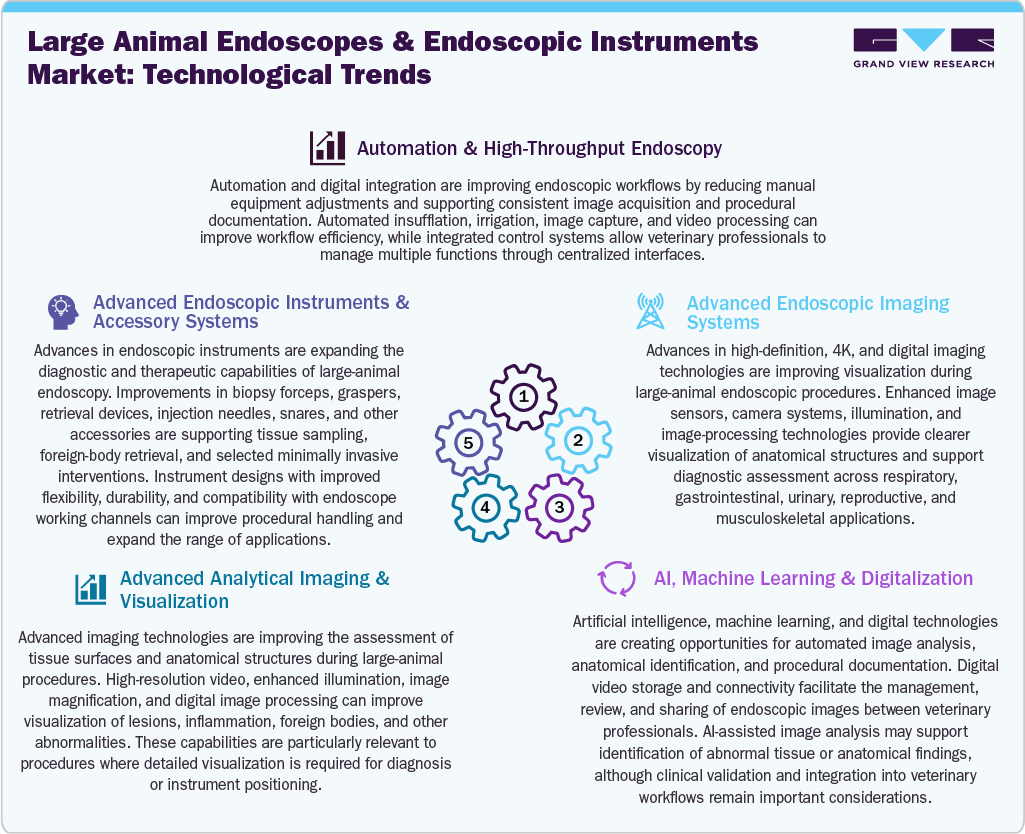
Technological advancements are reshaping the large animal endoscopes & endoscopic instruments market by improving visualization, maneuverability, procedural accuracy, and equipment usability across diagnostic and therapeutic applications. High-definition and digital imaging systems are improving visualization of anatomical structures during endoscopic procedures, while advances in camera systems, image sensors, illumination, and video processing are supporting clearer procedural views. Flexible endoscopes with improved insertion characteristics and greater maneuverability are facilitating access to anatomically challenging areas in large animals. Furthermore, improvements in rigid endoscopes and procedure-specific instruments are enabling applications that require stable visualization and precise instrument placement.
Moreover, advances in portable and compact endoscopy systems are improving accessibility to diagnostic procedures in equine practices, veterinary hospitals, and field-based settings. Lightweight video endoscopy systems, integrated displays, portable light sources, and battery-powered configurations can reduce equipment requirements and facilitate procedures outside conventional operating environments. Manufacturers are also developing specialized instruments, including biopsy forceps, graspers, retrieval devices, and other accessories, to support gastrointestinal, respiratory, urinary, reproductive, and musculoskeletal procedures.
Furthermore, digital imaging, video recording, data storage, and connectivity are improving documentation and post-procedure assessment. Integration of endoscopy systems with digital veterinary records can facilitate storage and review of procedural findings and support communication between veterinary specialists. Advances in imaging software may also assist with image enhancement and anatomical assessment. As veterinary practices expand their diagnostic capabilities and demand for minimally invasive procedures increases, improvements in imaging quality, portability, instrument design, and digital connectivity are expected to support market growth over the forecast period.
Pricing Model Analysis
 To learn more about this report, Download Free Sample Report
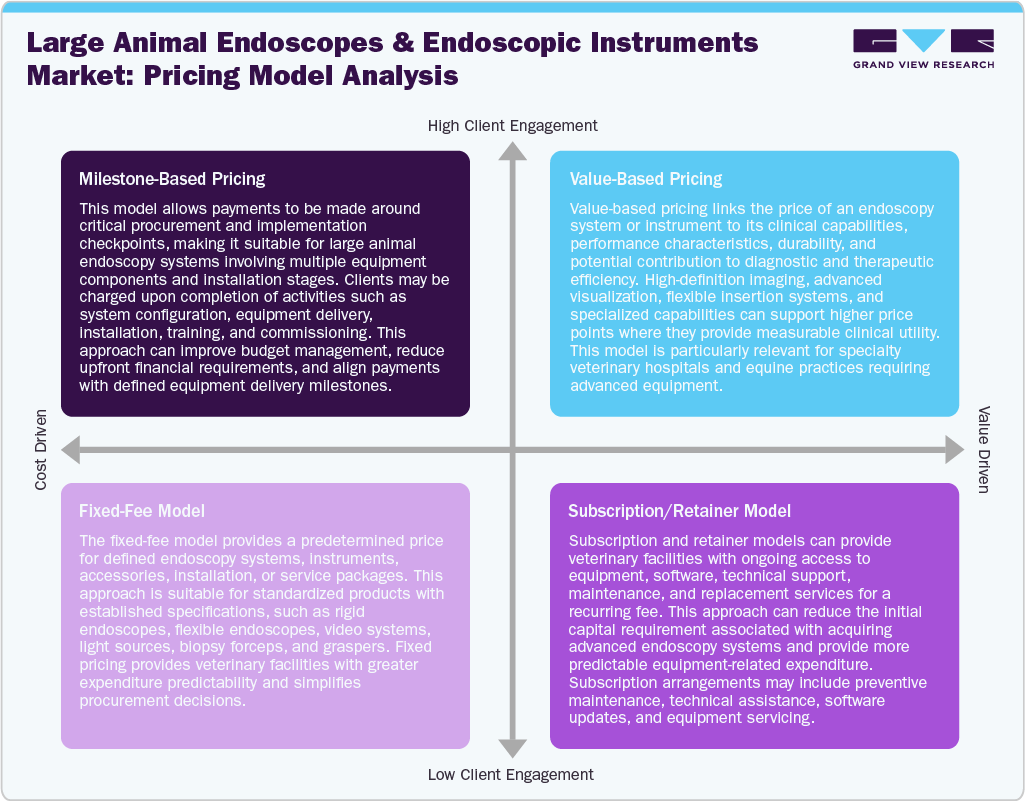
In the large animal endoscopes & endoscopic instruments market, pricing models vary according to equipment type, technical specifications, imaging capabilities, instrument configuration, procedure requirements, and purchasing volume. System-based pricing generally applies to complete endoscopy platforms comprising scopes, cameras, light sources, monitors, processors, and related accessories. Higher-resolution imaging, advanced visualization capabilities, specialized scopes, and integrated systems typically involve higher acquisition costs.
Fixed-price models are commonly applicable to standardized endoscopic systems, individual instruments, and accessory packages with defined specifications and configurations. This approach provides veterinary hospitals, specialty clinics, and large-animal practices with greater cost predictability during equipment procurement. Furthermore, bundled pricing may be used for complete systems that combine endoscopes with imaging equipment, illumination, monitors, and procedure-specific instruments.
In addition, pricing may vary according to endoscope design, working length, diameter, flexibility, imaging resolution, and intended application. Flexible endoscopes designed for specialized large-animal procedures can command different price levels from rigid endoscopes and basic visualization systems. Service contracts, maintenance agreements, repairs, replacement components, and software upgrades can also contribute to the total cost of ownership. Volume-based pricing may apply to recurring purchases of biopsy forceps, graspers, retrieval devices, and other disposable or reusable instruments. These pricing approaches allow manufacturers and distributors to address differences in clinical requirements, equipment configurations, and purchasing capacity across large-animal veterinary facilities.
Product Insights
The instruments & accessories segment held the largest revenue share of 47.8% in 2025, driven by the established use of biopsy forceps, graspers, retrieval devices, snares, and other procedure-specific instruments. Increasing use of endoscopy for diagnostic sampling, foreign-body retrieval, and minimally invasive interventions is supporting recurring demand for specialized instruments and accessories. Moreover, expansion of equine and large-animal specialty veterinary services is increasing the need for application-specific endoscopic equipment.
The consumables segment is expected to grow at the fastest CAGR over the forecast period. Growth is driven by increasing procedure volumes and demand for single-use or frequently replaced accessories used during endoscopic examinations and interventions. In addition, greater adoption of minimally invasive procedures is increasing demand for biopsy, retrieval, irrigation, and other procedure-specific accessories. These factors are expected to support consumables demand throughout the forecast period.
Type Insights
The reusable segment led the market with the largest revenue share of 65.5% in 2025 and is estimated to grow at the fastest CAGR over the forecast period. The growth is attributed to the established use of reusable flexible and rigid endoscopes across veterinary hospitals, equine practices, and specialty facilities. Reusable systems provide extended service life and support repeated diagnostic and therapeutic procedures, making them suitable for facilities with consistent endoscopy volumes. Moreover, advances in endoscope durability, imaging quality, and instrument compatibility are supporting continued adoption.
The disposable segment is expected to grow significantly over the forecast period, driven by increasing demand for single-use accessories and components that can reduce reprocessing requirements and simplify infection-control procedures. In addition, growing adoption of minimally invasive veterinary procedures is increasing demand for disposable biopsy, retrieval, and other procedure-specific instruments. These factors are expected to increase demand for disposable products across large-animal veterinary facilities.
Animal Insights
The horses segment led the market with the largest revenue share of 69.3% in 2025, driven by the extensive use of endoscopy in equine medicine for respiratory tract examination, gastrointestinal evaluation, and other specialized diagnostic procedures. The large size of the equine endoscopy equipment base and increasing availability of specialty veterinary services are supporting demand for flexible and rigid endoscopic systems. Moreover, growing use of advanced diagnostic techniques in equine hospitals and referral centers is supporting segment expansion.
The bovine segment is expected to grow at the fastest CAGR over the forecast period, driven by increasing adoption of advanced diagnostic procedures in cattle healthcare. Endoscopy can support selected gastrointestinal, respiratory, urinary, and reproductive examinations in bovine patients. In addition, improvements in portable endoscopy systems are facilitating the use of diagnostic equipment in large-animal practices and field-based veterinary settings. Growing veterinary healthcare expenditure and expansion of specialized livestock healthcare services are expected to create additional demand for endoscopy systems and instruments.
Procedure Insights
The gastrointestinal procedures segment held the largest revenue share of 52.9% in 2025, driven by the use of endoscopy for direct visualization of the gastrointestinal tract, detection of abnormalities, tissue sampling, and selected minimally invasive interventions. Increasing demand for specialized gastrointestinal diagnostics in equine medicine is supporting utilization of flexible endoscopes and associated instruments. Moreover, improvements in imaging quality and scope maneuverability are supporting broader use of gastrointestinal endoscopic procedures.
The respiratory procedures segment is expected to grow at the fastest CAGR from 2026 to 2033. Growth is driven by increasing use of endoscopy for examination of the upper and lower respiratory tract, particularly in equine veterinary medicine. High-resolution imaging and flexible endoscopes enable detailed assessment of anatomical structures and respiratory abnormalities. Increasing adoption of advanced diagnostic procedures and expansion of equine specialty care are further supporting demand for respiratory endoscopy systems and instruments.
Application Insights
The diagnostic segment led the market with the largest revenue share of 61.2% in 2025. Segment growth is driven by the primary use of endoscopy for direct visualization and assessment of internal anatomical structures in large animals. Increasing demand for minimally invasive diagnosis across respiratory, gastrointestinal, urinary, reproductive, and other applications is supporting the adoption of endoscopic systems. Moreover, improvements in high-definition imaging and flexible scope design are increasing the clinical utility of endoscopy in large-animal veterinary care.
The surgical/interventional segment is expected to grow at the fastest CAGR over the forecast period, driven by increasing use of endoscopic instruments for minimally invasive interventions. Procedures involving biopsy, foreign-body retrieval, tissue removal, and other selected interventions are creating demand for specialized working-channel instruments. In addition, advances in endoscope maneuverability, visualization, and procedure-specific accessories are expanding the range of interventions that can be performed using endoscopic approaches. These factors are expected to create additional demand for specialized endoscopic instruments.
End-use Insights
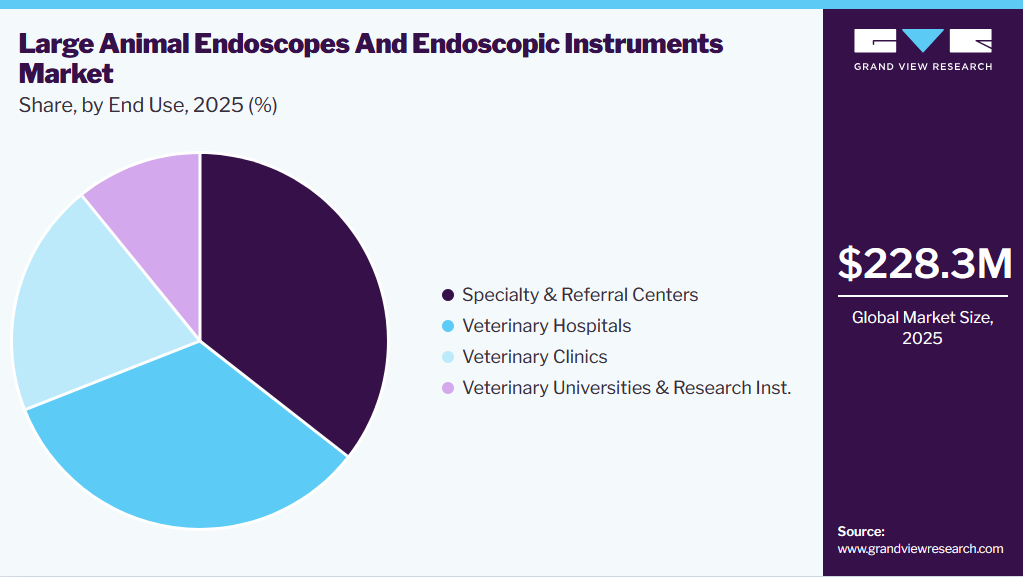
The specialty & referral centers segment led the market with the largest revenue share of 35.6% in 2025 and is expected to register the fastest CAGR over the forecast period. Segment growth is driven by the concentration of specialized veterinary expertise, advanced diagnostic infrastructure, and higher adoption of endoscopic procedures in referral facilities. These centers commonly manage complex large-animal cases requiring advanced imaging, specialized instruments, and minimally invasive diagnostic or therapeutic procedures. Furthermore, increasing referrals for equine and other large-animal specialty care are supporting demand for advanced endoscopy systems.
 To learn more about this report, Download Free Sample Report
The veterinary hospitals segment is expected to grow significantly over the forecast period. Increasing adoption of advanced diagnostic equipment is encouraging veterinary hospitals to expand their endoscopy capabilities for large-animal patients. These facilities require flexible and rigid endoscopes, video systems, light sources, and procedure-specific instruments for routine and specialized procedures. In addition, improvements in portable and compact endoscopy systems are enabling more veterinary hospitals to incorporate endoscopic diagnostics into their clinical services, supporting segment growth.
Regional Insights
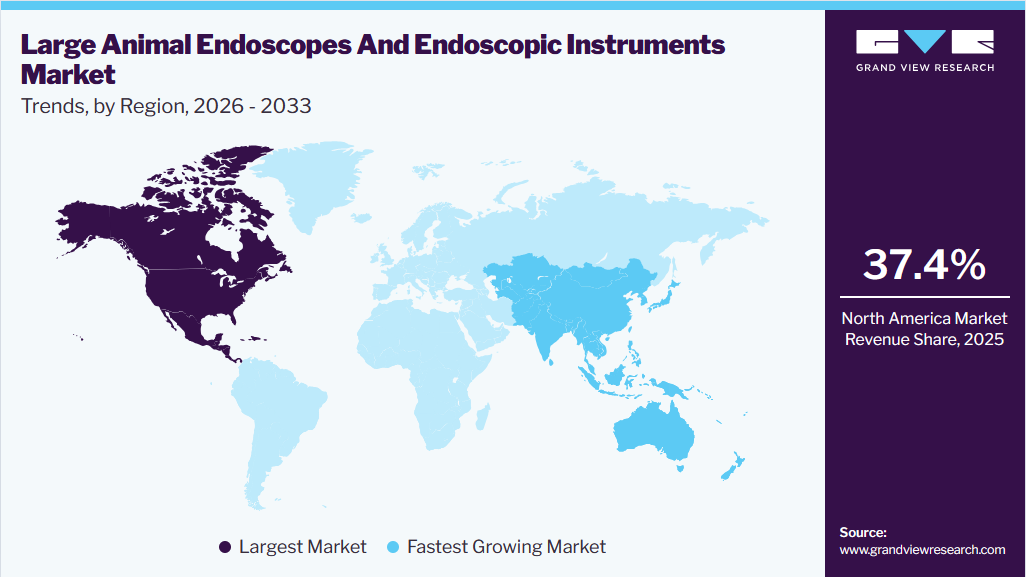
North America Large animal endoscopes and endoscopic instruments market accounted for the largest revenue share of 37.4% in 2025, supported by its established veterinary healthcare infrastructure, high concentration of specialty and referral centers, and widespread adoption of advanced diagnostic technologies. The region’s strong equine healthcare ecosystem and availability of specialized veterinary equipment are supporting demand for large-animal endoscopy systems and instruments.
 To learn more about this report, Download Free Sample Report
U.S. Large Animal Endoscopes And Endoscopic Instruments Market Trends
Large animal endoscopes and endoscopic instruments market in the U.S. is driven by its extensive veterinary healthcare infrastructure, large equine healthcare sector, and established network of specialty and referral centers. Moreover, increasing adoption of minimally invasive diagnostic procedures is supporting demand for flexible and rigid endoscopes, high-definition imaging systems, and procedure-specific instruments. The presence of specialized veterinary hospitals and advanced equipment suppliers is further contributing to market growth.
Europe Large Animal Endoscopes And Endoscopic Instruments Market Trends
The large animal endoscopes and endoscopic instruments market in Europe is experiencing growth due to its developed veterinary healthcare infrastructure, established equine medicine sector, and increasing adoption of advanced diagnostic procedures. Moreover, strong veterinary standards and the presence of specialty hospitals are supporting demand for sophisticated imaging and endoscopic equipment. The region’s established medical-device manufacturing base is also supporting product availability and technological development.
The large animal endoscopes and endoscopic instruments market in Germany is anticipated to grow significantly over the forecast period due to its advanced veterinary healthcare infrastructure and established medical-device industry. The country’s strong equine healthcare sector and specialized veterinary facilities support demand for high-quality endoscopic systems and instruments. Moreover, the presence of established medical-device manufacturers and veterinary equipment suppliers is contributing to market development.
UK large animal endoscopes and endoscopic instruments marketheld a significant share in 2025, supported by the country’s established veterinary healthcare system, advanced equine medicine capabilities, and presence of specialist veterinary hospitals. Moreover, increasing adoption of minimally invasive diagnostic procedures and continued development of veterinary specialty services are creating demand for flexible endoscopes, imaging systems, and specialized instruments.
Asia Pacific Large Animal Endoscopes And Endoscopic Instruments Market Trends
The APAC large animal endoscopes and endoscopic instruments market is projected to grow at the fastest CAGR from 2026 to 2033. Growth is driven by improving veterinary healthcare infrastructure, increasing animal healthcare expenditure, expansion of specialty veterinary services, and greater adoption of advanced diagnostic technologies. Moreover, growing livestock populations and expansion of equine healthcare services in selected countries are supporting demand for large-animal diagnostic equipment.
The large animal endoscopes and endoscopic instruments market in China is expected to grow over the forecast period. Growth is driven by improvements in veterinary healthcare infrastructure, increasing adoption of advanced diagnostic equipment, and expansion of specialty veterinary services. Moreover, growing demand for sophisticated livestock healthcare and increasing availability of domestic medical-device technologies are supporting the adoption of endoscopic systems and instruments.
The Japan large animal endoscopes and endoscopic instruments market is witnessing growth over the forecast period. The market is supported by the country’s advanced medical-device industry, high technology adoption, and established veterinary healthcare infrastructure. Moreover, strong quality standards and availability of sophisticated imaging technologies are supporting demand for high-resolution endoscopy systems and specialized instruments in veterinary applications.
Large animal endoscopes and endoscopic instruments market in India is witnessing considerable growth due to improving veterinary healthcare infrastructure, increasing animal healthcare expenditure, and expanding access to advanced diagnostic equipment. Moreover, the large livestock population and growing availability of specialty veterinary services are creating opportunities for endoscopic procedures. Increasing awareness of minimally invasive diagnostics is further supporting market expansion.
Latin America Large Animal Endoscopes And Endoscopic Instruments Market Trends
Latin America is gaining traction as veterinary healthcare infrastructure and access to advanced diagnostic technologies. Demand is increasing for specialized endoscopic systems and instruments used in livestock and equine healthcare. Brazil, Mexico, and Argentina remain key contributors due to their large livestock sectors and established veterinary service networks.
Large animal endoscopes and endoscopic instruments market in Brazilrepresents a leading opportunity within Latin America due to its large livestock industry, established veterinary healthcare network, and expanding access to advanced diagnostic technologies. The country’s large animal endoscopes & endoscopic instruments market is supported by demand for specialized veterinary procedures across cattle and equine healthcare. Moreover, improvements in veterinary hospitals and specialty services are supporting adoption of advanced endoscopy systems.
Middle East & Africa Large Animal Endoscopes And Endoscopic Instruments Market Trends
The MEA market is gradually expanding, driven by improvements in veterinary healthcare infrastructure, livestock healthcare programs, and increasing access to advanced diagnostic equipment. Countries such as the UAE, Saudi Arabia, and South Africa are developing specialized veterinary services and improving animal healthcare capabilities. These developments are creating opportunities for large-animal endoscopy systems, imaging equipment, and procedure-specific instruments.
The UAE large animal endoscopes and endoscopic instruments market is emerging as a strategic opportunity within the Middle East due to its focus on advanced veterinary healthcare and specialized animal services. The country’s established equine healthcare ecosystem and investment in veterinary facilities support demand for sophisticated diagnostic equipment. Moreover, increasing availability of specialty veterinary services is creating opportunities for flexible endoscopes, high-definition imaging systems, and specialized endoscopic instruments.
Key Large Animal Endoscopes And Endoscopic Instruments Company Insights
Market players are undertaking various strategic initiatives, such as the launch of new product innovations, collaborations, partnerships, and mergers & acquisitions, to strengthen their service offering and provide a competitive advantage.
Key Large Animal Endoscopes And Endoscopic Instruments Companies
The following key companies have been profiled for this study on the large animal endoscopes & endoscopic instruments market.
-
STERIS
-
SonoScape Medical Corp
-
Shenzhen Mindray Animal Medical Technology Co., LTD.
-
Firefly Global
-
KARL STORZ
-
Biovision Veterinary Endoscopy, LLC
-
MDS Vet
-
VetVu (Swiss Precision Products, Inc,)
-
Eickemeyer KG
-
Dr. Fritz Endoscopes GmbH
Competitive Benchmarking
Category
Operating Strategies
Competitive Edge
Weakness
Established Players (STERIS; SonoScape Medical Corp; KARL STORZ; Eickemeyer KG; Dr. Fritz Endoscopes GmbH; MDS Vet)
Established players pursue portfolio expansion, product upgrades, global distribution, and strategic collaborations to strengthen their presence across large-animal endoscopy. Companies focus on high-definition imaging, flexible and rigid endoscopes, specialized instruments, integrated visualization systems, and technical support to address diverse veterinary requirements.
Established players benefit from broad product portfolios, established distribution networks, endoscopy expertise, strong manufacturing capabilities, and technical service infrastructure. Their ability to offer integrated visualization systems and procedure-specific instruments provides advantages in specialty veterinary hospitals and referral centers requiring advanced large-animal diagnostic and interventional equipment.
Established players face limitations associated with higher equipment costs, complex system configurations, and dependence on specialized veterinary expertise. Premium positioning can restrict adoption among smaller veterinary practices and cost-sensitive markets, while broader corporate portfolios may provide less flexibility than specialized suppliers focused specifically on veterinary applications.
Emerging Players (Shenzhen Mindray Animal Medical Technology Co., Ltd.; Firefly Global; Biovision Veterinary Endoscopy, LLC; VetVu (Swiss Precision Products, Inc.)
Emerging players focus on specialized veterinary endoscopy solutions, portable systems, application-specific instruments, and flexible product configurations. Companies target underserved veterinary practices through direct distribution, product customization, technical support, and cost-conscious solutions while expanding portfolios toward minimally invasive procedures and large-animal applications.
Emerging players benefit from specialized veterinary focus, product flexibility, portable designs, and closer alignment with practitioner requirements. Their narrower organizational structures can support faster product development and customer responsiveness, while specialized systems can address specific clinical applications that broader medical-device portfolios may serve less directly.
Emerging players face limitations related to smaller distribution networks, lower brand recognition, narrower product portfolios, and comparatively limited financial resources. These factors can restrict access to large veterinary hospital networks and international markets, while high equipment development and service requirements can create additional barriers to rapid geographic expansion.
Recent Developments
- In July 2025, Dr. Fritz Endoscopes launched the Video-Compact-System 7, a wireless video endoscopy system with integrated LED illumination and no external video tower or light source. The system was positioned primarily for small-animal applications, so it represents broader veterinary endoscopy portfolio development rather than a direct large-animal launch.
Large Animal Endoscopes And Endoscopic Instruments Market Report Scope
Report Attribute
Details
Market size in 2025
USD 228.3 million
Estimated market size in 2026
USD 239.6 million
Projected market size by 2033
USD 353.5 million
Growth rate
CAGR of 5.7% from 2026 to 2033
Actual data
2021 - 2025
Forecast period
2026 - 2033
Quantitative units
Revenue in USD million and CAGR from 2026 to 2033
Report coverage
Revenue forecast, company ranking, competitive landscape, growth factors, and trends
Segments covered
Product, type, animal, procedure, application, end-use, region
Regional scope
North America; Europe; Asia Pacific; Latin America; MEA
Country Scope
U.S.; Canada; Mexico; UK; Germany; France; Italy; Spain; Denmark; Sweden; Norway; China; India; Japan; Australia; Thailand; South Korea; Brazil; Argentina; Saudi Arabia; UAE; South Africa; Kuwait; Oman; Qatar
Key companies profiled
STERIS; SonoScape Medical Corp; Shenzhen Mindray Animal Medical Technology Co. LTD.; Firefly Global; KARL STORZ; Biovision Veterinary Endoscopy, LLC; MDS Vet; VetVu (Swiss Precision Products, Inc;), Eickemeyer KG; Dr. Fritz Endoscopes GmbH
Customization scope
Free report customization (equivalent up to 8 analysts' working days) with purchase. Addition or alteration to country, regional & segment scope.
Pricing and purchase options
Avail customized purchase options to meet your exact research needs. Explore purchase options
Large Animal Endoscopes And Endoscopic Instruments Market Report Segmentation
This report forecasts revenue growth at a country level and provides an analysis of the latest industry trends in each of the sub-segments from 2021 to 2033. For this study, Grand View Research has segmented the global large animal endoscopes and endoscopic instruments market report based on product, type, animal, procedure, application, end-use, and region:
-
Product Outlook (Revenue, USD Million, 2021 - 2033)
-
Equipment
-
Flexible Endoscopes
-
Rigid Endoscopes
-
Video Processors & Imaging Systems
-
-
Instruments & Accessories
-
Biopsy Forceps
-
Grasping Forceps
-
Retrieval Forceps
-
Retrieval Baskets
-
Snares
-
Cytology Brushes
-
Other Endoscopic Instruments
-
-
Consumables
-
-
Type Outlook (Revenue, USD Million, 2021 - 2033)
-
Disposable
-
Reusable
-
-
Animal Outlook (Revenue, USD Million, 2021 - 2033)
-
Horses
-
Bovine
-
Other Large Animals
-
-
Procedure (Revenue, USD Million, 2021 - 2033)
-
Gastrointestinal Procedures
-
Respiratory Procedures
-
Urogenital Procedures
-
ENT Procedures
-
Other Endoscopic Procedures
-
-
Application (Revenue, USD Million, 2021 - 2033)
-
Diagnostic
-
Surgical/Interventional
-
-
End-use Outlook (Revenue, USD Million, 2021 - 2033)
-
Veterinary Clinics
-
Veterinary Hospitals
-
Specialty & Referral Centers
-
Veterinary Universities & Research Institutes
-
-
Regional Outlook (Revenue, USD Million, 2021 - 2033)
-
North America
-
U.S.
-
Canada
-
Mexico
-
-
Europe
-
UK
-
Germany
-
France
-
Italy
-
Spain
-
Sweden
-
Norway
-
Denmark
-
-
Asia Pacific
-
Japan
-
China
-
India
-
South Korea
-
Australia
-
Thailand
-
-
Latin America
-
Brazil
-
Argentina
-
-
Middle East & Africa
-
South Africa
-
Saudi Arabia
-
UAE
-
Kuwait
-
Oman
-
Qatar
-
-
Research Methodology
The large animal endoscopes and endoscopic instruments market figures in this report are based on a proven research process that combines executive interviews with secondary research from proprietary databases, company filings, and recognized regulatory and institutional sources. Market size is built through value-chain sizing-reconciling supply-side and demand-side estimates-and triangulated with bottom-up and top-down approaches. Every estimate passes multiple levels of expert validation before publication, with each large animal endoscopes and endoscopic instruments segment quantified using the revenue-capture definitions in the table below.
Segment Definition
Product Segment
Definition
Equipment
Represents revenue generated from the sale of endoscopic equipment used for small animal diagnosis and minimally invasive procedures globally. It includes flexible and rigid endoscopes, video processors, imaging systems, cameras, light sources, monitors, and related visualization equipment.
Flexible Endoscopes
Represents revenue generated from the sale of flexible endoscopes used for visualization, diagnosis, tissue sampling, and therapeutic procedures in small animals. It includes flexible video endoscopes, fiberoptic endoscopes, gastroscopes, bronchoscopes, cystoscopes, and other flexible scopes.
Rigid Endoscopes
Represents revenue generated from the sale of rigid endoscopes used for visualization and minimally invasive procedures in small animals. It includes rigid telescopes, laparoscopes, arthroscopes, rhinoscopes, otoscopes, and other rigid endoscopic systems.
Video Processors & Imaging Systems
Represents revenue generated from the sale of video processors and imaging systems used to capture, process, display, and enhance endoscopic images during small animal procedures. It includes camera systems, video processors, light sources, monitors, image capture systems, and visualization platforms.
Instruments & Accessories
Represents revenue generated from the sale of instruments and accessories used with endoscopic systems during diagnostic and therapeutic procedures in small animals. It includes biopsy forceps, grasping forceps, retrieval forceps, retrieval baskets, snares, cytology brushes, and other procedure-specific instruments.
Biopsy Forceps
Represents revenue generated from the sale of endoscopic biopsy forceps used to collect tissue specimens from small animals for histopathological and diagnostic evaluation.
Grasping Forceps
Represents revenue generated from the sale of endoscopic grasping forceps used to grasp, manipulate, reposition, or remove tissue, foreign bodies, and other materials during small animal endoscopic procedures.
Retrieval Forceps
Represents revenue generated from the sale of specialized endoscopic forceps designed to retrieve foreign bodies, tissue fragments, and other materials from body cavities and anatomical lumens of small animals.
Retrieval Baskets
Represents revenue generated from the sale of endoscopic retrieval baskets used to capture and extract foreign bodies, calculi, and other materials during small animal endoscopic procedures.
Snares
Represents revenue generated from the sale of endoscopic snares used for tissue resection, polyp removal, lesion removal, and other therapeutic interventions in small animals.
Cytology Brushes
Represents revenue generated from the sale of endoscopic cytology brushes used to collect cellular material and diagnostic specimens from internal tissues and organs of small animals.
Other Endoscopic Instruments
Represents revenue generated from the sale of endoscopic instruments and accessories not classified under biopsy forceps, grasping forceps, retrieval forceps, retrieval baskets, snares, or cytology brushes. It includes guidewires, dilators, injection needles, cleaning devices, sheaths, and other procedure-specific endoscopic accessories.
Consumables
Represents revenue generated from disposable or frequently replaced products used during small animal endoscopic procedures, including single-use accessories, procedure kits, protective components, cleaning and maintenance products, and other consumable items.
Type Segment
Definition
Disposable
Represents revenue generated from single-use endoscopic equipment, instruments, and accessories designed for one procedure or limited use, including disposable scopes, forceps, retrieval devices, baskets, snares, cytology brushes, procedure kits, and other single-use products.
Reusable
Represents revenue generated from endoscopic equipment, instruments, and accessories designed for repeated use following appropriate cleaning, disinfection, sterilization, and maintenance procedures.
Animal Segment
Definition
Dogs
Represents revenue generated from endoscopic equipment and instruments used for diagnostic and therapeutic procedures in canine patients, including gastrointestinal, respiratory, urogenital, ENT, and other endoscopic applications.
Cats
Represents revenue generated from endoscopic equipment and instruments used for diagnostic and therapeutic procedures in feline patients, including gastrointestinal, respiratory, urogenital, ENT, and other endoscopic applications.
Other Small Animals
Represents revenue generated from endoscopic equipment and instruments used in small animals other than dogs and cats, including rabbits, ferrets, birds, reptiles, guinea pigs, hamsters, and other exotic or companion small animals.
Procedure Segment
Definition
Gastrointestinal Procedures
Represents revenue generated from endoscopic equipment and instruments used for examination, diagnosis, biopsy, foreign body retrieval, polyp removal, and other diagnostic or therapeutic procedures involving the gastrointestinal tract of small animals.
Respiratory Procedures
Represents revenue generated from endoscopic equipment and instruments used for visualization, diagnosis, tissue sampling, foreign body retrieval, and other procedures involving the respiratory tract and airways of small animals.
Urogenital Procedures
Represents revenue generated from endoscopic equipment and instruments used for diagnostic and therapeutic evaluation of the urinary and reproductive systems of small animals, including procedures involving the bladder, urethra, and related anatomical structures.
ENT Procedures
Represents revenue generated from endoscopic equipment and instruments used for diagnosis and treatment of conditions affecting the ears, nasal passages, pharynx, and related upper airway structures in small animals.
Other Endoscopic Procedures
Represents revenue generated from endoscopic equipment and instruments used for procedures outside gastrointestinal, respiratory, urogenital, and ENT applications. It includes arthroscopy, laparoscopy, thoracoscopy, reproductive procedures, and other diagnostic or minimally invasive therapeutic applications.
Application Segment
Definition
Diagnostic
Represents revenue generated from endoscopic equipment, instruments, and accessories used for visualization, examination, disease detection, tissue sampling, cytological evaluation, and other diagnostic purposes in small animals.
Surgical/Interventional
Represents revenue generated from endoscopic equipment, instruments, and accessories used for minimally invasive surgical and therapeutic interventions in small animals, including foreign body removal, tissue resection, polypectomy, stone retrieval, and related procedures.
End Use Segment
Definition
Veterinary Clinics
Represents revenue generated from sales of small animal endoscopy equipment, instruments, and accessories to veterinary clinics for routine and specialized diagnostic and therapeutic procedures, generally within outpatient or primary-care veterinary settings.
Veterinary Hospitals
Represents revenue generated from sales of endoscopic equipment, instruments, imaging systems, and consumables to veterinary hospitals providing comprehensive diagnostic, surgical, and interventional services for small animals.
Specialty & Referral Centers
Represents revenue generated from sales of advanced endoscopic equipment, imaging systems, specialized instruments, and accessories to specialty and referral centers performing complex diagnostic and minimally invasive procedures for small animals.
Veterinary Universities & Research Institutes
Represents revenue generated from sales of endoscopic equipment, instruments, imaging systems, and related accessories to veterinary universities and research institutes for clinical training, teaching, research, and development activities involving small animals.
Estimation Model
Top-Down Approach
Bottom-Up Approach
Demand-Side Estimation
Supply-Side Estimation Model
The top-down approach estimates the market from the broader veterinary endoscopy and veterinary medical equipment markets. Market shares are allocated based on large-animal applications, product categories, procedures, and end-use facilities. Regional and country-level veterinary healthcare expenditure and equipment adoption rates are also considered to derive the addressable market.
The bottom-up approach estimates market revenue using company-level sales, product portfolios, endoscopy system prices, instrument volumes, procedure volumes, and regional adoption rates. Company-level estimates are aggregated to determine the overall market size. The analysis also considers major manufacturers, specialized veterinary suppliers, and their product presence across large-animal applications.
The demand-side model evaluates large-animal veterinary procedure volumes, including gastrointestinal, respiratory, and other endoscopic procedures, along with the number of veterinary hospitals, specialty and referral centers, equipment utilization, replacement cycles, and average equipment expenditure. Animal population trends, veterinary procedure adoption, and availability of specialized facilities are used to assess potential equipment demand.
The supply-side model assesses manufacturers and suppliers based on product portfolios, pricing, production capacity, distribution networks, geographic presence, and sales of large-animal endoscopy systems and instruments. Competitive positioning, product launches, technological capabilities, and regional distribution coverage are also considered when assessing supplier-side market contributions.
Customization Table
Client Request
Customization Delivered
Value Adds
Extensive Segmentation & Cross-Segmentation Analysis
The study can be customized to include deeper segmentation and cross-analysis across product, type, animal, procedure, application, and end use. The analysis can further assess flexible and rigid endoscopes, instruments and accessories, reusable and disposable products, horses, bovine, gastrointestinal and respiratory procedures, and diagnostic and surgical/interventional applications.
Enables granular opportunity assessment, identifies high-growth segment combinations, and supports prioritization of target product categories, animal groups, procedures, and end-use facilities.
Regional Extension & Opportunity Mapping
The report can include country-level or sub-regional analysis across North America, Europe, Asia Pacific, Latin America, and Middle East & Africa. This may cover veterinary infrastructure, large-animal populations, equine healthcare activity, specialty veterinary facilities, technology adoption, distribution networks, and market-entry conditions.
Supports geographic expansion planning, assessment of veterinary infrastructure, regional demand mapping, and identification of markets with opportunities for advanced large-animal endoscopy adoption.
Market Entry Strategy & Competitive Dynamics
The study can be expanded to assess entry opportunities for endoscopy manufacturers and specialized veterinary equipment providers by evaluating market demand, product pricing, regulatory requirements, distribution structures, service capabilities, competitive intensity, and technology differentiation. Benchmarking can assess established and emerging players based on product portfolios, large-animal capabilities, geographic presence, and technical support.
Helps assess market attractiveness, competitive positioning, distribution opportunities, partnership requirements, and go-to-market strategies for new entrants or existing endoscopy manufacturers.
Volume Analysis & Emerging Trend Assessment
The customization can include volume-based analysis such as the number of large-animal veterinary procedures, endoscopy equipment installations, equipment replacement cycles, procedure frequency, and adoption across specialty and referral centers, veterinary hospitals, and equine practices. Emerging trends may include portable endoscopy systems, high-definition imaging, wireless systems, digital video processing, and advanced endoscopic instruments.
Provides demand validation beyond revenue estimates, improves market assessment, and identifies emerging technologies, applications, and end-use settings likely to gain adoption during the forecast period.
Frequently Asked Questions About This Report
Asia Pacific is the fastest-growing region over the forecast period.
The reusable segment led with a 65.5% revenue share in 2025, and is the fastest-growing segment.
The horses segment held the largest revenue share of 69.3% in 2025, while the bovine segment is the fastest-growing segment.
The global large animal endoscopes and endoscopic instruments market size was valued at USD 228.3 million in 2025 and is estimated at USD 239.6 million in 2026.
The global large animal endoscopes and endoscopic instruments market is expected to grow at a CAGR of 5.7% from 2026 to 2033, reaching USD 353.5 million in 2033.
Key factors include the increasing adoption of minimally invasive diagnostic and therapeutic procedures across equine, bovine, and other large-animal populations, along with greater demand for gastrointestinal, respiratory, reproductive, and joint examinations.
North America dominated the market, accounting for a share of 37.4% in 2025.
Key players include STERIS, SonoScape Medical Corp, Shenzhen Mindray Animal Medical Technology Co., LTD., Firefly Global, KARL STORZ, Biovision Veterinary Endoscopy, LLC, MDS Vet, VetVu (Swiss Precision Products, Inc,), Eickemeyer KG, Dr. Fritz Endoscopes GmbH
The instruments & accessories segment led with a 47.8% revenue share in 2025, while the consumables segment is the fastest-growing segment.
About the Author(s)
Animal Health Research Team
Healthcare · Animal HealthThis report was authored by the animal health research team at Grand View Research - comprising two research analysts, one senior research analyst, and one industry expert - with specialized expertise in the animal health segment of the healthcare industry. All findings are based on proprietary healthcare databases, executive interviews, and regulatory analysis, subject to internal peer review prior to publication.
Last Updated:
Speak to Analyst

Customize this report to your needs - add regions, segments, or data points, with 20% free customization.
Or view our licence options:


ISO 9001:2015 & 27001:2022 Certified
We are GDPR and CCPA compliant! Your transaction & personal information is safe and secure. For more details, please read our privacy policy.


