
- Home
- »
- Animal Health
- »
-
Latin America Animal Health Market, Industry Report, 2033GVR Report cover

Latin America Animal Health Market (2026 - 2033) Size, Share & Trends Analysis Report By Animal (Production, Companion), By Product (Biologics, Pharmaceuticals), By Distribution Channel (Retail, E-commerce), By End Use, By Country, And Segment Forecasts
Latin America Animal Health Market Summary
The Latin America animal health market size was estimated at USD 7.2 billion in 2025 and is projected to reach USD 16.2 billion by 2033, growing at a CAGR of 10.8% from 2026 to 2033. The factors responsible for driving the market growth include rising livestock population and meat export demand, increasing pet ownership and humanization trends, expansion of veterinary healthcare infrastructure, and growing awareness of animal disease prevention and vaccination.
Key Market Trends & Insights
- Brazil animal health industry held the largest global revenue share of 34.8% in 2025.
- By product, the pharmaceuticals segment held the largest share of 43.2% of the market in 2025.
- By animal, the production animal segment held the largest share in the market in 2025.
- By distribution channel, the e-commerce segment is expected to grow at the fastest rate over the forecast period.
- By end use, the veterinary hospitals & clinics segment held the largest share in the market in 2025.
Market Size & Forecast
- 2025 Market Size: USD 7.2 Billion
- 2033 Projected Market Size: USD 16.2 Billion
- CAGR (2026-2033): 10.8%
Three ways to get this report
Buy it, customize it, or ask a question.Ask an Analyst
Analyst response in 1 business day
- AccessReport author, directly
- Reply timeWithin 1 working day
- No sales callDirect answer only
- FormatEmail reply
- CostFree, no cost
Get the Full Report
What the study covers
- FormatsPDF · Excel · Dashboard
- Timeline2026–2033 annual, 2025 base
- Coverage20+ countries, 5 regions
- Companies10+ key players profiled
Customize the Report
20% free customization
- IncludeCountries, segments, points
- TailorTo your product definition
- ExtendDeeper competitor detail
- OrA fully bespoke study
- Turnaround5–10 working days
One of the crucial factors responsible for driving the Latin America animal health industry growth include the rising incidence and recurrence of transboundary and endemic livestock diseases, which significantly increases the demand for advanced vaccines, diagnostics, and comprehensive biosecurity solutions. Frequent disease outbreaks lead to economic losses due to mortality and culling and disrupt supply chains and export potential, compelling governments and livestock producers to strengthen surveillance systems, invest in rapid diagnostic technologies, and implement stricter movement control and disease prevention programs. This continuous need for disease management is accelerating the adoption of veterinary services, pharmaceutical interventions, and digital monitoring tools across the region.For instance, according to an article published by Farm Journal, Inc, in January 2026, in Brazil outbreak of Classical Swine Fever in Piauí affected dozens of pigs and prompted authorities to declare an animal health emergency, implementing quarantine, culling, and enhanced surveillance measures. The recurrence of such outbreaks in non-free zones highlights persistent viral circulation and biosecurity gaps, thereby driving increased investments in vaccination programs, traceability systems, and preventive animal healthcare infrastructure across Latin America.
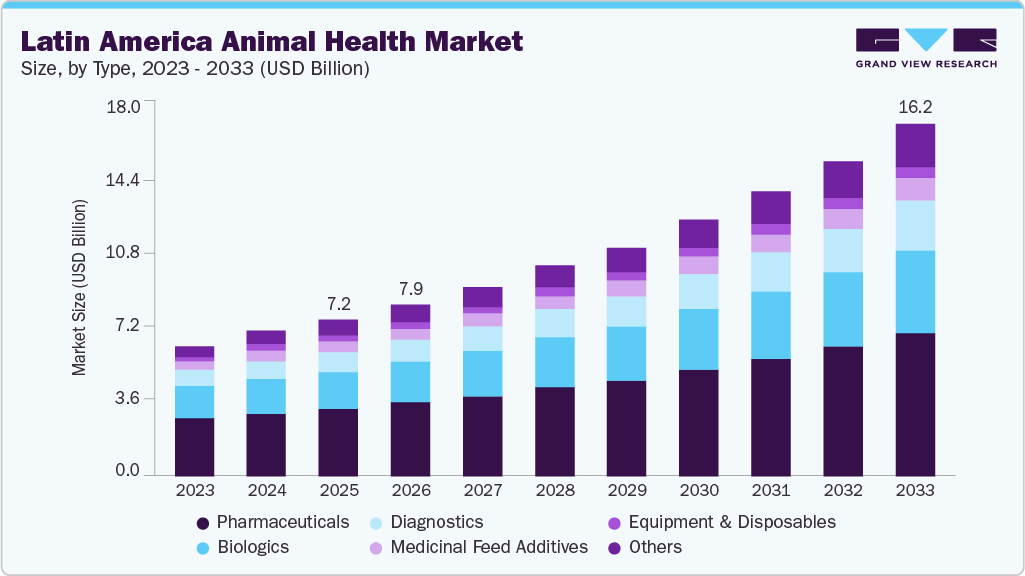 Source: Grand View Research, IR Documents, Primary Interviews, Paid DatabasesTo learn more about this report,
 Download Free Sample Report
 Moreover, the continuous expansion and modernization of the dairy and livestock sector is significantly driving the Latin America animal health industry, as producers increasingly focus on improving productivity, herd efficiency, and milk yield. For instance, according to an article published by APEDA, in November 2025, Argentina is experiencing a strong recovery in its dairy industry, with milk production expected to rise supported by high yield per animal and favorable weather conditions. The country has also deployed over 1,050 milking robots, reflecting rapid technological adoption and improved farm efficiency. This advancement is directly increasing the need for veterinary interventions, herd health management, and preventive care solutions, thereby contributing to market growth. This shift toward high-performance farming is accelerating the demand for veterinary services, including disease prevention, reproductive health management, vaccination, and nutritional support. In addition, the adoption of advanced technologies such as precision feeding, genetic improvement, and automated milking systems is increasing the need for continuous animal health monitoring and specialized care, thus strengthening the overall demand for animal health products and services across the region.
Moreover, the expansion of worldwide veterinary pharmaceutical companies and the increasing penetration of advanced vaccines are strengthening access to high-quality preventive care and accelerating the adoption of modern immunization practices across the region. Companies are introducing innovative companion animal vaccines while investing in veterinarian training, awareness programs, and local distribution partnerships, which enhances disease prevention and boosts product uptake. For instance, in August 2025, Bioveta launched new vaccine lines, Biocan and Biofel for dogs and cats in Venezuela supported by seminars across four major cities Barquisimeto, Valencia, Maracay, and Caracas with around 100 veterinarians attending each session. The company has also expanded across key markets such as Mexico, Colombia, and Brazil, with further plans to enter Chile and Bolivia by 2026, reflecting rising demand for advanced veterinary vaccines and improved animal healthcare adoption.
Key Quantitative Insights: Latin America Livestock Sector
Parameters
Quantitative Data
Share in global animal production
28%
Share in global beef production
23%
Share in global poultry production
21%
Increase in global demand (by 2050)
+20%
Source: FAO
Market Characteristics & Concentration
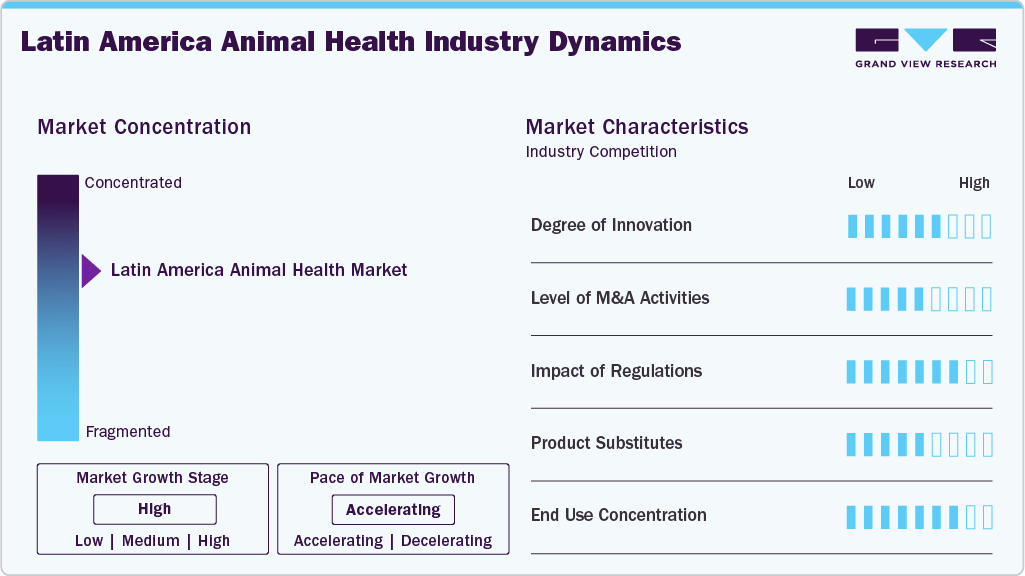
The Latin America animal health industry shows moderate concentration and the pace is accelerating. The market is largely led by multinational companies such as Zoetis, Elanco, and MSD Animal Health, which maintain strong positions due to their extensive R&D capabilities, broad product portfolios, and well-established regulatory expertise. At the same time, regional players like Ourofino Saúde Animal are strengthening their presence by focusing on cost-effective solutions and region-specific product offerings, while smaller local companies continue to compete in niche and generic segments.
Innovation in the industry is steadily advancing. Worldwide companies such as Zoetis and MSD Animal Health are introducing advanced vaccines, biologics, and digital monitoring solutions, including precision livestock tools and data-driven herd management systems. There is also growing adoption of biotechnology, improved diagnostics. However, innovation uptake varies by country, with more advanced adoption in Brazil and Mexico, while other regions rely more on conventional treatments due to cost constraints.
 To learn more about this report, Download Free Sample Report
 The industry is witnessing a moderate but increasing level of mergers and acquisitions, driven primarily by global players seeking to expand their regional footprint and distribution networks. Large firms like Elanco and Boehringer Ingelheim actively pursue acquisitions and partnerships to strengthen their product portfolios and local presence. At the same time, regional companies such as Ourofino Saúde Animal are engaging in strategic collaborations to scale operations and compete with multinational firms. This consolidation trend is gradually increasing market competitiveness and improving access to advanced products.
Regulatory frameworks in Latin America have a significant impact on market dynamics, with varying levels of strictness across countries. Key marketplaces like Brazil have relatively structured regulatory systems governing veterinary drugs, vaccines, and feed additives, ensuring product safety and efficacy. However, regulatory inconsistencies and lengthy approval timelines in some countries can delay product launches and limit innovation penetration. Increasing focus on antimicrobial resistance, animal welfare, and food safety is also urging companies to comply with stricter guidelines, thereby encouraging the adoption of safer and more sustainable animal health solutions.
The product substitutes is moderate in the Latin America animal health care sector, with alternatives such as traditional remedies, herbal treatments, and low-cost generics competing with branded pharmaceuticals. In rural and price-sensitive areas, livestock owners often rely on locally available or informal treatments, which can limit the adoption of premium products. However, increasing awareness of animal health, rising disease outbreaks, and the need for higher productivity are gradually shifting preference toward scientifically validated veterinary medicines and vaccines, reducing the long-term threat of substitutes.
End use concentration in the Latin America animal health Care industry is relatively high, with the livestock segment dominating due to the region’s strong cattle, poultry, and swine industries. Countries like Brazil and Argentina have large-scale commercial farming operations that drive significant demand for vaccines, feed additives, and disease management solutions. At the same time, the companion animal segment is rapidly growing, supported by increasing pet ownership and humanization trends, particularly in urban areas, which is expanding demand for specialized veterinary care and preventive healthcare products.
Product Insights
Based on product, pharmaceuticals held the largest revenue share of 43.2% in 2025. The growing participation of regional veterinary pharmaceutical companies in major industry events, along with the introduction of advanced and combination drug therapies, is significantly strengthening the pharmaceutical segment across Latin America by improving product awareness, expanding distribution networks, and increasing veterinarian adoption of innovative treatments. For instance, Petmedica, part of Agrovet Market, demonstrated its veterinary pharmaceutical portfolio at the León Veterinary Congress 2025, which attracted over 20,000 attendees and delivered 800 hours of expert-led sessions, indicating strong veterinary participation. The company also introduced Atrevia 360°, an oral antiparasitic with a triple combination of Fluralaner, Moxidectin, and Praziquantel, and engaged 100+ veterinary clients from countries including Peru, Panama, Guatemala, and Costa Rica, highlighting increasing regional demand for advanced pharmaceutical solutions.
The other segment, including veterinary telehealth, veterinary software, and livestock monitoring, is the fastest-growing segment over the forecast period. Telehealth is expanding access to veterinary care, especially in remote and underserved areas, by enabling virtual consultations, early diagnosis, and continuous follow-ups, thereby reducing costs and improving treatment timelines. At the same time, livestock monitoring technologies including wearable sensors, GPS tracking, and real-time health monitoring systems are increasingly being adopted to enhance productivity, detect diseases early, and optimize breeding and feeding practices. This integrated digital shift is particularly prominent in key livestock markets like Brazil and Argentina, where large-scale farming operations are leveraging these solutions to improve efficiency, reduce losses, and ensure traceability.
Animal Insights
Based on animal, production animals held the largest revenue share in 2025, owing to the strong growth and commercialization of the poultry industry in the region. For instance, in Colombia, poultry production reached approximately 3.17 million metric tons in 2025, growing by 9.1% from previous year, including 2.0 million metric tons of chicken and 19.4 billion eggs, along with exports of 51.3 million eggs to Cuba and shipments to Japan. Such strong growth and rising export activities are significantly strengthening the production animal segment, as increasing output drives the need for advanced animal health solutions, feed efficiency, and disease management. As producers scale operations to meet both domestic and international demand, investments in vaccines, biosecurity measures, and nutritional products are rising to ensure flock health, productivity, and compliance with global standards, thereby boosting demand across the production animal health value chain.
Companion animals is anticipated to be the fastest-growing segment over the forecast period. Rising government-led vaccination initiatives and increasing focus on zoonotic disease prevention are accelerating demand for companion animal healthcare services and products. For instance, in Haiti, a 2025 canine rabies vaccination campaign supported by Pan American Health Organization targeted 140,000-160,000 dogs across 16 communes, deploying 240 teams and aiming for 70-80% vaccination coverage, while training 480+ veterinary personnel. Such large-scale vaccination initiatives are significantly strengthening the companion animal segment, as they increase awareness about preventive healthcare, improve access to veterinary services, and drive demand for vaccines and routine care products. This growing emphasis on preventive care, especially in emerging and underserved regions, is accelerating the overall expansion of the companion animal sector.
Distribution Channel Insights
Based on distribution channel, the hospital/ clinic pharmacy segment held the largest revenue share in 2025, supported by the increasing integration of diagnostics and treatment within veterinary facilities. As pet owners and livestock producers increasingly rely on veterinarians for accurate diagnosis and immediate treatment, there is a growing demand for on-site availability of pharmaceuticals, vaccines, and therapeutic products. These pharmacies ensure better compliance, quality assurance, and timely access to prescribed medications, reducing dependency on external retail channels. In addition, the rising complexity of treatments, including specialty drugs, biologics, and post-surgical care, is further strengthening the role of in-clinic dispensing.
The e-commerce segment is emerging as the fastest-growing segment over the forecast period, driven by increasing digital adoption and the rising preference for convenient, home-delivered veterinary products. Online platforms offer a wide range of pharmaceuticals, supplements, and pet care products at competitive prices, along with easy access to product information and reviews, which enhances purchasing decisions. In addition, the expansion of internet penetration, mobile usage, and direct-to-consumer models is enabling pet owners and livestock farmers to procure animal health products more efficiently, thereby accelerating the growth of the e-commerce channel.
End Use Insights
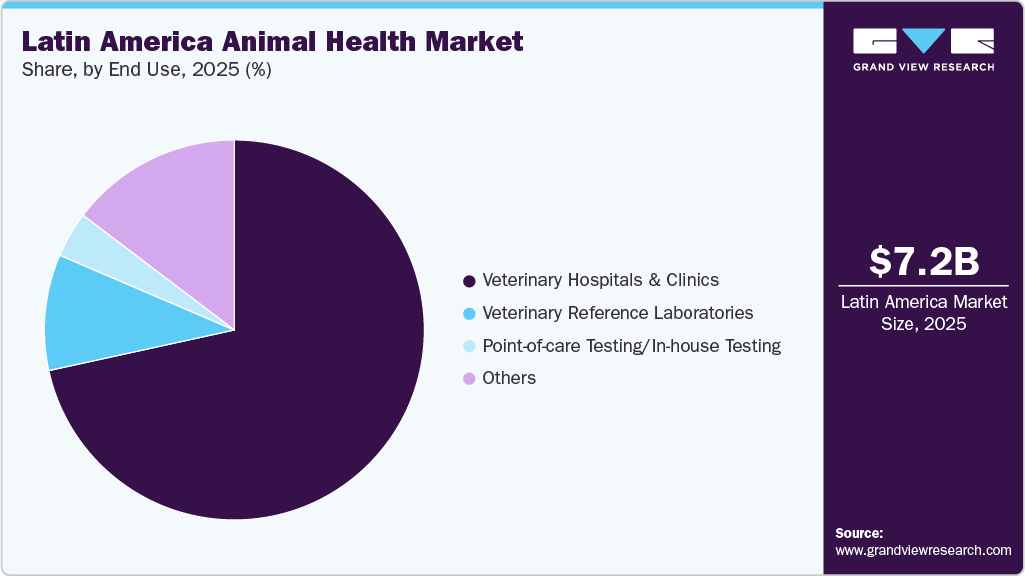
In terms of end use, the veterinary hospitals & clinics segment held the largest revenue share in 2025, driven by the increasing demand for professional diagnosis, treatment, and preventive care services. As pet ownership rises and livestock management becomes more intensive, animal owners are relying more on structured veterinary facilities for accurate diagnosis, surgical procedures, and long-term disease management. These settings also act as primary touchpoints for vaccinations, routine check-ups, and prescription treatments, which boosts the utilization of pharmaceuticals, diagnostics, and therapeutic services. The ongoing expansion of veterinary infrastructure and the shift toward integrated care models are further strengthening the role of hospitals and clinics in the overall animal health ecosystem.
 To learn more about this report, Download Free Sample Report
 The point-of-care testing/in-house testing segment is emerging as the fastest-growing segment over the forecast period, as they enable veterinarians to perform rapid diagnostics directly within clinics or farm settings, leading to faster clinical decision-making and improved treatment outcomes. These solutions include compact analyzers for blood work, infectious disease detection, and biochemical testing, allowing results to be generated within minutes rather than relying on external laboratories. This enhances efficiency and workflow within veterinary practices and increases user trust by enabling immediate diagnosis and treatment initiation. The growing need for early disease detection, especially in critical and contagious conditions, along with advancements in portable diagnostic technologies, is accelerating the adoption of in-house testing across both companion and production animal care.
Country Insights
Brazil Animal Health Market Trends
The Brazil veterinary health industry is significantly growing, due to stricter antimicrobial regulations, which are promoting more controlled and prescription-based usage of veterinary drugs. With the ban on growth-promoting antimicrobials and the requirement for veterinary prescriptions, livestock producers are increasingly relying on veterinarians for treatment decisions, thereby boosting demand for specialized services, diagnostics, and regulated pharmaceuticals. This shift is also encouraging the adoption of alternative solutions such as vaccines, probiotics, and nutritional additives to maintain productivity and animal health. For instance, Phibro Animal Health Corporation is facilitating this transition in April 2026, through digital platforms like PhibroVet for prescription management, while advancing approvals for therapeutic antimicrobial use, reflecting a broader move toward responsible and advanced animal healthcare practices.
Colombia Animal Health Market Trends
The veterinary animal health care industry in Colombia is witnessing growth supported by increasing focus on veterinary training, skill transfer, and adoption of advanced clinical practices in companion animal care. Global companies are actively engaging with regional veterinarians through educational programs, workshops, and exposure to modern treatment protocols, which enhances clinical capabilities and promotes the use of advanced diagnostics, vaccines, and therapeutics. For instance, in April 2026, HIPRA organized a specialized training session for companion animal veterinarians from Colombia and Peru, covering topics such as infectious diseases, clinical practice, and treatment approaches, along with visits to advanced veterinary facilities. Such initiatives strengthen professional expertise and accelerate the adoption of modern animal healthcare solutions, thereby supporting market growth.
Key Latin America Animal Health Company Insights
Latin America animal health industry is moderately concentrated where leading global companies such as Zoetis, MSD Animal Health, Elanco maintain a strong foothold through continuous product innovation, vaccine launches, and strategic partnerships. These players are actively expanding through training programs, digital platforms, and localized manufacturing, while regional firms are strengthening their position by focusing on cost-effective solutions and expanding their product portfolios. Companies across the region are also increasing investments in veterinarian engagement initiatives, educational seminars, and distribution network expansion, with multiple programs involving hundreds of veterinary professionals annually, reflecting a competitive landscape driven by innovation, outreach, and growing consolidation.
Key Latin America Animal Health Companies:
- Zoetis
- Merck & Co., Inc
- HIPRA
- Ceva Santé Animale
- Elanco
- Ourofino Saúde Animal
- Agrovet Market Animal Health
- Phibro Animal Health
- Pharmavet Corporation SAC
- Marethfarm Laboratories SA
Recent Developments
-
In February 2026, GekkoVet and Royal Canin expanded their strategic collaboration, marking their entry into Latin America. The initiative introduced an AI-powered clinical decision support platform that provides real-time diagnostic assistance, treatment recommendations, and drug information to veterinarians. This development is enhancing clinical decision-making, improving patient outcomes, and accelerating the adoption of digital veterinary solutions across the region.
-
In August 2025, HIPRA partnered with LLAMAS Laboratorios to strengthen diagnostic services for animal production in Argentina. The collaboration focuses on expanding locally available diagnostic tests, improving result accuracy, and reducing turnaround time for better decision-making. Through its HIPRA Diagnos platform, the company already conducts around 600,000 serological, 80,000 molecular, and 10,000 microbiological/parasitological analyses annually, supporting veterinarians with rapid and reliable insights. This initiative enhances disease prevention, optimizes vaccination strategies, and reduces economic losses in livestock production.
-
In July 2025, Calier acquired Tecnofarm, a well-established veterinary pharmaceutical firm with over 35 years of experience in Argentina. The acquisition strengthens Calier’s regional presence by integrating Tecnofarm’s production facility in Buenos Aires, its diversified product portfolio, and its strong nationwide distribution network. This move positions Argentina as a strategic hub for production and exports, enhancing supply capabilities and market reach. The initiative reflects ongoing consolidation in the region, supporting improved access to veterinary medicines and expanding the overall animal health ecosystem.
Latin America Animal Health Market Report Scope
Report Attribute
Details
Market size value in 2026
USD 7.9 billion
Revenue forecast in 2033
USD 16.2 billion
Growth rate
CAGR of 10.8% from 2026 to 2033
Actual data
2021 - 2025
Forecast period
2026 - 2033
Quantitative units
Revenue in USD million and CAGR from 2026 to 2033
Report coverage
Revenue forecast, company ranking, competitive landscape, growth factors, and trends
Segments covered
Product, animal, distribution channel, end use, country
Country scope
Brazil; Argentina; Colombia; Uruguay; Ecuador; Venezuela; Chile; Peru; Bolivia; Guatemala; Paraguay; Costa Rica
Key companies profiled
Zoetis, Merck & Co., Inc; HIPRA; Ceva Santé Animale; Elanco; Ourofino Saúde Animal; Agrovet Market Animal Health; Phibro Animal Health; Pharmavet Corporation SAC; Marethfarm Laboratories SA
Customization scope
Free report customization (equivalent up to 8 analysts working days) with purchase. Addition or alteration to country, regional & segment scope.
Pricing and purchase options
Avail customized purchase options to meet your exact research needs. Explore purchase options
Latin America Animal Health Market Report Segmentation
This report forecasts revenue growth at country levels and provides an analysis of the latest industry trends in each of the sub-segments from 2021 to 2033. For this study, Grand View Research has segmented the Latin America animal health market report based on product, animal, distribution channel, end use, and country.
-
Product Outlook (Revenue, USD Million, 2021- 2033)
-
Biologics
-
Vaccines
-
Modified/ Attenuated Live
-
Inactivated (Killed)
-
Other Vaccines
-
-
Other Biologics
-
-
Pharmaceuticals
-
Parasiticides
-
Anti-infectives
-
Anti-inflammatory
-
Analgesics
-
Others
-
-
Diagnostics
-
Consumables, Reagents and Kits
-
Instruments and Devices
-
-
Equipment & Disposables
-
Critical Care Consumables
-
Anesthesia Equipment
-
Fluid Management Equipment
-
Temperature Management Equipment
-
Rescue & Resuscitation Equipment
-
Research Equipment
-
Patient Monitoring Equipment
-
-
Medicinal Feed Additives
-
Others
-
Veterinary Telehealth
-
Veterinary Software
-
Livestock Monitoring
-
-
-
Animal Outlook (Revenue, USD Million, 2021 - 2033)
-
Production Animals
-
Poultry
-
Swine
-
Cattle
-
Sheep & Goats
-
Fish
-
-
Companion Animals
-
Dogs
-
Cats
-
Horses
-
Others
-
-
-
Distribution Channel Outlook (Revenue, USD Million, 2021 - 2033)
-
Retail
-
E-Commerce
-
Hospital/ Clinic Pharmacy
-
-
End Use Outlook (Revenue, USD Million, 2021 - 2033)
-
Veterinary Reference Laboratories
-
Point-of-Care Testing/In-house Testing
-
Veterinary Hospitals & Clinics
-
Others
-
-
Country Outlook (Revenue, USD Million, 2021 - 2033)
-
Brazil
-
Argentina
-
Colombia
-
Uruguay
-
Ecuador
-
Venezuela
-
Chile
-
Peru
-
Bolivia
-
Guatemala
-
Paraguay
-
Costa Rica
-
Frequently Asked Questions About This Report
Some key players operating in the Latin America animal health market include Zoetis, Merck & Co., Inc, HIPRA, Ceva Santé Animale, Elanco, Ourofino Saúde Animal, Agrovet Market Animal Health, Phibro Animal Health, Pharmavet Corporation SAC, Marethfarm Laboratories SA
Key factors that are driving the market growth include rising livestock population and meat export demand, increasing pet ownership and humanization trends, expansion of veterinary healthcare infrastructure, and growing awareness of animal disease prevention and vaccination
The Latin America animal health market size was estimated at USD 7.2 billion in 2025 and is expected to reach USD 7.9 billion in 2026.
The Latin America animal health market is expected to grow at a compound annual growth rate of 10.8% from 2026 to 2033 to reach USD 16.2 billion by 2033.
Brazil dominated the Latin America animal health market with a share of 34.8% in 2025. This is attributable to stricter antimicrobial regulations, which are promoting more controlled and prescription-based usage of veterinary drugs
About the Author(s)
Animal Health Research Team
Healthcare · Animal HealthThis report was authored by the animal health research team at Grand View Research - comprising two research analysts, one senior research analyst, and one industry expert - with specialized expertise in the animal health segment of the healthcare industry. All findings are based on proprietary healthcare databases, executive interviews, and regulatory analysis, subject to internal peer review prior to publication.
Last Updated:
Speak to Analyst

Customize this report to your needs - add regions, segments, or data points, with 20% free customization.
Or view our licence options:


ISO 9001:2015 & 27001:2022 Certified
We are GDPR and CCPA compliant! Your transaction & personal information is safe and secure. For more details, please read our privacy policy.


