
- Home
- »
- Pharmaceuticals
- »
-
Longevity And Wellness Pharmaceutical Market Size, Growth Report, 2026-2033GVR Report cover

Longevity And Wellness Pharmaceutical Market (2026 - 2033)
Size, Share & Trends Analysis Report By Type (Small Molecule Pharmaceutical Drugs, Biologics & Advanced Therapeutics), By Therapeutic Application, By Route of Administration, By Region, And Segment Forecasts
Market Size, 2025
$63.4BMarket Estimate, 2026
$67.3BMarket Forecast, 2033
$106.0BCAGR, 2026–2033
6.7%Longevity And Wellness Pharmaceutical Market Summary
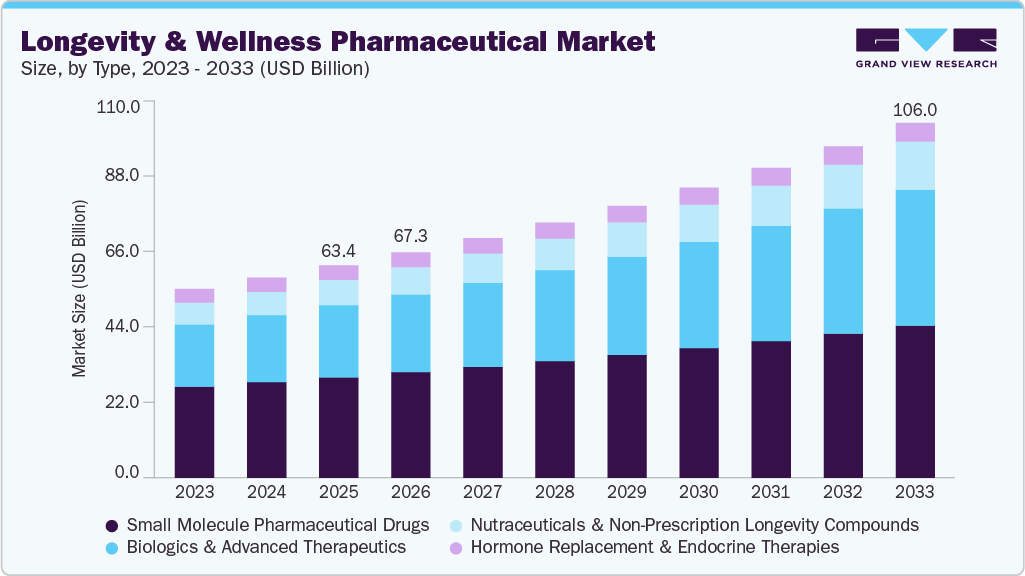
The global longevity and wellness pharmaceutical market size was valued at USD 63.4 billion in 2025 and is projected to grow from USD 67.3 billion in 2026 to USD 106.0 billion by 2033, at a CAGR of 6.7% from 2026 to 2033. North America dominated the global market, accounting for the largest revenue share of 40.8% in 2025. The market growth is primarily driven by the rising aging population and the increasing prevalence of age-related chronic diseases, both of which are closely interlinked and mutually reinforcing.
 Source: Grand View Research, IR Documents, Primary Interviews, Paid DatabasesTo learn more about this report,
 Download Free Sample Report
 Key Market Trends & Insights
- By type: Small molecule pharmaceutical drugs segment held the largest market share of 47.3% in 2025.
- By therapeutic application: Metabolic & longevity disorders segment held the largest market share of 37.01% in 2025.
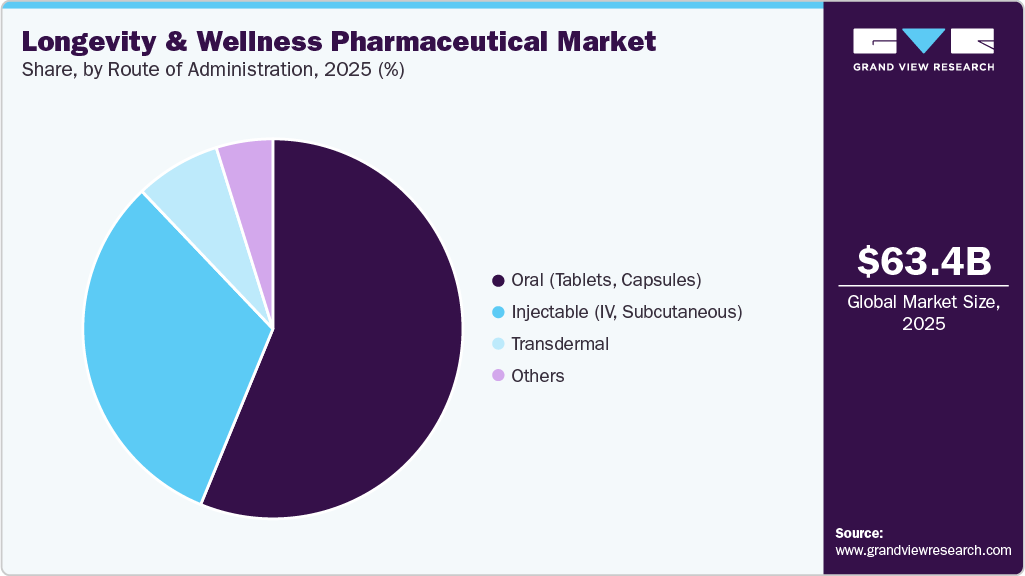
- By route of administration: Oral (tablets, capsules) segment held the largest market share of 56.21% in 2025.
Regional Highlights
- Largest regional market: North America (40.8% revenue share, 2025)
- Fastest-growing regional market: Asia Pacific (highest CAGR, 2026-2033)
- By country: The U.S. longevity and wellness pharmaceutical industry is a major contributor to the global market.
Market Size & Forecast
- Market size in 2025: USD 63.4 Billion
- Estimated market size in 2026: USD 67.3 Billion
- Projected market size by 2033: USD 106.0 Billion
- CAGR (2026-2033): 6.7%
Three ways to get this report
Buy it, customize it, or ask a question.Ask an Analyst
A direct answer, usually in 1 working day
- AccessReport author, directly
- Reply timeWithin 1 working day
- No sales callDirect answer only
- FormatEmail reply
- CostFree, no cost
Get the Full Report
What the study covers
- FormatsPDF · Excel · Dashboard
- Timeline2026–2033 annual, 2025 base
- Coverage20+ countries, 5 regions
- Companies10+ key players profiled
Customize the Report
20% free customization
- IncludeCountries, segments, points
- TailorTo your product definition
- ExtendDeeper competitor detail
- OrA fully bespoke study
- Turnaround5–10 working days
As life expectancy increases, a larger proportion of the population becomes susceptible to conditions such as cardiovascular disorders, neurodegenerative diseases, and metabolic syndromes. This growing disease burden directly accelerates demand for preventive and therapeutic pharmaceutical solutions focused on healthy aging. In parallel, heightened awareness around early intervention and long-term wellness further supports the adoption of longevity-focused drugs and supplements. These combined factors are encouraging pharmaceutical companies to invest in targeted therapies that not only treat diseases but also delay their onset. As a result, the longevity & wellness pharmaceutical industry is witnessing sustained growth driven by a shift from reactive treatment to proactive longevity and wellness management.
 To learn more about this report, Download Free Sample Report
 The rapid advancement of biotechnology and personalized medicine has become a major growth driver for the longevity & wellness pharmaceutical market. The increasing adoption of genomics, biomarker-based research, and precision therapeutics is enabling the development of drugs that target the underlying mechanisms of aging. This shift is driving demand for more effective and individualized treatment approaches with improved long-term outcomes. Additionally, data-driven platforms are accelerating drug discovery and innovation in longevity-focused therapies. Pharmaceutical companies are actively increasing investments to leverage these technological capabilities and strengthen their product pipelines. As a result, this driver is highly relevant, as it directly supports innovation and the expansion of targeted longevity interventions.
Market Concentration & Characteristics
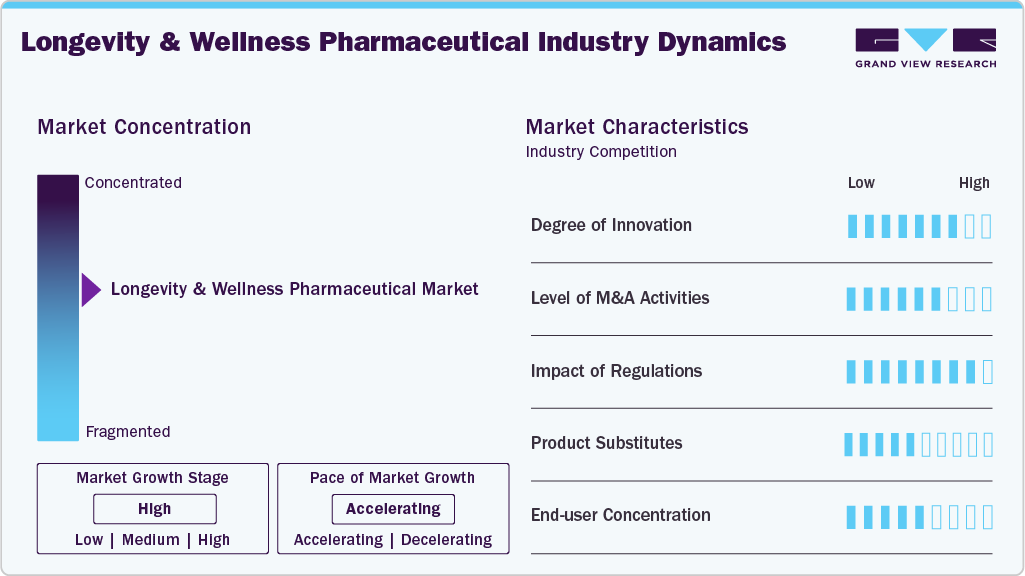
The longevity & wellness pharmaceuticals market demonstrates a high degree of innovation driven by advances in preventive, regenerative, and precision medicine approaches. Companies are increasingly focusing on therapies targeting cellular senescence, mitochondrial dysfunction, and age-related metabolic decline. Emerging research in senolytics, NAD+ modulation, and stem cell-based interventions is shaping next-generation treatment pipelines. Integration of biomarker-driven diagnostics enables more personalized and preventive therapeutic strategies. Overall, continuous R&D investment and biotech convergence are accelerating the development of healthspan-extending solutions.
The longevity & wellness pharmaceuticals industry faces moderate to high barriers to entry due to stringent regulatory requirements and long clinical validation timelines. Developing therapies targeting aging and systemic wellness often requires complex multi-pathway biological evidence, increasing R&D costs and uncertainty. Limited standardization of aging-related endpoints further complicates regulatory approvals and commercial adoption. High capital requirements and strong intellectual property protection by established biotech and pharmaceutical players limit new entrants. Additionally, the need for advanced scientific expertise and robust clinical infrastructure creates significant entry challenges for emerging companies.
 To learn more about this report, Download Free Sample Report
 The market is significantly shaped by evolving regulatory frameworks governing preventive and regenerative therapies. Regulatory authorities require strong clinical evidence for safety and efficacy, particularly for therapies targeting aging-related biological processes. The absence of universally accepted definitions for “longevity indications” creates complexity in approval pathways. Compliance with stringent bioethical standards and long-term outcome validation further extends development timelines. Overall, regulatory uncertainty both ensures patient safety and moderates rapid market expansion.
The longevity & wellness pharmaceuticals industry faces moderate substitution risk from nutraceuticals, dietary supplements, and functional foods that target similar wellness and aging-related outcomes. Consumers often prefer over-the-counter wellness products due to their lower cost, easier accessibility, and minimal regulatory requirements. Lifestyle interventions, such as diet optimization, exercise, and preventive healthcare programs, also serve as non-pharmaceutical alternatives. Additionally, emerging digital health solutions and personalized wellness platforms are increasingly competing for the same consumer base focused on preventive health. However, pharmaceutical-grade longevity therapies maintain differentiation through clinical validation, targeted mechanisms, and higher efficacy potential.
The longevity & wellness pharmaceuticals market is witnessing gradual but steady geographical expansion, primarily driven by increasing awareness of preventive healthcare in developed regions. North America and Europe lead adoption due to advanced healthcare infrastructure, strong R&D ecosystems, and higher spending on anti-aging and wellness therapies. Asia Pacific is emerging as a high-growth region, supported by rising disposable incomes, expanding biotech investments, and growing interest in healthspan extension. Companies are increasingly forming cross-border collaborations and clinical partnerships to access diverse patient populations and accelerate regulatory approvals. Overall, the globalization of biotech innovation is enabling the wider commercialization of longevity-focused therapeutics across multiple regions.
Type Insights
The small molecule pharmaceutical drugs segment dominated the market with the largest revenue share of 47.31% in 2025, driven by their strong clinical applicability and scalability in targeting age-related pathways. These drugs offer advantages such as oral bioavailability, cost-effectiveness, and the ability to modulate key biological mechanisms like cellular senescence and metabolic dysfunction. The increasing focus on developing small molecules targeting aging biomarkers and chronic diseases is accelerating their adoption across longevity-focused therapies. Additionally, the segment is benefiting from advances in AI-driven drug discovery, which enhance the efficiency of molecular design and development. For instance, in February 2026, Takeda Pharmaceutical Company partnered with Iambic Therapeutics in a deal exceeding USD 1.7 billion to develop AI-designed small-molecule drugs, highlighting strong industry investment in this segment. This reinforces the segment’s relevance, as small molecules remain central to innovation and commercialization within the longevity and wellness pharmaceuticals market.
The nutraceuticals & non-prescription longevity compounds segment is projected to grow at a CAGR of 8.44% over the forecast period, increasing consumer preference for preventive healthcare and self-directed wellness solutions. These products, including dietary supplements, antioxidants, and plant-based bioactives, are widely adopted for their role in supporting healthy aging, boosting immunity, and reducing the risk of chronic diseases. The growing awareness around lifestyle management and early intervention is accelerating demand for over-the-counter longevity solutions. Additionally, the segment benefits from easier accessibility, lower regulatory barriers, and expanding distribution through e-commerce platforms. For instance, in January 2026, Nestlé Health Science expanded its longevity portfolio by launching new cellular health and anti-aging supplements under its wellness brand, reinforcing its strategic focus on preventive nutrition. This highlights the segment’s strong relevance, as nutraceuticals play a crucial role in complementing pharmaceutical approaches to long-term health and longevity.
Therapeutic Application Insights
The metabolic & longevity disorders segment dominated the longevity & wellness pharmaceutical market, accounting for the largest revenue share of 37.01% in 2025, driven by the rising global burden of metabolic conditions such as obesity, type 2 diabetes, and associated age-related complications. These disorders are closely linked to aging processes, including insulin resistance, chronic inflammation, and cellular dysfunction, making them central targets for longevity-focused interventions. The increasing demand for therapies that not only manage metabolic diseases but also extend healthspan is accelerating innovation in this segment. Additionally, growing clinical evidence supporting the role of metabolic regulation in slowing aging is further boosting investment and drug development. The expanding pipeline of drugs targeting pathways such as AMPK activation, mTOR inhibition, and mitochondrial function is strengthening the therapeutic landscape. Furthermore, increased collaboration between pharmaceutical companies and research institutions is accelerating the translation of metabolic science into commercially viable longevity therapies.
The neurodegenerative aging segment is projected to grow at a CAGR of 7.98% over the forecast period, driven by the increasing prevalence of age-related neurological disorders such as Alzheimer’s disease, Parkinson’s disease, and other cognitive impairments. These conditions are closely associated with aging-related mechanisms, including protein misfolding, oxidative stress, and neuronal degeneration, making them critical targets for longevity-focused therapies. The growing demand for treatments that can delay cognitive decline and preserve brain function is accelerating research and drug development in this segment. Additionally, advancements in neurobiology and biomarker-based diagnostics are improving early detection and enabling more targeted therapeutic approaches. The expanding pipeline of disease-modifying therapies and increasing investment in neurodegenerative research are further strengthening innovation in this space. As a result, this segment remains highly relevant, as addressing neurodegeneration is essential to extending healthy lifespan and improving quality of life in aging populations.
Route of Administration Insights
The oral (tablets, capsules) segment dominated the longevity & wellness pharmaceutical industry, accounting for the largest revenue share of 56.21% in 2025, driven by its high patient compliance, ease of administration, and suitability for long-term preventive and maintenance therapies. Oral formulations are particularly preferred in longevity-focused care, where continuous dosing is essential for managing metabolic, cognitive, and cellular aging pathways. The growing demand for non-invasive and self-administered treatment options is further accelerating the adoption of oral drugs among aging populations. Additionally, advancements in formulation technologies, including extended-release systems and enhanced bioavailability, are improving therapeutic effectiveness and adherence. The segment is also benefiting from increased strategic investments in oral small-molecule drug development targeting chronic and metabolic disorders. For instance, in December 2025, Pfizer Inc. entered into a global licensing and collaboration agreement with YaoPharma to develop and commercialize an oral small-molecule GLP-1 therapy for weight management, highlighting a strong industry focus on scalable oral treatment solutions.
 To learn more about this report, Download Free Sample Report
 The injectable (IV, subcutaneous) segment is projected to grow at a CAGR of 9.65% over the forecast, driven by its high efficacy, rapid systemic delivery, and suitability for biologics and advanced therapies targeting age-related conditions. Injectable routes are widely utilized for complex treatments such as peptide-based therapies, monoclonal antibodies, and metabolic regulators, where precise dosing and enhanced bioavailability are essential. This is particularly relevant in longevity-focused interventions aimed at managing chronic conditions such as obesity, diabetes, and immune dysfunction. Additionally, the increasing adoption of long-acting injectables and self-administered subcutaneous delivery systems is improving patient adherence and expanding accessibility. Significant capital investments further support the segment's ability to scale production of injectable therapies to address rising global demand. For instance, in November 2023, Novo Nordisk announced an investment of over USD 2.2 billion to expand its production facility in Chartres, France, including aseptic manufacturing capabilities to support injectable therapies for chronic diseases, reinforcing the industry’s focus on high-capacity injectable production.
Regional Insights
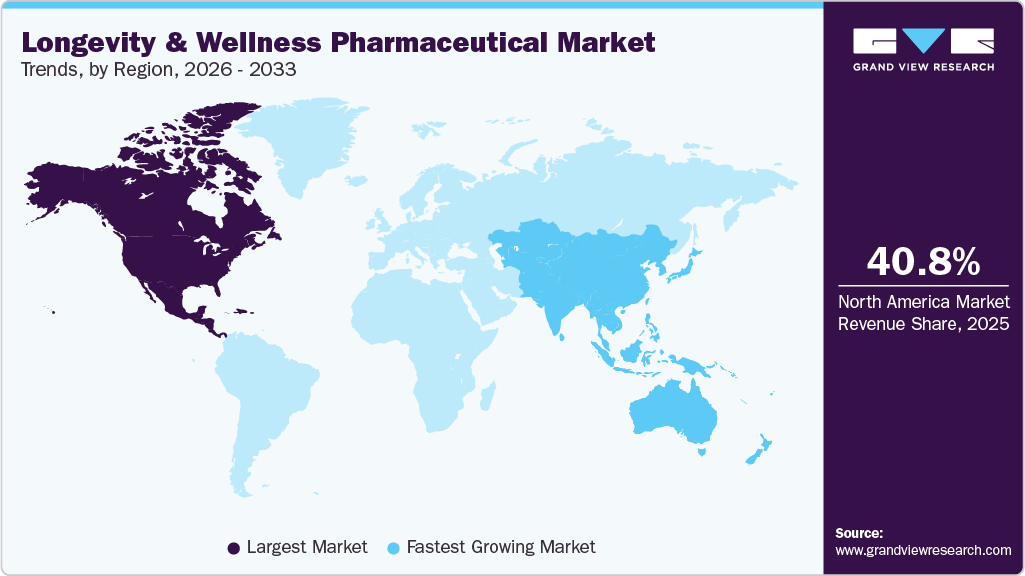
The North America longevity & wellness pharmaceutical market held the largest global share of 40.80% in 2025, primarily due to its highly advanced healthcare infrastructure and strong biotechnology ecosystem. The region benefits from substantial investments in research and development focused on aging biology, regenerative medicine, and preventive therapeutics. High awareness and early adoption of innovative wellness and longevity-focused treatments further support market dominance. The presence of leading pharmaceutical and biotech companies accelerates the commercialization of advanced therapies. Favorable reimbursement structures and well-established regulatory pathways also enhance market accessibility. Overall, strong innovation capacity and robust healthcare spending continue to reinforce North America’s leadership in this market.
 To learn more about this report, Download Free Sample Report
 U.S. Longevity & Wellness Pharmaceutical Market Trends
The U.S. longevity & wellness pharmaceutical industry holds a dominant position in North America due to the country’s highly advanced biotech innovation ecosystem and strong venture capital landscape. The country benefits from the presence of leading pharmaceutical and biotechnology companies actively investing in aging biology, regenerative medicine, and preventive health solutions. High consumer awareness of healthspan extension and proactive wellness adoption further strengthens market growth. Robust intellectual property protection and favorable commercialization pathways support rapid product development and scaling. Continuous integration of AI-driven drug discovery and biomarker-based precision approaches is accelerating therapeutic innovation.
Europe Longevity & Wellness Pharmaceutical Market Trends
The Europe longevity & wellness pharmaceuticals industry holds a significant position globally due to its strong regulatory frameworks and well-established healthcare systems supporting preventive and innovative therapies. The region benefits from a robust presence of leading pharmaceutical companies and advanced biotechnology clusters actively focused on aging biology and regenerative medicine. Increasing policy emphasis on healthy aging and chronic disease prevention across European healthcare systems is driving sustained market growth. Strong academic-industry collaboration and public research funding are accelerating the development of novel longevity-focused therapeutics. Adoption of precision medicine and biomarker-based approaches is further enhancing treatment personalization across the region. A key news instance includes Novartis and the UK’s Medicines and Healthcare products Regulatory Agency (MHRA) advancing a joint regulatory collaboration framework to streamline approval pathways for innovative therapies, supporting faster access to advanced treatments in the European longevity and wellness space.
The UK longevity & wellness pharmaceutical market is supported by a highly structured healthcare system and a strong focus on preventive and research-driven medicine. The country benefits from leading academic institutions and biotech clusters that actively advance aging biology, regenerative therapies, and precision medicine. Strong government support for life sciences innovation, along with favorable regulatory frameworks through the MHRA, is accelerating the development and approval of novel therapies. The increasing integration of genomics, biomarker-based diagnostics, and digital health tools is further enhancing personalized, longevity-focused care. Growing collaborations between pharmaceutical companies and research organizations are strengthening the translation of scientific discoveries into commercial therapies. The UK is also witnessing increased investment in aging-related biotechnology startups, supported by strong venture capital inflows and national life sciences funding programs.
The longevity & wellness pharmaceutical market in Germany is supported by a highly advanced healthcare system and a strong foundation in pharmaceutical and biomedical research. The country is a key hub for biotechnology and life sciences innovation, with a focus on aging biology, regenerative medicine, and preventive healthcare solutions. Strong collaboration between academic institutions, research organizations, and pharmaceutical companies is accelerating the development of next-generation longevity therapies. Germany’s well-established regulatory environment ensures high standards for safety and efficacy while supporting structured innovation pathways. Increasing adoption of precision medicine and biomarker-driven approaches is enhancing personalized treatment strategies for age-related conditions. The country is also witnessing growing investment in biotech startups focused on healthspan extension and cellular-level therapeutic innovation.
The France longevity & wellness pharmaceutical market is supported by a strong national healthcare system and a well-developed pharmaceutical research ecosystem. The country has a long-standing strength in life sciences innovation, with increasing focus on preventive medicine, aging biology, and regenerative therapeutic development. Public research institutes and private pharmaceutical companies are actively collaborating to advance precision medicine and biomarker-driven healthcare approaches. Strong government support for healthcare innovation and structured regulatory oversight through the ANSM is enabling the development of novel longevity-focused therapies. Growing investment in biotechnology and digital health startups is further strengthening France’s position in healthspan extension research. For instance, in October 2023, Servier and Owkin expanded their strategic collaboration in France to accelerate AI-driven drug discovery for complex diseases, including age-related metabolic and cardiovascular conditions, reinforcing the country’s leadership in next-generation pharmaceutical innovation.
Asia Pacific Longevity & Wellness Pharmaceutical Market Trends
The Asia Pacific longevity & wellness pharmaceutical industry is expected to grow at the fastest CAGR of 9.10% over the forecast period, driven by rapid demographic aging and the rising prevalence of age-related chronic conditions across the region. The growing geriatric population in major economies is driving significant demand for preventive and healthspan-focused therapeutic solutions. Expansion of biologics and biosimilars manufacturing capabilities is strengthening the region’s pharmaceutical supply chain and innovation capacity. Growing adoption of digital health technologies, including AI-enabled diagnostics, wearable devices, and telemedicine platforms, is improving early disease detection and personalized care delivery. Rising investments in biotechnology ecosystems and supportive government healthcare initiatives are further accelerating market growth. In addition, increasing healthcare expenditure and expanding access to advanced therapies in emerging economies are boosting market penetration. The region is also witnessing strong growth in wellness-oriented consumer behavior, further supporting the adoption of preventive pharmaceuticals.
The Japan longevity & wellness pharmaceutical market is strongly shaped by its position as one of the world’s most super-aged societies, creating exceptional demand for healthspan extension and age-related disease management solutions. The country’s healthcare system emphasizes long-term elderly care integration, with preventive and regenerative therapies closely linked to chronic care pathways. Japan is a global leader in regenerative medicine, supported by a uniquely structured regulatory framework that enables conditional, time-limited approval pathways for innovative cell- and tissue-based therapies. Continuous advancements in robotics-assisted healthcare and digital monitoring systems are further enhancing the efficiency of elderly care, alongside pharmaceutical interventions. Strong focus on precision medicine and biomarker-based diagnostics is enabling highly individualized treatment strategies for age-associated conditions. Increasing national policy emphasis on extending healthy life expectancy rather than only lifespan is positioning Japan as a distinct and advanced market within the global longevity and wellness pharmaceuticals landscape.
The longevity & wellness pharmaceutical market in China is expanding steadily due to a rapidly aging population and increasing burden of age-related chronic diseases. Strong governments that focus on healthy aging and healthcare modernization are supporting demand for preventive and healthspan-oriented therapeutic solutions. The country is witnessing significant growth in biotechnology, regenerative medicine, and precision medicine, which is strengthening innovation in longevity-focused drug development. The rapid adoption of biomarker-based diagnostics, AI-enabled drug discovery, and digital health platforms is improving treatment personalization and enabling early intervention. Regulatory support from the National Medical Products Administration is streamlining approval pathways for innovative therapies while maintaining strict safety standards. Increasing collaboration between domestic pharmaceutical companies and global biotech firms is further enhancing research capabilities and accelerating the commercialization of advanced wellness and longevity therapeutics.
Latin America Longevity & Wellness Pharmaceutical Market Trends
The Latin America longevity & wellness pharmaceutical industry is gradually expanding due to increasing awareness of preventive healthcare and a rising burden of age-related chronic diseases across the region. Improving access to healthcare services and gradual strengthening the pharmaceutical infrastructure are supporting demand for wellness-oriented therapeutic solutions. Growing adoption of generic medicines and biosimilars is helping improve affordability and access to advanced treatments. The region is also witnessing increasing investment in healthcare modernization and digital health platforms, which are enhancing early diagnosis and patient monitoring capabilities. Expanding collaborations between local pharmaceutical companies and global players are contributing to knowledge transfer and improved therapeutic availability. Overall, rising focus on health equity and preventive care is gradually supporting the development of the longevity and wellness pharmaceuticals market in Latin America.
The Brazil longevity & wellness pharmaceutical market is shaped by a dual healthcare structure where public access through the unified health system coexists with a rapidly expanding private healthcare sector. The rising prevalence of cardiovascular disorders, metabolic diseases, and lifestyle-related conditions is driving demand for preventive and wellness-oriented pharmaceutical solutions. Brazil’s large and socioeconomically diverse population is increasing the need for affordable access to essential medicines, with generics playing a central role in treatment adoption. The country is also witnessing a gradual expansion of pharmaceutical manufacturing capabilities, supported by domestic production incentives and localization strategies. Digital health adoption, particularly in urban centers, is improving patient engagement and continuity of care for chronic conditions. Additionally, increasing partnerships between multinational pharmaceutical companies and local distributors are strengthening access to innovative therapies across key regions in Brazil.
Middle East & Africa Longevity & Wellness Pharmaceutical Market Trends
The MEA longevity & wellness pharmaceutical industry is shaped by stark contrasts in healthcare maturity, with highly advanced, investment-driven systems in Gulf countries coexisting alongside resource-constrained healthcare environments across parts of Africa. In the Middle East, national transformation programs and sovereign healthcare investments are accelerating the development of preventive and wellness-oriented pharmaceutical ecosystems. In Africa, a growing burden of infectious and non-communicable diseases is gradually shifting focus toward long-term preventive care and improved access to essential medicines. The region’s dependence on imported pharmaceuticals remains high, encouraging strategic supply agreements and distribution partnerships with global manufacturers. The rapid expansion of private healthcare providers, particularly in urban centers, is improving access to specialty care and chronic disease management. Additionally, increasing deployment of mobile health and telemedicine solutions is addressing structural gaps in healthcare access, especially in remote and underserved regions.
The Saudi Arabia longevity & wellness pharmaceutical market is driven by strong government-led healthcare transformation under national development initiatives aimed at improving preventive care and long-term population health outcomes. The country is witnessing a rising prevalence of lifestyle-related conditions such as diabetes, obesity, and cardiovascular diseases, which is increasing demand for wellness-oriented and preventive pharmaceutical solutions. Significant investment in healthcare infrastructure, specialty hospitals, and digital health systems is enhancing access to advanced therapeutic care. Saudi Arabia is also expanding its pharmaceutical localization strategy, encouraging domestic manufacturing and reducing reliance on imports for essential medicines. Integration of AI-enabled healthcare platforms and telemedicine services is improving chronic disease monitoring and patient engagement across the population. Additionally, growing partnerships between the public sector and global pharmaceutical companies are accelerating access to innovative therapies and strengthening the overall longevity and wellness ecosystem in the country.
Key Longevity And Wellness Pharmaceutical Company Insights
Eli Lilly and Company and Sanofi continue to expand their longevity and wellness pharmaceutical portfolios by advancing therapies for metabolic health, anti-aging compounds, and preventive care solutions targeting age-related conditions. Merck & Co., Inc. and Novo Nordisk focus on cardiometabolic and obesity-related therapies, with growing clinical evidence supporting improved long-term health outcomes and extended healthy lifespan. AstraZeneca and AbbVie are investing in multi-mechanism approaches that combine biologics, small molecules, and lifestyle-linked therapeutics to prevent chronic diseases. F. Hoffmann-La Roche Ltd. and Novartis are enhancing their market presence by developing precision medicines and biomarker-driven therapies targeting aging pathways. Johnson & Johnson and Pfizer are contributing to preventive healthcare and wellness-focused segments with innovative drug candidates and consumer health solutions. The market reflects ongoing competition driven by increasing focus on healthy aging, rising adoption of preventive therapeutics, integration of digital health monitoring, and expanding global clinical research in longevity science.
Key Longevity And Wellness Pharmaceutical Companies:
The following key companies have been profiled for this study on the longevity and wellness pharmaceutical market.
- Eli Lilly and Company
- Sanofi
- Merck & Co., Inc.
- Johnson & Johnson
- Novo Nordisk
- AstraZeneca
- AbbVie
- Novartis
- F. Hoffmann-La Roche Ltd.
- Pfizer
Recent Developments
-
In March 2026, Eli Lilly expanded its collaboration with Insilico Medicine to accelerate AI-driven drug discovery, focusing on chronic and age-related diseases. This partnership enhances pipeline efficiency and supports innovation in longevity-focused therapeutics by leveraging artificial intelligence to reduce development timelines and improve precision medicine capabilities.
-
In January 2026, AstraZeneca entered a multibillion-dollar collaboration with CSPC Pharmaceuticals to develop obesity and metabolic therapies. The partnership strengthens its pipeline in chronic disease management and supports long-term growth in longevity-focused therapeutics targeting metabolic health and aging-related conditions.
Longevity And Wellness Pharmaceutical Market Report Scope
Report Attribute
Details
Market size in 2025
USD 63.4 billion
Estimated Market size in 2026
USD 67.3 billion
Projected Market size by 2033
USD 106.0 billion
Growth rate
CAGR of 6.7% from 2026 to 2033
Base year for estimation
2025
Historical data
2021 - 2024
Forecast period
2026 - 2033
Quantitative units
Revenue in USD million and CAGR from 2026 to 2033
Report coverage
Revenue forecast, company ranking, competitive landscape, growth factors, trends
Segments covered
Type, therapeutic application, route of administration, region
Regional scope
North America; Europe; Asia Pacific; Latin America; Middle East & Africa
Country scope
U.S.; Canada; Mexico; UK; Germany; France; Italy; Spain; Denmark; Sweden; Norway; China; Japan; India; Australia; South Korea; Thailand; Brazil; Argentina; South Africa; Saudi Arabia; UAE; Kuwait
Key company profiled
Eli Lilly and Company; Sanofi; Merck & Co., Inc.; Johnson & Johnson; Novo Nordisk; AstraZeneca; AbbVie; Novartis; F. Hoffmann-La Roche Ltd.; Pfizer
Customization scope
Free report customization (equivalent up to 8 analysts working days) with purchase. Addition or alteration to country, regional & segment scope.
Pricing and purchase options
Avail customized purchase options to meet your exact research needs. Explore purchase options
Global Longevity And Wellness Pharmaceutical Market Report Segmentation
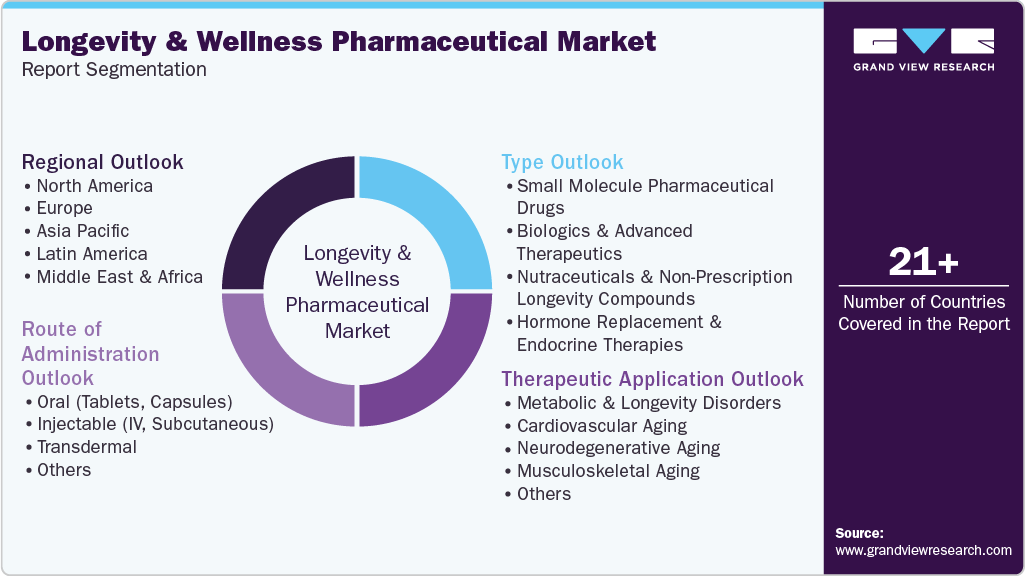
This report forecasts revenue growth at the global, regional, and country levels and provides an analysis of the latest industry trends in each of the sub-segments from 2021 to 2033. For this study, Grand View Research has segmented the global longevity and wellness pharmaceutical market report based on type, therapeutic application, route of administration, and region:
 To learn more about this report, Download Free Sample Report
 -
Type Outlook (Revenue, USD Million, 2021 - 2033)
-
Small Molecule Pharmaceutical Drugs
-
Biologics & Advanced Therapeutics
-
Nutraceuticals & Non-Prescription Longevity Compounds
-
Hormone Replacement & Endocrine Therapies
-
-
Therapeutic Application Outlook (Revenue, USD Million, 2021 - 2033)
-
Metabolic & Longevity Disorders
-
Cardiovascular Aging
-
Neurodegenerative Aging
-
Musculoskeletal Aging
-
Others
-
-
Route of Administration Outlook (Revenue, USD Million, 2021 - 2033)
-
Oral (Tablets, Capsules)
-
Injectable (IV, Subcutaneous)
-
Transdermal
-
Others
-
-
Regional Outlook (Revenue, USD Million, 2021 - 2033)
-
North America
-
U.S.
-
Canada
-
Mexico
-
-
Europe
-
UK
-
Germany
-
France
-
Italy
-
Spain
-
Denmark
-
Sweden
-
Norway
-
-
Asia Pacific
-
Japan
-
China
-
India
-
Australia
-
South Korea
-
Thailand
-
-
Latin America
-
Brazil
-
Argentina
-
-
Middle East & Africa
-
South Africa
-
Saudi Arabia
-
UAE
-
Kuwait
-
-
Frequently Asked Questions About This Report
North America dominated with a 40.8% revenue share in 2025.
Asia Pacific is the fastest-growing region over the forecast period.
Metabolic & longevity disorders held the largest revenue share of 37.0%in 2025, while neurodegenerative aging is the fastest-growing application.
Oral (tablets, capsules) segment held the largest revenue share of 56.2% in 2025, while injectable (IV, subcutaneous) is the fastest-growing segment.
The global longevity and wellness pharmaceutical market size was valued at USD 63.4 billion in 2025 and is anticipated to reach USD 67.3 billion in 2026.
The global longevity and wellness pharmaceutical market is expected to witness a compound annual growth rate of 6.7% from 2026 to 2033 to reach USD 106.0 billion by 2033.
Small molecule pharmaceutical drugs segment dominated the market with the largest revenue share of 47.31% in 2025, driven by its strong clinical applicability and scalability in targeting age-related pathways.
Some of the key players in longevity and wellness pharmaceutical market are Sanofi, Merck, Abbvie, Novo Nordisk, Eli Lilly & Company, and Novartis
The longevity & wellness pharmaceuticals market is primarily driven by the rising aging population and the increasing prevalence of age-related chronic diseases, both of which are closely interlinked and mutually reinforcing. As life expectancy increases, a larger proportion of the population becomes susceptible to conditions such as cardiovascular disorders, neurodegenerative diseases, and metabolic syndromes.
About the Author(s)
Pharmaceuticals Research Team
Healthcare · PharmaceuticalsThis report was authored by the pharmaceuticals research team at Grand View Research - comprising two research analysts, one senior research analyst, and one industry expert - with specialized expertise in the pharmaceuticals segment of the healthcare industry. All findings are based on proprietary healthcare databases, executive interviews, and regulatory analysis, subject to internal peer review prior to publication.
Last Updated:
Speak to Analyst

Customize this report to your needs - add regions, segments, or data points, with 20% free customization.
Or view our licence options:


ISO 9001:2015 & 27001:2022 Certified
We are GDPR and CCPA compliant! Your transaction & personal information is safe and secure. For more details, please read our privacy policy.


