
- Home
- »
- Healthcare IT
- »
-
Medical AI Market Size, Share & Growth Report, 2026-2036GVR Report cover

Medical AI Market (2026 - 2036) Size, Share & Trends Analysis Report By Application (Patient Engagement, Digital Pathology AI, Genomic Diagnostics AI, Multimodal Diagnostics AI), By End Use, By Patient Journey, By Region, And Segment Forecasts
Market Size, 2025
$42.6BMarket Estimate, 2026
$56.2BMarket Forecast, 2036
$1,050.6BCAGR, 2026–2036
34.0%Medical AI Market Summary
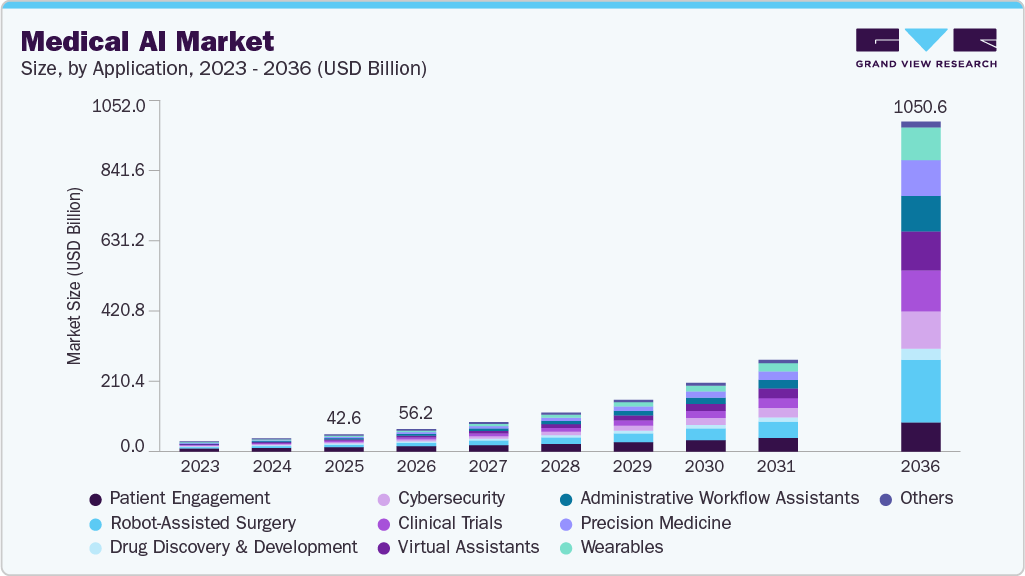
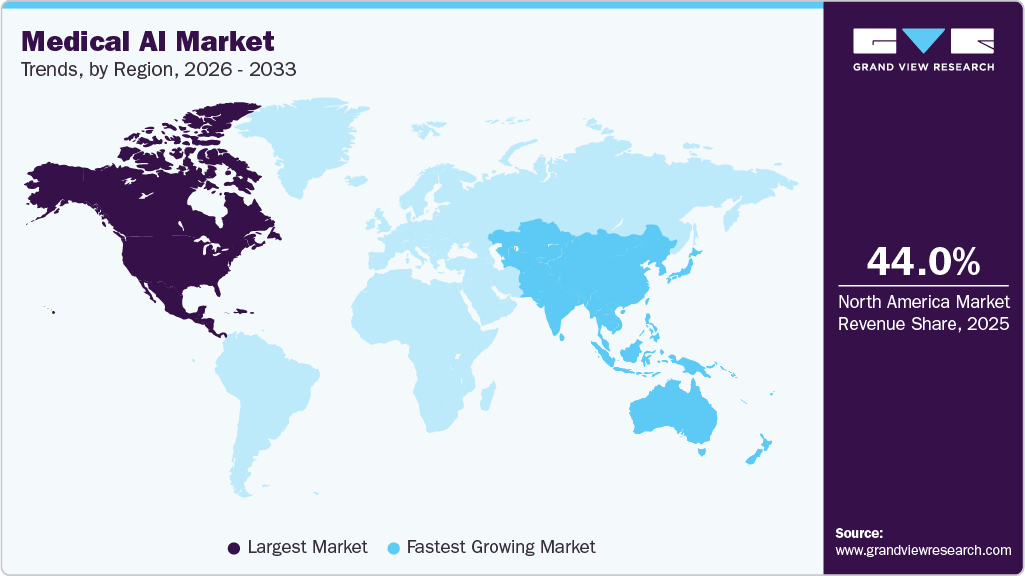
The global medical AI market size was valued at USD 42.6 billion in 2025 and is projected to grow from USD 56.2 billion in 2026 to USD 1,050.6 billion by 2036, at a CAGR of 34.0% from 2026 to 2036. North America dominated the global market, accounting for 44.0% of revenue in 2025.
 Source: Grand View Research, IR Documents, Primary Interviews, Paid DatabasesTo learn more about this report,
 Download Free Sample Report
Key Market Trends & Insights
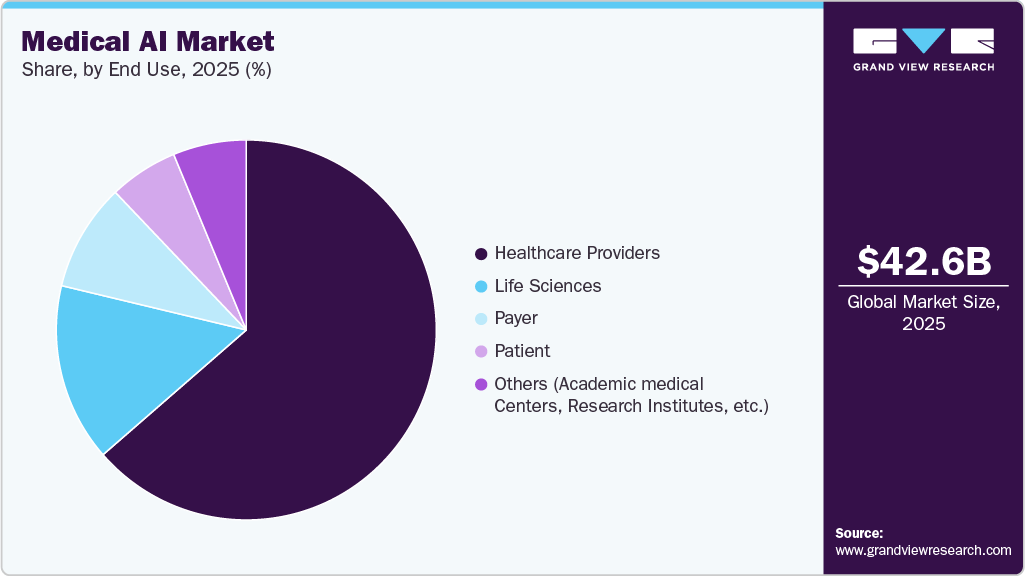
- By end use: Healthcare providers segment held the largest market share of 63.6% in 2025.
- By patient journey: Treatment/intervention segment held the largest market share of 28.3% in 2025.
- By application: Patient engagement segment held the largest market share of 21.0% in 2025.
Regional Highlights
- Largest regional market: North America (44.0% revenue share, 2025)
- Fastest-growing regional market: Asia Pacific (highest CAGR, 2026-2036)
- By country: The U.S. held the largest market share in 2025
Market Size & Forecast
- Market size in 2025: USD 42.6 Billion
- Estimated market size in 2026: USD 56.2 Billion
- Projected market size by 2036: USD 1,050.6 Billion
- CAGR (2026-2036): 34.0%
Three ways to get this report
Buy it, customize it, or ask a question.Ask an Analyst
Analyst response in 1 business day
- AccessReport author, directly
- Reply timeWithin 1 working day
- No sales callDirect answer only
- FormatEmail reply
- CostFree, no cost
Get the Full Report
What the study covers
- FormatsPDF · Excel · Dashboard
- Timeline2026–2036 annual, 2025 base
- Coverage20+ countries, 5 regions
- Companies10+ key players profiled
Customize the Report
20% free customization
- IncludeCountries, segments, points
- TailorTo your product definition
- ExtendDeeper competitor detail
- OrA fully bespoke study
- Turnaround5–10 working days
 To learn more about this report, Download Free Sample Report
Increasing demand for minimally invasive surgery and clinical precision, growing adoption of real-time health tracking and personalized wellness solutions, and rising demand for cost-effective drug development are significant factors contributing to market growth.
Market Dynamics
The increasing demand for health monitoring and fitness tracking, along with growing interest in personalized digital wellness, is driving the growth of the global medical AI market. AI-powered wearable devices enable continuous real-time monitoring of vital health metrics, supporting early risk detection and proactive healthcare management. For instance, according to an article published by the University of Arizona Health Sciences in June 2025, advanced sensor platforms integrated with deep learning models can predict physiological events such as labor onset and stress response using high-frequency biometric data, highlighting the expanding role of AI-driven wearable technologies in preventive healthcare.
Growing Focus On Precision Medicine And Targeted Drug Development
Precision medicine aims to customize medical care according to individual characteristics, risks, and treatment responses. The rising adoption and launch of AI-driven precision medicine in oncology serves as a potent growth driver. In January 2024, Penn Medicine researchers created iStar, an AI tool that analyzes gene activity in medical images. This tool provides single-cell insights into diseases in tissues & microenvironments. iStar can automatically identify important antitumor immune formations known as "tertiary lymphoid structures." These structures are linked to a patient's probable survival and favorable response to immunotherapy, a cancer treatment that requires precise patient selection. As a result, iStar can identify patients who would benefit the most from immunotherapy.
Table 1: Recent developments in the Medical AI market
Company
Year
Month
Description
Insilico Medicine and Liquid AI
2026
March
Insilico Medicine and Liquid AI announced a strategic partnership to develop lightweight scientific foundation models for on-premises drug discovery. Their LFM2-2.6B-MMAI model (2.6B parameters), trained on 120B pharmaceutical tokens across 200+ tasks using Insilico's MMAI Gym and Liquid AI's LFM architecture, delivers enhanced performance in property prediction, ADMET, molecular optimization, affinity scoring, and retrosynthesis, all without cloud data sharing. These applications enable high-throughput screening, streamline lead optimization, and reduce experimental waste by accelerating decision-making in drug discovery.
Merck & Mayo Clinic
2026
February
Merck and Mayo Clinic announced a research collaboration to integrate AI, advanced analytics, and multimodal clinical data for drug discovery and precision medicine. As part of this effort, Merck accesses Mayo Clinic Platform_Orchestrate's de-identified datasets, such as lab results, imaging, clinical notes, and genomics, from U.S. and global sites. By combining these resources with Merck's AI-driven virtual cell models, the partnership aims to address multiple sclerosis, inflammatory bowel disease, and atopic dermatitis, refine targets, and boost clinical success rates.
“By working with Mayo Clinic, we aim to integrate high-quality clinical data and AI-enabled insights into discovery research to improve target identification and, ultimately, the probability of success for our programs.”
- Robert M. Davis, chairman and CEO, Merck
Variant Bio
2026
January
Variant Bio launched Inference, an agentic AI-powered genomic drug discovery platform. The autonomous AI analyzes proprietary and publicly available human genomic data from global studies, along with large-scale biological datasets, to identify novel drug candidates for human trials with minimal human intervention.
Cybersecurity and privacy concerns represent a major restraint for the medical AI market, as the increasing reliance on cloud-based platforms, connected medical devices, and digital health ecosystems expands exposure to sensitive patient data. The growing integration of telehealth platforms with electronic health records (EHRs) and remote monitoring solutions has heightened vulnerabilities to cyber threats, including ransomware attacks, unauthorized access, and system disruptions. These risks are further intensified by limited cybersecurity budgets, shortage of skilled IT professionals, and reliance on legacy healthcare IT infrastructure, which collectively challenge the secure and scalable deployment of telehealth services.
Healthcare data breaches have increased significantly in recent years. According to the 2024 Healthcare Data Breach Report, 725 healthcare data breaches involving 500 or more records were reported, exposing more than 133 million patient records, highlighting the increasing vulnerability of healthcare IT systems to cyber threats. These incidents raise concerns among healthcare providers regarding the protection of sensitive patient information and create challenges for the adoption of telehealth platforms.
Interoperability and ecosystem integration
Interoperability and ecosystem integration are among the significant barriers to the widespread adoption and effective deployment of wearable AI technologies. Wearable AI devices, such as smartwatches, fitness trackers, and clinical monitoring sensors, must synchronize data with a range of platforms, including mobile operating systems, third-party apps, cloud servers, and specialized healthcare networks. For instance, the lack of standardized APIs and varying data formats hampers the smooth integration of wearables with existing clinical workflows or enterprise IT systems.
Addressing these challenges requires industry-wide collaborative frameworks and the adoption of universal interoperability standards. Standardized communication protocols and data schemas, such as HL7 FHIR for healthcare or OPC-UA for industrial applications, can facilitate seamless interoperability between devices and platforms. Enterprises and developers must prioritize these protocols to foster device compatibility and system integration, thereby enhancing end-to-end service delivery. Furthermore, cloud-edge hybrid architectures offer an opportunity to balance real-time local processing with extended analytics within cloud ecosystems, helping to unify fragmented environments.
AI-driven drug discovery offers market opportunities by reducing development time and cost. AI platforms can systematically screen existing pipelines, shelved assets, and generic drugs to identify new indications, thereby increasing the value of product portfolios and supporting lifecycle extension strategies for both large and mid-size pharmaceutical companies.
- Integrated AI platforms that combine knowledge graphs, graph neural networks, generative models, and large language models offer substantial potential to deliver differentiated, explainable drug-repurposing engines. For instance, BenevolentAI employs a large biomedical knowledge graph and AI-driven reasoning to identify drug-target-disease associations across oncology and inflammatory diseases, extending beyond infectious indications.
- Multi-modal pipelines that integrate omics, imaging, and clinical data facilitate mechanism-aware drug repurposing. For instance, Insilico Medicine’s PandaOmics platform utilizes transcriptomic and pathway data in endometriosis to identify the ophthalmic drug lifitegrast as a potential repositioning candidate.
- Similarly, real-world evidence mining tools, such as those developed by Every Cure, seek to transform electronic health records and registries into continuous discovery engines. These tools systematically analyze clinical outcomes across thousands of drug-disease pairs to generate high-value repurposing hypotheses. Collectively, these technologies create new product opportunities for platform vendors, data-rich biotechnology companies, and health-system partners developing AI-native discovery infrastructure.
Case Study Insights
Case Study 1: AI-driven diagnostic assistance in Germany
Increasing patient numbers and disease complexity, coupled with potential human error, fatigue, and high caseloads for healthcare providers, demand sophisticated technology solutions to enhance diagnostic precision across medical imaging disciplines. Considering the above-mentioned challenges, Meditech AI developed agentic AI systems, signifying the interlink between technology and healthcare to improve patient care and treatment outcomes.
Challenge: MediTech AI faced a critical challenge in improving the accuracy and efficiency of diagnosing complex diseases through medical imaging. MediTech AI recognized the need for a solution that supports medical professionals by enhancing diagnostic precision, minimizing delays, and improving patient outcomes through faster, more reliable disease detection.
Solution: MediTech AI developed an AI-powered diagnostic system that interprets medical images using deep learning algorithms. Utilizing extensive datasets that cover a variety of conditions, the system detects subtle disease markers that are often overlooked by human observation. The AI continuously learns from new data, improving its diagnostic capabilities. Seamlessly integrated into existing workflows, the solution assists radiologists by highlighting potential areas of concern and suggesting likely diagnoses.
Result: The adoption of MediTech AI’s diagnostic tool significantly improved clinical performance. Diagnostic accuracy increased by 30%, benefiting specialties such as oncology and neurology, where early detection is critical. In addition, diagnostic time was reduced by 50%, enabling faster patient evaluations and more efficient operations in the imaging department. This enhancement enabled healthcare providers to handle more patients while maintaining quality. It also led to shorter wait times and faster treatment, thus improving the overall patient experience and outcomes.
Market Concentration & Characteristics
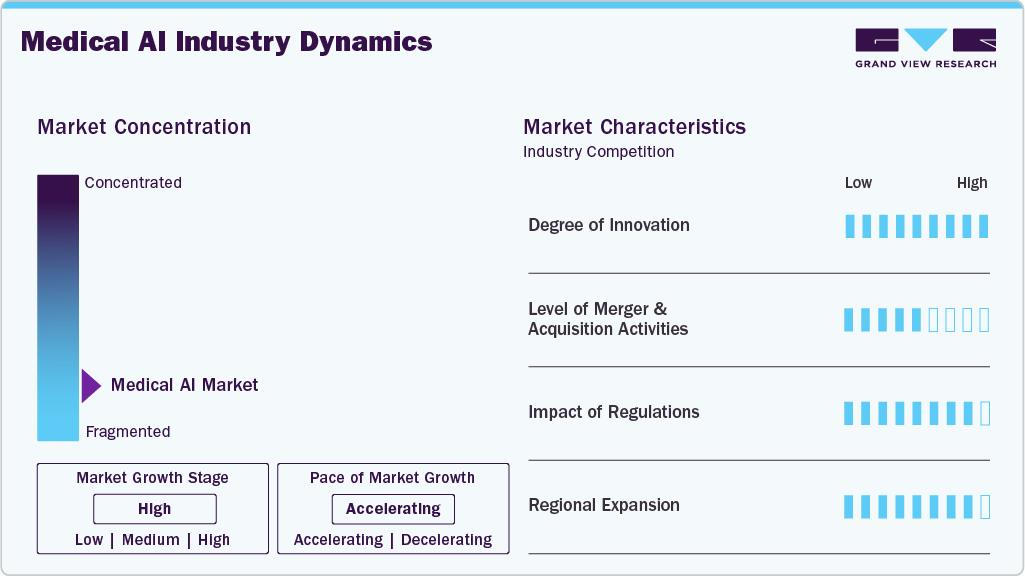
The chart below illustrates the relationship between industry concentration, characteristics, and participants. The x-axis represents the level of industry concentration, ranging from low to high. The y-axis represents various industry characteristics, including industry competition, the level of partnerships & collaboration activities, the degree of innovation, the impact of regulations, and regional expansion. The medical AI market is fragmented, with the presence of several global technology companies, healthcare IT providers, and emerging AI startups competing across diagnostic, workflow automation, clinical decision support, and patient engagement applications. The degree of innovation is high, while the level of partnerships & collaboration activities is moderate to high. The impact of regulations on the industry and the regional expansion of the industry is high.
The medical AI industry experiences a high degree of innovation, driven by rapid advancements in machine learning, generative AI, computer vision, and predictive analytics. The increasing adoption of AI-enabled healthcare solutions in medical imaging, virtual health assistants, drug discovery, clinical documentation, and hospital workflow optimization is driving innovation across the market. For instance, in March 2025, Microsoft expanded its healthcare AI capabilities through new generative AI solutions integrated with clinical workflow platforms to improve care coordination and administrative efficiency.
 To learn more about this report, Download Free Sample Report
The industry is witnessing a moderate level of merger, acquisition, and strategic partnership activity among major healthcare technology companies and AI solution providers. This is primarily driven by the need to strengthen AI capabilities, expand healthcare data integration platforms, accelerate product innovation, and enhance competitive positioning in the rapidly evolving medical AI market.
Regulations such as HIPAA in the U.S., GDPR in Europe, and emerging healthcare AI governance frameworks across Asia Pacific are establishing strict standards for patient data privacy, cybersecurity, and ethical AI deployment. Compliance with these regulations is essential for medical AI solutions to ensure the secure handling of sensitive healthcare information, minimize the risk of data breaches, and improve transparency in AI-driven clinical decision-making. Regulatory approvals and validation requirements are also encouraging companies to develop more reliable and clinically accurate AI models for healthcare applications.
Companies operating in the medical AI market are increasingly focusing on geographic expansion strategies to strengthen their presence in emerging healthcare markets and expand their customer base. The industry is witnessing moderate to high regional expansion driven by the rising adoption of digital health technologies, increasing healthcare IT investments, and growing demand for AI-powered clinical and administrative solutions. In addition, expanding healthcare infrastructure and government support for AI integration in healthcare are expected to accelerate market growth across developing countries in the coming years.
Application Insights
The patient engagement segment dominated the Medical AI market, accounting for 21.0% of revenue in 2025. Rapid expansion of digital health infrastructure, the integration of artificial intelligence (AI) into healthcare, the growing adoption of telemedicine and remote care, and increasing government investments are factors contributing to segment growth. Investments facilitate the deployment of advanced AI-powered tools, including chatbots, virtual health assistants, and predictive analytics platforms to optimize patient communication and healthcare accessibility. For instance, in April 2025, Scale AI collaborated with the Qatar government to develop AI agents for healthcare. This deal includes developing AI voice, chat, and email agents for contact centers.
The fraud detection segment is expected to grow at the fastest CAGR during the forecast period. Advanced models incorporate predictive analytics and network analysis to uncover complex fraud schemes involving multiple stakeholders. AI tools map relationships among providers, patients, and services to detect collusion and upcoding. Continuous learning mechanisms improve detection accuracy by adapting to evolving fraud tactics. Deployment across public and private insurance programs enhances transparency and accountability. These solutions also support audit prioritization and resource optimization for fraud investigation teams. For instance, in August 2024, MediBuddy launched Sherlock, an AI-driven fraud-detection system for healthcare reimbursement claims that leverages AI, ML, and analytics. It detects fraudulent claims in real time by identifying duplications, tampering, and pricing issues through pattern recognition and behavioral monitoring.
Patient Journey Insights
The treatment/intervention segment dominated the Medical AI industry, accounting for 28.3% of revenue in 2025. Intraoperative imaging AI systems support real-time surgical decision-making by identifying critical anatomical structures, tumor margins, and surrounding nerves and vessels, while AI-powered radiation oncology platforms optimize treatment planning with enhanced precision and reduced timelines. Digital pathology AI further assists during surgeries through rapid tissue margin analysis. In addition, bio-signal and multimodal AI platforms enable continuous physiological monitoring to detect complications early. For instance, in June 2024, Knownwell acquired Alfie Health to integrate AI into obesity treatment and remote patient monitoring services.
The post-care and management segment is expected to witness significant growth during the forecast period, due to the increasing adoption of AI-powered imaging, genomic, bio-signal, and multimodal diagnostic platforms for recurrence detection, surveillance, and long-term disease management. AI-based imaging and liquid biopsy platforms enable early identification of disease recurrence and treatment-related complications, supporting timely clinical intervention. In addition, multimodal AI systems support personalized and risk-based follow-up strategies by integrating imaging, molecular, physiological, and patient-reported data. AI virtual assistants are further improving post-care engagement by continuously monitoring symptoms and medication adherence. For instance, in March 2026, Amazon One Medical launched Health AI, an AI assistant that provides 24/7 personalized guidance using patient medical records, laboratory results, and medications.
End Use Insights
The healthcare providers segment dominated the Medical AI industry, accounting for 63.6% of revenue in 2025. Hospitals represent the primary deployment environment for AI-powered medical imaging diagnostics, given their concentrated infrastructure of CT scanners, MRI systems, X-ray machines, and nuclear imaging modalities. Deep learning algorithms trained on tens of millions of annotated scans now assist radiologists in detecting, characterizing, and prioritizing lesions across multiple organ systems, including pulmonary nodules, intracranial hemorrhages, coronary artery disease, and musculoskeletal injuries. In 2024, NHS England's AI Diagnostic Fund allocated USD 24 million (£21 million) across 12 imaging networks and 66 acute NHS Trusts specifically to deploy AI tools for chest diagnostics and early lung cancer detection, reflecting a national commitment to embedding imaging AI into routine hospital care.
 To learn more about this report, Download Free Sample Report
The payer segment is expected to grow at the fastest CAGR from 2026 to 2036. In the medical AI sector, payers, including private insurers, government health programs, third-party administrators, and managed care organizations, constitute a significant end-user group. AI adoption among payers has grown rapidly as they address rising administrative costs, higher claims volumes, and the shift to value-based care. Administrative workflow automation is a common AI application in this segment. In June 2025, Cigna Group expanded its AI-driven prior authorization platform, which uses natural language processing to review clinical documentation and make near-real-time authorization decisions for eligible services. This reduced average processing time from several days to under one hour and eased the administrative burden for both provider offices and payer operations.
Regional Insights
North America dominated the Medical AI market, accounting for 44.0% of revenue in 2025. This is attributed to advancements in healthcare IT infrastructure, rising healthcare expenditures, widespread adoption of AI/ML technologies, favorable government initiatives, lucrative funding opportunities, and the presence of several key market players. Factors such as a growing geriatric population, changing lifestyles, increasing prevalence of chronic disorders, growing demand for value-based care, and rising awareness levels towards the implementation of AI-based technologies are further propelling market growth in North America.
 To learn more about this report, Download Free Sample Report
U.S. Medical AI Market Trends
The medical AI market in the U.S. is expected to grow significantly over the forecast period owing to the rising demand for advanced diagnostic and personalized healthcare solutions, increasing adoption of AI-powered clinical decision support systems, and continuous advancements in machine learning, generative AI, and natural language processing technologies. In addition, supportive regulatory initiatives and increasing investments by healthcare providers and technology companies are further accelerating market growth.
Europe Medical AI Market Trends
The medical AI market in Europe is anticipated to witness significant growth during the forecast period due to the increasing adoption of AI technologies across diagnostics, medical imaging, patient monitoring, and workflow automation. Rising investments by government bodies and private organizations in AI-driven healthcare innovation are also supporting market expansion. For instance, in January 2026, Ahead Health raised USD 6 million in seed funding led by RTP Global to expand its AI-powered preventive healthcare platform across Europe.
The medical AI market in the UK is expected to hold a significant market share in 2025 due to the growing adoption of AI applications in medical imaging, predictive analytics, and personalized treatment planning. The National Health Service is increasingly integrating AI technologies to improve patient care, optimize healthcare operations, and address clinical workforce challenges. In addition, supportive government initiatives are expected to further drive market growth. For instance, in April 2025, the UK government promoted the adoption of AI technologies in hospitals to improve patient outcomes and operational efficiency.
Asia Pacific Medical AI Market Trends
The Asia Pacific Medical AI industry is expected to grow at the fastest CAGR of 35.3% from 2026 to 2036, driven by rapid advancements in healthcare IT infrastructure, increasing digitalization, and the emergence of startups focused on AI-based healthcare technologies. Growing investments from venture capital firms, private investors, and healthcare organizations aimed at improving clinical outcomes, enhancing data analysis, and reducing healthcare costs are driving market adoption. Moreover, favorable government initiatives promoting AI integration in healthcare systems are further supporting regional market growth.
The medical AI market in China held the largest share of the Asia Pacific medical AI market in 2025, owing to the increasing adoption of AI technologies in diagnostics, medical imaging, robotic-assisted surgeries, and hospital workflow management. Government support, strategic partnerships, and technological collaborations among key market players are further contributing to market growth. For instance, in May 2024, Wuhan Union Hospital partnered with Baidu Health to enhance outpatient services by integrating AI.
Latin America Medical AI Market Trends
The medical AI market in Latin America is anticipated to grow significantly over the forecast period due to increasing awareness regarding AI-based healthcare solutions, rising healthcare digitization, and growing government spending on healthcare technologies. In addition, increasing collaborations between healthcare providers and technology companies are supporting market development across the region.
Middle East & Africa Medical AI Market Trends
The medical AI market in the Middle East & Africa region is anticipated to grow significantly during the forecast period, driven by the rising burden of chronic diseases and the growing demand for efficient, accurate diagnostic and treatment solutions. Healthcare providers across the region are increasingly integrating AI technologies into clinical workflows to improve patient outcomes and operational efficiency.
Key Medical AI Company Insights
The market is highly competitive, with a few major global competitors holding significant market share. The major focus is on developing new products and collaborating among the key players. For instance, in May 2023, DiagnaMed Holdings Corp., a Canadian biotechnology company, unveiled FormGPT.io, a medical AI data analysis solution tailored for the healthcare sector. This launch represents the company's first commercial product in its effort to release a suite of customizable applications utilizing the power of GPT-4. These applications are designed to improve patient outcomes and streamline operations in real-world healthcare settings.
Key Medical AI Companies
Some of the market players are adopting strategies such as new product launches, partnerships & collaborations, etc., to strengthen their presence in other regional markets.
For instance, in March 2026, Lunit Inc. entered a strategic collaboration with CellCarta to integrate AI-enabled digital pathology solutions, accelerating companion diagnostic development, enhancing biomarker analysis, and supporting efficient clinical trial workflows across global biopharmaceutical programs.
The following are the leading companies in the Medical AI market. These companies collectively hold the largest market share and dictate industry trends.
Leading companies in the Medical AI market
Companies (Group A)
Companies (Group B)
Companies (Group C)
Companies (Group D)
Aidoc
Tempus
iRhythm Technologies
Intuitive Surgical
Lunit Inc.
Viz.ai, Inc.
Eko Health
Stryker
Proscia Inc.
RapidAI
Cardiomatics
Medtronic
SOPHiA Genetics
Qure.ai
Epic Systems Corporation
Johnson & Johnson MedTech
Caris Life Sciences
Annalise.ai
Ambience Healthcare
Zimmer Biomet
GeneDx
OpenEvidence
Nuance / Microsoft Dragon Copilot
Activ Surgical
Fabric Genomics
Regard (Max)
Waystar
IQVIA Inc.
BenevolentAI
Glass Health
Abridge
Insilico Medicine
Owkin, Inc.
Wolters Kluwer (UpToDate ExpertAI)
Codoxo
NVIDIA Corporation
Samsung Electronics
Corti AI
CrowdStrike
Alphabet / Google (DeepMind)
Fitbit (Google)
Apple Inc.
Dexcom
Abbott
BioIntelliSense
Garmin Ltd.
GE HealthCare
Siemens Healthineers
MVision AI Inc.
Innovaccer, Inc.
Optum, Inc.
Philips Healthcare
Unlearn.ai, Inc.
DoseMeRx
MedAware
Others
Saama
Deep6.ai
Others
Recent Developments
-
In March 2026, Lunit Inc. entered a strategic collaboration with CellCarta to integrate AI-enabled digital pathology solutions, accelerating companion diagnostic development, enhancing biomarker analysis, and supporting efficient clinical trial workflows across global biopharmaceutical programs.
-
In October 2025, Microsoft expanded Dragon Copilot with ambient and medical AI capabilities for nursing workflows and partner integrations, enhancing clinical intelligence, revenue cycle management, and patient care efficiency.
“Microsoft continues to advance Dragon Copilot as a leading enterprise-wide AI clinical assistant for healthcare provider organizations, now adding support for specialized nursing workflows and an ecosystem of third-party AI extensions.”
-Mary Varghese Presti, CVP and Chief Operating Officer, Microsoft Health and Life Sciences.
-
In August 2025, Epic unveiled new AI capabilities across its EHR platform, including medical AI tools for clinical documentation, revenue cycle management and patient engagement, and previewed Cosmos AI for predictive risk modeling.
-
In July 2025, Omega Healthcare expanded its collaboration with Microsoft to integrate Azure AI Foundry and Azure OpenAI capabilities into its Omega Digital Platform (ODP), launching more than 20 medical and agentic AI solutions to automate and optimize end-to-end revenue cycle management (RCM) operations for healthcare providers and payers.
“We are bringing scalable, tech-enabled services without requiring healthcare leaders to take on large, risky technology investments, freeing them up to focus on what matters most - delivering exceptional patient care.”
-Anurag Mehta, CEO and Co-Founder, Omega Healthcare
-
In May 2025, Lunit Inc. launched Lunit INSIGHT CXR4 and obtained CE MDR certification, expanding its AI-powered chest X-ray capabilities to detect 11 thoracic abnormalities, enhance workflow features, and improve diagnostic accuracy in large-scale clinical imaging environments.
-
In March 2025, Aidoc launched its CARE clinical foundation model and secured USD 150 million in Series E funding, while expanding collaborations with major U.S. health systems to scale enterprise AI deployment and enhance real-time clinical decision-making capabilities across imaging workflows.
-
In March 2024, NVIDIA Healthcare launched over 25 medical AI microservices, including NIM and CUDA-X tools, enabling pharmaceutical, biotech, and healthcare organizations to accelerate drug discovery, genomics, imaging and digital health workflows.
"Medical AI is transforming drug discovery by allowing us to build sophisticated models and seamlessly integrate AI into the antibody design process.”
-David M. Reese, executive vice president and chief technology officer at Amgen.
Medical AI Market Report Scope
Report Attribute
Details
Market size in 2025
USD 42.6 billion
Estimated market size in 2026
USD 56.2 billion
Projected market size by 2036
USD 1,050.6 billion
Growth rate
CAGR of 34.0% from 2026 to 2036
Actual data
2021 - 2025
Forecast period
2026 - 2036
Quantitative units
Market Value in USD million/billion, and CAGR from 2026 to 2036
Report coverage
Revenue forecast, company ranking, competitive landscape, growth factors, and trends
Segments covered
Application, end use, patient journey, region
Regional scope
North America; Europe; Asia Pacific; Latin America; MEA
Country scope
U.S.; Canada; Mexico; Germany; U.K.; France; Italy; Spain; Norway; Denmark; Sweden; China; Japan; India; South Korea; Australia; Thailand; Brazil; Argentina; Saudi Arabia; South Africa; UAE; Kuwait
Key companies profiled
IBM; Google (DeepMind); Lunit Inc.; NVIDIA Corporation; Microsoft; IQVIA Inc.; GE HealthCare; Siemens Healthineers; Philips Healthcare; Medtronic; Abbott; Samsung Electronics Co. Ltd.; Meta; Apple Inc.; iRhythm Technologies; Johnson & Johnson MedTech; Tempus; Stryker; Insilico Medicine; Aidoc; Paige AI; Veradigm LLC; Epic Systems Corporation; Medadvisor Solutions
Customization scope
Free report customization (equivalent to up to 8 analyst working days) with purchase. Addition or alteration to country, regional & segment scope.
Pricing and purchase options
Avail customized purchase options to meet your exact research needs. Explore purchase options
Global Medical AI Market Report Segmentation
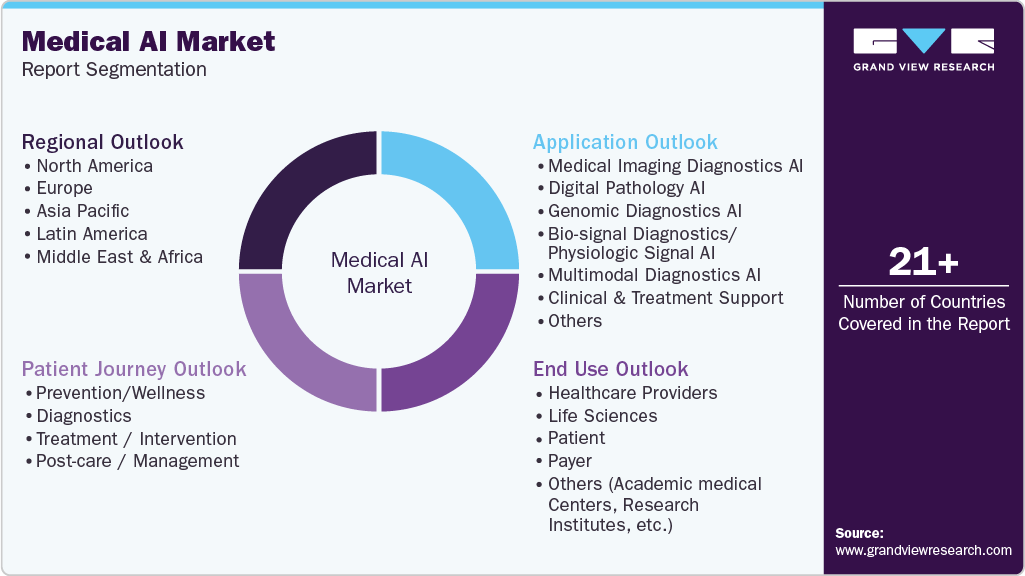
This report forecasts revenue growth at the global, regional, and country levels and provides an analysis of the industry trends in each of the sub-segments from 2021 to 2036. For this study, Grand View Research has segmented the medical AI market report based on end use, application, patient journey, and region:
 To learn more about this report, Download Free Sample Report
-
Application Outlook (Revenue, USD Million, 2021 - 2036)
-
Medical Imaging Diagnostics AI
-
Digital Pathology AI
-
Genomic Diagnostics AI
-
Bio-signal Diagnostics/Physiologic Signal AI
-
Multimodal Diagnostics AI
-
Clinical & Treatment Support
-
Robot-Assisted Surgery
-
Virtual Assistants
-
Administrative Workflow Assistants
-
Clinical Trials
-
Fraud Detection
-
Cybersecurity
-
Dosage Error Reduction
-
Precision medicine
-
Drug discovery & development
-
Lifestyle management & remote patient monitoring
-
Wearables
-
Patient engagement
-
Others
-
-
End Use Outlook (Revenue, USD Million, 2021 - 2036)
-
Healthcare Providers
-
Hospitals
-
Physician groups/clinics
-
Ambulatory / specialty care centers
-
Others (Dialysis centers, Cardiac diagnostic centers, etc.)
-
-
Life Sciences
-
Pharmaceutical companies
-
Biotechnology companies
-
CROs / clinical research organizations
-
-
Patient
-
Payer
-
Others (Academic medical centers, Research institutes, etc.)
-
-
Patient Journey Outlook (Revenue, USD Million, 2021 - 2036)
-
Prevention/Wellness
-
Diagnostics
-
Treatment / Intervention
-
Post-care / Management
-
-
Regional Outlook (Revenue, USD Million, 2021 - 2036)
-
North America
-
U.S.
-
Canada
-
Mexico
-
-
Europe
-
Germany
-
UK
-
France
-
Italy
-
Spain
-
Denmark
-
Sweden
-
Norway
-
-
Asia Pacific
-
China
-
Japan
-
India
-
South Korea
-
Australia
-
Thailand
-
-
Latin America
-
Brazil
-
Argentina
-
-
Middle East and Africa
-
Saudi Arabia
-
UAE
-
South Africa
-
Kuwait
-
-
Frequently Asked Questions About This Report
Asia Pacific is the fastest-growing region over the forecast period.
The healthcare providers segment led with a 63.6% revenue share in 2025, while payer is the fastest-growing segment.
The treatment/intervention segment dominated the market and accounted for the largest revenue share of 28.3% in 2025.
Patient engagement segment held the largest share (over 21.0%) in 2025, while fraud detection is the fastest-growing application.
The global medical AI market size was valued at USD 42.6 billion in 2025 and is estimated at USD 56.2 billion for 2026.
North America dominated the medical AI market with a share of 44.0% in 2025. This is attributed to advancements in healthcare IT infrastructure, growing care expenditures, widespread adoption of AI/ML technologies, favorable government initiatives, lucrative funding options, and the presence of several key market players.
Key players include IBM, Google (DeepMind), Lunit Inc., NVIDIA Corporation, Microsoft, IQVIA Inc., GE HealthCare, Siemens Healthineers, Philips Healthcare, Medtronic, Abbott, Samsung Electronics Co. Ltd., Meta, Apple Inc., iRhythm Technologies, Johnson & Johnson MedTech, Tempus, Stryker, Insilico Medicine, Aidoc, Paige AI, Veradigm LLC, Epic Systems Corporation, and Medadvisor Solutions.
The global medical AI market is expected to grow at a CAGR of 34.0% from 2026 to 2033, reaching USD 1,050.6 billion by 2036.
Key factors that are driving the market growth include increasing demand for minimally invasive surgery and clinical precision, growing adoption of real-time health tracking and personalized wellness solutions, and rising demand for cost-effective drug development.
About the Author(s)
Healthcare IT Research Team
Healthcare · Healthcare ITThis report was authored by the healthcare it research team at Grand View Research - comprising two research analysts, one senior research analyst, and one industry expert - with specialized expertise in the healthcare it segment of the healthcare industry. All findings are based on proprietary healthcare databases, executive interviews, and regulatory analysis, subject to internal peer review prior to publication.
Last Updated:
Speak to Analyst

Customize this report to your needs - add regions, segments, or data points, with 20% free customization.
Or view our licence options:


ISO 9001:2015 & 27001:2022 Certified
We are GDPR and CCPA compliant! Your transaction & personal information is safe and secure. For more details, please read our privacy policy.


