
- Home
- »
- Healthcare IT
- »
-
Medical AI Apps Market Size & Share, Industry Report, 2033GVR Report cover
![Medical AI Apps Market Size, Share & Trends Report]()
Medical AI Apps Market (2026 - 2033) Size, Share & Trends Analysis Report By Application (Medical Imaging & Diagnostics, Remote Patient Monitoring, Hospital Workflow & Administrative AI), By End Use (Hospitals, Diagnostics & Imaging Centers, Clinics), By Region, And Segment Forecasts
- Report ID: GVR-4-68040-891-9
- Number of Report Pages: 120
- Format: PDF
- Historical Range: 2021 - 2024
- Forecast Period: 2026 - 2033
- Industry: Healthcare
- Report Summary
- Table of Contents
- Segmentation
- Methodology
- Download FREE Sample
-
 Download Sample Report
Medical AI Apps Market Summary
The global medical AI apps market size was estimated at USD 1.2 billion in 2025 and is projected to reach USD 4.8 billion by 2033, growing at a CAGR of 19.1% from 2026 to 2033. The increasing adoption of digital health and mobile health (mHealth) technologies, the shift toward personalized and preventive healthcare, the growing focus on early detection and screening programs, and the growth of digital therapeutics (Dtx) and software-based interventions are factors driving market growth.
Key Market Trends & Insights
- North America dominated the global medical AI apps market with the largest revenue share of 38.7% in 2025.
- The medical AI apps industry in the U.S. accounted for the largest market revenue share in North America in 2025.
- By application, the medical imaging & diagnostics led the market with the largest revenue share of 37.9% in 2025.
- By end use, the hospitals segment led the market with the largest revenue share of 50.4% in 2025.
Market Size & Forecast
- 2025 Market Size: USD 1.2 Billion
- 2033 Projected Market Size: USD 4.8 Billion
- CAGR (2026-2033): 19.1%
- North America: Largest market share in 2025
Moreover, advancements in AI technologies and data availability, increasing regulatory approvals and support for AI-based software (SAMD), and rising investments and strategic collaborations are further propelling market growth.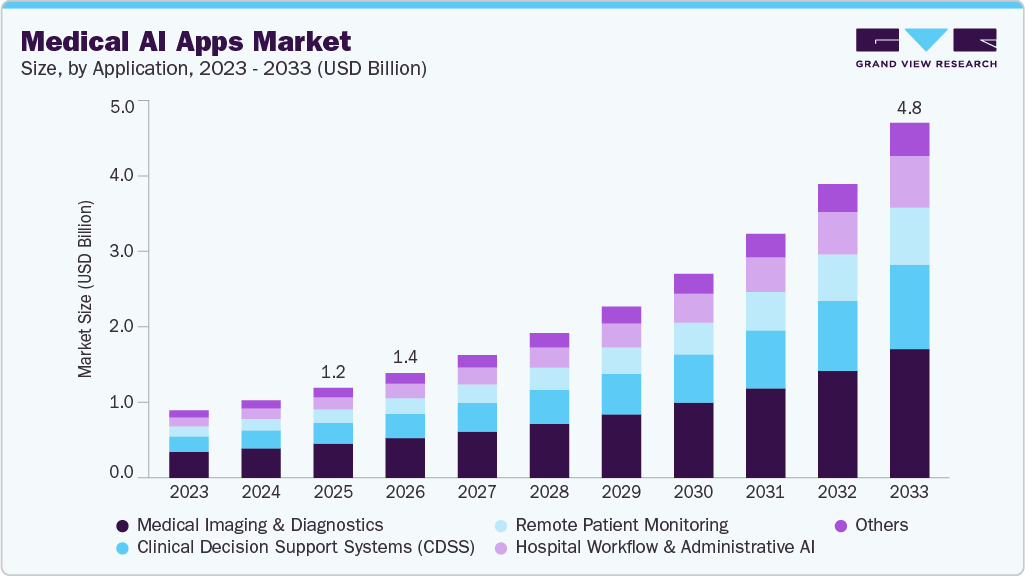
Market Drivers and Dynamics:
The medical AI apps industry is driven by the growing adoption of digital health and mobile health (mHealth) technologies, along with a shift toward personalized and preventive care. Increasing emphasis on early detection and screening programs, coupled with the expansion of digital therapeutics (DTx) and software-based interventions, is further accelerating demand. In addition, advancements in AI technologies and the rising availability of healthcare data are further enhancing application capabilities and propelling market growth.
Increasing Adoption of Digital Health and Mobile Health (mHealth) Technologies
The widespread adoption of smartphones, wearables, and connected health devices has accelerated the adoption of digital health solutions, driving robust demand for AI-enabled medical apps. Patients and healthcare providers are increasingly relying on mobile platforms for health tracking, virtual consultations, and real-time monitoring. AI enhances these applications by providing personalized insights, automated recommendations, and intelligent alerts.
For instance, in April 2025, Gaxos Health (Gaxos.ai Inc.) launched an AI‑powered mobile app for iOS and Android that personalizes health and wellness through proprietary algorithms, delivering goal‑based protocols in nutrition, fitness, supplementation, and behavioral coaching. Moreover, integration with IoT-enabled medical devices allows AI apps to process continuous streams of health data, enabling more accurate and timely clinical decision-making.
Shift Toward Personalized and Preventive Healthcare
The healthcare industry is adopting a proactive, personalized approach. AI-powered medical apps enable tailored treatment plans, risk prediction, and early intervention based on individual patient data. In areas such as oncology, genomics, and chronic disease management, AI supports precision medicine by analyzing complex datasets to identify optimal therapies. Preventive care applications leverage AI to identify at-risk populations and recommend lifestyle or clinical interventions, reducing disease progression and healthcare costs. This shift is significantly driving demand for intelligent, patient-centric applications.
For instance, in February 2026, Human Longevity launched a personal, AI‑powered longevity app that provides members with continuous, secure access to their health data, clinical results, and personalized insights through a single mobile platform.
"By combining AI with longitudinal health data - including biomarkers, genetics, and imaging - we are shifting Executive Health from episodic testing to continuous, personalized health risk management."
-Dr. Wei-Wu He, Executive Chairman, Human Longevity.
Similarly, in November 2025, Tolion Health AI launched Tolion Brain Coach, an AI‑powered mobile app for brain health and longevity, now on the Apple App Store in the U.S. The app offers personalized risk insights, wearable‑synced sleep tracking (e.g., Garmin), weekly coaching plans, progress dashboards, a conversational AI “Brain Coach,” and a “Brain Age Score” to help users prevent cognitive decline and support long‑term brain health.
"Tolion Brain Coach integrates AI-based analytics, wearables device data from industry leaders such as Garmin, and a medical knowledge engine to deliver tailored recommendations for cognitive improvement. Translating recent research into practical steps helps users prevent cognitive decline, stay mentally sharp, and lead healthier lives. With Tolion, prevention is both possible and personal.”
-Martin Tolar, MD, PhD, Founder & Director of Tolion Health AI
Market Concentration & Characteristics
The chart below illustrates the relationship between industry concentration, characteristics, and participants. The x-axis represents the level of industry concentration, ranging from low to high. The y-axis represents various industry characteristics, including industry competition, levels of partnerships & collaboration, degree of innovation, impact of regulations, and regional expansion. The medical AI apps industry is fragmented, with the presence of several emerging solution providers dominating the market. The degree of innovation is high, and the level of mergers and acquisitions is moderate. The impact of regulations on industry and the regional expansion of industry is high.
The medical AI apps industry experiences a high degree of innovation driven by technological advancements. Market players are launching new products and upgrading existing products. For instance, in October 2025, Clarius Mobile Health released Clarius App 12.2, an AI-driven ultrasound app, featuring T-Mode Abdominal Wall, a teaching tool for ultrasound anatomy interpretation, and Generic Volume for automated mass/cyst measurements.
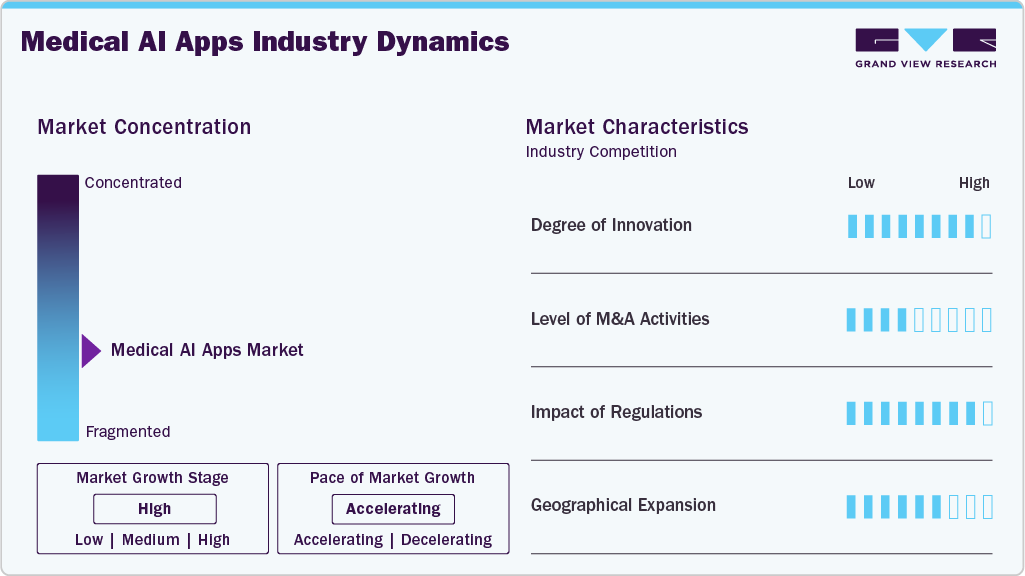
The medical AI apps industry is experiencing moderate levels of merger and acquisition activity driven by several key players. This is due to the desire to gain a competitive advantage in the industry, enhance technological capabilities, and consolidate in a rapidly growing market.
Regulations, such as the HIPAA in the U.S. and the GDPR in Europe, establish standards for safeguarding patient data privacy and security. Compliance with these regulations is crucial for AI applications in healthcare to ensure the safe and secure handling of patient information, reducing the risk of data breaches and unauthorized access.
Companies within the medical AI apps industry seek geographic expansion strategies to maintain their foothold in emerging markets and attract customers from these regions.Moreover, the industry is witnessing moderate geographical expansion, driven by an increasing customer base for medical AI apps. With the growing adoption of digital healthcare solutions, the medical AI apps industry is expected to grow significantly in the coming years, especially in developing countries.
Application Insights
The medical imaging & diagnostics segment led the market with the largest revenue share of 37.9% in 2025, driven by significant adoption across radiology, pathology, and cardiology workflows. These applications enhance diagnostic confidence, reduce interpretation time, and support early disease detection. Integration with PACS and radiology information systems ensures seamless integration into the workflow. Increasing regulatory approvals further accelerate clinical adoption across healthcare settings.
The remote patient monitoring segment is expected to grow at the fastest CAGR during the forecast period. This segment is gaining significant traction in the medical AI apps industry due to increasing demand for continuous, real-time patient tracking outside hospital settings. AI-enabled RPM applications collect and analyze data from connected devices to generate actionable clinical insights. Moreover, growth in this segment is driven by the expansion of virtual care models and hospital-at-home programs across healthcare systems. Healthcare providers are leveraging RPM to optimize resource utilization and reduce inpatient burden.
End Use Insights
The hospital segment led the market with the largest revenue share of 50.4% in 2025, driven by substantial deployment across imaging, clinical decision support, and workflow optimization. AI applications enhance diagnostic accuracy, streamline patient flow, and support clinical decision-making. In addition, predictive analytics and real-time monitoring enable early intervention and risk management. Integration of AI into clinical workflows minimizes administrative burden and enhances productivity. Continued investments in digital transformation and value-based care models are expected to sustain demand for AI-enabled hospital solutions.
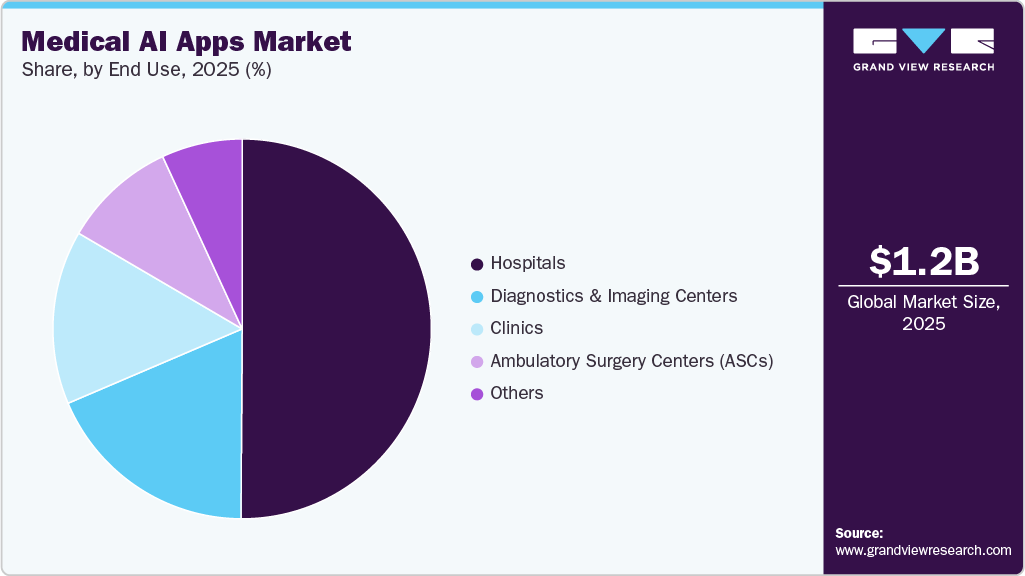
The clinics segment is projected to grow at the fastest CAGR from 2026 to 2033, supported by increasing adoption of AI-enabled tools in outpatient settings. Clinics are leveraging AI for clinical decision support, diagnostics, and patient management to enhance care delivery. Cloud-based applications enable easy deployment without extensive infrastructure requirements. AI tools assist clinicians in improving diagnostic accuracy and treatment planning. Rising patient volumes in primary and specialty clinics are driving demand for efficient, technology-driven solutions.
Regional Insights
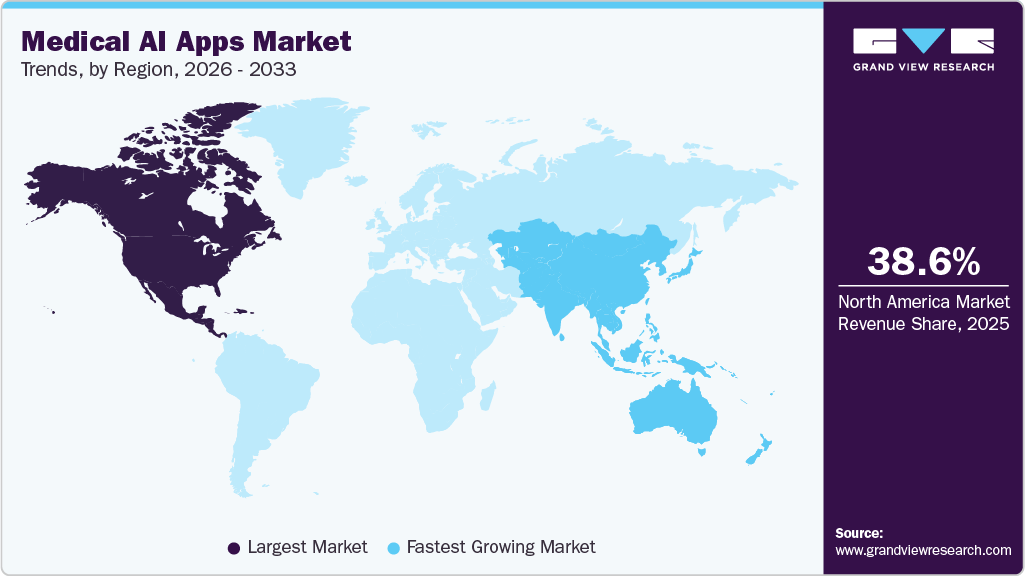
North America dominates the medical AI apps market with the largest revenue share of 38.6% in 2025, driven by advanced healthcare IT infrastructure, widespread EHR adoption, and strong regulatory support for AI-based Software as a Medical Device. Furthermore, high healthcare expenditure and early adoption of digital health solutions drive implementation across hospitals and outpatient settings. In addition, significant investments from technology firms and startups accelerate innovation. Moreover, the shift toward value-based care and emphasis on operational efficiency support sustained demand for AI-enabled applications.
U.S. Medical AI Apps Market Trends
The medical AI apps market in the U.S. accounted for the largest market revenue share in North America in 2025, driven by advanced healthcare IT infrastructure, widespread EHR adoption, and strong regulatory support for AI-based Software as a Medical Device (SaMD). Significant investments from market players accelerate innovation, particularly in diagnostics and clinical decision support. In addition, the shift toward value-based care and the high cost of healthcare drive demand for AI solutions that enhance efficiency, reduce costs, and improve patient outcomes.
Europe Medical AI Apps Market Trends
The medical AI apps market in Europe is driven by robust regulatory frameworks, increasing adoption of digital health technologies, and strong government initiatives supporting AI integration in healthcare. Programs promoting interoperability and cross-border health data exchange facilitate the deployment of AI applications. Moreover, a growing geriatric population and rising chronic disease burden increase demand for advanced diagnostics and monitoring solutions.
The UK medical AI apps market is driven by strong government initiatives, a supportive regulatory environment, and funding for health tech startups. Centralized healthcare data systems enable efficient deployment of AI across care settings, with increasing focus on early diagnosis and resource optimization, accelerating AI use in imaging and triage within the NHS.
The medical AI apps market in Germany is expanding as the country accelerates digital transformation across its healthcare system and strengthens the integration of artificial intelligence in clinical care. Moreover, the country’s market growth is also supported by robust digital health policies, high adoption of hospital information systems, and increasing focus on interoperability, facilitating AI integration into clinical workflows.
Asia Pacific Medical AI Apps Market Trends
The medical AI apps market in the Asia Pacific is anticipated to grow at the fastest CAGR during the forecast period, driven by rapid healthcare digitalization, expanding patient populations, and increasing government initiatives supporting AI adoption. Countries such as Japan, China, Australia, and South Korea are investing in advanced healthcare technologies to address resource constraints and improve care delivery. In addition, strong startup activity and partnerships with global technology firms are fostering innovation and market expansion. For instance, in February 2026, New Zealand startup mAI Health launched an AI-powered mobile app for lifetime personal health records, allowing secure storage and sharing of medical data across providers and countries.
The China medical AI apps market is expanding rapidly due to strong government support and large-scale healthcare digitalization initiatives. Investments from domestic technology companies and increasing adoption in tier 1 and tier 2 hospitals are accelerating market growth. For instance, in June 2025, Ant Group (an Alibaba affiliate) launched AQ, an AI-powered healthcare app that uses DeepSeek, Alibaba, and proprietary models. Users consult AI versions of real doctors for priority diagnostics, accessing 5,000+ hospitals and 1M practitioners in China.
Themedical AI apps market in India is expected to grow significantly over the forecast period. The country is increasingly adopting artificial intelligence to accelerate healthcare innovation, driven by strategic investments in infrastructure, multi‑sector partnerships, and national AI health strategy initiatives. These efforts aim to enhance diagnostics, care delivery, and predictive care models across the country. Government policies and research institutions are prioritizing AI tools that address public health challenges while improving clinical efficiency. For instance, in January 2026, Mizoram launched "LushaAI Healthy Lunglei", an AI-powered health app with a Mizo-language chatbot for OPD bookings, ABHA registration, doctor schedules, pharmacy stock checks, and access to medical reports. It locates health facilities, sends appointment reminders, and complies with DISHA for data security.
Latin America Medical AI Apps Market Trends
The medical AI apps market in Latin America is driven by increasing adoption of digital health solutions and efforts to improve healthcare access and efficiency. Growing private-sector investment and the expansion of healthcare infrastructure support AI implementation, particularly in diagnostics and remote monitoring. The rising prevalence of chronic diseases is encouraging the use of predictive analytics and care management tools.
Middle East & Africa Medical AI Apps Market Trends
The medical AI apps market in the Middle East and Africa is expected to grow at a lucrative CAGR from 2026 to 2033. In the MEA region, AI is increasingly being adopted to accelerate healthcare transformation, particularly across clinical diagnostics, patient engagement, and hospital workflow optimization. Governments and healthcare providers are investing in digital health infrastructure and AI-driven platforms to improve care delivery and operational efficiency. For instance, in October 2025, Rwanda’s Ministry of Health launched e‑Banguka and e‑Buzima, two AI-powered apps that enable OPD bookings, real‑time data sync, remote consultations, and the elimination of paper records across facilities.
“These are mobile applications that will help citizens access health services more quickly, while also creating a system that allows seamless information sharing between community health workers, health centers, hospitals, pharmacies, and patients.”
-Dr Yvan Butera, Minister of State for Health.
Key Medical AI Apps Company Insights
The medical AI apps industry is characterized by strong competition. The major focus is on developing new products and collaborating among the key players. Medica AI applications are designed to improve patient outcomes and streamline operations in real-world healthcare settings.
Key Medical AI Apps Companies:
The following key companies have been profiled for this study on the medical AI apps market.
- Flo Health Inc., Flo Health UK Limited
- Welldoc, Inc.
- SkinVision
- Binah.ai
- Aidoc
- Viz.ai
- Qure.ai
- Lillia
- LeanTaaS
- Artera (Formerly WELL Health)
- Qventus
- Altera Digital Health Inc.
- Sensely, Inc
Recent Developments
-
In March 2026, Amazon launched Health AI, its conversational healthcare assistant, on its website and app for all U.S. users, with no Prime or One Medical membership required. It explains lab results, diagnoses, medications, and symptoms using plain language, integrates medical records and Amazon health purchases, and facilitates One Medical appointments when needed.
-
In October 2025, Verily launched Verily Me, a free consumer app offering personalized health guidance via licensed clinicians who review aggregated medical records across providers. It features Violet, a 24/7 AI agent explaining records, symptoms, vaccinations, and meals, plus nutrition feedback from meal photos.
-
In September 2025, Tolion Health announced the beta launch of Tolion Brain Coach, the first AI-powered mobile app for personalized brain health and longevity. Features include conversational AI coaching, risk assessment via lifestyle surveys, wearable integration (Garmin), weekly planners, progress tracking, and Brain Age Score to prevent cognitive decline like Alzheimer’s.
-
In December 2024, Cipla launched CipAir, an AI-powered mobile app integrated with its Breathefree platform for asthma screening in India. Clinically validated via a pan-India study, users exhale three times into their Android phone (iOS pending) for a <1-minute acoustic analysis detecting asthma presence, absence, or risk, with guidance and lung health resources.
“CipAir is a powerful, clinically validated tool that puts health in the hands of patients and enables timely intervention against asthma so that they don’t have to compromise on their quality of life. As lung leaders, it is our firm resolve to help India tackle its growing asthma burden and breathe free through such cutting-edge solutions that strengthen the asthma care ecosystem.”
-Achin Gupta, CEO, One India Business, Cipla
Medical AI Apps Market Report Scope
Report Attribute
Details
Market size value in 2026
USD 1.4 billion
Revenue forecast in 2033
USD 4.8 billion
Growth rate
CAGR of 19.1% from 2026 to 2033
Base year for estimation
2025
Historical data
2021 - 2024
Forecast period
2026 - 2033
Quantitative units
Revenue in USD million/billion, and CAGR from 2026 to 2033
Report coverage
Revenue forecast, company ranking, competitive landscape, growth factors, and trends
Segments covered
Application, end use, region
Regional scope
North America; Europe; Asia Pacific; Latin America; MEA
Country scope
U.S.; Canada; Mexico; Germany; U.K.; France; Italy; Spain; Norway; Denmark; Sweden; China; Japan; India; South Korea; Australia; Thailand; Brazil; Argentina; Saudi Arabia; South Africa; UAE; Kuwait
Key companies profiled
Flo Health Inc., Flo Health UK Limited; Welldoc, Inc.; SkinVision; Binah.ai; Aidoc; Viz.ai; Qure.ai; Lillia; LeanTaaS; Artera (Formerly WELL Health); Qventus; Altera Digital Health Inc.; Sensely; Inc.
Customization scope
Free report customization (equivalent up to 8 analysts working days) with purchase. Addition or alteration to country, regional & segment scope.
Pricing and purchase options
Avail customized purchase options to meet your exact research needs. Explore purchase options
Global Medical AI Apps Market Report Segmentation
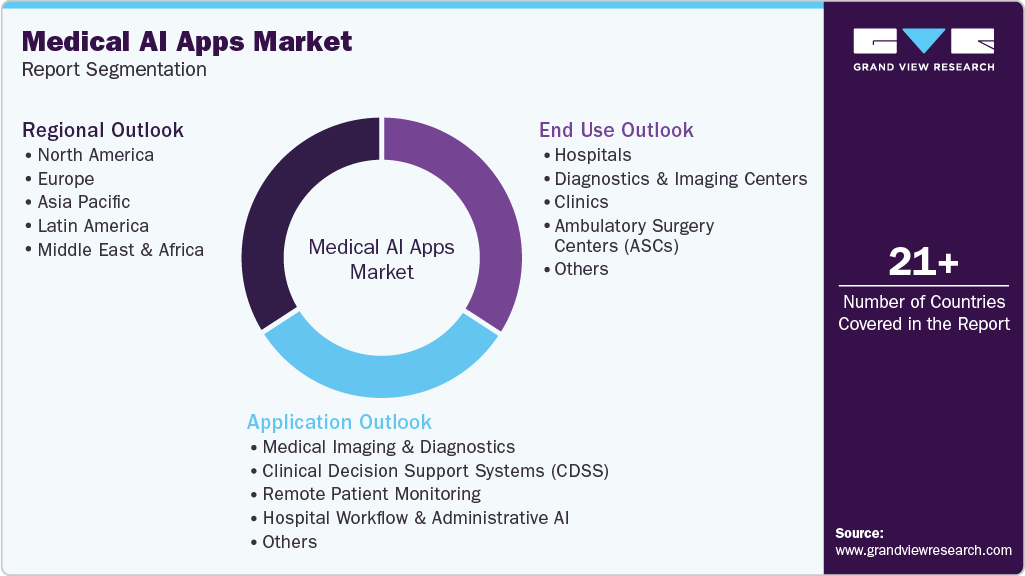
This report forecasts revenue growth at the global, regional, and country levels and provides an analysis of the industry trends in each of the sub-segments from 2021 to 2033. For this study, Grand View Research has segmented the medical AI apps market report based on application, end use and region:
-
Application Outlook (Revenue, USD Million, 2021 - 2033)
-
Medical Imaging & Diagnostics
-
Clinical Decision Support Systems (CDSS)
-
Remote Patient Monitoring
-
Hospital Workflow & Administrative AI
-
Others
-
-
End Use Outlook (Revenue, USD Million, 2021 - 2033)
-
Hospitals
-
Diagnostics & Imaging Centers
-
Clinics
-
Ambulatory Surgery Centers (ASCs)
-
Others
-
-
Regional Outlook (Revenue, USD Million, 2021 - 2033)
-
North America
-
U.S.
-
Canada
-
Mexico
-
-
Europe
-
Germany
-
UK
-
France
-
Italy
-
Spain
-
Denmark
-
Sweden
-
Norway
-
-
Asia Pacific
-
China
-
Japan
-
India
-
South Korea
-
Australia
-
Thailand
-
-
Latin America
-
Brazil
-
Argentina
-
-
Middle East and Africa
-
Saudi Arabia
-
UAE
-
South Africa
-
Kuwait
-
-
Frequently Asked Questions About This Report
b. The global medical AI apps market size was estimated at USD 1.2 billion in 2025 and is expected to reach USD 1.4 billion in 2026.
b. The global medical AI apps market is expected to grow at a compound annual growth rate of 19.1% from 2026 to 2033 to reach USD 4.8 billion by 2033.
b. The medical imaging & diagnostics segment held the largest market share of 37.9% in 2025.
b. Some key players operating in the medical AI apps market include Flo Health Inc., Flo Health UK Limited; Welldoc, Inc.; SkinVision; Binah.ai; Aidoc; Viz.ai; Qure.ai; Lillia; LeanTaaS; Artera (Formerly WELL Health); Qventus; Altera Digital Health Inc.; Sensely, Inc.
b. Key factors that are driving the medical AI apps market are increasing adoption of digital health and mobile health (mHealth) technologies, the shift toward personalized and preventive healthcare, the growing focus on early detection and screening programs, and the growth of digital therapeutics (Dtx) and software-based interventions.


Share this report with your colleague or friend.
Need a Tailored Report?
Customize this report to your needs — add regions, segments, or data points, with 20% free customization.


ISO 9001:2015 & 27001:2022 Certified
We are GDPR and CCPA compliant! Your transaction & personal information is safe and secure. For more details, please read our privacy policy.
Trusted market insights - try a free sample
See how our reports are structured and why industry leaders rely on Grand View Research. Get a free sample or ask us to tailor this report to your needs.













