
- Home
- »
- Medical Devices
- »
-
Medical Devices Analytical Testing Outsourcing Market, 2033GVR Report cover

Medical Devices Analytical Testing Outsourcing Market (2026 - 2033)
Size, Share & Trends Analysis Report By Service (Extractable and Leachable, Material Characterization), By Therapeutic Area, By End-use, By Device Type, By Region, And Segment Forecasts
Market Size, 2025
$7.1BMarket Estimate, 2026
$7.6BMarket Forecast, 2033
$13.0BCAGR, 2026–2033
8.0%Medical Devices Analytical Testing Outsourcing Market Summary
The global medical devices analytical testing outsourcing market size was valued at USD 7.1 billion in 2025 and is projected to grow from USD 7.6 billion in 2026 to USD 13.0 billion by 2033, at a CAGR of 8.0% from 2026 to 2033. North America dominated the market, accounting for the largest share of 39.2% in 2025. The medical devices analytical testing outsourcing industry is experiencing steady growth, driven by increasingly stringent regulatory requirements for device safety and performance, rising complexity of medical device technologies, growing product development activities across diagnostic and therapeutic devices, increasing demand for biocompatibility and material characterization studies, and the continued outsourcing of specialized testing services to third-party laboratories.
 Source: Grand View Research, IR Documents, Primary Interviews, Paid DatabasesTo learn more about this report,
 Download Free Sample Report
 Key Market Trends & Insights
- Based on service: Material characterization held the largest revenue share of 25.3% in 2025.
- Based on therapeutic area: Cardiology held the largest revenue share of 22.1% in 2025.
- Based on end use: Hospital held the largest revenue share of 87.0% in 2025.
- Based on device type: The others segment held the largest revenue share of 78.1% in 2025.
Regional Highlights
- Largest regional market: North America (39.2% revenue share, 2025)
- Fastest-growing regional market: Asia Pacific (highest CAGR, 2026-2033)
- By country: The U.S. held the largest share of North America in 2025.
Market Size & Forecast
- Market size in 2025: USD 7.1 Billion
- Estimated market size in 2026: USD 7.6 Billion
- Projected market size by 2033: USD 13.0 Billion
- CAGR (2026-2033): 8.0%
Three ways to get this report
Buy it, customize it, or ask a question.Ask an Analyst
Analyst response in 1 business day
- AccessReport author, directly
- Reply timeWithin 1 working day
- No sales callDirect answer only
- FormatEmail reply
- CostFree, no cost
Get the Full Report
What the study covers
- FormatsPDF · Excel · Dashboard
- Timeline2026–2033 annual, 2025 base
- Coverage20+ countries, 5 regions
- Companies10+ key players profiled
Customize the Report
20% free customization
- IncludeCountries, segments, points
- TailorTo your product definition
- ExtendDeeper competitor detail
- OrA fully bespoke study
- Turnaround5–10 working days
Medical device manufacturers are increasingly relying on external analytical testing providers to support product development, regulatory submissions, quality assurance programs, and post-market compliance activities while optimizing operational costs and accelerating time-to-market. The growing complexity of medical devices remains a key factor supporting market expansion. Advanced implantable devices, combination products, in vitro diagnostic (IVD) systems, minimally invasive surgical devices, and digitally enabled medical technologies require extensive analytical testing throughout the product lifecycle. Regulatory authorities increasingly require comprehensive evaluations related to chemical characterization, extractables and leachables, material composition, biocompatibility, sterilization validation, packaging integrity, and shelf-life performance. To learn more about this report, Download Free Sample Report
 As a result, manufacturers are seeking specialized analytical testing partners with advanced instrumentation, technical expertise, and regulatory experience to meet evolving compliance requirements. The increasing volume of regulatory submissions and product approvals continues to generate demand for outsourced analytical testing services. Medical device companies are expanding testing programs to address requirements under evolving regulatory frameworks, including risk-based assessments, material safety evaluations, and performance verification studies. Outsourcing enables manufacturers to access specialized capabilities and accredited laboratory infrastructure without substantial investments in internal testing facilities, thereby improving development efficiency and regulatory readiness.
This trend is reflected in ongoing investments by analytical testing service providers. For instance, in March 2025, NAMSA completed the acquisition of WuXi AppTec's U.S. medical device testing operations, expanding its laboratory capacity and strengthening capabilities in biocompatibility, extractables and leachables (E&L), microbiology, and preclinical testing. The acquisition enhanced NAMSA's ability to provide integrated analytical testing and regulatory support services to medical device manufacturers. Such expansions aim to address growing customer demand for comprehensive analytical testing solutions across the premarket and commercial stages. Increasing outsourcing among small and mid-sized medical device companies is another significant growth driver. Establishing and maintaining in-house analytical laboratories requires substantial capital expenditure for sophisticated instrumentation, laboratory accreditation, quality management systems, and highly skilled scientific personnel. Therefore, manufacturers increasingly partner with specialized testing organizations that offer broad technical capabilities, regulatory expertise, and established quality frameworks, enabling efficient execution of testing programs while maintaining compliance with global regulatory standards.
Market Dynamics
Market growth is moderated by the high cost of advanced analytical instrumentation, extended validation and accreditation timelines, evolving regulatory expectations across different jurisdictions, and a limited pool of specialized scientific professionals with expertise in medical device analytical testing and regulatory compliance. The increasing development of implantable devices, expansion of in vitro diagnostics and combination products, rising adoption of advanced materials in medical devices, growing regulatory scrutiny of product safety and material characterization, and continued outsourcing by both established manufacturers and emerging medical technology companies are expected to create substantial long-term opportunities for analytical testing service providers operating in the medical devices sector.
The increasing complexity of medical devices and evolving global regulatory requirements are major drivers of the medical devices analytical testing outsourcing market. The growing development of implantable devices, cardiovascular devices, orthopedic implants, in vitro diagnostic (IVD) products, minimally invasive devices, wearable technologies, and combination products has significantly increased the demand for specialized analytical testing services. Medical device manufacturers require comprehensive testing for biocompatibility, chemical characterization, extractables and leachables (E&L), material characterization, microbiological testing, sterility assurance, packaging validation, and stability studies to demonstrate product safety, performance, and regulatory compliance. Outsourcing these testing activities enables manufacturers to access accredited laboratories, advanced analytical instrumentation, and regulatory expertise while reducing capital investment and accelerating product development timelines. Furthermore, the implementation of stricter regulatory frameworks, including the European Union Medical Device Regulation (EU MDR), In Vitro Diagnostic Regulation (IVDR), and evolving U.S. FDA requirements, continues to increase demand for independent analytical testing service providers.
Stringent regulatory compliance requirements and the high cost of maintaining accredited analytical testing laboratories remain key restraints for the medical devices analytical testing outsourcing market. Testing laboratories must comply with ISO/IEC 17025, ISO 10993, ISO 13485, Good Laboratory Practice (GLP), and country-specific regulatory guidelines, requiring continuous investment in quality management systems, laboratory accreditation, method validation, documentation, and personnel training. In addition, advanced analytical equipment-including high-resolution mass spectrometry, gas and liquid chromatography systems, spectroscopy platforms, microbiology laboratories, and cleanroom facilities-requires substantial capital expenditure, routine calibration, and ongoing maintenance. Frequent revisions to regulatory standards and testing protocols further increase operational complexity and compliance costs. These factors create barriers to entry for smaller laboratories and may lengthen testing timelines during periods of high demand or regulatory transition.
The increasing adoption of implantable medical devices, combination products, minimally invasive technologies, and connected medical devices presents significant growth opportunities for the medical devices analytical testing outsourcing market. Manufacturers are increasingly seeking specialized analytical testing services to support product development, regulatory submissions, and lifecycle management for complex medical devices. Growing demand for biocompatibility assessments, chemical characterization, extractables and leachables studies, particulate analysis, microbiological testing, and packaging validation is creating opportunities for contract testing organizations with advanced analytical capabilities. In addition, increasing outsourcing by small and mid-sized medical device companies, expansion of global medical device manufacturing, and rising investment in innovative technologies such as drug-device combination products, wearable medical devices, and digital health solutions are expected to support sustained demand for outsourced analytical testing services. Continued investments in laboratory automation, advanced analytical instrumentation, and integrated regulatory support services are expected to further strengthen long-term market growth.
Market Concentration & Characteristics
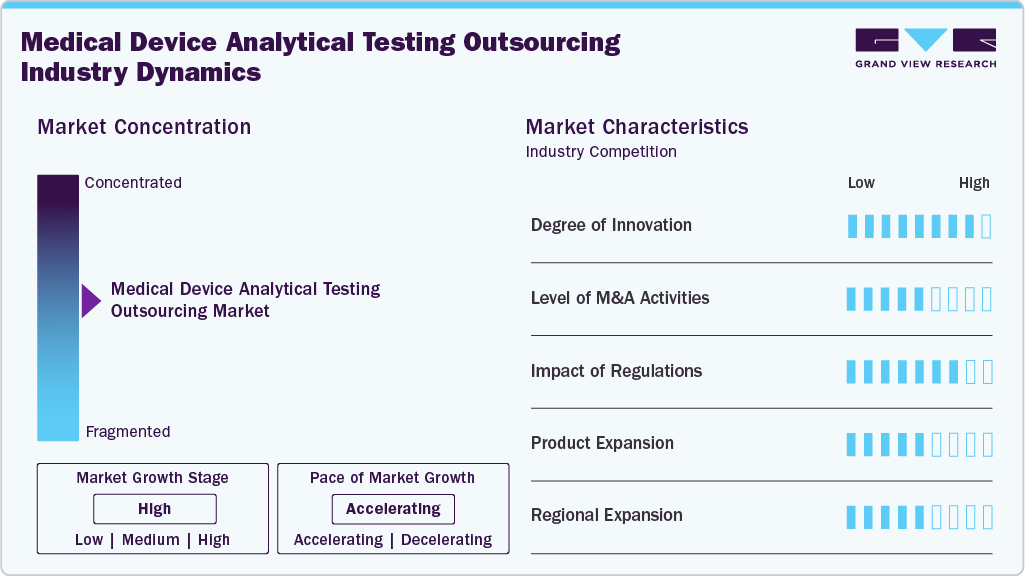
The medical devices analytical testing outsourcing market growth stage is high, and the pace of growth is accelerating. The market is characterized by the degree of innovation, level of M&A activities, regulatory impact, service expansion, and regional expansion.
Innovation is a key competitive factor in the market, with laboratories continuously investing in advanced analytical instrumentation, automation, artificial intelligence-driven data analysis, and molecular characterization technologies. Growing demand for biologics, biosimilars, cell and gene therapies, and personalized medicines is encouraging the adoption of high-sensitivity analytical platforms that improve testing accuracy and laboratory efficiency. Continuous innovation enables service providers to expand specialized testing capabilities, improve turnaround times, and support evolving regulatory requirements, strengthening their competitive position.
 To learn more about this report, Download Free Sample Report
 Mergers and acquisitions continue to reshape the medical devices analytical testing outsourcing industry by expanding laboratory networks, strengthening technical capabilities, and broadening service portfolios. Strategic acquisitions enable analytical testing providers to access specialized expertise in bioanalytical testing, microbiology, material characterization, and advanced therapy testing while expanding their geographic presence. Such transactions also improve operational scale, increase customer reach, and strengthen competitive positioning in a rapidly evolving outsourcing market.
Regulatory compliance remains one of the most influential factors affecting the medical devices analytical testing outsourcing market. Laboratories must comply with Good Laboratory Practice (GLP), Good Manufacturing Practice (GMP), ISO standards, ICH guidelines, and requirements established by global regulatory authorities. Maintaining validated analytical methods, data integrity, laboratory accreditation, and comprehensive documentation increases operational complexity while creating opportunities for laboratories with strong regulatory expertise and established quality systems.
Healthcare analytical testing providers are expanding their service portfolios to support pharmaceutical, biotechnology, and medical device companies throughout the product lifecycle. Many laboratories now offer integrated services including bioanalytical testing, method development and validation, stability studies, extractables and leachables testing, microbiological testing, elemental impurity analysis, and regulatory support. Broader service capabilities improve customer retention, increase cross-selling opportunities, and enable providers to address a wider range of analytical requirements through a single service partner.
Regional expansion is enabling analytical testing providers to strengthen their presence in high-growth pharmaceutical manufacturing and biotechnology markets. Establishing new laboratories and expanding existing facilities across North America, Europe, Asia Pacific, Latin America, and the Middle East improves customer accessibility, reduces sample transportation timelines, and supports compliance with regional regulatory requirements. A broader laboratory network also enhances business continuity, strengthens global service delivery, and enables providers to support multinational pharmaceutical and medical device companies more effectively.
Analyst Perspective
The medical devices analytical testing outsourcing market is growing steadily as regulatory scrutiny intensifies and device technologies become more complex. Besides, the growing need for implantable devices, IVDs, cardiovascular products, orthopedic implants, wearables, minimally invasive devices, and combination products is expected to increase the demand for specialized services such as biocompatibility testing, chemical characterization, extractables and leachables studies, microbiological testing, sterility assurance, packaging validation, and material analysis. In addition, the manufacturers are increasingly preferring accredited external laboratories to access advanced instrumentation, specialized expertise, independent validation, and regulatory support without maintaining extensive in-house capabilities. Compliance with U.S. FDA requirements, EU MDR, IVDR, and ISO standards is also driving laboratories to adopt automation, LIMS, and digital quality systems that improve efficiency, traceability, and data integrity. Providers with integrated service portfolios, accredited quality systems, broad geographic laboratory networks, and strong regulatory expertise are expected to gain a competitive advantage and capture a larger market share.
Impact of U.S. Tariffs on the Global Medical Devices Analytical Testing Outsourcing Market
The imposition of U.S. tariffs on imported laboratory instruments, analytical equipment, electronic components, specialty chemicals, and laboratory consumables has increased procurement and operating costs for medical device analytical testing laboratories. Higher prices for chromatography systems, mass spectrometers, spectroscopy instruments, microbiological testing equipment, and certified reference materials have increased capital investment requirements and routine operating expenses for testing service providers. Laboratories that rely on imported reagents, testing consumables, and precision instrument components have also experienced supply chain disruptions and extended procurement timelines, affecting laboratory productivity and project scheduling.
Medical device manufacturers may experience higher analytical testing costs during product development, verification and validation, biocompatibility assessment, chemical characterization, and regulatory submission activities. In response, analytical testing service providers have diversified supplier networks, expanded local sourcing strategies, strengthened inventory management practices, and invested in regional laboratory infrastructure to reduce supply chain risks. At the same time, manufacturers of analytical instruments have increased regional manufacturing and assembly operations to mitigate tariff-related cost pressures. Despite these challenges, demand for outsourced analytical testing services is expected to remain strong, driven by increasingly stringent regulatory requirements, growing medical device innovation, and manufacturers' continued outsourcing to secure specialized technical expertise and faster regulatory approvals. Investments in domestic laboratory capacity and localized supply chains are expected to improve operational resilience while supporting the long-term market growth.
Technological Advancements
Technological advancements continue to reshape the medical devices analytical testing outsourcing industry by improving laboratory efficiency, analytical precision, and regulatory compliance. The adoption of sophisticated analytical instrumentation has strengthened the industry's ability to evaluate increasingly complex medical devices and materials. Automation enables laboratories to process larger testing volumes while maintaining high reproducibility and operational consistency. Digital laboratory platforms are improving data management, documentation, and audit preparedness, supporting compliance with evolving global quality standards. At the same time, advancements in chemical characterization and biological safety assessment are helping manufacturers address more rigorous regulatory expectations for product safety and performance. The incorporation of artificial intelligence and data-driven laboratory tools is further enhancing productivity by simplifying analytical workflows and improving decision support. These innovations are enabling contract testing organizations to expand their service offerings while reducing customer turnaround times.
 To learn more about this report, Download Free Sample Report
 Medical device manufacturers are increasingly selecting outsourcing partners with advanced technological capabilities to support complex product development programs and global regulatory submissions. Continued investment in laboratory modernization is expected to strengthen testing capacity and improve service quality across the industry. As medical device technologies continue to evolve, analytical testing requirements are becoming more specialized, reinforcing the need for continuous technological advancement. Laboratories that invest in advanced instrumentation, digital infrastructure, and automation are expected to strengthen their competitive position. Overall, technological innovation is improving the efficiency, scalability, and reliability of outsourced analytical testing services, supporting the sustained growth of the global market.
Pricing Model Analysis
The pricing structure in the medical devices analytical testing outsourcing market is influenced by the scope of testing, regulatory complexity, technology requirements, and project duration. Laboratories typically adopt multiple pricing approaches to accommodate the diverse needs of medical device manufacturers across development and commercialization stages. Fee-for-service remains the preferred model for routine analytical testing and individual laboratory assessments due to its flexibility and transparency. Project-based pricing is widely used for comprehensive testing programs that require a clearly defined scope and budget. Long-term service agreements are becoming increasingly common among large manufacturers seeking consistent testing support, priority laboratory access, and cost efficiencies over extended periods.
 To learn more about this report, Download Free Sample Report
 Customized pricing addresses specialized projects involving innovative devices, combination products, or non-standard regulatory requirements where testing protocols vary considerably. Turnaround time commitments, sample volumes, method development requirements, validation activities, and reporting expectations also influence the final pricing structure. Laboratories with specialized expertise, accredited quality systems, and advanced analytical capabilities are generally able to command premium pricing for technically demanding services. As medical devices become more sophisticated and regulatory expectations continue to evolve, pricing models are increasingly reflecting the level of scientific expertise and laboratory resources required for successful project execution. The continued expansion of outsourced testing is encouraging providers to offer flexible commercial arrangements that balance cost efficiency with technical quality and regulatory compliance. Overall, diversified pricing models enable analytical testing organizations to serve a broad customer base while supporting sustainable revenue generation and long-term client relationships.
Service Insights
The material characterization segment led the market with the largest revenue share of 25.3% in 2025. The segment's leading position is primarily attributed to the growing use of advanced polymers, metals, ceramics, coatings, and composite materials in medical devices, all of which require comprehensive characterization to verify their chemical, physical, and mechanical properties. Material characterization plays a critical role in demonstrating product safety, quality, consistency, and compliance throughout device development and commercialization. Manufacturers increasingly rely on outsourced laboratories for analytical techniques such as spectroscopy, chromatography, microscopy, elemental analysis, thermal analysis, and surface characterization to support product design, regulatory submissions, process validation, and failure investigations. The growing complexity of implantable devices, cardiovascular products, orthopedic implants, drug-device combination products, and minimally invasive devices has further increased the need for specialized material testing capabilities. In addition, evolving regulatory expectations regarding material composition, impurities, and long-term device performance continue to drive demand for comprehensive characterization services. The expansion of medical device innovation and increasing outsourcing of analytical activities are expected to support the continued leadership of the material characterization segment over the forecast period.
The bioburden testing segment is projected to witness the fastest growth during the forecast period. Rising production of sterile and implantable medical devices, together with increasing regulatory emphasis on microbiological quality assurance, is driving demand for outsourced bioburden testing services. Manufacturers are placing greater focus on monitoring microbial contamination throughout raw material evaluation, manufacturing processes, packaging validation, and finished product testing to ensure product safety and compliance with international quality standards.
Therapeutic Area Insights
The cardiology segment led the medical devices analytical testing outsourcing industry with the largest revenue share of 22.1% in 2025. The segment is driven by the high volume of cardiovascular devices, including stents, heart valves, catheters, pacemakers, and vascular grafts, all of which require extensive analytical and regulatory testing before commercialization. Material characterization, biocompatibility, sterility, and performance testing are essential to ensure device safety, reliability, and compliance. The increasing prevalence of cardiovascular diseases and continued innovation in minimally invasive cardiac devices continue to support demand for outsourced analytical testing services.
The general & plastic surgery segment is projected to witness the fastest growth during the forecast period. Rising demand for surgical instruments, wound closure products, meshes, tissue repair materials, and aesthetic medical devices is increasing the need for analytical testing throughout product development and manufacturing. Manufacturers are increasingly outsourcing testing to meet regulatory requirements while reducing development timelines and costs. Growing surgical procedure volumes, expanding adoption of minimally invasive techniques, and continuous product innovation are expected to drive strong growth in outsourced analytical testing for this therapeutic area.
End Use Insights
The hospital segment led the market with the largest revenue share of 87.0% in 2025. Hospitals are the primary end users of a wide range of medical devices, including surgical instruments, implants, diagnostic equipment, and patient monitoring systems, thereby creating sustained demand for high-quality, regulatory-compliant products. This drives the need for extensive analytical testing to ensure device safety, performance, sterility, and material integrity before commercialization. The increasing adoption of advanced medical technologies and the growing volume of surgical and diagnostic procedures continue to support the dominance of the hospital segment.
The other end-use segment is expected to register the second-fastest growth during the forecast period. Growing demand for point-of-care diagnostics, minimally invasive procedures, and portable medical devices is driving the need for outsourced analytical testing services across other end users. In addition, expanding healthcare infrastructure and the increasing adoption of innovative medical technologies across non-hospital settings are expected to support the segment's growth.
Device Type Insights
The others segment led the market with the largest revenue share of 78.1% in 2025. The segment comprises a broad range of medical devices, including diagnostic consumables, wound care products, ophthalmic devices, dental devices, infusion products, and other specialized equipment, collectively generating significant testing demand. These products require comprehensive analytical evaluation for material characterization, microbiological quality, sterility, chemical safety, and performance verification to comply with regulatory requirements. The large volume and diversity of devices within this category continue to support its leading position in the market.
 To learn more about this report, Download Free Sample Report
 The reprocessed devices segment is expected to register the fastest CAGR during the forecast period. The growing adoption of reprocessed single-use medical devices by healthcare providers to reduce costs and minimize medical waste is increasing the demand for specialized analytical testing services. Reprocessed devices must undergo rigorous evaluation for cleanliness, sterility, material integrity, functional performance, and residual contamination to demonstrate that they meet the same safety and quality standards as new devices. Increasing regulatory oversight and standardized validation requirements for reprocessed medical devices are further encouraging manufacturers and third-party reprocessors to outsource analytical testing to specialized laboratories, supporting the segment's growth.
Regional Insights
The North America medical devices analytical testing outsourcing market dominated with the largest revenue share of 39.2% in 2025.The regional market is supported by a well-established medical device industry, stringent regulatory requirements, and the presence of leading analytical testing laboratories and contract testing organizations. Growing development of implantable devices, in vitro diagnostics (IVDs), cardiovascular devices, orthopedic implants, wearable medical technologies, and combination products continues to increase demand for biocompatibility testing, chemical characterization, extractables and leachables (E&L) studies, microbiological testing, sterility assurance, and packaging validation. In addition, evolving regulatory requirements under the U.S. FDA and Health Canada are encouraging manufacturers to adopt comprehensive analytical testing throughout product development and commercialization. The increasing outsourcing of analytical testing activities to accredited laboratories that offer specialized expertise, advanced instrumentation, and regulatory support is further contributing to market growth. Continued investments in laboratory automation, digital laboratory management systems, and advanced analytical technologies are expected to support regional expansion throughout the forecast period.
 To learn more about this report, Download Free Sample Report
 U.S. Medical Devices Analytical Testing Outsourcing Market Trends
The U.S. medical devices analytical testing outsourcing industry held the largest share of North America in 2025. Market growth is driven by the presence of leading medical device manufacturers, established contract testing organizations, and a robust regulatory framework governing product safety and quality. Increasing development of implantable devices, minimally invasive technologies, digital health products, and combination devices is driving demand for specialized analytical testing services, including biocompatibility assessment, chemical characterization, microbiological testing, particulate analysis, and extractables and leachables studies. Manufacturers are increasingly outsourcing analytical testing to improve regulatory compliance, reduce capital investment, and accelerate product development timelines. Ongoing investments by testing providers in laboratory expansion, automation, and advanced analytical instrumentation are expected to support sustained market growth.
The Canada medical devices analytical testing outsourcing market is expected to grow at a significant CAGR during the forecast period.Growth is supported by increasing investment in medical technology innovation, expanding medical device manufacturing activities, and continued government support for healthcare research and life sciences. Rising demand for implantable devices, diagnostic technologies, and combination products is increasing the need for specialized analytical services, including biocompatibility testing, microbiological evaluation, material characterization, and packaging validation. Furthermore, Canada's strong regulatory environment, skilled scientific workforce, and expanding laboratory infrastructure continue to attract outsourcing from domestic and international medical device manufacturers. Ongoing investments in advanced analytical capabilities are expected to support market growth over the forecast period.
Europe Medical Devices Analytical Testing Outsourcing Market Trends
The Europe medical devices analytical testing outsourcing industry is experiencing steady growth, supported by a strong medical device manufacturing base, stringent regulatory standards, and increasing demand for independent testing and certification services. The implementation of the European Union Medical Device Regulation (EU MDR) and In Vitro Diagnostic Regulation (IVDR) has significantly increased demand for analytical testing, including biocompatibility assessments, chemical characterization, extractables and leachables studies, microbiological testing, and packaging validation. The region also benefits from the presence of globally recognized analytical testing organizations and specialized laboratories serving medical device manufacturers across multiple therapeutic areas. Continued expansion of laboratory infrastructure, increasing outsourcing of testing activities, and growing investment in advanced analytical technologies are expected to support market growth throughout the forecast period.
The medical devices analytical testing outsourcing market in Germany held the largest share in Europe in 2025. The country benefits from one of Europe's largest medical device manufacturing industries, a well-developed analytical laboratory infrastructure, and strong regulatory compliance capabilities. Increasing production of orthopedic implants, cardiovascular devices, surgical instruments, diagnostic equipment, and combination products is driving demand for analytical testing services, including material characterization, biocompatibility evaluation, microbiological testing, sterility assurance, and chemical analysis. Continued investment in laboratory modernization and advanced analytical technologies is expected to support market expansion during the forecast period.
The UK medical devices analytical testing outsourcing market is expected to grow significantly over the forecast period.Market expansion is supported by a well-established medical technology sector, increasing innovation in diagnostic devices, digital health technologies, and implantable medical devices, and the presence of leading analytical testing laboratories. The growing demand for outsourced services in biocompatibility testing, chemical characterization, microbiological analysis, packaging validation, and regulatory compliance is encouraging laboratories to expand their technical capabilities. In addition, continued investment in healthcare innovation, research collaborations, and laboratory infrastructure is expected to contribute to sustained market growth during the forecast period.
Asia Pacific Medical Devices Analytical Testing Outsourcing Market Trends
Asia Pacific is expected to grow at a significant CAGR over the forecast period. Market growth is supported by expanding medical device manufacturing, increasing investment in healthcare technologies, improving laboratory infrastructure, and favorable government initiatives promoting domestic medical device production. The rising outsourcing of analytical testing by global medical device manufacturers to countries with skilled scientific professionals, accredited laboratories, and cost-effective testing services is driving regional demand. Furthermore, increasing production of implantable devices, in vitro diagnostics (IVDs), wearable medical devices, and combination products is generating higher demand for biocompatibility testing, chemical characterization, extractables and leachables (E&L) studies, microbiological testing, sterility assurance, and packaging validation. Continued investment in laboratory modernization, advanced analytical instrumentation, and internationally accredited quality systems is expected to support long-term market growth across the region.
The medical devices analytical testing outsourcing market in China is witnessing strong growth due to expanding medical device manufacturing, increasing investment in healthcare innovation, and rising outsourcing by multinational medical device companies. Government initiatives supporting the domestic medical technology sector, improvements in regulatory oversight, and growing production of implantable devices, diagnostic equipment, and combination products are increasing demand for specialized analytical testing services. In addition, the expansion of ISO-compliant testing laboratories, the adoption of advanced analytical technologies, and the strengthening of regulatory capabilities continue to position China as a major analytical testing hub in the Asia Pacific region.
The medical devices analytical testing outsourcing market in Japan is driven by a well-established medical device industry, advanced analytical laboratory capabilities, and stringent regulatory standards for product quality and safety. Increasing development of high-value implantable devices, diagnostic systems, robotic surgical equipment, and digital healthcare technologies is creating sustained demand for biocompatibility testing, chemical characterization, microbiological analysis, and material testing services. Ongoing investment in laboratory modernization and advanced analytical instrumentation is expected to support continued market growth throughout the forecast period.
The India medical devices analytical testing outsourcing market is experiencing rapid growth driven by expanding domestic medical device manufacturing, increasing contract testing activities, and the availability of a large pool of skilled scientific professionals. Rising production of diagnostic devices, surgical instruments, implantable products, and consumables is driving demand for analytical testing across product development, regulatory approval, and commercial manufacturing. In addition, government initiatives such as the Production Linked Incentive (PLI) Scheme and continued investment in medical device parks, laboratory infrastructure, and quality systems are expected to strengthen India's position as a preferred outsourcing destination over the forecast period.
Latin America Medical Devices Analytical Testing Outsourcing Market Trends
The Latin America medical devices analytical testing outsourcing industry is expected to grow steadily during the forecast period. Growth is supported by expanding medical device manufacturing, increasing healthcare investments, and rising adoption of international quality and regulatory standards across the region. Countries such as Brazil and Argentina are strengthening analytical laboratory capabilities while attracting outsourcing from multinational medical device manufacturers seeking cost-effective testing services. Increasing emphasis on product safety, regulatory compliance, and quality assurance is expected to contribute to sustained market expansion.
Brazil medical devices analytical testing outsourcing market is driven by growing medical device production, increasing investment in healthcare infrastructure, and supportive government initiatives for the domestic medical technology sector. Rising outsourcing of analytical testing by local and international manufacturers is increasing demand for biocompatibility assessment, microbiological testing, chemical characterization, sterility assurance, and packaging validation services. Continued expansion of accredited laboratory infrastructure and increasing collaboration between domestic and global healthcare companies are expected to support long-term market growth.
Middle East & Africa Medical Devices Analytical Testing Outsourcing Market Trends
The Middle East & Africa medical devices analytical testing outsourcing industry is expected to grow steadily over the forecast period. The market is supported by increasing healthcare expenditure, expansion of the regional medical device industry, and growing investment in healthcare infrastructure and life sciences. Rising regulatory requirements, increasing imports and local production of medical devices, and greater adoption of outsourced analytical testing services are driving regional demand. Continued investment in accredited laboratories, quality management systems, and advanced analytical technologies is expected to create additional opportunities for testing service providers.
The UAE medical devices analytical testing outsourcing market is experiencing steady growth driven by increasing investment in healthcare infrastructure, the expansion of the medical technology sector, and government initiatives aimed at strengthening life sciences and advanced healthcare services. The growing demand for internationally compliant analytical testing services for medical devices, coupled with the increasing adoption of global quality standards and the expansion of laboratory capabilities, is supporting market growth. In addition, rising partnerships between regional healthcare organizations and international testing providers are expected to contribute to sustained market expansion over the forecast period.
Key Medical Devices Analytical Testing Outsourcing Company Insights
The key players operating across the market are adopting strategic initiatives such as service launches, mergers & acquisitions, partnerships & agreements, and expansions to gain a competitive edge in the market. For instance, in June 2025, Nelson Labs announced a major expansion of its Salt Lake City, Utah, facility by doubling its ISO-classified cleanroom capacity. The expansion enhances the company's sterility assurance and microbiological testing capabilities to address increasing demand from medical device manufacturers for outsourced analytical testing services.
Key Medical Devices Analytical Testing Outsourcing Companies
The following key companies have been profiled for this study of the medical devices analytical testing outsourcing market.
-
SGS Société Générale de Surveillance SA
-
Toxikon, Inc. (Laboratory Corporation of America Holdings)
-
Eurofins Scientific
-
Pace Analytical Services, LLC
-
Intertek Group plc
-
Wuxi AppTec
-
North American Science Associates, LLC
-
Envigo (Inotiv)
-
Charles River Laboratories
Recent Developments
-
In August 2025, Nelson Labs expanded its Wiesbaden, Germany laboratory by adding new capabilities for packaging validation, microbiological testing, endotoxin testing, bioburden testing, and ethylene oxide (EtO) residual analysis. The expansion strengthens the company's analytical testing capacity to support medical device manufacturers seeking regulatory-compliant testing services across Europe.
-
In June 2025, Intertek strengthened its medical device testing capabilities through the acquisition of ATOR Labs' Automated Breathing Metabolic Simulator (ABMS). The technology enhances precision testing for respirators and respiratory protective devices, enabling manufacturers to accelerate product development and comply with global performance and safety standards.
Medical Devices Analytical Testing Outsourcing Market Report Scope
Report Attribute
Details
Market size in 2025
USD 7.1 billion
Estimated market size in 2026
USD 7.6 billion
Projected market size by 2033
USD 13.0 billion
Growth Rate
CAGR of 8.0% from 2026 to 2033
Actual Data
2021 - 2025
Forecast period
2026 - 2033
Quantitative units
Revenue in USD million/billion and CAGR from 2026 to 2033
Report coverage
Revenue forecast, company ranking, competitive landscape, growth factors, and trends
Segments covered
Service, therapeutic area, end use, device type, region
Regional scope
North America, Europe, Asia Pacific, Latin America, MEA
Country scope
U.S.; Canada; Mexico; Germany; UK; France; Italy; Spain; Norway; Denmark; Sweden; China; Japan; India; South Korea; Australia; Thailand; Brazil; Argentina; Saudi Arabia; South Africa; UAE; Kuwait; Oman; Qatar
Key companies profiled
SGS Société Générale de Surveillance SA; Toxikon, Inc. (Laboratory Corporation of America Holdings); Eurofins Scientific; Pace Analytical Services, LLC; Intertek Group plc; Wuxi AppTec; North American Science Associates, LLC; Envigo (Inotiv); Charles River Laboratories
Customization scope
Free report customization (equivalent up to 8 analysts working days) with purchase. Addition or alteration to country, regional & segment scope.
Pricing and purchase options
Avail customized purchase options to meet your exact research needs. Explore purchase options
Global Medical Devices Analytical Testing Outsourcing Market Report Segmentation
This report forecasts revenue growth at the global, regional & country levels and provides an analysis of the latest industry trends in each of the sub-segments from 2021 to 2033. For this study, Grand View Research has segmented the global medical devices analytical testing outsourcing market report based on service, therapeutic area, end use, device type, and region:
-
Service Outlook (Revenue, USD Million/Billion, 2021 - 2033)
-
Extractable and Leachable
-
Material Characterization
-
Physical Testing
-
Bioburden Testing
-
Sterility Testing
-
Other Tests
-
-
Therapeutic Area Outlook (Revenue, USD Million/Billion, 2021 - 2033)
-
Cardiology
-
Diagnostic Imaging
-
Orthopedic
-
IVD
-
Ophthalmic
-
General & Plastic Surgery
-
Drug Delivery
-
Endoscopy
-
Dental
-
Diabetes Care
-
Others
-
-
End Use Outlook (Revenue, USD Million/Billion, 2021 - 2033)
-
Hospital
-
Equipment
-
Consumables
-
Syringes
-
Wound Care
-
Others
-
-
-
Others
-
-
Device Type Outlook (Revenue, USD Million/Billion, 2021 - 2033)
-
Reprocessed Devices
-
Hospital
-
Others
-
-
Others
-
-
Regional Outlook (Revenue, USD Million/Billion, 2021 - 2033)
-
North America
-
U.S.
-
Canada
-
Mexico
-
-
Europe
-
UK
-
Germany
-
France
-
Italy
-
Spain
-
Denmark
-
Sweden
-
Norway
-
-
Asia Pacific
-
Japan
-
China
-
India
-
Australia
-
Thailand
-
South Korea
-
-
Latin America
-
Brazil
-
Argentina
-
-
Middle East & Africa
-
South Africa
-
UAE
-
Saudi Arabia
-
Kuwait
-
Qatar
-
Oman
-
-
Research Methodology
The medical devices analytical testing outsourcing market figures in this report are based on a proven research process that combines executive interviews with secondary research from proprietary databases, company filings, and recognized regulatory and institutional sources. Market size is built through value-chain sizing-reconciling supply-side and demand-side estimates-and triangulated with bottom-up and top-down approaches. Every estimate passes multiple levels of expert validation before publication, with each medical devices analytical testing outsourcing segment quantified using the revenue-capture definitions in the table below.
Segment Definition
Segment - Type
Revenue Capture Definition
Extractables and Leachables
The segment captures revenue generated from extractables and leachables (E&L) testing services performed to identify, characterize, and quantify chemical substances that may migrate from medical device materials, packaging, or manufacturing components under intended conditions of use. Services support toxicological risk assessment, regulatory submissions, and product safety evaluations.
Material Characterization
The segment captures revenue generated from analytical services used to determine the physical, chemical, thermal, and structural properties of raw materials, polymers, metals, ceramics, coatings, and finished medical devices. Services include compositional analysis, spectroscopy, microscopy, elemental analysis, and material compatibility assessments supporting product development and regulatory compliance.
Physical Testing
The segment captures revenue generated from physical and mechanical testing services conducted to evaluate the functional performance, durability, dimensional integrity, and mechanical properties of medical devices. Services include tensile strength, compression, fatigue, hardness, flexibility, pressure, vibration, and performance testing to verify compliance with design specifications and regulatory requirements.
Bioburden Testing
The segment captures revenue generated from microbiological testing services used to determine the number and type of viable microorganisms present on medical devices prior to sterilization. The testing supports sterilization validation, quality assurance, contamination control, and compliance with international regulatory standards.
Sterility Testing
The segment captures revenue generated from sterility testing services performed to verify the absence of viable microorganisms in sterilized medical devices. These services support sterilization process validation, batch release, product quality assurance, and regulatory compliance throughout commercial manufacturing.
Other Tests
The segment captures revenue generated from additional outsourced analytical testing services, including endotoxin testing, packaging validation, particulate analysis, shelf-life and stability studies, environmental monitoring, electrical safety testing, cytotoxicity assessment, and other specialized evaluations required for medical device development and commercialization.
Therapeutic Areas Outlook
Revenue Capture Definition
Cardiology
The segment captures revenue generated from analytical testing services performed for cardiovascular medical devices, including stents, heart valves, pacemakers, defibrillators, catheters, vascular grafts, and other cardiac implants. Testing focuses on safety, material compatibility, performance, and regulatory compliance.
Diagnostic Imaging
The segment captures revenue generated from analytical testing services supporting diagnostic imaging devices such as ultrasound systems, MRI components, CT equipment, X-ray systems, contrast delivery devices, and related accessories. Testing includes material evaluation, component validation, safety assessments, and quality verification.
Orthopedic
The segment captures revenue generated from analytical testing services for orthopedic implants, joint replacement systems, spinal implants, trauma fixation devices, and bone graft materials. Services include material characterization, mechanical testing, wear analysis, corrosion evaluation, and biocompatibility assessment.
IVD
The segment captures revenue generated from analytical testing services performed for in vitro diagnostic (IVD) devices, diagnostic reagents, assay kits, sample collection systems, and laboratory diagnostic instruments. Testing supports analytical performance, stability, material compatibility, and regulatory approval.
Ophthalmic
The segment captures revenue generated from analytical testing services supporting ophthalmic medical devices, including intraocular lenses, contact lenses, surgical instruments, ophthalmic implants, and drug delivery systems. Testing evaluates biocompatibility, material properties, sterility, and product performance.
General & Plastic Surgery
The segment captures revenue generated from analytical testing services for surgical instruments, sutures, meshes, tissue repair products, reconstructive implants, and aesthetic medical devices. Testing ensures product safety, sterility, material integrity, and compliance with regulatory standards.
Drug Delivery
The segment captures revenue generated from analytical testing services for drug delivery devices, including infusion pumps, prefilled syringes, autoinjectors, inhalers, transdermal systems, and combination products. Services include extractables and leachables testing, material characterization, performance evaluation, and stability studies.
Endoscopy
The segment captures revenue generated from analytical testing services supporting flexible and rigid endoscopes, endoscopic accessories, visualization systems, and minimally invasive surgical devices. Testing focuses on material compatibility, cleaning validation, sterility assurance, and device performance.
Dental
The segment captures revenue generated from analytical testing services for dental implants, orthodontic devices, restorative materials, surgical instruments, and dental consumables. Services include biocompatibility testing, mechanical evaluation, chemical characterization, and sterility assessment.
Diabetes Care
The segment captures revenue generated from analytical testing services supporting diabetes management devices, including insulin pumps, insulin pens, glucose monitoring systems, continuous glucose monitors (CGMs), lancets, and related accessories. Testing evaluates product performance, material safety, reliability, and regulatory compliance.
Others (Therapeutic Areas)
The segment captures revenue generated from analytical testing services for medical devices used across additional therapeutic areas, including neurology, respiratory care, urology, gynecology, nephrology, wound management, and other specialty medical applications.
End Use Outlook
Revenue Capture Definition
Hospital
The segment captures revenue generated from outsourced analytical testing services procured by hospitals and integrated healthcare systems for medical devices used in clinical settings. Testing services support quality assurance, sterility verification, reprocessed device validation, procurement assessments, regulatory compliance, and performance evaluation to ensure the safety and effectiveness of medical devices before clinical use.
Equipment
The segment captures revenue generated from outsourced analytical testing services performed for hospital equipment, including patient monitoring systems, ventilators, anesthesia machines, surgical equipment, infusion systems, diagnostic equipment, and other capital medical devices.
Consumables
The segment captures revenue generated from analytical testing services for disposable and single-use medical consumables, including tubing, catheters, gloves, collection devices, specimen containers, connectors, and related healthcare products.
Syringes
The segment captures revenue generated from analytical testing services for conventional syringes, safety syringes, prefilled syringes, injection systems, and associated components. Services include extractables and leachables testing, material characterization, sterility testing, particulate analysis, and functional performance evaluation.
Wound Care
The segment captures revenue generated from analytical testing services supporting wound care products, including dressings, bandages, negative pressure wound therapy components, tissue adhesives, hydrogels, and advanced wound management devices. Testing focuses on biocompatibility, microbiological quality, material performance, and product stability.
Others (Consumables)
The segment captures revenue generated from outsourced analytical testing services for other medical consumables, including catheters, intravenous (IV) administration sets, infusion tubing, specimen collection devices, surgical drapes, gloves, ostomy products, dialysis consumables, respiratory disposables, and other single-use healthcare products not included in the above categories. Testing services support quality assurance, regulatory compliance, product validation, and commercial manufacturing.
Other (End Use)
The segment captures revenue generated from outsourced analytical testing services procured by other end users, including medical device manufacturers, contract manufacturers, research organizations, academic and research institutes, third-party reprocessing companies, government agencies, and independent testing organizations. These services support product development, regulatory submissions, manufacturing quality control, certification, and post-market surveillance.
Device Type Outlook
Revenue Capture Definition
Reprocessed Devices
The segment captures revenue generated from analytical testing services performed for reprocessed single-use and reusable medical devices to evaluate cleaning effectiveness, sterility assurance, material integrity, residual contamination, functional performance, and compliance with applicable regulatory requirements before reintroduction into clinical use.
Hospital Devices
The segment captures revenue generated from analytical testing services supporting medical devices primarily used in hospital settings, including surgical equipment, patient monitoring devices, diagnostic systems, critical care equipment, infusion devices, and therapeutic systems.
Others (Device Type)
The segment captures revenue generated from analytical testing services for other medical device categories, including home healthcare devices, wearable medical devices, rehabilitation equipment, mobile health devices, and specialty medical technologies not classified under the above segments.
Estimation Model
 To learn more about this report, Download Free Sample Report
 Delivered Customizations
This report has been delivered with the following In-depth customizations
Client Request
Customization Delivered
Value Adds
Industry Outlook, Value Chain, and Business Model Assessment
Conducted a comprehensive assessment of the Medical Devices Analytical Testing Outsourcing ecosystem, covering medical device manufacturers, raw material and component suppliers, analytical instrumentation providers, accredited analytical testing laboratories, microbiology and sterility testing providers, biocompatibility and chemical characterization laboratories, packaging validation service providers, regulatory consulting firms, notified bodies, certification organizations, logistics partners, and healthcare providers. Evaluated prevailing business models, outsourcing trends, revenue streams, pricing structures, laboratory accreditation requirements, supply chain interdependencies, and value creation opportunities across product development, verification and validation, regulatory submissions, commercial manufacturing, and post-market surveillance.
Provides a comprehensive understanding of the medical device analytical testing value chain, outsourcing ecosystem, revenue opportunities, and competitive dynamics, enabling stakeholders to identify growth opportunities, optimize outsourcing strategies, and support investment and business expansion decisions.
Competitive Benchmarking and Technology Capability Analysis
Performed detailed benchmarking of leading medical device analytical testing service providers based on laboratory accreditations (ISO/IEC 17025, ISO 10993, ISO 13485), analytical capabilities, biocompatibility testing expertise, chemical characterization, extractables and leachables (E&L) testing, microbiological testing, sterility assurance, packaging validation, laboratory capacity, geographic presence, regulatory support capabilities, digital laboratory infrastructure, automation, and strategic partnerships. Included comparative assessment of global testing organizations and specialized laboratories serving medical device manufacturers.
Enables identification of competitive strengths, service differentiation, technology gaps, partnership opportunities, acquisition targets, and best-in-class analytical testing capabilities, supporting strategic planning and competitive positioning within the outsourced testing market.
Global Regulatory Landscape and Compliance Assessment
Conducted a comprehensive assessment of regulatory requirements governing medical device analytical testing across North America, Europe, Asia Pacific, Latin America, and the Middle East & Africa. The analysis covered U.S. FDA requirements, EU Medical Device Regulation (EU MDR), In Vitro Diagnostic Regulation (IVDR), ISO 10993, ISO 17025, ISO 13485, Good Laboratory Practice (GLP), laboratory accreditation requirements, biological safety evaluation, chemical characterization standards, and regional regulatory expectations for analytical testing and product validation. Regional differences in compliance requirements and their impact on laboratory operations, outsourcing decisions, and market access were also evaluated.
Enables medical device manufacturers, testing laboratories, and investors to understand evolving global regulatory requirements, strengthen compliance strategies, reduce regulatory risks, prepare for audits and inspections, and develop informed market entry and expansion strategies across key regions.
Frequently Asked Questions About This Report
The global medical device analytical testing outsourcing market size was valued at USD 7.1 billion in 2025 and is estimated at USD 7.6 billion for 2026.
Key players include SGS Société Générale de Surveillance SA, Toxikon, Inc. (Laboratory Corporation of America Holdings), Eurofins Scientific, Pace Analytical Services, LLC, Intertek Group plc, Wuxi AppTec, North American Science Associates, LLC, Envigo (Inotiv), and Charles River Laboratories, among others.
Key factors includes increasingly stringent regulatory requirements for device safety and performance, rising complexity of medical device technologies, growing product development activities across diagnostic and therapeutic devices, increasing demand for biocompatibility and material characterization studies, and the continued outsourcing of specialized testing services to third-party laboratories.
The cardiology segment led with a 22.1% revenue share in 2025, while general & plastic surgery is the fastest-growing segment.
North America dominated with a 39.2% revenue share in 2025.
Asia Pacific is the fastest-growing region over the forecast period.
The hospital segment led with a 87.0% revenue share in 2025, and is the fastest-growing segment.
The global medical device analytical testing outsourcing market is expected to grow at a CAGR of 8.0% from 2026 to 2033, reaching USD 13.0 billion.
The material characterization segment led with a 25.3% revenue share in 2025, while bioburden testing is the fastest-growing segment.
About the Author(s)
Medical Devices Research Team
Healthcare · Medical DevicesThis report was authored by the medical devices research team at Grand View Research - comprising two research analysts, one senior research analyst, and one industry expert - with specialized expertise in the medical devices segment of the healthcare industry. All findings are based on proprietary healthcare databases, executive interviews, and regulatory analysis, subject to internal peer review prior to publication.
Last Updated:
Speak to Analyst

Customize this report to your needs - add regions, segments, or data points, with 20% free customization.
Or view our licence options:


ISO 9001:2015 & 27001:2022 Certified
We are GDPR and CCPA compliant! Your transaction & personal information is safe and secure. For more details, please read our privacy policy.


