
- Home
- »
- Medical Devices
- »
-
Medical Stampings Market Size & Share Report, 2026-2035GVR Report cover

Medical Stampings Market (2026 - 2035)
Size, Share & Trends Analysis Report By Product (Battery Clips & Electrical Contacts, Retainers & Spring Seats, Brackets, Housings & Mounting Plates, Terminals & Lead Frames, Shielding Cans & Covers), By Application, By Region, And Segment Forecasts
Market Size, 2025
$9.6BMarket Estimate, 2026
$11.2BMarket Forecast, 2035
$43.0BCAGR, 2026–2035
16.1%Medical Stampings Market Summary
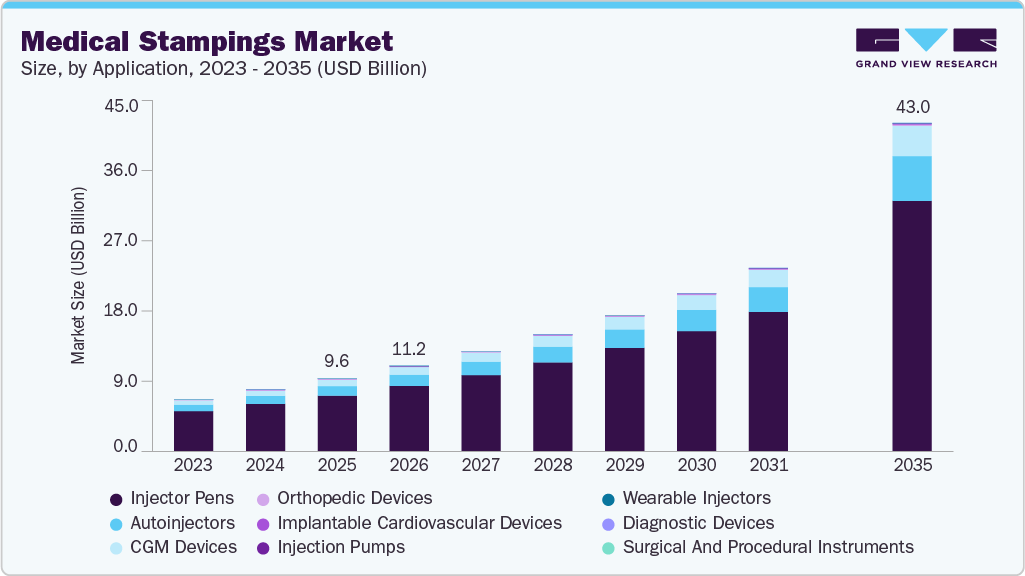
The global medical stampings market size was valued at USD 9.6 billion in 2025 and is projected to grow from USD 11.2 billion in 2026 to USD 43.0 billion by 2035, at a CAGR of 16.1% from 2026 to 2035. The market in North America dominated with a revenue share of 46.9% in 2025. This growth is driven by the rising prevalence of chronic diseases such as cancer, diabetes, and other disorders, along with the increasing number of surgical procedures.
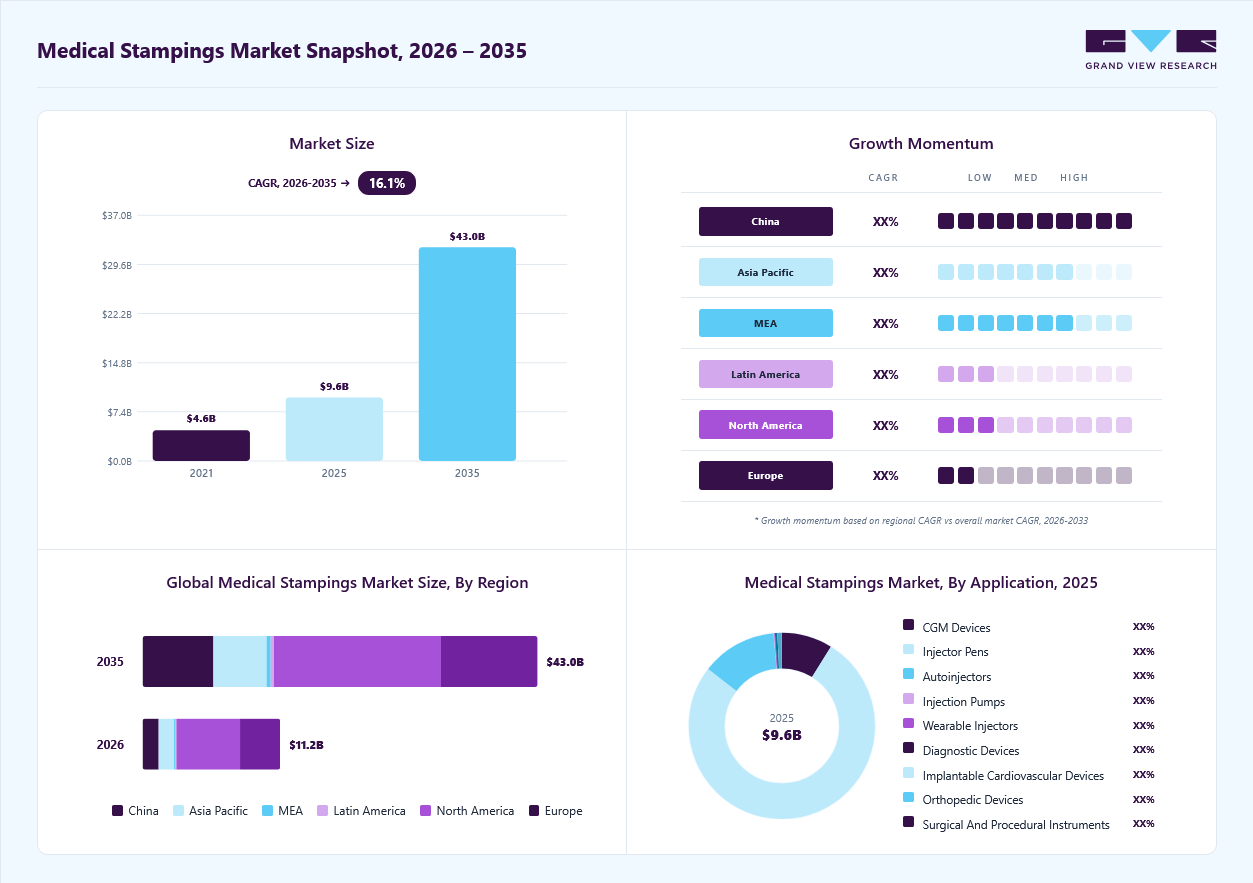 Source: Grand View Research, IR Documents, Primary Interviews, Paid DatabasesTo learn more about this report,
 Download Free Sample Report
Key Market Trends & Insights
- By product: Retainers & spring seats segment held the largest market share of 43.6% in 2025.
- By application: Injector pens segment held the largest market share in 2025.
Regional Highlights
- Largest regional market: North America (46.9% revenue share, 2025)
- Fastest-growing regional market: Asia Pacific (highest CAGR, 2026-2035)
- By country: The U.S. held the largest market share in 2025
Market Size & Forecast
- Market size in 2025: USD 9.6 Billion
- Estimated market size in 2026: USD 11.2 Billion
- Projected market size by 2035: USD 43.0 Billion
- CAGR (2026-2035): 16.1%
Prism AI by Grand View Research Free to tryAsk a question about the medical stampings marketTry asking✓Every figure cited from GVR research Prefer the report? Download free sample →
Technological advancements and the rising adoption of wearable devices are likely to increase demand for stamping components. Additionally, expanding healthcare infrastructure, and growing awareness about early diagnosis and treatment are fueling adoption of advanced medical stamping solutions globally.The increasing burden of chronic and noncommunicable diseases (NCDs) is a major driver for the medical stampings industry. According to the World Health Organization, NCDs account for roughly 74 % of all deaths worldwide, with cardiovascular diseases, cancer, diabetes, and chronic respiratory diseases being the leading causes. The rising prevalence of diabetes is also contributing to the market growth. For example, in OECD countries, the age-standardized prevalence of diabetes among adults reached 8.6% in 2022, while millions more remain undiagnosed. Cardiovascular disease (CVD), another major NCD, continues to escalate in 2023. CVD caused 19.2 million deaths globally, with metabolic risk factors such as high BMI and elevated blood sugar contributing significantly. Meanwhile, in the U.S., 76.4% of adults, or roughly 194 million people, reported having at least one chronic condition as of 2023, and 51.4% reported having multiple chronic conditions. This ongoing rise in chronic disease prevalence is driving demand for long-term medical devices, including stents, insulin pumps, orthopedic implants, and diagnostic tools that rely on precision-stamped metal components.
 To learn more about this report, Download Free Sample Report
The rising volume of health-care waste and growing attention to its environmental impact are pushing medical device manufacturers and hospitals to cut waste across the product lifecycle. Globally, about 85% of health-care waste is non-hazardous, and 15% is hazardous, creating a large stream of material that needs safe handling and reduction. The COVID-19 period sharply increased single-use medical waste and highlighted vulnerabilities in waste management systems, prompting regulators and health systems to prioritize waste minimization and circular practices. For medical stamping manufacturers, sustainability is becoming a key priority. Medical device manufacturers are now looking for stamping processes that generate less scrap, support recycling, and use less energy during production. Metal stamping already has an advantage because ferrous metals are highly recyclable and form one of the world’s largest recycling streams. This helps medical device makers reduce their reliance on new raw materials and meet circular-economy goals.
Manufacturers are also upgrading their production equipment to improve efficiency. Newer technologies, such as servo-driven or servo-electric presses, use less energy and place lower demand on peak power compared with older mechanical or hydraulic machines. Many companies report energy savings of up to 30% after switching to these systems, along with significant reductions in peak electricity usage. This helps reduce both the carbon footprint and the operating costs of medical stamping operations. These measures make stamped components more appealing to OEMs that want reliable, sustainable, and cost-efficient supply chains.
Market Concentration & Characteristics
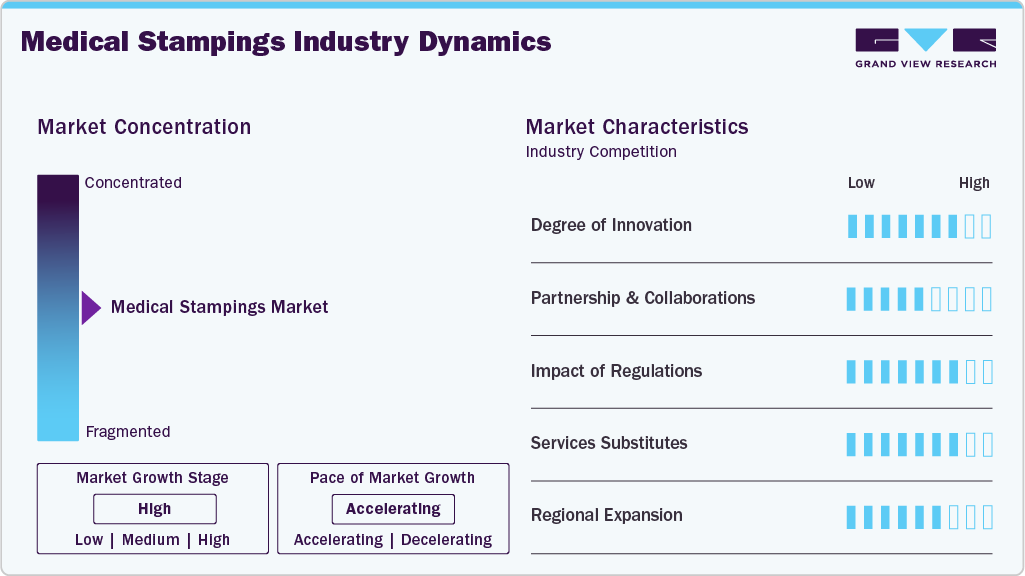
The medical stampings market is moderately concentrated, with leading companies such as TE Connectivity, NN, Inc., Meier Tool & Engineering, Inc., OKAY Industries, Inc., and SFS Group AG holding a significant share of the market. These players offer high-precision metal stamping solutions using materials such as stainless steel, titanium, and specialty alloys, supporting critical medical device components including implants, surgical instruments, diagnostic equipment, and drug-delivery systems. The market is continually evolving due to advancements in micro-stamping, automation, and high-tolerance manufacturing processes, which ensure product consistency and regulatory compliance. In addition, the rising prevalence of chronic diseases, the growing demand for minimally invasive procedures, the increasing production of medical devices, and strict quality standards are driving market growth and encouraging new entrants to develop customized, application-specific stamped components for medical device and healthcare equipment manufacturers.
In the medical stampings industry, the degree of innovation is driven by advancements in precision manufacturing and material engineering. Technological innovations such as ultra-high-definition imaging compatibility, the growing use of flexible and rigid endoscopes, and integrated visualization systems have increased demand for highly accurate and complex stampings. In addition, innovations in micro-stampings, biocompatible alloys, and automation improve component reliability, support minimally invasive procedures, and enhance overall clinical performance.
 To learn more about this report, Download Free Sample Report
Partnering and collaboration are critical growth strategies in the market, enabling companies to enhance manufacturing capabilities and accelerate product commercialization. Strategic alliances help improve scalability, quality compliance, and time-to-market for complex medical devices. For instance, in January 2024, Weiss-Aug entered a manufacturing partnership with Rx Bandz to serve as the exclusive contract manufacturer for the MiniJect auto-injector, supporting scale-up and commercial readiness.
Regulatory frameworks have a significant impact on the medical stampings market, as manufacturers must comply with strict quality, safety, and traceability standards. Regulations such as FDA Quality System Regulations, ISO 13485, and EU MDR increase the need for validated processes, material certification, and rigorous documentation. While compliance raises production costs and extends approval timelines, it also drives innovation in precision manufacturing and quality control. Stringent regulations ultimately strengthen patient safety, enhance product reliability, and favor established manufacturers with strong regulatory expertise.
High-performance polymers such as medical-grade PEEK and reinforced thermoplastics are gaining wider adoption in implantable and wearable devices because they provide benefits like reduced weight, radiolucency, and adjustable mechanical properties that closely match bone or soft tissue, thereby decreasing reliance on metal stampings for certain components. In parallel, additive manufacturing technologies, including both metal and polymer 3D printing, now allow manufacturers to produce complex, patient-specific geometries and consolidate multiple stamped parts into a single printed structure.
Regional expansion in the market is gaining momentum across all major regions. For instance, in April 2025, AVNA expanded into a new manufacturing plant in Costa Rica (Evolution Free Zone) with a USD 5.5M investment, increasing capacity and workforce. Similarly, in November 2024, Weiss-Aug opened a Precision Tech machining center in Pennsylvania, expanding CNC and Swiss machining capacity for medical and drug-delivery devices.
Product Insights
The retainers & spring seats segment dominated the medical stampings market, accounting for the largest revenue share of 43.6% in 2025. Retainers and spring seats are small, high-precision stamped components used to locate, secure, and provide spring preload in many medical devices, from wearable/large-volume injectors, implantable pulse generators (IPGs), and battery assemblies. Clinical and market trends are expanding the addressable volume for these stampings. Chronic respiratory diseases such as COPD and asthma remain widespread and are driving continued adoption and upgrading of inhaler platforms, including connected “smart” add-ons and DPIs, which use spring-loaded valves, dose counters, and retention features that rely on metal stampings. According to the article published by STAT in May 2024, on average, 368 people die due to COPD every hour, and the cost associated with disease treatment is expected to reach up to USD 4.8 trillion. This reflects growing demand for these medical devices, which, in turn, drives the need for retainers and spring-seat stampings that are integral to the mechanisms used to treat these conditions.
The terminals & lead frames segment is expected to witness the second fastest CAGR of 19.1% over the forecast period. The terminals and lead frames segment plays a critical role in the manufacturing of microelectronic medical implants such as pacemakers, cardiovascular implants, and disposable electronic sensors (CGM). These components provide the essential electrical interconnections inside implants, enabling reliable conduction, stimulation, and sensing. As demand for such devices grows, so does the need for precisely stamped, biocompatible terminals and lead-frames. This growth is driven by an aging global population, rising chronic disease burden, especially cardiovascular and neurological conditions, and rapid innovation in miniaturized, wireless implantable systems. Moreover, innovative product launches are made by key market players to fulfill the demand in the market, contributing to the segment growth. For instance, in July 2023, Abbott received FDA approval for the AVEIR DR, a dual-chamber leadless pacemaker that enables beat-to-beat wireless communication between two miniaturized devices. This device also offers a minimally invasive pacing option for patients with abnormal or slow heart rhythms.
Application Insights
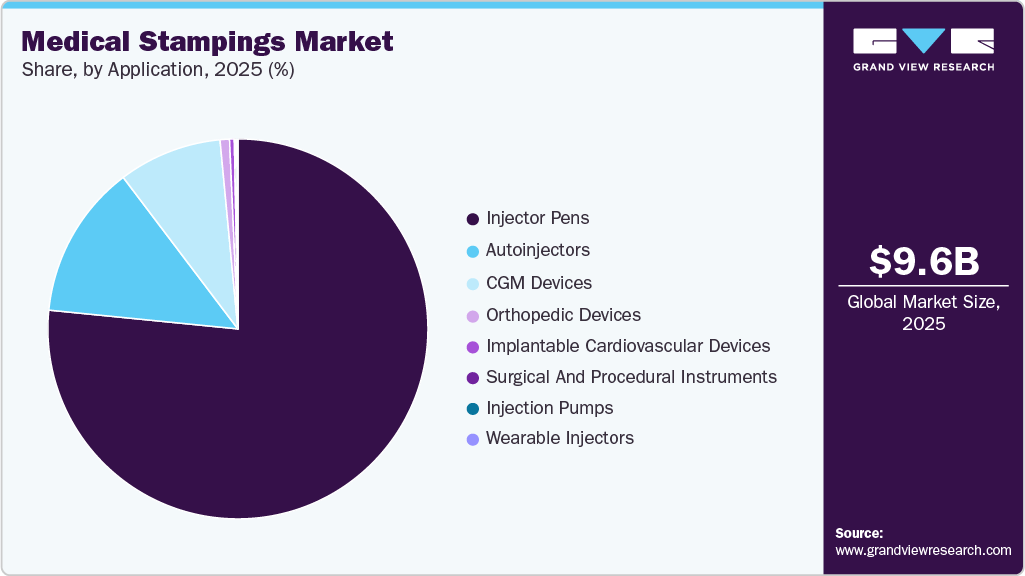
The injector pens segment dominated the medical stampings industry, accounting for the largest revenue share in 2025. Injector pens, which are reusable/disposable insulin pens for biologics, are a major application for precision metal stampings used in the device housings, dosing mechanisms, needles, and safety assemblies. Demand for these devices is rising as they enable accurate dosing, are easier for patients to use than vials & syringes, and are designed for self-administration at home. These user-focused design features drive demand for medical stampings. The primary growth driver for the segment is the growing burden of chronic diseases that require injectable therapy, most notably diabetes, as well as an expanding set of conditions treated with self-injectable biologics, e.g., psoriasis, rheumatoid arthritis, and inflammatory bowel disease. Overall, segment growth is driven by rising chronic-disease prevalence, patient preference for home care, and key market players' increased focus on biologic/ biosimilar injector pen launches.
 To learn more about this report, Download Free Sample Report
The wearable injectors segment is expected to witness the fastest CAGR over the forecast period. The demand for wearable injectors, single-use or reusable on-body devices that deliver larger subcutaneous doses over minutes to hours, is rising due to increasing focus on home healthcare. Pharma collaborations and recent regulatory clearances for on-body delivery systems highlight how quickly wearable injectors are moving toward mainstream use. For instance, in August 2025, Enable Injections announced that its enFuse on-body drug delivery system received regulatory approval from Brazil’s ANVISA, and the device is now also registered with the UK’s MHRA. This marks a major milestone in Enable's collaboration with Sobi to roll out the enFuse platform for therapies such as Empaveli/Aspaveli in Sobi's territories. This shows the rising adoption of wearable injectors among the patients. This rising adoption directly increases demand for medical stampings, which is crucial for the making of these devices.
Regional Insights
The North America medical stampings industry accounted for the largest revenue share of 46.9% in 2025. North America is experiencing steady growth in demand for medical stampings as the device manufacturers need more medical stampings for diagnostics, wearables, implants, and surgical instruments. Stampings are used for contacts, terminals, miniature springs, clips, tubing, and housings, all components found in insulin pumps, continuous glucose monitors (CGMs), pacemakers, and surgical instruments. In addition, the region’s aging population and rising rates of chronic diseases are increasing the need for medical devices.
 To learn more about this report, Download Free Sample Report
U.S. Medical Stampings Market Trends
The U.S. medical stampings industry is experiencing steady growth, driven by an aging population and an increasing burden of chronic diseases. According to the national diabetes statistics report published by the U.S. Centers for Disease Control and Prevention in May 2024, 11.6% of the total population has diabetes, and 38% of the total adult population has prediabetes. This highlights the rising demand for CGMs in the region. As more of these devices are prescribed and used, the consumption of medical stampings rises accordingly.
Europe Medical Stampings Market Trends
The Europe medical stampings industry is being reshaped by the region’s aging population and the increasing prevalence of chronic diseases. As more people enter older age groups, the incidence of age-related conditions rises, leading healthcare systems to rely more on implantable devices, monitoring equipment, and surgical tools, all of which require precision metal components or stampings. According to the European Union, the European Union’s population was estimated at 449.3 million, and more than 21.6% of it was aged 65 or over in January 2024.
The UK medical stampings market is steadily growing. The growth is driven by strong demand for precision-engineered components used in surgical instruments, diagnostic devices, and implantable products. The presence of a well-established healthcare system, growing adoption of minimally invasive procedures, and emphasis on high-quality, regulatory-compliant manufacturing support market growth. Additionally, advancements in metal-forming technologies and increased outsourcing by medical device manufacturers are contributing to the steady expansion of the market.
The medical stampings market in Germany is steadily growing. The medical device manufacturers’ growing focus on strategic development to meet rising market demand is supporting market growth in the country. For instance, in September 2025, Gerresheimer, a German-based company, announced that it is deepening its partnership with Portal Instruments to commercialize the Prime NEXUS reusable, connected autoinjector. The deal combines Portal’s advanced electromechanical autoinjector technology with Gerresheimer’s global manufacturing reach and expertise in primary packaging. This collaboration offers pharma companies a fully integrated, end‑to‑end delivery system for chronic‑disease therapies that is sustainable, efficient, and patient‑centric.
Asia Pacific Medical Stampings Market Trends
Medical stampings are gaining traction in Asia Pacific. The demand for medical stampings is rising sharply due to the rise in medical device manufacturing. The region’s strong manufacturing base, lower production costs, and increasing specialization in contract manufacturing also make it very attractive for device manufacturers to source locally. Moreover, regional governments across Asia Pacific are actively promoting local manufacturing and supply-chain localization to strengthen domestic production capabilities in the medical device sector. This shift is creating new opportunities for stamping manufacturers to serve growing local demand.
The China medical stampings market is benefits due to the strong and rising demand for medical devices, a rapidly ageing population, and the growing burden of chronic and non‑communicable diseases such as diabetes and cardiovascular conditions. For instance, cardiovascular diseases contribute significantly to mortality in China. For instance, recent national data estimates published by the Editorial Office of Chinese General Practice in 2025, China now has around 330 million CVD patients, including major conditions such as 13 million stroke cases, 11.39 million coronary heart disease cases, 8.9 million heart failure cases, and 245 million people living with hypertension. In hospital systems, cardiovascular and cerebrovascular diseases accounted for over 27.6 million patient discharges in 2021, representing more than 15% of all inpatient cases. As more patients require medical implants, diagnostic tools, and home-monitoring systems, the demand for high-precision metal components, including medical stampings, naturally increases, since such components are fundamental building blocks in many devices.
The medical stampings market in South Korea is expected to grow, driven by the rising prevalence of non‑communicable diseases such as diabetes. For instance, in a recent study of Korean adults, the prevalence of diabetes among those aged 30 years and older was reported at 15.5% for 2021‑2022. This escalation in chronic disease burden is expected to drive greater demand for diagnostic devices, monitoring equipment, and surgical tools, thereby stimulating increased need for high‑precision medical stampings and boosting the supply‑chain momentum in this segment.
The India medical stampings market is majorly driven by government investment in medical device manufacturing. For instance, in October 2025, Yamuna Expressway Industrial Development Authority (YEIDA) announced plans to sign an MoU with Medical Excellence Japan (MEJ) to develop a medical‑device park in Sector 28. The partnership will bring Japanese capital and technology to enhance manufacturing, R&D, and export opportunities for Indian producers. YEIDA is also building a USD 14 million (INR 125‑crore) industrial complex with 240 plug‑and‑play units. This initiative aims to support MSMEs and startups in medical device production. This collaboration is expected to strengthen the local medical device manufacturing ecosystem, which, in turn, should increase demand for high‑precision components such as medical stampings, enabling suppliers to scale operations and integrate more deeply into global supply chains.
Latin America Medical Stampings Market Trends
The Latin America medical stampings industry’s growth is primarily driven by Brazil and Argentina. Latin America’s expanding healthcare sector is steadily increasing the need for medical stampings used in device manufacturing, as both local production and imports of medical devices continue to rise. Hospitals and diagnostic labs are increasingly using single-use components and precision-engineered parts, driving higher demand for stamped metal contacts, housings, and microcomponents. As per the U.S. International Trade Administration’s Argentina Medical Products guide published in August 2025, imports account for around 80% of Argentina’s medical device market, signaling strong local demand for advanced technologies. This highlights the growing demand for diagnostic imaging, patient aids, and specialized high-tech devices in the country. These developments provide a practical foundation for component suppliers, including stamping and precision parts makers, to serve OEMs producing medical devices.
The Brazil medical stampings market is growing. According to the U.S. International Trade Administration’s Brazil Healthcare guide, Brazil is the region’s largest healthcare market, with strong demand for advanced medical devices across its public and private healthcare systems. This growth is further strengthened by rising chronic disease rates, which are driving the increased use of insulin pens, glucose monitors, and test strips that rely heavily on stamped metal parts. For instance, in April 2025, Novo Nordisk announced a USD 1.09 billion investment to expand its injectable drug facility in Montes Claros, Brazil, boosting production of treatments for obesity, diabetes, and other chronic diseases. In addition, cardiovascular disease remains a leading cause of mortality in the region, driving a continuous need for monitoring systems and implants, all of which depend on stampings. Combined, rising procedure volumes, increased outpatient care, and expanding device manufacturing create a strong base for sustained market growth.
Middle East & Africa Medical Stampings Market Trends
The demand for medical stampings in the Middle East is growing steadily. The strong growth in medical device use as chronic diseases rise and governments expand healthcare programs, driving higher demand for medical stampings used in devices such as glucose monitors, infusion systems, cardiac monitors, and implantable components. Diabetes remains a major concern in the Gulf, with adult prevalence reported at 18.7% in the UAE, 16.8% in Saudi Arabia, and over 22% in Kuwait, which is leading to greater adoption of monitoring and insulin-delivery devices that rely on precision metal stampings. These factors drive the regional market growth.
The Kuwait medical stampings market growth ismajorlydriven by the increasing government focus on actively strengthening its healthcare ecosystem, including support for advanced medical devices and upgrades to clinical capabilities. For instance, in January 2025, Dr. Ahmad Al-Awadhi, the Kuwaiti Minister of Health, reaffirmed the Ministry’s commitment to advancing medical device development, expanding access to advanced treatments, and strengthening the medical workforce through continuous education and training. This is expected to drive the growth of medical devices, which will eventually contribute to the rising demand for medical stamping in the country.
Key Medical Stampings Company Insights
The medical stampings market is highly competitive, with several key players. The major players are focused on expanding their geographical footprint, forming strategic partnerships to strengthen manufacturing capabilities and product quality, and leveraging collaborations to meet stringent regulatory and clinical requirements.
Key Medical Stampings Companies:
The following key companies have been profiled for this study on the medical stampings market.
- AVNA Inc. (Formerly known as OKAY Industries, Inc.)
- Meier Tool & Engineering, Inc.
- NN Inc. – Precision Engineered Products Division
- NNI Precision / New England Precision (NEP)
- STÜKEN
- Trans-Matic Manufacturing Co.
- SFS Group AG – Medical Division
- Weiss-Aug Group
- Paragon Medical (AMETEK, Inc.)
- Kenmode, Inc.
Recent Development
-
In July 2025, Weiss-Aug completed a strategic corporate restructuring, forming two divisions: Weiss-Aug and Weiss-Aug MedPharma, aligning operations with growth in medical verticals.
-
In November 2024, SFS announced the acquisition of Pro Fastening Systems Inc. to expand its fastener and industrial distribution capabilities.
-
In June 2023, Paragon formed a strategic collaboration with Invibio (Victrex) to advance PEEK-based trauma implants, supported by expanded production space in China.
Medical Stampings Market Report Scope
Report Attribute
Details
Market size in 2025
USD 9.6 billion
Estimated market size in 2026
USD 11.2 billion
Projected market size by 2035
USD 43.0 billion
Growth rate
CAGR of 16.1% from 2026 to 2035
Base year for estimation
2025
Historical data
2021 - 2024
Forecast period
2026 - 2035
Quantitative units
Revenue in USD million and CAGR from 2026 to 2035
Report coverage
Revenue forecast, company ranking, competitive landscape, growth factors, and trends
Segments covered
Product, application, region
Regional scope
North America; Europe; Asia Pacific; Latin America; MEA
Country scope
U.S.; Canada; Mexico; UK; Germany; France; Italy; Spain; Denmark; Sweden; Norway: Japan; China India; Australia; Thailand; South Korea; Brazil; Argentina; South Africa; Saudi Arabia; UAE; Kuwait
Key companies profiled
AVNA Inc. (Formerly known as OKAY Industries, Inc.); Meier Tool & Engineering, Inc.; NN Inc. – Precision Engineered Products Division; NNI Precision / New England Precision (NEP); STÜKEN; Trans-Matic Manufacturing Co.; SFS Group AG – Medical Division; Weiss-Aug Group; Paragon Medical (AMETEK, Inc.); Kenmode, Inc.
Customization scope
Free report customization (equivalent up to 8 analyst’s working days) with purchase. Addition or alteration to the country, regional, and segment scope
Pricing and purchase options
Avail customized purchase options to meet your exact research needs. Explore purchase options
Global Medical Stampings Market Report Segmentation
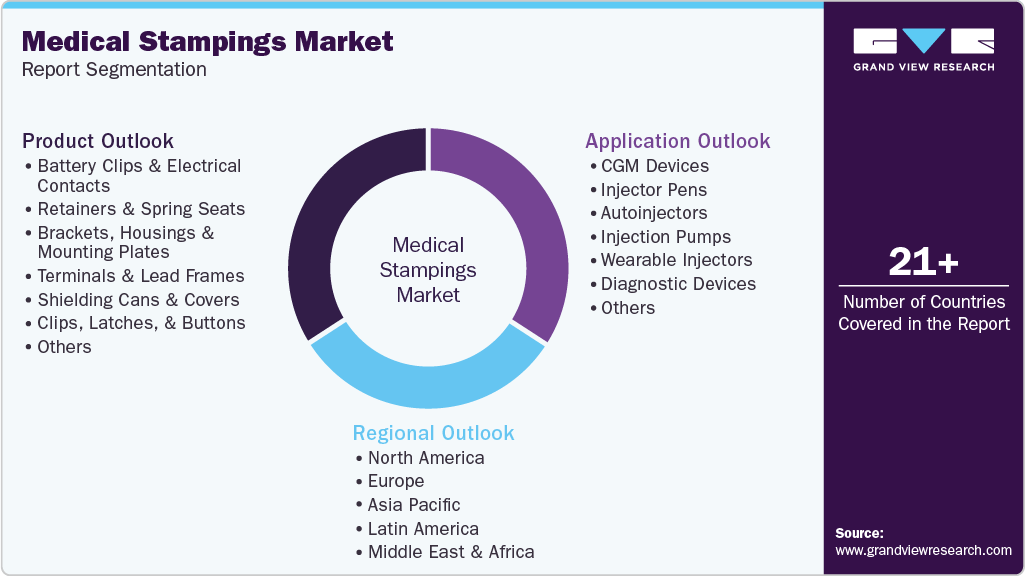
This report forecasts revenue growth at the global, regional, and country levels and provides an analysis of the latest industry trends in each of the sub-segments from 2021 to 2035. Forthis study, Grand View Research has segmented the global medical stampings market report based on product, application, and region:
 To learn more about this report, Download Free Sample Report
-
Product Outlook (Revenue, USD Million, 2021 - 2035)
-
Battery Clips & Electrical Contacts
-
Retainers & Spring Seats
-
Brackets, Housings & Mounting Plates
-
Terminals & Lead Frames
-
Shielding Cans & Covers
-
Clips, Latches, and Buttons
-
Blade Guards & Safety Shields
-
Electric & Power Stampings,
-
Structural & Mechanical Stampings,
-
Shielding & Enclosure Stampings
-
Safety And Protection Stampings
-
-
Application Outlook (Revenue, USD Million, 2021 - 2035)
-
CGM Devices
-
Injector Pens
-
Autoinjectors
-
Injection Pumps
-
Wearable Injectors
-
Diagnostic Devices
-
Implantable Cardiovascular Devices
-
Orthopedic Devices
-
Surgical And Procedural Instruments
-
-
Regional Outlook (Revenue, USD Million, 2021 - 2035)
-
North America
-
U.S.
-
Canada
-
Mexico
-
-
Europe
-
UK
-
Germany
-
France
-
Italy
-
Spain
-
Norway
-
Denmark
-
Sweden
-
-
Asia Pacific
-
China
-
Japan
-
South Korea
-
Thailand
-
Australia
-
India
-
-
Latin America
-
Brazil
-
Argentina
-
-
MEA
-
South Africa
-
Saudi Arabia
-
UAE
-
Kuwait
-
-
Frequently Asked Questions About This Report
The global medical stampings market size was estimated at USD 9.6 billion in 2025 and is expected to reach USD 11.2 billion in 2026.
The global medical stampings market is expected to grow at a compound annual growth rate of 16.1% from 2026 to 2035 to reach USD 43.0 billion by 2035.
North America dominated the market with a share of 46.9% in 2025.
Some key players operating in the medical stampings market include AVNA Inc. (Formerly known as OKAY Industries, Inc.); Meier Tool; Engineering, Inc.; NN Inc. – Precision Engineered Products Division; NNI Precision / New England Precision (NEP); STÜKEN; Trans-Matic Manufacturing Co.; SFS Group AG – Medical Division; Weiss-Aug Group; Paragon Medical (AMETEK, Inc.); Kenmode, Inc.
Key factors driving the medical stampings market growth include the rising prevalence of chronic diseases such as cancer, diabetes, and other disorders, along with increasing number of surgical procedures. Technological advancements and rising adoption of wearable device, diagnosis of diseases is likely grow the demand for stamping components.
The retainers & spring seats segment led with a 43.6% revenue share in 2025, while terminals & lead frames is the fastest-growing segment.
Injector pens held the largest revenue share in 2025, while wearable injectors is the fastest-growing area.
About the Author(s)
Medical Devices Research Team
Healthcare · Medical DevicesThis report was authored by the medical devices research team at Grand View Research - comprising two research analysts, one senior research analyst, and one industry expert - with specialized expertise in the medical devices segment of the healthcare industry. All findings are based on proprietary healthcare databases, executive interviews, and regulatory analysis, subject to internal peer review prior to publication.
Last Updated:
Speak to Analyst

Customize this report to your needs - add regions, segments, or data points, with 20% free customization.
Or view our licence options:


ISO 9001:2015 & 27001:2022 Certified
We are GDPR and CCPA compliant! Your transaction & personal information is safe and secure. For more details, please read our privacy policy.


