
- Home
- »
- Beauty & Personal Care
- »
-
Menstrual Cup Market Size And Share Report, 2026-2033GVR Report cover

Menstrual Cup Market (2026 - 2033)
Size, Share & Trends Analysis Report By Material Type (Silicone, Thermoplastic Elastomer, Latex Rubber), By Type (Reusable, Disposable), By Distribution Channel (Online Stores, Pharmacies, Retail Stores), By Region, And Segment Forecasts
Market Size, 2025
$913.4MMarket Estimate, 2026
$964.6MMarket Forecast, 2033
$1,414.7MCAGR, 2026–2033
5.6%Menstrual Cup Market Summary
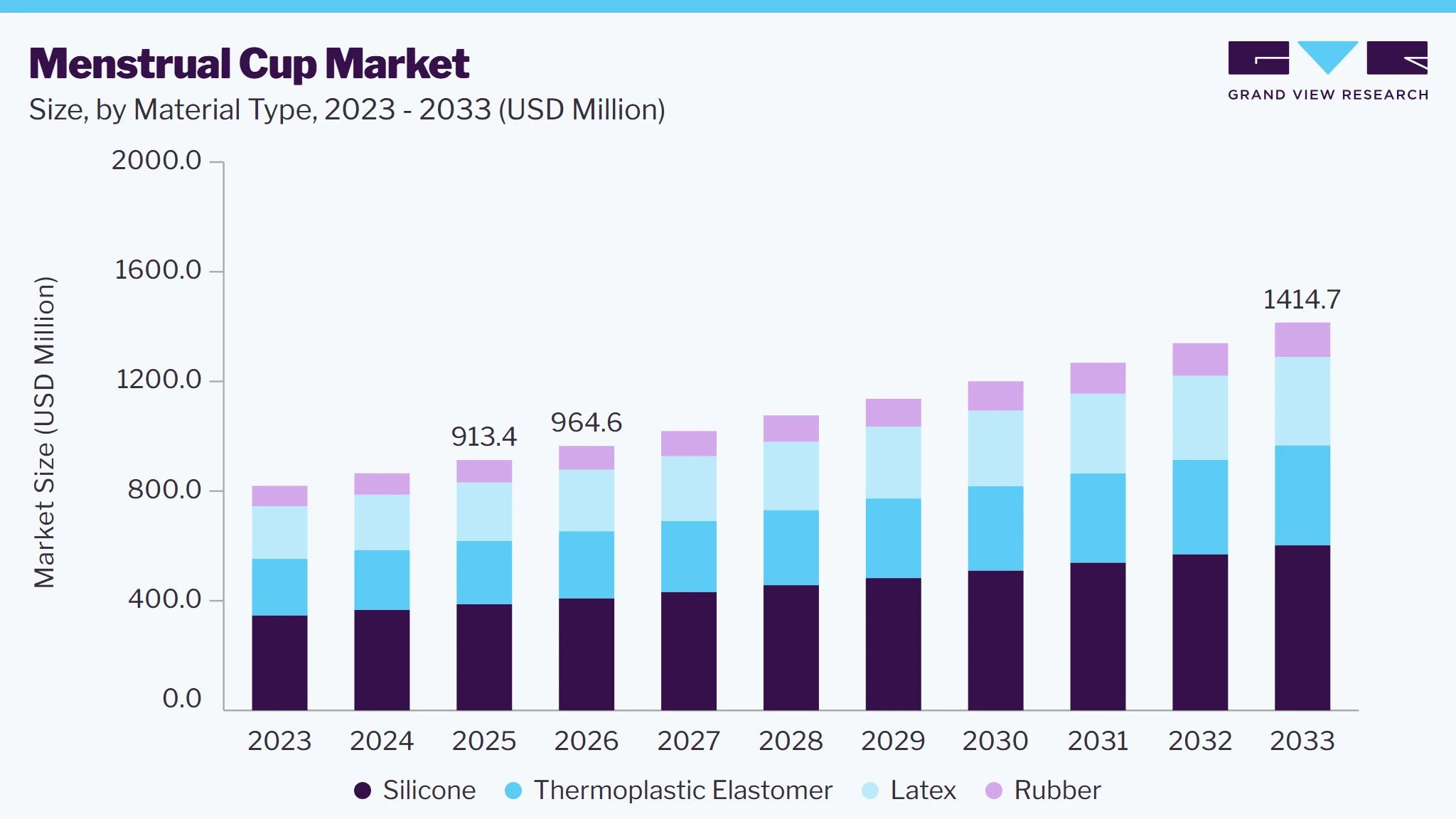
The global menstrual cup market size was valued at USD 913.4 million in 2025 and is projected to grow from USD 964.6 million in 2026 to USD 1414.7 million by 2033, at a CAGR of 5.6% from 2026 to 2033. North America dominated the market, accounting for a revenue share of 42.1% in 2025. One of the primary reasons for the growth of the menstrual cup industry is the heightened environmental awareness.
 Source: Grand View Research, IR Documents, Primary Interviews, Paid DatabasesTo learn more about this report,
 Download Free Sample Report
 Key Market Trends & Insights
- By material type: Latex segment dominated the market, with a revenue share of 41.1% in 2025.
- By type: Reusable segment held the largest market share of 76.2% in 2025.
- By distribution channel: Online stores segment held the largest revenue share of 77.0% in 2025.
Regional Highlights
- Largest regional market: North America (42.1% revenue share, 2025)
- Fastest-growing regional market: Asia Pacific (highest CAGR, 2026-2033)
- By country: The U.S. held the largest market share in 2025.
Market Size & Forecast
- Market size in 2025: USD 913.4 Million
- Estimated market size in 2026: USD 964.6 Million
- Projected market size by 2033: USD 1414.7 Million
- CAGR (2026-2033): 5.6%
Three ways to get this report
Buy it, customize it, or ask a question.Ask an Analyst
Analyst response in 1 business day
- AccessReport author, directly
- Reply timeWithin 1 working day
- No sales callDirect answer only
- FormatEmail reply
- CostFree, no cost
Get the Full Report
What the study covers
- FormatsPDF · Excel · Dashboard
- Timeline2026–2033 annual, 2025 base
- Coverage20+ countries, 5 regions
- Companies10+ key players profiled
Customize the Report
20% free customization
- IncludeCountries, segments, points
- TailorTo your product definition
- ExtendDeeper competitor detail
- OrA fully bespoke study
- Turnaround5–10 working days
Menstrual cups, made from eco-friendly materials such as medical-grade silicone, are reusable for up to 10 years, drastically reducing menstrual waste. This aligns with global efforts to promote sustainability and reduce environmental impact. Government policies and campaigns encouraging sustainable alternatives further bolster this trend.Menstrual cups offer significant long-term cost savings compared to disposable products like tampons and pads. While the initial purchase cost of a menstrual cup may be higher, its reusability eliminates recurring monthly expenses. This economic advantage appeals to consumers globally, especially in regions where affordability is a concern. Additionally, online platforms have made these products more accessible and affordable by allowing consumers to compare prices and read reviews.
 To learn more about this report, Download Free Sample Report
 Growing concerns about the health risks associated with traditional menstrual products, such as exposure to chemicals and fragrances in pads and tampons, have driven consumers toward safer alternatives like menstrual cups. These products are free from harmful chemicals and have a lower risk of causing toxic shock syndrome (TSS). Endorsements from healthcare providers and health-focused media have further increased consumer trust in menstrual cups as a safer option.
The rise in educational initiatives about menstrual health has played a pivotal role in market growth. Governments, NGOs, and corporations are actively promoting awareness about menstrual hygiene through campaigns targeting schools, communities, and online platforms. These efforts not only educate women about the benefits of menstrual cups but also help break cultural taboos surrounding menstruation. Policies such as tax exemptions on menstrual products or free distribution in schools have also contributed to wider adoption.
Continuous innovation in menstrual cup design has enhanced comfort and usability, making them more appealing to a broader audience. Manufacturers are focusing on customization by offering various sizes and shapes to suit individual needs. The use of advanced materials like medical-grade silicone ensures durability and safety while improving user experience. Such innovations have expanded the market by addressing consumer concerns about comfort and ease of use.
Government initiatives aimed at improving access to feminine hygiene products have significantly influenced market growth. For example, regulatory efforts like the Menstrual Equity for All Act in the U.S. promote access to reusable options like menstrual cups. Additionally, collaborations between manufacturers and governments or educational institutions help expand the reach of these products into untapped markets, especially in developing regions where cultural stigmas still exist.
One of the most significant challenges is the lack of awareness and education regarding menstrual cups, particularly in developing countries. Many women are unfamiliar with how to use menstrual cups or their benefits compared to traditional products like pads and tampons. This lack of knowledge often leads to misconceptions about safety and hygiene, which can deter potential users from making the switch. Educational campaigns are crucial but have been hampered by social distancing measures during the COVID-19 pandemic, limiting outreach efforts to inform women about menstrual health and hygiene.
The market for menstrual hygiene products is highly competitive, with various alternatives such as reusable cloth pads and period underwear gaining popularity. These alternatives often appeal to consumers who may find them easier to use or more comfortable than menstrual cups. As a result, the presence of these competing products can limit the market penetration of menstrual cups, particularly among those who are hesitant to try something new.
Market Dynamics
The menstrual cup market is witnessing steady growth driven by increasing awareness of sustainable menstrual hygiene, rising environmental concerns associated with disposable sanitary products, and growing consumer preference for cost-effective, reusable menstrual solutions. Government initiatives, menstrual health awareness campaigns, and expanding online retail channels are further improving product accessibility and encouraging adoption, particularly among younger consumers seeking eco-friendly alternatives.
Increasing awareness regarding menstrual hygiene and environmental sustainability is a key factor driving the menstrual cup market. Consumers are becoming more conscious of the environmental impact of disposable sanitary pads and tampons, which generate significant plastic and non-biodegradable waste. Menstrual cups, typically made from medical-grade silicone, thermoplastic elastomer (TPE), or natural rubber, can be reused for several years, making them a cost-effective and sustainable alternative. Educational campaigns by governments, NGOs, healthcare organizations, and menstrual health advocates have also contributed to greater acceptance of reusable menstrual products. In addition, rising female workforce participation, increasing disposable incomes, and growing access to e-commerce platforms have improved product availability and accelerated adoption across both developed and emerging markets.
Limited consumer awareness, cultural stigma surrounding menstruation, and reluctance to adopt internal menstrual hygiene products continue to restrain market growth. In many developing countries, discussions related to menstrual health remain socially sensitive, resulting in inadequate education about menstrual cups and their safe usage. Concerns regarding insertion, comfort, hygiene, and potential health risks discourage first-time users, while misconceptions surrounding virginity and cultural beliefs further hinder adoption. Additionally, limited availability in rural areas and the higher upfront cost compared to disposable menstrual products may discourage price-sensitive consumers despite the long-term cost benefits.Growing investments in menstrual health awareness programs and continuous product innovation present significant opportunities for the menstrual cup market. Governments, educational institutions, and non-profit organizations are increasingly promoting sustainable menstrual hygiene through awareness campaigns, school health programs, and product distribution initiatives. At the same time, manufacturers are introducing menstrual cups in multiple sizes, softer medical-grade silicone materials, ergonomic designs, and beginner-friendly options to improve comfort and usability. The expansion of direct-to-consumer sales through e-commerce platforms, coupled with increasing demand for eco-friendly personal care products, is expected to further strengthen market growth, particularly among younger, environmentally conscious consumers.Analyst Perspective
The menstrual cup market is positioned for sustained long-term growth, supported by the global shift toward sustainable menstrual hygiene, increasing environmental awareness, and rising consumer preference for reusable personal care products. While adoption remains relatively low in several developing regions due to cultural barriers and limited awareness, growing educational initiatives, government-led menstrual health programs, and expanding e-commerce availability are expected to accelerate market penetration. Over the long term, manufacturers that differentiate through medical-grade materials, ergonomic designs, multiple size offerings, and strong consumer education are likely to strengthen brand loyalty and gain a competitive advantage. As sustainability becomes an increasingly important purchasing criterion, menstrual cups are expected to evolve from a niche alternative into a mainstream menstrual hygiene product.
Material Type Insights
Based on material type, the latex segment led the market with the largest revenue share of 41.1% in 2025 and is expected to grow at the fastest CAGR over the forecast period. Silicone is the most commonly used material for menstrual cups due to its durability, hypoallergenic properties, and reusability. Medical-grade silicone ensures safety for prolonged mucous membrane contact and can last up to 10 years, making it highly cost-effective. Silicone cups are dimensionally stable, resilient, and easy to clean, which appeals to environmentally conscious consumers seeking long-term solutions. The growth of silicone-based cups is driven by their widespread regulatory approval and compatibility with various jurisdictions requiring medical-grade materials. The growth of silicone-based menstrual cups is largely attributed to their safety profile and regulatory acceptance. Medical-grade silicone meets stringent standards for hygiene and biocompatibility, making it the preferred choice among manufacturers and consumers alike. Its long lifespan reduces waste and recurring costs, aligning with the increasing demand for sustainable menstrual products.
Thermoplastic elastomer (TPE) is another material used in menstrual cups are is expected to grow at a CAGR of 5.9% from 2025 to 2030. These plastics are heat-moldable and elastomeric, providing flexibility and comfort during use. TPE cups are often marketed in jurisdictions allowing food-grade materials rather than medical-grade ones, making them more affordable. Their adaptability to different regulatory environments has contributed to their growth in regions with fewer restrictions on medical-grade standards. TPE-based menstrual cups have gained traction due to their affordability and flexibility in manufacturing processes. They cater to markets where cost is a primary concern or where regulations permit food-grade materials instead of medical-grade ones. Their ability to adapt to diverse consumer needs has supported their growth in regions with varying economic conditions
Type Insights
Based on type, the reusable segment led the market with the largest revenue share of 76.2% in 2025. Reusable menstrual cups are made from durable materials like medical-grade silicone, latex, or rubber and can last for up to 10 years with proper care. Their growth is primarily driven by environmental sustainability, cost-effectiveness, and health benefits. Reusable cups significantly reduce menstrual waste compared to disposable options, as they generate only about 0.4% of the plastic waste produced by pads and 6% of that from tampons. Additionally, they are budget-friendly over time; while the initial cost is higher, their long lifespan eliminates the need for recurring purchases. Health-conscious consumers also prefer reusable cups because they are free from harmful chemicals such as dioxins found in some disposable products. Reusable menstrual cups currently dominate the menstrual cup market, accounting for an estimated 85–90% share, as they align with global sustainability goals and consumer demand for eco-friendly solutions.
The demand for disposable menstrual cups is expected to grow at a CAGR of 4.9% from 2025 to 2030. These cups are particularly appealing for individuals who may find cleaning reusable cups inconvenient or unhygienic in certain settings, such as public restrooms. Disposable cups also offer unique features, such as compatibility with penetrative intercourse during menstruation, which reusable options typically do not provide. However, their environmental impact is higher due to single-use plastic waste, limiting their appeal among eco-conscious consumers. Despite this drawback, disposable menstrual cups hold a smaller but growing market share of around 10–15%, driven by demand from users seeking hassle-free alternatives.
Distribution Insights
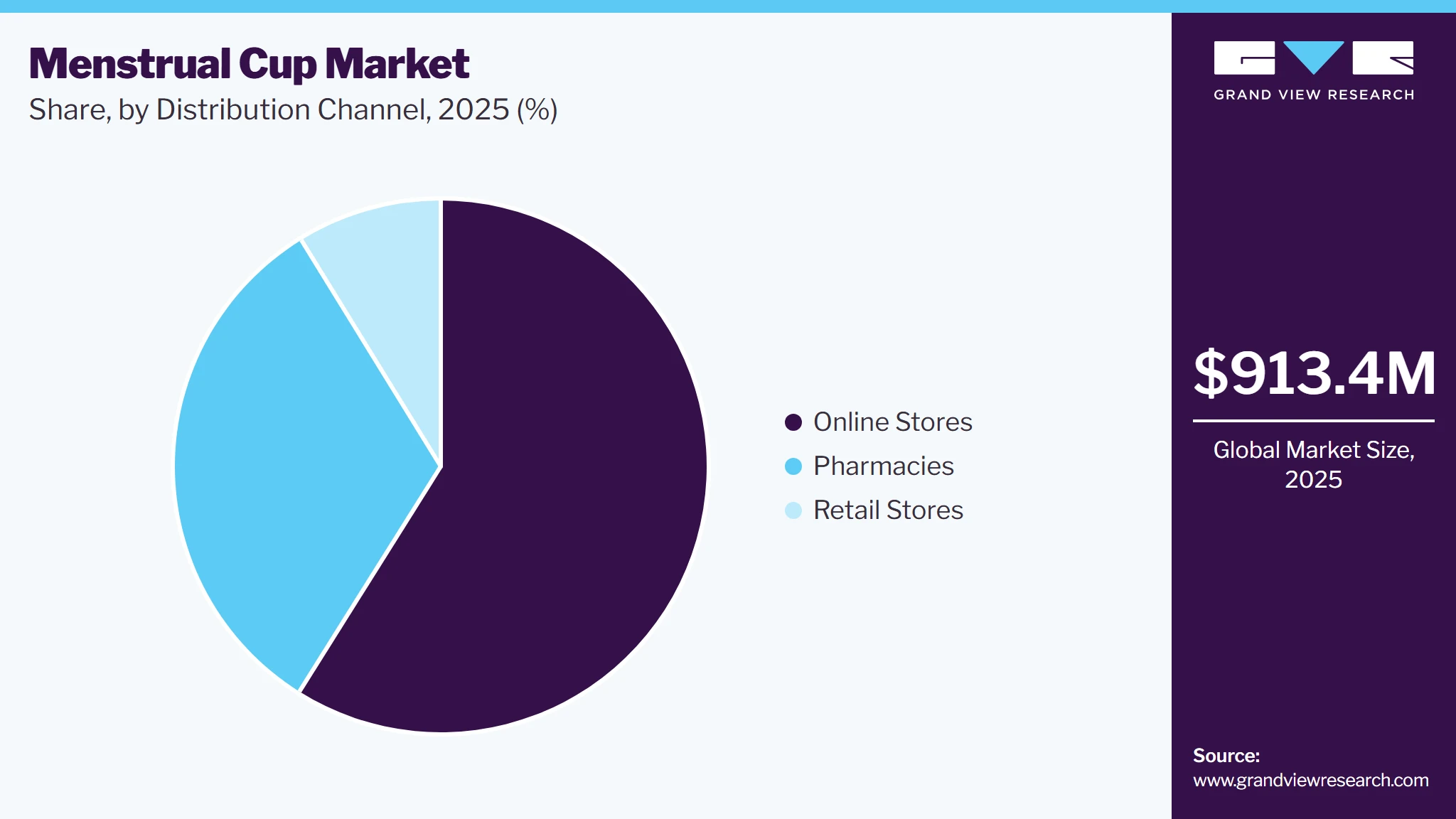
Based on distribution channel, the online stores segment led the market with the largest revenue share of 77.0% in 2025. E-commerce has emerged as the dominant distribution channel for menstrual cups, accounting for a significant share of sales due to its unparalleled convenience. Consumers appreciate the ability to browse a wide variety of products, read user reviews, and make purchases discreetly from home. This is particularly important for menstrual products, which some individuals prefer to buy without public scrutiny. The rise of digital literacy and increased internet penetration, especially in emerging markets, has expanded the consumer base for online purchases. Competitive pricing and frequent promotional offers on e-commerce platforms further attract cost-sensitive customers. As a result, e-commerce is projected to continue growing rapidly, reflecting changing consumer preferences towards online shopping.
 To learn more about this report, Download Free Sample Report
 Retail remain traditional yet vital distribution channels in the menstrual cup market. These venues benefit from high foot traffic and the opportunity for impulse buying. Consumers often prefer to purchase menstrual cups in-store where they can physically inspect products and receive immediate assistance if needed. However, the share of retail is increasingly challenged by the convenience and variety offered by online platforms. Despite this competition, supermarkets still play a crucial role in reaching consumers who may not be comfortable making purchases online or who require immediate access to products.
Pharmacy stores also contribute significantly to the distribution of menstrual cups, particularly for first-time buyers who may seek professional advice or reassurance about product safety. Pharmacies provide a trusted environment where consumers can ask questions about menstrual health and hygiene. This channel is particularly important for individuals with specific medical needs or allergies, as pharmacies often stock a range of products tailored to these requirements. While pharmacy stores hold a smaller market share compared to e-commerce, their role remains essential in educating consumers and providing immediate access.
Regional Insights
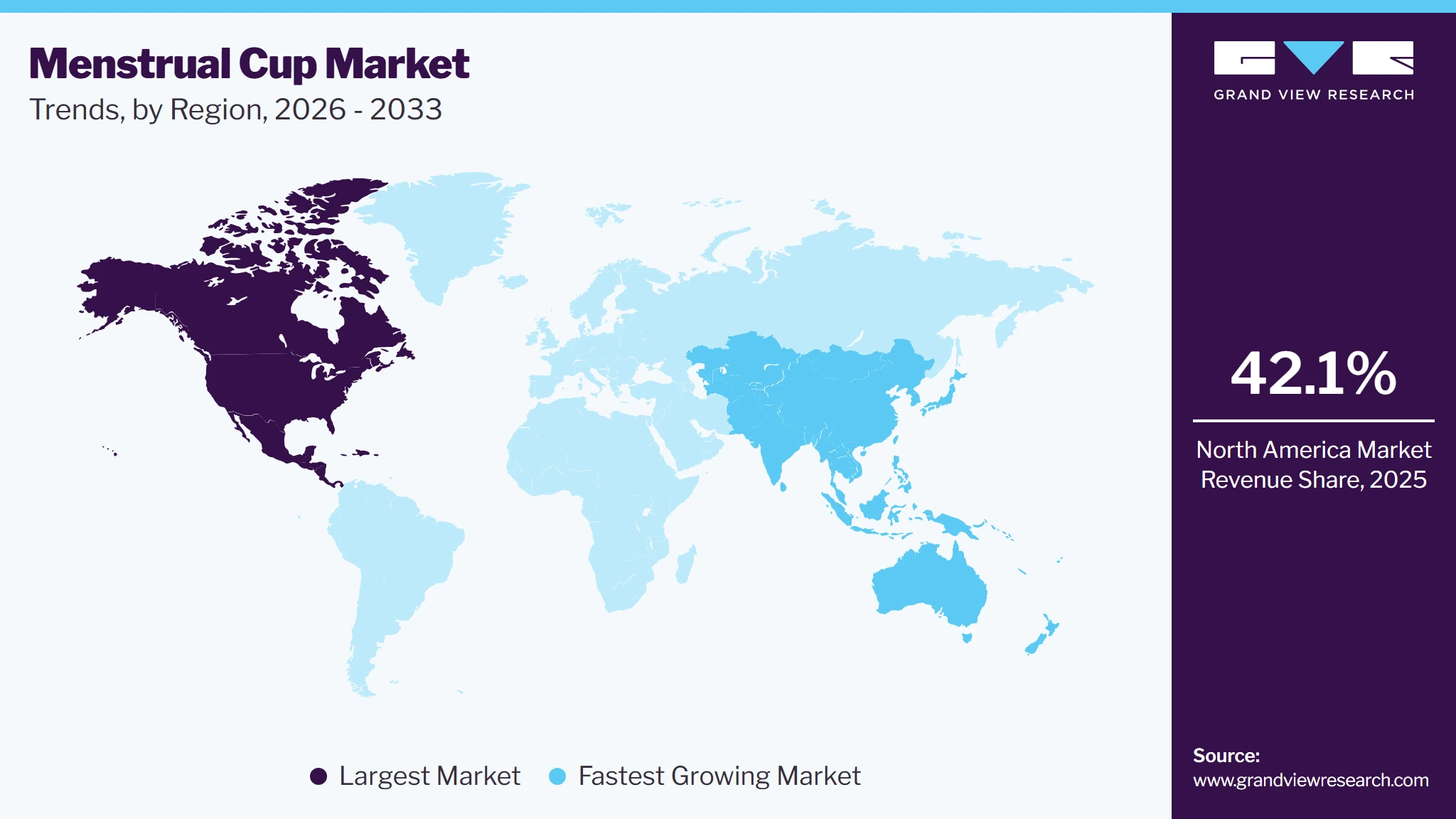
North America dominated the menstrual cup market with the largest revenue share of 42.1% in 2025. The growth in this region is attributed to high levels of awareness about menstrual health and environmental sustainability. Robust marketing efforts by manufacturers, coupled with a strong emphasis on eco-friendly lifestyles, have normalized the use of menstrual cups among consumers. Additionally, the advanced retail infrastructure, including both online and offline channels, provides easy access to a variety of brands and products, supporting market expansion.
 To learn more about this report, Download Free Sample Report
 U.S. Menstrual Cup Market Trends
The menstrual cup market in the U.S. held the largest share in the North America region in 2025. Government initiatives also play a crucial role in promoting menstrual hygiene products. For instance, legislative efforts such as the Menstrual Equity for All Act aim to improve access to menstrual products, including cups, thereby encouraging their use among women who may have previously faced barriers to accessing these products. Awareness campaigns led by both government and non-profit organizations have significantly increased public knowledge about menstrual health, contributing to a more informed consumer base. The availability of a diverse range of menstrual cup brands and products through various distribution channels, particularly e-commerce platforms, has also facilitated market growth. Consumers now have easier access to information and purchasing options, allowing them to make more informed choices regarding their menstrual health.
Europe Menstrual Cup Market Trends
Europe holds a notable share of the menstrual cup industry, with countries like the UK, Germany, and France leading the way. The growth in Europe is fueled by supportive government policies promoting sustainable menstrual products and widespread environmental consciousness among consumers. Educational initiatives aimed at raising awareness about menstrual health also contribute to the increasing adoption of menstrual cups in this region.
Asia Pacific Menstrual Cup Market Trends
The Asia Pacific menstrual cup industry is expected to grow at a fastest CAGR of 6.1% from 2026 to 2033. This growth is driven by increasing urbanization, rising disposable incomes, and heightened awareness of menstrual health through educational campaigns. Countries like India and China are at the forefront, where government initiatives and non-profit organizations are promoting menstrual hygiene and sustainability. The region's large population and evolving consumer preferences towards eco-friendly products further bolster the adoption of menstrual cups.
Key Menstrual Cup Company Insights
The competitive landscape of the menstrual cup market is characterized by a diverse range of players and a growing emphasis on sustainability, product innovation, and consumer education. Key market participants include established brands such as Diva International Inc., Mooncup Ltd, Me Luna GmbH, The Flex Company, and Lena Cup LLC, among others. These companies are actively competing to capture market share by offering a variety of menstrual cup designs made from materials like medical-grade silicone, latex, and thermoplastic elastomers.
Key Menstrual Cup Companies:
The following key companies have been profiled for this study on the menstrual cup market.
- Diva International Inc.
- Mooncup Ltd.
- Me Luna GmbH
- Lena Cup LLC
- The Flex Company
- LYV Life Inc. (Cora)
- LELOi AB (Intimina)
- Blossom Cup
- Fleurcup
- Lune Group Oy Ltd.
- Lunette Menstrual Cup (Peptonic Medical AB)
- Jaguara s.r.o. (LadyCup)
- YUUKI Company s.r.o.
- Ruby Cup
- Saalt
- The Keeper, Inc.
- Sirona Hygiene Private Limited
- SochGreen
- Redcliffe Hygiene Private Limited
- Procter & Gamble
Competitive Benchmarking
Category
Operating Strategies
Competitive Edge
Weakness
Established Players (Diva International Inc.; Mooncup Ltd.; Me Luna GmbH; Lena Cup LLC; The Flex Company; LYV Life Inc. (Cora); LELOi AB (Intimina); Lunette Menstrual Cup (Peptonic Medical AB); Ruby Cup; Saalt; The Keeper, Inc.; Sirona Hygiene Private Limited; Procter & Gamble)
- Expand reusable menstrual care portfolios through product innovation, strengthen omnichannel distribution across pharmacies, supermarkets, and e-commerce platforms, invest in consumer education and sustainability campaigns, and expand geographically through strategic partnerships and certifications.
- Strong brand recognition, established distribution networks, high consumer trust, proven product quality and regulatory compliance, diversified menstrual hygiene portfolios, and strong investment in product innovation and marketing.
- Higher regulatory compliance and operational costs, slower product development due to large-scale operations, and challenges in driving adoption in regions with low awareness and cultural stigma surrounding menstrual cups.
Emerging Players (Blossom Cup; Fleurcup; Lune Group Oy Ltd.; Jaguara s.r.o. (LadyCup); YUUKI Company s.r.o.; SochGreen; Redcliffe Hygiene Private Limited)
- Focus on direct-to-consumer (DTC) sales, leverage digital marketing and influencer collaborations, offer affordable and eco-friendly menstrual cups, expand through online marketplaces, and increase brand awareness via menstrual health education initiatives.
- Agile product development, strong online presence, ability to address niche consumer needs, competitive pricing, and growing appeal among environmentally conscious and younger consumers.
Limited financial resources, smaller distribution networks, lower international brand recognition, and challenges in scaling production and competing with established global brands. Menstrual Cup Market Report Scope
Report Attribute
Details
Market size in 2025
USD 913.4 million
Estimated market size in 2026
USD 964.6 million
Projected market size by 2033
USD 1414.7 million
Growth rate
CAGR of 5.6% from 2026 to 2033
Base year for estimation
2025
Historical data
2021 - 2024
Forecast period
2026 - 2033
Quantitative units
Revenue in USD million/billion and CAGR from 2026 to 2033
Report coverage
Revenue forecast, company ranking, competitive landscape, growth factors, and trends
Segments covered
Material type, type, distribution channel, region
Regional scope
North America; Europe; Asia Pacific; Central & South America; MEA
Country scope
U.S.; Canada; Mexico; Germany; UK; France; Italy; Spain; China; Japan; India; Australia & New Zealand; South Korea; Brazil; UAE
Key companies profiled
Diva International Inc.; Mooncup Ltd.; Me Luna GmbH; Lena Cup LLC; The Flex Company; LYV Life Inc. (Cora); LELOi AB (Intimina); Blossom Cup; Fleurcup; Lune Group Oy Ltd.; Lunette Menstrual Cup (Peptonic Medical AB); Jaguara s.r.o. (LadyCup); YUUKI Company s.r.o.; Ruby Cup; Saalt; The Keeper, Inc.; Sirona Hygiene Private Limited; SochGreen; Redcliffe Hygiene Private Limited; Procter & Gamble
Customization scope
Free report customization (equivalent up to 8 analysts' working days) with purchase. Addition or alteration to country, regional & segment scope.
Pricing and purchase options
Avail customized purchase options to meet your exact research needs. Explore purchase options
Global Menstrual Cup Market Report Segmentation
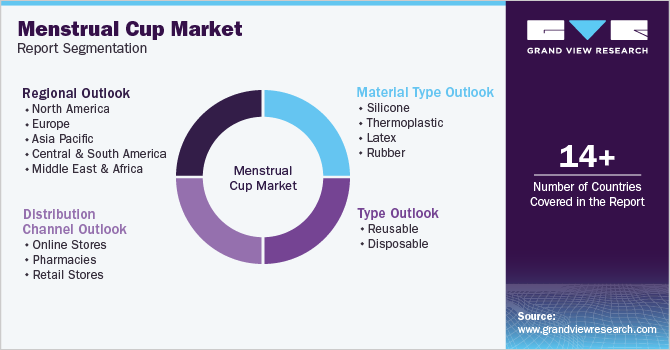
This report forecasts revenue growth globally, regionally, and country-wide and analyzes the latest industry trends and opportunities in each sub-segment from 2021 to 2033. Grand View Research has segmented the global menstrual cup market report by material type, type, distribution channel, and region:
 To learn more about this report, Download Free Sample Report
 -
Material Type Outlook (Revenue, USD Million, 2021 - 2033)
-
Silicone
-
Thermoplastic
-
Latex
-
Rubber
-
-
Type Outlook (Revenue, USD Million, 2021 - 2033)
-
Reusable
-
Disposable
-
-
Distribution Channel Outlook (Revenue, USD Million, 2021 - 2033)
-
Online Stores
-
Pharmacies
-
Retail Stores
-
-
Regional Outlook (Revenue, USD Million, 2021 - 2033)
-
North America
-
U.S.
-
Canada
-
Mexico
-
-
Europe
-
Germany
-
UK
-
France
-
Italy
-
Spain
-
-
Asia Pacific
-
China
-
Japan
-
India
-
Australia & New Zealand
-
South Korea
-
-
Central & South America
-
Brazil
-
-
Middle East & Africa
-
UAE
-
-
Research Methodology
The menstrual cup Market figures in this report are based on a proven research process that combines executive interviews with secondary research from proprietary databases, company filings, and recognized regulatory and institutional sources. Market size is built through value-chain sizing - reconciling supply-side and demand-side estimates - and triangulated with bottom-up and top-down approaches. Every estimate passes multiple levels of expert validation before publication, with each menstrual cup segment quantified using the revenue-capture definitions in the table below.
Segment Definition
Segment - Material Type
Revenue capture definition
Latex
This segment covers the revenues generated through the sales of menstrual cups made from latex, a natural rubber material known for its flexibility and softness. Latex menstrual cups provide a comfortable fit and are reusable; however, they are less commonly used due to the risk of latex allergies. Examples include latex-based menstrual cups offered by smaller regional manufacturers and natural rubber menstrual cups available in select markets.
Silicone
This segment covers the revenues generated through the sales of silicone menstrual cups, which are manufactured using medical-grade silicone. Silicone is the most widely used material due to its biocompatibility, durability, hypoallergenic properties, and ability to withstand repeated sterilization. Examples include the DivaCup, Saalt Cup, Lunette Menstrual Cup, and Mooncup, all of which are made from medical-grade silicone.
Thermoplastic Elastomer
This segment covers the revenues generated through the sales of menstrual cups made from thermoplastic elastomer (TPE). TPE combines the flexibility of rubber with the processing advantages of plastics, offering a soft, comfortable, and recyclable alternative to silicone. Examples include the MeLuna Menstrual Cup, one of the most recognized TPE menstrual cup brands, along with other TPE-based reusable cups sold in Europe.
Rubber
This segment covers the revenues generated through the sales of menstrual cups manufactured from natural rubber (gum rubber). These cups are flexible, durable, and reusable, offering an alternative to silicone-based products, although they may not be suitable for individuals with rubber or latex allergies. Examples include the Keeper Cup and the Yuuki Classic Natural Rubber Cup (where available), which utilize natural rubber materials.
Estimation Model
Layer
Guiding Question
Description
01 - Epidemiology Layer
Who has a need for menstrual cups?
Identify the menstruating female population by age, menstrual health awareness, and preference for sustainable menstrual hygiene products.
02 - Digital Access Layer
Who has a need for menstrual cups?
Apply region-specific awareness, retail availability, e-commerce penetration, pharmacy access, and affordability to estimate the addressable consumer base.
03 - Behavioural Layer
Who actively uses menstrual cups?
Apply menstrual cup adoption rates based on awareness, acceptance of reusable products, healthcare recommendations, and conversion from disposable sanitary products.
04 - Monetisation Layer
How is revenue generated?
Estimate revenue by multiplying active users by the average selling price (ASP), replacement cycle, and revenue channels, including online, retail, pharmacy, and institutional channels.
Delivered Customizations
This report has been delivered with the following In-depth customizations
Client Request
Customization Delivered
Value Adds
Menstrual Health Awareness & Sustainable Hygiene Trends
Conducted a focused analysis of menstrual hygiene awareness, adoption of reusable menstrual cups, sustainability trends, consumer preferences, healthcare initiatives, and the growing shift toward eco-friendly feminine hygiene products.
Helps stakeholders identify high-growth market opportunities, evaluate changing consumer behavior, and assess commercialization potential in the sustainable menstrual hygiene segment.
Distribution Channel & Consumer Adoption Trends
Evaluated adoption trends across online platforms, pharmacies, supermarkets, specialty stores, and direct-to-consumer channels, including purchasing behavior, product accessibility, pricing strategies, and awareness campaigns driving menstrual cup adoption.
Provides insights into emerging distribution channels, untapped consumer segments, and retail strategies to support product positioning, market penetration, and business expansion.
Product Innovation & Competitive Landscape Assessment
Assessed demand for medical-grade silicone, TPE, and latex menstrual cups, including innovations in product design, size variations, comfort features, regulatory compliance, and competitive benchmarking of leading manufacturers.
Supports investment and expansion strategies by identifying innovation opportunities, competitive differentiation, regulatory readiness, and long-term growth prospects in the menstrual cup market.
Frequently Asked Questions About This Report
North America dominated with a 42.0% revenue share in 2025.
Some key players operating in the menstrual cup market include Diva International Inc.; Mooncup Ltd.; Me Luna GmbH; Lena Cup LLC; The Flex Company; LYV Life Inc. (Cora); LELOi AB (Intimina); Blossom Cup; Fleurcup; Lune Group Oy Ltd.; Lunette Menstrual Cup (Peptonic Medical AB); Jaguara s.r.o. (LadyCup); YUUKI Company s.r.o.; Ruby Cup; Saalt; The Keeper, Inc.
One of the primary reasons for the growth of the menstrual cup market is heightened environmental awareness. Traditional menstrual products like pads and tampons contribute significantly to non-biodegradable waste.
The global menstrual cup market size was valued at USD 913.4 million in 2025 and is estimated at USD 964.6 million in 2026.
The global menstrual cup market is expected to grow at a CAGR of 5.6% from 2025 to 2033, reaching USD 1414.7 million by 2033.
Latex segment led the market with the largest revenue share of 41.1% in 2025 and thermoplastic elastomer (TPE) segment is second fastest growing market.
The reusable segment led the market with the largest revenue share of 76.2% in 2025. Reusable menstrual cups are made from durable materials like medical-grade silicone, latex, or rubber and can last for up to 10 years with proper care.
The online stores segment led the market with the largest revenue share of 77.0% in 2025.
Asia Pacific is the fastest-growing region over the forecast period.
About the Author(s)
Beauty & Personal Care Research Team
Consumer Goods · Beauty & Personal CareThis report was authored by the beauty & personal care research team at Grand View Research - comprising two research analysts, one senior research analyst, and one industry expert - with specialized expertise in the beauty & personal care segment of the consumer goods industry. All findings are based on proprietary consumer goods databases, executive interviews, and regulatory analysis, subject to internal peer review prior to publication.
Last Updated:
Speak to Analyst

Customize this report to your needs - add regions, segments, or data points, with 20% free customization.
Or view our licence options:


ISO 9001:2015 & 27001:2022 Certified
We are GDPR and CCPA compliant! Your transaction & personal information is safe and secure. For more details, please read our privacy policy.


