
- Home
- »
- Plastics, Polymers & Resins
- »
-
Microplastics Removal Technologies Market Report 2025-2033GVR Report cover
![Microplastics Removal Technologies Market (2025 - 2033)Report]()
Microplastics Removal Technologies Market (2025 - 2033)
Size, Share & Trends Analysis Report By Type (Filtration Systems, Chemical Treatment, Biological Methods), By Application, By Region, And Segment Forecasts
Market Size, 2024
$1.2BMarket Estimate, 2026
$1.6BMarket Forecast, 2033
$3.7BCAGR, 2025–2033
13.2%Microplastics Removal Technologies Market Summary
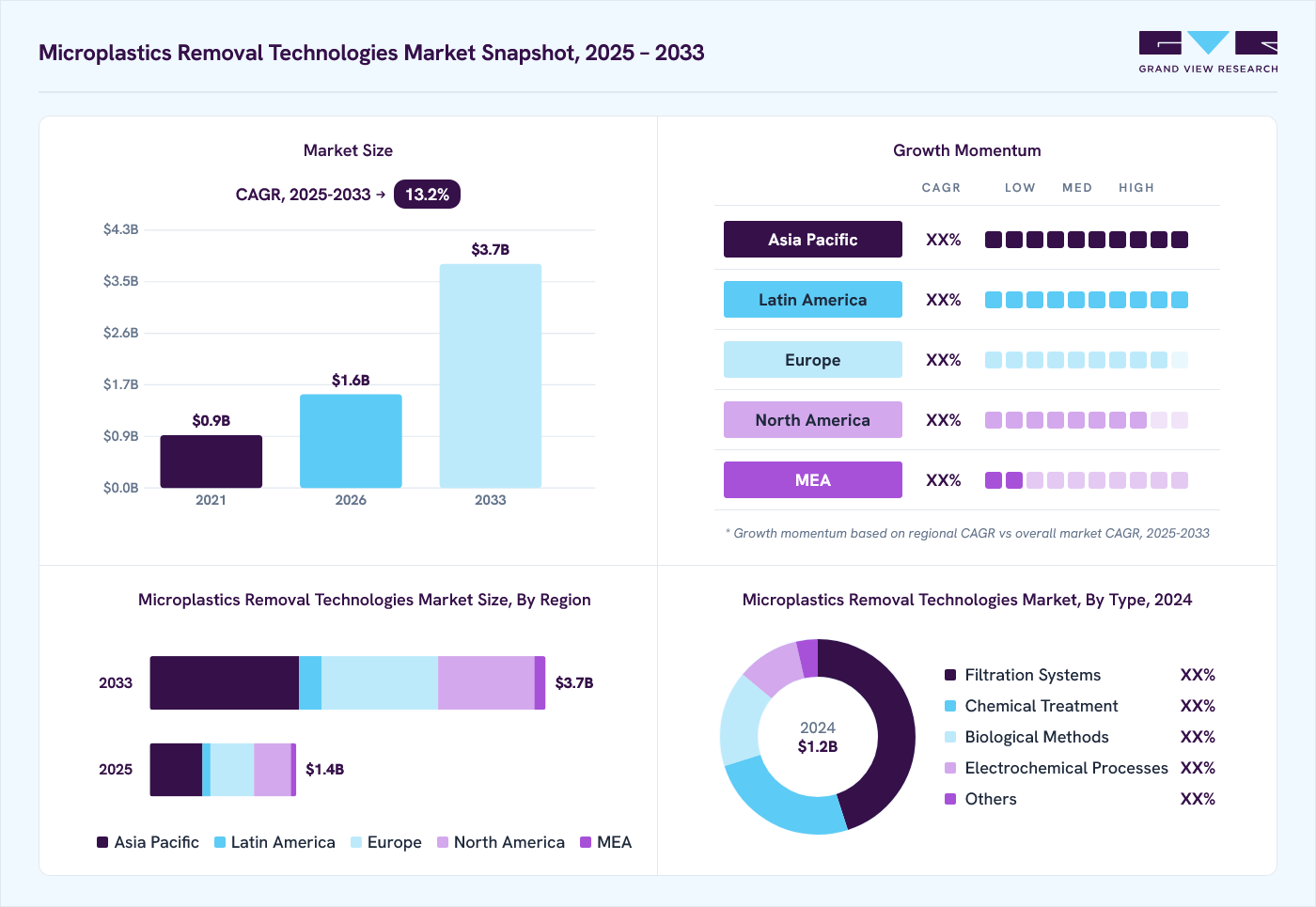
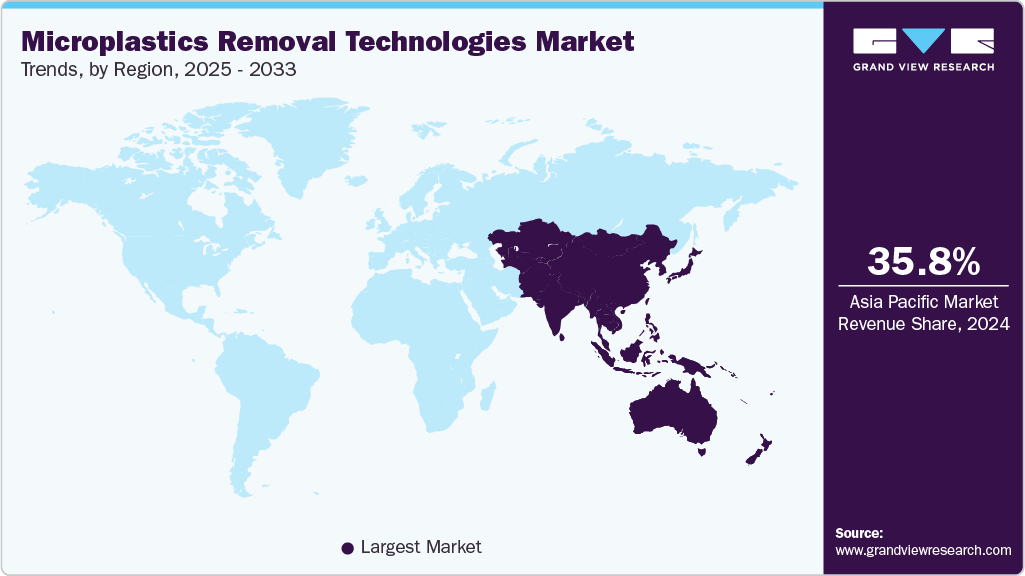
The global microplastics removal technologies market size was valued at USD 1.2 billion in 2024 and is projected to grow from USD 1.6 billion in 2026 to USD 3.7 billion by 2033, at a CAGR of 13.2% from 2025 to 2033. Asia Pacific dominated the market, accounting for a revenue share of 35.8% in 2024. The market is driven by increasing environmental concerns over plastic pollution on marine ecosystems and human health.
Key Market Trends & Insights
- The microplastics removal technologies market in China is expected to grow at a substantial CAGR from 2025 to 2033.
- By type, the biological methods segment is expected to grow at the fastest CAGR of 14.0% from 2025 to 2033.
- By application, the marine & environmental protection segment is expected to grow at the fastest CAGR of 13.9% from 2025 to 2033.
Market Size & Forecast
- 2024 Market Size: USD 1.2 Billion
- 2033 Projected Market Size: USD 3.7 Billion
- CAGR (2025-2033): 13.2%
- Asia Pacific: Largest Market
Three ways to get this report
Buy it, customize it, or ask a question.Get the Full Report
What the study covers
- FormatsPDF · Excel · Dashboard
- Timeline2025–2033 annual, 2024 base
- Coverage20+ countries, 5 regions
- Companies10+ key players profiled
Customize the Report
20% free customization
- IncludeCountries, segments, points
- TailorTo your product definition
- ExtendDeeper competitor detail
- OrA fully bespoke study
- Turnaround5–10 working days
Ask Prism AI
A cited answer in seconds
- Corpus30K studies, 1.2M points
- ScopeAll markets, not just this
- CitationTraced to report & table
- HonestySays "not covered" if so
- SpeedSeconds, not days
Growing regulatory pressure and investment in advanced water treatment solutions further accelerate market adoption. Microplastics, often less than 5mm in size, have been detected in oceans, freshwater sources, soil, and even in the human bloodstream. Research has linked microplastic ingestion to potential endocrine disruption and organ toxicity. For example, a 2022 study published in the journal Environment International found microplastics in nearly 80% of 22 Dutch volunteers' blood samples in 2022, triggering global concern. This world-first study revealed plastic particles in the bloodstream of 17 out of 22 participants and identified polyethylene terephthalate (PET) as the most common microplastic, likely from bottles, packaging, and clothing. This mounting evidence is pushing governments, industries, and consumers to demand solutions that effectively capture and eliminate microplastics from water, air, and industrial effluents.Governments and international agencies are introducing stricter regulations on plastic pollution, fueling the demand for microplastic removal technologies. The European Union has implemented directives under its Circular Economy Action Plan targeting single-use plastics and requiring advanced wastewater treatment systems capable of filtering microplastics.
Similarly, countries like Canada and Japan are investing in advanced filtration and membrane bioreactor (MBR) technologies for wastewater treatment plants. The U.S. Environmental Protection Agency (EPA) and state-level authorities are also studying enforceable standards for microplastics in drinking water. Such regulatory pressure compels municipalities, industries, and water utilities to adopt innovative solutions for compliance, creating a robust growth driver for the market.
Continuous innovation in filtration, biotechnology, and nanotechnology is expanding the effectiveness of microplastics removal. Universities, startups, and established companies are collaborating to develop scalable solutions, such as bio-based flocculants and nanomaterial-coated filters that capture even the smallest plastic fragments. For example, researchers in Switzerland are experimenting with ferrofluid-based methods to attract microplastics from water magnetically.
Meanwhile, partnerships between municipalities and private firms are piloting advanced treatment systems in Europe and North America. This innovation pipeline, supported by growing venture capital investments and government funding, is driving the commercialization and adoption of microplastics removal technologies globally.
Market Concentration & Characteristics
The microplastics removal technologies industry is still in its early to mid-development stage, characterized by a strong focus on R&D and innovation. Many solutions are experimental or in pilot phases, with ongoing development in advanced filtration membranes, magnetic separation, electrocoagulation, and bio-based removal methods. Startups, academic institutions, and environmental technology firms are driving breakthroughs, while large water treatment companies are beginning to integrate microplastics capture into their existing solutions. This makes the market highly dynamic and innovation-driven.
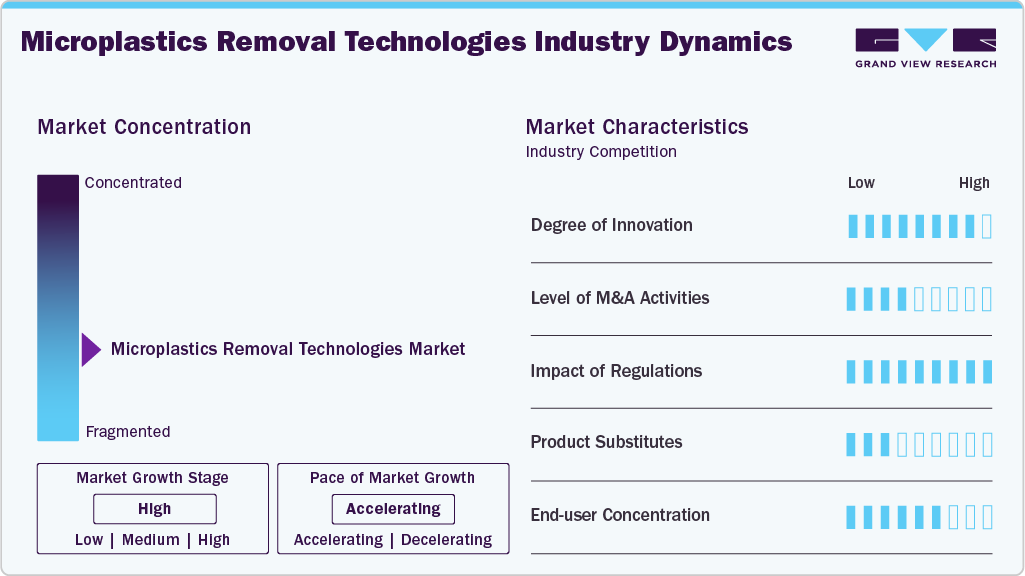
Microplastics removal technologies face challenges such as high capital costs, energy-intensive processes, and scalability limitations. For example, membrane technologies can effectively capture microplastics but require significant maintenance and investment. However, as public concern, regulations, and corporate sustainability commitments grow, adoption is expected to expand. The industry thus exhibits long-term growth potential but depends heavily on technology maturation and cost reductions.
Type Insights
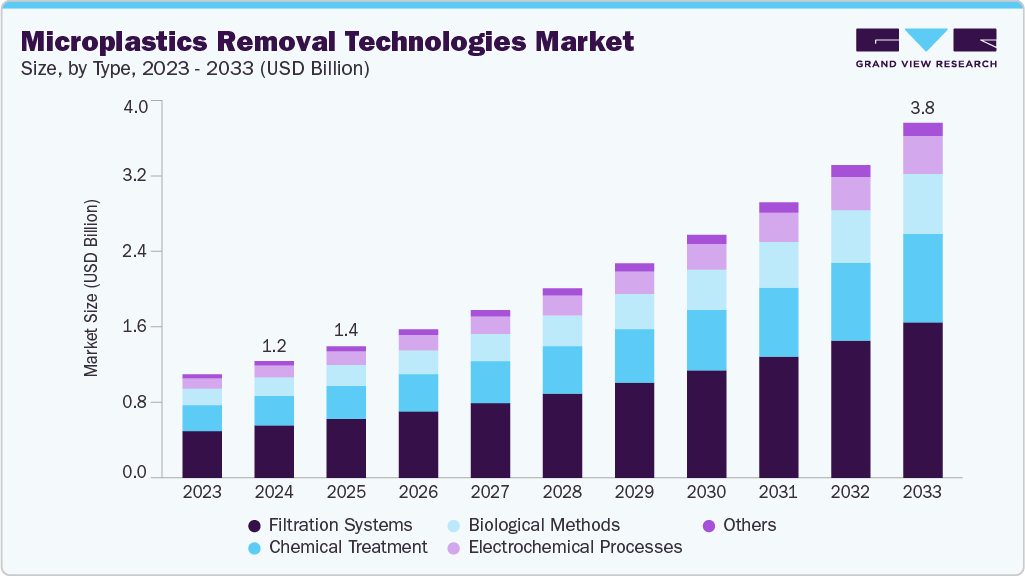
The filtration systems segment led the market with the largest revenue share of 45.0% in 2024. Filtration systems are the most widely used and commercially viable technology for removing microplastics from wastewater, drinking water, and industrial effluents. These systems include advanced membrane filters such as microfiltration, ultrafiltration, nanofiltration, and reverse osmosis, which can capture particles as small as a few micrometers. For example, wastewater treatment plants in Europe and Japan are increasingly installing membrane bioreactors (MBRs) to trap microplastics before effluent discharge. Filtration technologies are also used in desalination plants and municipal water supply systems to ensure safe drinking water.
The biological methods segment is expected to grow at the fastest CAGR of 14.0% during the forecast period. Biological methods utilize microorganisms, enzymes, or biofilms that can degrade or transform microplastics into harmless byproducts. Recent studies highlight the role of certain bacteria, such as Ideonella sakaiensis, and fungi species that can partially degrade PET and polyethylene microplastics. Enzyme-based approaches, such as PETase and MHETase, are gaining traction in research due to their specificity and potential scalability. Pilot projects in Europe and Japan are exploring microbial consortia integrated into wastewater treatment plants to target microplastic degradation alongside organic waste treatment.
Application Insights
The municipal water treatment segment led the market with the largest revenue share of 40.68% in 2024. Municipal water treatment involves the removal of microplastics from drinking water and wastewater to ensure public health safety. With increasing urbanization and rising use of plastic materials, microplastics are increasingly being detected in drinking water systems globally. The primary drivers include strict regulatory frameworks on water quality (e.g., WHO guidelines and EU Water Framework Directive), growing public awareness about microplastic pollution, and the need to maintain safe potable water standards.
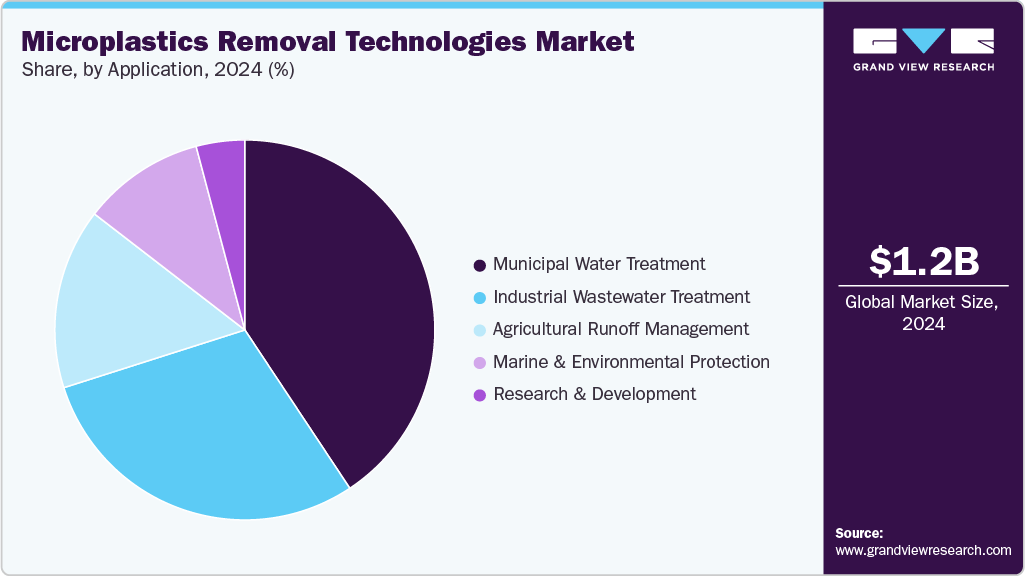
The marine & environmental protection segment is projected to grow at the fastest CAGR of 13.9% during the forecast period. Microplastics in oceans and coastal environments have become a critical concern, affecting marine life, fisheries, and human health via the food chain. Applications in this segment include beach cleaning, floating debris collection, filtration in ports and harbors, and innovative solutions like microplastic-absorbing booms. The drivers are global marine conservation policies, public campaigns against ocean pollution, and international agreements such as the United Nations Sustainable Development Goal (SDG 14 - Life Below Water).
Regional Insights
The microplastics removal technologies market in North America is anticipated to grow at a significant CAGR during the forecast, driven the market through technological advancement and regulatory enforcement. Microplastics have been detected extensively in drinking water and natural water bodies, prompting local governments and federal agencies to fund research and deploy advanced treatment solutions.
The region also has a high concentration of end-users investing in sustainable solutions due to public awareness and corporate sustainability initiatives. Moreover, North America’s well-established infrastructure allows for the rapid implementation of pilot and large-scale projects, further reinforcing the market growth.
U.S. Microplastics Removal Technologies Market Trends
The microplastics removal technologies market in the U.S. benefits from a strong synergy of federal research programs, proactive state regulations, and pioneering innovations from the private sector. While federal regulation is still evolving, agencies such as the National Oceanic and Atmospheric Administration (NOAA) and the EPA fund critical research to understand microplastic impacts and develop standardized measurement and removal protocols.
This scientific foundation empowers states such as California, New York, and Illinois to enact their own stringent laws, creating a patchwork of regulatory drivers that compel investment. The U.S. ban on plastic microbeads in 2015 was a landmark early driver, forcing the cosmetics industry to reformulate and invest in alternative ingredients and filtration.
Asia Pacific Microplastics Removal Technologies Market Trends
Asia Pacific dominated the microplastics removal technologies market with the largest revenue share of 35.76% in 2024 and is expected to grow at the fastest CAGR of 13.9% during the forecast period. This outlook is due to a potent combination of severe pollution crises and rapid economic development. The region is a hub for plastic production and consumption, and many of its densely populated megacities and developing economies lack advanced waste management infrastructure, leading to significant plastic leakage into rivers and oceans. This visible environmental degradation, coupled with growing public awareness and government urgency, is creating immense pressure for action.
Countries such as India and Indonesia are investing heavily in upgrading their water and wastewater treatment plants, creating a large market for filtration technologies such as membrane bioreactors (MBRs) and advanced oxidation processes. Furthermore, the region's strong manufacturing base for textiles and electronics is driving demand for industrial-scale microplastic filtration systems.
For instance, textile factories in Bangladesh and Vietnam are increasingly required to install membrane filters to capture microfibers during production and washing cycles. The sheer scale of the problem, combined with governmental initiatives like China's "war on pollution" and Japan's leadership in advanced filtration technologies, positions the Asia Pacific as the epicenter of both the microplastics problem and its technological solutions.
Europe Microplastics Removal Technologies Market Trends
The microplastics removal technologies market in Europe growth is largely due to the European Union's proactive and precautionary regulatory approach. The EU's Circular Economy Action Plan and the European Green Deal explicitly target microplastic pollution, leading to binding legislation for member states. Regulations such as the Urban Wastewater Treatment Directive, which is being revised to include microplastic removal mandates, create a unified and massive market for technology providers.
The EU has funded numerous research projects, like HORIZON 2020 initiatives focused on developing and scaling up removal technologies, such as using electrostatic separation or biofilters. Countries such as the Netherlands and Sweden are piloting innovative systems in their canals and harbors, using bubble barriers to trap floating plastics before they reach the North Sea.
Furthermore, the EU's REACH regulation is moving towards a widespread ban on intentionally added microplastics in products like cosmetics, detergents, and fertilizers, which drives pre-emptive investment in filtration and process change technologies by affected industries across the continent.
Key Microplastics Removal Technologies Company Insights
The competitive environment of the microplastics removal technologies industry is moderately fragmented, featuring a mix of established water treatment solution providers, specialized filtration technology firms, and innovative startups focusing on advanced removal techniques such as membrane filtration, electrocoagulation, and magnetic separation.
Key players compete on technological differentiation, efficiency of microplastic capture, cost-effectiveness, and regulatory compliance. Strategic partnerships with municipal and industrial water treatment facilities, investments in R&D, and acquisitions of niche technology providers are common strategies to strengthen market presence.
The market also witnesses increasing competition from regional players in the Asia Pacific, leveraging lower production costs and government-backed initiatives for environmental sustainability, while North American and European companies focus on advanced, high-efficiency solutions for stringent regulatory compliance.
Key Microplastics Removal Technologies Companies:
The following are the leading companies in the global microplastics removal technologies market. These companies collectively hold the largest market share and dictate industry trends.
- Wasser 3.0
- CLEANR
- PolyGone
- IADYS & ECOFARIO
- CyFract
- SATOORNIK
- Matter Industries
- PlanetCare
- The Ocean Cleanup
- GENeco
Recent Developments
-
In June 2025, Danish biotech company Cellugy secured about USD 8.9 million from the EU’s LIFE Programme to scale EcoFLEXY, its cellulose-based rheology modifier replacing fossil-based carbomers in personal care products. The biodegradable alternative could prevent up to 259 tons of microplastic pollution annually, potentially reaching 1,289 tons by 2034, reflecting rising regulatory and consumer pressure to eliminate microplastics in cosmetics.
-
In August 2023, CLEANR launched advanced washing machine filters that target laundry wastewater, responsible for ~35% of global microplastic emissions. Using a nature-inspired vortex filtration process, these filters capture over 90% of microplastics down to 50 microns, are easy to maintain, and outperform other solutions by 300% in tests. Compliant with regulations like France’s, widespread use could prevent the equivalent of 280 million plastic bags from entering waterways annually.
Microplastics Removal Technologies Market Report Scope
Report Attribute
Details
Market size in 2024
USD 1.2 billion
Estimated market size in 2026
USD 1.6 billion
Projected market size by 2033
USD 3.7 billion
Growth rate
CAGR of 13.2% from 2025 to 2033
Base year for estimation
2024
Historical data
2021 - 2023
Forecast period
2025 - 2033
Quantitative units
Revenue in USD million/billion and CAGR from 2025 to 2033
Report coverage
Revenue forecast, competitive landscape, growth factors, and trends
Segments covered
Type, application, region
Region scope
North America; Europe; Asia Pacific; Latin America; Middle East & Africa
Country scope
U.S.; Canada; Mexico; Germany; UK; France; Spain; Italy; China; India; Japan; Australia; South Korea; Brazil; Argentina; Saudi Arabia; UAE; South Africa
Key companies profiled
Wasser 3.0; CLEANR; PolyGone; IADYS & ECOFARIO; CyFract; SATOORNIK; Matter Industries; PlanetCare; The Ocean Cleanup; GENeco
Customization scope
Free report customization (equivalent up to 8 analyst’s working days) with purchase. Addition or alteration to country, regional, and segment scope.
Pricing and purchase options
Avail customized purchase options to meet your exact research needs. Explore purchase options
Global Microplastics Removal Technologies Market Report Segmentation
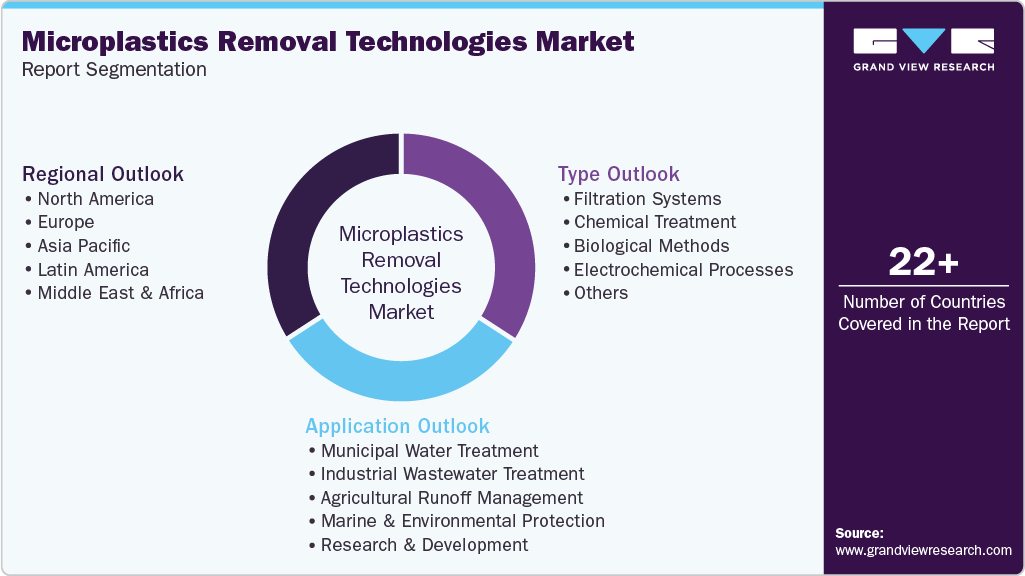
This report forecasts revenue growth at a global level and provides an analysis of the latest industry trends in each of the sub-segments from 2021 to 2033. For this study, Grand View Research has segmented the global microplastics removal technologies market report based on type, application, and region:
-
Type Outlook (Revenue, USD Million, 2021 - 2033)
-
Filtration Systems
-
Chemical Treatment
-
Biological Methods
-
Electrochemical Processes
-
Others
-
-
Application Outlook (Revenue, USD Million, 2021 - 2033)
-
Municipal Water Treatment
-
Industrial Wastewater Treatment
-
Agricultural Runoff Management
-
Marine & Environmental Protection
-
Research & Development
-
-
Region Outlook (Revenue, USD Million, 2021 - 2033)
-
North America
-
U.S.
-
Canada
-
Mexico
-
-
Europe
-
Germany
-
France
-
UK
-
Italy
-
Spain
-
-
Asia Pacific
-
China
-
India
-
Japan
-
Australia
-
South Korea
-
-
Latin America
-
Brazil
-
Argentina
-
-
Middle East & Africa
-
South Africa
-
Saudi Arabia
-
UAE
-
-
Frequently Asked Questions About This Report
The global microplastics removal technologies market was estimated at around USD 1.2 billion in the year 2024 and is expected to reach around USD 1.6 billion in 2026.
The global microplastics removal technologies market is expected to grow at a compound annual growth rate of 13.2% from 2025 to 2033 to reach around USD 3.7 billion by 2033.
The municipal water treatment segment dominates the microplastics removal technologies market due to the large volumes of wastewater processed daily, which contain significant microplastic loads.
The key players in the microplastics removal technologies market include Wasser 3.0; CLEANR, PolyGone, IADYS & ECOFARIO, CyFract, SATOORNIK, Matter Industries, PlanetCare, The Ocean Cleanup, and GENeco.
Growing regulatory pressure and investment in advanced water treatment solutions is accelerating the market growth.
About the Author(s)
Plastics, Polymers & Resins Research Team
Bulk Chemicals · Plastics, Polymers & ResinsThis report was authored by the plastics, polymers & resins research team at Grand View Research - comprising two research analysts, one senior research analyst, and one industry expert - with specialized expertise in the plastics, polymers & resins segment of the bulk chemicals industry. All findings are based on proprietary bulk chemicals databases, executive interviews, and regulatory analysis, subject to internal peer review prior to publication.
Last Updated:
Speak to Analyst


Customize this report to your needs - add regions, segments, or data points, with 20% free customization.
Or view our licence options:


ISO 9001:2015 & 27001:2022 Certified
We are GDPR and CCPA compliant! Your transaction & personal information is safe and secure. For more details, please read our privacy policy.


