
- Home
- »
- Advanced Interior Materials
- »
-
Microwave-assisted Processing In Mining Market Report 2026-2033GVR Report cover

Microwave-assisted Processing In Mining Market (2026 - 2033)
Size, Share & Trends Analysis Report By Component (Equipment, Services, Consumables & Spare Parts), By Region (North America, Europe, Asia Pacific, Latin America, Middle East & Africa), And Segment Forecasts
Market Size, 2025
$99.6MMarket Estimate, 2026
$113.0MMarket Forecast, 2033
$325.2MCAGR, 2026–2033
16.3%Microwave-assisted Processing In Mining Market Summary
The microwave-assisted processing in mining market size was estimated at USD 99.6 million in 2025 and is projected to grow from USD 113.0 million in 2026 to USD 325.2 million by 2033, at a CAGR of 16.3% from 2026 to 2033. Asia Pacific dominated the microwave-assisted processing in mining market with the largest revenue share of 37.9% in 2025. Growth is driven by the increasing need for energy-efficient and sustainable mineral processing technologies, as the mining industry faces mounting pressure to reduce operational costs, carbon emissions, and environmental impact.
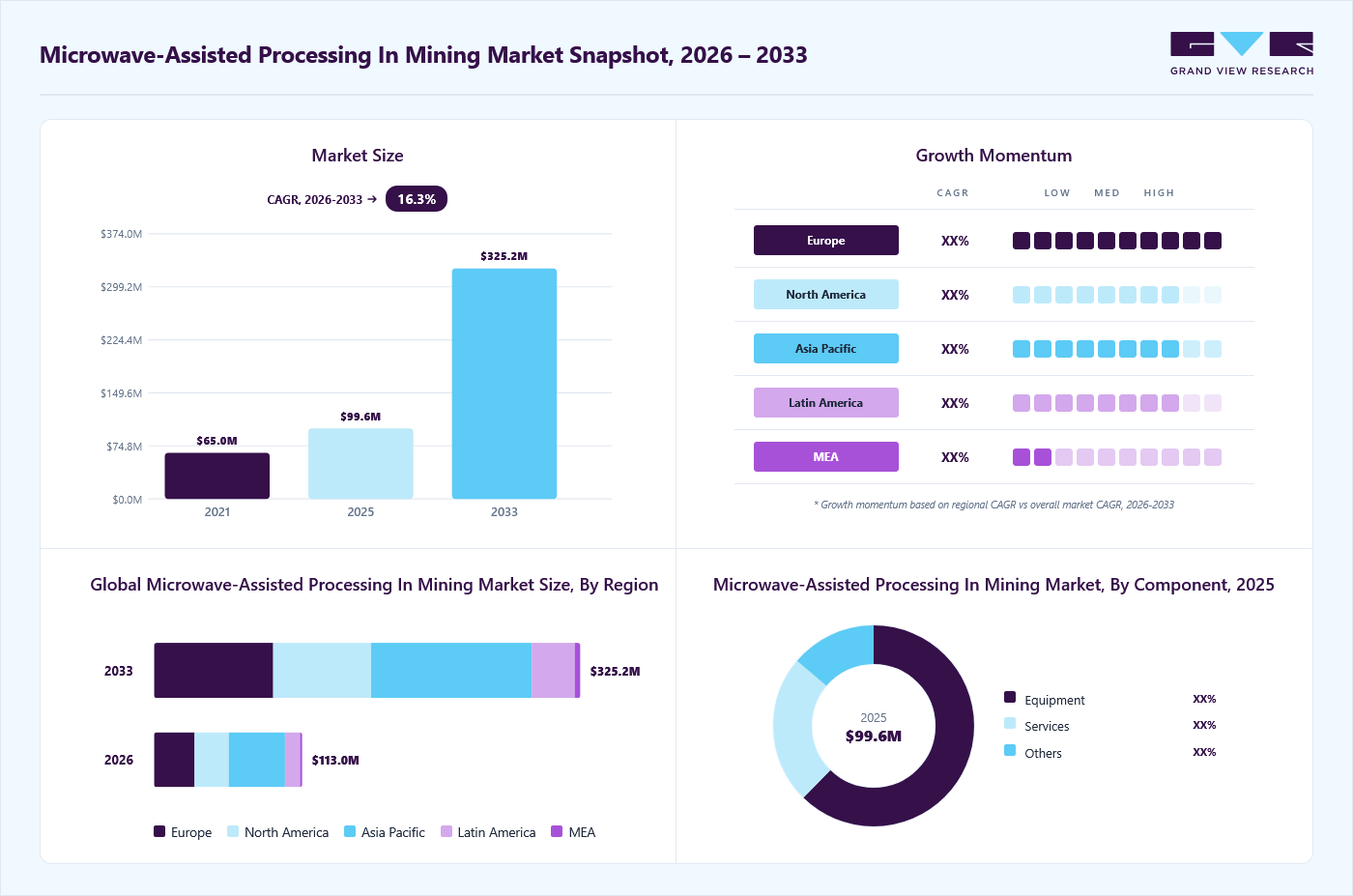 Source: Grand View Research, IR Documents, Primary Interviews, Paid DatabasesTo learn more about this report,
 Download Free Sample Report
 Key Market Trends & Insights
- By component: Equipment segment led the market with the largest revenue share of 54.6% in 2025.
Regional Highlights
- Largest regional market: Asia Pacific (37.9% revenue share in 2025)
- By Country: China held the largest market share in 2025.
Market Size & Forecast
- Market size in 2025: USD 99.6 Million
- Estimated market size in 2026: USD 113.0 Million
- Projected market size by 2033: USD 325.2 Million
- CAGR (2026-2033): 16.3%
Three ways to get this report
Buy it, customize it, or ask a question.Ask an Analyst
A direct answer, usually in 1 working day
- AccessReport author, directly
- Reply timeWithin 1 working day
- No sales callDirect answer only
- FormatEmail reply
- CostFree, no cost
Get the Full Report
What the study covers
- FormatsPDF · Excel · Dashboard
- Timeline2026–2033 annual, 2025 base
- Coverage20+ countries, 5 regions
- Companies10+ key players profiled
Customize the Report
20% free customization
- IncludeCountries, segments, points
- TailorTo your product definition
- ExtendDeeper competitor detail
- OrA fully bespoke study
- Turnaround5–10 working days
Microwave-assisted processing enables selective heating of mineral phases, resulting in reduced comminution energy, faster leaching kinetics, and improved metal recovery rates. The global microwave-assisted processing in mining market is witnessing rapid growth as the industry shifts toward cleaner and more energy-efficient mineral extraction methods. Conventional processes such as grinding, roasting, and leaching are highly energy-intensive and contribute significantly to greenhouse gas emissions. Microwave-assisted technology addresses these challenges by enabling the selective heating of mineral phases, thereby reducing overall energy consumption and minimizing the use of harmful reagents. This approach supports sustainable mining by minimizing waste generation, improving ore recovery from low-grade deposits, and extending the life of existing mines. Moreover, with the increasing global emphasis on responsible sourcing and decarbonization, mining companies are adopting microwave-based systems as part of their broader environmental, social, and governance (ESG) strategies.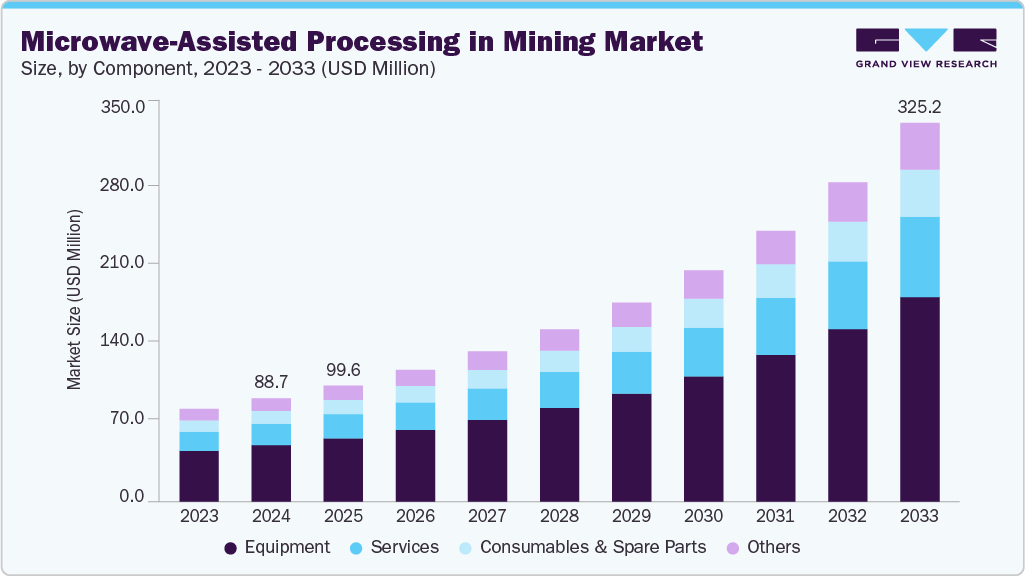 To learn more about this report, Download Free Sample Report
 Technological advancements in solid-state microwave generators, automation, and digital process control are transforming microwave-assisted mineral processing from a laboratory research tool into a large-scale industrial application. The integration of high-efficiency waveguides, temperature control systems, and AI-driven monitoring has significantly enhanced the precision and reliability of microwave applications across different ore types. These innovations have enabled the development of modular and scalable processing units that can handle higher throughputs while maintaining uniform heating. Additionally, ongoing R&D is focused on optimizing microwave interactions with complex mineral structures to further enhance metal recovery rates and operational efficiency, thereby positioning microwave-assisted processing as a key enabler of next-generation, innovative, and sustainable mining operations.
Market Dynamics
The microwave-assisted processing in mining market is experiencing steady growth as mining companies increasingly seek energy-efficient, cost-effective, and sustainable mineral processing technologies. Technology is gaining traction due to its ability to enhance ore liberation, reduce comminution energy consumption, improve metal recovery rates, and facilitate the processing of complex and low-grade ore deposits. As global mining operations face declining ore grades, rising energy costs, and stricter environmental regulations, microwave-assisted processing is emerging as a promising solution for improving operational efficiency across mining value chains. Growing investments in advanced mineral beneficiation technologies, coupled with the expansion of critical mineral mining activities for lithium, rare earth elements, nickel, copper, and cobalt, are further supporting market growth.
The mining industry is under increasing pressure to reduce energy consumption and improve resource utilization. Conventional crushing and grinding processes account for a significant share of total mining energy usage, making energy efficiency a critical priority for mining operators. Microwave-assisted processing offers substantial benefits by inducing selective heating and micro-fracturing within ores, thereby reducing the energy required for downstream comminution and improving mineral liberation. This results in lower operating costs, higher throughput, and enhanced recovery of valuable minerals.
Furthermore, the growing demand for critical minerals used in electric vehicles, renewable energy systems, and advanced electronics is driving the need for efficient processing technologies capable of treating complex and lower-grade ores. Mining companies are increasingly investing in innovative beneficiation solutions to maximize extraction rates while minimizing environmental impacts. As sustainability and operational efficiency become key strategic priorities, the adoption of microwave-assisted processing technologies is expected to accelerate across global mining operations.
The adoption of microwave-assisted processing in mining is constrained by high upfront capital costs and limited large-scale commercial implementation. Industrial microwave systems require specialized equipment, infrastructure modifications, and integration with existing processing circuits, resulting in significant investment requirements. Many mining operators remain cautious about adopting emerging technologies until long-term economic benefits and operational reliability are fully demonstrated.
The rapid expansion of critical minerals mining presents a significant growth opportunity for the microwave-assisted processing in mining market. Increasing global demand for lithium, cobalt, nickel, rare earth elements, and copper is encouraging mining companies to explore advanced processing technologies capable of improving recovery from complex ore bodies. Microwave-assisted processing can enhance liberation characteristics, accelerate leaching kinetics, and improve the economic viability of lower-grade deposits that may be difficult to process using conventional methods.
Analyst Perspective
The microwave-assisted processing in mining market is witnessing increasing adoption as mining companies seek energy-efficient and sustainable solutions to improve mineral recovery and reduce processing costs. Growing challenges associated with declining ore grades, complex mineral deposits, rising energy prices, and stricter environmental regulations are driving demand for advanced ore pre-treatment and beneficiation technologies. Microwave-assisted processing offers significant advantages through enhanced ore liberation, reduced comminution energy consumption, and improved downstream processing efficiency, making it particularly attractive for critical minerals, base metals, and precious metals mining. Although high capital costs and limited commercial-scale deployment remain key challenges, ongoing pilot projects, technological advancements, and increasing investments in sustainable mining practices are expected to support long-term market growth.
Drivers, Opportunities & Restraints
The rising need for energy-efficient and sustainable mineral processing technologies drives market growth. Conventional mineral processing operations such as comminution and roasting are highly energy-intensive, often accounting for a substantial share of a mine’s total power consumption. This has prompted the mining industry to explore microwave-assisted systems, which can significantly lower overall energy usage while enhancing process efficiency and mineral recovery. For instance, in 2024, Crescend Technologies introduced a 400-kW solid-state microwave processing module designed for ore pretreatment, demonstrating a significant reduction in grinding energy and improved mineral liberation. Similarly, several pilot-scale microwave-assisted gold and copper recovery projects in Australia and Canada have shown improved recovery rates and reduced carbon footprints. The increasing focus on critical minerals, such as lithium, rare earth elements, and cobalt, where selective heating enhances extraction efficiency, further accelerates market demand.
The growing global focus on decarbonizing mining operations and enhancing resource recovery from low-grade ores presents significant opportunities for microwave-assisted processing. Emerging economies, such as Chile, India, and South Africa, are investing in pilot installations to evaluate the potential of microwave technology in large-scale base metal and rare earth processing. Moreover, integrating solid-state microwave systems with automation and AI-based control platforms creates opportunities for real-time process optimization, improved throughput, and reduced maintenance. Strategic collaborations between mining companies and research institutions, such as the partnership between the University of Nottingham and Anglo American (2025) for microwave-assisted rock fragmentation, will likely accelerate technology transfer and commercialization across multiple mineral sectors.
Despite its potential, the market faces challenges related to high initial capital costs, scalability, and mineral-specific variability. Integrating large microwave units into existing processing lines requires significant retrofitting and specialized engineering expertise. Additionally, not all ores respond effectively to microwave treatment due to variations in dielectric properties, which limit their universal applicability. The lack of standardized industrial-scale benchmarks and limited long-term operational data hinders rapid adoption. For instance, while pilot projects in Europe and Australia have demonstrated substantial energy savings, full-scale deployment remains limited due to uncertainties regarding the long-term durability of equipment and the return on investment. Overcoming these technological and economic barriers will be crucial for achieving widespread industrial implementation.
Component Insights
Based on components, the equipment segment led the market with the largest revenue share of 54.6% in 2025. This dominance is attributed to the increasing adoption of high-power microwave generators, applicators, waveguides, and control systems across mineral processing plants. These systems enable precise and selective heating of ore particles, improving mineral liberation and reducing comminution energy consumption. Recent advancements in solid-state microwave technology have enhanced equipment reliability, scalability, and operational control, making large-scale deployment feasible in mines.
The services segment is expected to grow substantially over the forecast period, driven by increasing demand for installation, calibration, retrofitting, and process optimization support. As microwave-assisted systems require specialized knowledge for integration and operation, mining companies rely on equipment providers and technical consultants for system design, pilot testing, and maintenance services. Furthermore, the shift toward performance-based service models, where vendors offer ongoing efficiency monitoring and process optimization, has boosted recurring revenue streams. Several mining companies are partnering with technology developers and research institutes for on-site pilot trials, emphasizing the growing importance of service-based collaboration in accelerating technology adoption.
The consumables and spare parts segment, which includes magnetrons or solid-state amplifiers, refractory linings, seals, and thermal sensors, is expected to expand steadily due to periodic replacement needs and preventive maintenance programs. As the deployment of industrial-scale microwave systems increases, the demand for reliable and durable components will rise correspondingly. The other segment, comprising software platforms, control algorithms, and digital monitoring solutions, is gaining traction as automation and AI-based process control become integral to advanced mining operations. These software and integration tools enable real-time temperature regulation, energy optimization, and predictive maintenance, supporting the long-term efficiency and sustainability of microwave-assisted processing plants.
Regional Insights
The North America market for microwave-assisted processing in mining is witnessing steady growth, supported by strong technological innovation and sustainability initiatives across the mining sector. The region’s focus on improving operational efficiency and reducing carbon intensity has encouraged early adoption of advanced mineral processing methods. Several pilot and demonstration projects are being conducted in Canada for gold and base metal ores, with a focus on reducing energy consumption and improving recovery rates. The presence of leading microwave equipment manufacturers and research institutions also contributes to the region’s leadership in technology development and commercialization.
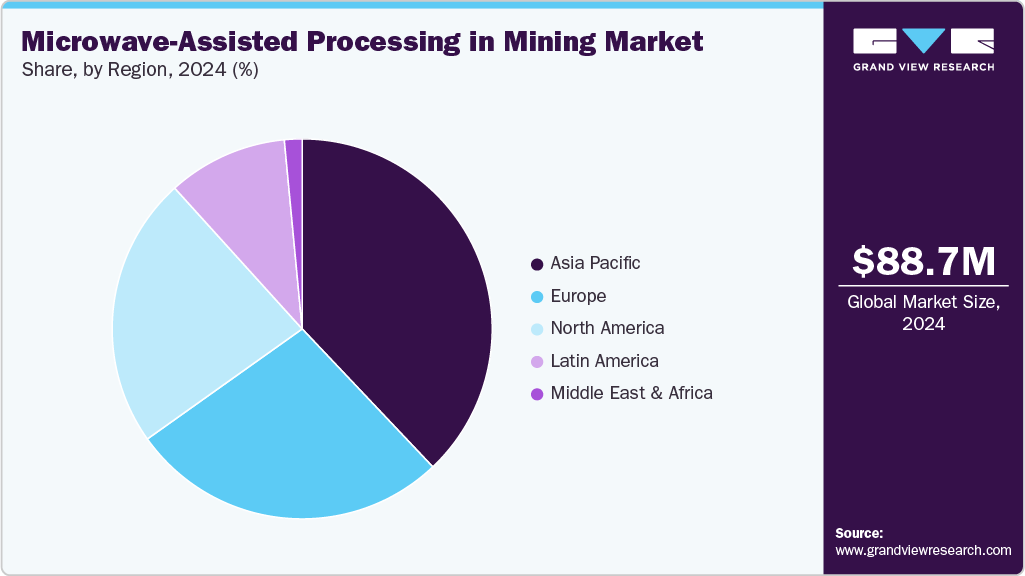 To learn more about this report, Download Free Sample Report
 U.S. Microwave-assisted Processing in Mining Market Trends
In the U.S., the market is driven by increasing investments in critical mineral extraction and economic initiatives aimed at strengthening domestic supply chains. The Department of Energy (DOE) and the National Energy Technology Laboratory (NETL) have supported research and development (R&D) programs focused on microwave-assisted mineral processing to enhance resource recovery from complex ores and mining waste. Additionally, U.S.-based companies are developing solid-state microwave systems for industrial-scale mining applications, positioning the country as a key hub for innovation in energy-efficient mineral technologies. The strong regulatory push for sustainable mining practices and reduced dependence on imports of strategic minerals further boosts market potential.
Asia Pacific Microwave-assisted Processing in Mining Market Trends
Asia Pacific dominated the microwave-assisted processing in mining market with the largest revenue share of 37.9% in 2025. The microwave-assisted processing in mining market in China held the largest share in the Asia Pacific region in 2025. Rapid industrialization and rising demand for critical minerals such as lithium, cobalt, and rare earth elements drive investments in advanced mineral processing solutions. Countries such as China, Australia, and India are leading regional adoption, with several pilot projects underway to evaluate the efficiency of microwave-assisted pre-treatment and leaching. Favorable government policies promoting low-emission mining and technology modernization further encourage mining companies to integrate microwave-based systems into their operations.
Europe Microwave-assisted Processing in Mining Market Trends
In Europe, market growth is supported by stringent environmental regulations and a strong emphasis on sustainable resource management. The European Union’s focus on achieving net-zero emissions and securing critical raw materials has accelerated research and pilot-scale testing of microwave-assisted technologies across member states. Universities and technology developers are actively collaborating with mining companies to explore the role of microwave systems in energy-efficient ore processing and waste valorization. The region also benefits from strong public funding for innovation, enabling the transition from laboratory trials to early commercial deployments, particularly in the UK, Germany, and the Nordic countries.
Key Microwave-assisted Processing in Mining Company Insights
Some of the key players operating in the market include Crescend Technologies LLC, Microwave Chemical Co., Ltd., Sepro Mineral Systems Corp., and Others.
-
Crescend Technologies LLC, established in 1982 and headquartered in Schaumburg, Illinois, is a leading provider of high-power solid-state microwave systems. The company develops advanced microwave generators and amplifiers for industrial applications, including mineral processing and ore pre-treatment. Crescend’s systems enable energy-efficient selective heating, supporting the transition toward sustainable and low-emission mining operations.
-
Microwave Chemical Co., Ltd., founded in 2007 and based in Osaka, Japan, specializes in applying microwave technology to chemical and materials processing. Through its Green Mining-MX platform, the company utilizes microwaves for mineral roasting, calcination, and metal recovery, thereby significantly reducing CO₂ emissions and energy consumption. Its innovations are contributing to the commercialization of microwave-assisted mineral processing technologies worldwide.
-
Sepro Mineral Systems Corp., established in 1987 and headquartered in Langley, British Columbia, is a global leader in mineral processing equipment and technology solutions. The company participates in the CanMicro project, which advances microwave-assisted pre-treatment systems to enhance ore grindability and improve metal recovery rates. Sepro’s efforts align with its mission to deliver efficient, sustainable, and modular mineral processing solutions for the global mining industry.
Key Microwave-assisted Processing in Mining Companies:
The following key companies have been profiled for this study on the microwave-assisted processing in mining market.
-
Anglo American Plc
-
Crescend Technologies, LLC
-
Kerone Engineering Solutions Ltd.
-
Microwave Chemical Co., Ltd.
-
OffWorld, Inc.
-
Sepro Mineral Systems Corp.
-
TAKRAF GmbH
-
University of Nottingham
-
Westpro Machinery Ltd.
-
Zhejiang Kehong Electronics Co., Ltd.
Competitive Benchmarking
Category
Operating Strategies
Competitive Edge
Weakness
Established Players (e.g., Anglo American Plc, TAKRAF GmbH, Sepro Mineral Systems Corp., Westpro Machinery Ltd.)
- Focus on integrating microwave-assisted processing into advanced mineral beneficiation and ore processing workflows.
- Invest in process optimization, energy-efficient comminution technologies, and improved recovery rates for complex ores.
- Leverage existing mining equipment portfolios, engineering capabilities, and global customer networks to commercialize emerging technologies.
- Emphasize pilot testing, technology validation, and integration with existing mining infrastructure.
- Strong industry reputation, established customer relationships, and extensive mining sector expertise.
- Significant engineering resources, technical know-how, and global project execution capabilities.
- Ability to provide end-to-end mineral processing solutions and comprehensive after-sales support.
- Strong financial resources to support R&D and commercialization efforts.
- Face high capital expenditure requirements for mining operations, dredging vessels, processing facilities, and environmental management systems.
- Subject to stringent environmental regulations, permitting challenges, and increasing sustainability expectations.
- Exposure to fluctuations in infrastructure spending, coastal development activity, and mineral commodity prices.
Emerging & Regional Players (e.g., Crescend Technologies, LLC, Kerone Engineering Solutions Ltd., Microwave Chemical Co., Ltd., OffWorld, Inc., Zhejiang Kehong Electronics Co., Ltd.)
- Focus on regional microwave-assisted processing in mining extraction, niche coastal development projects, selective capacity expansion, and targeted customer relationships.
- Pursuing strategic partnerships, technology adoption, and efficient project execution to strengthen market presence.
- Concentrate on high-growth regional opportunities in tourism infrastructure, beach nourishment, and specialty mineral sand applications.
- Greater operational flexibility and faster decision-making compared to larger competitors.
- Ability to target underserved regional markets and customize solutions for local project requirements.
- Lower organizational complexity enables quicker adoption of modern technologies and sustainable operating practices.
- Limited production scale, resource base, and financial capacity compared with established global players.
- Higher dependence on regional demand conditions and individual project awards.
- May face challenges in securing large contracts, developing infrastructure, and competing with vertically integrated multinational companies.
Recent Developments
-
Microwave Chemical Co., Ltd., in March 2025, announced the expansion of its Green Mining-MX pilot program in partnership with Japanese metal producers to evaluate microwave-assisted roasting for nickel and rare earth ores. The initiative aims to achieve up to 40% energy savings compared to conventional thermal treatment, marking a significant step toward commercial-scale deployment of low-carbon mineral processing technologies.
-
In February 2025, Sepro Mineral Systems Corp. unveiled a collaboration with the University of British Columbia to develop a next-generation microwave pre-treatment unit for gold and copper ores. The project focuses on improving ore liberation and reducing grinding energy consumption, aligning with global sustainability goals in the mining sector.
-
OffWorld, Inc., successfully completed field testing of its “Micro Fractor” microwave rock conditioning system at a copper mine in Nevada in May 2025. The trials demonstrated a 25% reduction in comminution energy demand and faster ore fragmentation, highlighting the potential of autonomous, microwave-enabled mining technologies for large-scale deployment.
Microwave-assisted Processing in Mining Market Report Scope
Report Attribute
Details
Market size in 2025
USD 99.6 million
Estimated market size in 2026
USD 113.0 million
Projected market size by 2033
USD 325.2 million
Growth rate
CAGR of 16.3% from 2026 to 2033
Base year for estimation
2025
Historical data
2021 - 2024
Forecast period
2026 - 2033
Quantitative units
Revenue in USD million, and CAGR from 2026 to 2033
Report coverage
Revenue forecast, company ranking, competitive landscape, growth factors, and trends
Segments covered
Component, region
Regional scope
North America, Europe, Asia Pacific, Latin America, Middle East & Africa
Country scope
U.S.; Canada; Mexico; Germany; France; UK.; Italy; China; India; Japan; South Korea; Brazil; South Africa
Key companies profiled
Anglo American Plc; Crescend Technologies, LLC; Kerone Engineering Solutions Ltd.; Microwave Chemical Co., Ltd.; OffWorld, Inc.; Sepro Mineral Systems Corp.; TAKRAF GmbH; University of Nottingham; Westpro Machinery Ltd.; Zhejiang Kehong Electronics Co., Ltd.
Customization scope
Free report customization (equivalent up to 8 analysts' working days) with purchase-addition or alteration to country, regional & segment scope.
Pricing and purchase options
Avail customized purchase options to meet your exact research needs. Explore purchase options
Global Microwave-assisted Processing In Mining Market Report Segmentation
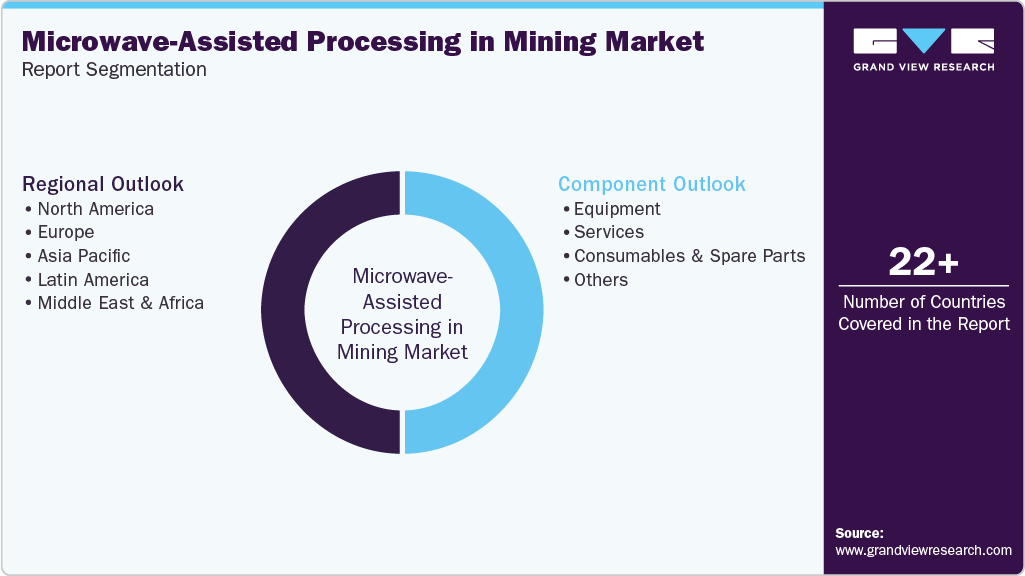
This report forecasts global, country, and regional revenue growth and analyzes the latest trends in each sub-segment from 2021 to 2033. For this study, Grand View Research has segmented the global microwave-assisted processing in mining market report by component and region:
 To learn more about this report, Download Free Sample Report
 -
Component Outlook (Revenue, USD Million; 2021 - 2033)
-
Equipment
-
Services
-
Consumables & Spare Parts
-
Others
-
-
Regional Outlook (Revenue, USD Million; 2021 - 2033)
-
North America
-
U.S.
-
Canada
-
Mexico
-
-
Europe
-
Germany
-
Russia
-
Norway
-
Poland
-
-
Asia Pacific
-
China
-
India
-
Australia
-
-
Latin America
-
Brazil
-
-
Middle East & Africa
-
South Africa
-
-
Research Methodology
Segment Definition
Type
Revenue Capture Definition
Equipment
This segment includes industrial microwave systems, microwave generators, applicators, cavity systems, conveyor-integrated microwave units, control systems, and ancillary processing equipment used in mining operations. Revenue is generated from the sale, installation, and commissioning of microwave-assisted processing equipment deployed for ore pre-treatment, comminution enhancement, drying, roasting, calcination, and hydrometallurgical applications.
Services
This segment comprises consulting, engineering, feasibility studies, pilot testing, system integration, installation, commissioning, maintenance, optimization, training, and technical support services associated with microwave-assisted processing technologies. Revenue is derived from project-based services, operational support contracts, performance optimization programs, and technology validation activities conducted by equipment suppliers and engineering firms.
Consumables & Spare Parts
This segment includes replacement components, wear parts, magnetrons, microwave tubes, waveguides, cooling system components, sensors, shielding materials, power supply modules, and other consumables required for the continuous operation and maintenance of microwave-assisted processing systems. Revenue is generated through recurring sales of spare parts and replacement components throughout the equipment lifecycle.
Others
This segment covers software platforms, process monitoring systems, automation solutions, digital control technologies, research and development activities, licensing fees, and other ancillary products associated with microwave-assisted mining operations. Revenue is generated from process analytics, equipment monitoring solutions, proprietary technology licensing, and specialized support offerings that complement core equipment and service revenues.
Estimation Model
Layer Name
Key Question
Description
Mining Activity & Mineral Processing Demand Base Layer
What forms the demand base?
Identify demand for microwave-assisted processing technologies generated from mining and mineral processing activities globally. Assess demand from metal mining, critical minerals extraction, precious metals processing, industrial minerals beneficiation, and metallurgical operations. Evaluate the influence of declining ore grades, increasing mineral complexity, energy efficiency requirements, and sustainability initiatives on technology adoption. This layer establishes the total addressable market for microwave-assisted processing solutions across mining operations.
Technology Deployment & Equipment Installation Layer
Where is microwave-assisted processing deployed?
Estimate the installed base and deployment potential of microwave-assisted processing systems across mining operations. Analyze adoption across ore pre-treatment, comminution enhancement, drying, roasting, calcination, and hydrometallurgical processes. Evaluate equipment manufacturers, technology providers, pilot projects, commercial installations, mining company investments, and regional technology penetration. Assess barriers to adoption, including capital investment requirements, operational integration challenges, and technology maturity.
Processing Intensity & Utilization Layer
How extensively is the technology utilized?
Analyze the utilization intensity of microwave-assisted processing across different mining applications and mineral types. Evaluate ore throughput volumes, processing frequency, operating hours, recovery potential, energy savings, and equipment utilization rates. Assess differences in adoption across gold, copper, iron ore, lithium, nickel, cobalt, rare earth elements, and other minerals. Utilization intensity varies depending on ore characteristics, mine scale, processing objectives, and economic feasibility.
Revenue Layer
How is market revenue generated?
Market revenue is generated through the sale of microwave processing equipment, engineering and consulting services, installation and commissioning activities, maintenance contracts, spare parts, software solutions, and technology licensing. Revenue generation is influenced by mining capital expenditure, mineral processing investments, critical minerals demand, technology adoption rates, equipment replacement cycles, and ongoing operational support requirements. Increasing investments in sustainable mining, advanced beneficiation technologies, and energy-efficient processing solutions drive overall market value growth.
Delivered Customizations
This report has been delivered with the following In-depth customizations
Client Request
Customization Delivered
Value Adds
Regional Adoption & Investment Analysis
Detailed assessment of microwave-assisted processing adoption across North America, Europe, Asia Pacific, Latin America, and MEA. Evaluated mining investments, technology penetration rates, pilot projects, commercial deployments, and regional growth prospects by mineral type and mining activity.
Enabled identification of high-growth geographic markets, supported regional expansion strategies, and prioritized investment opportunities based on technology adoption potential.
Processing Efficiency & Economic Impact Assessment
Comprehensive analysis of the impact of microwave-assisted processing on energy consumption, ore liberation, recovery rates, throughput improvement, operating costs, and overall mine economics. Benchmarked performance improvements against conventional mineral processing technologies.
Supported technology evaluation, investment justification, and ROI assessment by quantifying operational and economic benefits across mining applications.
Commercialization Pipeline & Technology Readiness Analysis
Assessment of ongoing R&D activities, pilot-scale projects, demonstration plants, commercial deployments, technology readiness levels (TRLs), and future commercialization prospects. Evaluated industry-academia collaborations, patent activity, and technology development trends.
Enabled stakeholders to understand market maturity, identify emerging technology leaders, assess commercialization risks, and capitalize on early-stage growth opportunities.
Frequently Asked Questions About This Report
Asia Pacific dominated the market with a revenue share of 37.9% in 2025.
Some of the key vendors in the global microwave-assisted processing in mining market are Anglo American Plc, Crescend Technologies, LLC, Kerone Engineering Solutions Ltd., Microwave Chemical Co., Ltd., OffWorld, Inc., Sepro Mineral Systems Corp., TAKRAF GmbH, University of Nottingham, Westpro Machinery Ltd., and Zhejiang Kehong Electronics Co., Ltd., among others.
The global microwave-assisted processing in mining market is driven by the growing demand for energy-efficient and sustainable mineral processing technologies that lower operational costs and emissions. Increasing R&D investments and pilot-scale deployments are enhancing ore recovery and process throughput across mining operations.
Based on components, the equipment segment led the market with the largest revenue share of 54.6% in 2025.
The services segment is expected to grow at the fastest CAGR of 16.6% over the forecast period.
The microwave-assisted processing in mining market size was estimated at USD 99.6 million in 2025 and is expected to reach USD 113.0 million in 2026.
The microwave-assisted processing in mining market is expected to grow at a compound annual growth rate of 16.3% from 2026 to 2033 to reach USD 325.2 million by 2033.
About the Author(s)
Advanced Interior Materials Research Team
Advanced Materials · Advanced Interior MaterialsThis report was authored by the advanced interior materials research team at Grand View Research - comprising two research analysts, one senior research analyst, and one industry expert - with specialized expertise in the advanced interior materials segment of the advanced materials industry. All findings are based on proprietary advanced materials databases, executive interviews, and regulatory analysis, subject to internal peer review prior to publication.
Last Updated:
Speak to Analyst

Customize this report to your needs - add regions, segments, or data points, with 20% free customization.
Or view our licence options:


ISO 9001:2015 & 27001:2022 Certified
We are GDPR and CCPA compliant! Your transaction & personal information is safe and secure. For more details, please read our privacy policy.


