
- Home
- »
- Medical Devices
- »
-
Middle East & Africa Wound Wash Market Size Report, 2033GVR Report cover
![Middle East & Africa Wound Wash Market Size, Share & Trends Report]()
Middle East & Africa Wound Wash Market (2025 - 2033) Size, Share & Trends Analysis Report By Product (Antiseptic, Saline Solution), By Product Form (Sprays, Wipes), By Application, By End-use (Hospitals, Specialty Clinics, Military & Defense), By Country, And Segment Forecasts
- Report ID: GVR-4-68040-783-9
- Number of Report Pages: 120
- Format: PDF
- Historical Range: 2021 - 2023
- Forecast Period: 2025 - 2033
- Industry: Healthcare
- Report Summary
- Table of Contents
- Segmentation
- Methodology
- Download FREE Sample
-
 Download Sample Report
Middle East & Africa Wound Wash Market Summary
The Middle East & Africa wound wash market size was estimated at USD 2.12 billion in 2024 and is projected to reach USD 3.76 billion by 2033, growing at a CAGR of 6.59% from 2025 to 2033. The growth of the market is attributed due to the rising prevalence of chronic and acute wounds, including diabetic ulcers and surgical injuries, coupled with increasing healthcare infrastructure and access.
Key Market Trends & Insights
- Saudi Arabia dominated the Middle East & Africa wound wash market with the largest revenue share in 2024.
- Based on product, the antiseptic segment led the market with the largest revenue share in 2024.
- Based on product form, the solutions segment led the market with the largest revenue share in 2024.
- Based on application, the acute wounds segment led the market with the largest revenue share in 2024.
Market Application & Forecast
- 2024 Market Size: USD 2.12 Billion
- 2033 Projected Market Application: USD 3.76 Billion
- CAGR (2025-2033): 6.59%
Technological advancements in bioactive and antimicrobial wound cleansers, along with the shift toward home healthcare and self-care, have further boosted demand. Supportive government initiatives and policies aimed at improving wound management, particularly for chronic conditions, are also driving market expansion across the region.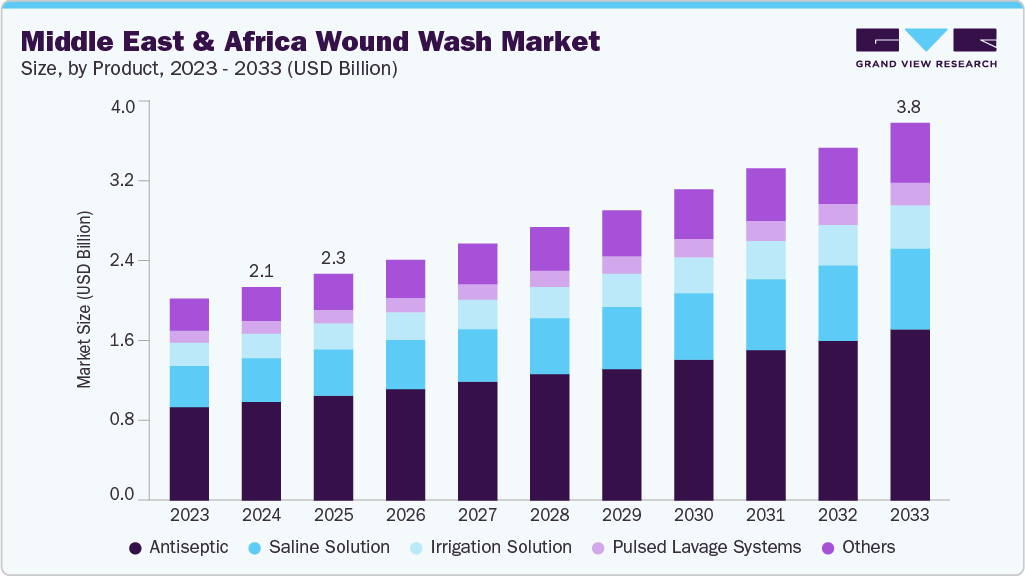
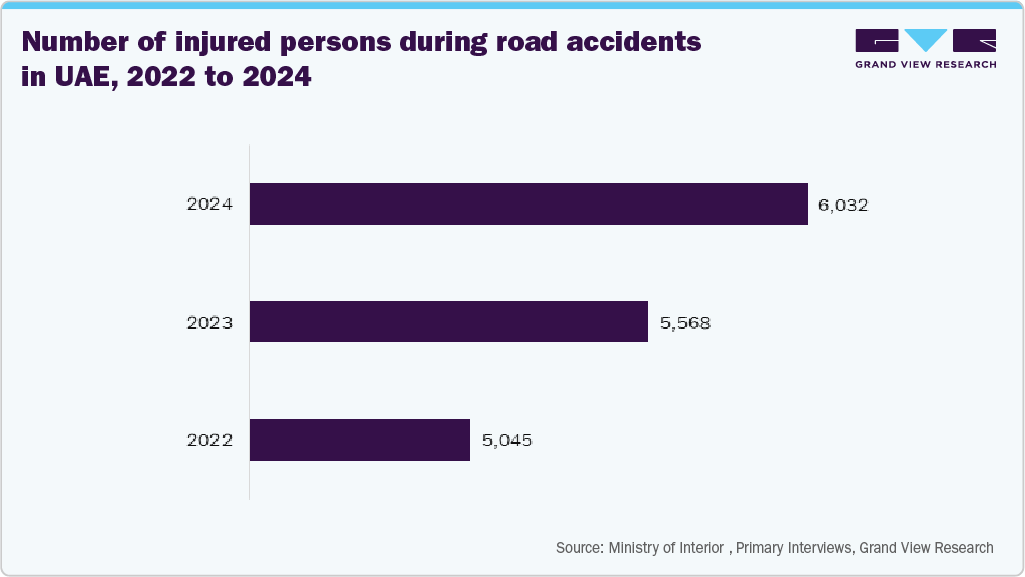
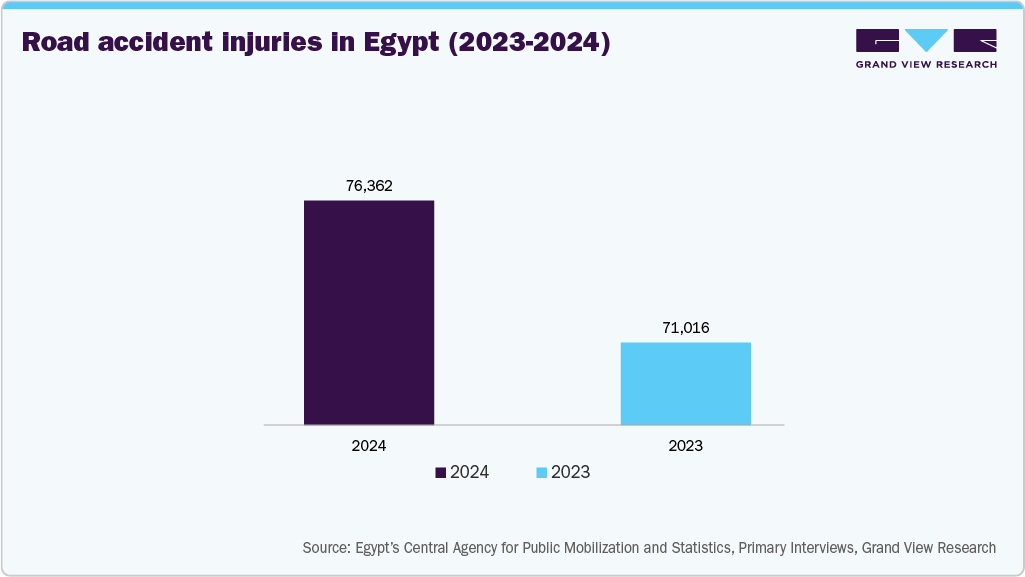
The increasing number of road accident injuries is a significant factor driving the growth of the wound wash market in the Middle East and Africa. Wound wash products, such as antiseptics and saline solutions, are essential for cleaning injuries sustained in road accidents. Countries such as the UAE, Qatar, and Egypt have reported a rise in injuries related to road and traffic accidents. The graphs below illustrate the growing burden of injuries associated with road accidents across various countries in the Middle East and Africa.
Furthermore, Egypt has witnessed a significant increase in traffic accident injuries, which is expected to drive the demand for wound wash solutions, thereby supporting growth in the market.
The growing elderly population across the Middle East and Africa is expected to boost the demand for wound wash solutions significantly. Older individuals are more likely to undergo surgical procedures and are therefore at a higher risk of developing both acute and chronic wounds. In addition, the majority of the aging population suffers from one or more chronic conditions.
A study published by Frontiers in February 2025 profiled older adults in Saudi Arabia during 2022 - 2023, examining their health status, socioeconomic conditions, demographic characteristics, and lifestyle behaviors. The findings revealed that over 52% of participants had two or more chronic illnesses, with hypercholesterolemia, hypertension, and type 2 diabetes being the most prevalent. The high incidence of diabetes and other chronic diseases among the elderly significantly increases the risk of developing chronic wounds such as diabetic foot ulcers, pressure ulcers, and surgical or traumatic wounds. These conditions require effective wound management solutions, including wound wash products. Therefore, an aging population and a rising prevalence of chronic health issues among older individuals are expected to drive market growth in the coming years.
Several countries across the Middle East and Africa have experienced a rising burden of an aging population, which is expected to accelerate in the coming years.
Table 1 Number of individuals aged 65 and above by country (2021 - 2024)
Country Name
2021
2022
2023
2024
United Arab Emirates
155,044
165,203
177,766
192,192
Bahrain
52,114
53,348
57,373
61,218
Egypt, Arab Rep.
5,260,374
5,437,664
5,692,068
5,962,442
Kuwait
149,286
126,058
143,310
154,430
Nigeria
6,534,766
6,712,250
6,900,667
7,093,611
Oman
117,729
125,708
134,333
139,649
Qatar
32,661
36,966
41,755
47,892
Saudi Arabia
806,106
869,534
950,250
1,041,656
South Africa
3,834,457
3,968,282
4,118,346
4,282,432
Source: The World Bank Group, Grand View Research Analysis
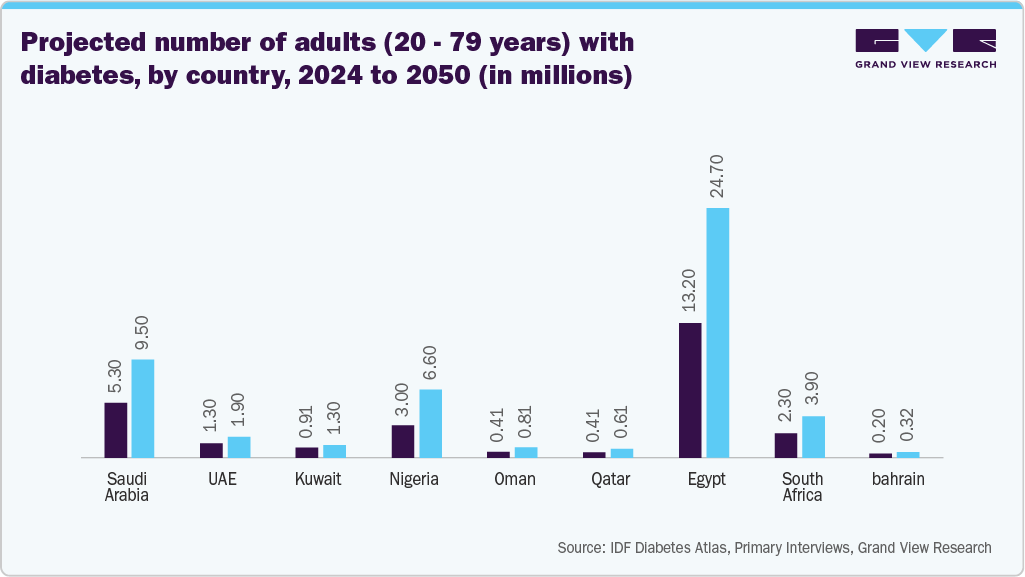
The growing prevalence of chronic diseases such as diabetes, heart disease, and cancer increases the risk of developing chronic and acute wounds, such as diabetic foot ulcer, pressure ulcer, leg ulcer, and surgical & traumatic wounds, which is anticipated to boost the adoption of wound wash solutions in the Middle East & Africa market.
The growing emphasis on enhancing accessibility and availability of wound care products, including wound wash solutions, is creating significant opportunities for industry players in the Middle East and Africa region. Both private companies and government organizations are actively undertaking initiatives to expand product reach across various markets.
For instance, in June 2025, the Minister of Health of the Kingdom of Saudi Arabia inaugurated Tamer Mölnlycke Care, a strategic joint venture between Mölnlycke Health Care, a manufacturer of wound wash products, and the Tamer Group, a prominent healthcare distributor in Saudi Arabia. This partnership focuses on the local distribution and manufacturing of Mölnlycke’s portfolio, including surgical drapes, customized procedure trays, gowns, emollient products, and selected wound care items.
“This partnership underscores our dedication to the Middle Eastern market and aligns with the Saudi Vision 2030. By expanding our product range and investing locally, we aim to enhance healthcare quality and contribute to regional growth. We extend our gratitude to Tamer Group for their unwavering support and look forward to achieving great milestones together.”SaidZlatko Rihter, CEO of Mölnlycke.
Market Concentration & Characteristics
The Middle East and Africa wound wash market is experiencing a moderate degree of innovation, driven by advancements in wound care technologies and a growing emphasis on healthcare modernization. Countries such as Saudi Arabia and the UAE are investing in specialized wound care centers as part of their Vision 2030 and UAE Centennial 2071 initiatives to enhance the quality of wound care services. These investments foster the development and adoption of advanced wound care products, including bioactive and antimicrobial wound cleansers, to address the increasing prevalence of chronic wounds such as diabetic foot ulcers.
In the Middle East & Africa, regulatory frameworks have a significant impact on the wound wash market, shaping product approvals, safety standards, and market entry barriers. GCC and North Africa countries are increasingly aligning with global medical device regulations (e.g., ISO, CE marking) to ensure quality and patient safety. For instance, manufacturers must comply with strict registration, clinical evaluation, labeling, and import control requirements, which can slow time to market and raise development costs. Meanwhile, governmental procurement policies and local content mandates in several countries encourage sourcing from approved, certified suppliers, forcing companies to adapt their compliance strategies.
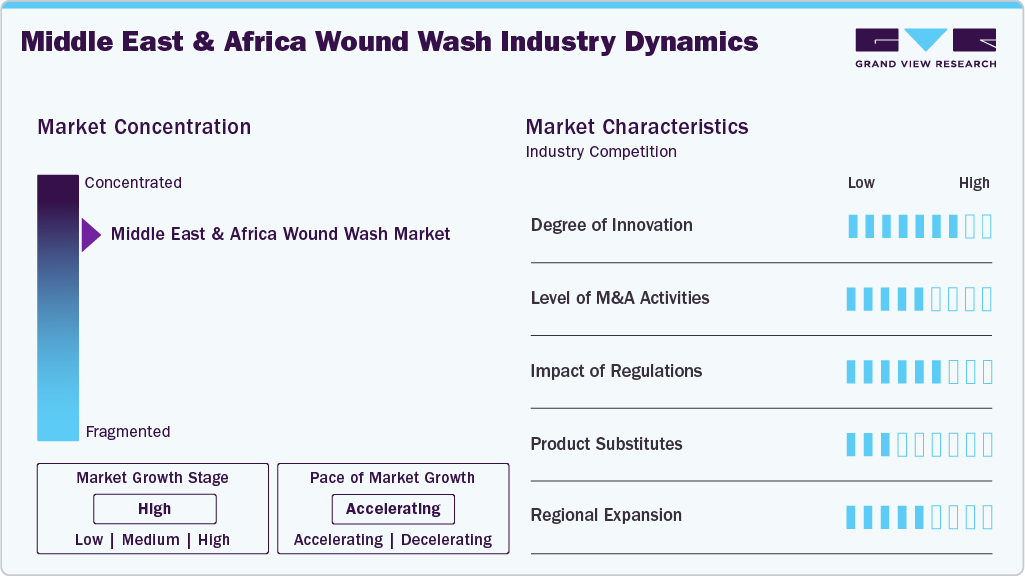
The level of mergers and acquisitions (M&A) activity in the Middle East & Africa wound wash market remains moderate but steadily increasing, primarily through acquisitions of regional distributors, partnerships, and smaller local players being absorbed by global wound care firms. While large-scale mergers are few (due in part to regulatory, logistical, and infrastructure challenges), the trend of multinational players consolidating market access via local deals is strengthening, especially in GCC and North African markets. This incremental M&A activity serves to accelerate distribution networks, compliance with regional regulations, and product portfolio expansion across wound wash and related wound care segments.
The MEA wound wash market faces limited competition from substitute products. While alternatives like soap and water or saline solutions are used for cleaning wounds, wound washes are preferred in healthcare settings due to their specific formulation designed to promote healing, prevent infections, and ensure patient safety.
Product Insights
On the basis of product, antiseptics segment held the largest share in 2024. This growth can be attributed due to its widespread use in preventing wound infections and broad applicability across clinical and home-care settings. Antiseptic solutions such as povidone-iodine, chlorhexidine, and hydrogen peroxide are routinely used for cleaning acute wounds, surgical incisions, burns, and chronic ulcers, making them a preferred choice among healthcare professionals. Their strong antimicrobial properties, affordability, and easy availability through pharmacies, hospitals, and emergency care centers further boosted adoption. In addition, the rising incidence of trauma cases, diabetic foot ulcers, and post-surgical wound infections in developing regions increased demand for reliable antiseptic wound cleansers, reinforcing the segment’s market dominance in 2024.
Saline solution segment is expected to witness the fastest growth over the forecast period. This growth is driven by their gentle, non-irritating nature, wide applicability to all wound types (acute, chronic, surgical), and growing preference for physiologically compatible cleansing agents. Unlike antiseptics, saline is viewed as safer for frequent irrigation without damaging healthy tissue or delaying healing. Moreover, increasing awareness among clinicians and patients about minimizing cytotoxicity and growing adoption in outpatient and home care settings is driving demand for saline-based wound wash solutions.
Product Form Insights
The solutions segment dominated the market in 2024 owing to its versatility, ease of use, and broad application across different types of wounds. Saline and antiseptic solutions are preferred by both consumers and healthcare professionals for their ability to effectively cleanse wounds while reducing the risk of infection. These solutions are available in a range of formulations, including sterile, preservative-free options, making them suitable for various patient needs, from minor cuts to more serious injuries.
The wipes segment is expected to witness the fastest growth in the MEA wound wash market due to wipes offering a convenient and easy-to-use solution for wound care in both clinical and home settings. These pre-moistened wipes effectively cleanse wounds by removing dirt, debris, and bacteria, providing a hygienic approach to wound management. Their portability has led to increased popularity, especially for individuals with limited mobility or those needing frequent wound care.
Application Insights
The acute wounds segment dominated the market in 2024 owing to the increasing incidence of acute injuries and surgical procedures. Increasing awareness of the importance of proper wound cleansing in preventing infections and complications such as sepsis or delayed healing is driving this growth. Furthermore, innovative wound wash products with gentle, non-irritating formulas and convenient formats like pre-moistened wipes and sprays are making acute wound care more accessible for both healthcare providers and patients.
The chronic wounds segment is expected to witness the fastest growth in the MEA wound wash market due to the rising prevalence of diabetes, vascular diseases, and pressure ulcers, particularly in Gulf countries and South Africa. Poor lifestyle habits, aging populations, and delayed diagnosis of chronic conditions have led to a surge in long-lasting wounds such as diabetic foot ulcers and venous leg ulcers, which require frequent wound cleaning to prevent infection and promote healing. In addition, growing awareness of advanced wound care, expansion of specialized wound clinics, and government initiatives to manage diabetic complications are increasing the demand for effective wound wash products.
End-use Insights
On the basis of end use, hospital segment held the largest share in 2024. Hospitals serve as the primary centers for diagnosing, managing, and treating various types of wound injuries. Hospitals are crucial in the healthcare sector due to their advanced technologies, specialist medical knowledge, and extensive infrastructure for managing this condition. Moreover, hospitals focus on delivering brief medical interventions for severe injuries or illnesses, urgent medical needs, or postsurgical recovery. They provide various services, including emergency care, surgical procedures, intensive care, and specialized medical treatments.
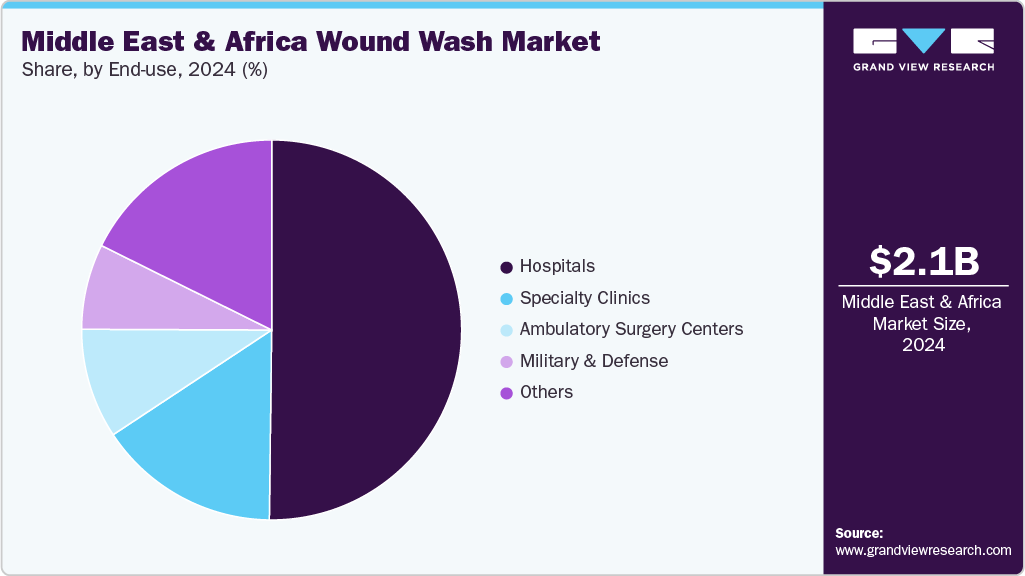
Military and defense segment is expected to witness the fastest CAGR over the forecast period. This growth can be attributed to the increasing focus on battlefield medical readiness and trauma care in the Middle East and Africa. Armed forces and defense organizations invest in advanced wound care solutions, including portable and rapid-acting wound wash products, to manage injuries sustained during combat, training, or peacekeeping operations. Rising regional geopolitical tensions and initiatives to equip military medical units with effective infection-prevention and wound management tools are driving demand. In addition, developing lightweight, easy-to-use, and field-deployable wound cleansing solutions further fuels growth, making the military and defense segment one of the fastest-growing end-users in the MEA wound wash market.
Regional Insights
Saudi Arabia’s Wound Wash Market Trends
Saudi Arabia’s wound wash market is expanding rapidly, driven by the rising prevalence of chronic conditions such as diabetes and the ongoing development of healthcare infrastructure. The government’s Vision 2030 initiative, which focuses on modernizing healthcare services and adopting advanced medical technologies, further supports growth. Increasing awareness of effective wound care, expanding specialized wound care centers, and integrating digital health solutions are also enhancing access to and quality of wound care services across the country.
Key Middle & Africa Wound Wash Company Insights
The Middle East & Africa wound wash market is extremely fragmented, with both major and local market competitors. Due to the fact that the current market players are stepping up their efforts to grab the majority in Middle East & Africa wound wash market, fierce competition is anticipated, with the degree of competitiveness perhaps rising even higher. Many market participants are engaging in various strategic activities, such as product launches, mergers and acquisitions, and geographic growth, in an effort to gain a competitive edge over rivals. Thus, with various strategies adopted by the market players, the Middle East & Africa wound wash market is predicted to impel during the forecast period.
Key Middle & Africa Wound Wash Companies:
- Atlantis Consumer Healthcare Inc.
- Medline Industries, LP
- B. Braun SE
- Johnson & Johnson Consumer Inc. (Johnson & Johnson)
- URGO MEDICAL. Laboratoires URGO
- Coloplast Corp (Coloplast Group)
- Mölnlycke Health Care AB
- Bravida Medical
- BD
- Church & Dwight Co., Inc.
- Beiersdorf
- AMERX Health Care Corp.
- NEILMED PHARMACEUTICALS INC.
- Pure&Clean
- Innovacyn, Inc.
- Zimmer Biomet
- Cardinal Health
- Irrimax Corporation (ARCHIMED)
- DermaRite Industries, LLC.
Recent Developments
-
In October 2024, Mölnlycke Health Care, one of the global leaders in MedTech focused on wound care and management announced the successful completion of its acquisition of P.G.F. Industry Solutions GmbH, the Austrian manufacturer of Granudacyn wound cleansing and moisturizing solutions.
-
In August 2024, Kane Biotech Inc. announced the signing of a three-year distribution agreement with Razan Medical & Surgical Equipment Trading LLC for its revyve Antimicrobial Wound Gel in the United Arab Emirates (UAE) wound care market. The agreement represents a strategic move to expand Kane Biotech’s international footprint and meet growing regional demand for advanced wound care solutions.
-
In August 2024, Global private equity healthcare specialist ARCHIMED has acquired Irrimax Corporation and its holding company, Innovation Technologies, for an undisclosed amount. Founded in 2003 and headquartered in Lawrenceville, Georgia, Irrimax develops and markets Irrisept Antimicrobial Wound Lavage, a market-leading solution in advanced wound irrigation.
Middle East & Africa Wound Wash Market Report Scope
Report Attribute
Details
Market size value in 2025
USD 2.26 billion
Revenue forecast in 2033
USD 3.76 billion
Growth rate
CAGR of 6.59% from 2025 to 2033
Base year for estimation
2024
Historical data
2021 - 2023
Forecast period
2025 - 2033
Quantitative units
Revenue in USD million/billion and CAGR from 2025 to 2033
Report coverage
Revenue forecast, company ranking, competitive landscape, growth factors, and trends
Segments covered
Product, product form, application, end use,and region
Regional scope
Middle East
Country scope
Saudi Arabia; Kuwait; Qatar; Oman; UAE
Key companies profiled
Atlantis Consumer Healthcare Inc.; Medline Industries, LP; B. Braun SE; Johnson & Johnson Consumer Inc. (Johnson & Johnson); URGO MEDICAL. Laboratoires URGO; Coloplast Corp (Coloplast Group); Mölnlycke Health Care AB; Bravida Medical; BD; Church & Dwight Co., Inc.; Beiersdorf; AMERX Health Care Corp.; NEILMED PHARMACEUTICALS INC.; Pure&Clean; Innovacyn, Inc.; Zimmer Biomet; Cardinal Health; Irrimax Corporation (ARCHIMED); DermaRite Industries, LLC
Customization scope
Free report customization (equivalent up to 8 analysts working days) with purchase. Addition or alteration to country, regional & segment scope.
Pricing and purchase options
Avail customized purchase options to meet your exact research needs. Explore purchase options
Middle East & Africa Wound Wash Market Report Segmentation
This report forecasts revenue growth at global, regional, and country levels and provides an analysis of the latest industry trends in each of the sub-segments from 2021 to 2033. For the purpose of this study, Grand View Research has segmented the Middle East & Africa wound wash market report on the basis of product, product form, end-use, and region:
-
Product Outlook (Revenue, USD Million, 2021 - 2033)
-
Antiseptic
-
Povidone Iodine
-
Chlorhexidine
-
Polyhexanide (PHMB)
-
Others
-
-
Saline Solution
-
Irrigation Solution
-
Pulsed Lavage Systems
-
Disposable
-
Reusable
-
Semi Disposable
-
-
Others
-
-
Product Form Outlook (Revenue, USD Million, 2021 - 2033)
-
Solutions
-
Sprays
-
Wipes
-
Others
-
-
Application Outlook (Revenue, USD Million, 2021 - 2033)
-
Acute Wounds
-
Surgical & Traumatic Wounds
-
Burns & Lacerations
-
-
Chronic Wounds
-
Diabetic Foot Ulcers
-
Pressure Ulcers
-
Venous Leg Ulcers
-
Other Chronic Wounds
-
-
-
End-use Outlook (Revenue, USD Million, 2021 - 2033)
-
Hospitals
-
Specialty Clinics
-
Ambulatory Surgery Centers
-
Military & Defence
-
Others
-
-
Country Outlook (Revenue, USD Million, 2021 - 2033)
-
Middle East
-
South Africa
-
Saudi Arabia
-
UAE
-
Kuwait
-
-
Frequently Asked Questions About This Report
b. The antiseptic segment led the market with the largest revenue share of 47.58%, in 2024. This dominance can be attributed to its widespread use in preventing wound infections and broad applicability across clinical and home-care settings.
b. Some of the prominent players in the Middle East & Africa wound wash market include Atlantis Consumer Healthcare Inc., Medline Industries, LP, B. Braun SE, Johnson & Johnson Consumer Inc. (Johnson & Johnson), URGO MEDICAL. Laboratoires URGO, Coloplast Corp (Coloplast Group), Mölnlycke Health Care AB, Bravida Medical, BD, Church & Dwight Co., Inc., Beiersdorf, AMERX Health Care Corp., NEILMED PHARMACEUTICALS INC., Pure&Clean, Innovacyn, Inc., Zimmer Biomet, Cardinal Health, Irrimax Corporation (ARCHIMED), and DermaRite Industries, LLC.
b. The growth of the market is attributed to the rising prevalence of chronic and acute wounds, including diabetic ulcers and surgical injuries, coupled with increasing healthcare infrastructure and access.
b. The Middle East & Africa wound wash market size was estimated at USD 2.12 billion in 2024 and is expected to reach USD 2.26 billion in 2025.
b. The Middle East & Africa wound wash market is expected to grow at a compound annual growth rate of 6.59% from 2025 to 2033 to reach USD 3.76 billion by 2033.


Share this report with your colleague or friend.
Need a Tailored Report?
Customize this report to your needs — add regions, segments, or data points, with 20% free customization.


ISO 9001:2015 & 27001:2022 Certified
We are GDPR and CCPA compliant! Your transaction & personal information is safe and secure. For more details, please read our privacy policy.
Trusted market insights - try a free sample
See how our reports are structured and why industry leaders rely on Grand View Research. Get a free sample or ask us to tailor this report to your needs.













