Middle East Architectural Membranes Market Summary
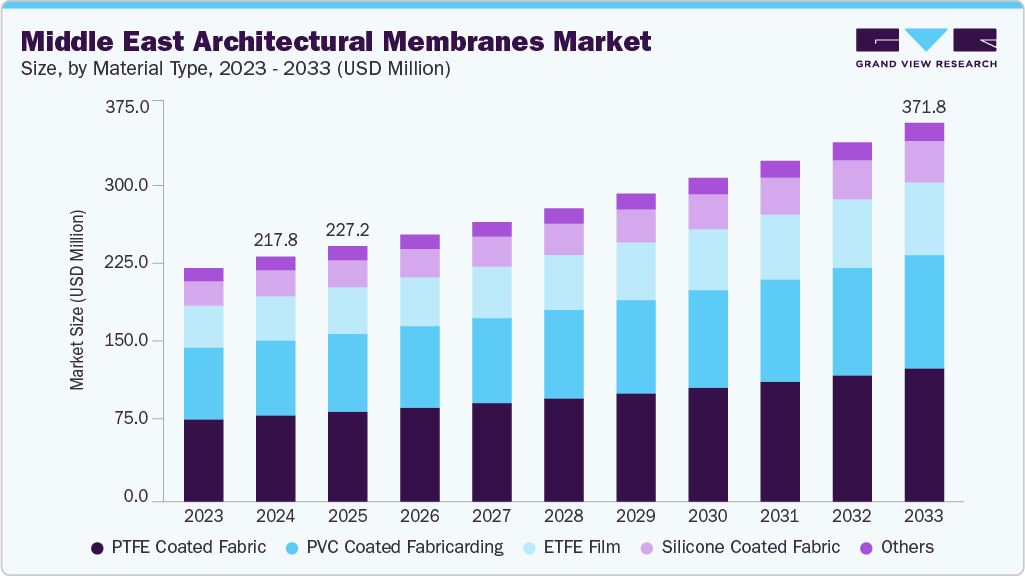
The Middle East architectural membranes market size was estimated at USD 217.8 million in 2024 and is expected to reach USD 371.8 million by 2033 expanding at a CAGR of 5.1% from 2025 to 2033, driven by ongoing investments in large-scale infrastructure and development projects, particularly in the Gulf Cooperation Council (GCC) countries. Governments in the region are actively pursuing ambitious urban planning and construction initiatives, such as smart cities, cultural landmarks, and world-class sporting venues, which demand modern architectural solutions.
Key Market Trends & Insights
- By material type, the ETFE film segment is expected to grow at fastest CAGR of 5.8% over the forecast period.
- By end use, the transportation infrastructure segment is expected to grow at fastest CAGR of 5.4% over the forecast period.
- Egypt is expected to grow at fastest CAGR of 5.5% over the forecast period.
Market Size & Forecast
- 2024 Market Size: USD 217.8 Million
- 2033 Projected Market Size: USD 371.8 Million
- CAGR (2025-2033): 5.1%
Architectural membranes offer the flexibility, scalability, and design aesthetics required for such high-profile projects, making them a preferred material in these applications. Climatic conditions in the Middle Eastregion also play a critical role in driving the demand for architectural membranes. With extreme temperatures and high solar radiation, there is a growing need for building materials that offer superior thermal management and UV resistance. Membranes with reflective and insulating properties help reduce interior heat loads, contributing to passive cooling and energy efficiency. These features are particularly attractive in regions where minimizing energy consumption is a key goal in both public and private developments.
The increasing focus on sustainable and environmentally conscious construction practices across the Middle East region is further accelerating the use of architectural membranes. Developers and governments are adopting green building standards and looking for materials that support low carbon footprints, recyclability, and longevity. Membranes such as PTFE, ETFE, and PVC-coated fabrics align well with these goals by offering durability, low maintenance, and excellent light transmission, thereby enhancing indoor comfort while reducing environmental impact.
Market Concentration & Characteristics
The architectural membranes market in the Middle East is characterized by moderate to high market concentration, with a limited number of global players dominating production and technological development. Companies such as Saint-Gobain, Seaman Corp, and Sika hold significant market share due to their extensive product portfolios, global distribution networks, and focus on innovation. The level of innovation in the industry is notably high, driven by increasing demand for advanced materials like PTFE, ETFE, and radiative cooling membranes. Manufacturers are investing in R&D to improve performance features such as thermal regulation, UV resistance, durability, and aesthetic flexibility. These innovations further support the development of sustainable and energy-efficient architectural solutions, aligning with modern construction trends.
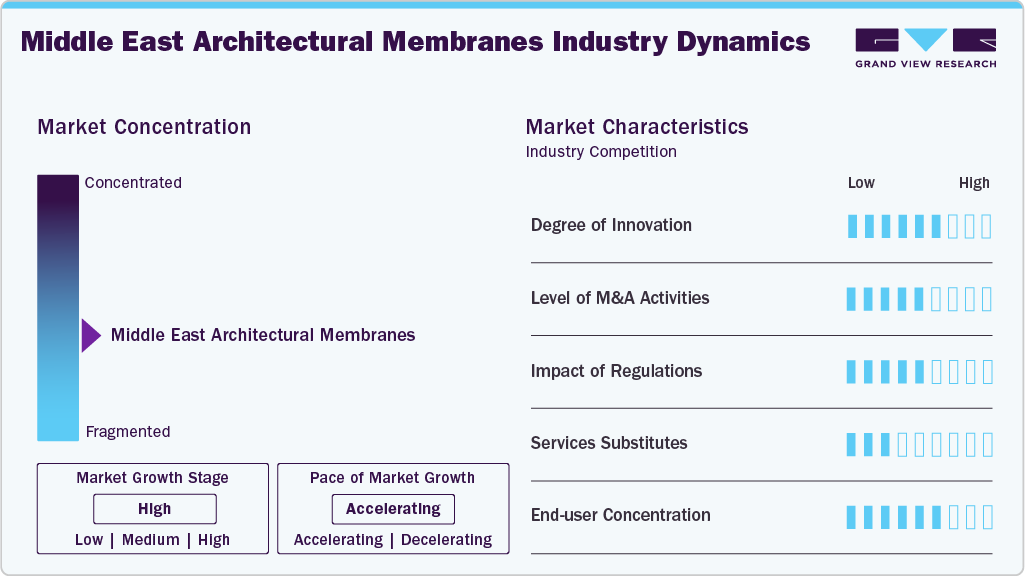
Mergers and acquisitions play a strategic role in shaping market dynamics as companies aim to expand their geographic reach and technological capabilities. Regulatory frameworks, especially those related to fire safety, environmental impact, and building codes, greatly influence product development and material choices. Stricter regulations in regions like Europe and North America are speeding up the adoption of high-performance, certified membranes. While there are few direct substitutes for architectural membranes in large-span and tensile applications, traditional building materials may still compete in certain structural settings. Additionally, end-user concentration is high in segments such as public infrastructure, sports venues, and commercial real estate, where procurement is often project-specific and relies on large-scale investments. This creates a market environment where supplier relationships, technical expertise, and project support services are vital competitive advantages.
Material Type Insights
The PTFE-coated fabric segment led the market, capturing the largest revenue share of 35.20% in 2024. This growth was driven by demand for high-performance, durable materials suitable for harsh environmental conditions. PTFE membranes provide excellent durability, UV resistance, and self-cleaning properties, making them ideal for permanent structures in hot, dusty, and high-radiation climates. Their low maintenance and fire-resistant qualities meet strict safety and operational standards in large public infrastructure projects across the region, especially in the Gulf states.
The ETFE film segment is expected to grow at the fastest CAGR of 5.8% over the forecast period due to its lightweight design, excellent light transmission, and ability to support dynamic architectural projects. Growing focus on sustainable and energy-efficient building materials is fueling the adoption of ETFE, especially in modern cultural, commercial, and transportation developments. The material’s recyclability and long lifespan, combined with its resistance to corrosion and weathering, make it an attractive option for innovative construction in both urban and desert settings.
End Use Insights
The sports and recreation segment led the market, capturing the largest revenue share of 41.9% in 2024. This growth is driven by the region's increasing investment in international sporting events and tourism infrastructure. Countries like Qatar, the UAE, and Saudi Arabia are building state-of-the-art stadiums, arenas, and recreational facilities that utilize membranes to create expansive, visually striking roofs and façades. Membranes enable flexible, iconic designs while offering shade, thermal comfort, and energy efficiency-key features in the region’s hot climate.
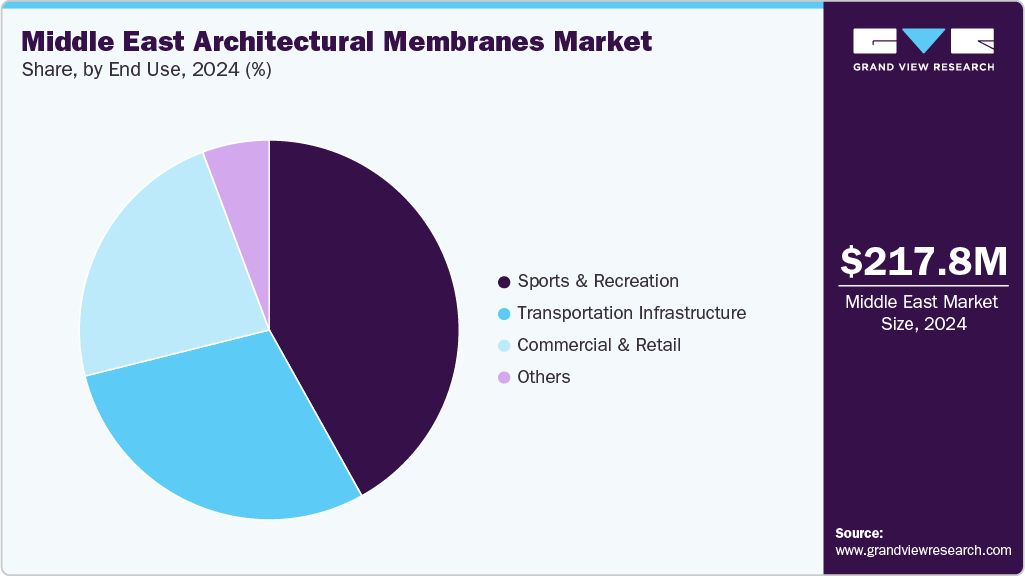
The transportation infrastructure segment is expected to grow at the fastest CAGR of 5.4% over the forecast period. Development projects, including airports, metro stations, and transit hubs, are increasing demand for architectural membranes in the Middle East market. Governments are focusing on large-scale mobility projects to support urban growth and regional connectivity. Membranes are increasingly used in these structures because of their lightweight properties, quick installation, and ability to create open, airy spaces with natural daylight. Their cost-effectiveness and architectural flexibility make them ideal for covering large spans while improving passenger comfort and operational efficiency.
Regional Insights
The Saudi Arabia architectural membranes market is being strongly driven by the country’s ambitious Vision 2033 development agenda, which includes mega-projects like NEOM, the Red Sea Project, and Qiddiya. These initiatives demand innovative and sustainable building materials to support futuristic urban design and environmentally conscious construction. Architectural membranes are widely utilized for their lightweight structure, aesthetic appeal, and ability to withstand harsh desert climates. The focus on tourism, entertainment, and sports infrastructure-such as stadiums, museums, and event venues-is also boosting the demand for high-performance tensile membrane solutions that offer durability and design flexibility.
UAE Architectural Membranes Market Trends
In the UAE, the architectural membranes market is driven by the country’s reputation as a global hub for luxury architecture, modern urban development, and high-profile events. Cities like Dubai and Abu Dhabi continue to invest heavily in iconic structures, world-class transportation systems, and entertainment venues that require advanced architectural solutions. Membranes are increasingly favored for their aesthetic qualities, sustainability, and quick installation timelines. Additionally, the UAE’s strong commitment to green building certifications and sustainable urban planning supports the adoption of ETFE and PTFE materials in both public and private sector projects.
Egypt Architectural Membranes Market Trends
Egypt’s market for architectural membranes is growing rapidly due to expansion in infrastructure and real estate, especially in new urban areas like the New Administrative Capital. The government’s focus on national development and public-private partnerships is increasing the demand for affordable and efficient building solutions. Membrane structures are becoming more popular in transportation hubs, sports complexes, and commercial projects because they are cost-effective, quick to install, and well-suited for Egypt’s hot, dry climate. Additionally, the booming tourism industry further boosts the need for innovative and visually appealing architectural designs.
Qatar Architectural Membranes Market Trends
Qatar’s architectural membranes market is mostly driven by its investment in world-class infrastructure, especially leading up to and following the FIFA World Cup 2022. The country has focused on building state-of-the-art sports facilities, airports, and hospitality venues where membrane structures are key in providing energy efficiency and visual appeal. Qatar’s emphasis on environmental sustainability, along with its extreme weather conditions, makes materials like PTFE and ETFE perfect for reducing heat gain and improving occupant comfort. The demand for unique, landmark architecture also boosts the market for advanced membrane solutions.
Kuwait Architectural Membranes Market Trends
In Kuwait, the architectural membranes market benefits from ongoing modernization and diversification efforts aimed at improving public infrastructure and urban living spaces. The government is investing in cultural centers, transportation networks, and recreational facilities, many of which feature tensile membrane structures due to their ability to provide shade, aesthetic appeal, and thermal performance. Kuwait’s hot climate requires materials that resist UV rays and promote energy efficiency, making architectural membranes an appealing option. Furthermore, increasing awareness of sustainable construction encourages the use of durable, low-maintenance membrane systems in both government and private projects.
Key Middle East Architectural Membrane Company Insights
Some of the key players operating in market include Seaman Corp, Saint-Gobain.
-
Seaman Corp manufactures high-performance architectural fabrics under its Shelter-Rite brand, widely used in stadiums, transportation hubs, and tensile structures. Their products are known for superior weather resistance, flexibility, and long-term durability, making them well-suited for the Middle East region’s demanding climate conditions.
-
Saint-Gobain offers advanced architectural membranes, including PTFE-coated fiberglass and ETFE films under brands such as SHEERFILL. These materials provide high light transmission, self-cleaning properties, and exceptional thermal control, supporting sustainable and visually impactful architectural designs.
Sika, Hiraoka are some of the emerging market participants in anchoring fasteners market.
-
Sika delivers a comprehensive range of construction materials, including flexible membrane systems for roofs and façades. Its products are valued for waterproofing performance, mechanical stability, and compatibility with sustainable construction standards, meeting the functional and aesthetic needs of modern Middle Eastprojects.
-
Hiraoka specializes in coated fabrics for architectural use, particularly PVC and PTFE membranes. The company’s solutions are engineered for UV resistance, flame retardancy, and tensile strength, and are commonly used in large-span roofing and public infrastructure throughout high-temperature regions.
Key Middle East Architectural Membrane Companies:
- Seaman Corp
- Saint-Gobain
- Sika
- Hiraoka
- Chukoh Chem
- ObeiKan
- Atex Membrane
- Taconic-AFD
- Kobond
Middle East Architectural Membranes Market Report Scope
|
Report Attribute
|
Details
|
|
Market size value in 2025
|
USD 227.2 million
|
|
Revenue forecast in 2033
|
USD 337.1 million
|
|
Growth rate
|
CAGR of 5.1% from 2025 to 2033
|
|
Base year for estimation
|
2024
|
|
Historical data
|
2021 - 2023
|
|
Forecast period
|
2025 - 2033
|
|
Quantitative units
|
Revenue in USD Million and CAGR from 2025 to 2033
|
|
Report coverage
|
Revenue forecast, company ranking, competitive landscape, growth factors, and trends
|
|
Segments covered
|
Material type, end use, and country
|
|
Country scope
|
Saudi Arabia; UAE; Egypt; Qatar; Kuwait
|
|
Key companies profiled
|
Seaman Corp; Saint-Gobain; Sika; Hiraoka; Chukoh Chem; ObeiKan; Atex Membrane; Taconic-AFD; Kobond
|
|
Customization scope
|
Free report customization (equivalent up to 8 analysts’ working days) with purchase. Addition or alteration to country, regional & segment scope.
|
|
Pricing and purchase options
|
Avail customized purchase options to meet your exact research needs. Explore purchase options
|
Middle East Architectural Membranes Market Report Segmentation
This report forecasts revenue growth at regional, and country levels and provides an analysis of the latest industry trends in each of the sub-segments from 2021 to 2033. For this study, Grand View Research has segmented the Middle East architectural membranes market report based on material type, end use, and country.
-
Material Type Outlook (Revenue, USD Million, 2021 - 2033)
-
PTFE Coated Fabric
-
PVC Coated Fabric
-
ETFE Film
-
Silicone Coated Fabric
-
Others
-
End Use Outlook (Revenue, USD Million, 2021 - 2033)
-
Country Outlook (Revenue, USD Million; 2021-2033)
-
Saudi Arabia
-
UAE
-
Egypt
-
Qatar
-
Kuwait
Frequently Asked Questions About This Report
b. The MEA architectural membranes market size was estimated at USD 217.8 million in 2024 and is expected to reach USD 227.2 million in 2025.
b. The MEA architectural membranes market is expected to grow at a compound annual growth rate of 5.0% from 2025 to 2033 to reach USD 371.8 million by 2033.
b. The PTFE coated fabric segment dominated the market and accounted for the largest revenue share of 35.20% in 2024, driven by the demand for high-performance, long-lasting materials suitable for harsh environmental conditions.
b. Some of the prominent companies in the anchoring fasteners market include Seaman Corp, Saint-Gobain, Sika, Hiraoka, Chukoh Chem, ObeiKan, Atex Membrane, Taconic-AFD, and Kobond.
b. Key factors driving the MEA architectural membranes market include large-scale infrastructure development, extreme climatic conditions requiring energy-efficient materials, increasing investment in sports and tourism facilities, and growing emphasis on sustainable and innovative architectural solutions.

 Download Sample Report
















