Middle East Bio-LNG Market Summary
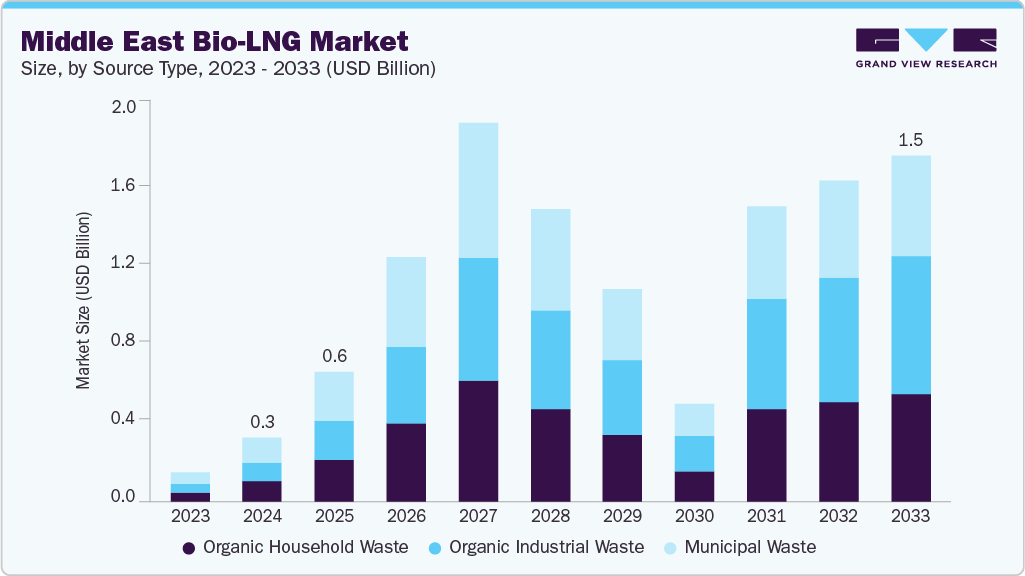
The Middle East bio-LNG market size was estimated at USD 0.28 billion in 2024 and is expected to reach USD 1.50 billion by 2033, growing at a CAGR of 13.0% from 2025 to 2033. Bio-LNG is emerging as a sustainable alternative to conventional fossil fuels, particularly in transport and heavy-duty applications, as regional governments seek to reduce greenhouse gas emissions and meet climate commitments.
Key Market Trends & Insights
- Saudi Arabia bio-LNG market held the largest share in 2024.
- By source type, municipal waste held the highest market share of 38.84% in 2024.
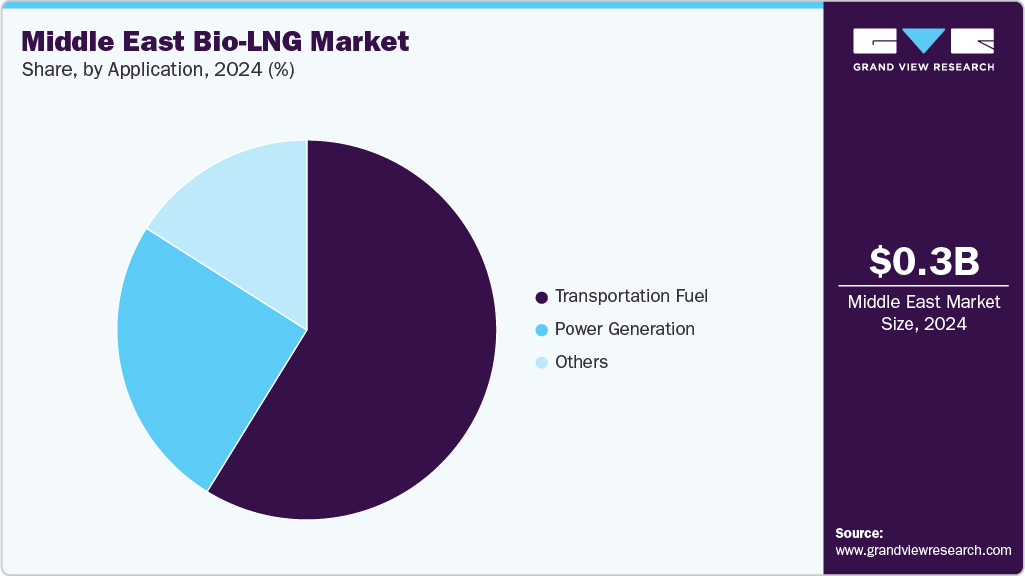
- By application, the transportation segment held the highest market share in 2024.
Market Size & Forecast
- 2024 Market Size: USD 0.28 Billion
- 2033 Projected Market Size: USD 1.50 Billion
- CAGR (2025-2033): 13.0%
Countries including the UAE, Saudi Arabia, Oman, and Qatar are increasingly exploring bio-LNG production from organic waste, agricultural residues, and industrial biomass, aligning with national energy diversification strategies and circular economy initiatives. With abundant feedstock availability and a growing emphasis on decarbonizing shipping and heavy industry, bio-LNG is a key component of the region’s long-term clean energy roadmap.
Market expansion is driven by supportive policies, investment incentives, and international partnerships to scale production and distribution. Technological advancements in anaerobic digestion, liquefaction, and carbon capture enhance production efficiency and cost competitiveness. Projects integrating bio-LNG with existing gas infrastructure, ports, and shipping hubs in the UAE, Oman, and Saudi Arabia are gaining traction, reflecting the fuel’s strategic role in regional energy security and export potential. Key industry players, including ADNOC, Masdar, ACWA Power, and global companies exploring sustainable LNG solutions, are advancing pilot and commercial-scale bio-LNG projects, underscoring the market’s potential to become a vital element of the Middle East’s low-carbon energy transition over the coming decade.
Drivers, Opportunities & Restraints
The industry is primarily driven by growing decarbonization agendas, increasing demand for low-emission fuels in transportation and heavy industry, and abundant biomass and organic waste resources across the region. Governments in Saudi Arabia, the UAE, Oman, and Qatar are actively promoting sustainable fuel alternatives to meet climate targets, reduce greenhouse gas emissions, and enhance energy security. Supportive policies, investment incentives, and collaborations with international technology providers are encouraging the development of commercial-scale bio-LNG projects. Technological advancements in anaerobic digestion, liquefaction, and carbon capture are improving production efficiency and cost competitiveness, making bio-LNG a viable complement to conventional LNG infrastructure and a critical element of the regional clean energy mix.
Opportunities are emerging in integrating bio-LNG with existing natural gas networks, ports, and shipping terminals to facilitate heavy-duty transport decarbonization and export-oriented projects. The growing emphasis on circular economy solutions, including waste-to-fuel conversion, creates additional avenues for industrial and municipal collaboration. Market expansion is further supported by partnerships between regional energy companies and global bio-LNG technology providers, enabling knowledge transfer, local job creation, and industrial development. However, the market faces restraints such as high capital expenditure for bio-LNG production and liquefaction facilities, feedstock collection and transportation challenges, and limited regional expertise in large-scale bio-LNG operations. Regulatory uncertainties, complex permitting processes, and competition from conventional LNG and other alternative fuels may slow the pace of market adoption in the near term, despite its strong long-term growth potential.
Source Type Insights
The municipal waste segment held the largest revenue share of over 38.84% in 2024, establishing itself as the leading source type in the industry. This dominance is driven by the region’s growing emphasis on sustainable waste management practices, abundant urban solid waste streams, and government-backed circular economy initiatives. Countries like the UAE, Saudi Arabia, and Qatar spearhead large-scale municipal waste-to-energy projects, positioning waste-derived bio-LNG as a critical pathway for reducing landfill dependence and meeting renewable energy targets. Projects like the Dubai Waste-to-Energy facility underscore the rising potential of municipal waste as a scalable feedstock for bio-LNG production.
The strategic focus on municipal waste is reinforced by regulatory support, increasing public-private partnerships, and the need to decarbonize hard-to-abate sectors such as transportation and shipping. Unlike agricultural residues or forestry biomass, municipal waste provides a consistent and locally available resource stream, enhancing energy security while addressing environmental waste disposal challenges. Integrating waste-to-bio-LNG projects with carbon capture technologies further amplifies their role in achieving net-zero ambitions. Although challenges such as collection inefficiencies and infrastructure costs remain, advancements in anaerobic digestion, gasification, and upgrading technologies improve conversion efficiency, thereby consolidating municipal waste’s position as the backbone of the Middle East bio-LNG supply chain.
Application Insights
The transportation segment accounted for the largest revenue share of over 58% in 2024 and is expected to maintain its dominance throughout the forecast period. This growth is driven by the increasing adoption of Bio-LNG as a sustainable fuel alternative for heavy-duty vehicles, shipping, and logistics fleets. Governments across the region, particularly in the UAE, Saudi Arabia, and Oman, are actively promoting low-carbon fuels to curb emissions in the transportation sector, which remains a significant contributor to overall greenhouse gas output. Investments in Bio-LNG refueling infrastructure, fleet conversions, and public-private partnerships are further accelerating the uptake of Bio-LNG in commercial and industrial transport.
The surge in industrial demand is further fueled by the rising interest in green hydrogen application, which requires vast amounts of renewable electricity and have become a focal point of national strategies across several Middle Eastern countries. Renewable energy also plays a key role in powering mining operations, water desalination plants, and the aluminium smelters sector, which has historically relied on fossil fuels. With growing regulatory pressure and international trade considerations around carbon emissions, industries are adopting renewable energy to reduce operating costs and meet environmental compliance and ESG standards. As industrial energy consumption continues to grow, the sector is set to remain the cornerstone of renewable energy demand in the Middle East, bolstered by long-term power purchase agreements and government-backed infrastructure initiatives.
Country Insights
Saudi Arabia Bio-LNG Market Trends
Saudi Arabia led the Middle East Bio-LNG market with a 45.38% revenue share in 2024, driven by its Vision 2030 energy diversification strategy and a strong push for sustainable fuels in transportation and heavy-duty industrial applications. The Kingdom invests in large-scale Bio-LNG production, refueling infrastructure, and fleet conversion projects, particularly for logistics, shipping, and commercial transport. Public-private partnerships, policy incentives, and sovereign-backed funding are accelerating adoption, reinforcing Saudi Arabia’s position as the regional hub for Bio-LNG development.
UAE Bio-LNG Market Trends
The UAE holds a substantial share of the Middle East Bio-LNG market, supported by the UAE Energy Strategy 2050 and national sustainability policies targeting low-emission transport. Initiatives focus on integrating Bio-LNG in ports, shipping, and public transport systems, supported by regulatory frameworks and international partnerships. Advanced refueling infrastructure and financial incentives for fleet operators drive adoption, ensuring steady market growth throughout the forecast period.
Qatar Bio-LNG Market Trends
Qatar is gradually expanding its Bio-LNG market as part of its Qatar National Vision 2030, emphasizing sustainability and low-carbon fuels. Bio-LNG adoption is primarily focused on shipping, logistics, and industrial transport. Strategic investments in renewable energy and emerging hydrogen projects complement the Bio-LNG market, while regulatory support and international collaboration are increasing the sector’s potential.
Oman Bio-LNG Market Trends
Oman is emerging as a promising market for Bio-LNG, driven by its renewable energy targets under Oman Vision 2040 and growing interest in low-carbon transport. Pilot projects, international partnerships, and government incentives support Bio-LNG adoption in heavy-duty vehicles, logistics, and industrial applications. While infrastructure and policy implementation are still developing, ongoing investments are laying the groundwork for long-term growth.
Kuwait Bio-LNG Market Trends
Kuwait’s bio-LNG market is in the early stages of development, focusing on reducing emissions in the transport and industrial sectors. The government is exploring pilot projects and international collaborations to integrate bio-LNG into shipping, logistics, and fleet operations. Regulatory initiatives and incentives for sustainable fuels gradually encourage adoption, positioning Kuwait for future growth as regional infrastructure expands.
Key Middle East Bio-LNG Company Insights
Key players operating in the Middle East bio-LNG market are undertaking various initiatives to strengthen their presence and increase the reach of their products and services. Strategies such as expansion activities and partnerships are key in propelling the market growth.
Key Middle East Bio-LNG Companies:
- ADNOC (Abu Dhabi National Oil Company)
- Masdar
- ACWA Power
- Oman Oil Company (OQ)
- Bee’ah
- DP World Energy
- Neutral Fuels
- Lootah Biofuels
- Emirates Biofuel
- QatarEnergy
Recent Developments
- In March 2025, Masdar announced the launch of its first bio-LNG demonstration project in the UAE in collaboration with regional partners under the Abu Dhabi Circular Economy Program. The facility, located in Abu Dhabi’s Industrial City, is designed to convert organic waste and agricultural residues into low-carbon LNG for transportation and industrial applications.
Middle East Bio-LNG Market Report Scope
|
Report Attribute
|
Details
|
|
Market size value in 2025
|
USD 0.56 billion
|
|
Revenue forecast in 2033
|
USD 1.50 billion
|
|
Growth rate
|
CAGR of 13.0% from 2025 to 2033
|
|
Base year for estimation
|
2024
|
|
Historical data
|
2021 - 2023
|
|
Forecast period
|
2025 - 2033
|
|
Quantitative units
|
Volume in kilo tons; revenue in USD million/billion, and CAGR from 2025 to 2033
|
|
Report coverage
|
Volume & revenue forecast, competitive landscape, growth factors, and trends
|
|
Segments covered
|
Application, source type, country
|
|
Regional scope
|
Middle East
|
|
Country scope
|
UAE; Saudi Arabia; Kuwait; Oman; Qatar
|
|
Key companies profiled
|
ADNOC (Abu Dhabi National Oil Company); Masdar; ACWA Power; Oman Oil Company (OQ); Bee’ah; DP World Energy; Neutral Fuels; Lootah Biofuels; Emirates Biofuel; QatarEnergy
|
|
Customization scope
|
Free report customization (equivalent up to 8 analysts working days) with purchase. Addition or alteration to country, regional & segment scope.
|
|
Pricing and purchase options
|
Avail customized purchase options to meet your exact research needs. Explore purchase options
|
Middle East Bio-LNG Market Report Segmentation
This report forecasts volume & revenue growth at the regional and country levels and provides an analysis of the latest industry trends in each of the sub-segments from 2021 to 2033. For this study, Grand View Research has segmented the Middle East bio-LNG market report on the basis of application, source type, and country:
-
Application Outlook (Volume, Kilo Tons; Revenue, USD Million, 2021 - 2033)
-
Transportation Fuel
-
Heavy-duty vehicles
-
Shipping
-
Power Generation
-
Others
-
Source Type Outlook (Volume, Kilo Tons; Revenue, USD Million, 2021 - 2033)
-
Organic household waste
-
Organic industrial waste
-
Municipal waste
-
Country Outlook (Volume, Kilo Tons; Revenue, USD Million, 2021 - 2033)
-
Middle East
-
UAE
-
Saudi Arabia
-
Kuwait
-
Oman
-
Qatar
Frequently Asked Questions About This Report
b. The Middle East Bio-LNG market size was estimated at USD 0.28 billion in 2024 and is expected to reach USD 0.56 billion in 2025.
b. The Middle East Bio-LNG market is expected to grow at a compound annual growth rate of 13% from 2025 to 2033 to reach USD 1.5 billion by 2033.
b. The Municipal Waste segment accounted for the largest revenue share of 38.84% in the Middle East Bio-LNG market in 2024, driven by the region’s increasing focus on sustainable waste management and renewable energy integration.
b. Some of the key vendors operating in the Middle East Bio-LNG market include ADNOC (Abu Dhabi National Oil Company), Masdar, ACWA Power, Oman Oil Company (OQ), Bee’ah, DP World Energy, Neutral Fuels, Lootah Biofuels, Emirates Biofuel, and QatarEnergy, among others.
b. The key factors driving the Middle East Bio-LNG market include supportive government initiatives, rising demand for low-carbon fuels, and the region’s strategic shift toward sustainable energy sources.

 Download Sample Report
















