
- Home
- »
- Healthcare IT
- »
-
Middle East Digital Health Market Size, Industry Report, 2033GVR Report cover

Middle East Digital Health Market (2025 - 2033) Size, Share & Trends Analysis Report By Technology (Tele-healthcare, mHealth), By Component (Hardware, Software, Services), By Application (Obesity, Diabetes), By End Use, By Country, And Segment Forecasts
Middle East Digital Health Market Summary
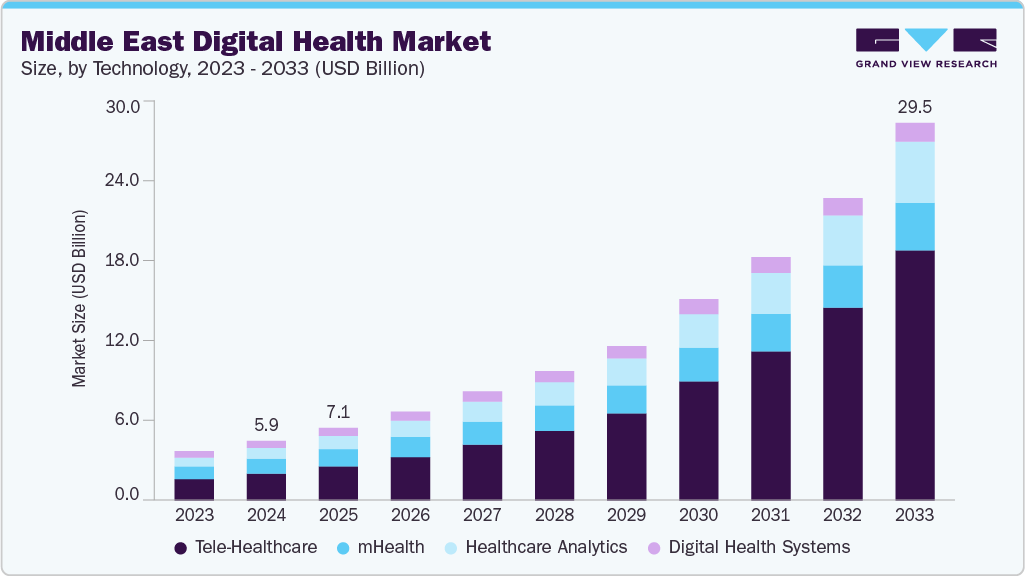
The Middle East digital health market size was estimated at USD 5.96 billion in 2024 and is projected to reach USD 29.46 billion by 2033, growing at a CAGR of 19.56% from 2025 to 2033. The Middle East is shifting toward digitally enabled healthcare as demand grows for efficient, patient-centric services.
Key Market Trends & Insights
- Saudi Arabia's digital health industry dominated the regional market in 2024 and accounted for the largest revenue share of 39.77%.
- The UAE digital health industry is anticipated to register the fastest growth rate during the forecast period.
- In terms of technology segment, the tele-healthcare segment held the largest revenue share of 47.07% in 2024.
- In terms of component segment, the services segment held the largest revenue share in 2024.
- In terms of the application segment, the diabetes segment held the largest revenue share in 2024.
Market Size & Forecast
- 2024 Market Size: USD 5.96 Billion
- 2033 Projected Market Size: USD 29.46 Billion
- CAGR (2025-2033): 19.56%
- Saudi Arabia: Largest market in 2024
- UAE: Fastest growing market
Three ways to get this report
Buy it, customize it, or ask a question.Ask an Analyst
Analyst response in 1 business day
- AccessReport author, directly
- Reply timeWithin 1 working day
- No sales callDirect answer only
- FormatEmail reply
- CostFree, no cost
Get the Full Report
What the study covers
- FormatsPDF · Excel · Dashboard
- Timeline2025–2033 annual, 2024 base
- Coverage20+ countries, 5 regions
- Companies10+ key players profiled
Customize the Report
20% free customization
- IncludeCountries, segments, points
- TailorTo your product definition
- ExtendDeeper competitor detail
- OrA fully bespoke study
- Turnaround5–10 working days
National strategies, adaptive reimbursement models, and public-private collaboration are accelerating the adoption of telemedicine, AI, and connected health platforms. With pressure to improve outcomes while controlling costs, digital transformation is becoming essential. In February 2025, Sidra Medicine and Rasmal Ventures signed an MoU to integrate healthtech startups into Sidra’s operations, accelerating Qatar’s position as a digital health leader under Vision 2030.Governments across the Middle East are actively advancing digital healthcare through national frameworks such as Saudi Arabia’s Vision 2030 and the UAE’s National Digital Health Strategy. These policies emphasize the integration of virtual care, AI-based diagnostics, and e-health platforms across both public and private healthcare providers. Investments are being directed toward building smart hospitals, cloud-based infrastructure, and centralized health data systems. In April 2025, Abu Dhabi launched a global AI and Healthcare Innovation Hub in partnership with M42, SRI International, and VantageBridge to drive R&D and commercialize digital health solutions across the Middle East, Turkey, and Africa. The initiative builds on the success of Malaffi, which connects over 3,000 healthcare facilities with 10.9 million unified patient records. It aims to position Abu Dhabi as a global leader in AI-driven healthcare innovation.
 Source: Grand View Research, IR Documents, Primary Interviews, Paid DatabasesTo learn more about this report,
 Download Free Sample Report
 Chronic disease prevalence, especially diabetes, cardiovascular disorders, and obesity, is prompting a fundamental shift in care delivery models. To manage long-term conditions effectively, healthcare providers are deploying digital tools that support early diagnosis, remote monitoring, and patient engagement. These technologies allow clinicians to track health outcomes in real time, adjust treatment plans proactively, and reduce the need for frequent hospital visits. In January-February 2025, Clinical Epidemiology and Global Health (Vol. 31) reported a cross-sectional study of 2,123 migrant workers in Al-Qassim, Saudi Arabia, highlighting a 41.6% prevalence of chronic diseases. The study identified hypertension (23.6%) and diabetes (13.5%) as the most common conditions, with significant associations to physical inactivity, age, and length of stay.
The region’s growing digital infrastructure, including high smartphone usage, widespread internet access, and expanding 5G networks, is strengthening the foundation for digital healthcare. Cloud adoption and health information exchange systems are improving interoperability between providers and care settings. As cybersecurity protocols evolve and data privacy frameworks become more robust, both providers and patients are gaining confidence in using digital health platforms. In July 2025, HIMSS partnered with WHX Tech to accelerate digital health transformation in the Middle East. The collaboration will deliver professional development, insights, and global best practices through the WHX Tech event in Dubai. The initiative is backed by regional health authorities and aims to scale innovations such as AI, interoperability, and cybersecurity across healthcare systems.
Epidemiological Landscape
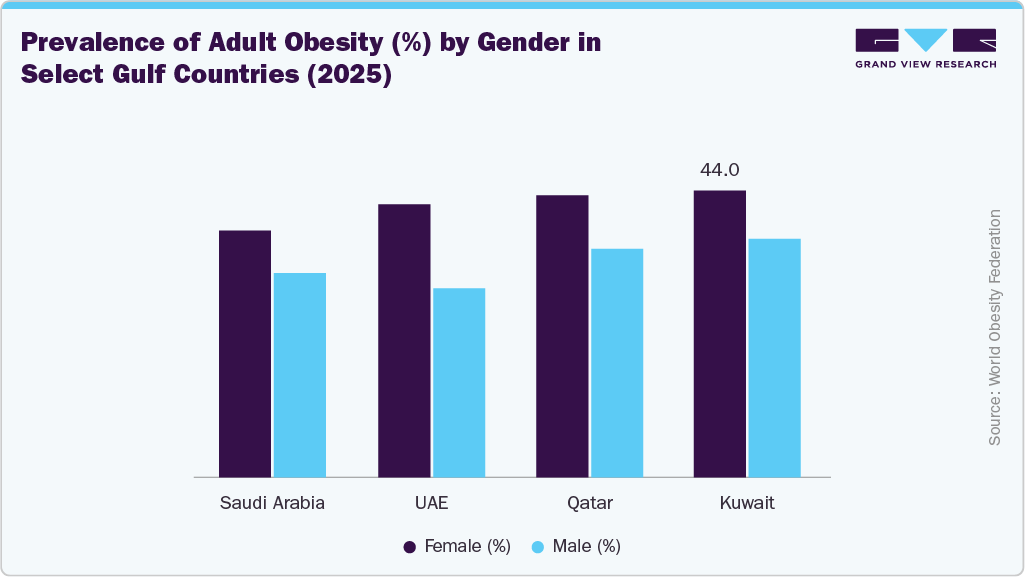
The Epidemiological Landscape of the Middle East reveals a growing burden of chronic diseases, primarily driven by rising obesity rates. Accurately assessing these trends is essential for designing effective digital health interventions and informing policy strategies that support sustainable improvements in population health.
 To learn more about this report, Download Free Sample Report
 In August 2025, adult obesity rates across key Gulf countries were reported using data from the Global Burden of Disease Study 2022 and the World Obesity Federation. Obesity, defined as a Body Mass Index (BMI) of 30 or above in adults aged 18 and over, remains a major public health concern, with prevalence rates showing stark gender disparities: for example, 36.5% of adult males and 44.0% of females in Kuwait are obese, while Qatar reports 35.1% and 43.2% respectively. These figures underscore a growing chronic disease burden in the region, which is driving the adoption of digital health interventions such as mobile-based weight management tools, remote coaching, and AI-powered risk prediction.
Strategic Role of Digital Health Technologies
-
Remote Patient Monitoring and Mobile Platforms:
Digital solutions such as mobile health applications and wearable sensors are expanding access, facilitating real-time monitoring, and improving early intervention, particularly in rural and underserved populations.
-
Artificial Intelligence and Predictive Analytics:
AI-driven platforms are enhancing clinical decision-making by identifying at-risk patients, predicting disease progression, and optimizing care pathways, leading to reduced hospitalizations and better resource allocation.
-
Patient-Centered Engagement Tools:
Digital platforms supporting treatment adherence, lifestyle modification, and virtual coaching are empowering patients to take greater control of their health, leading to improved outcomes and reduced burden on healthcare systems.
Case Study : AI-Powered Capacity & Command Centre at King Faisal Specialist Hospital & Research Centre (KFSHRC), Saudi Arabia
Background
King Faisal Specialist Hospital & Research Centre (KFSHRC), one of the leading tertiary healthcare institutions in the Middle East, embarked on a digital transformation initiative to address operational inefficiencies, bottlenecks in patient flow, and variability in care delivery. As part of Saudi Arabia’s Vision 2030 and in alignment with national digital health goals, the hospital implemented an AI-enabled Capacity & Command Centre designed to deliver system-wide visibility and real-time decision support.
Objectives
-
To centralize operational control across departments for improved coordination.
-
To use AI to optimize patient flow and resource allocation.
-
To enable predictive analytics for emergency preparedness and demand forecasting.
-
To reduce administrative burden and improve patient access and throughput.
Solution Overview
KFSHRC developed an AI-powered Capacity & Command Centre that provides end-to-end, real-time visibility into patient journeys, bed occupancy, staffing needs, and emergency capacities. The platform integrates hospital-wide data streams and applies machine learning algorithms to:
-
Predict admission/discharge volumes.
-
Anticipate staffing and equipment requirements.
-
Flag operational risks in real time.
-
Streamline pharmacy logistics and inpatient movements.
-
The solution employs color-coded dashboards that enable leadership and frontline staff to act rapidly on alerts, optimize transfers, and avoid service delays.
Implementation Timeline
-
2022: System design, integration, and piloting.
-
2023-2024: Scaled deployment across departments and refinement of AI models.
-
2025: Full operational integration with demonstrable ROI and KPI impact.
Outcomes Achieved
According to official figures from the NCBI and KFSHRC reporting:
-
Over 85,000 AI-assisted interventions were executed within two years.
-
Patient wait times were reduced by over 50%.
-
Pharmacy queue times decreased by 27%, improving outpatient satisfaction.
-
Emergency room capacity increased by 21%, enhancing responsiveness.
-
Operational agility significantly improved during periods of patient surges, including pandemic waves.
Strategic Significance
This deployment is a model for AI-driven operational excellence in emerging healthcare markets. It demonstrates how intelligent infrastructure-not just clinical AI-can yield measurable efficiency gains and elevate care standards without additional physical expansion.
Lessons Learned
-
Leadership buy-in and change management are critical to adoption at scale.
-
Embedding AI into existing workflows rather than replacing them fosters faster uptake.
-
Real-time data visibility enables not just automation but proactive intervention, particularly in high-acuity settings.
Conclusion
The AI-based Capacity & Command Centre at KFSHRC is a flagship example of how operational AI can reshape hospital management in the Middle East. It underscores the potential of data-driven systems to drive healthcare transformation, particularly in countries making large-scale investments in digital health infrastructure.
Case Study : Digital Transformation Framework for Oman’s Health Sector
Background
As part of its Vision 2040 strategy, Oman committed to overhauling its healthcare system through digital transformation, aiming to deliver smarter, more efficient patient services.
This shift was driven by growing public health demands, limited resources, and the need to align with regional benchmarks in digital healthcare delivery.
Problem Statement
Oman’s healthcare system lagged in key areas like service digitization, data sharing, and system-level interoperability, putting strain on care quality and outcomes. The absence of a unified framework made digital implementation inconsistent across facilities, increasing fragmentation and administrative burden.
Methodology
Researchers conducted a comparative study of five countries-Oman, Saudi Arabia, UAE, USA, and Brazil-analyzing their digital health evolution and strategies. Through literature reviews and cross-country benchmarking, the study synthesized best practices and derived context-specific transformation priorities for Oman.
Key Insights
Digital health progress globally is often constrained by poor governance models, siloed systems, and limited stakeholder alignment. The study stressed the importance of integrating eHealth platforms, upskilling health workers, and establishing robust performance metrics from the outset.
Impact & Next Steps
The study catalyzed the formulation of Oman’s national digital health architecture and helped prioritize investment areas such as health information systems and workforce training. It also emphasized the creation of adaptive policies to support sustainable digital health maturity over time and attract private sector collaboration.
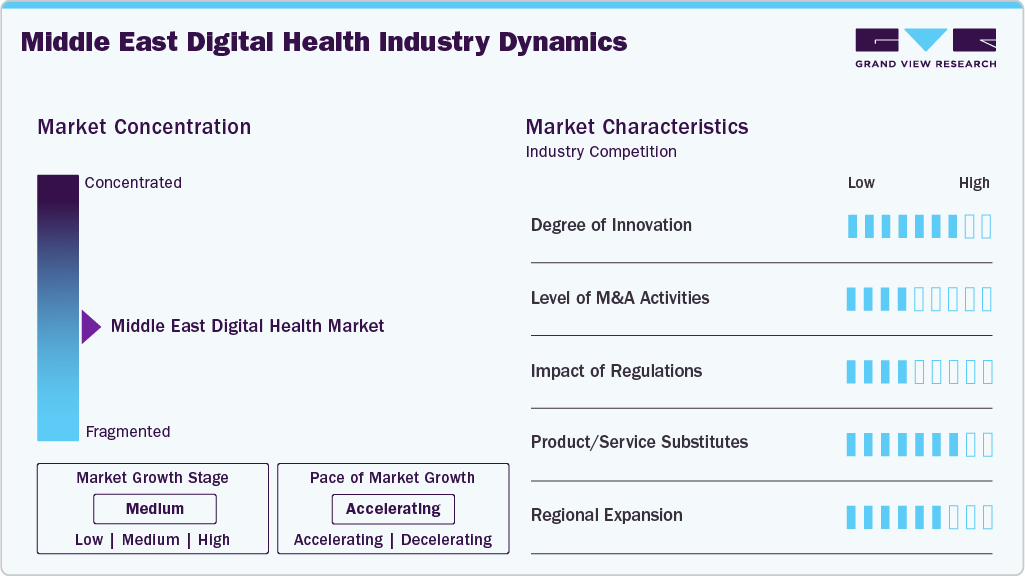
Market Concentration & Characteristics
The Middle East digital health industry shows a high level of innovation driven by AI-powered diagnostics, wearable integration, and cloud-based health records. The UAE and Saudi Arabia are scaling smart hospital infrastructure with predictive analytics and automated workflows. Governments are directly funding digital transformation in primary care. Startups in the region are developing multilingual platforms tailored to local health needs. Innovation is further supported by cross-sector partnerships and health accelerators.In November 2024, the Department of Health - Abu Dhabi partnered with Accenture to strengthen data governance, AI implementation, and digital health infrastructure across the Emirates, reinforcing public sector innovation in healthcare.
M&A activity is moderate, primarily focused on telemedicine, health analytics, and remote patient monitoring. Healthcare providers are acquiring tech startups to close digital capability gaps. Private investors are targeting scalable platforms with localized compliance readiness. Activity is centered in high-growth markets like the UAE and KSA. Regulatory approvals and cross-border complexities continue to limit deal volume.
 To learn more about this report, Download Free Sample Report
 Regulatory influence is medium, shaped by ongoing data privacy, AI usage, and interoperability mandates. Several Gulf states have introduced digital health licensing and cybersecurity guidelines. National strategies are aligning with global standards like GDPR and ISO for health data governance. Efforts to streamline cross-border data sharing are underway. Regulatory clarity remains uneven across markets.
Product/Service expansion is high, driven by demand for virtual consultations, home-based monitoring, and digital chronic care management. Hospitals and insurers are integrating app-based services into standard care. Platforms offering multilingual and culturally adapted tools are gaining traction. Partnerships with telecom providers support broader reach. In April 2025, Trifork was selected by Oman’s Ministry of Health to develop a new Revenue Cycle Management (RCM) system and upgrade the National Health Information Exchange (NHER). The project, aligned with Oman Vision 2040, aims to improve cost recovery, claims processing, and patient experience by modernizing digital infrastructure across 263 health facilities.
Regional expansion is active across Saudi Arabia, UAE, Qatar, and Oman, with providers scaling digital tools beyond metro hubs. National health strategies are incentivizing adoption in rural and underserved areas. Cross-border telehealth pilots and joint ventures with local systems are expanding reach. International firms are entering through licensing and reseller models. In May 2025, MedIQ raised USD 6 million in Series A funding to expand its AI-driven digital healthcare solutions across Saudi Arabia, Qatar, and other Gulf states. The company offers EHR, RCM, telehealth, and AI decision support to support regional digital health transformation under Vision 2030.
Technology Insights
By technology, the tele-healthcare segment dominated the market with the largest revenue share of 47.07% in 2024 and is anticipated to grow at the fastest CAGR over the forecast period. This growth is driven by increasing investments in virtual care infrastructure, government-supported telemedicine initiatives, and the integration of remote monitoring into chronic disease management. The rising prevalence of lifestyle-related conditions and the demand for specialist consultations across rural and underserved areas are further accelerating adoption. In August 2025, Saudi Arabia advanced its digital transformation with AI-powered telemedicine reshaping healthcare access, particularly through platforms like Seha Virtual Hospital and Nala. Simultaneously, the Saudi Exchange proposed regulatory reforms to broaden investor access to its Parallel Market (Nomu), supporting Vision 2030 goals.
The mHealth segment is anticipated to grow at a significant CAGR over the forecast period, fueled by the rapid penetration of smartphones and increasing consumer engagement with health apps. Mobile health platforms are being leveraged for appointment scheduling, medication adherence, and personalized wellness tracking. Governments are promoting mHealth for population health management, especially for maternal health and non-communicable disease screening. In May 2024, Bayer and Huma launched an innovative digital Heart Health Risk Assessment tool in Saudi Arabia, aligning with the Kingdom’s Vision 2030 healthcare transformation strategy. This mHealth app enables non-invasive, rapid evaluation of cardiovascular disease risk, supporting chronic disease management and prevention at scale.
Component Insights
By component, the services segment dominated the market with a revenue share of 39.30% in 2024. This is attributed to the rising demand for remote consultations, virtual care delivery, and continuous patient monitoring services. Healthcare providers are increasingly outsourcing IT-enabled services to manage workflows, reduce operational costs, and improve patient outcomes. The growing presence of specialized service providers and expanding telehealth coverage are reinforcing segment dominance. In June 2022, UAE-based WEMA Health launched with a USD 3.5M seed round to offer a digital medical weight-loss service co-developed with global obesity experts. The app connects users to endocrinologists and provides GLP-1 prescriptions alongside cognitive behavioral coaching.
The software segment is anticipated to grow at the fastest CAGR over the forecast period. Increasing deployment of electronic health records (EHR), clinical decision support tools, and mobile health platforms aremajor factors driving this growth. Demand for interoperable solutions and AI-based analytics is rising as healthcare systems aim to improve care coordination and data-driven decision-making. Governments across the region are incentivizing digital transformation in hospitals through cloud-first strategies and smart health programs. In August 2025, TrioTree Technologies launched a software-based AI voice-to-data tool to document doctor-patient interactions in 178 languages. The system integrates into EMRs and was deployed alongside its integration with Oman’s FSA-regulated Dhamani health insurance platform.
Application Insights
By application, the diabetes segment dominated the market with the largest revenue share of 24.67% in 2024 and is anticipated to grow at the fastest CAGR over the forecast period. This is driven by the high and rising prevalence of diabetes across the region, especially in Gulf countries where lifestyle-related risk factors are significant. Adoption of digital platforms for glucose monitoring, medication management, and patient engagement is expanding in both public and private care settings. Governments are prioritizing diabetes management through national eHealth frameworks and targeted awareness campaigns. In November 2024, PureHealth expanded its AI-enabled app Pura by launching a diabetes care module designed to enhance digital glucose management in the UAE. The module integrates with wearable devices and continuous glucose monitors, connecting patients to PureHealth’s Diabetes Command Centre for real-time data sharing and care coordination.
The obesity segment is anticipated to grow at the fastest CAGR over the forecast period,fueled by increasing rates of overweight and obese populations, particularly in urban centers. Digital health tools offering remote nutrition counseling, activity tracking, and behavior modification support are gaining traction. Employers and insurers are promoting digital wellness programs to address obesity-related productivity losses and healthcare costs. In June 2022, GluCare.Health partnered with Novo Nordisk to launch a weight management pilot program in the UAE, introducing the region’s first value-based reimbursement model. The six-month program integrates digital therapeutics, wearable tech, and machine learning to deliver personalized, remote care for obesity.
End Use Insights
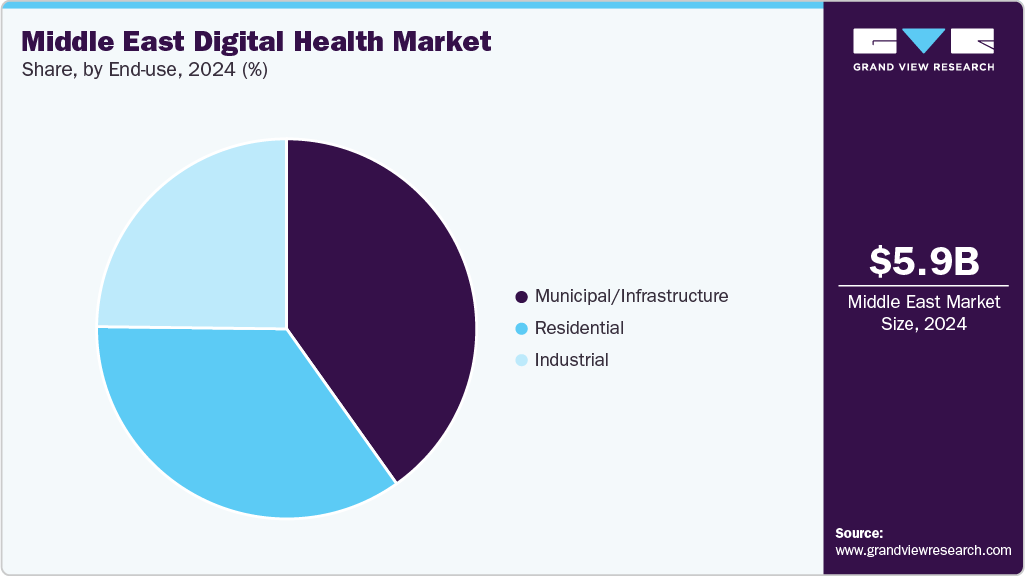
By end use, the patients segment dominated the market with the largest revenue share of 34.46% in 2024 and is anticipated to grow at the fastest CAGR over the forecast period.Growth is driven by rising consumer awareness, increasing smartphone penetration, and growing demand for remote healthcare services. Patients are actively adopting mobile health apps, wearable monitoring devices, and virtual care platforms to manage chronic conditions and access medical support. The preference for convenient, self-directed healthcare is expanding across urban and semi-urban populations. In September 2024, Oman’s Ministry of Health launched a new feature in the Shifa App to reduce missed appointments by surveying absent patients. The initiative enables data-driven insights into no-show reasons and supports more efficient care delivery. It encourages patient participation and optimizes healthcare resource utilization.
 To learn more about this report, Download Free Sample Report
 The providers segment is expected to grow at a significant rate during the forecast period. his growth is fueled by the rising demand for efficient, data-driven care delivery and the need to manage growing patient volumes. Healthcare providers are increasingly implementing digital health solutions to optimize clinical operations, enable remote care, and improve diagnostic accuracy. The shift toward value-based care models further supports the integration of advanced technologies such as telehealth platforms, AI-enabled tools, and remote patient monitoring systems. In August 2024, Kuwait’s Ministry of Health unveiled a digital linkage system between hospitals and warehouses in Subhan, standardizing medical supply orders and streamlining medicine distribution. The initiative initially connected Farwaniya, Mubarak, and Jahra hospitals, with plans to expand further.
Country Insights
Saudi Arabia Digital Health Market Trends
Saudi Arabia digital health industry is anticipated to register considerable growth during the forecast period, supported by large-scale public health initiatives, increased investments in telemedicine infrastructure, and the implementation of Vision 2030-driven healthcare digitization programs. The rollout of nationwide electronic health records (EHR) and AI-integrated diagnostic platforms is further accelerating adoption. In October 2024, Saudi Arabia launched a new licensing framework to accelerate digital health innovation by simplifying the development and implementation of medical software. Unveiled during the Global Health Exhibition in Riyadh, the initiative allows developers to create software without setting up physical facilities, aiming to enhance diagnostic and treatment capabilities.
UAE Digital Health Market Trends
UAE digital health industry is anticipated to register considerable growth during the forecast period, driven by government-led smart healthcare strategies, a tech-savvy population, and strong adoption of AI and remote care platforms across public and private sectors. The country’s focus on health tourism and digital-first hospitals is reinforcing technology deployment across specialties. In May 2025, Practo launched a digital healthcare platform in the UAE, providing access to 31,000+ doctors and 3,000 clinics. The platform offers symptom search, treatment information, verified reviews, and online appointment booking. It aims to enhance healthcare accessibility across the region.
Kuwait Digital Health Market Trends
Kuwait digital health industry is anticipated to register considerable growth during the forecast period, fueled by rising chronic disease burden, expanding mobile health adoption, and increasing focus on healthcare system modernization through digital platforms. The Ministry of Health’s push for digital transformation is creating new opportunities for vendors in the telehealth and RPM space. In December 2024, Kuwait’s Ministry of Health, in partnership with ATC and Biolog-ID, launched a nationwide RFID-based blood tracking system. The digital solution enables real-time traceability of blood products across all centers, enhancing safety and operational efficiency. This positions Kuwait as a regional frontrunner in digital health infrastructure.
Key Middle East Digital Health Company Insights
Key participants in the middle east digital health industry are focusing on devising innovative business growth strategies, such as expanding their product portfolios, partnerships and collaborations, mergers and acquisitions, and expanding their business footprints.
Key Middle East Digital Health Companies:
- Advanced Micro Devices
- Koninklijke Philips N.V.
- Siemens Healthineers
- GE Healthcare
- Cerner Corporation
- Epic Systems Corporation
- Apple Inc.
- Vodafone Group Plc
- Samsung Electronics Co., Ltd.
- Veradigm Inc.
Recent Developments
-
In August 2025, Saudi Arabia advanced its digital health ambitions as Lean Business Services showcased AI-powered solutions at LEAP 25, including digital twins, genomics, and mobile clinics. The company formed key partnerships with global players like Pfizer and Elm, reinforcing its role in driving healthcare innovation under Vision 2030.
-
In May 2025, WHX Tech announced its debut event in Dubai, scheduled for September 8-10, aimed at accelerating digital health adoption across the Middle East. The event will gather over 5,000 health tech leaders and 300+ exhibitors to showcase innovations like AI-powered diagnostics, smart hospitals, and telemedicine.
-
In January 2025, the UAE Ministry of Health and Prevention (MoHAP) showcased a range of forward-looking digital health initiatives at Arab Health 2025 under the UAE Health Pavilion. Key highlights included AI-powered auditing systems, biometric-driven preventive care, and a unified health licensing platform. These service innovations reflect a broader shift toward proactive, tech-enabled healthcare delivery in the region.
-
In October 2024, WHO partnered with Saudi Arabia to launch the Hajj health card initiative, a secure digital health tool built on the WHO Global Digital Health Certification Network. This mHealth-enabled card summarizes pilgrims’ critical health data including medications, allergies, and immunizations, allowing authorized providers to deliver personalized care during the Hajj pilgrimage.
Middle East Digital Health Market Report Scope
Report Attribute
Details
Market size value in 2025
USD 7.06 billion
Revenue forecast in 2033
USD 29.46 billion
Growth rate
CAGR of 19.56% from 2025 to 2033
Actual data
2021 - 2024
Forecast data
2025 - 2033
Quantitative units
Revenue in USD million/billion and CAGR from 2025 to 2033
Report coverage
Revenue forecast, company ranking, competitive landscape, growth factors, and trends
Segments covered
Technology, component, application, end use, country
Country scope
Saudi Arabia; UAE; Kuwait; Qatar; Oman
Key companies profiled
Koninklijke Philips N.V.; Siemens Healthineers; GE Healthcare; Cerner; Epic Systems; Apple Inc.; Vodafone Group; Samsung Electronics Co., Ltd.; Veradigm.
Customization scope
Free report customization (equivalent up to 8 analysts working days) with purchase. Addition or alteration to country, regional & segment scope.
Pricing and purchase options
Avail customized purchase options to meet your exact research needs. Explore purchase options
Middle East Digital Health Market Report Segmentation
This report forecasts revenue growth and provides at regional and country levels an analysis of the latest trends in each of the sub-segments from 2021 to 2033. For this report, Grand View Research has segmented the Middle East digital health market report based on technology, component, application, end use, and country:
-
Technology Outlook (Revenue, USD Million, 2021 - 2033)
-
Tele-Healthcare
-
Tele-care
-
Activity Monitoring
-
Remote Medication Management
-
-
Tele-health
-
LTC Monitoring
-
Video Consultation
-
-
-
mHealth
-
Wearables
-
BP Monitors
-
Glucose Meters
-
Pulse Oximeters
-
Sleep Apnea Monitors
-
Neurological Monitors
-
Activity Trackers/Actigraphs
-
-
mHealth Apps
-
Medical Apps
-
Fitness Apps
-
-
Services
-
mHealth Service, By Type
-
Monitoring Services
-
Independent Aging Solutions
-
Chronic Disease Management & Post-acute Care Services
-
Diagnosis Services
-
Healthcare Systems Strengthening Services
-
Others
-
-
-
mHealth Services, By Participants
-
Mobile Operators
-
Device Vendors
-
Content Players
-
Healthcare Providers
-
-
-
-
Healthcare Analytics
-
Digital Health Systems
-
EHR
-
E-prescribing systems
-
-
-
Component Outlook (Revenue, USD Million, 2021 - 2033)
-
Hardware
-
Software
-
Services
-
-
Application Outlook (Revenue, USD Million, 2021 - 2033)
-
Obesity
-
Diabetes
-
Cardiovascular
-
Respiratory Diseases
-
Others
-
-
End Use Outlook (Revenue, USD Million, 2021 - 2033)
-
Patients
-
Providers
-
Players
-
Other Buyers
-
-
Country Outlook (Revenue, USD Million, 2021 - 2033)
-
Saudi Arabia
-
UAE
-
Kuwait
-
Qatar
-
Oman
-
Frequently Asked Questions About This Report
The global Middle East digital health market size was estimated at USD 5.96 billion in 2024 and is expected to reach USD 7.06 billion in 2025.
The global Middle East digital health market is expected to grow at a compound annual growth rate of 19.56% from 2025 to 2033 to reach USD 29.46 billion by 2033.
By technology, the tele-healthcare segment dominated the market with the largest revenue share of 47.07% in 2024 and is anticipated to grow at the fastest CAGR over the forecast period. This growth is driven by increasing investments in virtual care infrastructure, government-supported telemedicine initiatives, and the integration of remote monitoring into chronic disease management.
Some key players operating in the Middle East digital health market include Advanced Micro Devices, Koninklijke Philips N.V., Siemens Healthineers, GE Healthcare, Cerner Corporation, Epic Systems Corporation, Apple Inc., Vodafone Group Plc, Samsung Electronics Co., Ltd., and Veradigm Inc.
The Middle East is shifting toward digitally enabled healthcare as demand grows for efficient, patient-centric services. National strategies, adaptive reimbursement models, and public-private collaboration are accelerating adoption of telemedicine, AI, and connected health platforms. With pressure to improve outcomes while controlling costs, digital transformation is becoming essential.
About the Author(s)
Healthcare IT Research Team
Healthcare · Healthcare ITThis report was authored by the healthcare it research team at Grand View Research - comprising two research analysts, one senior research analyst, and one industry expert - with specialized expertise in the healthcare it segment of the healthcare industry. All findings are based on proprietary healthcare databases, executive interviews, and regulatory analysis, subject to internal peer review prior to publication.
Last Updated:
Speak to Analyst

Customize this report to your needs - add regions, segments, or data points, with 20% free customization.
Or view our licence options:


ISO 9001:2015 & 27001:2022 Certified
We are GDPR and CCPA compliant! Your transaction & personal information is safe and secure. For more details, please read our privacy policy.


