
- Home
- »
- Advanced Interior Materials
- »
-
Middle East Hazardous Waste Management Market Report 2033GVR Report cover
![Middle East Hazardous Waste Management Market Size, Share & Trends Report]()
Middle East Hazardous Waste Management Market (2025 - 2033) Size, Share & Trends Analysis Report By Type (Solid, Liquid, Sludge), By Treatment (Physical, Chemical, Thermal, Biological), By Disposal Method, By Source, By Chemical Composition, By Country, And Segment Forecasts
- Report ID: GVR-4-68040-756-3
- Number of Report Pages: 100
- Format: PDF
- Historical Range: 2021 - 2023
- Forecast Period: 2025 - 2033
- Industry: Advanced Materials
- Report Summary
- Table of Contents
- Segmentation
- Methodology
- Download FREE Sample
-
 Download Sample Report
Middle East Hazardous Waste Management Market Summary
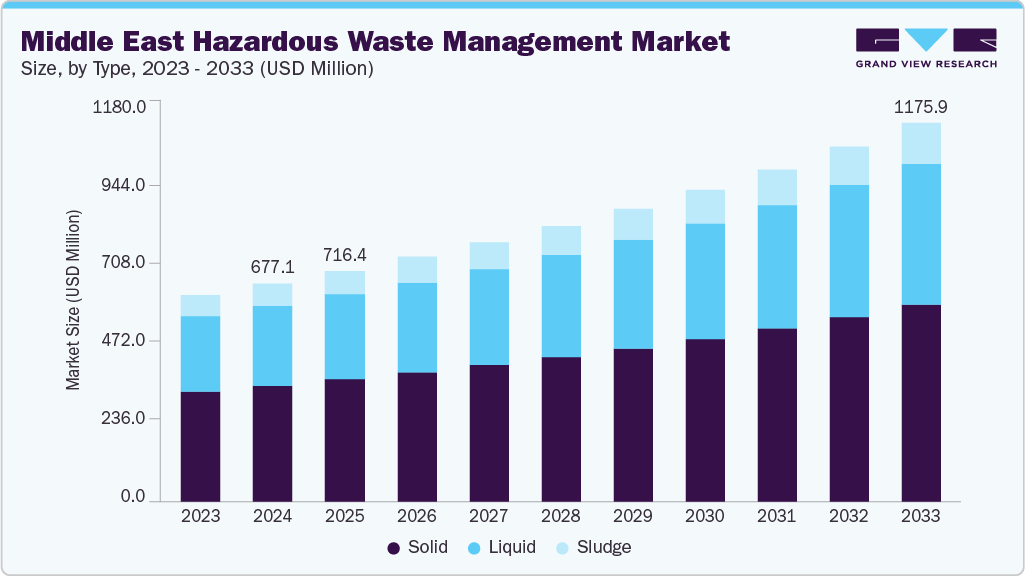
The Middle East hazardous waste management market size was estimated at USD 677.1 million in 2024 and is projected to reach USD 1,175.9 million by 2033, growing at a CAGR of 6.4% from 2025 to 2033, driven by increasing industrialization, stricter environmental regulations, and rising awareness of sustainable waste disposal practices. Countries like Saudi Arabia, the UAE, and Qatar are investing heavily in infrastructure and oil and gas projects, generating large volumes of hazardous waste that require proper handling.
Key Market Trends & Insights
- The hazardous waste management market in Saudi Arabia is expected to grow at a substantial CAGR of 7.0% from 2025 to 2033.
- By type, the sludge segment is expected to grow at a considerable CAGR of 7.2% from 2025 to 2033 in terms of revenue.
- By treatment, the physical segment is expected to grow at a considerable CAGR of 6.7% from 2025 to 2033 in terms of revenue.
- By disposal method, the engineered storage segment is expected to grow at a considerable CAGR of 7.3% from 2025 to 2033 in terms of revenue.
- By source, the industrial segment is expected to grow at a considerable CAGR of 6.8% from 2025 to 2033 in terms of revenue.
Market Size & Forecast
- 2024 Market Size: USD 677.1 Million
- 2033 Projected Market Size: USD 1,175.9 Million
- CAGR (2025-2033): 6.4%
Government initiatives aligned with Vision 2030 and green economy goals are pushing industries to adopt safer and more efficient waste treatment and disposal methods.
Additionally, the growth of sectors such as chemicals, healthcare, and manufacturing has heightened the demand for specialized hazardous waste services. Public-private partnerships, technological advancements in waste treatment, and regional collaborations are also playing a key role. As environmental compliance becomes more critical, the market is expected to see steady investment, regulatory support, and increased participation from both local and international players.
Market Concentration & Characteristics
The hazardous waste management market in the Middle East is moderately fragmented and is characterized by a growing presence of both regional and international players, driven by increasing industrialization and urbanization in countries like Saudi Arabia, the UAE, and Qatar. The region is witnessing a rising demand for sustainable waste disposal solutions, particularly from sectors such as oil & gas, petrochemicals, healthcare, and manufacturing. Governments in the Middle East are implementing stricter environmental regulations and policies to manage hazardous waste more effectively, encouraging companies to adopt safer and eco-friendlier waste management practices.
Companies are investing in technologies like waste-to-energy, automated tracking, and AI-based sorting systems. Regional governments are promoting sustainable practices, pushing firms toward cleaner, more efficient solutions. However, innovation levels still lag behind Western markets due to limited R&D investment and infrastructure gaps in some countries.
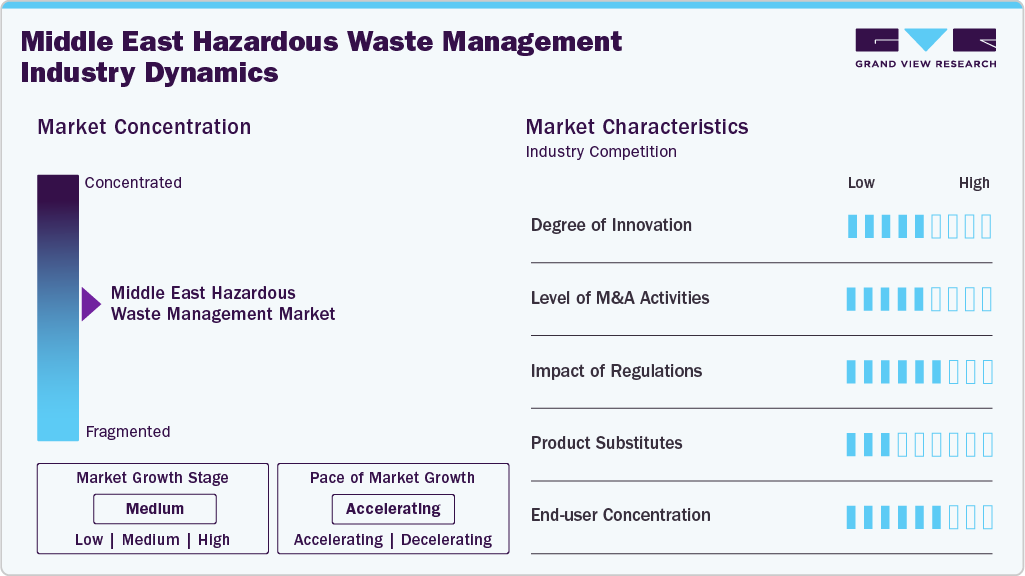
Mergers and acquisitions in the hazardous waste management sector are gaining pace, driven by the need to expand service capabilities, comply with stricter regulations, and access new technologies. Larger firms are acquiring regional players to strengthen local market presence, while international companies partner with local entities to navigate regulatory environments and tap into fast-growing industrial sectors.
Stringent environmental regulations across the Middle East are significantly shaping the market. Governments are enforcing stricter compliance standards, licensing requirements, and penalties for improper disposal. Initiatives like Saudi Vision 2030 and the UAE’s sustainability goals are pushing companies to adopt environmentally responsible practices, improve waste segregation, and invest in modern treatment and recycling technologies.
Drivers, Opportunities & Restraints
As industries like manufacturing, chemicals, and oil & gas expand in the Middle East, the demand for effective and safe hazardous waste management systems is becoming more critical. Rapid industrial growth and urbanization are driving the need for specialized waste disposal and treatment solutions tailored to the region’s unique environmental challenges. Governments across the Middle East are implementing stricter environmental laws and regulations, requiring companies to adopt sustainable waste management practices. Initiatives aligned with national visions, such as Saudi Vision 2030 and the UAE’s sustainability goals, emphasize the importance of safe and compliant hazardous waste handling.
The market faces challenges such as high operational and compliance costs, which can be particularly burdensome for smaller regional companies. Additionally, the lack of advanced waste management infrastructure in some Middle Eastern countries slows the overall growth of the sector and complicates effective waste disposal.
However, the market presents significant opportunities through the adoption of advanced technologies, including automation, digital monitoring systems, and waste-to-energy solutions. These innovations can improve operational efficiency, reduce costs, and help companies meet increasing regulatory requirements, fueling growth in waste treatment and recycling services across the region.
Type Insights
The solid segment dominated the market in 2024 by accounting for a share of 53% due to rapid industrialization and urban expansion in countries like Saudi Arabia, the UAE, and Qatar. Large volumes of solid hazardous waste are generated from industries such as oil & gas, manufacturing, and construction. The growing focus on safe disposal and recycling to minimize environmental impact is driving market growth, supported by government initiatives promoting sustainable waste management.
The sludge management market is expanding due to increased industrial waste production, especially from wastewater treatment plants, food processing facilities, and pharmaceutical industries. The urgent need for effective sludge treatment and disposal to prevent soil and water contamination is fueling demand. Additionally, technological advancements in sludge dewatering and stabilization are improving the safety and efficiency of waste management practices across the region.
Treatment Insights
The physical segment dominated the market in 2024 by accounting for a share of 38.7% due to its effectiveness in removing contaminants. Industries such as oil & gas, petrochemicals, and manufacturing heavily rely on physical separation methods to meet strict environmental standards. The growing demand for cost-effective and energy-efficient solutions is driving the adoption of physical treatment technologies across the region.
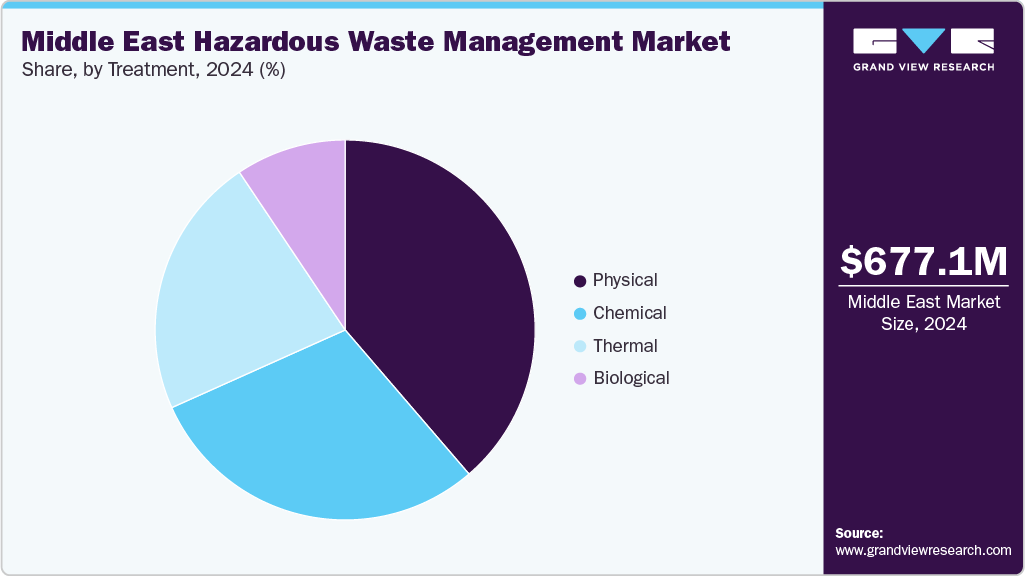
Thermal treatment methods, including incineration, are increasingly in demand in the Middle East due to their ability to significantly reduce hazardous waste volume and destroy toxic components. With governments enforcing stricter regulations and industries seeking sustainable disposal methods, thermal treatment offers an efficient solution, particularly for organic and high-hazard wastes common in the region’s oil, chemical, and healthcare sectors.
Disposal Method Insights
The deep well injection segment dominated the market in 2024 by accounting for a share of 32.6% due to the region’s extensive industrial and petrochemical activities. This method provides a cost-effective and secure solution for disposing of hazardous liquid waste in deep geological formations. Regulatory acceptance and available geological conditions further support its increased adoption across oil-rich nations like Saudi Arabia and the UAE.
Engineered storage solutions are gaining traction in the Middle East as industries seek controlled and secure environments for hazardous waste storage. Increasingly stringent environmental regulations across the region are driving demand for long-term, safe containment options. Advances in storage materials and technology are enhancing security and effectiveness, ensuring hazardous waste is contained without posing environmental risks, particularly in rapidly industrializing nations.
Source Insights
The Industrial segment dominated the market in 2024 by accounting for a share of 45.9% due to extensive industrial activities in sectors like oil & gas, petrochemicals, manufacturing, and construction. Rapid industrial growth and the increasing need to comply with evolving environmental regulations are driving demand for advanced waste management solutions. Additionally, many Middle Eastern industries are adopting sustainable practices, fostering innovation in waste treatment and recycling to reduce their environmental footprint.
The healthcare sector is driving demand for hazardous waste management due to growing volume of medical waste from hospitals, clinics, and pharmaceutical manufacturing. Strict government regulations on the disposal of biomedical waste, combined with the region’s expanding healthcare infrastructure and adoption of new medical technologies, are intensifying the need for safe, compliant waste management solutions to protect public health and the environment.
Chemical Composition Insights
The organic segment dominated the market in 2024 by accounting for a share of 73.8% due to the widespread use of hazardous organic chemicals in key industries such as pharmaceuticals, agriculture, and manufacturing. The growing emphasis on safe disposal and recycling of these chemicals, combined with heightened regulatory scrutiny and public awareness, is driving demand for effective organic waste management solutions across the region.
The demand for managing inorganic chemical waste in the Middle East is rising, particularly from sectors like mining, manufacturing, and electronics. Regional environmental regulations aimed at reducing pollution and ensuring safe disposal are encouraging industries to adopt advanced treatment technologies.
Country Insights
Saudi Arabia dominated the hazardous waste management market over the forecast period, accounting for 36.4% market share in 2024, due to the country’s expanding oil & gas, petrochemical, and industrial sectors. Vision 2030’s focus on sustainability and environmental protection is driving stricter regulations and investments in advanced waste treatment technologies, including waste-to-energy and recycling solutions, boosting market opportunities and attracting international collaborations.
UAE Hazardous Waste Management Market Trends
The hazardous waste management market in the UAE is expected to grow at a CAGR of 6.6%from 2025 to 2033, supported by strong government initiatives promoting environmental sustainability and circular economy practices. Rapid urbanization, industrial diversification, and strict regulatory frameworks are encouraging the adoption of innovative waste treatment technologies. The UAE’s focus on smart city developments and digital monitoring systems further enhances efficiency and compliance in hazardous waste management.
Key Middle East Hazardous Waste Management Company Insights
Some of the key players operating in the market include Bechtel Corporation and Veolia Environment SA, among others.
-
Veolia is a global company engaged in designs and of solutions for water, waste, and energy management. With a presence in over 40 countries, the company has a strong position in the market and an excellent product portfolio. The company’s waste management operations provide solutions for recycling, treatment, and recovery of waste materials among other solutions.
-
Bechtel Corporation is a prominent global engineering, procurement, construction, and project management company known for delivering large-scale construction projects across various sectors. The company has built a strong reputation in the market for its expertise in infrastructure development, waste management solutions, power plants, mining operations, and water treatment facilities.
Key Middle East Hazardous Waste Management Companies:
- Averda
- Bechtel Corp.
- Veolia Environment SA
- BEEAH Group
- Tadweer Group
- Dulsco
- Al Saad International Waste Management
- REMONDIS
- FCC Environmental Services
- Daniels Health
Recent Developments
-
In September 2025, Veolia expanded in the water-scarce Middle East by introducing mobile desalination units and advanced hazardous waste management solutions. This expansion supports the region’s sustainability goals by addressing critical water shortages and promoting environmentally responsible waste treatment, strengthening Veolia’s position as a key environmental services provider in the Middle East.
-
In July 2025, Veolia expanded its treatment capacity by 530,000 tonnes annually by 2030 through organic growth and acquisitions. This strategic move addresses rising global demand, critical treatment shortages, and the urgent need to protect public health and the environment. Aligned with its GreenUp program, Veolia strengthens its role as a key partner for industries tackling complex environmental challenges and a leader in advanced decontamination solutions.
Middle East Hazardous Waste Management Market Report Scope
Report Attribute
Details
Market size in 2025
USD 716.4 million
Revenue forecast in 2033
USD 1,175.9 million
Growth rate
CAGR of 6.4% from 2025 to 2033
Historical data
2021 - 2023
Forecast period
2025 - 2033
Quantitative units
Revenue in USD Million and CAGR from 2025 to 2033
Report coverage
Revenue forecast, company market position analysis, competitive landscape, growth factors, and trends
Segments covered
Type, treatment, disposal methods, source, chemical composition, country.
Country scope
Saudi Arabia; UAE; Oman ;Qatar; Kuwait; Israel
Key companies profiled
Averda; Bechtel Corp.; Veolia Environment SA; BEEAH Group; Tadweer Group; Dulsco; Al Saad International Waste Management; REMONDIS; FCC Environmental Services; Daniels Health
Customization scope
Free report customization (equivalent up to 8 analysts working days) with purchase. Addition or alteration to country, regional & segment scope.
Pricing and purchase options
Avail customized purchase options to meet your exact research needs. Explore purchase options
Middle East Hazardous Waste Management Market Report Segmentation
This report forecasts revenue growth at a country level and provides an analysis on the industry trends in each of the sub-segments from 2021 - 2033. For the purpose of this study, Grand View Research has segmented the Middle East hazardous waste management market on the basis of type, treatment, disposal methods, source, chemical composition, and country.
-
Type Outlook (Revenue, USD Million, 2021 - 2033)
-
Solid
-
Liquid
-
Sludge
-
-
Treatment Outlook (Revenue, USD Million, 2021 - 2033)
-
Physical
-
Chemical
-
Thermal
-
Biological
-
-
Disposal Methods Outlook (Revenue, USD Million, 2021 - 2033)
-
Deep Well Injection
-
Detonation
-
Engineered Storage
-
Land Burial
-
Ocean Dumping
-
Incineration
-
-
Source Outlook (Revenue, USD Million, 2021 - 2033)
-
Industrial
-
Commercial
-
Municipal
-
Healthcare
-
Agricultural
-
-
Chemical Composition Outlook (Revenue, USD Million; 2021 - 2033)
-
Organic
-
Inorganic
-
-
Country Outlook (Revenue, USD Million, 2021 - 2033)
-
Saudi Arabia
-
UAE
-
Oman
-
Qatar
-
Kuwait
-
Israel
-
Frequently Asked Questions About This Report
b. The Middle East hazardous waste management market size was estimated at USD 677.1 million in 2024 and is expected to reach USD 716.4 million in 2025.
b. The Middle East hazardous waste management market, in terms of revenue, is expected to grow at a compound annual growth rate of 6.4% from 2025 to 2033, reaching USD 1,175.9 million by 2033.
b. Based on disposal method, the deep well injection segment dominated the market in 2024 by accounting for a share of 32.6% due to the region’s extensive industrial and petrochemical activities. This method provides a cost-effective and secure solution for disposing of hazardous liquid waste in deep geological formations.
b. Some of the key players operating in the Middle East hazardous waste management market include Averda, Bechtel Corp., Veolia Environment SA, BEEAH Group, Tadweer Group, Dulsco, Al Saad International Waste Management, REMONDIS, FCC Environmental Services, Daniels Health.
b. Key factors driving the Middle East hazardous waste management market include rapid industrialization, stricter environmental regulations, growth in oil & gas, healthcare, and manufacturing sectors, and rising public awareness of environmental protection. Additionally, government sustainability initiatives and the adoption of advanced treatment technologies are accelerating demand for efficient hazardous waste solutions.


Share this report with your colleague or friend.
Need a Tailored Report?
Customize this report to your needs — add regions, segments, or data points, with 20% free customization.


ISO 9001:2015 & 27001:2022 Certified
We are GDPR and CCPA compliant! Your transaction & personal information is safe and secure. For more details, please read our privacy policy.
Trusted market insights - try a free sample
See how our reports are structured and why industry leaders rely on Grand View Research. Get a free sample or ask us to tailor this report to your needs.













