
- Home
- »
- Medical Devices
- »
-
Middle East Hyaluronic Acid-based Dermal Fillers Market, 2033GVR Report cover
![Middle East Hyaluronic Acid-based Dermal Fillers Market Size, Share & Trends Report]()
Middle East Hyaluronic Acid-based Dermal Fillers Market (2025 - 2033) Size, Share & Trends Analysis Report By Product (Single Phase Products, Duplex Products), By Application (Wrinkle Removal, Lip Augmentation, Rhinoplasty), By Country, And Segment Forecasts
- Report ID: GVR-4-68040-715-0
- Number of Report Pages: 175
- Format: PDF
- Historical Range: 2021 - 2024
- Forecast Period: 2025 - 2033
- Industry: Healthcare
- Report Summary
- Table of Contents
- Segmentation
- Methodology
- Download FREE Sample
-
 Download Sample Report
Market Size & Trends
The Middle East hyaluronic acid-based dermal fillers market size was estimated at USD 318.6 million in 2024 and is projected to reach USD 547.6 million by 2033, growing at a CAGR of 6.6% from 2025 to 2033. This growth is driven by the growing demand for non-invasive aesthetic treatment procedures and increasing awareness regarding hyaluronic acid (HA) application in the beauty segment. In the Middle East, demand for hyaluronic acid-based dermal fillers is driven by cultural, demographic, and economic factors. A strong emphasis on personal appearance and aesthetic enhancement, particularly in urban centers such as Dubai, Riyadh, and Qatar, has fueled interest in minimally invasive cosmetic procedures. Rising disposable incomes and expanding access to advanced aesthetic clinics have made these treatments more useful and widely available.
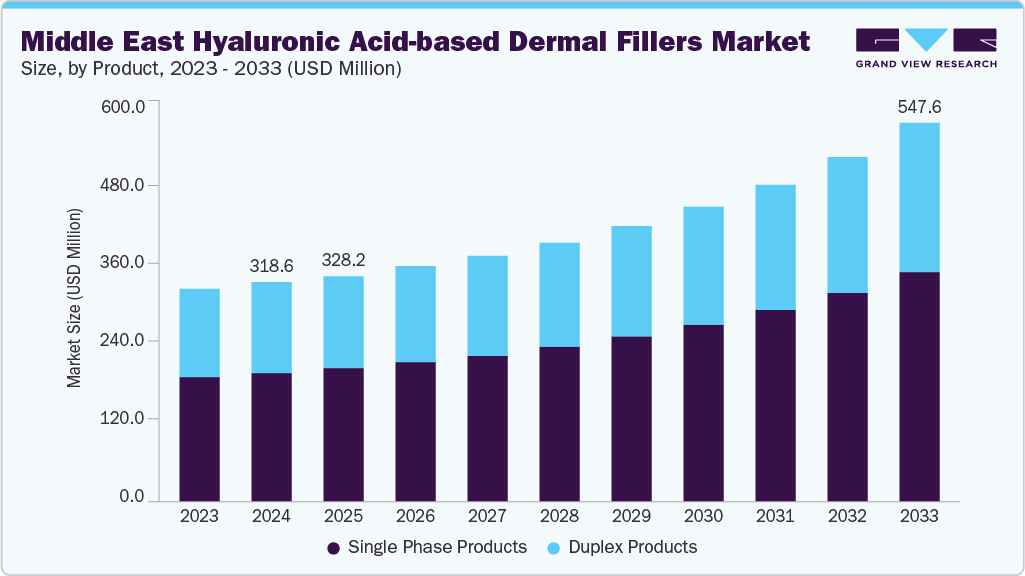
Hyaluronic acid (HA) based dermal fillers in the Middle East are experiencing steady growth in adoption, driven by rising patient interest in non-surgical aesthetic enhancements and an increasingly supportive regulatory environment. In January 2024, Abu Dhabi’s Department of Health introduced a Non-Surgical Cosmetics Standard that clearly defines training requirements, practitioner privileging, and mandatory adverse-event reporting for treatments such as HA fillers, with enforcement set to begin in 2025.
In Saudi Arabia, the Saudi Food and Drug Authority (SFDA) continues to regulate HA fillers as medical devices, requiring licensed administration and post-market safety monitoring measures that strengthen professional practice standards. Product availability is also expanding. For instance, in October 2024, the UAE Ministry of Health and Prevention approved two Neuramis HA fillers (“Deep Lidocaine” and “Volume Lidocaine”), widening the range of advanced options available to practitioners. Alongside regulatory and product developments, local clinical expertise is advancing-recent UAE-based multicenter research on HA for body contouring demonstrated high patient satisfaction and a favorable safety profile, reflecting the growing skill set of practitioners in the region’s aesthetic medicine sector.
Medical tourism and expanding clinic infrastructure are significant forces driving the uptake of hyaluronic acid (HA) dermal fillers in the Middle East. Countries such as the UAE, Qatar, and Saudi Arabia have strategically invested in building world-class healthcare and aesthetic facilities that cater to both local patients and international visitors. These destinations market themselves as premium hubs for minimally invasive cosmetic treatments, offering modern clinics equipped with advanced technologies and staffed by internationally trained practitioners.
Among regional players, Turkey has emerged as a key destination due to its exceptionally low treatment costs compared to Western markets. While the UK’s prices range between USD 1,270 and USD 1,905 per session and the U.S. between USD 1,500 and USD 3,000, Turkey offers the same high-quality procedures for just USD 190 to USD 635 per session. This affordability, combined with advanced medical expertise, modern clinics, and growing medical tourism infrastructure, positions Turkey as a leading hub for dermal fillers in the Middle East and beyond.
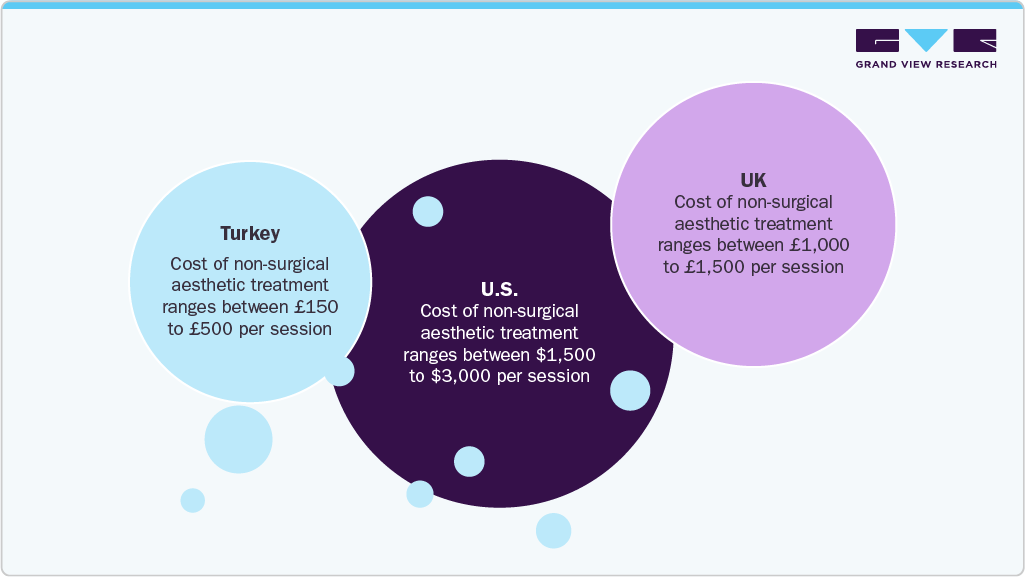
The appeal is enhanced by the region’s focus on luxury hospitality, where aesthetic services are often integrated with wellness packages, spa experiences, and personalized care plans. This combination of high-quality medical expertise, cutting-edge equipment, and a patient-centric environment positions the Middle East as an attractive destination for individuals seeking safe, discreet, and efficient HA filler treatments as part of a broader medical tourism experience.
Market Concentration and Characteristics
The hyaluronic acid (HA) based dermal fillers market in the Middle East is characterized by a growing concentration of high-end aesthetic clinics, international brand presence, and a well-regulated professional environment. The industry is shaped by three key drivers: a strong cultural emphasis on aesthetic enhancement, robust regulatory support and professionalization, and the rapid expansion of medical tourism paired with advanced clinic infrastructure. Leading global HA filler manufacturers actively compete alongside regional distributors, often partnering with luxury aesthetic centers to strengthen brand visibility. Regulatory authorities in countries such as the UAE and Saudi Arabia ensure stringent quality and safety standards, which in turn foster patient trust and encourage wider adoption. The market’s structure leans toward premium, service-oriented offerings, with procedures often marketed as part of holistic beauty and anti-aging solutions. This creates a competitive yet quality-driven environment where innovation in products, techniques, and patient experience is central to sustaining growth.
The Middle East Hyaluronic Acid (HA)-based Dermal Fillers Industry is seeing steady innovation, driven by both global manufacturers introducing advanced formulations and local practitioners adapting techniques to suit regional preferences. Products with integrated lidocaine for patient comfort, enhanced cross-linking technology for longer-lasting results, and tailored viscosity profiles for different facial areas are increasingly available. Innovation also extends to injection methods, with cannula-based techniques and anatomy-guided protocols improving safety and precision. Many clinics in the UAE and Saudi Arabia are early adopters of the latest global filler products, reflecting a patient base that values natural-looking outcomes and minimal downtime. Training workshops, often hosted by manufacturers, further accelerate the adoption of innovative tools and methods.
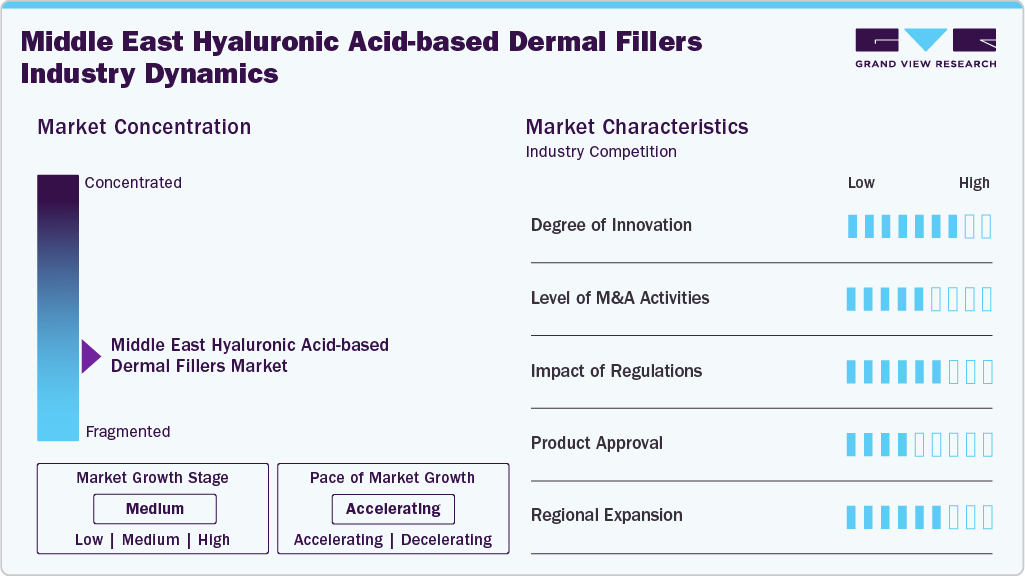
While the Middle East market itself has not been the primary hotspot for mergers and acquisitions, it has benefited from global consolidation in the aesthetics sector. Acquisitions of major filler brands by multinational pharmaceutical and aesthetics companies have enhanced product availability in the region, as parent companies leverage established distribution networks. Local distributors and aesthetic clinic chains are also engaging in strategic partnerships with international brands, securing exclusive rights to premium filler lines. These alliances, though smaller in scale than global M&A deals, are critical for market penetration and brand loyalty in a region where reputation and trust heavily influence patient choice.
Regulation plays a defining role in shaping the hyaluronic acid based dermal fillers market in the Middle East. Countries such as the UAE, Saudi Arabia, and Qatar have implemented clear classification and licensing rules, ensuring fillers are treated as regulated medical devices administered only by trained professionals. Recent regulatory moves-such as Abu Dhabi’s 2024 Non-Surgical Cosmetics Standard-set higher standards for practitioner qualifications, adverse-event reporting, and procedural safety. These frameworks not only reduce risks associated with unqualified providers but also elevate the market’s professional image. As compliance becomes a competitive differentiator, clinics adhering to these regulations are likely to see higher patient confidence and demand.
In the Middle East HA dermal fillers’ industry, product substitutes such as calcium hydroxylapatite fillers, poly-L-lactic acid injectables, and autologous fat transfer present as competitive alternatives. These substitutes often target similar concerns such as skin hydration, elasticity, and rejuvenation but differ in cost, invasiveness, and longevity of results. For instance, dermal fillers restore immediate volume, while mesotherapy delivers vitamins and hyaluronic acid via microinjections. PRP utilizes the body’s natural healing processes, and topical serums offer non-invasive maintenance.
The HA dermal fillers market in the Middle East is expanding beyond established hubs like Dubai and Riyadh into emerging urban centers and medical tourism destinations. Countries such as Oman, Bahrain, and Kuwait are investing in premium aesthetic facilities and streamlining regulatory processes to attract both regional patients and global brands. Cross-border patient flows, facilitated by shared cultural preferences and proximity, are encouraging clinics to establish multi-country footprints. International filler manufacturers are also expanding distribution agreements to cover a wider geographic area, ensuring consistent product availability and brand presence. This regional diversification is creating new pockets of growth while maintaining strong demand in traditional centers.
Product Insights
The single-phase segment held the largest revenue share in 2024 due to a variety of applications in skin & facial procedures, lower side effects & advancement of technology resulting in the development of novel fillers. Dermatologists prefer phase products to repair soft tissue facial issues as the uncross-linked hyaluronic acid boosts production of collagen & elastin, providing the skin a younger and healthier glow. Single-phase products do not go through the sizing technique, which breaks down the gel during production. Hylacross technology is applied to producing single-phase fillers such as Juvederm Ultra, resulting in product durability with potential benefits.
The duplex segment is expected to experience significant growth due to its ability to deliver more versatile and longer-lasting results. These products allow practitioners to address multiple aesthetic concerns in a session, such as combining deep structural support with surface-level smoothing for a more natural, layered outcome. In a market where patients increasingly seek subtle yet effective enhancements with minimal downtime, duplex fillers offer a tailored approach that aligns with regional beauty preferences for refined, balanced facial features.
Application Insights
The wrinkle removal segment accounted for the largest revenue share in 2024 due to the growing customer awareness & desire for youthful appearance, technological advancements in hyaluronic acid-based treatment, and the growing number of new products & procedures for antiwrinkle treatment. Wrinkles and fine lines are among the most visible signs of aging, and there remains a strong cultural preference for treatments that deliver quick, natural-looking rejuvenation with minimal downtime. HA fillers are especially suited to such needs, prized for their reversibility, skin hydration benefits, and ability to integrate smoothly into tissue.
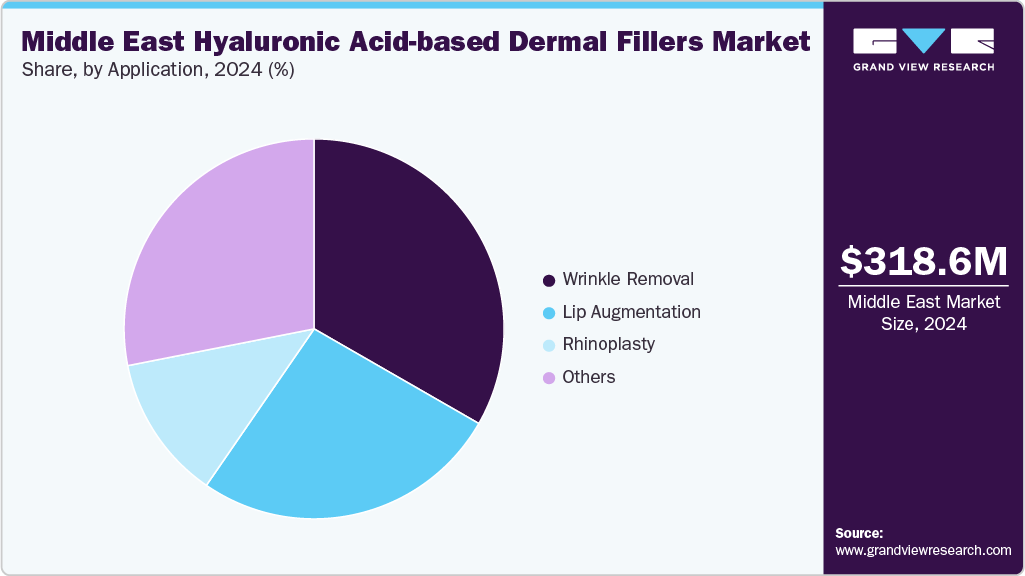
The rhinoplasty segment is projected to record the fastest growth. Several factors fuel this trend, such as the strong cultural emphasis on refined facial symmetry and balanced nasal contours, yet many patients prefer a minimally invasive, reversible alternative to surgery. HA fillers provide precisely controlled volume enhancements, enabling the softening of dorsal bumps, elevation of the nasal tip, and smoothing of nasal irregularities-often in just one clinic visit and with minimal recovery time.
Country Insights
Qatar Hyaluronic Acid-based Dermal Fillers Market Trends
Qatar’s hyaluronic dermal filler market is characterized by rising demand from a diverse, expatriate-heavy population. Clinics in Doha are responding by offering multi-origin filler brands-accommodating varied skin types and aesthetic preferences, alongside bespoke treatment plans. Beyond facial aesthetics, there’s emerging interest in using HA for minimally invasive body enhancements, such as hand rejuvenation or under-eye hollows. Clinics also emphasize safety, offering pre-treatment consultations and anatomy-based sessions that reassure a clientele attentive to quality and results.
Turkey Hyaluronic Acid-based Dermal Fillers Market Trends
Turkey continues to build on its reputation as a regional aesthetic hub, with Istanbul’s clinics increasingly offering HA fillers for local clients and visiting patients from Europe and the Caucasus. A growing preference for subtle, “natural” results means practitioners are innovating with layered filler techniques-combining light and medium-viscosity products in one session to achieve harmonious facial balance. Educational workshops led by international injector trainers are becoming more common in the country, helping bridge global best practices with local aesthetic tastes.
Oman Hyaluronic Acid-based Dermal Fillers Market Trends
Oman’s hyaluronic acid-based dermal fillers market is growing steadily as consumers increasingly seek advanced, non-invasive cosmetic treatments. A few local clinics have begun promoting “gradual-aging” filler strategies: starting with conservative doses and offering touch-up sessions over time to create smooth, age-appropriate transitions. This low-profile, trust-focused approach aligns well with Omani preferences for discretion and naturalness.
Saudi Arabia Hyaluronic Acid-based Dermal Fillers Market Trends
The Saudi Arabia hyaluronic acid-baseddermal fillers market for injectables is experiencing steady growth, supported by the country’s rising demand for minimally invasive cosmetic procedures. In 2023, total injectable procedures reached 50,732, led by hyaluronic acid (26,774) followed by calcium hydroxyapatite (1,078) and poly-L-lactic acid (1,012). In Saudi Arabia, HA filler demand is rising alongside a broader societal embrace of non-surgical beauty enhancements. Cultural trends favor rounder, soft-contoured facial features, leading clinics to emphasize cheek and jawline treatments. A noticeable shift has occurred: more female patients in their late 20s and early 30s are pursuing subtle preventive filler treatments, not just correctional procedures. Clinics in Riyadh and Jeddah are increasingly pairing filler treatments with skincare rituals-such as hydrating masks or LED therapy-to enhance recovery and satisfaction.
UAE Hyaluronic Acid-based Dermal Fillers Market Trends
The UAE hyaluronic acid-based dermal fillers market is a luxury and innovation hub, with 60% of its population under 25, creating strong demand from a youthful, digitally savvy demographic. Abu Dhabi and Dubai clinics are adopting high-cohesivity duplex fillers that allow practitioners to sculpt superficial lines and deeper structural aspects in a single session. There is also a trend toward integrating filler services within luxury medical wellness packages-combining facial injectables, spa treatments, and nutritional consultations.
Kuwait Hyaluronic Acid-based Dermal Fillers Market Trends
Kuwait’s hyaluronic acid-based dermal fillers market is experiencing growth fueled by rising disposable incomes and a growing demographic of professionals in their 30s and early 40s who are opting for light-volume, dispersed filler applications that aim to refresh skin laxity before deeper aging sets in. There is also an increased focus on nasal contouring with fillers, as many prefer temporary enhancement.
Key Middle East Hyaluronic Acid-based Dermal Fillers Company Insights
The growth of the hyaluronic acid-based dermal fillers market in the Middle East is being propelled by leading players such as Allergan, Galderma and Merz Pharma. These companies are leveraging advanced technologies, innovative formulations, and targeted marketing to enhance product efficacy and appeal. Their strategic expansions and strong distribution networks are boosting accessibility, meeting rising consumer demand for minimally invasive aesthetic treatments, and solidifying their competitive presence in the region’s rapidly evolving beauty and wellness sector.
Key Middle East Hyaluronic Acid-based Dermal Fillers Companies:
- Abbvie, Inc.
- Galderma
- Merz Pharma
- Genzyme Corporation
- Anika Therapeutics Inc.
- LG Life Sciences
- Teoxane
- Sinclair
- IBSA
- Jetema
- Prollenium
Recent Developments
- In January 2025, Lagoom Medikal Estetik, distributor in Turkey, a leader in medical aesthetics with over 15 years of expertise. Known for innovation and quality, they delivered advanced anti-aging solutions. This partnership marked a key step in RENÉE’s global reach, bringing premium Hyaluronic Acid Bionic Gels worldwide.
Middle East Hyaluronic Acid-based Dermal Fillers Market Report Scope
Report Attribute
Details
Market size value in 2025
USD 328.2 million
Revenue forecast in 2033
USD 547.6 million
Growth rate
CAGR of 6.6% from 2025 to 2033
Actual data
2021-2024
Forecast period
2025 - 2033
Quantitative units
Revenue in USD million/billion and CAGR from 2025 to 2033
Report coverage
Revenue forecast, company ranking, competitive landscape, growth factors, and trends
Segments covered
Product, application, country
Regional scope
Middle East
Country scope
Turkey; Qatar; Oman; Saudi Arabia; UAE; Kuwait
Key companies profiled
Abbvie, Inc.; Galderma; Merz Pharma; Genzyme Corporation; Anika Therapeutics Inc.; LG Life Sciences; Teoxane; Sinclair; IBSA; Jetema Prollenium
Customization scope
Free report customization (equivalent to 8 analysts working days) with purchase. Addition or alteration to segment scope.
Pricing and purchase options
Avail customized purchase options to meet your exact research needs. Explore purchase options
Middle East Hyaluronic Acid-based Dermal Fillers Market Segmentation
This report forecasts revenue growth at country levels and analyzes the latest industry trends in each of the sub-segments from 2021 to 2033. For this study, Grand View Research has segmented the Middle East hyaluronic acid-based dermal fillers market report based on product, application, and country.
-
Product Outlook (Revenue, USD Million, 2021 - 2033)
-
Single Phase Products
-
Duplex Products
-
-
Application Outlook (Revenue, USD Million, 2021 - 2033)
-
Wrinkle Removal
-
Lip Augmentation
-
Rhinoplasty
-
Others
-
-
Country Outlook (Revenue, USD Million, 2021 - 2033)
-
Middle East
-
Turkey
-
Saudi Arabia
-
UAE
-
Kuwait
-
Qatar
-
Oman
-
Rest of Middle East
-
-
Frequently Asked Questions About This Report
b. The Middle East hyaluronic-acid based dermal filler market size was valued at USD 318.6 million in 2024 and is expected to reach a value of USD 328.2 million in 2025.
b. The Middle East hyaluronic-acid based dermal filler market is expected to grow at a compound annual growth rate of 6.6% from 2025 to 2033 to reach USD 547.6 million by 2033.
b. The single-phase segment accounted for the largest revenue share in 2024, due to a variety of applications in skin & facial procedures, lower side effects & advancement of technology resulting in the development of novel fillers.
b. Some key players operating in the Middle East hyaluronic-acid based dermal filler market include Abbvie, Galderma, Merz Pharma, Genzyme Corporation, Anika Therapeutics Inc., LG Life Sciences, Teoxane, Sinclair, IBSA, and Jetema Prollenium.
b. Key factors driving the growth of the Middle East hyaluronic-acid based dermal filler market include the growing demand for non-invasive aesthetic treatment procedures and increasing awareness regarding hyaluronic acid (HA) application in the beauty segment.


Share this report with your colleague or friend.
Need a Tailored Report?
Customize this report to your needs — add regions, segments, or data points, with 20% free customization.


ISO 9001:2015 & 27001:2022 Certified
We are GDPR and CCPA compliant! Your transaction & personal information is safe and secure. For more details, please read our privacy policy.
Trusted market insights - try a free sample
See how our reports are structured and why industry leaders rely on Grand View Research. Get a free sample or ask us to tailor this report to your needs.













