
- Home
- »
- Medical Devices
- »
-
Middle East Orthopedic Devices Market Size Report, 2033GVR Report cover
![Middle East Orthopedic Devices Market Size, Share & Trends Report]()
Middle East Orthopedic Devices Market (2025 - 2033) Size, Share & Trends Analysis Report By Product (Joint Replacement/ Orthopedic Implants, Trauma, Sports Medicine, Orthobiologics), By End-use (Hospitals, Outpatient Facilities), By Country, And Segment Forecasts
- Report ID: GVR-4-68040-690-6
- Number of Report Pages: 90
- Format: PDF
- Historical Range: 2021 - 2024
- Forecast Period: 2025 - 2033
- Industry: Healthcare
- Report Summary
- Table of Contents
- Segmentation
- Methodology
- Download FREE Sample
-
 Download Sample Report
Middle East Orthopedic Devices Market Summary
The Middle East orthopedic devices market size was estimated at USD 1.96 billion in 2024 and is projected to reach USD 3.00 billion by 2033, growing at a CAGR of 4.69% from 2025 to 2033. The increasing incidence of road accident injuries drives market growth.
Key Market Trends & Insights
- The Middle East orthopedic devices industry is expected to grow significantly over the forecast period.
- By product, the joint replacement/ orthopedic implants segment held the highest market share of 41.64% in 2024.
- Based on end use, the hospitals segment held the highest market share in 2024.
Market Size & Forecast
- 2024 Market Size: USD 1.96 Billion
- 2033 Projected Market Size: USD 3.00 Billion
- CAGR (2025-2033): 4.69%
According to the article published in the SAUDIGAZETTE in July 2024, in Saudi Arabia, the rate of accident-related injuries has been recorded at nearly 70.9 cases per 100,000 people, reflecting the high prevalence of trauma cases that require surgical intervention. Moreover, as per the Al Arabiya Network article, in 2023, the UAE recorded 5,568 individuals injured in road incidents, a 10% increase from 2022.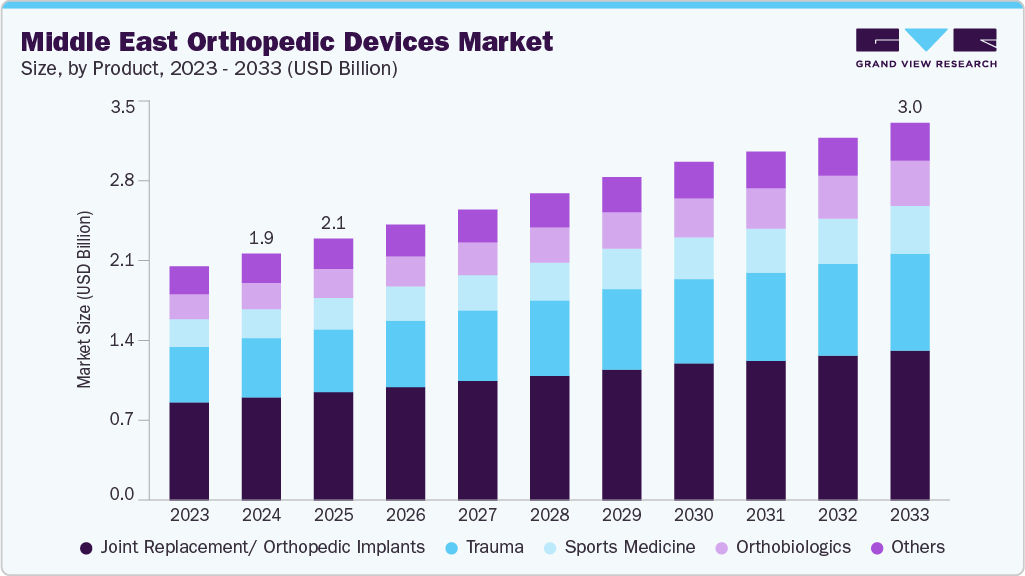
These incidents often result in fractures, joint damage, and other musculoskeletal complications, thereby driving the need for advanced orthopedic implants, trauma fixation systems, and rehabilitation solutions. Rising musculoskeletal disorders drive market growth. According to an NCBI article published in March 2023, in Saudi Arabia, musculoskeletal disorders are becoming a significant public health concern, with osteoarthritis emerging as one of the most common conditions. A population-based study reported that knee osteoarthritis affected nearly one-fifth of the population (18.9%), with women experiencing a higher prevalence (20.3%) compared to men (13.1%). The study highlighted age, obesity, gender, and previous joint injuries as key risk factors contributing to the condition. This rising burden of degenerative joint diseases is expected to accelerate demand for advanced orthopedic devices in the Middle East, particularly in joint replacement, minimally invasive surgical tools, and supportive rehabilitation technologies. While the population ages and lifestyle-related risk factors persist, the need for orthopedic interventions in Saudi Arabia and the wider region is projected to grow steadily.
Analyst Insight
“The increasing incidence of musculoskeletal disorders, particularly osteoarthritis, indicates a growing demand for orthopedic interventions across Saudi Arabia and the broader Middle East. This trend reflects both demographic shifts and the cumulative impact of lifestyle-related risk factors. From a strategic perspective, healthcare systems are likely to prioritize capacity-building in orthopedic specialties, with a focus on high-volume procedures such as knee and hip replacements. Market participants offering advanced implant technologies, including patient-specific designs and navigation-enabled systems, are well-positioned to capitalize on this demand.”
Increasing obesity cases drive the growth of the market. According to the John Wiley & Sons, Inc. article published in April 2025, a large-scale population-based study conducted in Dubai between 2018 and 2023 highlights the significant burden of overweight and obesity in the Middle East. Out of more than 440,000 adults assessed, 63.4% were found to be living with overweight or obesity, with the prevalence reaching 68.3% among UAE nationals. The study further showed that nearly one-third of Emirati women aged 40 years and above were classified as obese, with many falling into severe categories (class 2 and 3 obesity).
Such high obesity rates are directly linked to an increased risk of musculoskeletal complications, including osteoarthritis, joint degeneration, and spinal disorders, all of which are leading contributors to orthopedic device demand. While obesity accelerates the wear and tear of joints and increases fracture susceptibility, the market is expected to see rising demand for joint replacement implants, trauma fixation devices, and minimally invasive surgical solutions. The growing prevalence of obesity thus acts as a key driver for market growth, especially in countries like the UAE, where lifestyle-related health risks are on the rise.
Analyst Insight
The high prevalence of obesity particularly among middle-aged women in the Gulf region has significant implications for orthopedic device utilization. Obesity accelerates joint deterioration and increases the likelihood of surgical intervention at a younger age, expanding the addressable market for both primary and revision procedures. This epidemiological trend necessitates product innovation tailored to higher body mass profiles, including enhanced load-bearing implants and longer-lasting biomaterials. Furthermore, there is growing potential for integration between orthopedic care and metabolic management programs, signaling a shift toward more holistic, multidisciplinary treatment models. Companies that can support this convergence through digital tools or modular device systems will likely gain competitive advantage.
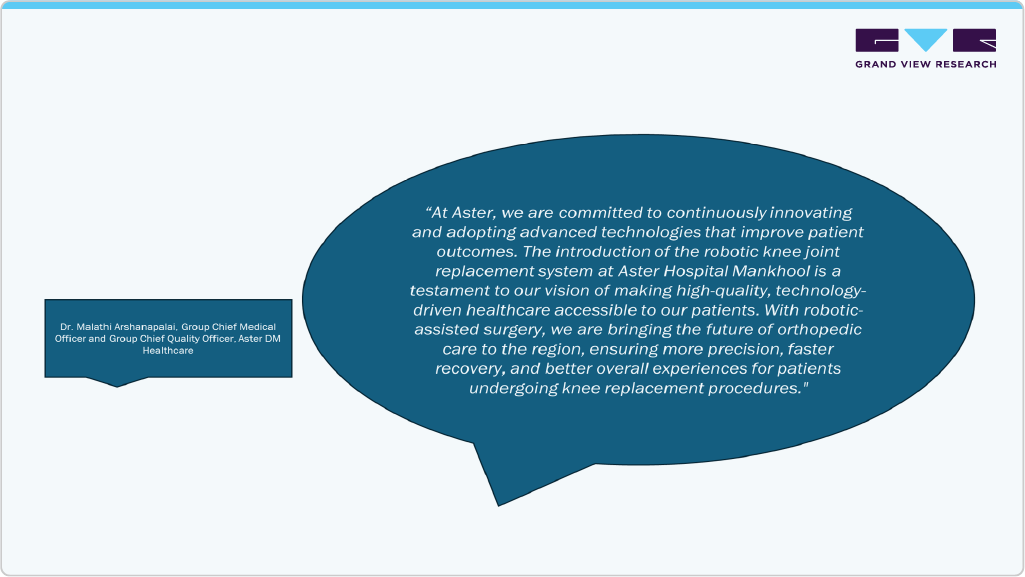
Technological advancement drives market growth. For instance, in April 2025, Aster Hospital Mankhool recently launched its Robotic Surgery Centre, introducing the ROSA Robotic Knee Replacement System. The advanced system supports surgeons from planning to execution, improving bone preparation and implant placement precision while minimizing surgical risks. This marks the hospital’s first robotic orthopedic surgery facility, highlighting its focus on innovation and patient-centered care. The center was inaugurated by Olympic champion Mary Kom, reflecting the hospital’s global outlook and commitment to advanced healthcare solutions.
Analyst Insight
The deployment of robotic-assisted surgical systems in leading Middle Eastern hospitals underscores the region’s strategic commitment to high-precision, outcome-driven care. These investments reflect clinical ambition and institutional efforts to differentiate themselves in a competitive healthcare market. For orthopedic device manufacturers, this trend presents opportunities beyond hardware—encompassing digital planning platforms, intraoperative data analytics, and ongoing clinical training services. As robotic adoption expands, the market is expected to demand standardized protocols, system interoperability, and measurable outcome tracking. Firms with strong after-sales support and localized technical partnerships will be best equipped to support this next phase of surgical innovation.
Market Concentration & Characteristics
The Middle East orthopedic devices industry is witnessing high innovation, with strong adoption of robotic-assisted surgery, smart implants, and minimally invasive orthopedic techniques across leading hospitals in the UAE and Saudi Arabia. Recent milestones include the launch of robotic knee replacement systems, AI-driven surgical navigation tools, and next-generation joint implants that improve accuracy and reduce recovery times. These innovations transform patient outcomes while supporting the region’s broader healthcare vision of integrating cutting-edge technologies into orthopedic care.
Several leading companies in the Middle East orthopedic devices industry, including Medtronic, Stryker, Zimmer Biomet, DePuy Synthes, and Smith+Nephew, are strengthening their regional footprint by introducing surgeon education initiatives, opening specialized training centers, and tailoring product offerings to align with patient needs across Gulf nations. These strategies are accelerating the adoption of advanced orthopedic solutions and positioning the UAE and neighboring countries as central hubs for musculoskeletal innovation in the Middle East.
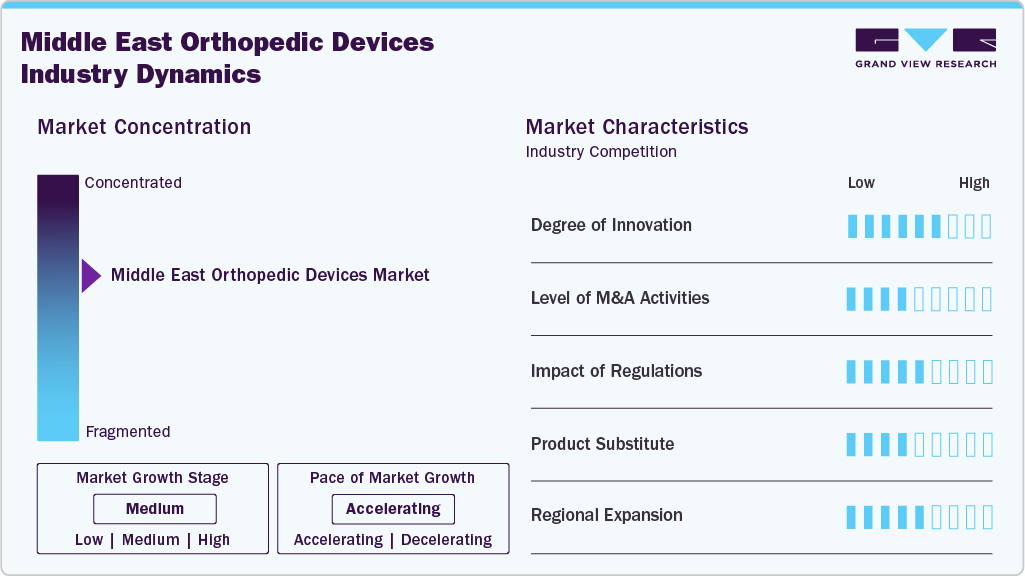
In the Middle East, regulatory bodies such as the Saudi Food and Drug Authority (SFDA), UAE Ministry of Health and Prevention (MOHAP), Dubai Health Authority (DHA), Department of Health Abu Dhabi (DoH), Kuwait Ministry of Health, Qatar’s Ministry of Public Health (MoPH), and Oman’s Ministry of Health are central to overseeing the orthopedic devices sector. These agencies establish and enforce strict safety, efficacy, and product quality requirements to ensure optimal patient outcomes. In recent years, regional regulators have advanced digitalized registration platforms, introduced faster approval timelines for priority medical technologies, and strengthened post-market surveillance systems. Such measures foster quicker access to innovative orthopedic solutions while maintaining compliance with international standards.
There are no direct substitutes for orthopedic devices in managing severe musculoskeletal disorders in the Middle East. While physiotherapy and medication can provide relief, devices such as joint replacements, trauma fixation systems, and spinal implants are vital for restoring mobility and treating advanced conditions. In the region’s high-acuity care settings, these devices are critical in improving patient outcomes and quality of life.
Key orthopedic device manufacturers in the Middle East are strengthening their presence by collaborating with healthcare providers, investing in advanced surgical technologies, and supporting initiatives that raise awareness about bone and joint health. These efforts are improving access to modern orthopedic treatments across the region and aligning with national goals to enhance patient mobility and quality of care.
Product Insights
The joint replacement/ orthopedic implants segment held the largest share, 41.64%, in 2024. Increasing orthopedic disorders and the launch of technologically advanced products drive the market's growth. For instance, in May 2024, Al Shirawi Healthcare Solutions entered a strategic partnership with Exactech, a global leader in orthopedic implant systems and surgical solutions. Through this collaboration, advanced products such as the Equinoxe Shoulder and Truliant Knee Systems and the innovative ExactechGPS navigation technology are being introduced to the Middle East healthcare sector, enhancing access to next-generation orthopedic care.
The trauma segment is growing at a significant CAGR during the forecast period, driven by increasing musculoskeletal disorders and the technologically advanced products offered by the key players. For instance, Medtronic offers impactful solutions such as the INFUSE Bone Graft, which accelerates bone healing in trauma and spinal surgeries. Moreover, Smith+Nephew offers the TAYLOR SPATIAL FRAME External Fixator.
An advanced external fixation system is used to treat complex fractures, limb deformities, and post-traumatic conditions. It offers highly customizable 3D corrections using struts based on the Stewart platform model.End-use Insights
The hospitals segment held the largest share, 65.53%, in 2024. Hospitals remain the preferred choice due to their ability to provide advanced surgical infrastructure, multidisciplinary expertise, and access to specialized orthopedic surgeons. A growing number of patients are opting for hospital-based treatments, particularly for complex procedures such as joint replacement, trauma surgeries, and spinal interventions, as these require advanced imaging systems, operating theaters, and post-operative care facilities. A key trend shaping this segment is expanding tertiary care and specialty hospitals across the region, supported by government investments and public-private partnerships to enhance healthcare infrastructure. In addition, the rising incidence of musculoskeletal disorders, sports injuries, and age-related conditions has led to higher surgical volumes in hospital settings.
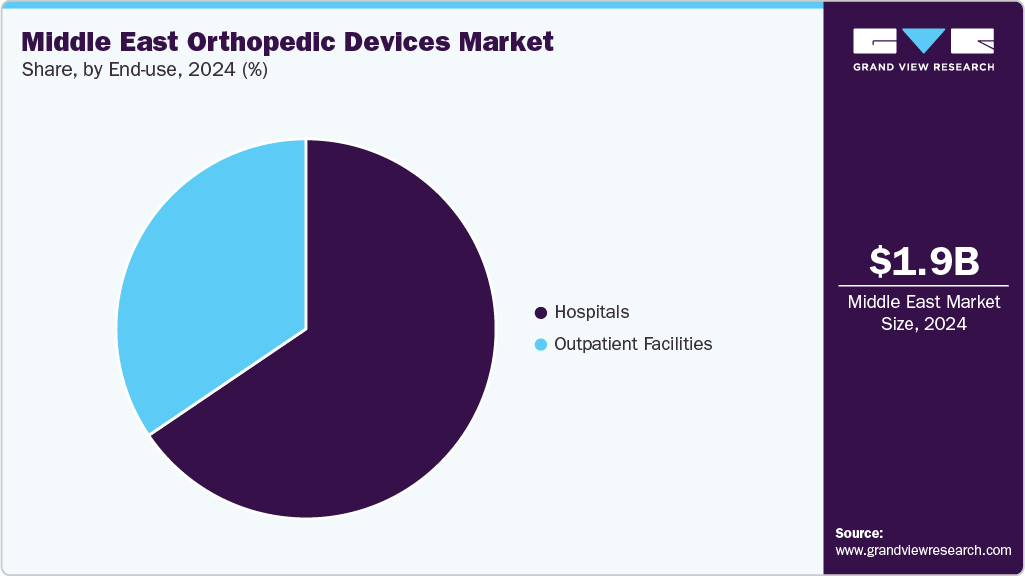
The outpatient facilities segment is growing significantly over the forecast period. Outpatient facilities for healthcare delivery are shifting toward more accessible and cost-efficient models. These facilities are increasingly favored for less invasive orthopedic procedures, diagnostic evaluations, and rehabilitation services, supported by advancements in surgical techniques and device miniaturization that enable same-day interventions. Patients are showing a stronger preference for outpatient centers due to shorter waiting times, lower overall treatment costs, and faster recovery in a non-hospital environment.
Country Insights
Saudi Arabia Orthopedic Devices Market Trends
Saudi Arabia's dominated the orthopedic devices market with a share of 31.52% in 2024. Increasing musculoskeletal disorders and the launch of technologically advanced products by the key players drive the market's growth. According to the Journal of Crisis & Risk Communication Research article published in October 2024, a systematic review of eight studies involving 1,469 nurses in Saudi Arabia, of which 88.4% were women, reported a high prevalence of work-related musculoskeletal disorders (WRMSDs), ranging from 61.7% to 100%, with an overall rate of 79.7%. This significant burden highlights the rising need for orthopedic interventions, positioning musculoskeletal care as a key driver for the Saudi Arabian market through increased demand for implants, supports, and rehabilitation solutions.
UAE Orthopedic Devices Market Trends
The orthopedic devices market in the UAE is growing at the fastest CAGR over the forecast period. Increasing musculoskeletal disorders and the launch of technologically advanced products by the key players drive the market's growth. According to the NCBI article published in November 2023, a recent study on schoolteachers in the UAE highlighted the significant burden of work-related musculoskeletal disorders (WMSDs), reporting a prevalence of 71.4%, with neck pain affecting 74.3% of participants. Among the 206 respondents, 149 were female and 57 were male, with the majority aged between 30 and 50. The findings identified key risk factors, including age, workload, and low physical activity, while correlation analysis showed a weak but statistically significant relationship between physical activity and WMSD prevalence.
Key Middle East Orthopedic Devices Company Insights
Some of the key players operating in the industry include Stryker, Medtronic, and Zimmer Biomet. The company’s key strategies include understanding the strengths and weaknesses of major market participants, anticipating future market trends, opportunities, and challenges, and making proactive decisions based on insights into emerging technologies and changing consumer preferences. For instance, CONMED Corporation and NuVasive, Inc. (which merged with Globus Medical) are emerging players in the market.
Key Middle East Orthopedic Devices Companies:
- Medtronic
- Stryker
- Zimmer Biomet
- DePuy Synthes
- Smith+Nephew
- Aesculap, Inc. – a B. Braun company
- CONMED Corporation
- NuVasive, Inc. (merged with Globus Medical)
- Enovis (formerly known as DJO)
Recent Developments
-
In May 2025, Burjeel Medical City launched a clinic offering osseointegrated prosthetic limb systems. A titanium implant integrates directly with bone in these systems and protrudes through the skin to connect to external prostheses. This provides amputees with improved mobility, comfort, and sensory feedback over traditional socket prosthetics.
-
In February 2024, Almana Group of Hospitals teamed with Zimmer Biomet to bring the ROSA robotic-assisted knee replacement system to the region, improving accuracy and enhancing recovery outcomes.
-
In March 2022, Khoula Hospital inaugurated a 780-square-meter prosthetics and orthotics department equipped with the latest medical devices for orthopedic treatments and prosthetic limb manufacturing. This facility includes clinics, modification workshops, and fitting areas.
Middle East Orthopedic Devices Market Report Scope
Report Attribute
Details
Market size value in 2025
USD 2.08 billion
Revenue forecast in 2033
USD 3.00 billion
Growth rate
CAGR of 4.69% from 2025 to 2033
Actual data
2021 - 2024
Forecast period
2025 - 2033
Quantitative units
Revenue in USD million/billion, and CAGR from 2025 to 2033
Report coverage
Revenue forecast, company ranking, competitive landscape, growth factors, and trends
Segments covered
Product, end-use, region
Country scope
Saudi Arabia; UAE; Kuwait; Qatar; Oman
Key companies profiled
Medtronic; Stryker; Zimmer Biomet; DePuy Synthes; Smith+Nephew; Aesculap, Inc. – a B. Braun company; CONMED Corporation; NuVasive, Inc. (merged with Globus Medical); Enovis (formerly known as DJO)
Customization scope
Free report customization (equivalent up to 8 analysts working days) with purchase. Addition or alteration to country, regional & segment scope.
Pricing and purchase options
Avail customized purchase options to meet your exact research needs. Explore purchase options
Middle East Orthopedic Devices Market Report Segmentation
This report forecasts revenue growth at country levels and analyzes the industry trends in each sub-segment from 2021 to 2033. For this study, Grand View Research has segmented the Middle East orthopedic devices market report based on product, end-use, and country:
-
Product Outlook (Revenue USD Million, 2021 - 2033)
-
Joint Replacement/ Orthopedic Implants
-
Lower Extremity Implants
-
Knee Implants
-
Hip Implants
-
Foot & Ankle Implants
-
-
Spinal Implants
-
Dental
-
Dental Implants
-
Craniomaxillofacial Implants
-
-
Upper Extremity Implants
- Elbow Implants
- Hand & Wrist Implants
- Shoulder Implants
-
-
Trauma
-
Implants
-
Accessories (Plates, Screws, Nails, Pins, Wires)
-
Instruments
-
-
Sports Medicine
-
Body Reconstruction & Repair
-
Accessories
-
Body Monitoring & Evaluation
-
Body Support & Recovery
-
-
Orthobiologics
-
Viscosupplementation
-
Demineralized Bone Matrix
-
Synthetic Bone Substitutes
-
Bone Morphogenetic Protein (BMP)
-
Stem Cell Therapy
-
Allograft
-
-
Others
-
-
End-use Outlook (Revenue USD Million, 2021 - 2033)
-
Hospitals
-
Outpatient Facilities
-
-
Country Outlook Revenue USD Million, 2021 - 2033)
-
MEA
-
Saudi Arabia
-
UAE
-
Kuwait
-
Qatar
-
Oman
-
-
Frequently Asked Questions About This Report
b. The global Middle East orthopedic devices market size was estimated at USD 1.96 billion in 2024 and is expected to reach USD 2.08 billion in 2025.
b. The global Middle East orthopedic devices market is expected to grow at a compound annual growth rate of 4.69% from 2025 to 2033 to reach USD 3.00 billion by 2033.
b. The joint replacement/ orthopedic implants segment held the largest share of 41.64% in 2024. Increasing orthopedic disorders and launching technologically advanced products drive the market's growth.
b. Some key players operating in the Middle East orthopedic devices market include Medtronic, Stryker, Zimmer Biomet, DePuy Synthes, Smith+Nephew, Aesculap Inc. – a B. Braun company, CONMED Corporation, NuVasive, Inc. (merged with Globus Medical), and Enovis (formerly known as DJO).
b. The increasing incidence of road accident injuries drives the growth of the market. According to the article published in the SAUDIGAZETTE in July 2024, in Saudi Arabia, the rate of accident-related injuries has been recorded at nearly 70.9 cases per 100,000 people, reflecting the high prevalence of trauma cases that require surgical intervention.


Share this report with your colleague or friend.
Need a Tailored Report?
Customize this report to your needs — add regions, segments, or data points, with 20% free customization.


ISO 9001:2015 & 27001:2022 Certified
We are GDPR and CCPA compliant! Your transaction & personal information is safe and secure. For more details, please read our privacy policy.
Trusted market insights - try a free sample
See how our reports are structured and why industry leaders rely on Grand View Research. Get a free sample or ask us to tailor this report to your needs.













