
- Home
- »
- Medical Devices
- »
-
Middle East Orthopedic Digit Implants Market Report, 2033GVR Report cover

Middle East Orthopedic Digit Implants Market (2025 - 2033) Size, Share & Trends Analysis Report By Product (Metatarsal Joint Implants, Toe Intramedullary Implants), By Material (Titanium, Nitinol, Silicon Pyrocarbon), By End-use, By Country, And Segment Forecasts
Middle East Orthopedic Digit Implants Market Summary
The Middle East orthopedic digit implants market size was estimated at USD 4.75 million in 2024 and is projected to reach USD 7.18 million by 2033, growing at a CAGR of 4.65% from 2025 to 2033. The market is poised for growth, driven by the rising incidence of finger and toe fractures associated with road traffic accidents, sports injuries, and occupational hazards.
Key Market Trends & Insights
- The Saudi Arabia orthopedic digit implants market held the largest share of 31.83% in 2024.
- The orthopedic digit implants industry in Qatar is expected to grow at the fastest CAGR from 2025 to 2033.
- By product, the metatarsal joint implants segment held the highest market share of 47.62% in 2024.
- By material, the titanium segment held the highest market share in 2024.
- By end use, the outpatient facilities segment held the highest market share in 2024.
Market Size & Forecast
- 2024 Market Size: USD 4.75 Million
- 2033 Projected Market Size: USD 7.18 Million
- CAGR (2025-2033): 4.65%
- Saudi Arabia: Largest Market in 2024
- Qatar: Fastest Growing Market
Prism AI by Grand View Research Free to tryAsk a question about the middle east orthopedic digit implants marketTry asking✓Every figure cited from GVR research Prefer the report? Download free sample →
Increasing adoption of motion-preserving implants over traditional fusion techniques reflects a growing preference for solutions that restore functionality and mobility. In July 2022, Doctors at Tawam Hospital, Al Ain, performed a nine-hour hand replantation surgery after an industrial accident, restoring blood flow to severed fingers within two hours. A toe-to-thumb microvascular transfer reconstructed the thumb, enabling functional recovery.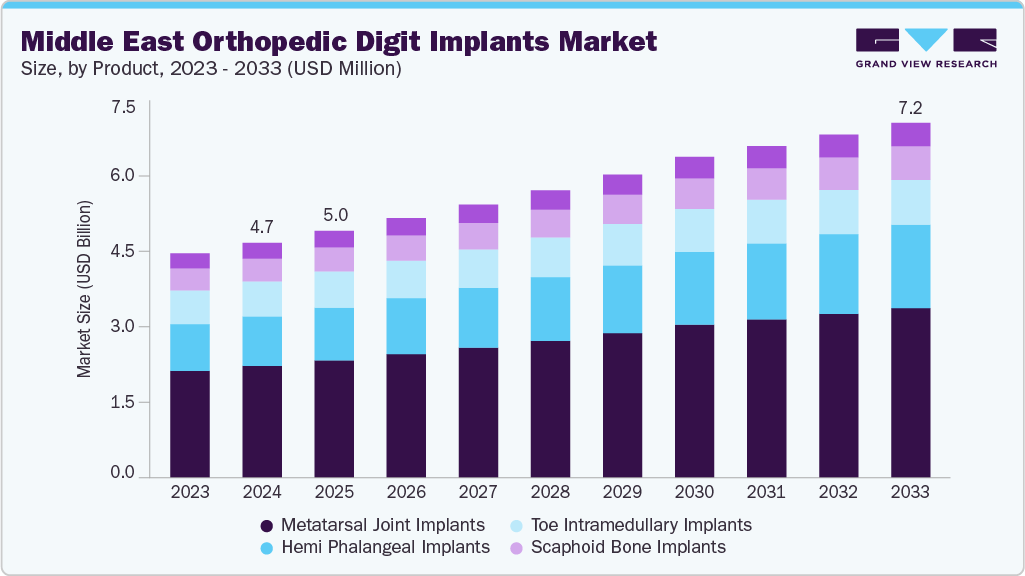 Source: Grand View Research, IR Documents, Primary Interviews, Paid DatabasesTo learn more about this report,
 Download Free Sample Report
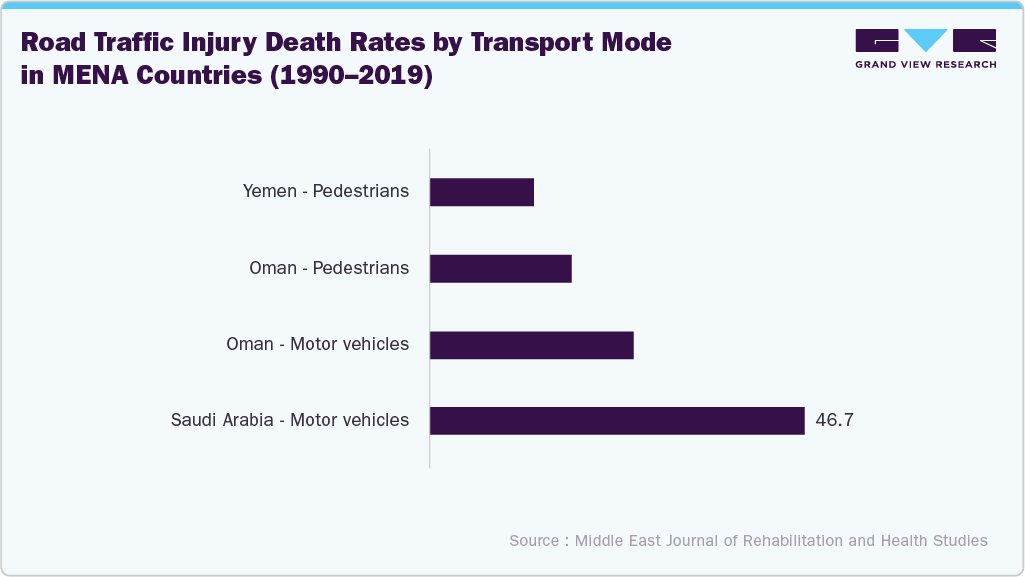
The Middle East records some of the highest rates of road traffic accidents worldwide, combined with strong participation in football, basketball, and combat sports. These factors have resulted in a rising incidence of finger and toe fractures, as well as ligament injuries, which directly increases demand for digit implants. In September 2024, a study in the Middle East Journal of Rehabilitation and Health Studies reported that road traffic injuries in MENA declined from 1990 to 2019. Motor vehicles accounted for the highest death rate at 15.32 per 100,000, followed by pedestrians (8.37), motorcyclists (2.16), and cyclists (0.35). Saudi Arabia (46.7) and Oman (25.5) recorded the highest motor vehicle fatality rates, while Oman (17.7) and Yemen (12.95) led in pedestrian-related deaths.
 To learn more about this report, Download Free Sample Report
The region’s demographic profile is also shaping demand for orthopedic digit implants. A large working-age population faces the risk of occupational hand and foot injuries. In contrast, the aging population in Saudi Arabia, the UAE, and other Gulf countries experiences a higher prevalence of osteoarthritis and rheumatoid arthritis. These conditions often necessitate surgical intervention to preserve mobility and alleviate pain in digit joints. In February 2024, a study in Cureus examined 150 rheumatoid arthritis patients in Saudi Arabia, revealing that nearly all had at least one comorbidity, with anemia, hypertension, and diabetes being the most common. The findings underscore the significant health burden of RA in the region and highlight the importance of comprehensive management strategies tailored to local patient needs.
Advancements in surgical techniques and healthcare infrastructure are accelerating adoption across the Middle East. Surgeons are moving toward motion-preserving and minimally invasive approaches, increasingly choosing digit implants over fusion methods to restore function. Substantial investments in specialty care facilities, surgical training, and modern implant technologies in the Gulf region are improving access and patient outcomes. In December 2022, an article in the Journal of Manufacturing and Materials Processing reviewed the latest in orthopedic digit and joint implants, highlighting how additive manufacturing and biocompatible biomaterials like titanium alloys and polymers are transforming implant design, durability, and clinical outcomes.
Case Study: Burden of Routine Orthopedic Digit Implant Removal at a Tertiary Center in Saudi Arabia
Background:
Open reduction and internal fixation is a common orthopedic procedure for fractures, including digit (finger and toe) fractures. While the removal of symptomatic implants is standard practice, routine removal of asymptomatic digit implants remains controversial. Concerns include unnecessary complications, prolonged hospitalization, and increased resource utilization.
Objective:
To evaluate the clinical and systemic burden of routine, asymptomatic digit implant removal on patients and hospital resources.
Methods:
-
Design: Retrospective single-center study
-
Setting: King Fahad Hospital of the University (KFHU), Eastern Province, Saudi Arabia
-
Duration: February 2016 - August 2022
-
Participants: 167 cases of routine asymptomatic digit implant removal
-
Exclusions: Removal due to infection, pain, implant failure, malunion/nonunion, restricted motion, prominent hardware, joint replacement, or external fixators
-
Data Collected: Age, sex, nationality, hospital stay duration, complications, sick leave, anesthesia type, surgery duration, and interval between implant insertion and removal
-
Analysis: Descriptive statistics and inferential testing (Student’s t-test, chi-square) using SPSS v25
Results:
-
Demographics: Mean age 25 years; 68% male; 90% Saudi
-
Hospital Stay: 44% >1 day, 56% 1 day
-
Complications: 6% (stiffness, pain, wound contamination, limited motion)
-
Sick Leave: 34.1% required leave; 4.8% >14 days
-
Surgery: Mean duration 77.1 minutes; general anesthesia in 88% of cases
-
Insertion-to-Removal Interval: Mean 18.6 months
-
Digit-Specific Findings: Upper limb (fingers) implant removal averaged 14.5 months, lower limb (toes) 20.6 months. Regional anesthesia was more common for lower limb procedures (P = 0.02).
Discussion:
-
Routine removal of asymptomatic digit implants introduces avoidable complications and consumes hospital resources.
-
Adults are more likely to require prolonged hospitalization and exhibit longer insertion-to-removal intervals than pediatric patients.
-
The economic impact is notable due to lost workdays and operating room occupancy, emphasizing the need for stricter institutional guidelines.
-
The study aligns with prior literature showing complication rates of 6-28% in non-medically indicated implant removals.
Conclusion:
Routine removal of asymptomatic digit implants imposes clinical and systemic burdens without clear patient benefit. Institutional protocols are recommended to identify cases where implant retention is safe, reducing unnecessary interventions and optimizing resource use.
Implications for Practice:
-
Prioritize implant retention in asymptomatic digit fractures
-
Consider anesthesia type based on limb and patient age
-
Optimize scheduling and resource allocation for surgeries with medical indication
Market Concentration & Characteristics
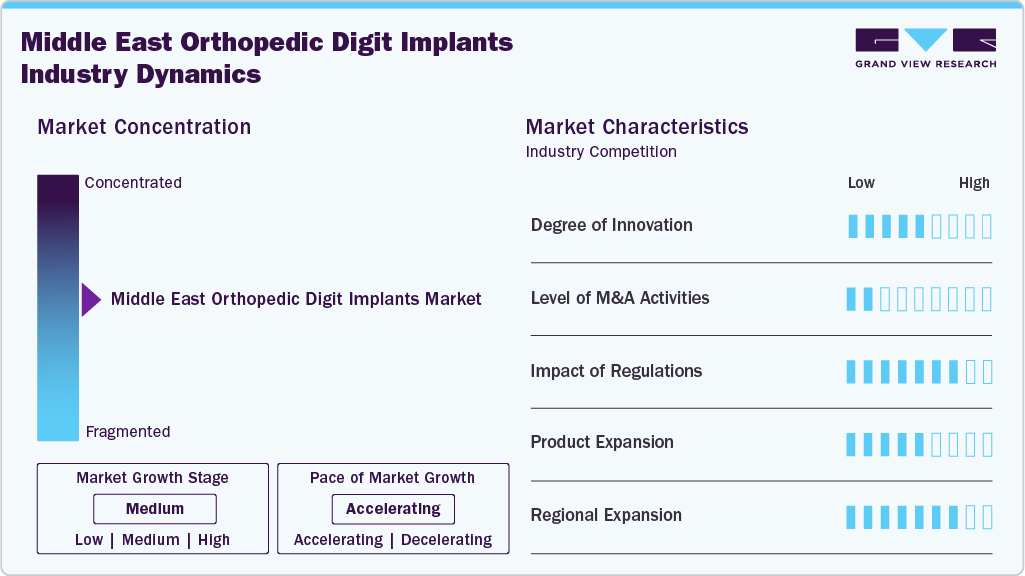
Innovation in the Middle East orthopedic implants market is moderate, with most advanced solutions introduced by multinational manufacturers rather than developed locally. Robotics-assisted surgery, patient-specific implants, and advanced biomaterials are increasingly available in major centers in the UAE and Saudi Arabia. However, adoption across North Africa and the Levant markets remains limited. In December 2024, Burjeel Holdings in the UAE advanced orthopedic digit implants using 3D-printed customized implants, robotic-assisted surgeries, and electromagnetic bone-lengthening nails, improving digit reconstruction and functionality. Paley Middle East Clinic and Burjeel Medical City focus on complex foot and toe deformity corrections and trauma reconstruction within the region.
Mergers and acquisitions within the Middle East orthopedic implants sector are low, as most consolidation occurs at the global level. Market access is largely achieved through distributor partnerships, licensing agreements, and joint ventures rather than direct acquisitions. The result is a fragmented landscape where global firms dominate distribution while local players act primarily as intermediaries.
 To learn more about this report, Download Free Sample Report
Regulatory influence on the Middle East orthopedic implants industry is high, driven by stringent approval processes from authorities such as the Saudi Food and Drug Authority and the UAE Ministry of Health. These frameworks ensure safety and efficacy but extend time-to-market and elevate compliance costs. The absence of harmonized standards across Gulf countries adds further complexity, requiring companies to adapt strategies for each market.
The presence of substitutes for orthopedic implants is moderate, with regenerative medicine and biologic therapies emerging as viable options in specialized private clinics. Stem cell therapy, platelet-rich plasma, and biologic injections are gaining traction in Saudi Arabia and the UAE, providing alternative pathways for selected patient groups. Their availability remains limited, but rising investment in regenerative medicine could gradually influence implant demand.
Geographical expansion in the Middle East orthopedic implants market is high, with multinational players actively strengthening their footprint. Stryker, Zimmer Biomet, Smith+Nephew, and Johnson & Johnson have established offices, training centers, and innovation hubs in Dubai, Riyadh, and Doha. In August 2022, Burjeel Holdings signed an MoU with Saudi Arabia’s Ministry of Investment to expand its healthcare footprint in the Kingdom, planning up to USD 1 billion investment by 2030. The expansion will include specialty medical centers, day surgery units, digital health ventures, and comprehensive hospitals, with potential focus on orthopedic services and digit reconstruction.
Product Insights
The c segment dominated the Middle East orthopedic digit implants industry in 2024, with the largest revenue share of 47.62%. This dominance is attributed to the high incidence of hallux rigidus and hallux valgus cases in the region, which frequently require metatarsal joint reconstruction. Strong adoption of motion-preserving implants over fusion techniques has further reinforced the segment’s leading position. In July 2024, a study published in Orthopaedics & Traumatology: Surgery & Research reported outcomes of the first cuneo-metatarsal arthrodesis (Modified Lapidus) using a plantar plate for hallux valgus treatment. Conducted on 66 patients, the procedure achieved a 98.75% union rate with significant radiological corrections. The technique demonstrated safety, reliability, and the feasibility of immediate protected weight-bearing at one-year follow-up.
The toe intramedullary implants segment is expected to register the fastest CAGR during the forecast period, driven by growing demand for minimally invasive fixation in hammertoe and bunion correction. Increased availability of specialized foot and ankle procedures across leading Middle Eastern hospitals to further boost adoption. Innovations in titanium and stainless-steel implant designs are enhancing patient outcomes and procedural efficiency. Rising awareness among orthopedic surgeons and patients about advanced digit reconstruction techniques is also supporting market growth.
Material Insights
The titanium segment dominated the Middle East orthopedic digit implants market in 2024, with the largest revenue share of 59.76%. The segment is anticipated to grow at the fastest CAGR over the forecast period. Titanium’s superior biocompatibility and strength make it highly suitable for long-term implantation in digit reconstruction procedures. Rising adoption of advanced implants in both outpatient and hospital settings has further strengthened its market position. Continuous innovation in titanium-based alloys and surface treatments is expected to sustain demand growth in the coming years.
The stainless steel segment accounted for a significant share of the Middle East orthopedic digit implants industry in 2024.Its strong market position is driven by wide availability, cost-effectiveness, and established use in trauma and reconstructive procedures. Continued reliance on stainless steel implants in both public and private healthcare settings supports their sustained demand across the Middle East. Ongoing innovations in implant design and surface treatments are enhancing performance and broadening clinical applications, further reinforcing market growth.
End-use Insights
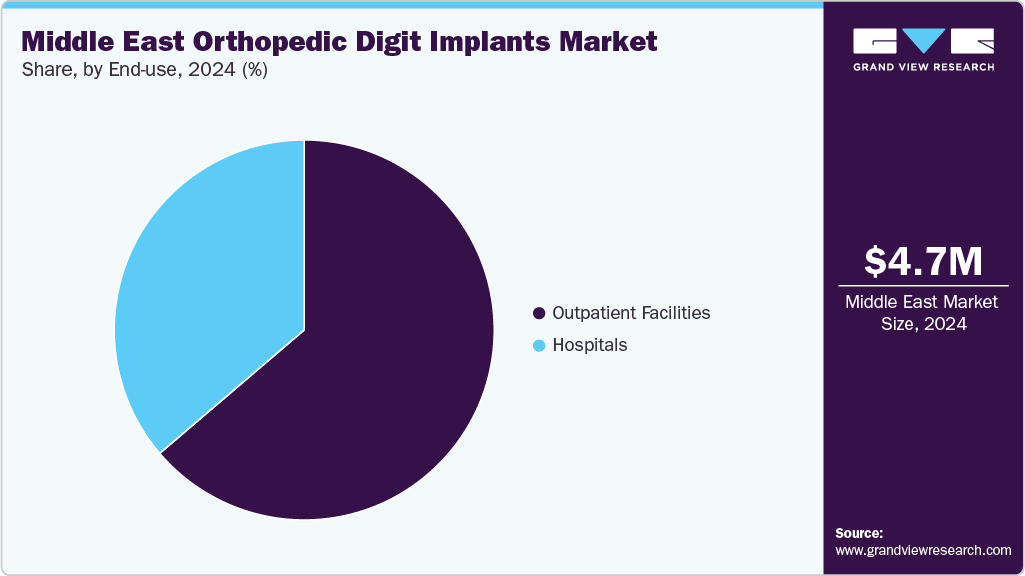
The outpatient facilities segment dominated the Middle East orthopedic digit implants market in 2024 with a revenue share of 63.75% and is anticipated to grow at the fastest CAGR over the forecast period. This trend is fueled by the rising shift toward same-day surgical procedures, supported by cost advantages and shorter recovery times. Increasing investment in ambulatory surgical centers across the Gulf region is further strengthening the role of outpatient facilities in digit implant adoption.
 To learn more about this report, Download Free Sample Report
The hospitals segment is anticipated to register a significant CAGR over the forecast period. The availability of advanced surgical infrastructure, multidisciplinary care, and a higher volume of complex digit reconstruction procedures supports growth in this segment. Expanding government funding for specialized orthopedic departments in major Middle Eastern hospitals is expected to drive further demand. In June 2025, Khoula Hospital’s Hand Surgery Department in Oman performed a 14-hour operation to reattach a severed hand and two fingers, marking a milestone in complex hand surgery and showcasing advanced orthopedic and microsurgical capabilities.
Country Insights
Saudi Arabia Orthopedic Digit Implants Market Trends
Saudi Arabia dominated the Middle East orthopedic digit implants market with a revenue share of 31.38% in 2024, supported by its large patient base, higher healthcare spending, and strong government initiatives to expand advanced orthopedic care. The country benefits from well-established hospital infrastructure and a growing network of outpatient facilities offering specialized digit reconstruction procedures. In August 2025, an article published in Cureus analyzed the prevalence of musculoskeletal disorders among people with type 2 diabetes in the Western region of Saudi Arabia. The study found that nearly one-third of patients experienced conditions such as osteoarthritis, carpal tunnel syndrome, and Dupuytren’s contracture. These findings underscore the rising orthopedic needs of diabetic populations, reinforcing clinical demand and innovation opportunities in the Middle East orthopedic digit implant market.
Qatar Orthopedic Digit Implants Market Trends
Qatar is anticipated to record the fastest CAGR in the Middle East orthopedic digit implants industry over the forecast period. The rapid expansion of its healthcare sector, driven by significant government investment and modernization initiatives, is creating strong opportunities for the adoption of innovative implants. Increasing awareness of minimally invasive surgeries and the influx of specialized orthopedic centers are further accelerating market uptake. In July 2023, Hamad Medical Corporation (HMC) in Qatar achieved a breakthrough in reconstructive microsurgery with the "Qatar Flap" technique. This innovation enables functional and cosmetic restoration of fingertip injuries in a single procedure while preserving arteries. Over 100 surgeries have been successfully performed, positioning the technique as a potential global standard for fingertip restoration.
Key Middle East Orthopedic Digit Implants Company Insights
Key participants in the Middle East orthopedic digit implants market are focusing on devising innovative business growth strategies in the form of product portfolio expansions, partnerships & collaborations, mergers & acquisitions, and business footprint expansions.
Key Middle East Orthopedic Digit Implants Companies:
- Stryker
- Zimmer Biomet
- Smith & Nephew
- DePuy Synthes (Johnson & Johnson)
- Arthrex, Inc.
- Acumed LLC
- Anika Therapeutics, Inc.
- Vilex, LLC
- Extremity Medical LLC
- Integra LifeSciences
Recent Developments
-
In February 2025, Johns Hopkins Aramco Healthcare (JHAH) in Saudi Arabia became the first hospital in the Eastern Province to offer routine corrective surgery for brachymetatarsia. The procedure involves cutting and gradually lengthening the shortened metatarsal using an external fixator, restoring toe alignment and function. This service aims to relieve pain, improve walking mechanics, and address psychological concerns associated with the deformity.
-
In March 2024, Surgeons at Saudi German Hospital Aseer saved a patient’s fingers from amputation after a severe hand injury complicated by infection. Necrotic bone was removed, antibiotic-laden cement applied, and a fibula graft with plate and screws restored finger structure. The patient regained function, demonstrating advanced digital trauma management.
-
In July 2023, Doctors at Sheikh Shakhbout Medical City performed a 12-hour microvascular replantation, reconstructing three amputated fingers and the thumb using a second-toe transfer. The procedure restored circulation, bone alignment, and functional movement in the patient’s hand. The patient is undergoing rehabilitation and shows successful recovery of digit function.
Middle East Orthopedic Digit Implants Market Report Scope
Report Attribute
Details
Market size value in 2025
USD 5.00 million
Revenue forecast in 2033
USD 7.18 million
Growth rate
CAGR of 4.65% from 2025 to 2033
Actual data
2021 - 2023
Forecast data
2025 - 2033
Quantitative units
Revenue in USD million, and CAGR from 2025 to 2033
Report coverage
Revenue & Volume forecast, company ranking, competitive landscape, growth factors, and trends
Segments covered
Product, material, end-use, country
Regional scope
Middle East
Country scope
Saudi Arabia; UAE; Kuwait; Qatar; Oman
Key companies profiled
Stryker; Zimmer Biomet; Smith+Nephew; DePuy Synthes; Arthrex Inc.; Acumed LLC; Anika Therapeutics, Inc.; VILEX, LLC; Extremity Medical LLC; Integra LifeSciences
Customization scope
Free report customization (equivalent up to 8 analysts working days) with purchase. Addition or alteration to country, regional & segment scope.
Pricing and purchase options
Avail customized purchase options to meet your exact research needs. Explore purchase options
Middle East Orthopedic Digit Implants Market Report Segmentation
This report forecasts revenue and volume growth at the regional and country levels and provides an analysis of industry trends in each of the sub segments from 2021 to 2033. For this study, Grand View Research, Inc. has segmented the Middle East orthopedic digit implants market report based on product, material, end-use, and country:
-
Product Outlook (Revenue, USD Million, 2021 - 2033)
-
Metatarsal Joint Implants
-
Metacarpal Joint Implants
-
Hemi Phalangeal Implants
-
Scaphoid Bone Implants
-
Toe Intramedullary Implants
-
-
Material Outlook (Revenue, USD Million, 2021 - 2033)
-
Titanium
-
Nitinol
-
Silicon Pyrocarbon
-
Stainless Steel
-
Other Materials
-
-
End-use Outlook (Revenue, USD Million, 2021 - 2033)
-
Hospitals
-
Outpatient Facilities
-
-
Country Outlook (Revenue, USD Million, 2021 - 2033)
-
Saudi Arabia
-
UAE
-
Kuwait
-
Qatar
-
Oman
-
Frequently Asked Questions About This Report
The global Middle East orthopedic digit implants market size was estimated at USD 4.75 billion in 2024 and is expected to reach USD 5.00 billion in 2025.
The global Middle East orthopedic digit implants market is expected to grow at a compound annual growth rate of 4.65% from 2025 to 2033 to reach USD 7.18 billion by 2033.
By product, the metatarsal joint implants segment dominated the middle east orthopedic digit implants market in 2024 and accounted for the largest revenue share of 47.62%. This dominance is attributed to the high incidence of hallux rigidus and hallux valgus cases in the region, which frequently require metatarsal joint reconstruction.
Some key players operating in the Middle East orthopedic digit implants market include Stryker, Zimmer Biomet, Smith & Nephew, DePuy Synthes (Johnson & Johnson Inc.), Arthrex, Inc., Acumed LLC, Anika Therapeutics, Inc., Vilex, LLC, Extremity Medical LLC, and Integra LifeSciences.
The orthopedic digit implant market in the Middle East is poised for growth, driven by rising incidence of finger and toe fractures associated with road traffic accidents, sports injuries, and occupational hazards. Increasing adoption of motion-preserving implants over traditional fusion techniques reflects a growing preference for solutions that restore functionality and mobility.
About the Author(s)
Medical Devices Research Team
Healthcare · Medical DevicesThis report was authored by the medical devices research team at Grand View Research - comprising two research analysts, one senior research analyst, and one industry expert - with specialized expertise in the medical devices segment of the healthcare industry. All findings are based on proprietary healthcare databases, executive interviews, and regulatory analysis, subject to internal peer review prior to publication.
Last Updated:
Speak to Analyst

Customize this report to your needs - add regions, segments, or data points, with 20% free customization.
Or view our licence options:


ISO 9001:2015 & 27001:2022 Certified
We are GDPR and CCPA compliant! Your transaction & personal information is safe and secure. For more details, please read our privacy policy.


