
- Home
- »
- Animal Health
- »
-
Middle East Veterinary Eye Care Market Size Report, 2033GVR Report cover
![Middle East Veterinary Eye Care Market Size, Share & Trends Report]()
Middle East Veterinary Eye Care Market (2025 - 2033) Size, Share & Trends Analysis Report By Animal (Canine, Feline, Equine, Bovine), By Product (Devices & Instruments, Medications), By Indication, By Distribution Channel, By Country, And Segment Forecasts
- Report ID: GVR-4-68040-737-1
- Number of Report Pages: 150
- Format: PDF
- Historical Range: 2025 - 2033
- Forecast Period: 2025 - 2033
- Industry: Healthcare
- Report Summary
- Table of Contents
- Segmentation
- Methodology
- Download FREE Sample
-
 Download Sample Report
Middle East Veterinary Eye Care Market Summary
The Middle East veterinary eye care market size was estimated at USD 107.2 million in 2024 and is projected to reach USD 173.3 million by 2033, growing at a CAGR of 4.5% from 2025 to 2033. Some of the factors driving the market growth are rising awareness initiatives, digitalization of veterinary care, growing integration of pet insurance, and expansion of veterinary training and services.
Key Market Trends & Insights
- Saudi Arabia held the largest share of about 54% of the Middle East market in 2024.
- By product, the devices & instruments segment held the largest share of about 56% of the market in 2024.
- In terms of animal, the canine segment dominated the Middle East market with more than 36% share in 2024.
- Based on indication, the uveitis segment held the largest market share in 2024.
Market Size & Forecast
- 2024 Market Size: USD 107.2 million
- 2033 Projected Market Size: USD 173.3 million
- CAGR (2025-2033): 4.5%
- Saudi Arabia: Largest market in 2024
In the Middle East, expanding awareness campaigns, veterinary outreach, and pet owner education are catalyzing the adoption of veterinary eye care products. Veterinary ophthalmology care ranges from specialized devices and instruments to medications, targeting conditions including eyelid abnormalities, cataracts, glaucoma, retinal issues, uveitis, conjunctivitis, corneal problems, and other ocular complications. Veterinary clinics and hospitals are increasingly emphasizing routine ophthalmic examinations, aided by online educational content, pet care blogs, and how-to videos showcasing, for example, how to administer eye drops safely. These efforts elevate owner awareness of eye health, prompting earlier diagnosis and intervention.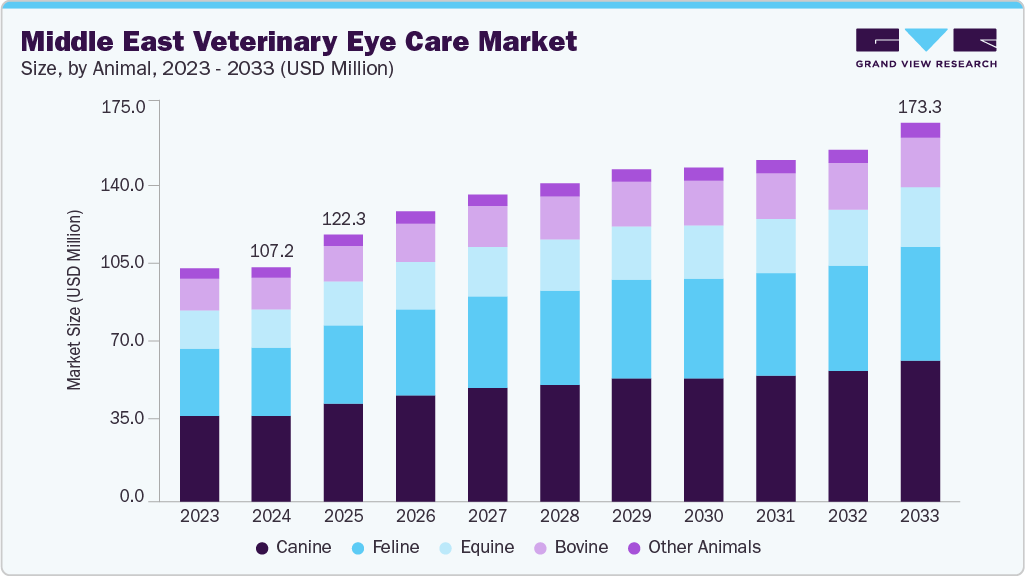
Simultaneously, the rising prevalence of ocular disorders among companion animals, especially dogs, cats, and to some extent horses, combined with growing pet ownership across the region, is driving demand for diagnostic equipment, surgical instruments, and ophthalmic medications. Availability of portable and handheld diagnostic tools, such as ophthalmoscopes and imaging systems, enhances accessibility, enabling more clinics to offer precise screening and treatment. Moreover, pet insurance expansion and increasing willingness to invest in pet wellness are incentivizing owners to consider preventive and therapeutic interventions for eye conditions.
Strategic partnerships between manufacturers, veterinary associations, and pet care organizations are also playing a critical role. By bridging information gaps through targeted educational campaigns, these partnerships help normalize the use of advanced ophthalmic implants, drop dispensers, and therapeutics among pet owners and clinicians alike.
These initiatives are not only raising awareness but also actively shaping market behavior-prompting an uptick in the adoption of veterinary eye care products. As a result, the regional veterinary ophthalmic market continues to grow, supported by enhanced owner knowledge, improved clinical infrastructure, and evolving expectations around pet health.
Key Market Dynamics Impacting Veterinary Eye Care Sector in Middle East -
Driver
Description
Initiative
Impact on Veterinary Eye Care
Digitalization of Livestock & Pet Health
Use of digital tools, apps, and data platforms for monitoring animal health
Saudi MOEW showcases digital livestock health initiatives
Enables early detection of ocular disorders, improves patient tracking, and integrates tele-ophthalmology solutions
Pet Insurance Adoption
Growing pet insurance penetration in the Middle East
TREE Insurance launches first pet insurance in Saudi Arabia
Increases affordability and accessibility of advanced eye care procedures, including surgeries and diagnostics
Strategic Industry Partnerships
Collaboration between insurance and veterinary service providers
TREE participates in Saudi Pet & Vet Expo 2024 to form partnerships
Encourages integrated services: insurance + ophthalmology clinics + telemedicine, boosting treatment adoption
Awareness & Education
Increased awareness of pet eye health among owners
Digital campaigns, insurance promotions, and expos
Drives demand for regular ophthalmic exams, fundus imaging, and advanced diagnostics
Market Concentration & Characteristics
The Middle East veterinary eye care industry is moderately concentrated, with a blend of multinational pharma companies, ophthalmic device manufacturers, and regional players shaping growth. Global leaders such as Merck, Zoetis, Dechra, Bausch & Lomb, and Ceva bring advanced ophthalmic drugs and diagnostics, while technology providers like LKC Technologies, Iridex, Reichert, and OptoMed enhance device adoption in specialist practices. Regional firms, including Montajat Pharmaceuticals, GVC Group, and Alivira, expand accessibility through localized distribution and cost-effective offerings. The presence of both global innovators and regional suppliers ensures competitive balance, driving gradual adoption of advanced eye care solutions across Gulf markets and wider Middle Eastern veterinary practices. This structure supports steady innovation while also addressing affordability and accessibility challenges in the region.
The industry is witnessing gradual but rising innovation, driven by improved diagnostic imaging, digital health adoption, and the use of tele-ophthalmology. Saudi Arabia’s government initiatives under MEWA to enhance animal welfare, alongside the introduction of pet insurance by firms like Tree, are creating stronger incentives for specialized care, including ophthalmology. While advanced AI-based analysis and sustained-release ocular therapies are still emerging, the region is steadily aligning with global innovation trends, improving access and affordability of advanced eye treatments.
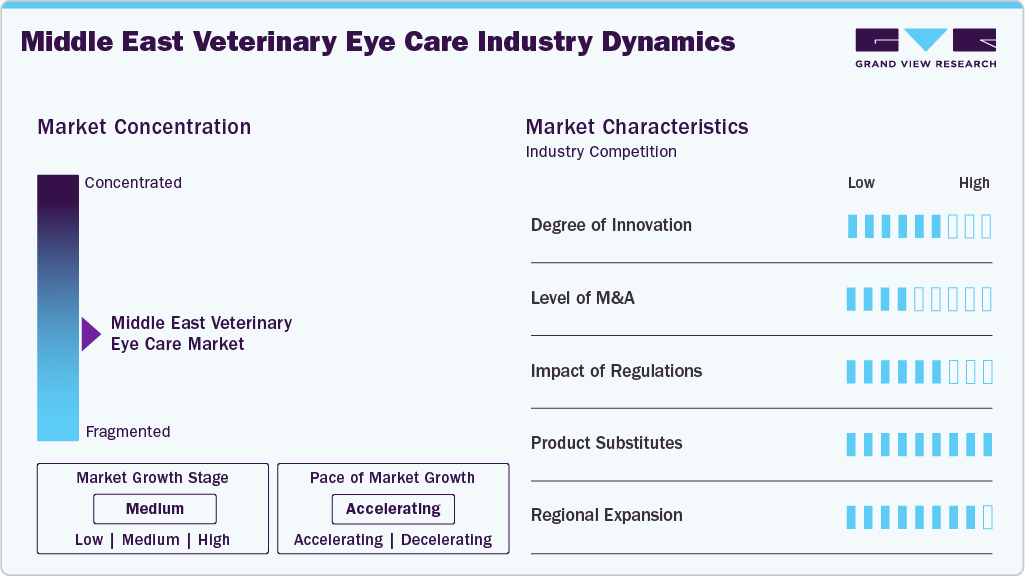
The level of mergers and acquisitions in sectors remains limited but is gaining traction as part of broader animal health consolidation. Regional players, supported by government-backed initiatives, are exploring partnerships to strengthen biotechnology, pharmaceuticals, and veterinary services. Collaborations between local firms and multinational companies help introduce advanced diagnostic and treatment technologies. This gradual M&A activity is laying the groundwork for stronger innovation pipelines and localized manufacturing in veterinary ophthalmology across the region.
In the Middle East, regulations play a pivotal role in shaping the veterinary sector by aligning animal welfare with broader healthcare and business continuity policies. Initiatives by authorities such as the UAE’s MOCCAE, which adopted new frameworks to strengthen veterinary services during disruptions, highlight the emphasis on resilience and safety. However, variations in veterinary drug approvals across countries create challenges for the rapid entry of ophthalmic products. While regulatory structures often draw parallels with human healthcare standards, inconsistent implementation across the region can slow innovation uptake, making compliance and local partnerships essential for market success.
Product substitution remains moderate, with veterinarians often adapting human ophthalmic drugs such as lubricating drops, antibiotics, and anti-inflammatory eye drops for animal use. Basic diagnostic tools like handheld ophthalmoscopes and slit lamps designed for human care are also repurposed in smaller clinics where veterinary-specific equipment is limited. However, rising awareness of animal welfare and the availability of veterinary-specific ocular formulations, tear stimulants, and surgical instruments are gradually reducing dependence on human substitutes. This shift toward tailored products is enhancing treatment precision, improving outcomes, and driving the growth of specialized veterinary ophthalmology across the region.
International companies are increasingly targeting the Middle East to expand their veterinary eye care footprint, supplying both specialized and multipurpose products. Firms such as DAC Pharma are introducing combination eye and ear creams, while Troy Laboratories markets corticosteroid-antibiotic ophthalmic solutions that cater to both companion animals and livestock. Indian manufacturers, including Reyaansh Healthcare, are exporting antibiotic-based eye drops tailored for common infections, and global device suppliers like Kalstein are positioning diagnostic and surgical equipment for regional veterinary practices. These imports fill gaps in locally manufactured ophthalmic products, providing clinics with affordable and diverse treatment options while fostering greater adoption of advanced veterinary eye care across the Gulf and wider Middle East markets.
Product Insights
The devices and instruments segment accounted for the largest share of about 57% in 2024, driven by growth concentrated in pet-dense markets such as the UAE, Saudi Arabia, and Kuwait. Veterinary hospitals in Dubai and Abu Dhabi are increasingly equipped with fundus cameras, slit lamps, and tonometers for routine canine and feline screenings, while equine clinics in Saudi Arabia are adopting OCT systems for managing performance horses. The introduction of phacoemulsification systems for cataract removal and glaucoma implants in specialty centers highlights the region’s shift toward minimally invasive surgical care. Rising owner awareness, supported by regional pet health campaigns, is accelerating demand for these advanced tools and reinforcing their dominance in the veterinary eye care market.
The medications segment is expected to exhibit the fastest growth over the forecast period, with Saudi Arabia driving much of this momentum. Rising prevalence of eye conditions in the country’s soaring pet population is pushing veterinarians to adopt advanced ophthalmic drugs. Saudi Arabia’s Vision 2030 strategy, which emphasizes modernization of veterinary services and private sector investment in animal health, is providing the greater availability of specialized ophthalmic formulations. Local distributors are also expanding partnerships with international suppliers, ensuring access to high-quality treatments tailored for companion animals and equines. Increasing pet humanization, especially among urban households in Riyadh and Jeddah, coupled with higher owner willingness to pay for advanced therapies, is accelerating the rapid expansion of this segment in the country.
Animal Insights
In 2024, the canine segment accounted for the largest share of around 37% in the market, driven by the high prevalence of ocular disorders such as cataracts, glaucoma, and corneal ulcers in dogs. Popular breeds like Golden Retrievers and German Shepherds, along with regional breeds such as the Canaan Dog and Sloughi, are particularly prone to eye issues due to genetic predispositions and environmental factors. Rising pet humanization in urban hubs such as Riyadh, Jeddah, Dubai, and Abu Dhabi has fueled demand for advanced ophthalmic diagnostics and treatments. Expanding access to surgical tools, medications, and preventive care further supports this growth. As a result, canine ophthalmology continues to dominate the regional landscape.
The feline segment is emerging as the fastest-growing category in the Middle Eastern, driven by growing awareness of conditions, including conjunctivitis, corneal ulcers, uveitis, and glaucoma in cats. Rapidly expanding cat ownership-especially in Saudi Arabia and Oman, spurred by shifting cultural attitudes and rising disposable income-has elevated demand for feline-specific diagnostics and treatments. Innovations such as tele-ophthalmology and remote care are improving access to specialized veterinary eye services across urban centers. Added to this is the region's trend of pet humanization, where owners are increasingly willing to invest in preventive and advanced eye care solutions for their cats. As a result, the feline segment is rapidly expanding its market share in regional veterinary ophthalmology.
Indication Insights
Uveitis represented the largest segment in 2024, reflecting its significant prevalence among companion animals, particularly dogs and performance horses. In countries, including Saudi Arabia, the UAE, and Qatar, equine populations face higher risks of ocular inflammation due to desert climates, dust exposure, and frequent outdoor activity, while dogs are increasingly diagnosed with uveitis linked to infections and autoimmune disorders. Rising awareness campaigns in urban hubs such as Dubai, Riyadh, and Kuwait City are encouraging earlier veterinary visits and timely interventions. The region’s expanding network of advanced veterinary clinics, equipped with specialized diagnostics, is enabling more accurate detection and targeted management of uveitis. With improved access to corticosteroids, immunosuppressants, and anti-inflammatory eye drops, coupled with growing owner willingness to invest in treatment, uveitis care has become the dominant priority.
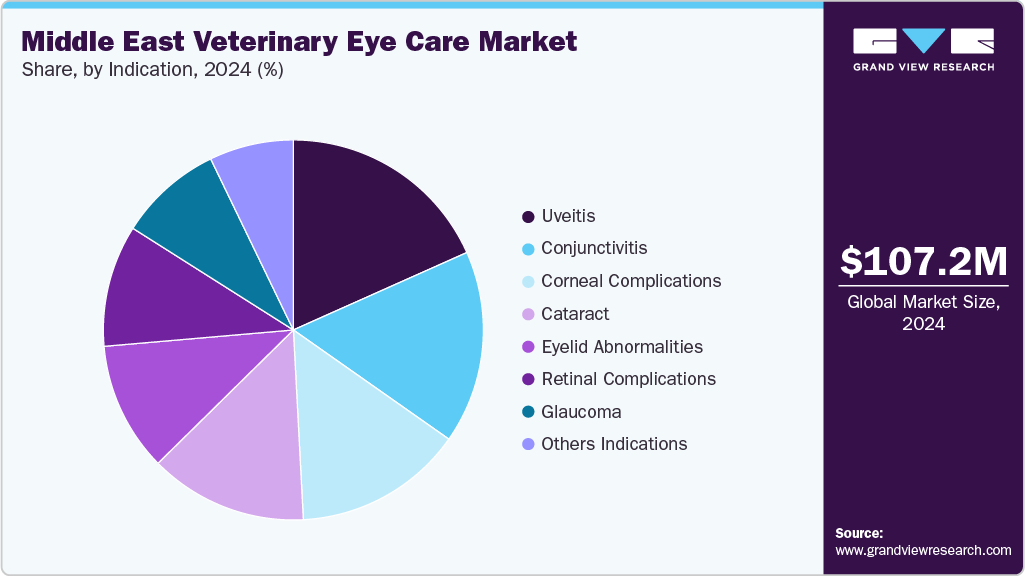
In the region, conjunctivitis is emerging as the fastest-growing segment in the veterinary eye care market, driven by its widespread occurrence in dogs and cats living in urban environments. High exposure to dust, sand, and seasonal allergens in countries such as Saudi Arabia, the UAE, and Kuwait makes pets particularly vulnerable to eye irritation and infections. Veterinary clinics are reporting a steady rise in cases, prompting greater reliance on medications like lubricating drops, antibiotics, and anti-inflammatory formulations. Growing awareness campaigns, alongside pet humanization trends in cities like Dubai, Riyadh, and Doha, are encouraging owners to seek preventive and routine eye care. As a result, conjunctivitis management is becoming a rapidly expanding focus within the region’s veterinary ophthalmology sector.
Distribution Channel Insights
Veterinary hospitals and clinics dominate the Middle East market as they are some of the only centers equipped with advanced ophthalmic tools and trained specialists. Pet owners trust hospitals for sensitive conditions, such as corneal ulcers, cataracts, or glaucoma, for complete case management from diagnosis to surgery and follow-up. Smaller clinics typically refer complex cases to large hospitals, consolidating product demand there. International manufacturers also prefer hospital partnerships due to regulatory compliance and assured usage. Additionally, hospitals handle high-value animals, including falcons, horses, and exotics, which often require specialized eye treatments. Their role in medical tourism and prestige-driven care further strengthens their dominance.
E-commerce is the fastest-growing segment in the region due to rising pet ownership, demand for convenience, and lower costs compared to repeated hospital visits. Chronic-use products like eye drops and lubricants fit well with online subscription and reordering models. Strong digital infrastructure in the UAE and Saudi Arabia, along with the governments’ push for digital transformation, accelerates adoption. In markets like Qatar and Kuwait, limited specialty clinics make online sourcing of eye care products attractive. This segment drives growth through affordable online platforms and social media sellers, while countries like Oman benefit from mobile-first shopping despite smaller markets.
Country Insights
The Saudi Arabia veterinary eye care industry is driven by major investments in infrastructure and professional training. The December 2024 launch of Salam Equine Hospital in Buraidah, equipped with advanced imaging, surgical suites, intensive care units, and mobile clinics, has significantly raised the standard of veterinary services and created greater demand for specialized ophthalmic treatments. Its international partnerships and focus on research and innovation further align with the Kingdom’s ambition to become a leader in veterinary medical technology, making high-quality eye care solutions more accessible.
At the same time, initiatives such as the Weqaa Center’s veterinary training programs are enhancing the skills of local veterinarians in disease prevention, diagnosis, and treatment, which strengthens their ability to manage ocular conditions effectively. This combination of cutting-edge facilities and an upskilled workforce is boosting both the infrastructure capacity and clinical confidence necessary for advanced ophthalmic care, accelerating growth in Saudi Arabia’s veterinary eye care market.
Key Middle East Veterinary Eye Care Company Insights
Key companies in the industry comprise a mix of global pharmaceutical giants, specialized ophthalmic device manufacturers, and emerging regional players, collectively fostering a competitive yet balanced environment. These companies are leveraging partnerships and localized strategies to enhance accessibility and affordability of advanced eye care solutions, while driving innovation adoption through improved diagnostics and tailored treatments. Regional players, supported by government-backed initiatives and increasing digital health integration, are strengthening distribution networks and addressing specific local needs. This collaborative ecosystem is gradually expanding product offerings and technological capabilities, underpinning steady market growth and improved veterinary ophthalmic care across the Middle East region.
Key Middle East Veterinary Eye Care Companies:
- Merck & Co., Inc.
- LKC Technologies Inc.
- Accutome Inc.
- Dechra Pharmaceuticals
- Bausch & Lomb Incorporated
- Zoetis Services LLC.
- Ceva Sante Animale
- Boehringer Ingelheim
- Iridex Corporation
- Baxter (Welch Allyn)
- OptoMed
- Reichert, Inc.
- Alivira Animal Health Limited
- Vetoquinol
- Troy Laboratories Pty Ltd
- GVC Group
- Montajat Pharmaceuticals
- Kalstein
Recent Developments
-
In October 2024, Tree Insurance Agency, Saudi Arabia’s first fully digital insurance provider, showcased its comprehensive pet insurance at the Saudi Pet & Vet Expo 2024. The agency signed two strategic Memorandums of Understanding (MoUs) with Rahmah Animal Welfare Association and ASEEL to promote pet care awareness and enhance access to veterinary services across the Kingdom.
-
In September 2024, Tree launched the country’s first-ever pet insurance product. The initiative marks a milestone in advancing animal welfare and expanding Saudi Arabia’s digital insurance landscape.
-
In November 2022, Middle East & Africa Veterinary Congress (MEAVC) visited the Abu Dhabi Falcon Hospital, the UAE’s first public facility providing comprehensive veterinary care exclusively for falcons.
Middle East Veterinary Eye Care Market Report Scope
Report Attribute
Details
Market size value in 2025
USD 122.3 million
Revenue forecast in 2033
USD 173.3 million
Growth Rate
CAGR of 4.5% from 2025 to 2033
Historical Period
2021 - 2023
Actual data
2024
Forecast period
2025 - 2033
Quantitative units
Revenue in USD million and CAGR from 2025 to 2033
Report coverage
Revenue forecast, company ranking, competitive landscape, growth factors, and trends
Segments covered
Animal, product, indication, distribution channel, country
Regional scope
Middle East
Country scope
UAE; Saudi Arabia; Kuwait; Qatar; Oman
Key companies profiled
Merck & Co., Inc.; LKC Technologies Inc.; Accutome Inc.; Dechra Pharmaceuticals; Bausch & Lomb Incorporated; Zoetis Services LLC.; Ceva Sante Animale; Boehringer Ingelheim; Iridex Corporation; Baxter (Welch Allyn); OptoMed; Reichert, Inc.; Alivira Animal Health Limited; Vetoquinol; Troy Laboratories Pty Ltd; GVC Group; Montajat Pharmaceuticals; Kalstein
Customization scope
Free report customization (equivalent up to 8 analysts working days) with purchase. Addition or alteration to country, regional & segment scope.
Pricing and purchase options
Avail customized purchase options to meet your exact research needs. Explore purchase options
Middle East Veterinary Eye Care Market Report Segmentation
This report forecasts revenue growth at country levels and provides an analysis of the latest industry trends in each of the sub-segments from 2021 to 2033. For this study, Grand View Research has segmented the Middle East veterinary eye care market report based on animal, product, indication, distribution channel, and country.
-
Animal Outlook (Revenue, USD Million, 2021 - 2033)
-
Canine
-
Feline
-
Equine
-
Bovine
-
Other Animals
-
-
Product Outlook (Revenue, USD Million, 2021 - 2033)
-
Devices & Instruments
-
Diagnostic Devices
-
Tonometers
-
Ophthalmic Test Kits
-
Electroretinogram (ERG)
-
Fundus Camera
-
Ophthalmoscopes
-
Pachymeter
-
Other Diagnostic Devices
-
-
Treatment Devices
-
Lenses
-
Bandage Lenses
-
Intraocular Lenses
-
-
Laser Devices
-
Other Treatment Devices
-
-
-
Medications
-
Antibiotics
-
NSAIDs
-
Corticosteroids
-
Lubricants / Artificial Tears
-
Analgesics / Pain Relievers
-
Other Medications
-
-
-
Indication Outlook (Revenue, USD Million, 2021 - 2033)
-
Eyelid Abnormalities
-
Cataract
-
Glaucoma
-
Retinal Complications
-
Uveitis
-
Conjunctivitis
-
Corneal Complications
-
Other Indications
-
-
Distribution Channel Outlook (Revenue, USD Million, 2021 - 2033)
-
Veterinary Hospitals & Clinics
-
Specialty Stores
-
E-Commerce
-
Other Distribution Channels
-
-
Country Outlook (Revenue, USD Million, 2021- 2033)
-
UAE
-
Saudi Arabia
-
Kuwait
-
Qatar
-
Oman
-
Frequently Asked Questions About This Report
b. The Middle East veterinary eye care market size was estimated at USD 107.2 million in 2024 and is expected to reach USD 122.3 million in 2025.
b. The Middle East veterinary eye care market is expected to grow at a compound annual growth rate of 4.5% from 2025 to 2033 to reach USD 173.3 million by 2033.
b. Saudi Arabia’s veterinary eye care market is growing due to major investments in advanced facilities like Salam Equine Hospital, which offer high-tech imaging, surgical suites, and mobile clinics. International collaborations and a focus on research are improving access to specialized ophthalmic treatments. Concurrently, training programs such as those at Weqaa Center are enhancing veterinarians’ skills, strengthening capacity for effective eye care.
b. Some key players operating in the Middle East veterinary eye care market include Merck & Co., Inc., LKC Technologies Inc., Accutome Inc., Dechra Pharmaceuticals, Bausch & Lomb Incorporated, Zoetis Services LLC., Ceva Sante Animale, Boehringer Ingelheim, Iridex Corporation, Baxter (Welch Allyn), OptoMed, Reichert, Inc., Alivira Animal Health Limited, Vetoquinol, Troy Laboratories Pty Ltd, GVC Group, Montajat Pharmaceuticals, and Kalstein.
b. Key factors that are driving the market growth include are rising awareness initiatives, digitalization of veterinary care, growing integration of pet insurance, and expansion of veterinary training and services.


Share this report with your colleague or friend.
Need a Tailored Report?
Customize this report to your needs — add regions, segments, or data points, with 20% free customization.


ISO 9001:2015 & 27001:2022 Certified
We are GDPR and CCPA compliant! Your transaction & personal information is safe and secure. For more details, please read our privacy policy.
Trusted market insights - try a free sample
See how our reports are structured and why industry leaders rely on Grand View Research. Get a free sample or ask us to tailor this report to your needs.













