
- Home
- »
- Advanced Interior Materials
- »
-
Moving Bed Bioreactor Market Size Report, 2026-2033GVR Report cover
![Moving Bed Bioreactor Market (2026 - 2033)Report]()
Moving Bed Bioreactor Market (2026 - 2033)
Size, Share & Trends Analysis Report By Media Material (Polyethylene (PE), Polypropylene (PP), PVC (Polyvinyl Chloride)), By Application, By Process Type (Aerobic, Anaerobic), By Operation Mode, By End Use, By Region, And Segment Forecasts
Market Size, 2025
$3.2BMarket Estimate, 2026
$3.3BMarket Forecast, 2033
$5.5BCAGR, 2026–2033
7.3%Moving Bed Bioreactor Market Summary
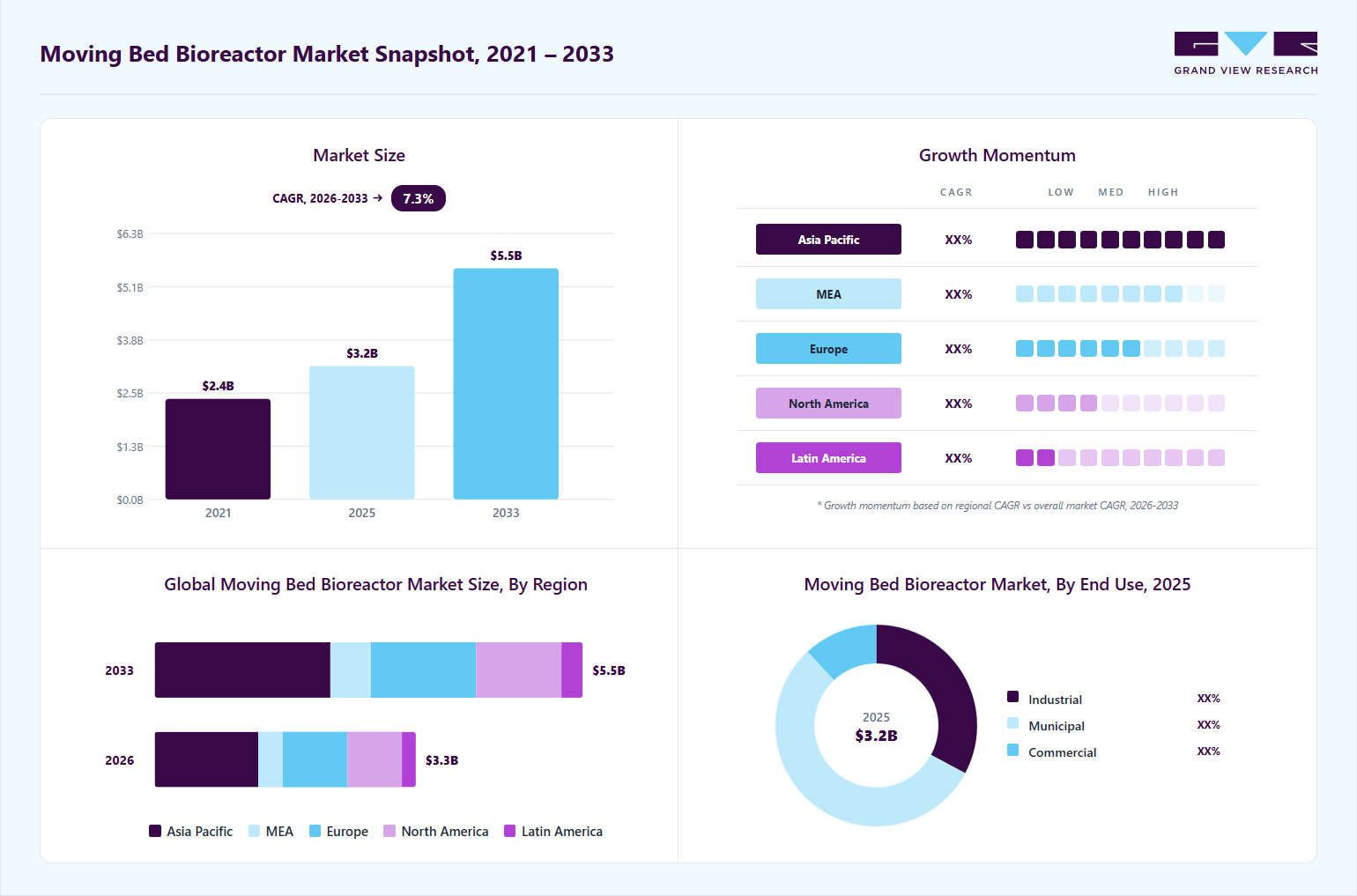
The global moving bed bioreactor market size was valued at USD 3.2 billion in 2025 and is projected to grow from USD 3.3 billion in 2026 to USD 5.5 billion by 2033, at a CAGR of 7.3% from 2026 to 2033. The market in Asia Pacific dominated with a revenue share of 39.4% in 2025. Rapid urbanization, industrial growth, and increasing freshwater scarcity are driving demand for advanced water reclamation solutions.
Key Market Trends & Insights
- By media material: Polyethylene segment held the largest market share of 51.0% in 2025.
- By application: BOD removal segment held the largest market share of 48.8% in 2025.
- By process type: Aerobic segment held the largest market share of 67.5% in 2025.
- By operation mode: Continuous MBBR segment held the largest market share of 88.6% in 2025.
- By end use: Municipal segment held the largest market share of 55.2% in 2025.
Regional Highlights
- Largest regional market: Asia Pacific (39.4% revenue share, 2025)
- By country: China held the largest market share in 2025
Market Size & Forecast
- Market size in 2025: USD 3.2 Billion
- Estimated market size in 2026: USD 3.3 Billion
- Projected market size by 2033: USD 5.5 Billion
- CAGR (2026-2033): 7.3%
Moving bed bioreactor (MBBR) systems efficiently treat industrial and municipal wastewater for safe discharge and reuse, supporting sustainable water management and long-term market growth. One of the significant factors driving the market is the superior operational efficiency and structural advantages inherent to moving bed bioreactor systems compared to conventional wastewater treatment methods. MBBR technology utilizes specialized floating biofilm carriers that maximize the surface area available for microbial growth, significantly enhancing the degradation of organic matter and the removal of biochemical oxygen demand (BOD) and chemical oxygen demand (COD).
This configuration enables high-rate biological treatment within a compact physical footprint, making it an ideal choice for facilities facing spatial constraints or requiring seamless retrofitting into pre-existing treatment tanks. Furthermore, the system is highly valued by operators because it generates less sludge and offers substantial process resilience against fluctuations in hydraulic and organic loading.
Market Dynamics
The global moving bed bioreactor market is witnessing strong growth due to tightening wastewater discharge regulations, rising urbanization, expanding industrial activity, and increasing freshwater scarcity. Governments and environmental agencies worldwide are enforcing stricter effluent treatment standards, compelling municipalities and industries to adopt advanced biological treatment technologies to ensure regulatory compliance and support sustainable water management. At the same time, growing volumes of industrial and municipal wastewater, coupled with the need for water reuse and conservation, are accelerating the adoption of MBBR systems owing to their ability to efficiently treat complex effluents for safe discharge and operational reuse.
The MBBR market faces challenges due to high installation and operational costs, including expensive biofilm carriers and energy-intensive aeration systems. These systems also require skilled monitoring and maintenance, increasing overall expenses. Mechanical failures or media fouling can disrupt operations, limiting adoption in cost-sensitive and developing regions. Additionally, small municipalities and enterprises often struggle to justify the large upfront investment required for implementation.
Market Concentration & Characteristics
The moving bed bioreactor market is moderately consolidated, with competition led by established global water treatment companies and specialized biological treatment technology providers. Large players benefit from strong municipal relationships, integrated wastewater treatment portfolios, and global project execution capabilities, while smaller regional companies compete through customized system designs and decentralized treatment expertise. The market also continues to witness increasing participation from specialized carrier media and modular treatment solution providers.
Stringent environmental regulations related to wastewater discharge, nutrient removal, and industrial effluent treatment are significantly influencing market demand and technology adoption. Regulatory agencies across North America, Europe, and Asia Pacific are increasing focus on biological nutrient removal and water reuse initiatives, driving investments in advanced wastewater treatment systems. These regulatory trends are supporting the growing adoption of compact and retrofit-friendly biological treatment technologies such as MBBR systems.
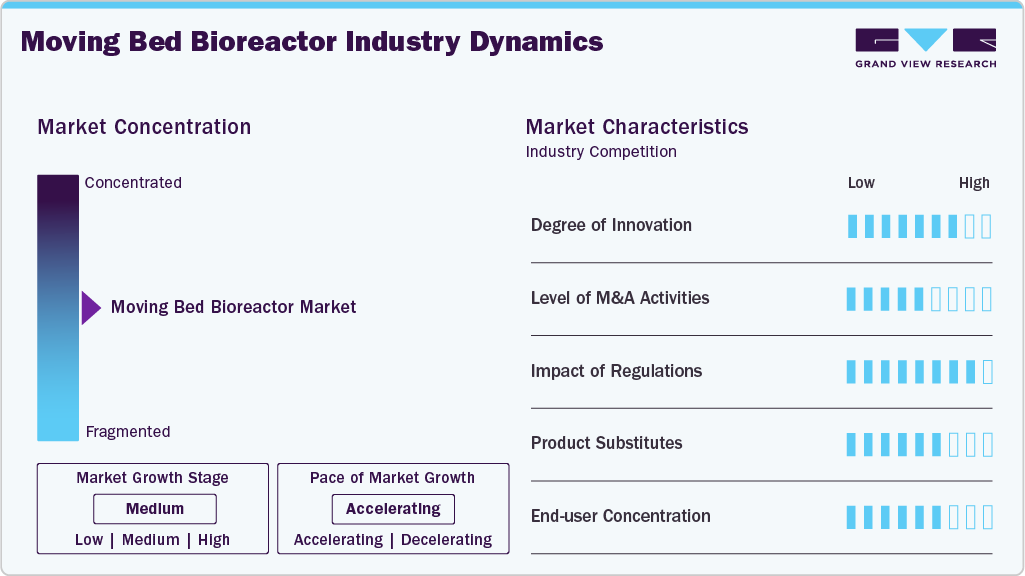
Technological advancements in carrier media design, process optimization, and energy-efficient aeration systems are shaping the competitive landscape of the MBBR market. Leading companies are increasingly focusing on modular and decentralized wastewater treatment solutions, automation integration, and hybrid biological treatment systems to improve operational performance and treatment flexibility. However, the market faces competition from alternative wastewater treatment technologies such as membrane bioreactors (MBRs), sequencing batch reactors (SBRs), and conventional activated sludge systems, particularly in large-scale municipal treatment applications.
Media Material Insights
Polyethylene dominates the moving bed bioreactor industry due to its durability, chemical resistance, and cost-effectiveness. High-density polyethylene (HDPE) carriers can withstand continuous mechanical stress and long-term operation without degradation. Its optimal density allows efficient suspension in water with lower aeration energy. Polyethylene also resists harsh chemicals and pH variations, making it suitable for diverse industrial wastewater applications. These advantages make it the preferred material for reliable and efficient MBBR systems.
The polypropylene segment is projected to grow at a CAGR of 7.4% during the forecast period, supported by its superior thermal stability and high-temperature resistance. It is widely preferred for treating industrial wastewater from sectors such as pulp & paper, textiles, and food processing. The material offers strong mechanical durability, excellent stress-crack resistance, and reliable long-term performance. Its surface properties also support faster biofilm formation and improved treatment efficiency. Additionally, polypropylene withstands aggressive chemical cleaning, making it ideal for demanding wastewater treatment operations.
End Use Insights
The municipal wastewater treatment sector constituted the largest end-use segment of moving bed bioreactor technology in 2025, accounting for 55.2% of the revenue share. Municipalities are continuously challenged by expanding urban populations that generate higher volumes of domestic sewage, a key driver of the municipal segment. MBBR systems are increasingly adopted in this segment because they can be easily retrofitted into existing municipal infrastructure to double or triple treatment capacity without requiring additional land.
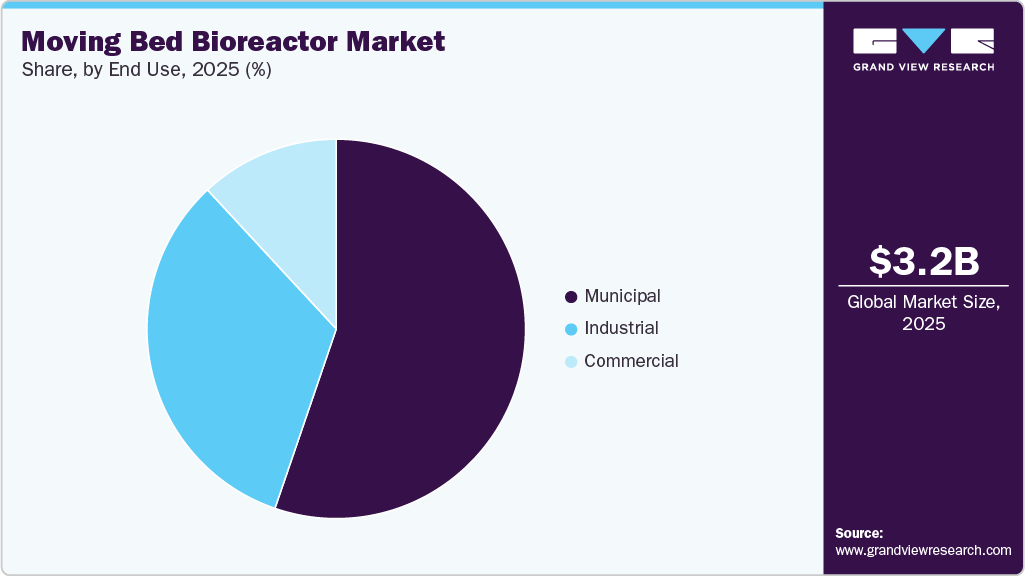
The industrial segment is emerging as a key growth area for MBBR systems, driven by the growing need to treat complex, high-strength wastewater streams. Industries such as chemicals, pharmaceuticals, food & beverage, pulp & paper, and oil & gas require advanced treatment solutions to manage high BOD, COD, and toxic contaminants. MBBR technology is preferred for its ability to maintain stable performance under fluctuating loads and varying wastewater compositions. Its compact design also supports onsite wastewater management in space-constrained industrial facilities. Additionally, MBBR systems help industries meet regulatory standards while enabling water reuse and long-term cost optimization.
Application Insights
The biochemical oxygen demand (BOD) segment represented a critical application segment of the moving bed bioreactor market in 2025, accounting for 48.8% of the revenue share. The segment is driven by the growing need for effective treatment of municipal sewage and industrial wastewater. MBBR systems are widely adopted for BOD reduction due to their high treatment efficiency, compact design, and ability to handle fluctuating organic loads, with lower operational complexity than conventional activated sludge systems. Industries such as food & beverage, pulp & paper, chemicals, and pharmaceuticals increasingly utilize MBBR technology to comply with stringent wastewater discharge standards while optimizing treatment performance and reducing footprint requirements.
The nitrification and denitrification segment is gaining significant traction and is estimated to grow at a CAGR of 7.8% during the forecast period. This growth is a consequence of growing regulatory focus on nitrogen removal to prevent eutrophication and protect aquatic ecosystems. MBBR technology is particularly well-suited for biological nutrient removal applications, as the biofilm carriers support stable microbial growth for both nitrification and denitrification, even under varying operating conditions. Municipal wastewater treatment facilities and industrial plants are increasingly implementing MBBR systems to achieve advanced nitrogen removal targets, improve effluent quality, and support water reuse initiatives, thereby driving growth in this application segment.
Process Type Insights
The aerobic moving bed bioreactor segment is the most widely utilized configuration in wastewater treatment and held the largest market share of 67.5% in 2025. Aerobic MBBR systems are widely used in municipal and industrial wastewater treatment applications that require efficient organic matter and nutrient removal. These systems utilize oxygen-dependent microorganisms attached to suspended biofilm carriers to break down pollutants, offering high treatment efficiency, operational stability, and reduced sludge generation. They are extensively adopted across industries such as food & beverage, pharmaceuticals, chemicals, and pulp & paper, particularly in regions with stringent wastewater discharge regulations and growing investments in sustainable water treatment infrastructure.
The anaerobic segment is expected to grow at the fastest CAGR of 8.2% from 2026 to 2033. Anaerobic MBBR systems operate without oxygen and are increasingly utilized in industries such as breweries, distilleries, food processing, and petrochemicals where wastewater contains high organic loads. The technology offers advantages, including lower energy consumption, reduced sludge production, and improved operational efficiency, making it an attractive solution for industries seeking cost-effective, sustainable wastewater treatment.
Operation Mode Insights
The continuous moving bed bioreactor segment dominated the moving bed bioreactor industry in 2025, accounting for a share of 88.6% in 2025. Continuous MBBR systems are utilized extensively in municipal sewage treatment plants and large-scale industrial facilities where steady influent flow and high treatment capacity are required. The technology offers advantages such as stable biological activity, efficient pollutant removal, reduced operational downtime, and easier scalability, making it suitable for long-term, high-volume wastewater management across sectors, including chemicals, food & beverage, and pharmaceuticals.
The batch MBBR segment is expected to grow at a CAGR of 8.0% over the forecast period. These systems are particularly suitable for facilities with variable wastewater generation patterns or limited treatment capacities, as they allow treatment processes to occur in defined cycles. These systems offer operational flexibility, simplified maintenance, and effective treatment performance for small- to medium-scale industrial and commercial applications. Increasing demand for decentralized wastewater treatment solutions and compact treatment infrastructure is further supporting the growth of the batch MBBR segment.
Regional Insights
Asia Pacific dominated the moving bed bioreactor market with the largest revenue share of 39.4% in 2025. The Asia Pacific moving bed bioreactor market is the largest regional segment, driven by a highly dynamic economic landscape. The regional market is characterized by massive greenfield infrastructure projects and the rapid construction of large-scale treatment facilities to keep pace with unprecedented urban expansion. The core drivers behind this explosive growth are severe freshwater scarcity and aggressive government-led anti-pollution campaigns in major developing economies, most notably China and India.

The China moving bed bioreactor market is expected to grow over the forecast period. China represents one of the largest and most dynamic country-level markets for MBBR technology globally, characterized by large-scale greenfield projects and rapid industrial integration. The market scenario is heavily influenced by state-driven economic planning and massive national investments in environmental remediation. The core drivers for this market include the stringent regulatory standards set by the central government, such as the Action Plan for Prevention and Control of Water Pollution, which mandates the cleanup of heavily polluted water bodies.
The MBBR market in South Korea is characterized by a high degree of technological sophistication and a strong focus on smart water management. Given the country's limited land availability and dense urban populations, the market favors highly compact, automated, and energy-efficient biological treatment solutions. The primary drivers include strict national environmental policies overseen by the Ministry of Environment, which heavily restrict nutrient discharge into vital river basins. Furthermore, South Korea’s major industrial conglomerates, particularly in the semiconductor, automotive, and petrochemical sectors, heavily drive the market by implementing MBBR systems to achieve internal water circularity and comply with industrial effluent standards.
North America Moving Bed Bioreactor Market Trends
The North American moving bed bioreactor industry is highly developed, accounting for a significant share of the global revenue. The market scenario is defined by a strong emphasis on upgrading, modernizing, and retrofitting aging municipal wastewater infrastructure rather than building entirely new facilities. Capital expenditure is heavily directed toward compact, advanced biological solutions that can seamlessly integrate into pre-existing plant footprints. The primary drivers sustaining this market include stringent statutory mandates and regulatory bodies on nutrient discharge limits, as well as a surging corporate push for industrial water recycling in the manufacturing, chemical, and pharmaceutical sectors.
U.S. Moving Bed Bioreactor Market Trends
The U.S. MBBR market is advanced, defined by an extensive installed base and a strong emphasis on technology-driven infrastructure optimization. The market is primarily focused on upgrading and retrofitting aging municipal infrastructure to handle increased municipal capacities within existing footprints. The primary drivers sustaining this market are the stringent effluent guidelines enforced by the U.S. Environmental Protection Agency (EPA), particularly regarding total maximum daily loads (TMDLs) for nitrogen and phosphorus. Additionally, surging industrial adoption, driven by the chemical, pharmaceutical, and food and beverage sectors aiming for corporate water stewardship and reduced operational discharge costs, further accelerates market demand.
Europe Moving Bed Bioreactor Market Trends
In Europe, the moving bed bioreactor industry is mature and exhibits highly structured growth, driven by the region's strong environmental and circular economy frameworks. The market scenario centers around meeting the stringent, updated compliance laws of the European Union’s Urban Wastewater Treatment Directive, which strictly regulates biochemical oxygen demand (BOD) and phosphorus levels. Because land availability is highly restricted in major urban centers across Germany, France, and the UK, the market trends decisively toward decentralized treatment plants and high-efficiency, small-footprint configurations. Growth is further propelled by substantial public and private investments in sustainable water reclamation technologies to combat seasonal water stress across the continent.
The Germany moving bed bioreactor market is mature, highly structured, and compliance-driven. The market focuses heavily on maximizing energy efficiency, reducing carbon footprints, and achieving advanced nutrient recovery (such as phosphorus recycling) during the wastewater treatment process. The primary drivers are Germany's strict national wastewater ordinances, which align with and often exceed the European Union’s Urban Wastewater Treatment Directive. Additionally, the presence of a vast and diverse industrial sector, including specialized chemical parks and food processing facilities, demands flexible, high-performance biological treatment systems capable of managing highly variable organic shock loads.
The moving bed bioreactor market in the UK is intensely shaped by regulatory oversight and the investment cycles of privatized water utilities. The market is currently driven by the water companies' Asset Management Periods (AMP), which dictate capital expenditure priorities for infrastructure improvements. A primary driver is the Environment Agency’s focus on reducing river pollution and eliminating untreated storm-overflow discharges. Because many UK treatment facilities are located near historic urban boundaries with no room for physical expansion, MBBR technology is widely sought after for its ability to significantly increase the processing capacity of existing assets without requiring additional land acquisition.
Latin America Moving Bed Bioreactor Market Trends
The market for moving bed bioreactors in Latin America is characterized by gradual, steady expansion and a transitioning public infrastructure landscape. Historically reliant on traditional activated sludge methods, major regional economies such as Brazil are increasingly turning to MBBR technology due to its lower sludge production and operational flexibility. The primary drivers in this region include evolving state regulations designed to enhance municipal sewage coverage and combat the contamination of vital freshwater basins. Furthermore, key regional industries, such as the mining, pulp and paper, and agricultural processing sectors, are adopting these systems to mitigate risks associated with stringent environmental penalties and limited access to local water.
The Brazil moving bed bioreactor market is developing, characterized by a transition from traditional treatment methods to more efficient, compact biological systems. While historical coverage has been low, the market scenario is rapidly shifting due to legal overhauls, specifically the Legal Framework for Basic Sanitation, which aims to universalize water and sewage services. This regulatory shift acts as a significant driver, attracting substantial private investment into concession contracts for municipal wastewater treatment.
Middle East & Africa Moving Bed Bioreactor Market Trends
In the Middle East and Africa, the market is shaped by hyper-arid climates and an absolute imperative to secure alternative water sources. The market landscape in the Gulf Cooperation Council (GCC) nations, particularly Saudi Arabia and the UAE, is heavily focused on integrating high-performance MBBR systems into smart urban developments to facilitate direct water reuse for district cooling and landscape irrigation. The critical drivers steering the market are acute water stress and state-level sustainability initiatives aimed at reaching zero-liquid-discharge (ZLD) targets. Across the broader African continent, growth is progressively driven by international development funding aimed at deploying decentralized, robust wastewater treatment infrastructure in rapidly growing secondary cities.
The Saudi Arabia moving bed bioreactor market is characterized by a scarcity of natural freshwater resources and hyper-arid climatic conditions. The market is heavily integrated into the Kingdom’s Vision 2030 framework, which emphasizes massive infrastructure development and sustainable water resource management. The critical driver steering this market is the government push for achieving widespread water reuse, aiming to recycle municipal and industrial wastewater for agricultural irrigation, industrial cooling, and green urban spaces. Consequently, high-performance MBBR systems are increasingly deployed in mega-projects and industrial cities developed by MODON and the Royal Commission for Jubail and Yanbu to ensure reliable, high-quality treated effluent.
Key Moving Bed Bioreactor Company Insights
Some of the key players operating in the market include Xylem Inc. and Veolia.
-
Veolia is a multinational company engaged in designing and distributing water, waste, and energy management solutions. The company operates through three business segments, namely water management, waste management, and energy management. The company has operations worldwide across North America, Europe, Latin America, and the Middle East & Africa, with Europe and North America as its major geographical markets, followed by the Middle East & Africa.
-
Xylem, Inc. is a global water technology company, engaged in the manufacturing, designing, and service of products that primarily cater to the water sector as well as the electric and gas sector. The company owns numerous brands and offers various water technology products under these brands, including moving bed bioreactors, water clarifiers, polarimeters, pumps, valves, and reverse osmosis membrane filtration systems.
Key Moving Bed Bioreactor Companies:
The following key companies have been profiled for this study on the moving bed bioreactor market.
-
Veolia
-
Xylem, Inc.
-
Ovivo
-
Aquatech International
-
WesTech Engineering
-
Headworks International
-
World Water Works
-
Biowater Technology
-
Aqwise
-
Parkson Corporation
-
SAMCO Technologies
-
MAK Water
-
AWC Water Solutions
-
Hydroflux
-
ATAC Solutions
Competitive Benchmarking
Operating Strategies
Competitive Edge
Weaknesses
Mature Players: Xylem, Inc.; Veolia; SAMCO Technologies
- Mature market players focus on expanding integrated municipal and industrial wastewater treatment portfolios supported by large-scale engineering and long-term infrastructure contracts.
- Many mature companies pursue acquisitions and strategic collaborations to strengthen biological treatment and decentralized wastewater treatment offerings.
- Mature players benefit from strong global project execution capabilities and extensive installed wastewater treatment infrastructure.
- Their broad treatment portfolios allow them to integrate MBBR systems with complementary technologies such as membrane bioreactors and tertiary treatment solutions.
- Higher operating costs and premium pricing can reduce competitiveness in smaller regional and decentralized treatment projects.
- Dependence on large municipal infrastructure spending can expose these companies to procurement delays and public budget fluctuations.
Emerging Players: World Water Works; Hydroflux
- Emerging players primarily focus on compact, modular, and decentralized MBBR systems targeted toward industrial wastewater treatment and regional municipal applications.
- Strategic distributor partnerships and regional collaborations are commonly used to expand market presence and technical support capabilities.
- Emerging players benefit from greater flexibility in customizing MBBR solutions for project-specific treatment requirements.
- Their focused business models enable stronger penetration into decentralized and mid-scale wastewater treatment projects.
- Emerging players generally operate with smaller global footprints and more limited financial resources than established competitors.
- Lower brand recognition can restrict participation in large municipal infrastructure tenders and international projects.
Recent Developments
-
In August 2025, RSE, a Scotland-based water engineering company, expanded into North America by establishing a new office in Milwaukee, Wisconsin, within the Global Water Center innovation hub. The company aims to introduce its modular, sustainable water treatment technologies, including prefabricated wastewater treatment systems and nature-based water purification solutions, to support growing regional demand for efficient, environmentally focused water infrastructure. The expansion aligns with RSE’s broader international growth strategy and strengthens its presence in the global water treatment market.
-
In September 2025, Veolia partnered with SATORP, Marafiq, and Lamar to develop the Middle East’s largest industrial wastewater reuse facility in Jubail Industrial City, Saudi Arabia. A significant highlight of the project is the deployment of Veolia’s advanced AnoxKaldnes Moving Bed Biofilm Reactor (MBBR) technology, which enables efficient biological treatment of highly complex petrochemical effluents while supporting high pollutant removal rates and operational reliability. The facility, designed to recycle nearly 8.8 million cubic meters of industrial wastewater annually, will also integrate ZeeWeed membrane and Actiflo Carb technologies to maximize water reuse, resource recovery, and environmental performance in one of the world’s most water-stressed industrial regions.
Moving Bed Bioreactor Market Report Scope
Report Attribute
Details
Market size in 2025
USD 3.2 billion
Estimated market size in 2026
USD 3.3 billion
Projected market size by 2033
USD 5.5 billion
Growth rate
CAGR of 7.3% from 2026 to 2033
Base year for estimation
2025
Historical data
2021 - 2024
Forecast period
2026 - 2033
Quantitative units
Revenue in USD million/billion and CAGR from 2026 to 2033
Report coverage
Revenue forecast, company market position analysis, competitive landscape, growth factors, and trends
Segments covered
Media material, end use, application, process type, operation mode, and region
Regional scope
North America; Europe; Asia Pacific; Latin America; Middle East & Africa
Country Scope
U.S.; Canada; Mexico; Germany; UK; Italy; Spain; France; China; Japan; India; Australia; South Korea; Brazil; Argentina; Saudi Arabia; UAE; South Africa
Key companies profiled
Veolia; Xylem, Inc.; Ovivo; Aquatech International; WesTech Engineering; Headworks International; World Water Works; Biowater Technology; Aqwise; Parkson Corporation; SAMCO Technologies; MAK Water; AWC Water Solutions: Hydroflux, ATAC Solutions
Customization scope
Free report customization (equivalent up to 8 analysts working days) with purchase. Addition or alteration to country, regional & segment scope.
Pricing and purchase options
Avail customized purchase options to meet your exact research needs. Explore purchase options
Global Moving Bed Bioreactor Market Report Segmentation
This report forecasts revenue growth at the global, regional & country levels and provides an analysis of the industry trends in each of the sub-segments from 2021 to 2033. For this study, Grand View Research has segmented the global moving bed bioreactor market report based on media material, end use, application, process type, operation mode, and region:
-
Media Material Outlook (Revenue, USD Million, 2021 - 2033)
-
Polyethylene (PE)
-
Polypropylene (PP)
-
PVC (Polyvinyl Chloride)
-
Others
-
-
End use Outlook (Revenue, USD Million, 2021 - 2033)
-
Municipal
-
Industrial
-
Commercial
-
-
Application Outlook (Revenue, USD Million, 2021 - 2033)
-
BOD Removal
-
Secondary Clarification
-
Others
-
-
Process Type Outlook (Revenue, USD Million, 2021 - 2033)
-
Aerobic
-
Anaerobic
-
Anoxic
-
-
Operation Mode Outlook (Revenue, USD Million, 2021 - 2033)
-
Continuous MBBR
-
Batch MBBR
-
-
Regional Outlook (Revenue, USD Million, 2021 - 2033)
-
North America
-
U.S.
-
Canada
-
Mexico
-
-
Europe
-
UK
-
Germany
-
France
-
Italy
-
Spain
-
-
Asia Pacific
-
Japan
-
China
-
India
-
Australia
-
South Korea
-
-
Latin America
-
Brazil
-
Argentina
-
-
Middle East & Africa
-
South Africa
-
Saudi Arabia
-
UAE
-
-
Delivered Customizations
This report has been delivered with the following In-depth customizations
Client Request
Customization Delivered
Value Adds
Regional Segmentation
A detailed regional evaluation of the moving bed bioreactor (MBBR) market was conducted across several regions and countries with emphasis on wastewater treatment infrastructure development, industrial discharge regulations, and municipal treatment modernization trends. The assessment also examined regional adoption patterns for decentralized wastewater treatment and biological nutrient removal technologies across key countries.
The analysis helped the client identify regions with strong future demand potential, understand regional differences in wastewater treatment investment priorities, and evaluate market maturity across municipal and industrial applications. The findings also supported geographic expansion planning and region-specific market entry strategies.
Competitive Benchmarking
A comparative competitive assessment was conducted covering mature and emerging MBBR technology providers based on carrier media capabilities, wastewater treatment expertise, project execution strength, geographic presence, financial strength, and strategic developments. The analysis also examined differences in municipal, industrial, and decentralized wastewater treatment focus areas among major market participants.
The benchmarking study provided the client with a clearer understanding of the competitive environment, technology differentiation strategies, and market positioning of key players. The findings also supported competitor evaluation, partnership identification, and strategic business planning within the global MBBR market.
Opportunity Assessment
A targeted opportunity analysis was carried out to identify high-growth application areas, evolving wastewater treatment requirements, and technology adoption trends within the MBBR market. The study evaluated opportunities linked to industrial wastewater treatment expansion, retrofit projects for aging municipal infrastructure, decentralized treatment systems, and increasing adoption of energy-efficient biological treatment technologies.
The assessment enabled the client to prioritize commercially attractive growth segments, evaluate emerging wastewater treatment trends, and identify long-term demand drivers across municipal and industrial sectors. It also supported strategic planning related to product positioning, investment prioritization, and technology expansion initiatives.
Frequently Asked Questions About This Report
The polyethylene segment led with a 51.0% revenue share in 2025.
The biochemical oxygen demand (BOD) removal segment led with a 48.8% revenue share in 2025.
The aerobic moving bed bioreactor segment led with a 67.5% revenue share in 2025, while anaerobic is the fastest-growing type.
Continuous moving bed bioreactor (MBBR) segment held the largest share (over 88.0%) in 2025.
The municipal segment led the market with the largest revenue share of 55.2% in 2025.
The global moving bed bioreactor market is expected to grow at a CAGR of 7.3% from 2026 to 2033, reaching USD 5.5 billion by 2033.
The Asia Pacific moving bed bioreactor market dominated the global revenue share in 2025 accounting for 39.4% of the share, due to rising investments in municipal wastewater treatment infrastructure, rapid industrialization, and increasing adoption of decentralized and energy-efficient biological treatment systems.
Key players include Veolia; Xylem, Inc.; Ovivo; Aquatech International; WesTech Engineering; Headworks International; World Water Works; Biowater Technology; Aqwise; Parkson Corporation; SAMCO Technologies; MAK Water; AWC Water Solutions: Hydroflux, ATAC Solutions.
The moving bed bioreactor market is primarily driven by increasing investments in wastewater treatment infrastructure, stricter discharge regulations, and rising demand for compact, energy-efficient, and retrofit-friendly biological treatment systems.
The global moving bed bioreactor market size was valued at USD 3.2 billion in 2025 and is estimated at USD 3.3 billion for 2026.
About the Author(s)
Advanced Interior Materials Research Team
Advanced Materials · Advanced Interior MaterialsThis report was authored by the advanced interior materials research team at Grand View Research - comprising two research analysts, one senior research analyst, and one industry expert - with specialized expertise in the advanced interior materials segment of the advanced materials industry. All findings are based on proprietary advanced materials databases, executive interviews, and regulatory analysis, subject to internal peer review prior to publication.
Last Updated:
Speak to Analyst


Customize this report to your needs — add regions, segments, or data points, with 20% free customization.
Or view our licence options:


ISO 9001:2015 & 27001:2022 Certified
We are GDPR and CCPA compliant! Your transaction & personal information is safe and secure. For more details, please read our privacy policy.


