
- Home
- »
- Clinical Diagnostics
- »
-
Non-specific Endonucleases Market Size Report, 2026-2033GVR Report cover
![Non-specific Endonucleases Market (2026 - 2033)Report]()
Non-specific Endonucleases Market (2026 - 2033)
Size, Share & Trends Analysis Report By Product (Recombinant Non-Specific Endonucleases, Natural Source Enzymes, Engineered/Modified Variants), By Application, By End Use, By Region, And Segment Forecasts
Market Size, 2025
$362.4MMarket Estimate, 2026
$382.4MMarket Forecast, 2033
$585.2MCAGR, 2026–2033
6.3%Non-specific Endonucleases Market Summary
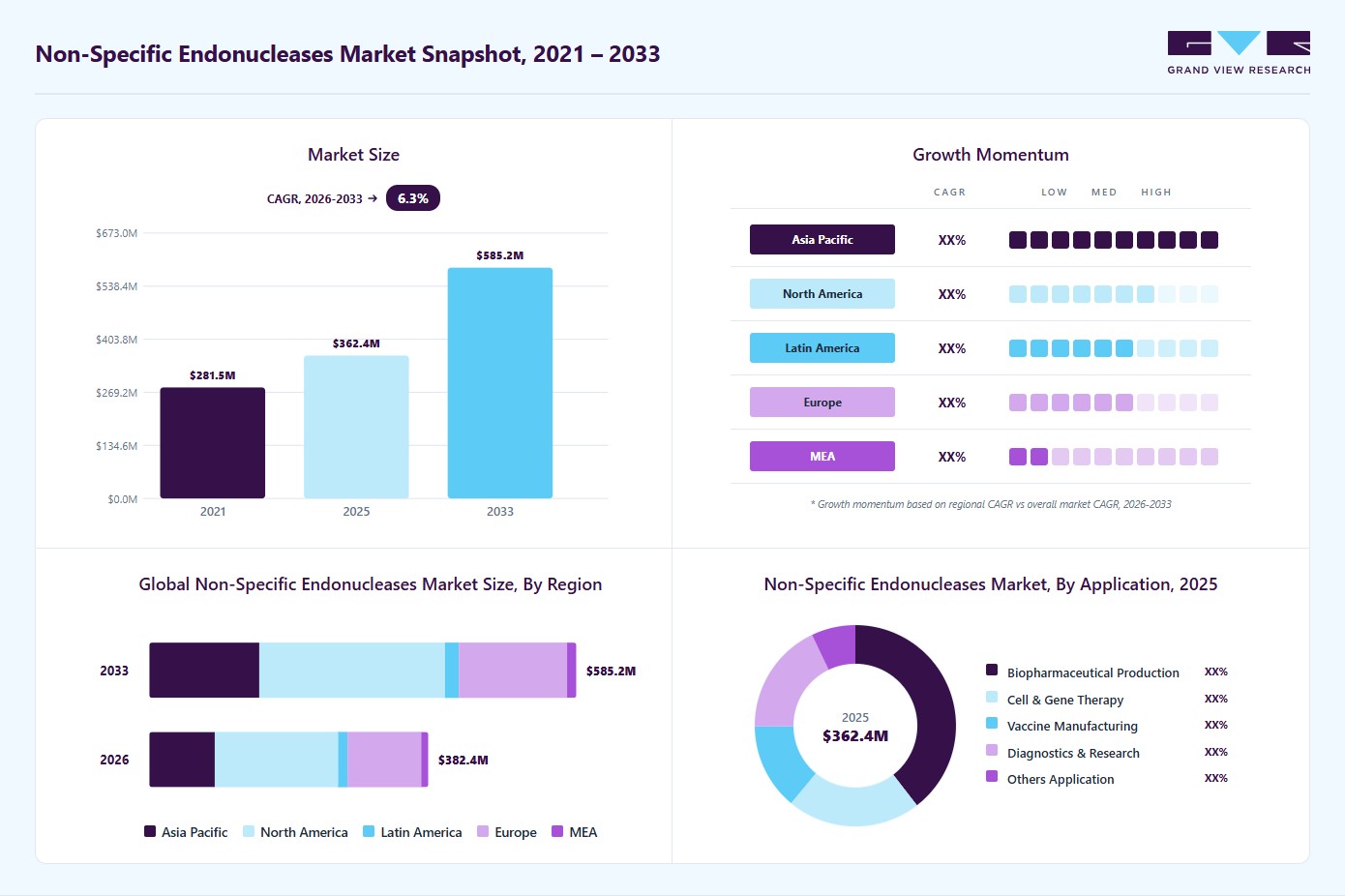
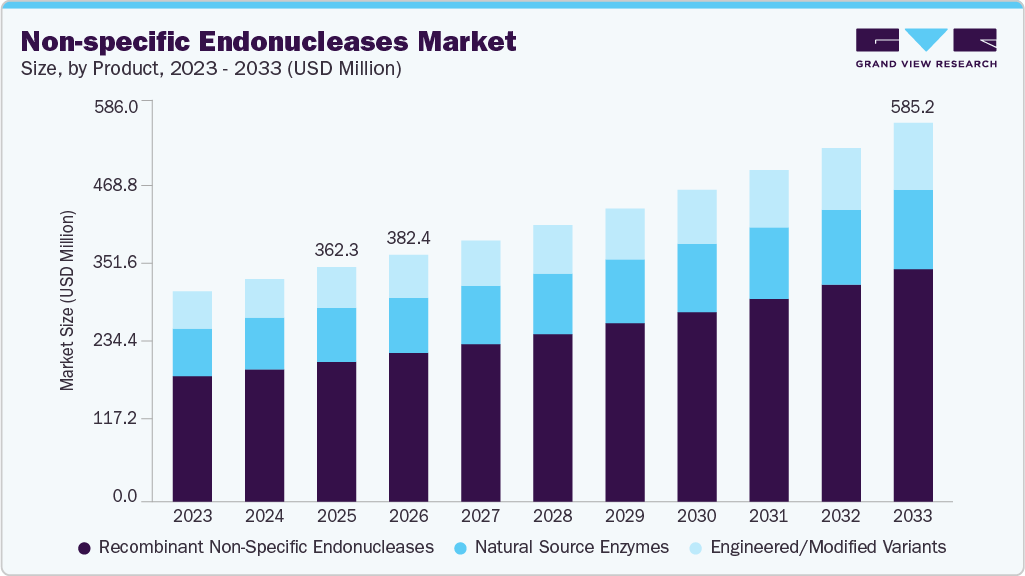
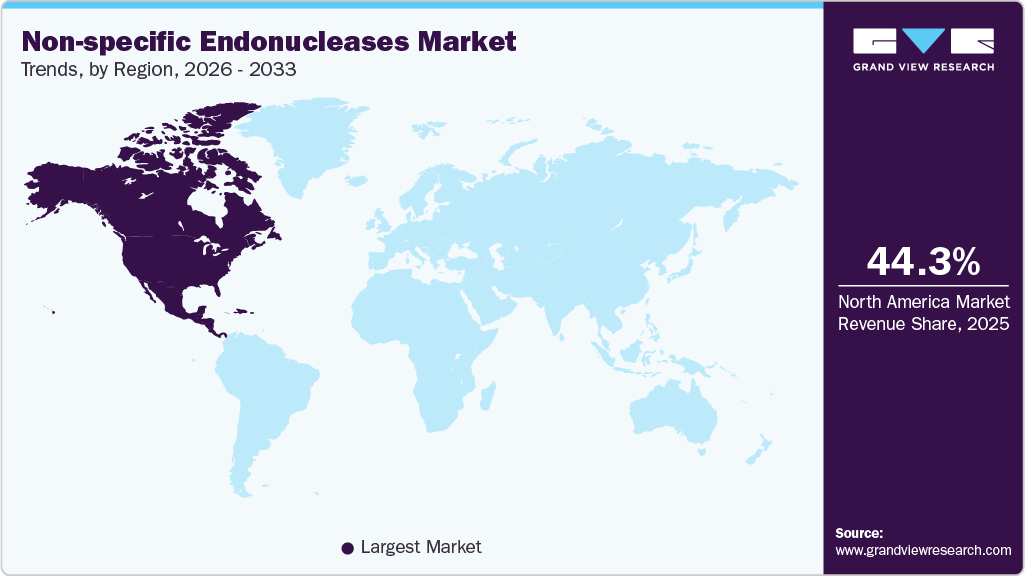
The global non-specific endonucleases market size was valued at USD 362.4 million in 2025 and is projected to grow from USD 382.4 million in 2026 to USD 585.2 million by 2033, at a CAGR of 6.3% from 2026 to 2033. The market in North America dominated with a revenue share of 44.3% in 2025. This growth is primarily fueled by rising R&D investments in molecular biology and biotechnology, where non-specific endonucleases are widely used for nucleic acid clean-up, plasmid production, and removal of host cell DNA during biologics manufacturing.
Key Market Trends & Insights
- By product: Recombinant non-specific endonucleases segment held the largest market share of 60.02% in 2025.
- By application: Biopharmaceutical production segment held the largest market share in 2025.
- By end use: Biopharmaceutical and biotechnology segment held the largest market share in 2025.
Regional Highlights
- Largest regional market: North America (44.3% revenue share, 2025)
- By country: U.S. held the largest market share in 2025
Market Size & Forecast
- Market size in 2025: USD 362.4 Million
- Estimated market size in 2026: USD 382.4 Million
- Projected market size by 2033: USD 585.2 Million
- CAGR (2026-2033): 6.3%
Three ways to get this report
Buy it, customize it, or ask a question.Ask an Analyst
A direct answer, usually in 1 working day
- AccessReport author, directly
- Reply timeWithin 1 working day
- No sales callDirect answer only
- FormatEmail reply
- CostFree, no cost
Get the Full Report
What the study covers
- FormatsPDF · Excel · Dashboard
- Timeline2026–2033 annual, 2025 base
- Coverage20+ countries, 5 regions
- Companies10+ key players profiled
Customize the Report
20% free customization
- IncludeCountries, segments, points
- TailorTo your product definition
- ExtendDeeper competitor detail
- OrA fully bespoke study
- Turnaround5–10 working days
Regulatory emphasis on high-purity therapeutics and the rapid growth of the recombinant protein and viral vector markets further accelerate adoption. Non-specific endonucleases have become a quiet but essential part of next-generation sequencing (NGS). They make it possible to prepare samples properly, fragment DNA, and build libraries-the building blocks of high-quality sequencing. Ambitious national projects like the UK’s 100,000 Genomes Project and France’s Genomic Medicine 2025 Plan, the sheer volume of sequencing being done around the world has surged. This surge has created a steady need for enzymatic tools that not only keep up with demand but also deliver cleaner, more reliable data. With governments and research institutions continuing to pour resources into genomics, these enzymes are set to play an even bigger role in ensuring researchers generate accurate results more efficiently than ever before.The growing use of next-generation sequencing (NGS) has greatly improved diagnostics and precision medicine. Nowadays, scientists and doctors depend on enzymes to deliver accurate and consistent results. Non-specific endonucleases are especially important because they help clean samples by removing unwanted nucleic acids, improving purity, and reducing errors. Their flexibility makes them useful in many areas, including cancer research, immune system studies, and infectious disease testing. As sequencing becomes more affordable and governments continue to support precision medicine, the need for these enzymes is expected to grow.
Worldwide investments in biotechnology and pharmaceuticals are propelling growth in the market. As research developments broaden and drug discovery initiatives speed up, laboratories need scalable and dependable solutions for nucleic acid processing. Non-specific endonucleases address this requirement by aiding in nucleic acid cleanup, minimizing background noise, and guaranteeing reliable performance in assays. Reports suggest that the majority of research laboratories concentrating on oncology, infectious diseases, and immunology are now integrating enzymatic preparation methods into their processes. This underscores the increasing use of these tools in critical research domains.
The market's growth is significantly shaped by the increased emphasis on personalized medicine. Nowadays, treatment planning in oncology, cardiovascular care, and the management of autoimmune diseases heavily relies on genomic profiling. In sensitive applications like liquid biopsies and circulating tumor DNA analysis, non-specific endonucleases play a crucial role in maintaining the integrity of nucleic acid samples. These enzymes contribute to better patient outcomes and increased diagnostic accuracy by delivering cleaner samples and lowering cross-reactivity. Their growing use is indicative of their significance as a pillar of contemporary healthcare, where accuracy and dependability are critical to promoting patient-centered care.
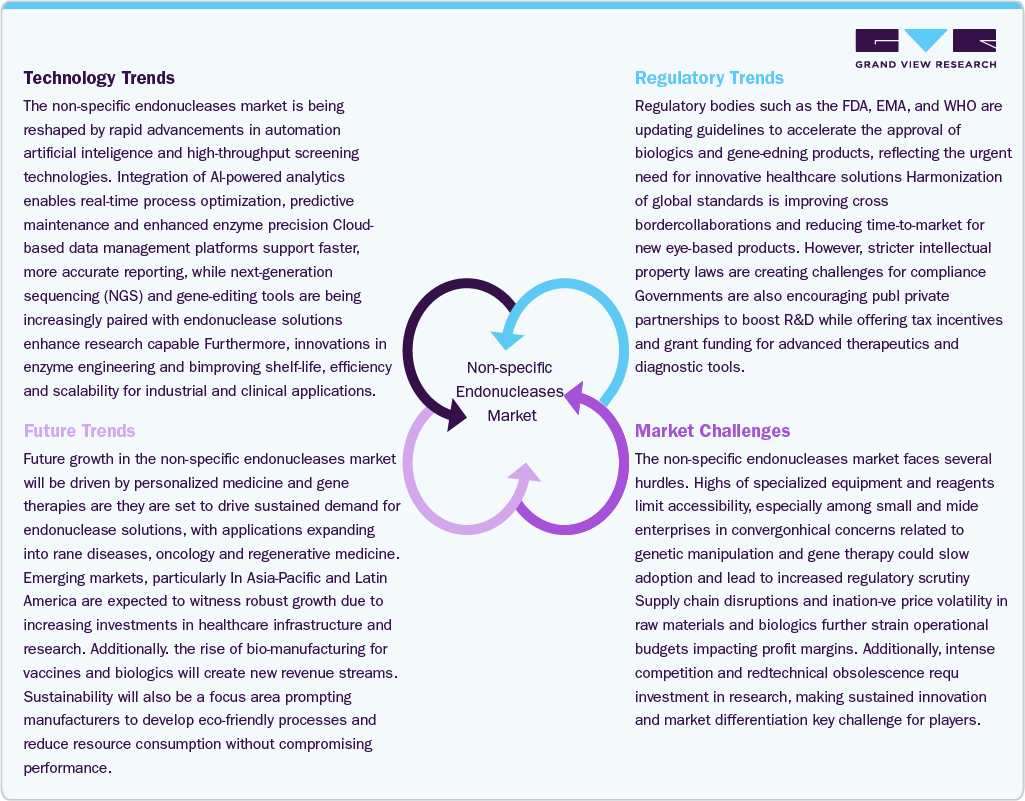
The combination of automation and high-throughput systems is revolutionizing laboratory operations and opening up new avenues for enzymatic solutions. In order to process large sample volumes more quickly and uniformly, non-specific endonucleases are being used more and more in robotic platforms, microfluidic devices, and cartridge-based systems. These developments enable labs to meet the growing demand for genomic testing while lowering manual error and enhancing reproducibility. The market is anticipated to keep growing as high-throughput and point-of-care technologies gain traction globally, as more than half of mid-to-large testing facilities in North America and Europe have already implemented enzyme-assisted automation.
Market Concentration & Characteristics
Enhancing the specificity, stability, and scalability of enzymes for sophisticated applications is the main focus of innovation in the non-specific endonucleases market. New formulations that are optimized for next-generation sequencing, diagnostics, and therapeutic development are being developed as a result of ongoing R&D investments. The market's role in precision medicine is being strengthened by these advancements, which are helping researchers and clinicians attain greater accuracy, efficiency, and reproducibility.
The industry for non-specific endonucleases is changing as a result of mergers and acquisitions, as top biotech and life sciences companies look to make strategic agreements to broaden their technology portfolios and reach internationally. These initiatives frequently seek to improve intellectual property, integrate complementary platforms, and quicken innovation cycles. Global access to state-of-the-art enzymatic solutions is guaranteed, competitiveness is increased, and quicker commercialization is made possible by this consolidation.
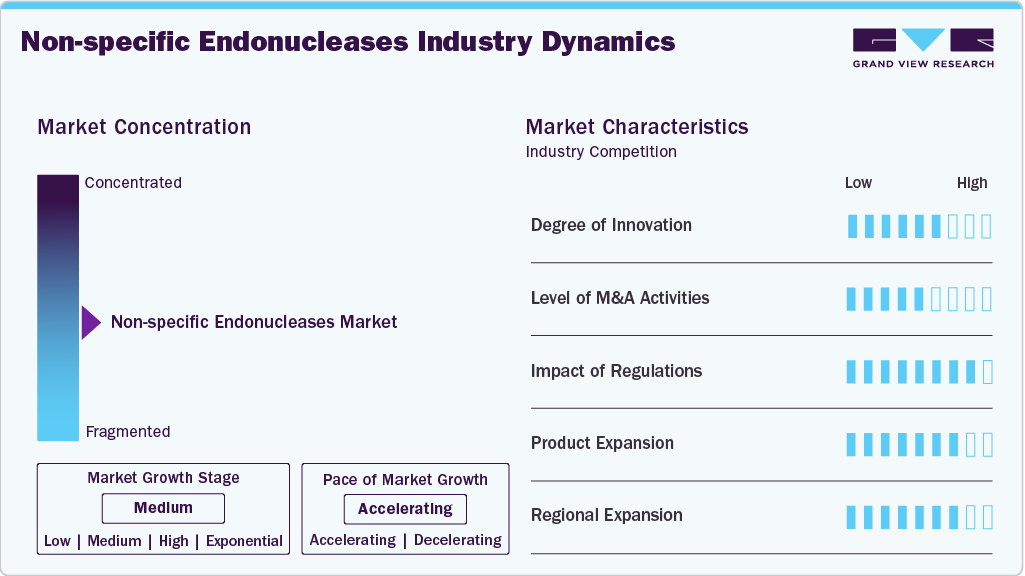
The use of non-specific endonucleases is greatly influenced by the regulatory environment. Enzyme safety, uniformity, and quality in clinical and research applications are guaranteed by strict guidelines. Standards compliance promotes trust in high-quality products, but it can also present difficulties for smaller businesses. Supportive regulations that encourage precision medicine and genomics research are also quickening market adoption in the biotechnology and healthcare industries.
Growing applications in genomics, molecular diagnostics, drug discovery, and biomanufacturing are propelling product expansion in the non-specific endonucleases market. Businesses are expanding the range of enzymes they offer to accommodate various processes, such as sample preparation and nucleic acid cleanup. This trend meets the growing need for dependable, effective, and adaptable enzymatic solutions while also facilitating wider adoption across industries and improving market positioning.
Regional expansion is a core growth strategy for players in the non-specific endonucleases market. North America dominated due to strong research infrastructure, while Asia Pacific, Latin America, and the Middle East are witnessing rapid growth through government investments and expanding biotech ecosystems. This geographic diversification ensures broader customer bases and drives long-term market sustainability.
Product Insights
The recombinant non-specific endonucleases segment dominated the global market by contributing 60.02% in 2025 and is expected to grow at a steady CAGR of 6.57% over the forecast period. Fueled by advances in biotechnology, expanding applications in cell and gene therapy, and rising demand for high-quality enzymes in research and bioprocessing. These enzymes are essential for minimizing host-cell nucleic acid contamination in the purification of biologics, viral vectors, vaccines, and oncolytic viruses because they can cleave both DNA and RNA, regardless of sequence. The need for scalable, animal-free, and regulatory-compliant nucleases is only increasing due to the global pipeline of gene therapies, mRNA-based vaccines, and advanced biologics.
The engineered and modified non-specific endonucleases market is witnessing strong growth as biopharmaceutical companies and enzyme developers move beyond traditional recombinant products to address increasingly complex manufacturing needs. In contrast to unmodified or natural-source recombinant nucleases, engineered variants are made to be more stable, active in harsh environments, and compliant with strict GMP regulations. Their use is especially common in the production of mRNA vaccines, viral vectors, and advanced biologics, where consistent nucleic acid clearance is essential for both regulatory approval and product safety. Because of their capacity to satisfy the requirements of contemporary cell and gene therapy, the market is growing more quickly than alternatives derived from natural sources.
Application Insights
The biopharmaceutical production segment dominated the market in 2025, driven by the expanding pipelines of biologics, vaccines, and cell and gene therapies. The problem of removing host-cell DNA and RNA contaminants has grown more pressing as producers depend more and more on mammalian and microbial cell cultures for large-scale production. In order to comply with the strict regulatory standards established by organizations like the FDA, EMA, and WHO, non-specific endonucleases are essential to this process. They are essential to contemporary biopharmaceutical manufacturing since their use directly affects product safety, consistency, and regulatory approval schedules.
Cell & gene therapy is poised to emerge as the most lucrative segment of the non-specific endonucleases market and is expected to grow at a CAGR of 7.65% over the forecast period. Process reagents that consistently eliminate host-cell and plasmid nucleic acid contaminants are in high demand due to the quick expansion of cell and gene therapies, particularly viral-vector platforms (AAV, lentivirus, adenovirus) and ex vivo engineered cell products (CAR-T, NK, MSCs). Because they improve chromatography and filtration processes, help meet regulatory limits on residual nucleic acids, and fragment contaminating DNA/RNA early in downstream workflows, endonucleases are a preferred solution. One of the main causes of the nonspecific endonuclease market's growth is the rising demand from the production of advanced therapeutics.
End Use Insights
The biopharmaceutical and biotechnology segment dominated the market in 2025, as these firms rely heavily on nucleases for the production of biologics, vaccines, cell and gene therapies, and diagnostics. In order to comply with strict international regulatory standards, non-specific endonucleases are essential for guaranteeing the elimination of host-cell DNA, plasmid DNA, and RNA contaminants during upstream and downstream bioprocessing. The need for high-performance, GMP-grade nucleases is growing as a result of the global expansion of biopharmaceutical pipelines, which include monoclonal antibodies, recombinant proteins, biosimilars, and advanced therapies.
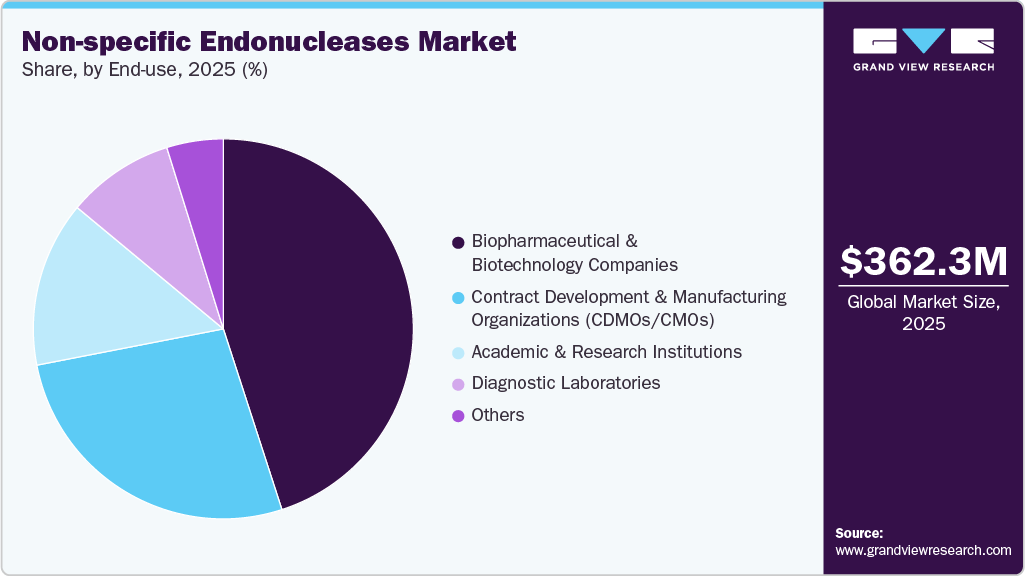
The contract development and manufacturing organizations (CDMOs/CMOs) segment is poised to emerge as the most lucrative segment of the non-specific endonucleases market and is expected to grow at a CAGR of 6.88% over the forecast period. This growth is driven by the rising demand for outsourced biopharmaceutical manufacturing, as companies increasingly rely on CDMOs/CMOs for cost-efficient, scalable, and high-quality production. Their expertise in process optimization, regulatory compliance, and advanced technologies further enhances their appeal. Additionally, the surge in biologics, gene therapies, and vaccines amplifies the need for non-specific endonucleases in large-scale production, positioning CDMOs/CMOs as critical enablers of innovation and market expansion.
Regional Insights
North America non-specific endonucleases market is projected to grow steadily due to strong investments in biotechnology research, advancements in molecular diagnostics, and increasing adoption of gene and cell therapy platforms across the region. As a world leader in the life sciences, the U.S. continues to hold the biggest market share thanks to its strong research infrastructure, substantial government funding, and collaborations between academic institutions and business leaders. The need for dependable, high-quality enzyme solutions is being driven by the growing demand for nucleic acid-based applications, including RNA purification workflows, gene editing, and next-generation sequencing.
U.S. Non-specific Endonucleases Market Trends
The non-specific endonucleases market in the U.S. is set to expand steadily, driven by its robust biotechnology infrastructure and substantial investments in life sciences research. This dominance is attributed to the nation's extensive network of research institutions, pharmaceutical companies, and biotechnology firms, which collectively drive demand for high-quality enzymes essential in applications ranging from gene editing to molecular diagnostics. Furthermore, the market is driven by demand in molecular biology and the pharmaceutical industry for gene editing, diagnostics, and biologics production. Companies are developing new uses and improving existing ones for these enzymes, which break down DNA and RNA.
Europe Non-specific Endonucleases Market Trends
The non-specific endonucleases market in Europe is poised for strong growth, supported by ongoing innovations in enzyme engineering, including the development of genetically engineered enzymes with enhanced specificity and stability, which are expanding the utility of non-specific endonucleases in therapeutic applications.
The UK non-specific endonucleases market is witnessing steady growth, largely driven by advancements in biopharmaceuticals, gene therapies, and vaccine development. These enzymes are extensively used in procedures like RNA analysis, nucleic acid cleanup, and the manufacturing of biologics, such as biosimilars, recombinant proteins, and monoclonal antibodies (mAbs). The need for specialized enzymes that can help with gene editing and vector preparation has increased as a result of the UK's growing emphasis on personalized medicine and cell-based therapies, especially CAR-T and TCR therapies. The expansion of Intertek's Good Manufacturing Practice (GMP) pharmaceutical services laboratory in Melbourn, UK, was announced in May 2025. The project expanded the facility's overall footprint to 46,000 square feet by adding 6,000 square feet of specially designed office and laboratory space. The nation's strong emphasis on expanding pharmaceutical capabilities and maintaining adherence to stringent regulatory standards, both of which promote the use of endonucleases, is reflected in these investments.
The non-specific endonucleases market in Germany is witnessing robust expansion, supported by its well-established pharmaceutical and biotechnology sectors. These enzymes are essential to many different applications, such as the manufacturing of biosimilars, recombinant proteins, and monoclonal antibodies, in which Germany is a leading European producer. The need for enzymatic solutions that facilitate superior gene manipulation and vector development is being fueled by the nation's emphasis on advanced therapies, specifically cell and gene therapies like CAR-T treatments, lentiviral, and AAV vectors.
Asia Pacific Non-specific Endonucleases Market Trends
The market for non-specific endonucleases is expanding significantly in the Asia Pacific area due to rising investments in biotechnology and life sciences research. With significant investments in R&D, nations like China, Japan, and South Korea are setting the standard and creating innovation ecosystems that meet the need for molecular biology tools, such as non-specific endonucleases.
Japan non-specific endonuclease market is witnessing a steady rise as the country strengthens its position as a leader in biotechnology, pharmaceuticals, and precision medicine. Japan's thriving biopharmaceutical production industry, which is seeing large investments in the development of biosimilars, recombinant proteins, and monoclonal antibodies, is the main driver of the rising demand for high-quality enzymes. Non-specific endonucleases are essential tools for manipulating nucleic acids because they guarantee stability and purification throughout production processes and are highly valued for their ability to increase yields and decrease impurities.
The non-specific endonucleases market in China is propelled by its strategic investments in biotechnology and a growing emphasis on healthcare self-reliance. With government-sponsored programs like "Made in China 2025" and substantial research funding promoting domestic production and enzyme development, the nation's biopharmaceutical industry has experienced previously unheard-of growth. High-grade endonucleases are especially needed in the manufacturing of recombinant proteins, biosimilars, and monoclonal antibodies, where nucleic acid cleanup and contamination control are crucial for maintaining the efficacy and integrity of the final product.
Latin America Non-specific Endonucleases Market Trends
The non-specific endonuclease market in Latin America is experiencing steady growth, driven by expanding biotechnology and life sciences research across the region. Countries such as Brazil and Argentina are emerging as hubs for molecular biology and diagnostic research, which is fueling demand for advanced enzymatic tools. Key drivers for this expansion include the increasing adoption of genomics research, infectious disease diagnostics, and biopharmaceutical development. Public and private investment in regional biotech research, along with international collaborations, is enabling wider use of non-specific endonucleases in laboratories and clinical settings. Rising demand for molecular biology tools is expected to accelerate as local R&D efforts strengthen, supported by a growing number of biotech startups and research institutions.
Middle East and Africa Non-specific Endonucleases Market Trends
The non-specific endonuclease market in the Middle East and Africa (MEA) is at an early stage of development but is showing promising growth potential. Countries such as Saudi Arabia, the United Arab Emirates, South Africa, and Israel are spearheading adoption as they invest heavily in biotechnology and healthcare infrastructure. The region’s growth is supported by broader trends in nucleic acid isolation, purification, and genome editing markets.
Key Non-specific Endonucleases Company Insights
Key players operating in the non-specific endonucleases market are undertaking various initiatives to strengthen their presence and increase the reach of their products and services. Strategies such as expansion activities and partnerships are key in propelling the market growth.
Key Non-specific Endonucleases Companies:
The following are the leading companies in the non-specific endonucleases market. These companies collectively hold the largest market share and dictate industry trends.
- F. Hoffmann-La Roche Ltd
- Kerry Group plc(c-LEcta)
- Merck KGaA
- GenScript Biotech
- Beyotime Biotechnology
- Vazyme International LLC.
- Takara Bio
- Promega Corporation
- Bio-Techne
- ACROBiosystems
- MinneBio
- New England Biolabs
- KACTUS
- ArcticZymes Technologies
- Worthington Biochemical Corporation
- Thermo Fisher Scientific Inc.
- RayBiotech, Inc.
- TransGen Biotech Co., Ltd
Recent Developments
-
In June 2025, ArcticZymes Technologies, expanded its GMP product range with the launch of M-SAN HQ GMP, a new GMP-grade nuclease specifically designed for viral vector manufacturing.
-
In June 2025, New England Biolabs expanded its European product lineup by introducing GMP-grade Salt Active Nuclease, available in 0.1 mL and 1 mL catalog sizes.
-
In April 2025, Worthington Biochemical introduced two new enzyme products for nucleic acid research and bioprocessing: NUCxyme DNA/RNA Nuclease, Recombinant, Animal-Free - a broad-spectrum, sequence-independent endonuclease derived from Serratia marcescens and produced recombinantly in yeast. Ribonuclease U2, Recombinant - an RNA-targeting endonuclease with defined specificity, also produced in yeast, designed for applications requiring non-animal–derived enzymes.
Non-specific Endonucleases Market Report Scope
Report Attribute
Details
Market size in 2025
USD 362.4 million
Estimated market size in 2026
USD 382.4 million
Projected market size by 2033
USD 585.2 million
Growth rate
CAGR of 6.3% from 2026 to 2033
Base year for estimation
2025
Historical data
2021 - 2024
Forecast period
2026 - 2033
Quantitative units
Revenue in USD million/billion and CAGR from 2026 to 2033
Report coverage
Revenue forecast, company ranking, competitive landscape, growth factors, and trends
Segments covered
Product, application, end use, and region
Regional scope
North America; Europe; Asia Pacific; Latin America; Middle East & Africa
Country scope
U.S.; Canada; Mexico; UK; Germany; France; Italy; Spain; Norway; Sweden; Denmark; Japan; China; India; Australia; South Korea; Thailand; Brazil; Argentina; South Africa; Saudi Arabia; UAE; Kuwait
Key companies profiled
F. Hoffmann-La Roche Ltd; Kerry Group plc (c-LEcta); Merck KGaA; GenScript Biotech; Beyotime Biotechnology; Vazyme International LLC.; Takara Bio; Promega Corporation; Bio-Techne; ACROBiosystems; MinneBio; New England Biolabs; KACTUS; ArcticZymes Technologies; Worthington Biochemical Corporation; Thermo Fisher Scientific Inc.; RayBiotech, Inc.; TransGen Biotech Co., Ltd
Customization scope
Free report customization (equivalent up to 8 analysts’ working days) with purchase. Addition or alteration to country, regional & segment scope
Pricing and purchase options
Avail customized purchase options to meet your exact research needs. Explore purchase options
Global Non-specific Endonucleases Market Report Segmentation
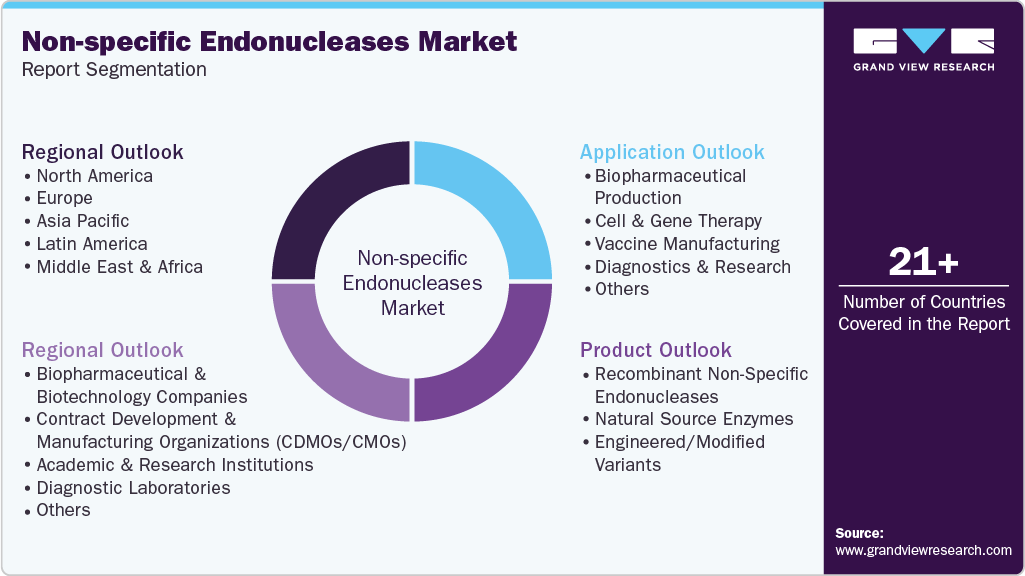
This report forecasts revenue growth at the global, regional and country levels and provides an analysis of the latest trends in each of the sub-segments from 2021 to 2033. For this study, Grand View Research has segmented the global non-specific endonucleases market report on the basis of product, application, end use, and region:
-
Product Outlook (Revenue, USD Million, 2021 - 2033)
-
Recombinant Non-Specific Endonucleases
-
Natural Source Enzymes
-
Engineered/Modified Variants
-
-
Application Outlook (Revenue, USD Million, 2021 - 2033)
-
Biopharmaceutical Production
-
Monoclonal Antibodies (mAbs)
-
Recombinant Proteins
-
Biosimilars
-
-
Cell & Gene Therapy
-
AAV, Lentivirus, Oncolytic Viruses
-
CAR-T and TCR Therapies
-
-
Vaccine Manufacturing
-
mRNA Vaccines
-
Viral Vector Vaccines
-
-
Diagnostics & Research
-
Molecular Biology
-
RNA Analysis & Sequencing Workflows
-
-
Others
-
-
End Use Outlook (Revenue, USD Million, 2021 - 2033)
-
Biopharmaceutical & Biotechnology Companies
-
Contract Development and Manufacturing Organizations (CDMOs/CMOs)
-
Academic & Research Institutions
-
Diagnostic Laboratories
-
Others
-
-
Regional Outlook (Revenue, USD Million, 2021 - 2033)
-
North America
-
U.S.
-
Canada
-
Mexico
-
-
Europe
-
Germany
-
UK
-
France
-
Italy
-
Spain
-
Denmark
-
Sweden
-
Norway
-
-
Asia Pacific
-
Japan
-
China
-
India
-
Australia
-
South Korea
-
Thailand
-
-
Latin America
-
Brazil
-
Argentina
-
-
Middle East and Africa (MEA)
-
South Africa
-
Saudi Arabia
-
UAE
-
Kuwait
-
-
Frequently Asked Questions About This Report
The recombinant non-specific endonucleases segment led with a 60.02% revenue share in 2025, while the engineered and modified non-specific endonucleases segment is the fastest-growing.
The biopharmaceutical production segment held the largest revenue share in 2025, while the cell & gene therapy segment is the fastest-growing.
The biopharmaceutical and biotechnology segment held the largest revenue share in 2025, while the contract development and manufacturing organizations segment is the fastest-growing.
The global non-specific endonucleases market size was valued at USD 362.4 million in 2025 and is estimated at USD 382.4 million for 2026.
The global non-specific endonucleases market is expected to grow at a CAGR of 6.3% from 2026 to 2033, reaching USD 585.2 million by 2033.
North America dominated with a 44.3% revenue share in 2025.
Key players include F. Hoffmann-La Roche Ltd; Kerry Group plc (c-LEcta); Merck KGaA; GenScript Biotech; Beyotime Biotechnology; Vazyme International LLC.; Takara Bio; Promega Corporation; Bio-Techne; ACROBiosystems; MinneBio; New England Biolabs; KACTUS; ArcticZymes Technologies; Worthington Biochemical Corporation; Thermo Fisher Scientific Inc.; RayBiotech, Inc.; TransGen Biotech Co., Ltd
Key factors that are driving the market growth include rising R&D investments in molecular biology and biotechnology, where non-specific endonucleases are widely used for nucleic acid clean-up, plasmid production, and removal of host cell DNA during biologics manufacturing.
About the Author(s)
Clinical Diagnostics Research Team
Healthcare · Clinical DiagnosticsThis report was authored by the clinical diagnostics research team at Grand View Research - comprising two research analysts, one senior research analyst, and one industry expert - with specialized expertise in the clinical diagnostics segment of the healthcare industry. All findings are based on proprietary healthcare databases, executive interviews, and regulatory analysis, subject to internal peer review prior to publication.
Last Updated:
Speak to Analyst


Customize this report to your needs - add regions, segments, or data points, with 20% free customization.
Or view our licence options:


ISO 9001:2015 & 27001:2022 Certified
We are GDPR and CCPA compliant! Your transaction & personal information is safe and secure. For more details, please read our privacy policy.


