
- Home
- »
- Renewable Chemicals
- »
-
North America Skincare And Beauty Botanical Ingredients Market Report 2033GVR Report cover

North America Skincare & Beauty Botanical Ingredients Market (2026 - 2033)
Size, Share & Trends Analysis Report By Ingredient Type (Botanical Powders & Whole Botanicals, Botanical Extracts, Essential Oils (Volatile Distillates), Oleoresins & Resin Extracts), By Country, And Segment Forecasts
Market Size, 2025
$3.2BMarket Estimate, 2026
$3.4BMarket Forecast, 2033
$6.1BCAGR, 2026–2033
8.8%North America Skincare & Beauty Botanical Ingredients Market Summary
The North America skincare and beauty botanical ingredients market size was valued at USD 3.2 billion in 2025 and is projected to grow from USD 3.4 billion in 2026 to USD 6.1 billion by 2033, growing at a CAGR of 8.8% from 2026 to 2033. The growth of the North America skincare & beauty botanical ingredients industry is driven by rising consumer demand for clean-label and naturally derived beauty products, coupled with increasing adoption of botanical actives in premium skincare formulations.
Key Market Trends & Insights
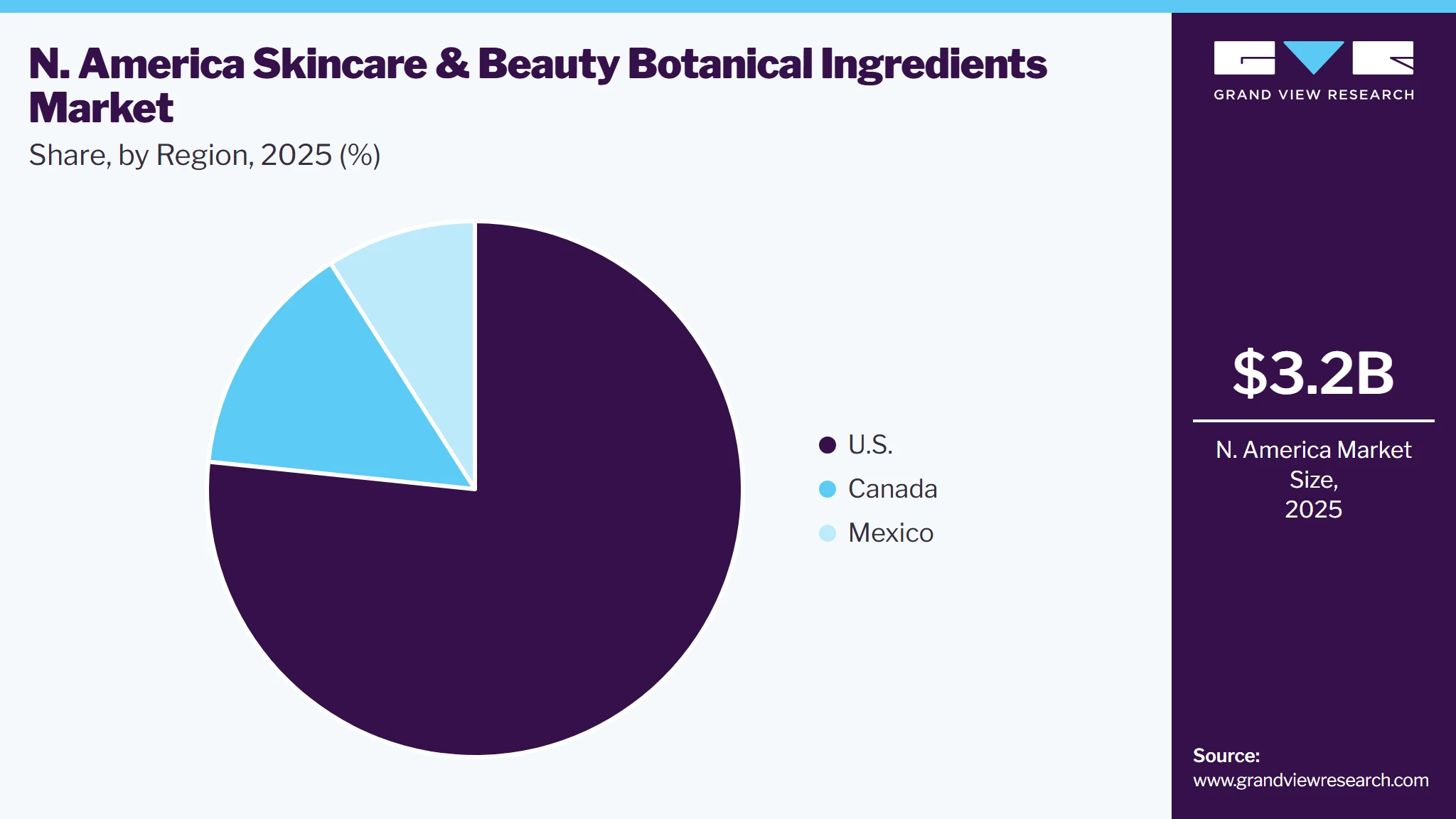
- The U.S. dominated the North America skincare & beauty botanical ingredients market with the largest revenue share of 84.3% in 2025.
- By ingredient type, the botanical extracts segment held the largest revenue share of 32.5% in 2025.
Market Size & Forecast
- Market size in 2025: USD 3.2 Billion
- Estimated market size in 2026: USD 3.4 Billion
- Projected market size by 2033: USD 6.1 Billion
- CAGR (2026-2033): 8.8%
Prism AI by Grand View Research Free to tryAsk a question about the north america skincare & beauty botanical ingredients marketTry asking✓Every figure cited from GVR research Prefer the report? Download free sample →Continuous innovation in plant-based ingredients, sustainable sourcing practices, and the expansion of multifunctional cosmetic products are further supporting long-term market expansion. Increasing awareness of ingredient transparency and concerns regarding synthetic chemicals are driving demand for botanical ingredients in skincare and beauty formulations across North America. Consumers are actively seeking products containing naturally derived extracts, oils, and plant actives that align with wellness, sustainability, and environmental values. In response, manufacturers are expanding their portfolios with botanical-based formulations to strengthen brand differentiation and meet evolving purchasing preferences.
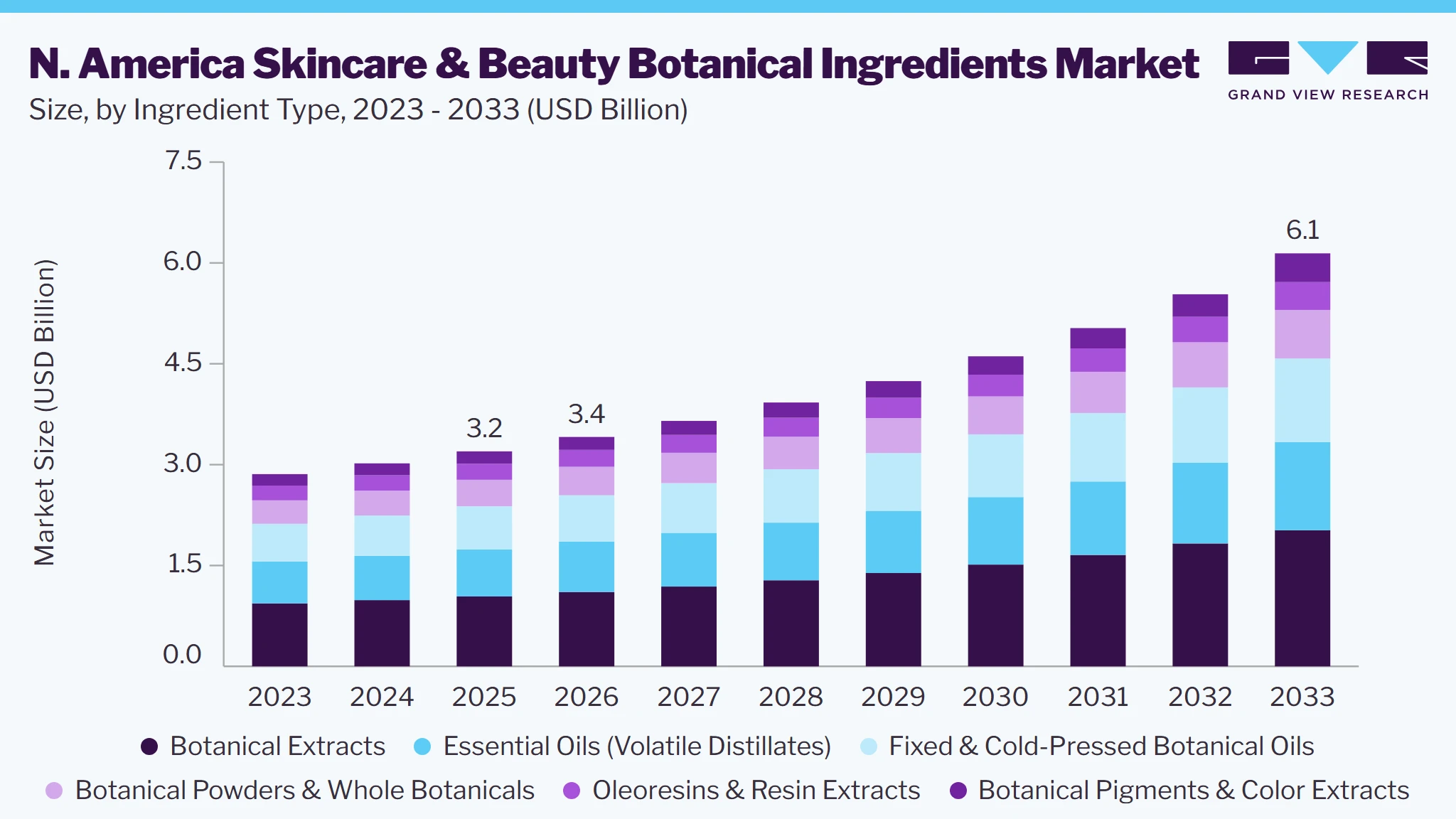 Source: Grand View Research, IR Documents, Primary Interviews, Paid DatabasesTo learn more about this report,
 Download Free Sample Report
The integration of biotechnology with botanical ingredient production presents significant growth opportunities for suppliers and formulators. Sustainable cultivation practices, precision extraction methods, and bio-based processing technologies can improve ingredient consistency, reduce environmental impact, and support regulatory compliance. Companies investing in traceable and responsibly sourced botanical supply chains are well-positioned to capitalize on increasing demand from environmentally conscious consumers and premium beauty brands.
Market Dynamics
The North America skincare & beauty botanical ingredients market is experiencing robust growth, driven by shifting consumer preferences toward natural, plant-based, and sustainably sourced cosmetic formulations. Rising awareness of ingredient transparency and the increasing popularity of clean-label beauty products are encouraging manufacturers to replace synthetic additives with botanical extracts, essential oils, and plant-derived actives. Innovation in extraction technologies and advances in phytochemical research are enabling the development of high-performance ingredients with multifunctional benefits, including hydration, antioxidant protection, and skin barrier support. At the same time, premiumization trends and growing demand for personalized skincare solutions are creating opportunities for suppliers to introduce differentiated botanical ingredients backed by scientific validation. However, market expansion is moderated by challenges such as raw material price volatility, seasonal availability of botanicals, and the need to maintain consistent quality across batches. To strengthen their market position, companies are investing in sustainable sourcing, supply chain traceability, strategic collaborations, and product innovation, ensuring long-term competitiveness in an increasingly quality-conscious and environmentally focused marketplace.
Growing consumer awareness regarding ingredient safety, environmental sustainability, and product transparency has become a major driver for the North America skincare & beauty botanical ingredients market. Consumers are increasingly seeking formulations made with naturally derived extracts, essential oils, and plant-based actives while avoiding synthetic chemicals, artificial additives, and harsh preservatives. This shift is encouraging cosmetic manufacturers to reformulate existing products and introduce new botanical-based offerings that align with evolving purchasing preferences.
The trend is particularly evident in premium skincare, facial serums, moisturizers, and wellness-oriented beauty products, where botanical ingredients are perceived to deliver both efficacy and sustainability. In response, manufacturers are investing in research, sustainable sourcing practices, and advanced extraction technologies to improve ingredient performance and authenticity. The growing popularity of clean beauty certifications and transparent labeling further reinforces the adoption of botanical ingredients across the regional personal care industry.
A key restraint affecting the North America skincare & beauty botanical ingredients market is the dependence on agricultural raw materials, which are inherently subject to seasonal availability, climatic conditions, and regional cultivation practices. Variations in weather patterns, crop diseases, and geopolitical or logistical disruptions can reduce the availability of important botanical feedstocks and increase procurement costs. In addition, differences in soil quality, harvesting methods, and post-harvest processing may lead to inconsistencies in the concentration of active compounds, making it difficult for manufacturers to achieve uniform product quality. To address these issues, companies must invest in extensive quality control systems, supplier qualification programs, traceability initiatives, and standardized extraction processes, all of which increase operational costs and may limit production scalability and profitability.
The increasing demand for personalized skincare solutions presents a significant opportunity for suppliers of botanical ingredients in North America. Consumers are looking for products tailored to specific concerns such as sensitive skin, hyperpigmentation, anti-aging, hydration, and skin barrier repair, creating demand for specialized plant-derived actives with targeted functional benefits. This trend enables ingredient manufacturers to develop differentiated solutions that command premium pricing.
Advancements in biotechnology, extraction methods, and ingredient standardization are further supporting the commercialization of scientifically validated botanical compounds. Companies that combine natural ingredients with clinical evidence and sustainable sourcing practices are well-positioned to establish long-term partnerships with cosmetic brands. As beauty companies continue to invest in customized formulations and efficacy-driven products, suppliers offering innovative botanical ingredients can strengthen their competitive advantage and expand their presence across premium market segments.
Market Concentration & Characteristics
The North America skincare & beauty botanical ingredients market is characterized by a competitive environment where ingredient manufacturers and specialized botanical suppliers compete through innovation, portfolio diversification, and sustainable sourcing initiatives. Leading companies are investing in advanced extraction technologies, research on plant-derived bioactives, and traceable supply chains to deliver high-performance ingredients that meet evolving consumer and regulatory expectations. Product differentiation is increasingly based on efficacy, purity, and environmental credentials rather than price alone.
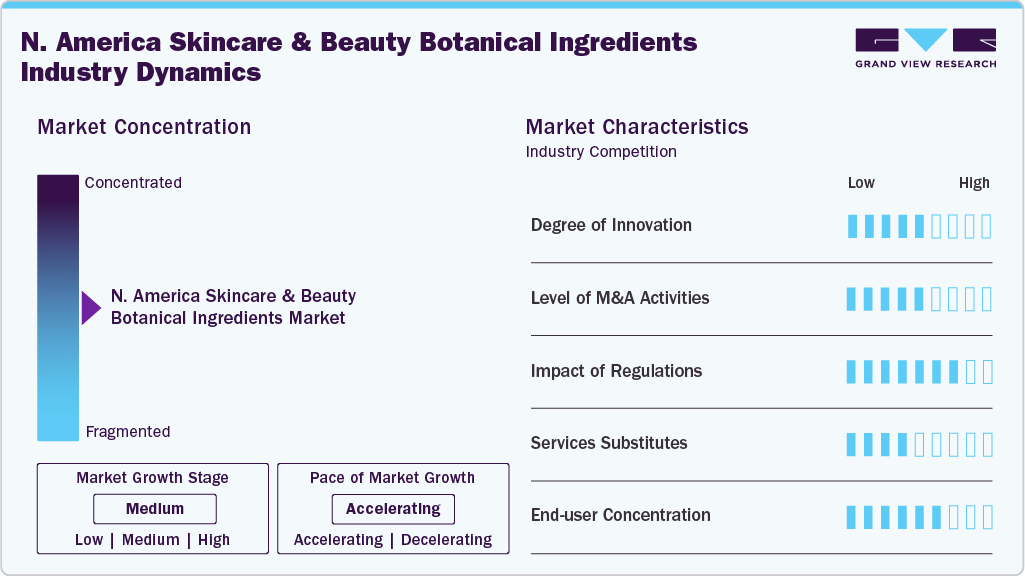 To learn more about this report, Download Free Sample Report
Market participants are also strengthening their positions through strategic collaborations with cosmetic brands, contract manufacturers, and research institutions to accelerate the commercialization of novel botanical ingredients. Expansion of manufacturing capabilities, regional distribution networks, and certified sourcing programs enables suppliers to improve supply reliability and respond to growing demand for clean-label skincare and beauty products. In addition, companies are emphasizing clinical validation and documentation to support product claims and enhance customer confidence.
Analyst Perspective
The North America skincare & beauty botanical ingredients market is positioned for sustained growth, supported by increasing consumer demand for clean-label, plant-based, and scientifically validated cosmetic formulations. Botanical extracts and natural oils are expected to remain core ingredients as brands prioritize transparency, sustainability, and multifunctional product performance. Innovation in extraction technologies and responsible sourcing practices will serve as key competitive differentiators among ingredient suppliers. While raw material availability and quality consistency may present operational challenges, companies investing in resilient supply chains and premium botanical solutions are likely to strengthen their market position. Overall, the market offers attractive long-term opportunities driven by evolving beauty trends and continued product innovation.
Ingredient Type Insights
Botanical extracts accounted for the largest share of the North America skincare & beauty botanical ingredients industry in 2025, representing 32.5% of total revenue. Their market leadership is driven by broad application across facial care, anti-aging products, serums, cleansers, and moisturizers, where concentrated plant-derived bioactives deliver antioxidant, soothing, and skin-conditioning benefits. Extracts sourced from ingredients such as green tea, chamomile, aloe vera, calendula, and licorice are increasingly favored for their compatibility with clean-label and naturally positioned formulations.
Botanical pigments and color extracts are projected to be the fastest-growing ingredient category, expanding at a CAGR of 12.1% from 2026 to 2033. Growth is fueled by increasing consumer preference for naturally derived colorants in cosmetics as brands seek alternatives to synthetic dyes and respond to demand for cleaner ingredient profiles. Plant-based pigments extracted from sources such as beetroot, turmeric, spirulina, annatto, and hibiscus are gaining popularity in lip products, blushes, tinted skincare, and other color cosmetics.
Country Insights
The North America skincare & beauty botanical ingredients market is expected to grow at a CAGR of 8.8% during the forecast period, supported by sustained consumer demand for naturally derived and clean-label cosmetic formulations. The region is witnessing increased adoption of botanical actives across skincare, haircare, and hybrid beauty products as consumers prioritize ingredient transparency, sustainability, and wellness-oriented purchasing decisions. Continued investment in product innovation, premium beauty categories, and advanced botanical extraction technologies is expected to reinforce long-term market growth.
 To learn more about this report, Download Free Sample Report
U.S. Skincare & Beauty Botanical Ingredients Market Trends
The U.S accounted for 84.3% of the North America botanical pigment industry in 2025, making it the dominant contributor to regional revenue. Its leadership is driven by a mature beauty and personal care industry, high consumer spending on premium skincare products, and the strong presence of multinational cosmetic brands and ingredient suppliers. The country also benefits from a robust innovation ecosystem, with growing investment in research, clinical validation of plant-based ingredients, and the development of sustainable formulations that align with evolving consumer preferences.
Canada Skincare & Beauty Botanical Ingredients Market Trends
Canada is an expanding market for botanical skincare and beauty ingredients, driven by growing consumer awareness of environmentally responsible, naturally sourced cosmetic products. Demand is particularly strong for organic formulations, vegan beauty products, and clean-label personal care solutions. Local brands and international manufacturers are incorporating botanical extracts and plant oils into their product portfolios to address rising interest in skin health, sustainability, and ingredient transparency, creating favorable conditions for market expansion.
Mexico Skincare & Beauty Botanical Ingredients Market Trends
Mexico is emerging as a promising growth market within North America, driven by the expansion of its beauty and personal care sector and increasing consumer acceptance of natural and herbal ingredients. Urbanization, rising disposable incomes, and greater access to premium cosmetic products are encouraging demand for botanical-based skincare and haircare formulations. The country's rich biodiversity and availability of native plant resources provide opportunities for manufacturers to develop regionally inspired ingredients and strengthen local sourcing strategies, supporting future market growth.
Key North America Skincare And Beauty Botanical Ingredients Company Insights
Companies operating in the North America skincare & beauty botanical ingredients market are strengthening their competitive position by investing in advanced extraction technologies, sustainable sourcing programs, and scientifically validated plant-based ingredients to meet evolving consumer and regulatory expectations. They are also pursuing strategic partnerships with cosmetic brands, expanding their portfolios through innovative botanical formulations, and enhancing supply chain traceability to improve product differentiation and secure long-term customer relationships.
-
Givaudan has established a strong presence in the North America skincare and beauty botanical ingredients market through its focus on high-value, naturally derived active ingredients and sustainable innovation. The company leverages advanced botanical extraction capabilities and extensive research expertise to develop plant-based solutions for skin conditioning, anti-aging, and wellness-oriented cosmetic applications. Its emphasis on responsible sourcing, scientific validation, and collaboration with beauty brands enables it to address growing demand for premium, clean-label formulations while strengthening its competitive position in the region.
-
Symrise is a prominent supplier of botanical ingredients for the personal care industry, offering a broad portfolio of plant extracts, natural actives, and functional ingredients tailored to skincare and beauty applications. The company invests in research-driven product development and sustainable raw material procurement to deliver ingredients that combine efficacy with environmental responsibility. By expanding its innovation capabilities and working closely with cosmetic manufacturers to develop customized solutions, Symrise continues to reinforce its market position and capitalize on the growing preference for botanical-based beauty products across North America.
Key North America Skincare And Beauty Botanical Ingredients Companies
-
Givaudan
-
Symrise
-
International Flavors & Fragrances (IFF)
-
Sensient Technologies Corporation
-
Bio-Botanica, Inc.
-
Prinova
-
Croda International
-
Ashland
-
Clariant
-
Akay Bioactives
Competitive Benchmarking
Operating Strategies
Competitive Edge
Weaknesses
Established Players (Givaudan, Symrise, International Flavors & Fragrances (IFF), Sensient Technologies Corporation, Croda International, Ashland, Clariant)
- Invest in continuous R&D to develop high-efficacy botanical ingredients and proprietary extraction technologies.
- Expand through acquisitions, strategic partnerships, and long-term supply agreements with leading beauty brands.
- Strengthen sustainable sourcing programs and traceable supply chains to ensure raw material reliability.
- Diversify product portfolios by offering multifunctional botanical extracts, oils, and natural actives for multiple cosmetic applications.
- Extensive manufacturing and distribution networks with established customer relationships.
- Strong financial resources that support innovation, capacity expansion, and regulatory compliance.
- Broad product portfolios catering to premium, mass-market, and specialty beauty segments.
- High brand credibility and technical expertise in formulation support and ingredient development.
- Higher operating costs due to complex operations and sustainability commitments.
- Slower adaptation to niche consumer trends because of larger organizational structures.
- Greater exposure to disruptions in international sourcing and logistics networks.
- Longer product development and commercialization cycles result from extensive validation processes.
Emerging Players (Bio-Botanica, Inc., Prinova, Akay Bioactives)
- Focus on specialized botanical extracts and niche natural ingredients for targeted applications.
- Build strategic collaborations with indie beauty brands and regional cosmetic manufacturers.
- Emphasize organic, clean-label, and sustainably sourced ingredient offerings to differentiate products.
- Leverage agile product development to respond quickly to evolving consumer preferences and market trends.
- Ability to rapidly innovate and customize solutions for specific customer requirements.
- Strong expertise in select botanical ingredients and plant-based formulations.
- Flexible business models that enable faster decision-making and product launches.
- Appeal to premium and emerging beauty brands seeking differentiated natural ingredients.
- Limited production capacity and financial resources compared to multinational competitors.
- Smaller geographic presence and less extensive distribution infrastructure.
- Lower brand recognition and marketing reach in global markets.
- Higher vulnerability to raw material shortages and fluctuations in agricultural input costs.
Recent Developments
-
In September 2024, Bio-Botanica signed an exclusive distribution partnership with Gillco Ingredients, an Azelis company, to expand the market reach of its botanical extract portfolio across the U.S. food, beverage, and dietary supplement sectors.
-
In February 2025, Sensient Technologies acquired Biolie, a France-based company specializing in white biotechnology and natural ingredient extraction. The acquisition strengthens Sensient’s active color portfolio and enhances its production capabilities for natural ingredients.
North America Skincare & Beauty Botanical Ingredients Market Report Scope
Report Attribute
Details
Market size in 2025
USD 3.2 billion
Estimated market size in 2026
USD 3.4 billion
Projected market size by 2033
USD 6.1 billion
Growth rate
CAGR of 8.8% from 2026 to 2033
Base year for estimation
2025
Historical data
2021 - 2024
Forecast period
2026 - 2033
Quantitative units
Revenue in USD million/billion, volume in kilotons, and CAGR from 2026 to 2033
Report coverage
Revenue forecast, volume forecast, company ranking, competitive landscape, growth factors, and trends
Segments covered
Ingredient type, region
Regional scope
North America
Country scope
U.S.; Canada; Mexico
Key companies profiled
Givaudan; Symrise; International Flavors & Fragrances (IFF); Sensient Technologies Corporation; Bio-Botanica, Inc.; Prinova; Croda International; Ashland; Clariant; Akay Bioactives
Customization scope
Free report customization (equivalent up to 8 analysts’ working days) with purchase. Addition or alteration to country, regional & segment scope.
Pricing and purchase options
Avail customized purchase options to meet your exact research needs. Explore purchase options
North America Skincare & Beauty Botanical Ingredients Market Report Segmentation
This report forecasts volume & revenue growth at the regional and country levels and provides an analysis of the latest industry trends in each of the sub-segments from 2021 to 2033. For this study, Grand View Research has segmented the North America skincare & beauty botanical ingredients market report based on ingredient type, and region:
-
Ingredient Type Outlook (Volume, Kilotons; Revenue, USD Million/Billion, 2021 - 2033)
-
Botanical Powders & Whole Botanicals
-
Botanical Extracts
-
Essential Oils (Volatile Distillates)
-
Fixed & Cold-Pressed Botanical Oils
-
Oleoresins & Resin Extracts
-
Botanical Pigments & Color Extracts
-
-
Regional Outlook (Volume, Kilotons; Revenue, USD Million/Billion, 2021 - 2033)
-
North America
-
U.S.
-
Canada
-
Mexico
-
-
Research Methodology
The north america skincare & beauty botanical ingredients market figures in this report are based on a proven research process that combines executive interviews with secondary research from proprietary databases, company filings, and recognized regulatory and institutional sources. Market size is built through value-chain sizing - reconciling supply-side and demand-side estimates - and triangulated with bottom-up and top-down approaches. Every estimate passes multiple levels of expert validation before publication, with each north america skincare & beauty botanical ingredients segment quantified using the revenue-capture definitions in the table below.
Segment Definition
Segment – Ingredient Type
Revenue capture definition
Botanical Powders & Whole Botanicals
Revenue is generated through the commercialization of dried and powdered plant materials used in skincare and beauty formulations for their natural antioxidant, soothing, exfoliating, and conditioning properties. Increasing consumer preference for clean-label and plant-based personal care products supports demand for these ingredients.
Botanical Extracts
Revenue is derived from the production and sale of concentrated botanical extracts obtained from herbs, flowers, fruits, and other plant sources for use in creams, lotions, serums, masks, and hair care products. Growing demand for multifunctional natural actives and clinically supported formulations drives segment expansion.
Essential Oils (Volatile Distillates)
Revenue is generated through the supply of essential oils incorporated into skincare, cosmetics, aromatherapy, and fragrance applications for their antimicrobial, anti-inflammatory, and sensory benefits. Rising consumer interest in wellness-oriented and naturally scented products continues to strengthen market demand.
Fixed & Cold-Pressed Botanical Oils
Revenue is generated from the sale of nutrient-rich botanical oils extracted through cold-pressing or similar methods for use as emollients, moisturizers, and carrier oils in skincare and beauty products. Increasing adoption of naturally derived lipids in premium and organic formulations supports revenue growth.
Oleoresins & Resin Extracts
Revenue is derived from the utilization of concentrated oleoresins and resin extracts in cosmetic and personal care products requiring enhanced bioactive performance, natural preservation, and sensory attributes. Expanding use in specialty skincare and herbal formulations contributes to sustained market development.
Botanical Pigments & Color Extracts
Revenue is generated through the incorporation of naturally derived plant pigments and color extracts into cosmetics and beauty products as alternatives to synthetic colorants. Growing regulatory support for natural ingredients and rising consumer demand for clean-label formulations drive adoption across makeup and personal care applications.
Estimation Model
Layer Name
Key Question
Description
Raw Material & Production Layer
What forms the supply base?
Identify the sourcing and production of skincare and beauty botanical ingredients derived from plant materials such as herbs, flowers, fruits, seeds, roots, leaves, algae, and other natural feedstocks. Evaluate cultivation practices, harvesting methods, extraction technologies (including solvent extraction, steam distillation, cold pressing, and supercritical extraction), manufacturing capacities, supply chain dynamics, and regional production hubs across North America that support commercial ingredient availability.
Application Adoption Layer
Where are skincare & beauty botanical ingredients consumed?
Assess the adoption of botanical ingredients across major personal care applications, including skincare, haircare, cosmetics, fragrances, bath and body products, and wellness formulations. Demand is driven by growing consumer preference for clean-label, plant-based, sustainable, and naturally derived ingredients, as well as increasing product innovation by beauty and personal care manufacturers.
Consumption Intensity Layer
How many skincare & beauty botanical ingredients are utilized?
Analyze consumption by evaluating the incorporation of botanical extracts, essential oils, botanical powders, fixed oils, oleoresins, and natural pigments into finished beauty and personal care products. The assessment considers formulation concentrations, production volumes, product launches, consumer demand trends, and regional manufacturing activity to estimate annual ingredient consumption across North America.
Revenue Layer
How is market revenue generated?
Market revenue is generated through the production, extraction, processing, and sale of botanical ingredients used in skincare and beauty products, including botanical extracts, essential oils, plant oils, powders, oleoresins, and natural colorants. Revenue growth is supported by increasing demand for natural cosmetics, clean beauty trends, premium personal care products, sustainable sourcing initiatives, and continuous innovation in high-performance botanical formulations.
Delivered Customizations
This report has been delivered with the following In-depth customizations
Client Request
Customization Delivered
Value Adds
Regional Segmentation
The study delivers detailed country-level analysis across key North America skincare & beauty botanical ingredients markets, including the U.S., Canada, Mexico, and other relevant regions where applicable. The assessment covers botanical raw material availability, ingredient production and processing capabilities, supply chain dynamics, import-export trends, regulatory frameworks, sustainability initiatives, and demand patterns across skincare, haircare, cosmetics, personal care, and wellness applications.
Enables stakeholders to identify high-growth regional markets, evaluate supply-demand dynamics, understand regulatory and sustainability trends, assess sourcing and manufacturing capabilities, and prioritize investments in regions with increasing demand for clean-label and plant-based beauty ingredients.
Competitive Benchmarking
The report provides a comprehensive competitive benchmarking analysis of leading North America skincare & beauty botanical ingredient manufacturers operating in global and regional markets. The assessment covers company market presence, product portfolios, botanical sourcing strategies, extraction technologies, manufacturing capabilities, geographic footprint, innovation initiatives, sustainability commitments, customer base, and recent strategic developments.
Helps stakeholders understand the competitive landscape, benchmark performance against industry leaders, identify portfolio and technology gaps, evaluate strategic positioning, and support informed decisions related to partnerships, capacity expansion, product innovation, and long-term competitive differentiation.
Opportunity Assessment
The study delivers a detailed evaluation of growth opportunities across facial skincare, anti-aging products, clean beauty, natural color cosmetics, haircare, dermocosmetics, and premium personal care applications. The analysis further examines opportunities arising from rising consumer demand for botanical ingredients, advancements in extraction technologies, sustainable sourcing practices, biotechnology-enabled plant actives, and increasing adoption of organic and vegan beauty formulations.
Helps companies identify high-potential investment areas, evaluate long-term market prospects, align product development and expansion strategies with evolving consumer and regulatory trends, and capitalize on emerging opportunities in premium, sustainable, and plant-based beauty ingredient markets.
Frequently Asked Questions About This Report
The North America skincare & beauty botanical ingredients market size was estimated at USD 3.2 billion in 2025 and is expected to reach USD 3.4 billion in 2026
The North America skincare & beauty botanical ingredients market is expected to grow at a compound annual growth rate of 8.8% from 2026 to 2033 to reach USD 6.1 billion by 2033.
Botanical extracts accounted for the largest share of the North America skincare & beauty botanical ingredients market in 2025, representing 32.5% of total revenue. Their market leadership is driven by broad application across facial care, anti-aging products, serums, cleansers, and moisturizers, where concentrated plant-derived bioactives deliver antioxidant, soothing, and skin-conditioning benefits. Extracts sourced from ingredients such as green tea, chamomile, aloe vera, calendula, and licorice are increasingly favored for their compatibility with clean-label and naturally positioned formulations.
The U.S accounted for 84.3% of the North American market in 2025, making it the dominant contributor to regional revenue. Its leadership is driven by a mature beauty and personal care industry, high consumer spending on premium skincare products, and the strong presence of multinational cosmetic brands and ingredient suppliers. The country also benefits from a robust innovation ecosystem, with growing investment in research, clinical validation of plant-based ingredients, and the development of sustainable formulations that align with evolving consumer preferences.
The market's growth is being driven by rising consumer demand for clean-label and naturally derived beauty products, coupled with increasing adoption of botanical actives in premium skincare formulations. Continuous innovation in plant-based ingredients, sustainable sourcing practices, and the expansion of multifunctional cosmetic products are further supporting long-term market expansion across North America.
Some of the key players operating in the North America skincare & beauty botanical ingredients market include Givaudan; Symrise; International Flavors & Fragrances (IFF); Sensient Technologies Corporation; Bio-Botanica, Inc.; Prinova; Croda International; Ashland; Clariant; Akay Bioactives.
Botanical Pigments & Color Extracts is the fastest growing segment with a CAGR of 12.1 in the forecast period. The segment's growth is driven by rising demand for naturally derived colorants in clean-label and sustainable beauty products, as cosmetic manufacturers increasingly replace synthetic pigments with plant-based alternatives to meet evolving consumer preferences and regulatory expectations.
The North America skincare & beauty botanical ingredients market is primarily driven by rising consumer demand for clean-label, plant-based, and sustainably sourced personal care products. Increasing adoption of botanical extracts and natural oils in premium skincare formulations, coupled with continuous innovation in high-performance plant-derived ingredients, is further supporting market growth
Growth opportunities in the North America skincare & beauty botanical ingredients market are driven by increasing demand for personalized skincare, clean-label cosmetics, and multifunctional plant-based actives. The potential lies in the development of biotechnology-enabled botanical ingredients, sustainable sourcing practices, and premium formulations that combine clinically validated efficacy with natural and environmentally responsible ingredients.
About the Author(s)
Renewable Chemicals Research Team
Specialty & Chemicals · Renewable ChemicalsThis report was authored by the renewable chemicals research team at Grand View Research - comprising two research analysts, one senior research analyst, and one industry expert - with specialized expertise in the renewable chemicals segment of the specialty & chemicals industry. All findings are based on proprietary specialty & chemicals databases, executive interviews, and regulatory analysis, subject to internal peer review prior to publication.
Last Updated:
Speak to Analyst

Customize this report to your needs - add regions, segments, or data points, with 20% free customization.
Or view our licence options:


ISO 9001:2015 & 27001:2022 Certified
We are GDPR and CCPA compliant! Your transaction & personal information is safe and secure. For more details, please read our privacy policy.


