
- Home
- »
- Biotechnology
- »
-
Nucleic Acid Aptamers Market Size, Share Report 2026-2033GVR Report cover

Nucleic Acid Aptamers Market (2026 - 2033)
Size, Share & Trends Analysis Report By Type (RNA Aptamers, DNA Aptamers), By Application (Therapeutics, Diagnostics), By End Use (Hospitals & Specialty Clinics, Pharmaceutical & Biotechnology Companies), By Region, And Segment Forecasts
Market Size, 2025
$1.1BMarket Estimate, 2026
$1.3BMarket Forecast, 2033
$4.2BCAGR, 2026–2033
18.3%Nucleic Acid Aptamers Market Summary
The global nucleic acid aptamers market size was valued at USD 1.1 billion in 2025 and is projected to grow from USD 1.3 billion in 2026 to USD 4.2 billion by 2033, at a CAGR of 18.3% from 2026 to 2033. North America dominated the market, accounting for a revenue share of 44.6% in 2025. Market growth is driven by the increasing adoption of nucleic acid aptamers in diagnostics, therapeutics, drug discovery, biosensors, and targeted molecular detection, along with advancements in aptamer selection technologies, high-throughput screening, chemical modification, and precision medicine applications.
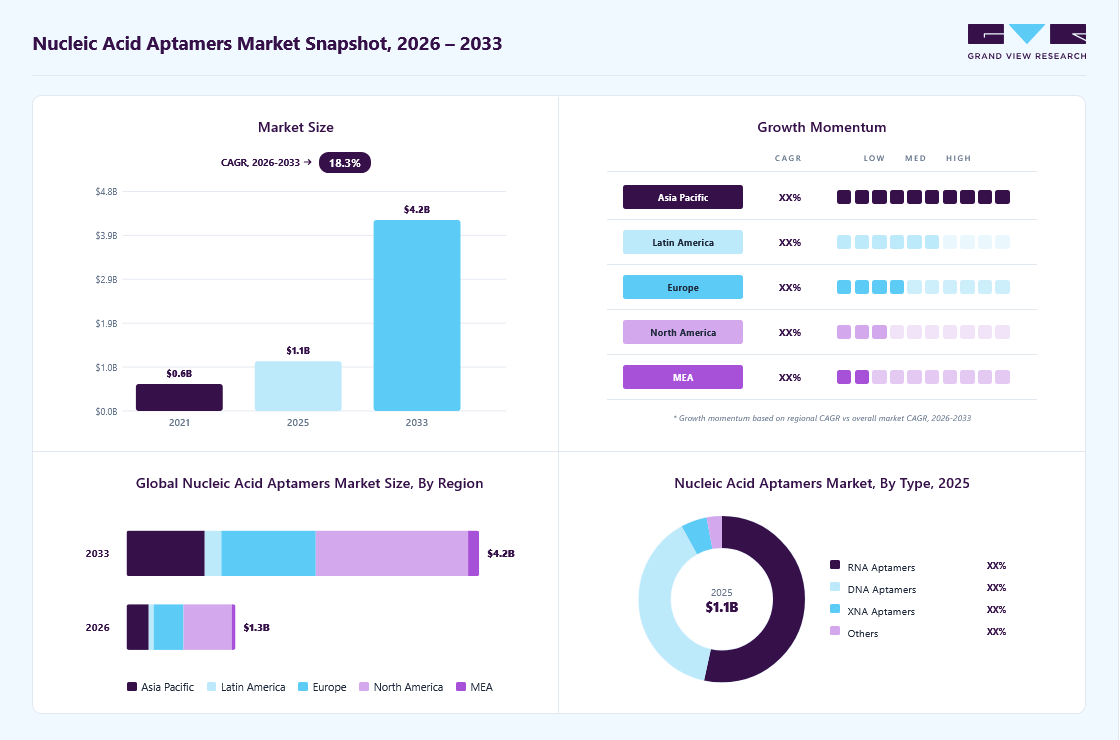 Source: Grand View Research, IR Documents, Primary Interviews, Paid DatabasesTo learn more about this report,
 Download Free Sample Report
Key Market Trends & Insights
- By type: RNA aptamers segment held the highest market share of 53.3% in 2025.
- By application: Therapeutics segment held the highest market share in 2025.
- By end use: Hospitals & specialty clinics segment held the highest market share in 2025.
Regional Highlights
- Largest regional market: North America (44.6% revenue share, 2025)
- Fastest-growing regional market: Asia Pacific (highest CAGR, 2026-2033)
- By country: The U.S. held the largest share in 2025
Market Size & Forecast
- Market Size in 2025: USD 1.1 Billion
- Estimated Market Size in 2026: USD 1.3 Billion
- Projected Market Size by 2033: USD 4.2 Billion
- CAGR (2026-2033): 18.3%
Prism AI by Grand View Research Free to tryAsk a question about the nucleic acid aptamers marketTry asking✓Every figure cited from GVR research Prefer the report? Download free sample →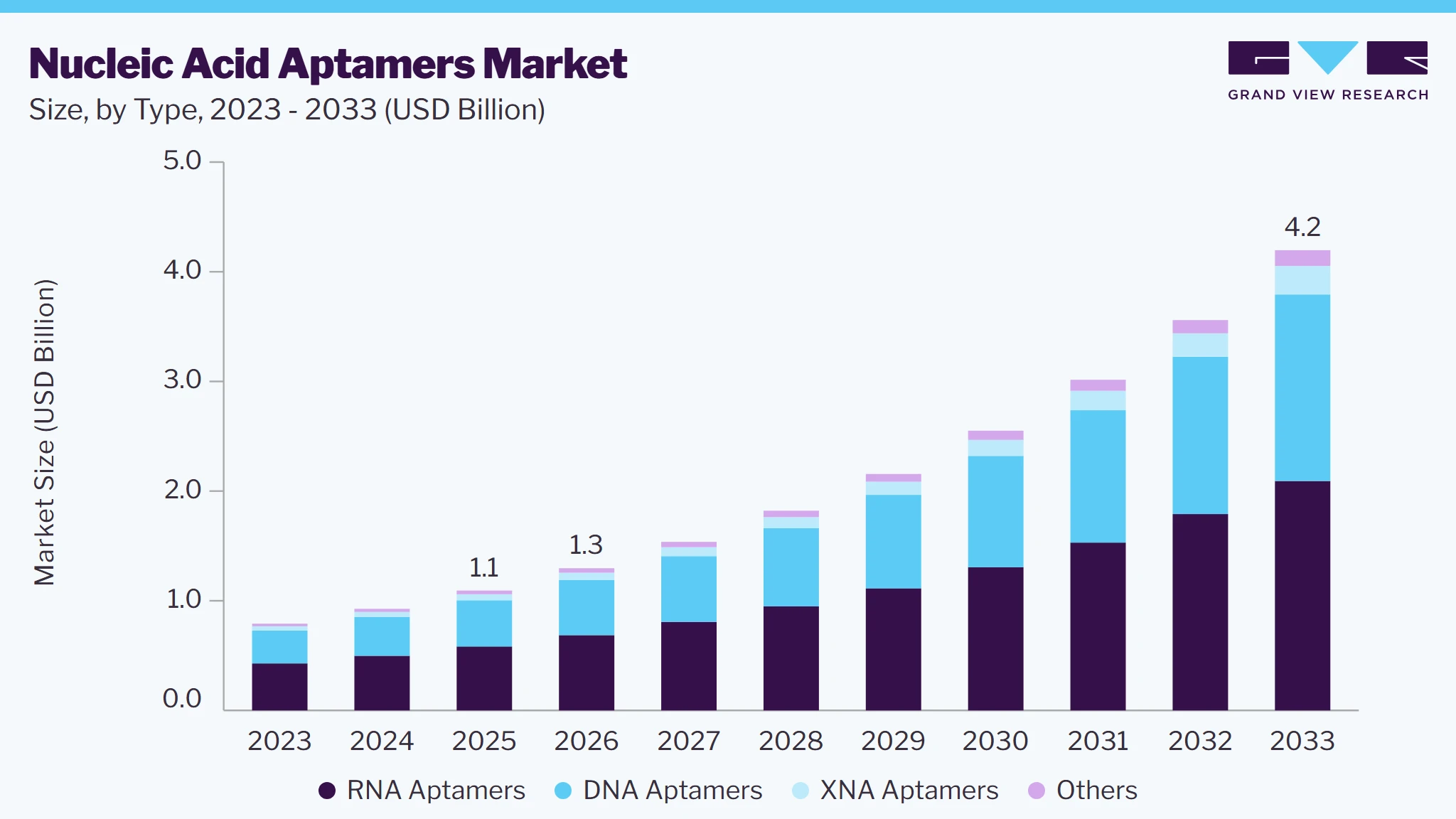 To learn more about this report, Download Free Sample Report
Market Dynamics
The nucleic acid aptamers market is witnessing strong growth, supported by expanding applications in diagnostics, therapeutics, drug discovery, and biosensing. Advancements in aptamer selection, high-throughput screening, chemical modification, and computational design are improving aptamer performance and expanding their commercial applications. Rising investments in precision medicine, targeted therapies, and nucleic acid-based technologies are further creating opportunities for market growth.
The increasing adoption of aptamer-based diagnostics and biosensors is driving the market, as aptamers offer high target specificity, chemical stability, small size, and ease of synthesis compared with conventional antibody-based recognition molecules. These characteristics enable their integration into diagnostic platforms for detecting disease-associated biomarkers, infectious agents, and other molecular targets. Advancements in aptamer selection, chemical modification, and binding-affinity optimization are further improving their suitability for biosensing and clinical diagnostic applications. The expanding applications of aptamers across disease detection, biomarker analysis, and biosensing platforms are creating new opportunities for market growth, as highlighted in the table below:
Key Applications of Nucleic Acid Aptamers Supporting Diagnostic and Biosensing Adoption
Application Area
Role of Nucleic Acid Aptamers
Market Impact
Disease diagnostics
Enables selective recognition and detection of disease-associated targets
Expands demand for aptamer-based diagnostic solutions
Infectious disease detection
Binds specific pathogen-related targets for molecular detection
Supports the development of rapid and sensitive diagnostic assays
Cancer diagnostics
Recognizes cancer-associated biomarkers and cellular targets
Creates opportunities for aptamer-based biomarker detection
Biosensors
Functions as a target-recognition element in biosensing platforms
Drives the incorporation of aptamers into advanced sensing technologies
Biomarker detection
Provides selective binding to proteins and other biological molecules
Broadens applications across clinical and research diagnostics
Point-of-care diagnostics
Can be incorporated into compact and rapid detection systems
Supports the development of decentralized diagnostic technologies
Theranostic applications
Enables target recognition for combined diagnostic and therapeutic approaches
Creates additional application opportunities for aptamer technologies
Source: Biophysical Chemistry, Secondary Research, Primary Research Analysis, Grand View Research Analysis
These expanding applications demonstrate how the growing use of aptamers for disease detection, biomarker analysis, biosensing, and point-of-care testing is broadening their commercial applications and supporting demand for nucleic acid aptamers.
Moreover, in May 2025, Aptamer Group plc reported the successful conversion of an Optimer-based Alzheimer’s disease test into an ELISA format and entered into a royalty agreement with Neuro-Bio for the resulting clinical diagnostic. The development demonstrates the advancement of aptamer-based recognition technology toward established diagnostic workflows and supports the growing commercial application of aptamers in disease detection.
The complexity of aptamer selection and optimization can restrain market growth by increasing the time, cost, and technical expertise required to identify aptamers with the desired affinity, specificity, stability, and biological performance. Selection methods such as SELEX involve multiple iterative cycles of binding, separation, amplification, and screening.
Moreover, selected aptamers may require sequence engineering and chemical modification to improve stability, nuclease resistance, and target specificity under physiological conditions. These additional optimization and validation requirements can increase development costs and extend commercialization timelines, limiting the adoption of aptamer-based products.
The growing adoption of aptamer-based liquid biopsy and diagnostic technologies presents significant growth opportunities for the nucleic acid aptamers market. Aptamers can selectively recognize proteins, circulating tumor cells (CTCs), extracellular vesicles, and other disease-associated biomarkers in biological fluids, enabling minimally invasive, real-time disease detection. Their chemical stability, ease of modification, and high target specificity make them suitable for developing sensitive diagnostic assays and biosensors for cancer and other diseases.
According to an article published by the NIH in April 2025, researchers developed a DNA network-based liquid biopsy system that incorporates polyvalent aptamers to selectively enrich for and detect circulating tumor cells directly from blood samples. The system targeted EpCAM on CTCs and demonstrated 96% accuracy and 100% precision in distinguishing breast cancer patients from healthy donors in clinical blood samples. Such advancements demonstrate the potential of aptamer-enabled liquid biopsy platforms to improve noninvasive cancer detection and create opportunities for broader adoption of nucleic acid aptamers in clinical diagnostics.
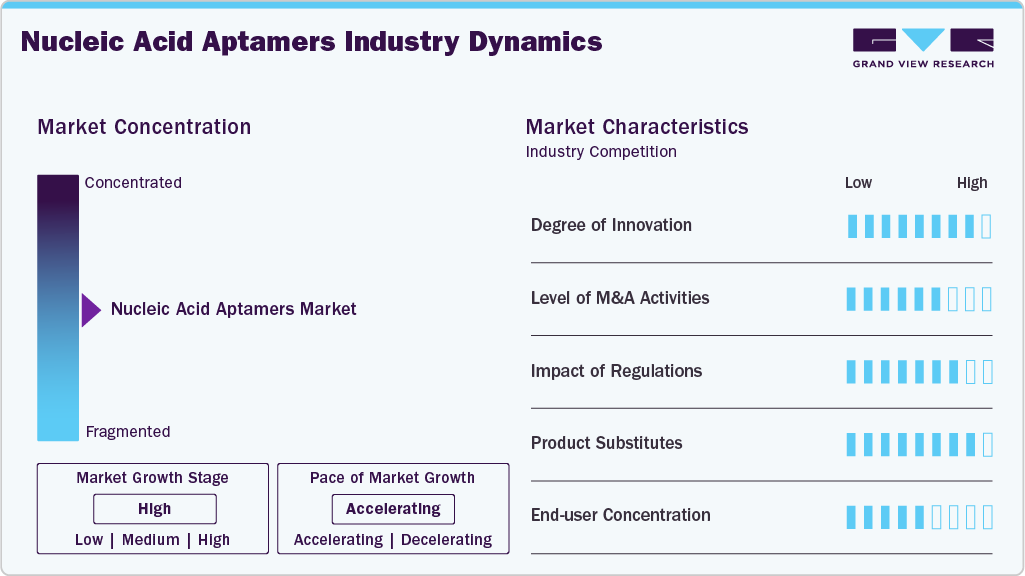
Market Concentration & Characteristics
The nucleic acid aptamers industry is characterized by a high degree of innovation, driven by advancements in AI-assisted aptamer discovery, automated screening, sequence optimization, and development of application-specific binders. These technologies are improving the speed and efficiency of aptamer identification while expanding their use across diagnostics, therapeutics, and research applications. For instance, in June 2026, Aptamer Group reported delivering its first AI-generated Optimer candidates for laboratory testing, alongside investments in platform automation to expand its discovery and manufacturing capabilities. The development highlights the industry's increasing integration of AI and automation to accelerate aptamer development and improve platform scalability.
The nucleic acid aptamers industry is experiencing moderate M&A activity, with transactions focused on acquiring proprietary aptamer platforms, intellectual property, and complementary technology capabilities. Such transactions enable companies to strengthen their technology portfolios and accelerate the development of aptamer-based applications across diagnostics and therapeutics. For instance, in June 2025, NanoGroup acquired DOTO MEDICAL and the rights to an aptamer platform from PURE BIOLOGICS, including three patents covering modified-nucleotide synthesis and purification technology. The acquisition strengthened NanoGroup’s access to proprietary aptamer technologies and expanded its capabilities to develop and commercialize aptamer-based solutions.
 To learn more about this report, Download Free Sample Report
The nucleic acid aptamers industry is influenced by regulatory requirements for diagnostic and therapeutic applications, particularly for aptamer-based products intended for clinical use. Requirements related to analytical performance, specificity, safety, validation, and manufacturing consistency can increase development and commercialization timelines. Regulatory compliance also requires extensive performance evaluation and quality controls, which can increase development costs and create barriers to the commercialization of new aptamer-based products.
The nucleic acid aptamers industry is witnessing high product expansion, supported by the development of aptamer-based solutions across diagnostics, research, drug discovery, and therapeutics. For instance, in December 2025, Aptamer Group entered into a licensing agreement with Twist Bioscience for an Optimer binder targeting applications in hot-start PCR and next-generation sequencing, expanding the commercial applications of aptamer technology beyond conventional diagnostic uses.
The nucleic acid aptamers industry is experiencing moderate regional expansion, supported by growing commercialization partnerships, licensing agreements, and the development of aptamer applications across international life science markets. Companies are expanding proprietary aptamer platforms into diagnostics, research, therapeutics, and biomarker applications, broadening their commercial reach and supporting the adoption of nucleic acid aptamer technologies across global markets.
Analyst Perspective
The nucleic acid aptamers market is expected to grow strongly, driven by increasing adoption of aptamers in diagnostics, therapeutics, biosensing, and drug discovery. Growing demand for highly specific and stable molecular recognition technologies is supporting the development of aptamer-based solutions as alternatives to conventional antibodies. Advancements in aptamer selection and engineering technologies, coupled with rising investments in precision diagnostics and targeted therapeutics, are expected to create new growth opportunities.
Type Insights
The RNA aptamers segment accounted for the largest revenue share of 53.3% in 2025, driven by their structural versatility, high binding affinity, and broad applicability in therapeutic and diagnostic development. According to an article published by Nature in July 2026, researchers developed an RNA aptamer as a potential therapeutic agent for synucleinopathies, highlighting the expanding use of RNA aptamers in targeted therapeutic applications.
The XNA aptamers segment is expected to register the fastest CAGR over the forecast period, driven by their enhanced resistance to enzymatic degradation, improved stability under physiological conditions, and potential to address limitations associated with conventional DNA and RNA aptamers. Increasing research into chemically modified nucleic acids is further expanding their potential in therapeutics, diagnostics, and advanced molecular recognition applications.
Application Insights
The therapeutics segment dominated the market with a 44.6% share in 2025, driven by the increasing development of aptamer-based targeted therapies and their ability to selectively bind disease-associated molecular targets. Growing research into aptamer-drug conjugates, targeted delivery systems, and chemically modified aptamers is further supporting their application in oncology, ophthalmology, and other therapeutic areas.
The diagnostics segment is expected to register the fastest CAGR over the forecast period, driven by increasing demand for rapid, sensitive biomarker detection, growing adoption of aptamer-based biosensors, and expanding applications in point-of-care and infectious-disease diagnostics. For instance, in March 2026, researchers highlighted advances in aptamer- and DNAzyme-based biosensors for detecting pathogen biomarkers, bacterial cells, and viral particles, supporting the expanding diagnostic applications of aptamers.
End Use Insights
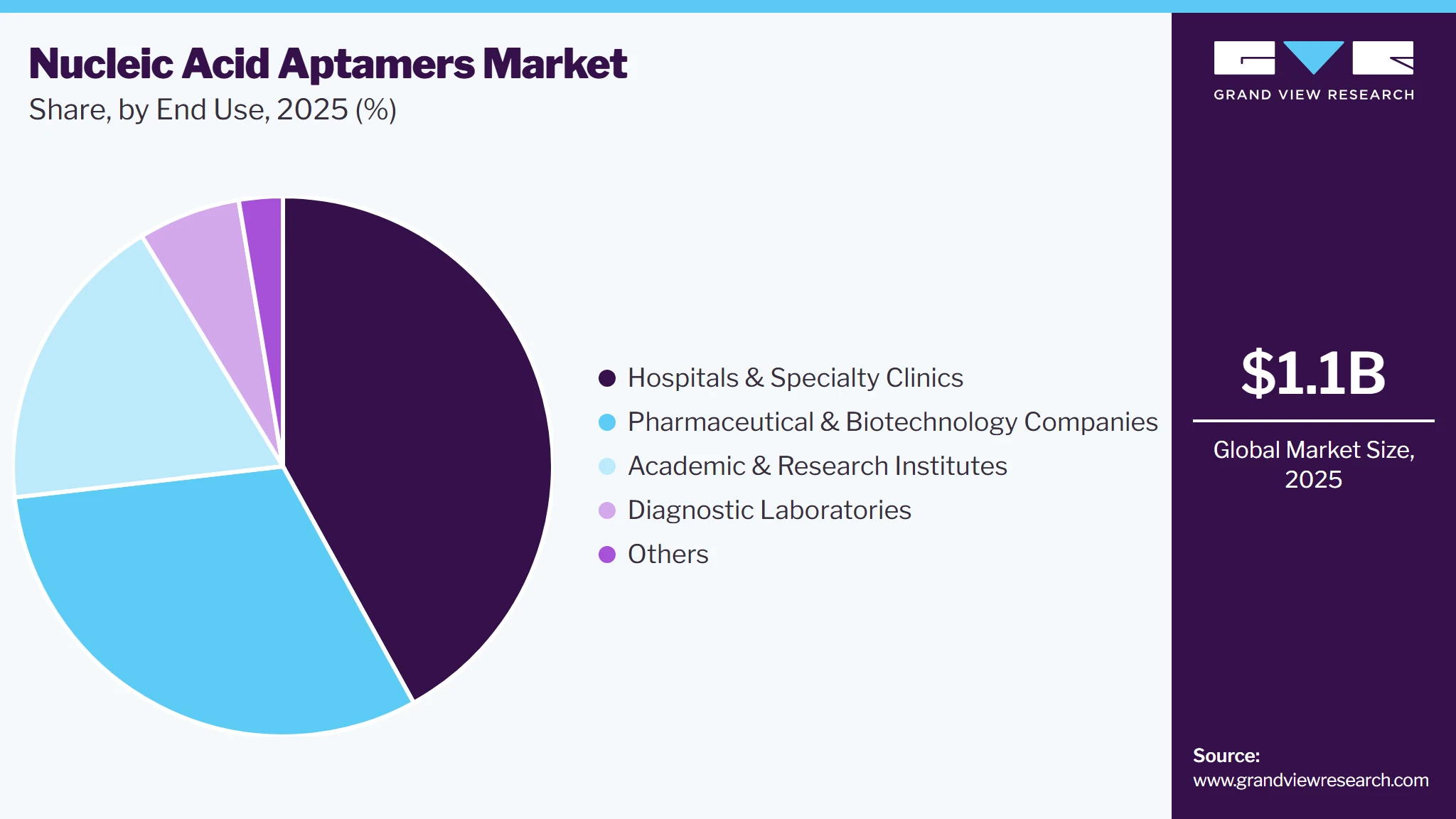
The hospitals & specialty clinics segment dominated the market with a share of 42.0% in 2025, driven by the increasing integration of advanced molecular testing and targeted aptamer-based solutions into clinical workflows. Rising demand for specialized biomarker evaluation, personalized treatment approaches, and technologies that enable selective molecular recognition is supporting the adoption of aptamer-based products across hospital and specialty care settings.
 To learn more about this report, Download Free Sample Report
The diagnostic laboratories segment is projected to witness the fastest CAGR, driven by the increasing adoption of high-sensitivity molecular testing, growing demand for biomarker-based disease assessment, and the integration of aptamer-based recognition elements into advanced diagnostic assays. Rising laboratory demand for rapid, selective, and scalable detection technologies is further supporting segment growth.
Regional Insights
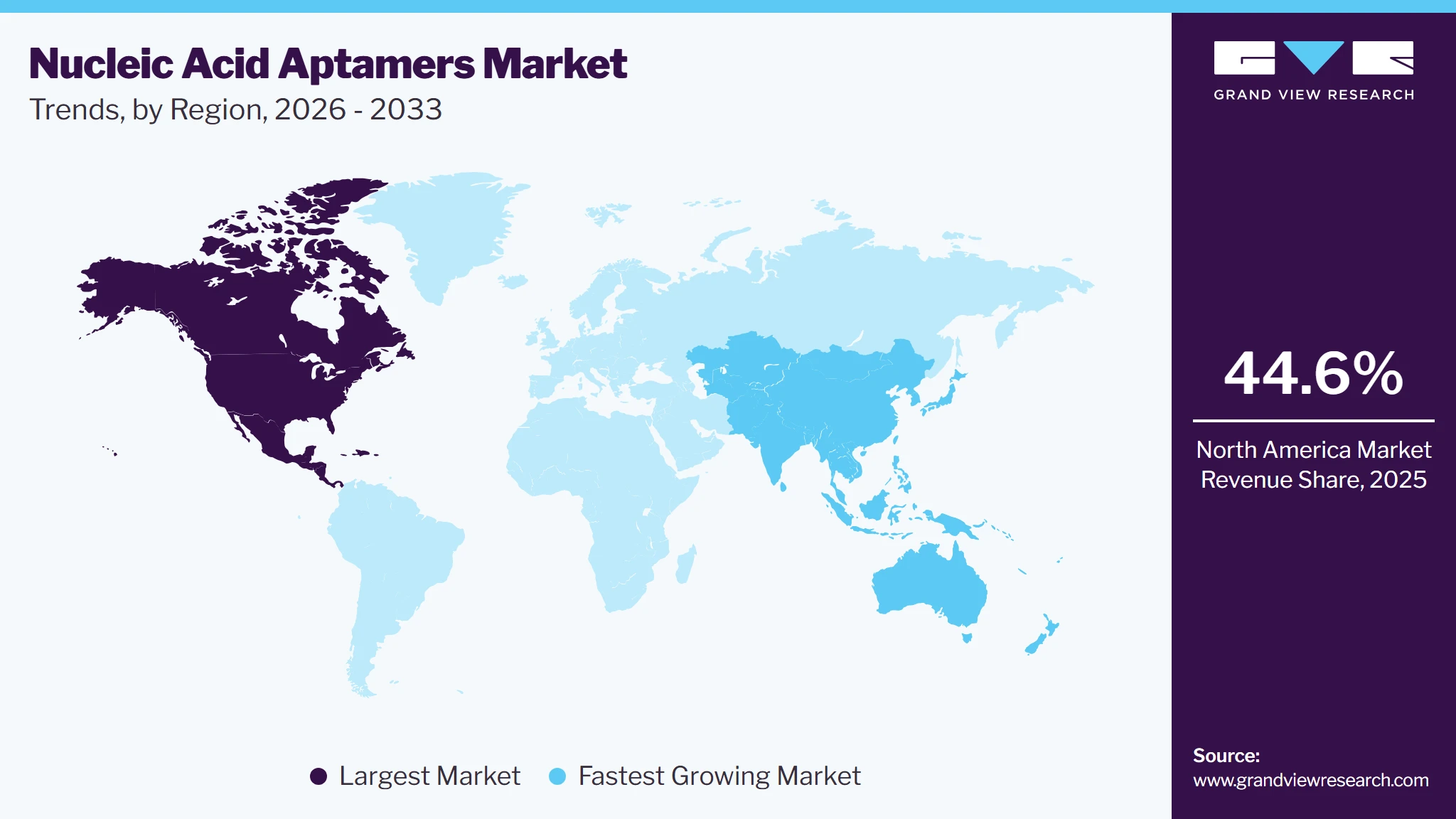
North America dominated the nucleic acid aptamers industry, accounting for the largest revenue share of 44.6% in 2025, supported by a strong biotechnology research base, advanced diagnostic capabilities, and increasing commercialization of aptamer-based technologies. The region benefits from growing activity in molecular diagnostics, biosensors, and contract aptamer discovery services. For instance, in March 2026, Triera Biosciences launched CRO services for custom aptamer discovery, biosensor enablement, and machine-learning classification across infectious disease and oncology applications, strengthening the region’s commercial aptamer ecosystem.
 To learn more about this report, Download Free Sample Report
U.S. Nucleic Acid Aptamers Market Trends
The nucleic acid aptamers industry in the U.S. is expected to grow over the forecast period, supported by strong pharmaceutical and biotechnology R&D, growing use of aptamers in proteomics and diagnostics, and increasing clinical interest in targeted molecular technologies. For instance, in September 2026, FDA researchers evaluated aptamer-based plasma proteomics as a high-throughput approach for simultaneously measuring more than 7,000 proteins, highlighting the expanding role of aptamer technologies in biomarker research and regulatory science.
Europe Nucleic Acid Aptamers Market Trends
The nucleic acid aptamers market in Europe was identified as a lucrative region in this industry, supported by established biotechnology and analytical research infrastructure and by the increasing development of advanced aptamer-based biosensing technologies. According to an article published by the NIH in March 2026, researchers from the University of Regensburg in Germany and the University of Ostrava in the Czech Republic published research on next-generation electrochemical aptasensors using aptamer-metal-organic framework (MOF) architectures for thrombin detection. The development highlights ongoing European research into advanced aptamer-based biosensors and supports the region’s potential for technology development and commercialization in the nucleic acid aptamers market.
The UK nucleic acid aptamers market is supported by growing research and commercialization of aptamer-based diagnostic and biosensing technologies. For instance, in June 2026, Aptamer Group announced a collaboration with Imperial College London, supported by the Gates Foundation, to develop rapid lateral-flow tests using its folic acid Optimer binders for food-fortification monitoring. The program includes the development of field-compatible sample preparation and validation of the technology for potential global deployment, highlighting the expansion of UK-developed aptamer technologies into practical diagnostic testing applications.
The nucleic acid aptamers market in Germany is anticipated to grow significantly over the forecast period, supported by strong biotechnology research and advanced biosensor development capabilities. According to an article published by the NIH in September 2025, researchers at Ulm University developed an aptamer-based graphene field-effect transistor sensor for the specific quantification of human adenovirus type 5, demonstrating applications in monitoring gene-therapy products and advanced biopharmaceutical processes.
Asia Pacific Nucleic Acid Aptamers Market Trends
Asia Pacific is expected to grow at the fastest CAGR of 19.7% during the forecast period, supported by expanding biotechnology research, increasing development of molecular diagnostics, and growing adoption of advanced biosensing technologies. The region’s expanding research capabilities, growing healthcare expenditure, and increasing focus on precision diagnostics are supporting the development and commercialization of aptamer-based technologies across clinical and research applications.
China is witnessing increasing research activity in aptamer-enabled diagnostics and biosensors, supported by its expanding biotechnology research base and growing focus on advanced molecular diagnostics. The integration of aptamers with emerging technologies such as CRISPR is further broadening their application in non-invasive disease detection. According to an article published by ASC Publication in October 2025, researchers developed an aptamer/CRISPR-Cas12a-based dual-modal biosensor for non-invasive colorectal cancer screening, demonstrating the potential of aptamer-based platforms for sensitive and targeted cancer diagnostics.
The nucleic acid aptamers market in Japan is expected to grow steadily, supported by advanced biomedical research capabilities and growing demand for non-invasive disease monitoring. According to an article published by Tokyo University of Science in March 2026, researchers in Japan developed DNA aptamers targeting neurofilament light chain, supporting their potential application in blood-based Alzheimer’s disease diagnostics and next-generation biosensors.
Latin America Nucleic Acid Aptamers Market Trends
The Latin America nucleic acid aptamers market is expected to grow gradually, supported by increasing research activity in aptamer-based diagnostics, rising demand for cost-effective disease detection, and growing applications in infectious disease monitoring. According to an article published by the NIH in November 2025, researchers in Brazil developed an electrochemical aptasensor for the simultaneous detection of dengue and Zika biomarkers, highlighting the potential of aptamer-based multiplex diagnostic platforms in the region.
MEA Nucleic Acid Aptamers Market Trends
MEA nucleic acid aptamers market is expected to grow steadily, supported by increasing investments in biotechnology and healthcare research, rising demand for advanced diagnostic technologies, and growing interest in aptamer-based biosensors and molecular diagnostics. Expansion of research capabilities and increasing focus on precision healthcare are expected to create opportunities for the adoption of nucleic acid aptamers across diagnostic and therapeutic applications.
Key Nucleic Acid Aptamers Company Insights
Several established companies operate in the nucleic acid aptamers market, offering aptamer-based therapeutics, diagnostics, biosensors, discovery platforms, and development services. Key players such as Astellas Pharma Inc., SomaLogic Operating Co., Inc. (acquired by Illumina, Inc.), TriLink BioTechnologies (a subsidiary of Maravai LifeSciences), Aptamer Group, RIBOMIC, CHOOLIP & SCIENCE Inc., TME Pharma, NeoVentures Biotechnology Inc., Aptadel Therapeutics, and Creative Biolabs focus on aptamer discovery, optimization, therapeutic development, diagnostic applications, and strategic collaborations.
Key Nucleic Acid Aptamers Companies
The following key companies have been profiled for this study on the nucleic acid aptamers market.
-
Astellas Pharma Inc.
-
SomaLogic Operating Co., Inc. (acquired by Illumina, Inc.)
-
TriLink BioTechnologies (a subsidiary of Maravai LifeSciences)
-
Aptamer Group
-
RIBOMIC
-
CHOOLIP & SCIENCE Inc.
-
TME Pharma
-
NeoVentures Biotechnology Inc.
-
Aptadel Therapeutics
-
Creative Biolabs
Competitive Benchmarking
Category
Operating Strategies
Competitive Edge
Weakness
Established Players (Astellas Pharma Inc., SomaLogic Operating Co., Inc. (acquired by Illumina, Inc.), TriLink BioTechnologies (a subsidiary of Maravai LifeSciences), Aptamer Group, RIBOMIC, etc.)
- Focus on expanding aptamer discovery, development, and nucleic acid-based therapeutic platforms, supported by investments in R&D and proprietary selection technologies.
- Diversified expertise across drug discovery, proteomics, diagnostics, and nucleic acid technologies, enabling application across multiple end-use areas.
- High R&D expenditure and lengthy development timelines are associated with the translation of aptamer technologies into commercial products.
Emerging Players (CHOOLIP & SCIENCE Inc., TME Pharma, NeoVentures Biotechnology Inc., Aptadel Therapeutics, Creative Biolabs)
- Expand through collaborations, contract research, and customized aptamer solutions for pharmaceutical, biotechnology, and academic customers.
- Greater flexibility and specialization in developing application-specific aptamers and molecular recognition technologies.
- Limited financial resources, global reach, and commercialization capabilities compared with larger life science and pharmaceutical companies.
Recent Developments
-
In March 2026, Aptamer Group launched a targeted radiopharmaceutical program with Radiopharmium, developing Optimer aptamer-based radioconjugates against therapeutic targets to advance targeted cancer therapies and expand its proprietary radiotherapy pipeline.
-
In September 2025, Aptamer Group partnered with Invizius to develop synthetic oligonucleotide Optimer binders targeting complement-system components, supporting therapeutic applications for immune-mediated diseases and strengthening commercialization opportunities for aptamer-based therapeutics.
-
In June 2025, Aptamer Group entered a development and licensing agreement with a global life sciences company to develop Optimer-Fc aptamer reagents for immunohistochemistry assays and diagnostic kits, supporting the commercialization of aptamer-based diagnostic technologies.
-
In May 2025, Aptamer Group and Neuro-Bio advanced an Optimer-based Alzheimer’s diagnostic by adapting the aptamer-based test into an ELISA format, strengthening commercialization prospects for aptamer-enabled biomarker detection and supporting development of diagnostic applications.
Nucleic Acid Aptamers Market Report Scope Table
Report Attribute
Details
Market size in 2025
USD 1.1 billion
Estimated market size in 2026
USD 1.3 billion
Projected market size by 2033
USD 4.2 billion
Growth rate
CAGR of 18.3% from 2026 to 2033
Historical data
2021 - 2025
Forecast period
2026 - 2033
Quantitative units
Revenue in USD million, and CAGR from 2026 to 2033
Report coverage
Revenue forecast, company ranking, competitive landscape, growth factors, and trends
Segments covered
Type, application, end use, region
Regional scope
North America; Europe; Asia Pacific; Latin America; MEA
Country scope
U.S.; Canada; Mexico; UK; Germany; France; Italy; Spain; Norway; Denmark; Sweden; China; Japan; India; South Korea; Australia; Thailand; Brazil; Argentina; Saudi Arabia; South Africa; UAE; Kuwait
Key companies profiled
Astellas Pharma Inc., SomaLogic Operating Co., Inc. (acquired by Illumina, Inc.), TriLink BioTechnologies (a subsidiary of Maravai LifeSciences), Aptamer Group, RIBOMIC, CHOOLIP & SCIENCE Inc., TME Pharma, NeoVentures Biotechnology Inc., Aptadel Therapeutics, and Creative Biolabs
Customization scope
Free report customization (equivalent up to 8 analysts' working days) with purchase. Addition or alteration to country, regional & segment scope.
Pricing and purchase options
Avail customized purchase options to meet your exact research needs. Explore purchase options
Global Nucleic Acid Aptamers Market Report Segmentation
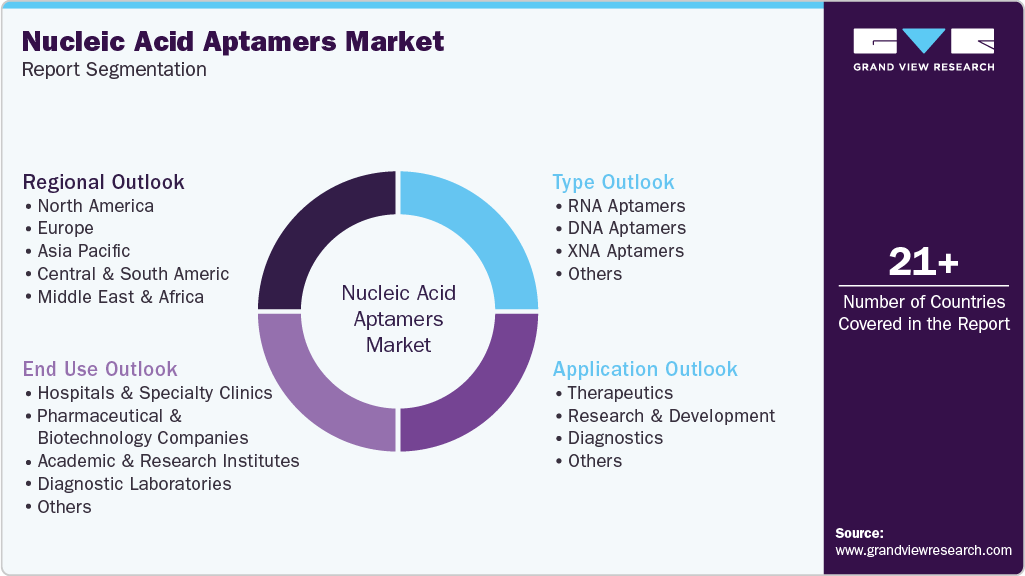
This report forecasts revenue growth and provides an analysis on the latest trends in each of the sub-segments from 2021 to 2033. For this report, Grand View Research has segmented the global nucleic acid aptamers market on the basis of type, application, end use, and region.
 To learn more about this report, Download Free Sample Report
-
Type Outlook (Revenue, USD Million, 2021 - 2033)
-
RNA Aptamers
-
DNA Aptamers
-
XNA Aptamers
-
Others
-
-
Application Outlook (Revenue, USD Million, 2021 - 2033)
-
Therapeutics
-
Research & Development
-
Diagnostics
-
Others
-
-
End Use Outlook (Revenue, USD Million, 2021 - 2033)
-
Hospitals & Specialty Clinics
-
Pharmaceutical & Biotechnology Companies
-
Academic & Research Institutes
-
Diagnostic Laboratories
-
Others
-
-
Regional Outlook (Revenue, USD Million, 2021 - 2033)
-
North America
-
U.S.
-
Canada
-
Mexico
-
-
Europe
-
UK
-
Germany
-
France
-
Italy
-
Spain
-
Denmark
-
Sweden
-
Norway
-
-
Asia Pacific
-
Japan
-
China
-
India
-
Australia
-
Thailand
-
South Korea
-
-
Latin America
-
Brazil
-
Argentina
-
-
Middle East and Africa (MEA)
-
South Africa
-
Saudi Arabia
-
UAE
-
Kuwait
-
-
Research Methodology
The nucleic acid aptamers market figures in this report are based on a proven research process that combines executive interviews with secondary research from proprietary databases, company filings, and recognized regulatory and institutional sources. Market size is built through value-chain sizing-reconciling supply-side and demand-side estimates-and triangulated with bottom-up and top-down approaches. Every estimate passes multiple levels of expert validation before publication, with each nucleic acid aptamers segment quantified using the revenue-capture definitions in the table below.
Segment Definition
Type
Revenue Capture Definition
RNA Aptamers
Revenue generated from RNA-based aptamer products consisting of short, single-stranded nucleic acid molecules engineered to selectively bind target molecules through specific three-dimensional structures. These aptamers are utilized in therapeutic development, molecular recognition, biosensing, and biomedical research.
DNA Aptamers
This segment captures income from DNA-based aptamers designed to recognize and bind specific molecular targets with high affinity and selectivity. Their applications span therapeutic research, diagnostics, target identification, and development of molecular detection technologies.
XNA Aptamers
Market value in this category stems from aptamers incorporating chemically modified or synthetic nucleic acid backbones that provide enhanced stability, resistance to degradation, or other functional properties. These molecules are being explored for specialized therapeutic, diagnostic, and research applications.
Others
Includes revenue from other nucleic acid aptamer formats and specialized molecular constructs that do not fall within conventional RNA, DNA, or XNA classifications, including emerging modified aptamer technologies developed for targeted applications.
Application
Revenue Capture Definition
Therapeutics
Revenue generated from nucleic acid aptamers developed for therapeutic applications, where their target-specific binding properties are utilized for disease treatment, molecular pathway modulation, targeted drug delivery, or the development of aptamer-based therapeutic candidates.
Research & Development
This segment reflects income from aptamers used in life sciences research and development activities, including target identification, protein interaction studies, molecular recognition, drug discovery, assay development, and investigation of biological pathways.
Diagnostics
Revenue originates from aptamer-based products utilized for the detection, identification, and measurement of biomarkers, pathogens, proteins, and other analytes in diagnostic and analytical workflows. Their selectivity and binding properties support the development of biosensors, diagnostic assays, and molecular detection platforms.
Others
Covers revenue from nucleic acid aptamer applications outside the primary therapeutic, research, and diagnostic categories, including biosensing, environmental monitoring, food testing, and other emerging analytical applications.
End Use
Revenue Capture Definition
Hospitals & Specialty Clinics
Revenue generated from nucleic acid aptamer-based products and solutions utilized in healthcare settings for diagnostic testing, biomarker detection, therapeutic applications, and specialized clinical investigations.
Pharmaceutical & Biotechnology Companies
This segment captures income from aptamer technologies adopted by pharmaceutical and biotechnology companies for therapeutic development, drug discovery, target validation, diagnostics development, and other biopharmaceutical research programs.
Academic & Research Institutes
Market value in this category stems from the use of nucleic acid aptamers by universities, research institutes, and scientific organizations for molecular biology studies, target-binding research, assay development, and fundamental and translational research.
Diagnostic Laboratories
Revenue originates from aptamer-based products and technologies used by diagnostic laboratories for biomarker detection, molecular testing, disease identification, and the development or execution of analytical assays.
Others
Includes revenue from contract research organizations, government laboratories, industrial research facilities, and other specialized users employing aptamer technologies for research, analytical, diagnostic, or emerging applications.
Estimation Model
Methodology Stage
Analysis / Model
Description
Top-Down
Commodity Flow Analysis
Market size was estimated by analyzing revenues generated by key nucleic acid aptamer manufacturers and technology providers, supported by company annual reports, investor presentations, product portfolios, industry databases, and primary research. Revenue contributions from private and smaller market participants were assessed using industry databases and validated through primary interviews to derive the overall market value.
Parent Market
Parent Market & Penetration-Based Analysis
The nucleic acid aptamers market was evaluated by analyzing the broader aptamers market, with emphasis on the penetration of nucleic acid-based aptamers across research, diagnostics, therapeutics, drug discovery, and biopharmaceutical applications. Adoption trends, technology utilization, and application penetration were assessed to estimate the addressable market and segment-level opportunities.
Segmentation
Country-Level Segment Share Modeling
Market shares for nucleic acid aptamer type, application, and end use segments were derived using country-specific biotechnology R&D expenditure, diagnostic and pharmaceutical research activity, clinical development, academic research intensity, and adoption of aptamer-based technologies. Weighted average calculations were applied to determine regional and global segment distributions.
Validation
Data Triangulation & Validation Model
Market estimates were validated through triangulation of secondary research, primary interviews, parent-market assessments, company-level revenue analysis, application-level demand analysis, and country-level adoption estimates to ensure consistency and accuracy across market segments and geographies.
Forecasting
Forecasting & CAGR Modeling
Market forecasts were developed using historical adoption trends, increasing applications of aptamers in targeted therapeutics and diagnostics, growth in drug discovery research, advancements in aptamer selection technologies, and increasing investments in biotechnology and precision medicine. Regression-based analysis and trend modeling were applied to project future market growth and CAGR.
Delivered Customizations
This report has been delivered with the following In-depth customizations
Client Request
Customization Delivered
Value Adds
Aptamer Manufacturing & Scale-up Assessment
Evaluation of manufacturing requirements for synthetic DNA and RNA aptamers, including chemical synthesis, purification, modification, quality control, scalability, batch consistency, and manufacturing requirements for research, diagnostic, and therapeutic applications.
Supports clients in assessing production scalability, identifying manufacturing constraints, optimizing production workflows, and evaluating readiness for commercial-scale aptamer manufacturing.
Aptamer Modification & Conjugation Technology Assessment
Comparative analysis of chemical modification and conjugation technologies, including PEGylation, fluorescent labeling, biotinylation, nucleotide modification, nanoparticle conjugation, and drug or payload attachment based on stability, affinity, specificity, and application requirements.
Help clients select appropriate modification strategies, improve aptamer performance, develop application-specific products, and expand opportunities in diagnostics and targeted therapeutics.
Aptamer-based Diagnostics & Biosensor Opportunity Analysis
Assessment of aptamer applications in liquid biopsy, biomarker detection, infectious disease testing, cancer diagnostics, point-of-care testing, and biosensors, including target types, detection platforms, assay formats, and commercialization activity.
Enables clients to identify emerging diagnostic opportunities, assess unmet market needs, prioritize target applications, and develop strategies for commercializing aptamer-based diagnostic solutions.
Frequently Asked Questions About This Report
Asia Pacific is the fastest-growing region over the forecast period.
The global nucleic acid aptamers market size was valued at USD 1.1 billion in 2025 and is estimated at USD 1.3 billion for 2026.
The global nucleic acid aptamers market is expected to grow at a CAGR of 18.3% from 2026 to 2033, reaching USD 4.2 billion by 2033.
North America dominated with a 44.6% revenue share in 2025.
Market growth is driven by the increasing adoption of nucleic acid aptamers in diagnostics, therapeutics, drug discovery, biosensors, and targeted molecular detection, along with advancements in aptamer selection technologies, high-throughput screening, chemical modification, and precision medicine applications.
Key players includes Astellas Pharma Inc., SomaLogic Operating Co., Inc. (acquired by Illumina, Inc.), TriLink BioTechnologies (a subsidiary of Maravai LifeSciences), Aptamer Group, RIBOMIC, CHOOLIP & SCIENCE Inc., TME Pharma, NeoVentures Biotechnology Inc., Aptadel Therapeutics, and Creative Biolabs
The therapeutics segment led with a 44.6% revenue share in 2025 while diagnostics segment is expected to be the fastest-growing market.
The hospitals & specialty clinics segment dominated the market with a share of 42.0% in 2025, driven by the increasing integration of advanced molecular testing and targeted aptamer-based solutions into clinical workflows.
The RNA aptamers segment accounted for the largest revenue share of 53.3% in 2025 and XNA aptamers segment is second fastest growing market.
About the Author(s)
Biotechnology Research Team
Healthcare · BiotechnologyThis report was authored by the biotechnology research team at Grand View Research - comprising two research analysts, one senior research analyst, and one industry expert - with specialized expertise in the biotechnology segment of the healthcare industry. All findings are based on proprietary healthcare databases, executive interviews, and regulatory analysis, subject to internal peer review prior to publication.
Last Updated:
Speak to Analyst

Customize this report to your needs - add regions, segments, or data points, with 20% free customization.
Or view our licence options:


ISO 9001:2015 & 27001:2022 Certified
We are GDPR and CCPA compliant! Your transaction & personal information is safe and secure. For more details, please read our privacy policy.


