
- Home
- »
- Food Additives & Nutricosmetics
- »
-
Oat Oil Market Size, Share And Trends Report, 2026-2033GVR Report cover

Oat Oil Market (2026 - 2033)
Size, Share & Trends Analysis Report By Product (Cold-pressed, Refined), By End-use (Personal Care & Cosmetics, Food & Beverage, Pharmaceuticals, Animal Health), By Region, And Segment Forecasts
Market Size, 2025
$69.4MMarket Estimate, 2026
$73.2MMarket Forecast, 2033
$111.6MCAGR, 2026–2033
6.2%Oat Oil Market Summary
The global oat oil market size was valued at USD 69.4 million in 2025 and is projected to grow from USD 73.2 million in 2026 to USD 111.6 million by 2033, growing at a CAGR of 6.2% from 2026 to 2033. Europe dominated the market, accounting for the largest global share of 41.0% in 2025. The market’s growth is primarily driven by rising consumer demand for natural, plant-based ingredients in skincare, haircare, and dietary products.
 Source: Grand View Research, IR Documents, Primary Interviews, Paid DatabasesTo learn more about this report,
 Download Free Sample Report
 Key Market Trends & Insights
- By product: Cold-pressed segment held the largest share of 55.5% in 2025.
- By end-use: Personal care & cosmetics segment held the largest share of 58.6% in 2025.
Regional Highlights
- Largest regional market: Europe (41.0% revenue share, 2025)
- Fastest-growing regional market: Asia Pacific (fastest CAGR, 2026-2033)
- By country: Germany held the largest share of Europe in 2025.
Market Size & Forecast
- Market size in 2025: USD 69.4 Million
- Estimated market size in 2026: USD 73.2 Million
- Projected market size by 2033: USD 111.6 Million
- CAGR (2026-2033): 6.2%
Three ways to get this report
Buy it, customize it, or ask a question.Ask an Analyst
A direct answer, usually in 1 working day
- AccessReport author, directly
- Reply timeWithin 1 working day
- No sales callDirect answer only
- FormatEmail reply
- CostFree, no cost
Get the Full Report
What the study covers
- FormatsPDF · Excel · Dashboard
- Timeline2026–2033 annual, 2025 base
- Coverage20+ countries, 5 regions
- Companies10+ key players profiled
Customize the Report
20% free customization
- IncludeCountries, segments, points
- TailorTo your product definition
- ExtendDeeper competitor detail
- OrA fully bespoke study
- Turnaround5–10 working days
Increasing awareness of oat oil’s moisturizing, antioxidant, and anti-inflammatory properties has made it a popular choice in clean-label cosmetics and wellness formulations. In addition, the growing preference for sustainable and nutrient-rich oils over synthetic alternatives is further propelling market expansion.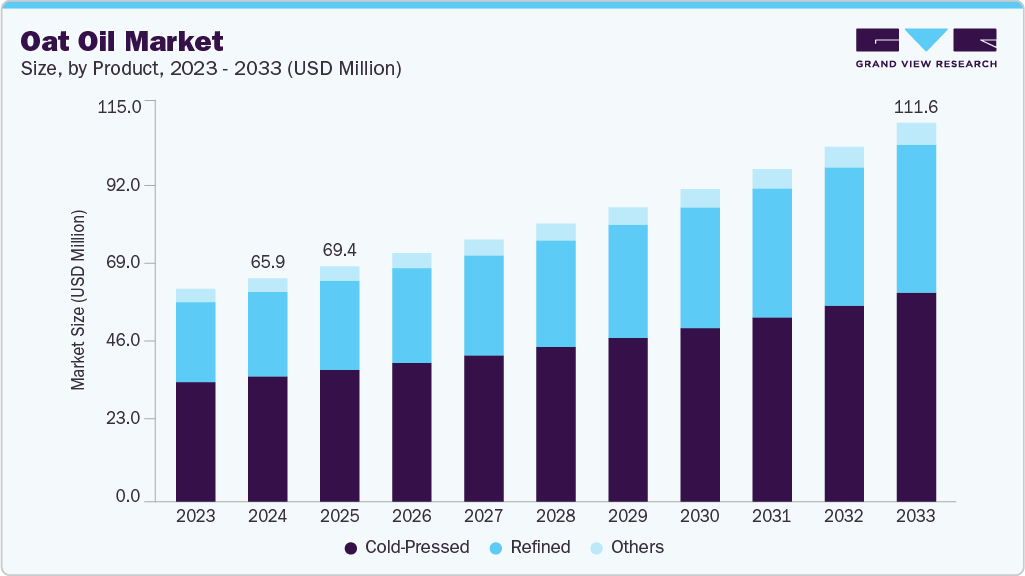 To learn more about this report, Download Free Sample Report
 The oat oil market is witnessing robust growth as consumers increasingly prioritize natural and plant-derived ingredients in personal care, food, and nutraceutical applications. Oat oil, rich in essential fatty acids, antioxidants, and vitamins, is gaining popularity for its proven benefits in moisturizing, soothing, and protecting the skin. Its mild, hypoallergenic nature makes it a preferred choice in formulations for sensitive and dry skin, while its use in haircare products is expanding due to its nourishing and scalp-calming properties. Moreover, the broader trend toward clean-label and sustainable products, coupled with rising disposable incomes and awareness of wellness-oriented lifestyles, continues to support steady market expansion.
However, one of the key challenges restraining market growth is the relatively high cost of oat oil compared to conventional plant oils such as sunflower or soybean oil. The extraction process, often cold-pressed or CO₂-based, is more complex and yields smaller quantities, impacting cost efficiency for large-scale manufacturers. Limited raw material availability in some regions also leads to supply fluctuations, while product formulation challenges-such as stability in certain cosmetic bases-can limit broader adoption. Moreover, smaller producers face hurdles in maintaining consistent quality and compliance with international cosmetic and food-grade certifications, which can restrict export potential.
Despite these challenges, the market presents significant opportunities as the demand for multifunctional and sustainable ingredients accelerates. Growing innovation in green extraction technologies and improved crop processing methods are helping enhance yield and purity while reducing costs. The expanding application of oat oil in premium skincare, dietary supplements, and even functional foods positions it as a versatile and high-value ingredient. Collaborations between cosmetic formulators and agricultural suppliers are further expected to drive product development, enabling oat oil to move from niche use toward mainstream acceptance in global wellness and beauty markets.
Market Dynamics
The oat oil market is growing due to rising consumer preference for natural and plant based ingredients in personal care and skincare products. Oat oil is widely valued for its moisturizing, soothing, and skin barrier repairing properties, making it suitable for sensitive and dry skin formulations. Increasing awareness of clean label and sustainable beauty products has encouraged manufacturers to incorporate oat oil into premium product lines. Expanding demand for vegan cosmetics, baby care products, and dermatological applications continues to create new opportunities, while ongoing product innovation strengthens the market's long term growth potential.
Growing consumer interest in natural and plant derived skincare ingredients has increased the use of oat oil across cosmetic and personal care formulations. Oat oil contains essential fatty acids, ceramides, vitamin E, and antioxidants that help moisturize the skin, strengthen the skin barrier, and reduce irritation. These properties make it a preferred ingredient in products designed for sensitive, dry, and allergy prone skin. Brands are expanding their product portfolios with botanical ingredients to meet changing consumer preferences for clean label and naturally sourced formulations.
Demand for premium skincare, baby care, and dermatological products continues to encourage manufacturers to include oat oil in creams, lotions, serums, cleansers, and hair care products. Consumers are paying greater attention to ingredient transparency and product safety, leading brands to replace synthetic ingredients with naturally derived alternatives wherever possible. This shift supports steady demand for oat oil and encourages ingredient suppliers to expand production capacity and develop specialized formulations for different personal care applications.
Oat oil production involves specialized extraction methods, high quality oat bran, and careful refining processes to preserve its beneficial compounds, resulting in higher manufacturing costs than many conventional vegetable oils used in personal care products. Premium pricing limits its adoption in mass market skincare and cosmetic formulations where manufacturers must maintain competitive product prices. Small and medium sized brands often face difficulties incorporating oat oil because of budget constraints and cost sensitive consumers may prefer lower priced alternatives with similar functional properties. These pricing limitations reduce large scale penetration in developing markets and restrict broader use across everyday personal care products despite increasing awareness of its skin nourishing benefits.
Increasing demand for clinically supported skincare products offers manufacturers an opportunity to develop premium formulations containing oat oil for dermatological and therapeutic applications. Consumers seeking solutions for eczema, dry skin, irritation, and compromised skin barriers are creating demand for products formulated with naturally derived functional ingredients. Manufacturers can strengthen their market position by introducing specialized creams, lotions, facial serums, scalp treatments, and baby care products that highlight oat oil’s soothing and moisturizing properties. Collaboration with dermatologists, cosmetic brands, and research institutions can support product differentiation and improve consumer confidence. Investment in certified sustainable sourcing and advanced extraction processes can further enhance product value, allowing manufacturers to access premium markets and strengthen long term profitability.
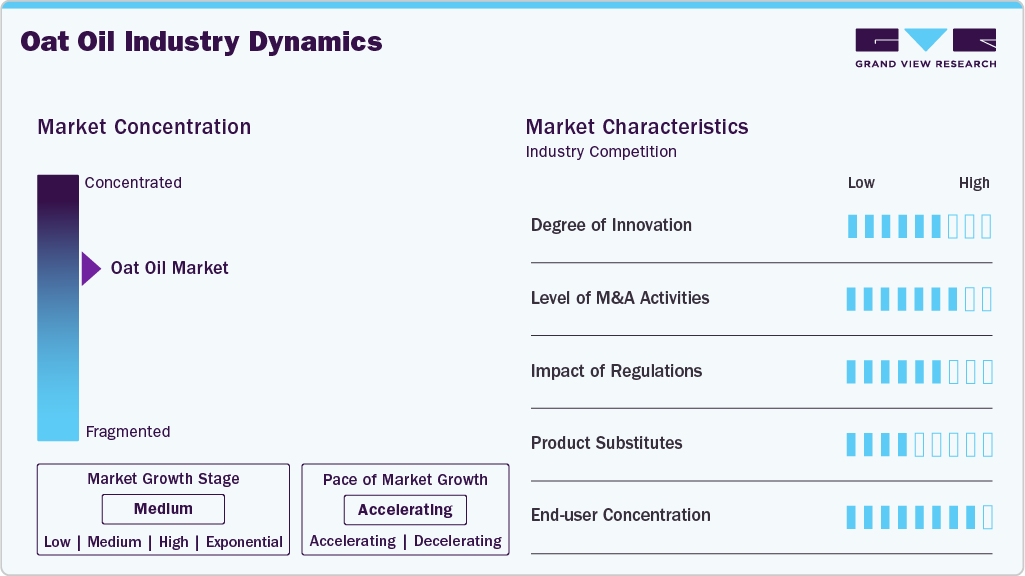
Market Concentration & Characteristics
The oat oil market is moderately fragmented, characterized by a mix of established cosmetic ingredient suppliers, niche natural oil producers, and emerging clean-beauty brands. While global players such as Croda International, Hallstar, and Oat Cosmetics hold a significant presence through advanced extraction capabilities and consistent product quality, several smaller regional producers are entering the market by focusing on organic certification and sustainable sourcing. These players often cater to specialized cosmetic and personal care formulators looking for traceable, eco-friendly ingredients.
 To learn more about this report, Download Free Sample Report
 In terms of characteristics, the market is defined by its alignment with clean beauty, sustainability, and transparency trends. Consumers are showing strong preference for naturally sourced, cruelty-free, and non-GMO oils, prompting brands to emphasize ingredient origin and processing methods. However, the market also exhibits sensitivity to raw material costs and quality variations tied to regional oat cultivation. As a result, companies are increasingly investing in vertical integration, supply chain traceability, and partnerships with local oat producers to ensure consistent quality and maintain a competitive edge in a market driven by purity, performance, and sustainability.
Analyst Perspective
The oat oil market is expected to maintain steady growth as demand for natural, skin friendly ingredients continues to expand across personal care and pharmaceutical applications. Premium skincare brands are increasing the use of oat oil to meet consumer preferences for clean label and plant based formulations. Manufacturers investing in sustainable sourcing, high purity extraction, and specialized ingredient development are likely to strengthen their competitive position. Product innovation and expanding applications in wellness and dermatological products are expected to support long term market opportunities.
Product Insights
The cold-pressed segment accounted for the largest share of the oat oil market, representing 55.5% of total revenue in 2025, owing to its superior nutritional and functional profile that aligns well with the clean-label and natural product trends. This extraction method preserves the oil’s bioactive compounds such as tocopherols, phospholipids, and omega fatty acids, which enhance its antioxidant and skin-repairing properties. Cold-pressed variants are widely preferred in premium skincare, haircare, and nutraceutical formulations where purity and efficacy are key selling points.
Refined oat oil segment is projected to register the fastest CAGR of 6.6% over the forecast period, supported by its increasing use in large-scale cosmetic and personal care manufacturing. The refining process offers better color stability, reduced odor, and extended shelf life; qualities that make it suitable for mass-market formulations and functional food products. Manufacturers favor refined variants for their consistent quality and ease of integration into emulsions, creams, and hair treatments.
End-use Insights
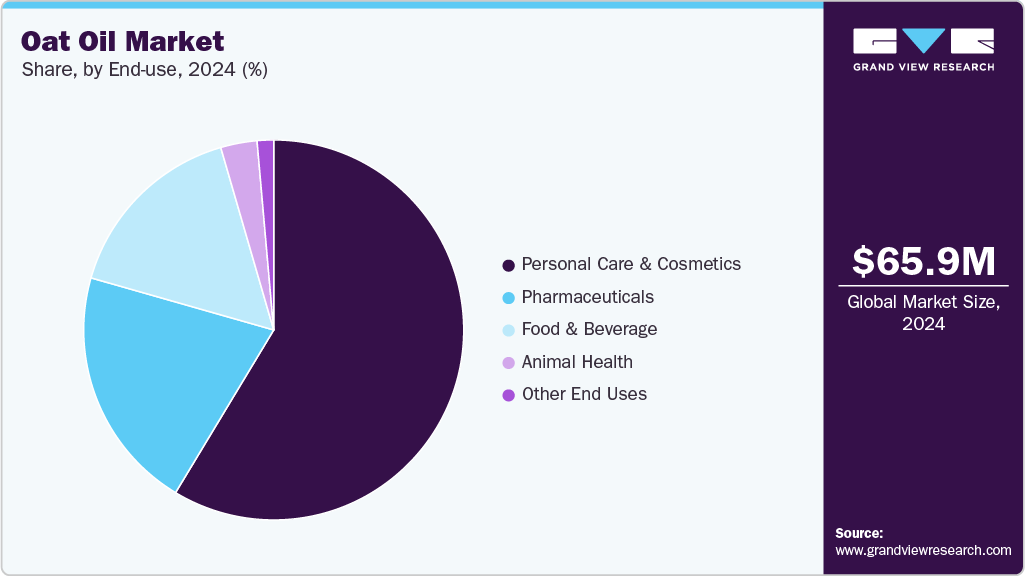
The personal care & cosmetics segment accounted for the largest revenue share of 58.6% in 2025, driven by growing consumer inclination toward natural, skin-friendly, and sustainably sourced ingredients. Oat oil’s excellent emollient, moisturizing, and anti-inflammatory properties make it a key ingredient in facial serums, body lotions, haircare formulations, and baby care products. The ongoing shift toward clean beauty and vegan formulations has further strengthened its adoption among global cosmetic brands.
 To learn more about this report, Download Free Sample Report
 The food and beverage segment is projected to record the fastest CAGR of 6.9% over the forecast period, as oat oil gains traction as a functional and health-promoting edible oil. Rich in unsaturated fatty acids, vitamin E, and antioxidants, oat oil is increasingly incorporated into dietary supplements, plant-based dairy alternatives, and health foods targeting heart and skin health. Moreover, the rising consumer focus on clean-label, nutrient-dense, and allergen-free food options continues to create new opportunities for oat oil producers, particularly in Asia Pacific and North America’s rapidly evolving functional food markets.
Regional Insights
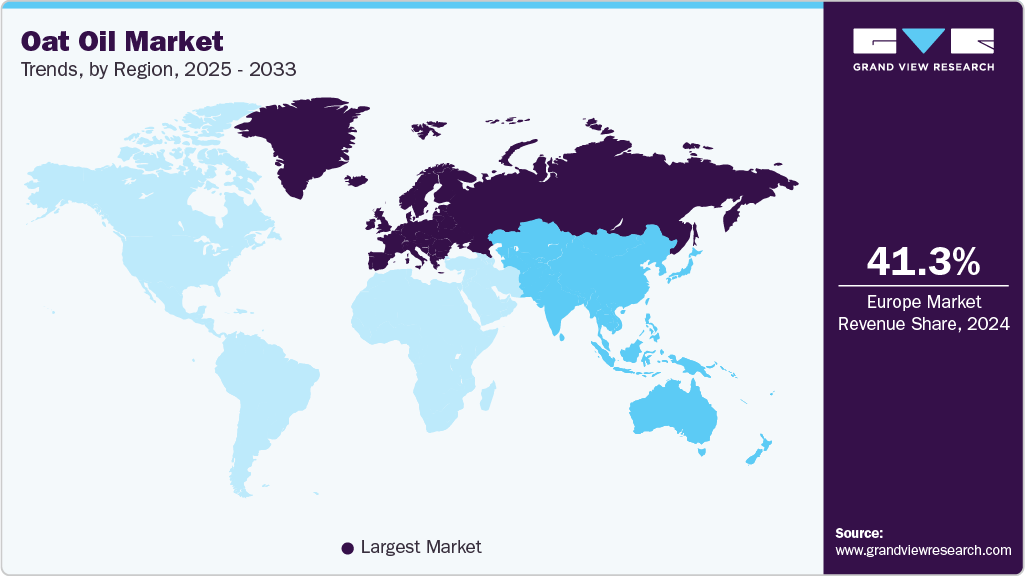
Europe accounted for 41.0% of the oat oil market revenue in 2025, making it the largest regional market, supported by the region’s strong cosmetic manufacturing base, stringent ingredient safety standards, and mature consumer preference for natural and sustainable formulations. European brands are actively promoting oat oil’s dermatological benefits such as hydration and skin barrier repair, making it a staple in premium and dermo cosmetic lines. Additionally, the region’s advanced R&D ecosystem and commitment to sustainability have encouraged greater use of organically sourced, traceable oat oil in both personal care and nutraceutical applications.
 To learn more about this report, Download Free Sample Report
 Germany maintained a leading position in the Europe oat oil market. The country’s mature personal care industry and consumer trust in natural formulations have accelerated oat oil adoption, particularly in sensitive skin and anti-aging product lines.
North American Oat Oil Market Trends
North America represents a significant market for oat oil, driven by increasing consumer focus on plant-based wellness and premium personal care products. The U.S. dominates regional demand, fueled by the rising popularity of clean beauty, holistic health supplements, and functional foods. Major beauty brands and indie startups alike are integrating oat oil into formulations marketed for sensitive skin and scalp care. Furthermore, growing awareness of sustainable ingredient sourcing, coupled with product innovation in oat-based beverages and snacks, continues to expand market potential across the region.
U.S. Oat Oil Market Trends
The oat oil market in the U.S. is driven by the surging demand for clean beauty and plant-based nutrition. Consumer interest in sustainable, cruelty-free ingredients has prompted leading cosmetic brands to incorporate oat oil into moisturizers, serums, and baby care products. The trend is also spilling into functional foods and dietary supplements, reinforcing its cross-sector relevance.
Asia Pacific Oat Oil Market Trends
Asia Pacific is projected to witness the fastest growth, with a CAGR of 7.8% from 2026 to 2033, as rising disposable incomes and beauty consciousness drive demand for natural and multifunctional skincare ingredients. Increasing adoption of Western beauty trends, coupled with rapid expansion of domestic cosmetic brands in China, Japan, and South Korea, is accelerating oat oil consumption. Expanding applications in functional foods and dietary supplements further reinforce Asia Pacific’s leading growth trajectory.
Oat oil market in China is witnessingdemand and expanding rapidly due to rising disposable incomes, the influence of K-beauty and J-beauty trends, and the local industry’s growing focus on natural actives. Domestic cosmetic brands are increasingly highlighting oat oil’s hydrating and soothing benefits, while its integration into plant-based foods and beverages is opening new growth avenues in the wellness sector.
Latin America Oat Oil Market Trends
Latin America’s oat oil market is gaining momentum, supported by growing awareness of botanical and organic ingredients in cosmetics and wellness products. Countries such as Brazil and Mexico are seeing rising adoption of plant-derived oils in skincare formulations targeting hydration and UV protection. In addition, the region’s expanding middle-class population and retail access to natural beauty products are creating a favorable environment for new entrants.
Middle East And Africa Oat Oil Market Trends
The Middle East & Africa region presents emerging opportunities for oat oil, driven by the growing demand for premium and natural personal care products. Increasing urbanization, rising disposable income, and expanding beauty retail infrastructure in the Gulf countries are fostering greater interest in high-quality plant-based oils. Moreover, the rising awareness of skin protection and nourishment in arid climates has positioned oat oil as an effective ingredient for moisture retention and skin repair.
Key Oat Oil Company Insights
Some of the key players operating in the market include Fazer Mills, COSCIENS BIOPHARMA, Charkit Chemical Company, Nature In Bottle, and others
-
Oat Cosmetics (operating under Oat Services Ltd.) is a UK-based specialty ingredients supplier focusing on oat-derived actives, oils, and formulations for cosmetics and personal care. Its product portfolio emphasizes traceability, sustainability, and natural processing methods. It holds certifications such as ECOCERT and COSMOS for its oat ingredients.
-
Charkit Chemical Company is a U.S.-based specialty chemical and ingredient supplier that covers personal care, food, flavor & fragrance, nutrition, and specialty extracts sectors. The company handles natural oils, extracts, and specialty actives (including oat extracts) across multiple end-markets. The 2019 acquisition of Custom Ingredients expanded Charkit’s capabilities in formulating and supplying complex blends, enabling more customized offer sets to its customers.
Key Oat Oil Companies:
The following key companies have been profiled for this study on the oat oil market.
-
COSCIENS BIOPHARMA
-
Charkit Chemical Company
-
Connoils
-
Fazer Mills
-
Givaudan
-
Oat Cosmetics
-
VedaOils
-
Nature In Bottle
-
O&3
Competitive Benchmarking
Category
Operating Strategies
Competitive Edge
Weakness
Established Players (Givaudan, Oat Cosmetics, Fazer Mills, Connoils, COSCIENS BIOPHARMA)
- These companies focus on manufacturing high purity oat oil ingredients for premium skincare, cosmetic, and pharmaceutical formulations.
- They emphasize long term partnerships with global brands and invest in sustainable sourcing, ingredient certification, and product innovation to strengthen market presence.
- Their advantages include advanced extraction technologies, established manufacturing infrastructure, extensive research capabilities, and global distribution networks.
- Strong technical support and regulatory compliance enable them to supply consistent quality ingredients for international cosmetic and healthcare manufacturers.
- Premium production methods increase manufacturing costs and product prices.
- Dependence on high quality oat harvests and concentration in premium market segments reduce competitiveness in cost sensitive applications and limit penetration into lower priced consumer product categories.
Emerging Players (VedaOils, Nature In Bottle, O&3, Charkit Chemical Company)
- These companies focus on supplying specialty oat oil ingredients to niche cosmetic manufacturers, formulators, and private label brands.
- Their strategy emphasizes flexible order quantities, customized solutions, online distribution, and expansion into natural ingredient markets.
- They respond quickly to changing customer requirements and offer personalized service with specialized botanical ingredient portfolios.
- Their flexibility allows efficient supply to small and medium sized manufacturers seeking natural and premium formulation ingredients.
- Limited production capacity and narrower international distribution reduce market reach.
- Lower investment in research, product development, and global marketing makes it difficult to compete with established multinational ingredient manufacturers in large commercial supply agreements.
Recent Development
-
In July 2025, researchers at the University of South Australia had a breakthrough in understanding the biological triggers of oil production in oat grains. Their “omics” (lipidomics & proteomics) approach mapped out how oil accumulates during grain development and identified key enzymes involved in the process. The insight is expected to guide future breeding programs aimed at optimizing oil yield and improving processing efficiency in oat supply chains.
-
In October 2025, Swedish food-tech start-up Saveggy launched an additive-free edible coating for fresh produce that uses rapeseed oil and oat oil as the base. The coating is designed to replace traditional plastic wrap, with a pilot trial already underway for cucumbers in Sweden. The innovation underscores oat oil’s potential in novel, sustainable packaging applications.
Oat Oil Market Report Scope
Report Attribute
Details
Market size value in 2025
USD 69.4 million
Market size value in 2026
USD 73.2 million
Revenue forecast in 2033
USD 111.6 million
Growth rate
CAGR of 6.2% from 2026 to 2033
Base year for estimation
2025
Historical data
2021 - 2024
Forecast period
2026 - 2033
Quantitative units
Revenue in USD million, and CAGR from 2026 to 2033
Report coverage
Revenue forecast, company ranking, competitive landscape, growth factors, and trends
Segments covered
Product, end-use, region
Regional scope
North America; Europe; Asia Pacific; Latin America; MEA
Country scope
U.S.; Canada; Mexico; Germany; UK; France; Italy; Spain; Poland; China; Japan; India; South Korea; Brazil;
Key companies profiled
COSCIENS BIOPHARMA; Charkit Chemical Company; Connoils; Fazer Mills; Givaudan; Oat Cosmetics; VedaOils; Nature In Bottle; O&3
Customization scope
Free report customization (equivalent up to 8 analysts' working days) with purchase. Addition or alteration to country, regional & segment scope.
Pricing and purchase options
Avail customized purchase options to meet your exact research needs. Explore purchase options
Global Oat Oil Market Report Segmentation
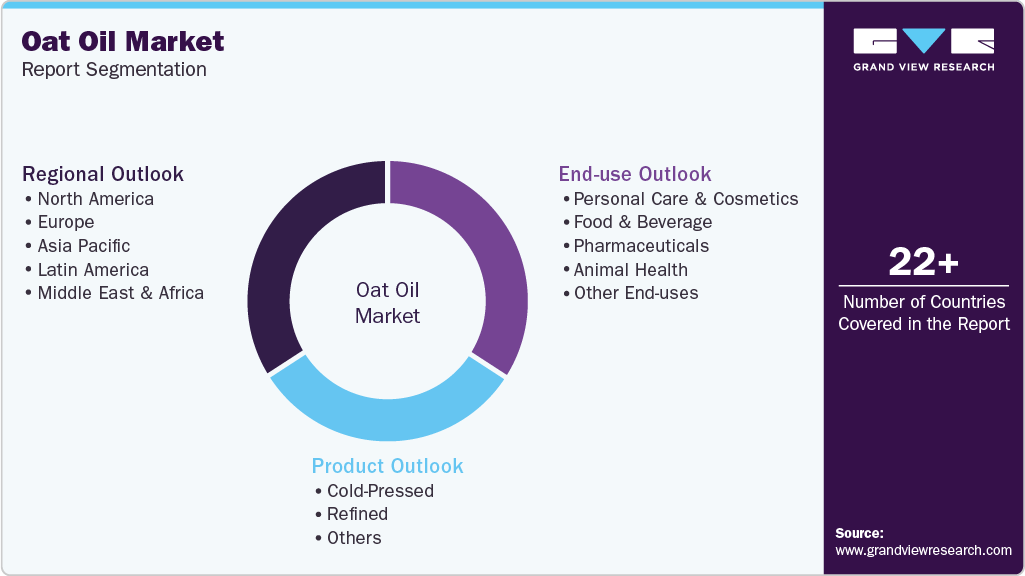
This report forecasts revenue growth at a global level and provides an analysis of the latest industry trends in each of the sub-segments from 2021 to 2033. For this study, Grand View Research has segmented the global Oat Oil market report based on product, end-use, and region:
 To learn more about this report, Download Free Sample Report
 -
Product Outlook (Revenue, USD Million, 2021 - 2033)
-
Cold-Pressed
-
Refined
-
Others
-
-
End-use Outlook (Revenue, USD Million, 2021 - 2033)
-
Personal Care & Cosmetics
-
Food and Beverage
-
Pharmaceuticals
-
Animal Health
-
Other End-uses
-
-
Region Outlook (Revenue, USD Million, 2021 - 2033)
-
North America
-
U.S.
-
Canada
-
Mexico
-
-
Europe
-
Germany
-
UK
-
France
-
Italy
-
Spain
-
-
Asia Pacific
-
China
-
India
-
Japan
-
South Korea
-
-
Latin America
-
Brazil
-
-
Middle East & Africa
-
Research Methodology
The oat oil market figures in this report are based on a proven research process that combines executive interviews with secondary research from proprietary databases, company filings, and recognized regulatory and institutional sources. Market size is built through value-chain sizing - reconciling supply-side and demand-side estimates - and triangulated with bottom-up and top-down approaches. Every estimate passes multiple levels of expert validation before publication, with each oat oil segment quantified using the revenue-capture definitions in the table below.
Segment Definition
Segment - Product
Revenue Capture Definition
Cold-Pressed
Revenue is generated through the sale of minimally processed oat oil extracted without high heat, primarily supplied to premium skincare, cosmetics, and specialty food manufacturers. Income is supported by demand for natural ingredients that retain essential fatty acids, antioxidants, and bioactive compounds.
Refined
Revenue is captured through the supply of refined oat oil produced for improved stability, consistency, and extended shelf life. Manufacturers generate income from large volume sales to personal care, pharmaceutical, and food producers requiring standardized ingredient quality for commercial product formulations.
Other Products
Revenue is generated from specialty oat oil variants, customized blends, organic grades, and formulated ingredient solutions developed for specific industrial and consumer applications. Value is created through premium pricing, customized formulations, and long term supply agreements with manufacturers across multiple end use industries.
Segment - End Use
Revenue Capture Definition
Personal Care & Cosmetics
Revenue is captured through the supply of oat oil for skincare, haircare, baby care, and cosmetic formulations. Continuous demand from manufacturers producing creams, lotions, serums, cleansers, shampoos, and conditioners generates recurring ingredient sales driven by consumer preference for natural and skin nourishing products.
Food and Beverage
Revenue is generated through the sale of food grade oat oil used in specialty food products, nutritional formulations, and functional ingredients. Income is supported by demand from manufacturers seeking plant based oils with nutritional value and clean label positioning.
Pharmaceuticals
Revenue is captured through the supply of oat oil for topical pharmaceutical formulations, medicated creams, ointments, and dermatological products. Manufacturers benefit from recurring demand for ingredients that provide moisturizing, soothing, and skin barrier supporting properties in therapeutic applications.
Animal Health
Revenue is generated through the use of oat oil in veterinary skincare products, nutritional supplements, and animal care formulations. Sales are supported by demand for natural ingredients that promote skin health, coat condition, and overall animal wellness.
Other End Use
Revenue is captured through the supply of oat oil for niche industrial, wellness, and specialty applications beyond mainstream markets. Manufacturers generate income by providing customized ingredient solutions that meet specific formulation, performance, and regulatory requirements across emerging sectors.
Estimation Model
Layer Name
Key Question
Content
Oat Production Base Layer
What forms the demand base?
Identify global oat production volumes, cultivated acreage, and the availability of oat bran and germ suitable for oil extraction across major producing countries. This layer establishes the total addressable raw material base that supports oat oil production and supply worldwide.
End Use Adoption Layer
Where is oat oil consumed?
Estimate the adoption of oat oil across personal care and cosmetics, food and beverage, pharmaceuticals, animal health, and other specialty applications. Demand is evaluated based on ingredient usage, product formulations, production volumes, and penetration within each end-use industry.
Oat Oil Consumption Intensity Layer
How much oat oil is used?
Analyze the average quantity of oat oil consumed per product formulation by considering application type, ingredient concentration, formulation requirements, quality specifications, and product positioning. Consumption intensity differs across cosmetic, pharmaceutical, food, and specialty applications.
Revenue Layer
How is market revenue generated?
Market revenue is quantified through the sale of cold-pressed oat oil, refined oat oil, specialty oat oil products, and customized ingredient solutions supplied to manufacturers. Revenue is generated from recurring purchases by personal care, cosmetic, pharmaceutical, food, animal health, and specialty product manufacturers that incorporate oat oil into commercial formulations.
Delivered Customizations
This report has been delivered with the following In-depth customizations
Client Request
Customization Delivered
Value Adds
Regional Segmentation
Expanded regional assessment covering additional geographic markets and consumer clusters beyond the standard study scope, including demand patterns, application trends, ingredient adoption rates, regulatory landscape, and competitive presence across selected regions.
Enables identification of untapped regional markets, supports geographic expansion planning, and improves market prioritization by providing deeper insights into regional demand variations and application potential.
Competitive Benchmarking
Comparative evaluation of leading oat oil manufacturers based on product portfolio diversity, innovation capabilities, sustainability initiatives, ingredient quality, distribution reach, end-use industry focus, strategic partnerships, and brand positioning.
Supports strategic decision making by providing a clear understanding of competitive positioning, helping businesses identify differentiation opportunities, partnership prospects, and areas requiring product or market improvement.
Opportunity Assessment
Detailed evaluation of emerging opportunities across premium skincare, clean beauty formulations, dermatological products, baby care applications, plant based nutrition, and specialty wellness segments, supported by evolving consumer preferences and formulation trends.
Assists stakeholders in identifying high-growth application areas, guiding investment decisions, product development strategies, and market expansion initiatives aligned with changing customer demand and premium ingredient adoption.
Frequently Asked Questions About This Report
The cold-pressed segment accounted for the largest share of the oat oil market, representing 55.5% of total revenue in 2025. The cold-pressed extraction method is preferred for its ability to preserve the oil's natural antioxidants, essential fatty acids, and bioactive compounds, making it highly suitable for premium cosmetic and personal care applications.
The personal care & cosmetics segment accounted for the largest revenue share of 58.6% in 2025. Its dominance was supported by rising demand for premium skincare, haircare, and beauty formulations incorporating high-performance specialty ingredients.
Refined is the fastest growing product segment with a CAGR of 6.6% in the forecast period.
Food and Beverage is the fastest growing end use segment with a CAGR of 6.9% in the forecast period. Rising consumer preference for processed, packaged, and convenience food products is accelerating demand across this segment, supporting sustained market expansion.
The global oat oil market size was valued at USD 69.4 million in 2025 and is estimated at USD 73.2 million in 2026.
The global oat oil market is expected to grow at a compound annual growth rate of 6.2% from 2026 to 2033 to reach USD 111.6 million by 2033.
Europe accounted for 41.0% of the oat oil market revenue in 2025, making it the largest regional market. The region's market leadership is supported by strong consumer demand for plant-based and natural personal care ingredients, along with the presence of established oat cultivation and processing industries.
Some key players operating in the oat oil market include COSCIENS BIOPHARMA; Charkit Chemical Company; Connoils; Fazer Mills; Givaudan; Oat Cosmetics; VedaOils; Nature In Bottle; O&3.
The oat oil market is primarily driven by rising demand for natural and plant-based ingredients in cosmetics, personal care, and skincare products due to their moisturizing and antioxidant properties. Increasing consumer preference for clean-label formulations, growing awareness of sustainable beauty products, and expanding applications in nutraceuticals and pharmaceuticals are supporting market growth.
About the Author(s)
Food Additives & Nutricosmetics Research Team
Specialty & Chemicals · Food Additives & NutricosmeticsThis report was authored by the food additives & nutricosmetics research team at Grand View Research - comprising two research analysts, one senior research analyst, and one industry expert - with specialized expertise in the food additives & nutricosmetics segment of the specialty & chemicals industry. All findings are based on proprietary specialty & chemicals databases, executive interviews, and regulatory analysis, subject to internal peer review prior to publication.
Last Updated:
Speak to Analyst

Customize this report to your needs - add regions, segments, or data points, with 20% free customization.
Or view our licence options:


ISO 9001:2015 & 27001:2022 Certified
We are GDPR and CCPA compliant! Your transaction & personal information is safe and secure. For more details, please read our privacy policy.


