
- Home
- »
- Medical Devices
- »
-
Ophthalmic Loupes Market Size, Share, Trends Report, 2033GVR Report cover

Ophthalmic Loupes Market (2026 - 2033)
Size, Share & Trends Analysis Report By Loupe Type (Galilean Type, Prismatic Type, Plate Loupe Type), By Loupe Design (Through-the-lens), By End-use, By Region, And Segment Forecasts
Market Size, 2025
$580.5MMarket Estimate, 2026
$622.2MMarket Forecast, 2033
$994.0MCAGR, 2026–2033
6.9%Ophthalmic Loupes Market Summary
The global ophthalmic loupes market size was valued at USD 580.5 million in 2025 and is projected to grow from USD 622.2 million in 2026 to USD 994.0 million by 2033, at a CAGR of 6.9% from 2026 to 2033. North America dominated the market, accounting for the largest global share of 36.1% in 2025. The increasing prevalence of eye-related disorders, such as cataracts and glaucoma, has heightened the demand for ophthalmic loupes.
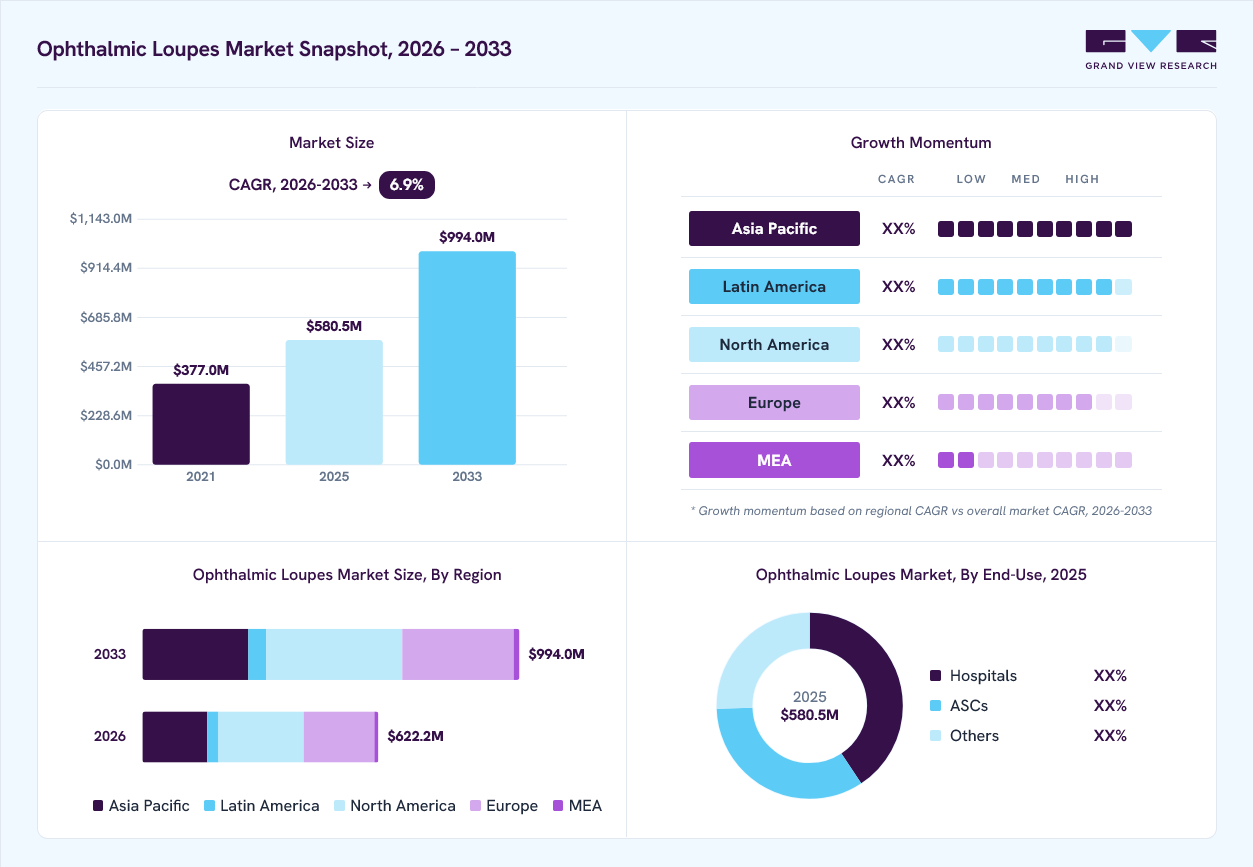 Source: Grand View Research, IR Documents, Primary Interviews, Paid DatabasesTo learn more about this report,
 Download Free Sample Report
Key Market Trends & Insights
- By loupe type: The galilean type segment led the market with the largest share of 38.0% in 2025.
- By loupe design: The TTL segment led the market with the largest revenue share of 59.1% in 2025.
- By end-use: The hospitals segment led the market with the largest revenue share of 40.6% in 2025.
Regional Highlights
- Largest regional market: North America (36.1% revenue share, 2025)
- Fastest-growing regional market: Asia Pacific (fastest CAGR, 2026 - 2033)
- By country: The U.S. held the largest share of North America in 2025.
Market Size & Forecast
- Market size in 2025: USD 580.5 Million
- Estimated market size in 2026: USD 622.2 Million
- Projected market size by 2033: USD 994.0 Million
- CAGR (2026-2033): 6.9%
Three ways to get this report
Buy it, customize it, or ask a question.Ask an Analyst
Analyst response in 1 business day
- AccessReport author, directly
- Reply timeWithin 1 working day
- No sales callDirect answer only
- FormatEmail reply
- CostFree, no cost
Get the Full Report
What the study covers
- FormatsPDF · Excel · Dashboard
- Timeline2026–2033 annual, 2025 base
- Coverage20+ countries, 5 regions
- Companies10+ key players profiled
Customize the Report
20% free customization
- IncludeCountries, segments, points
- TailorTo your product definition
- ExtendDeeper competitor detail
- OrA fully bespoke study
- Turnaround5–10 working days
The aging population is another critical factor, as older adults are more susceptible to vision impairments that require specialized equipment during eye surgeries. According to the WHO, approximately 1 billion people globally suffered vision impairment in 2020, highlighting the urgent need for effective surgical interventions. Furthermore, technological advancements have led to the development of more sophisticated loupes, enhancing their functionality and appeal among healthcare professionals. One major factor is the rising demand for ergonomic solutions in surgical environments. As healthcare professionals engage in prolonged procedures, they face physical strain from improper posture. Ophthalmic loupes are designed to promote better posture and reduce neck and back strain, allowing surgeons to maintain comfort and focus during operations. This ergonomic advantage encourages more practitioners to adopt these devices, leading to improved surgical outcomes and increased market demand.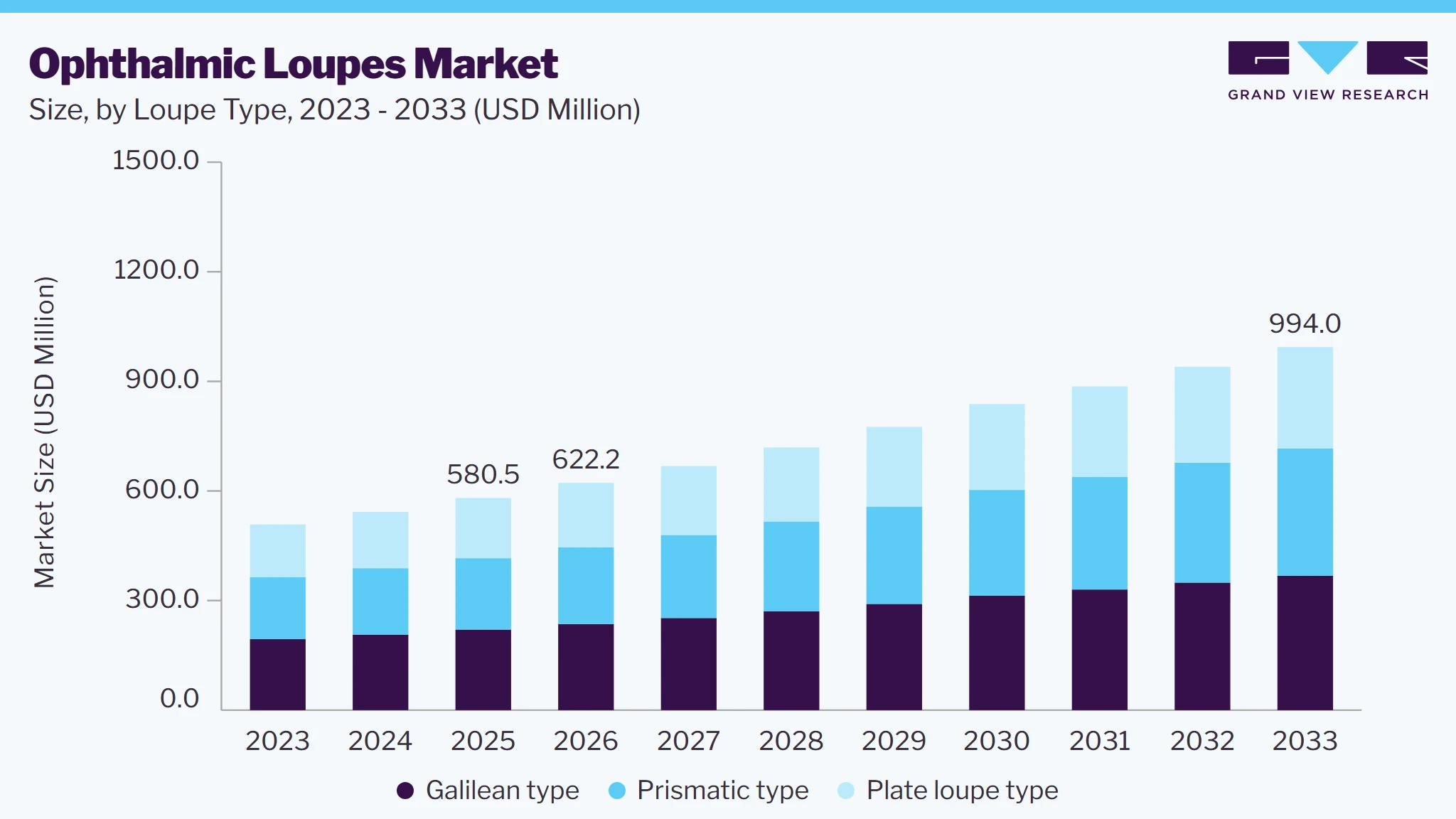 To learn more about this report, Download Free Sample Report
In addition, advancements in ophthalmic loupes also play a crucial role in driving market growth. Innovations such as lightweight materials, customizable designs, and enhanced optical performance make loupes more accessible and user-friendly for healthcare professionals. For instance, integrating LED lighting and ergonomic features helps reduce strain during long procedures while improving overall surgical accuracy. As manufacturers invest in research and development to create advanced products that cater to the specific needs of clinicians, the appeal of ophthalmic loupes is expected to increase significantly.
Market Dynamics
The ophthalmic loupes market is experiencing steady growth owing to the increased use of magnification tools by healthcare workers to improve their visual acuity, accuracy of procedures, ergonomics, and procedural results in different medical and surgical specialties. Ophthalmic loupes are defined as magnification tools used to obtain better and clearer vision of anatomic structures during diagnostic, surgical, and therapeutic procedures. These ophthalmic loupes are widely used by dentists, surgeons, ophthalmologists, otolaryngologists, and various other healthcare professionals who need magnification tools to view anatomic structures. Some of the key drivers of the market include the increased trend towards minimally invasive procedures, complexity of the procedures being done, musculoskeletal issues suffered by clinicians, and awareness related to ergonomics in workplaces. Additionally, innovations in optical lenses, ergonomic enhancements, light sources incorporated into loupes, customization of frames, and light-weight materials have been making the tools more comfortable for use.
The increasing need for greater accuracy and improved ergonomics on the part of healthcare practitioners is one of the factors that fuel the market growth for ophthalmic loupes. There is an increasing trend towards performing complicated medical procedures which require highly precise visualization of small anatomical structures that might not be possible with the help of unaided vision. Ophthalmic loupes offer superior magnification, depth perception, and image quality, allowing healthcare practitioners to achieve better diagnostic and procedural results. Moreover, increasing concern regarding the development of work-related musculoskeletal conditions among dentists and surgeons has led to the use of ergonomic ophthalmic loupes.
Although there are clinical advantages of ophthalmic loupes, one of the reasons why the use of loupes is hindered could be the relatively expensive nature of the best loupes in the market. There are some loupes that come with the best optics and materials, custom-fitting, and light system that may require considerable capital investment, especially by students, small clinics, and clinicians in developing countries. In addition, adaptation problems such as distance and depth perception may be encountered when using the loupes for the first time.
The increasing adoption of CCaaS solutions among small and medium-sized enterprises (SMEs) offers strong growth potential for the market. SMEs are increasingly recognizing the benefits of cloud-based contact centers, including lower upfront investment requirements, flexible pricing models, and simplified deployment processes. CCaaS platforms enable smaller organizations to access enterprise-grade customer engagement capabilities without extensive IT infrastructure investments.
Growing digitalization, e-commerce expansion, and customer service modernization initiatives are encouraging SMEs to adopt advanced communication solutions. Service providers are also introducing scalable and customizable offerings tailored to SME requirements. This expanding SME customer base is expected to contribute significantly to future market growth.
Analyst Perspective
The ophthalmic loupes market is positioned at the intersection of several long-term healthcare trends, including increasing procedural complexity, growing emphasis on clinician ergonomics, rising demand for minimally invasive treatments, and expanding awareness of occupational health. Healthcare providers are increasingly prioritizing enhanced visualization technologies that improve procedural accuracy while reducing physical strain during lengthy procedures. Technological advancements in optical engineering, customized ergonomics, lightweight materials, and integrated LED illumination are further enhancing clinical adoption. As dental practices, hospitals, ambulatory surgical centers, and specialty clinics continue to focus on precision care and practitioner well-being, demand for advanced ophthalmic loupes is expected to grow steadily across multiple clinical specialties.
Loupe Type Insights
Based on loupe type, the galilean type segment led the market with the largest revenue share of 38.0% in 2025, driven by its lightweight design and affordability. These loupes offer a magnification range typically between 1.7x and 3.0x, making them suitable for various surgical procedures, especially in ophthalmology. Their simple optical design provides a clear field of view, essential for precision during surgeries. Moreover, the ease of use and customization options available for Galilean loupes contribute to their popularity among healthcare professionals. Combining these features makes them ideal for new and experienced practitioners, reinforcing their market dominance.
The prismatic type segment is projected to grow at a CAGR of 7.5% over the forecast period, fueled by its superior magnification capabilities. Prismatic loupes can achieve magnification levels of up to 8.0x, offering better clarity and detail than galilean types. This enhanced performance is particularly beneficial in complex surgical scenarios where precision is critical. The increasing adoption of minimally invasive techniques in ophthalmic procedures further drives the demand for prismatic loupes as surgeons seek tools that provide optimal visualization. As healthcare providers prioritize high-quality outcomes, the prismatic type's advantages position it well for significant growth.
Loupe Design Insights
Based on loupe design, the TTL segment led the market with the largest revenue share of 59.1% in 2025, attributed to its ergonomic design and customization options. TTL loupes are mounted directly on the frame, allowing for a wider field of view and reduced weight on the user's face. This design minimizes neck strain during prolonged use, making them particularly appealing to professionals who perform intricate procedures regularly. Moreover, TTL loupes can be tailored to individual pupillary distance and prescription needs, enhancing comfort and usability. These factors collectively contribute to their strong market presence.
The flip-up segment is projected to grow at the highest CAGR over the forecast period due to its versatility and user-friendly features. Flip-up loupes have a hinge mechanism that allows users to easily adjust the declination angle and pupillary distance. This flexibility lets healthcare professionals quickly switch between viewing through the loupes and unobstructed vision. In addition, their lower price point compared to TTL loupes makes them accessible to a broader range of users. As more practitioners recognize the benefits of adjustable designs, the flip-up segment is expected to gain significant traction in the market.
End Use Insights
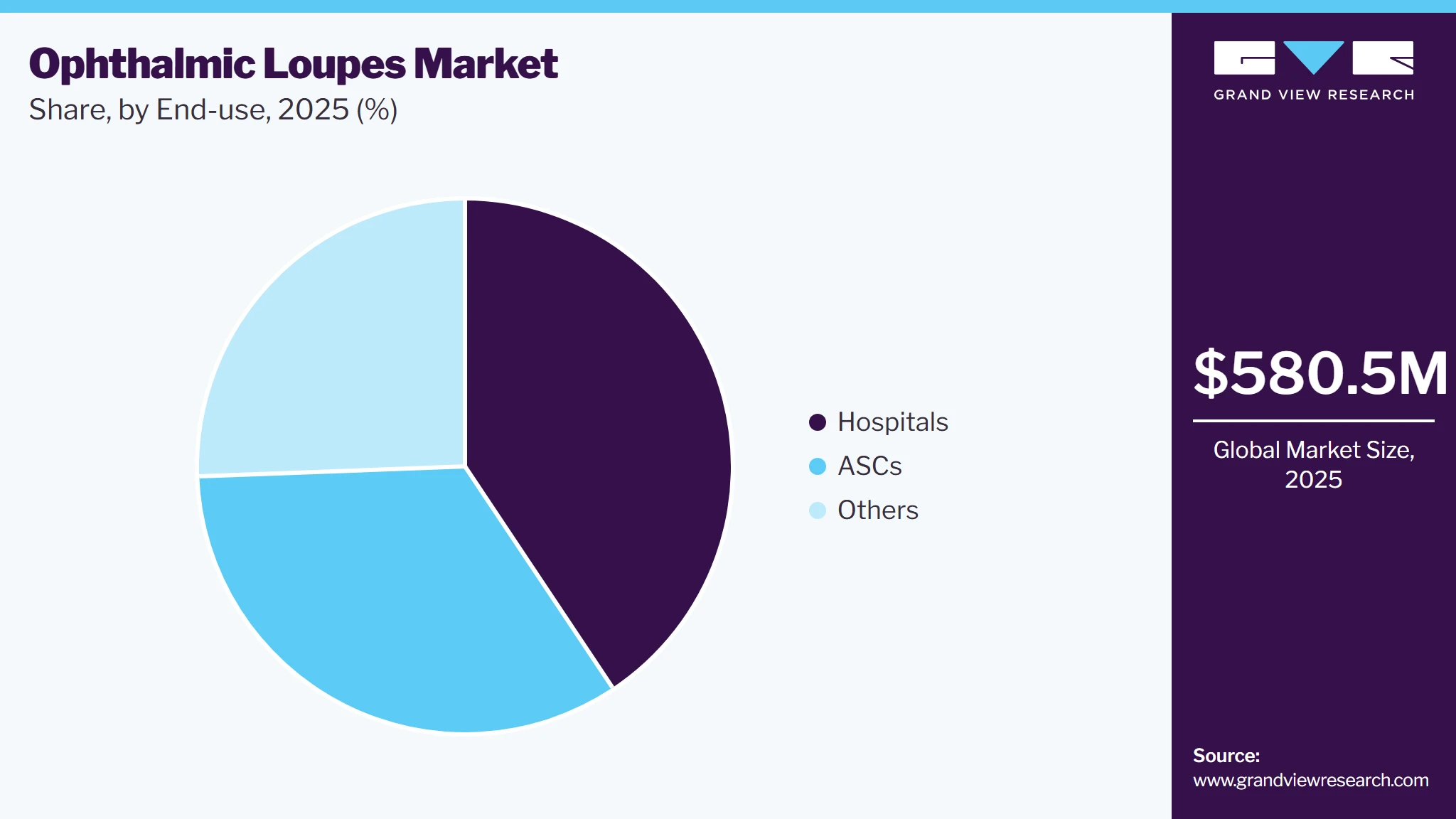
Based on end-use, the hospitals segment led the market with the largest revenue share of 40.6% in 2025, driven by the high volume of surgical procedures performed in these settings. Hospitals have advanced surgical facilities requiring precise instruments such as ophthalmic loupes for optimal outcomes. The increasing prevalence of eye diseases necessitates frequent surgical interventions, further boosting demand within this segment. In addition, hospitals often invest in high-quality equipment to ensure patient safety and improve surgical success rates. This commitment to quality care solidifies hospitals as a primary end-user of ophthalmic loupes.
 To learn more about this report, Download Free Sample Report
The Ambulatory Surgical Centers (ASCs) segment is expected to grow at the highest CAGR over the forecast period, which can be attributed to the trend toward outpatient surgeries. ASCs provide cost-effective alternatives for surgical procedures that do not require extended hospital stays, making them increasingly popular among patients and healthcare providers. The growing preference for minimally invasive techniques aligns well with the capabilities of ophthalmic loupes, which enhance visualization during such procedures. As ASCs expand their offerings and patient volumes increase, demand for ophthalmic loupes is expected to rise significantly.
Regional Insights
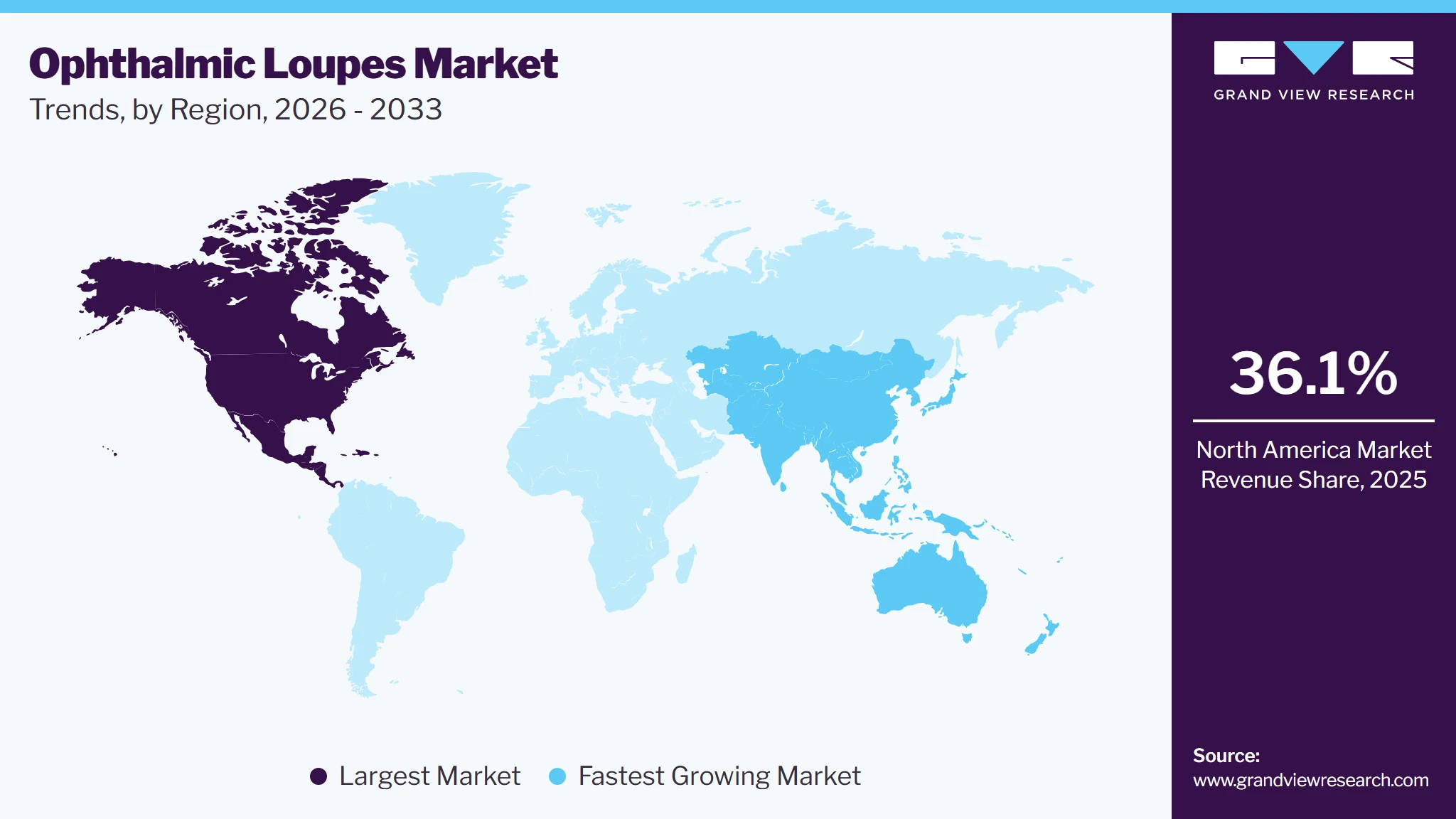
North America dominated the ophthalmic loupes market with the largest revenue share of 36.1% in 2025, driven by a robust healthcare infrastructure and high demand for advanced medical devices. The region is home to numerous leading manufacturers specializing in innovative ophthalmic solutions, contributing to a competitive market landscape. High awareness levels regarding eye health and increasing incidences of eye disorders drive demand for surgical interventions requiring precision tools such as loupes. Hence, these factors position North America as a key player in the global ophthalmic loupes market.
 To learn more about this report, Download Free Sample Report
U.S. Ophthalmic Loupes Market Trends
The ophthalmic loupes market in the U.S. held the largest share in the North America region in 2025 due to its advanced healthcare system and extensive research initiatives. The presence of major industry players fosters innovation and the development of cutting-edge products tailored to meet specific clinical needs. Furthermore, high rates of ophthalmic surgeries performed across various healthcare settings reinforce the demand for effective visual aids during procedures. As healthcare providers continue to seek tools that enhance precision and efficiency, the U.S. market is expected to maintain its leadership position in the ophthalmic loupes sector.
Asia Pacific Ophthalmic Loupes Market Trends
Asia Pacific ophthalmic loupes market is expected to register the highest CAGR of 7.3% over the forecast period, which can be attributed to the increasing prevalence of eye diseases and enhanced healthcare infrastructure. The region is witnessing a surge in eye-related conditions, such as cataracts and glaucoma, necessitating surgical interventions requiring precise visual aids. Countries such as India and China are investing significantly in healthcare improvements, making advanced medical technologies more accessible to practitioners, thereby driving the demand for ophthalmic loupes.
The China ophthalmic loupes market dominates the Asia Pacific with a significant revenue share in 2025 due to its large population and rapid advancements in healthcare services. China has one of the highest rates of eye disorders globally, creating a substantial demand for surgical tools that enhance precision during procedures. For instance, the Chinese government has implemented various health initiatives to improve eye care access, including programs to combat blindness and visual impairment. Local manufacturers are increasingly producing affordable and innovative ophthalmic loupes tailored to meet the specific needs of Chinese healthcare providers, reinforcing China's leadership position in the regional market.
Europe Ophthalmic Loupes Market Trends
Europe ophthalmic loupes market held a substantial market share in 2025, driven by the rising prevalence of eye diseases and an increasing emphasis on advanced surgical techniques. The region is experiencing a growing number of ophthalmic surgeries due to an aging population and higher awareness of eye health issues. According to a report by the European Commission published in March 2023, age-related vision impairments are becoming more common, necessitating improved surgical tools such as ophthalmic loupes. Furthermore, established manufacturers in Europe are continuously innovating their product offerings to enhance comfort and optical performance, which is crucial for surgeons who rely on these devices for precision during complex procedures.
Key Ophthalmic Loupes Company Insights
Some key companies operating in the market include SurgiTel, SheerVision Loupes & Headlights, Keeler, ZEISS, and Rudolf Riester GmbH. Companies are undertaking strategic initiatives such as mergers, acquisitions, and product launches to expand their market presence and address the evolving healthcare demands through the ophthalmic loupes market.
-
SurgiTel offers a diverse range of products and solutions in the ophthalmic loupes market, focusing on ergonomic design and superior optical performance. Their product lineup includes both Through-The-Lens (TTL) and Front-Lens-Mounted (FLM) surgical loupes, customizable to meet individual user needs. The company also provides advanced surgical lighting solutions, such as the Surgical Mini Light, noted for its lightweight design and extended battery life, enhancing visibility during surgeries.
-
Rudolf Riester GmbH offers a range of products and solutions in the ophthalmic loupes market. Its product lineup includes binocular loupes available in various magnifications, specifically designed for dental and surgical applications. The flagship product is the XL Advantage Binocular Loupe, which provides magnification options of 3.5x, 4.5x, and 5.5x, ensuring clarity and precision during intricate procedures. These loupes are engineered for comfort, featuring lightweight designs that reduce strain during extended use.
Key Ophthalmic Loupes Companies:
The following key companies have been profiled for this study on the ophthalmic loupes market.
-
SurgiTel
-
SheerVision Loupes & Headlights
-
Keeler
-
ZEISS
-
Rudolf Riester GmbH
-
NEITZ INSTRUMENTS Co., Ltd.
-
Orascoptic
-
Univet S.r.l.
-
Ocutech Inc.
-
Designs for Vision, Inc.
Competitive Benchmarking
Category
Operating Strategies
Competitive Edge
Weakness
Established Players (SurgiTel; Keeler; ZEISS; Rudolf Riester GmbH; Orascoptic; Designs for Vision, Inc.; HEINE Optotechnik GmbH & Co. KG)
- Mature companies focus on expanding comprehensive ophthalmic loupes portfolios comprising Galilean and Prismatic optical systems, TTL and Flip-Up designs, integrated LED illumination systems, customized ergonomic fittings, and specialty-specific visualization solutions. These players emphasize continuous optical innovation, clinician education programs, global distribution expansion, and premium product positioning to maintain leadership. Many leverage longstanding relationships with hospitals, dental schools, surgical training centers, and specialty healthcare providers to strengthen market presence.
- Extensive distribution networks and strong brand recognition and decades of expertise in medical optics enable these companies to command premium pricing and high customer loyalty. Established players benefit from advanced optical engineering capabilities, broad product portfolios, customization services, regulatory expertise, and global sales infrastructure. Their ability to provide comprehensive visualization ecosystems and after-sales support strengthens clinician retention and recurring revenue generation.
- Premium pricing may limit adoption in cost-sensitive markets and among early-career clinicians. Dependence on mature healthcare markets can constrain growth opportunities relative to emerging regions. Larger organizational structures may slow product development cycles and reduce flexibility in addressing rapidly evolving ergonomic preferences and niche specialty requirements.
Emerging Players (NEITZ INSTRUMENTS Co., Ltd.; Univet S.r.l.; Ocutech Inc.;)
- Emerging companies prioritize lightweight ergonomic loupe designs, specialty-focused visualization solutions, innovative optical technologies, and competitive pricing strategies. Many focus on expanding regional market presence, targeting underserved clinician segments, and differentiating through customized products, enhanced comfort, and modern design aesthetics. These companies often emphasize direct clinician engagement and specialized product development to gain market share.
- Agile product development processes allow faster adaptation to evolving clinician preferences and ergonomic requirements. Competitive pricing, niche specialization, lightweight designs, and innovative optical configurations provide opportunities to compete effectively against larger incumbents. Emerging players can target high-growth segments and establish strong positions within specific specialties or geographic regions.
- Limited global distribution capabilities and lower brand recognition compared with established competitors may restrict market penetration. Smaller manufacturing scale and R&D budgets can constrain product portfolio expansion and international growth initiatives. Dependence on distributor networks and challenges associated with gaining visibility among institutional buyers may limit adoption in large hospital systems and academic healthcare facilities.
Recent Developments
-
In April 2023, NEITZ INSTRUMENTS Co., Ltd. launched a new BX LED ophthalmoscope, which features a unique boost mode designed to enhance brightness during examinations. This innovative product is particularly beneficial for screening in brightly lit environments, improving the visibility of ocular structures and facilitating accurate diagnoses.
-
In October 2022, SurgiTel launched the next generation of ErgoDeflection loupes. The new design features a patent-pending prism that allows for a customizable deflection angle of 40 to 50 degrees, enabling clinicians to maintain an ideal working posture without leaning too close to patients. Available in 3.5x magnification, with plans to introduce 4.5x, 5.5x, and 6.5x options soon, these loupes include a pantoscopic lens tilt that enhances eye protection and provides a wider view of the working area.
Ophthalmic Loupes Market Report Scope
Report Attribute
Details
Market size value in 2025
USD 580.5 million
Market size value in 2026
USD 622.2 million
Revenue forecast in 2033
USD 994.0 million
Growth rate
CAGR of 6.9% from 2026 to 2033
Historical data
2021 - 2024
Forecast period
2026 - 2033
Quantitative units
Revenue in USD million/billion, and CAGR from 2026 to 2033
Report coverage
Revenue forecast, company ranking, competitive landscape, growth factors, and trends
Segments covered
Loupe type, loupe design, end-use, region
Regional scope
North America; Europe; Asia Pacific; Latin America; MEA
Country scope
U.S.; Canada; Mexico; Germany; UK; France; Italy; Spain; Denmark; Sweden; Norway; China; Japan; India; South Korea; Thailand; Australia; Brazil; Argentina; South Africa; Saudi Arabia; UAE; Kuwait
Key companies profiled
SurgiTel; Keeler; ZEISS; Rudolf Riester GmbH; NEITZ INSTRUMENTS Co., Ltd.; Orascoptic; Univet S.r.l.; Ocutech Inc.; Designs for Vision, Inc.; HEINE Optotechnik GmbH & Co. KG
Customization scope
Free report customization (equivalent up to 8 analysts' working days) with purchase. Addition or alteration to country, regional & segment scope.
Pricing and purchase options
Avail customized purchase options to meet your exact research needs. Explore purchase options
Global Ophthalmic Loupes Market Report Segmentation
This report forecasts global, regional, and country revenue growth and analyzes the latest industry trends in each sub-segment from 2021 to 2033. For this study, Grand View Research has segmented the global ophthalmic loupes market report based on loupe type, loupe design, end use, and region:
 To learn more about this report, Download Free Sample Report
-
Loupe Type Outlook (Revenue, USD Million, 2021 - 2033)
-
Galilean Type
-
Prismatic Type
-
Plate Loupe Type
-
-
Loupe Design Outlook (Revenue, USD Million, 2021 - 2033)
-
Through-the-lens (TTL)
-
Flip Up
-
-
End Use Outlook (Revenue, USD Million, 2021 - 2033)
-
Hospitals
-
Ambulatory Surgical Centers (ASCs)
-
Others
-
-
Regional Outlook (Revenue, USD Million, 2021 - 2033)
-
North America
-
U.S.
-
Canada
-
Mexico
-
-
Europe
-
UK
-
Germany
-
France
-
Italy
-
Spain
-
Norway
-
Denmark
-
Sweden
-
-
Asia Pacific
-
Japan
-
China
-
India
-
South Korea
-
Australia
-
Thailand
-
-
Latin America
-
Brazil
-
Argentina
-
-
Middle East & Africa
-
South Africa
-
Saudi Arabia
-
UAE
-
Kuwait
-
-
Research Methodology
The ophthalmic loupes market figures in this report are based on a proven research process that combines executive interviews with secondary research from proprietary databases, company filings, and recognized regulatory and institutional sources. Market size is built through value-chain sizing - reconciling supply-side and demand-side estimates - and triangulated with bottom-up and top-down approaches. Every estimate passes multiple levels of expert validation before publication, with each ophthalmic loupes segment quantified using the revenue-capture definitions in the table below.
Segment Definition
Segment - Loupe type
Revenue capture definition
Galilean type
Revenue is generated through the sale of Galilean loupes that utilize a combination of convex and concave lens systems to provide low-to-medium magnification levels with a relatively lightweight design. Manufacturers capture value through widespread adoption among general dentists, hygienists, surgeons, and healthcare professionals seeking cost-effective magnification solutions for routine clinical procedures.
Prismatic type
Revenue is derived from high-magnification prismatic (Keplerian) loupe systems that utilize prism technology to provide superior image resolution, wider fields of view, and greater depth of field. Market participants benefit from premium pricing and growing demand among specialists performing complex surgical, endodontic, implantology, ophthalmic, and microsurgical procedures requiring enhanced visualization.
Plate loupe type
Revenue is generated through loupe systems incorporating plate-based optical designs intended to provide compact magnification solutions for specific clinical and examination applications. Manufacturers capture value through niche clinical adoption, lightweight configurations, and specialized visualization requirements across healthcare settings.
Segment - Loupe design
Revenue capture definition
TTL
Revenue is captured through the commercialization of customized loupe systems in which optical barrels are permanently mounted through the carrier lenses. Manufacturers benefit from premium pricing, individualized fitting services, improved ergonomics, lighter overall weight, and increasing adoption among experienced clinicians seeking superior optical performance and long-term comfort.
Flip up
Revenue is generated through adjustable loupe systems mounted on hinged mechanisms that allow users to modify viewing angles and working distances. Market participants capture value through broad adoption among students, first-time loupe users, teaching institutions, and multi-user healthcare environments requiring flexibility and adjustability.
Segment - End use
Revenue capture definition
Hospitals
Revenue is generated through procurement and utilization of ophthalmic loupes by public and private hospitals for surgical procedures, diagnostics, teaching programs, and multidisciplinary clinical applications. Manufacturers benefit from institutional purchasing contracts, clinician adoption programs, and recurring demand associated with workforce expansion and equipment replacement cycles.
ASCs
Revenue is derived from the adoption of ophthalmic loupes in ambulatory surgical centers performing outpatient surgical procedures requiring enhanced visualization and procedural precision. Market participants benefit from increasing procedure volumes, growing preference for minimally invasive interventions, and the expanding role of ASCs in healthcare delivery.
Others
Revenue is captured through sales to dental clinics, specialty physician practices, ophthalmology centers, academic institutions, military healthcare facilities, veterinary clinics, and research organizations. The segment benefits from growing awareness regarding ergonomic visualization tools and increasing demand for precision diagnostics and treatment planning across various healthcare specialties.
Estimation Model
01
Scope DefinitionWhat is being sized?
02
Build the User BaseHow large is total addressable market?
03
Estimate Adoption & UtilizationWhat portion of procedures use disposable devices?
04
Revenue ConversionHow does volume become revenue?
PROCESS STEPS
PROCESS STEPS
PROCESS STEPS
PROCESS STEPS
1 Define Ophthalmic Loupe Technology Categories
2 Scope Loupe type, Loupe design and End Use Segments
3 Establish Geographic Coverage (Global/Regional)
4 Align on base year & forecast horizon (2026-2033)
1 Collect Number of Practicing Dentists, Surgeons, Ophthalmologists, and Specialists
2 Assess Loupe Adoption Rates by Clinical Specialty
3 Evaluate New User Adoption and Replacement Cycles
4 Develop Installed User Base Forecasts
1 Assess Loupe Utilization by Clinical Specialty
2 Evaluate Adoption by Loupe Type and Design
3 Analyze Preference Shifts Toward Premium Ergonomic Systems
4 Validate Findings Through Expert Interviews
1 Determine System ASPs by Loupe Type/design and Region
2 Estimate Revenue from Equipment Sales
3 Apply Regional Pricing Variations
4 Cross-validate with Company Revenues and Distribution Data
DATA SOURCES
Professional Medical Associations, Dental Associations
DATA SOURCES
Medical Registries, Professional Associations, Dental practice surveys
DATA SOURCES
Primary interviews, clinical surveys, industry experts
DATA SOURCES
Distributor pricing sheets, procurement data, expert interviews
Delivered Customizations
This report has been delivered with the following In-depth customizations
Client Request
Customization Delivered
Value Adds
Competitive Landscape Analysis
Conducted a comprehensive competitive assessment of the global ophthalmic loupes market, evaluating leading manufacturers across medical, dental, surgical, ophthalmology, and specialty healthcare applications. The study assessed product portfolios, loupe technologies (Galilean, Prismatic, and Plate loupes), loupe designs (TTL and Flip-Up), optical performance, ergonomic innovations, integrated LED illumination systems, customization capabilities, distribution networks, pricing strategies, regulatory compliance, and geographic expansion initiatives. The analysis further evaluated advancements in lightweight materials, clinician ergonomics, optical clarity, depth-of-field enhancement, and specialty-specific visualization solutions adopted by both established and emerging market participants.
Enables stakeholders to understand technology leadership, competitive positioning, pricing dynamics, and commercialization strategies shaping the global ophthalmic loupes market. Supports procurement decisions, distributor and partnership evaluations, product benchmarking, clinician adoption strategies, and regional market expansion planning. The study also helps manufacturers identify innovation gaps, strengthen product differentiation, and optimize go-to-market strategies across healthcare specialties.
Segment by Application Analysis
Conducted a detailed segment-level assessment of the ophthalmic loupes market across key end-use settings including Hospitals, Ambulatory Surgical Centers (ASCs), and Other End Users. The study further analyzed adoption patterns across Galilean, Prismatic, and Plate loupe types, as well as TTL and Flip-Up designs. Key factors assessed included clinician adoption rates, procedure volumes, specialty-specific visualization requirements, ergonomic preferences, replacement cycles, purchasing behavior, and forecast demand trends. Additional evaluation was performed on the growing transition toward customized TTL systems and premium ergonomic loupe solutions among surgeons, dentists, and specialty healthcare practitioners.
Enables stakeholders to identify high-growth end-user segments, evolving clinician preferences, and specialty-specific visualization requirements. Supports product portfolio optimization, commercialization planning, sales strategy alignment, inventory forecasting, and investment prioritization. The analysis also helps identify emerging opportunities driven by increasing procedural complexity, clinician ergonomic awareness, and growing adoption of precision visualization technologies.
Macroeconomic Analysis
Conducted an in-depth assessment of healthcare expenditure trends, dental and surgical procedure volumes, aging populations, clinician workforce growth, occupational health awareness, healthcare infrastructure development, reimbursement environments, and capital spending patterns influencing ophthalmic loupe adoption globally. The study evaluated factors including ergonomic injury prevalence among healthcare professionals, adoption of minimally invasive procedures, clinician productivity initiatives, educational institution investments, inflationary pressures, supply chain dynamics, and regulatory factors affecting medical visualization products.
Enables stakeholders to understand the macroeconomic, demographic, healthcare system, and occupational factors influencing demand within the global ophthalmic loupes market. The study supports long-term strategic forecasting, product development planning, pricing strategy formulation, market entry decisions, distribution expansion, and investment prioritization amid evolving healthcare delivery models and increasing emphasis on clinician ergonomics and procedural precision.
Frequently Asked Questions About This Report
North America dominated the ophthalmic loupes market with a share of 36.1% in 2025. This is attributable to the presence of a large number of market players in the region. Most of the players like Ocutech Inc., SHEERVISION, and SurgiTel are headquartered in the U.S. and are developing advanced ophthalmic loupes.
Asia Pacific is the fastest-growing region over the forecast period.
TTL held the largest revenue share in 2025, while Flip-up is the fastest-growing area.
Hospitals held the largest revenue share of 59.1% in 2025, while ASCs is the fastest-growing area.
The Galilean type segment led with a 38.0% revenue share in 2025, while Prismatic type is the fastest-growing segment.
The global ophthalmic loupes market is expected to grow at a compound annual growth rate of 6.9% from 2026 to 2033 to reach USD 994.0 million by 2033.
Some key players operating in the ophthalmic loupes market include SurgiTel, SHEERVISION, Keeler, Carl Zeiss Meditec AG, Rudolf Riester GmbH, NEITZ INSTRUMENTS CO., LTD., Orascoptic, Univet S.r.l., Ocutech Inc., and Designs for Vision, Inc.
Key factors that are driving the ophthalmic loupes market growth include the increasing prevalence of eye diseases, an increasing number of eye surgeries, and the growing problem of back pain among medical professionals.
The global ophthalmic loupes market size was valued at USD 580.5 million in 2025 and is estimated at USD 622.2 million in 2026.
About the Author(s)
Medical Devices Research Team
Healthcare · Medical DevicesThis report was authored by the medical devices research team at Grand View Research - comprising two research analysts, one senior research analyst, and one industry expert - with specialized expertise in the medical devices segment of the healthcare industry. All findings are based on proprietary healthcare databases, executive interviews, and regulatory analysis, subject to internal peer review prior to publication.
Last Updated:
Speak to Analyst

Customize this report to your needs - add regions, segments, or data points, with 20% free customization.
Or view our licence options:


ISO 9001:2015 & 27001:2022 Certified
We are GDPR and CCPA compliant! Your transaction & personal information is safe and secure. For more details, please read our privacy policy.


