
- Home
- »
- Pharmaceuticals
- »
-
Orthopedic Injectable Market Size, Share Report, 2026-2033GVR Report cover

Orthopedic Injectable Market (2026 - 2033)
Size, Share & Trends Analysis Report By Product/Therapy Type (Hyaluronic Acid (HA) Injectables, Corticosteroid Injectables, Platelet-Rich Plasma (PRP)), By Clinical Indication, By End-use, By Region, And Segment Forecasts
Market Size, 2025
$9.9BMarket Estimate, 2026
$10.5BMarket Forecast, 2033
$16.9BCAGR, 2026–2033
7.1%Orthopedic Injectable Market Summary
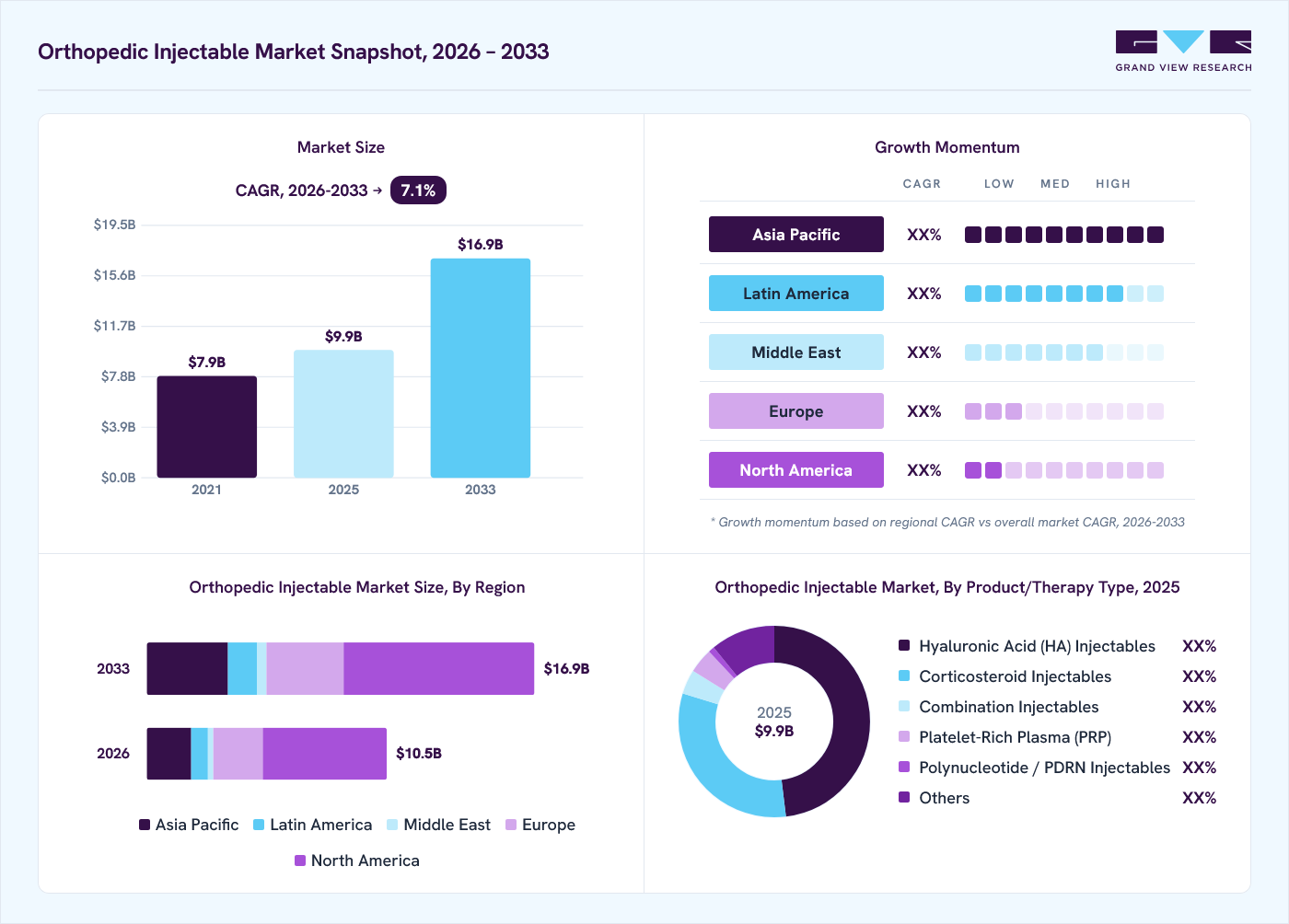
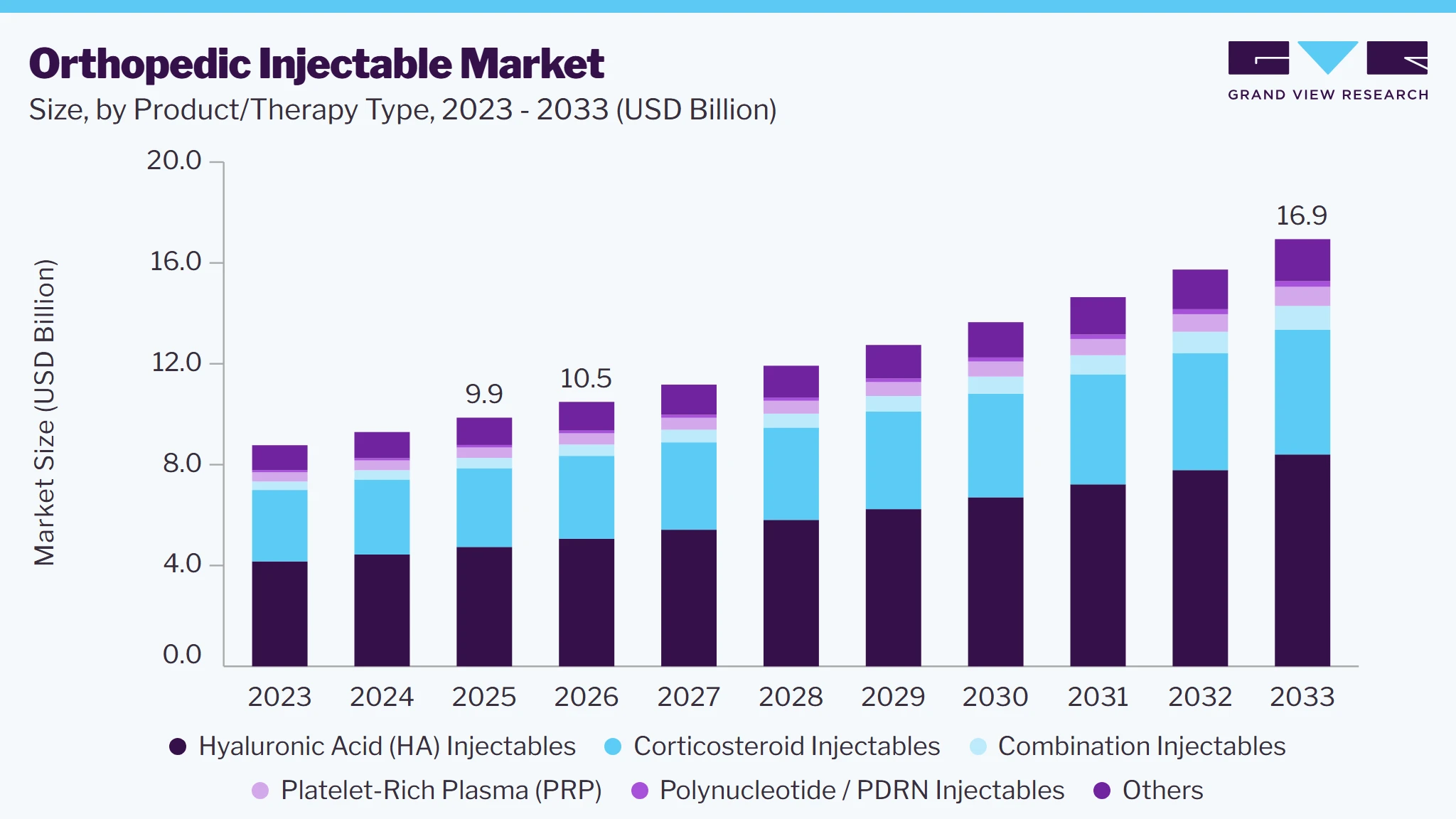
The global orthopedic injectable market size was valued at USD 9.9 billion in 2025 and is projected to grow from USD 10.5 billion in 2026 to USD 16.9 billion by 2033, at a CAGR of 7.1% from 2026 to 2033. North America dominated the global market, accounting for a revenue share of 52.0% in 2025. The market growth is driven by the growing need for non-surgical management of joint pain, osteoarthritis, sports injuries, and other musculoskeletal conditions.
 Source: Grand View Research, IR Documents, Primary Interviews, Paid DatabasesTo learn more about this report,
 Download Free Sample Report
 Key Market Trends & Insights
- By product/therapy type: Hyaluronic Acid (HA) injectables held the largest market share of 48.0% in 2025.
- By clinical indication: Osteoarthritis held the largest market share of 86.0% in 2025.
- By end use: Orthopedic clinics held the largest market share in 2025.
Regional Highlights
- Largest regional market: North America (52.0% revenue share, 2025)
- Fastest-growing regional market: Asia Pacific (highest CAGR, 2026-2033)
- By country: The U.S. is expected to grow significantly from 2026 to 2033.
Market Size & Forecast
- Market Size in 2025: USD 9.9 Billion
- Estimated Market Size in 2026: USD 10.5 Billion
- Projected Market Size by 2033: USD 16.9 Billion
- CAGR (2026-2033): 7.1%
Three ways to get this report
Buy it, customize it, or ask a question.Ask an Analyst
A direct answer, usually in 1 working day
- AccessReport author, directly
- Reply timeWithin 1 working day
- No sales callDirect answer only
- FormatEmail reply
- CostFree, no cost
Get the Full Report
What the study covers
- FormatsPDF · Excel · Dashboard
- Timeline2026–2033 annual, 2025 base
- Coverage20+ countries, 5 regions
- Companies10+ key players profiled
Customize the Report
20% free customization
- IncludeCountries, segments, points
- TailorTo your product definition
- ExtendDeeper competitor detail
- OrA fully bespoke study
- Turnaround5–10 working days
 To learn more about this report, Download Free Sample Report
Hyaluronic acid (HA) and corticosteroid injections remain widely used for pain management and symptom relief, particularly for joint-related conditions. At the same time, platelet-rich plasma (PRP) and other regenerative injectables are gaining attention as treatment options for patients looking for alternatives to pain medication and surgical procedures. Product demand is supported by the growing number of patients with joint disorders, increasing use of outpatient orthopedic procedures, and physician preference for injectable treatments before surgery. The market includes products with different formulations, treatment durations, and dosing schedules, resulting in differences in product use across healthcare systems. However, variations in clinical evidence, reimbursement coverage, physician preference, and patient response continue to affect product adoption. Overall, the market includes established injectable therapies and a growing range of orthobiologic products for pain management and joint care.Market Dynamics
The rising prevalence of osteoarthritis and other musculoskeletal disorders is expanding the patient base for orthopedic injectable therapies used in pain management and mobility support. Osteoarthritis is closely associated with aging, obesity, previous joint injury, and repeated physical stress, with the knee, hip, and hand among the commonly affected joints. The broader burden of musculoskeletal conditions also includes tendon, ligament, cartilage, and soft-tissue injuries, creating demand for non-surgical treatment options. This disease burden supports the use of hyaluronic acid (HA), corticosteroids, and platelet-rich plasma (PRP) across orthopedic care, particularly for patients requiring symptom management before surgery or during rehabilitation. Sports participation and physically demanding activities further contribute to injury-related demand, while population aging supports the continued need for joint pain management. For instance, in February 2026, Fidia Farmaceutici received U.S. FDA approval for HYMOVIS ONE, a single-injection hyaluronic acid product indicated for pain relief in osteoarthritis of the knee, expanding the company’s injectable portfolio for joint pain management. Overall, the increasing burden of degenerative and injury-related musculoskeletal conditions provides a sustained demand for orthopedic injectable therapies.
High treatment costs and limited reimbursement coverage remain key restraints for the orthopedic injectable market, particularly for therapies requiring repeated administration or higher-priced formulations. Hyaluronic acid (HA) viscosupplementation, platelet-rich plasma (PRP), and emerging regenerative injectables can involve costs beyond the product itself, including consultation, injection procedures, preparation kits, imaging, and follow-up visits. These expenses can increase the total treatment burden for patients and healthcare providers. Reimbursement also varies across countries, insurance plans, products, and clinical indications, with some therapies relying heavily on self-pay. This is particularly relevant for PRP and newer regenerative products where consistent reimbursement coverage is not established across healthcare systems. Repeated treatment schedules can further increase financial burden, especially when patients require multiple injections to manage symptoms over time. As a result, physicians and patients can favor lower-cost treatment options when clinical benefits are similar. Manufacturers also face pressure to maintain competitive pricing while generating clinical evidence that supports product value. These cost and reimbursement constraints can limit access to premium injectable therapies, reduce treatment frequency, and create differences in product adoption across patient groups and healthcare systems.
The growing demand for non-surgical orthopedic treatments is creating opportunities for injectable therapies for pain management, mobility support, and conservative care. Patients are increasingly considering treatment options that can help manage musculoskeletal conditions without immediate surgery, supporting demand for hyaluronic acid (HA), corticosteroid, platelet-rich plasma (PRP), and other regenerative injectables. Many of these treatments can be administered through outpatient clinics, orthopedic practices, sports medicine centers, and ambulatory facilities, supporting broader access and reducing the need for hospital-based procedures. Injectable therapies can also be used before surgical intervention for selected patients, creating demand among individuals seeking to manage symptoms or delay more invasive procedures where clinically suitable. This trend provides manufacturers with opportunities to develop products with convenient administration, differentiated formulations, and broader clinical applications. Companies are also focusing on physician education, procedural support, and clinical evidence to support product use. The expansion of outpatient care and increasing patient awareness of non-surgical treatment options can further support procedure volumes. Overall, the shift toward less invasive orthopedic care is creating opportunities for manufacturers to expand product portfolios, strengthen distribution across healthcare facilities, and address demand across joint care, sports medicine, and other musculoskeletal applications.
Market Concentration & Characteristics
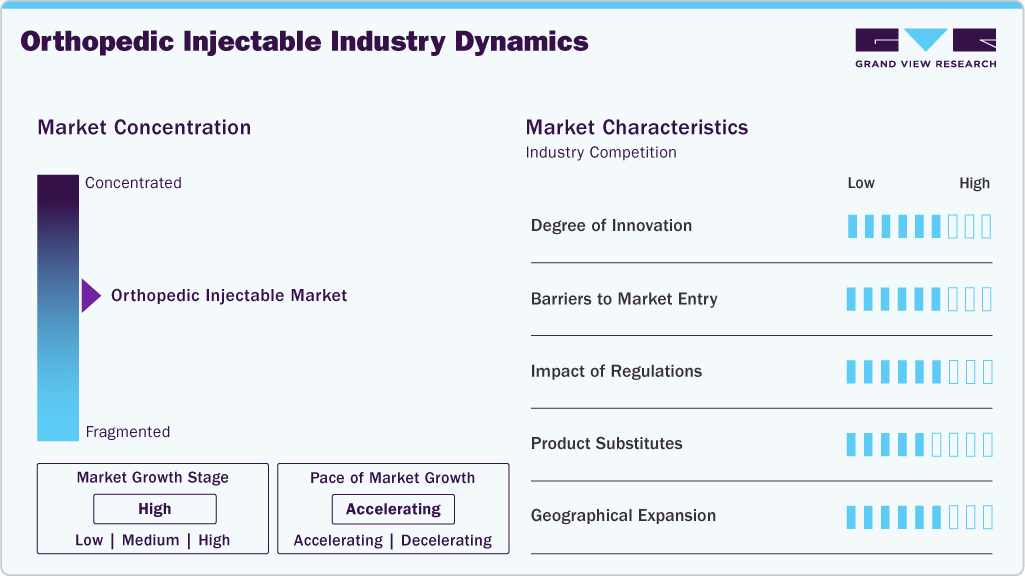
The degree of innovation is moderate to high, supported by continued development of injectable formulations, administration methods, and treatment options. Innovation is taking place across hyaluronic acid, platelet-rich plasma, and regenerative injectable products. Manufacturers are focusing on formulation characteristics, injection frequency, treatment duration, product handling, and ease of administration. Single-injection products and products designed for specific clinical applications are contributing to product differentiation. Research into regenerative therapies is also expanding the range of injectable options being evaluated for musculoskeletal conditions. However, established treatments such as corticosteroids and hyaluronic acid remain important in clinical practice, limiting the extent of structural change across the market. Clinical evidence requirements also influence the development of newer products.
Barriers to market entry are moderate to high because companies entering the orthopedic injectable market need appropriate product development, manufacturing capabilities, quality controls, clinical evidence, and distribution channels. Requirements vary according to product type and intended clinical use. New products also need to demonstrate their safety, performance, and clinical value against established treatment options. Building physician awareness and developing relationships with healthcare providers can require additional resources. Manufacturing consistency is particularly important for injectable products because product quality directly affects clinical use and supply reliability. Reimbursement considerations can also create challenges when products are introduced at higher prices or without established coverage. At the same time, the market contains several product categories, allowing entry through different treatment areas.
 To learn more about this report, Download Free Sample Report
 The impact of regulations is moderate to high because orthopedic injectable products are subject to requirements related to product classification, safety, manufacturing quality, clinical evidence, labeling, and intended use. Regulatory requirements differ according to whether an injectable is classified as a pharmaceutical, medical device, biologic, or another product type. These differences affect product development, approval requirements, manufacturing processes, and product claims. New products generally require supporting evidence before they can be introduced for specific clinical applications. Regulatory requirements also influence geographic expansion because companies need to meet the requirements of individual healthcare markets. Emerging regenerative products can face additional evidence requirements because their clinical applications and treatment protocols are still developing.
Product substitutes are moderate because orthopedic injectables compete with several non-injectable and surgical treatment options. Depending on the condition, patients can receive oral or topical pain medicines, physical therapy, exercise-based treatment, bracing, lifestyle management, or surgical intervention. The choice between these options depends on disease severity, treatment goals, patient preference, physician assessment, cost, and previous treatment response. For joint-related conditions, injectable therapies are often considered alongside other conservative treatment options rather than as the only treatment choice. Surgical procedures can also act as a substitute when symptoms become severe or conservative treatment provides limited relief. However, injectable therapies remain relevant as they offer a non-surgical treatment option for select patients.
Geographical expansion is moderate because orthopedic injectable products are used in both developed and emerging healthcare markets, but product availability and adoption vary by country. Demand is supported by the burden of osteoarthritis, aging populations, sports injuries, and increasing use of non-surgical treatment options. However, geographic expansion is influenced by differences in regulatory requirements, reimbursement coverage, healthcare expenditure, physician preference, and product pricing. Established injectable categories generally have broader availability, while newer regenerative products can face greater differences in access between markets. Manufacturers also need suitable distribution networks and awareness among healthcare providers to expand into new regions. Emerging markets offer additional opportunities as orthopedic care expands, but affordability and reimbursement constraints can limit adoption.
Analyst Perspective
The orthopedic injectable market is supported by the growing burden of osteoarthritis, sports-related injuries, and other musculoskeletal conditions. HA injectables remain a key product category for joint pain management, while PRP and combination injectables are expanding treatment options across selected applications. The increasing use of non-surgical and outpatient treatments is supporting product demand. Competition is shaped by product formulation, clinical evidence, treatment frequency, pricing, and physician preference. Reimbursement coverage and treatment costs continue to affect patient access, while product development in regenerative and combination therapies is adding new options to the market.
Product/Therapy Type Insights
The Hyaluronic Acid (HA) Injectables segment dominated the orthopedic injectable industry, accounting for a revenue share of 48.0%, supported by established use in osteoarthritis care, broad physician familiarity, availability across joint applications, use in non-surgical treatment, product variety, and demand for outpatient procedures. HA injectables are available in single- and multi-injection formulations, giving physicians options tailored to patient needs and treatment schedules. Their use in knee osteoarthritis also benefits from the large patient base requiring symptom management. Product development continues to focus on treatment duration, injection frequency, and formulation performance. For instance, in February 2025, Seikagaku Corporation initiated Phase III clinical studies of Gel-One in Japan for knee and hip osteoarthritis, evaluating its cross-linked hyaluronate injection for expanded joint applications. This development supports continued investment in HA-based intra-articular therapies.
The combination injectables segment is projected to grow at the fastest CAGR of 11.1% over the forecast period, driven by increasing interest in combining complementary components into a single treatment. HA, combined with corticosteroids or PRP, can provide distinct treatment effects within the same injection, supporting interest in broader symptom management. Combination products also address the demand for treatment convenience and fewer separate procedures. Clinical research on combinations for knee osteoarthritis is increasing, supporting product development and physician awareness. The segment also provides manufacturers with opportunities to differentiate products through formulation design and targeted clinical applications.
Clinical Indication Insights
The osteoarthritis segment dominated the orthopedic injectable market, with a revenue share of 86.0%, supported by the large patient population, aging population, obesity-related joint stress, high prevalence of knee osteoarthritis, established use of injectable therapies, and demand for non-surgical treatment. HA and corticosteroid injections are widely used for joint pain management, while PRP and other injectable therapies are used for selected patients. The chronic nature of osteoarthritis also supports repeated treatment and continued demand for injectable products. Growth in outpatient orthopedic care further supports the use of injection-based treatments. Product availability across different formulations and dosing schedules provides physicians with multiple treatment options. For instance, in April 2025, Aptissen and KiOmed Pharma entered a global license and supply agreement for KioMedineVSOne, a single-injection treatment for refractory knee osteoarthritis, supporting the expansion of injectable treatment options for osteoarthritis.
The cartilage disorders/defects segment is projected to grow at the fastest CAGR of 9.7% over the forecast period, driven by increasing focus on cartilage preservation, sports-related cartilage injuries, demand for joint function preservation, development of regenerative treatment options, and efforts to delay joint replacement. Research into cartilage repair is expanding the use of biologic and regenerative treatments beyond conventional pain management. The growing focus on minimally invasive treatment also supports the development of therapies for cartilage-related conditions. The increasing use of orthobiologic treatments in sports medicine and orthopedic care is also driving demand for products targeting cartilage damage. The segment is gaining attention as physicians and patients focus on preserving joint function and managing cartilage-related conditions before more invasive procedures are considered.
End Use Insights
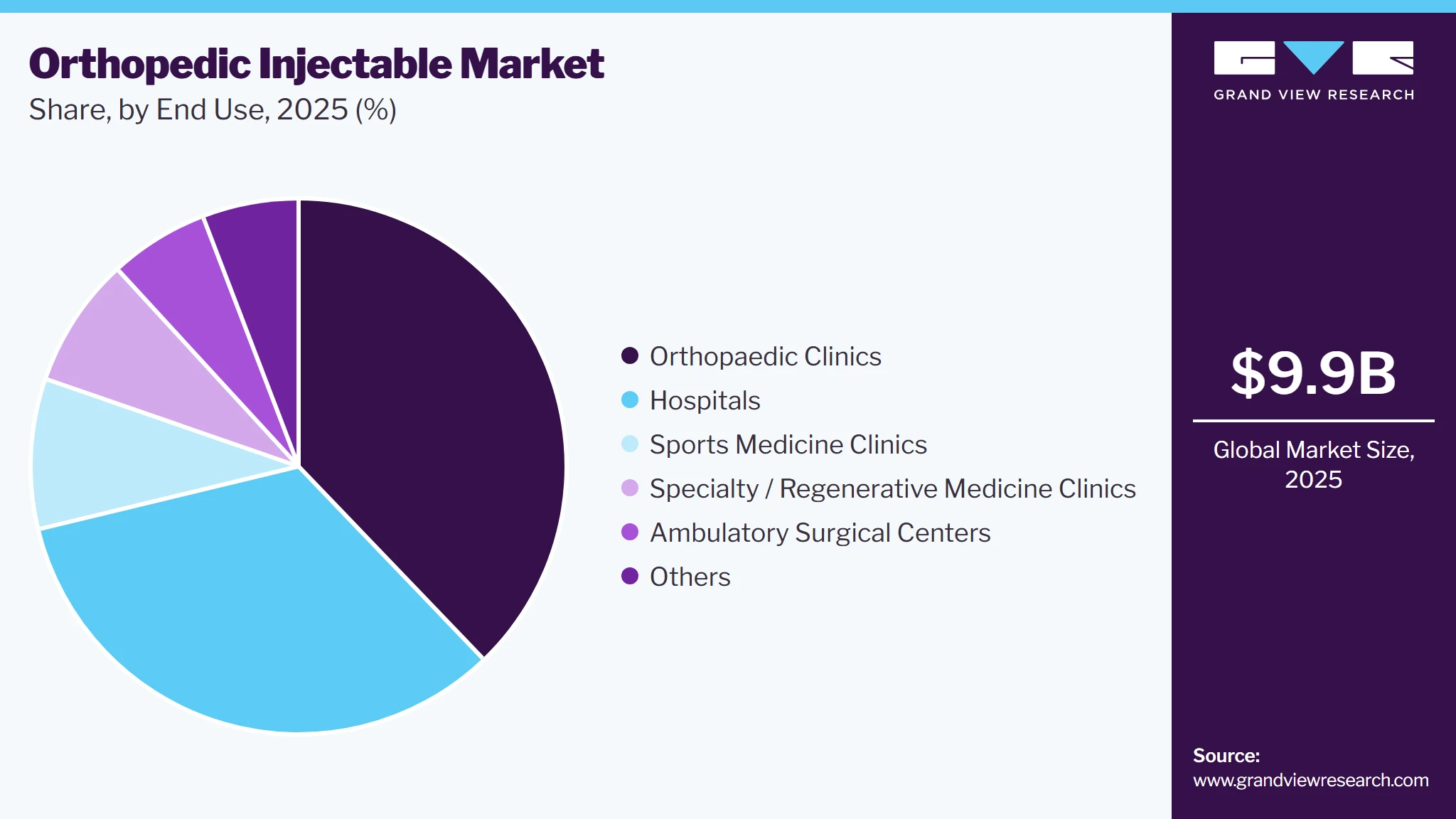
The orthopedic clinics segment dominated the market with a market share of 37.8%, supported by the high volume of joint pain consultations, established management of osteoarthritis, availability of injection procedures, direct access to orthopedic physicians, use of non-surgical treatment, and growth in outpatient care. Orthopedic clinics provide HA, corticosteroid, PRP, and other injectable therapies based on patient condition and treatment objectives. Their direct contact with patients requiring joint and musculoskeletal care supports regular product use and repeat procedures. The shift toward outpatient treatment also supports clinic-based administration of injectable therapies. Product variety across injection frequency, formulation, and treatment duration provides physicians with options based on patient requirements. These factors support the leading position of orthopedic clinics within the end-user segment and maintain demand for injectable therapies across routine joint care.
 To learn more about this report, Download Free Sample Report
 The sports medicine clinics segment is projected to register the fastest CAGR of 8.1%, driven by rising sports participation, increasing sports-related injuries, demand for faster return to physical activity, wider use of PRP treatments, and growing focus on non-surgical injury management. Sports medicine clinics provide specialized care for athletes and physically active patients with injuries to tendons, ligaments, cartilage, and soft tissues. The use of injectable therapies during rehabilitation supports product demand in this end-user group. Growing interest in regenerative treatments is also supporting the use of PRP and other orthobiologic products for selected musculoskeletal conditions. The expansion of sports medicine services and a greater focus on injury prevention and recovery are further supporting growth. These factors are increasing the role of sports medicine clinics in orthopedic injectable treatment and supporting the segment’s faster growth.
Regional Insights
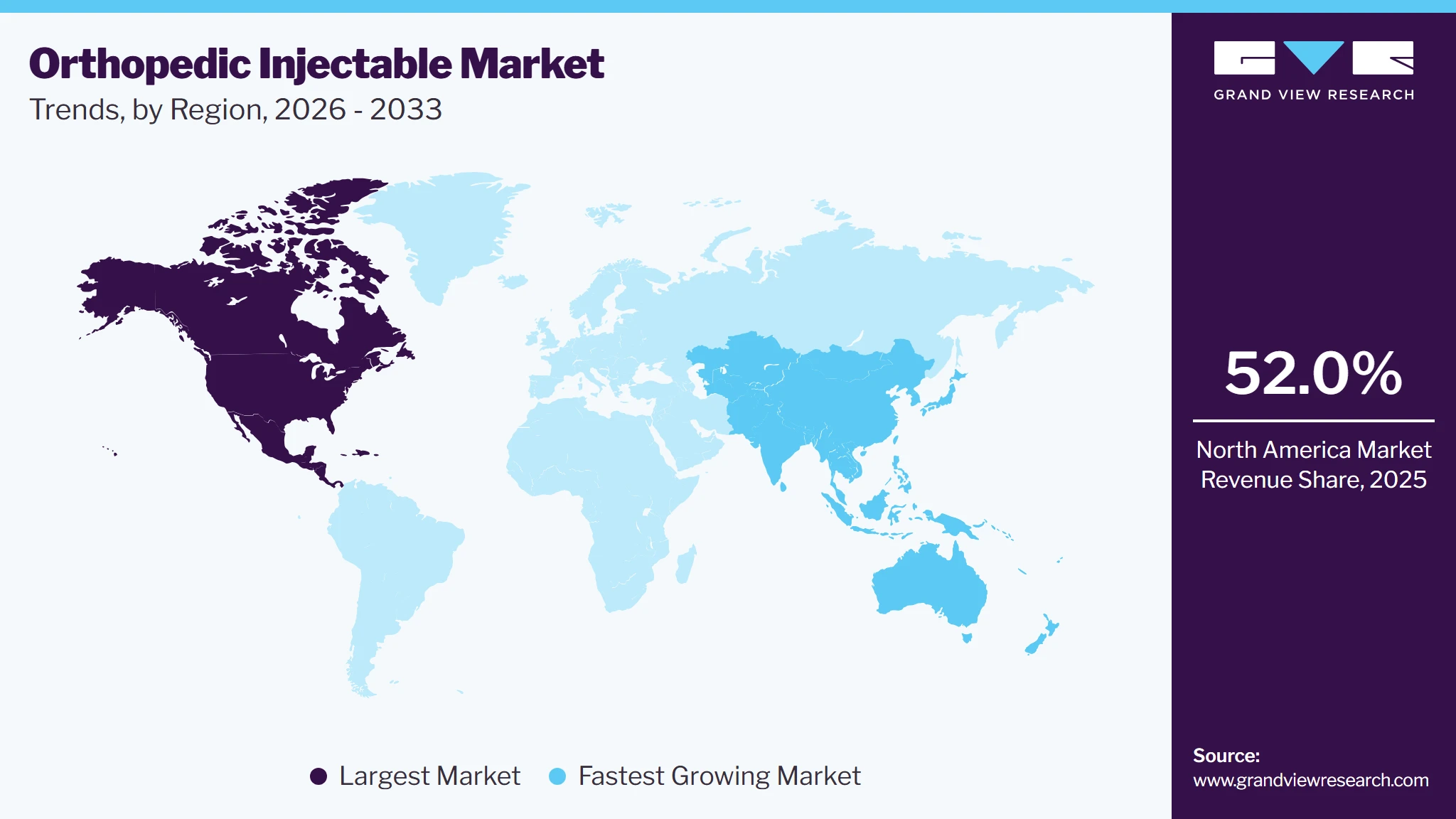
The North America orthopedic injectable market held the largest global revenue share of 52.0% in 2025, supported by a large population with osteoarthritis and established use of non-surgical joint treatments. The region has a broad network of orthopedic and outpatient healthcare providers, supporting administration of injectable therapies. Demand is supported by aging, obesity, joint injuries, and chronic musculoskeletal conditions. Hyaluronic acid and corticosteroid injections remain established treatment options, while PRP is used in selected musculoskeletal applications. Sports medicine also contributes to the demand for injectable therapies for activity-related injuries. The combination of a large treatment population, established clinical infrastructure, and demand for conservative joint care supports continued use of orthopedic injectables.
 To learn more about this report, Download Free Sample Report
 U.S. Orthopedic Injectable Market Trends
The U.S. is a major market for orthopedic injectables, supported by a large population with arthritis and substantial use of outpatient medical care for joint conditions. Osteoarthritis is the most common arthritis subtype in the country, creating a large patient base for joint pain management. The market benefits from established orthopedic practices and sports medicine services that provide access to injectable treatment. HA and corticosteroid injections remain important options for selected patients, while PRP is used in specific musculoskeletal applications. Age-related joint disease and obesity further support demand for knee and hip care. The large number of office-based visits associated with osteoarthritis also supports the need for physician-administered treatment options.
Europe Orthopedic Injectable Market Trends
Europe has an established orthopedic injectable industry, supported by population aging, the prevalence of osteoarthritis, and demand for conservative joint treatment. Osteoarthritis affects the knees, hips, hands, and other joints, creating demand across several orthopedic applications. The region has broad access to specialist orthopedic care and outpatient treatment, supporting administration of injectable products. HA and corticosteroid therapies remain important options for symptom management, while PRP and other orthobiologic products are used in selected clinical applications. Sports participation and musculoskeletal injuries also support demand for injectable treatment. Differences in clinical practice, reimbursement, and treatment recommendations across European countries create variation in product use. These factors support continued demand for orthopedic injectables across the region.
The UK orthopedic injectable market is supported by the growing burden of osteoarthritis and the demand for treatments that manage joint pain and support mobility. Knee and hip conditions create a large need for conservative orthopedic care. Outpatient musculoskeletal services provide channels for injection-based treatment, particularly for patients who are managing symptoms before considering surgery. HA and corticosteroid injections are used in selected clinical situations, while PRP has a role in specific musculoskeletal applications. An aging population also increases the number of patients requiring long-term management of joint disorders. Sports-related injuries add demand from active populations and sports medicine services. Differences in clinical recommendations and treatment evidence influence the use of individual injectable products across the UK.
The orthopedic injectable market in Germany is expected to grow over the forecast period. Germany has a large patient base for orthopedic injectables due to aging, osteoarthritis, joint injuries, and demand for mobility management. Knee osteoarthritis is an important area for injectable treatment, supporting demand for HA and corticosteroid products. The country has established specialist orthopedic care and outpatient treatment, which supports physician-administered injections. Growing demand for non-surgical management also creates opportunities for injectable therapies before more invasive treatments are considered. Sports-related musculoskeletal injuries contribute to the demand for PRP and other orthobiologic treatments in selected cases. Product choice is influenced by clinical evidence, physician preference, treatment cost, and patient condition. These factors support continued use of orthopedic injectable products across Germany.
The France orthopedic injectable market is developed, supported by osteoarthritis, population aging, joint injuries, and demand for non-surgical pain management. Knee conditions represent an important treatment area, creating demand for intra-articular therapies. Orthopedic and musculoskeletal services provide access to injection-based treatment for patients with joint pain and mobility limitations. HA and corticosteroid products remain established treatment options, while PRP and other regenerative products are used in selected applications. Sports medicine also contributes to the demand for injectable treatment among active populations. Treatment decisions are influenced by clinical evidence, patient condition, physician preference, and access to specific products. The combination of an established orthopedic care base and a large population requiring joint management supports continued demand for injectable therapies in France.
Asia Pacific Orthopedic Injectable Market Trends
The Asia Pacific orthopedic injectable industry is projected to grow at the fastest CAGR of 9.0% during the forecast period, supported by an aging population, increasing burden of osteoarthritis, expanding orthopedic services, and greater awareness of non-surgical joint treatment. The region has a large patient population requiring management of knee, hip, and other joint conditions. Growth in private healthcare and specialist outpatient services is improving access to injection-based treatment in several countries. HA remains an important treatment category, while PRP and other orthobiologic therapies are gaining attention in sports medicine and musculoskeletal care. Japan provides an established base for HA treatment, while China contributes through its large patient population and expanding healthcare capacity. These factors support faster growth in injectable treatment across the region.
The Japan orthopedic injectable market is well-established, supported by its aging population and high need for management of knee and other joint disorders. Osteoarthritis is closely linked with aging and can cause pain, stiffness, and reduced mobility, creating demand for long-term symptom management. HA injections have an established role in Japanese orthopedic care, particularly for knee conditions. The country also has a broad network of orthopedic services where injectable treatments can be administered on an outpatient basis. Demand for mobility-supporting treatment among older adults provides a steady patient base. Clinical research and product development in HA and other injectable therapies continue to support treatment options. These factors help maintain Japan's position as an important market for orthopedic injectable products.
The orthopedic injectable market in China is supported by population aging, rising awareness of osteoarthritis, expanding orthopedic care, and growing demand for non-surgical treatments. Knee osteoarthritis provides a major application area for HA and other intra-articular therapies. Expansion of specialist healthcare services is improving access to orthopedic diagnosis and treatment. Growing interest in sports medicine is also creating demand for PRP and other injectable products for selected musculoskeletal injuries. The large population base provides a broad pool of patients requiring joint pain management. Increasing use of outpatient treatment further supports injectable administration. Product availability, treatment costs, physician preferences, and clinical evidence remain important factors influencing adoption across different parts of the country.
Latin America Orthopedic Injectable Market Trends
Latin America has a developing orthopedic injectable industry, supported by an aging population, osteoarthritis, joint injuries, and rising demand for non-surgical treatments. Knee osteoarthritis provides a key application area for HA and corticosteroid injections. Private orthopedic clinics and sports medicine practices provide important channels for injectable treatment. PRP is also used for selected sports-related and musculoskeletal conditions, expanding demand beyond established HA products. Access to injectable therapies varies across countries due to differences in healthcare expenditure, product availability, and treatment costs. Growing awareness of joint preservation and outpatient treatment is supporting interest in injectable options. Brazil provides a major patient base and an important commercial market within the region. These factors support the gradual expansion of orthopedic injectable use across Latin America.
The Brazil orthopedic injectable market is growing, driven by the rising prevalence of osteoarthritis, aging, and demand for joint pain treatment. Knee osteoarthritis is a key application, creating demand for HA and other intra-articular products. Orthopedic clinics and private healthcare provide channels for outpatient injection procedures. Sports medicine also contributes to the demand for PRP and other injectable therapies used for selected musculoskeletal injuries. Growing awareness of non-surgical treatment is increasing interest in options that can help manage symptoms before surgery. Treatment access remains influenced by product cost, physician preference, and availability of specialist care. The combination of a large patient base and expanding use of orthopedic services supports continued demand for injectable therapies in Brazil.
Middle East Orthopedic Injectable Market Trends
The Middle East orthopedic injectable industry is supported by an aging population, osteoarthritis, obesity-related joint stress, sports injuries, and improving access to specialist orthopedic care. Knee osteoarthritis is an important application and supports demand for HA and corticosteroid injections. Private healthcare providers are important channels for injectable treatment in major urban markets. Sports medicine is also creating demand for PRP and other orthobiologic therapies among active populations. Product access differs across countries, with treatment costs and availability influencing adoption. Urbanization and growth in specialist healthcare services are increasing access to orthopedic treatment. These factors support the gradual expansion of injectable therapies across the region, with demand concentrated in countries with larger specialist healthcare networks and greater access to outpatient orthopedic services.
The growth of the Saudi Arabia orthopedic injectable market is driven by the prevalence of osteoarthritis, obesity, and joint injuries, as well as the demand for mobility management. Osteoarthritis commonly affects the knees and hips, creating a patient base for joint pain treatment. The country has a growing demand for specialist orthopedic and sports medicine services, supporting the use of injectable therapies. HA and corticosteroid products are used for selected joint conditions, while PRP provides an additional option in sports medicine and musculoskeletal care. Private healthcare facilities provide important channels for outpatient injection procedures. Rising awareness of joint health and non-surgical treatment also supports patient demand. These factors provide a base for continued use of orthopedic injectable products in Saudi Arabia.
Key Orthopedic Injectable Company Insights
The orthopedic injectable market is witnessing strong competition across established and emerging injectable therapies, supported by growing clinical use of joint pain and musculoskeletal treatments. Bioventus, Anika Therapeutics, Fidia Farmaceutici, and Seikagaku Corporation maintain strong positions in hyaluronic acid-based therapies used for osteoarthritis management. In parallel, Arthrex and Regen Lab are strengthening their presence in PRP and regenerative treatment areas, while Zimmer Biomet and Ferring Pharmaceuticals support broader orthopedic treatment portfolios. Aptissen SA, IBSA, TRB Chemedica, Mastelli, and Albomed GmbH are also expanding competition through specialized injectable products and joint-care solutions. Competition is shaped by product formulation, treatment frequency, clinical evidence, physician preference, and distribution reach, while growing interest in regenerative therapies is adding new product options alongside established HA and corticosteroid treatments.
Key Orthopedic Injectable Companies
The following key companies have been profiled for this study of the orthopedic injectable market.
-
Bioventus
-
Anika Therapeutics
-
Arthrex
-
Zimmer Biomet
-
Seikagaku Corporation
-
Aptissen SA
-
Ferring Pharmaceuticals
-
Fidia Farmaceutici
-
TRB Chemedica
-
IBSA
-
Mastelli
-
Regen Lab
-
ORTOBRAND INTERNATIONAL
-
Sanofi
-
Albomed GmbH
Competitive Benchmarking
Category
Players
Operating Strategies
Competitive Edge
Weaknesses
Mature players
Bioventus.
Player 2
Player 3
Player 4
Player 5
- Focus on expanding HA, corticosteroid, PRP, and regenerative injectable portfolios through product development, clinical studies, and lifecycle management.
- Maintain manufacturing and distribution networks to support product supply across key markets.
- Develop new formulations and combination products for osteoarthritis, sports injuries, and other musculoskeletal conditions.
- Wide product portfolios cover several orthopaedic treatment areas.
- Established distribution networks support product availability across different markets.
- Experience in orthopaedic care and physician relationships supports product use.
- Managing several products across different markets increases manufacturing and distribution requirements.
- Competition from companies focused on specific injectable categories creates pressure on product differentiation.
- Product development, clinical studies, and regulatory requirements also require continued investment.
Emerging players
Aptissen SA
Player 2
Player 3
Player 4
Player 5
- Focus on specific injectable products for osteoarthritis, cartilage disorders, sports medicine, and regenerative treatment.
- Develop HA, PRP, polynucleotide/PDRN, and combination products for selected clinical applications.
- Expand through distribution partnerships, product registrations, clinical studies, and entry into selected geographic markets.
- Focused product portfolios allow companies to concentrate on specific injectable technologies and treatment areas.
- Product knowledge in HA, PRP, regenerative, and combination therapies supports product differentiation.
- Focused commercial activities also allow companies to target selected treatment areas and geographic markets.
- Smaller product portfolios and geographic presence limit diversification compared with mature players.
- Lower manufacturing and distribution scale can increase dependence on external partners.
- Limited brand recognition and smaller commercial networks can make it harder to compete with companies having wider product portfolios and market coverage.
Recent Developments
-
In August 2025, Bioventus Inc. fully launched the XCELL PRP System across the U.S. Orthopedic and Sports Medicine specialties. The system processes whole blood through a single 10-minute cycle and provides both leukocyte-rich and leukocyte-poor PRP preparation options with flexible dosing, supporting customized PRP preparation for different patient and procedural needs.
-
In June 2025, RegenLab USA inaugurated a new R&D and manufacturing facility in Jersey City, New Jersey, supporting the development and manufacturing of blood-component separation technologies used in orthopedic and regenerative medicine applications.
-
In March 2025, IBSA entered into a strategic partnership with Lunatus to expand its osteoarticular business in Saudi Arabia and the United Arab Emirates. The collaboration covers IBSA’s osteoarticular solutions, including intra-articular hyaluronic acid-based treatments, and supports wider access to these products for the management of joint pain and related conditions in the region.
Orthopedic Injectable Market Report Scope
Report Attribute
Details
Market size value in 2025
USD 9.9 billion
Estimated market size in 2026
USD 10.5 billion
Projected market size by 2033
USD 16.9 billion
Growth rate
CAGR of 7.1% from 2026 to 2033
Base year for estimation
2025
Historical data
2021 - 2024
Forecast period
2026 - 2033
Quantitative units
Revenue in USD million/billion and CAGR from 2026 to 2033
Report coverage
Revenue forecast, company ranking, competitive landscape, growth factors, trends
Segments covered
Product/Therapy type, clinical indication, end use, and region
Regional scope
North America; Europe; Asia Pacific; Latin America; Middle East
Country scope
U.S.; Canada; UK; Germany; France; Italy; Spain; Denmark; Sweden; Norway; Austria; Switzerland; Netherlands; Belgium; Japan; China; India; Australia; South Korea; Thailand; Singapore; Taiwan; Indonesia; Malaysia; Vietnam; Philippines; Brazil; Argentina; Mexico; Colombia; Saudi Arabia; UAE; Turkey; Israel; Qatar; Kuwait
Key companies profiled
Bioventus; Anika Therapeutics; Arthrex; Zimmer Biomet; Seikagaku Corporation; Aptissen SA; Ferring Pharmaceuticals; Fidia Farmaceutici; TRB Chemedica; IBSA; Mastelli; Regen Lab; ORTOBRAND INTERNATIONAL; Sanofi; Albomed GmbH
Customization scope
Free report customization (equivalent up to 8 analysts working days) with purchase. Addition or alteration to country, regional & segment scope.
Pricing and purchase options
Avail customized purchase options to meet your exact research needs. Explore purchase options
Global Orthopedic Injectable Market Report Segmentation
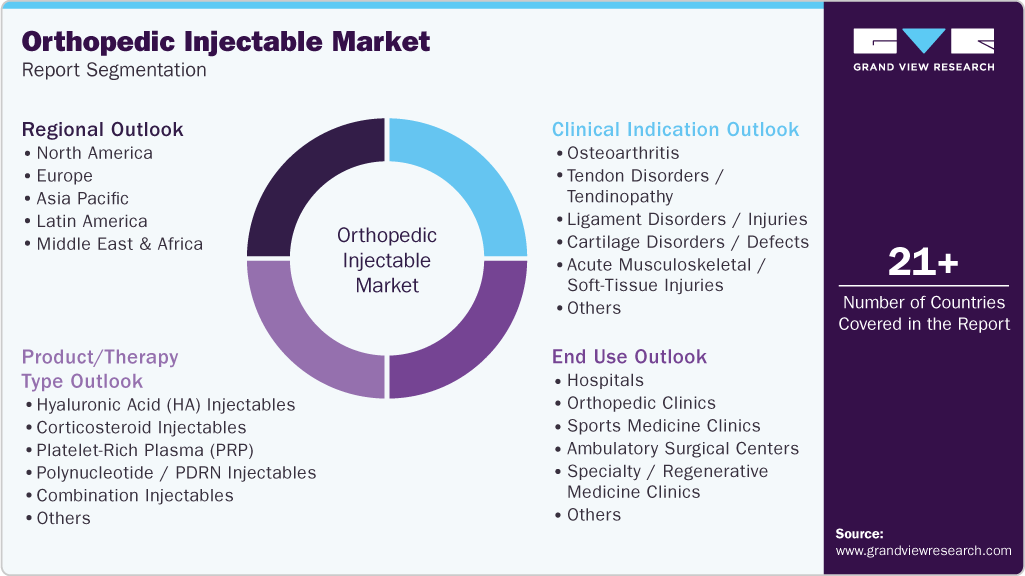
This report forecasts revenue growth at the global, regional & country levels and provides an analysis of the latest industry trends in each of the sub-segments from 2021 to 2033. For this study, Grand View Research has segmented the global orthopedic injectable market report based on product/therapy type, clinical indication, end use, and region:
 To learn more about this report, Download Free Sample Report
 -
Product/Therapy Type Outlook (Revenue, USD Million/Billion, 2021 - 2033)
-
Hyaluronic Acid (HA) Injectables
-
Linear / Non-cross-linked HA
-
Cross-linked HA
-
-
Corticosteroid Injectables
-
Triamcinolone
-
Methylprednisolone
-
Other Corticosteroids
-
-
Platelet-Rich Plasma (PRP)
-
Leukocyte-poor PRP
-
Leukocyte-rich PRP
-
-
Polynucleotide / PDRN Injectables
-
Polynucleotide-based Injectables
-
PDRN-based Injectables
-
-
Combination Injectables
-
HA + PRP
-
HA + Polynucleotide/PDRN
-
HA + Corticosteroid
-
Other Combination Injectables
-
-
Others
-
-
Clinical Indication Outlook (Revenue, USD Million/Billion, 2021 - 2033)
-
Osteoarthritis
-
Knee
-
Hip
-
Shoulder
-
Ankle & Foot
-
Hand & Wrist
-
Other Joints
-
-
Tendon Disorders / Tendinopathy
-
Ligament Disorders / Injuries
-
Cartilage Disorders / Defects
-
Acute Musculoskeletal / Soft-Tissue Injuries
-
Others
-
-
End Use Outlook (Revenue, USD Million/Billion, 2021 - 2033)
-
Hospitals
-
Orthopedic Clinics
-
Sports Medicine Clinics
-
Ambulatory Surgical Centers
-
Specialty / Regenerative Medicine Clinics
-
Others
-
-
Regional Outlook (Revenue, USD Million/Billion, 2021 - 2033)
-
North America
-
U.S.
-
Canada
-
-
Europe
-
UK
-
Germany
-
France
-
Italy
-
Spain
-
Denmark
-
Sweden
-
Norway
-
Austria
-
Switzerland
-
Netherlands
-
Belgium
-
-
Asia Pacific
-
Japan
-
China
-
India
-
Australia
-
South Korea
-
Thailand
-
Singapore
-
Taiwan
-
Indonesia
-
Malaysia
-
Vietnam
-
Philippines
-
-
Latin America
-
Brazil
-
Argentina
-
Mexico
-
Colombia
-
-
Middle East
-
Saudi Arabia
-
UAE
-
Turkey
-
Israel
-
Qatar
-
Kuwait
-
-
Research Methodology
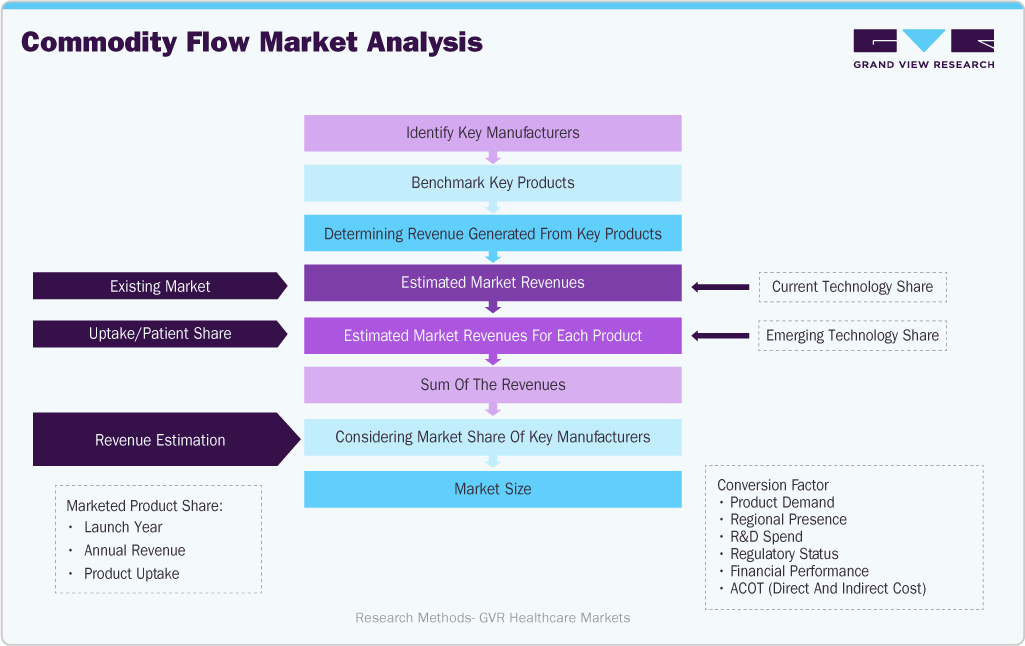
The orthopedic injectable market was estimated using a commodity flow approach. The study began by identifying key manufacturers and benchmarking major products across hyaluronic acid, corticosteroids, PRP, combination injectables, and other orthopedic injectable therapies. Product-level analysis considered manufacturer presence, product availability, treatment indication, injection frequency, pricing, clinical use, and geographic reach. Revenue generated from key products was assessed using company disclosures, product information, public pricing data, and secondary research. Product uptake and treatment volumes were evaluated to estimate the contribution of individual therapies across major countries and regions. Revenues from key products were aggregated to derive country-level market estimates, followed by regional and global estimates. The estimates were validated using orthopedic procedure volumes, treatment patterns, product launches, company disclosures, primary interviews, and secondary research. Data triangulation was used to validate the final market estimates across products, countries, regions, and segments.
Segment Definition
Segment - Product/Therapy Type
Revenue capture definition
Hyaluronic Acid (HA) Injectables
Injectable products containing hyaluronic acid as the primary therapeutic component, administered mainly through intra-articular or periarticular procedures to manage joint pain, support joint function, or provide viscosupplementation in orthopedic conditions.
Corticosteroid Injectables
Injectable products containing corticosteroids as the primary therapeutic component, used to reduce inflammation and pain associated with joints, tendons, soft tissues, and other orthopedic conditions through targeted administration.
Platelet-Rich Plasma (PRP)
Injectable autologous blood-derived preparations with a concentrated level of platelets, administered to targeted musculoskeletal sites for tissue healing, pain management, or recovery from selected orthopedic and sports-related conditions.
Polynucleotide / PDRN Injectables
Injectable products containing polynucleotides or polydeoxyribonucleotide as the primary active component, used in selected orthopedic and musculoskeletal applications to support tissue repair, reduce symptoms, or promote local tissue recovery.
Combination Injectables
Injectable products that contain two or more therapeutic components or treatment agents within the same product or administration, designed to provide combined effects for pain management, inflammation control, joint care, or tissue treatment.
Others
Orthopedic injectable products that do not fall within HA, corticosteroid, PRP, polynucleotide/PDRN, or combination injectable categories, including other single-component injectable therapies used for musculoskeletal treatment.
Segment - Clinical Indication
Revenue capture definition
Osteoarthritis
Orthopedic injectable treatments used for osteoarthritis-related joint pain, stiffness, inflammation, and functional limitations, with treatment primarily focused on affected weight-bearing or other synovial joints.
Tendon Disorders / Tendinopathy
Orthopedic injectable treatments used for tendon-related conditions involving pain, degeneration, overuse, or impaired tendon function, including tendinopathy affecting areas such as the shoulder, elbow, wrist, hip, knee, or ankle.
Ligament Disorders / Injuries
Orthopedic injectable treatments used for ligament-related conditions involving sprain, partial injury, degeneration, or impaired ligament function, including injuries affecting major joints and supporting connective tissues.
Cartilage Disorders / Defects
Orthopedic injectable treatments used for localized cartilage damage, degeneration, or defects affecting joint surfaces, including treatment associated with cartilage lesions and related joint dysfunction.
Acute Musculoskeletal / Soft-Tissue Injuries
Orthopedic injectable treatments used for recent musculoskeletal or soft-tissue injuries involving muscles, fascia, or related tissues, including activity-related injuries requiring short-term pain management or tissue recovery.
Others
Orthopedic injectable treatments used for clinical indications outside osteoarthritis, tendon disorders, ligament disorders, cartilage disorders, and acute musculoskeletal or soft-tissue injuries.
Segment - End Use
Revenue capture definition
Hospitals
Orthopedic injectable treatments administered within hospital facilities, including inpatient departments and hospital-based outpatient departments, where treatment is provided as part of hospital-delivered orthopedic or musculoskeletal care.
Orthopedic Clinics
Orthopedic injectable treatments administered in dedicated orthopedic clinics that primarily provide diagnosis, treatment, and follow-up care for joint, bone, muscle, tendon, ligament, and other musculoskeletal conditions.
Sports Medicine Clinics
Orthopedic injectable treatments administered in clinics primarily focused on sports-related injuries, athletic performance-related musculoskeletal conditions, injury recovery, and treatment of physically active patients.
Ambulatory Surgical Centers
Orthopedic injectable treatments administered in dedicated outpatient surgical facilities where procedures are performed without an overnight hospital admission, including injection procedures requiring facility-based procedural care.
Specialty / Regenerative Medicine Clinics
Orthopedic injectable treatments administered in specialized clinics focused on regenerative medicine, biologic therapies, tissue repair, or advanced non-surgical treatment of musculoskeletal conditions.
Others
Orthopedic injectable treatments administered through healthcare facilities or provider locations outside hospitals, orthopedic clinics, sports medicine clinics, ambulatory surgical centers, and specialty or regenerative medicine clinics.
Estimation Model
 To learn more about this report, Download Free Sample Report
 Delivered Customizations
This report has been delivered with the following In-depth customizations
Client Request
Customization Delivered
Value Adds
Global Orthopedic Injectable Market Opportunity Assessment (North America, Europe & Asia Pacific)
Conducted a detailed assessment of orthopedic injectable treatment opportunities across major markets, covering osteoarthritis, tendon disorders, ligament injuries, cartilage disorders, and acute musculoskeletal injuries. The study evaluated patient demand, treatment adoption, product availability, pricing, clinical use, physician preferences, and distribution channels across major healthcare markets.
Helped the client identify treatment areas with strong demand, evaluate product positioning and pricing factors, and prioritize regional expansion. The study also supported business planning by identifying treatment gaps, product adoption trends, and commercial opportunities across established and emerging orthopedic markets.
Orthopedic Injectable Product & Competitive Benchmarking
Delivered a comprehensive benchmarking analysis of HA, corticosteroid, PRP, polynucleotide/PDRN, combination, and other injectable therapies. The assessment covered product portfolios, product launches, clinical indications, formulation types, treatment frequency, distribution networks, partnerships, and competitive positioning across major markets.
Enabled the client to assess product positioning, identify portfolio expansion opportunities, evaluate competitive strengths, and support product development decisions. The analysis also supported competitive intelligence, partnership assessment, and long-term portfolio planning across the orthopedic injectable market.
Emerging Market Orthopedic Injectable Access & Infrastructure Feasibility Study
Conducted a country-level assessment of orthopedic injectable access across selected emerging markets, including Brazil, Saudi Arabia, South Africa, Indonesia, Mexico, and the UAE. The study analyzed orthopedic care infrastructure, specialist clinics, treatment accessibility, product availability, distribution networks, pricing factors, healthcare delivery capacity, and treatment demand.
Supported market entry planning by identifying markets with increasing treatment demand, infrastructure gaps, distribution opportunities, and access needs. The study also helped improve resource allocation, strengthen regional expansion plans, and identify commercial opportunities across underserved orthopedic treatment markets.
About the Author(s)
Pharmaceuticals Research Team
Healthcare · PharmaceuticalsThis report was authored by the pharmaceuticals research team at Grand View Research - comprising two research analysts, one senior research analyst, and one industry expert - with specialized expertise in the pharmaceuticals segment of the healthcare industry. All findings are based on proprietary healthcare databases, executive interviews, and regulatory analysis, subject to internal peer review prior to publication.
Last Updated:
Speak to Analyst

Customize this report to your needs - add regions, segments, or data points, with 20% free customization.
Or view our licence options:


ISO 9001:2015 & 27001:2022 Certified
We are GDPR and CCPA compliant! Your transaction & personal information is safe and secure. For more details, please read our privacy policy.


