
- Home
- »
- Petrochemicals
- »
-
Oxidized Polyethylene Wax Market Size, Share Report, 2033GVR Report cover

Oxidized Polyethylene Wax Market (2026 - 2033)
Size, Share & Trends Analysis Report By Product (High-Density, Low-Density), By Application (Paints & Coatings, Printing Inks, Metals Processing, Plastic Processing, Textiles, Adhesives), By Region, And Segment Forecasts
Market Size, 2025
$898.9MMarket Estimate, 2026
$944.8MMarket Forecast, 2033
$1,414.1MCAGR, 2026–2033
5.9%Oxidized Polyethylene Wax Market Summary
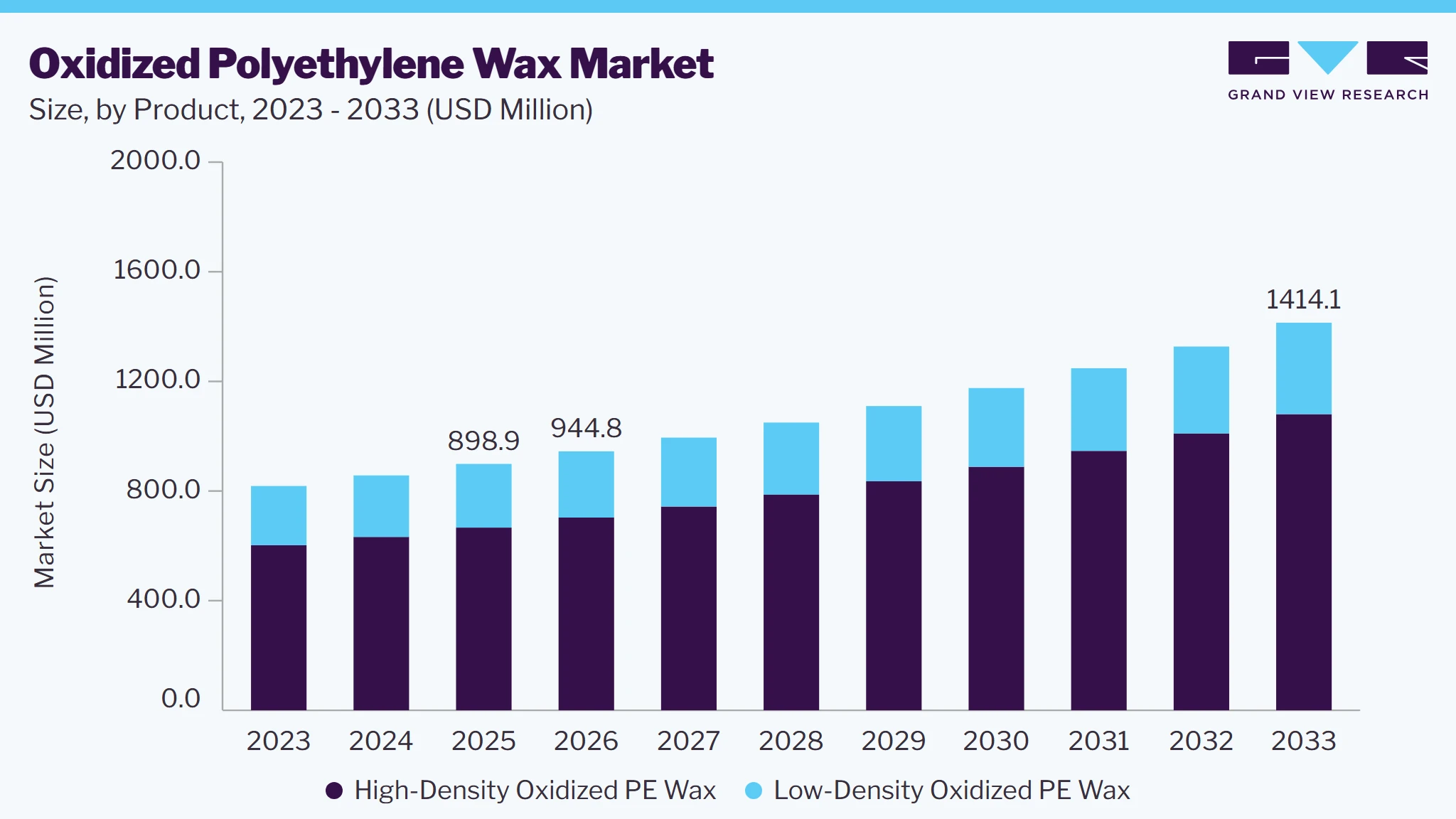
The global oxidized polyethylene wax market size was valued at USD 898.9 million in 2025 and is projected to grow from USD 944.8 million in 2026 to USD 1,414.1 million by 2033, growing at a CAGR of 5.9% from 2026 to 2033. North America dominated the market, accounting for the largest global share of 35.2% in 2025. This growth can be attributed to the increasing demand for hot melt adhesives in consumer goods, such as packaging and furniture.
 Source: Grand View Research, IR Documents, Primary Interviews, Paid DatabasesTo learn more about this report,
 Download Free Sample Report
 Key Market Trends & Insights
- By product: High-density oxidized PE wax accounted for the largest share of 74.2% in 2025.
- By application: Paints & coatings segment held the largest share of 21.6% in 2025.
Regional Highlights
- Largest regional market: North America (35.2% revenue share, 2025)
- By country: The U.S. held the largest share of North America in 2025.
Market Size & Forecast
- Market size in 2025: USD 898.9 Million
- Estimated market size in 2026: USD 944.8 Million
- Projected market size by 2033: USD 1,414.1 Million
- CAGR (2026-2033): 5.9%
Three ways to get this report
Buy it, customize it, or ask a question.Ask an Analyst
A direct answer, usually in 1 working day
- AccessReport author, directly
- Reply timeWithin 1 working day
- No sales callDirect answer only
- FormatEmail reply
- CostFree, no cost
Get the Full Report
What the study covers
- FormatsPDF · Excel · Dashboard
- Timeline2026–2033 annual, 2025 base
- Coverage20+ countries, 5 regions
- Companies10+ key players profiled
Customize the Report
20% free customization
- IncludeCountries, segments, points
- TailorTo your product definition
- ExtendDeeper competitor detail
- OrA fully bespoke study
- Turnaround5–10 working days
In addition, its applications in various industries, including plastics, coatings, and rubber processing, are expanding. Furthermore, the unique properties of oxidized polyethylene wax, such as excellent water repellency, chemical resistance, and compatibility with other materials, further enhance its appeal, leading to broader adoption across multiple sectors.Oxidized polyethylene wax (OPE wax) is a modified form of polyethylene wax characterized by its polar groups, such as carbonyl and hydroxyl, which enhance its compatibility with various materials. The market for oxidized polyethylene wax is experiencing growth due to several driving factors. One significant contributor is the escalating demand from the packaging sector, where OPE wax is utilized to improve moisture resistance, gloss, and barrier properties in packaging materials. As the consumption of packaged goods rises, particularly in food and pharmaceuticals, the need for OPE wax is expected to increase. Furthermore, the shift towards sustainable packaging solutions, including bio-based and biodegradable options, further propels demand since OPE wax can enhance these materials' properties.
 To learn more about this report, Download Free Sample Report
 In addition to packaging, the automotive industry increasingly adopts oxidized polyethylene wax for various applications. The wax provides essential benefits such as UV protection and scratch resistance while delivering a high-gloss finish to vehicle surfaces. With the rise in automobile production and sales, especially in developing regions, the demand for OPE wax in automotive applications is anticipated to grow steadily.
Moreover, the electronics industry represents another vital market for oxidized polyethylene wax. It manufactures printed circuit boards (PCBs), capacitors, and other electronic components. The surge in demand for electronic devices such as smartphones and laptops, along with the growing trend of wearable technology and IoT devices, is expected to fuel further growth in this sector. Overall, the expansion of these industries highlights the increasing significance of oxidized polyethylene wax across various applications.
Market Dynamics
The oxidized polyethylene wax market is experiencing steady growth, driven by expanding demand from the plastics, coatings, inks, and adhesives industries. Increasing production of PVC products, masterbatches, and engineered polymers has strengthened the need for processing aids that enhance lubrication, dispersion, and surface finish. In the coatings and printing inks sectors, manufacturers are adopting oxidized polyethylene wax to improve scratch resistance, gloss control, and abrasion performance, particularly in water-based formulations. Rising infrastructure development, automotive manufacturing, and packaging activities across emerging economies continue to support product consumption. However, fluctuations in polyethylene feedstock prices and volatility in crude oil markets pose challenges by affecting production costs and pricing stability. Environmental regulations governing petrochemical-derived additives are also encouraging manufacturers to invest in cleaner production technologies and more sustainable formulations.
The increasing production of PVC pipes, profiles, cables, films, and masterbatches is a primary driver of the oxidized polyethylene wax market. Oxidized polyethylene wax is extensively utilized as an external lubricant and processing aid to improve polymer flow, reduce equipment wear, enhance mold release, and deliver superior surface finish in plastic products. As manufacturers continue to prioritize production efficiency and product consistency, the demand for high-performance processing additives has grown across both commodity and engineering plastics.
Rising investments in infrastructure, construction, packaging, and consumer goods manufacturing are accelerating global plastic consumption, particularly in emerging economies. The expansion of polymer processing facilities and the growing adoption of advanced extrusion and injection molding technologies have further strengthened the requirement for specialty wax additives. These industry trends are expected to sustain long-term demand for oxidized polyethylene wax as processors seek materials that improve operational productivity while maintaining product quality.
Stringent environmental regulations governing the use of petrochemical-derived materials present a notable restraint for the oxidized polyethylene wax market. Regulatory authorities across several regions are implementing stricter standards related to emissions, chemical safety, waste management, and the environmental impact of industrial additives. Since oxidized polyethylene wax is predominantly derived from fossil-based polyethylene, manufacturers face increasing pressure to comply with evolving sustainability requirements while maintaining product performance and cost competitiveness. Compliance often requires additional investment in cleaner production processes, regulatory testing, certifications, and product reformulation.
The growing transition toward water-based coatings and environmentally compliant formulations presents a significant opportunity for the oxidized polyethylene wax market. Manufacturers are increasingly incorporating oxidized polyethylene wax into coating systems to enhance abrasion resistance, scratch protection, slip characteristics, and surface appearance without compromising formulation stability. This trend is gaining momentum across architectural, industrial, automotive, and wood coating applications as regulatory standards encourage the use of lower-emission coating technologies.
Ongoing research aimed at developing high-performance, low-VOC, and specialty wax formulations is creating new avenues for product differentiation. As end-use industries place greater emphasis on sustainability, durability, and premium surface performance, demand for advanced wax additives is expected to increase. The continued expansion of green building initiatives, sustainable packaging solutions, and environmentally responsible manufacturing practices is likely to support broader adoption of oxidized polyethylene wax in next-generation coating formulations.
Analyst Perspective
The oxidized polyethylene wax market is positioned for steady growth, supported by expanding demand from plastic processing, coatings, printing inks, and adhesive applications. Rising industrial manufacturing and increasing consumption of high-performance polymer additives are driving the adoption of specialty wax formulations that improve processing efficiency and surface performance. Manufacturers are focusing on product innovation, customized grades, and sustainable production technologies to strengthen their competitive positioning. Asia-Pacific continues to be the leading demand center due to rapid industrialization and robust plastics manufacturing. While raw material price volatility and evolving environmental regulations present challenges, continued investment in advanced formulations and high-value industrial applications is expected to sustain long-term market expansion.
Product Insights
Based on product, the high-density oxidized PE wax accounted for the highest market share, representing 74.2% of total revenue in 2025, primarily driven by its robust properties and versatility in various applications. Its high density contributes to superior mechanical strength and thermal stability, making it ideal for demanding environments. In addition, the increasing demand from industries such as coatings, plastics, and adhesives significantly fuels market growth. Furthermore, the trend towards sustainable manufacturing practices encourages the use of high-density oxidized PE wax as an eco-friendly additive, further enhancing its appeal across multiple sectors.
The low-density oxidized polyethylene wax is expected to grow at a significant CAGR over the forecast period, driven by its unique characteristics that cater to specific applications. Its lower density allows for improved flexibility and dispersibility, making it particularly valuable in formulations for coatings and inks. In addition, the rising demand for lightweight materials in packaging and automotive applications drives this growth. Furthermore, the increasing focus on enhancing product performance in various consumer goods propels the adoption of low-density oxidized PE wax, as it can improve properties such as water repellency and adhesion.
Application Insights
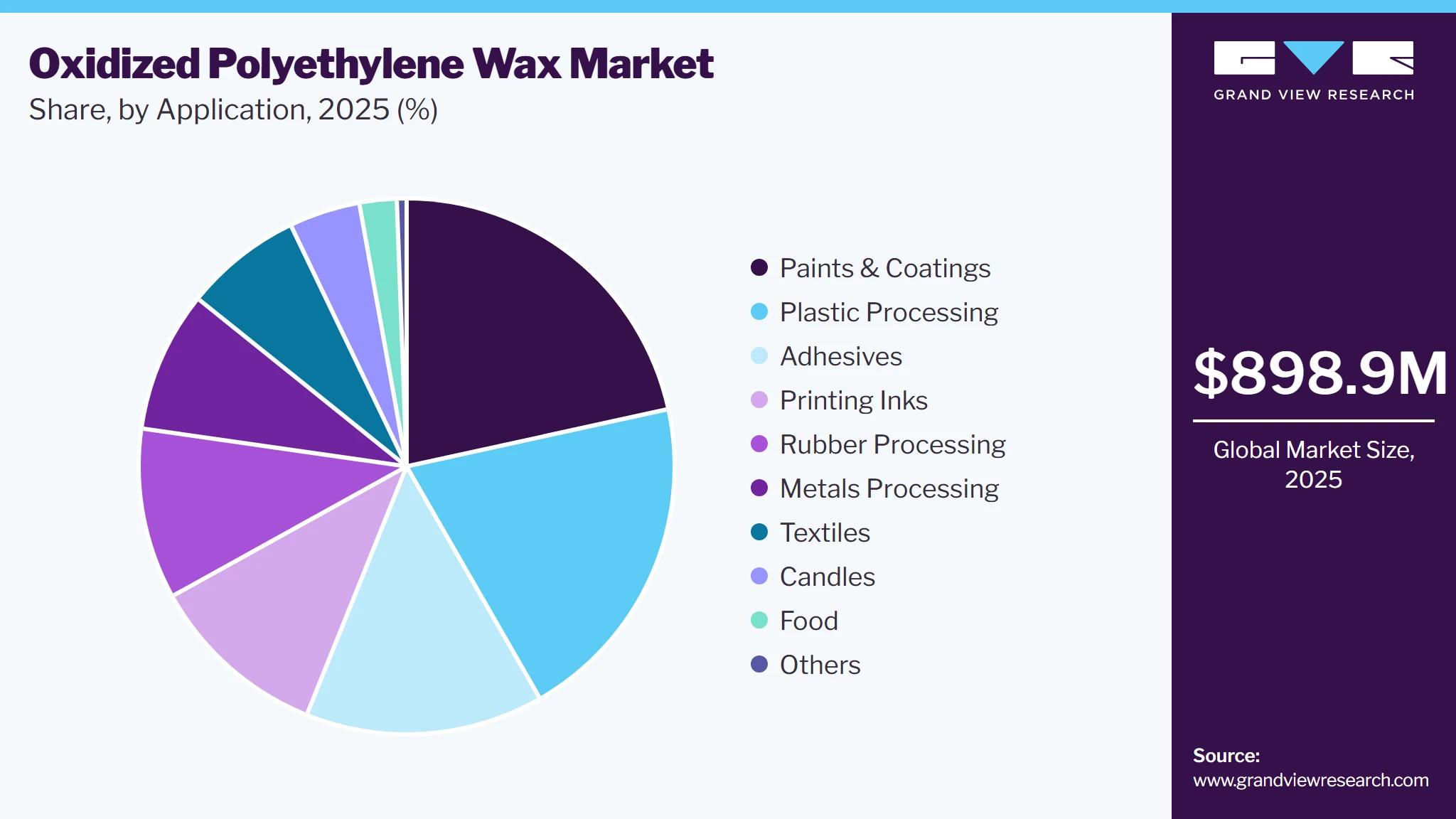
By application, the paints & coatings held a dominant position, contributing 21.6% of total revenue in 2025. This growth can be attributed to its exceptional properties that enhance product performance. This wax improves the durability, gloss, and smoothness of coatings, making it a valuable additive for manufacturers. In addition, the increasing demand for high-performance coatings, particularly in automotive and industrial applications, fuels this trend. Furthermore, the growing emphasis on environmentally friendly formulations encourages the incorporation of oxidized polyethylene wax, as it offers improved stability and compatibility with various resins and pigments, further supporting market expansion.
 To learn more about this report, Download Free Sample Report
 The printing ink segment is expected to grow at a CAGR of 6.9% over the forecast period, owing to its ability to enhance ink formulations. This wax improves ink flow and leveling properties, improving print quality and surface finish. The growing need for high-quality printing solutions in packaging and labeling drives the adoption of oxidized polyethylene wax. Furthermore, its compatibility with various solvents and pigments makes it an ideal choice for ink manufacturers seeking to improve performance while meeting stringent regulatory requirements, thereby contributing to market growth.
Regional Insights
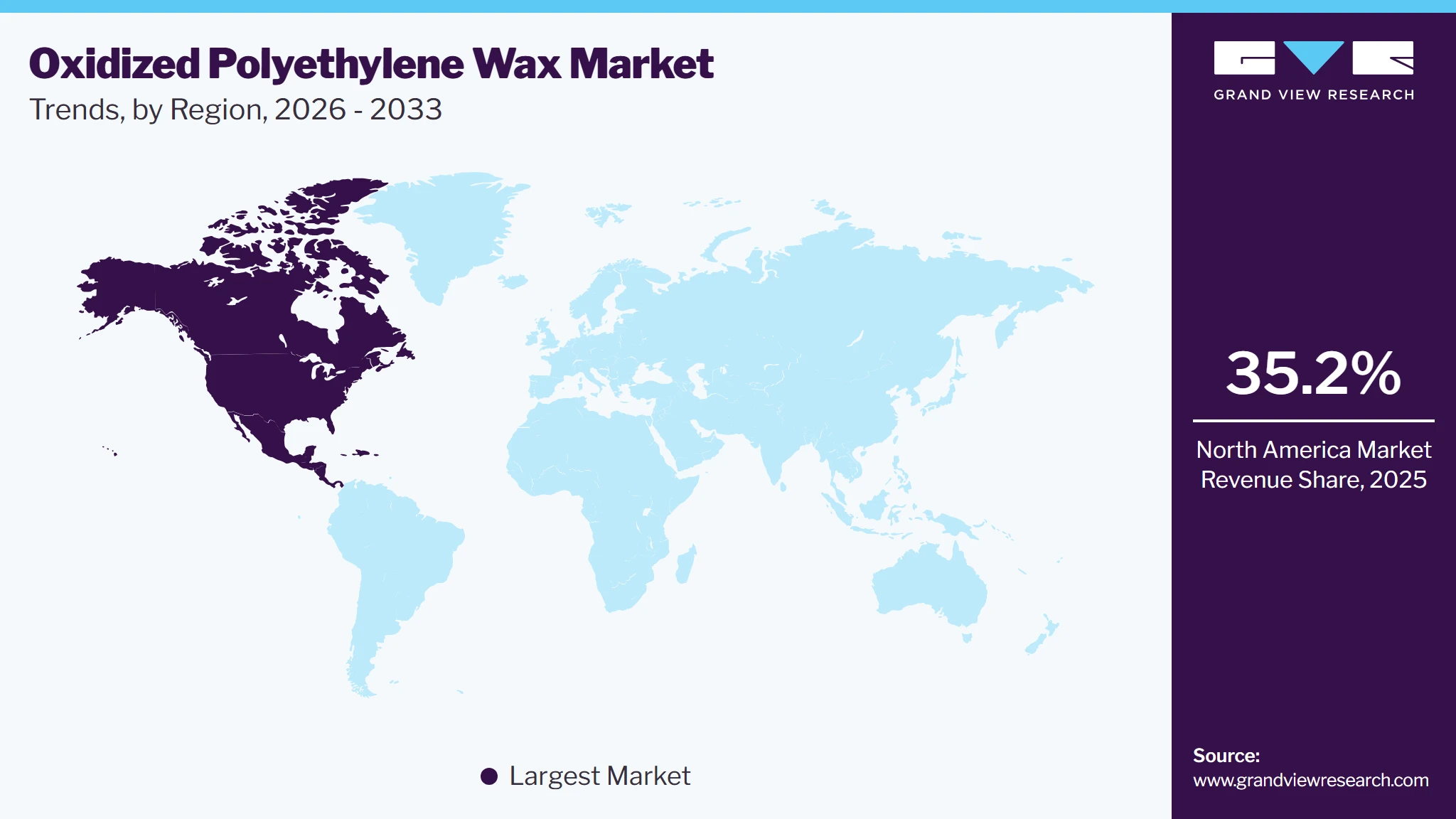
North America dominated the oxidized polyethylene wax market with the highest revenue share of 35.2% in 2025, primarily driven by the robust demand from the plastics and coatings industries. In addition, the region benefits from a well-established manufacturing base, which enhances the production capabilities of oxidized polyethylene wax. Furthermore, technological advancements and a strong focus on high-performance additives further propel market growth. Moreover, the increasing use of oxidized polyethylene wax in various applications, including adhesives and printing inks, reflects the region's commitment to innovation and efficiency in manufacturing processes.
 To learn more about this report, Download Free Sample Report
 U.S. Oxidized Polyethylene Wax Market Trends
U.S. dominated the North American oxidized polyethylene wax market in 2025. This growth can be attributed to the rising demand for packaging materials and consumer goods. The country's strong economy and consumer market drive the need for effective packaging solutions that incorporate oxidized polyethylene wax for improved performance. Furthermore, the expansion of end-use industries such as automotive and electronics contributes to increased wax consumption as manufacturers seek to enhance product durability and quality through advanced formulations.
Asia Pacific Oxidized Polyethylene Wax Market Trends
The Asia Pacific oxidized polyethylene wax market is expected to grow at a significant CAGR over the forecast period, owing to rapid urbanization and the growing packaging sector, driven by rising consumer demand for packaged goods. Furthermore, investments in infrastructure development and expanding manufacturing capabilities in countries such as China and India contribute to increased production and consumption of oxidized polyethylene wax across various industries.
The oxidized polyethylene wax market in China led the Asia Pacific with the largest revenue share in 2025, driven by its significant role in the plastics industry. Furthermore, the country's ongoing initiatives to enhance its manufacturing capabilities and produce high-quality polymers have increased demand for oxidized polyethylene wax as a processing aid. Moreover, the expansion of end-use sectors such as automotive and electronics further drives consumption, positioning China as a leading player in the global oxidized polyethylene wax market.
Europe Oxidized Polyethylene Wax Market Trends
The growth of Europe oxidized polyethylene wax market is driven by stringent environmental regulations that promote sustainable solutions across industries. In addition, the coatings sector is a major consumer of this wax, leveraging its properties to improve product performance while adhering to eco-friendly standards. Furthermore, innovations in coatings technology and a growing emphasis on high-performance additives contribute to market growth as manufacturers seek to enhance their product offerings while meeting regulatory requirements.
Key Oxidized Polyethylene Wax Company Insights
Key players in the global oxidized polyethylene wax industry include SCG Chemicals Co., Ltd., Marcus Oil, Munzing Chemie GmbH, and others. These companies adopt various strategies to enhance their competitive edge. Mergers and acquisitions are frequently pursued to strengthen market presence and expand product portfolios, allowing companies to leverage collaborations in manufacturing and distribution. In addition, strategic partnerships are also common, fostering collaboration between manufacturers and end-users to innovate and develop tailored solutions for specific applications. Furthermore, new product launches focused on advanced formulations and specialized applications help companies meet evolving customer demands and enhance their market offerings.
-
Baerlocher GmbH manufactures a range of chemical products, including oxidized polyethylene wax, which enhances the performance of plastics, coatings, and adhesives. Operating primarily in the plastics and coatings segments, the company focuses on providing high-quality solutions that improve processing efficiency and product characteristics, catering to the needs of diverse industries worldwide.
-
The Lubrizol Corporation offers innovative solutions that enhance product performance across multiple sectors. The company produces oxidized polyethylene wax in its extensive portfolio of specialty chemicals and additives. Lubrizol operates in several segments, including coatings, adhesives, and plastics, where its products are designed to improve durability, stability, and application efficiency. By leveraging advanced technologies, Lubrizol aims to meet the evolving demands of its customers in various industrial applications.
Key Oxidized Polyethylene Wax Companies:
The following are the leading companies in the oxidized polyethylene wax Market.
- Baerlocher GmbH
- The Lubrizol Corp.
- SCG Chemicals Co., Ltd.
- Marcus Oil
- Munzing Chemie GmbH
- Honeywell International Inc.
- Cosmic Petrochem Pvt. Ltd.
- Micro Powders Inc.
- MPI Chemie B.V.
- DEUREX AG
- Shanghai Fine Chemical Co. Ltd.
- ER Chem
- Sanyo Chemical Industries Ltd.
Competitive Benchmarking
Category
Operating Strategies
Competitive Edge
Weakness
Established Players (Baerlocher GmbH, The Lubrizol Corp., SCG Chemicals Co., Ltd., Munzing Chemie GmbH, Honeywell International Inc., Micro Powders Inc., DEUREX AG, Sanyo Chemical Industries Ltd.)
- Invest heavily in R&D to develop high-performance and application-specific oxidized polyethylene wax grades.
- Expand global manufacturing capacity and distribution networks to ensure consistent product availability.
- Establish long-term supply agreements with polymer processors, coatings manufacturers, and industrial customers.
- Focus on product innovation, regulatory compliance, and sustainable manufacturing to strengthen market leadership.
- Extensive technical expertise and diversified specialty wax portfolios serving multiple industries.
- Strong global brand recognition supported by well-established customer relationships.
- Large-scale production capabilities enable consistent quality and economies of scale.
- Broad geographic presence with advanced technical support and application development services.
- Higher operational and compliance costs due to large manufacturing footprints.
- Longer product development and commercialization timelines because of complex organizational structures.
- Greater exposure to fluctuations in global raw material and energy prices.
- Premium pricing may reduce competitiveness in highly price-sensitive regional markets.
Emerging Players (Marcus Oil, Cosmic Petrochem Pvt. Ltd., MPI Chemie B.V., Shanghai Fine Chemical Co. Ltd., ER Chem)
- Concentrate on niche applications and customized wax formulations for regional industries.
- Strengthen domestic distribution channels while gradually expanding export capabilities.
- Improve manufacturing efficiency through targeted investments in production technology.
- Compete by offering flexible order quantities, responsive customer service, and cost-effective solutions.
- Greater operational flexibility enables quicker response to changing customer requirements.
- Competitive pricing attracts small- and medium-sized manufacturers.
- Strong understanding of regional market dynamics and customer preferences.
- Ability to develop customized products for specialized industrial applications.
- Limited international presence and comparatively smaller distribution networks.
- Lower investment capacity for advanced research, innovation, and process development.
- Dependence on third-party suppliers for critical raw materials can affect supply stability.
- Brand recognition and customer confidence remain lower than those of established multinational competitors.
Oxidized Polyethylene Wax Market Report Scope
Report Attribute
Details
Market size value in 2025
USD 898.9 million
Market size value in 2026
USD 944.8 million
Revenue forecast in 2033
USD 1,414.1 million
Growth rate
CAGR of 5.9% from 2026 to 2033
Base year for estimation
2025
Historical data
2021 - 2024
Forecast period
2026 - 2033
Quantitative units
Revenue in USD million/million, volume in kilotons, and CAGR from 2026 to 2033
Report coverage
Revenue forecast, company ranking, competitive landscape, growth factors, and trends
Segments covered
Product, application, region
Regional scope
North America; Europe; Asia Pacific; Central & South America; Middle East & Africa
Country scope
U.S.; Canada; Mexico; Germany; UK; France; China; India; Japan; Brazil; Argentina and Saudi Arabia.
Key companies profiled
Baerlocher GmbH; The Lubrizol Corp.; SCG Chemicals Co., Ltd.; Marcus Oil; Munzing Chemie GmbH; Honeywell International Inc.; Cosmic Petrochem Pvt. Ltd.; Micro Powders Inc.; MPI Chemie B.V.; DEUREX AG; Shanghai Fine Chemical Co. Ltd.; ER Chem; Sanyo Chemical Industries Ltd.
Customization scope
Free report customization (equivalent up to 8 analysts' working days) with purchase. Addition or alteration to country, regional & segment scope.
Pricing and purchase options
Avail customized purchase options to meet your exact research needs. Explore purchase options
Global Oxidized Polyethylene Wax Market Report Segmentation
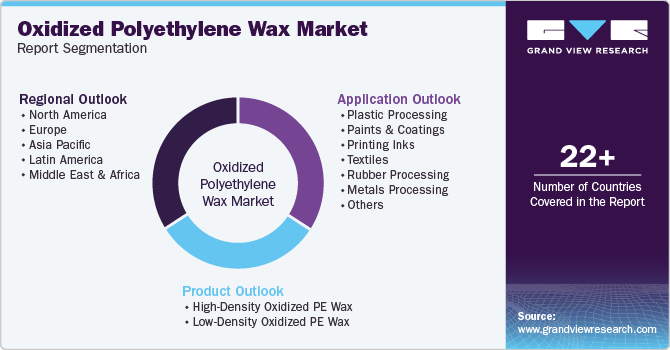
This report forecasts revenue growth at global, regional, and country levels and analyzes the latest industry trends in each sub-segment from 2021 to 2033. For this study, Grand View Research has segmented the global oxidized polyethylene wax market report based on product, application, and region.
 To learn more about this report, Download Free Sample Report
 -
Product Outlook (Volume, Kilotons; Revenue, USD Million, 2021 - 2033)
-
High-Density Oxidized PE Wax
-
Low-Density Oxidized PE Wax
-
-
Application Outlook (Volume, Kilotons; Revenue, USD Million, 2021 - 2033)
-
Plastic Processing
-
Paints & Coatings
-
Printing Inks
-
Textiles
-
Rubber Processing
-
Metals Processing
-
Adhesives
-
Candles
-
Food
-
Others
-
-
Regional Outlook (Volume, Kilotons; Revenue, USD Million, 2021 - 2033)
-
North America
-
U.S.
-
Canada
-
-
Europe
-
UK
-
Germany
-
France
-
Italy
-
-
Asia Pacific
-
China
-
Japan
-
India
-
South Korea
-
-
Latin America
-
Brazil
-
Argentina
-
-
Middle East and Africa
-
Research Methodology
The oxidized polyethylene wax market figures in this report are based on a proven research process that combines executive interviews with secondary research from proprietary databases, company filings, and recognized regulatory and institutional sources. Market size is built through value-chain sizing - reconciling supply-side and demand-side estimates - and triangulated with bottom-up and top-down approaches. Every estimate passes multiple levels of expert validation before publication, with each oxidized polyethylene wax segment quantified using the revenue-capture definitions in the table below.
Segment Definition
Segment - Product
Revenue capture definition
High-Density Oxidized PE Wax
Value is generated through the supply of high-density oxidized polyethylene wax for rigid plastics, masterbatches, printing inks, and industrial coatings where superior hardness, abrasion resistance, and lubrication enhance manufacturing efficiency and finished product performance.
Low-Density Oxidized PE Wax
Commercial income arises from the adoption of low-density oxidized polyethylene wax in flexible polymers, textile finishing, specialty coatings, and adhesive formulations requiring improved flexibility, dispersion, and surface modification characteristics.
Segment - Application
Revenue capture definition
Plastic Processing
Market proceeds are obtained from the incorporation of oxidized polyethylene wax into PVC compounds, masterbatches, films, and molded plastic components to improve melt flow, mold release, dispersion, and surface quality during processing.
Paints & Coatings
Business value is realized through formulations that enhance scratch resistance, slip properties, gloss control, and abrasion performance in architectural, industrial, automotive, and wood coating systems.
Printing Inks
Financial returns originate from wax additives used in flexographic, gravure, and offset inks to improve rub resistance, anti-blocking performance, print durability, and surface smoothness across diverse packaging and publication applications.
Textiles
Industry earnings are supported by textile treatment formulations that improve fabric softness, sewability, water repellency, and resistance to abrasion while enhancing overall finishing quality.
Rubber Processing
Economic contribution is derived from applications in rubber compounding where oxidized polyethylene wax facilitates processing, minimizes equipment friction, improves mold release, and delivers consistent surface appearance in finished rubber goods.
Metals Processing
Revenue generation is driven by the use of oxidized polyethylene wax in metalworking compounds, protective coatings, and polishing formulations that reduce friction, improve surface protection, and extend equipment service life.
Adhesives
Commercial gains stem from hot-melt and pressure-sensitive adhesive formulations where oxidized polyethylene wax enhances viscosity control, thermal stability, open time, and bonding consistency across packaging and industrial assembly operations.
Candles
Sales are supported by candle manufacturing applications in which oxidized polyethylene wax improves surface gloss, structural integrity, burn characteristics, and resistance to deformation during storage and transportation.
Food
Market income is generated from food-grade formulations used in approved packaging materials and processing applications where oxidized polyethylene wax provides lubrication, release performance, and enhanced packaging functionality while meeting regulatory standards.
Other Applications
Additional business opportunities arise from utilization in leather finishing, paper coatings, polishes, ceramics, agriculture, and specialty industrial formulations requiring improved surface protection, lubrication, and processing efficiency.
Estimation Model
Layer Name
Key Question
Description
Raw Material & Production Layer
What forms the supply base?
Analyze the global manufacturing ecosystem for oxidized polyethylene wax, focusing on polyethylene feedstocks, oxidation agents, catalysts, processing additives, and specialty chemicals used during production. Assess feedstock availability, oxidation technologies, manufacturing infrastructure, supplier relationships, and regional production hubs that support large-scale commercial supply.
Application Adoption Layer
Where are oxidized polyethylene wax utilized?
Examine product penetration across major end-use industries including plastic processing, paints and coatings, printing inks, textiles, rubber processing, metal treatment, adhesives, candles, and food packaging. Adoption is supported by increasing demand for enhanced lubrication, surface modification, abrasion resistance, processing efficiency, and high-performance industrial formulations.
Consumption Intensity Layer
How much oxidized polyethylene wax is utilized?
Measure product utilization by evaluating dosage levels across polymer compounds, coating systems, ink formulations, textile finishes, rubber compounds, adhesive blends, and specialty industrial applications. The assessment incorporates formulation loading rates, replacement demand, manufacturing volumes, and industry-specific consumption trends to estimate regional and global usage patterns.
Revenue Layer
How is market revenue generated?
Market value is created through the production, distribution, and commercialization of oxidized polyethylene wax supplied to manufacturers serving plastics, coatings, inks, adhesives, textiles, metal processing, and other industrial sectors. Business growth is influenced by product quality, formulation performance, technological innovation, supply chain efficiency, long-term customer agreements, expanding industrial output, and increasing demand for value-added specialty wax solutions.
Delivered Customizations
This report has been delivered with the following In-depth customizations
Client Request
Customization Delivered
Value Added
Regional Segmentation
Expanded regional assessment covering additional country-level demand trends, application adoption, regulatory landscape, and end-use industry developments across countries such as Vietnam, Saudi Arabia, and Mexico, complementing the standard market scope.
Enables identification of emerging geographic growth pockets, supports regional expansion planning, and provides deeper insights into evolving demand patterns beyond the core markets.
Competitive Benchmarking
Comparative evaluation of key market participants based on product innovation, specialty wax portfolio diversification, sustainability initiatives, distribution network effectiveness, customer industry focus, and strategic collaborations.
Supports vendor selection, competitive positioning analysis, and strategic decision-making by highlighting the relative strengths and market differentiation of leading companies.
Opportunity Assessment
Analysis of growth opportunities arising from increasing adoption of high-performance coatings, expanding PVC processing applications, rising demand for water-based wax emulsions, and growing use in printing inks, adhesives, and specialty industrial formulations.
Assists in identifying high-growth application segments, prioritizing investment opportunities, and aligning business strategies with evolving customer requirements and industry trends.
Frequently Asked Questions About This Report
The global oxidized polyethylene wax market size was valued at USD898.9 million in 2025 and is estimated at USD 944.8 million for 2026.
The global oxidized polyethylene wax market is expected to grow at a CAGR of 5.9% from 2026 to 2033, reaching USD 1,414.1 million by 2030.
Some key players operating in the oxidized PE wax market include Baerlocher GmbH; The Lubrizol Corp.; SCG Chemicals Co., Ltd.; Marcus Oil; Munzing Chemie GmbH; Honeywell International Inc. and others.
By application, paints & coatings held a dominant position, contributing 21.6% of total revenue in 2025. Its leading share was attributed to the widespread use of oxidized polyethylene wax for enhancing scratch resistance, slip properties, abrasion protection, and surface finish in architectural, industrial, and automotive coating formulations.
Asia Pacific is the fastest growing region with a CAGR of 6.8% in the forecast period. Rapid industrialization, expanding plastics and packaging industries, increasing manufacturing investments, and rising demand for specialty additives across emerging economies are accelerating regional market growth.
High-Density Oxidized PE Wax is the fastest growing product segment with a CAGR of 6.3% in the forecast period. Rapid growth is driven by increasing demand in high-performance plastic processing, industrial coatings, and printing ink applications, where superior hardness, lubrication, and abrasion resistance are critical performance requirements
North America dominated the oxidized polyethylene wax market with the highest revenue share of 35.2% in 2025. The region's leadership was supported by its well-established plastics processing industry, advanced coatings manufacturing capabilities, and strong demand for high-performance specialty additives across industrial applications.
The oxidized polyethylene wax market is driven by increasing demand from plastic processing, paints and coatings, printing inks, and adhesive industries, where it enhances lubrication, dispersion, and surface performance. Rising industrial manufacturing, growing PVC production, and expanding infrastructure and packaging activities are further accelerating market growth.
Based on product, the high-density oxidized PE wax accounted for the highest market share, representing 74.2% of total revenue in 2025. Market leadership is attributed to widespread adoption in PVC processing, masterbatches, and industrial coatings, where superior hardness, lubrication, and abrasion resistance are critical for enhancing processing efficiency and end-product performance.
About the Author(s)
Petrochemicals Research Team
Bulk Chemicals · PetrochemicalsThis report was authored by the petrochemicals research team at Grand View Research - comprising two research analysts, one senior research analyst, and one industry expert - with specialized expertise in the petrochemicals segment of the bulk chemicals industry. All findings are based on proprietary bulk chemicals databases, executive interviews, and regulatory analysis, subject to internal peer review prior to publication.
Last Updated:
Speak to Analyst

Customize this report to your needs - add regions, segments, or data points, with 20% free customization.
Or view our licence options:


ISO 9001:2015 & 27001:2022 Certified
We are GDPR and CCPA compliant! Your transaction & personal information is safe and secure. For more details, please read our privacy policy.


