
- Home
- »
- Healthcare IT
- »
-
Patient Centric Healthcare App Market Size Report, 2033GVR Report cover

Patient Centric Healthcare App Market (2026 - 2033)
Size, Share & Trends Analysis Report By Type, By Platform, By Revenue Model (Subscription, Enterprise Licensing, Per-Patient / Per-Use Fees, Advertising & Sponsorship), By End-use, By Region, And Segment Forecasts
Market Size, 2025
$17.4BMarket Estimate, 2026
$20.7BMarket Forecast, 2033
$64.7BCAGR, 2026–2033
17.7%Patient Centric Healthcare App Market Summary
The global patient centric healthcare app market size was valued at USD 17.4 billion in 2025 and is projected to grow from USD 20.7 billion in 2026 to USD 64.7 billion by 2033, at a CAGR of 17.7% from 2025 to 2033. North America dominated the market, accounting for the largest revenue share of 42.7% in 2025. Increasing demand for convenient access to personal health information, rising adoption of digital health services, and growing emphasis on patient engagement and self-management are expected to drive the growth of the market over the forecast period.
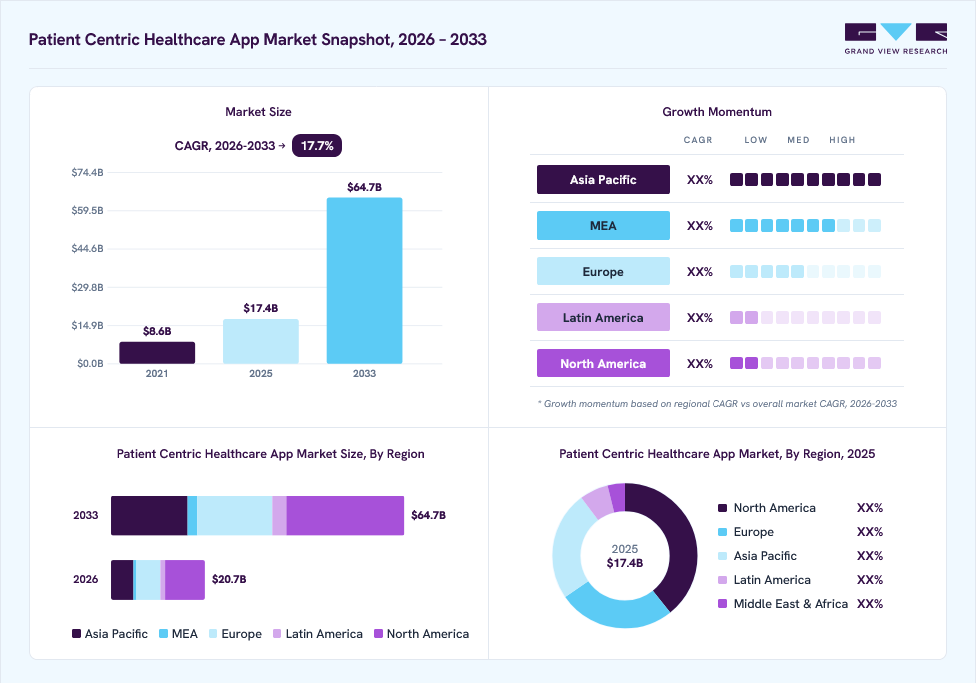 Source: Grand View Research, IR Documents, Primary Interviews, Paid DatabasesTo learn more about this report,
 Download Free Sample Report
Key Market Trends & Insights
- By type: Telehealth & virtual consultation apps segment held the largest revenue share of 15.6% in 2025.
- By platform: Android segment accounted for the largest revenue share of 46.4% in 2025.
- By revenue model: Subscription segment held the largest revenue share in 2025.
- By end-use: Patients (self-use) segment held the largest revenue share in 2025.
Regional Highlights
- Largest regional market: North America (42.7% revenue share, 2025)
- Fastest-growing regional market: Asia Pacific (highest CAGR, 2026-2033)
- By country: The U.S. held the largest share of North America in 2025.
Market Size & Forecast
- Market size in 2025: USD 17.4 Billion
- Estimated market size in 2026: USD 20.7 Billion
- 2033 Projected Market Size: USD 64.7 Billion
- CAGR (2025-2033): 17.7%
Prism AI by Grand View Research Free to tryAsk a question about the patient centric healthcare app marketTry asking✓Every figure cited from GVR research Prefer the report? Download free sample →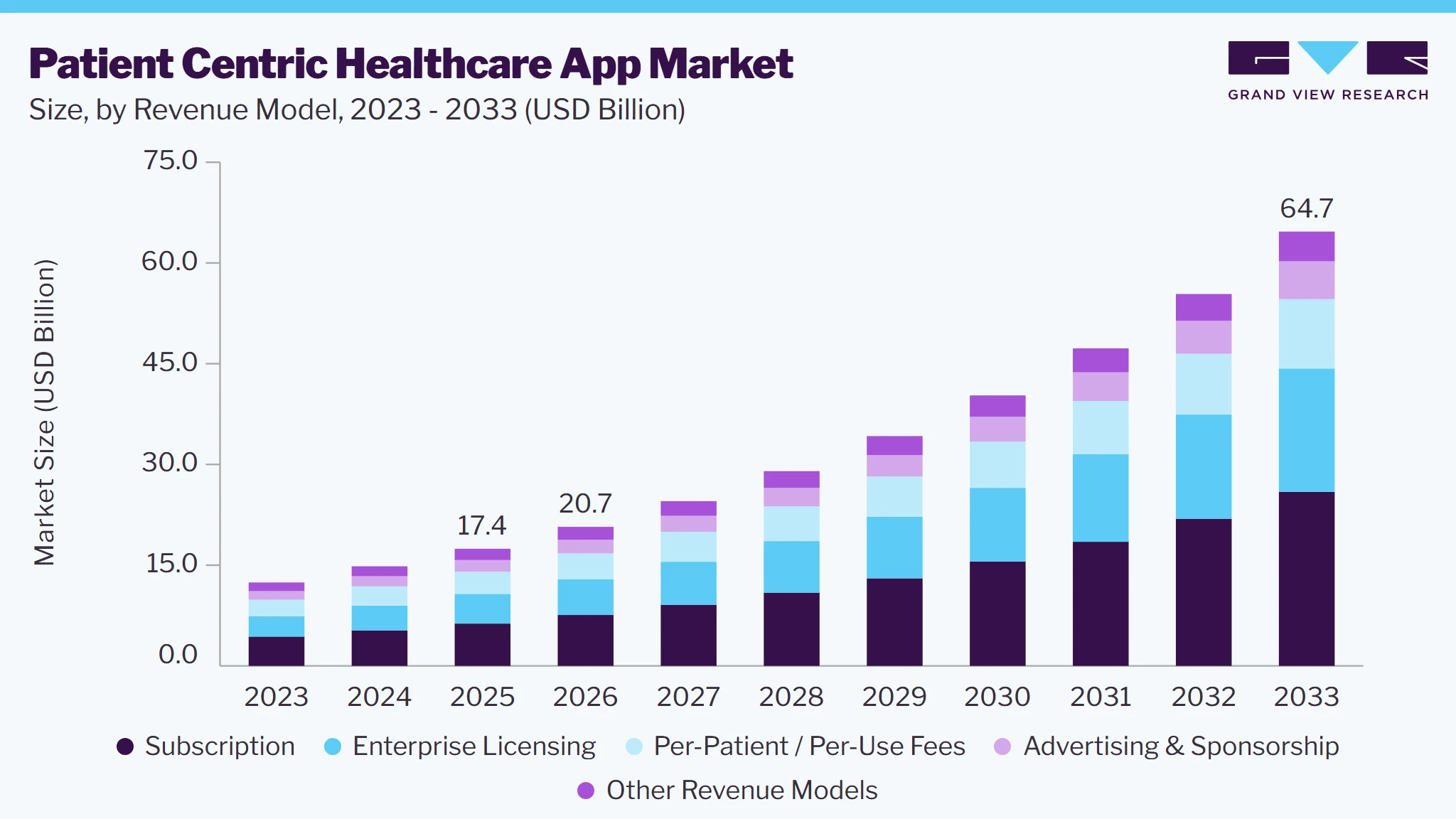 To learn more about this report, Download Free Sample Report
Moreover, rising smartphone usage, enhanced connectivity across healthcare information systems, increasing demand for continuous disease management, and growing preference for personalized digital healthcare services are further contributing to market growth.Market Dynamics
The section below outlines the key factors driving the growth of the patient-centric healthcare apps market, focusing on the increasing adoption of digital platforms for patient engagement and healthcare management. It examines the growing demand for convenient access to health records, medications, appointments, and personalized health information, supported by rising smartphone adoption and greater integration of digital health technologies into routine patient care.
The expansion of personal health record applications is expected to drive the growth of the market as patients increasingly seek convenient digital platforms to access, organize, manage, and share their personal health information. For instance, in June 2026, the Government of India launched Aarogya Setu 2.0 as a citizen-facing Personal Health Record application under the Ayushman Bharat Digital Mission (ABDM). The application provides users with access to health record management, ABHA services, medical report digitization, personalized health dashboards, health reminders, and wearable-device synchronization. At launch, Aarogya Setu had a captive user base of nearly 20 crore downloads, providing a large existing user base for expanding patient-centric digital health services.
In addition, in January 2025, Samsung introduced a Health Records feature within its Samsung Health app in India, enabling users to securely access, upload, and manage prescriptions, laboratory results, hospital visits, and other medical records through ABHA integration, supporting convenient patient-controlled healthcare management.
Increasing deployment of mobile applications that allow patients to schedule appointments, communicate with healthcare teams, receive reminders, access records, and manage prescriptions. In June 2025, Altera Digital Health launched Sunrise CarePath, a mobile-first patient engagement platform providing secure messaging, self-scheduling, patient notifications, appointment reminders, and online billing.
“When patients can’t easily message their care team, manage follow-up appointments or stay on track with medications, adverse events are inevitable”
-Said Jay Adams, Executive Vice President and General Manager for Sunrise, Altera Digital HealthCompanies operating in the patient-centric healthcare apps market are increasingly launching new patient engagement applications to expand their digital health portfolios, introduce innovative patient-focused features, and attract a broader user base.
Companies
Year
Month
Details
Myomo, Inc.
2026
April
The company launched the Myomo Mobile App to support patients using its MyoPro wearable medical robotics system. The application provided real-time muscle activity feedback, repetition tracking, training resources, and usage insights, facilitating independent self-management and continued rehabilitation progress.
MedAdvisor Solutions
2024
November
MedAdvisor Solutions launched telehealth functionality within its patient app, enabling users to book virtual consultations, receive electronic prescriptions, manage medications, and access reminders. The service expanded digital healthcare access and supported patient engagement, care coordination, and medication adherence.
Pager, Inc.
2024
March
Pager launched an app-free engagement solution using secure, bidirectional SMS messaging to connect healthcare consumers with care teams without requiring application downloads. The platform supported care navigation, health assessments, reminders, and social determinants of health services, enhancing patient engagement.
The growing volume and sensitivity of health information collected through patient-centric healthcare apps are intensifying privacy, cybersecurity, and regulatory challenges. Applications increasingly integrate electronic health records, prescriptions, medical conditions, wearable-device data, location information, and payment details, creating larger and more complex data-security exposures. Risks are further amplified because many consumer health applications operate outside traditional healthcare infrastructure and may not be directly subject to HIPAA, creating uncertainty around data protection and increasing concerns regarding unauthorized access, data breaches, and secondary use of health information. These concerns can reduce patient willingness to adopt and actively use healthcare apps.
Recent incidents highlight the scale of this risk. For instance, in May 2026, New Zealand’s Privacy Commissioner reported that a cybersecurity breach involving Manage My Health’s patient portal affected 99,416 patients, with attackers using stolen credentials to access and copy sensitive health documents. Similarly, the 2024 Change Healthcare cyberattack resulted in a reported breach of protected health information and was described by HHS as an attack of “unprecedented magnitude,” disrupting healthcare operations and raising significant patient-privacy concerns.
Regulatory requirements are also becoming more stringent. In April 2024, the U.S. Federal Trade Commission (FTC) finalized amendments to its Health Breach Notification Rule, explicitly clarifying its applicability to health apps and similar technologies. The updated rule became effective on July 29, 2024, expanding breach-notification obligations for covered entities. In parallel, the FTC took enforcement action against Cerebral and Monument in 2024 over allegations that sensitive health information, including medical histories and prescription information, had been disclosed to third parties for advertising despite privacy commitments. Such enforcement actions increase the legal, financial, and reputational risks associated with inadequate data governance.
Increasing integration of artificial intelligence and personalized health management features is expected to create growth opportunities for the market, as patients increasingly seek applications that can interpret their health information, identify trends, and provide personalized insights and support. For instance, in July 2026, OpenAI launched Health in ChatGPT in the U.S., enabling users to securely connect medical records and Apple Health data to receive personalized health insights. The application allowed users to review laboratory results, medications, activity, sleep data and identify health trends.
As these capabilities mature, AI-driven personalization can expand across symptom assessment, care navigation, medication support, chronic disease management, remote patient monitoring, preventive care, and patient education. Integration with wearables and connected medical devices can further enable continuous data collection, while interoperability with health records can provide a more comprehensive view of the patient. These capabilities can also strengthen partnerships among app developers, healthcare providers, payers, employers, pharmaceutical companies, and technology platforms.
Furthermore, the convergence of AI, patient-generated health data, connected devices, and interoperable health records is expected to create new opportunities for patient-centric healthcare apps by improving personalization, engagement, care coordination, and continuous health management.
Patient-Centric Healthcare App Market: Key Growth Opportunities
Rank
Opportunity
Key Opportunity/Market Potential (2026-2033)
1
AI-enabled personalized healthcare & patient navigation
Transformative potential through personalized recommendations, AI-enabled triage, symptom checking, care navigation, reminders, and predictive insights; supports higher engagement, retention, and value-based care.
2
Integration with wearables & connected medical devices
Enables continuous, passive health-data collection, remote monitoring, early detection, and personalized care; creates opportunities for device-linked subscriptions, health-system integration, and strategic partnerships.
3
Remote Patient Monitoring (RPM) expansion
High-growth, reimbursable opportunity driven by chronic disease management, aging populations, and shifting care from hospitals to home; supports risk stratification, early intervention, and reduced healthcare costs.
4
Chronic disease management & digital therapeutics
Large addressable patient base and growing demand for scalable, evidence-based interventions for diabetes, hypertension, mental health, and other chronic conditions; supported by payer, employer, and provider demand.
5
Patient-controlled health records & interoperability
Increasing interoperability and patient-access requirements create opportunities for connected health records, data portability, care coordination, and ecosystem-based applications, enabling new business models and stronger patient engagement.
6
Emerging-market smartphone & internet adoption
Expanding connectivity in Asia, Latin America, and Africa creates a large untapped user base, particularly for telehealth, appointment management, medication reminders, health education, and digital payment applications.
7
Payer, provider, employer & pharma partnerships
Multi-stakeholder partnerships can accelerate market access, recurring revenues, patient acquisition, and scale through enterprise licensing, value-based contracts, co-branded solutions, and integrated care programs.
8
Government-led digital health infrastructure & mandates
National initiatives such as NHS App, ABDM, and EHDS can accelerate digital-health adoption, establish interoperability standards, and create large-scale platforms for patient records, appointments, telehealth, and public-health services.
9
Preventive & wellness applications
Broad consumer appeal and increasing focus on obesity, nutrition, fitness, sleep, mental health, and preventive care create opportunities for high-frequency engagement, subscriptions, employer wellness programs, and payer partnerships.
Market Challenge Analysis
Market Challenge
Key Issues
Affected Stakeholders
Market Implications
Interoperability Across Fragmented Healthcare Systems
Diverse EHR systems, inconsistent data formats, and varying API adoption hinder seamless data exchange.
Patients, providers, app developers, payers
Limits comprehensive patient data access and reduces app utility, engagement, and adoption.
Patient Engagement & Retention
App fatigue, limited personalization, usability challenges, and digital literacy gaps affect sustained engagement.
Patients, providers, app vendors
Drives user churn and weakens long-term monetization, clinical impact, and ROI.
Reimbursement & Monetization Models
Limited reimbursement pathways, unclear payer value propositions, and reliance on direct-to-consumer models.
App developers, payers, providers, patients
Restricts integration into mainstream healthcare and limits sustainable revenue generation.
Digital Health Literacy & Equity
Socioeconomic disparities, age-related digital divides, and unequal access to smartphones and reliable internet.
Underserved populations, rural patients, elderly, providers
Limits market penetration and may widen existing healthcare access and outcome disparities.
Market Concentration & Characteristics
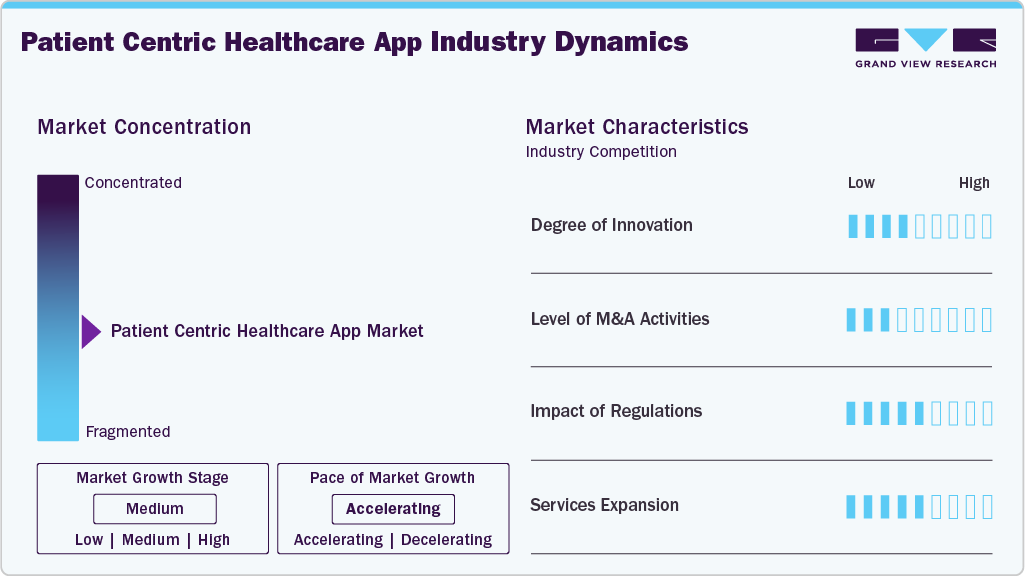
The chart below illustrates the relationship between industry concentration, market characteristics, and key market participants in the patient-centric healthcare apps market. The market is fragmented, with participation from technology companies, healthcare organizations, digital health companies, pharmacy platforms, and specialized patient engagement app providers.
Increasing adoption of personalized, and AI-enabled technologies is driving innovation in the patient-centric healthcare apps market, as companies increasingly develop applications that enable patients to access, share, and manage health information through integrated digital platforms. For instance, in April 2026, CMS launched its HealthTech Ecosystem, introducing a Medicare App Library and patient-facing digital tools from more than 50 companies. The initiative included digital data access, mobile check-in, and personalized applications for wellness and chronic disease management, supporting the development of a more connected and patient-centered digital healthcare ecosystem.
 To learn more about this report, Download Free Sample Report
The level of merger and acquisition activity in the patient-centric healthcare apps market is moderate, with companies pursuing acquisitions to strengthen patient data capabilities, expand digital health offerings, and enhance personalized healthcare solutions. For instance, in May 2026, HealthVerity announced plans to acquire Symphony Health from ICON plc, combining clinical and commercial healthcare data capabilities to create a patient-centric, privacy-focused data ecosystem and support the development of next-generation healthcare applications.
The market is significantly influenced by regulations governing patient data privacy, cybersecurity, consent, interoperability, and digital health information. Market participants must comply with requirements established by healthcare authorities to ensure the secure collection, storage, sharing, and management of sensitive patient information.
The market is witnessing service expansion as companies broaden app functionalities to address a wider range of patient needs. Market participants are integrating health records, appointment management, telehealth, medication management, remote monitoring, personalized health insights, and payment services to provide more comprehensive digital healthcare experiences through a single platform.
Analyst Perspective
The patient-centric healthcare apps market is experiencing steady growth, driven by rising smartphone adoption, increasing demand for convenient access to healthcare, and growing patient preference for digital tools that support self-management and engagement. Expanding use of telehealth, personal health records, medication management, remote monitoring, and AI-enabled health solutions is accelerating the development of patient-facing healthcare applications globally. In addition, advancements in healthcare interoperability, personalized digital health services, virtual care, and connected health technologies are improving patient access, care coordination, and health management, supporting the expansion of patient-centric healthcare apps across developed and emerging healthcare markets
Type Insights
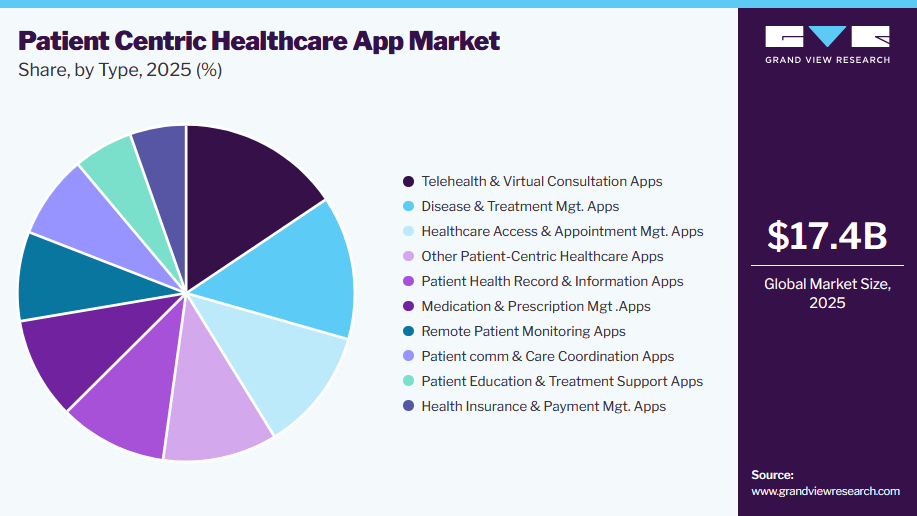
The telehealth & virtual consultation apps segment accounted for the largest market revenue share, at 15.6%, in 2025. Increasing demand for remote healthcare access is expected to drive the growth of the telehealth and virtual consultation apps segment, as patients increasingly prefer convenient digital consultations that reduce travel requirements, improve access to specialists, and support timely healthcare delivery. India's eSanjeevani national telemedicine service continued to expand access to virtual healthcare, providing direct-to-patient online consultations through smartphones and other internet-enabled devices. The platform enabled patients to register, book virtual consultations, consult doctors remotely, and receive e-prescriptions, supporting broader access to outpatient healthcare services.
 To learn more about this report, Download Free Sample Report
The remote patient monitoring apps segment is expected to register the fastest CAGR over the forecast period owing to the increasing use of technology to continuously track vital signs and health conditions outside traditional healthcare settings, supporting earlier intervention and personalized disease management. In July 2025, OMRON Healthcare and Tricog Health launched KeeboHealth, a connected digital health platform for remote cardiac care. The platform integrated AI, real-time data analytics, and home-based monitoring to continuously assess patients' cardiac health, identify early warning signs, and alert medical teams when intervention was required.
Platform Insights
The android segment accounted for the largest market revenue share of 46.4% in 2025. High smartphone penetration and widespread adoption across price points are expected to support segment growth, enabling patient-centric healthcare apps to reach a broader, more diverse patient population. For instance, according to Adapty, android accounts for approximately 71-72% of the global market, with 3.9-4.5 billion active devices worldwide, highlighting its extensive addressable user base. This broad penetration provides healthcare developers with greater opportunities to reach patients through Android-compatible applications.
The iOS segment is expected to register the fastest CAGR over the forecast period due to increasing adoption of Apple devices, strong user engagement with the App Store, and growing integration of health-monitoring and personal health-management features within the iOS ecosystem. Apple's emphasis on privacy, health data integration, and connected devices further supports the adoption of patient-centric healthcare applications. In January 2026, Apple reported that the App Store recorded more than 850 million average weekly users globally in 2025, spanning 175 countries and regions.
Revenue Model Insights
The subscription segment accounted for the largest market revenue share of 36.1% in 2025. Growing demand for continuous and personalized healthcare services is expected to drive the subscription segment, as patients increasingly prefer ongoing access to health monitoring, personalized insights, disease management tools, medication support, and other premium features over one-time digital healthcare services. In May 2026, Google launched Google Health Coach globally as part of its Google Health Premium subscription, priced at USD 9.99 per month or USD 99 per year, which provides personalized, AI-powered guidance across fitness, sleep, recovery, and wellness.
The enterprise licensing segment is expected to register the fastest CAGR over the forecast period due to increasing adoption of patient-centric healthcare applications by hospitals, healthcare providers, insurers, and employer health programs. Enterprise licensing enables organizations to deploy digital health solutions across larger patient populations while integrating patient engagement, health records, communication, and care-management capabilities into existing healthcare systems.
End-use Insights
The patients (self-use) segment dominated the end use segment with the largest market share of 41.2% in 2025. The segment is expected to maintain its leading position due to the growing adoption of smartphone-based healthcare applications that enable individuals to independently access health information, manage medications, monitor conditions, schedule appointments, and track personal health data. The increasing emphasis on patient empowerment and self-management is further supporting direct consumer use of healthcare apps. A 2025 Health Tracking Poll found that approximately three in four U.S. adults had used a healthcare app or website during the previous year. The most common uses included accessing test and laboratory results, scheduling appointments, and managing prescriptions or medications, demonstrating substantial patient-driven utilization of digital healthcare services.
The healthcare payers segment is expected to register the fastest CAGR over the forecast period due to increasing adoption of patient-centric healthcare applications by insurers to improve member engagement, facilitate digital access to benefits and healthcare services, support chronic disease management, and promote preventive care. The growing use of digital platforms to streamline communication, claims-related services, care coordination, and personalized health management is further supporting segment growth.
Regional Insights
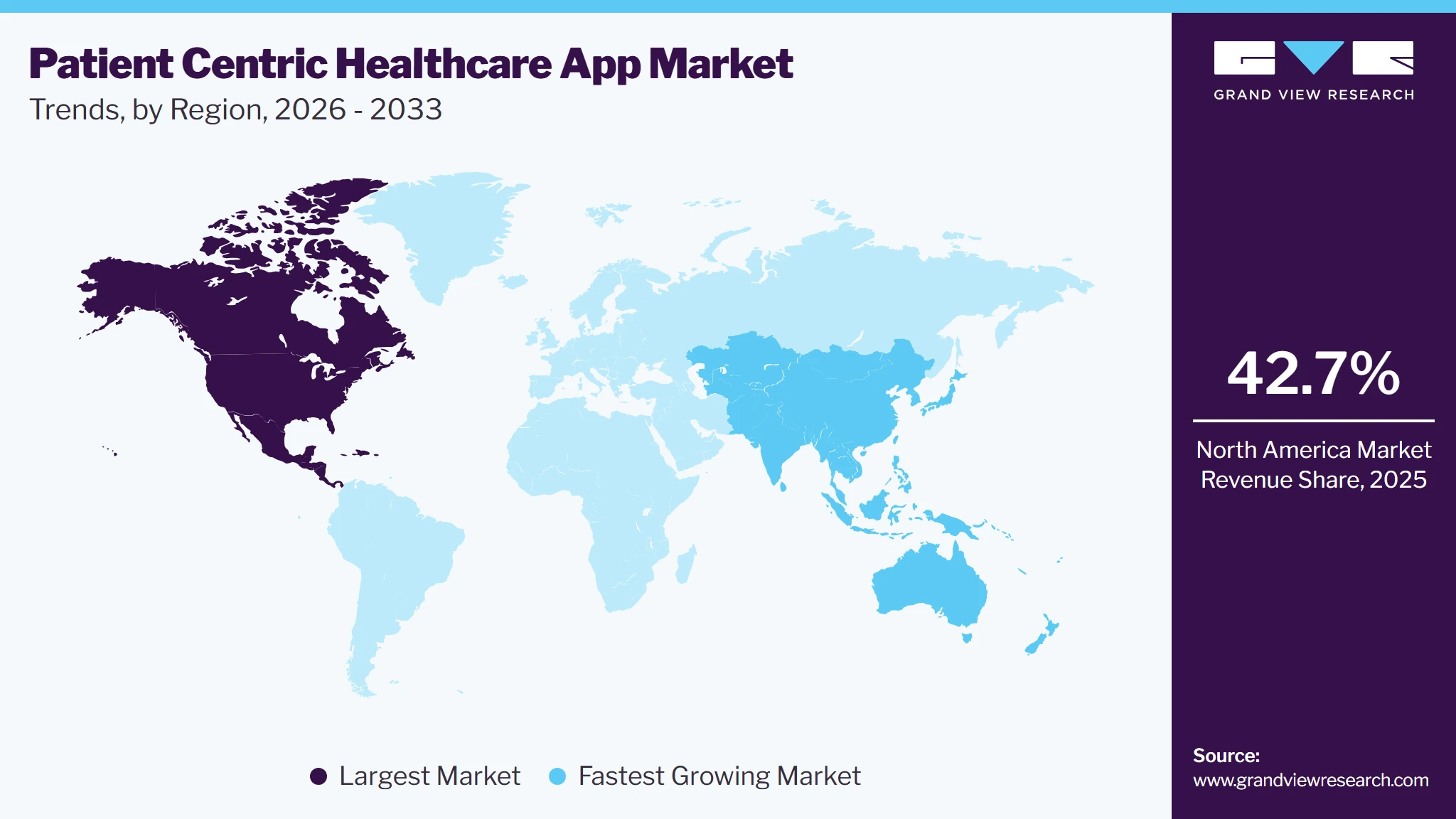
North America patient centric healthcare apps market held the largest revenue share of 42.7% in 2025. The growth is supported by high smartphone penetration, widespread adoption of patient portals and health applications, advanced digital health infrastructure, and strong consumer demand for convenient access to healthcare information. According to the NIH, in the U.S., 65% of individuals were offered and accessed online medical records or patient portals in 2024, while app-based access to online medical records increased from 38% in 2020 to 57% in 2024.
 To learn more about this report, Download Free Sample Report
Canada Patient Centric Healthcare Apps Market Trends
The patient centric healthcare apps market in Canada is seeing increasing adoption of patient engagement applications is expected to drive the growth of the patient-centric healthcare apps market, as healthcare organizations increasingly use mobile platforms to improve patient communication, provide personalized support, facilitate healthcare access, and strengthen engagement throughout the patient journey. For instance, in May 2026, Axona Labs launched Marcus Health, an AI-powered health companion app designed to help patients and families better understand, retain, and act on medical information shared during appointments. The app provides contextual support to help patients retain and make sense of critical health information throughout their care journey.
Europe Patient Centric Healthcare Apps Market Trends
Growing adoption of disease-specific patient support apps is expected to drive the patient-centric healthcare apps market, as pharmaceutical and digital health companies increasingly develop personalized applications that support patients throughout diagnosis, treatment, medication adherence, and long-term disease management. In September 2025, Smartpatient and Novo Nordisk launched a digital support program for people living with obesity in Germany through the MyTherapy app, integrating treatment support, lifestyle coaching, personalized education, and gamification to improve patient engagement and sustained treatment adherence.
The Germany patient centric healthcare apps market is expected to grow considerably during the forecast period, owing to increasing digitalization of healthcare, growing adoption of electronic health information, and expansion of patient-facing digital services. Regulatory initiatives that support secure digital health applications and expand patient access to healthcare information are encouraging the development and adoption of applications for health records, prescriptions, appointments, and treatment support.
The UK patient centric healthcare apps market is projected to show notable growth, supported by the NHS's continued expansion of digital patient services and increasing adoption of mobile healthcare platforms. Patient-facing digital tools are increasingly being used to facilitate healthcare access, health information management, and patient engagement.
Asia Pacific Patient Centric Healthcare Apps Market Trends
Asia Pacific is the fastest-growing region in the patient centric healthcare apps market, with a projected CAGR of 19.2 over the forecast period. Increasing adoption of remote patient monitoring and wearable-enabled healthcare applications is expected to drive the growth of the market in the Asia Pacific, as healthcare systems increasingly use connected technologies to support continuous monitoring, home-based care, and personalized patient management. In August 2026, Philips expanded its open patient monitoring ecosystem through collaborations with Blue Spark Technologies, Caretaker Medical, Cuviva, LifeSignals, Respiree, and smartQare, integrating wearable and out-of-hospital monitoring technologies to support continuous patient monitoring from hospital admission through recovery at home.
TheChina patient centric healthcare apps market: Increasing adoption of patient engagement and digital clinical trial applications is expected to drive the growth of the patient-centric healthcare apps market in China, supported by expanding digital healthcare infrastructure, rising demand for patient-centric clinical research, and increasing availability of localized healthcare applications. In September 2023, Datacubed Health launched its eClinical platform app in China through a strategic partnership with AppInChina, enabling access through major app stores while complying with local regulations. The platform supported patient engagement, electronic patient-reported outcomes, medication adherence, telehealth, and decentralized clinical trial activities.
TheIndia patient centric healthcare apps marketis expected to grow due to the increasing adoption of AI-enabled patient healthcare applications, as patients increasingly use digital platforms for personalized health guidance, preventive screening, early disease identification, and convenient access to healthcare services. For instance, in May 2026, MedPredict launched MediElaj, an AI-powered healthcare application in India designed to support early diagnosis, preventive care, and health screening. The platform combined a mobile healthcare application with smart diagnostic kiosks to expand screening access across urban, semi-urban, and rural areas.
Latin America Patient Centric Healthcare Apps Market Trends
TheLatin America patient centric healthcare apps market is expected to witness substantial growth owing to increasing smartphone adoption, expanding digital healthcare infrastructure, rising demand for remote healthcare access, and growing efforts to address healthcare accessibility gaps. Patient-facing applications provide opportunities to improve access to appointments, telehealth, prescriptions, health information, and chronic disease management, particularly in areas where access to physical healthcare facilities remains limited.
The Brazil patient centric healthcare apps market accounted for a notable regional share, supported by the country's large digitally connected population, expanding telehealth ecosystem, and increasing adoption of mobile healthcare services. The growing need for chronic disease management and improved access to healthcare information is encouraging the development of patient-facing applications for appointments, medication management, remote monitoring, and personal health records. In September 2025, Brazil’s Ministry of Health reported that the Meu SUS Digital application had reached approximately 29 million monthly active users, making it one of the country's most widely used health applications. The patient-facing platform enabled users to access clinical histories, examination results, vaccination records, medications, health services, and other personal health information.
Middle East & Africa Patient Centric Healthcare Apps Market Trends
The Middle East & Africa patient centric healthcare apps market is seeing increasing adoption of virtual healthcare and telehealth applications is expected to drive the growth of the patient-centric healthcare apps market in Saudi Arabia, as patients increasingly use digital platforms to access consultations and specialized healthcare services remotely, improving convenience, accessibility, and continuity of care. For instance, in January 2026, Seha Virtual Hospital reported delivering more than 16 million virtual appointments and medical consultations in 2025, including over 11.5 million virtual clinic appointments, representing 56% growth from 2024. The hospital also managed more than 220,000 clinical cases, while its virtual services expanded to connect 27 hospitals across Saudi Arabia, demonstrating the increasing scale of digitally enabled patient care.
TheUAE patient centric healthcare apps market is expected to witness notable growth owing to strong government support for digital transformation, advanced healthcare infrastructure, high smartphone penetration, and increasing adoption of digital patient services. Healthcare providers and government entities are increasingly developing patient-facing platforms that enable digital access to healthcare services, health information, and personalized health-management tools.
Patient Engagement Ecosystem Maturity by Region, 2021 vs. 2025
Region
Patient Portal Availability
App-Based Patient Access
Secure Messaging
Patient-Generated Health Data
API-Based Access
Clinical Information Exchange
Digital Appointment Access
North America
Established → Advanced - Patient portals are deeply embedded in provider workflows, with broader access to records, results, and care information.
Established → Advanced - Mobile apps increasingly provide integrated access to records, appointments, telehealth, and other services.
Established → Advanced - Secure provider-patient communication has evolved into a core engagement channel.
Developing → Established - Greater integration of wearables, home-monitoring devices, and patient-reported information.
Developing → Advanced - Strong progress toward standardized, interoperable patient data access through APIs.
Established → Advanced - Increasing connectivity across EHRs, providers, health systems, and patient-facing platforms.
Established → Advanced - Digital scheduling, reminders, registration, and check-in are widely embedded.
Europe
Developing → Advanced - Strong expansion of electronic patient access, although maturity differs across national healthcare systems.
Developing → Established - Increasing availability of national and provider-specific applications for records, services, and communication.
Developing → Established - Secure messaging increasingly incorporated into digital patient portals and virtual-care platforms.
Emerging → Developing - Adoption is increasing through remote monitoring, wearables, and chronic disease programs.
Emerging → Established - Interoperability and standardized digital health initiatives are supporting greater API-enabled access.
Developing → Established - Cross-provider information exchange is improving as national digital-health infrastructure matures.
Established → Advanced - Online appointment booking and digital access have become increasingly common across healthcare systems.
Asia Pacific
Complete Analysis is a part of the final deliverable
Latin America
Middle East & Africa
Key Insight
The patient engagement ecosystem has shifted from basic digital access toward more integrated and continuous patient interaction between 2021 and 2025. North America has moved furthest toward an advanced ecosystem, supported by mature patient portals, app-based access, interoperability, messaging, and digital scheduling. Europe has made broad progress, although country-level maturity remains uneven. Asia Pacific is characterized by rapid mobile-first adoption, with digital appointments and app-based access developing faster than interoperability and patient-generated data capabilities. Latin America and Middle East & Africa remain comparatively developing ecosystems, but both are progressing through increasing smartphone use, telehealth adoption, healthcare digitization, and government-led digital-health initiatives. Across all regions, API-based interoperability, patient-generated data, and continuous monitoring remain less mature than basic access and communication capabilities, indicating substantial room for future development.
Key Patient Centric Healthcare App Company Insights
The patient centric healthcare apps market players are focusing on devising innovative business growth strategies in the form of service portfolio expansions, partnerships & collaborations, mergers & acquisitions, and business footprint expansions.
Key Patient Centric Healthcare App Companies
The following key companies have been profiled for this study on the patient centric healthcare apps market.
-
Epic Systems Corporation
-
Teladoc Health, Inc.
-
Medisafe
-
Ada Health GmbH
-
Healthily LTD
-
Medadvisor Solutions
-
Google
-
Apple Inc.
-
SAMSUNG
-
Doctolib
Competitive Benchmarking
Company Category
Operating Strategies
Competitive Edge
Weaknesses
Mature Players (Epic Systems Corporation, Teladoc Health, Inc., Google, Apple Inc., Samsung, Doctolib)
- Focus on expanding patient-facing digital ecosystems through telehealth, personal health records, appointment management, medication management, remote monitoring, and AI-enabled health services.
- Large installed user bases, extensive provider integrations, strong technology capabilities, established brand recognition, and broad healthcare service portfolios enable high patient reach and platform adoption.
- Large technology and healthcare ecosystems can create complex integration requirements, higher operational costs, data privacy challenges, and slower adaptation to highly specialized patient needs.
Emerging Players
(Medisafe, Ada Health GmbH, Healthily LTD, MedAdvisor Solutions)
- Focus on specialized patient needs, including medication adherence, AI-supported health assessment, personalized health management, prescription management, and digital patient engagement.
- Specialized functionality, patient-focused user experiences, greater product flexibility, and focused healthcare use cases enable these companies to address specific patient needs effectively.
- Smaller user bases, limited geographic reach, dependence on partnerships and healthcare integrations, and lower financial resources may constrain large-scale expansion compared with major technology and healthcare platforms.
Recent Developments
-
In June 2026, the Government of India launched Aarogya Setu 2.0 as a citizen-facing Personal Health Record application under the Ayushman Bharat Digital Mission (ABDM). The application provides users with access to health record management, ABHA services, medical report digitization, personalized health dashboards, health reminders, and wearable-device synchronization. At launch, Aarogya Setu had a captive user base of nearly 20 crore downloads, providing a large existing user base for expanding patient-centric digital health services.
-
In 2026, Amazon launched Health AI on its website and mobile app, expanding access to an AI-powered patient health assistant. The platform enabled users to receive personalized health insights, understand medical records and laboratory results, manage prescription renewals, and connect with One Medical providers through messaging, video, or in-person visits.
-
In November 2025, The Cigna Group joined the CMS Health Technology Ecosystem to advance patient-centered healthcare by enabling individuals to access claims, prior authorizations, and clinical data from current and past payers and providers through apps they already use.
-
In October 2025, AstraZeneca Saudi Arabia announced partnerships with the Saudi Ministry of Health, King Faisal Specialist Hospital & Research Centre, and Weqaya to advance patient-centric healthcare through AI-enabled early diagnosis, improved patient access, clinical research, and disease-awareness initiatives.
-
In September 2025, HealthEx and its partners launched a patient authentication platform under TEFCA, enabling consumer-directed health data exchange through CLEAR. The platform gives patients greater control over their healthcare data by enforcing their consent and access preferences at the point of data delivery.
-
In December 2024, Cipla Ltd. launched CipAir, an app designed to enable timely and convenient first-line asthma screening in India. The app helps patients assess their likelihood of having asthma, supporting earlier diagnosis, intervention, and disease management.
-
In November 2024, MedAdvisor Solutions introduced Telehealth functionality within its MedAdvisor app, enabling patients to book virtual consultations, receive eScripts, pre-book medications from preferred pharmacies, and receive prescription renewal reminders, thereby streamlining access to care and medication management.
Competitive Capability Assessment of Leading Patient-Centric Healthcare Platforms
The competitive landscape is characterized by a mix of broad patient engagement platforms and specialized digital health solutions, with capabilities spanning patient access, telehealth, health records, medication management, disease management, remote patient monitoring (RPM), communication, AI, and interoperability. Enterprise-oriented platforms such as Epic - MyChart, eClinicalWorks - healow, Oracle Health, and athenahealth demonstrate broad capabilities across multiple patient engagement touchpoints, while Teladoc Health, Amwell, Omada Health, and Hinge Health show stronger positioning in virtual care, chronic disease management, and RPM. Specialized platforms such as Medisafe focus more heavily on medication management and adherence.
Competitive Capability Heatmap: Leading Patient-Centric Healthcare App Platforms
Key Takeaways
-
Broad-platform leaders: Epic - MyChart, eClinicalWorks - healow, and Oracle Health offer strong coverage across access, records, communication, AI, and interoperability.
-
Virtual care & RPM strength: Teladoc Health and Amwell demonstrate strong capabilities in telehealth, RPM, communication, AI, and interoperability.
-
Chronic care specialization: Omada Health and Hinge Health differentiate through disease management, RPM, and ongoing patient engagement.
-
AI & interoperability: These capabilities are increasingly widespread among leading platforms, indicating a shift toward connected, intelligent, and data-driven patient engagement ecosystems.
-
Market whitespace: Opportunities remain for platforms that combine high-quality clinical engagement, RPM, medication management, AI, interoperability, and longitudinal care management in a single patient-centric experience.
Patient Centric Healthcare App Market Report Scope
Report Attribute
Details
Market size in 2025
USD 17.4 billion
Estimated market size in 2026
USD 20.7 billion
Projected market size by 2033
USD 64.7 billion
Growth rate
CAGR of 17.7% from 2026 to 2033
Actual data
2021 - 2025
Forecast data
2026 - 2033
Quantitative units
Revenue in USD million/billion, and CAGR from 2026 to 2033
Report coverage
Revenue forecast, company ranking, competitive landscape, growth factors, and trends
Segments covered
Type, Platform, Revenue Model, End-use, Region
Regional scope
North America; Europe; Asia Pacific; Latin America; Middle East and Africa
Country scope
U.S.; Canada; Mexico; Germany; UK; Spain; Italy; France; Norway; Denmark; Sweden; Japan; China; India; Australia; Thailand; South Korea; Brazil; Argentina; South Africa; Saudi Arabia; UAE; Kuwait
Key companies profiled
Epic Systems Corporation; Teladoc Health, Inc.; Medisafe; Ada Health GmbH; Healthily LTD; MedAdvisor Solutions; Google; Apple Inc.; SAMSUNG; Doctolib
Customization scope
Free report customization (equivalent up to 8 analysts working days) with purchase. Addition or alteration to country, regional & segment scope.
Pricing and purchase options
Avail customized purchase options to meet your exact research needs. Explore purchase options
Global Patient Centric Healthcare App Market Report Segmentation
This report forecasts revenue growth at global, regional, and country levels and provides an analysis on industry trends in each of the segments from 2021 to 2033. For the purpose of this study, Grand View Research, Inc. has segmented the global patient centric healthcare apps market report on the basis of type, platform, revenue model, end-use, and region:
-
Type Outlook (Revenue, USD Million, 2021 - 2033)
-
Healthcare Access & Appointment Management Apps
-
Telehealth & Virtual Consultation Apps
-
Patient Health Record & Information Apps
-
Medication & Prescription Management Apps
-
Disease & Treatment Management Apps
-
Remote Patient Monitoring Apps
-
Patient Communication & Care Coordination Apps
-
Health Insurance & Payment Management Apps
-
Patient Education & Treatment Support Apps
-
Other Patient-Centric Healthcare Apps
-
-
Platform Outlook (Revenue, USD Million, 2021 - 2033)
-
Android
-
iOS
-
Web / Progressive Web Application
-
-
Revenue Model Outlook (Revenue, USD Million, 2021 - 2033)
-
Subscription
-
Enterprise Licensing
-
Per-Patient / Per-Use Fees
-
Advertising & Sponsorship
-
Other Revenue Models
-
-
End-use Outlook (Revenue, USD Million, 2021 - 2033)
-
Patients (Self-Use)
-
Healthcare Providers
-
Healthcare Payers
-
Pharmaceutical & MedTech Companies
-
-
Regional Outlook (Revenue, USD Million, 2021 - 2033)
-
North America
-
U.S.
-
Canada
-
Mexico
-
-
Europe
-
Germany
-
UK
-
Spain
-
Italy
-
France
-
Denmark
-
Norway
-
Sweden
-
-
Asia Pacific
-
Japan
-
China
-
India
-
Australia
-
Thailand
-
South Korea
-
-
Latin America
-
Brazil
-
Argentina
-
-
MEA
-
South Africa
-
Saudi Arabia
-
UAE
-
Kuwait
-
-
Research Methodology
The patient centric healthcare app market figures in this report are based on a proven research process that combines executive interviews with secondary research from proprietary databases, company filings, and recognized regulatory and institutional sources. Market size is built through value-chain sizing-reconciling supply-side and demand-side estimates-and triangulated with bottom-up and top-down approaches. Every estimate passes multiple levels of expert validation before publication, with each patient centric healthcare app segment quantified using the revenue-capture definitions in the table below.
Market Definition
Patient-Centric Healthcare App Market refers to revenue generated from patient-facing software applications and digital platforms that enable users to access, manage, monitor, coordinate, or engage with their healthcare journey. The market includes apps monetized through subscriptions, enterprise licensing, transaction/per-use fees, advertising, sponsorship, and other revenue models, and covers solutions for patient access, telehealth, health records, medication and disease management, RPM, communication, payments, and treatment support.
The market excludes medical devices, pharmaceuticals, clinical services/physician fees, insurance premiums, provider-only software, non-patient-facing hospital systems, and general wellness/fitness apps without a healthcare-management component.
By Type
Segment
Definition
Telehealth & Virtual Consultation Apps
Applications that enable patients to access healthcare professionals remotely through video, audio, chat, or asynchronous digital consultations, including virtual clinical visits and remote consultation services.
Disease & Treatment Management Apps
Applications designed to help patients manage a diagnosed disease, chronic condition, or prescribed treatment through disease-specific care plans, symptom tracking, treatment adherence, and condition monitoring.
Healthcare Access & Appointment Management Apps
Applications that facilitate access to healthcare services through provider search, appointment scheduling, digital registration, check-in, referrals, and appointment reminders, without providing the consultation itself.
Patient Health Record & Information Apps
Applications that enable patients to access, view, organize, store, or manage personal health information, including medical records, laboratory results, diagnostic reports, vaccination records, and health summaries.
Medication & Prescription Management Apps
Applications focused on managing medications and prescriptions, including medication schedules, dosage reminders, prescription refills, medication lists, and adherence tracking.
Remote Patient Monitoring Apps
Applications that facilitate the collection, transmission, and monitoring of patient health data remotely, typically through connected devices or digital measurements, to support ongoing clinical monitoring outside healthcare facilities.
Patient Communication & Care Coordination Apps
Applications that facilitate secure communication and coordination among patients, healthcare professionals, caregivers, and other participants involved in a patient's care, including messaging, follow-ups, and care-plan coordination.
Patient Education & Treatment Support Apps
Applications primarily designed to educate, guide, or support patients before, during, or after healthcare interventions, including treatment information, procedure preparation, post-treatment instructions, and patient guidance.
Health Insurance & Payment Management Apps
Applications that enable patients to manage healthcare insurance, benefits, claims, eligibility, bills, payments, deductibles, reimbursements, and other healthcare-related financial activities.
Other Patient-Centric Healthcare Apps
Patient-facing healthcare applications that provide healthcare-related functionality but do not fall within the defined categories above, including emerging or specialized applications.
By Revenue Model
Segment
Definition
Subscription
Revenue generated through recurring payments made by patients, consumers, or organizations for continued access to an application or defined set of application features.
Enterprise Licensing
Revenue generated through licenses or contracts under which healthcare providers, payers, pharmaceutical companies, MedTech companies, or other organizations purchase application access for institutional or organizational use.
Per-Patient / Per-Use Fees
Revenue generated based on the number of patients enrolled, monitored, treated, or actively using an application or application-enabled service, or based on individual application usage.
Advertising & Sponsorship
Revenue generated through advertisements, sponsored content, brand partnerships, or sponsored patient-engagement programs delivered through patient-centric healthcare applications.
Other Revenue Models
Revenue generated through application-related monetization mechanisms not classified under subscription, enterprise licensing, per-patient/per-use fees, or advertising and sponsorship, including commissions, partnerships, and other hybrid models.
By Platform
Segment
Definition
Android
Application developed for or primarily accessed through smartphones, tablets, and other devices operating on the Android platform.
iOS
Applications developed for or primarily accessed through Apple devices operating on iOS or related Apple mobile operating systems.
Web / Progressive Web Application
Application accessed primarily through web browsers or progressive web applications that provide app-such as functionality without requiring a conventional native mobile application.
By End Use
Segment
Definition
Patients (Self-Use)
Applications primarily accessed directly by patients or consumers for personal healthcare management, regardless of whether the application is self-funded or sponsored by another organization.
Healthcare Providers
Applications deployed, purchased, or sponsored by hospitals, health systems, clinics, physicians, and other healthcare delivery organizations to facilitate patient access, engagement, communication, monitoring, or care management.
Healthcare Payers
Applications deployed, purchased, or sponsored by health insurers, health plans, government healthcare programs, and other healthcare financing organizations to support member access, benefits management, claims, care navigation, and patient engagement.
Pharmaceutical & MedTech Companies
Applications developed, deployed, purchased, or sponsored by pharmaceutical and medical technology companies to support medication use, treatment adherence, disease management, patient education, connected-device use, monitoring, or treatment outcomes.
Estimation Model
Model Details
This research methodology outlines the process for estimating the size of the global patient-centric healthcare app market from 2021 to 2033. The study covers applications across healthcare access & appointment management, telehealth & virtual consultation, patient health record & information, medication & prescription management, disease & treatment management, remote patient monitoring, patient communication & care coordination, health insurance & payment management, patient education & treatment support, and other patient-centric healthcare apps.
The market is assessed by platform (iOS, android, web/progressive web application), revenue model (enterprise licensing, subscription, transaction fees, per-patient/per-use fees, advertising & sponsorship, and other revenue models), and end user (patients, healthcare providers, healthcare payers, and pharmaceutical & medtech companies).
The objective is to develop a robust market estimate by triangulating patient demand, healthcare-organization spending, and supplier-side revenues, with country-level estimates validated using healthcare utilization, digital adoption, application penetration, pricing, and primary industry inputs.
Model
Objective
Estimation Steps
Model 1: Patient User Base & Monetization Model
Estimates market demand based on the number of patients using patient-centric healthcare applications and the revenue generated per active user.
Step 1: Collect country-level population, smartphone users, internet penetration, healthcare service utilization, chronic disease prevalence, and digital-health adoption data from national statistical agencies, WHO, OECD, World Bank, health ministries, and healthcare databases.
Step 2: Estimate the addressable patient population based on smartphone/internet access and healthcare engagement.
Step 3: Estimate the app penetration across access & appointment, telehealth, health records, medication, disease management, RPM, communication, insurance/payment, and education/support applications.
Step 4: Estimate active users by application type, distinguishing between one-time users and recurring/active users.
Step 5: Determine average annual revenue per active user using subscription prices, transaction fees, per-use charges, premium features, and other monetization mechanisms. Step 6: Calculate market value using Active Patient Users × Average Annual Revenue per User.
Step 7: Aggregate country-level results into regional and global markets.
Step 8: Forecast based on smartphone penetration, patient digital engagement, healthcare app adoption, telehealth utilization, chronic disease burden, RPM adoption, and increasing application monetization.
Model 2: Healthcare Spending & Application Adoption Model
Estimates market size from spending by healthcare providers, payers, pharmaceutical companies, and MedTech companies on patient-facing applications.
Step 1: Collect healthcare IT and digital-health spending, provider/payer digitalization expenditure, patient engagement investments, telehealth spending, RPM expenditure, and digital patient-support investments from company disclosures, healthcare organizations, government procurement data, tenders, and industry sources.
Step 2: Identify the proportion of healthcare digital spending attributable specifically to patient-facing applications, excluding provider-only software, infrastructure, hardware, drugs, medical devices, and clinical services.
Step 3: Estimate application adoption among hospitals, health systems, clinics, healthcare payers, pharmaceutical companies, and MedTech companies.
Step 4: Determine average annual application expenditure using enterprise licensing values, subscription fees, per-patient fees, implementation contracts, and application-related service expenditure.
Step 5: Calculate market value using Addressable Organizations × Application Adoption Rate × Average Annual Application Spending.
Step 6: Separately estimate patient-funded application expenditure using paying users × average annual subscription/transaction expenditure.
Step 7: Aggregate provider, payer, pharma/MedTech, and patient expenditure while eliminating overlaps.
Step 8: Forecast based on healthcare digitalization, enterprise application deployment, interoperability, RPM adoption, AI-enabled patient engagement, chronic care management, and increasing digital healthcare expenditure.
Model 3: Supplier Revenue & Commodity Flow Analysis (CFA)
Estimates market size from the supply side by identifying revenues generated by companies providing patient-centric healthcare applications and allocating attributable revenue to the market.
Step 1: Develop a supplier universe covering telehealth platforms, patient engagement companies, digital-health application providers, healthcare IT companies with patient-facing applications, payer applications, pharma companion-app providers, MedTech digital platforms, and specialized healthcare app developers.
Step 2: Collect company-level revenues, application revenues, product-level revenues, annual reports, investor disclosures, product information, pricing, subscription data, customer contracts, and other commercial indicators.
Step 3: Map each supplier's products/applications to the defined market categories and identify revenue attributable specifically to patient-centric healthcare applications.
Step 4: Allocate revenues across Type, Platform, Revenue Model, End User, Country, and Region based on application usage, customer mix, pricing, and geographic exposure.
Step 5: Estimate revenue from private, regional, and smaller application providers whose revenues are not separately disclosed using comparable-company revenue, user base, application downloads/usage, pricing, and customer adoption benchmarks.
Step 6: Apply supplier coverage ratios to account for the long tail of unobserved suppliers and embedded patient-facing application revenue.
Step 7: Calculate the market using Identifiable Supplier Revenue ÷ Estimated Supplier Coverage Rate, after eliminating non-market revenues and double counting.
Step 8: Forecast based on vendor revenue growth, new application launches, enterprise adoption, recurring subscription revenue, RPM, AI-enabled applications, patient engagement, and geographic expansion.
Final Market Triangulation
Triangulation Framework Purpose Patient User Base & Monetization Model
Demand-side estimation based on active patient users, application penetration, utilization, and revenue per user.
Healthcare Spending & Application Adoption Model
Spending-side estimation based on application expenditure by providers, payers, pharmaceutical/MedTech companies, and patients.
Supplier Revenue & Commodity Flow Analysis (CFA)
Supply-side validation using application-provider revenues, product-level sales, customer contracts, pricing, and estimated long-tail supplier revenues.
Primary Research Validation
Validates application adoption, pricing, enterprise spending, monetization models, supplier coverage, and country-level differences through interviews with healthcare providers, payers, digital-health companies, pharmaceutical/MedTech companies, and industry experts.
Final Market Estimate
The weighted average of the three independent estimation models, adjusted based on primary research and secondary-data validation, is used to derive the historical market estimates for 2021-2025 and forecast projections for 2026-2033.
Delivered Customizations
This report has been delivered with the following In-depth customizations
Client Request
Customization Delivered
Value Adds
Market Assessment & Segmentation Analysis
Developed a comprehensive assessment of the patient-centric healthcare apps market, covering market size, growth trends, app categories, operating systems, pricing models, end users, and regional adoption. The study evaluated the adoption of telehealth, patient health records, medication management, remote patient monitoring, patient engagement, and other patient-facing healthcare applications across developed and emerging markets.
Enables stakeholders to identify high-growth application segments, assess regional adoption gaps, prioritize market opportunities, and develop strategies to expand patient-centric digital healthcare offerings.
Strategic Positioning & Competitive Benchmarking
Benchmarked leading platforms across functionality, AI, interoperability, RPM, telehealth, disease management, patient engagement, and ecosystem integration, while identifying capability gaps and whitespace.
Helps stakeholders define differentiation, identify capability gaps, prioritize partnerships or technology investments, and strengthen competitive positioning.
Go-to-Market & Expansion Opportunity Mapping
Assessed regional adoption, end-user requirements, competitive intensity, regulatory environment, and ecosystem maturity to identify attractive markets and expansion pathways.
Supports market entry and expansion decisions by identifying priority geographies, target customer groups, and potential ecosystem partners.
Frequently Asked Questions About This Report
The global patient centric healthcare app market size was valued at USD 17.4 billion in 2025 and is estimated at USD 20.7 billion in 2026.
The global patient centric healthcare app market is expected to grow at a compound annual growth rate of 17.7% from 2026 to 2033 to reach USD 64.7 billion by 2033.
The telehealth & virtual consultation apps segment accounted for the largest market revenue share of 15.6% in 2025.
North America dominated global market in 2025 and accounted for the largest revenue share of 42.7%.
Increasing demand for convenient access to personal health information, rising adoption of digital health services, and growing emphasis on patient engagement and self-management are expected to drive the growth of the market over the forecast period.
Some of the key players in the market include Epic Systems Corporation, Teladoc Health, Inc., Medisafe, Ada Health GmbH, Healthily LTD, MedAdvisor Solutions, Google, Apple Inc., SAMSUNG, and Doctolib.
The android segment accounted for the largest market revenue share of 46.4% in 2025. High smartphone penetration and widespread adoption across device price points are expected to support segment growth, enabling patient-centric healthcare apps to reach a broader and more diverse patient population.
The subscription segment accounted for the largest market revenue share of 36.1% in 2025.
The patients (self-use) segment dominated the end use segment with the largest market share of 41.2% in 2025.
About the Author(s)
Healthcare IT Research Team
Healthcare · Healthcare ITThis report was authored by the healthcare it research team at Grand View Research - comprising two research analysts, one senior research analyst, and one industry expert - with specialized expertise in the healthcare it segment of the healthcare industry. All findings are based on proprietary healthcare databases, executive interviews, and regulatory analysis, subject to internal peer review prior to publication.
Last Updated:
Speak to Analyst

Customize this report to your needs - add regions, segments, or data points, with 20% free customization.
Or view our licence options:


ISO 9001:2015 & 27001:2022 Certified
We are GDPR and CCPA compliant! Your transaction & personal information is safe and secure. For more details, please read our privacy policy.


