
- Home
- »
- Medical Devices
- »
-
Peri-implantitis Market Size & Share Report, 2026-2033GVR Report cover

Peri-implantitis Market (2026 - 2033)
Size, Share & Trends Analysis Report By Method Type (Surgical (Bone Regeneration, Open Flap Debridement, Implantoplasty), Non-surgical (Laser Debridement)), By Region, And Segment Forecasts
Market Size, 2025
$2.1BMarket Estimate, 2026
$2.3BMarket Forecast, 2033
$3.8BCAGR, 2026–2033
7.3%Peri-implantitis Market Summary
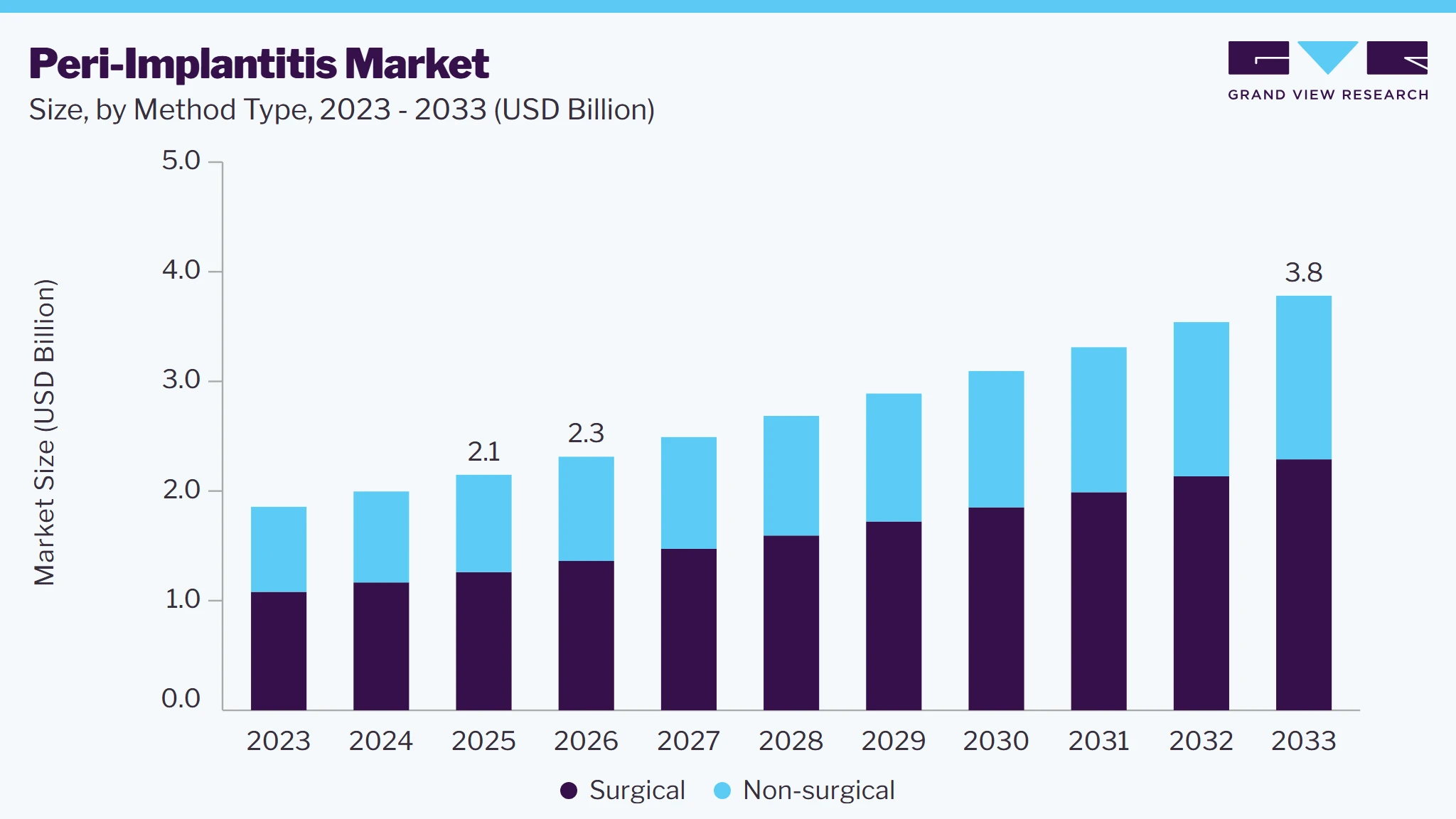
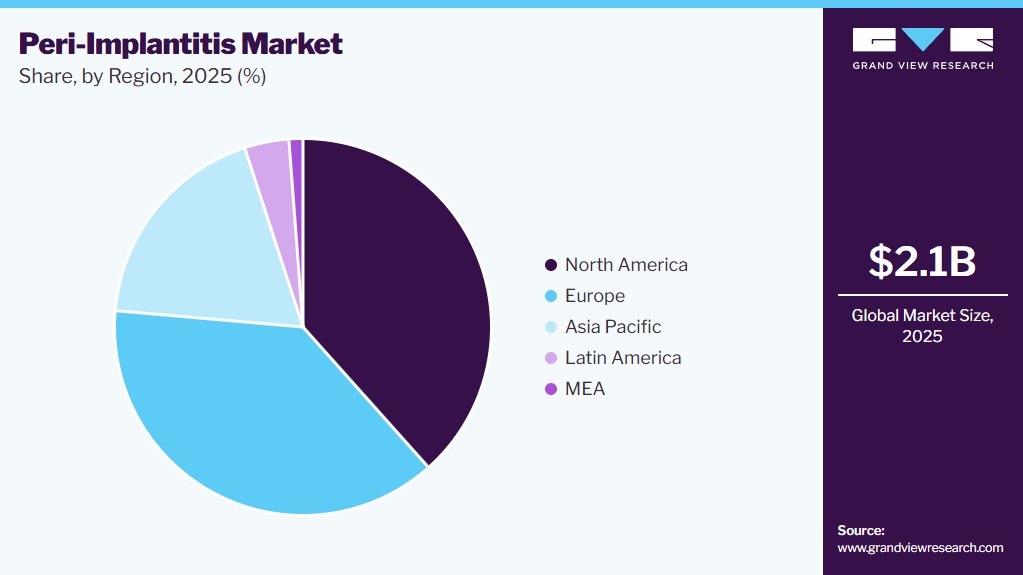
The global peri-implantitis market size was valued at USD 2.1 billion in 2025 and is projected to grow from USD 2.3 billion in 2026 to USD 3.8 billion by 2033, at a CAGR of 7.3% from 2026 to 2033. North America dominated the market, accounting for a revenue share of 38.4% in 2025. The aging population is increasingly driving the demand for dental implants, as older individuals are more likely to experience tooth loss due to conditions such as periodontal disease, trauma, or poor oral hygiene.
 Source: Grand View Research, IR Documents, Primary Interviews, Paid DatabasesTo learn more about this report,
 Download Free Sample Report
Key Market Trends & Insights
- By method type: Surgical segment led the market with the largest revenue share of 58.6% in 2025
Regional Highlights
- Largest regional market: North America (38.4% revenue share, 2025)
- By country: The U.S. held the largest market share in 2025.
Market Size & Forecast
- Market size in 2025: USD 2.1 Billion
- Estimated market size in 2026: USD 2.3 Billion
- Projected market size by 2033: USD 3.8 Billion
- CAGR (2026-2033): 7.3%
Prism AI by Grand View Research Free to tryAsk a question about the peri-implantitis marketTry asking✓Every figure cited from GVR research Prefer the report? Download free sample →As dental implants become a common solution for replacing lost teeth, peri-implantitis, an infection, and inflammation around implants also rise. These implants can be susceptible to bacterial infections and tissue inflammation, particularly if proper care is not maintained. Consequently, as the demand for dental implants grows, there is a corresponding need for effective treatments to manage and prevent peri-implantitis, ensuring the longevity and success of these implants.
 To learn more about this report, Download Free Sample Report
Cosmetic dental procedures, such as dental implants, have gained significant popularity, particularly among middle-aged and elderly individuals seeking to improve their appearance and restore lost teeth. As more people prioritize aesthetic outcomes, the demand for dental implants has surged, increasing awareness of potential complications such as peri-implantitis. Effective management of peri-implant diseases becomes essential to ensure that implants maintain their aesthetic appeal. This has created a growing need for treatments that can prevent or address peri-implantitis, helping patients preserve their dental implants long-term success and visual quality.
Technological advancements in dental implant technology, such as creating more biocompatible and durable implants, have significantly reduced the risk of peri-implantitis by enhancing the integration between the implant and surrounding tissue. In addition, new treatments, including laser-assisted therapy, antimicrobial coatings, and advanced diagnostic tools, are improving the detection and management of peri-implant infections. Innovations in treatment methodologies, such as photodynamic therapy, regenerative approaches, and refined surgical techniques, offer more effective ways to prevent and manage peri-implantitis. These advancements improve patient outcomes and drive growth in the peri-implantitis industry by providing more efficient, minimally invasive solutions.
Market Dynamics
Peri-implantitis treatments are adopted due to the rising number of dental implant procedures worldwide and the growing prevalence of peri-implant diseases associated with long-term implant use. Increasing awareness among dental professionals regarding the importance of early diagnosis and timely intervention is supporting the adoption of both non-surgical and surgical treatment approaches. In addition, rising dental healthcare expenditure, improving access to specialized periodontal and implant care, and greater emphasis on preserving dental implants rather than replacing them are contributing to market growth. The growing demand for implant decontamination systems, regenerative biomaterials, antimicrobial therapies, laser-assisted treatments, and implant surface debridement technologies, along with continuous advancements in regenerative techniques and minimally invasive treatment approaches, is further strengthening the global peri-implantitis treatment market. Furthermore, the aging population, increasing prevalence of periodontal disease, higher incidence of diabetes and smoking-related complications, and the expanding installed base of dental implants are expected to support continued market expansion.
The increasing prevalence of peri-implant diseases is a key driver of the global peri-implantitis treatment market. As dental implant procedures continue to increase worldwide, the number of patients experiencing biological complications around implants is also rising. Peri-implantitis is a plaque-associated inflammatory disease characterized by inflammation of the peri-implant mucosa accompanied by progressive loss of supporting bone, which, if left untreated, can ultimately result in implant failure. Patients with a history of periodontitis, poor oral hygiene, smoking, uncontrolled diabetes, and irregular maintenance visits are at significantly higher risk of developing the condition. Consequently, dental professionals are placing greater emphasis on early diagnosis, routine implant maintenance, and timely intervention through non-surgical debridement, implant surface decontamination, antimicrobial therapies, laser-assisted treatment, and regenerative surgical procedures to preserve implant longevity. The expanding installed base of dental implants, combined with the chronic nature of peri-implantitis and the need for long-term follow-up care, is creating sustained demand for advanced treatment technologies and biologic regenerative materials.
According to the 2025 AO/AAP Systematic Review and Meta-analysis, published in the Journal of Periodontology as part of the American Academy of Periodontology (AAP) and Academy of Osseointegration (AO) Consensus Conference, the weighted mean prevalence of peri-implantitis is approximately 21% at the patient level, while the incidence increases from 12% within 5 years of implant function to 22% within 20 years. The review also identified a history of periodontitis, smoking, diabetes, and poor maintenance compliance as major risk indicators for disease progression. These findings highlight the growing clinical burden of peri-implant diseases and reinforce the increasing need for effective peri-implantitis treatment solutions.
The high cost of peri-implantitis treatment and limited reimbursement coverage remain significant restraints on market growth. Management of peri-implantitis often requires multiple clinical visits, specialized diagnostic imaging, implant surface decontamination systems, regenerative biomaterials, bone grafts, barrier membranes, and, in advanced cases, surgical intervention or implant replacement. These procedures substantially increase the overall cost of care compared with routine periodontal treatment. In many countries, dental implant maintenance and peri-implantitis therapies are financed primarily through out-of-pocket payments, as public healthcare programs and private insurance plans provide limited or no reimbursement for implant-related complications. As a result, many patients delay treatment until the disease progresses, reducing the likelihood of successful implant preservation and limiting the adoption of advanced treatment technologies.
According to the World Health Organization (WHO), oral diseases affect nearly 3.7 billion people globally, yet oral healthcare receives limited financial protection in many health systems, with high out-of-pocket expenditure remaining a major barrier to accessing dental care. Similarly, the Organisation for Economic Co-operation and Development (OECD) reports that dental services are among the healthcare services most commonly paid directly by patients because insurance and public reimbursement are often limited. These financial barriers reduce patient access to specialized peri-implantitis treatment, particularly in low- and middle-income countries, thereby restraining overall market growth.
The growing focus on regenerative treatment approaches presents a significant opportunity for the peri-implantitis treatment market. Unlike conventional therapies that primarily aim to control infection and halt disease progression, regenerative procedures seek to restore lost peri-implant bone and soft tissue, thereby improving implant stability and extending implant longevity. Increasing adoption of bone graft substitutes, collagen membranes, biologics, growth factors, and bioactive biomaterials is expanding the treatment landscape for moderate-to-severe peri-implantitis. Furthermore, advancements in implant surface decontamination technologies, tissue engineering, and minimally invasive regenerative techniques are improving clinical outcomes and encouraging wider adoption among dental specialists. As the global installed base of dental implants continues to increase, the demand for evidence-based regenerative solutions capable of preserving implants rather than replacing them is expected to create substantial growth opportunities for manufacturers of biomaterials, regenerative products, and adjunctive treatment technologies.
According to the U.S. National Institute of Dental and Craniofacial Research (NIDCR), published in January 2026, the institute invested more than USD 73 million in regenerative medicine research during fiscal year 2024 to accelerate the development of therapies for bone and oral tissue repair. NIDCR is supporting research focused on biomaterials, tissue engineering, immune-mediated bone regeneration, and clinically translatable regenerative therapies for dental and craniofacial diseases. In parallel, the U.S. Food and Drug Administration (FDA) continues to support the development and regulatory advancement of regenerative medicine products intended to restore or replace damaged tissues. These investments and regulatory initiatives are expected to accelerate innovation and commercialization of advanced regenerative solutions for peri-implantitis treatment, creating long-term opportunities for market participants.
Analyst Perspective
The peri-implantitis treatment market is positioned for steady growth, driven by the expanding global installed base of dental implants and the increasing prevalence of peri-implant diseases. Market expansion is supported by growing awareness among clinicians regarding early diagnosis, rising adoption of implant maintenance protocols, and increasing demand for therapies that preserve implants rather than require replacement. Unlike conventional periodontal treatments, peri-implantitis management often requires specialized surgical and non-surgical interventions, regenerative biomaterials, implant surface decontamination technologies, and adjunctive antimicrobial therapies, resulting in higher treatment value per procedure. Manufacturers offering comprehensive treatment portfolios that integrate regenerative solutions, antimicrobial products, implant maintenance systems, and advanced decontamination technologies are expected to strengthen their competitive position. As clinical evidence supporting regenerative and minimally invasive treatment approaches continues to expand, market leadership will depend on product efficacy, long-term clinical outcomes, practitioner adoption, regulatory compliance, and the ability to provide integrated solutions that improve implant survival and patient outcomes.
Method Type Insights
Based on method type, the surgical segment led the market with the largest revenue share of 58.6% in 2025 and is also expected to grow at the fastest CAGR over the forecast period, driven by the effectiveness of surgical interventions in thoroughly addressing peri-implantitis, particularly through procedures such as open flap debridement and bone regeneration techniques. These surgical methods are recognized for achieving better clinical outcomes than non-surgical approaches, making them the preferred choice for many dental professionals. As awareness of surgical treatment benefits grows among practitioners and patients, there is an increasing inclination towards these options. In addition, advancements in surgical techniques and technologies are enhancing success rates, further solidifying the surgical segment position in the peri-implantitis industry.
The non-surgical segment is projected to grow significantly over the forecast period, which can be attributed to a rising preference for less invasive treatment options that minimize patient discomfort and recovery time. Non-surgical methods, including mechanical debridement and laser therapy, are gaining traction due to their effectiveness in managing the early stages of peri-implantitis. Furthermore, as patients become more informed about their treatment choices, there is a growing demand for preventive care approaches that non-surgical treatments can provide. The increasing focus on maintaining oral health and preventing complications also contributes to expanding non-surgical within the peri-implantitis industry.
Regional Insights
North America dominated the peri-implantitis market with the largest revenue share of 38.4% in 2025, attributed to the advanced healthcare infrastructure and high prevalence of dental implants. The region benefits from a well-established network of dental professionals increasingly adopting innovative treatment modalities for peri-implantitis. In addition, patients growing awareness about oral health issues related to dental implants is increasing, leading to higher demand for effective treatment options. Combining a robust healthcare system and a proactive approach to dental care has created an environment conducive to the growth of the peri-implantitis industry. As lifestyle-related oral health problems continue to rise, North America remains a key player in the peri-implantitis market.
 To learn more about this report, Download Free Sample Report
U.S. Peri-implantitis Market Trends
The peri-implantitis market in the U.S. held the largest share in the North America region in 2025, driven by an increasing number of dental implant procedures being performed across the country. As awareness of peri-implant diseases grows among practitioners and patients, there is an escalating demand for effective treatment solutions. The high rate of dental placements, coupled with an aging population requiring comprehensive dental care, further drives this market expansion. Moreover, ongoing research and development efforts in dental technologies enhance treatment options for peri-implantitis management.
Europe Peri-implantitis Market Trends
Europe peri-implantitis market dominated the global market with a revenue share of 29.8% in 2024, fueled by advanced dental care practices and high rates of implant usage across the continent. The region benefits from healthcare regulations that promote regular dental check-ups and early intervention strategies for oral diseases. In addition, European countries have established strong educational programs for dental professionals, enhancing their skills in effectively diagnosing and treating peri-implant conditions. The emphasis on research and innovation in European dentistry significantly improves treatment outcomes. As patient awareness regarding oral health increases, so does the demand for effective peri-implantitis treatments throughout Europe.
Germany peri-implantitis market dominated Europe with a significant revenue share in 2024, driven by its robust healthcare system and strong emphasis on research and development in dental technologies. German dental practices are known for their high standards and adoption of innovative treatment methods, including non-surgical approaches such as mechanical debridement and antimicrobial therapies. The country commitment to continuous education for dental professionals ensures that they stay updated on the latest advancements in peri-implantitis management. As patient expectations rise regarding treatment efficacy and comfort, Germany proactive approach positions it as a key player in this peri-implantitis industry.
Asia Pacific Peri-implantitis Market Trends
The Asia Pacific peri-implantitis market is anticipated to grow at the highest CAGR over the forecast period, which can be attributed to the increasing urbanization and rising disposable incomes across various countries, which enhance access to dental care services. Moreover, as public awareness of oral health improves alongside advancements in dental technology, more patients seek treatments for conditions such as peri-implantitis. The expansion of private healthcare facilities and specialized dental clinics also plays a crucial role in meeting this rising demand. As lifestyle changes contribute to higher incidences of oral health issues, the Asia Pacific region presents significant opportunities for growth within the peri-implantitis market.
Key Peri-implantitis Company Insights
Some key companies operating in the market include Pfizer Inc., Cadila Pharmaceuticals, GaronitPharma, Basic Pharma Life Science Pvt Ltd., and Prachi Pharmaceuticals Private Limited. Companies are undertaking strategic initiatives such as mergers, acquisitions, and product launches, to expand their market presence and address the evolving healthcare demands through neuroendocrine tumor treatment market.
-
Pfizer Inc. offers a variety of products and solutions related to the peri-implantitis market. Its key offerings include antibiotics such as azithromycin and doxycycline, essential for controlling bacterial infections around dental implants. In addition, the company provides antiseptics such as chlorhexidine, which are used to reduce the microbial load during treatment.
-
Cadila Pharmaceuticals offers a range of products focusing on effective management of dental infections. Its portfolio includes antibiotics such as amoxicillin and clavulanic acid, crucial for combating bacterial infections associated with peri-implantitis. The company also provides antiseptic solutions such as chlorhexidine to reduce microbial load during treatment.
Key Peri-implantitis Companies:
The following key companies have been profiled for this study on the peri-implantitis market.
-
Pfizer Inc.
-
Cadila Pharmaceuticals
-
GaronitPharma
-
Basic Pharma Life Science Pvt Ltd.
-
Prachi Pharmaceuticals Private Limited.
-
Geistlich Pharma India Pvt. Ltd.
-
Healthy Life Pharma Private Limited.
-
Zimmer Biomet.
-
Institut Straumann AG
-
Dentsply Sirona
Competitive Benchmarking
Category
Operating Strategies
Competitive Edge
Weakness
Established Players (Institut Straumann AG, Geistlich Pharma AG, ZimVie Inc., Dentsply Sirona Inc., Nobel Biocare Services AG, BioHorizons, Dentium)
- Expand global presence through partnerships with dental clinics, hospitals, periodontal specialists, implantologists, and dental service organizations (DSOs).
- Strengthen treatment portfolios through continuous R&D in regenerative biomaterials, implant surface decontamination technologies, surgical instruments, and digital implant workflows. Pursue acquisitions and strategic collaborations to expand regenerative and implant maintenance capabilities.
- Strong global brand recognition, extensive clinical evidence, broad implant and regenerative product portfolios, established distribution networks, and strong relationships with dental professionals and academic institutions.
- Significant investments in R&D and clinician education support long-term market leadership002EBroad product portfolios covering multiple dental specialties and high manufacturing expertise in precision rotary instruments.
- High R&D and regulatory compliance costs. Premium pricing limits adoption in cost-sensitive markets.
- Large organizational structures may slow commercialization of emerging technologies compared with smaller innovators.
Emerging & Specialized Players (botiss biomaterials GmbH, Neoss, LifeNet Health, Osteogenics Biomedical, Curasan AG, Bioteck S.p.A., Datum Dental, Biomatlante, Tecnoss, RESORBA Medical GmbH, TBR Dental, REGEDENT AG)
- Focus on niche regenerative solutions including bone graft substitutes, collagen membranes, soft tissue regeneration products, biologics, antimicrobial technologies, and implant preservation therapies.
- Compete through product innovation, clinical differentiation, strategic partnerships with implant manufacturers, and expansion into high-growth regional markets.
- Strong expertise in regenerative biomaterials and tissue engineering, faster innovation cycles, specialized clinical solutions, and flexibility to address evolving treatment protocols for peri-implantitis and implant preservation.
- Limited global distribution infrastructure and lower brand recognition than multinational competitors.
- Smaller product portfolios and greater dependence on distributors or strategic partners may restrict market penetration and international expansion.
Recent Developments
-
In May 2023, Institut Straumann AG announced the full acquisition of GalvoSurge, a Swiss medical device producer specializing in implant care and maintenance solutions. This strategic move aimed to enhance treatment options for peri-implantitis by integrating GalvoSurge's innovative technology into its portfolio. The acquired device, which had received CE marking and was released to the market in 2020, presented a novel approach to addressing the challenges associated with peri-implantitis treatment.
Peri-implantitis Market Report Scope
Report Attribute
Details
Market size in 2025
USD 2.1 billion
Estimated market size in 2026
USD 2.3 billion
Projected market size by 2033
USD 3.8 billion
Growth rate
CAGR of 7.3% from 2026 to 2033
Base year for estimation
2025
Historical data
2021 - 2024
Forecast period
2026 - 2033
Quantitative units
Revenue in USD million/billion and CAGR from 2026 to 2033
Report coverage
Revenue forecast, company ranking, competitive landscape, growth factors, and trends
Segments covered
Method Type, region
Regional scope
North America; Europe; Asia Pacific; Latin America; MEA
Country scope
U.S.; Canada; Mexico; Germany; UK; France; Italy; Spain; Norway; Denmark; Sweden; China; Japan; India; South Korea; Australia; Thailand; Brazil; Argentina; Saudi Arabia; South Africa; UAE; Kuwait
Key companies profiled
Institut Straumann AG, Geistlich Pharma AG, ZimVie Inc., Dentsply Sirona Inc., Nobel Biocare Services AG, BioHorizons, botiss biomaterials GmbH, Neoss, LifeNet Health, Osteogenics Biomedical, Curasan AG, Dentium, Bioteck S.p.A., Datum Dental, Biomatlante, Tecnoss, RESORBA Medical GmbH, TBR Dental, REGEDENT AG.
Customization scope
Free report customization (equivalent up to 8 analysts' working days) with purchase. Addition or alteration to country, regional & segment scope.
Pricing and purchase options
Avail customized purchase options to meet your exact research needs. Explore purchase options
Global Peri-implantitis Market Report Segmentation
This report forecasts global, regional, and country revenue growth and analyzes the latest industry trends in each sub-segment from 2021 to 2033. For this study, Grand View Research has segmented the global peri-implantitis market report based on method type, and region:
 To learn more about this report, Download Free Sample Report
-
Method Type Outlook (Revenue, USD Billion, 2021 - 2033)
-
Surgical
-
Bone Regeneration
-
Open Flap Debridement
-
Implantoplasty
-
-
Non-surgical
-
Mechanical Debridement
-
Laser Debridement
-
Antibiotics
-
Others
-
-
-
Regional Outlook (Revenue, USD Billion, 2021 - 2033)
-
North America
-
U.S.
-
Canada
-
Mexico
-
-
Europe
-
UK
-
Germany
-
France
-
Italy
-
Spain
-
Denmark
-
Sweden
-
Norway
-
-
Asia Pacific
-
Japan
-
China
-
India
-
Australia
-
South Korea
-
Thailand
-
-
Latin America
-
Brazil
-
Argentina
-
-
Middle East & Africa
-
South Africa
-
Saudi Arabia
-
UAE
-
Kuwait
-
-
Research Methodology
The peri-implantitis market figures in this report are based on a proven research process that combines executive interviews with secondary research from proprietary databases, company filings, and recognized regulatory and institutional sources. Market size is built through value-chain sizing - reconciling supply-side and demand-side estimates - and triangulated with bottom-up and top-down approaches. Every estimate passes multiple levels of expert validation before publication, with each peri-implantitis segment quantified using the revenue-capture definitions in the table below.
Segment Definition
Segment - Method Type
Revenue capture definition
Surgical
Revenue generated from the treatment of peri-implantitis using surgical interventions performed to eliminate infection, regenerate lost peri-implant tissues, and preserve implant function in moderate-to-severe disease. This segment includes open flap debridement, implantoplasty, resective surgery, regenerative surgery with bone grafts and barrier membranes, soft tissue grafting, implant surface decontamination, and implant removal when clinically indicated.
Non-surgical
Revenue generated from the treatment of peri-implantitis using non-surgical procedures aimed at controlling infection, reducing inflammation, and preventing disease progression, particularly in early-stage cases. This segment includes mechanical debridement, ultrasonic and air-polishing systems, laser-assisted therapy, antimicrobial and antiseptic agents, local antibiotic delivery, chemical implant surface decontamination, and supportive peri-implant maintenance therapies performed without surgical intervention.
Estimation Model
Bottom-Up Estimation
Top-Down Approach
Supply-Side Analysis
Revenue generated from peri-implantitis treatments is aggregated at country, regional, and global levels. Procedure volumes across surgical and non-surgical treatments are analyzed. Treatment rates, utilization of regenerative biomaterials, antimicrobial therapies, implant decontamination systems, and average selling prices (ASPs) are mapped to estimate market demand. The analysis is adjusted for treatment adoption, clinical practice patterns, reimbursement, and market penetration to derive the overall market value.
The overall dental implant and periodontal treatment market is identified first, and the proportion attributable to peri-implantitis treatment is estimated through secondary research and expert validation. Disease prevalence, implant utilization, treatment rates, patient awareness, and healthcare expenditure are analyzed to determine the market share of peri-implantitis treatment within the broader dental care market. Market value is derived by applying validated penetration and utilization assumptions across key regions.
Assesses total peri-implantitis treatment product sales, production volumes, distribution networks, average selling prices (ASPs), and manufacturer revenues. Key participants offering regenerative biomaterials, antimicrobial products, implant decontamination systems, laser technologies, and surgical solutions are analyzed using annual reports, company disclosures, distributor databases, and industry publications. Market size is estimated by evaluating production capacity, sales performance, market share, pricing trends, and competitive dynamics across major geographic markets
Delivered Customizations
This report has been delivered with the following In-depth customizations
CLIENT REQUEST
CUSTOMIZATION DELIVERED
VALUE ADDS
Peri-implantitis Treatment Landscape Analysis
Conducted a comprehensive assessment of peri-implantitis treatment modalities across surgical and non-surgical approaches. Evaluated product utilization including regenerative biomaterials, bone grafts, barrier membranes, antimicrobial therapies, implant surface decontamination systems, lasers, and implant maintenance solutions. Analyzed treatment pathways, clinical adoption trends, procedure volumes, physician preferences, and demand drivers across dental clinics, hospitals, and specialty periodontal practices.
Helps stakeholders identify high-growth treatment segments, understand procedure-specific adoption patterns, evaluate clinical preferences, and assess commercial opportunities across the peri-implantitis treatment ecosystem.
Competitive Product Benchmarking
Performed detailed benchmarking of leading peri-implantitis treatment products based on indication, mechanism of action, biomaterial type, clinical evidence, regulatory approvals, pricing, and geographic availability. Compared regenerative materials, antimicrobial products, implant decontamination technologies, and adjunctive treatment solutions offered by key market participants.
Enables manufacturers to evaluate competitive positioning, identify product differentiation opportunities, benchmark innovation strategies, and support product development and commercialization decisions.
Clinical & Procedure Volume Analysis
Analyzed peri-implantitis treatment procedure volumes by disease severity, treatment approach, and healthcare setting. Assessed diagnosis rates, treatment eligibility, regenerative procedure adoption, implant preservation rates, and utilization of adjunctive technologies across major countries.
Supports strategic planning by identifying procedure growth trends, estimating addressable patient populations, optimizing resource allocation, and evaluating regional market expansion opportunities.
Frequently Asked Questions About This Report
The global peri-implantitis market size was valued at USD 2.1 billion in 2025 and is estimated at USD 2.3 billion for 2026.
Based on method type, the surgical segment held the largest share of 58.7% in 2025 and is the fastest-growing segment over the forecast period.
Key factors include the demand for dental implants, as older individuals are more likely to experience tooth loss due to conditions such as periodontal disease, trauma, or poor oral hygiene.
North America dominated with a 38.4% revenue share in 2025.
Asia Pacific is the fastest-growing region over the forecast period.
The global peri-implantitis market is expected to grow at a CAGR of 7.3% from 2026 to 2033, reaching USD 3.8 billion.
Key players include Institut Straumann AG, Geistlich Pharma AG, ZimVie Inc., Dentsply Sirona Inc., Nobel Biocare Services AG, BioHorizons, botiss biomaterials GmbH, Neoss, LifeNet Health, Osteogenics Biomedical, Curasan AG, Dentium, Bioteck S.p.A., Datum Dental, Biomatlante, Tecnoss, RESORBA Medical GmbH, TBR Dental, REGEDENT AG.
About the Author(s)
Medical Devices Research Team
Healthcare · Medical DevicesThis report was authored by the medical devices research team at Grand View Research - comprising two research analysts, one senior research analyst, and one industry expert - with specialized expertise in the medical devices segment of the healthcare industry. All findings are based on proprietary healthcare databases, executive interviews, and regulatory analysis, subject to internal peer review prior to publication.
Last Updated:
Speak to Analyst

Customize this report to your needs - add regions, segments, or data points, with 20% free customization.
Or view our licence options:


ISO 9001:2015 & 27001:2022 Certified
We are GDPR and CCPA compliant! Your transaction & personal information is safe and secure. For more details, please read our privacy policy.


