
- Home
- »
- Animal Health
- »
-
Pet Longevity Therapeutics Market Size, Growth Report, 2026-2033GVR Report cover

Pet Longevity Therapeutics Market (2026 - 2033)
Size, Share & Trends Analysis Report By Product (Supplements, Therapeutic Food), By Pet (Canine, Feline), By Indication (Cellular Energy & Metabolic Resilience), By Distribution Channel, By Region, And Segment Forecasts
Market Size, 2025
$577.6MMarket Estimate, 2026
$621.6MMarket Forecast, 2033
$1,145.9MCAGR, 2026–2033
9.1%Pet Longevity Therapeutics Market Summary
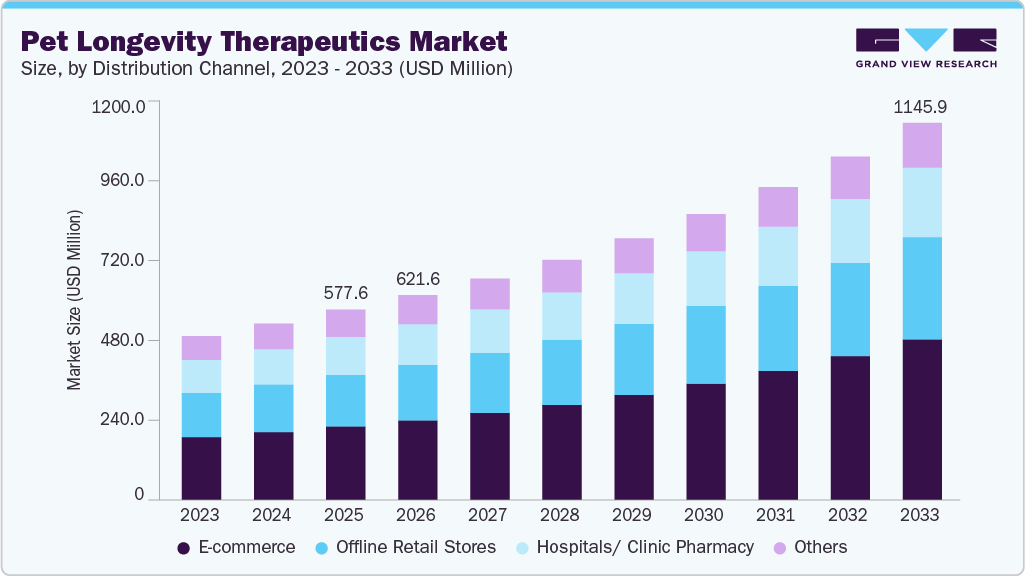
The global pet longevity therapeutics market size was valued at USD 577.6 million in 2025 and is projected to grow from USD 621.6 million in 2026 to USD 1,145.9 million by 2033, at a CAGR of 9.13% from 2026 to 2033. North America dominated the global market, accounting for the largest revenue share of 39.3% in 2025. The market is propelling due to factors such as pet humanization and the transfer of a longevity mindset, geroscience advancements and biological validation, the rising age-related chronic disease burden, and premiumization and preventive healthspan spending.
 Source: Grand View Research, IR Documents, Primary Interviews, Paid DatabasesTo learn more about this report,
 Download Free Sample Report
 Key Market Trends & Insights
- By product: Supplements segment led the market with the largest revenue share of 68.7% in 2025.
- By pet: Canine segment accounted for the largest market revenue share in 2025.
- By indication: Cognitive aging and neuroprotection segment accounted for the largest market revenue share in 2025.
Regional Highlights
- Largest regional market: North America (39.3% revenue share, 2025)
- Fastest-growing regional market: Asia Pacific (highest CAGR, 2026-2033)
- By country: The U.S pet longevity therapeutics industry is a major contributor to the global market.
Market Size & Forecast
- Market size in 2025: USD 577.6 Million
- Estimated market size in 2026: USD 621.6 Million
- Projected market size by 2033: USD 1,145.9 Million
- CAGR (2026-2033): 9.13%
Three ways to get this report
Buy it, customize it, or ask a question.Ask an Analyst
Analyst response in 1 business day
- AccessReport author, directly
- Reply timeWithin 1 working day
- No sales callDirect answer only
- FormatEmail reply
- CostFree, no cost
Get the Full Report
What the study covers
- FormatsPDF · Excel · Dashboard
- Timeline2026–2033 annual, 2025 base
- Coverage20+ countries, 5 regions
- Companies10+ key players profiled
Customize the Report
20% free customization
- IncludeCountries, segments, points
- TailorTo your product definition
- ExtendDeeper competitor detail
- OrA fully bespoke study
- Turnaround5–10 working days
One of the leading factors driving market growth is the rapid advancement of companion animal geroscience and the growing body of biological evidence validating the modulation of aging pathways in non-human species. Historically, veterinary product development operated within a disease treatment paradigm, addressing conditions reactively rather than targeting the underlying biology of aging. This orientation has shifted materially over the past decade, as translational research has established that core hallmarks of aging, including mitochondrial dysfunction, NAD+ depletion, mTOR dysregulation, cellular senescence accumulation, and chronic low-grade inflammation, are conserved across mammalian species, including dogs and cats. This conserved biology has created a scientifically credible foundation for commercially available longevity supplements and therapeutic foods, with formulators increasingly incorporating ingredients such as NMN/NR, SIRT activators, mitochondrial cofactors, and senolytic candidates into species-specific oral formulations targeting these pathways.
 To learn more about this report, Download Free Sample Report
 The commercial supplement and therapeutic food segments are currently the primary revenue-generating categories within this market, with product portfolios spanning chews, capsules, powders, and veterinary-formulated diets substantiated by aging biomarker and functional outcome data. In addition, pre-commercial programs are generating scientific frameworks that are actively elevating evidence standards across the broader category. The Dog Aging Project's TRIAD trial and Loyal's FDA-designated conditional approval pathway for LOY-001 and LOY-003, while not yet contributing to market revenue, are producing validated biomarker endpoints and regulatory precedents that commercial supplement and therapeutic food developers are beginning to adopt as formulation and efficacy benchmarks.
Another crucial market driver is the accelerating premiumization of pet care and the measurable shift in preventive health consciousness from human wellness to companion animal care. Pet owners, particularly millennials and Gen Z cohorts who constitute the fastest-growing owner demographic globally, are increasingly allocating discretionary spending toward supplements and therapeutic foods that target long-term functional preservation rather than acute condition management. This behavioral pattern mirrors trends observed in the human nutraceutical and longevity supplement space, where consumer willingness to pay a premium for mechanistic, evidence-based formulations has significantly expanded the category's value. In the pet segment, this translates into sustained demand for oral longevity supplements and aging-pathway-formulated diets positioned around healthspan extension, metabolic resilience, and cognitive preservation.
Moreover, subscription-based DTC platforms and veterinary-partnered e-commerce channels have further activated this spending behavior by enabling ongoing, protocol-oriented consumption of longevity supplement regimens rather than one-time purchases.
Key Pipeline Products in the Sector
Candidate
Stage
Product Type
Indication / Target Population
LOY-002
Preclinical studies complete; pilot study complete; major technical sections (RXE + TAS) complete; STAY pivotal trial ongoing; FDA Expanded Conditional Approval submission in progress
Daily oral pill (chewable)
Metabolic dysfunction in senior dogs of nearly all breeds weighing 14 lb and above; aimed at extending healthy lifespan and improving quality of life through metabolic aging pathway modulation
LOY-001
Preclinical studies complete; pilot study complete; major technical section complete; FDA conditional approval pending
Veterinarian-administered long-acting injectable; given a few times per year
Lifespan disparity in large and giant breed dogs (7 years and older, weighing at least 40 lb); targets the biological mechanisms driving accelerated aging in larger breeds
LOY-003
Preclinical studies complete; pilot study and major technical sections not yet complete
Daily oral pill (prescription)
Lifespan disparity in large and giant breed dogs (5 years and older, weighing at least 60 lb); targets the same growth hormone-linked biological mechanisms as LOY-001 in a self-administered daily format
Source: Loyal
Market Concentration & Characteristics
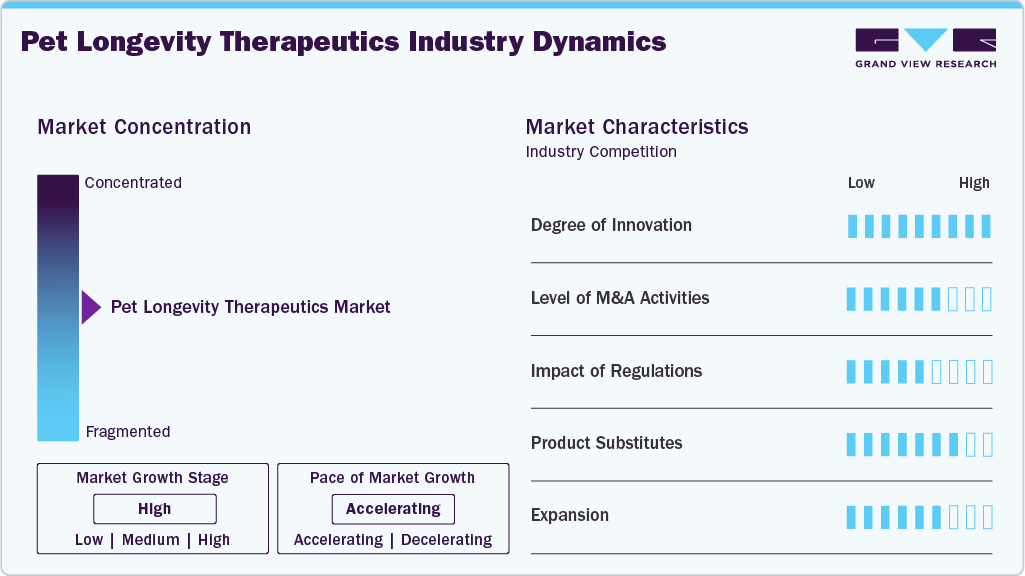
The global pet longevity therapeutics industry remains moderately fragmented, with no single commercial entity commanding a dominant market share across all product and indication segments. Established players such as Nestlé S.A., Hill's Pet Nutrition, and Royal Canin hold structural advantages in therapeutic food distribution and in access to the veterinary channel. However, specialized longevity-focused entrants, including Zesty Paws, Thorne Vet, and Nutramax Laboratories, are gaining measurable traction in the supplement segment, particularly through e-commerce and DTC channels, creating a competitive landscape characterized by coexistence between large-scale and niche operators.
Innovation in the commercial segment is focused on aging-pathway-specific formulations, including NMN/NR-based supplements, SIRT activator complexes, mitochondrial cofactor blends, and veterinary therapeutic diets designed to modulate metabolic aging. Pre-commercial programs are further elevating the innovation ceiling. Loyal's LOY-001 and LOY-003, currently under FDA conditional approval review, and the Dog Aging Project's TRIAD rapamycin trial are establishing clinical-grade efficacy benchmarks. While not yet commercially available, these programs are actively informing ingredient selection, dosing rationale, and evidence standards adopted by commercial supplement and therapeutic food developers.
 To learn more about this report, Download Free Sample Report
 Mergers and acquisitions activity within the pet longevity therapeutics industry remains nascent but directionally significant. Larger pet nutrition and animal health conglomerates are increasingly evaluating longevity-positioned supplement brands as strategic acquisition targets, particularly those with proprietary aging-pathway formulations, established DTC subscription bases, or veterinary channel partnerships. The broader premiumization of pet care has accelerated corporate interest in this segment. Capital deployment through Series B and Series C funding rounds, as observed with key longevity supplement developers, signals a pipeline of consolidation activity anticipated within the near-to-medium forecast horizon.
Regulatory frameworks governing pet longevity therapeutics operate across two distinct tracks. Supplements are classified as nutraceuticals in most jurisdictions, which restrict disease-treatment claims without drug-level approval, while veterinary therapeutic foods require clinical substantiation for any disease progression claims. The FDA's conditional approval pathway, as demonstrated through Loyal's LOY-001 designation, is establishing a structured evidentiary route for veterinary longevity drugs. This regulatory precedent is progressively influencing how commercial supplement and therapeutic food manufacturers frame longevity claims, pushing the category toward greater evidence accountability and labeling precision.
The primary substitution risk for longevity therapeutics originates from the general pet wellness supplement market, where broadly positioned products containing overlapping ingredients such as omega-3 fatty acids, standard antioxidants, and glucosamine are marketed at lower price points without aging-pathway specificity. Veterinary practitioners may also default to conventional disease management protocols rather than proactive longevity supplementation regimens. However, the mechanistic differentiation embedded within qualifying longevity formulations, supported by biomarker and functional outcome data, substantively limits direct substitution from general wellness products lacking equivalent evidence.
Geographic and indication-based expansion represent the two primary growth vectors for market participants. Within the supplement and therapeutic food segments, product portfolios are expanding beyond canine applications into feline-specific formulations, addressing a historically underpenetrated species segment with distinct metabolic and palatability requirements. Geographically, North America retains the most mature commercial infrastructure, while Asia Pacific markets, particularly China, Japan, and Australia, are demonstrating accelerating uptake driven by rising pet ownership rates and premiumization trends. Furthermore, indication coverage is broadening from cellular energy and musculoskeletal segments into cardiometabolic, renal, and cognitive aging categories.
Product Insights
The supplements segment led the market with the largest revenue share of 68.7% in 2025 and is projected to grow at the fastest CAGR during the forecast period. This position is attributed to the widespread commercial availability of oral longevity formulations, including NMN/NR-based chews, SIRT activator complexes, and mitochondrial cofactor blends across e-commerce and veterinary channels. Low administrative barriers, flexible dosing formats, and the growing consumer preference for proactive healthspan management over reactive disease treatment have collectively sustained strong, consistent purchase volumes in this segment.
The therapeutic food segment is growing with the second-fastest CAGR over the forecast period, driven by increasing veterinary adoption of aging-pathway-formulated diets that target metabolic resilience, cognitive preservation, and renal support in senior companion animals. Manufacturers are investing in clinical substantiation programs to meet the evidentiary threshold distinguishing longevity-positioned therapeutic diets from standard maintenance nutrition. Furthermore, the expansion of veterinary hospital and clinic pharmacy channels, where therapeutic food recommendations are integrated into senior wellness protocols, is generating sustained and repeat purchase cycles for this segment.
Pet Insights
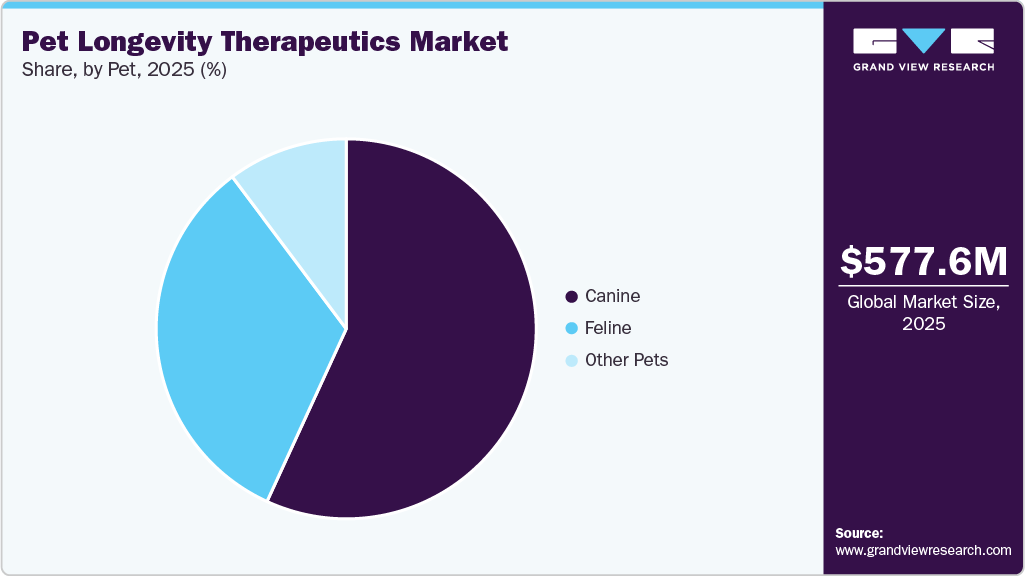
The canine segment accounted for the largest market revenue share in 2025 and is projected to grow at the fastest CAGR during the forecast period, supported by the highest volume of species-specific longevity supplement formulations currently available commercially, a well-established veterinary research base, and the direct influence of high-profile programs such as the Dog Aging Project and Loyal's pipeline assets on category awareness. Dog owners demonstrate measurably higher willingness to invest in longevity-oriented supplement regimens and therapeutic diets, driven by strong humanization trends and the emotional and financial significance of extending canine healthspan.
 To learn more about this report, Download Free Sample Report
 The feline segment is projected to grow at a significant CAGR during the forecast period, driven by the historically underpenetrated nature of cat-specific longevity formulations and the rising recognition of aging-related conditions in senior cats, including cognitive dysfunction, chronic kidney disease, and cardiometabolic decline. Formulators are increasingly developing palatability-optimized, feline-dosed longevity supplements and therapeutic foods addressing these indication clusters. Moreover, the growing cat ownership base across urban demographics in North America, Europe, and the Asia Pacific is generating an expanding addressable population for targeted feline healthspan interventions.
Indication Insights
The cognitive aging and neuroprotection segment accounted for the largest market revenue share in 2025. This dominance is owed to the high clinical visibility of canine cognitive dysfunction syndrome and feline cognitive decline, conditions with measurable behavioral and neurological endpoints that owners and veterinarians can directly observe. Commercially available formulations targeting neuroinflammation, synaptic resilience, and mitochondrial support in the aging brain have achieved strong uptake through both veterinary recommendations and DTC channels, with product portfolios supported by validated cognitive assessment endpoints in target species.
The cellular energy and metabolic resilience segment is anticipated to grow at the fastest CAGR over the forecast period, driven by driven by accelerating commercial availability of NMN/NR-based supplements, NAD+ booster formulations, and mitochondrial cofactor complexes specifically positioned around aging biology rather than general energy support. Growing consumer familiarity with NAD+ metabolism from the human longevity supplement space is transferring into pet owners' purchasing behavior. In addition, the increasing volume of preclinical and translational data linking NAD+ pathway modulation to healthspan outcomes in companion animal models is strengthening veterinary confidence in recommending these formulations.
Distribution Channel Insights
The e-commerce segment accounted for the largest market revenue share in 2025 and is projected to grow at the fastest CAGR over the forecast period. DTC subscription models, veterinary-partnered online platforms, and AI-powered pet health personalization tools are enabling protocol-oriented, recurring consumption of longevity supplements. The ability to deliver detailed mechanistic product information, aging pathway education, and biomarker-linked recommendations through digital interfaces meaningfully differentiates longevity-positioned products from general wellness alternatives and supports sustained customer retention within this channel.
The offline retail stores segment is the second-largest segment, driven by their established physical presence across specialty pet retail chains and pharmacy outlets, where longevity supplement visibility has grown alongside the premiumization of shelf-space allocation. Dedicated longevity and senior pet product sections within large-format pet specialty retailers have increased category accessibility for owners who prefer tactile product evaluation. Furthermore, trained retail staff in specialty pet stores are increasingly able to communicate the mechanistic differentiation between longevity supplements and general wellness products, supporting conversions at the point of purchase.
Regional Insights
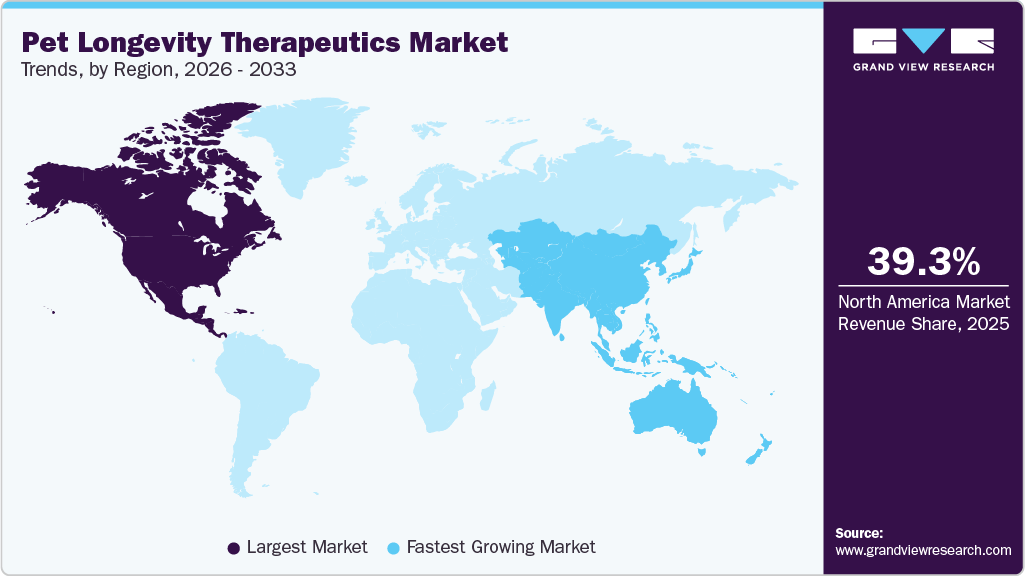
North America dominated the global pet longevity therapeutics marketwith the largest revenue share of 39.3% in 2025, supported by the highest concentration of commercially active longevity supplements and therapeutic food brands, a well-developed veterinary infrastructure, and the most mature consumer awareness of aging biology in companion animals globally. The region benefits from a robust DTC e-commerce ecosystem, active geroscience research programs, and a regulatory environment that, while evolving, has begun establishing structured pathways for veterinary longevity product substantiation, as evidenced by ongoing FDA engagement with pipeline therapeutic developers.
 To learn more about this report, Download Free Sample Report
 U.S. Pet Longevity Therapeutics Market Trends
The pet longevity therapeutics market in the U.S. accounted for the largest market share in North America in 2025, supported by the largest globally commercially active pet owner population, the highest per-capita pet healthcare expenditure, and the greatest concentration of longevity supplement brands currently operating across DTC, veterinary, and retail channels. The U.S. benefits from high veterinarian-to-pet ratios in urban centers, which facilitate clinical recommendations for longevity-oriented formulations, and from a consumer base demonstrably receptive to mechanistic, evidence-backed supplement positioning within the healthspan management framework.
The Canada pet longevity therapeutics market is accounted for the second largest market share in North America in 2025,due to high pet ownership rates, a strong veterinary network, and growing premium pet care expenditure concentrated in urban centers, including Toronto, Vancouver, and Calgary. Canadian pet owners are increasingly receptive to longevity supplement protocols, particularly in the canine segment. The market is further supported by cross-border product availability from U.S.-based longevity supplement brands through e-commerce channels, which has accelerated category awareness ahead of robust domestic brand development.
Europe Pet Longevity Therapeutics Market Trends
The pet longevity therapeutics market in Europe is being shaped by a combination of strong pet humanization trends, particularly across the UK, Germany, and Scandinavian markets, alongside a rigorous regulatory environment that is progressively incentivizing evidence-backed longevity product formulations over general wellness claims. European veterinary practitioners are increasingly engaged with aging pathway science, and regional operators such as Longevity for Animals are establishing market presence with species-specific longevity supplement portfolios targeting both the canine and feline segments across key European markets.
The UK pet longevity therapeutics market held a significant share in Europe in 2025, as the country maintains one of the highest pet ownership densities in the region alongside a well-developed premium pet care retail and veterinary infrastructure. UK pet owners demonstrate a strong willingness to invest in preventive health management for companion animals. Research into canine longevity, including studies on blue zone analogs in dog populations, has received domestic media coverage, accelerating consumer awareness of aging biology and healthspan-oriented product categories in the market.
The pet longevity therapeutics market in Sweden is expected to grow at the fastest CAGR over the forecast period. The country’s growth is influenced by high disposable income levels, a strong culture of preventive healthcare that extends to companion animals, and growing veterinary and consumer openness to evidence-based longevity supplement adoption. Sweden's advanced animal welfare standards and high veterinary consultation rates create favorable conditions for clinical recommendation of aging-pathway-targeted formulations. In addition, Scandinavian consumers demonstrate above-average receptivity to premium, science-backed nutraceutical products, positioning Sweden as a high-growth pocket within the broader European market.
Asia Pacific Pet Longevity Therapeutics Market Trends
The pet longevity therapeutics market in the Asia Pacific is expected to grow at the fastest CAGR of 10.2% over the forecast period.The region's growth can be attributed to rapidly expanding pet ownership rates across China, India, Japan, South Korea, and Australia, the acceleration of premiumization in pet care expenditure, and the increasing cross-pollination of human longevity wellness trends into companion animal product categories. While market maturity varies significantly across the region, urban pet owner cohorts in key markets are demonstrating measurable willingness to invest in preventive longevity supplements and therapeutic diets, supported by expanding e-commerce infrastructure and growing veterinary awareness of aging pathway interventions.
The China pet longevity therapeutics market held the largest revenue share in the Asia Pacific in 2025. The market is gaining from a rapidly urbanizing pet owner demographic with high discretionary spending on premium pet health products, a well-developed e-commerce ecosystem that facilitates DTC longevity supplement distribution, and increasing veterinary engagement with senior pet health management. China's large and growing companion animal population, combined with cultural receptivity to preventive health and longevity-oriented consumption patterns derived from the domestic human wellness market, provides a structurally favorable environment for category expansion.
The pet longevity therapeutics market in India is expected to grow at a significant CAGR over the forecast period.The country is driven by accelerating pet adoption rates in urban centers, a rapidly expanding middle class with growing pet healthcare expenditure, and increasing awareness of premium supplement categories facilitated through e-commerce platforms such as Supertails and DesertCart. While the market remains in early stages relative to North America and Europe, urban Indian pet owners are demonstrating progressive receptivity to longevity-positioned supplements for dogs, establishing a foundational demand base with a strong forward growth trajectory.
Latin America Pet Longevity Therapeutics Market Trends
The pet longevity therapeutics market in Latin America is growing as rising pet ownership rates, particularly among urban middle-class demographics in Brazil and Argentina, are driving increased per-capita pet healthcare spending and a gradual premiumization of companion animal nutrition and supplement categories. While general wellness products currently constitute the majority of supplement consumption in the region, growing veterinary education on aging biology and expanding e-commerce access to longevity-focused formulations are progressively establishing the foundational infrastructure for the development of a commercial longevity therapeutics market across the region.
The Brazil pet longevity therapeutics market is gaining momentum due to the country's position as the largest pet population market in Latin America, a well-established pet food and supplement retail infrastructure, and increasing veterinary sector investment in senior animal health. Brazil's growing premium pet care segment, concentrated in metropolitan areas including São Paulo and Rio de Janeiro, is providing an early adopter base for longevity supplements and therapeutic food products. Expanding digital retail penetration is further facilitating consumer access to aging-pathway-targeted formulations beyond traditional veterinary channels.
Middle East & Africa Pet Longevity Therapeutics Market Trends
The pet longevity therapeutics market in the Middle East & Africa is anticipated to grow at a lucrative CAGR during the forecast period, driven by rising companion animal ownership in Gulf Cooperation Council countries, increasing veterinary infrastructure investment, and a growing premium pet care consumer segment among high-income urban households in the UAE, Saudi Arabia, and South Africa. While market penetration for longevity-specific therapeutics remains nascent across most of the region, the accelerating westernization of pet ownership attitudes and growing e-commerce access to international longevity supplement brands are collectively advancing early-stage category development.
The South Africa pet longevity therapeutics market is expanding due to its relatively advanced veterinary infrastructure compared to other markets in the region, an established urban pet owner base with demonstrated affinity for premium products, and greater access to international longevity supplement brands through both retail and e-commerce channels. South Africa's veterinary academic institutions are increasingly engaged in companion animal aging research, providing a professional knowledge base that supports clinical recommendations and the adoption of longevity-oriented supplement and therapeutic food protocols in the market.
The pet longevity therapeutics market in Saudi Arabia is experiencing significant growth, supported by rapid urbanization, rising disposable incomes among younger demographics, and a measurable cultural shift toward companion animal ownership in urban Saudi households. Government investments in veterinary infrastructure and pet healthcare services are expanding clinical access and professional recommendation pathways for longevity supplement protocols. Furthermore, the growing availability of premium international pet supplement brands on e-commerce platforms and in specialty pet retail outlets in Riyadh and Jeddah is accelerating consumer exposure to aging-pathway-targeted longevity formulations in the market.
Key Pet Longevity Therapeutics Company Insights
The global pet longevity therapeutics industry is characterized by a diverse competitive landscape spanning multinational nutrition conglomerates, specialized veterinary supplement developers, and emerging longevity-focused entrants.
Key Pet Longevity Therapeutics Companies:
The following key companies have been profiled for this study on the pet longevity therapeutics market.
- Leap Years
- RENUE BY SCIENCE, Inc.
- PurePet
- Thorne Vet.
- Nestlé S.A
- Quincy Bioscience
- Zesty Paws
- Antinol
- Nutramax Laboratories
- La Petite Labs
- Arterra
- Hill’s Pet Nutrition
- PETMADE
- Petlio
- Kormotech
- Animal Essentials
- Vitality Science
- Longevity for Animals
- Royal Canin
Recent Developments
-
In March 2026, Together Ever launched Revionyx, a proprietary B2B longevity ingredient platform targeting mitochondrial function, cellular maintenance, and inflammatory balance, designed for integration into existing premium pet food and supplement formulations. The platform enables manufacturers to adopt aging-pathway-oriented nutrition positioning without significant reformulation or supply chain disruption.
-
In February 2026, Loyal, a clinical-stage canine longevity drug developer, announced a USD 100 million Series C round led by age1 and Baillie Gifford, bringing total capital raised to over USD 250 million since its 2019 founding. The funding is directed toward completing the final FDA Expanded Conditional Approval requirement for LOY-002, a daily prescription pill targeting metabolic drivers of aging in senior dogs.
-
In November 2025, UK-based supplement brand YuMOVE introduced the "Blue Zones for Dogs" concept during Senior Pet Month, drawing parallels between human longevity lifestyle factors and canine healthspan, with a survey of 550 customers finding that UK dogs regularly exceed breed-expected lifespans when maintained on active, low-stress routines alongside consistent supplement use. The initiative, which positions the UK as a potential canine blue zone, signals growing commercial and consumer interest in lifestyle-integrated longevity protocols for companion animals within the European market.
Pet Longevity Therapeutics Market Report Scope
Report Attribute
Details
Market size in 2025
USD 577.6 million
Estimated Market size in 2026
USD 621.6 million
Projected Market size by 2033
USD 1,145.9 million
Growth rate
CAGR of 9.13% from 2026 to 2033
Base year for estimation
2025
Historical data
2021 - 2024
Forecast period
2026 - 2033
Quantitative units
Revenue in USD million/billion, and CAGR from 2026 to 2033
Report coverage
Revenue forecast, company ranking, competitive landscape, growth factors, and trends
Segments covered
Product, pet, indication, distribution channel, regional
Regional scope
North America; Europe; Asia Pacific; Latin America; MEA
Country scope
U.S.; Canada; Mexico; UK; Germany; France; Italy; Spain; Denmark; Sweden; Norway; Netherlands; Japan; China; India; Thailand; South Korea; Australia; Brazil; Argentina; South Africa; UAE; Saudi Arabia; Kuwait; Qatar; Oman
Key companies profiled
Leap Years; RENUE BY SCIENCE, Inc.; PurePet; Thorne Vet.; Nestlé S.A.; Quincy Bioscience; Zesty Paws; Antinol; Nutramax Laboratories; La Petite Labs; Arterra; Hill's Pet Nutrition; PETMADE; Petlio; Kormotech; Animal Essentials; Vitality Science; Longevity for Animals; Royal Canin.
Customization scope
Free report customization (equivalent up to 8 analysts working days) with purchase. Addition or alteration to country, regional & segment scope.
Pricing and purchase options
Avail customized purchase options to meet your exact research needs. Explore purchase options
Global Pet Longevity Therapeutics Market Report Segmentation
This report forecasts revenue growth at global, regional, and country levels and provides an analysis of the latest industry trends in each of the sub-segments from 2021 to 2033. For this study, Grand View Research has segmented the global pet longevity therapeutics market report based on product, pet, indication, distribution channel and region:
-
Product Outlook (Revenue, USD Million, 2021 - 2033)
-
Supplements
-
Therapeutic Food
-
-
Pet Outlook (Revenue, USD Million, 2021 - 2033)
-
Canine
-
Feline
-
Other Pets
-
-
Indication Outlook (Revenue, USD Million, 2021 - 2033)
-
Cellular Energy and Metabolic resilience
-
Cognitive Aging and Neuroprotection
-
Musculoskeletal Integrity and Mobility Preservation
-
Other Indications
-
-
Distribution Channel Outlook (Revenue, USD Million, 2021 - 2033)
-
Hospitals/ Clinic Pharmacy
-
E-commerce
-
Offline Retail Stores
-
Others
-
-
Region Outlook (Revenue, USD Million, 2021 - 2033)
-
North America
-
U.S.
-
Canada
-
Mexico
-
-
Europe
-
UK
-
Germany
-
France
-
Italy
-
Spain
-
Denmark
-
Sweden
-
Norway
-
-
Asia Pacific
-
China
-
Japan
-
India
-
Australia
-
South Korea
-
Thailand
-
-
Latin America
-
Brazil
-
Argentina
-
-
Middle East & Africa
-
South Africa
-
Saudi Arabia
-
UAE
-
Kuwait
-
Oman
-
Qatar
-
-
Frequently Asked Questions About This Report
North America dominated with a 39.3% revenue share in 2025.
Asia Pacific is the fastest-growing region over the forecast period.
The canine segment held the largest revenue share in 2025, and is the fastest-growing pet.
The cognitive aging and neuroprotection segment held the largest revenue share in 2025, while cellular energy and metabolic resilience is the fastest-growing indication.
E-commerce segment held the largest share in 2025, and is the fastest-growing distribution channel.
The supplements segment dominated the market with largest revenue share of 68.7% in 2025 as well as fastest growth rate over the forecast period. This position is attributed to the widespread commercial availability of oral longevity formulations including NMN/NR-based chews, SIRT activator complexes, and mitochondrial cofactor blends across e-commerce and veterinary channels.
Key players include Leap Years; RENUE BY SCIENCE, Inc.; PurePet; Thorne Vet.; Nestlé S.A.; Quincy Bioscience; Zesty Paws; Antinol; Nutramax Laboratories; La Petite Labs; Arterra; Hill's Pet Nutrition; PETMADE; Petlio; Kormotech; Animal Essentials; Vitality Science; Longevity for Animals; Royal Canin.
The global pet longevity therapeutics market size was valued at USD 577.6 million in 2025 and is estimated at USD 621.6 million for 2026.
The global pet longevity therapeutics market is expected to grow at a CAGR of 9.13% from 2026 to 2033, reaching USD 1,145.9 million by 2033.
Key factors that are driving the market growth include pet humanization and longevity mindset transfer, geroscience advancement and biological validation, rising age-related chronic disease burden, and premiumization and preventive healthspan spending.
About the Author(s)
Animal Health Research Team
Healthcare · Animal HealthThis report was authored by the animal health research team at Grand View Research - comprising two research analysts, one senior research analyst, and one industry expert - with specialized expertise in the animal health segment of the healthcare industry. All findings are based on proprietary healthcare databases, executive interviews, and regulatory analysis, subject to internal peer review prior to publication.
Last Updated:
Speak to Analyst

Customize this report to your needs - add regions, segments, or data points, with 20% free customization.
Or view our licence options:


ISO 9001:2015 & 27001:2022 Certified
We are GDPR and CCPA compliant! Your transaction & personal information is safe and secure. For more details, please read our privacy policy.


