
- Home
- »
- Animal Health
- »
-
Pet Microchips Market Size And Share Report, 2026-2033GVR Report cover
![Pet Microchips Market (2026 - 2033)Report]()
Pet Microchips Market (2026 - 2033)
Size, Share & Trends Analysis Report By Pet (Dogs, Cats), By Product (Microchip, Scanner), By Frequency (134.2 KHz, 125 KHz, 128 KHz), By Application, By Distribution Channel, By Region, And Segment Forecasts
Market Size, 2025
$444.1MMarket Estimate, 2026
$481.2MMarket Forecast, 2033
$972.1MCAGR, 2026–2033
10.6%Pet Microchips Market Summary
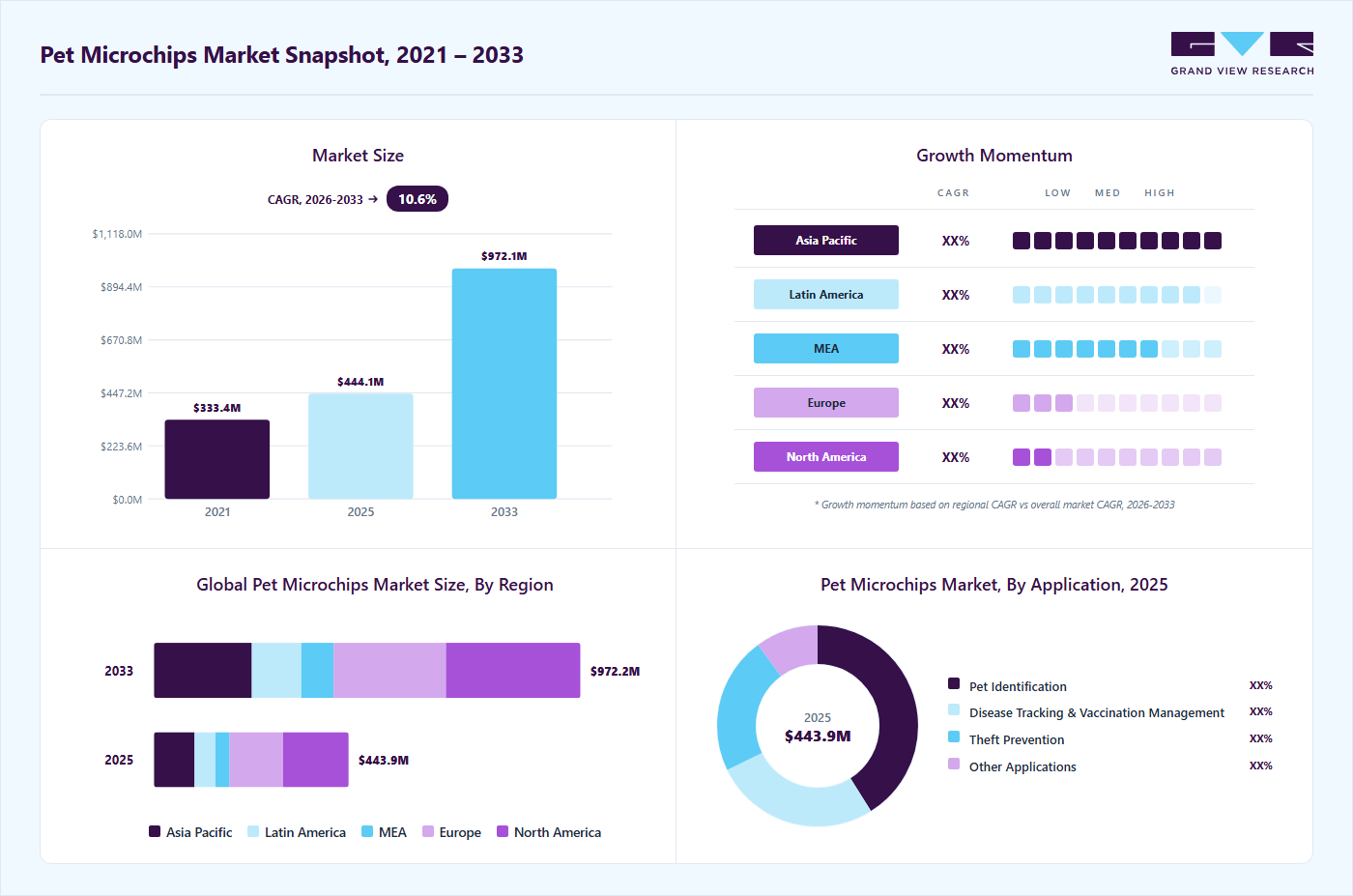
The global pet microchips market size was valued at USD 444.1 million in 2025 and is projected to grow from USD 481.2 million in 2026 to USD 972.1 million by 2033, at a CAGR of 10.6% from 2026 to 2033. The North America held the largest share of 33.7% of the global market in 2025. The market is witnessing strong growth due to rising awareness about pet safety, increasing pet expenditure & pet humanization, and regulatory standardization of pet identification.
Key Market Trends & Insights
- By pet: The dogs segment dominated the market and accounted for revenue share of 57.8% in 2025.
- By product: The microchip segment dominated the market with the largest revenue share in 2025.
- By frequency: The 134.2 KHz frequency segment dominated the market with the largest revenue share in 2025.
- By application: The pet identification segment led the market with the largest revenue share in 2025.
- By distribution channel: The veterinary hospitals and clinics accounted for the largest revenue share in 2025.
Regional Highlights
- Largest regional market: North America (33.7% revenue share, 2025)
- Fastest-growing regional market: Asia Pacific (highest CAGR, 2026-2033)
- By country: The U.S. is primarily driven by increasing awareness of pet safety.
Market Size & Forecast
- Market size in 2025: USD 444.1 Million
- Estimated market size in 2026: USD 481.2 Million
- Projected market size by 2033: USD 972.1 Million
- CAGR (2026-2033): 10.6%
The growing emphasis on structured pet population management and traceability as tools for improving animal welfare and public health is reshaping pet safety practices worldwide. For instance, in April 2025, Brazil’s SinPatinhas initiative, launched under the ProPatinhas program, is expected to support pet microchip market growth by strengthening rising awareness about pet safety among dog and cat owners. By introducing a lifetime, non-transferable Animal ID that integrates microchip information into a centralized national registry, the program highlights the role of permanent identification in preventing pet loss, reducing abandonment, and ensuring traceability across an animal’s life cycle. Its alignment with vaccination, castration, and zoonosis-control campaigns further supports the safety benefits of microchipping, while government-led outreach and funding initiatives normalize microchips as a standard component of responsible pet ownership, driving sustained adoption and market expansion in Brazil. Moreover, seasonal spikes in pet loss and rising public concern around reunification are intensifying the focus on preventive pet safety measures, particularly permanent identification. For instance, in June 2025, PetPlace launched Paws for Safety Awareness campaign, which is expected to support pet microchip market growth by strengthening rising awareness about pet safety, especially during high-risk summer months.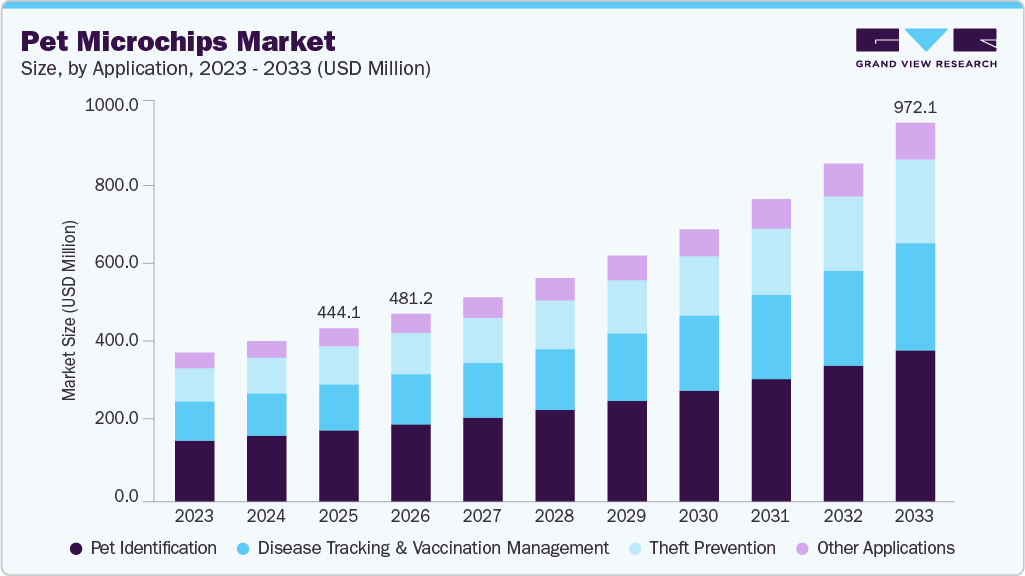
Another crucial driver for the market is the rising pet expenditure in countries such as India, which reflects a structural shift in how companion animals are perceived moving from household animals to emotionally valued family members. This pet humanization trend is directly translating into higher spending on preventive healthcare, safety solutions, and long-term well-being. As pet owners increasingly prioritize health management, traceability, and recovery in case of loss, identification technologies such as pet microchipping are gaining relevance as a standard component of responsible pet ownership rather than an optional add-on.
Furthermore, regulatory intervention is emerging as a powerful catalyst for accelerating pet microchip adoption, particularly in densely populated urban centers where pet management, vaccination compliance, and public safety are growing priorities. As municipal authorities move toward formalizing pet ownership through mandatory identification and licensing frameworks, microchipping is shifting from a voluntary safety measure to a regulatory requirement, directly expanding the addressable market for pet microchips and related services.
Market Dynamics
Regulatory intervention is emerging as a strong catalyst accelerating the adoption of pet microchips, particularly in densely populated urban regions where pet ownership management, vaccination tracking, and public safety are becoming increasingly important. As municipal and national authorities move toward formalized pet ownership systems through mandatory identification, registration, and licensing frameworks, microchipping is transitioning from a voluntary safety measure into a regulated requirement. This shift is significantly expanding the addressable market for pet identification technologies and related veterinary services.
In parallel, governments and urban local bodies are increasingly integrating microchip-based identification into broader animal welfare and disease-control programs. This includes linking microchip databases with vaccination records (especially rabies), pet licensing systems, and digital registries to improve traceability and reduce incidents of unregistered or abandoned animals. Recent regulatory drives in major urban centers have shown that mandatory microchipping initiatives can rapidly accelerate compliance rates, particularly when tied to penalties for non-registration or benefits such as simplified licensing and access to veterinary services.
Overall, this regulatory momentum is not only improving compliance and pet traceability but is also reshaping microchipping into a foundational element of modern urban pet healthcare infrastructure, thereby ensuring sustained long-term demand growth across both developed and emerging markets.
Limited awareness and insufficient consumer education can significantly dilute the effectiveness of mandatory pet microchipping regulations, particularly during the early phases of policy rollout. When pet owners lack a clear understanding of the benefits of microchipping, such as improved chances of reuniting lost pets, permanent identification, and integration with vaccination and licensing systems; they often perceive it primarily as a regulatory burden rather than a welfare-oriented safety tool. This perception results in behavioral resistance, delayed compliance, and uneven adoption rates, with many owners opting to act only as enforcement deadlines approach or avoiding registration altogether. Consequently, despite regulatory backing, market expansion remains inconsistent, as adoption is driven more by fear of penalties than by informed, value-driven acceptance.
Market Concentration & Characteristics
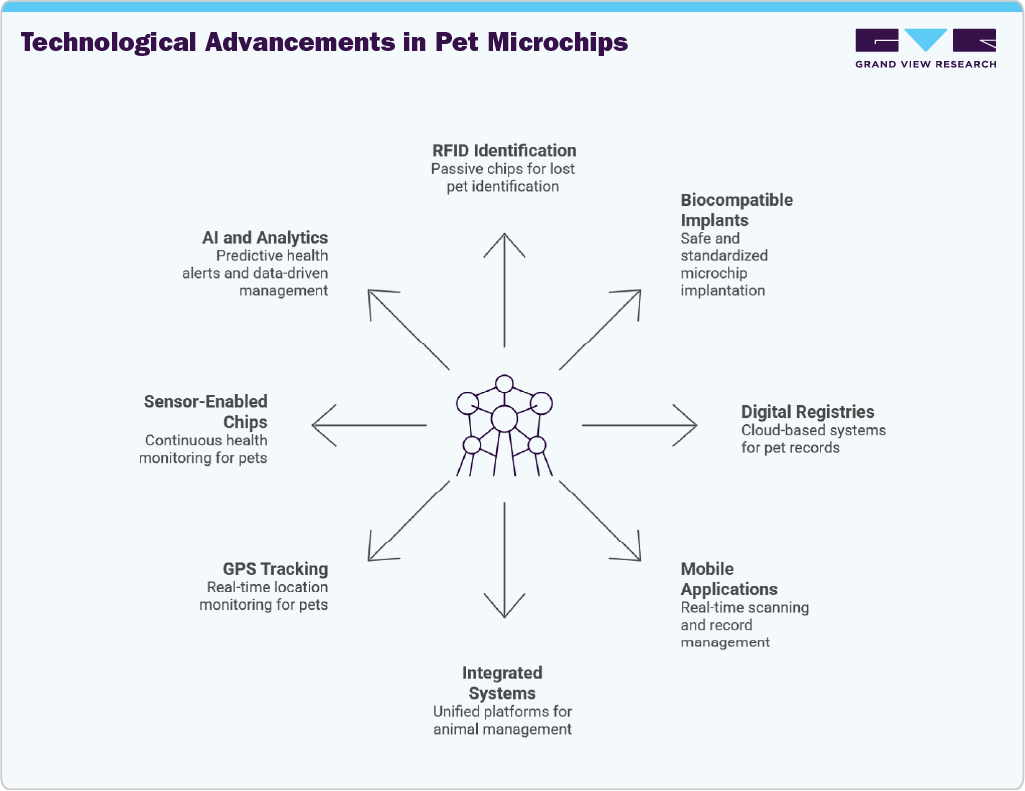
The pet microchips industry is growing rapidly and shows a high level of concentration, driven by ongoing technological advancements in microchipping technology. Technological advancements, such as the development of smarter and more efficient microchip scanners, are expected to significantly drive the growth of the market. The introduction of universal scanners, which can read nearly any microchip brand, has eliminated compatibility issues that once limited the effectiveness of pet identification. These advancements increase the speed and ease of finding misplaced pets, boosting the trust that pet owners, shelters, and veterinarians have in microchip systems. Owner details are immediately accessible through real-time data updates connected to cloud databases, reducing paperwork and saving time. Overall, these upgrades make microchipping more reliable and convenient, encouraging more people to use it for their pets.
In addition, emerging innovations such as integrating GPS functionality into microchips are poised to further expand market potential. Though still being developed, low-energy GPS microchips are seen as the next big step in pet safety. These chips would not only identify pets but also let owners track them in real time. This added feature could make microchipping even more attractive by giving pet owners extra peace of mind and a better sense of control over their pets’ safety. As demand grows for smarter, tech-driven pet care solutions, manufacturers investing in advanced microchip and scanner technologies likely to capture new market opportunities, fueling steady growth in the global industry.
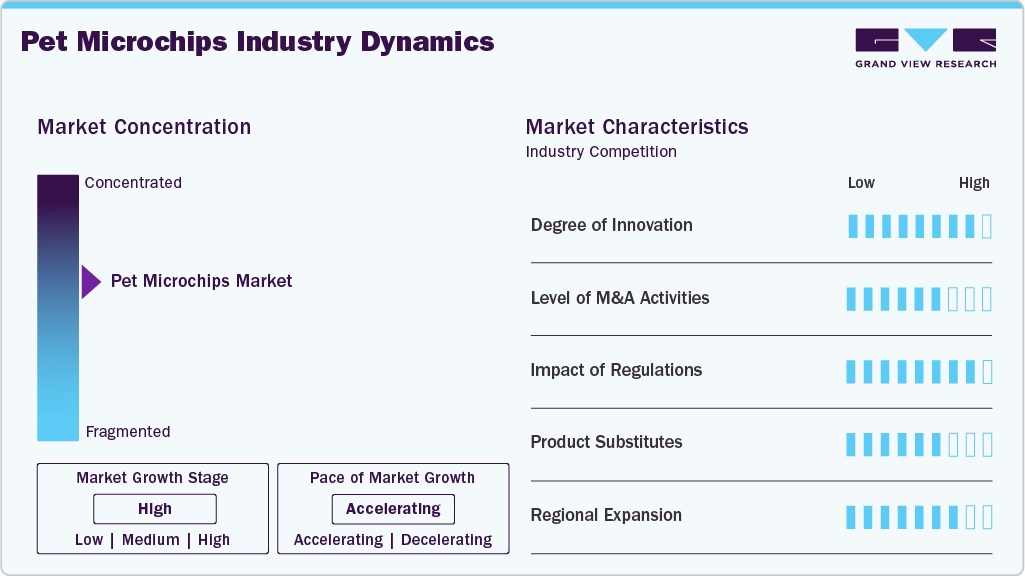
The industry is experiencing moderate to high innovation. The industry’s strong commitment to ongoing innovation is demonstrated by the rising emphasis on improving the longevity and endurance of pet microchips. To guarantee that a pet microchip stays secure and effective for the duration of its life, researchers are using cutting-edge materials and protective coatings.
The industry is seeing a fair number of mergers and acquisitions as companies work to grow their product range and reach more regions. By making these deals, businesses can get access to new technologies, speed up regulatory approvals, and use existing customer networks to expand faster.
Regulations shape adoption rates, standardize procedures, and guarantee the well-being of pet microchips, all of which have a major effect on the market. The demand for microchips and related services is directly increased by mandatory microchipping legislation, such as that recently implemented in the EU for dogs and cats, which requires pet owners to register their pets' microchips. In addition, standardized, interoperable microchip technologies are promoted by regulatory frameworks, which lessen compatibility problems and increase overall pet identification efficiency. .
ID collars, GPS collars, QR code tags, and smart pet wearables are common substitutes for microchips. These solutions are less dependable because they might be misplaced, broken, or taken away, but they can aid in pet identification or even tracking. Microchips, on the other hand, are permanent and remain in the pet's body forever. However, as some pet owners prefer non-invasive methods of pet identification, the market for microchips may be impacted by the usage of these alternatives.
Industry growth is being fueled by companies targeting emerging pet-owning populations in Asia-Pacific, Latin America, and the Middle East. Efforts such as focusing on key urban centers, collaborating with veterinary networks, and meeting local regulatory requirements are driving wider adoption in these markets.
Pet Insights
The dogs segment held the largest revenue share of 57.82% in 2025, driven by a high dog population, strong pet ownership rates, and increasing government initiatives promoting awareness about dog microchipping. For instance, according to an article published by Hindustan Times, in October 2025, The Pune Municipal Corporation (PMC) launched a pilot project to implant tiny microchips, about the size of a grain of rice, in 25,000 stray dogs in the city. These chips likely to help officials track the dogs, check their vaccination details, and keep count of their population through a mobile app. This step is expected to boost the dog segment of the pet microchip market, as it shows how useful microchipping can be for managing stray animals and preventing diseases. By showcasing the practical benefits of microchips in managing stray and owned dogs alike, such programs can encourage wider adoption among municipalities, animal welfare organizations, and pet owners, further expanding the market.
The cats segment is expected to grow at the fastest CAGR over the forecast period, fueled by transition from historically low penetration to rapidly expanding regulatory inclusion. Unlike dogs, where microchipping is already mature and mandated in many regions, cats are only recently becoming the focus of new and expanded legislative action, particularly in Europe. Multiple EU-level developments indicate that lawmakers are moving toward mandatory microchipping and registration of both cats and dogs, explicitly closing long-standing regulatory gaps that excluded cats. Furthermore, shelters and animal welfare groups note that cats are frequently lost, relocated, or misidentified due to the absence of reliable identification, leading to lower reunification rates compared to dogs. This has intensified pressure on authorities and NGOs to prioritize microchipping cats as a reunification and cost-reduction measure, accelerating adoption through public programs and subsidized drives.
Product Insights
The microchip segment dominated the market with the largest revenue share in 2025, due to its reliability and wide acceptance as the standard method for tracking and identifying pets. Microchips provide a lifetime solution for pet identification, helping owners, veterinarians, and animal welfare organizations quickly reunite lost pets with their families. Many countries now require dogs and cats to be microchipped by law, which helps this segment stay strong in the market. Microchips are also becoming more useful as they can be linked to digital databases, vaccination records, and even new GPS features. These improvements make microchips an important part of responsible pet ownership and increase their demand.
The scanner segment is expected to grow at the fastest CAGR from 2026 to 2033, propelled by enhancing the utility and effectiveness of microchips. Advanced scanners, such as those with universal compatibility, Bluetooth connectivity, memory functions, and cloud integration, allow quick and accurate reading of microchips across different pet species, including dogs, cats, and horses. These features make scanning faster, manage data better, and allow easy connection with digital databases and apps. This makes identifying pets much simpler for vets, shelters, and pet owners. As more people learn about the benefits of microchipping, the need for dependable and efficient scanners is growing, which in turn boosts microchip use and supports overall market growth.
Frequency Insights
The 134.2 KHz frequency segment dominated the market with the largest revenue share in 2025 and is expected to grow at the fastest rate over the forecast period, as it is the globally recognized standard for pet identification, ensuring compatibility across countries, scanners, and databases. This frequency technology offers reliable performance, even when implanted in different types of pets or under varying conditions, making it ideal for all companions. For instance, universal scanners can quickly read 134.2 kHz microchips in dogs, cats, and horses, allowing shelters, veterinary clinics, and pet registries to efficiently track and manage pets. These features make scanning faster, manage data better, and allow easy connection with digital databases and apps. This makes identifying pets simpler for vets, shelters, and pet owners. As more people learn about the benefits of microchipping, the need for reliable and efficient scanners is growing, which supports the wider use of microchips and boosts market growth. The 134.2 kHz frequency has also become the most commonly used type, supported by international standards and groups such as the International Committee for Animal Recording (ICAR), helping drive strong growth in the market.
The universal/multi frequency devices segment is the second fastest growing segment, offering compatibility with a wide range of microchip frequencies, allowing a single device to read chips from different brands and standards. This flexibility is especially useful in places where different types of microchips are used, pets move between countries, or vets work with many animal species. For instance, animal shelters and clinics can use one universal scanner to identify dogs, cats, or horses with different chip frequencies instead of needing several scanners. This makes the scanning process easier, faster, and more accurate. Due to this convenience, more people and organizations are choosing to use microchips, which enable the market to grow.
Application Insights
The pet identification segment led the market with the largest revenue share in 2025. The segment helps to drive market growth by offering a dependable and long-lasting way for identifying pets and connecting them with their owners. Microchips and registration systems make it possible to promptly and precisely identification of missing or lost animals, providing owners with peace of mind and expediting procedures for shelters and vets. Programs such as FINDEFIX in Germany, for instance, enable microchipped pets to be listed in centralized databases, speeding up the recovery process in the event of an animal disappearance. Pet identification is a major factor driving market expansion as a result of the increasing acceptance of microchips among pet owners due to their increased knowledge of the significance of permanent identification.
The disease tracking and vaccination management segment is anticipated to experience the fastest CAGR over the forecast period, driven by integrating identification technology with preventive healthcare and health management. Veterinarians and pet owners can effectively track disease outbreaks and vaccination schedules with microchips connected to digital databases. For instance, in order to track vaccination status and control rabies risk, Delhi's draft Rabies Action Plan demands microchipping one million stray dogs. Similar to this, microchips are being used in China in trial programs in places such as Shenzhen to track the immunization history of both registered and stray dogs. These programs show how microchips aid in disease prevention, promoting broader acceptance among veterinarian clinics, municipalities, and pet owners, which in turn drives market expansion.
Distribution Channel Insights
The veterinary hospitals and clinics accounted for the largest revenue share in 2025. By serving as the main hubs for the acceptance and application of microchipping services, this sector propels market expansion. They frequently offer microchip insertion during vaccinations, regular checkups, or surgical procedures as reputable pet healthcare providers, making it easy for pet owners to embrace this technology. In order to provide convenient access to pet identifying information, numerous veterinarian chains in the United States, Europe, and Asia, for instance, incorporate microchipping into their regular services. They frequently connect the chips to digital databases that are handled by the clinic. Veterinary clinics and hospitals are crucial in raising adoption rates and propelling the pet microchip market's expansion by raising knowledge of the advantages of microchipping, guaranteeing correct implantation, and offering additional support.
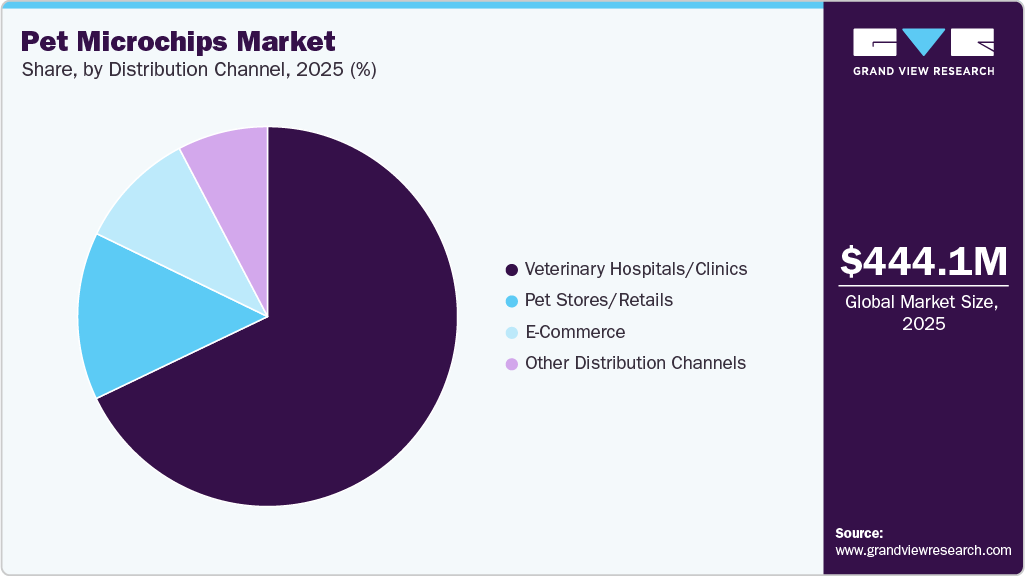
E-commerce segment is the fastest growing segment in the pet microchip market. Through increasing accessibility and awareness among pet owners, this segment propels market growth. Without depending only on physical retail channels, manufacturers and distributors can access a larger audience, including pet owners, veterinarian clinics, and Pet Microchips shelters, through online platforms such as Amazon, Chewy, and Zooplus. More pet owners are buying microchip kits, scanners, and registration services thanks to these platforms' convenient ordering, doorstep delivery, and affordable prices.
Regional Insights
North America Pet Microchips Market Trends
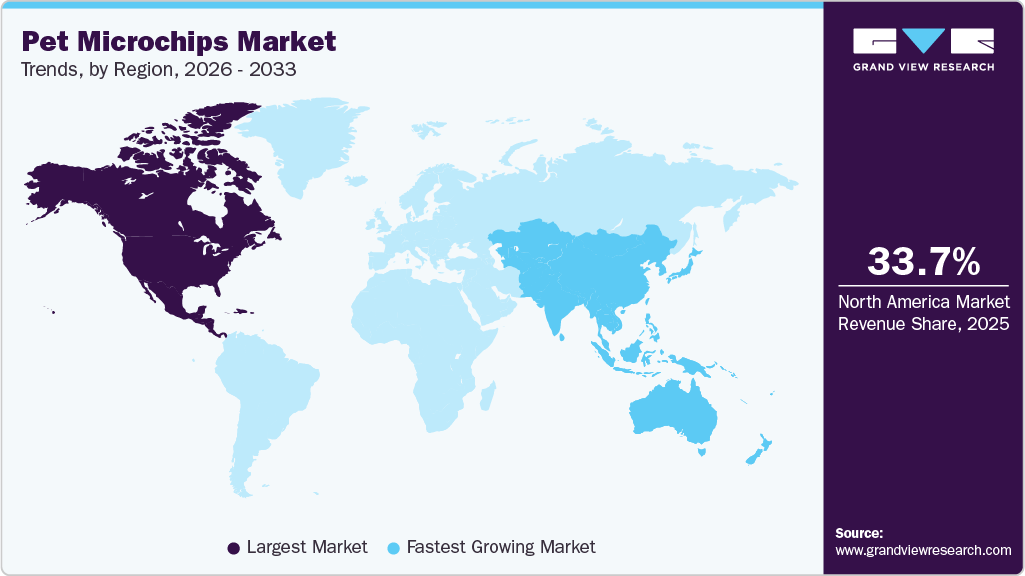
North America dominated the global pet microchips market in 2025, holding the largest revenue share of 33.70%.The market is driven by high pet ownership rates, with millions of households owning dogs, cats, and other companion animals. As pets increasingly become integral members of families, owners are prioritizing their safety and well-being, which fuels demand for reliable identification solutions such as microchips. Alongside this, rising pet expenditure covering food, healthcare, preventive care, and accessories reflects a growing willingness among owners to invest in long-term safety and health measures for their pets.
U.S. Pet Microchips Market Trends
The pet microchips market in the U.S. is primarily driven by increasing awareness of pet safety. With millions of dogs and cats considered family members, owners are seeking reliable identification solutions to prevent loss or theft and ensure quick recovery. Regulatory mandates in several states require microchipping, along with initiatives by veterinary clinics and animal welfare organizations, further boost adoption. Technological advancements, such as universal scanners, cloud-based registration, and emerging GPS-enabled chips, enhance convenience and reliability, encouraging more pet owners to opt for microchips. Collectively, these factors, combined with a strong focus on preventive care and responsible pet ownership, fuel steady growth in the U.S. pet microchip market.
Canada pet microchips market is expected to grow significantly over the forecast period, owing to the enhanced accessibility and convenience of pet identification. For instance, according to an article published in October 2025, the introduction of a 24-hour microchip scanning station by Windsor Vet Clinic is set to boost the Canadian pet microchip market by making pet identification more accessible and convenient. Around-the-clock scanning allows lost pets to be quickly identified and reunited with their owners at any time, enhancing confidence in microchipping as an effective safety measure. For instance, a lost dog in Windsor can now be scanned outside regular clinic hours, with the owner promptly notified, showcasing the practical benefits of microchips and encouraging wider adoption among pet owners across Canada.
Europe Pet Microchips Market Trends
The pet microchip market in Europe is fueled by factors such as strict regulations and growing pet ownership. Mandatory microchipping laws in multiple countries, including recent legislation requiring all cats and dogs to be microchipped, are generating steady and strong demand. Additionally, the rise in pet ownership and the increasing humanization of pets have made owners more aware of safety and identification needs, driving broader adoption of microchips across the region.
Germany pet microchips market held a significant share in 2025. With growing concerns over lost and missing pets, initiatives like FINDEFIX, the pet register of the German Animal Welfare Federation, are becoming increasingly important in Germany. By providing a centralized database where microchipped pets can be registered, FINDEFIX increases the utility and effectiveness of microchips, ensuring that lost or escaped pets can be quickly identified and returned to their owners. This enhances consumer confidence in microchipping as a reliable identification solution, encouraging more pet owners to adopt the technology. Moreover, initiatives like FINDEFIX support animal welfare efforts and demonstrate the practical benefits of microchips for both dogs and cats, further stimulating demand and contributing to the expansion of the market in Germany.
The pet microchips market in the UK is growing steadily, driven by regulatory mandates, rising pet ownership, and increasing awareness of pet safety. Microchipping has been mandatory for all dogs, and efforts are underway to extend this requirement to cats, creating consistent demand. As of 2025, around 57% of UK adults own pets, totalling approximately 34 million pets, including 13.5 million dogs and 12.5 million cats, which provides a substantial market for identification solutions. Technological advancements, such as improved scanners and integration with digital databases, make microchipping more convenient and reliable, encouraging wider adoption.
Asia Pacific Pet Microchips Market Trends
The pet microchips market in Asia Pacific is expected to grow at the fastest CAGR over the forecast period. The market is growing quickly, fueled by rising middle-class incomes and changes in family lifestyles, which have increased the demand for pet identification. Government programs, such as pet registration and pet management, are also encouraging more people to microchip their pets. At the same time, greater awareness about pet health and safety is motivating owners to adopt microchipping as a reliable way to protect their pets.
China pet microchips market is fueled by increasing awareness of pet health and safety. As pet owners become more conscious of the risks associated with lost or stolen pets, microchipping is seen as a reliable, long-term solution to ensure pets can be quickly identified and returned if they go missing. For instance, Shenzhen, home to tech hubs like Tencent and Huawei has mandated that all registered dogs be microchipped, highlighting the city’s commitment to animal welfare and safety.
The pet microchips market in India is growing at a significant rate, driven by various government initiatives. For instance, according to an article published by India News, in September 2025, Delhi plans to microchip 1 million stray dogs as part of its draft Rabies Action Plan. This program is expected to strengthen the Indian pet microchip market by showcasing the benefits of microchips for population control, vaccination monitoring, and disease prevention. By targeting such a large number of stray animals, the initiative highlights the importance of pet identification technology, promotes broader adoption among municipalities, animal welfare organizations, and pet owners, and raises awareness about responsible pet care, collectively fueling market growth in India.
Latin America Pet Microchips Market Trends
The pet microchips market in Latin America is driven by strong support from veterinary networks along with government initiatives for pet health, vaccination tracking, and stray animals’ management, which encourage wider adoption. The growing popularity of pet insurance and premium pet care services, which often require microchipping, combined with increasing awareness among pet owners about preventive healthcare, are also significant factors contributing to market growth.
Pet microchips market in Brazil is driven by technological advancements in microchipping, including more durable chips, universal scanners, and cloud-based registration systems that improve the efficiency and reliability of pet identification. Government initiatives and regulatory support for animal welfare, along with veterinary networks promoting microchipping as part of routine pet healthcare, are further encouraging adoption.
Middle East & Africa Pet Microchips Market Trends
The market for pet microchips in the Middle East & Africa is experiencing steady growth, largely driven by the expansion of veterinary infrastructure and the rise of organized pet services. Over the past few years, countries such as the UAE, Saudi Arabia, and Qatar have witnessed significant investments in veterinary clinics, hospitals, and specialty care centers, particularly in urban areas. This expansion has made veterinary services more accessible to pet owners, providing convenient options for routine pet care, preventive treatments, and microchipping services. With more clinics offering microchipping as part of standard veterinary procedures, adoption rates among pet owners are increasing.
South Africa pet microchips market held the largest revenue share in the Middle East & Africa market, owing to the increasing government initiatives for pet registration and animal welfare, as well as rising awareness among pet owners about pet health and safety. Local authorities and welfare organizations are promoting microchipping as a reliable method for identifying pets, tracking vaccinations, and managing stray populations, which encourages adoption.
The pet microchips market in Saudi Arabia is growing at a lucrative rate, owing to the increasing spending on premium pet services and lifestyle adoption. As more households embrace pets as family members, there has been a rapid rise in grooming salons, pet daycare centers, boarding facilities, and pet insurance services, many of which now require pets to be microchipped for identification and safety. This trend not only increases demand for microchips but also raises awareness among pet owners about health monitoring, and secure pet management, further fueling the market growth in the country.
Key Pet Microchips Company Insights
The pet microchip market is moderately consolidated, with established players focusing on collaboration, agreements, and geographic expansion to strengthen market presence. Key participants such as Merck & Co., Inc., Peeva Inc., Virbac, Datamars, among others actively adopt strategies including mergers, acquisitions, partnerships, and collaborations. Competitive activity centers on expanding regional reach, strengthening veterinary and shelter networks, and enhancing service offerings. New product launches and partnership-led initiatives account for a large share of strategic actions, reflecting continued emphasis on innovation, operational scale, and long-term customer engagement across global markets.
Key Pet Microchips Companies:
The following key companies have been profiled for this study on the pet microchips market.
- Merck & Co., Inc.
- Peeva Inc.
- Virbac
- Trovan Ltd.
- Wuxi Fofia Technology Co., Ltd
- Avid Identification Systems, Inc
- Datamars Animal ID (Datamars)
- Microchip Identification Systems
- Pet Pulse
- Elanco
Competitive Benchmarking
Operating Strategies
Competitive Edge
Weaknesses
Mature Player: Merck & Co., Inc.
- Rely on end-to-end ecosystem integration, combining microchips with scanners, databases, and pet recovery services to lock in long-term value across the identification lifecycle.
- Strengthen market position through regulatory alignment and global distribution networks, ensuring ISO-compliant products and deep penetration across veterinary, shelter, and government channels.
- High trust and brand credibility built through long-standing relationships with veterinarians, shelters, and regulatory bodies, reinforcing adoption in mandated markets.
- Scale-driven cost efficiency and global reach, supported by large manufacturing capacity, distribution networks, and integrated identification ecosystems.
- Slower innovation cycles, as complex organizational structures can delay adoption of newer technologies like IoT-enabled or smart-chip integrations.
- Higher operational and compliance costs, reducing flexibility in price-sensitive markets and limiting competitiveness against low-cost regional entrants.
Emerging Player: Peeva Inc.
- Focus on technology-led differentiation, such as integrating microchips with digital pet registries, mobile apps, and GPS-enabled or sensor-enhanced identification systems to stand out in a crowded, commoditized RFID market.
- Adopt asset-light and partnership-driven expansion models, collaborating with veterinary clinics, shelters, and animal welfare organizations to rapidly scale distribution.
- Strong advantage in innovation speed and product customization, enabling rapid introduction of advanced features such as miniaturized chips, encryption-enabled IDs, or multifunctional tracking capabilities.
- Ability to target underserved or high-growth regional markets where adoption is still emerging, allowing faster penetration with localized pricing and flexible offerings.
- Limited regulatory acceptance and certification barriers, making it difficult to compete in highly regulated markets requiring ISO/ICAR compliance.
- Weak distribution reach and low brand recognition, restricting access to large veterinary networks and institutional procurement channels.
Recent Developments
-
In February 2026, Virbac launched the BackHome Eco-Pack for its market-leading UK pet microchips, featuring a reusable multi-injector for 10 sterile chips that cuts plastic waste by 9x compared to single-use injectors.This compact, ergonomic design enhances storage efficiency and maintains ISO-compliant chip reliability with PETtrac database support for pet reunification
-
In February 2026, The Lafayette Animal Shelter & Care Center launched a low-cost pet microchipping clinic offering permanent identification and lifetime registration for dogs and cats, aiming to improve pet recovery rates, enhance owner traceability, and support community animal welfare initiatives. The clinic is part of a quarterly initiative aimed at assisting pet owners in protecting their animals through permanent identification.
-
In January 2026, The Municipal Corporation of Delhi allocated around USD 3.5 million in its budget to implement stray dog microchipping and vaccination programs, aiming to improve animal identification, monitor sterilization and rabies control measures, and strengthen health surveillance and welfare systems.
Pet Microchips Market Report Scope
Report Attribute
Details
Market size in 2025
USD 444.1 million
Estimated Market size in 2026
USD 481.2 million
Projected Market size by 2033
USD 972.1 million
Growth rate
CAGR of 10.6% from 2026 to 2033
Actual data
2021 - 2025
Forecast period
2026 - 2033
Quantitative units
Revenue in USD Million and CAGR from 2026 to 2033
Report coverage
Revenue forecast, company ranking, competitive landscape, growth factors, and trends
Segments covered
Pet, product, frequency, application, distribution channel , region
Regional scope
North America; Europe; Asia Pacific; Latin America; MEA
Country scope
U.S.; Canada; Mexico; UK; Germany; France; Italy; Spain; Denmark; Sweden; Norway; Japan; China; India; Thailand; South Korea; Australia; Brazil; Argentina; South Africa; UAE; Saudi Arabia; Kuwait; Qatar; Oman
Key companies profiled
Merck & Co., Inc.; Peeva Inc.; Virbac; Trovan Ltd.; Wuxi Fofia Technology Co., Ltd; Avid Identification Systems, Inc; Datamars; Microchip Identification Systems; Pet Pulse; Elanco
Customization scope
Free report customization (equivalent up to 8 analysts working days) with purchase. Addition or alteration to country, regional & segment scope.
Pricing and purchase options
Avail customized purchase options to meet your exact research needs. Explore purchase options
Global Pet Microchips Market Report Segmentation
This report forecasts revenue growth at global, regional, and country levels and provides an analysis of the latest industry trends in each of the sub-segments from 2021 to 2033. For this study, Grand View Research has segmented the pet microchips market report based on pet, product, frequency, application, distribution channel, and region.
-
Pet Outlook (Revenue, USD Million, 2021 - 2033)
-
Dogs
-
Cats
-
Others
-
-
Product Outlook (Revenue, USD Million, 2021 - 2033)
-
Microchips
-
Scanner
-
Handheld Scanners
-
Stationary Scanners
-
-
-
Frequency Outlook (Revenue, USD Million, 2021 - 2033)
-
134.2 KHz
-
125 KHz
-
128 KHz
-
Universal/Multifrequency Devices
-
-
Application Outlook (Revenue, USD Million, 2021 - 2033)
-
Pet Identification
-
Disease Tracking & Vaccination Management
-
Theft Prevention
-
Others
-
-
Distribution Channel Outlook (Revenue, USD Million, 2021 - 2033)
-
Veterinary Hospitals/Clinics
-
Pet Stores/Retails
-
E-Commerce
-
Others
-
-
Region Outlook (Revenue, USD Million, 2021 - 2033)
-
North America
-
U.S.
-
Canada
-
Mexico
-
-
Europe
-
UK
-
Germany
-
France
-
Italy
-
Spain
-
Denmark
-
Sweden
-
Norway
-
-
Asia Pacific
-
Japan
-
China
-
India
-
Australia
-
Thailand
-
South Korea
-
-
Latin America
-
Brazil
-
Argentina
-
-
Middle East & Africa
-
South Africa
-
UAE
-
Saudi Arabia
-
Kuwait
-
Qatar
-
Oman
-
-
Delivered Customizations
This report has been delivered with the following In-depth customizations
Client Request
Customization Delivered
Value Adds
Revenue vs. Volume of microchips sold across markets
Developed a volume-based market estimation framework to complement revenue data by triangulating implanted/sold microchips using veterinary procedure rates, shelter adoption volumes, national pet registration datasets, and RFID enrollment records. Converted revenue figures into implied unit sales using ASP assumptions for cross-market comparability.
Enables clients to understand true market size in units, track adoption intensity across geographies, and identify underpenetrated markets where revenue alone may understate demand.
Pet microchip penetration in key markets (e.g., US, France)
Estimated installed base and penetration rates of microchipped pets by integrating national pet population data with veterinary compliance levels, municipal registration databases, and adoption shelter flows. Segmentation provided across dogs vs. cats and owned vs. shelter-adopted pets.
Provides visibility into market saturation vs. growth headroom, helping identify regions with mandatory adoption impact versus voluntary adoption-driven expansion.
Definitions of ASP and end-user segmentation for pricing analysis
Standardized Average Selling Price (ASP) framework distinguishing between chip-only pricing and bundled offerings (microchip + scanner + registration/database access). Defined key end-user groups including veterinary clinics, animal shelters, government/municipal bodies, breeders, and pet owners, with channel-wise pricing logic.
Improves pricing comparability across regions and companies, enables margin benchmarking, and supports clearer understanding of demand drivers across end-user categories.
Frequently Asked Questions About This Report
The global pet microchips market size was valued at USD 444.1 million in 2025 and is expected to reach USD 972.1 million by 2033.
Key factors that are driving the market growth include rising awareness about pet safety, increasing pet expenditure & pet humanization, and regulatory standardization of pet identification.
North America dominated with the largest revenue share of 33.7% in 2025.
Asia Pacific is the fastest-growing regional market.
The dogs segment held the largest revenue share of 57.8% in 2025.
The microchip segment dominated the market with the largest revenue share in 2025.
The 134.2 KHz frequency segment dominated the market with the largest revenue share in 2025 and is expected to grow at the fastest rate over the forecast period.
The pet identification segment led the market with the largest revenue share in 2025.
The veterinary hospitals and clinics accounted for the largest revenue share in 2025.
Some key players operating in the pet microchips market include Merck & Co., Inc.; Peeva Inc.; Virbac; Trovan Ltd.; Wuxi Fofia Technology Co., Ltd; Avid Identification Systems, Inc; Datamars; Microchip Identification Systems; Pet Pulse; and Elanco.
About the Author(s)
Animal Health Research Team
Healthcare · Animal HealthThis report was authored by the animal health research team at Grand View Research - comprising two research analysts, one senior research analyst, and one industry expert - with specialized expertise in the animal health segment of the healthcare industry. All findings are based on proprietary healthcare databases, executive interviews, and regulatory analysis, subject to internal peer review prior to publication.
Last Updated:
Speak to Analyst


Customize this report to your needs — add regions, segments, or data points, with 20% free customization.
Or view our licence options:


ISO 9001:2015 & 27001:2022 Certified
We are GDPR and CCPA compliant! Your transaction & personal information is safe and secure. For more details, please read our privacy policy.


