
- Home
- »
- Paints, Coatings & Printing Inks
- »
-
PFAS-Free Coatings Market Size And Share Report, 2033GVR Report cover
![PFAS-Free Coatings Market (2026 - 2033)Report]()
PFAS-Free Coatings Market (2026 - 2033)
Size, Share & Trends Analysis Report By Product (Silicone-based Coatings, Wax-based Coatings, PU-based Coatings, Acrylic-based Coatings), By Application (Textiles & Apparel, Food Packaging), By Region, And Segment Forecasts
Market Size, 2025
$1.9BMarket Estimate, 2026
$2.0BMarket Forecast, 2033
$3.1BCAGR, 2026–2033
6.3%PFAS-free Coatings Market Summary
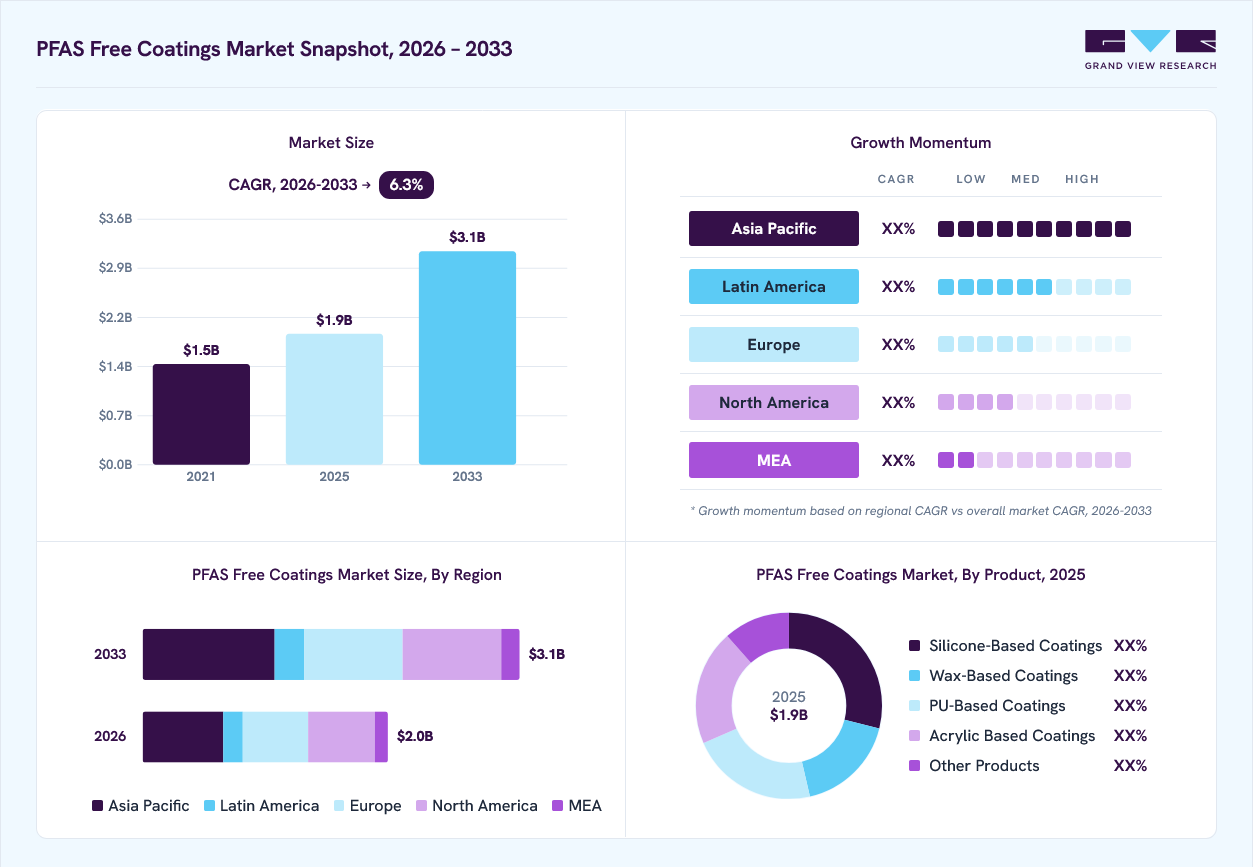
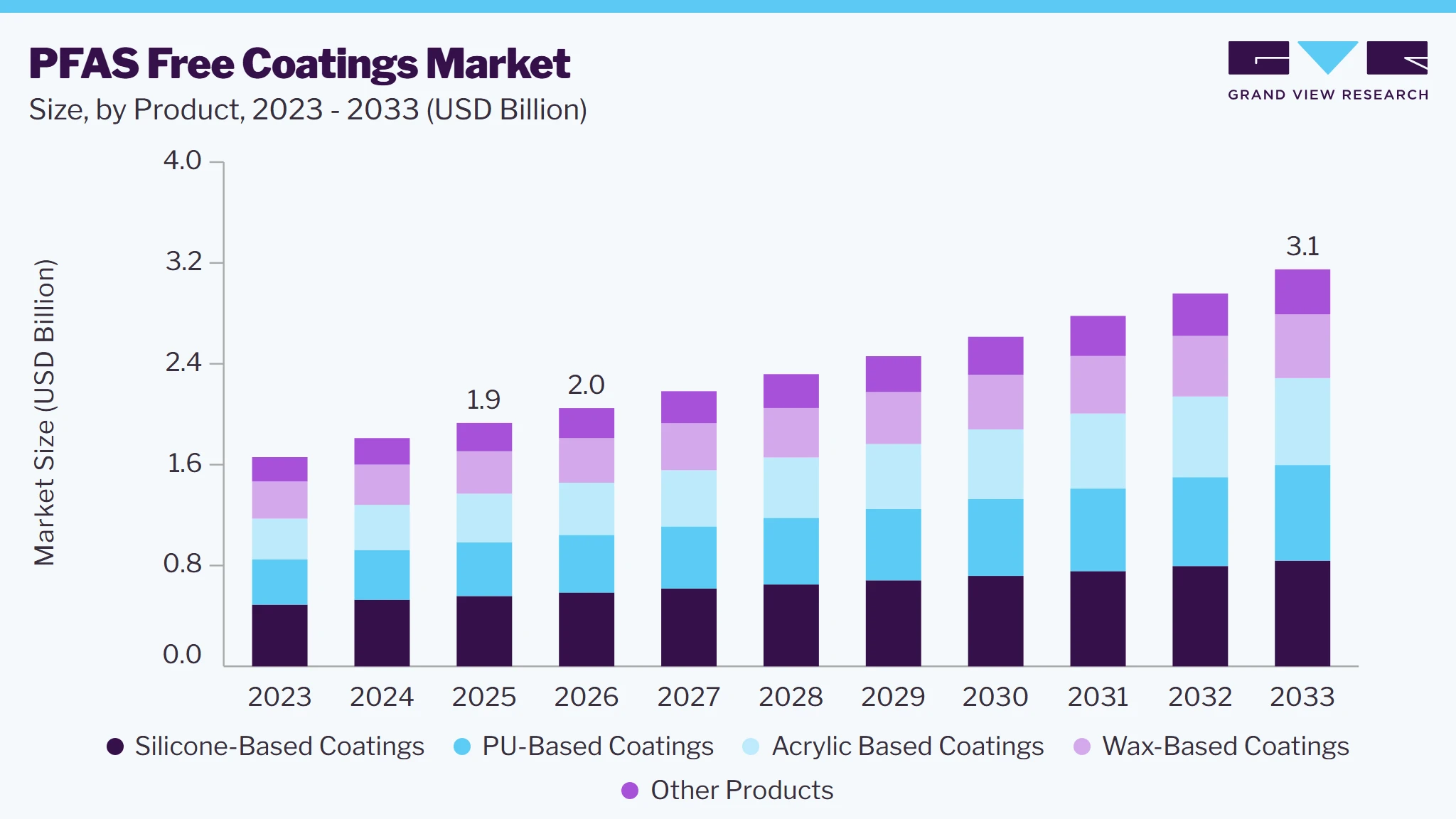
The global PFAS-free coatings market size was valued at USD 1.9 billion in 2025 and is projected to grow from USD 2.0 billion in 2026 to USD 3.1 billion by 2033, at a CAGR of 6.3% from 2026 to 2033. Asia Pacific dominated the market, accounting for a revenue share of 32.6% in 2025. The industry is being influenced by tightening PFAS regulations driven by growing environmental and sustainability concerns.
Key Market Trends & Insights
- By product: Silicone-based coatings held the largest revenue share of 28.9% in 2025.
- By application: Food packaging led the industry with a revenue share of 18.4% in 2025.
Regional Highlights
- Largest Region: Asia Pacific (32.6% revenue share, 2025)
- By country: China held the largest regional share in 2025
Market Size & Forecast
- Market size in 2025: USD 1.9 billion
- Estimated market size in 2026: USD 2.0 Billion
- Projected market size by 2033: USD 3.1 Billion
- CAGR (2026-2033): 6.3%
Three ways to get this report
Buy it, customize it, or ask a question.Get the Full Report
What the study covers
- FormatsPDF · Excel · Dashboard
- Timeline2026–2033 annual, 2025 base
- Coverage20+ countries, 5 regions
- Companies10+ key players profiled
Customize the Report
20% free customization
- IncludeCountries, segments, points
- TailorTo your product definition
- ExtendDeeper competitor detail
- OrA fully bespoke study
- Turnaround5–10 working days
Ask an Analyst
A direct answer, usually in 1 working day
- AccessReport author, directly
- Reply timeWithin 1 working day
- No sales callDirect answer only
- FormatEmail reply
- CostFree, no cost
Technological advances are also enabling high-performance fluorine-free alternatives across diverse industries.
Market Dynamics
The industry is undergoing a structural transition, such as regulatory scrutiny, corporate sustainability objectives, and customer preferences accelerate the replacement of fluorinated coating technologies. Restrictions on PFAS are particularly influencing food packaging, textiles, industrial equipment, electronics, and other applications where repellency, non-stick properties, and chemical resistance have traditionally depended on fluorinated chemistry. The EU’s PFAS limits for food-contact packaging, applicable from August 12, 2026, are further strengthening substitution requirements. Technological progress is simultaneously improving the commercial viability of alternative solutions. Silicone, hydrocarbon, ceramic, bio-based, polymeric, and plasma-enabled systems are being developed to deliver application-specific performance without fluorinated substances. However, differences in durability, chemical resistance, processing requirements, and cost continue to affect adoption in demanding environments. Suppliers are focusing on formulation optimization, surface engineering, and scalable application processes to close remaining performance gaps. This is creating opportunities for differentiated technologies capable of meeting regulatory requirements while maintaining operational efficiency and product performance.
Increasing regulatory scrutiny of per- and polyfluoroalkyl substances is the primary catalyst for the transition toward fluorine-free surface-treatment solutions. Governments and regulatory bodies are progressively tightening controls because of the persistence and environmental mobility associated with these substances, compelling manufacturers and downstream users to reassess established coating formulations. Food packaging, textiles, electronics, automotive components, and industrial products are among the areas experiencing increasing substitution pressure.
The regulatory shift is also changing procurement and product-development strategies across the value chain. Manufacturers are evaluating alternatives during new-product development rather than waiting for mandatory restrictions to take effect, while brand owners are incorporating chemical-screening requirements into supplier qualification and sustainability programs. This creates a more predictable demand pipeline for fluorine-free technologies and encourages coating developers to commercialize application-specific solutions.
The principal constraint is the difficulty of achieving the broad performance profile historically delivered by fluorinated coatings at a commercially competitive cost. PFAS technologies combine properties such as low surface energy, oil and water repellency, low friction, thermal stability, chemical resistance, and durability, making direct substitution technically complex. No single alternative currently provides an equivalent combination across every application, requiring formulators to select different technologies according to substrate, operating conditions, and performance requirements. This challenge can substantially increase commercialization timelines and customer qualification costs. Alternative systems may require reformulation, additional coating layers, modified curing or deposition processes, specialized equipment, and extensive durability testing before they can be approved for demanding applications. Electronics and industrial components, for example, may face limitations related to water repellency, coating thickness, drying requirements, or processing complexity. In addition, some emerging technologies remain more expensive or have limited production capacity compared with established fluoropolymer systems.
Developing customized coating systems that reproduce the specific functionality required by individual applications rather than attempting to replicate every characteristic of fluorinated chemistry within a single formulation. Silicone, sol-gel ceramics, bio-based polymers, plasma-deposited films, and diamond-like carbon technologies are emerging across different performance requirements. This creates scope for suppliers to differentiate through improved durability, repellency, low friction, chemical resistance, and adhesion.
Commercial potential is particularly strong where technological advances can close existing performance gaps while fitting into established manufacturing processes. Hybrid formulations and advanced surface-engineering techniques can combine complementary properties, enabling suppliers to address demanding applications in electronics, industrial equipment, textiles, packaging, and medical devices. Investment in scalable deposition methods, formulation optimization, and application-specific qualification can therefore create new revenue streams while reducing customers' switching barriers. Recent research also highlights plasma-based surface engineering as a promising route for producing durable fluorine-free functional layers with controlled surface properties.
Market Concentration & Characteristics
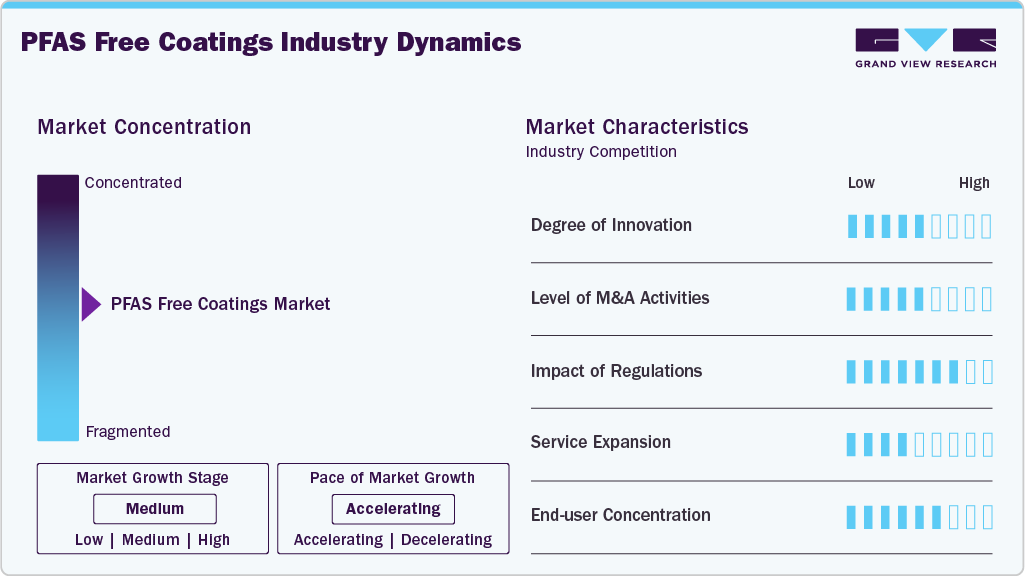
The industry is moderately fragmented, with competition centered on coating performance, formulation expertise, application-specific technologies, regulatory compliance, production scalability, and the ability to provide commercially viable alternatives to fluorinated systems. Leading participants are expanding portfolios across non-stick, barrier, water- and oil-repellent, protective, conformal, release, and anti-friction solutions to address substitution requirements across packaging, cookware, textiles, electronics, automotive, medical devices, and industrial applications. Investments in silicone, ceramic, sol-gel, polymeric, bio-based, and advanced surface-engineering technologies are becoming important competitive differentiators as customers seek solutions that combine regulatory compliance with durability and functional performance.
Participants are also strengthening their positions through strategic collaborations, technology licensing, product development partnerships, and expansion of manufacturing and technical-service capabilities. Companies are working with converters, component manufacturers, cookware producers, electronics suppliers, and industrial users to tailor formulations and coating processes to specific operating conditions.
In addition, investments in application testing, pilot-scale production, process optimization, and intellectual property are enabling suppliers to shorten qualification cycles and address performance gaps. Established coating manufacturers are leveraging their global production networks and customer relationships, while specialized technology developers are competing through differentiated formulations and proprietary application methods.
Analyst Perspective
The transition is moving from a regulatory requirement toward a broader materials innovation opportunity, creating attractive growth prospects for specialized coating suppliers. Near-term adoption will be strongest where regulations and customer requirements make substitution commercially compelling, particularly in packaging, textiles, cookware, electronics, and industrial applications. However, the absence of a universal drop-in replacement means performance, durability, and application-specific requirements will continue to influence purchasing decisions. Companies combining formulation expertise with advanced surface-engineering capabilities are likely to gain an advantage.
Product Insights
The silicone-based coatings dominated with a revenue share of 28.9% in 2025. Their established performance in non-stick, release, water-repellent, and protective applications supports broad commercial adoption. These systems can provide important surface characteristics without relying on fluorinated chemistry, making them relevant to substitution efforts. Applications span cookware, food-related equipment, textiles, packaging, and industrial surfaces requiring controlled surface behavior. Consistent formulation development is focused on improving durability, adhesion, temperature resistance, and compatibility with different substrates. However, performance requirements remain application-specific, particularly where strong grease resistance or demanding operating conditions are involved.
The acrylic based coatings segment is expected to witness the fastest CAGR of 7.6% over the forecast period. Their growth is supported by formulation flexibility and the ability to tailor adhesion, flexibility, weatherability, and protective characteristics. Acrylic systems can be modified for different substrates and operating conditions, broadening their potential across industrial and consumer applications. Manufacturers are developing fluorine-free formulations that can deliver targeted surface functionality while fitting existing coating processes. Their adaptability also creates opportunities for customized solutions where customers require specific combinations of durability and surface performance. Further advances in formulation design and processing efficiency are expected to improve their competitiveness against established fluorinated technologies.
Application Insights
The food packaging segment held the largest revenue share of 18.4% in 2025, supported by increasing restrictions on PFAS-containing food-contact materials, particularly grease- and oil-resistant paper and paperboard packaging. The U.S. FDA states that PFAS-containing grease-proofing substances are no longer being sold for use on paper and paperboard food packaging in the U.S. Alternative technologies include cellulose-based, silicone, wax, polymeric, and other barrier systems designed to provide moisture and grease resistance. The EU-funded ZeroF initiative has also developed fluorine-free coating approaches using cellulose fatty-acid esters for packaging applications. Growing emphasis on recyclable packaging and chemical compliance should continue to support substitution across converters and food brands.
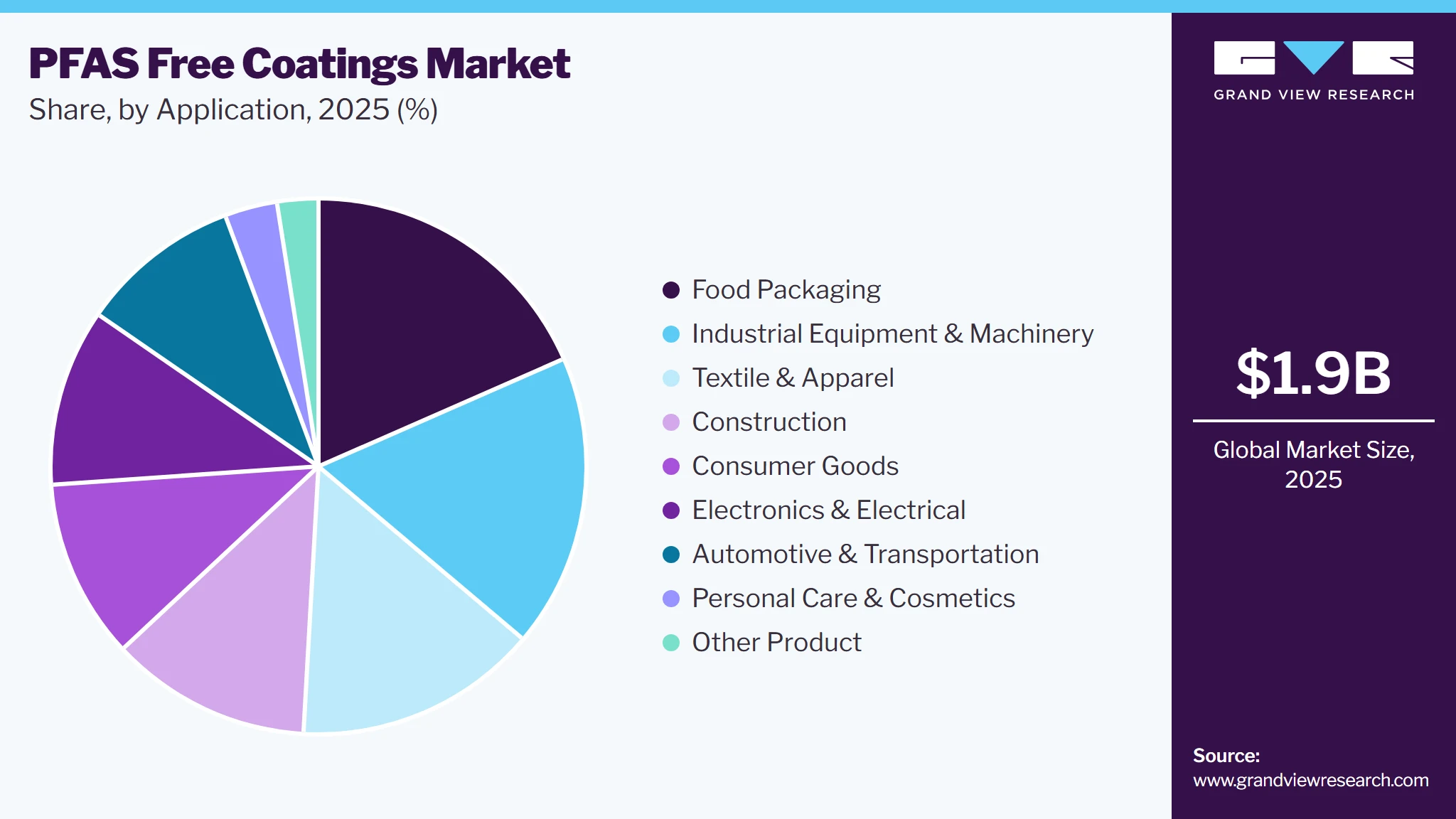
The automotive & transportation segment is expected to grow at the fastest CAGR of 8.4% from 2026 to 2033. Demand is supported by requirements for protective, anti-friction, conformal, release, and corrosion-resistant surface treatments across vehicle components. The shift toward electric and software-defined vehicles is creating additional applications for specialized coatings used on electronic assemblies, displays, sensors, and other components. For example, Henkel launched two PFAS- and fluorine-free silicone-based anti-fingerprint coatings for automotive displays, demonstrating increasing commercial development in this area. Automotive OEMs are also placing greater emphasis on material compliance, sustainability, durability, and supply-chain transparency. These factors should encourage further qualification in fluorine-free technologies as manufacturers seek alternatives that satisfy both technical specifications and evolving chemical requirements.
Regional Insights
The Asia Pacific PFAS-free coatings market represented the largest share of 32.6% in 2025, and is also expected to witness the fastest CAGR from 2026 to 2033. The region is expanding manufacturing activity in electronics, textiles, automotive, packaging, and industrial goods, creating a broad customer base for fluorine-free surface technologies. Regulatory activity is also increasing across Australia, Japan, China, and other economies, encouraging manufacturers to reassess fluorinated materials and qualify alternatives. The region’s large production base, competitive manufacturing economics, and growing sustainability focus are attracting investments in locally produced coating technologies. Adoption is expected to remain application-specific, with electronics, textiles, cookware, and industrial components offering substantial opportunities.
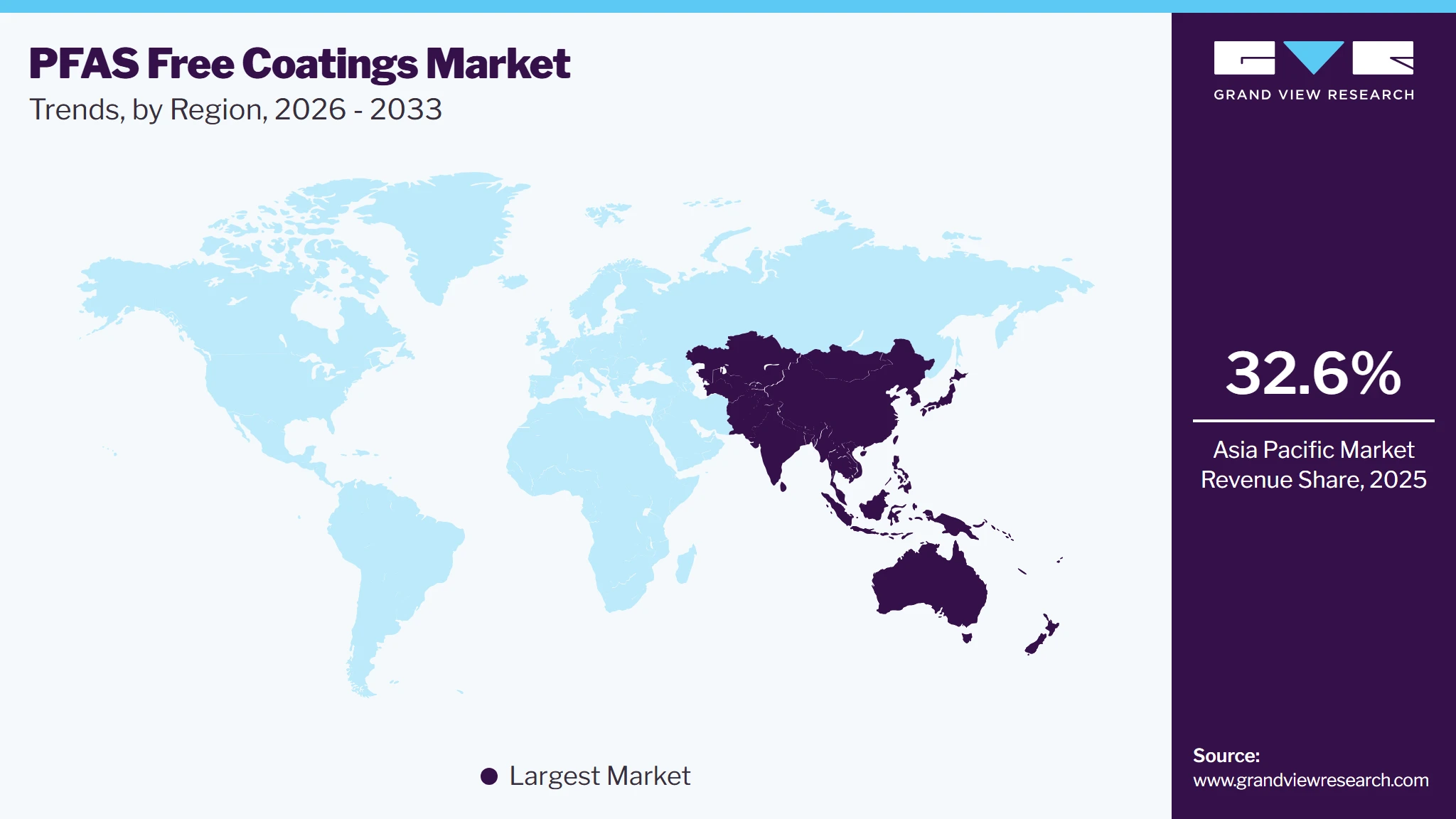
The China PFAS-free coatings market led Asia Pacific in 2025 as it represents a major opportunity because of its extensive manufacturing ecosystem spanning electronics, automotive components, cookware, textiles, packaging, and industrial equipment. Increasing environmental scrutiny and evolving controls on PFAS are encouraging domestic manufacturers to evaluate alternative surface-treatment technologies. China’s established chemical and coatings supply chain also supports cost-efficient development and commercialization of silicone, ceramic, sol-gel, and polymer-based solutions. Strong export-oriented manufacturing further creates incentives for suppliers to offer formulations compatible with increasingly stringent requirements in overseas markets.
North America PFAS-Free Coatings Market Trends
The PFAS-free coatings market in North America is witnessing accelerated substitution as regulatory requirements, corporate sustainability commitments, and customer specifications increase pressure on fluorinated materials. The U.S. remains the principal demand center, supported by its large electronics, automotive, packaging, medical-device, and industrial manufacturing bases. Regulatory developments at federal and state levels are encouraging companies to strengthen chemical inventories and evaluate alternative materials. The region also benefits from a mature specialty-coatings industry, established R&D capabilities, and strong customer willingness to qualify higher-performance alternatives.
U.S. PFAS-Free Coatings Market Trends
The PFAS-free coatings market in the U.S. is leading due to its extensive industrial base and increasing regulatory attention toward PFAS throughout the product lifecycle. In May 2026, the EPA reaffirmed a comprehensive PFAS strategy and announced nearly USD 1 billion in new funding related to PFAS treatment and drinking-water protection, reinforcing the broader policy focus on reducing exposure. In August 2026, a federal appeals court also upheld the EPA’s designation of PFOA and PFOS as hazardous substances under Superfund, maintaining pressure on businesses managing PFAS-related liabilities. These developments are strengthening demand for compliant alternatives across packaging, electronics, automotive, medical devices, and industrial applications.
Europe PFAS-Free Coatings Market Trends
The PFAS-free coatings market in Europe is among the most advanced in the transition away from fluorinated coating technologies, supported by stringent chemical policies and strong sustainability objectives. The European Commission has progressively restricted multiple PFAS groups and is pursuing broader substitution through regulatory and innovation initiatives. From August 12, 2026, food-contact packaging containing PFAS above specified limits cannot be placed on the EU market, creating immediate substitution requirements for packaging manufacturers. The region’s strong specialty-chemicals sector and emphasis on circularity further support the development of advanced fluorine-free coating systems.
The Germany PFAS-free coatings market represents a prominent European market owing to its strong automotive, machinery, chemicals, packaging, and industrial manufacturing sectors. Domestic manufacturers are increasingly evaluating fluorine-free alternatives as European restrictions tighten and customers demand more sustainable materials. The implementation of the EU Packaging and Packaging Waste Regulation is particularly relevant for German packaging producers and converters handling food-contact applications. Germany also benefits from extensive materials research capabilities, supporting the commercialization of advanced ceramic, sol-gel, plasma, and polymer-based alternatives.
Middle East & Africa PFAS-Free Coatings Market Trends
The PFAS-free coatings market in the Middle East & Africa is at an earlier stage of adoption, but opportunities are emerging through industrial diversification, infrastructure development, automotive manufacturing, food processing, packaging, and consumer-goods production. Demand is expected to be concentrated initially among multinational manufacturers and companies supplying export markets where PFAS compliance is increasingly required. The region’s developing coatings and specialty-chemicals infrastructure creates scope for international suppliers to establish local partnerships and technical support networks. Growth will depend on regulatory development, customer awareness, availability of cost-effective alternatives, and investment in regional formulation and application capabilities.
Latin America PFAS-Free Coatings Market Trends
The PFAS-free coatings market in Latin America is developing at a gradual pace, with adoption primarily linked to multinational manufacturers, export-oriented industries, sustainability programs, and increasing awareness of PFAS-related environmental risks. Brazil and Mexico offer the strongest commercial potential because of their sizeable food-processing, packaging, automotive, textile, and industrial manufacturing bases. Demand is likely to increase as local producers align their products with requirements imposed by North American and European customers. Limited local availability of advanced formulations and comparatively lower regulatory maturity may, however, result in slower substitution than in Europe and North America.
Key PFAS-Free Coatings Company Insights
Companies are strengthening their positions in the PFAS-free coatings market by investing in proprietary fluorine-free technologies, expanding application-specific product portfolios, and improving coating performance to address demanding end-use requirements. They are also focusing on strategic customer partnerships, technical support, scalable production capabilities, and broader geographic reach to accelerate qualification and adoption across industrial and consumer applications.
-
Oerlikon is strengthening its position through advanced thin-film solutions based on DLC and ceramic coatings. Its PFAS-free portfolio includes products that are designed to deliver low friction, non-stick characteristics, wear resistance, and chemical durability across demanding industrial applications. The company leverages its established surface-engineering expertise to provide alternatives for applications involving mechanical components, pumps, seals, polymer processing, automotive, electronics, and other high-performance environments. Its ability to integrate coating technologies into established production processes and tailor properties such as hardness, friction, thickness, and adhesion provides a competitive advantage as customers seek compliant alternatives without compromising operational performance.
-
East Midland Coatings (EMC) is expanding its position in fluorine-free surface solutions through Matrix Pro and Fusion Sol-Gel coating technologies, targeting applications where non-stick performance, thermal stability, abrasion resistance, and durability are critical. The company primarily serves bakeware, cookware, food-processing equipment, and other industrial applications, providing coating solutions to OEMs and manufacturers from development through production-scale programs. Its PFAS-free systems use sol-gel technology to provide ceramic-style surfaces while eliminating intentionally added PFAS, helping customers address evolving regulatory and procurement requirements. EMC’s established industrial coating capabilities, application expertise, and focus on scalable production strengthen its competitive positioning as food-related manufacturers accelerate the transition toward alternative non-stick technologies.
Key PFAS-Free Coatings Companies
The following key companies have been profiled for the study on the PFAS-free coatings market.
-
PPG Industries
-
Oerlikon
-
Actnano
-
ILAG Industrielack AG
-
HÜNI+CO
-
Hydromer
-
East Midland Coatings
-
PFLUON
-
Kansai Polymer
-
Zhongshan FLEAD Coatings
-
INOMETA
-
NordCoat / Ipinium AB
Competitive Benchmarking
Operating Strategies
Competitive Edge
Weaknesses
Mature Players: PPG Industries, Oerlikon, ILAG Industrielack AG, HÜNI+CO, Hydromer, East Midland Coatings, PFLUON, Kansai Polymer
- Expand PFAS-free portfolios across multiple applications, including non-stick, protective, anti-friction, corrosion-resistant, and industrial coating systems.
- Invest continuously in R&D and formulation optimization to maintain performance while meeting evolving regulatory requirements.
- Leverage established manufacturing, application, sales, and technical-service networks to accelerate customer adoption and qualification.
- Work closely with OEMs and industrial customers to customize coating systems according to substrate, operating conditions, durability requirements, and processing parameters.
- Strong technical expertise and established know-how in surface treatment and coating formulation.
- Broad product portfolios enable them to address diverse applications and reduce dependence on a single end-use segment.
- Established customer relationships and application-support capabilities create higher switching barriers.
- Greater testing, certification, and production capabilities provide credibility when customers evaluate alternatives to conventional fluorinated systems.
- Larger organizational structures can make product development and commercialization slower than those of specialized start-ups.
- Broad portfolios may dilute resources across numerous coating technologies and applications.
- Established production processes can make rapid adaptation to emerging coating technologies more complex.
- Premium positioning and higher technical-service requirements can result in greater solution costs for price-sensitive customers.
Emerging Players: Actnano, Zhongshan FLEAD Coatings, INOMETA, NordCoat / Ipinium AB
- Concentrate on specialized applications where conventional fluorinated coatings have clear performance or regulatory disadvantages.
- Develop proprietary technologies around specific performance gaps, such as high-temperature resistance, durability, water protection, or non-stick behavior.
- Use collaborations with research institutions, technology partners, and OEMs to accelerate product validation and commercialization.
- Pursue licensing, co-development, and strategic manufacturing partnerships to scale technologies without immediately building extensive global infrastructure.
- Greater agility enables faster formulation changes and quicker responses to emerging customer requirements.
- Narrow application focus allows deeper specialization and optimization for specific performance requirements.
- Proprietary technologies can provide meaningful differentiation against conventional coating systems.
- New entrants can position their solutions around regulatory readiness and sustainability from the outset rather than adapting legacy portfolios.
- Limited manufacturing capacity can restrict their ability to serve large multinational customers at scale.
- Smaller customer bases and shorter commercial track records may make qualification more difficult in highly regulated applications.
- Dependence on external research, manufacturing, or technology partners can increase execution risks.
- Limited geographic coverage and technical-service infrastructure can constrain expansion into international markets.
Recent Developments
-
In May 2025, Oerlikon announced a USD 48.7 million (CHF 40 million) investment in its new Campus Reichhold innovation and production hub in Aargau, Switzerland. The facility consolidates R&D, engineering, production, and customer services and is intended to strengthen its global coating technology capabilities.
-
In January 2026, PPG Industries introduced FUSION EDGE, a PFAS-free sol-gel ceramic non-stick coating engineered specifically for honeycomb-textured stainless-steel cookware. The technology is designed to provide a hard, durable, non-stick surface with high-temperature resistance while supporting food-contact compliance requirements.
PFAS-Free Coatings Market Report Scope
Report Attribute
Details
Market size value in 2025
USD 1.9 billion
Estimated market size in 2026
USD 2.0 billion
Revenue forecast in 2033
USD 3.1 billion
Growth rate
CAGR of 6.3% from 2026 to 2033
Base year for estimation
2025
Historical data
2021 - 2024
Forecast period
2026 - 2033
Quantitative units
Volume in kilotons, revenue in USD billion, and CAGR from 2026 to 2033
Report coverage
Revenue forecast, volume forecast, company ranking, competitive landscape, growth factors, and trends
Segments covered
Product, application, region
Regional scope
North America; Europe; Asia Pacific; Latin America; Middle East & Africa
Country scope
U.S.; Canada; Mexico; Germany; UK; France; Italy; Spain; China; India; Japan; South Korea; Brazil; Argentina; Saudi Arabia; South Africa.
Key companies profiled
PPG Industries; Oerlikon; Actnano; ILAG Industrielack AG; HÜNI+CO; Hydromer; East Midland Coatings; PFLUON; Kansai Polymer; Zhongshan FLEAD Coatings; INOMETA; NordCoat / Ipinium AB
Customization scope
Free report customization (equivalent up to 8 analysts’ working days) with purchase. Addition or alteration to country, regional & segment scope.
Pricing and purchase options
Avail customized purchase options to meet your exact research needs. Explore purchase options
Global PFAS-Free Coatings Market Report Segmentation
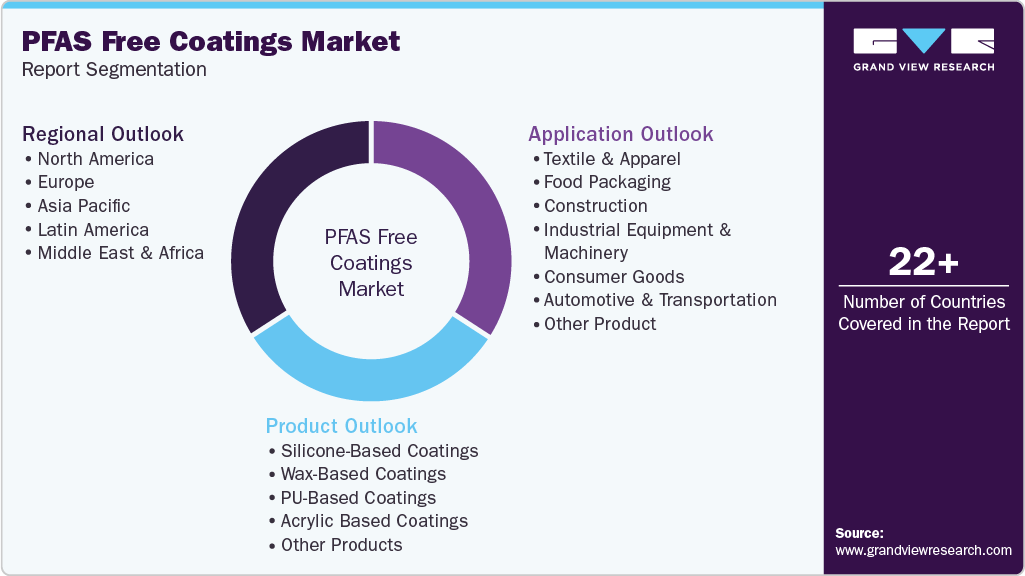
This report forecasts volume & revenue growth at the global, regional, and country levels and provides an analysis of the latest industry trends in each of the sub-segments from 2021 to 2033. For this study, Grand View Research has segmented the global PFAS-free coatings market report based on product, application, and region:
-
Product Outlook (Volume, Kilotons; Revenue, USD Billion, 2021 - 2033)
-
Silicone-Based Coatings
-
Wax-Based Coatings
-
PU-Based Coatings
-
Acrylic-Based Coatings
-
Bio-Based Coatings
-
Other Products
-
-
Application Outlook (Volume, Kilotons; Revenue, USD Billion, 2021 - 2033)
-
Textiles & Apparel
-
Food Packaging
-
Construction
-
Industrial Equipment & Machinery
-
Consumer Goods
-
Automotive & Transportation
-
Electronics & Electrical
-
Personal Care & Cosmetics
-
Other Applications
-
-
Regional Outlook (Volume, Kilotons; Revenue, USD Billion, 2021 - 2033)
-
North America
-
U.S.
-
Canada
-
Mexico
-
-
Europe
-
UK
-
Germany
-
France
-
Italy
-
Spain
-
-
Asia Pacific
-
China
-
Japan
-
India
-
South Korea
-
-
Latin America
-
Brazil
-
Argentina
-
-
Middle East and Africa (MEA)
-
South Africa
-
Saudi Arabia
-
-
Research Methodology
The PFAS-free coatings market figures in this report are based on a proven research process that combines executive interviews with secondary research from proprietary databases, company filings, and recognized regulatory and institutional sources. Market size is built through value-chain sizing-reconciling supply-side and demand-side estimates-and triangulated with bottom-up and top-down approaches. Every estimate passes multiple levels of expert validation before publication, with each PFAS-free coatings segment quantified using the revenue-capture definitions in the table below.
Segment Definition
Segment - Product
Revenue capture definition
Silicone-Based Coatings
Customer expenditure covers fluorine-free silicone formulations designed to deliver non-stick, release, water-repellent, low-friction, and protective properties across cookware, textiles, industrial components, and other surfaces.
Wax-Based Coatings
Market value is derived from wax-based formulations that provide moisture resistance, release characteristics, surface protection, and lubricity across packaging, textiles, consumer products, and industrial applications.
PU-Based Coatings
Sales are generated through polyurethane systems engineered to provide adhesion, flexibility, abrasion resistance, durability, and protective performance across automotive, construction, textile, industrial, and related applications.
Acrylic-Based Coatings
Commercial demand is supported by acrylic formulations offering adhesion, weatherability, flexibility, surface protection, and resistance properties for industrial, construction, automotive, and consumer applications.
Bio-Based Coatings
Customer spending encompasses coatings derived from renewable or bio-based feedstocks that provide functional surface properties while supporting sustainability objectives across packaging, consumer goods, construction, textiles, and industrial applications.
Other Products
Value is captured through sol-gel, ceramic, hydrocarbon, polyolefin, plasma-deposited, and other specialized fluorine-free technologies developed for specific performance and application requirements.
Segment - Application
Revenue capture definition
Textiles & Apparel
Demand is generated by fluorine-free treatments that provide water, oil, stain, and soil repellency to apparel, home textiles, technical fabrics, and related products.
Food Packaging
Customer expenditure is associated with barrier and grease-resistant systems applied to paper, paperboard, molded fiber, and other food-contact packaging materials.
Construction
Procurement covers protective and functional surface treatments designed to provide water resistance, weather protection, durability, and extended service life for construction materials and structures.
Industrial Equipment & Machinery
Market value stems from non-stick, release, anti-friction, wear-resistant, and protective solutions applied to machinery, processing equipment, components, and manufacturing tools.
Consumer Goods
Industry spending encompasses fluorine-free treatments used in household products, appliances, cookware accessories, and other consumer applications requiring durability, repellency, release, or surface protection.
Automotive & Transportation
Commercial value is generated through specialized coatings for vehicle components, powertrain parts, electrical systems, and transportation equipment requiring low friction, corrosion protection, durability, or chemical resistance.
Electronics & Electrical
Customer requirements include conformal and protective systems for circuit boards, electronic assemblies, sensors, connectors, and electrical components requiring moisture, chemical, and environmental protection.
Personal Care & Cosmetics
Spending covers specialized surface treatments for packaging, dispensing components, applicators, and related products where release, protection, durability, or specific surface characteristics are required.
Other Applications
Demand encompasses fluorine-free solutions for healthcare and medical devices, aerospace, marine, energy, agriculture, and other specialized applications requiring functional surface performance.
Estimation Model
Layer Name
Key Question
Description
Raw Material & Production Layer
What forms the supply base?
Identify the polymers, resins, silicones, ceramic precursors, waxes, solvents, additives, catalysts, crosslinkers, and other inputs used to formulate fluorine-free coating systems. Assess feedstock availability, supplier networks, formulation technologies, blending and curing processes, coating application methods, production capacities, quality-control systems, regulatory compliance, and major manufacturing hubs supporting global supply.
Application Adoption Layer
Where is PFAS-free coatings utilized?
Evaluate adoption across cookware and bakeware, food packaging, textiles and apparel, automotive and transportation, electronics and electrical components, industrial manufacturing, healthcare and medical devices, building and construction, and consumer goods. Demand is influenced by PFAS restrictions, sustainability commitments, customer specifications, product safety requirements, technological advances, and the need to replace fluorinated surface treatments without compromising functionality.
Consumption Intensity Layer
How extensively are PFAS-free coatings consumed?
Analyze consumption intensity by assessing coated surface area, coating weight per unit, application frequency, production volumes, and penetration of fluorine-free alternatives across major end-use products. The assessment considers cookware output, packaged food volumes, textile production, vehicle manufacturing, electronics production, medical-device volumes, industrial component output, coating thickness, application efficiency, and the pace of substitution from conventional fluorinated systems.
Revenue Layer
How is market revenue generated?
Market revenue is generated through the sale of formulated coating materials, specialized coating systems, application technologies, and coating services across diverse end-use industries. Revenue growth is supported by regulatory-driven substitution, premium performance requirements, new product development, capacity expansion, customer qualification programs, technological upgrades, geographic expansion, customized formulations, and increasing adoption of higher-value solutions for demanding applications.
Delivered Customizations
This report has been delivered with the following In-depth customizations
Client Request
Customization Delivered
Value Adds
Regional segmentation
The assessment provides country-level market sizing and forecasts, supported by demand analysis across non-stick coatings, water- and oil-repellent coatings, barrier coatings, protective and conformal coatings, release coatings, and anti-corrosion and anti-friction solutions. It evaluates adoption across cookware and bakeware, food packaging, textiles and apparel, automotive and transportation, electronics and electrical, industrial manufacturing, healthcare and medical devices, building and construction, and consumer goods. The analysis also considers PFAS regulations, manufacturing infrastructure, coating production capabilities, raw material availability, technology maturity, import-export activity, customer requirements, substitution rates, supplier ecosystems, and investment trends across individual countries.
Supports geographic expansion, production-site selection, sourcing decisions, and investment prioritization by identifying countries with strong coating manufacturing bases, favorable regulatory environments, established downstream industries, technical capabilities, and accelerating demand for fluorine-free surface-treatment solutions.
Opportunity Assessment
Comprehensive evaluation of emerging opportunities across non-stick, barrier, repellency, protective, conformal, release, anti-corrosion, and anti-friction applications. The assessment examines regulatory-driven substitution, sustainability initiatives, advances in silicone, ceramic, sol-gel, polymeric, bio-based, and surface-engineering technologies, increasing demand from food packaging and cookware, electronics miniaturization, automotive electrification, medical-device development, and industrial modernization. It also evaluates performance gaps, technology commercialization, customer qualification requirements, and opportunities for customized coating solutions.
Helps identify high-growth applications, attractive technologies, underserved customer segments, and priority geographic markets by assessing regulatory developments, adoption rates, performance requirements, production economics, and technological readiness. The findings support product development, capacity expansion, technology investments, strategic collaborations, portfolio diversification, and market-entry planning.
Competitive Benchmarking
Comparative assessment of leading manufacturers and specialized technology providers based on PFAS-free product portfolios, formulation expertise, coating technologies, application capabilities, manufacturing scale, geographic presence, R&D strength, regulatory compliance, technical support, customer relationships, strategic partnerships, investments, product launches, and expansion initiatives. The benchmarking also evaluates application specialization, coating performance, customization capabilities, production scalability, intellectual property, and the ability to provide commercially viable alternatives to conventional fluorinated systems.
Enables companies to evaluate their market positioning, technological differentiation, capability gaps, and competitive strengths against established and emerging participants. The insights support decisions related to product innovation, performance enhancement, capacity development, technology acquisition, geographic expansion, strategic partnerships, customer targeting, and long-term positioning within the evolving fluorine-free coatings landscape.
Frequently Asked Questions About This Report
The PFAS-free coatings market size was valued at USD 1.9 billion in 2025 and is estimated at USD 2.0 billion in 2026.
The PFAS-free coatings market is expected to grow at a compound annual growth rate of 6.3% from 2026 to 2033 to reach USD 3.1 million by 2033.
Silicone-based coatings dominated with a revenue share of 28.9% in 2025, their established performance in non-stick, release, water-repellent, and protective applications supports broad commercial adoption.
Asia Pacific represented 32.6% of revenue in 2025. The region is expanding manufacturing activity in electronics, textiles, automotive, packaging, and industrial goods creates a broad customer base for fluorine-free surface technologies.
Key factors driving the market include tightening regulations on PFAS use, increasing environmental and health concerns, and corporate commitments to safer chemical alternatives.
Some of the key players operating in the PFAS-free coatings market include PPG Industries; Oerlikon; Actnano; ILAG Industrielack AG; HÜNI+CO; Hydromer; East Midland Coatings; PFLUON; Kansai Polymer; Zhongshan FLEAD Coatings; INOMETA; NordCoat / Ipinium AB.
Food packaging held the largest revenue share of 18.4% in 2025. Demand is being supported by increasing restrictions on PFAS-containing food-contact materials, particularly grease- and oil-resistant paper and paperboard packaging.
Automotive & transportation is the fastest-growing application segment, with a CAGR of 8.4% from 2026 to 2033. Demand is supported by requirements for protective, anti-friction, conformal, release, and corrosion-resistant surface treatments across vehicle components.
Acrylic based coatings is the fastest growing with a CAGR of 7.6% in the forecast period. Their growth potential is supported by formulation flexibility and the ability to tailor adhesion, flexibility, weatherability, and protective characteristics.
About the Author(s)
Paints, Coatings & Printing Inks Research Team
Bulk Chemicals · Paints, Coatings & Printing InksThis report was authored by the paints, coatings & printing inks research team at Grand View Research - comprising two research analysts, one senior research analyst, and one industry expert - with specialized expertise in the paints, coatings & printing inks segment of the bulk chemicals industry. All findings are based on proprietary bulk chemicals databases, executive interviews, and regulatory analysis, subject to internal peer review prior to publication.
Last Updated:
Speak to Analyst


Customize this report to your needs - add regions, segments, or data points, with 20% free customization.
Or view our licence options:


ISO 9001:2015 & 27001:2022 Certified
We are GDPR and CCPA compliant! Your transaction & personal information is safe and secure. For more details, please read our privacy policy.


