
- Home
- »
- Pharmaceuticals
- »
-
Pharmaceutical Contract Manufacturing & Research Services Market Report, 2026-2033GVR Report cover

Pharmaceutical Contract Manufacturing And Research Services Market (2026 - 2033)
Size, Share & Trends Analysis Report By Service (Manufacturing, Research), By Region (North America, Europe, Asia Pacific, Latin America, MEA), Key Companies And Competitive Analysis
Market Size, 2025
$287.6BMarket Estimate, 2026
$309.2BMarket Forecast, 2033
$503.7BCAGR, 2026–2033
7.2%Pharmaceutical Contract Manufacturing And Research Services Market Summary
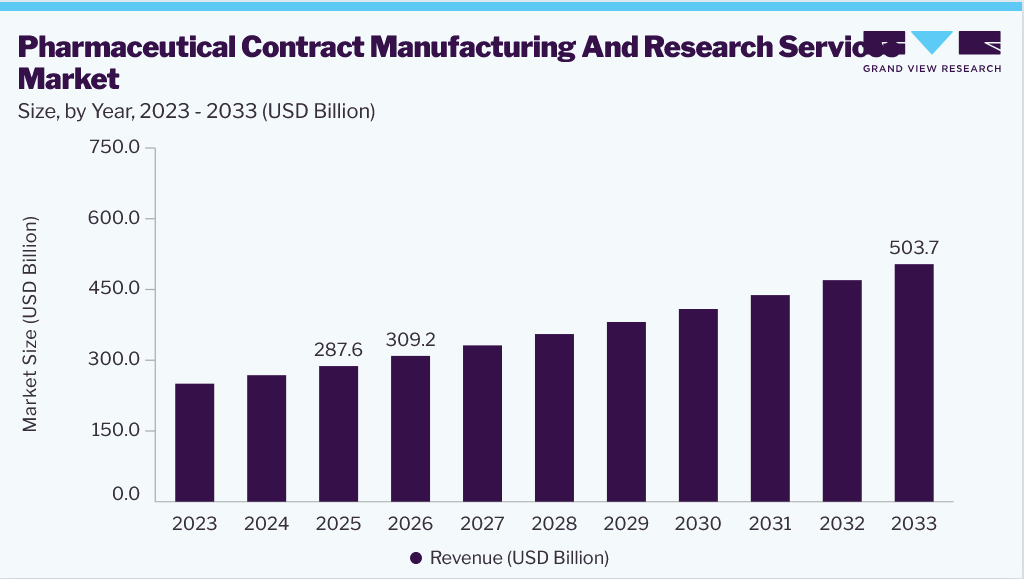
The global pharmaceutical contract manufacturing and research services market size was valued at USD 287.6 billion in 2025 and is projected to grow from USD 309.2 billion in 2026 to USD 503.7 billion by 2033, at a CAGR of 7.2% from 2026 to 2033. Asia Pacific dominated the market, accounting for a revenue share of 42.0% in 2025. Cost-saving and time-saving benefits associated with the implementation of outsourcing are responsible for driving the market.
Key Market Trends & Insights
- By service: The pharmaceutical contract manufacturing segment held the largest market share of around 66.0% in 2025.
- By service: The pharmaceutical contract research services segment is expected to grow at the fastest CAGR over the forecast period.
Regional Highlights
- Largest regional market: Asia Pacific (42.0% revenue share, 2025)
- Fastest-growing regional market: North America (highest CAGR, 2026-2033)
Market Size & Forecast
- Market size in 2025: USD 287.6 Billion
- Estimated market size in 2026: USD 309.2 Billion
- Projected market size by 2033: USD 503.7 Billion
- CAGR (2026-2033): 7.2%
Three ways to get this report
Buy it, customize it, or ask a question.Ask an Analyst
Analyst response in 1 business day
- AccessReport author, directly
- Reply timeWithin 1 working day
- No sales callDirect answer only
- FormatEmail reply
- CostFree, no cost
Get the Full Report
What the study covers
- FormatsPDF · Excel · Dashboard
- Timeline2026–2033 annual, 2025 base
- Coverage20+ countries, 5 regions
- Companies10+ key players profiled
Customize the Report
20% free customization
- IncludeCountries, segments, points
- TailorTo your product definition
- ExtendDeeper competitor detail
- OrA fully bespoke study
- Turnaround5–10 working days
The market participants are routinely investing in infrastructure, personnel, and technology to gain a greater share of the outsourcing revenue. The presence of end-to-end service providers that are engaged in offering value-added services for an integrated or risk-sharing business model is expected to bolster growth in this industry. A primary driver is the strategic emphasis on cost efficiency and operational focus within pharmaceutical companies. By outsourcing manufacturing to specialized CMOs and CDMOs, firms can significantly reduce capital expenditures associated with facility construction and maintenance, as well as the complexities of regulatory compliance. This allows them to concentrate their financial and human resources on core activities such as drug discovery, research and development, and commercialization strategies. Furthermore, CMOs and CDMOs often achieve substantial economies of scale through high-volume operations, translating to lower per-unit production costs for their pharmaceutical clients.The escalating complexity of modern drug development also fuels the demand for contract services. The increasing prevalence of biologics, biosimilars, HPAPIs, and personalized medicines necessitates advanced manufacturing capabilities and specialized expertise that many pharmaceutical companies may lack internally. CMOs and CDMOs frequently possess cutting-edge technologies, such as continuous manufacturing processes, sophisticated containment systems for HPAPIs, and flexible production lines for personalized therapies, making them indispensable partners. Integrating automation and artificial intelligence further enhances their value proposition by improving quality control, optimizing processes, and ensuring stringent regulatory adherence, ultimately accelerating the often lengthy and intricate drug development lifecycle.
 Source: Grand View Research, IR Documents, Primary Interviews, Paid DatabasesTo learn more about this report,
 Download Free Sample Report
Beyond operational and scientific drivers, global health trends and market dynamics significantly expand the market. The worldwide surge in chronic diseases necessitates a greater volume and diversity of pharmaceutical products, many efficiently produced through contract manufacturing. The expiration of drug patents leads to a heightened demand for cost-effective generics and biosimilars, frequently outsourced for large-scale production. Moreover, the evolving regulatory landscape, stringent compliance requirements, and the imperative for faster time-to-market further incentivize pharmaceutical companies to leverage the expertise and established frameworks of CMOs and CDMOs. Geographic shifts, particularly the growth of the Asia-Pacific region as a cost-competitive manufacturing hub, and the emergence of integrated CRO-CDMO models offering end-to-end solutions, underscore this critical market's dynamic and expanding nature.
Market Dynamics
The increasing outsourcing of pharmaceutical research, development, and manufacturing is a major driver for the pharmaceutical contract manufacturing and research services market. Pharmaceutical and biotechnology companies are increasingly partnering with contract research organizations (CROs) and contract development and manufacturing organizations (CDMOs) to reduce development costs, improve operational efficiency, and accelerate product commercialization. The growing complexity of biologics, biosimilars, cell and gene therapies, and highly specialized drug formulations has increased the need for advanced technical capabilities that are often not available in house. Contract service providers offer integrated solutions across discovery, preclinical studies, clinical development, analytical testing, regulatory support, manufacturing, and commercial supply, enabling sponsors to optimize resources while focusing on core research activities. The increasing number of emerging biotechnology companies with limited manufacturing infrastructure is further supporting outsourcing demand, encouraging service providers to expand global capacity, invest in advanced manufacturing technologies, and strengthen end-to-end service capabilities.
Stringent regulatory compliance and quality requirements remain a key restraint for the pharmaceutical contract manufacturing and research services market. Contract service providers must comply with evolving Good Manufacturing Practice (GMP), Good Laboratory Practice (GLP), and Good Clinical Practice (GCP) regulations across multiple jurisdictions while maintaining consistent product quality and data integrity. Regulatory inspections, validation requirements, technology transfer activities, and extensive documentation increase operational complexity and project costs. Any deviation from quality standards can result in warning letters, production delays, product recalls, or loss of customer contracts, affecting business performance. Furthermore, managing compliance across multiple client projects, manufacturing sites, and global regulatory agencies requires continuous investments in quality systems, digital compliance infrastructure, workforce training, and process validation, creating significant operational challenges for both established and emerging service providers.
The growing adoption of integrated end-to-end contract development, manufacturing, and research services presents a significant opportunity for the pharmaceutical contract manufacturing and research services market. Pharmaceutical companies are increasingly seeking strategic partners capable of supporting drug discovery, process development, clinical manufacturing, commercial production, analytical testing, packaging, and regulatory submissions through a single service platform. The integrated outsourcing model reduces project complexity, improves coordination across development stages, and shortens product development timelines. The increasing development of biologics, advanced therapies, and personalized medicines is further creating demand for service providers with broad technical expertise and global manufacturing networks. Furthermore, investments in digital manufacturing technologies, continuous manufacturing, and specialized production facilities are enabling contract organizations to expand integrated service offerings and strengthen long-term partnerships with pharmaceutical and biotechnology companies.
Market Concentration & Characteristics
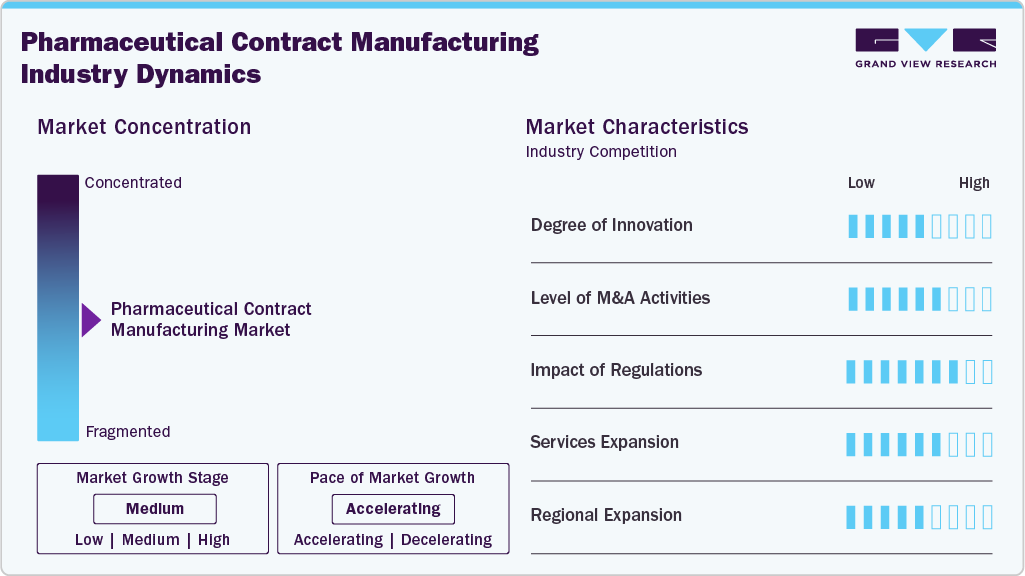
The pharmaceutical contract manufacturing and research services market growth stage is medium, and growth is accelerating. The market is characterized by the degree of innovation, level of M&A activities, regulatory impact, service expansion, and regional expansion.
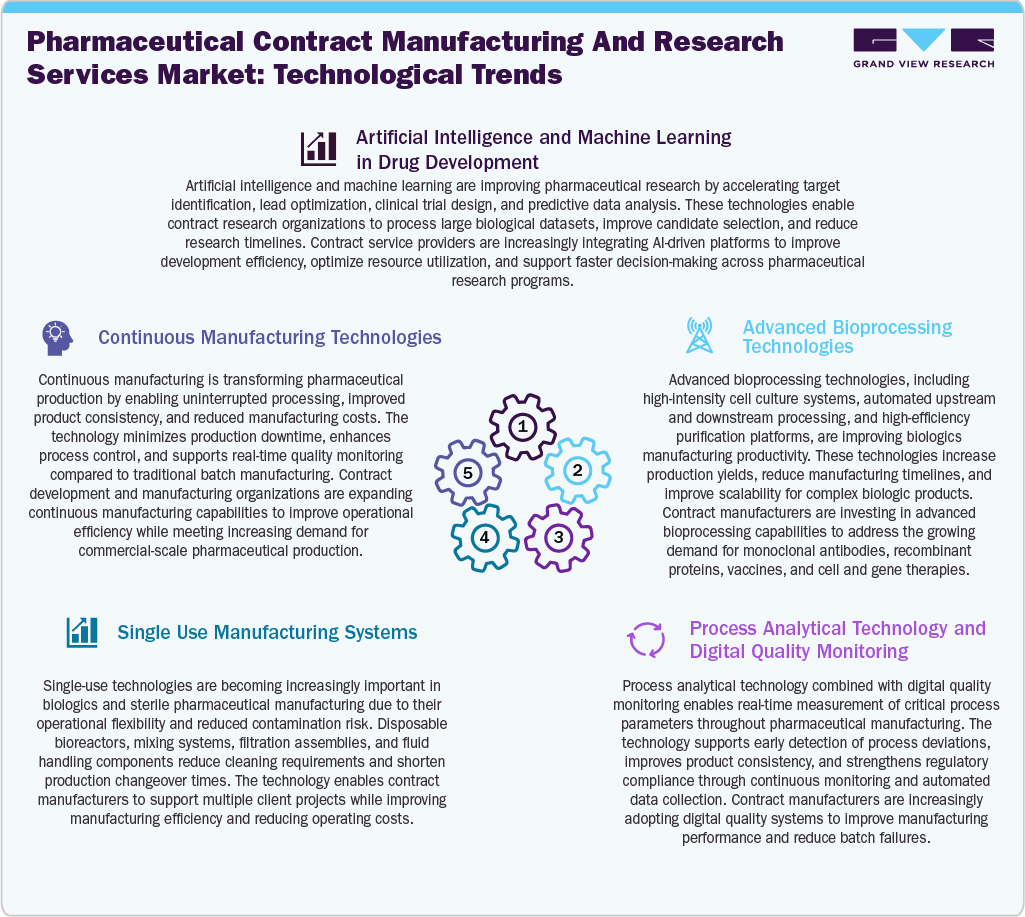
Innovation remains a key competitive factor in the market, with service providers investing in advanced bioprocessing technologies, artificial intelligence-driven drug development platforms, continuous manufacturing, automation, digital quality management systems, and single-use manufacturing technologies. The increasing demand for biologics, cell and gene therapies, personalized medicines, and complex drug formulations is encouraging the adoption of advanced research and manufacturing capabilities that improve operational efficiency, product quality, and development timelines while supporting regulatory compliance.
 To learn more about this report, Download Free Sample Report
Mergers and acquisitions continue to shape the pharmaceutical contract manufacturing and research services industry by expanding research capabilities, manufacturing capacity, and integrated service offerings. Strategic acquisitions enable CROs and CDMOs to strengthen expertise across drug discovery, analytical testing, clinical development, biologics manufacturing, regulatory support, and commercial production while expanding their global operational footprint. These transactions also enhance service diversification, expand customer reach, and strengthen competitive positioning in the pharmaceutical outsourcing industry.
Regulatory compliance remains a major factor influencing the pharmaceutical contract manufacturing and research services market. Service providers are required to comply with current Good Manufacturing Practice (cGMP), Good Laboratory Practice (GLP), Good Clinical Practice (GCP), International Council for Harmonisation (ICH) guidelines, and regulatory requirements established by global health authorities. Compliance with stringent quality, validation, documentation, and data integrity standards increases operational complexity while creating competitive advantages for organizations with established quality management systems and regulatory expertise.
Pharmaceutical contract manufacturing and research service providers are expanding their portfolios to deliver integrated solutions across the entire drug development lifecycle. Many organizations now offer drug discovery, preclinical research, clinical trial support, analytical testing, formulation development, process development, commercial manufacturing, packaging, and regulatory services through a single platform. The integrated service model improves project coordination, simplifies outsourcing management, and enables pharmaceutical and biotechnology companies to accelerate product development and commercialization.
Regional expansion continues to strengthen the global presence of pharmaceutical contract manufacturing and research service providers. Companies are establishing new research centers, manufacturing facilities, and biologics production sites across North America, Europe, the Asia Pacific, and emerging pharmaceutical markets to address growing outsourcing demand. Geographic expansion improves manufacturing capacity, strengthens supply chain resilience, supports regional regulatory compliance, and enables service providers to deliver research and manufacturing services more efficiently to global pharmaceutical and biotechnology companies.
Analyst Perspective
The pharmaceutical contract manufacturing and research services market has been experiencing significant growth, driven by an increasing inclination among pharmaceutical companies to outsource functions such as API synthesis, clinical trial management, fill-finish operations, and specialized packaging activities. The growing development of advanced therapies has resulted in changing requirements associated with contract manufacturing. Companies operating in the manufacturing industry prefer choosing highly specialized facilities and ultra-clean environments offered by contract service providers, instead of investing in the development of new facilities. Expertise and competence offered by CROs and CDMOs associated with proprietary technologies required for advanced drug formulations also facilitate market growth. Lack of cold-chain logistics, shortage of specialized talent, and policy shifts, regulatory changes influenced by geopolitical & regulatory pressures may pose challenges for this market. Global industry participants focus on the development of an integrated CRDMO model, diversifying operations to address supply chain vulnerabilities, and embracing automation and next-gen technologies to improve operations and service portfolios.
Impact of U.S. Tariffs on the Global Pharmaceutical Contract Manufacturing And Research Services market
The current U.S. tariff environment has increased cost pressures across the market by raising the prices of imported active pharmaceutical ingredients, specialty chemicals, laboratory consumables, manufacturing equipment, and production components used throughout research and commercial manufacturing operations. Higher procurement costs have increased capital expenditure for facility expansion and equipment upgrades, while continued uncertainty surrounding global trade policies has encouraged companies to reassess sourcing strategies and supply chain structures.
Contract manufacturing and research organizations are responding by expanding regional manufacturing capacity, increasing local sourcing of raw materials, qualifying alternative suppliers, and strengthening inventory management to reduce supply chain risks. Pharmaceutical companies are also placing greater emphasis on geographically diversified outsourcing partnerships to improve supply continuity and reduce dependence on a single manufacturing region. Although tariffs continue to increase operating costs for certain projects, the long-term demand for outsourced research, development, and manufacturing services remains supported by expanding pharmaceutical pipelines, increasing biologics production, and sustained investment in global drug development. Consequently, continued regionalization of manufacturing operations and broader supplier diversification are expected to improve supply chain resilience while supporting long-term market growth.
 To learn more about this report, Download Free Sample Report
The adoption of advanced pharmaceutical manufacturing and research technologies continues to improve the operational capabilities of contract manufacturing and research service providers worldwide. Digital transformation across research, process development, manufacturing, quality assurance, and supply chain management is enabling organizations to improve productivity while maintaining regulatory compliance and product quality. The increasing application of automation, advanced analytics, and modern manufacturing platforms is reducing process variability, improving production flexibility, and supporting efficient scale-up from clinical development to commercial manufacturing. Furthermore, technological investments are enabling contract organizations to expand capabilities for biologics, advanced therapies, highly specialized formulations, and personalized medicines while addressing increasingly complex customer requirements.
The growing integration of digital manufacturing platforms with real-time monitoring and predictive analytics is improving production planning, resource utilization, and quality management across global manufacturing networks. The expansion of flexible manufacturing technologies is also enabling service providers to accommodate diverse product portfolios and varying production volumes with greater operational efficiency. As pharmaceutical innovation continues to shift toward complex therapeutics, technology adoption is expected to remain a key competitive factor, supporting higher productivity, improved service quality, stronger regulatory compliance, and continued expansion of outsourced pharmaceutical research and manufacturing services across global markets.
 To learn more about this report, Download Free Sample Report
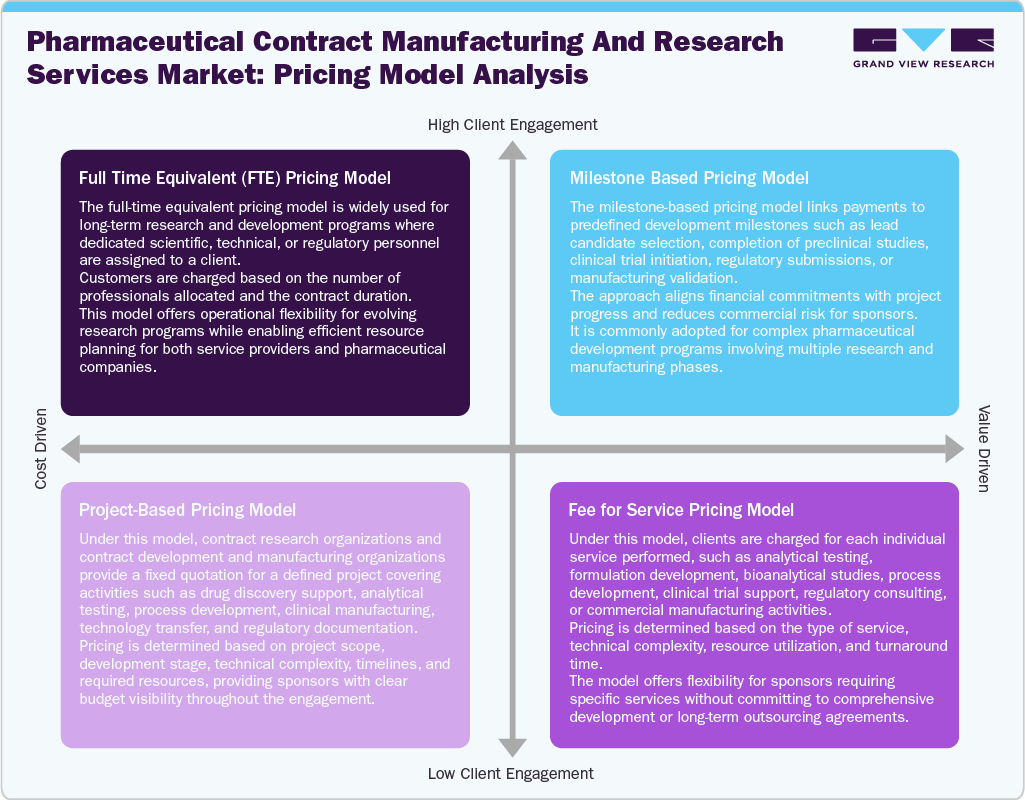
The pharmaceutical contract manufacturing and research services market continues to adopt flexible pricing structures that accommodate varying project sizes, development stages, and outsourcing requirements. Service providers increasingly utilize project-based, fee-for-service, milestone-based, and full-time equivalent pricing models to address diverse customer needs across drug discovery, development, clinical research, manufacturing, and commercialization. Pricing generally varies based on technical complexity, regulatory requirements, development stage, resource allocation, and service scope, rather than product volume alone. Furthermore, pharmaceutical and biotechnology companies are selecting pricing models based on project duration, outsourcing strategy, and operational flexibility, enabling better cost planning and resource management.
The increasing demand for biologics, advanced therapies, and specialized pharmaceutical services has encouraged providers to develop customized commercial structures that align with evolving client requirements. Global contract organizations also adapt pricing based on manufacturing technology, analytical capabilities, quality standards, and regional operating costs to remain competitive across different markets. The continued expansion of integrated CRO and CDMO service offerings is expected to support wider adoption of flexible commercial models that improve financial transparency, strengthen long term customer relationships, and support sustainable growth across the market.
Service Insights
Pharmaceutical contract manufacturing services led the market with a revenue share of more than 66.0% in 2025, driven by the need for scale and cost efficiency, allowing companies to avoid substantial capital expenditure. This trend is amplified by the rising demand for generics, biosimilars, and vaccines requiring cost-effective, large-scale production. Contract manufacturers also provide crucial capacity, flexibility, and comprehensive regulatory and technical support, enabling big pharma to focus on core activities and facilitating growth in emerging markets such as the Asia-Pacific due to cost advantages. In 2024, API/bulk drugs manufacturing dominated the contract manufacturing segment due to increasing HPAPI demand.
Pharmaceutical contract research services are expected to grow at the fastest CAGR over the forecast period. Among these, solid formulations accounted for the largest revenue share in 2025 due to the higher outsourcing for the powdered formulations. It is expected to witness gradual expansion in the coming years as it represents a significant share of the outsourcing of finished dose formulations. Solid-dose manufacturing and oral delivery of new drug candidates, fixed-dose combinations, controlled-release dosage forms, and reformulation of existing drugs are likely to accelerate the growth of contract manufacturing of solid-dose formulations.
Regional Insights
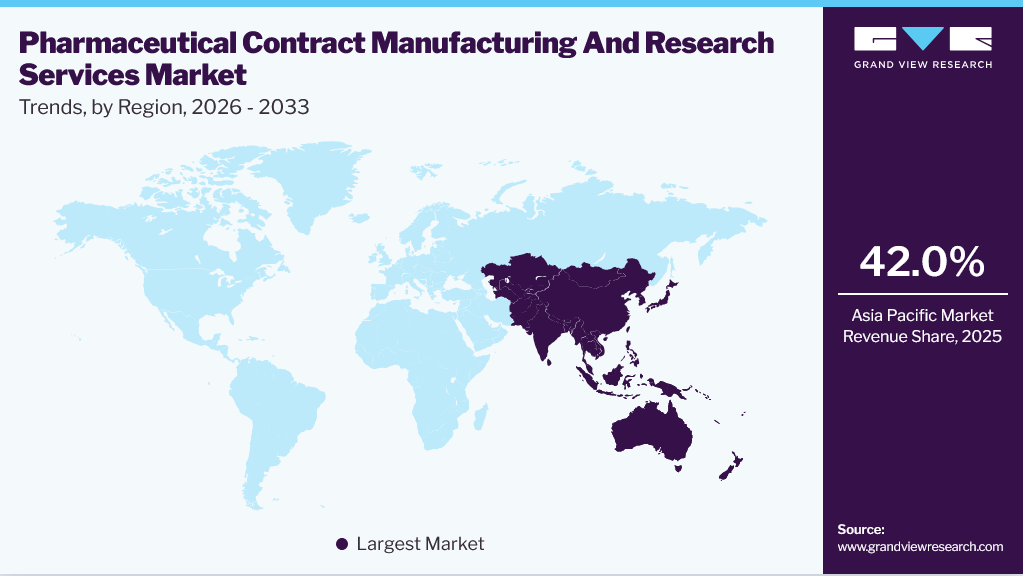
The Asia Pacific pharmaceutical contract manufacturing and research services market dominated the global industry with a revenue share of 42.0% in 2025. The dominance is attributed to a rise in the number of companies outsourcing projects in the developing economies of this region. In recent years, countries such as Singapore, China, and India have been observed as major players in the pharmaceutical industry owing to their expanding manufacturing capabilities. The cash-rich nature of the Asian companies is responsible for the captive nature of the contract manufacturing sector. The spout of significant investments by Asian CMOs is expected to result in exponential progress.
 To learn more about this report, Download Free Sample Report
China Pharmaceutical Contract Manufacturing And Research Services Market Trends
The pharmaceutical contract manufacturing and research services market in China dominated the Asia Pacific market with a revenue share of more than 26.0% in 2025, supported by a rapidly expanding biologics sector, attracting increasing investments in advanced cell and gene therapy manufacturing. The “Made in China 2025” policy strategically promotes self-sufficiency within the high-tech pharmaceutical industry. Furthermore, the establishment of local facilities by multinational CDMOs aims to capitalize on both the global and substantial domestic Chinese market.
North America Pharmaceutical Contract Manufacturing And Research Services Market Trends
North America's pharmaceutical contract manufacturing and research services market held a significant share in the global market in 2025. Comprehensive CDMOs in the region offer end-to-end services, including formulation and regulatory support. The American Cancer Society‘s projections for 2024 estimated approximately 2,001,140 new cancer cases and 611,720 cancer-related deaths in the country. This increasing prevalence directly amplified the demand for specialized oncology research services within the pharmaceutical sector. Government contracts and partnerships are further supporting market growth in the region.
The pharmaceutical contract manufacturing and research services market in the U.S. dominated North America in 2025. The growth of this market is facilitated by substantial investments in single-use bioreactors and modular facilities, driving advancements in biologics and mRNA therapies. In June 2026, Recipharm AB, a global CDMO, announced its latest investment in US operations to strengthen its capabilities for pharmaceutical and biotech companies. The investment was followed by a clinical biologics fill and finish agreement with a global pharma company, highlighting growing demand for contract manufacturing services in the U.S. market.
Patent expirations of prominent drugs are increasing the demand for generic manufacturing outsourcing. Furthermore, the adoption of AI and decentralized clinical trial models by CROs, along with a robust biotech startup ecosystem relying on outsourced R&D, contributes significantly to market growth in the U.S.
Europe Pharmaceutical Contract Manufacturing And Research Services Market Trends
Europe pharmaceutical contract manufacturing and research services market is projected to witness lucrative growth over the forecast period. The demand for CROs in Europe is driven by stringent EMA regulatory compliance for clinical trials. The region’s focus on biosimilars and personalized medicine is further supported by EU-funded research initiatives, fostering innovation and growth. Increasing sustainability mandates across Europe are pushing CMOs to adopt greener manufacturing practices, reflecting a regional priority towards environmental, social, and governance principles within the pharmaceutical sector.
Germany pharmaceutical contract manufacturing and research services market dominated Europe in 2025. Germany’s market benefits from its leadership in small-molecule manufacturing, marked by expertise in complex generics and APIs. Its robust engineering sector facilitates precision in advanced drug delivery systems. Collaborations between academic institutions and CDMOs foster advancements in developing orphan drugs within the region.
Latin America Pharmaceutical Contract Manufacturing And Research Services Market Trends
The Latin American market is anticipated to witness substantial growth over the forecast period due to the presence of established multinational players in this region. Major entities operating in Brazil are Novartis, Roche, and Pfizer. Latin America holds the potential to transform into a global hub for the development and production of pharmaceutical products. Factors responsible for this transformation include the low cost of product development.
Key Pharmaceutical Contract Manufacturing And Research Services Market Companies Insights
Some key companies operating in the market include Catalent, Inc (Novo Holdings A/S); PPD (Thermo Fisher Scientific Inc.); and AbbVie Inc.; among others. Organizations are employing strategic partnerships, M&A, and geographic expansion. Investments in technology and integrated services aim to capitalize on outsourcing demand driven by increasing R&D and the production of generics and biosimilars. For instance, in December 2024, Novo Nordisk completed its USD 16.5 billion CDMO Catalent (USA) acquisition, initially announced in February 2024, aiming to significantly increase its production capacity for key diabetes and weight-loss medications.
-
AbbVie’s contract manufacturing wing provides comprehensive pharmaceutical development and manufacturing services, spanning small and large molecules, including biologics and potent compounds. The company offers global partnerships for clinical and commercial supply, emphasizing quality, flexibility, and supply chain security across various dosage forms.
-
Lonza is a global CDMO specializing in biologics, cell and gene therapies, and small molecule APIs. Lonza offers integrated solutions from early development to commercial production, with notable expertise in mRNA, viral vectors, and continuous manufacturing, serving a diverse global clientele in the pharmaceutical and biotech sectors.
Key Pharmaceutical Contract Manufacturing And Research Services Companies
The following key companies have been profiled for this study on the pharmaceutical contract manufacturing and research services market:
-
Catalent, Inc (Novo Holdings A/S)
-
PPD (Thermo Fisher Scientific Inc.)
-
AbbVie Inc.
-
Advent International, L.P.
-
Grifols, S.A.
-
Dalton Pharma Services
-
Boehringer Ingelheim International GmbH
-
Lonza
Competitive Benchmarking
Category
Operating Strategies
Competitive Edge
Weakness
Established Players (Thermo Fisher Scientific Inc., Lonza Group)
- Established players focus on expanding integrated contract research and manufacturing capabilities across drug discovery, preclinical research, clinical development, commercial manufacturing, analytical testing, packaging, and regulatory support. These companies continue to invest in biologics manufacturing, advanced therapies, digital manufacturing technologies, and global production networks while strengthening end-to-end CRO and CDMO service offerings through capacity expansion and strategic acquisitions.
- Established players benefit from extensive global manufacturing and research infrastructure, diversified service portfolios, advanced technical capabilities, and strong regulatory expertise across multiple therapeutic areas. Their ability to support projects from early drug discovery through commercial manufacturing, combined with long-standing customer relationships and global regulatory compliance, enables them to secure large-scale and long-term outsourcing agreements.
- Established players face challenges including high capital investment requirements for advanced manufacturing facilities, rising regulatory compliance costs, and complex global operations. Large organizational structures may also reduce operational flexibility, extend project implementation timelines, and increase operating expenses compared with smaller specialized service providers.
Emerging Players (Dalton Pharma Services)
- Emerging players primarily focus on specialized research, formulation development, analytical testing, early-phase clinical manufacturing, and niche manufacturing capabilities for biologics, specialty pharmaceuticals, and complex formulations. Many companies invest in flexible manufacturing technologies, targeted facility expansion, and strategic partnerships with biotechnology companies to strengthen technical expertise and expand service offerings.
- Emerging players benefit from flexible operations, customized customer engagement, and faster decision-making across research and manufacturing projects. Their specialized technical capabilities, competitive pricing, and ability to provide tailored development services enable them to establish long-term relationships with emerging pharmaceutical and biotechnology companies.
- Emerging players often face limitations in commercial manufacturing capacity, global market reach, and financial resources required for large infrastructure investments. Limited international regulatory experience, smaller customer portfolios, and increasing competition from established CROs and CDMOs may restrict long-term market expansion and participation in large commercial outsourcing programs.
Recent Developments
-
In May 2026, Alcami Corporation announced acquisition of contract packaging organization Tjoapack. This included acquisition of its facilities in the U.S. and Netherlands. The strategic acquisition expanded Alcami’s operational footprint to more than 1.0 million square feet worldwide.
-
In May 2026, CordenPharma entered in an agreement to acquire AmbioPharm, with its sites in Shanghai, China and South Carolina, U.S. The acquisition aimed at enhancing differentiated peptide manufacturing capabilities.
-
In May 2026, ICON plc, a global Contract Research Organization (CRO), announced the opening of a newly developed Clinical Research Unit (CRU), expanding its early-phase capabilities in Texas, U.S. The newly established facility comprises advanced infrastructure, GMP/GCP-compliant pharmacy and manufacturing space with ISO cleanrooms, shipping and sample processing facilities, and more.
-
In March 2026, Lonza announced that it has entered in definitive agreement to divest its Capsules & Health Ingredients (CHI) business to Lone Star Funds, to attain its strategic portfolio transition to a pure-play CDMO.
-
In January 2025, Lonza (Switzerland) announced its intention to divest its Capsules & Health Ingredients business. This strategic decision aims to allow Lonza to concentrate on its core CDMO operations.
-
In October 2024, Thermo Fisher Scientific (Italy) introduced its Accelerator Drug Development at CPHI Milan. This integrated CDMO and CRO solution aims to expedite drug development across the pharmaceutical value chain.
-
In July 2024, Suven Pharmaceuticals (India), backed by Advent International, proposed acquiring a controlling stake in Sapala Organics (India), a Hyderabad-based CDMO specializing in oligo drugs, with a phased acquisition plan.
-
In June 2024, Dalton Pharma Services (Canada) partnered with 3P Innovation to commission a high-speed aseptic powder filling line, enhancing their drug production capabilities to meet increasing global demand.
Pharmaceutical Contract Manufacturing And Research Services Market Report Scope
Report Attribute
Details
Market size in 2025
USD 287.6 billion
Estimated market size in 2026
USD 309.2 billion
Projected market size by 2033
USD 503.7 billion
Growth Rate
CAGR of 7.2% from 2026 to 2033
Base year for estimation
2025
Actual data
2021 - 2024
Forecast period
2026 - 2033
Quantitative units
Revenue in USD billion, and CAGR from 2026 to 2033
Report coverage
Revenue forecast, company ranking, competitive landscape, growth factors, and trends
Segments covered
Service, region
Regional Scope
North America; Europe; Asia Pacific; Central & South America; Middle East & Africa
Country Scope
U.S.; Canada; Mexico; UK; Germany; France; Italy; Spain; China; India; Japan; Australia & New Zealand, South Korea; Brazil; Argentina, South Africa, UAE
Key companies profiled
Catalent, Inc (Novo Holdings A/S); PPD (Thermo Fisher Scientific Inc.); AbbVie Inc.; Advent International, L.P.; Grifols, S.A.; Dalton Pharma Services; Boehringer Ingelheim International GmbH; Lonza
Customization scope
Free report customization (equivalent up to 8 analysts working days) with purchase. Addition or alteration to country, regional & segment scope.
Pricing and purchase options
Avail of customized purchase options to meet your exact research needs. Explore purchase options
Global Pharmaceutical Contract Manufacturing And Research Services Market Report Segmentation
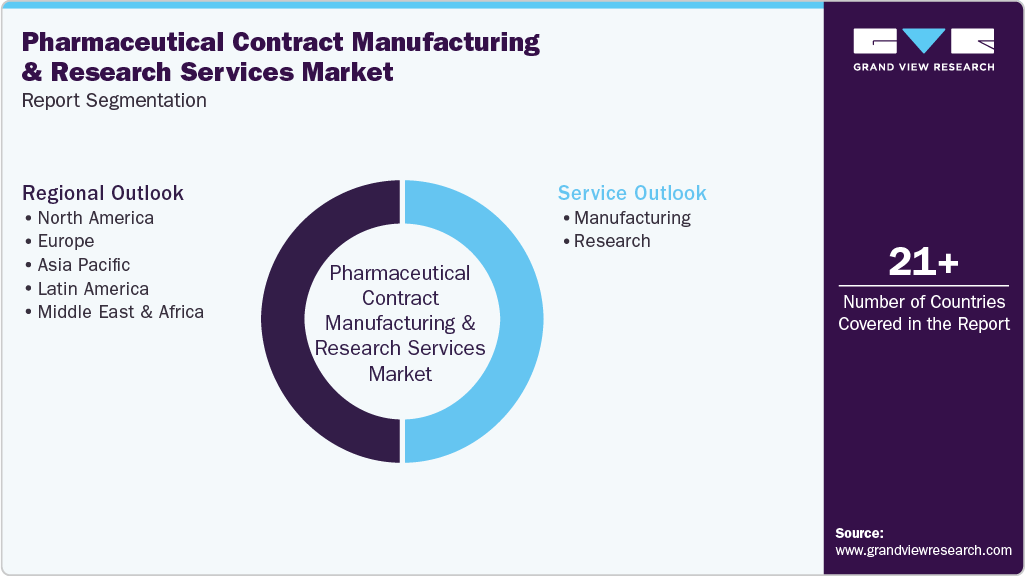
This report forecasts revenue growth at global, regional, and country levels and provides an analysis of the latest industry trends and opportunities in each of the sub-segments from 2021 to 2033. For the purpose of this study, Grand View Research has segmented the global pharmaceutical contract manufacturing and research services market report based on service and region:
 To learn more about this report, Download Free Sample Report
-
Service Outlook (Revenue, USD Million, 2021 - 2033)
-
Manufacturing
-
API/Bulk Drugs
-
Advanced Drug Delivery Formulations
-
Packaging
-
Finished Dose Formulations
-
Solid
-
Liquid
-
Semi-solid Formulations
-
-
-
Research
-
Oncology
-
Vaccines
-
Inflammation & Immunology
-
Cardiology
-
Neuroscience
-
Others
-
-
-
Regional Outlook (Revenue, USD Million, 2021 - 2033)
-
North America
-
U.S.
-
Canada
-
Mexico
-
-
Europe
-
UK
-
Germany
-
France
-
Italy
-
Spain
-
Denmark
-
Sweden
-
Norway
-
-
Asia Pacific
-
China
-
Japan
-
India
-
Australia
-
South Korea
-
Thailand
-
-
Latin America
-
Brazil
-
Argentina
-
-
Middle East & Africa
-
South Africa
-
Saudi Arabia
-
UAE
-
Kuwait
-
-
Research Methodology
The pharmaceutical contract manufacturing and research services market figures in this report are based on a proven research process that combines executive interviews with secondary research from proprietary databases, company filings, and recognized regulatory and institutional sources. Market size is built through value-chain sizing-reconciling supply-side and demand-side estimates-and triangulated with bottom-up and top-down approaches. Every estimate passes multiple levels of expert validation before publication, with each pharmaceutical contract manufacturing and research services segment quantified using the revenue-capture definitions in the table below.
Segment Definition
Segment - Service
Revenue Capture Definition
Manufacturing
The segment captures revenue generated by outsourced pharmaceutical manufacturing services provided by contract development and manufacturing organizations (CDMOs). Services include active pharmaceutical ingredient production, formulation development, process scale-up, clinical and commercial manufacturing, fill-finish operations, packaging, technology transfer, process validation, quality control, and regulatory support for pharmaceutical and biotechnology products.
API/Bulk Drugs
The segment captures revenue generated by outsourced manufacturing services for active pharmaceutical ingredients (APIs) and bulk drugs. Services include custom synthesis, process development, scale-up, analytical testing, process validation, regulatory documentation, and commercial API manufacturing for small molecule and biologic products.
Advanced Drug Delivery Formulations
The segment captures revenue generated by outsourced manufacturing services for advanced drug delivery systems designed to improve therapeutic performance. Services include formulation development, process optimization, clinical and commercial manufacturing, and analytical testing for controlled-release, sustained-release, liposomal, nanoparticle, transdermal, inhalation, and other advanced pharmaceutical formulations.
Packaging
The segment captures revenue generated by outsourced pharmaceutical packaging services. Services include primary and secondary packaging, labeling, serialization, blister packaging, bottle filling, cold-chain packaging, tamper-evident packaging, artwork management, and packaging validation for clinical and commercial pharmaceutical products.
Finished Dose Formulations
The segment captures revenue generated by outsourced manufacturing services for finished pharmaceutical dosage forms. Services include formulation development, clinical manufacturing, commercial manufacturing, fill finish operations, packaging, quality control, and regulatory support for oral, injectable, topical, and other finished pharmaceutical products.
Solid
The segment captures revenue generated by outsourced manufacturing services for solid dosage formulations. Services include formulation development, granulation, blending, compression, encapsulation, coating, packaging, analytical testing, and commercial manufacturing for tablets, capsules, powders, and other solid oral dosage forms.
Liquid
The segment captures revenue generated by outsourced manufacturing services for liquid pharmaceutical formulations. Services include formulation development, sterile and non-sterile manufacturing, filling, packaging, analytical testing, quality assurance, and commercial production for oral liquids, injectables, suspensions, solutions, and ophthalmic products.
Semi solid Formulations
The segment captures revenue generated by outsourced manufacturing services for semi-solid pharmaceutical formulations. Services include formulation development, process optimization, mixing, filling, packaging, analytical testing, and commercial manufacturing for creams, gels, ointments, lotions, and topical pharmaceutical products.
Research
The segment captures revenue generated by outsourced pharmaceutical research services provided by contract research organizations (CROs). Services include drug discovery, target identification, preclinical studies, bioanalytical testing, clinical research, data management, regulatory consulting, and scientific support across multiple therapeutic areas.
Oncology
The segment captures revenue generated by outsourced research services supporting the discovery, preclinical development, and clinical evaluation of oncology therapeutics. Services include target identification, biomarker research, bioanalytical testing, clinical trial management, regulatory support, and data analysis for cancer drug development.
Vaccines
The segment captures revenue generated by outsourced research services supporting vaccine development. Services include antigen discovery, preclinical evaluation, immunogenicity studies, clinical trial management, laboratory testing, data management, and regulatory consulting for preventive and therapeutic vaccines.
Inflammation & Immunology
The segment captures revenue generated by outsourced research services supporting the development of therapeutics for inflammatory and immune-mediated disorders. Services include preclinical research, biomarker analysis, bioanalytical testing, clinical trial management, regulatory support, and data analysis for immunology drug development.
Cardiology
The segment captures revenue generated by outsourced research services supporting cardiovascular drug development. Services include pharmacology studies, bioanalytical testing, clinical trial management, safety monitoring, regulatory consulting, and data management for therapies targeting cardiovascular diseases.
Neuroscience
The segment captures revenue generated by outsourced research services supporting the development of therapies for neurological and psychiatric disorders. Services include target identification, preclinical studies, bioanalytical testing, clinical trial management, medical writing, and regulatory support for neuroscience drug development.
Others
The segment captures revenue generated by outsourced research services supporting pharmaceutical development across additional therapeutic areas, including infectious diseases, metabolic disorders, respiratory diseases, gastrointestinal disorders, rare diseases, dermatology, ophthalmology, and other specialty indications. Services include discovery research, laboratory testing, clinical development, and regulatory support.
Estimation Model
Bottom-Up Revenue Model
Service Capacity Model
Drug Development Pipeline Demand Model
Outsourcing Penetration Model
- Market is estimated by identifying major and emerging contract research organizations (CROs) and contract development and manufacturing organizations (CDMOs) offering drug discovery, clinical, testing, and manufacturing services.
- Revenue attributable to pharmaceutical contract manufacturing and research services is derived from company reports, investor filings, regulatory filings, management commentary, websites, and disclosed outsourcing contracts.
- Company-level revenues are aggregated and validated by assessing service portfolios, manufacturing footprint, capabilities, customer base, benchmarks, and disclosed outsourcing figures to estimate the overall market value.
- Market is estimated by evaluating the operational capacity of pharmaceutical contract manufacturing and research service providers across research laboratories, analytical facilities, biologics manufacturing plants, and production sites.
- Key parameters evaluated include manufacturing capacity, laboratory infrastructure, facility utilization, production lines, manufacturing capabilities, workforce strength, pricing, and regulatory consulting fees.
- Total effective service capacity is translated into potential revenue and cross-checked against reported utilization rates, facility expansion projects, and commercial manufacturing agreements.
- Market is derived by evaluating the number of drug candidates progressing through discovery, preclinical research, clinical development, and regulatory review, and corresponding manufacturing requirements.
- Average outsourcing expenditure is assigned to each development stage, including discovery, regulatory review, clinical trial support, manufacturing, packaging, and regulatory consulting.
- The number of programs is multiplied by estimated expenditure and results are aggregated across therapeutic areas including oncology, infectious diseases, cardiovascular diseases, neuroscience, metabolic disorders, and other therapeutic areas to estimate overall market value.
- Market is estimated by assessing the proportion of pharmaceutical and biotechnology companies outsourcing research, development, and manufacturing activities rather than maintaining fully integrated in-house capabilities.
- Outsourcing penetration rates are determined through interviews with industry participants, assessment of CDMO partnership announcements, development trends, and pharmaceutical investment patterns.
- The addressable market is calculated by applying outsourcing penetration rates to total pharmaceutical research and manufacturing expenditure, estimating the overall pharmaceutical contract manufacturing and research services market.
Delivered Customizations
This report has been delivered with the following In-depth customizations
Client Request
Customization Delivered
Value Adds
Industry Outlook, Value Chain, and Business Model Assessment
Conducted a comprehensive evaluation of the pharmaceutical contract manufacturing and research services ecosystem, covering raw material suppliers, active pharmaceutical ingredient manufacturers, contract research organizations (CROs), contract development and manufacturing organizations (CDMOs), analytical testing laboratories, formulation development providers, clinical trial service providers, packaging companies, logistics partners, and pharmaceutical and biotechnology companies. Assessed prevailing business models, outsourcing strategies, revenue streams, pricing structures, supply chain dependencies, and value creation opportunities across drug discovery, preclinical research, clinical development, analytical testing, process development, commercial manufacturing, packaging, and regulatory support services.
Provides a comprehensive understanding of the pharmaceutical outsourcing ecosystem, industry structure, revenue generation models, supply chain relationships, and business strategies, enabling stakeholders to identify growth opportunities, optimize outsourcing decisions, and support long term investment and expansion planning across the pharmaceutical contract manufacturing and research services value chain.
Competitive Benchmarking and Service Capability Analysis
Performed detailed benchmarking of leading CROs and CDMOs based on service portfolio, research capabilities, manufacturing capacity, biologics and small molecule expertise, regulatory compliance, analytical testing capabilities, clinical development services, commercial manufacturing readiness, technology platforms, geographic presence, digital capabilities, and strategic collaborations. Included comparative assessment of integrated service providers and specialized outsourcing organizations across pharmaceutical research and manufacturing.
Enables identification of competitive strengths, service differentiation opportunities, strategic partnership targets, acquisition prospects, and capability gaps while supporting business expansion, investment planning, and long-term competitive positioning within the pharmaceutical contract manufacturing and research services market.
Global Regulatory Landscape and Compliance Assessment
Conducted a comprehensive assessment of regulatory requirements governing pharmaceutical research, clinical development, and contract manufacturing across North America, Europe, Asia Pacific, Latin America, and the Middle East & Africa. The analysis covered current Good Manufacturing Practice (cGMP), Good Laboratory Practice (GLP), Good Clinical Practice (GCP), International Council for Harmonisation (ICH) guidelines, quality management systems, data integrity requirements, facility inspections, and regional regulatory expectations. The assessment also evaluated regional compliance differences and their impact on outsourcing strategies and operational performance.
Enables pharmaceutical companies, CROs, CDMOs, and investors to understand evolving regulatory requirements, strengthen compliance strategies, minimize operational risks, support successful regulatory inspections, and develop market entry and expansion strategies aligned with regional regulatory frameworks and global quality standards.
Frequently Asked Questions About This Report
The global pharmaceutical contract manufacturing and research services market market size was valued at USD 287.6 billion in 2025 and is estimated at USD 309.2 billion for 2026.
The global pharmaceutical contract manufacturing and research services market is expected to grow at a CAGR of 17.3% from 2026 to 2033, reaching USD 503.7 billion by 2033.
Some key players operating in the pharmaceutical contract manufacturing and research services market include Catalent, Pharmaceutical Product Development LLC, AbbVie, Baxter BioPharma Solutions, Patheon, Grifols International, S.A., Dalton Pharma Services, and Boehringer Ingelheim Biopharmaceuticals GmBh, and Lonza AG.
What are the factors driving the pharmaceutical contract manufacturing and research services market?Key factors that are driving the pharmaceutical contract manufacturing and research services market growth include increasing demand as a consequence of the ongoing patent cliff of the biologic drugs and drug shortage leading to drive demand for pharmaceutical development.
manufacturing services segment held the largest revenue share in 66.0% in 2025, while research segment is the fastest-growing service.
Which region dominated the pharmaceutical contract manufacturing and research services market share?The Asia Pacific dominated the pharmaceutical contract manufacturing and research services market with a share of 42.0% in 2025. This is attributable to the Cash-rich nature of Asian companies.
About the Author(s)
Pharmaceuticals Research Team
Healthcare · PharmaceuticalsThis report was authored by the pharmaceuticals research team at Grand View Research - comprising two research analysts, one senior research analyst, and one industry expert - with specialized expertise in the pharmaceuticals segment of the healthcare industry. All findings are based on proprietary healthcare databases, executive interviews, and regulatory analysis, subject to internal peer review prior to publication.
Last Updated:
Speak to Analyst

Customize this report to your needs - add regions, segments, or data points, with 20% free customization.
Or view our licence options:


ISO 9001:2015 & 27001:2022 Certified
We are GDPR and CCPA compliant! Your transaction & personal information is safe and secure. For more details, please read our privacy policy.


