
- Home
- »
- Medical Devices
- »
-
Pharmaceutical Stability And Storage Services Market Report, 2033GVR Report cover
![Pharmaceutical Stability And Storage Services Market (2026 - 2033)Report]()
Pharmaceutical Stability And Storage Services Market (2026 - 2033)
Size, Share & Trends Analysis Report By Service (Stability, Storage), By Molecule (Small, Large), By Region (North America, Europe, Asia Pacific, Latin America, MEA), And Segment Forecasts
Market Size, 2025
$2.0BMarket Estimate, 2026
$2.2BMarket Forecast, 2033
$3.4BCAGR, 2026–2033
6.5%Pharmaceutical Stability And Storage Services Market Summary
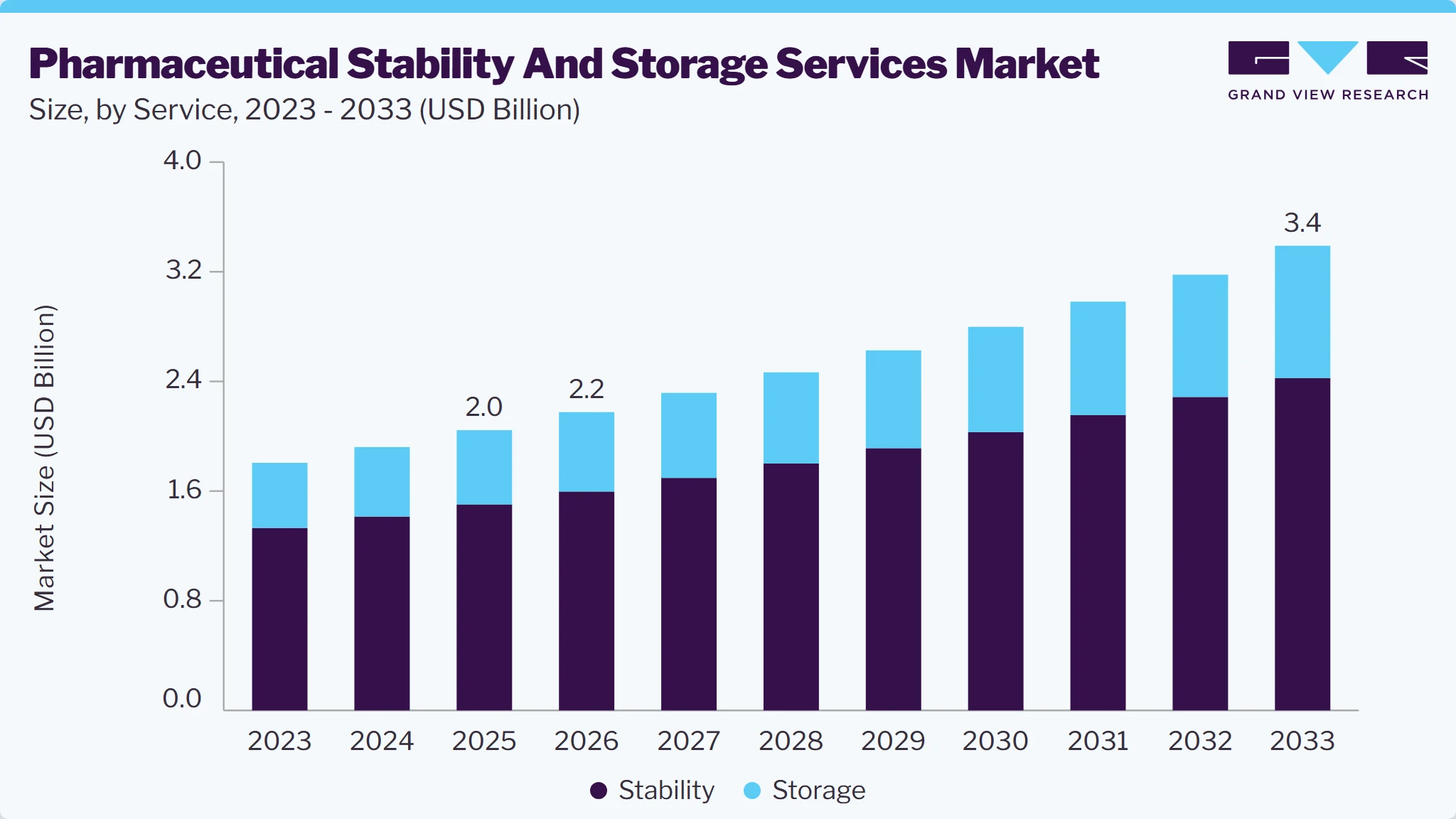
The global pharmaceutical stability and storage services market size was valued at USD 2.0 billion in 2025 and is projected to grow from USD 2.2 billion in 2026 to USD 3.4 billion by 2033, at a CAGR of 6.5% from 2026 to 2033. The market in North America dominated with a revenue share of 40.1% in 2025. Market growth is driven by expanding drug development pipelines, increasing production of biologics & advanced therapies, and mandatory regulatory requirements for shelf-life and storage validation.

Key Market Trends & Insights
- By molecule: Small molecule segment held the largest market share of 79.5% in 2025.
- By service: Stability testing segment held the largest market share of 73.5% in 2025.
Regional Highlights
- Largest regional market: North America (40.1% revenue share, 2025)
- Fastest-growing regional market: Asia Pacific (highest CAGR, 2026-2033)
- By country: The U.S. held the largest market share in 2025
Market Size & Forecast
- Market size in 2025: USD 2.0 Billion
- Estimated market size in 2026: USD 2.2 Billion
- Projected market size by 2033: USD 3.4 Billion
- CAGR (2026-2033): 6.5%
Other factors contributing to market growth include rising outsourcing by pharmaceutical and biotechnology companies, increasing clinical trial activity, greater demand for cold- and ultra-low-temperature storage, recurring commercial stability programs, packaging and formulation changes, and the adoption of digital monitoring and compliant sample-management systems.Market Dynamics
The pharmaceutical stability and storage services industry is shaped by rising product complexity, greater lifecycle-management activity, and the need for reliable access to validated capacity. Currently shifting demand in the market from standardized room-temperature programs toward diversified requirements involving refrigerated, frozen, ultra-low-temperature, humidity-controlled, photostability, freeze-thaw, and customized study conditions is contributing to market growth. This transition is increasing the value of technical consultation, protocol design, analytical integration, and sample-management capabilities.
In addition, the commercial purchasing decisions are increasingly focused on business continuity, redundancy, data integrity, and response times rather than price alone. Besides, sponsors are evaluating providers based on backup capacity, monitoring systems, deviation handling, regulatory inspection readiness, and the ability to accommodate additional samples without disrupting established pull schedules.
Moreover, the market comprises globally integrated laboratory organizations and specialized storage providers. Integrated companies gain an advantage through bundled service offerings, cross-selling opportunities, and end-to-end control of stability programs, whereas specialists differentiate through dedicated capacity, operational flexibility, customized conditions, and faster project onboarding. Besides, growing requirements for pharmaceutical products are expected to drive the facility development near major pharmaceutical and biotechnology hubs, which helps to reduce transportation risks and improve sample accessibility. Thus, most providers are offering technical expertise, digital transparency, reliable capacity, and scalable commercial models, which are expected to drive the market growth.
Expanding pharmaceutical pipelines are increasing the number, duration, and technical complexity of stability programs required across drug development and commercialization. Each new drug substance, formulation, dosage strength, packaging configuration, manufacturing site, or post-approval modification can trigger additional stability testing and sample-storage requirements. This demand is particularly significant for biologics, biosimilars, vaccines, peptides, and advanced therapies, which require tightly controlled refrigerated, frozen, ultra-low-temperature, or cryogenic conditions.
Mandatory lifecycle stability commitments further generate recurring demand after product approval. Commercial products require ongoing stability studies, annual batch placement, retention-sample management, expiry-extension assessments, packaging-change evaluations, process-transfer studies, and regulatory compliance. Thus, the service demand extends throughout the commercial lifecycle rather than ending at approval.
The trend is further supported by smaller biotechnology companies that often lack validated chambers, redundant power systems, environmental monitoring, specialized personnel, and quality-management infrastructure. Outsourcing provides access to scalable capacity, validated storage conditions, compliant documentation, and analytical expertise. Thus, expanding pipelines and mandatory lifecycle stability programs are strengthening demand for specialized pharmaceutical stability and storage services.
Pharmaceutical stability and storage services ideally require substantial investment in qualified stability chambers, refrigerated rooms, freezers, ultra-low-temperature systems, monitoring software, calibration programs, backup power, alarm systems, security controls, and redundant environmental infrastructure. Besides, most service providers continuously maintain specified temperature, humidity, and light conditions throughout studies that can continue for several years. Any prolonged environmental excursion, equipment malfunction, or documentation failure can compromise irreplaceable samples and result in remediation expenses, reputational damage, regulatory concerns, and potential customer claims.
The commercial challenge is intensified by uneven chamber utilization. Providers must reserve adequate capacity for long-term studies, contingency storage, unexpected sample additions, and customer-specific environmental conditions, even when parts of the infrastructure remain underutilized. Operating costs are especially high for refrigerated, frozen, and ultra-low-temperature storage because these systems require continuous energy consumption and redundant cooling support. Smaller providers may find it difficult to finance backup infrastructure or expand capacity before demand is secured. At the same time, excessive capacity expansion can reduce returns on invested capital. These requirements create high barriers to entry and operating leverage, limiting providers' ability to compete on price while maintaining compliance, reliability, and sustainable profitability.
The pharmaceutical stability and storage services industry is expected to witness new growth opportunities due to rising demand for integrated, digitally managed stability programs. Pharmaceutical and biotechnology companies are increasingly seeking providers that combine protocol development, stability-indicating method validation, analytical testing, controlled storage, sample scheduling, data trending, deviation management, and regulatory-ready reporting within a single service platform. This demand is particularly strong among virtual biotechnology companies, biologics manufacturers, and sponsors managing products across multiple regulatory markets.
Moreover, the market is expected to see emerging growth opportunities driven by the expansion of temperature-sensitive drug pipelines, including monoclonal antibodies, vaccines, peptides, biosimilars, and cell and gene therapies. These products require refrigerated, frozen, ultra-low-temperature, or cryogenic storage supported by continuous monitoring and validated backup systems. In addition, cloud-based dashboards, automated alerts, electronic audit trails, barcode tracking, and LIMS integration improve sample visibility and operational control. Providers offering scalable capacity, digital transparency, contingency storage, and end-to-end program management are therefore well-positioned to secure recurring contracts and generate higher-value revenues throughout the product lifecycle. Such factors are expected to drive market growth.
Market Characteristics & Concentration
The pharmaceutical stability and storage services industry is in the moderate growth stage, with growth accelerating. The market is characterized by the degree of innovation, level of M&A activities, regulatory impact, service expansion, and regional expansion.
Innovation is advancing through cloud-connected chamber monitoring, validated digital audit trails, automated sample scheduling, barcode and RFID tracking, predictive maintenance, and real-time environmental alerts. Providers are integrating storage data with laboratory information management and quality management systems to improve traceability and reduce manual errors. Advanced analytical methods are supporting more sensitive detection of degradation products, aggregation, oxidation, potency loss, and container interactions, particularly for biologics and complex formulations. These technologies improve program visibility, operational reliability, and regulatory defensibility.
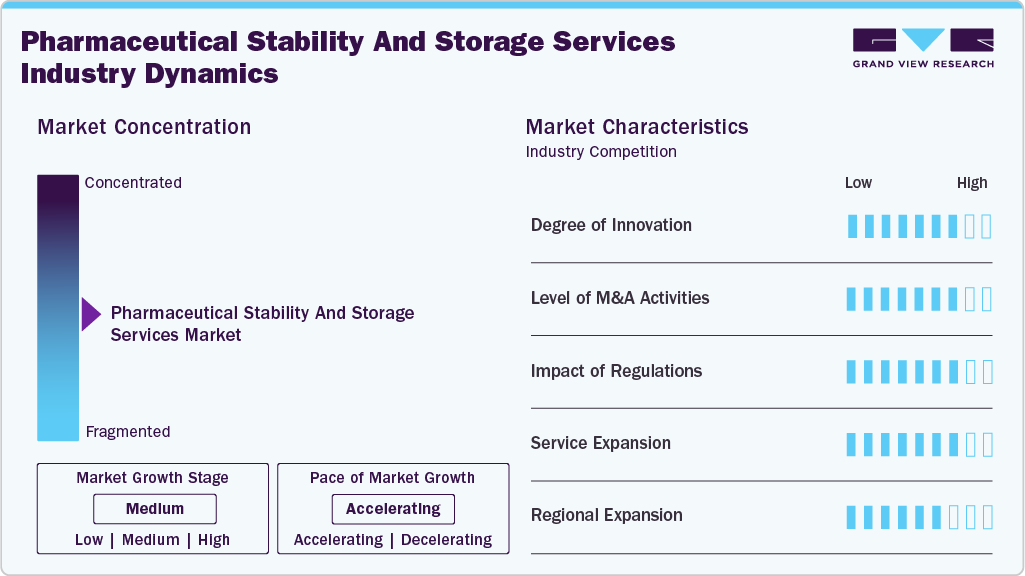
M&A activity is moderate but strategically important, as large analytical testing and pharmaceutical service organizations seek specialized storage capacity, regional facilities, and established customer relationships. Acquisitions allow integrated providers to add validated chambers and geographic coverage more rapidly than developing greenfield infrastructure. Cambrex’s acquisition of Q1 Scientific illustrates the strategic value of adding dedicated environmentally controlled stability storage to its broader pharmaceutical services portfolio. Consolidation can improve cross-selling, capacity utilization, quality-system standardization, and access to multinational contracts.
Regulatory requirements materially shape service demand because pharmaceutical companies must generate stability data supporting retest periods, shelf life, packaging, labeling, transportation, and recommended storage conditions. Providers must maintain GMP-compatible procedures, validated chambers, calibrated equipment, documented excursions, controlled access, complete audit trails, and reliable sample accountability. Increasing scrutiny of data integrity and supply-chain controls raises qualification requirements for external partners. Regulatory complexity favors providers that can design protocols and reporting packages suitable for submissions across multiple jurisdictions.
Providers are moving beyond basic chamber rental toward integrated stability program management. Expanded offerings include protocol development, method validation, forced-degradation studies, sample receipt and aliquoting, analytical testing, pull-point scheduling, data trending, statistical shelf-life evaluation, reference-standard storage, contingency capacity, and regulatory consulting. Companies adding specialized conditions for photostability, freeze-thaw, controlled humidity, ultra-low-temperature storage, and biologic materials are further contributing to market growth. This expansion increases revenue per project and positions providers as long-term product-lifecycle partners rather than standalone storage vendors.
Regional expansion is concentrated near pharmaceutical and biotechnology clusters, where sponsors require rapid access to samples, reduced transportation risk, and locally available, compliant infrastructure. Providers are adding capacity in North America, Europe, and Asia-Pacific while exploring opportunities in emerging pharmaceutical manufacturing markets. Q1 Scientific, for example, operates specialized storage facilities across Ireland, Belgium, and the U.S., while Precision Stability Storage maintains multiple U.S. locations. Local facilities improve business continuity, shorten logistics routes, and support development and commercial programs.
Analyst Perspective
The market is evolving from a laboratory-support function into a critical component of product lifecycle management. The demand varies by molecule complexity, development stage, storage condition, packaging format, and regulatory requirements. Large-molecule programs require intensive support due to sensitivity to temperature excursions, aggregation, oxidation, freeze-thaw cycles, and container-closure interactions, while small molecules continue to generate recurring demand through generic, commercial, and lifecycle stability programs. Competitive differentiation increasingly depends on reliable capacity, validated environmental controls, backup infrastructure, digital audit trails, rapid sample retrieval, and effective deviation management. Integrated testing and storage models are gaining preference among sponsors seeking fewer operational handoffs, whereas specialized providers remain important for contingency capacity and customized conditions. Moreover, the commercial success depends on compliance, technical expertise, accessibility, utilization, and contract flexibility.
Impact of U.S. Tariffs on the Global Pharmaceutical Stability and Storage Services Market
U.S. tariffs can affect the market primarily by raising costs for imported equipment, replacement parts, sensors, refrigeration systems, data loggers, chamber components, laboratory instruments, consumables, and construction materials. Providers developing or expanding U.S. facilities may therefore face higher capital expenditures, longer procurement cycles, and higher maintenance costs. These pressures are particularly relevant for cold, frozen, and ultra-low-temperature infrastructure, where specialized components and redundant systems represent a substantial share of project investment.
Tariffs may alter pharmaceutical supply chains by encouraging manufacturers to reassess sourcing, production locations, inventory levels, and U.S.-based quality-control capacity. Additional manufacturing transfers, supplier changes, packaging modifications, or site relocations can generate new comparability, validation, and stability-study requirements. This may partially offset cost pressures by creating incremental demand for testing and storage services.
Global providers with diversified procurement networks, established U.S. facilities, internal engineering resources, and scale-based purchasing power are likely to manage tariff exposure more effectively. Smaller providers may pass costs to customers through higher storage, testing, or project setup fees. Overall, tariffs are expected to influence provider margins and capital allocation more directly than underlying regulatory demand, which remains structurally supported by mandatory stability requirements.
Technological Advancements
Technological Trend
Description
IoT-Enabled Environmental Monitoring
IoT sensors continuously track temperature, humidity, light exposure, pressure, and equipment performance within stability chambers and storage facilities. Real-time alerts enable rapid intervention when environmental conditions deviate from validated limits, reducing sample loss and strengthening compliance. Cloud-connected monitoring also supports centralized oversight of multiple facilities, automated reporting, electronic audit trails, and faster investigation of deviations.
Automated Sample Management
Barcode, RFID, and robotic sample-handling systems automate sample receipt, location tracking, pull scheduling, transfer, and retrieval. These technologies reduce manual handling errors, improve chain-of-custody documentation, and support high-volume stability programs. Automated workflows enhance traceability, enable long-term inventory control, improve operational efficiency, and provide greater accuracy across storage locations and geographic sites.
Predictive Analytics and AI
AI-enabled analytics evaluate environmental trends, chamber performance, testing results, and historical degradation data to identify potential failures before they occur. Predictive maintenance reduces equipment downtime, while advanced data modeling supports shelf-life estimation, capacity planning, and deviation assessment. These capabilities improve decision-making, resource utilization, and overall risk-based quality management.
Digital LIMS and Stability Platforms
Validated Laboratory Information Management Systems (LIMS) integrate stability protocols, sample inventories, test schedules, analytical results, deviations, and regulatory documentation. These platforms improve data integrity, streamline review and approval processes, and provide real-time visibility into study progress. Integration with quality management systems and analytical instruments supports efficient reporting, consistent documentation, and faster regulatory audits.
Advanced Cold-Storage Technologies
Modern storage facilities increasingly use energy-efficient refrigeration, automated backup systems, ultra-low temperature freezers, cryogenic platforms, and redundant power infrastructure. These technologies support temperature-sensitive biologics, vaccines, cell and gene therapies, and research materials. Enhanced insulation, cascade cooling, and automated alarm escalation improve temperature stability, business continuity, and operational reliability.
Technological advancement in the market is centered on improving environmental control, sample traceability, data integrity, and operational reliability. IoT-enabled sensors continuously monitor temperature, humidity, light exposure, pressure, and chamber performance, while automated alerts enable rapid response to excursions. Barcode, RFID, and robotic sample-management systems improve sample receipt, inventory tracking, pull scheduling, retrieval, and chain-of-custody documentation across long-term stability programs. Validated laboratory information management systems integrate study protocols, storage conditions, analytical results, deviations, and regulatory records, reducing spreadsheet-based processes and supporting audit readiness. AI and predictive analytics are increasingly used to identify equipment-performance trends, anticipate chamber failures, optimize capacity utilization, support predictive maintenance, and evaluate degradation patterns. Advanced refrigeration technologies, including energy-efficient stability chambers, ultra-low-temperature freezers, cryogenic storage systems, redundant cooling units, and automated backup power systems, are enhancing storage reliability for biologics, vaccines, peptides, and cell and gene therapies. Cloud-based dashboards further enable centralized oversight of multiple facilities, real-time study visibility, electronic audit trails, and automated reporting. Thus, these technologies reduce the risk of sample loss, improve regulatory compliance, enhance study execution, and support scalable management of complex pharmaceutical stability and storage programs.
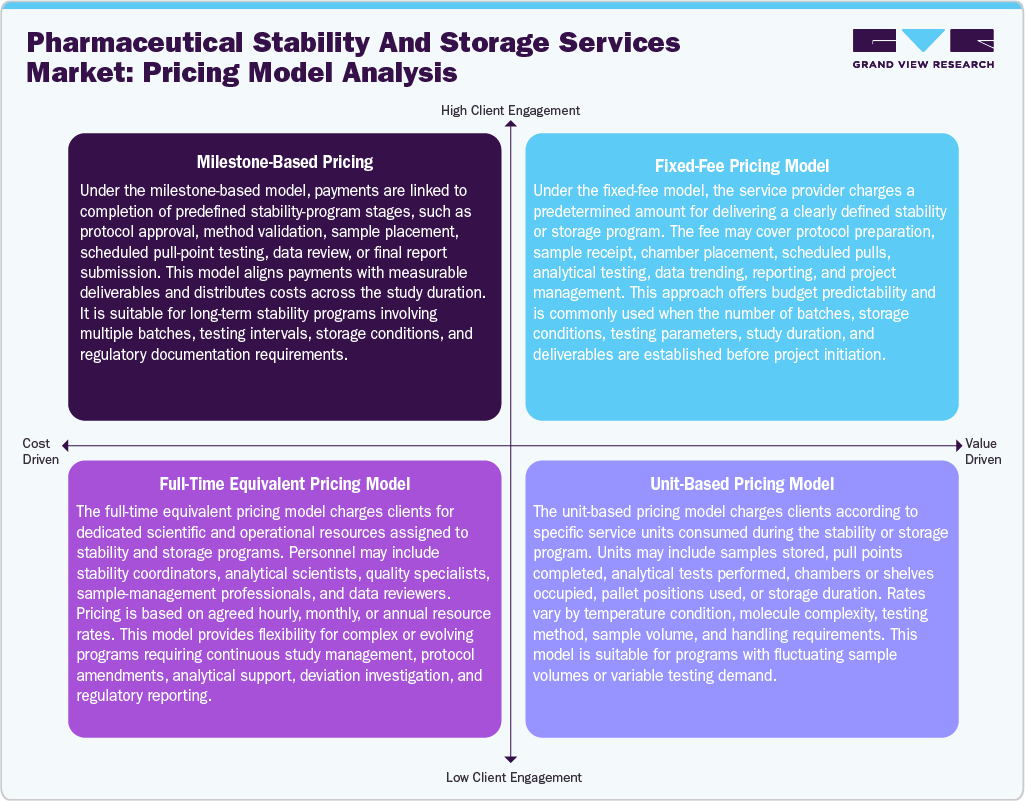
Pricing within the market is generally structured through milestone-based, full-time equivalent, fixed-fee, and unit-based models. Milestone-based pricing links payments to defined deliverables, including protocol approval, method validation, sample placement, pull-point completion, analytical reporting, and study closure. It is suitable for multi-stage programs requiring clear performance accountability. Besides, the full-time equivalent pricing is applied when dedicated scientists, stability coordinators, quality specialists, or sample-management personnel are assigned to complex and evolving programs. Fixed-fee pricing provides cost predictability for studies with predefined batches, conditions, testing schedules, duration, and deliverables.
In addition, unit-based pricing charges according to measurable consumption, such as samples stored, tests performed, pull points completed, shelf space occupied, or storage duration. Controlled room-temperature storage typically carries lower rates, whereas refrigerated, frozen, ultra-low-temperature, photostability, and humidity-controlled conditions command premiums. Moreover, the pricing is influenced by molecule complexity, analytical requirements, dedicated capacity, expedited retrieval, protocol amendments, regulatory documentation, hazardous-material handling, and contingency-storage requirements.
Services Insights
The stability testing services segment led the market, accounting for 73.5% of revenue in 2025. The segment growth is driven by mandatory regulatory requirements for establishing product shelf life, retest periods, storage conditions, and packaging suitability. Pharmaceutical and biotechnology companies require long-term, accelerated, photostability, stress, and in-use studies throughout product development and commercialization. Recurring post-approval commitments, formulation changes, manufacturing-site transfers, and packaging modifications further sustain demand. The segment benefits from the increasing analytical complexity of biologics, specialty drugs, and combination products, which require validated stability-indicating methods and detailed degradation assessments.
The storage segment is anticipated to register the fastest growth during the forecast period, attributed to rising demand for validated, temperature-controlled, and humidity-controlled pharmaceutical storage capacity. The growth in biologics, vaccines, peptides, cell and gene therapies, and clinical trial materials is increasing the requirements for refrigerated, frozen, ultra-low-temperature, and cryogenic environments. Pharmaceutical companies are using external storage providers to avoid high infrastructure costs and improve business continuity. Expansion of commercial stability programs, retention-sample requirements, contingency storage, and real-time digital monitoring further support rapid segment growth.
Molecule Insights
The small molecule segment led the market with the largest revenue share of 79.5% in 2025. The growth is driven by a large number of approved products, generic formulations, development-stage compounds, and commercial batches requiring ongoing stability evaluation. Small molecules span oral solids, liquids, injectables, and topical products, creating broad demand for long-term, accelerated, photostability, and stress studies. Frequent formulation changes, packaging modifications, manufacturing transfers, and regulatory submissions generate recurring testing and storage requirements. The segment benefits from the extensive global pipeline of small-molecule drugs and comparatively high batch volumes.
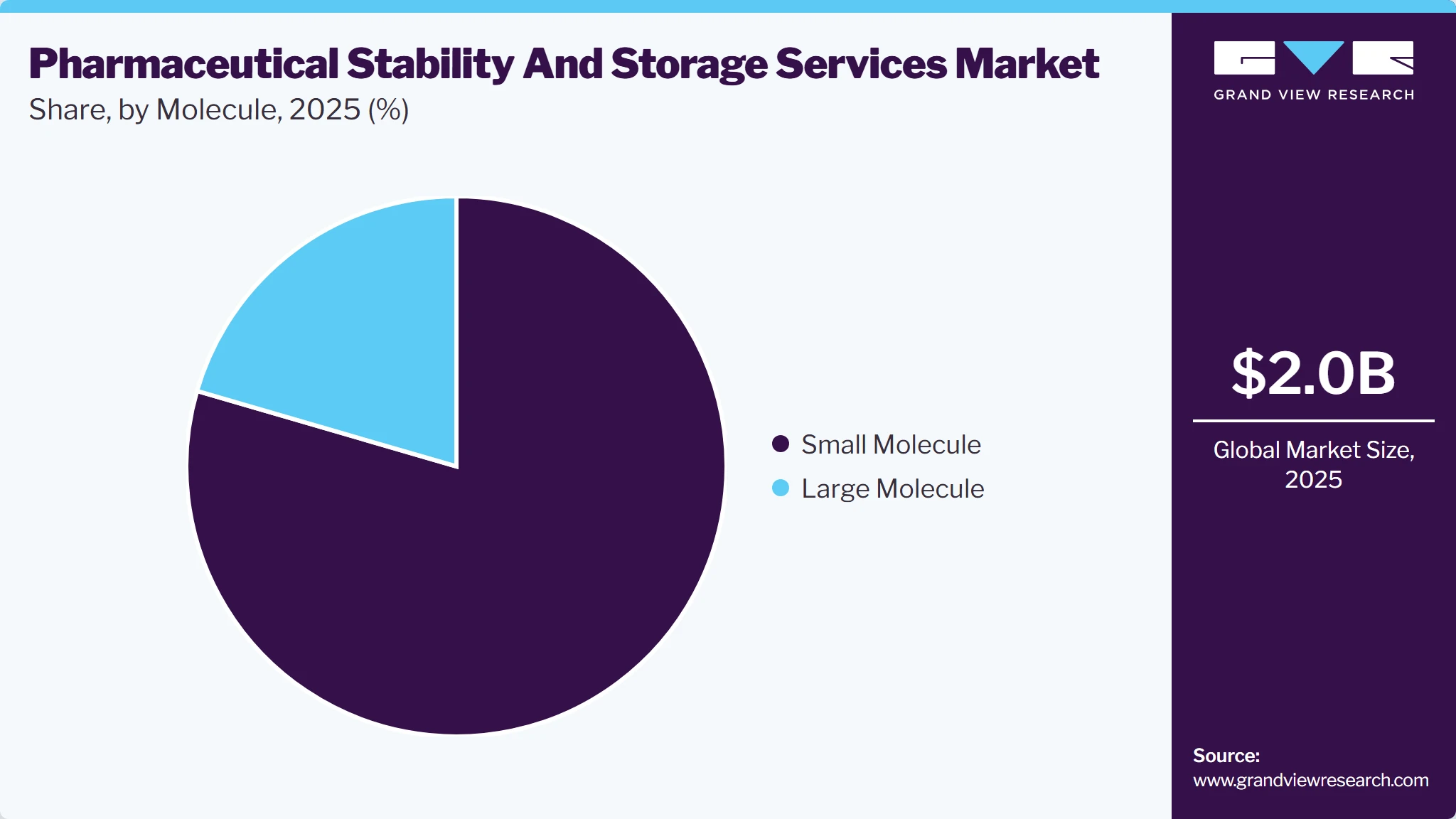
The large molecule segment is anticipated to register the fastest growth during the forecast period due to expanding pipelines of monoclonal antibodies, recombinant proteins, vaccines, biosimilars, peptides, and advanced therapies. These products are highly sensitive to temperature excursions, aggregation, oxidation, light exposure, agitation, and freeze-thaw cycles, increasing the need for specialized stability programs and controlled storage. Rising biologics approvals, increasing clinical development activity, and greater outsourcing by biotechnology companies are supporting demand for refrigerated, frozen, ultra-low-temperature, and cryogenic storage, along with advanced analytical characterization and digital monitoring.
Regional Insights
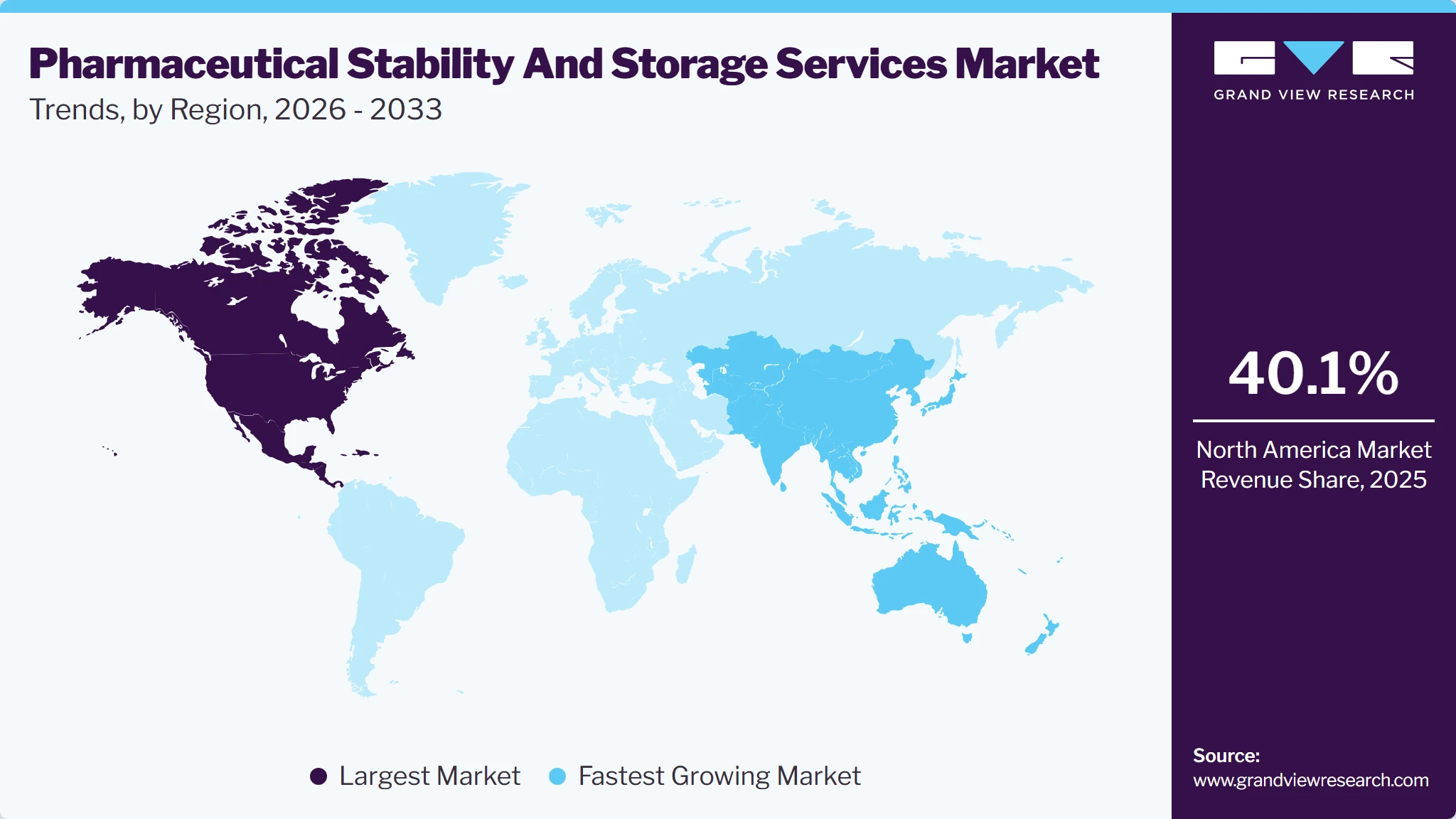
North America dominated the pharmaceutical stability and storage services market with the largest revenue share of 40.1% in 2025, driven by the region’s extensive pharmaceutical and biotechnology R&D pipeline, high concentration of drug sponsors, and stringent requirements for shelf-life establishment and post-approval stability monitoring. Strong development of biologics, vaccines, sterile injectables, and advanced therapies is increasing demand for refrigerated, frozen, ultra-low-temperature, and humidity-controlled storage. Pharmaceutical companies require accelerated, intermediate, photostability, freeze-thaw, and in-use stability studies across clinical and commercial batches. The availability of GMP-compliant laboratories, validated stability chambers, automated sample-management systems, and experienced analytical service providers further supports regional market leadership.
U.S. Pharmaceutical Stability and Storage Services Market Trends
The pharmaceutical stability and storage services market in the U.S. held the largest share in North America. The country benefits from a large pharmaceutical, biotechnology, and clinical-stage drug-development ecosystem that generates substantial volumes of stability samples across development, registration, and commercial lifecycle programs. FDA requirements for written stability-testing programs, expiration dating, storage-condition justification, and container-closure monitoring encourage sponsors to use qualified external facilities. The demand is particularly strong for biologics requiring complex physicochemical, biochemical, immunochemical, and potency testing under tightly controlled conditions. Rising development of injectable drugs, monoclonal antibodies, vaccines, and cell and gene therapies is further increasing requirements for ultra-low-temperature storage, backup capacity, continuous monitoring, and regulatory-ready data management.
Canada pharmaceutical stability and storage services market is expected to grow steadily over the forecast period, driven by the established pharmaceutical manufacturing base, expanding biotechnology sector, and increasing clinical research activity. Health Canada requires drug manufacturers to maintain ongoing stability programs that evaluate quality attributes susceptible to change during storage and confirm suitable expiry periods and environmental conditions. The demand is supported by temperature-control requirements covering storage and transportation, particularly for biologics, vaccines, specialty medicines, and clinical trial materials. Canadian sponsors increasingly require validated refrigerated and frozen storage, temperature mapping, excursion management, sample retention, and analytical testing. Compliance with Health Canada GMP and PIC/S-aligned expectations strengthens the role of specialized third-party service providers.
Europe Pharmaceutical Stability and Storage Services Market Trends
The pharmaceutical stability and storage services market in Europe accounted for a significant share in 2025, driven by its mature pharmaceutical manufacturing sector, strong biologics pipeline, and harmonized regulatory framework for stability evaluation. EMA and ICH guidelines require stability data to establish shelf life, retest periods, labeled storage conditions, and product quality throughout the commercial lifecycle. The demand spans long-term, accelerated, intermediate, photostability, transport simulation, and in-use studies for small molecules, biologics, vaccines, and advanced therapy medicinal products. The presence of multinational pharmaceutical companies, specialized analytical laboratories, and contract development organizations supports service adoption. Cross-border development programs create demand for standardized protocols, centralized sample storage, audit-ready documentation, and multi-market regulatory support.
The UK pharmaceutical stability and storage services market is expected to grow significantly over the forecast period. The market growth is supported by the country’s strong biotechnology clusters, clinical research ecosystem, and expanding development of biologics, vaccines, cell therapies, gene therapies, and precision medicines. Small and mid-sized biotechnology companies frequently lack sufficient in-house chamber capacity and therefore use external providers for long-term stability storage, accelerated studies, sample management, method transfer, and stability-indicating analysis. The demand is increasing for decentralized clinical trial supplies and temperature-sensitive investigational products requiring monitored refrigerated, frozen, or cryogenic storage. Service providers offering MHRA-compliant facilities, electronic inventory systems, disaster recovery, rapid sample retrieval, and support for UK and European regulatory submissions are expected to gain greater market traction.
The pharmaceutical stability and storage services market in Germany held the largest share of the European market in 2025, driven by the country’s major pharmaceutical and chemical manufacturing base, strong export orientation, and concentration of biologics and specialty-drug developers. German manufacturers require comprehensive stability programs to support EMA submissions, lifecycle changes, manufacturing-site transfers, and global product registrations. The demand is particularly strong for controlled-room-temperature, refrigerated, frozen, and ultra-low-temperature storage combined with validated analytical testing. The market benefits from Germany’s established network of GMP-certified laboratories, CDMOs, equipment manufacturers, and logistics providers. High emphasis on data integrity, chamber qualification, continuous environmental monitoring, backup systems, and documented deviation handling encourages pharmaceutical companies to engage technically advanced stability service providers.
Asia Pacific Pharmaceutical Stability and Storage Services Market Trends
The pharmaceutical stability and storage services market in the Asia Pacific is projected to register the fastest CAGR during the forecast period, driven by rapid expansion in pharmaceutical manufacturing, rising clinical trial activity, and growing investment in biologics, biosimilars, vaccines, and complex generic drugs. Manufacturers across the region are increasing exports to regulated markets, creating greater demand for stability studies designed according to ICH, FDA, and EMA expectations. Diverse climatic conditions necessitate high-temperature and high-humidity stability programs, packaging compatibility studies, and transport-condition assessments. The growth of regional CDMOs and biotechnology start-ups is supporting the outsourcing of sample storage and analytical testing. Providers are expanding validated chamber capacity, digital sample tracking, ultra-low-temperature infrastructure, and regulatory documentation services to support domestic and international product registrations.
China pharmaceutical stability and storage services market is rapidly growing due to expanding innovative drug development, biosimilar production, vaccine manufacturing, and increasing alignment of regulatory submissions with international quality standards. Domestic pharmaceutical companies seeking approvals in the U.S., Europe, and other regulated markets require ICH-compliant long-term, accelerated, photostability, and stress-testing programs. The growth in monoclonal antibodies, recombinant proteins, antibody-drug conjugates, and cell and gene therapies is increasing demand for refrigerated, frozen, and ultra-low-temperature sample storage. Chinese sponsors are outsourcing stability activities to reduce laboratory investment and accelerate development timelines. Providers with GMP-qualified chambers, validated analytical methods, secure sample management systems, and bilingual regulatory documentation are well-positioned to capture growing demand from domestic and multinational clients.
The pharmaceutical stability and storage services market in Japan is driven by its established research-based pharmaceutical industry, high regulatory quality expectations, and growing development of biologics, regenerative medicines, vaccines, and specialty drugs. Japanese sponsors require extensive evidence of stability to establish shelf life, storage conditions, packaging suitability, and product performance throughout development and post-approval changes. The demand is increasing for temperature-controlled storage, accelerated and stress studies, freeze-thaw evaluation, photostability testing, and stability-indicating analytical services. The country’s aging population and continued demand for advanced therapies are sustaining product-development activity. Pharmaceutical companies value service providers offering highly reliable chamber performance, detailed documentation, rapid deviation investigation, business-continuity systems, and support for both domestic and international regulatory submissions.
India pharmaceutical stability and storage services market is experiencing rapid expansion, attributed to the country’s large generic-drug manufacturing base, vaccine production capabilities, growing biosimilar sector, and increasing contract research and manufacturing activity. Indian companies exporting medicines to the U.S., Europe, and other regulated markets require extensive ICH-compliant stability data covering multiple climatic zones and packaging configurations. The demand is rising for long-term, accelerated, intermediate, photostability, and in-use studies, particularly for oral solids, injectables, vaccines, and biologics. The expansion of domestic biotechnology companies is increasing demand for refrigerated and frozen sample storage. Cost-efficient laboratory operations, skilled analytical personnel, and investments in automated stability chambers and electronic data systems further support market growth.
Latin America Pharmaceutical Stability and Storage Services Market Trends
The pharmaceutical stability and storage services market in Latin America is expected to grow significantly, driven by expanding local drug production, increasing clinical research, and greater adoption of international quality standards. Regional manufacturers require stability studies to support product registrations, generic-drug development, technology transfers, and exports to regulated markets. The region’s warm and humid climatic conditions create specific demand for accelerated testing, high-humidity storage, packaging evaluation, and temperature-excursion studies. The growth in vaccines, biosimilars, sterile injectables, and specialty medicines is increasing requirements for refrigerated and frozen storage. Limited in-house analytical capacity among smaller manufacturers is encouraging outsourcing to qualified laboratories offering stability chambers, sample management, method validation, and regulatory-compliant reporting.
Brazil pharmaceutical stability and storage services market is driven by its large domestic pharmaceutical industry, extensive public healthcare requirements, and expanding production of generic drugs, vaccines, biologics, and biosimilars. Pharmaceutical manufacturers require region-specific stability programs to demonstrate product quality under Brazil’s high-temperature and high-humidity environmental conditions. This supports demand for accelerated stability testing, controlled-humidity chambers, packaging integrity studies, and temperature-excursion assessment. Besides, both local and multinational companies require stability data for ANVISA submissions, post-approval variations, imported products, and manufacturing site changes. Increasing investment in biotechnology and vaccine production is strengthening demand for refrigerated and frozen sample storage. Providers offering GMP-compliant facilities, validated methods, digital sample tracking, and regulatory support are expected to benefit.
Middle East & Africa Pharmaceutical Stability and Storage Services Market Trends
The pharmaceutical stability and storage services market in MEA is projected to grow steadily, driven by increasing pharmaceutical manufacturing investment, greater localization of medicine production, and rising imports of temperature-sensitive biologics, vaccines, and specialty drugs. The region’s hot climatic conditions create substantial requirements for stability studies under elevated temperature and humidity, transport simulation, packaging suitability, and excursion management. Governments are promoting local production to improve medicine security, encouraging manufacturers to establish quality-control and stability programs. However, limited specialized laboratory capacity in several countries supports outsourcing to regional and international providers. The demand is expected to concentrate around GMP-compliant storage facilities, validated environmental monitoring, backup power, cold-chain infrastructure, and documentation supporting local registrations and international quality requirements.
The UAE pharmaceutical stability and storage services market is anticipated to be driven by expanding pharmaceutical manufacturing, healthcare investment, clinical research, and the country’s position as a regional distribution hub. High ambient temperatures make validated storage conditions, temperature mapping, excursion studies, and packaging-performance evaluation particularly important for medicines distributed across the Gulf region. The demand is increasing for controlled-room-temperature, refrigerated, frozen, and ultra-low-temperature facilities supporting vaccines, biologics, specialty injectables, and clinical trial materials. Government initiatives encouraging local pharmaceutical production and life-science investment are further strengthening requirements for stability testing and sample storage. Providers offering GMP-compliant infrastructure, continuous monitoring, backup systems, rapid sample retrieval, and regulatory documentation for UAE and wider GCC registrations are well-positioned. Such factors are expected to drive the market growth.
Key Pharmaceutical Stability And Storage Services Company Insights
Key players operating across the market are adopting strategic initiatives such as service launches, mergers & acquisitions, partnerships & agreements, and expansions to gain a competitive edge. For instance, in May 2026, Intertek expanded its GMP-compliant pharmaceutical stability storage facility in Royston, near Cambridge, UK. The site now offers a total storage capacity of 625,000 liters, strengthening Intertek’s position as one of Europe’s largest contract pharmaceutical storage providers.
Key Pharmaceutical Stability And Storage Services Companies
The following key companies have been profiled for this study on the pharmaceutical stability and storage services market:
-
Catalent, Inc
-
Almac Group
-
Charles River Laboratories
-
Eurofins Scientific
-
Intertek Group plc
-
Lucideon Limited
-
Alcami Corporation
-
Element Materials Technology
-
BioLife Solutions Inc.
-
Q1 Scientific
-
Reading Scientific Services Ltd.
-
Roylance Stability Storage Limited
-
ALS
-
Q Laboratories
-
Auriga Research Private Limited
-
PD Partners
-
Precision Stability Storage
-
SGS Société Générale de Surveillance SA.
Competitive Benchmarking
Category
Operating Strategies
Competitive Edge
Weakness
Established Players (Catalent, Charles River Laboratories, Eurofins Scientific)
- Established participants pursue integrated stability testing, analytical characterization, sample management, and controlled-storage offerings across multiple regions. Their strategies emphasize GMP capacity expansion, laboratory-network optimization, cross-selling across development stages, strategic acquisitions, digital monitoring, and long-term sponsor contracts. They increasingly position stability programs within broader drug-development, manufacturing, quality control, and regulatory support portfolios.
- Their competitive advantage originates from global laboratory networks, established quality systems, broad analytical capabilities, regulatory inspection histories, and the financial capacity to maintain redundant infrastructure. Integrated providers can support complex products across several jurisdictions, accommodate large stability programs, offer testing and storage through one contract, and provide standardized documentation for multinational regulatory submissions.
- Large providers can face higher operating costs, complex organizational structures, slower contract customization, and longer onboarding procedures. Their standardized commercial models may be less suitable for small-volume or highly specialized projects. Capacity allocation across global accounts can limit flexibility, while acquisitions may create temporary integration challenges involving laboratory systems, pricing, quality procedures, and customer communication.
Emerging Players (Q1 Scientific, Roylance Stability Storage Limited, Q Laboratories)
- Emerging participants focus on specialized stability storage, responsive project onboarding, customized chamber conditions, flexible sample volumes, and regional customer proximity. Their strategies include expanding targeted storage capacity, serving biotechnology and virtual pharmaceutical companies, offering contingency and disaster-recovery storage, deploying remote monitoring systems, and developing partnerships with laboratories that provide complementary analytical testing services.
- Emerging providers compete through operational agility, focused technical expertise, faster decision-making, and flexible commercial arrangements. Dedicated facilities can accommodate nonstandard temperature, humidity, photostability, freezer, and backup-storage requirements without competing internally for broader laboratory resources. Their narrower service scope supports responsive communication, customized protocols, cost-effective capacity, and stronger relationships with small and mid-sized sponsors.
- Specialist providers generally have smaller geographic networks, limited analytical-service integration, lower investment capacity, and greater exposure to facility-level disruptions. Their dependence on selected regions or customer groups can increase revenue volatility. Some providers must rely on third-party laboratories for analytical testing, which can create coordination challenges, fragmented accountability, additional logistical requirements, and longer turnaround times for multinational stability programs.
Recent Developments
-
In March 2025, the Eurofins BioPharma Product Testing (EBPT) network in France, a global leader in analytical services for the pharmaceutical and medical device industries, inaugurated the extension of its Saint-Augustin site in Corrèze in 2024. This extension concerns a new European center dedicated to stability studies under GMP conditions: STABIOCOR, an acronym for “Stability of Pharmaceutical Bioproduction in Corrèze.”
-
In October 2024, Cambrex announced its stability storage business, Q1 Scientific, and opened a new cGMP facility in North Carolina, expanding its capacity for environmentally controlled stability storage services to North America's pharmaceutical, medical device, and life sciences industries.
Pharmaceutical Stability and Storage Services Market Report Scope
Report Attribute
Details
Market size in 2025
USD 2.0 billion
Estimated market size in 2026
USD 2.2 billion
Projected market size by 2033
USD 3.4 billion
Growth rate
CAGR of 6.5% from 2026 to 2033
Actual data
2021 - 2025
Forecast period
2026 - 2033
Quantitative units
Revenue in USD billion and CAGR from 2026 to 2033
Report coverage
Revenue forecast, company ranking, competitive landscape, growth factors, and trends
Segments covered
Service, molecule, region
Regional scope
North America; Europe; Asia Pacific; Latin America; MEA
Country scope
U.S.; Canada; Mexico; UK; Germany; France; Italy; Spain; Denmark; Sweden; Norway; China; India; Japan; Australia; South Korea; Thailand; Brazil; Argentina; South Africa; UAE; Saudi Arabia; Kuwait; Qatar; Oman
Key companies profiled
Catalent, Inc.; Almac Group; Charles River Laboratories; Eurofins Scientific; Intertek Group plc; Lucideon Limited; Alcami Corporation; Element Materials Technology; BioLife Solutions Inc.; Q1 Scientific; Reading Scientific Services Ltd.; Roylance Stability Storage Limited; ALS; Q Laboratories; Auriga Research Private Limited; PD Partners; Precision Stability Storage; SGS Société Générale de Surveillance SA.
Customization scope
Free report customization (equivalent up to 8 analysts working days) with purchase. Addition or alteration to country, regional & segment scope.
Pricing and purchase options
Avail customized purchase options to meet your exact research needs. Explore purchase options
Global Pharmaceutical Stability And Storage Services Market Report
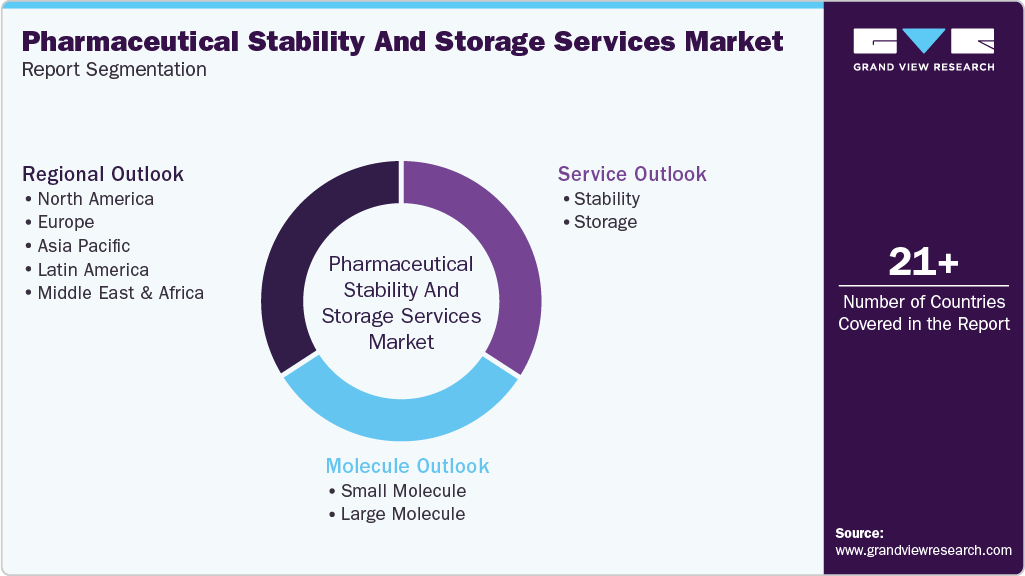
This report forecasts revenue growth at global, regional, and country levels and provides an analysis of the latest industry trends in each of the sub-segments from 2021 to 2033. For this study, Grand View Research has segmented the global pharmaceutical stability and storage services market report based on service, molecule, and region.
-
Service Outlook (Revenue, USD Million, 2021 - 2033)
-
Stability
-
Drug Substance
-
Stability Indicating Method Validation
-
Accelerated Stability Testing
-
Photostability Testing
-
Other Stability Testing Methods
-
-
Storage
-
Cold
-
Non-cold
-
-
-
Molecule Outlook (Revenue, USD Million, 2021 - 2033)
-
Small Molecule
-
Research Products
-
Commercial Products
-
-
Large Molecule
-
Research Products
-
Commercial Products
-
-
-
Regional Outlook (Revenue, USD Million, 2021 - 2033)
-
North America
-
U.S.
-
Canada
-
Mexico
-
-
Europe
-
UK
-
Germany
-
France
-
Italy
-
Spain
-
Denmark
-
Sweden
-
Norway
-
-
Asia Pacific
-
China
-
India
-
Japan
-
Australia
-
South Korea
-
Thailand
-
-
Latin America
-
Brazil
-
Argentina
-
-
Middle East & Africa
-
South Africa
-
UAE
-
Saudi Arabia
-
Kuwait
-
Qatar
-
Oman
-
-
Research Methodology
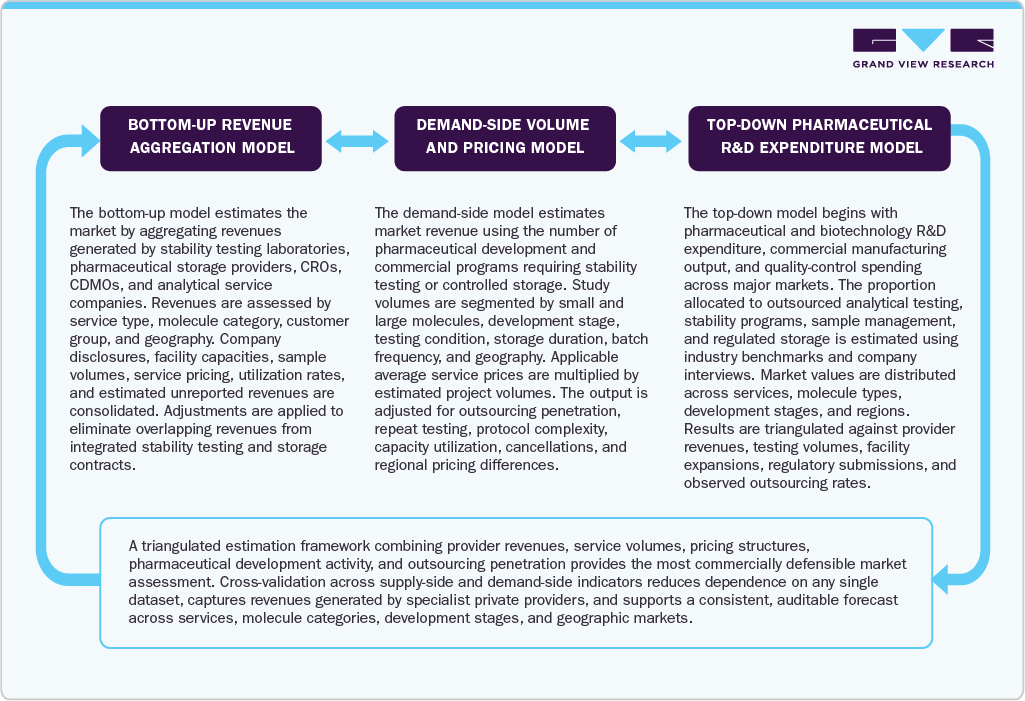
The pharmaceutical stability and storage services market figures in this report are based on a proven research process that combines executive interviews with secondary research from proprietary databases, company filings, and recognized regulatory and institutional sources. Market size is built through value-chain sizing—reconciling supply-side and demand-side estimates—and triangulated with bottom-up and top-down approaches. Every estimate passes multiple levels of expert validation before publication, with each pharmaceutical stability and storage services segment quantified using the revenue-capture definitions in the table below.
Segment Definition
Segment - Service
Revenue capture definition
Stability
The stability segment captures revenue generated by providing pharmaceutical stability testing services to pharmaceutical, biotechnology, biopharmaceutical, contract manufacturing, and research organizations. It includes studies conducted to evaluate changes in the quality, safety, potency, purity, and physical or chemical characteristics of drug substances and drug products under defined environmental conditions. The segment includes drug substance stability testing, stability-indicating method validation, accelerated stability testing, photostability testing, and other stability testing methods.
Drug Substance
The drug substance segment captures revenue generated by providing stability testing services for active pharmaceutical ingredients, biologically active substances, intermediates, and other materials used in pharmaceutical product manufacturing. It includes long-term, intermediate, accelerated, stress, temperature-cycling, humidity, freeze-thaw, and in-use stability studies conducted to determine retest periods, storage conditions, degradation profiles, and the continued suitability of the drug substance for formulation and manufacturing.
Stability Indicating Method Validation
The stability-indicating method validation segment captures revenue generated by providing analytical method development and validation services used to accurately identify and quantify changes in pharmaceutical materials during stability studies. It includes validation of methods for specificity, accuracy, precision, linearity, range, robustness, sensitivity, detection limits, quantitation limits, and degradation-product separation. The segment includes forced-degradation studies and method transfer activities supporting stability programs.
Accelerated Stability Testing
The accelerated stability testing segment captures revenue generated by providing stability studies conducted under elevated temperature, humidity, light, or other stress conditions to increase the rate of pharmaceutical product degradation. It includes testing performed to predict shelf life, establish provisional expiry periods, assess packaging suitability, identify degradation pathways, and support formulation development, regulatory submissions, product changes, and early commercialization decisions.
Photostability Testing
The photostability testing segment captures revenue generated by providing controlled light-exposure studies to assess the effect of ultraviolet and visible light on pharmaceutical drug substances, drug products, formulations, and packaging systems. It includes confirmatory and forced photodegradation studies, evaluation of light-sensitive impurities, comparison with protected control samples, and assessment of whether specialized packaging, labeling, handling, or storage conditions are required.
Other Stability Testing Methods
The other stability testing methods segment captures revenue generated by providing stability services not separately classified under drug substance testing, stability-indicating method validation, accelerated testing, or photostability testing. It includes long-term stability, intermediate stability, stress testing, freeze-thaw studies, temperature-cycling studies, in-use stability, shipping stability, bulk-hold stability, ongoing or annual stability programs, post-approval stability studies, and stability testing following manufacturing, formulation, packaging, or process changes.
Storage
The storage segment captures revenue generated by providing controlled storage services for pharmaceutical drug substances, finished drug products, clinical trial materials, reference standards, retention samples, biological materials, and stability-study samples. It includes the management, monitoring, documentation, retrieval, and maintenance of materials under predefined environmental conditions. The segment includes cold storage and non-cold storage services.
Cold
The cold storage segment captures revenue generated by providing temperature-controlled pharmaceutical storage services at refrigerated, frozen, ultra-low-temperature, and cryogenic conditions. It includes storage of temperature-sensitive drug substances, biologics, vaccines, cell and gene therapy materials, clinical trial supplies, reference standards, stability samples, and finished pharmaceutical products. The segment includes continuous temperature monitoring, alarm systems, backup power, controlled access, inventory management, and documented environmental compliance.
Non-cold
The non-cold storage segment captures revenue generated by providing pharmaceutical storage services under controlled room-temperature, ambient, humidity-controlled, or other non-refrigerated conditions. It includes storage of stable drug substances, solid dosage forms, packaged pharmaceuticals, raw materials, retention samples, reference standards, clinical supplies, and stability-study samples. The segment includes environmental monitoring, controlled access, inventory tracking, sample retrieval, and maintenance of specified temperature and humidity conditions.
Segment -Molecule
Revenue capture definition
Small Molecule
The small molecule segment captures revenue generated by providing pharmaceutical stability and storage services for chemically synthesized, low-molecular-weight drug substances and drug products to pharmaceutical, biotechnology, generic drug, and contract manufacturing organizations. It includes stability study management, analytical testing, sample storage, environmental monitoring, inventory control, and documentation for small molecule research products and commercial products.
Research Products
The small molecule research products segment captures revenue generated by providing pharmaceutical stability and storage services for small molecule compounds and formulations under discovery, preclinical, clinical, or investigational development. It includes active pharmaceutical ingredients, intermediates, reference standards, clinical trial materials, prototype formulations, development batches, and investigational medicinal products. Services include accelerated, long-term, stress, photostability, in-use, and freeze-thaw studies, along with controlled storage under refrigerated, frozen, or non-cold conditions.
Commercial Products
The small molecule commercial products segment captures revenue generated by providing pharmaceutical stability and storage services for approved and marketed small molecule drug substances and finished pharmaceutical products. It includes branded drugs, generic drugs, oral solid dosage forms, oral liquids, sterile injectables, topical products, and other commercially distributed formulations. Services include ongoing stability programs, annual stability testing, retention-sample storage, shelf-life verification, post-approval stability studies, packaging-change assessments, controlled storage, sample management, and regulatory documentation.
Large Molecule
The large molecule segment captures revenue generated by providing pharmaceutical stability and storage services for biologically derived or biotechnology-produced drug substances and drug products to pharmaceutical, biotechnology, biopharmaceutical, and contract manufacturing organizations. It includes stability testing, analytical characterization, controlled storage, sample monitoring, inventory management, and regulatory documentation for large molecule research products and commercial products.
Research Products
The large molecule research products segment captures revenue generated by providing pharmaceutical stability and storage services for biologic candidates under discovery, preclinical, clinical, or investigational development. It includes monoclonal antibodies, recombinant proteins, vaccines, peptides, enzymes, blood-derived products, biosimilar candidates, cell and gene therapy materials, and other development-stage biologics. Services include real-time, accelerated, stress, freeze-thaw, agitation, photostability, shipping, and in-use studies, together with refrigerated, frozen, ultra-low-temperature, and cryogenic storage.
Commercial Products
The large molecule commercial products segment captures revenue generated by providing pharmaceutical stability and storage services for approved and marketed biologic drug substances and finished products. It includes commercial monoclonal antibodies, recombinant proteins, vaccines, biosimilars, peptides, enzymes, blood and plasma-derived products, and advanced therapy products. Services include ongoing stability monitoring, shelf-life confirmation, retention-sample storage, post-approval stability studies, cold and ultra-cold storage, temperature monitoring, inventory management, packaging assessment, and regulatory-compliant documentation.
Estimation Model
Delivered Customizations
This report has been delivered with the following In-depth customizations
Client Request
Customization Delivered
Value Adds
Extensive Cross-Segmentation
Detailed analysis across service type, molecule type, development stage, storage condition, and product status. This may include accelerated stability testing for research-stage large molecules or cold storage requirements for commercial biologics.
Identifies high-growth segment combinations, technically complex service areas, capacity needs, pricing intensity, and attractive revenue opportunities.
Regional Extension and Market Entry
Country-level assessment of pharmaceutical pipelines, R&D activity, GMP infrastructure, outsourcing maturity, regulatory requirements, storage capacity, operating costs, and competitive intensity.
Supports market-entry planning, facility-location decisions, partner selection, acquisition screening, and geographic expansion strategies.
Competitive Dynamics and Benchmarking
Comparative assessment of service providers based on chamber capacity, temperature range, analytical capabilities, accreditations, geographic presence, molecule expertise, turnaround time, pricing, digital monitoring, and disaster-recovery infrastructure.
Enables competitive positioning, capability-gap analysis, commercial benchmarking, and identification of suitable partnership or acquisition targets.
Frequently Asked Questions About This Report
The global pharmaceutical stability and storage services market size was valued at USD 2.0 billion in 2025 and is estimated at USD 2.2 billion for 2026.
The global pharmaceutical stability and storage services market is expected to grow at a CAGR of 6.5% from 2026 to 2033, reaching USD 3.4 billion by 2033.
Asia Pacific is the fastest-growing region over the forecast period.
The stability segment led with a 73.5% revenue share in 2025, while storage is the fastest-growing segment.
Small molecule held the largest revenue share of 79.5% in 2025, while large molecule is the fastest-growing area.
Key players include ICON Plc, Catalent, Inc., Almac Group, Charles River Laboratories, Eurofins Scientific, Intertek Group plc, Lucideon Limited, Alcami Corporation, Element Materials Technology, BioLife Solutions Inc., Q1 Scientific, Reading Scientific Services Ltd., Roylance Stability Storage Limited, ALS, Q Laboratories, Auriga Research Private Limited, PD Partners, Precision Stability Storage, and SGS Société Générale de Surveillance SA. among others.
Key factors include significant R&D investments by the pharmaceutical and biopharmaceutical companies and growing demand for pharmaceutical stability and storage outsourcing services. In addition, the introduction of biosimilars and a significant number of biosimilar approvals in recent years have further strengthened the pharmaceutical stability and storage services market.
The North America region dominated the global pharmaceutical stability and storage services market in 2025 with the largest market share of 40.1%.
About the Author(s)
Medical Devices Research Team
Healthcare · Medical DevicesThis report was authored by the medical devices research team at Grand View Research - comprising two research analysts, one senior research analyst, and one industry expert - with specialized expertise in the medical devices segment of the healthcare industry. All findings are based on proprietary healthcare databases, executive interviews, and regulatory analysis, subject to internal peer review prior to publication.
Last Updated:
Speak to Analyst


Customize this report to your needs — add regions, segments, or data points, with 20% free customization.
Or view our licence options:


ISO 9001:2015 & 27001:2022 Certified
We are GDPR and CCPA compliant! Your transaction & personal information is safe and secure. For more details, please read our privacy policy.


