
- Home
- »
- Next Generation Technologies
- »
-
Pocket Printer Market Size And Share Report, 2026-2033GVR Report cover
![Pocket Printer Market (2026 - 2033)Report]()
Pocket Printer Market (2026 - 2033)
Size, Share & Trends Analysis Report By Technology (Inkjet, Thermal, Impact), By Application (Healthcare, Retail, Telecom), By Region (North America, Europe, Asia Pacific, Latin America, MEA), And Segment Forecasts
Market Size, 2025
$1.9BMarket Estimate, 2026
$2.0BMarket Forecast, 2033
$4.3BCAGR, 2026–2033
11.4%Pocket Printer Market Summary
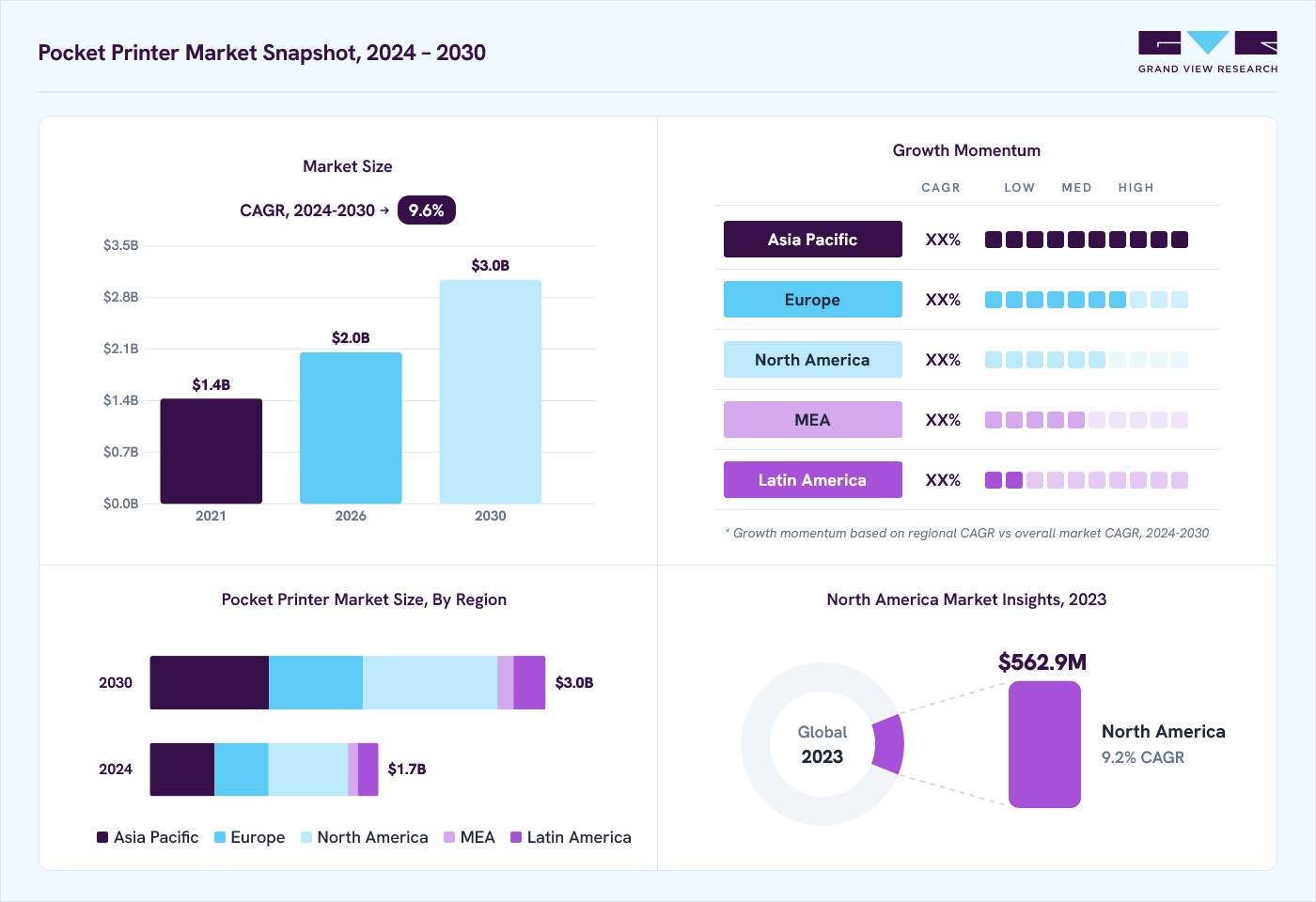
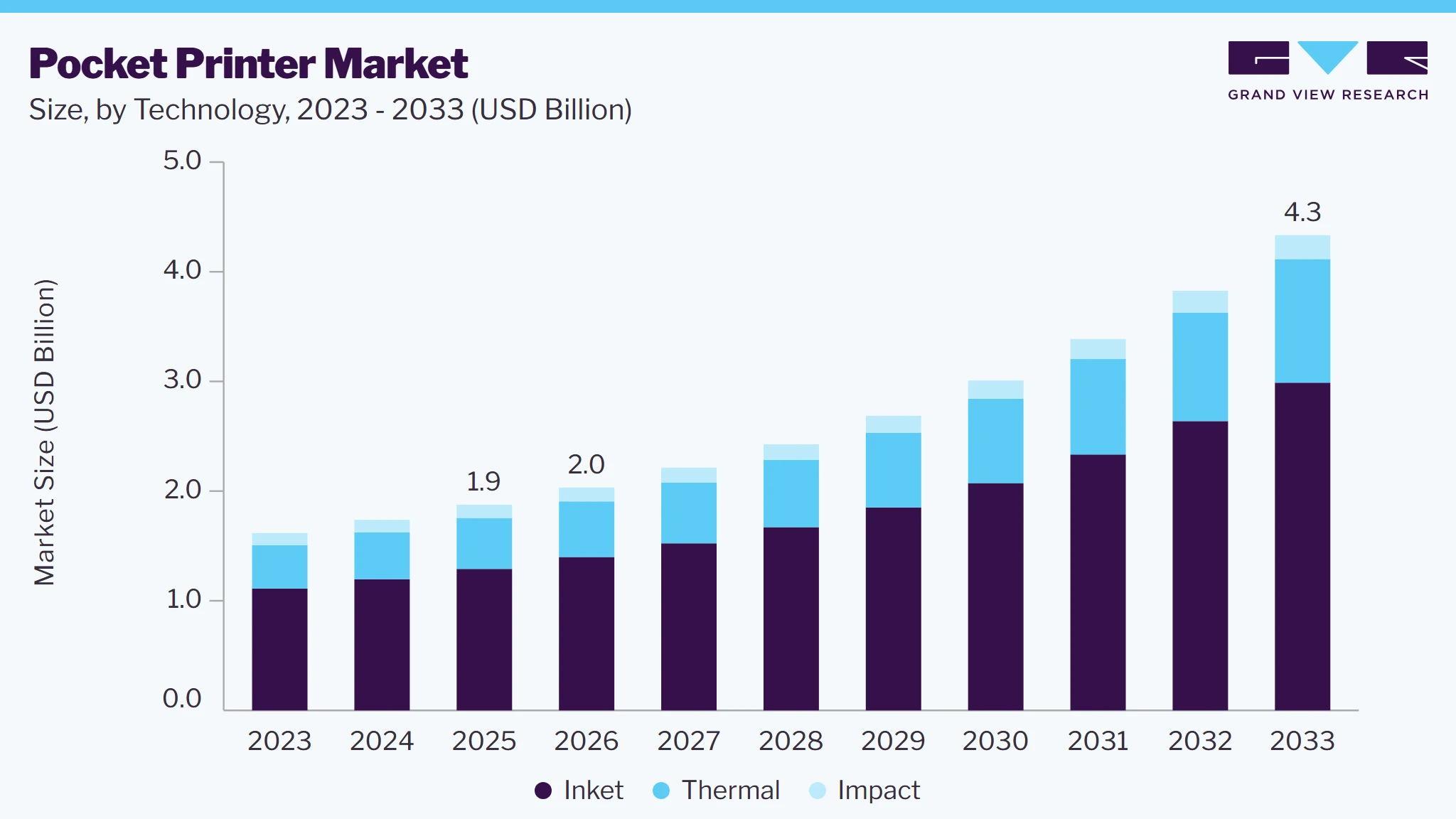
The global pocket printer market size was valued at USD 1.9 billion in 2025 and is projected to grow from USD 2.0 billion in 2026 to USD 4.3 billion by 2033, growing at a CAGR of 11.4% from 2026 to 2033. North America dominated the global market with the largest revenue share of 34.6% in 2025. Compact and portable devices, including pocket printers designed for on-the-go printing, have witnessed increasing demand driven by several key market drivers.
Key Market Trends & Insights
- By technology: Inkjet segment dominated the market, with a revenue share of 68.8% in 2025
- By application: Retail segment held the largest market share of 35.4% in 2025
Regional Highlights
- Largest regional market: North America (34.6% revenue share, 2025)
- Fastest-growing regional market: Asia Pacific (highest CAGR, 2026-2033)
- By country: The U.S. held the largest market share in 2025.
Market Size & Forecast
- Market size in 2025: USD 1.9 Billion
- Estimated market size in 2026: USD 2.0 Billion
- Projected market size by 2033: USD 4.3 Billion
- CAGR (2026-2033): 11.4%
Three ways to get this report
Buy it, customize it, or ask a question.Ask an Analyst
A direct answer, usually in 1 working day
- AccessReport author, directly
- Reply timeWithin 1 working day
- No sales callDirect answer only
- FormatEmail reply
- CostFree, no cost
Get the Full Report
What the study covers
- FormatsPDF · Excel · Dashboard
- Timeline2026–2033 annual, 2025 base
- Coverage20+ countries, 5 regions
- Companies10+ key players profiled
Customize the Report
20% free customization
- IncludeCountries, segments, points
- TailorTo your product definition
- ExtendDeeper competitor detail
- OrA fully bespoke study
- Turnaround5–10 working days
One of the primary factors contributing to their popularity is the growing trend towards mobility and convenience in the workplace and personal lifestyles. These printers cater to professionals and consumers who require the ability to print documents, photos, and labels directly from their mobile devices without the constraints of traditional desktop printers.Additionally, the growth of the consumer electronics and gadgets market further fuels innovation in pocket printer technology. Manufacturers continually improve features such as battery life, print speed, connectivity options, and compatibility with a wide range of mobile devices. This competitive landscape drives product development and ensures that pocket printers remain relevant and competitive in meeting the evolving needs of users.
The latest technological trends in pocket printers reflect a convergence of advancements aimed at improving functionality, user experience, and overall performance. One of the prominent trends is the integration of robust wireless connectivity options. Modern pocket printers predominantly feature Bluetooth and Wi-Fi connectivity, allowing seamless printing from smartphones, tablets, and laptops. This wireless capability eliminates the need for physical connections, offering users greater flexibility and convenience to print on the go without being tethered to a specific location or device.
Additionally, advancements in print technology have led to significant improvements in print resolution and quality within pocket printers. There is a noticeable trend towards higher-resolution printing, enabling these compact devices to produce sharper text and more vibrant colors in documents and photos. This capability is crucial for users who require professional-grade output while traveling or working remotely, aligning pocket printers more closely with traditional desktop printers in terms of print fidelity.
However, the physical constraints of pocket printers restrict the size and format of prints they can produce. Pocket printers are typically designed for small-scale prints such as photos, labels, receipts, and documents of limited dimensions. This restricts their utility for tasks requiring larger prints or specific formats commonly used in professional settings. The inability to handle larger documents or specialized printing needs may deter potential users who require more versatile printing capabilities.
Additionally, the speed of printing is another consideration that hinders the widespread adoption of pocket printers. While efforts have been made to improve printing efficiency, these devices generally have slower print speeds compared to larger desktop counterparts. This can be a drawback in environments where rapid printing is essential, such as in busy offices or retail settings. Users accustomed to faster printing speeds may find the pace of pocket printers insufficient for their needs, impacting their practicality in high-demand scenarios.
Market Dynamics
The pocket printer market is witnessing steady growth driven by increasing demand for portable printing solutions, rising smartphone penetration, and growing adoption of instant photo printing among consumers. Compact, wireless, and easy-to-use pocket printers are gaining popularity across personal, educational, and business applications. However, limited print capacity and relatively high operating costs could hinder growth of the market. On the other hand, opportunities associated with mobile commerce expansion and product innovation are expected to contribute to the growth of the market during the forecast period.
The increasing need for portable printing capabilities is a major driver of the pocket printer market. Consumers and professionals prefer compact devices that allow printing anytime, anywhere, without relying on traditional desktop printers. Pocket printers offer convenience for printing photos, labels, notes, receipts, and documents while traveling or working remotely. The growing mobile workforce and flexible work arrangements have increased demand for portable productivity tools. Businesses operating in retail, logistics, and field services also benefit from mobile printing capabilities. Advances in wireless connectivity and battery performance have further enhanced device usability. These factors contribute to the growth of the market.
The growing preference for lightweight, travel-friendly electronics is driving demand for compact printing solutions. Pocket printers allow users to instantly print content directly from smartphones and tablets. Their portability makes them suitable for both personal and professional use cases. Consumers increasingly value products that combine convenience with functionality. Manufacturers are responding by introducing more compact and feature-rich devices, thereby driving the growth of the market.
Limited printing capacity compared to conventional printers is a significant restraint that could hamper the growth of the pocket printer market. Most pocket printers are designed for portability rather than high-volume printing, which restricts their use in certain applications. Print speed, paper size options, and overall output volume may not meet the needs of users requiring extensive printing capabilities. Businesses with large printing requirements often prefer traditional desktop or commercial printers. The compact form factor also limits the advanced functionalities available in larger devices. These limitations reduce adoption among certain customer segments. Thus, functional constraints remain a challenge for market growth.
The increasing demand for instant photo printing is propelling the growth of the pocket printer market. Consumers are seeking tangible alternatives to storing photos exclusively in digital formats. Pocket printers allow users to instantly print photographs from smartphones, making them popular among younger consumers and social media users. The trend toward personalized gifts, scrapbooking, journaling, and creative projects is increasing demand for pocket printers. Events such as weddings, parties, and travel experiences often encourage instant photo sharing and printing. Manufacturers are introducing enhanced photo quality and customization features to attract consumers. These factors are contributing significantly to market growth.
The emotional value of physical photographs continues to support demand, despite the rise of digital media. Consumers increasingly seek personalized and memorable experiences. Pocket printers provide an easy way to create keepsakes and share printed memories. Product innovation is helping improve print quality and ease of use. The growing popularity of creative hobbies and DIY activities further supports adoption.
Analyst Perspective
The pocket printer market is benefiting from the growing demand for portable, wireless, and smartphone-connected printing solutions. Rising adoption of mobile devices, increasing interest in instant photo printing, and expanding use across retail, healthcare, and logistics applications are supporting market growth. Manufacturers are focusing on improving print quality, battery performance, and app integration to enhance user experience. Continued innovation in compact printing technologies and increasing preference for on-the-go productivity solutions are expected to drive growth of the market during the forecast period.
Technology Insights
Based on technology, the inkjet segment led the market with the largest revenue share of 68.8% in 2025. Based on the technology, the market is segmented into inkjet, thermal, and impact. Inkjet printers are known for their ability to produce high-quality prints with vibrant colors and sharp details. This capability is crucial for applications such as printing photos, graphics, and documents where print quality is a priority. In the context of pocket printers, which often cater to users who require on-the-go printing of photos and documents, inkjet technology offers superior output compared to other printing technologies like thermal or laser printing.
The thermal segment registered the highest CAGR of 12.1% over the forecast period. Thermal printers are known for their compact size and lightweight design, making them ideal for integration into portable devices such as pocket printers. The inherent simplicity of thermal printing technology, which does not require ink cartridges or toners, allows manufacturers to design smaller and more portable printers without compromising on print quality or functionality. Additionally, thermal printers have fewer moving parts compared to inkjet or laser printers, resulting in lower maintenance requirements and operational reliability. This aspect is particularly advantageous for pocket printers, where users prioritize hassle-free operation and minimal upkeep while on the move.
Application Insights
Based on application, the retail segment led the market with the largest revenue share of 35.4% in 2025. Based on application, the market is segmented into healthcare, retail, telecom, transportation & logistics, and others. The dominance of the retail segment in the market can be attributed to several pragmatic factors that align closely with the operational requirements and consumer dynamics within the retail industry. Pocket printers, characterized by their compact size and portability, have found significant adoption among retailers due to their ability to meet specific operational needs effectively.
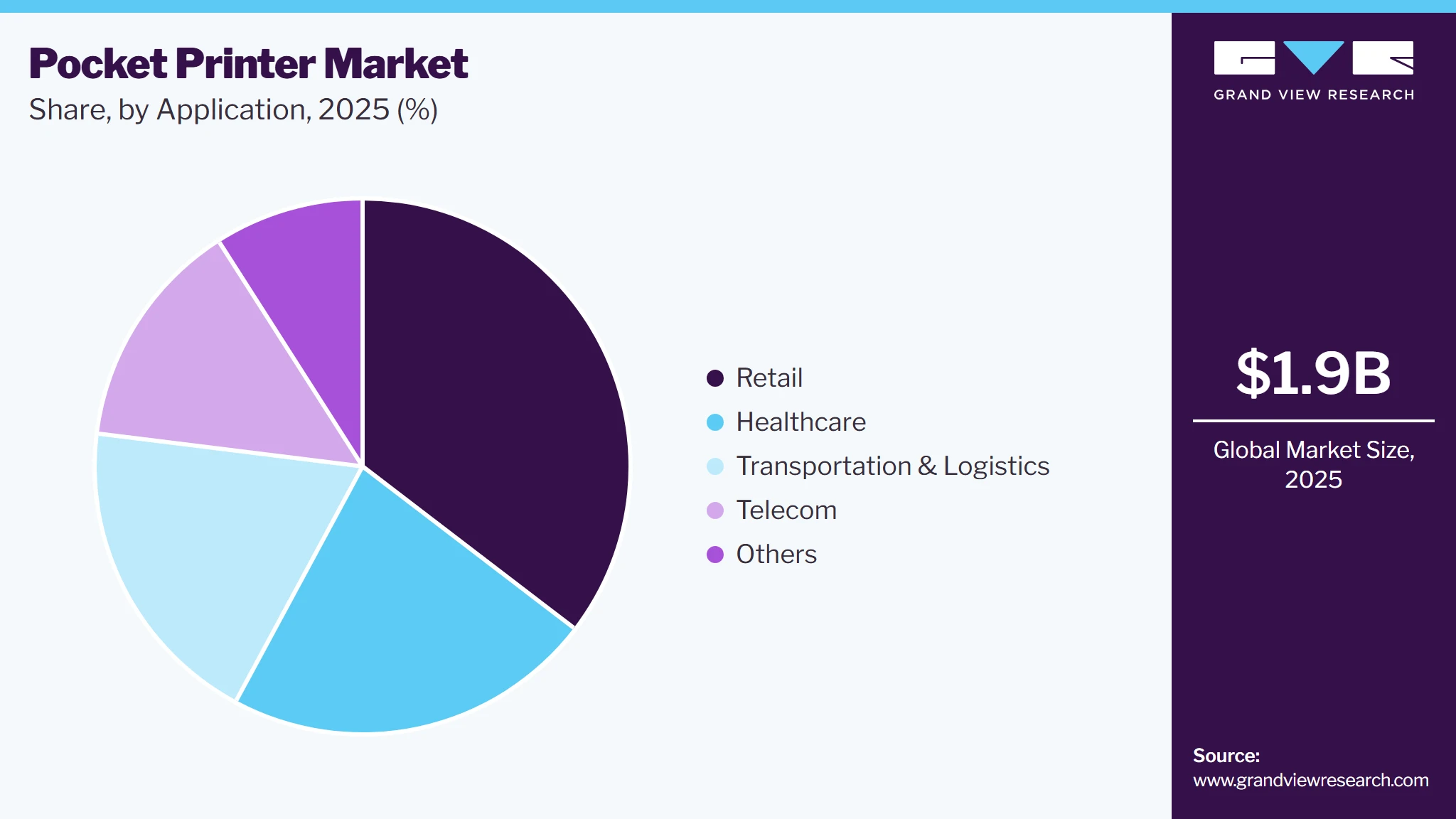
The transportation & logistics segment is anticipated to register the highest CAGR of 12.9% over the forecast period in the target market. One of the primary reasons for the retail sector's preference for pocket printers is their capability to fulfill on-demand printing requirements. In retail environments, there is a constant need for immediate printing of receipts, labels, price tags, and promotional materials. Pocket printers equipped with thermal or inkjet technology enable store personnel to generate these documents swiftly and conveniently directly at the point of sale (POS) or within the store premises. This capability enhances operational efficiency by reducing transaction times and improving customer service.
The transportation & logistics segment is anticipated to register the highest CAGR of 11.2% over the forecast period in the target market. The transportation and logistics industry operates in diverse and often remote environments where mobile printing capabilities are crucial. Pocket printers enable logistics personnel, including drivers, warehouse staff, and delivery personnel, to print essential documents such as shipping labels, receipts, invoices, and packing slips directly on-site.
This capability eliminates the need for centralized printing facilities and allows for immediate documentation and labeling, thereby enhancing operational efficiency and reducing turnaround times. Additionally, pocket printers facilitate real-time data management and documentation within the logistics supply chain. By integrating with mobile devices and enterprise systems, these printers enable quick and accurate printing of critical information related to inventory management, order fulfillment, and shipment tracking.
Regional Insights
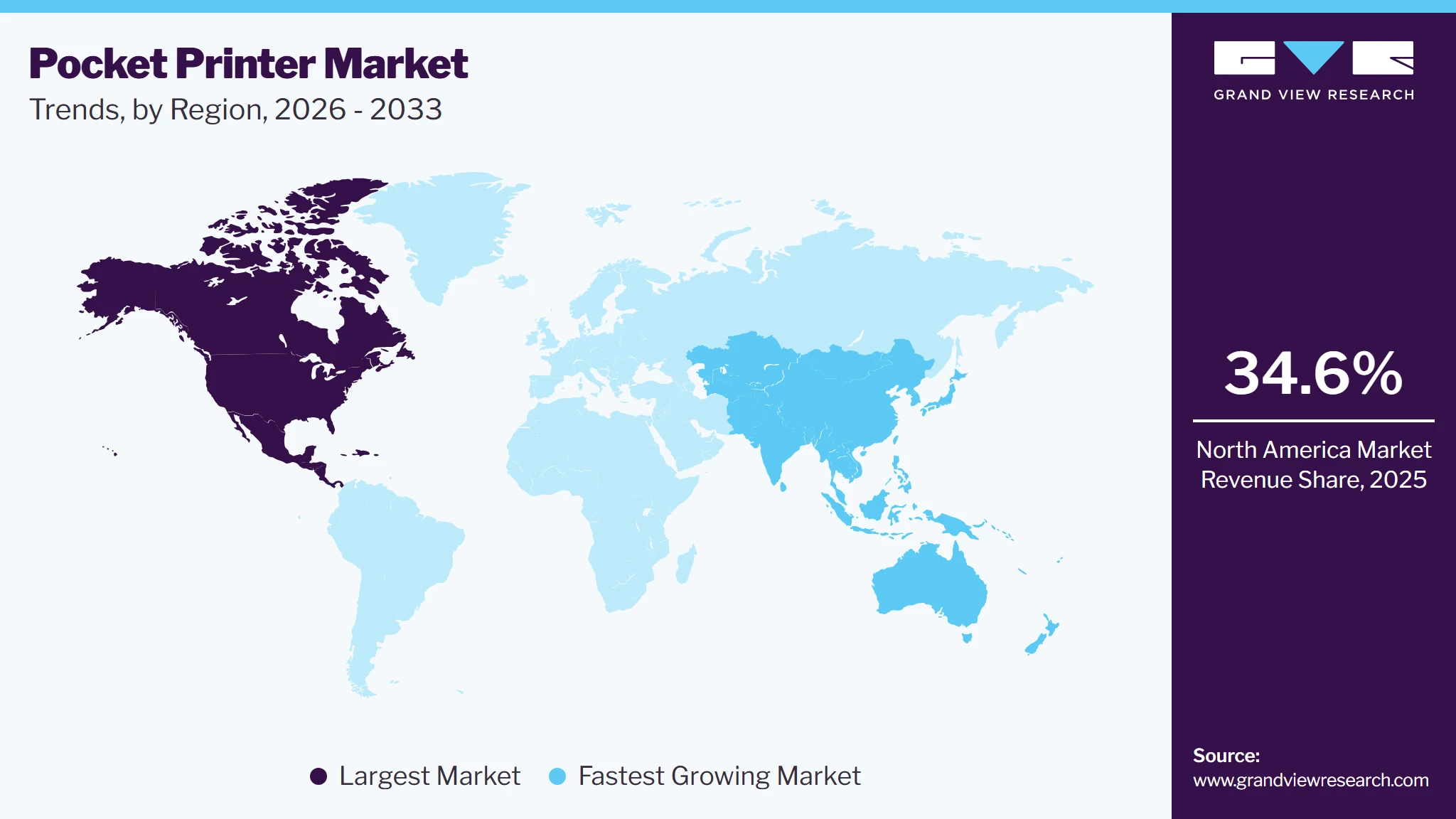
North America dominated the global pocket printer market with the largest revenue share of 34.6% in 2025. and is expected to continue its dominance over the forecast period. North America has been at the forefront of technological innovation and adoption, particularly in mobile and portable technologies. The region's strong emphasis on innovation has led to the early development and commercialization of pocket printers equipped with advanced printing technologies such as thermal and inkjet. These innovations have catered to the growing demand for portable printing solutions among tech-savvy consumers and professionals.
Additionally, the region's relatively high per capita income and strong purchasing power contribute to a consumer base willing to invest in advanced and convenient technologies like pocket printers. Affluent consumers and businesses in North America often prioritize products that offer both technological sophistication and practical utility, driving demand for pocket printers as versatile and efficient printing solutions.
U.S. Pocket Printer Market Trends
The pocket printer market in the U.S. held the largest share in the North America region in 2025. The versatility of pocket printers meets a wide range of application scenarios prevalent in the U.S. These include printing photos, documents, labels, receipts, and other materials for personal, business, and educational purposes. Industries such as retail, logistics, healthcare, and entertainment find pocket printers invaluable for tasks ranging from mobile ticketing and event management to inventory management and on-site documentation.
Additionally, the U.S. benefits from robust retail distribution networks that facilitate the widespread availability of pocket printers across various channels, including electronics stores, online platforms, and specialty retailers. This accessibility enhances market penetration and consumer awareness, making pocket printers readily accessible to a broad demographic of consumers and businesses.
Asia Pacific Pocket Printer Market Trends
The pocket printer market of Asia Pacific is projected to grow at the highest CAGR of 12.5% over the forecast period. Asia Pacific is experiencing rapid urbanization and digitization, driven by expanding urban populations, increasing internet penetration, and widespread adoption of mobile devices such as smartphones and tablets. These trends create a conducive environment for the adoption of portable and mobile printing solutions like pocket printers, which cater to the growing demand for convenient and on-the-go printing capabilities in both urban and rural settings. Additionally, many countries in the Asia Pacific, including China, India, Southeast Asian nations, and Australia, are witnessing robust economic growth and rising disposable incomes. This economic prosperity translates into increased consumer spending on consumer electronics, including portable printing devices.
Europe Pocket Printer Market Trends
Europe pocket printer market has witnessed a significant shift towards a mobile workforce and remote work arrangements, driven by advancements in technology and changing workplace dynamics. Pocket printers offer a practical solution for professionals who require portable printing capabilities to support their flexible work environments. These devices enable the printing of documents, reports, invoices, and presentations directly from mobile devices, enhancing productivity and efficiency while on the move.
Additionally, pocket printers are increasingly adopted in educational settings across Europe, catering to the needs of students, teachers, and educational institutions. These devices facilitate on-the-go printing of lecture notes, study materials, assignments, and presentations, supporting flexible learning environments and collaborative study sessions.
Key Pocket Printer Company Insights
Some of the key companies operating in the global market include Seiko Epson Corporation, HP Development Company, L.P., among others.
-
HP Development Company, L.P. is a multinational technology company headquartered in California, U.S. The company operates through three segments, namely personal systems, printing, and corporate investments. The printing segment provides consumer and commercial printer hardware, supplies, services, and solutions. This segment is also focused on graphics 3D, printing, and personalization in the commercial and industrial markets. HP Development Company, L.P. has product development and manufacturing facilities in North America, Europe, the Middle East & Africa, and Asia Pacific. The company operates globally, serving consumers, businesses, and institutions by delivering reliable and efficient computing solutions.
PeriPage and Polaroid are some of the emerging market companies in the target market.
-
PeriPage is a China-based company that focuses on developing creative printers and offers a range of portable mini printers. These printers are compact and designed for mobile use, allowing users to print documents, photos, labels, and other content on the go. The company’s printers utilize thermal printing technology, which does not require ink cartridges, making them cost-effective and convenient for various applications such as note-taking, labeling, and creating instant photo prints.
Key Pocket Printer Companies:
The following key companies have been profiled for this study on the pocket printer market.
- Seiko Epson Corporation
- Eastman Kodak Company
- HP Development Company, L.P.
- LG electronics
- FUJIFILM Corporation
- Life Print Photos
- Polaroid
- Canon Inc.
- Phomemo
- PeriPage
Competitive Benchmarking
Category
Operating Strategies
Competitive Edge
Weakness
Established Players (Seiko Epson Corporation, HP Development Company, L.P., LG Electronics, FUJIFILM Corporation)
- Established players focus on expanding portable printing portfolios, enhancing wireless connectivity features, improving print quality, and integrating mobile application ecosystems. They leverage extensive distribution networks, strong brand recognition, and continuous product innovation to maintain market leadership.
- Strong global presence, established customer trust, extensive R&D capabilities, diversified product portfolios, and robust sales channels provide significant competitive advantages. Their ability to integrate pocket printers with broader imaging and consumer electronics ecosystems further strengthens market positioning.
- High operational costs, intense competition in consumer electronics markets, and dependence on rapidly changing consumer preferences can impact profitability. Large organizational structures may also limit agility in addressing niche market opportunities.
Emerging Players (LifePrint Photos, Phomemo, PeriPage)
- Emerging players focus on mobile-first printing solutions, app-based customization features, affordable portable printers, and innovative user experiences targeted at younger consumers and small businesses. They emphasize product differentiation through compact designs and ease of use.
- Strong focus on innovation, faster product development cycles, competitive pricing strategies, and specialization in portable printing solutions allow these companies to address evolving customer demands effectively.
- Compared to established competitors, these companies generally have lower brand awareness, smaller distribution networks, limited geographic presence, and fewer financial resources for large-scale marketing and expansion initiatives.
Recent Developments
-
In April 2024, Polaroid announced the launch of Polaroid Go Generation 2. It offers improved image quality with a precise light sensor, a large aperture range, and on-point exposure settings. The camera offers a built-in flash and self-timer function while introducing updated materials and design elements to enhance durability and user experience.
-
In May 2023, Eastman Kodak Company acquired Graphic Systems Services (GSS), a provider of digital printing equipment and services. This acquisition expands Eastman Kodak Company's portfolio in the digital printing market, enhancing its capabilities in areas such as packaging, commercial print, and labels. GSS brings expertise in digital printing technology and a strong customer base, which would strengthen Eastman Kodak Company's position in the industry and broaden its offerings to meet evolving market demands. The acquisition is part of Eastman Kodak Company's strategy to drive growth and innovation in digital printing solutions, leveraging GSS's capabilities to deliver enhanced value and service to customers worldwide.
Pocket Printer Market Report Scope
Report Attribute
Details
Market size value in 2025
USD 1.9 billion
Market size value in 2026
USD 2.0 billion
Revenue forecast in 2033
USD 4.3 billion
Growth rate
CAGR of 11.4% from 2026 to 2033
Base year for estimation
2025
Historical data
2021 - 2024
Forecast period
2026 - 2033
Quantitative units
Revenue in USD billion, and CAGR from 2026 to 2033
Report coverage
Revenue forecast, company market share, competitive landscape, growth factors, and trends
Segments covered
Technology, application, region
Regional scope
North America; Europe; Asia Pacific; Latin America; MEA
Country scope
U.S.; Canada; Mexico; U.K; Germany; France; China; Japan; India; South Korea; Australia; Brazil; Saudi Arabia; UAE; and South Africa
Key companies profiled
Seiko Epson Corporation, Eastman Kodak Company, HP Development Company, L.P., LG electronics, FUJIFILM Corporation, Life Print Photos, Polaroid, Canon Inc., Phomemo, PeriPage
Customization scope
Free report customization (equivalent up to 8 analysts' working days) with purchase. Addition or alteration to country, regional & segment scope.
Pricing and purchase options
Avail customized purchase options to meet your exact research needs. Explore purchase options
Global Pocket Printer Market Report Segmentation
This report forecasts revenue growth at global, regional, and country levels and provides an analysis of the latest industry trends in each of the sub-segments from 2021 to 2033. For this study, Grand View Research has segmented the global pocket printer market report based on technology, application, and region.
-
Technology Outlook (Revenue, USD Million, 2021 - 2033)
-
Inkjet
-
Thermal
-
Impact
-
-
Application Outlook (Revenue, USD Million, 2021 - 2033)
-
Healthcare
-
Retail
-
Telecom
-
Transport & Logistics
-
Others
-
-
Regional Outlook (Revenue, USD Million, 2021 - 2033)
-
North America
-
U.S.
-
Canada
-
Mexico
-
-
Europe
-
U.K.
-
Germany
-
France
-
-
Asia Pacific
-
China
-
Japan
-
India
-
South Korea
-
Australia
-
-
Latin America
-
Brazil
-
-
Middle East and Africa (MEA)
-
KSA
-
UAE
-
South Africa
-
-
Research Methodology
The pocket printer market figures in this report are based on a proven research process that combines executive interviews with secondary research from proprietary databases, company filings, and recognized regulatory and institutional sources. Market size is built through value-chain sizing - reconciling supply-side and demand-side estimates - and triangulated with bottom-up and top-down approaches. Every estimate passes multiple levels of expert validation before publication, with each pocket printer segment quantified using the revenue-capture definitions in the table below.
Segment Definition
Segment - Technology
Revenue capture definition
Inkjet
This segment captures revenue generated from pocket printers that use inkjet printing technology to produce text, graphics, and images by spraying tiny droplets of ink onto paper.
Thermal
This segment captures revenue generated from pocket printers that utilize thermal printing technology to create images or text through heat-sensitive paper or thermal transfer processes.
Impact
This segment captures revenue generated from pocket printers that use mechanical impact mechanisms to transfer ink onto paper.
Segment - Application
Revenue capture definition
Healthcare
This segment captures revenue generated from pocket printers used in healthcare settings for printing patient records, prescriptions, medical labels, test results, wristbands, and other healthcare-related documentation.
Retail
This segment captures revenue generated from pocket printers utilized by retailers for printing receipts, invoices, labels, price tags, coupons, and transaction records.
Telecom
This segment captures revenue generated from pocket printers used by telecommunications service providers and field technicians for printing service receipts, customer agreements, installation reports, billing documents, and maintenance records.
Transportation & Logistics
This segment captures revenue generated from pocket printers used in transportation and logistics operations for printing shipping labels, delivery confirmations, tickets, invoices, cargo documentation, and tracking records.
Others
This segment captures revenue generated from pocket printer applications such as hospitality, education, events, and personal consumer use.
Estimation Model
Layer Name
Key Question
Description
Portable Printing Demand Base Layer
Who requires pocket sprinting capabilities?
Establish the total potential demand base by identifying consumers, mobile professionals, field service personnel, healthcare workers, retail staff, logistics operators, and small businesses that require portable printing solutions. It evaluates factors such as smartphone penetration, mobile workforce growth, digital documentation needs, and demand for instant printing.
Addressable Pocket Printing Market Layer
Which users can realistically adopt pocket printers?
Refine the total mobile productivity ecosystem into the serviceable pocket printer market by considering factors such as device affordability, wireless connectivity availability, mobile device usage, printing frequency, business mobility requirements, and consumer awareness of portable printing solutions. It determines the share of users that can potentially adopt pocket printers.
Pocket Printer Adoption & Utilization Layer
Who is actively purchasing and using pocket printers?
Estimate annual demand generation by analyzing the adoption of inkjet, thermal, and impact pocket printers across healthcare, retail, telecom, transportation & logistics, and other end-use applications. It converts the addressable market into measurable unit sales and active device deployments.
Revenue Layer
How does pocket printer adoption translate into market revenue?
Convert pocket printer demand into market revenue through the sale of pocket printers. Revenue is generated by applying average selling prices across different printer technologies, applications, and customer segments.
Delivered Customizations
This report has been delivered with the following In-depth customizations
Client Request
Customization Delivered
Value Adds
Consumables Demand Analysis
- Assessment of demand for photo paper, thermal paper rolls, ZINK paper, ink cartridges, and printing accessories
- Analysis of recurring consumable revenue opportunities and replacement cycles
- Supported aftermarket revenue forecasting
- Identified recurring revenue opportunities
Regional & Country Opportunity Analysis
- Delivered region-wise and country-wise market sizing, forecasts, and growth analysis across North America, Europe, Asia Pacific, Latin America, and Middle East & Africa
- Assessment of smartphone penetration, digital content creation trends, and consumer electronics spending patterns
- Identification of high-growth countries and emerging markets
- Supported geographic expansion and investment strategies
- Enabled opportunity assessment by region
Competitive Benchmarking & Strategic Landscape Analysis
- Delivered benchmarking of major pocket printer manufacturers based on product portfolio, technology capabilities, pricing, distribution network, geographic presence, innovation initiatives, and brand positioning
- Analysis of partnerships, acquisitions, product launches, and strategic developments
- Supported competitive intelligence and strategic decision-making
- Enabled identification of market gaps and growth opportunities
- Assisted in strengthening market positioning
Frequently Asked Questions About This Report
The global pocket printer market size was estimated at USD 1.9 billion in 2025 and is expected to reach USD 2.0 billion in 2026.
The pocket printer market is driven by factors such as increasing demand for portable printing solutions that cater to mobile lifestyles and professional needs. These printers are designed to be compact and lightweight, making them convenient for users who require on-the-go printing capabilities. Integration with mobile devices through wireless connectivity, including Wi-Fi and Bluetooth, enhances usability, allowing users to print directly from smartphones, tablets, and laptops without the need for a wired connection or traditional computer setup.
North America dominated the global pocket printer market with the largest revenue share of 34.6% in 2025.
The Asia Pacific is the fastest-growing region over the forecast period.
Based on application, the retail segment led the market with the largest revenue share of 35.4% in 2025, while transportation & logistics is the fastest-growing application.
The U.S. held the largest market share in the global pocket printer market in 2025.
The global pocket printer market is expected to grow at a CAGR of 11.4% from 2026 to 2033 to reach USD 4.3 billion by 2033.
The inkjet segment dominated the market, with a revenue share of 68.8% in 2025 in the pocket printer market, driven by superior print quality, versatility, portability, ease of use, affordability, and ongoing technological advancements. These factors collectively make inkjet pocket printers a preferred choice for many consumers and businesses seeking convenient printing solutions in compact form factors.
Some of the prominent players in the pocket printer market are Seiko Epson Corporation, Eastman Kodak Company, HP Development Company, L.P., LG Electronics, FUJIFILM Corporation, Life Print Photos, Polaroid, Canon Inc., Phomemo, PeriPage
About the Author(s)
Next Generation Technologies Research Team
Technology · Next Generation TechnologiesThis report was authored by the next generation technologies research team at Grand View Research - comprising two research analysts, one senior research analyst, and one industry expert - with specialized expertise in the next generation technologies segment of the technology industry. All findings are based on proprietary technology databases, executive interviews, and regulatory analysis, subject to internal peer review prior to publication.
Last Updated:
Speak to Analyst


Customize this report to your needs - add regions, segments, or data points, with 20% free customization.
Or view our licence options:


ISO 9001:2015 & 27001:2022 Certified
We are GDPR and CCPA compliant! Your transaction & personal information is safe and secure. For more details, please read our privacy policy.


