
- Home
- »
- Clinical Diagnostics
- »
-
Point-of-Care Molecular Diagnostics Market Size, Growth Report, 2033GVR Report cover

Point-of-Care Molecular Diagnostics Market (2026 - 2033)
Size, Share & Trends Analysis Report By Application (Infectious Diseases, Oncology, Prenatal Testing), By Technology, By Test Location, By End Use, By Region, And Segment Forecasts
Market Size, 2025
$8.7BMarket Estimate, 2026
$9.3BMarket Forecast, 2033
$14.5BCAGR, 2026–2033
6.6%Point-of-Care Molecular Diagnostics Market Summary
The global point-of-care molecular diagnostics market size was valued at USD 8.7 billion in 2025 and is projected to grow from USD 9.3 billion in 2026 to USD 14.5 billion by 2033, growing at a CAGR of 6.6% from 2026 to 2033. North America dominated the global market, accounting for the largest revenue share of 45.4% in 2025. This market focuses on rapid, accurate molecular testing performed near the patient, enabling timely clinical decision-making.
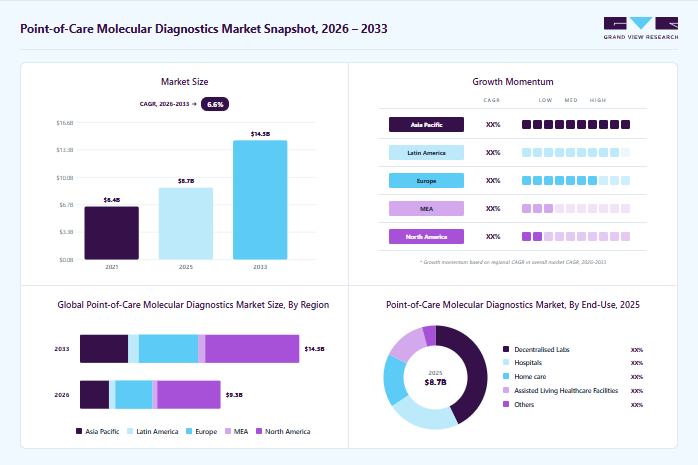 Source: Grand View Research, IR Documents, Primary Interviews, Paid DatabasesTo learn more about this report,
 Download Free Sample Report
 Key Market Trends & Insights
- By application: Infectious diseases segment led the market with the largest revenue share of 47.0% in 2025.
- By the test location: OTC segment led the market with the largest revenue share of 52.3% in 2025.
- By technology: PCR-based segment led the market with the largest revenue share of 66.0% in 2025.
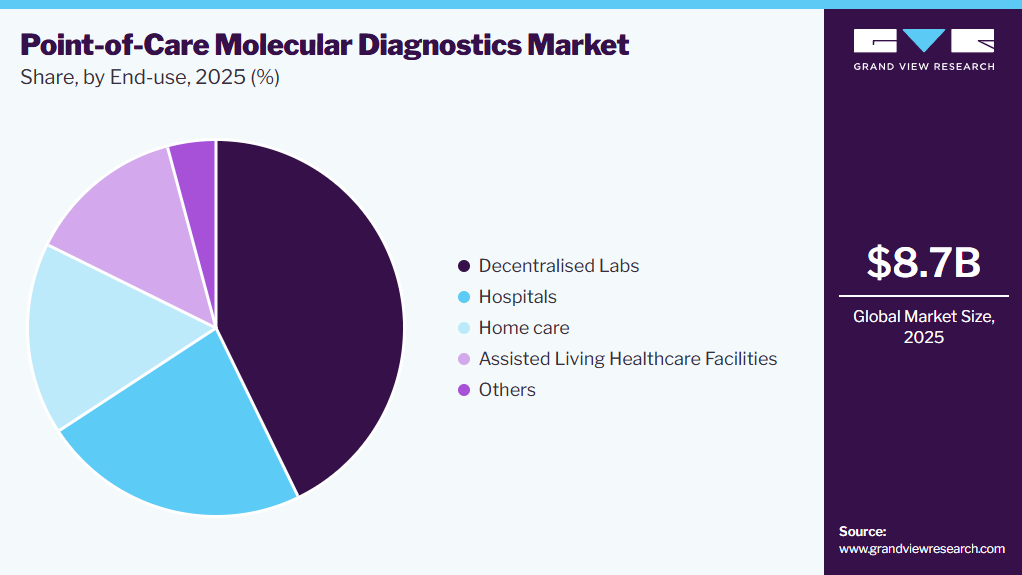
- By end use: Decentralized labs segment led the market with the largest revenue share of 42.8% in 2025.
Regional Highlights
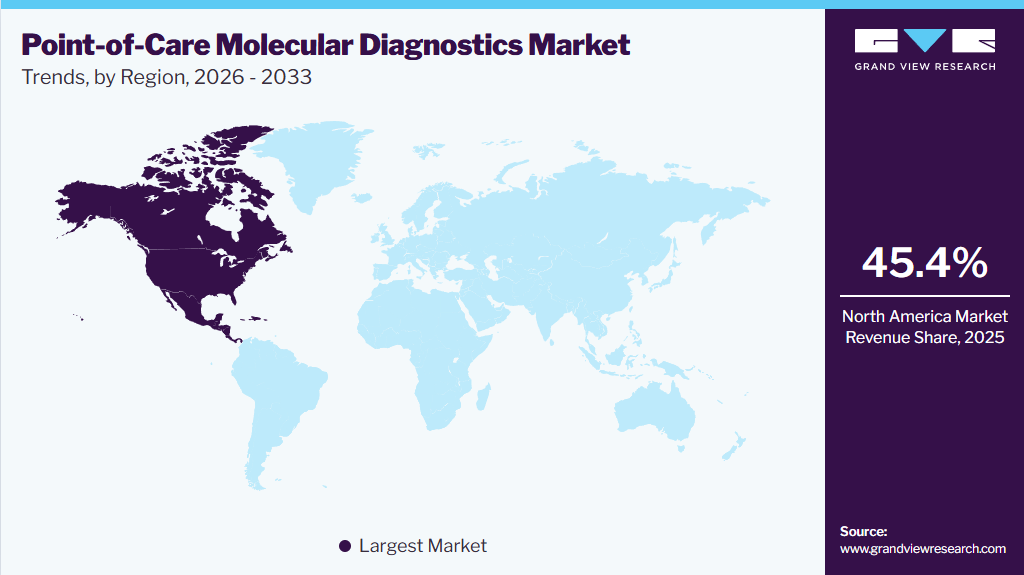
- Largest regional market: North America (45.4% revenue share, 2025)
- Fastest-growing regional market: Asia Pacific (highest CAGR, 2026-2033)
- By country: The U.S. point-of-care molecular diagnostics market is a major contributor to the global market.
Market Size & Forecast
- Market size in 2025: USD 8.7 Billion
- Estimated market size in 2026: USD 9.3 Billion
- Projected market size by 2033: USD 14.5 Billion
- CAGR (2026-2033): 6.6%
Three ways to get this report
Buy it, customize it, or ask a question.Ask an Analyst
Analyst response in 1 business day
- AccessReport author, directly
- Reply timeWithin 1 working day
- No sales callDirect answer only
- FormatEmail reply
- CostFree, no cost
Get the Full Report
What the study covers
- FormatsPDF · Excel · Dashboard
- Timeline2026–2033 annual, 2025 base
- Coverage20+ countries, 5 regions
- Companies10+ key players profiled
Customize the Report
20% free customization
- IncludeCountries, segments, points
- TailorTo your product definition
- ExtendDeeper competitor detail
- OrA fully bespoke study
- Turnaround5–10 working days
These platforms are used across various applications, particularly in infectious disease detection, respiratory illnesses, and sexually transmitted infections.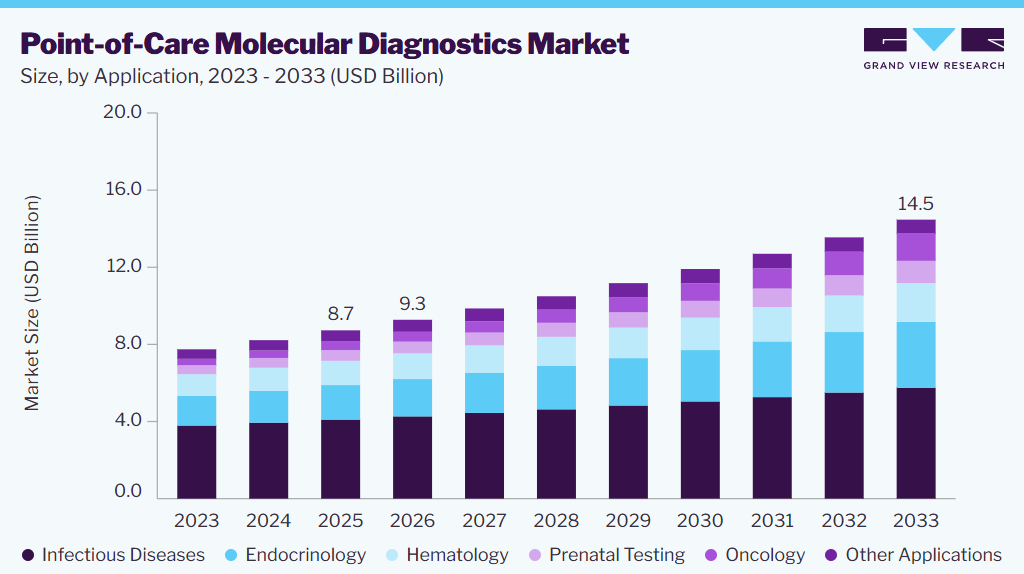 To learn more about this report, Download Free Sample Report
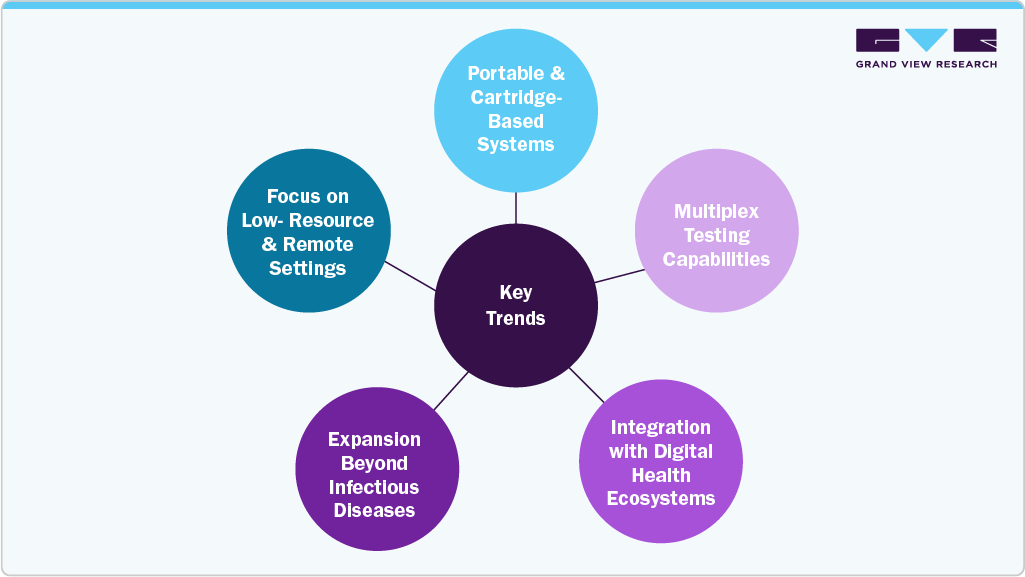
 Key Trends Shaping the Point-of-Care (POC) Molecular Diagnostics Market
Portable and Cartridge-Based Systems:
Compact, all-in-one molecular testing platforms with self-contained cartridges are gaining popularity due to ease of use, minimal training requirements, and suitability for decentralized settings.
Multiplex Testing Capabilities:
There is growing adoption of POC devices capable of detecting multiple pathogens from a single sample. This supports faster differential diagnosis, particularly for respiratory infections with overlapping symptoms.
Integration with Digital Health Ecosystems:
POC molecular devices are increasingly being designed with wireless connectivity, enabling real-time data sharing with electronic health records and supporting telemedicine and remote monitoring initiatives.
Expansion Beyond Infectious Diseases:
While infectious disease testing dominates, companies are expanding into new areas such as oncology, genetic screening, and antimicrobial resistance, broadening the clinical utility of POC molecular platforms.
Focus on Low-Resource and Remote Settings:
The development of rugged, battery-powered devices with minimal infrastructure needs is addressing diagnostic gaps in rural, emergency, and mobile care environments, especially in developing countries.
 To learn more about this report, Download Free Sample Report
 These trends underscore the growing importance of rapid, decentralized diagnostics in clinical decision-making. With continued improvements in portability, connectivity, and test versatility, point-of-care molecular diagnostics are becoming more accessible across diverse healthcare environments. The expansion beyond infectious diseases further broadens their clinical relevance. As healthcare systems prioritize speed and accuracy, these technologies are expected to see sustained demand in developed and developing regions.
Market Dynamics
The point-of-care molecular diagnostics market is witnessing steady growth driven by the increasing demand for rapid and accurate diagnostic solutions that support timely clinical decision making across healthcare settings. The shift toward decentralized healthcare delivery, coupled with the need to reduce diagnostic turnaround times and improve patient management, is accelerating the adoption of point of care molecular testing platforms. Growing utilization of molecular diagnostics for infectious disease detection, respiratory illnesses, sexually transmitted infections, and other conditions is further supporting market expansion. In addition, continuous advancements in portable PCR systems, multiplex testing capabilities, and user-friendly diagnostic workflows are enhancing test accessibility across hospitals, physician offices, urgent care centers, and home care settings. For instance, in November 2025, Nanopath received FDA Breakthrough Device Designation for its molecular diagnostic platform for urinary tract infections, strengthening the development of rapid point of care testing solutions. Furthermore, increasing investments in decentralized molecular testing infrastructure and expanding applications across multiple disease areas continue to support market growth.
The increasing adoption of rapid and decentralized molecular diagnostic solutions is driving the growth of the point-of-care molecular diagnostics market. Healthcare systems are increasingly prioritizing diagnostic technologies that support timely clinical decision making, improve patient outcomes, and reduce reliance on centralized laboratory infrastructure. Growing demand for rapid detection of infectious diseases, coupled with the need to enhance healthcare accessibility across outpatient clinics, emergency departments, physician offices, and remote care settings, is accelerating the deployment of point of care molecular testing platforms. In addition, advancements in portable PCR technologies, integrated sample to result workflows, and user-friendly testing systems are enabling broader utilization of molecular diagnostics across diverse healthcare environments. The market is also benefiting from ongoing investments aimed at strengthening decentralized testing capabilities and expanding access to near patient diagnostics. For instance, in July 2025, Co Diagnostics signed an agreement to significantly expand its commercial and distribution territory across South Asia. The agreement strengthened the company's regional market presence and improved access to its molecular diagnostic solutions across multiple countries, reflecting the growing industry focus on expanding decentralized testing capabilities and increasing the availability of point of care molecular diagnostics in emerging healthcare markets.
The high cost of molecular diagnostic systems and associated implementation requirements remains a key restraint for the Point-of-Care Molecular Diagnostics Market. Although point of care molecular testing offers advantages such as rapid results and improved clinical decision making, the adoption of these technologies often requires substantial investment in instruments, consumables, software integration, quality control processes, and personnel training. Healthcare facilities with limited budgets may face challenges in deploying advanced molecular diagnostic platforms, particularly in developing regions where healthcare infrastructure and reimbursement support remain constrained. In addition, the recurring costs associated with test cartridges and reagents can increase the overall cost of ownership, limiting widespread utilization. Regulatory compliance requirements and the need to maintain testing accuracy across decentralized settings further add to operational complexity. Industry participants are actively pursuing innovation to address these barriers. For instance, in November 2025, Nanopath received FDA Breakthrough Device Designation for its molecular diagnostic platform for urinary tract infections, highlighting ongoing efforts to advance more efficient and accessible point of care molecular testing solutions while navigating the regulatory and commercialization challenges that continue to influence market adoption.
The increasing integration of molecular diagnostics into women's health and preventive screening programs presents a substantial growth opportunity for the Point-of-Care Molecular Diagnostics Market. Healthcare providers and public health organizations are placing greater emphasis on early disease detection, routine screening, and improved access to diagnostic services, driving demand for decentralized molecular testing solutions. The ability of point of care molecular diagnostics to deliver accurate and timely results outside conventional laboratory settings is supporting their adoption across cervical cancer screening, sexually transmitted infection testing, and other women's health applications. Furthermore, the growing acceptance of self-collection technologies and patient centered care models is creating new avenues for market expansion. Continued regulatory support and ongoing product innovation are enabling manufacturers to broaden their molecular diagnostic portfolios and address evolving clinical requirements. A notable industry development underscores this opportunity. For instance, in April 2026, Becton, Dickinson and Company received FDA clearance for the BD Onclarity HPV Self Collection Kit and approval for the BD Onclarity HPV Assay, expanding access to molecular screening services and supporting the broader transition toward decentralized preventive healthcare and women's health diagnostics.
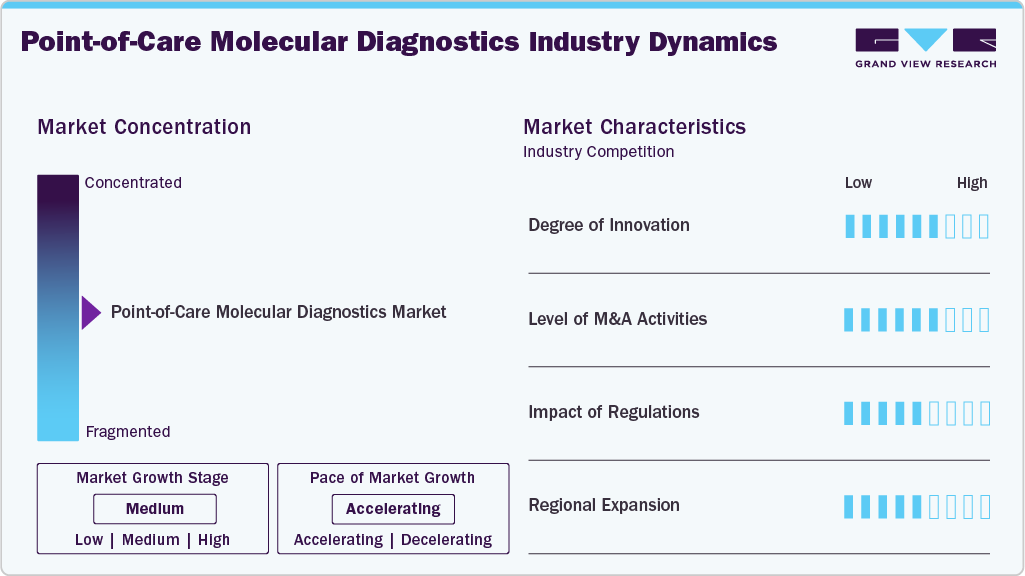
Market Concentration & Characteristics
Innovation is high in the point-of-care molecular diagnostics space, driven by the need for faster, more accurate, and portable testing solutions. Advancements such as microfluidic cartridges, smartphone-based readers, and isothermal amplification improve diagnostic speed and sensitivity. Many platforms now support multiplex testing and digital connectivity, aligning with trends in remote care and decentralized diagnostics. In February 2025, Aptitude secured Emergency Use Authorization (EUA) from the U.S. FDA for its Metrix COVID/Flu multiplex molecular test, which delivers PCR-grade accuracy at the point of care (POC) and for over-the-counter (OTC) use, and provides results in about 20 minutes. This device combines multiplex capability, speed, and portability, reinforcing the market’s focus on innovation for rapid and decentralized diagnostics.
Mergers and acquisitions are moderately active, with larger diagnostic firms acquiring startups to enhance molecular testing portfolios. These deals often focus on integrating novel technologies or expanding into underserved markets. Strategic collaborations between diagnostics and digital health firms are also rising, helping accelerate R&D and improve platform interoperability.
 To learn more about this report, Download Free Sample Report
 Regulatory bodies such as the U.S. FDA and the European Medicines Agency (EMA) are critical in shaping market access. Emergency use authorizations during the pandemic accelerated initial adoption, and now more stringent pathways are in place for long-term commercial use. Compliance with regional standards, such as CE marking and ISO certifications, remains essential for product approval and adoption.
While North America and Europe lead in adoption, manufacturers are increasingly targeting Asia-Pacific, Latin America, and parts of Africa for market growth. These regions present strong potential due to expanding primary healthcare access, growing disease burden, and government initiatives to support decentralized diagnostics. Local manufacturing and distribution partnerships are helping lower costs and improve accessibility.
Analyst Perspective
The point-of-fare molecular diagnostics market is experiencing sustained growth as healthcare providers increasingly adopt rapid and decentralized testing solutions to support timely clinical decision making. Rising demand for near patient diagnostics, growing prevalence of infectious diseases, and continued advancements in molecular testing technologies are supporting market expansion. The integration of portable PCR platforms, multiplex assays, and user-friendly testing workflows is improving accessibility across hospitals, clinics, physician offices, and home care settings. Recent regulatory approvals and commercialization initiatives are further strengthening market development. As healthcare systems continue to prioritize early diagnosis, operational efficiency, and improved patient outcomes, demand for point-of-care molecular diagnostics is expected to remain strong throughout the forecast period.
Application Insights
Based on type of application, the infectious diseases segment led the market with the largest revenue share of 47.0% in 2025, driven by the need for rapid, accurate diagnosis of conditions such as influenza, HIV, and respiratory infections. The segment’s dominance reflects the high demand for quick, on-site molecular testing to manage outbreaks and reduce transmission, particularly in emergency and outpatient settings. Point-of-care molecular platforms enable early detection using small samples with minimal lab infrastructure, supporting timely treatment decisions. For instance, in January 2025, Abbott expanded its ID NOW molecular point-of-care platform, enabling rapid detection of infectious diseases such as influenza, COVID-19, RSV, and strep A. The system delivers results within minutes, strengthening decentralized diagnostics by allowing clinicians to initiate treatment decisions during the first patient visit and improving response efficiency in high-pressure healthcare settings. Furthermore, the increasing integration of multiplex molecular assays and portable testing systems is enhancing the ability to detect multiple pathogens simultaneously, which is particularly critical for managing overlapping respiratory outbreaks. The focus on pandemic preparedness, antimicrobial resistance, and decentralized testing has further strengthened adoption. Moreover, these tests are increasingly used in remote areas, travel clinics, and resource-limited environments due to their speed, portability, and reliability.
The oncology segment is anticipated to grow at the fastest CAGR of 15.64% over the forecast period, driven by the growing demand for rapid and precise cancer detection closer to the patient. With cancer rates rising globally, there is an increasing need for decentralized testing solutions that can identify genetic mutations and tumor markers without delay. Point-of-care molecular platforms enable the detection of oncogenic signatures through minimally invasive methods, supporting early diagnosis and guiding targeted therapies. Technological innovations such as portable PCR devices, microfluidic chips, and multiplex assays are making these tools more accessible in outpatient and resource-limited settings. As personalized medicine becomes a clinical priority, POC molecular diagnostics are emerging as valuable tools for delivering faster, data-driven oncology care.
Technology Insights
Based on technology, the PCR-based segment led the market with the largest revenue share of 66.0% in 2025, due to their reliability, high sensitivity, and broad clinical utility. Recognized as the gold standard for DNA amplification, PCR remains the most trusted and widely used method in molecular diagnostics, especially for infectious diseases such as COVID‑19, influenza, and HIV. Its role extends beyond infection control into drug discovery, cancer research, pharmacogenomics, and acquired immunodeficiency syndrome, supporting its continued dominance in POC. Technological advancements, such as multiplex PCR and portable thermal cyclers, have enhanced usability, enabling faster, more comprehensive testing in decentralized environments. In February 2025, Visby Medical received FDA 510(k) clearance and a CLIA waiver for its handheld Respiratory Health Test, a compact PCR-based device that detects Influenza A, Influenza B, and SARS‑CoV‑2 in under 30 minutes at the point of care. These advantages, along with the expanding scope of clinical applications, continue to drive strong demand for PCR-based point-of-care diagnostic platforms.
The genetic sequencing-based point-of-care molecular diagnostics segment is expected to grow at the fastest rate over the forecast period. This technology enables real-time analysis of genetic material, helping doctors detect diseases early and select treatments better suited to each patient. The segment’s growth is supported by the rising need for fast and accurate testing and the growing number of infectious disease cases. Improvements in sequencing methods have made these tools easier to use in clinics, hospitals, and mobile care units. In addition, the shift toward personalized medicine and the broader use of genetic testing across healthcare are helping this segment expand quickly.
Test Location Insights
Based on test location, the OTC segment led the market with the largest revenue share of 52.3% in 2025. OTC diagnostic products support early detection and continuous patient monitoring while reducing the need for visits to healthcare facilities, thereby lowering overall medical costs. As demand for point-of-care molecular testing rises, there is a growing need for user-friendly platforms that allow individuals to conduct tests without professional supervision. In response, several companies are introducing innovative home-based kits targeting various infectious diseases. In October 2025, ACON Laboratories, Inc., announced 510 (k)clearance of the 4-in-1 Flowflex Plus home diagnostic test capable of detecting RSV, influenza A and B, and COVID-19 in a single rapid format. It is an OTC rapid antigen test that can be administered at home.
The point-of-care test location segment is expected to grow at the fastest rate during the forecast period. These tests provide quick results and can be used outside traditional labs, making them convenient and portable. Molecular tests, which detect the genetic material of infectious agents, are a fast-growing part of this segment. Many of these tests are now being used in clinics, mobile units, and remote areas because they are fast, easy to use, and more affordable than lab-based testing. Several companies are focusing on developing systems specifically for near-patient use. For instance, in October 2025, Co-Diagnostics, Inc. announced the development of a proprietary sample preparation instrument designed to enhance point-of-care molecular testing. The innovation aims to streamline workflows, improve diagnostic accuracy, and enable faster results outside traditional laboratory settings.
End Use Insights
Based on end use, the decentralized labs segment led the market with the largest revenue share of 42.8% in 2025. Advances in rapid assays have significantly boosted this segment by making it easier for healthcare practitioners to make quick decisions and receive results. Such tests are now standard in clinics, urgent care centers, and remote facilities, delivering reliable results at or near the point of patient care. Funding and government support continue to fuel this expansion. In addition, the growing shift toward decentralized healthcare delivery and patient-centric testing models has further strengthened adoption across this segment. The integration of portable molecular platforms with digital health solutions and connectivity features enables real-time data sharing with laboratories and clinicians, improving diagnostic coordination and treatment outcomes. Rising demand for rapid infectious disease screening, particularly in post-pandemic healthcare systems, has also reinforced the need for point-of-care molecular tools.
 To learn more about this report, Download Free Sample Report
 The home care segment is expected to grow at the fastest CAGR over the forecast period, supported by the convenience and cost-effectiveness of point-of-care molecular diagnostics at home. These tests allow patients to monitor their health, get quick results, and make timely decisions without visiting a clinic or hospital. Most POC devices are user-friendly and do not require advanced lab setups, making them ideal for home use. This is especially helpful for testing conditions that may carry stigma, such as sexually transmitted infections. As healthcare shifts toward prevention and early detection, home-based POC diagnostics are expected to grow rapidly, offering patients greater control and privacy in managing their health.
Regional Insights
North America dominated the point-of-care molecular diagnostics Market with the largest revenue share of 45.4% in 2025. The North America point-of-care molecular diagnostics industry is supported by strong healthcare infrastructure, widespread adoption of rapid testing technologies, and growing demand for decentralized diagnostics. The region benefits from well-established regulatory frameworks and increased investment in portable molecular testing platforms across various care settings. Advances in PCR, isothermal amplification, and genetic sequencing are further driving growth. Integration with digital health systems and expanding use of at-home diagnostics continue to support the region’s leadership in both market size and innovation.
 To learn more about this report, Download Free Sample Report
 U.S. Point-of-Care Molecular Diagnostics Market Trends
The point-of-care molecular diagnostics Market in the U.S. held the largest share in the North America region in 2025. The focus on early detection of infectious diseases, strong public health initiatives, and widespread availability of portable molecular platforms have accelerated adoption. High patient throughput in clinical environments and the shift toward decentralized care continue to fuel the need for fast and reliable diagnostics. In February 2024, binx health entered into a national distribution agreement with Cardinal Health to expand access to its FDA-cleared binx io molecular point-of-care platform across the U.S. healthcare network. In addition, the growing use of self-testing kits, digital connectivity, and compact analyzers continues to drive market growth across diverse healthcare applications.
Europe Point-of-Care Molecular Diagnostics Market Trends
The point-of-care molecular diagnostics industry in Europe is experiencing steady growth, driven by rising demand for rapid and decentralized testing across clinical and outpatient settings. Countries such as Germany, France, and the UK are leading adoption, supported by strong healthcare infrastructure and national efforts to expand early disease detection. The growing use of molecular platforms for infectious disease testing, along with the wider acceptance of self-testing and home-based diagnostics, is driving market expansion. The region is also seeing increased integration of POC systems with digital health tools, improving data sharing and patient management, and further supporting broader adoption across primary care and remote settings.
The UK point-of-care molecular diagnostics market is growing steadily, supported by the healthcare system’s focus on early detection, decentralized testing, and faster clinical decision-making. The adoption of molecular POC platforms is increasing across outpatient clinics, pharmacies, and home care settings due to rising demand for rapid, accurate diagnosis, particularly for infectious diseases. Government efforts to expand digital health services and improve diagnostic access in community settings are further supporting this trend. The growing use of portable PCR and isothermal testing systems, combined with interest in self-testing options, positions the UK as a key contributor to regional market growth.
The POC molecular diagnostics market in Germany is showing strong growth, supported by a well-established healthcare system and rising demand for rapid testing in outpatient and decentralized care settings. The country is seeing increased use of molecular POC platforms for infectious disease detection, particularly in community clinics and emergency departments. Broader adoption is driven by the need for fast, accurate results and reduced reliance on central laboratories. Ongoing innovation in portable PCR and multiplex testing devices is making near-patient diagnostics more practical, while government support for healthcare digitization is helping integrate these tools across various care levels.
Asia Pacific Point-of-Care Molecular Diagnostics Market Trends
The point-of-care molecular diagnostics industry in the Asia Pacific is expected to experience the fastest growth, driven by rising awareness of early disease detection, expanding access to healthcare services, and growing demand for rapid diagnostic solutions. Countries such as China, India, and Japan are increasing investments in community health programs and decentralized care to support timely diagnosis, especially in rural and underserved areas. The availability of cost-effective molecular POC platforms, along with government-backed initiatives to improve diagnostic infrastructure, is boosting adoption across the region. In addition, advancements in mobile health technologies and portable testing devices are making POC molecular diagnostics more accessible in both clinical and home settings.
The Japan point-of-care molecular diagnostics market is expanding gradually, driven by the country's focus on early disease detection, aging population, and growing need for rapid diagnostics in outpatient and home care settings. Molecular POC testing is gaining traction in areas such as respiratory infections and chronic disease monitoring, where quick and accurate results are critical. Although regulatory processes remain rigorous, the demand for compact, easy-to-use testing platforms is rising across clinics, pharmacies, and mobile care units. The growing interest in self-testing, along with the integration of digital tools for result tracking and reporting, is supporting broader adoption of molecular diagnostics at the point-of-care.
The point-of-care molecular diagnostics market in China represents a major growth opportunity in the global market, driven by increasing demand for rapid testing, expanding healthcare infrastructure, and a strong government focus on public health. The use of molecular POC platforms is rising in community clinics, hospitals, and mobile health units, particularly for infectious disease detection and chronic condition monitoring. National efforts to promote healthcare digitization and improve rural health services are further accelerating market adoption. In addition, the need for cost-effective, portable, and easy-to-use diagnostic tools is encouraging local innovation and attracting international players to the growing market.
Latin America Point-of-Care Molecular Diagnostics Market Trends
The POC molecular diagnostics industry in Latin America is experiencing steady growth, supported by expanding access to healthcare services, rising awareness of early disease detection, and a push toward decentralized testing. Countries such as Brazil and Mexico are investing in rapid diagnostic solutions to strengthen primary care, manage infectious disease outbreaks, and reach underserved populations. The availability of affordable and portable molecular platforms is enabling broader use in rural clinics, community health programs, and mobile units. Continued focus on public health improvement and the growing role of near-patient testing are expected to drive further market expansion across the region.
The Brazil point-of-care molecular diagnostics market is expanding steadily, driven by the need for rapid and accessible testing across public and private healthcare sectors. Rising demand for early detection of infectious diseases, combined with efforts to improve diagnostic access in underserved areas, is supporting market growth. Government health programs and mobile care initiatives are promoting the use of molecular POC platforms in community clinics and rural regions. In addition, increasing interest in self-testing and the integration of digital health tools are encouraging the adoption of portable diagnostic systems, positioning Brazil as a key market for point-of-care molecular diagnostics in Latin America.
Middle East and Africa Point-of-Care Molecular Diagnostics Market Trends
The point-of-care molecular diagnostics industry in the Middle East and Africa region shows emerging growth opportunities in the market, supported by rising awareness of early disease detection, expanding healthcare access, and public health efforts. Countries such as South Africa, the UAE, and Saudi Arabia are increasingly adopting molecular POC testing in primary care, emergency settings, and remote areas to improve diagnostic turnaround times. While healthcare infrastructure varies across the region, the demand for affordable, portable, and easy-to-use testing solutions continues to rise. Mobile health units, government-led outreach programs, and international collaborations are playing a key role in bringing molecular diagnostics to underserved populations.
Key Point-of-Care Molecular Diagnostics Company Insights
Key players in the point-of-care molecular diagnostics market are actively developing new products and securing regulatory approvals to expand their offerings. In addition, companies are pursuing strategic initiatives such as partnerships, collaborations, mergers, and acquisitions to strengthen their market presence. These efforts aim to enhance technology portfolios, increase geographic reach, and improve access to rapid diagnostic solutions across diverse healthcare settings.
Key Point-of-Care Molecular Diagnostics Companies
The following key companies have been profiled for this study on the point-of-care molecular diagnostics market.
-
F. Hoffmann-La Roche Ltd
-
Abbott
-
QIAGEN
-
Danaher Corporation
-
BIOMÉRIEUX
-
OraSure Technologies Inc.
-
binx health, inc.
-
QuidelOrtho Corporation
Competitive Benchmarking
Category
Operating Strategies
Competitive Edge
Weakness
Well-Established Players (F. Hoffmann-La Roche Ltd, Abbott, QIAGEN, Danaher Corporation, BIOMÉRIEUX, QuidelOrtho Corporation)
- Expand point-of-care molecular diagnostics portfolios through continuous investment in rapid molecular testing platforms, multiplex assay development, PCR technologies, decentralized diagnostic solutions, and infectious disease testing capabilities. Focus on regulatory approvals, strategic partnerships, acquisitions, and geographic expansion to strengthen market presence across hospitals, clinics, laboratories, and community healthcare settings.
- Broad molecular diagnostics portfolios, strong regulatory expertise, established global distribution networks, extensive R&D capabilities, recognized brands, and long-standing relationships with healthcare providers. Ability to commercialize innovative diagnostic technologies at scale and support diverse clinical applications across multiple regions.
- Large organizational structures may limit agility in responding to emerging niche opportunities. High development and regulatory compliance costs, pricing pressures, and increasing competition from specialized point-of-care diagnostics companies may affect operational flexibility and market responsiveness.
Emerging Players (OraSure Technologies Inc., binx health, inc.)
- Focus on developing innovative and user-friendly point-of-care molecular testing solutions with emphasis on rapid diagnostics, home-based testing, sexual health screening, and decentralized care models. Prioritize strategic collaborations, technology innovation, targeted commercialization strategies, and expansion into underserved and emerging healthcare markets.
- Specialized expertise in near-patient diagnostics, strong focus on innovation, flexibility in product development, and ability to address specific unmet clinical needs. Competitive advantage in consumer-oriented testing solutions and rapid deployment of targeted diagnostic platforms.
- More limited product portfolios, geographic presence, manufacturing scale, and financial resources compared with larger multinational competitors. Dependence on specific product categories and market segments may constrain long-term competitiveness and global expansion opportunities.
Recent Developments
- In April 2026, QuidelOrtho Corporation completed the acquisition of LEX Diagnostics, strengthening its point-of-care molecular diagnostics portfolio. The deal enhances its ultra-fast PCR capabilities through the LEX VELO System, which delivers respiratory infection results in minutes. This strategic move supports growth in decentralized, rapid testing solutions.
-
In January 2025, Roche announced FDA clearance for its cobas liat molecular STI test designed for point-of-care use. The launch strengthens rapid, decentralized testing capabilities, enabling clinicians in urgent care and community settings to deliver accurate results within minutes and improve same-visit treatment decisions.
Point-of-Care Molecular Diagnostics Market Report Scope
Report Attribute
Details
Market size in 2025
USD 8.7 billion
Estimated Market size in 2026
USD 9.3 billion
Projected market size by 2033
USD 14.5 billion
Growth rate
CAGR of 6.6% from 2026 to 2033
Historical data
2021 - 2024
Forecast period
2026 - 2033
Quantitative units
Revenue in USD million/billion and CAGR from 2026 to 2033
Report coverage
Revenue forecast, company ranking, competitive landscape, growth factors, and trends
Segments covered
Application, Technology, Test Location, End use, Regional
Regional scope
North America; Europe; Asia Pacific; Latin America; MEA
Country scope
U.S.; Canada; Mexico; Germany; UK; France; Italy; Spain; Denmark; Sweden; Norway; Japan; China; India; South Korea; Australia; Thailand; Brazil; Argentina; South Africa; Saudi Arabia; UAE; and Kuwait
Key companies profiled
F. Hoffmann-La Roche Ltd, Abbott, QIAGEN, Danaher Corporation, BIOMÉRIEUX, OraSure Technologies Inc., binx health, inc., and QuidelOrtho Corporation.
Customization scope
Free report customization (equivalent up to 8 analysts' working days) with purchase. Addition or alteration to country, regional & segment scope.
Pricing and purchase options
Avail customized purchase options to meet your exact research needs. Explore purchase options
Global Point-of-Care Molecular Diagnostics Market Report Segmentation
This report forecasts revenue growth and provides an analysis on the latest trends in each of the sub-segments from 2021 to 2033. For this report, Grand View Research has segmented the global point-of-care molecular diagnostics market report on the basis of application, technology, test location, end use, and region:
-
Technology Outlook (Revenue, USD Billion, 2021 - 2033)
-
PCR-based
-
Genetic Sequencing-based
-
Hybridization-based
-
Microarray-based
-
-
Application Outlook (Revenue, USD Billion, 2021 - 2033)
-
Infectious Diseases
-
HIV POC
-
Clostridium difficile POC
-
HBV POC
-
Pneumonia or Streptococcus associated infections
-
Respiratory syncytial virus (RSV) POC
-
HPV POC
-
Influenza/Flu POC
-
HCV POC
-
MRSA POC
-
TB and drug-resistant TB POC
-
HSV POC
-
Other Infectious Diseases
-
-
Oncology
-
Hematology
-
Prenatal Testing
-
Endocrinology
-
Other Applications
-
-
Test Location Outlook (Revenue, USD Billion, 2021 - 2033)
-
OTC
-
POC
-
-
End Use Outlook (Revenue, USD Billion, 2021 - 2033)
-
Decentralized Labs
-
Hospitals
-
Home-care
-
Assisted Living Healthcare Facilities
-
Others
-
-
Regional Outlook (Revenue, USD Billion, 2021 - 2033)
-
North America
-
U.S.
-
Canada
-
Mexico
-
-
Europe
-
Germany
-
UK
-
France
-
Italy
-
Spain
-
Denmark
-
Sweden
-
Norway
-
-
Asia Pacific
-
Japan
-
China
-
India
-
Australia
-
South Korea
-
Thailand
-
-
Latin America
-
Brazil
-
Argentina
-
-
Middle East and Africa (MEA)
-
South Africa
-
Saudi Arabia
-
UAE
-
Kuwait
-
-
Research Methodology
The point-of-care molecular diagnostics market figures in this report are based on a proven research process that combines executive interviews with secondary research from proprietary databases, company filings, and recognized regulatory and institutional sources. Market size is built through value-chain sizing - reconciling supply-side and demand-side estimates - and triangulated with bottom-up and top-down approaches. Every estimate passes multiple levels of expert validation before publication, with each point-of-care molecular diagnostics segment quantified using the revenue-capture definitions in the table below.
Segment Definition
Segment - Application
Revenue capture definition
Infectious Diseases
Revenue is captured and flows from molecular diagnostic tests used for the rapid detection and identification of bacterial, viral, fungal, and parasitic infections at or near the patient care setting, including respiratory, gastrointestinal, and sexually transmitted infections.
Oncology
Revenue is primarily captured and flows from point of care molecular assays used for cancer screening, biomarker identification, mutation detection, treatment selection, and disease monitoring to support personalized oncology care and clinical decision making.
Hematology
Revenue flows from molecular diagnostic solutions used for the detection, characterization, and monitoring of blood related disorders, coagulation abnormalities, hemoglobinopathies, and hematologic malignancies through near patient testing platforms.
Prenatal Testing
Revenue is captured through molecular tests designed for the assessment of fetal health, genetic abnormalities, inherited disorders, and pregnancy related conditions, enabling timely diagnostic insights during prenatal care and maternal health management.
Endocrinology
Revenue is derived from molecular diagnostic testing used to identify and monitor hormone related disorders, metabolic conditions, endocrine gland abnormalities, and associated genetic markers to support disease diagnosis and therapeutic management.
Other Applications
Revenue is generated from point of care molecular diagnostic testing across clinical areas not classified under infectious diseases, oncology, hematology, prenatal testing, or endocrinology, including neurology, cardiovascular diseases, transplantation, and autoimmune disorders.
Segment - Technology
Revenue capture definition
PCR-based
Revenue is captured and flows from point of care molecular diagnostic systems and consumables that utilize polymerase chain reaction technology for amplification and detection of pathogen specific, genetic, or biomarker targets across diverse clinical applications.
Genetic Sequencing-based
Revenue is primarily captured through sequencing based point of care platforms, reagents, and related services used for rapid genetic analysis, mutation identification, pathogen characterization, and precision medicine applications at decentralized settings.
Hybridization-based
Revenue flows from molecular diagnostic assays that employ nucleic acid hybridization techniques to detect specific DNA or RNA sequences for disease diagnosis, infectious disease identification, and genetic testing at the point of care.
Microarray-based
Revenue is derived from microarray enabled point of care diagnostic solutions used for simultaneous analysis of multiple genetic markers, pathogens, or biomarkers, supporting multiplex testing and comprehensive molecular profiling applications.
Segment - Test location
Revenue capture definition
Over the Counter (OTC)
Revenue is captured and flows from molecular diagnostic tests purchased directly by consumers without healthcare provider administration, including self-collection kits, home based testing products, and consumer accessible diagnostic solutions for disease screening and monitoring.
Point of Care (POC)
Revenue is primarily captured through molecular diagnostic instruments, consumables, and testing services performed at healthcare delivery settings such as hospitals, clinics, physician offices, urgent care centers, and community healthcare facilities to support immediate clinical decision making.
Segment - End-use
Revenue capture definition
Decentralized Labs
Revenue is captured and flows from molecular diagnostic instruments, consumables, and testing services utilized in independent laboratories, satellite laboratories, and near patient diagnostic centers that operate outside traditional centralized laboratory networks.
Hospitals
Revenue is primarily captured through point of care molecular diagnostic systems, test cartridges, reagents, and associated services used within hospital settings for rapid diagnosis, treatment guidance, and patient management across clinical departments.
Home Care
Revenue flows from molecular diagnostic products designed for patient operated or caregiver assisted testing in residential settings, including self-collection kits and home-based diagnostic solutions for disease detection and monitoring.
Assisted Living Healthcare Facilities
Revenue is derived from molecular diagnostic testing solutions deployed in assisted living centers, nursing homes, and long-term care facilities to support timely diagnosis and ongoing health assessment of residents.
Estimation Model
The point-of-care molecular diagnostics market was estimated using a bottom-up methodology that involved identifying key manufacturers, benchmarking their point of care molecular diagnostic product portfolios, and evaluating revenue contributions from major product categories and technologies. Market revenues were assessed based on product adoption trends, patient utilization rates, testing volumes, and existing market penetration across end use settings. The revenue estimates generated for individual technology segments were aggregated and validated through an assessment of the market share held by leading industry participants. The final market size was determined through revenue triangulation and extensive cross verification using company financial disclosures, regulatory approvals, industry developments, healthcare utilization trends, and secondary research sources to ensure accuracy and consistency of market estimates.
Delivered Customizations
This report has been delivered with the following In-depth customizations
CLIENT REQUEST
CUSTOMIZATION DELIVERED
VALUE ADDS
Point-of-Care Molecular Diagnostics Competitive Landscape & Market Positioning Assessment
Assessed the global point-of-care molecular diagnostics market landscape, covering molecular testing platforms, PCR technologies, rapid infectious disease diagnostics, decentralized testing solutions, and competitive positioning. Analyzed key market participants, product portfolios, regulatory approvals, commercialization strategies, and technology adoption trends across healthcare settings.
Helped the client identify growth opportunities across point-of-care molecular diagnostics technologies, evaluate competitive positioning, benchmark innovation capabilities, and prioritize strategic investments, partnerships, and market expansion initiatives.
Point-of-Care Molecular Diagnostics Technology & Product Benchmarking Study
Delivered a comprehensive benchmarking of histology and cytology technologies across microscopy, immunohistochemistry, molecular pathology, digital pathology, image analysis software, and automated staining systems. Evaluated technology performance, workflow efficiency, diagnostic accuracy, scalability, and product differentiation among leading market participants.
Enabled the client to assess technology competitiveness, identify innovation gaps, benchmark product development strategies, and prioritize investments in automation, digital pathology infrastructure, artificial intelligence enabled diagnostics, and advanced tissue analysis solutions.
Point-of-Care Molecular Diagnostics Commercialization & Market Access Assessment
Assessed healthcare infrastructure, diagnostic laboratory networks, hospital adoption trends, reimbursement frameworks, regulatory pathways, distribution channels, and commercialization strategies supporting point-of-care molecular diagnostics. Evaluated market access opportunities, physician adoption patterns, patient utilization trends, and healthcare delivery requirements across major markets.
Supported commercialization planning by identifying market entry opportunities, evaluating distribution and partnership models, assessing reimbursement and regulatory considerations, mitigating operational risks, and strengthening long term adoption potential across global healthcare markets.
Point-of-Care Molecular Diagnostics Infectious Disease Testing Opportunity Analysis
Analyzed demand trends for rapid molecular testing across respiratory infections, sexually transmitted infections, urinary tract infections, and other infectious diseases. Evaluated testing volumes, clinical adoption, competitive dynamics, and emerging diagnostic technologies supporting decentralized disease detection.
Assisted the client in identifying high growth application areas, prioritizing product development strategies, evaluating unmet clinical needs, and strengthening positioning within infectious disease diagnostics markets.
Frequently Asked Questions About This Report
The global point of care molecular diagnostics market size was estimated at USD 8.7 billion in 2025 and is expected to reach USD 9.3 billion in 2026.
The global point of care molecular diagnostics market is expected to grow at a compound annual growth rate of 6.6% from 2026 to 2033 to reach USD 14.5 billion by 2033.
On the basis of application, the infectious disease segment accounted for the largest market share of 47.0% in 2025, driven by the need for rapid and accurate diagnosis of conditions such as COVID-19, influenza, HIV, and respiratory infections. The segment’s dominance reflects the high demand for quick, on-site molecular testing to manage outbreaks and reduce transmission, particularly in emergency and outpatient settings.
Some key players operating in the point of care molecular diagnostics market include Abbott Laboratories, Bayer Healthcare; F. Hoffmann-La Roche AG; Becton, Dickinson and Company; BioMerieux; Bio-Rad Laboratories, Inc.; Cepheid, Inc.; Danaher Corporation; and Johnson & Johnson Services, Inc.
Key factors that are driving the market growth include high quality of test results in very short time, development of accurate & faster testing methods, and offering convenient diagnostic approach for physicians.
North America dominated the global point of care molecular diagnostics market with a 45.4% revenue share in 2025.
Asia Pacific is the fastest-growing region over the forecast period in the global point of care molecular diagnostics market.
PCR-based technology held the largest share in 2025 in the global point of care molecular diagnostics market.
Decentralized labs held the largest revenue share in 2025, while home care is the fastest-growing area.
About the Author(s)
Clinical Diagnostics Research Team
Healthcare · Clinical DiagnosticsThis report was authored by the clinical diagnostics research team at Grand View Research - comprising two research analysts, one senior research analyst, and one industry expert - with specialized expertise in the clinical diagnostics segment of the healthcare industry. All findings are based on proprietary healthcare databases, executive interviews, and regulatory analysis, subject to internal peer review prior to publication.
Last Updated:
Speak to Analyst

Customize this report to your needs - add regions, segments, or data points, with 20% free customization.
Or view our licence options:


ISO 9001:2015 & 27001:2022 Certified
We are GDPR and CCPA compliant! Your transaction & personal information is safe and secure. For more details, please read our privacy policy.


