
- Home
- »
- Plastics, Polymers & Resins
- »
-
Polymethacrylimide Foam Market Size & Share Report, 2033GVR Report cover

Polymethacrylimide Foam Market (2026 - 2033)
Size, Share & Trends Analysis Report By Application (Wind Energy, Aerospace & Defense, Sports Goods, Automotive & Transportation), By Region (North America, Europe, Asia Pacific), And Segment Forecasts
Market Size, 2025
$117.9MMarket Estimate, 2026
$126.7MMarket Forecast, 2033
$175.3MCAGR, 2026–2033
4.7%Polymethacrylimide Foam Market Summary
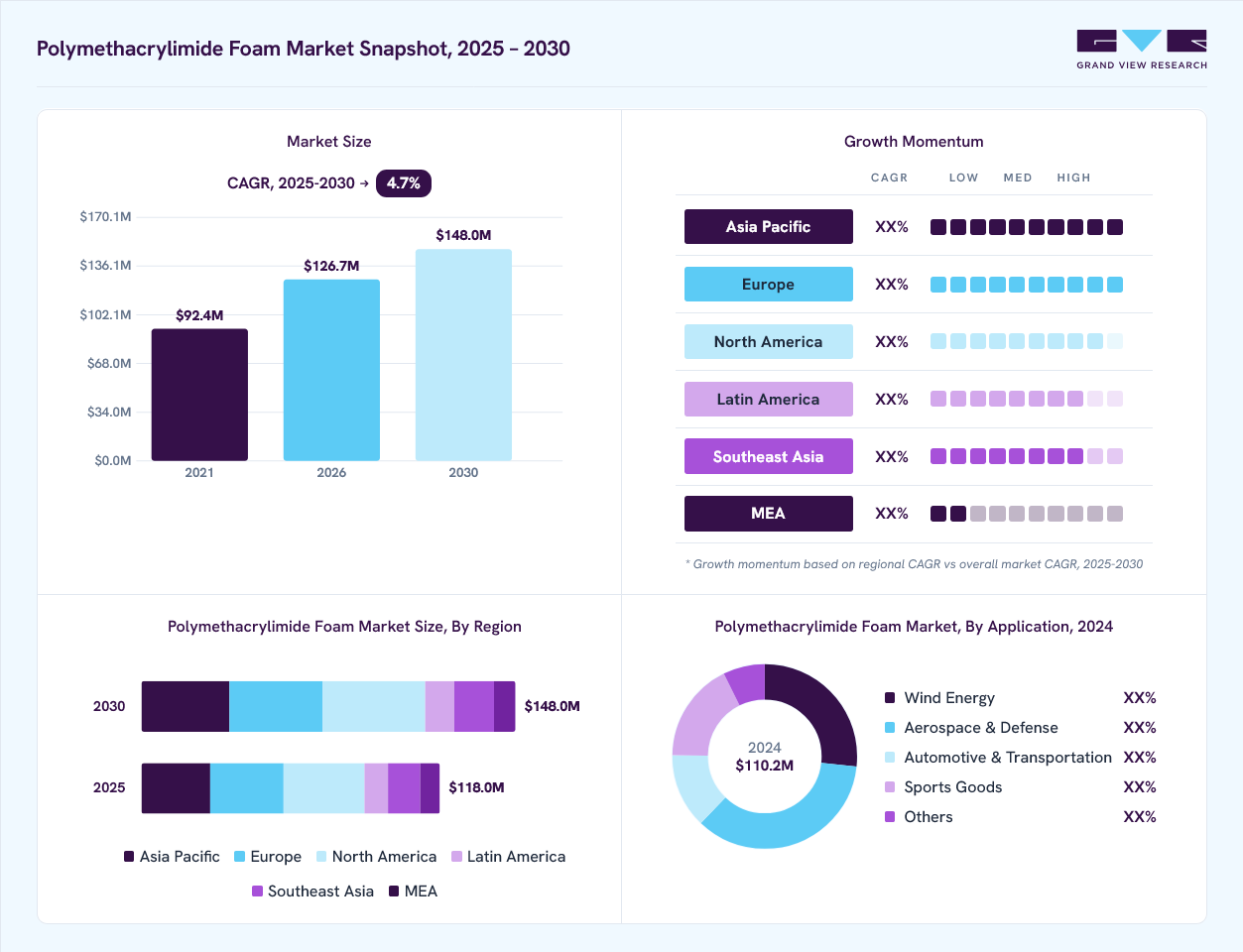
The global polymethacrylimide foam market size was valued at USD 117.9 million in 2025 and is projected to grow from USD 126.7 million in 2026 to USD 175.3 million by 2033, at a CAGR of 4.7% from 2026 to 2033. North America dominated the market, accounting for a revenue share of 27.1% in 2025.Growing emphasis on lightweight, high-performance materials, continuous advancements in polymer engineering, and increasing demand for energy-efficient structural solutions are driving the growth of the polymethacrylimide foam market.
 Source: Grand View Research, IR Documents, Primary Interviews, Paid DatabasesTo learn more about this report,
 Download Free Sample Report
 Key Market Trends & Insights
- By application: The aerospace & defense segment led the market with the largest revenue share of 35.5% in 2025.
Regional Highlights
- Largest regional market: North America (27.1% revenue share, 2025)
- Fastest-growing regional market: Asia Pacific (highest CAGR, 2026-2033)
- By country: The U.S. held the largest market share in 2025.
Market Size & Forecast
- Market size in 2025: USD 117.9 Million
- Estimated market size in 2026: USD 126.7 Million
- Projected market size by 2033: USD 175.3 Million
- CAGR (2026-2033): 4.7%
Three ways to get this report
Buy it, customize it, or ask a question.Ask an Analyst
A direct answer, usually in 1 working day
- AccessReport author, directly
- Reply timeWithin 1 working day
- No sales callDirect answer only
- FormatEmail reply
- CostFree, no cost
Get the Full Report
What the study covers
- FormatsPDF · Excel · Dashboard
- Timeline2026–2033 annual, 2025 base
- Coverage20+ countries, 5 regions
- Companies10+ key players profiled
Customize the Report
20% free customization
- IncludeCountries, segments, points
- TailorTo your product definition
- ExtendDeeper competitor detail
- OrA fully bespoke study
- Turnaround5–10 working days
The exceptional combination of low density, high mechanical strength, thermal insulation, and impact resistance offered by PMI foam is accelerating its adoption across advanced composite applications, while expanding utilization in aerospace, transportation, wind energy, and other high-performance industries, supported by ongoing material innovations, continues to drive global market growth.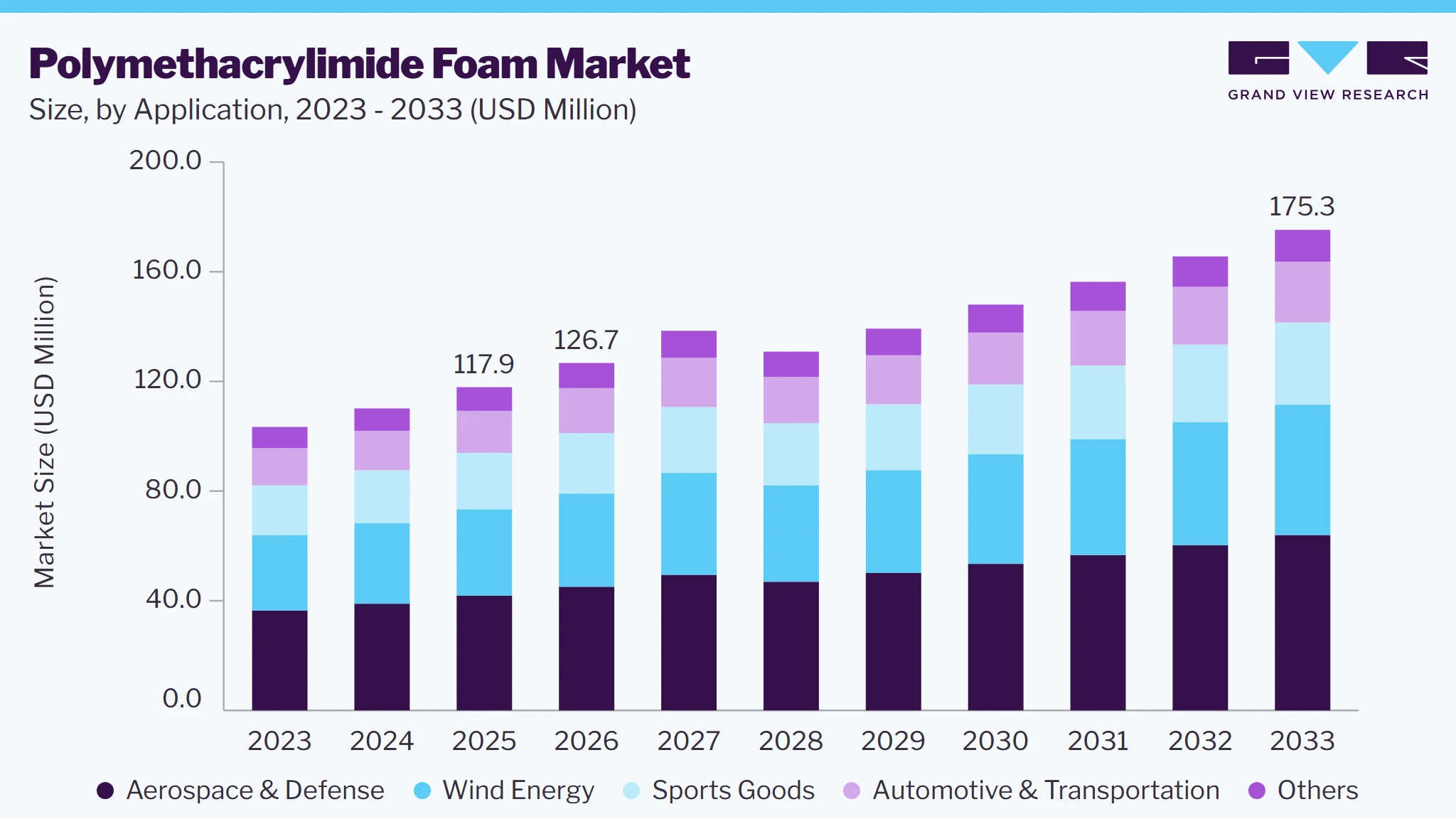 To learn more about this report, Download Free Sample Report
 Polymethacrylimide (PMI) foam is known for its lightweight, strength, thermal insulation, and impact resistance properties, making it a preferred choice in many high-performance applications despite its expensiveness. PMI foam has a very low density, making it an ideal material for applications where weight reduction is important. This characteristic contributes significantly to its use in aerospace and other transportation segments. Constant innovations in material development are expected to maintain steady growth of the polymethacrylimide foam industry in the coming years.
PMI foam possesses a high strength-to-weight ratio, allowing it to maintain good mechanical strength while being much lighter than many other materials, such as metals or denser foams. Moreover, it also offers good thermal insulation, enhancing its usability in environments where temperature control or insulation is crucial. The automotive & transportation industry extensively uses these features during manufacturing processes, enabling market expansion. PMI foam is utilized in automotive components to achieve weight savings. This is crucial for improving fuel efficiency and overall vehicle performance, as lighter vehicles require less energy to operate. The foam serves as a base material in sandwich structures, which combine layers of materials such as composites or metals with PMI foam to enhance strength while minimizing weight. This is particularly beneficial for components such as body panels and chassis parts. As automakers continue to seek ways to improve vehicle performance while meeting regulatory standards, the adoption of PMI foam is expected to grow significantly.
The fast-growing construction sector and increasing focus on energy-efficient projects and promoting sustainability present another avenue for market expansion. PMI foam provides excellent thermal insulation properties, making it useful in construction applications where energy efficiency and temperature control are essential. Its utilization in walls, roofs, and insulation panels contributes to sustainability and energy savings. The product is used in sandwich panels, prefabricated structures, and other lightweight building elements, particularly in green buildings and sustainable construction.
Another area that is witnessing a steady demand for PMI foam is the sporting goods industry. There has been a noticeable growth in the number of people seeking both casual and active participation in sports activities, leading to a rising demand for technically advanced gear or equipment. Companies in this sector are thus leveraging novel components such as PMI foam to develop performance-efficient products. These factors have helped sustain the growth of the global polymethacrylimide foam industry.
Market Dynamics
The polymethacrylimide (PMI) foam market is witnessing steady growth, driven by increasing demand for lightweight, high-strength materials, stringent energy-efficiency regulations, and expanding adoption across transportation, construction, and sporting goods industries. PMI foam offers an exceptional strength-to-weight ratio, thermal insulation, impact resistance, and structural stability, accelerating its use in automotive lightweight components, sandwich composites, and energy-efficient building systems. Furthermore, rising investments in sustainable construction, fuel-efficient mobility solutions, and high-performance sports equipment, supported by continuous material innovations, continue to strengthen the long-term growth prospects of the global PMI foam market.
The polymethacrylimide foam market is experiencing steady growth, driven by increasing demand from healthcare systems, where infection prevention and patient safety remain critical priorities. Plastic-based personal protective equipment manufactured primarily from polypropylene is extensively utilized in disposable masks, isolation gowns, surgical drapes, and other medical protective products due to its lightweight properties, fluid resistance, high filtration efficiency, durability, and cost-effective large-scale production. These performance advantages continue to accelerate the adoption of plastic-based PPE across hospitals, dental clinics, diagnostic centers, and research laboratories worldwide.
Market growth is further supported by rising healthcare investments, expanding hospital infrastructure, and increasing emphasis on infection control protocols across public and private healthcare facilities. The growing volume of surgical procedures, diagnostic testing, emergency care services, and laboratory research has significantly increased the consumption of disposable protective products that ensure reliable barrier protection and regulatory compliance. As healthcare providers continue to prioritize hygiene, operational efficiency, and occupational safety, polymethacrylimide foam is expected to witness sustained demand across global healthcare applications.
High production costs remain a significant challenge for the polymethacrylimide (PMI) foam market. Manufacturers face elevated processing expenses due to complex polymerization, foaming, and curing processes that require specialized equipment, advanced manufacturing technologies, and stringent quality control standards. These factors make PMI foam considerably more expensive than alternative core materials such as PVC and PET foams, limiting its adoption in cost-sensitive applications. Additionally, high capital investment requirements and production costs place pricing pressure on manufacturers and end-users, potentially restraining broader market penetration despite the material’s superior performance characteristics
The increasing global focus on renewable energy generation and carbon reduction initiatives is creating significant growth opportunities for the polymethacrylimide (PMI) foam market. Rising adoption of lightweight, high-strength composite materials in wind turbine manufacturing is expanding market potential across onshore and offshore wind energy projects worldwide. Market growth is further supported by ambitious renewable energy targets, increasing investments in clean energy infrastructure, and continuous advancements in turbine blade technologies. As manufacturers prioritize longer, lighter, and more durable wind turbine blades, PMI foam is gaining importance as a high-performance structural core material for next-generation wind energy applications globally.
Analyst Perspective
The polymethacrylimide (PMI) foam market is expected to witness sustained long-term growth as demand shifts from conventional lightweight materials toward high-performance structural core solutions that deliver superior mechanical strength, thermal stability, and weight reduction. Over the next few years, the market is likely to transition from volume-driven adoption to innovation- and value-led growth, supported by expanding applications in aerospace & defense, wind energy, automotive & transportation, and advanced sporting goods. Increasing investments in next-generation composite technologies, electric mobility, renewable energy infrastructure, and fuel-efficient transportation will continue to create new revenue opportunities for premium PMI foam grades. Competitive advantage will increasingly depend on advanced polymer engineering capabilities, proprietary manufacturing technologies, product customization, strategic partnerships with OEMs and composite manufacturers, and strong global production and distribution networks. At the same time, manufacturers will face challenges from high production costs, raw material price volatility, competition from alternative core materials such as PET and PVC foams, and evolving sustainability expectations. Companies that successfully balance material innovation, cost optimization, manufacturing scalability, and environmentally responsible production practices will be best positioned to strengthen their market leadership and capture emerging opportunities across high-performance composite applications.
Application Insights
Based on application, theaerospace & defense segment led the market with the largest revenue share of 35.5% in 2025. The product demand has been driven substantially by its unique properties, such as high strength-to-weight ratio, excellent thermal and acoustic insulation, durability, and resistance to environmental factors, including moisture and heat. PMI foam has become a vital material in aircraft interior parts, structural components, and insulation, where minimizing weight is essential to enhance performance and energy efficiency. Similarly, in the defense segment, the ability of this foam to provide thermal insulation, vibration dampening, and soundproofing highlights its importance as a component in aircraft interiors, avionics housings, and fuel tanks. PMI foam is also used in the thermal protection of missiles, warheads, and munitions, providing insulation during flight or re-entry into the atmosphere.
The wind energy segment is expected to grow at a substantial CAGR from 2025 to 2030. The continued shift towards renewable energy production and rising focus on establishing wind and solar farms has enabled a significant demand for polymethacrylimide foam. Companies developing components to generate wind energy use this foam to enhance wind turbines' performance, efficiency, and sustainability. With a continued increase in the size of wind turbine blades, the need for lightweight and strong materials becomes more critical. PMI foam is used as a core material in sandwich structures for turbine blades, helping to reduce the overall weight of the blades without sacrificing their strength or performance. The solution helps improve aerodynamics and wind energy capture efficiency and thus increases their energy output. Lighter and more durable blades can also withstand harsher environmental conditions, leading to longer operational lifespans and lower maintenance costs.
Regional Insights
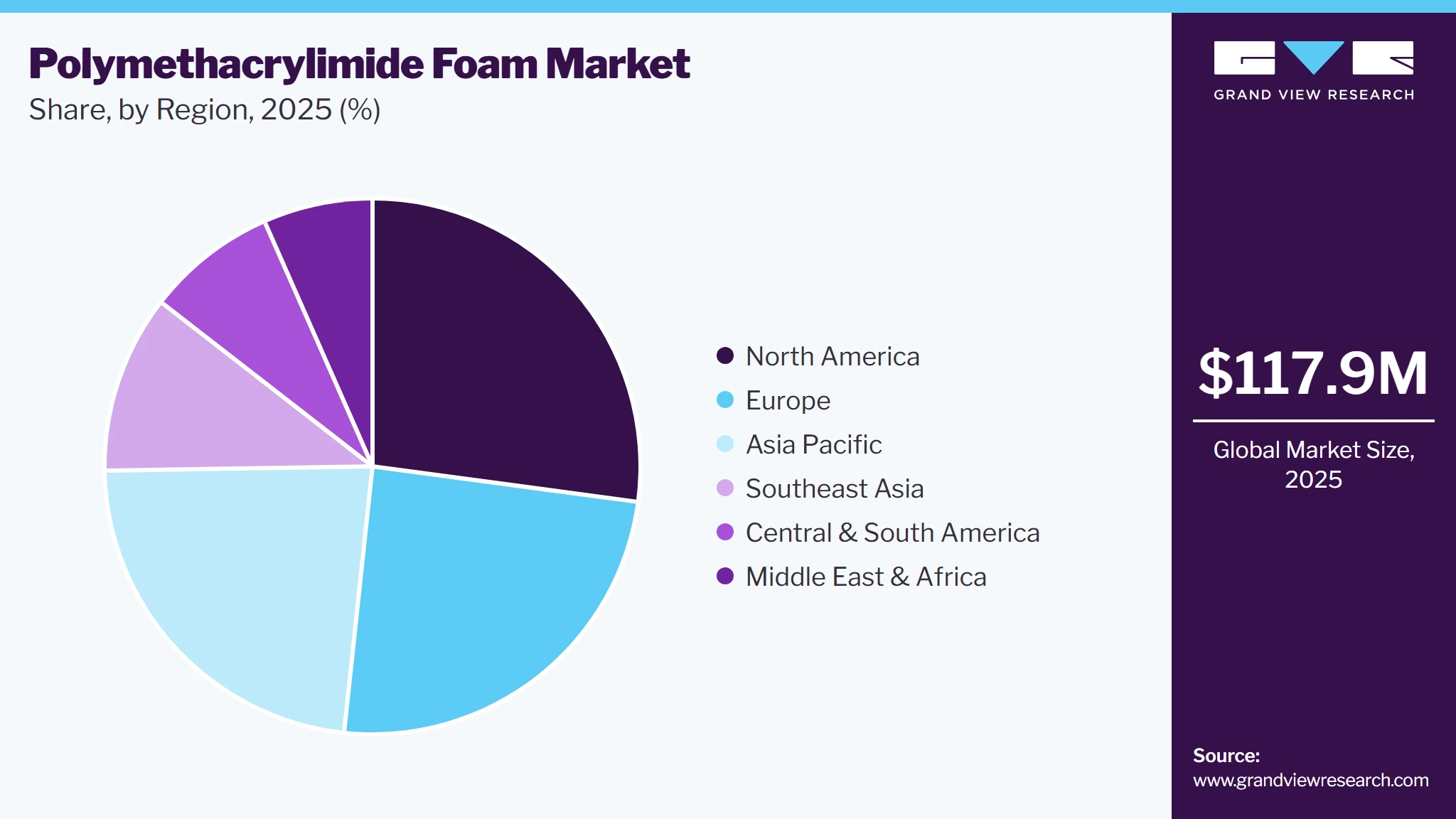
North America dominated the market with the largest revenue share of 27.1% in 2025. The rapid pace of development of the aerospace and defense sectors in the U.S. and Canada has resulted in the increased incorporation of products such as PMI foams in high-performance components. Moreover, with the growing shift towards electric vehicles (EVs) in these economies, this type of foam has become a popular solution for developing lightweight structural components. Reducing vehicle weight directly contributes to improved battery efficiency, longer driving ranges, and better overall performance in these vehicles. Additionally, increasing investments in the wind power segment due to positive initiatives regarding renewable energy are expected to create further growth opportunities in this market.
 To learn more about this report, Download Free Sample Report
 U.S. Polymethacrylimide Foam Market Trends
The polymethacrylimide foam market in U.S. accounted for the largest market revenue share in North America in 2025. The economy is one of the highest spenders on defense and aerospace technologies, which has led to increased awareness regarding the use of solutions such as PMI foams in military aircraft, drones, and defense structures. PMI foam has witnessed a steady demand due to its recyclability and low environmental footprint as part of a broader shift toward sustainable materials. The U.S. government’s policies promoting sustainable construction and energy efficiency drive the deployment of materials in manufacturing processes that can contribute to these goals. U.S.-based manufacturers increasingly seek tailored solutions to optimize the material for specific applications, enabling industry expansion.
Asia Pacific Polymethacrylimide Foam Market Trends
The polymethacrylimide foam industry in the Asia Pacific is expected to advance at the fastest CAGR during the forecast period. The market growth is being influenced by a range of factors, including the region’s rapid industrialization, growth in technology-driven sectors, and increasing focus on sustainability and energy efficiency. Economies such as China, India, and Japan invest heavily in commercial aviation and defense industries. PMI foam’s properties, such as its lightweight nature and high strength-to-weight ratio, make it an ideal material for reducing aircraft weight, improving fuel efficiency, and meeting environmental regulations. The presence of organizations such as the Commercial Aircraft Corporation of China, Ltd. (Comac) in China and Hindustan Aeronautics Limited (HAL) in India has further heightened the need to create strong and reliable aviation structures, aiding regional market growth.
China polymethacrylimide foam market accounted for the largest revenue share in the regional market in 2024. The economy’s aerospace sector is expanding significantly due to the presence of domestic aircraft manufacturers such as COMAC and a growing number of suppliers to Boeing and Airbus. Moreover, the marine and shipbuilding industry has also witnessed strong expansion, where PMI foam finds extensive usage. The product is used in marine insulation and composite structures for vessels and offshore platforms. It is valued for its resistance to water absorption, corrosion resistance, and lightweight nature, which help improve marine vessels’ overall performance and efficiency. The market is further expanding owing to notable developments in the electronics and telecommunications space of the country, where this foam plays a vital role in thermal management.
Europe Polymethacrylimide Foam Market Trends
Europe is expected to grow at a substantial CAGR in the market during the forecast period. The fast pace of growth of the automotive industry and the need to introduce energy-efficient vehicles due to increasing customer demand have created a substantial appeal for PMI foams in regional economies. Additionally, the development of green buildings and the incorporation of high-efficiency materials are expected to sustain industry expansion. PMI foam’s fire resistance makes it a preferred option for insulation and composite materials used in building façades, roofs, and walls, enabling builders to comply with the region’s fire safety regulations. Europe’s focus on establishing a circular economy and waste reduction also supports market demand, as PMI foam is a recyclable material with a lower environmental impact than traditional foam options.
Key Polymethacrylimide Foam Company Insights
Some major companies involved in the global polymethacrylimide foam industry include Evonik, Cashem Advanced Materials Hi-tech, and Sky Composites, among others.
-
Evonik Industries AG is a multinational specialty chemicals provider that operates through 5 major divisions - Nutrition & Care, Smart Materials, Specialty Additives, Performance Materials, and Technology & Infrastructure. The company has been involved in the development and manufacturing of ROHACELL, which is a polymethacrylimide (PMI) foam that is extensively used in the sports goods sector. The ROHACELL foam is known for its high strength-to-weight ratio, while it can also withstand high temperatures and offers great thermal insulation properties.
-
Cashem Advanced Materials Hi-tech Co., Ltd is a specialized manufacturer based in Zhejiang, China, focusing on producing PMI foam under the brand CASCELL. Notable products include CASCELL WH, CASCELL RS, CASCELL HF, and CASCELL FR, among others, along with custom composite solutions. The company’s PMI foam offerings cater to several major application areas, including aerospace, automotive, sports equipment, radome & antenna, wind power, and medical apparatus, and others.
Key Polymethacrylimide Foam Companies:
The following key companies have been profiled for this study on the polymethacrylimide foam market.
-
Evonik Industries AG
-
Cashem Advanced Materials Hi-tech Co., Ltd.
-
Hunan Rifeng Composite Co., Ltd
-
Sky Composites
-
tasuns.com
-
Baoding Meiwo Science and Technology Development Co., Ltd.
-
NIPPI Corporation
-
CEL Components s.r.l.
-
TOPOLO New Materials
-
Kraton Corporation
-
ERG Aerospace
Competitive Benchmarking
Category
Operating Strategies
Competitive Edge
Weakness
Established Players (Evonik Industries AG, Cashem Advanced Materials Hi-tech Co., Ltd., ERG Aerospace)
- Focus on strengthening their position in the polymethacrylimide (PMI) foam market through the development and commercialization of high-performance structural foam materials for aerospace & defense, wind energy, automotive & transportation, marine, sports goods, and other advanced composite applications.
- Strong emphasis is placed on expanding product portfolios with lightweight, high-strength, thermally stable, and fatigue-resistant PMI foam grades.
- Continuous investments in advanced polymer technologies, manufacturing capacity expansion, process optimization, and strategic collaborations with aerospace OEMs, composite manufacturers, wind turbine producers, and research institutions support product innovation, global market penetration, and long-term commercial growth.
- Extensive expertise in PMI foam chemistry, advanced composite core materials, and precision manufacturing enables the commercialization of premium structural foams with exceptional strength-to-weight ratio, thermal insulation, dimensional stability, impact resistance, and compatibility with high-temperature composite processing.
- Strong research and development capabilities, proprietary production technologies, global customer relationships, established quality management systems, and deep application knowledge across aerospace and renewable energy industries provide sustainable competitive differentiation and recurring revenue opportunities.
- High production costs, capital-intensive manufacturing processes, and dependence on specialized raw materials increase operational complexity and pricing pressure.
- Market growth is influenced by fluctuations in aerospace production, renewable energy investments, and global industrial activity.
- Additionally, increasing competition from alternative lightweight core materials such as PET, PVC, and balsa wood, together with rising sustainability expectations and continuous investment requirements for product innovation and manufacturing expansion, may affect profitability and long-term market share.
Emerging Players (Hunan Rifeng Composite Co., Ltd., Sky Composites, Tasuns, Baoding Meiwo Science and Technology Development Co., Ltd., NIPPI Corporation, CEL Components s.r.l., TOPOLO New Materials)
- Focus on expanding their presence in the polymethacrylimide (PMI) foam market through the development of application-specific structural foam solutions for aerospace, wind energy, automotive, marine, sports equipment, and industrial composite applications.
- Emphasis is placed on improving mechanical strength, lightweight performance, thermal stability, processing compatibility, and customized product offerings to address evolving customer requirements.
- Strategic partnerships with composite fabricators, component manufacturers, research organizations, and regional distributors support technology development, production scale-up, and entry into high-growth international markets.
- Strong flexibility in customized product development, responsive manufacturing capabilities, and competitive pricing enable these companies to address niche and regional demand effectively.
- Their expertise in composite materials, continuous investments in production technology, and ability to develop application-specific PMI foam grades support increasing adoption across emerging aerospace, renewable energy, transportation, and industrial applications.
- Agile business models and expanding regional distribution networks further strengthen their competitive positioning in high-growth markets.
Limited global brand recognition, smaller manufacturing capacities, and comparatively lower research and development resources may restrict penetration into highly regulated aerospace and defense programs.
Dependence on regional demand, exposure to raw material price fluctuations, and competition from well-established global PMI foam manufacturers can constrain market expansion.
Additionally, significant investments in quality certifications, advanced production technologies, and international distribution capabilities are required to compete effectively in premium high-performance composite markets.
Recent Developments
-
In September 2024, Evonik announced that it had shifted to using electricity solely from renewable energy sources for its ROHACELL PMI foam production facility in Darmstadt, Germany. The strategy is expected to ensure that the company’s High Performance Polymers division can reduce 3,400 metric tons of carbon dioxide emissions from its operations each year. The supply of green electricity to this site has been validated by relevant certificates and special Power Purchase Agreements (PPAs).
Polymethacrylimide Foam Market Report Scope
Report Attribute
Details
Market size value in 2025
USD 117.9 million
Estimated market size in 2026
USD 126.7 million
Projected market size by 2033
USD 175.3 million
Growth rate
CAGR of 4.7% from 2026 to 2033
Base year for estimation
2025
Historical data
2021 - 2024
Forecast period
2026 - 2033
Quantitative units
Revenue in USD million/billion, volume in kilotons and CAGR from 2026 to 2033
Report coverage
Revenue forecast, company ranking, competitive landscape, growth factors, and trends
Segments covered
Application, region
Regional scope
North America; Europe; Asia Pacific; Latin America; Middle East & Africa
Country scope
U.S., Canada, Mexico, Germany, UK, France, Italy, China, Japan, India, Malaysia, Indonesia, Thailand, Brazil, Saudi Arabia
Key companies profiled
Evonik Industries AG; Cashem Advanced Materials Hi-tech Co.,Ltd.; Hunan Rifeng Composite Co., Ltd; Sky Composites; tasuns.com; Baoding Meiwo Science and Technology Development Co., Ltd.; NIPPI Corporation; CEL Components s.r.l.; TOPOLO New Materials; ERG Aerospace
Customization scope
Free report customization (equivalent up to 8 analysts' working days) with purchase. Addition or alteration to country, regional & segment scope.
Pricing and purchase options
Avail customized purchase options to meet your exact research needs. Explore purchase options
Global Polymethacrylimide Foam Market Report Segmentation
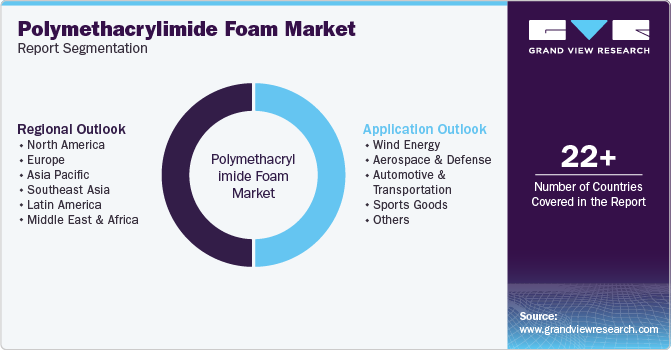
This report forecasts revenue and volume growth at the global, regional, and country levels and provides an analysis of the latest industry trends in each of the sub-segments from 2021 to 2033. For this study, Grand View Research has segmented the global polymethacrylimide foam market report based on application and region:
 To learn more about this report, Download Free Sample Report
 -
Application Outlook (Volume, Kilotons; Revenue, USD Million, 2021 - 2033)
-
Wind Energy
-
Aerospace & Defense
-
Automotive & Transportation
-
Sports Goods
-
Others
-
-
Regional Outlook (Volume, Kilotons; Revenue, USD Million, 2021 - 2033)
-
North America
-
U.S.
-
Canada
-
Mexico
-
-
Europe
-
Germany
-
U.K.
-
France
-
Italy
-
-
Asia Pacific
-
China
-
India
-
Japan
-
Southeast Asia
-
Malaysia
-
Indonesia
-
Thailand
-
-
Latin America
-
Brazil
-
-
MEA
-
Saudi Arabia
-
-
Research Methodology
The polymethacrylimide foam market figures in this report are based on a proven research process that combines executive interviews with secondary research from proprietary databases, company filings, and recognized regulatory and institutional sources. Market size is built through value-chain sizing-reconciling supply-side and demand-side estimates-and triangulated with bottom-up and top-down approaches. Every estimate passes multiple levels of expert validation before publication, with each polymethacrylimide foam segment quantified using the revenue-capture definitions in the table below.
Segment Definition
Segment - Application
Revenue capture definition
Wind Energy
Revenue is captured through the production and sale of polymethacrylimide (PMI) foam utilized as lightweight structural core material in wind turbine blades, nacelle components, and composite assemblies. Demand is driven by its exceptional strength-to-weight ratio, high fatigue resistance, thermal stability, dimensional stability, and ability to enhance blade stiffness while reducing overall weight for improved energy generation efficiency.
Aerospace & Defense
Revenue is captured through the commercialization of polymethacrylimide (PMI) foam used in aircraft structures, helicopter rotor blades, radomes, satellite components, unmanned aerial vehicles (UAVs), and defense composite systems. Growth is supported by superior mechanical strength, ultra-lightweight construction, excellent thermal insulation, impact resistance, and compatibility with advanced composite manufacturing processes for high-performance aerospace applications.
Automotive & Transportation
Revenue is captured through the supply of polymethacrylimide (PMI) foam utilized in automotive body panels, chassis components, interior structures, rail vehicles, marine vessels, and lightweight transportation composites. Demand is driven by high strength-to-weight ratio, energy absorption, dimensional stability, thermal insulation, and the increasing focus on vehicle lightweighting, fuel efficiency, and electric mobility solutions.
Sports Goods
Revenue is captured through the production and sale of polymethacrylimide (PMI) foam used in bicycles, skis, snowboards, surfboards, rackets, helmets, and other high-performance sporting equipment. Growth is supported by lightweight characteristics, superior stiffness, impact resistance, vibration damping, and increasing demand for advanced composite materials that enhance athletic performance and product durability.
Others
Revenue is captured through the commercialization of polymethacrylimide (PMI) foam utilized across marine, construction, medical, industrial, robotics, and specialty composite applications. Growth is supported by continuous advancements in composite material technologies, increasing demand for lightweight structural solutions, expanding adoption in high-performance engineering applications, and the growing emphasis on energy efficiency and sustainable manufacturing practices.
Estimation Model
Layer Name
Key Question
Description
Top-Down Polymethacrylimide (PMI) Foam Demand Assessment Layer
What defines market boundaries?
This layer begins with global demand for high-performance structural foam materials used across aerospace & defense, wind energy, automotive & transportation, sports goods, marine, construction, and other advanced composite industries. Demand is filtered based on lightweighting initiatives, renewable energy expansion, aerospace production, vehicle electrification, infrastructure development, composite material adoption, and increasing demand for high-strength, thermally stable, and lightweight engineering materials across major end-use sectors.
Application Validation Layer
Where is demand generated?
This layer evaluates demand distribution across wind energy, aerospace & defense, automotive & transportation, sports goods, and other industrial applications. Market revenue is aligned with critical material performance requirements including high strength-to-weight ratio, thermal insulation, dimensional stability, fatigue resistance, impact resistance, mechanical performance, and compatibility with advanced composite sandwich structures used in demanding engineering environments.
Product Material Conversion Layer
Who captures market revenue?
This layer converts application-level demand into polymethacrylimide (PMI) foam revenue by applying product-grade and density mix ratios across aerospace-grade, wind energy-grade, automotive-grade, and specialty PMI foam products. Revenue allocation considers material density, compressive strength, thermal performance, manufacturing complexity, composite processing compatibility, product specifications, technological advancements, pricing, and supplier positioning across the global polymethacrylimide foam value chain.
Regional Commercial Cross-Check Layer
How are assumptions validated?
This layer validates demand concentration by comparing Europe's leadership in aerospace manufacturing, wind energy deployment, and advanced composite technologies; North America's strong demand driven by aerospace & defense investments, renewable energy expansion, and transportation innovation; and Asia Pacific's rapid growth supported by industrialization, automotive production, wind power installations, and expanding aerospace manufacturing. It also evaluates emerging opportunities across Latin America and the Middle East & Africa, supported by increasing renewable energy investments, infrastructure development, and growing adoption of lightweight composite materials across high-performance industries.
Delivered Customizations
This report has been delivered with the following In-depth customizations
CLIENT REQUEST
CUSTOMIZATION DELIVERED
VALUE ADDS
Regional Segmentation
Delivered a detailed regional and country-level assessment of the polymethacrylimide (PMI) foam market across North America, Europe, Asia Pacific, Latin America, and the Middle East & Africa, including demand trends, production capacity, consumption patterns, end-use industry analysis, regulatory environment, and growth prospects.
Enables clients to identify high-growth regional markets, optimize geographic expansion strategies, prioritize investments, and align production and sales operations with regional demand dynamics.
Trade Assessment
Delivered an assessment of global import-export trends, trade flows, key exporting and importing countries, tariff structures, supply chain dynamics, logistics considerations, and regulatory impacts affecting the PMI foam market.
Assists clients in optimizing sourcing strategies, mitigating supply chain risks, identifying new export opportunities, and improving resilience against geopolitical and trade-related disruptions.
Opportunity Assessment
Conducted a strategic evaluation of emerging growth opportunities across renewable energy, aerospace & defense, electric vehicles, advanced composites, marine applications, lightweight construction, and next-generation mobility, including technology trends and investment potential.
Helps clients prioritize high-return investment areas, identify future revenue streams, strengthen innovation roadmaps, and capitalize on evolving customer requirements and long-term market trends.
Frequently Asked Questions About This Report
The polymethacrylimide foam market was valued at USD 117.9 million in the year 2025 and is estimated at USD 126.7 million in 2026.
Growing emphasis on lightweight, high-performance materials, continuous advancements in polymer engineering, and increasing demand for energy-efficient structural solutions are driving the growth of the polymethacrylimide foam market. The exceptional combination of low density, high mechanical strength, thermal insulation, and impact resistance offered by PMI foam is accelerating its adoption across advanced composite applications, while expanding utilization in aerospace, transportation, wind energy, and other high-performance industries, supported by ongoing material innovations, continues to drive global market growth.
North America dominated the market, accounting for a revenue share of 27.1% in 2025.
Asia Pacific is the fastest-growing region over the forecast period.
Aerospace & defense segment led the market with the largest revenue share of 35.5% in 2025 and is the fastest growing application.
The key players in the polymethacrylimide foam market are Evonik Industries AG; Cashem Advanced Materials Hi-tech Co.,Ltd.; Hunan Rifeng Composite Co., Ltd; Sky Composites; tasuns.com; Baoding Meiwo Science and Technology Development Co., Ltd.; NIPPI Corporation; CEL Components s.r.l.; TOPOLO New Materials; ERG Aerospace
The polymethacrylimide foam market is expected to grow at a CAGR of 4.7% from 2026 to 2033 to reach around USD 175.3 million by 2033.
About the Author(s)
Plastics, Polymers & Resins Research Team
Bulk Chemicals · Plastics, Polymers & ResinsThis report was authored by the plastics, polymers & resins research team at Grand View Research - comprising two research analysts, one senior research analyst, and one industry expert - with specialized expertise in the plastics, polymers & resins segment of the bulk chemicals industry. All findings are based on proprietary bulk chemicals databases, executive interviews, and regulatory analysis, subject to internal peer review prior to publication.
Last Updated:
Speak to Analyst

Customize this report to your needs - add regions, segments, or data points, with 20% free customization.
Or view our licence options:


ISO 9001:2015 & 27001:2022 Certified
We are GDPR and CCPA compliant! Your transaction & personal information is safe and secure. For more details, please read our privacy policy.


