
- Home
- »
- Medical Devices
- »
-
Radiology Procedures Market Size, Share Report, 2026-2033GVR Report cover

Radiology Procedures Market (2026 - 2033)
Size, Share & Trends Analysis Report By Modality (X-Ray, Mammography, Computed Tomography), By End Use (Hospitals, Diagnostic Imaging Centers), By Region (International, U.S.), And Segment Forecasts
Market Size, 2025
$266.7BMarket Estimate, 2026
$277.5BMarket Forecast, 2033
$356.5BCAGR, 2026–2033
3.6%Radiology Procedures Market Summary
The global radiology procedures market size was valued at USD 266.7 billion in 2025 and is projected to grow from USD 277.5 billion in 2026 to USD 356.5 billion by 2033, at a CAGR of 3.6% from 2026 to 2033. This robust growth is driven by increasing demand for early and accurate diagnosis, rising prevalence of chronic and lifestyle-related diseases, and rapid technological advancements in imaging modalities such as CT, and digital X-ray systems.
Key Market Trends & Insights
- By modality: X-Ray segment held the largest market share of 43.1% in 2025.
- By end-use: Hospitals segment held the largest market share in 2025.
Market Size & Forecast
- Market size in 2025: USD 266.7 Billion
- Estimated market size in 2026: USD 277.5 Billion
- Projected market size by 2033: USD 356.5 Billion
- CAGR (2026-2033): 3.6%
Three ways to get this report
Buy it, customize it, or ask a question.Ask an Analyst
Analyst response in 1 business day
- AccessReport author, directly
- Reply timeWithin 1 working day
- No sales callDirect answer only
- FormatEmail reply
- CostFree, no cost
Get the Full Report
What the study covers
- FormatsPDF · Excel · Dashboard
- Timeline2026–2033 annual, 2025 base
- Coverage20+ countries, 5 regions
- Companies10+ key players profiled
Customize the Report
20% free customization
- IncludeCountries, segments, points
- TailorTo your product definition
- ExtendDeeper competitor detail
- OrA fully bespoke study
- Turnaround5–10 working days
In addition, the expansion of healthcare infrastructure, growing awareness of preventive healthcare, and rising investments by key market players are expected to propel the market. Conditions such as cancer, cardiovascular diseases, neurological disorders, and diabetes require early, accurate, and non-invasive diagnosis, positioning radiology at the core of modern clinical decision-making. As healthcare systems prioritize early detection, precision medicine, and outcome-based care, reliance on imaging procedures continues to intensify across screening, diagnosis, treatment planning, and long-term monitoring.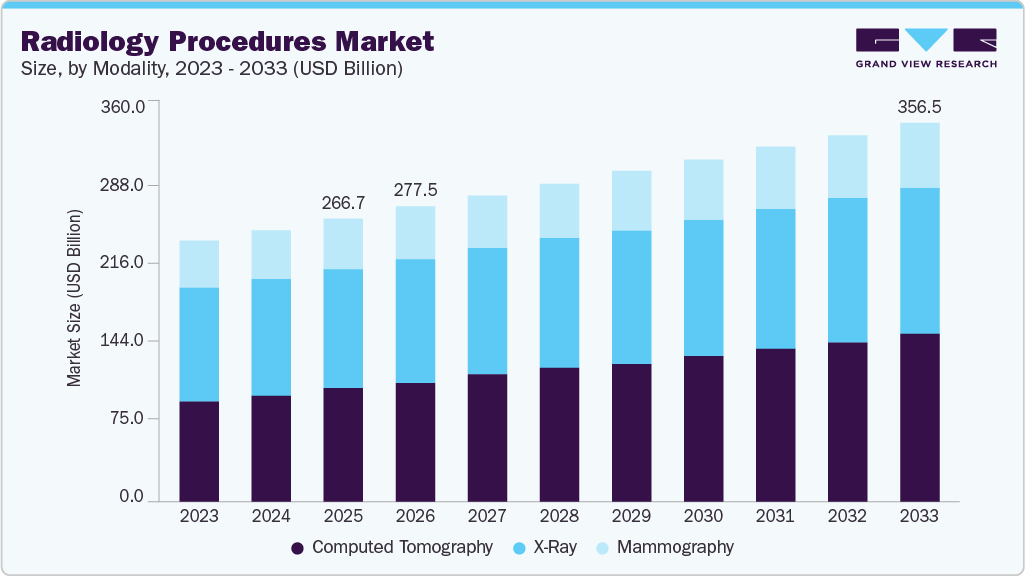 Source: Grand View Research, IR Documents, Primary Interviews, Paid DatabasesTo learn more about this report,
 Download Free Sample Report
 Cancer remains one of the strongest demand generators for radiological procedures. According to the U.S. National Center for Health Statistics, approximately 1,958,310 new cancer cases and 609,820 cancer-related deaths were reported in the U.S. in 2023. Imaging modalities such as CT, X-ray, and mammography are indispensable throughout the oncology care pathway, supporting population screening, tumor detection, staging, surgical planning, treatment response assessment, and post-therapy surveillance. Surgeons increasingly depend on preoperative CT and MRI to accurately delineate tumor size, margins, and anatomical relationships, directly improving surgical precision and patient outcomes. As cancer incidence continues to rise globally, imaging volumes are expected to grow proportionally.
Moreover, the rapidly aging global population accelerating demand for radiology procedures worldwide. Older adults face a significantly higher risk of chronic illnesses, disabilities, and degenerative conditions, making diagnostic imaging essential for early detection, disease monitoring, and clinical decision-making. Multiple NCBI studies confirm that individuals aged 65 years and above are more susceptible to neurological disorders, Parkinson’s disease, cardiovascular conditions, and musculoskeletal degeneration, all of which rely heavily on radiological evaluation. Demographic trends reinforce this demand surge. According to the World Health Organization (WHO), the global population aged 60 years and above increased from approximately 1 billion in 2020 to around 1.4 billion by 2030 and is expected to nearly double to 2.1 billion by 2050. This expansion is accompanied by a sharp rise in elderly patients with multiple comorbidities, including stroke, depression, dementia, and frailty. Age-related changes in muscle mass, bone density, and body composition increase the risk of falls, fractures, and injuries, directly driving demand for X-ray and CT-based diagnostic procedures in both emergency and routine care settings.
Rapid technological innovation is a powerful driver accelerating growth in the radiological procedures market, as advances in materials science, detector design, and artificial intelligence are transforming imaging performance, cost structures, and clinical workflows. Continuous improvements in X-ray detection technologies and AI-enabled imaging systems are expanding clinical applications, improving diagnostic accuracy, and increasing procedure volumes across hospitals and diagnostic imaging centers.
A notable example of next-generation innovation emerged in February 2026, when researchers at Florida State University (FSU) announced the development of new hybrid materials for advanced X-ray technologies. Led by Professor Biwu Ma, the research introduced organic metal halide complexes (OMHCs) and organic metal halide hybrids (OMHHs) a new class of materials that address longstanding limitations of conventional inorganic X-ray detectors. Traditional materials such as cadmium telluride (CdTe) and cadmium zinc telluride (CdZnTe) are rigid, expensive, energy-intensive to manufacture, and rely on toxic elements, which constrain scalability and sustainability.
AI-driven imaging and automation represent one of the most transformative opportunities in the radiology procedures market, particularly across mammography, X-ray, and CT workflows, as healthcare systems face rising imaging volumes alongside persistent radiologist shortages. Rather than replacing clinicians, recent evidence shows AI is increasingly functioning as a force multiplier, improving detection accuracy, accelerating workflows, and enhancing the sustainability of population-level screening programs.
In December 2025, multiple studies highlighted AI’s growing clinical value in breast cancer screening, where mammography remains the gold standard for early detection. Breast cancer accounted for 2.3 million new cases globally in 2022, with incidence and mortality projected to rise sharply by 2050. Screening programs are highly labor-intensive, often requiring double reading, yet retrospective data show that 20-30% of tumors are missed, particularly in women with dense breast tissue. Against this backdrop, AI offers a scalable solution to improve detection while easing workforce strain.
Market Concentration & Characteristics
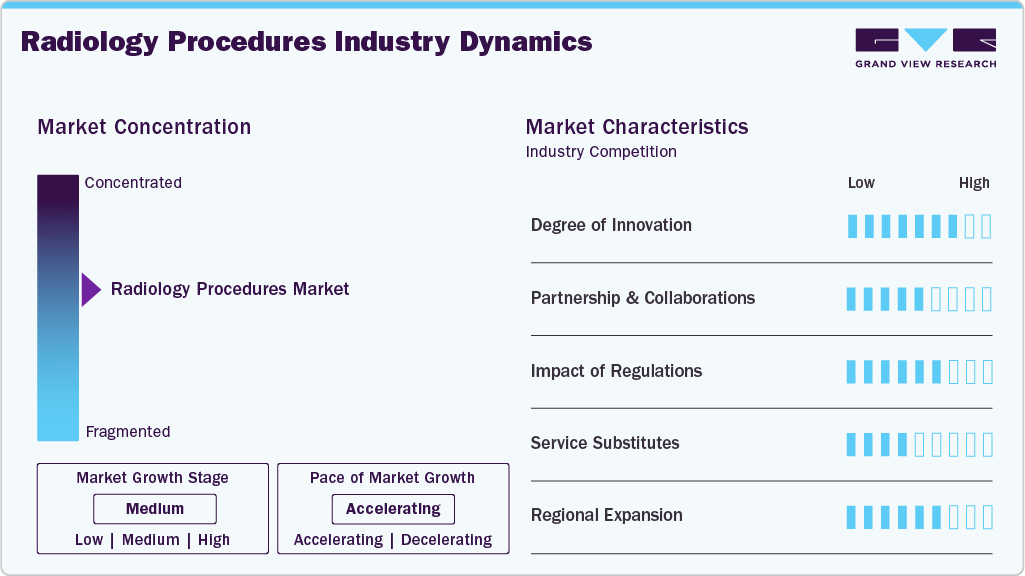
The radiology procedures market is moderately concentrated, with leading companies such as Siemens Healthineers, GE HealthCare, Koninklijke Philips N.V., and Canon Medical Systems holding significant market shares. These players provide a broad portfolio of advanced imaging solutions, including X-ray, computed tomography (CT), and other interventional radiology systems, enabling accurate diagnosis, real-time image guidance, and improved clinical outcomes. The market continues to evolve due to technological advancements such as artificial intelligence integration, enhanced image reconstruction algorithms, dose optimization technologies, and workflow automation. In addition, the rising prevalence of chronic diseases, increasing demand for early and precise diagnosis, growing adoption of minimally invasive image-guided procedures, and expanding healthcare infrastructure across emerging economies are driving market growth and encouraging new entrants to introduce specialized and application-specific radiology solutions.
The radiology procedures market is experiencing significant innovations and technological advancements, such as AI-powered image analysis, advanced 3D and 4D imaging technologies, and real-time image-guided navigation systems that enhance diagnostic accuracy, procedural precision, and workflow efficiency, particularly in complex clinical settings such as interventional suites, emergency departments, and oncology centers. For instance, in November 2023, Siemens Healthineers launched the SOMATOM Pro. Pulse dual-source CT system designed to deliver high-speed cardiac imaging with improved image quality and reduced radiation dose, supporting more accurate and efficient radiology procedures. These factors are expected to drive the growth of the radiology procedures market.
 To learn more about this report, Download Free Sample Report
 Partnerships and collaborations play a major role in the radiology procedures market, enabling companies to gain access to advanced imaging technologies, AI-driven diagnostic software, innovative detector and visualization systems, and integrated digital workflow solutions that enhance diagnostic accuracy, procedural efficiency, and overall patient outcomes. In December 2025, GE HealthCare Technologies Inc. and Indonesia’s Ministry of Health have entered a multi-year collaboration to expand access to advanced diagnostic care by supplying over 300 CT (computed tomography) scanners to public hospitals across all 38 provinces. This will help improve early detection and treatment of critical conditions such as cancer and cardiovascular diseases, and bring high quality imaging technologies to both urban and remote communities nationwide.
Regulatory approval plays a crucial role in shaping the radiology procedures market by ensuring that imaging systems, interventional devices, and related software meet stringent safety, quality, and performance standards before clinical use. Regulatory authorities such as the U.S. FDA, the European Medicines Agency (EMA) under MDR/IVDR frameworks, and other national regulatory bodies classify radiology equipment as medical devices, requiring manufacturers to demonstrate image quality, radiation safety, electromagnetic compatibility, clinical effectiveness, and cybersecurity compliance. Adherence to these regulations builds trust among healthcare providers, payers, and patients while supporting reimbursement eligibility and broader market access. For in September 2025, GE Healthcare has received FDA 510(k) clearance for its Revolution Vibe CT system, marking a regulatory milestone. The system has been installed for the first time globally in France, highlighting GE’s international reach. This development supports enhanced imaging capabilities and faster, high-quality patient diagnostics.
Product substitutes in the radiology procedures market include alternative diagnostic modalities and non-imaging-based assessment techniques that can reduce reliance on certain radiological procedures. For example, laboratory testing, physical examinations, and biomarker-based diagnostics may be used as preliminary or complementary approaches for disease detection. In some cases, modalities such as ultrasound may substitute for CT scans to avoid radiation exposure, while MRI may replace conventional X-ray or CT in soft tissue evaluations due to superior image contrast. In addition, emerging technologies such as point-of-care testing, wearable monitoring devices, and AI-driven predictive analytics are evolving as supportive or alternative diagnostic tools.
Regional expansion in the radiology procedures market is gaining momentum across major global regions, driven by the rising prevalence of chronic diseases, increasing demand for advanced diagnostic imaging, and continuous improvements in healthcare infrastructure. Companies are actively broadening their geographical footprint through strategic partnerships with hospitals and diagnostic centers, distribution agreements, and targeted product launches to strengthen market access and enhance the availability of advanced imaging and interventional radiology solutions. In july 2024, Siemens Healthineers inaugurated a new manufacturing facility in Bengaluru, India, to locally produce the Multix Impact E digital X-ray system aimed at expanding access to quality radiography. The facility supports India’s healthcare growth by enabling efficient, cost-effective production and supply of diagnostic imaging equipment. This development strengthens local manufacturing capabilities and broadens availability of advanced X-ray solutions in the region.
Modality Insights
The X-Ray segment dominated the market in 2025 and accounted for the largest share of 43.1% of the overall revenue. The global radiology procedures market has witnessed a sustained shift from conventional film-based X-ray systems to digital radiography. Digital X-ray systems offer faster image acquisition, reduced radiation exposure, superior image quality, and seamless integration with picture archiving and communication systems (PACS). The expanding adoption of PACS across hospitals and clinics has improved workflow efficiency, enabled remote reporting, and supported multisite diagnostic networks, accelerating digital X-ray deployment in both developed and emerging markets. The aging population is a critical driver of radiology procedure volumes. According to the National Council on Aging report published in May 2025, more than 14 million Americans aged 65 and older approximately one in four experience a fall each year. Falls frequently result in fractures and internal injuries that require immediate imaging evaluation. Emergency departments manage millions of fall-related visits annually, reinforcing reliance on X-ray imaging for rapid musculoskeletal and trauma assessment.
The computed tomography segment is expected to witness the second fastest CAGR of 4.9% over the forecast period. A key market driver is the shift toward high-end CT systems, supported by stricter radiation dose standards and reimbursement policies. Payers such as Medicare impose lower reimbursements for CT scans that fail to meet established dose benchmarks, encouraging healthcare providers to upgrade from mid-end to advanced CT platforms with better dose-management capabilities. Public and private organizations are also developing standardized protocols to minimize patient exposure to ionizing radiation, reinforcing demand for next-generation CT systems with integrated dose-reduction technologies. Technological innovation remains central to market expansion. Artificial intelligence (AI), deep-learning image reconstruction, and dual-energy CT are improving image quality, accelerating scan times, and reducing radiation exposure. In January 2023, GE HealthCare announced an agreement to acquire IMACTIS (France), strengthening its position in CT-guided interventional imaging. Further advancing cardiac imaging, GE HealthCare unveiled the Revolution Vibe CT system in March 2025 at the American College of Cardiology meeting, featuring “Unlimited One-Beat” cardiac imaging and AI-powered workflow optimization to expand access to coronary CT angiography (CCTA).
End Use Insights
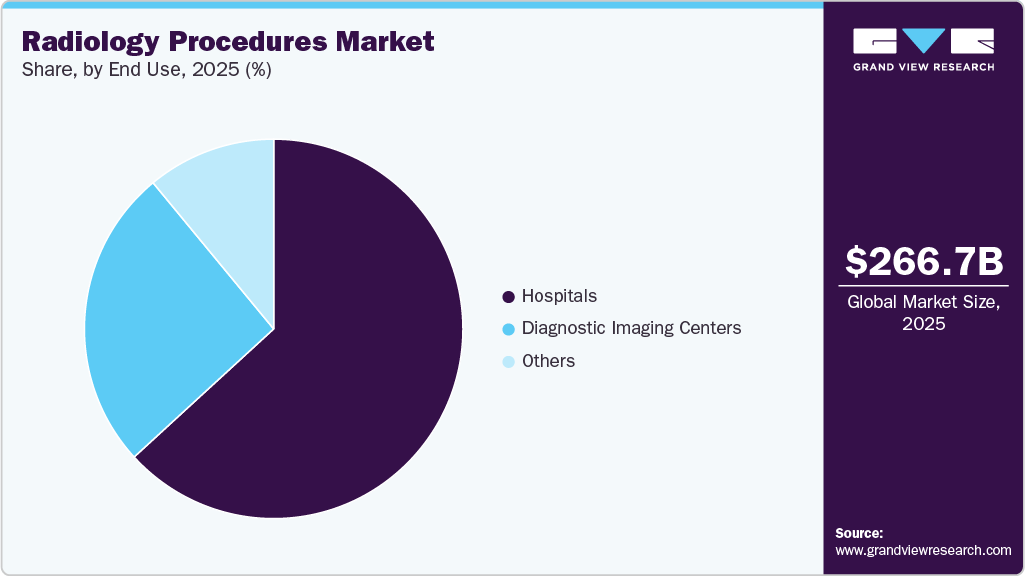
The hospitals segment dominated the industry and held the largest revenue share in 2025. As tertiary care centers and trauma referral hubs, hospitals perform a broad spectrum of imaging procedures, including X-rays, CT scans, MRI, ultrasound, PET, and interventional radiology, to support diagnosis, treatment planning, and monitoring across nearly all clinical specialties. The rising burden of chronic diseases such as cardiovascular disease, cancer, and neurological disorders is driving increasing imaging demand, particularly in cardiac imaging, oncologic staging, and stroke evaluation. Hospitals are also expanding imaging capacity to accommodate rising patient volumes and to reduce turnaround times. A recent industry roundup highlights more than 30 hospitals expanding their radiology services with new CT, MRI, ultrasound, and mammography installations, reflecting investments in infrastructure and patient-centric care.
 To learn more about this report, Download Free Sample Report
 The diagnostic imaging centers segmentis anticipated to grow at second fastest CAGR over the forecast period. These centers primarily operate in outpatient settings, offering high-volume imaging services such as X-ray, CT, and mammography at lower costs and faster turnaround times compared with hospital-based departments. Rising demand for non-emergency diagnostic imaging, growing emphasis on value-based care, and payer pressure to shift procedures away from hospitals are key factors accelerating growth in this segment. A major trend shaping the diagnostic imaging center market is industry consolidation, as large imaging networks expand geographic reach and operational scale. On February 3, 2026, RadNet announced the acquisition of the Indiana outpatient imaging assets of Northwest Radiology Network, marking RadNet’s entry into the Midwest. The acquisition includes six multimodality outpatient imaging centers in the greater Indianapolis area. Importantly, the 18 radiologists currently serving these facilities will continue providing contracted professional services, ensuring continuity of care and preservation of local physician relationships. This move reflects how leading imaging providers are strengthening referral networks, expanding regional density, and improving negotiating leverage with payers through acquisitions.
Regional Insights
International Radiology Procedures Market Trends
International radiology procedures market accounted for the revenue share of 57.8% in 2025. The growth is driven by improving healthcare infrastructure, rising disease burden, and growing adoption of advanced diagnostic imaging technologies across Europe, Asia Pacific, Latin America, and the Middle East & Africa. Increasing prevalence of chronic diseases such as cancer, cardiovascular disorders, and neurological conditions has significantly boosted demand for imaging modalities including X-ray and CT. Governments in developed markets such as Europe and Japan are investing heavily in digital radiology, AI-assisted imaging, and hospital modernization programs, while emerging economies in Asia Pacific and Latin America are witnessing rapid growth due to expanding hospital networks, medical tourism, and greater accessibility to diagnostic services. In addition, the shift toward portable and mobile imaging solutions, public-private partnerships, and regulatory harmonization initiatives are supporting broader adoption of radiology procedures, making RoW a high-growth region for diagnostic imaging in the coming years.
U.S. Radiology Procedures Market Trends
The U.S. radiology procedures market is being reshaped by robust healthcare infrastructure, sustained capital investment, and the strong domestic presence of global radiology leaders such as GE Healthcare, Siemens Healthineers, Philips, and Canon Medical. Rising healthcare spending remains a foundational growth driver. In 2024, U.S. healthcare expenditure reached approximately USD 5.3 trillion, growing by 8.2% year over year outpacing overall GDP growth and reinforcing long-term demand for advanced diagnostic technologies across hospitals, outpatient centers, and public health systems. According to the article published by The Imaging Wire in December 2025, the U.S. Food and Drug Administration reported that AI-enabled medical devices with FDA marketing authorization have surpassed 1,000, with radiology products comprising roughly 77% of all approvals, underscoring radiology’s central role in AI innovation. This surge reflects heightened clinical and industry demand for advanced radiology tools including AI-integrated X-ray, computed tomography, and mammography systems that improve diagnostic efficiency and support growing procedure volumes.
Key Radiology Procedures Company Insights
The radiology procedures market is highly competitive and has several key players. The major market players in the radiology procedures market are focusing on expanding their geographical footprint, forming strategic partnerships with hospitals and diagnostic centers, and enhancing their service portfolios to improve diagnostic accuracy and workflow efficiency. Companies are leveraging collaborations, technological advancements in imaging modalities, and exploring mergers and acquisitions to strengthen their market presence, optimize operational capabilities, and meet the growing demand for advanced diagnostic and interventional radiology procedures.
Key Radiology Procedures Companies:
The following key companies have been profiled for this study on the radiology procedures market.
- GE HealthCare
- Siemens Healthcare GmbH
- Koninklijke Philips N.V.
- Canon Medical Systems
- Hologic, Inc
- Shenzhen Mindray Bio-Medical Electronics Co., Ltd
- FUJIFILM VisualSonics Inc.
- AGFA HealthCare
- Shimadzu Corporation
- Carestream Health
Recent Development
-
In December 2025, GE HealthCare Technologies Inc. unveiled its Allia Moveo system, a compact, cable-free C-arm interventional imaging platform designed to improve mobility, workflow efficiency, and real-time visualization for cardiovascular and minimally invasive procedures in modern clinical suites.
-
In March 2025, GE HealthCare Technologies Inc. unveiled its Revolution Vibe CT system, a next-generation computed tomography platform with AI-enabled workflows and one-beat cardiac imaging to deliver faster scans and improved diagnostic precision. The system has received U.S. FDA 510(k) clearance, enabling commercial use for cardiac and general imaging applications.
-
In March 2025, Siemens Healthineers has received U.S. Food and Drug Administration (FDA) clearance for its expanded Naeotom Alpha class of photon-counting computed tomography scanners, including the dual-source Naeotom Alpha.Pro and the single-source Naeotom Alpha.Prime. This clearance enables broader clinical access to high-resolution, low-dose photon-counting CT imaging that enhances diagnostic detail and workflow efficiency.
Radiology Procedures Market Report Scope
Report Attribute
Details
Market size in 2025
USD 266.7 billion
Estimated market size in 2026
USD 277.5 billion
Projected market size by 2033
USD 356.5 billion
Growth rate
CAGR of 3.6% from 2026 to 2033
Base year for estimation
2025
Historical data
2021 - 2024
Forecast period
2026 - 2033
Quantitative units
Revenue in USD million/billion and CAGR from 2026 to 2033
Report coverage
Revenue forecast, company ranking, competitive landscape, growth factors, and trends
Segments covered
Modality, end use, region
Regional scope
U.S. And International
Key companies profiled
GE HealthCare; Siemens Healthcare GmbH; Koninklijke Philips N.V.; Canon Medical Systems; Hologic, Inc; Shenzhen Mindray Bio-Medical Electronics Co., Ltd; FUJIFILM VisualSonics Inc.; AGFA HealthCare; Shimadzu Corporation; Carestream Health
Customization scope
Free report customization (equivalent up to 8 analyst’s working days) with purchase. Addition or alteration to country, regional, and segment scope
Pricing and purchase options
Avail customized purchase options to meet your exact research needs. Explore purchase options
Global Radiology Procedures Market Report Segmentation
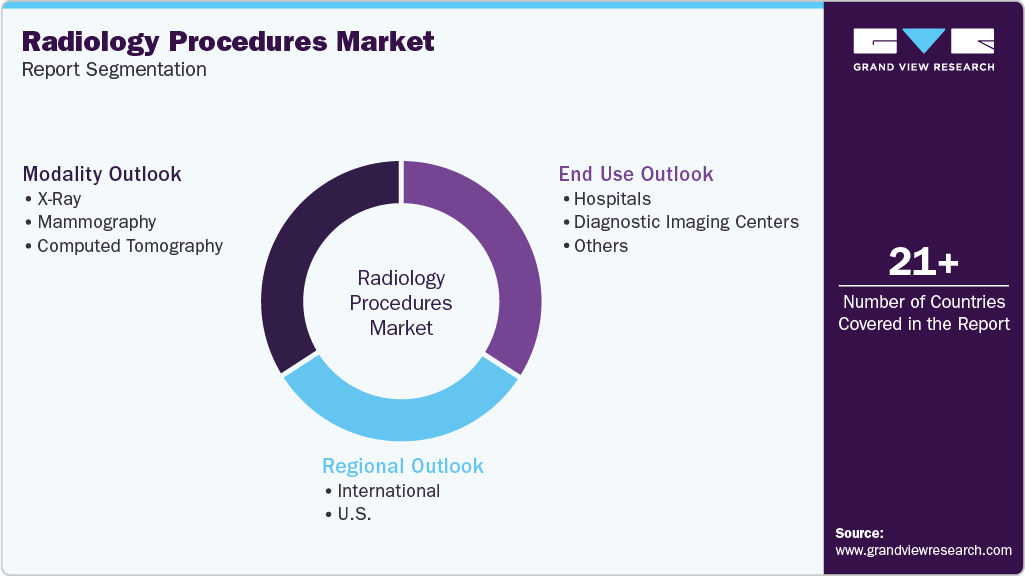
This report forecasts revenue growth at global levels and provides an analysis of the latest industry trends in each of the sub-segments from 2021 to 2033. Forthis study, Grand View Research has segmented the global radiology procedures market report based on modality, end use, and region:
 To learn more about this report, Download Free Sample Report
 -
Modality Outlook (Revenue, USD Million, 2021 - 2033)
-
X-Ray
-
Chest
-
Other Body Parts
-
-
Mammography
-
Computed Tomography
-
Head & Neck CT
-
Chest CT
-
Abdominal CT
-
Pelvic CT
-
Musculoskeletal CT
-
Vascular CT
-
-
-
End Use Outlook (Revenue, USD Million, 2021 - 2033)
-
Hospitals
-
Diagnostic Imaging Centers
-
Others
-
-
Region Outlook (Revenue, USD Million, 2021 - 2033)
-
International
-
U.S.
-
Frequently Asked Questions About This Report
The global radiology procedures market size was estimated at USD 266.7 billion in 2025 and is expected to reach USD 277.5 billion in 2026.
The global radiology procedures market is expected to grow at a compound annual growth rate of 3.6% from 2025 to 2033 to reach USD 356.5 billion by 2033.
The x-ray segment segment led with a 43.1% revenue share in 2025, while the computed tomography segment is the fastest-growing.
Some key players operating in the radiology procedures market include GE HealthCare; Siemens Healthcare GmbH; Koninklijke Philips N.V.; Canon Medical Systems; Hologic, Inc; Shenzhen Mindray Bio-Medical Electronics Co., Ltd; FUJIFILM VisualSonics Inc.; AGFA HealthCare; Shimadzu Corporation; Carestream Health
Key factors driving the radiology procedures market include increasing demand for early and accurate diagnosis, rising prevalence of chronic and lifestyle-related diseases, and rapid technological advancements in imaging modalities such as CT, and digital X-ray systems. Additionally, the expansion of healthcare infrastructure, growing awareness of preventive healthcare, and rising investments by key market players are expected to propel the market. Conditions such as cancer, cardiovascular diseases, neurological disorders, and diabetes require early, accurate, and non-invasive diagnosis, positioning radiology at the core of modern clinical decision-making.
The hospitals segment held the largest revenue share in 2025, while the diagnostic imaging centers segment is the fastest-growing.
About the Author(s)
Medical Devices Research Team
Healthcare · Medical DevicesThis report was authored by the medical devices research team at Grand View Research - comprising two research analysts, one senior research analyst, and one industry expert - with specialized expertise in the medical devices segment of the healthcare industry. All findings are based on proprietary healthcare databases, executive interviews, and regulatory analysis, subject to internal peer review prior to publication.
Last Updated:
Speak to Analyst

Customize this report to your needs - add regions, segments, or data points, with 20% free customization.
Or view our licence options:


ISO 9001:2015 & 27001:2022 Certified
We are GDPR and CCPA compliant! Your transaction & personal information is safe and secure. For more details, please read our privacy policy.


