
- Home
- »
- Plastics, Polymers & Resins
- »
-
Recycled Polypropylene In Packaging Market Report, 2026-2033GVR Report cover
![Recycled Polypropylene In Packaging Market (2026 - 2033)Report]()
Recycled Polypropylene In Packaging Market (2026 - 2033)
Size, Share & Trends Analysis Report By Packaging (Flexible Packaging, Rigid Packaging), By End Use (Food & Beverage, Personal Care & Cosmetics), By Region, And Segment Forecasts
Market Size, 2025
$9.7BMarket Estimate, 2026
$10.3BMarket Forecast, 2033
$17.2BCAGR, 2026–2033
7.5%Recycled Polypropylene In Packaging Market Summary
The global recycled polypropylene in packaging market size was valued at USD 9.7 billion in 2025 and is projected to grow from USD 10.3 billion in 2026 to USD 17.2 billion by 2033, at a CAGR of 7.5% from 2026 to 2033. The North America held the largest share of 37.3% of the global market in 2025. The market for recycled polypropylene packaging is growing due to stricter environmental regulations that encourage the use of sustainable materials and rising consumer preference for eco-friendly packaging.

Key Market Trends & Insights
- By packaging: Rigid packaging is expected to grow at the fastest CAGR of 8.6% from 2026 to 2033.
- By end use: Personal care & cosmetics segment is expected to grow at a CAGR of 8.9% from 2026 to 2033.
Regional Highlights
- Largest regional market: North America (37.3% revenue share, 2025)
- Fastest-growing regional market: Asia Pacific (highest CAGR, 2026-2033)
- By country: The U.S. led the North America market in 2025.
Market Size & Forecast
- Market size in 2025: USD 9.7 Billion
- Estimated market size in 2026: USD 10.3 Billion
- Projected market size by 2033: USD 17.2 Billion
- CAGR (2026-2033): 7.5%
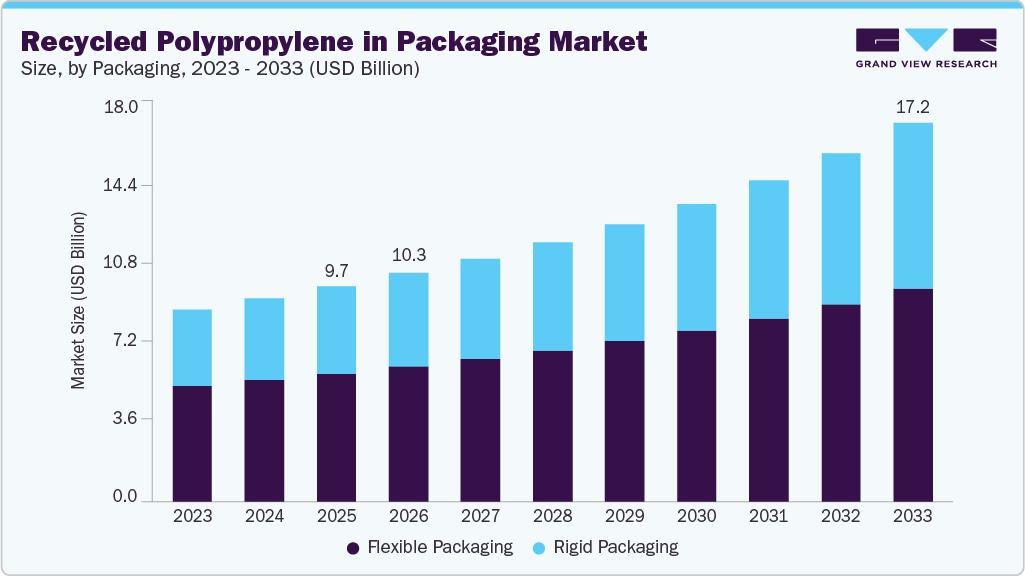
Its strong durability, lightweight properties, and suitability for different packaging formats are also supporting wider adoption across the industry. A key trend in the recycled polypropylene (rPP) packaging market is the growing adoption of chemical recycling technologies. Companies are increasingly investing in advanced chemical processes to produce circular rPP with higher purity levels. These methods enable the material to meet stringent food-grade standards, which are often difficult to achieve through traditional mechanical recycling. As a result, chemical recycling is helping to expand the end use scope of rPP in packaging, while supporting sustainability goals and improving overall material quality.
Drivers, Opportunities & Restraints
The demand for recycled polypropylene in packaging is growing strongly across the food & beverage and personal care & cosmetics sectors due to its durability, lightweight nature, and resistance to heat and chemicals. In the food and beverage industry, rPP is widely used in dairy containers, ready-meal trays, and other food-grade packaging. Rising disposable incomes, especially in emerging economies, are increasing the consumption of processed foods, while urbanization is driving greater reliance on packaged products. In the personal care and cosmetics sector, rPP is used in bottles and caps. Growth is further supported by e-commerce expansion and increasing consumer focus on personalized haircare solutions.
Opportunities in the recycled polypropylene (rPP) in packaging industry are particularly strong in the flexible packaging segment, driven by its growing use in e-commerce and fast-moving consumer goods. The rising demand for lightweight, durable, and cost-effective packaging solutions supports this trend. In addition, there is a significant opportunity to secure a stable supply of waste feedstock to support sustainable production processes. This can be achieved through strategic collaborations between manufacturers and brand owners, especially in industries such as food and personal care, where the demand for environmentally responsible packaging solutions continues to increase.
The adoption of recycled polypropylene in packaging is increasingly shaped by several key challenges. Strict regulatory requirements, especially for food-contact applications, restrict its use mainly to non-food or secondary packaging. In addition, contamination and remaining major issues, such as recycled polypropylene, may contain residues such as food waste, chemicals, and mixed materials, leading to variable performance and limiting its use in high-value applications. Moreover, limitations in collection and supply chain infrastructure, including inadequate systems for sorting and processing PP waste such as bottles, films, and containers, reduce the availability of high-quality recycled material.
Market Concentration & Characteristics
The market growth stage is medium, with accelerating growth rate. The market exhibits fragmentation, with key players dominating the industry landscape. Major companies such as Braskem, Borealis AG, Mitsubishi Chemical and others play a significant role in shaping the market dynamics. These leading players often drive innovation in the market, introducing new packaging technologies and packagings to meet the industry's evolving demands.
The degree of innovation in the market is gradually increasing, supported by advances in sorting, cleaning, and recycling technologies. Improved mechanical recycling and emerging chemical recycling methods are helping produce higher-quality rPP with better purity and performance. This is expanding its use in more demanding packaging applications, including food, personal care, and household products. In addition, innovation in design for recyclability is improving material recovery and reducing waste. Overall, these developments are strengthening market confidence, supporting sustainability goals, and creating new growth opportunities for packaging manufacturers.
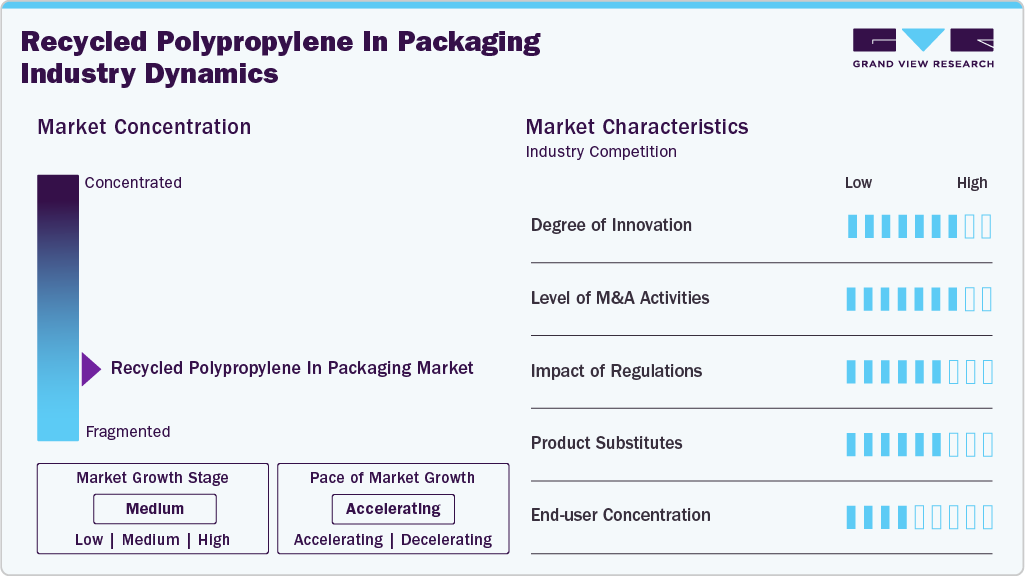
In the Recycled Polypropylene (rPP) packaging industry, the presence of alternative materials affects overall demand and growth. Common substitutes include recycled polyethylene (rPE), recycled polyethylene terephthalate (rPET), paper-based packaging, glass, and metals, which are selected based on specific application requirements. For instance, rPET is widely used in beverage packaging due to its transparency and well-developed recycling systems, while paper-based options are increasingly preferred for their eco-friendly properties. These alternatives can reduce the use of rPP, particularly in food-grade packaging.
Packaging Insight
Flexible packaging accounted for the largest share of the packaging segment, representing 59.5% of total market revenue in 2025. The segment is projected to expand at a CAGR of 6.7% from 2026 to 2033. This growth is mainly supported by rising demand from the food and beverage industry. Flexible packaging is valued for its durability, heat and chemical resistance, and lightweight nature. In addition, its growing use in personal care and cosmetics is further strengthening market demand. Overall, the segment is expected to remain a key growth area over the forecast period.
The rigid packaging segment is expected to grow at a CAGR of 8.6% over the forecast period, mainly driven by rising demand from the e-commerce sector. The rapid expansion of online shopping has increased the need for strong and reliable packaging solutions that can safely protect products such as electronics and fragile food items during transportation. As a result, there is a growing preference for durable containers that minimize damage in transit. In addition, rigid packaging materials are widely used due to their high mechanical strength, heat resistance, and chemical resistance. Their lightweight nature further enhances efficiency, making them a practical choice for shipping and handling.
End Use Insights
The Food & Beverage segment led the market, accounting for a 33.4% revenue share in 2025. It is projected to grow at a CAGR of 8% from 2026 to 2033. This growth is supported by rising demand for applications such as dairy tubs, ready-meal trays, and other food-grade packaging products. The material’s durability, resistance to heat and chemicals, and lightweight nature make it suitable for widespread use in this segment. In addition, increasing disposable incomes, particularly in emerging economies, are driving higher consumption of processed and packaged foods. Rapid urbanization is also contributing to greater demand for convenient food options.
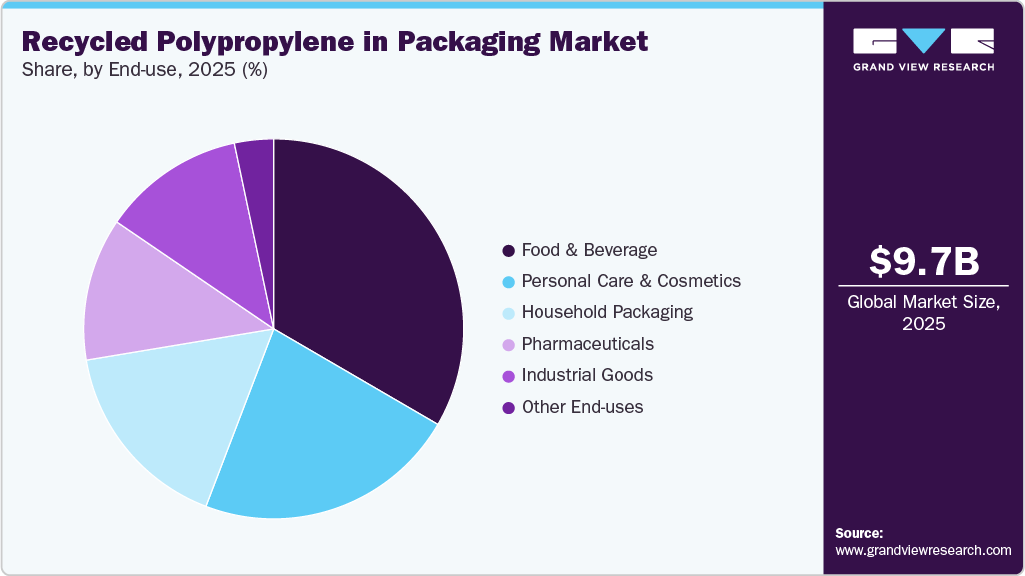
The Personal Care & Cosmetics segment in the market is projected to grow at a steady CAGR of 8.9% during the forecast period. This segment represents a key end use area, supported by rising demand for lightweight, durable, and heat- and chemical-resistant materials. rPP is increasingly used in applications such as shampoo bottles, lotion containers, and cosmetic caps. Growth is further driven by the rapid expansion of e-commerce and quick commerce platforms, which are boosting product accessibility and consumption. In addition, increasing consumer awareness of skincare and haircare needs, along with demand for personalized solutions for concerns such as acne, dry or oily skin, and hair damage, is supporting market expansion.
Regional Insights
North America recycled polypropylene (rPP) packaging industry led the global market in 2025, accounting for the largest revenue share of over 37.3%. This growth is supported by strong regulatory policies, increasing corporate commitments to sustainability, and rising consumer awareness of environmentally friendly packaging. Government bodies, including the U.S. Environmental Protection Agency and Environment and Climate Change Canada, are promoting circular economy practices that encourage the use of recycled materials such as polypropylene in packaging. In addition, Extended Producer Responsibility (EPR) regulations and plastic waste reduction initiatives at both state and federal levels are creating a supportive environment for the adoption of Recycled Polypropylene (rPP) in the region.

U.S. Recycled Polypropylene-In-Packaging-Market Trends
The recycled polypropylene (rPP) packaging industry in the United States is driven by a mix of regulatory requirements, corporate sustainability initiatives, and well-developed recycling and innovation infrastructure. In addition, major consumer goods and packaging companies such as Procter & Gamble, Unilever, and Berry Global Inc. are contributing to increased demand for rPP in packaging applications. These companies have made strong commitments to incorporate post-consumer recycled (PCR) content into their packaging solutions.
Asia Pacific Recycled Polypropylene In Packaging Market Trends
The Asia Pacific recycled polypropylene (rPP) packaging industry is expected to register the fastest growth, with a CAGR of 12.0% during the forecast period. This growth is driven by the region’s rapidly expanding packaging industry, increasing environmental awareness, and supportive government initiatives promoting circular economy practices. Key countries such as China, India, Japan, and South Korea are experiencing rising demand for sustainable packaging solutions across food & beverage, personal care, and e-commerce sectors.
The recycled polypropylene (rPP) packaging industry growth in China is supported by its strong manufacturing base, increasing focus on sustainability, and high domestic demand for cost-effective and eco-friendly packaging materials. In addition, the country benefits from a well-developed recycling infrastructure and abundant availability of polypropylene waste, creating a favorable environment for rPP production.
Europe Recycled Polypropylene-In-Packaging-Market Trends
The Europe recycled polypropylene (rPP) packaging industry growth is mainly driven by strict regulations and strong sustainability goals set by the European Union (EU). The EU has introduced key circular economy initiatives, including the European Green Deal and the Circular Economy Action Plan, which promote the use of recycled materials in packaging. These policies are encouraging manufacturers and packaging companies to adopt rPP to meet recyclability and recycled content requirements. In addition, regulations such as the Single-Use Plastics Directive are accelerating the shift from virgin plastics to recycled alternatives, particularly in applications such as food containers, trays, and wrapping films.
Key Recycled Polypropylene-In-Packaging-Company Insights
The recycled polypropylene in packaging industry is highly competitive, with several key players dominating the landscape. Major companies include Braskem, Borealis AG, Mitsubishi Chemical, Exxon Mobil Corporation, Nexam Chemical, among others. The recycled polypropylene in packaging industry is characterized by a competitive landscape with several key players driving innovation and market growth. Major companies in this sector are investing heavily in research and development to enhance the performance, cost-effectiveness, and sustainability of their packagings.
Key Recycled Polypropylene In Packaging Companies:
The following key companies have been profiled for this study on the recycled polypropylene in packaging market.
- Alta Performance Materials Holdings (UK) Limited
- Braskem
- Borealis AG
- Mitsubishi Chemical
- Exxon Mobil Corporation
- Nexam Chemical
- Pashupati Group of Industries
- Sumitomo Chemical Co., Ltd.
- Nexeo Plastics, LLC
- Shell Chemicals
- ECOPLAS (HK) LIMITED
- Berry Global Inc.
- Banyan Nation
- TotalEnergies
- Formosa Plastics
Recent Developments
-
In January 2026, INEOS Olefins & Polymers Europe introduced a new Recycl-IN hybrid polymer grade that incorporates 70% recycled content, aimed at enhancing the sustainability of packaging for contact-sensitive cosmetics while allowing brands to maintain high quality and performance standards. This cutting-edge product is a natural-colored polypropylene homopolymer, tailored for thin-walled injection molding and fiber extrusion, which makes it suitable for producing rigid, colored, or translucent parts.
-
In March 2026, PureCycle Technologies announced that its PureFive recycled polypropylene resin is being utilized in a new line of cinema souvenir cups. This initiative is part of a collaboration with Churchill Container and Golden Link North America. The partnership highlights the growing use of recycled materials in consumer products and supports sustainability efforts in packaging.
Recycled Polypropylene In Packaging Market Report Scope
Report Attribute
Details
Market size in 2025
USD 9.7 billion
Estimated market size in 2026
USD 10.3 billion
Projected market size by 2033
USD 17.2 billion
Growth rate
CAGR of 7.5% from 2026 to 2033
Historical data
2021 - 2024
Forecast period
2026 - 2033
Quantitative units
Revenue in USD million/billion, volume in kilotons, and CAGR from 2026 to 2033
Report coverage
Revenue forecast, competitive landscape, growth factors, and trends
Global Transparent Plastic Market Report Segmentation
Packaging, end use, region
Regional scope
North America; Europe; Asia Pacific; Central & South America; Middle East & Africa
Country Scope
U.S.; Canada; Mexico; Germany; UK; France; Italy; Spain; China; India; Japan; South Korea; Australia; Brazil; Argentina; Saudi Arabia; UAE; South Africa
Key companies profiled
Alta Performance Materials Holdings (UK) Limited; Braskem; Borealis AG; Mitsubishi Chemical; Exxon Mobil Corporation; Nexam Chemical; Pashupati Group of Industries; Sumitomo Chemical Co., Ltd.; Nexeo Plastics LLC; Shell Chemicals; ECOPLAS (HK) LIMITED; Berry Global Inc.; Banyan Nation; TotalEnergies; Formosa Plastics
Customization scope
Free report customization (equivalent to up to 8 analyst working days) with purchase. Addition or alteration to country, regional & segment scope
Pricing and purchase options
Avail customized purchase options to meet your exact research needs. Explore purchase options
Global Recycled Polypropylene In Packaging Market Report Segmentation
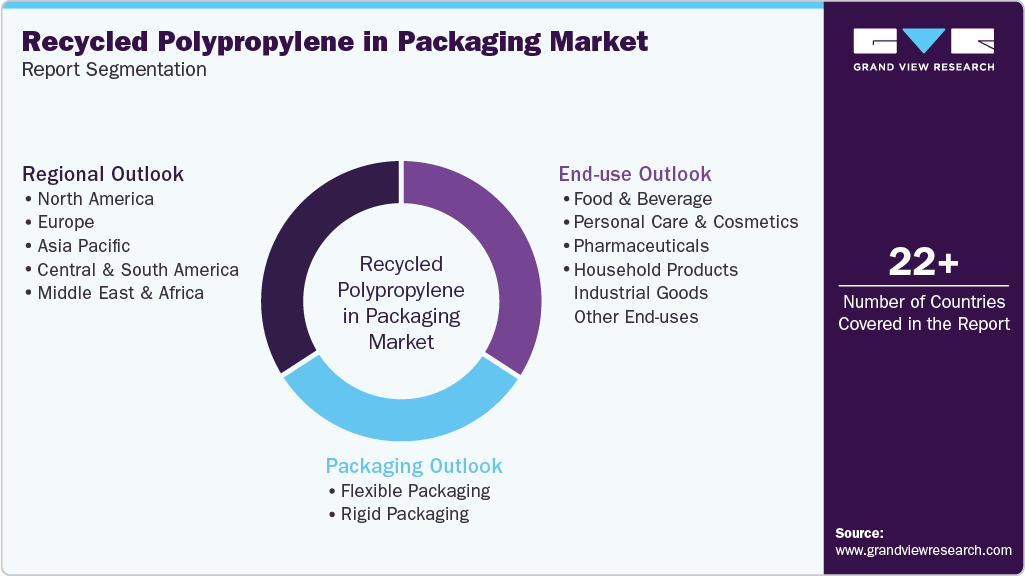
This report forecasts revenue growth at the global, regional, and country levels and provides an analysis of the latest industry trends across sub-segments from 2021 to 2033. For this study, Grand View Research has segmented the recycled polypropylene in packaging market report based on type, end use, and region:
-
Packaging Outlook (Volume, Kilotons; Revenue, USD Million, 2021 - 2033)
-
Flexible Packaging
-
Rigid Packaging
-
-
End Use Outlook (Volume, Kilotons; Revenue, USD Million, 2021 - 2033)
-
Food & Beverage
-
Personal Care & Cosmetics
-
Pharmaceuticals
-
Household Products
-
Industrial Goods
-
Other End Uses
-
-
Regional Outlook (Volume, Kilotons; Revenue, USD Million, 2021 - 2033)
-
North America
-
U.S.
-
Canada
-
Mexico
-
-
Europe
-
Germany
-
UK
-
France
-
Italy
-
Spain
-
-
Asia Pacific
-
China
-
India
-
Japan
-
South Korea
-
Australia
-
-
Central & South America
-
Brazil
-
Argentina
-
-
Middle East and Africa
-
Saudi Arabia
-
UAE
-
South Africa
-
-
Frequently Asked Questions About This Report
The global recycled polypropylene in packaging market was estimated at around USD 9.7 billion in 2025 and is expected to reach around USD 10.3 billion in 2026.
The global recycled polypropylene in packaging market is expected to grow at a compound annual growth rate of 7.5% from 2026 to 2033, to reach around USD 17.2 billion by 2033
The key players in the recycled polypropylene in packaging market include Braskem; Borealis AG; Mitsubishi Chemical; Exxon Mobil Corporation; Nexam Chemical; Pashupati Group of Industries; Sumitomo Chemical Co., Ltd.; Nexeo Plastics, LLC; Shell Chemicals; ECOPLAS (HK) LIMITED; Berry Global Inc.; Banyan Nation; TotalEnergies; Formosa Plastics.
The recycled polypropylene in packaging market is driven by growing environmental regulations promoting sustainable materials and increasing consumer demand for eco-friendly packaging. Additionally, cost-effectiveness and the rising adoption of circular economy practices further boost market growth.
North America dominated with a 37.3% revenue share in 2025.
Asia Pacific is the fastest-growing region over the forecast period.
The flexible packaging segment led with a 59.5% revenue share in 2025.
Food & beverage emerged as a dominating application with a value share of 33.4% in the year 2025, owing to rising demand for sustainable, lightweight packaging and increasing regulatory pressure for eco-friendly materials. Its versatility and compliance with food safety standards further supported widespread adoption.
About the Author(s)
Plastics, Polymers & Resins Research Team
Bulk Chemicals · Plastics, Polymers & ResinsThis report was authored by the plastics, polymers & resins research team at Grand View Research - comprising two research analysts, one senior research analyst, and one industry expert - with specialized expertise in the plastics, polymers & resins segment of the bulk chemicals industry. All findings are based on proprietary bulk chemicals databases, executive interviews, and regulatory analysis, subject to internal peer review prior to publication.
Last Updated:
Speak to Analyst


Customize this report to your needs — add regions, segments, or data points, with 20% free customization.
Or view our licence options:


ISO 9001:2015 & 27001:2022 Certified
We are GDPR and CCPA compliant! Your transaction & personal information is safe and secure. For more details, please read our privacy policy.


