
- Home
- »
- Medical Devices
- »
-
Robotic Radiotherapy Market Size, Industry Report, 2033GVR Report cover
![Robotic Radiotherapy Market Size, Share & Trends Report]()
Robotic Radiotherapy Market (2025 - 2033) Size, Share & Trends Analysis Report By Product (Radiotherapy Systems, Software, 3D Cameras), By Technology (CyberKnife, Gamma Knife, Particle Therapy), By Application, By End Use, By Region, And Segment Forecasts
Market Size, 2024
$1.4BMarket Estimate, 2026
$1.5BMarket Forecast, 2033
$3.3BCAGR, 2025–2033
10.4%Robotic Radiotherapy Market Summary
The global robotic radiotherapy market size was valued at USD 1.37 billion in 2024 and is projected to reach USD 3.30 billion by 2033, growing at a CAGR of 10.36% from 2025 to 2033. The industry is primarily driven by the rising prevalence of cancer worldwide, the growing demand for highly precise and minimally invasive treatment options, advancements in image-guided and robot-assisted radiotherapy technologies and increasing adoption of personalized medicine approaches.

Key Market Trends & Insights
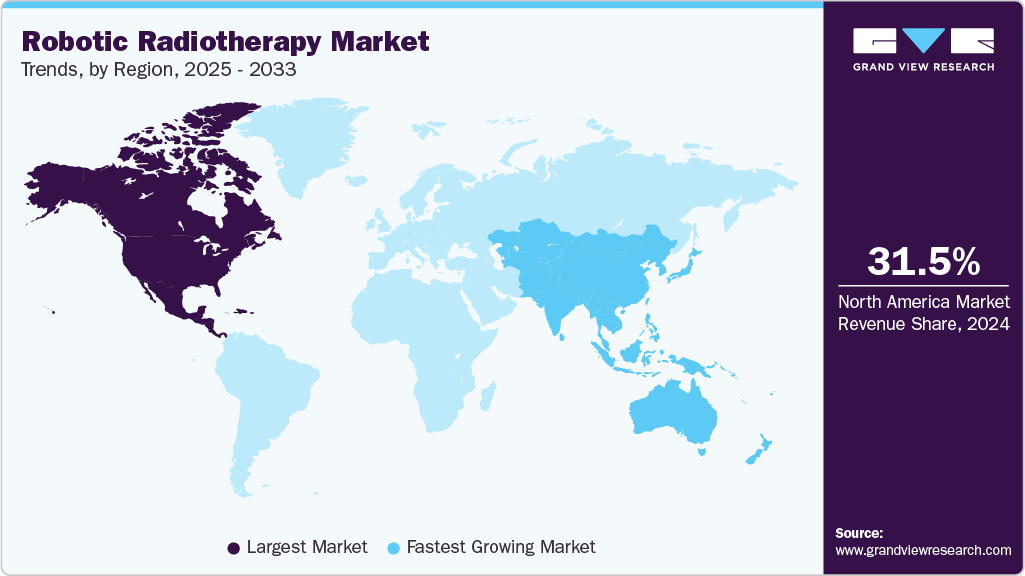
- The North America robotic radiotherapy market dominated the global market in 2024, accounting for the largest revenue share of 31.48%.
- The Asia Pacific robotic radiotherapy market is anticipated to register the fastest growth rate during the forecast period.
- In terms of product, radiotherapy systems held the largest revenue share in 2024.
- In terms of technology, the linear accelerators segment held the largest revenue share in 2024.
- In terms of application segment, the lung cancer segment held the largest revenue share in 2024.
- In terms of the end use segment, the hospitals segment held the largest revenue share in 2024.
Market Size & Forecast
- 2024 Market Size: USD 1.37 Billion
- 2033 Projected Market Size: USD 3.30 Billion
- CAGR (2025-2033): 10.36%
- North America: Largest market in 2024
- Asia Pacific: Fastest growing market
The healthcare infrastructure expansion in emerging markets, favorable reimbursement policies in developed regions, and the ability of robotic systems to reduce treatment times and improve patient outcomes further accelerate market growth.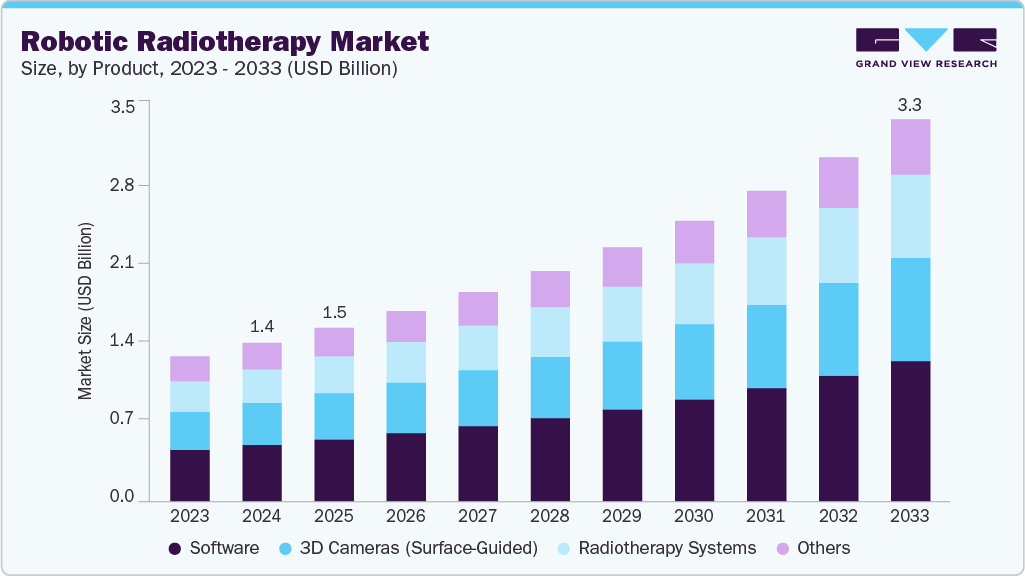
The increasing prevalence of cancer cases is a key factor driving the market's growth. According to the WHO article published in February 2024, Global cancer cases are projected to exceed 35 million by 2050, representing a 77% increase from the 20 million cases reported in 2022. This sharp rise fuels the need for exact and efficient treatment options, driving stronger adoption of robotic radiotherapy systems. With growing patient volumes and increasing treatment complexity, robotic platforms are becoming essential due to their accuracy, automation, and ability to minimize damage to healthy tissues.
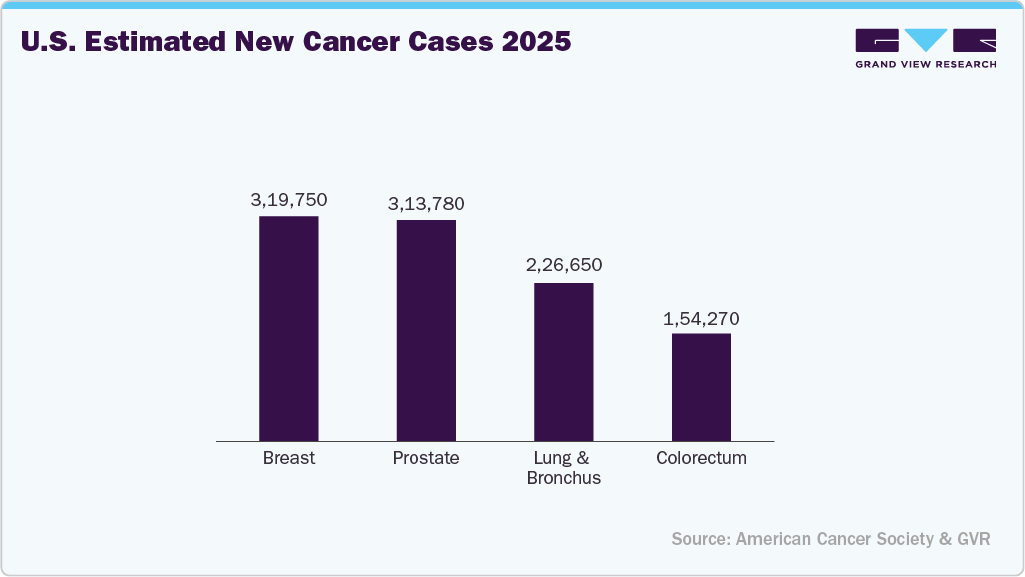
According to the American Cancer Society, in collaboration with IARC, there were about 20 million new cancer diagnoses in 2022 and 9.7 million cancer-related deaths. These data highlight the enormous and growing demand for healthcare systems globally. This escalating cancer burden fuels the adoption of robotic radiotherapy, as such platforms offer high-precision, minimally invasive treatments that can spare healthy tissue, reduce toxicity, and support efficient, automated workflows.
The increasing adoption of incision-free oncology treatment platforms is driving growth in the robotic radiotherapy market. For example, in August 2024, Apollo Cancer Centre in Bengaluru adopted the CyberKnife S7 FIM platform, reflecting the growing shift toward robotics-enabled radiosurgery capable of treating tumors across multiple regions of the body without incisions. Similarly, Tampa General Hospital introduced its upgraded CyberKnife S7 system in January 2024, highlighting the move toward outpatient-friendly radiation therapy delivered in significantly fewer sessions. These developments demonstrate how healthcare providers are prioritizing advanced robotic systems to enhance treatment accuracy, reduce session times, and improve patient convenience. The ability to deliver highly focused radiation in just a few outpatient visits allows patients to return home the same day or next, reinforcing the demand for precise, minimally invasive therapies that streamline oncology workflows.
Several developed markets are adopting supportive reimbursement policies for advanced radiotherapy. For instance, in the US, insurance coverage increasingly includes AI-driven robotic and stereotactic radiotherapy procedures. Policy incentives promote outpatient, precise cancer therapies, encouraging hospitals to invest in these high-tech platforms. Recent updates in states such as Arizona (effective August 2025) include reimbursement rules emphasizing radiation therapy management and dosimetry services critical to adaptive therapy, supporting advanced treatment adoption. These incentives help accelerate robotic radiotherapy penetration at oncologic centers by offsetting technology costs and encouraging precision care.
The industry has attracted significant investment, reflecting strong confidence in AI-powered, adaptive, and patient-centric treatment technologies. Funding is driving innovation in real-time imaging, adaptive treatment planning, and robotic delivery, enabling improved tumor targeting, workflow efficiency, and minimally invasive, outpatient-friendly therapies. Overall, this investment activity underscores growing investor confidence in technologies that enhance clinical outcomes and accelerate the adoption of advanced robotic radiotherapy worldwide.
Latest Funding and Investments
Date
Summary
Market Impact
In September 2025
Leo Cancer Care raised USD 40 million in a funding round led by Catalio Capital Management to accelerate the commercialization of its upright radiotherapy platforms and expand access across photon and particle therapy.
The funding strengthens innovation in patient-centric radiotherapy delivery, accelerates the market entry of next-generation upright treatment systems, and enhances competition in the robotic and advanced radiotherapy segment.
In September 2025
AiM Medical Robotics Inc. secured USD 8.1 million in Series A financing to advance development of MRI-compatible surgical robotics with growing relevance in precision oncology applications.
This investment supports integration of robotics with real-time MRI navigation, enhancing accuracy in tumor targeting and contributing to broader adoption of precision-guided robotic radiotherapy and surgical oncology tools.
Source: MobiHealthNews, Cancer Research Horizons & GVR
Artificial intelligence and machine learning are increasingly transforming robotic radiotherapy by enabling real-time, adaptive treatment planning. These platforms can continuously monitor patient motion such as breathing, fiducial tracking, or surface-guided movements and dynamically adjust radiation doses to account for daily anatomical changes and tumor response. Deep-learning methods now allow sub-second Monte Carlo-level dose calculations, making truly online adaptive radiotherapy feasible and significantly improving treatment accuracy for complex tumors.
Clinical applications illustrate the impact of these innovations. For instance, MRI-guided adaptive radiotherapy systems at leading cancer centers in the US and Germany use AI-enhanced imaging to dynamically optimize dose delivery during treatment sessions, particularly for tumors in sensitive areas like the lungs and prostate. Decision-support tools can even predict when treatment plans should be re-optimized several fractions ahead, further enhancing precision. Collectively, these AI-driven technologies reduce planning errors, minimize radiation exposure to healthy tissue, and improve patient outcomes, while making complex cases more manageable, driving adoption at top oncology institutions worldwide.
Market Concentration & Characteristics
The industry has witnessed significant innovation in recent years, driven by the shift toward AI-powered adaptive treatments that integrate real-time imaging and automation to personalize therapy for each session. Current advancements emphasize faster workflows, multi-site adaptability, and enhanced connectivity to patient data, enabling more precise, efficient, and patient-specific cancer care. For instance, in July 2024, Varian Medical Systems (now part of Siemens Healthineers) received U.S. FDA 510(k) clearance for new functionality in its Ethos therapy system, introducing a streamlined workflow for daily treatment adaptation across more body sites, along with improved data connectivity.
The industry is characterized by the leading players' high level of merger and acquisition (M&A) activity. This is driven by ambitions to broaden product portfolios, integrate software and automation capabilities, and capitalize on the growing demand for adaptive, robot-enabled radiotherapy systems. In May 2024, Elekta AB announced the acquisition of Philips Healthcare’s Pinnacle Treatment Planning System patent portfolio, thereby strengthening Elekta’s software and treatment-planning offerings in radiation therapy.
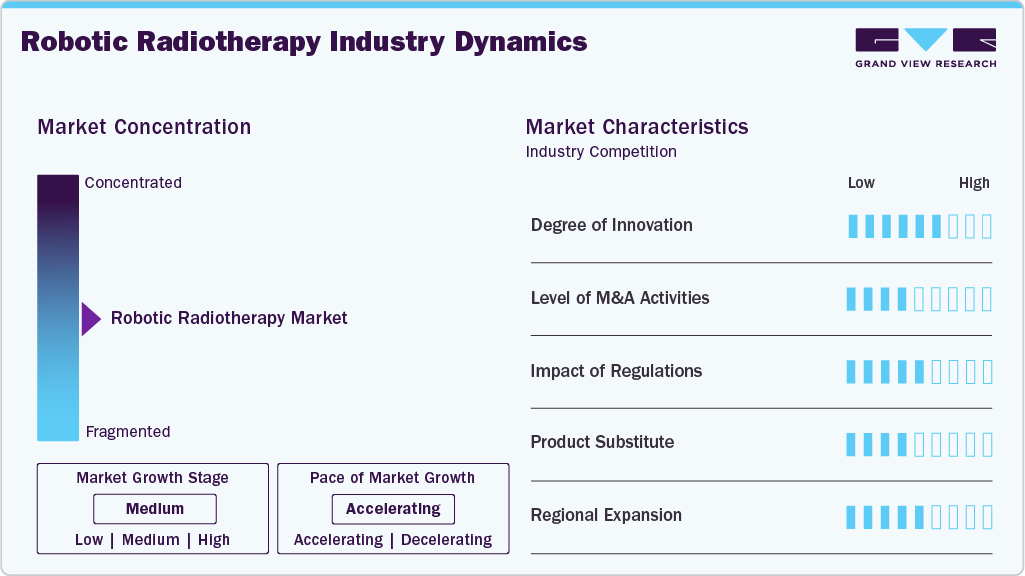
Regulations continue to play a key role in the industry by ensuring patient safety, device efficacy, and manufacturing quality throughout product development and deployment. For example, regulatory agencies such as the U.S. Food and Drug Administration (FDA) require medical-device manufacturers to provide clinical, technical, and quality-system evidence before clearance, which can slow the introduction of new systems but builds trust among customers and patients while protecting patient outcomes.
In the robotic radiotherapy industry, product substitutes include conventional external beam radiotherapy systems such as standard gantry‑mounted linear accelerators (LINACs) or older 3‑D conformal radiotherapy (3D‑CRT) devices—that can be used instead of advanced robotic radiotherapy platforms. While these substitutes are more widely available and generally less expensive, they may not offer the same degree of real-time imaging, motion tracking, six-degree-of-freedom robotic delivery, or sub-millimetre precision as dedicated robotic radiotherapy solutions.
Several major players in the market are broadening their global footprint by entering new regions, enhancing local service & sales networks, and deploying advanced treatment systems in growth markets. For instance, in December 2024, Siemens Healthineers announced the acquisition of the sales & service business of Varian Medical Systems (via purchase of the relevant business from IEC Medical Systems). This move strengthens Siemens Healthineers’ oncology presence in the broader Middle East/North Africa region.
Product Insights
By product, the radiotherapy systems segment dominated the market and accounted for the largest share of 35.63% in 2024. Radiotherapy Systems are medical devices that deliver targeted radiation to treat cancer. The increasing number of cancer cases, combined with the launch of technologically advanced products, drives the market's growth. For instance, in September 2025, Accuray Incorporated announced the launch of its new Accuray Stellar Solution, an all-in-one radiotherapy system built on its Radixact platform, designed to deliver adaptive treatment workflows with enhanced tools for clinical teams.
The software segment is anticipated to witness a CAGR of 10.6% over the forecast period from 2025 to 2033. These solutions enable advanced treatment planning, real-time adaptive therapy, and automation of complex workflows, allowing clinicians to personalize radiation doses, optimize tumor targeting, and reduce exposure to healthy tissue. Rising cancer prevalence, increasing adoption of AI-powered planning tools, and the integration of deep-learning algorithms for image segmentation and dose calculation are driving strong demand for advanced radiotherapy software globally.
Technology Insights
By technology, the linear accelerators segment dominated the market in 2024 and accounted for the largest revenue share. Robotic radiotherapy using linear accelerators is rapidly evolving toward highly automated, image-guided, and AI-powered systems that enable on-the-fly treatment adaptation and enhanced tumor targeting. According to the China Daily article published in April 2024, the launch of the MR‑Linac Radiotherapy System (an advanced MRI‑guided linear accelerator) at Shanghai United Imaging Medical Technology Co., Ltd. and Shanghai Renji Hospital introduced the world’s first integrated CT‑ring linear accelerator system (uLinac HalosTx) into clinical use in April 2025. This system delivers online adaptive radiotherapy with AI-powered tumor monitoring and treatment plan adjustment, improving treatment efficiency by approximately 50% compared to previous models.
The conventional linear accelerators segment is anticipated to witness the fastest CAGR over the forecast period. Conventional linear accelerators (LINACs) remain a core technology in radiotherapy, delivering high-energy X-rays or electrons to treat tumors across a wide range of sites. Clinics continue to rely on these systems as the workhorse of external beam radiotherapy, especially when cost, space and service infrastructure make fully robotic platforms less feasible. For instance, in February 2025, Cheltenham General Hospital in the UK installed a TrueBeam linear accelerator (LINAC) offered by Varian Medical Systems.
Application Insights
By application, the lung cancer segment dominated the market and accounted for the largest revenue share in 2024. Lung cancer remains one of the most prevalent and challenging indications for robotic radiotherapy due to the complexity of tumor motion and the need to spare healthy lung tissue. According to the WHO article published in February 2025, approximately 2.5 million people were diagnosed with lung cancer worldwide in 2022, corresponding to an age-standardized rate (ASR) of 23.6 cases per 100,000 people. The high global burden of lung cancer has driven the adoption of robotic and image-guided radiotherapy systems, which enable precise tumor tracking, motion management, and adaptive dose delivery, improving local control while minimizing toxicity to surrounding healthy tissue.
The colorectal cancer segment is anticipated to witness the fastest CAGR over the forecast period. Colorectal cancer (CRC) represents a significant portion of the global cancer burden. According to the Springer Nature article published in February 2025, over 1.9 million CRC cases were reported worldwide in 2022 (males: 1,045,413; females: 826,706). The high prevalence of CRC has accelerated the adoption of robotic and image-guided radiotherapy systems, which provide precise targeting, adaptive treatment planning, and organ motion management, crucial for minimizing toxicity to the bladder, rectum, and small bowel.
End Use Insights
The hospitals segment dominated the market with the largest revenue share in 2024. Hospitals are increasingly investing in robotic and advanced image-guided radiotherapy platforms to enhance cancer care, increase precision, reduce treatment times, and expand access to high-end therapies. These investments often reflect a broader institutional strategy to adopt adaptive workflows, upgrade outdated systems, and provide multidisciplinary teams with the necessary infrastructure for next-generation oncology.
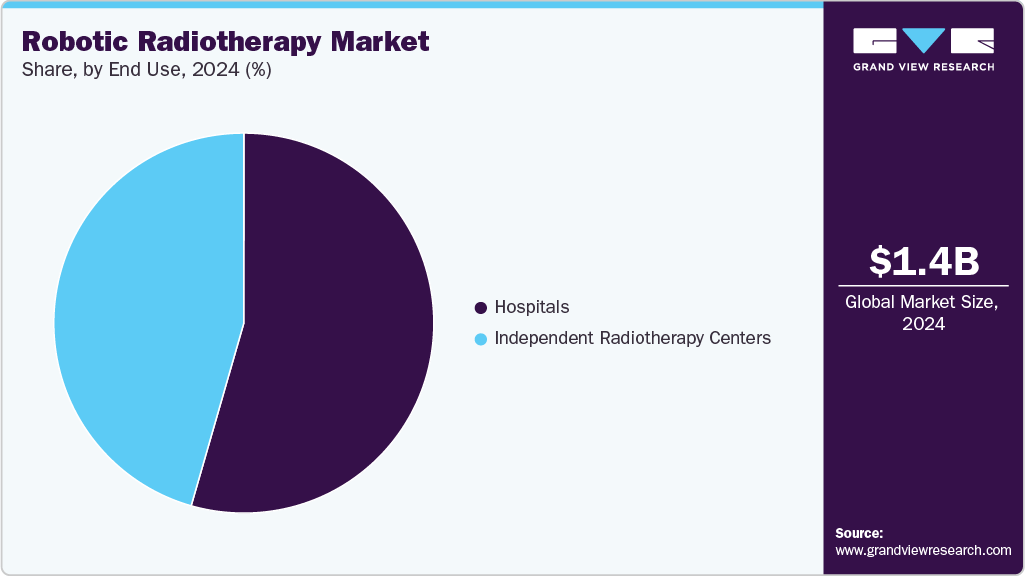
The independent radiotherapy centers segment of the robotic radiotherapy market is anticipated to register a significant growth rate over the forecast period. Independent radiotherapy centres are increasingly adopting robotic radiotherapy technologies to enhance their service offerings, attract referrals, and provide advanced treatment options locally. For instance, in February 2025, Beverly Hills Cancer Center became the first freestanding cancer center to install the RefleXion Medical X1 platform with its SCINTIX biology-guided radiotherapy system. The machine uses biological signals from a tumor (via a PET tracer) to dynamically guide radiation delivery in real-time, rather than relying solely on static imaging. This deployment demonstrates how independent centers are utilizing cutting-edge robotic radiotherapy systems to expand access to advanced care beyond major hospitals.
Regional Insights
North America dominated the global robotic radiotherapy market in 2024, accounting for the largest revenue share of 31.48%, primarily due to its well-established healthcare infrastructure and high healthcare expenditure. Additionally, the rising incidence of cancer and the launch of technologically advanced products drive the market's growth. According to the CDC article published in June 2025, in the U.S., lung cancer continues to pose a significant health challenge, with 218,893 new cases reported in 2022. The disease also carries a high mortality rate, as evidenced by 131,584 deaths attributed to lung cancer in 2023. These statistics underscore the pressing need for advanced treatment options, such as robotic radiotherapy, which provides precise and targeted radiation delivery to enhance patient outcomes and potentially reduce mortality.
U.S. Robotic Radiotherapy Market Trends
The robotic radiotherapy market in the U.S. held the largest share in the North America region in 2024. Government initiatives and funding drive the market's growth. According to the National Cancer Institute in 2023, in the U.S., federal research support platforms , notably the NCI’s Radiation Research Program and the newly‑established ARPA‑H under HHS, have created a funding climate favorable to next‑generation radiation‑delivery technologies. The RRP actively supports device development and image‑guided radiotherapy research (with USD 97,242, 994 in expenditures in FY 2023), providing a foundation for robotic‑guided radiotherapy systems. Concurrently, ARPA‑H’s mandate to invest in breakthrough health technologies signals strong future potential for robotic radiotherapy platforms to receive federal support or collaborative funding.
Canada robotic radiotherapy market is anticipated to register the fastest growth rate during the forecast period. The rising incidence of lung cancer, combined with the launch of technologically advanced products, drives the market's growth. According to the Canadian Cancer Society article published in 2024, lung cancer remained a significant health concern in Canada, with 32,100 new cases reported, representing approximately 13% of all cancer diagnoses that year. This high incidence underscores the critical need for advanced treatment approaches, such as robotic radiotherapy, which can deliver precise, targeted radiation to tumors. The adoption of such technology has the potential to improve treatment accuracy, minimize damage to surrounding healthy tissues, and enhance overall patient outcomes in the Canadian oncology landscape.
Europe Robotic Radiotherapy Market Trends
The robotic radiotherapy market in Europeis anticipated to register a significant growth rate during the forecast period. Rising cancer incidence and the launch of technologically advanced products drive the growth of the market. According to the NCBI article published in March 2025, Europe reported 4,471,422 new cancer cases in 2022, highlighting the significant burden of oncology across the region. This rising incidence emphasizes the need for advanced treatment solutions, including robotic radiotherapy systems. By enabling highly precise and targeted radiation delivery, robotic radiotherapy can improve tumor control while minimizing exposure to surrounding healthy tissues, positioning it as a key technology in Europe’s evolving cancer care landscape.
The UK robotic radiotherapy market is expected to experience significant growth during the forecast period. The growing incidence of cancer and the launch of technologically advanced products drive the market's growth. According to a Health Service Journal article in November 2025, each year, the UK sees approximately 49,300 new cases of lung cancer, representing around 13% of all cancer diagnoses. This substantial disease burden underscores the importance of adopting advanced treatment modalities such as robotic radiotherapy. By providing precise, targeted radiation therapy, robotic systems can enhance treatment effectiveness, reduce damage to healthy tissues, and improve overall patient outcomes, making them a valuable component of the UK’s cancer care strategy.
The robotic radiotherapy market in Germany is expected to experience significant growth during the forecast period. Rising cancer incidence and the launch of technologically advanced products drive the development of the market. According to an OECD article published in 2025, Germany reported a five-year cancer prevalence of 1,927 cases per 100,000 population, exceeding the EU average of 1,876 per 100,000 in 2022. This higher prevalence highlights the ongoing cancer burden in the country and emphasizes the need for advanced treatment solutions. Robotic radiotherapy, with its ability to deliver exact and targeted radiation, offers a promising approach to improve treatment outcomes, minimize damage to healthy tissues, and support Germany’s efforts in managing its growing oncology patient population.
Asia Pacific Robotic Radiotherapy Market Trends
The robotic radiotherapy market in Asia Pacificis expected to be the fastest-growing region, driven by increasing cancer cases, government initiatives, and the launch of technologically advanced products. According to a WHO article published in September 2024, the South-East Asia region reported an estimated 2.37 million new cancer cases, resulting in approximately 1.53 million deaths in 2022. The cancer burden in the area is expected to grow significantly, with projections indicating an 85.7% increase in new cases by 2050. This rising prevalence underscores the urgent need for advanced treatment technologies, such as robotic radiotherapy, which can deliver precise and targeted radiation. The adoption of such systems can improve treatment outcomes, minimize exposure to healthy tissues, and play a crucial role in addressing the growing oncology demand across the APAC region.
Japan robotic radiotherapy market is anticipated to register a significant growth rate during the forecast period. The growing incidence of cancer and the launch of technologically advanced products drive the market's growth. According to The FP Group article, Japan reported an incidence rate of 30.5 new lung cancer cases per 100,000 people, accompanied by a mortality rate of 14.2 deaths per 100,000 population in 2022. These statistics highlight the significant impact of lung cancer on public health in the country. The growing need for effective and precise treatment modalities has increased the relevance of robotic radiotherapy, which allows for highly targeted radiation delivery, minimizes damage to surrounding healthy tissues, and has the potential to improve patient outcomes in Japan’s oncology care landscape.
The robotic radiotherapy market in China is anticipated to register a significant growth rate during the forecast period. Rising cancer cases, government initiatives, and the launch of technologically advanced products drive the growth of the market. According to an NCBI article published in December 2024, China is projected to report approximately 3,246,625 new cancer cases, accompanied by an estimated 1,699,066 cancer-related deaths in 2024. This substantial disease burden highlights the urgent need for advanced treatment solutions, such as robotic radiotherapy, which can deliver highly precise and targeted radiation. By improving treatment accuracy and minimizing exposure to healthy tissues, robotic radiotherapy has the potential to enhance patient outcomes and address the growing demand for oncology services across China.
Latin America Robotic Radiotherapy Market Trends
The robotic radiotherapy market in Latin America is expected to grow over the forecast period, driven by a rising cancer burden among ageing populations, increasing demand for high-precision, minimally invasive treatment options, and rising investment in radiation oncology infrastructure. Countries in the region are upgrading from older radiotherapy units to more advanced automation‑ and robot-enabled platforms, reflecting a shift in clinical practice toward improved treatment accuracy and efficiency. Moreover, infrastructure expansion is supported by public-private partnerships and programs aimed at reducing the gap in access to advanced cancer care in underserved regions. Even with this progress, cost pressures, a shortage of trained personnel, and variable regional infrastructure remain key challenges that must be addressed for the growth of robotic radiotherapy to become more widespread in Latin America.
Brazil robotic radiotherapy market is growing over the forecast period. Rising cancer incidence and the launch of technologically advanced products drive the growth of the market. According to Elsevier B.V. in September 2025, Lung cancer is the most frequently diagnosed cancer globally, excluding nonmelanoma skin cancers, and continues to be the leading cause of cancer-related mortality worldwide. In Brazil, lung cancer ranks as the fourth most common cancer, with an estimated 32,560 new cases reported annually. This significant disease burden underscores the need for advanced treatment approaches such as robotic radiotherapy. Delivering highly precise and targeted radiation, robotic systems can enhance treatment effectiveness, reduce damage to surrounding healthy tissues, and improve patient outcomes, making them a crucial component of Brazil’s evolving cancer care landscape.
Middle East & Africa Robotic Radiotherapy Market Trends
The robotic radiotherapy market in the Middle East & Africa is growing over the forecast period, driven by several key factors. These include rising awareness of advanced cancer treatment options among patients and healthcare professionals, increasing cancer incidence, the introduction of new robotic radiotherapy systems, and gradual improvements in healthcare reimbursement policies. In addition, the market is supported by growing investment in healthcare infrastructure and government initiatives aimed at enhancing access to high-quality oncology services across the region. These factors collectively create a favorable environment for the adoption and expansion of robotic radiotherapy in MEA countries.
South Africa robotic radiotherapy market is growing over the forecast period. Rising cancer incidence and the launch of technologically advanced products drive the growth of the market. According to an OECD article published in 2024, Cancer ranks as the fifth leading cause of mortality in South Africa, with approximately one in every 15 premature deaths (before age 75) expected to result from the disease between 2023 and 2050. This translates to an estimated 33,800 premature cancer-related deaths annually, reducing the average life expectancy by nearly 0.8 years compared to a scenario without cancer. These statistics highlight the urgent need for advanced treatment modalities, such as robotic radiotherapy, which can deliver highly precise and targeted radiation. The adoption of robotic systems has the potential to enhance treatment outcomes, minimize damage to healthy tissues, and play a crucial role in managing the growing oncology burden in South Africa.
Key Robotic Radiotherapy Company Insights
Key players operating in the robotic radiotherapy market are undertaking various initiatives to strengthen their presence and increase the reach of their products and services. Strategies such as expansion activities and partnerships are key in propelling the market growth.
Key Robotic Radiotherapy Companies:
The following are the leading companies in the robotic radiotherapy market. These companies collectively hold the largest market share and dictate industry trends.
- Varian, A Siemens Healthineers Company
- Elekta
- Accuray Incorporated
- ViewRay Technologies
- IBA
- Mevion Medical Systems
- Panacea Medical Technologies Pvt. Ltd.
- P-Cure
- ProNova Solutions, LLC
- Sumitomo Heavy Industries Ltd.
- Koninklijke Philips N.V.
- RaySearch Laboratories
- Vision RT Ltd.
- MIM Software Inc.
Recent Developments
-
In April 2025, Carl Zeiss Meditec AG received US FDA 510(k) clearance for the INTRABEAM 700, a new robotic‑assisted intra‑operative radiotherapy platform designed for precise brain tumor treatment with a digital‑first architecture.
-
In February 2025, Elekta AB announced a collaboration with Moffitt Cancer Center (USA) to deploy its Unity MR‑Linac platform, enabling MR-guided adaptive radiotherapy at the center.
-
In July 2025, Siemens Healthineers and Prisma Health expanded their value‑partnership with a USD 50 million investment in radiation therapy technology and services, including adaptive radiotherapy systems to enhance cancer care capabilities.
-
In May 2024, Elekta AB launched the Elekta Evo CT‑Linac, a next‑generation AI‑powered adaptive radiotherapy system featuring high‑definition imaging and automation for online plan adaptation.
Robotic Radiotherapy Market Report Scope
Report Attribute
Details
Market size value in 2025
USD 1.50 billion
Revenue forecast in 2033
USD 3.30 billion
Growth rate
CAGR of 10.36% from 2025 to 2033
Actual data
2021 - 2024
Forecast data
2025 - 2033
Quantitative units
Revenue in USD million/billion and CAGR from 2025 to 2033
Report coverage
Revenue forecast, company ranking, competitive landscape, growth factors, and trends
Segments covered
Product, technology, application, end use, region
Regional scope
North America; Europe; Asia Pacific; Latin America; MEA
Country scope
U.S.; Canada; Germany; UK; Spain; Italy; France; Norway; Denmark; Sweden; Japan; China; India; Australia; Thailand; South Korea; Brazil; Mexico; Argentina; South Africa; Saudi Arabia; UAE; Kuwait
Key companies profiled
Varian, A Siemens Healthineers Company; Elekta; Accuray Incorporated; ViewRay Technologies; IBA; Mevion Medical Systems; Panacea Medical Technologies Pvt. Ltd.; P-Cure; ProNova Solutions, LLC; Sumitomo Heavy Industries Ltd.; Koninklijke Philips N.V.; RaySearch Laboratories; Vision RT Ltd.; MIM Software Inc.
Customization scope
Free report customization (equivalent up to 8 analysts working days) with purchase. Addition or alteration to country, regional & segment scope.
Pricing and purchase options
Avail customized purchase options to meet your exact research needs. Explore purchase options
Global Robotic Radiotherapy Market Report Segmentation
This report forecasts revenue growth at global, regional, and country levels and analyzes industry trends in each sub-segment from 2021 to 2033. For this study, Grand View Research, Inc. has segmented the global robotic radiotherapy market report based on product, technology, application, end use, and region:
-
Product Outlook (Revenue, USD Million, 2021 - 2033)
-
Radiotherapy Systems
-
Software
-
3D Cameras (Surface-Guided)
-
Others
-
-
Technology Outlook (Revenue, USD Million, 2021 - 2033)
-
Linear Accelerators
-
Conventional Linear Accelerators
-
MRI - Linear Accelerators
-
Stereotactic Radiation Therapy Systems
-
CyberKnife
-
Gamma Knife
-
Particle Therapy
-
Proton Beam Therapy
-
Heavy Ion Beam Therapy
-
-
Application Outlook (Revenue, USD Million, 2021 - 2033)
-
Prostate Cancer
-
Breast Cancer
-
Lung Cancer
-
Head & Neck Cancer
-
Colorectal Cancer
-
Other Cancers
-
-
End Use Outlook (Revenue, USD Million, 2021 - 2033)
-
Hospitals
-
Independent Radiotherapy Centers
-
-
Regional Outlook (Revenue, USD Million, 2021 - 2033)
-
North America
-
U.S.
-
Canada
-
Mexico
-
-
Europe
-
Germany
-
UK
-
Spain
-
Italy
-
France
-
Denmark
-
Norway
-
Sweden
-
-
Asia Pacific
-
Japan
-
China
-
India
-
Australia
-
Thailand
-
South Korea
-
-
Latin America
-
Brazil
-
Argentina
-
-
MEA
-
South Africa
-
Saudi Arabia
-
UAE
-
Kuwait
-
-
About the Author(s)
Medical Devices Research Team
Healthcare · Medical DevicesThis report was authored by the medical devices research team at Grand View Research - comprising two research analysts, one senior research analyst, and one industry expert - with specialized expertise in the medical devices segment of the healthcare industry. All findings are based on proprietary healthcare databases, executive interviews, and regulatory analysis, subject to internal peer review prior to publication.
Last Updated:
Speak to Analyst


Customize this report to your needs — add regions, segments, or data points, with 20% free customization.
Or view our licence options:


ISO 9001:2015 & 27001:2022 Certified
We are GDPR and CCPA compliant! Your transaction & personal information is safe and secure. For more details, please read our privacy policy.


